
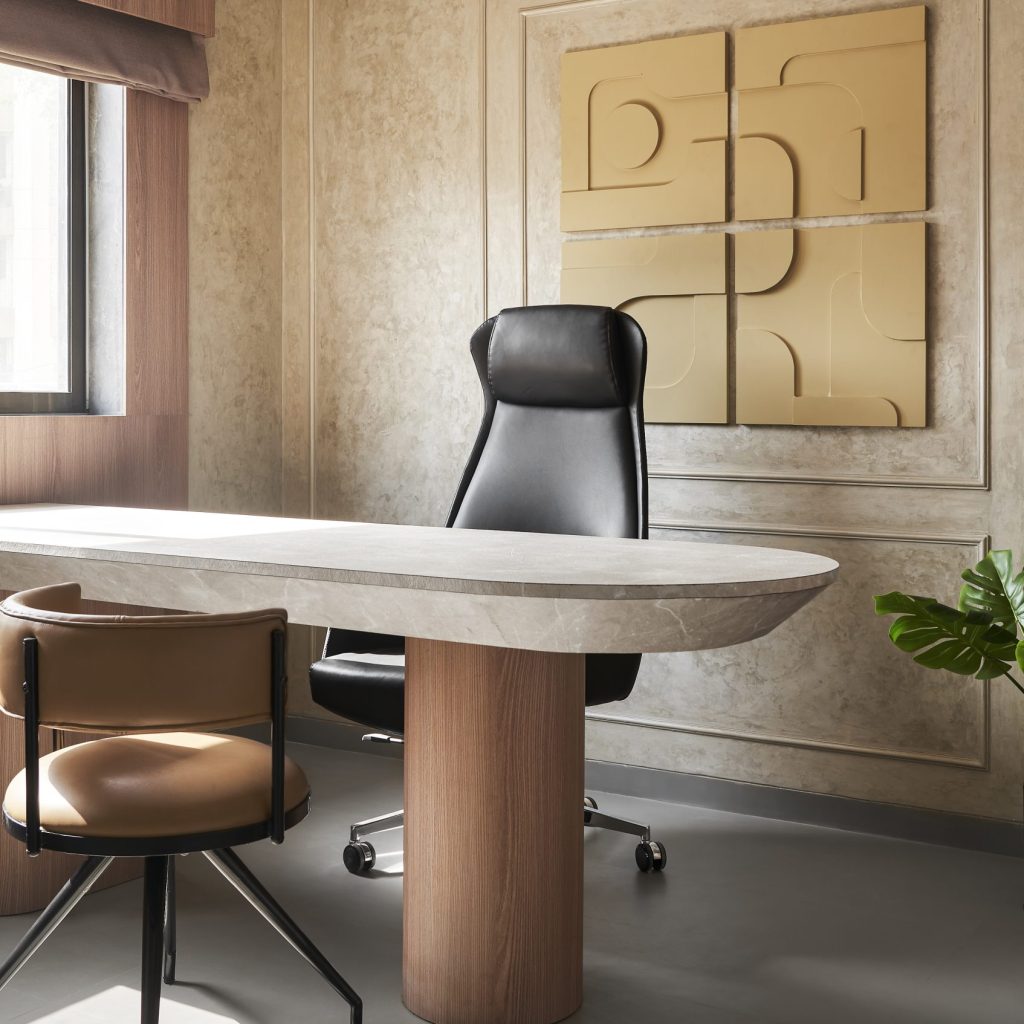
In Vasai, The Bare Box by Bareism Design Studio reimagines the sales office as a compact, tactile environment where experimentation, restraint and hands-on making define the experience.
Photographs: Yadnyesh Joshi; courtesy Bareism Design Studio
Curated by: Rupali Sebastian

The project
The Bare Box is a 480 sq ft sales office in Vasai that deliberately pushes against the visual predictability of conventional commercial interiors. Designed by Bareism Design Studio for real estate developer Ditya Luxuria, the project challenges the idea that offices must be neutral, polished and restrained to the point of anonymity. Instead, it proposes a space that is playful yet composed—one that invites curiosity while remaining functional and efficient for everyday use.
The site
Located adjacent to the main road within a residential complex, the office enjoys high visibility and direct engagement with its surroundings. The site itself posed no significant physical constraints, allowing the design team to focus on spatial character rather than corrective planning. Its roadside placement made it essential for the office to communicate identity clearly and immediately.
The brief
Working within the economic realities of Vasai’s real estate landscape, the brief called for a design that was aspirational without being extravagant. The client was clear in rejecting standardised sales-office templates, seeking instead an environment that could set a new benchmark for the local market. The space needed to feel exploratory and distinctive, while remaining mindful of budget constraints and operational needs.
The design intent
The design approach was anchored in the idea of what the studio refers to as “barefoot luxury”—a form of understated richness rooted in texture, proportion and craft rather than expensive finishes. Given the compact footprint, the intent was not to over-design but to allow a few strong ideas to shape the space. Simple geometries, minimal material variation and carefully calibrated circulation come together to create an interior that feels relaxed, tactile and quietly confident. As principal architect Deepshikha Apte explains, “We wanted the space to feel honest and tactile—where ideas, materials and making are visible rather than concealed. The goal was not polish, but presence.”
The spatial flow
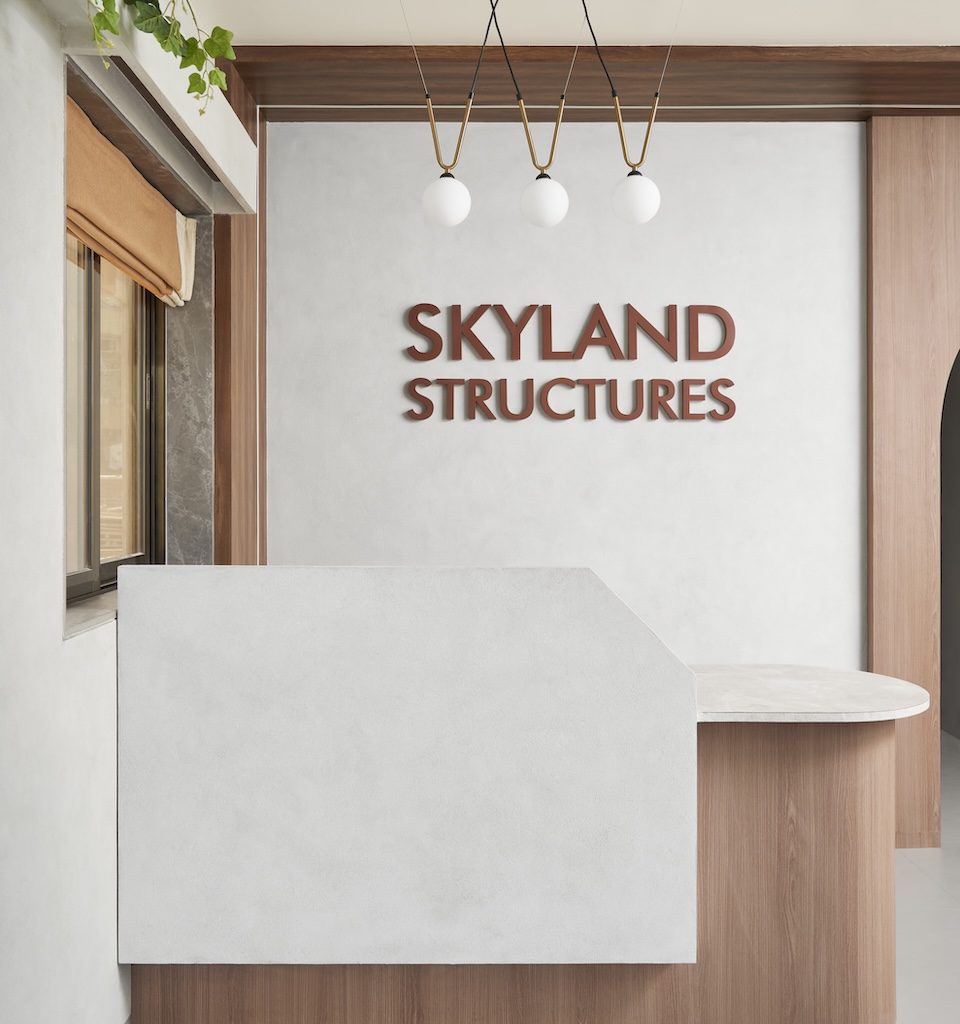
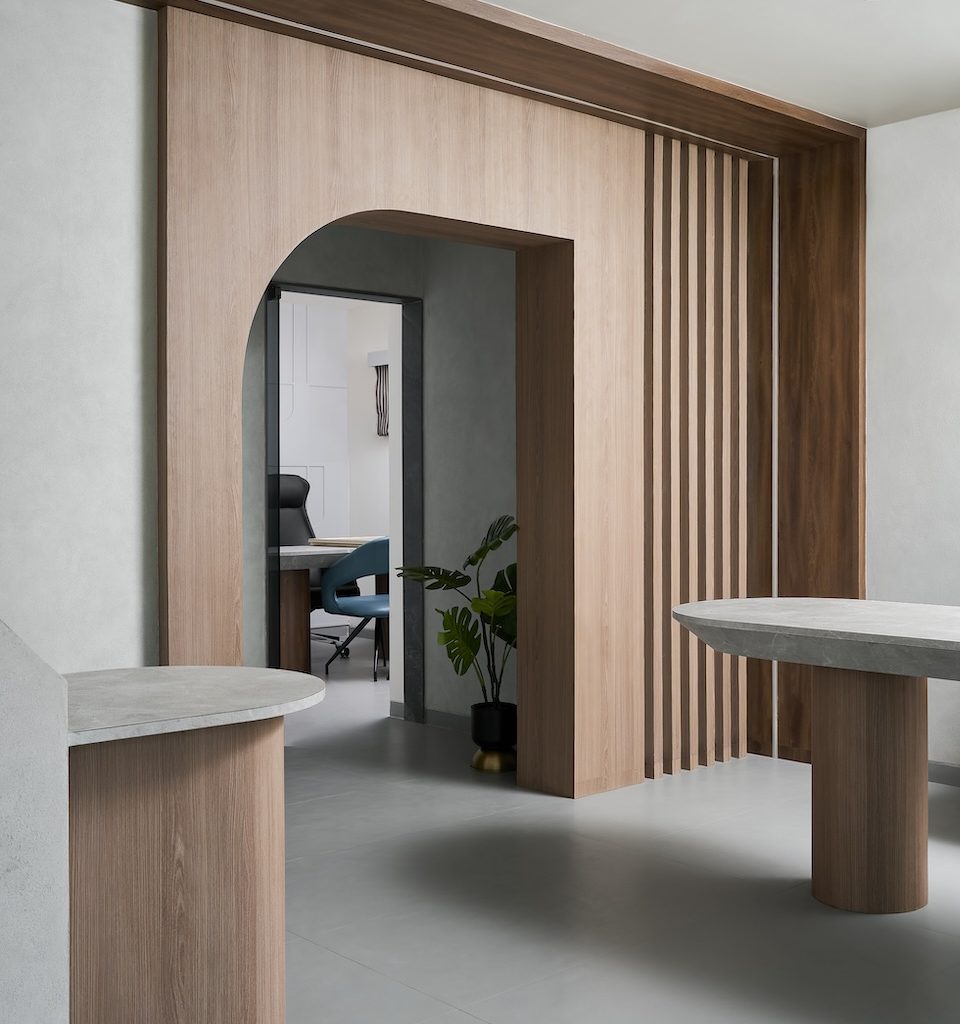
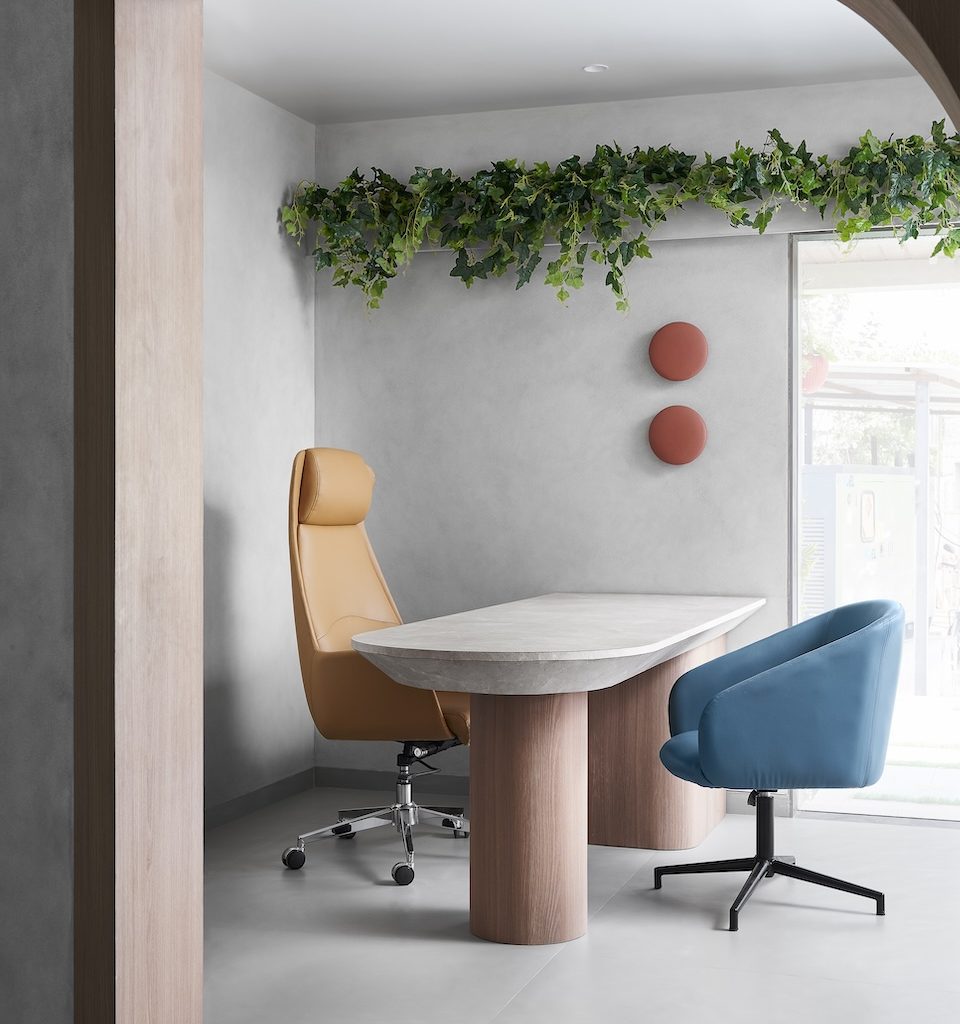
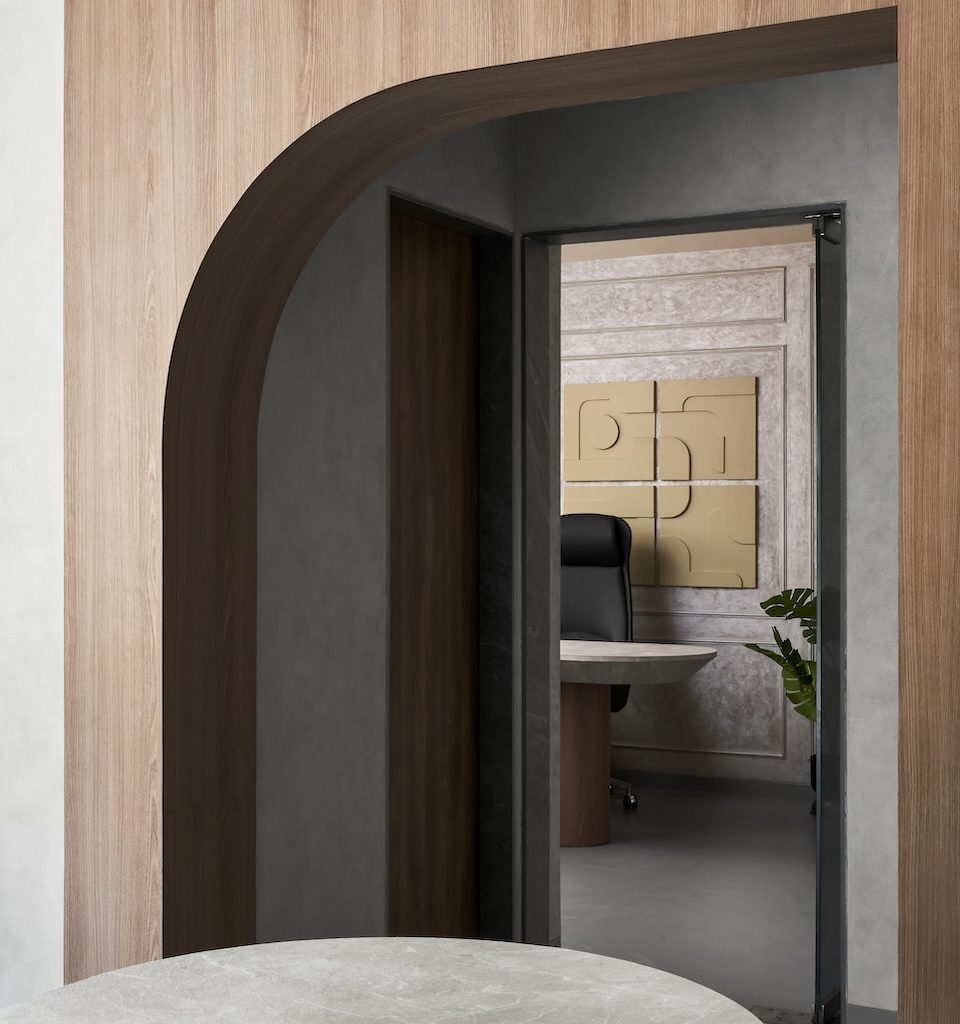
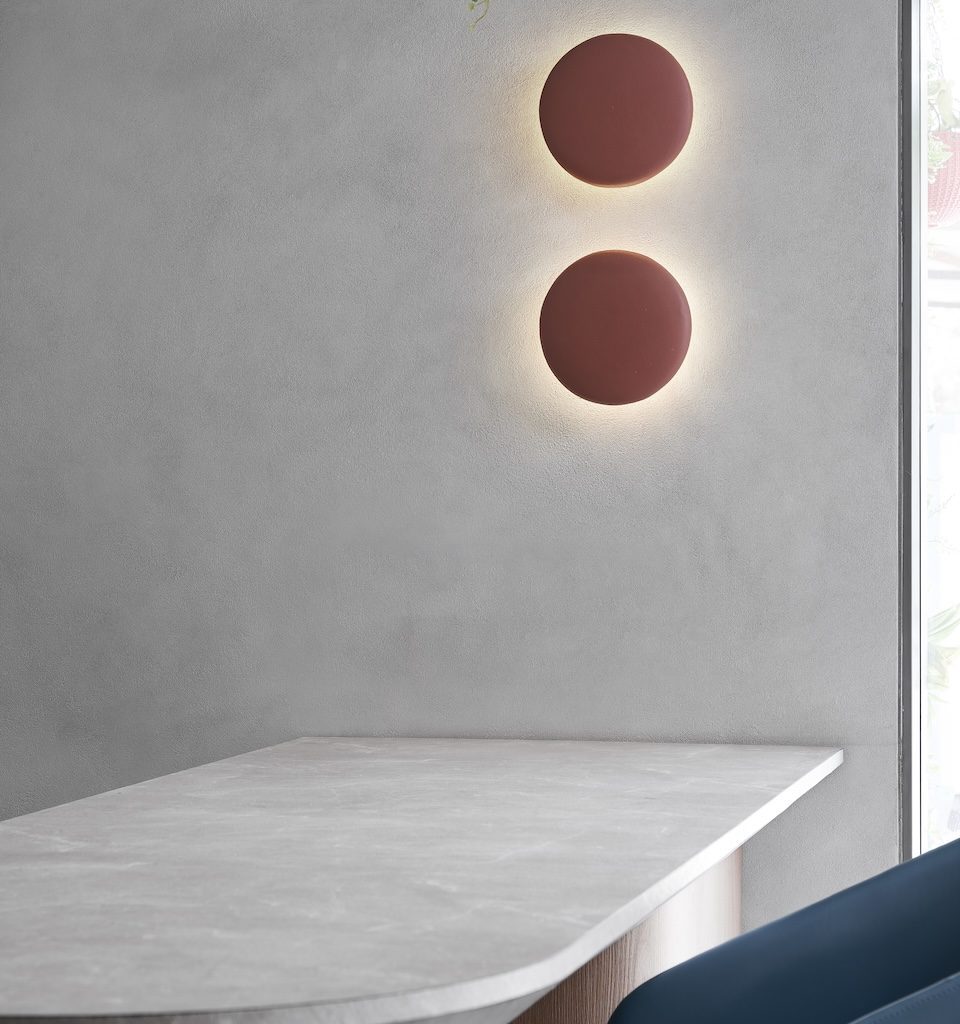
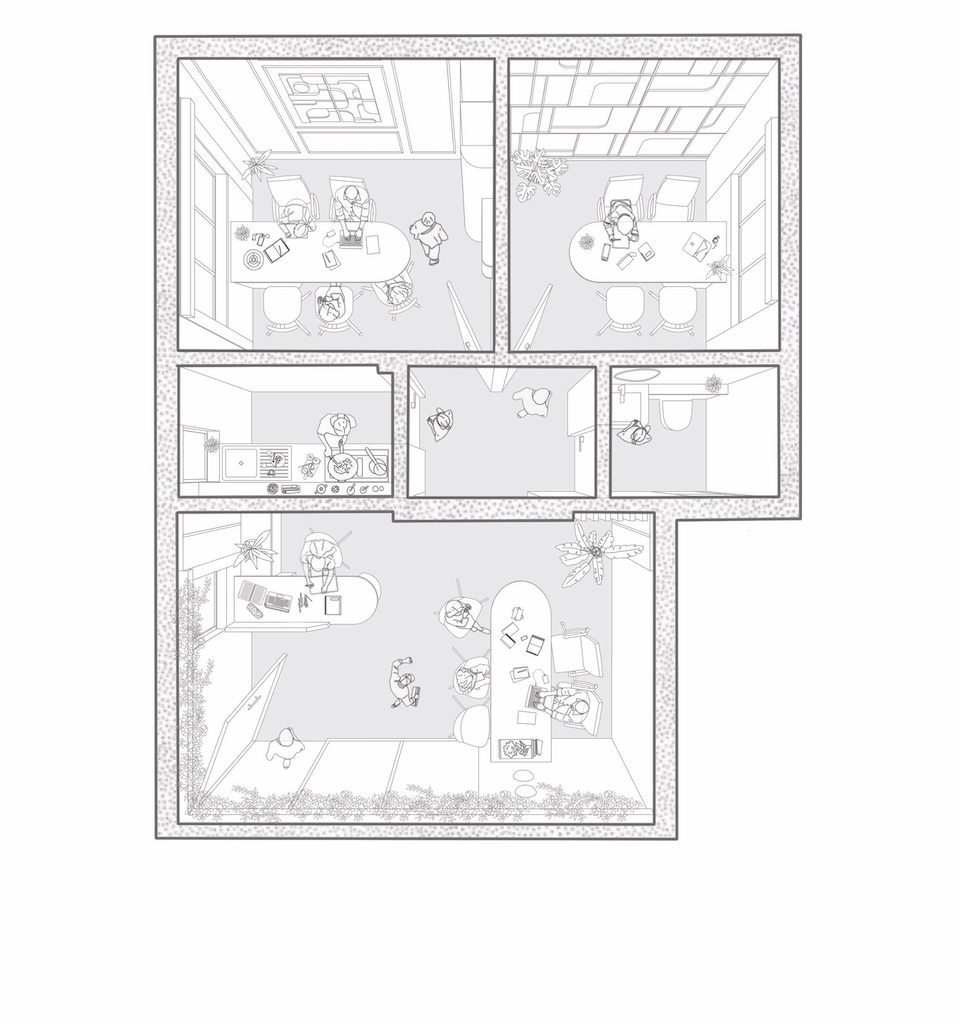
Entry into the office leads directly towards the reception area, where concrete-textured walls layered with warm wood establish the overall design language. This restrained backdrop is animated through biophilic elements, gentle curves and subtle arches that soften the compact space. Custom-designed chairs and light fixtures introduce contrast, with teal seating and rust-toned circular lights punctuating the neutral palette. As one moves deeper into the office, the language continues into the conference room and MD cabin, where continuity is maintained through texture and tone rather than repetition. The sequence feels fluid and engaging, guiding visitors naturally through the space without visual clutter.
The material palette
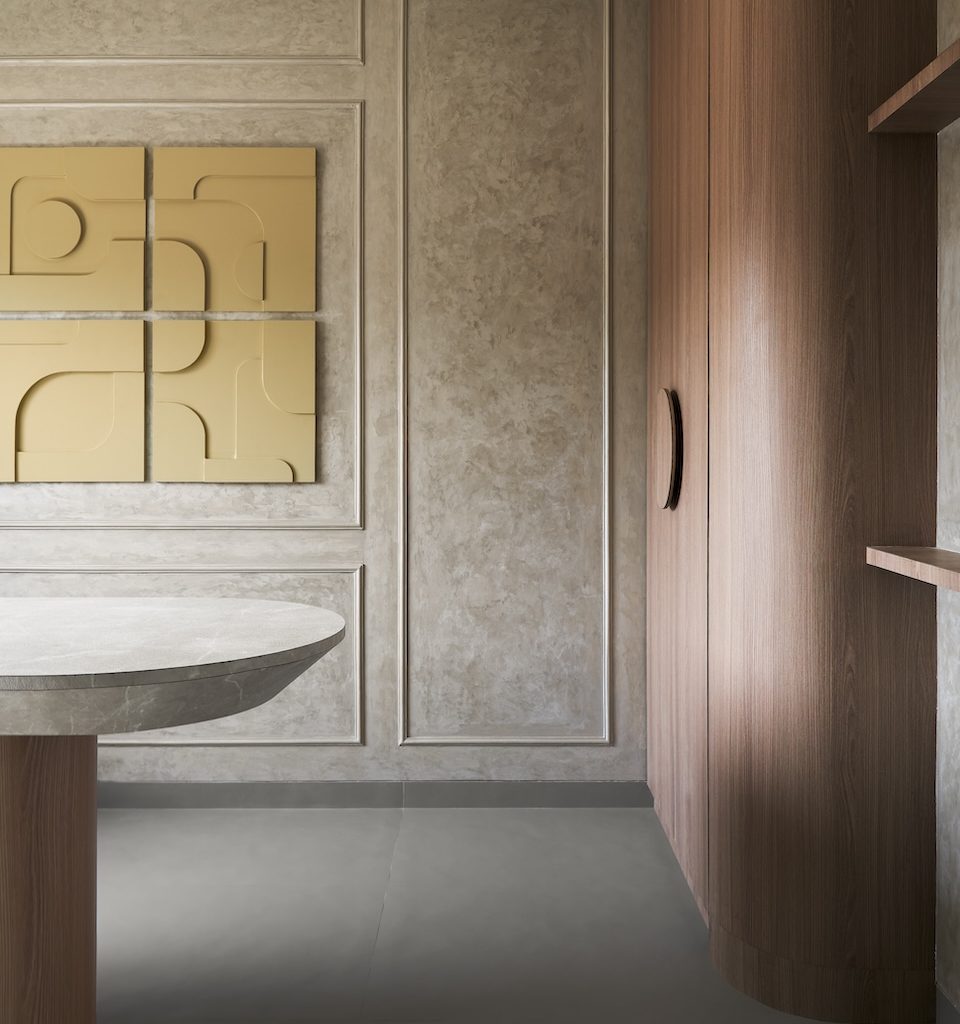
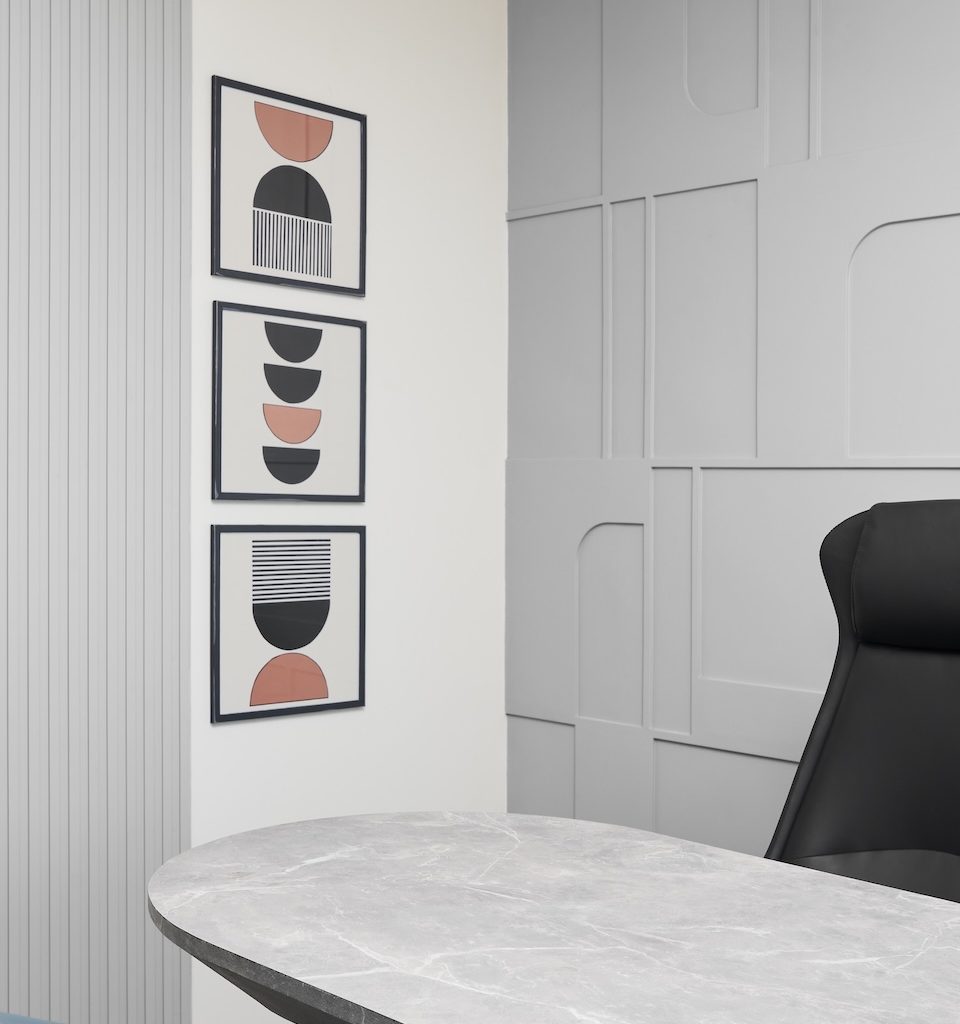
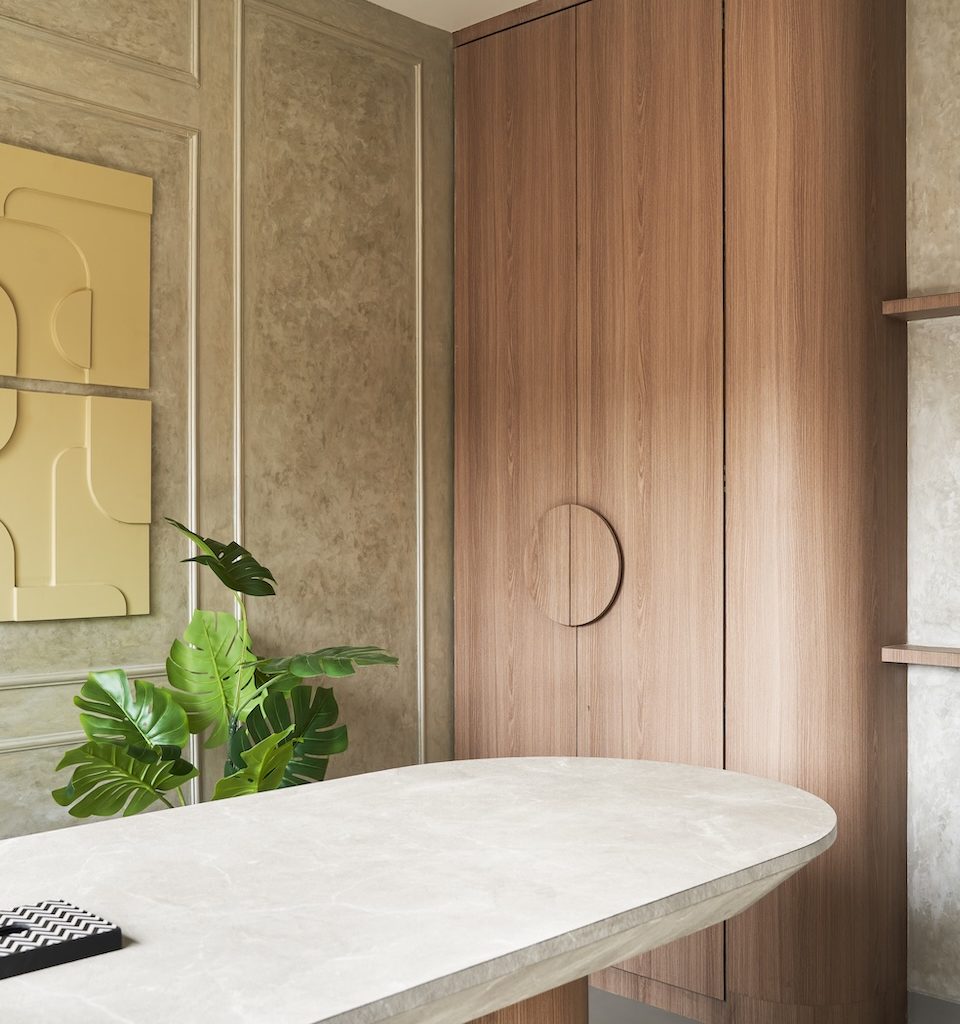
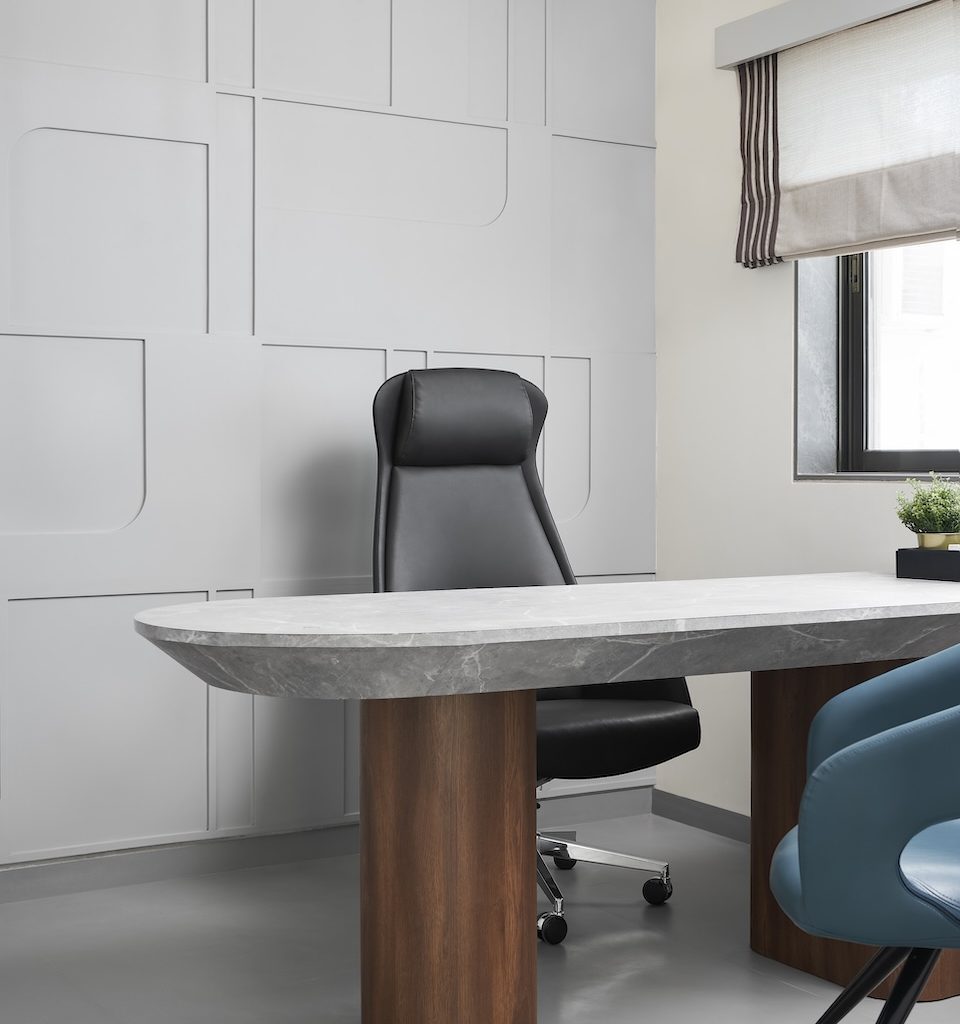
Grey concrete textures form the base of the material palette, offset by warm wooden surfaces that add depth and tactility. Pops of solid colour and creeping greenery introduce moments of softness and visual relief. A defining feature of the project is the use of leftover MDF from site to create three-dimensional artworks and accent walls. In both the conference room and MD cabin, layered MDF compositions in varying shades of grey create depth and character. Reflecting on this hands-on process, principal architect Saloni Chheda notes, “Working with a limited budget pushed us to engage directly with materials on site. Leftovers became opportunities, and experimentation became the design language.”
The challenges
Designing within a tightly constrained footprint while maintaining a strong experimental ethos was the primary challenge. Budget limitations demanded careful material choices and a hands-on approach to detailing. The project required constant calibration between design ambition and practical execution, resulting in solutions that were inventive yet grounded.
The highlights
The studio’s hands-on engagement with material experimentation stands out as a defining highlight. From custom light fixtures to on-site-crafted MDF artworks, the project demonstrates how leftover materials can be transformed into meaningful design elements. These moments lend the office its distinctive character while reinforcing the studio’s commitment to making-led design.
The takeaway
For the designers, the project reaffirmed the importance of persistence and creative focus, even under challenging circumstances. The Bare Box stands as a reminder that design driven by curiosity, care and conviction can thrive regardless of scale or constraint.
Fact file
Project: The Bare Box
Design firm: Bareism Design Studio
Area: 480 sq ft
Location: Vasai
Principal architects: Deepshikha Apte and Saloni Chheda
Add a Comment