

With striking colours and heritage-inspired accents, this Mumbai apartment designed by Ishwar Rungta Architects beautifully mirrors the couple’s passion for art, books, and their Rajasthani roots.
Curated by: Deepa Nair
Photographs: Anuja Kambli; courtesy Ishwar Rungta Architects

The brief
Amid the bustle of suburban Mumbai, a young couple sought a home that would reflect not just their lifestyle but also their Rajasthani heritage. Their 1,150-square-foot 3BHK in Kanjurmarg had to go beyond functionality—it needed to embody the colours, textures, and timeless artistry of Rajasthan. Ishwar Rungta Architects responded to this vision with a residence that feels both rooted in tradition and attuned to urban living.
The design intent
The brief called for a deep integration of Rajasthani motifs, fabrics, patterns, and vibrant colour palettes. “To do justice to this vision, I immersed myself in extensive research, delving into the rich design history of Rajasthan, exploring traditional textures, and understanding their symbolic significance,” shares Ishwar Rungta, principal architect, Ishwar Rungta Architects. “The challenge was to translate these timeless elements into a modern, urban setting that feels rooted yet contemporary. The result is a space that celebrates cultural heritage while seamlessly fitting into a present-day lifestyle,” he adds.
The civil intervention
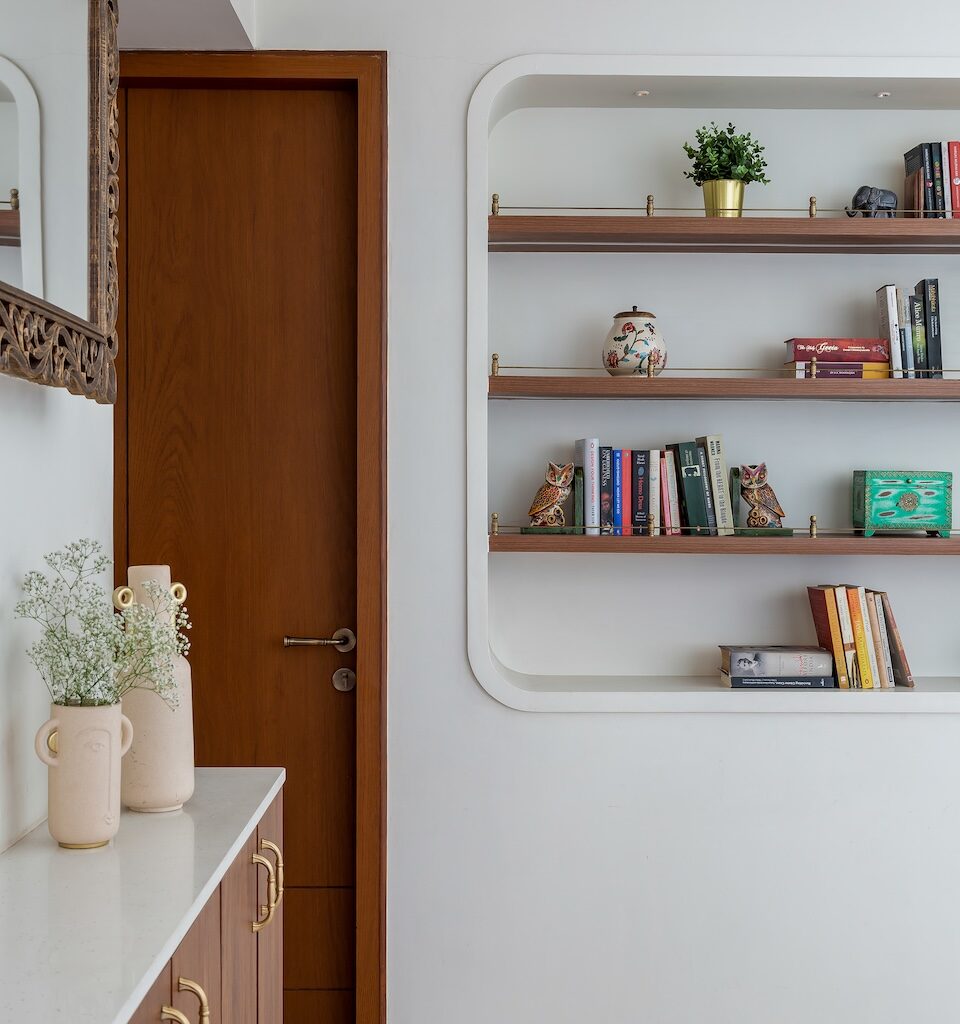
One of the client’s key requirements was to incorporate a large bookshelf in the living area. To accommodate this without compromising the flow of space, the wall between the living and guest bedrooms was broken down to carve out a custom-designed, rounded-rectangle bookshelf measuring 5 x 4 feet. Crafted with warm wooden ledges and accentuated with brass railings, the bookshelf not only serves as a functional display, but also becomes a statement feature that connects the two spaces visually and thematically.

The design and material details
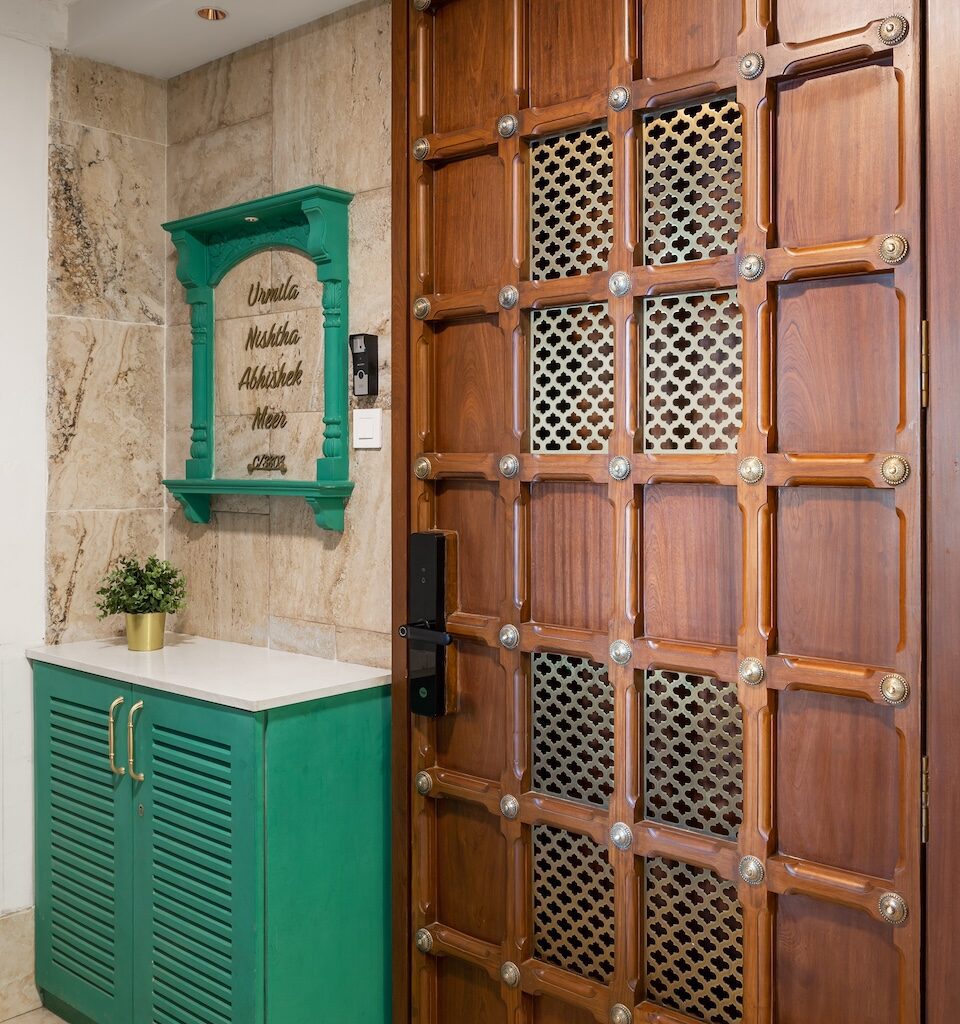
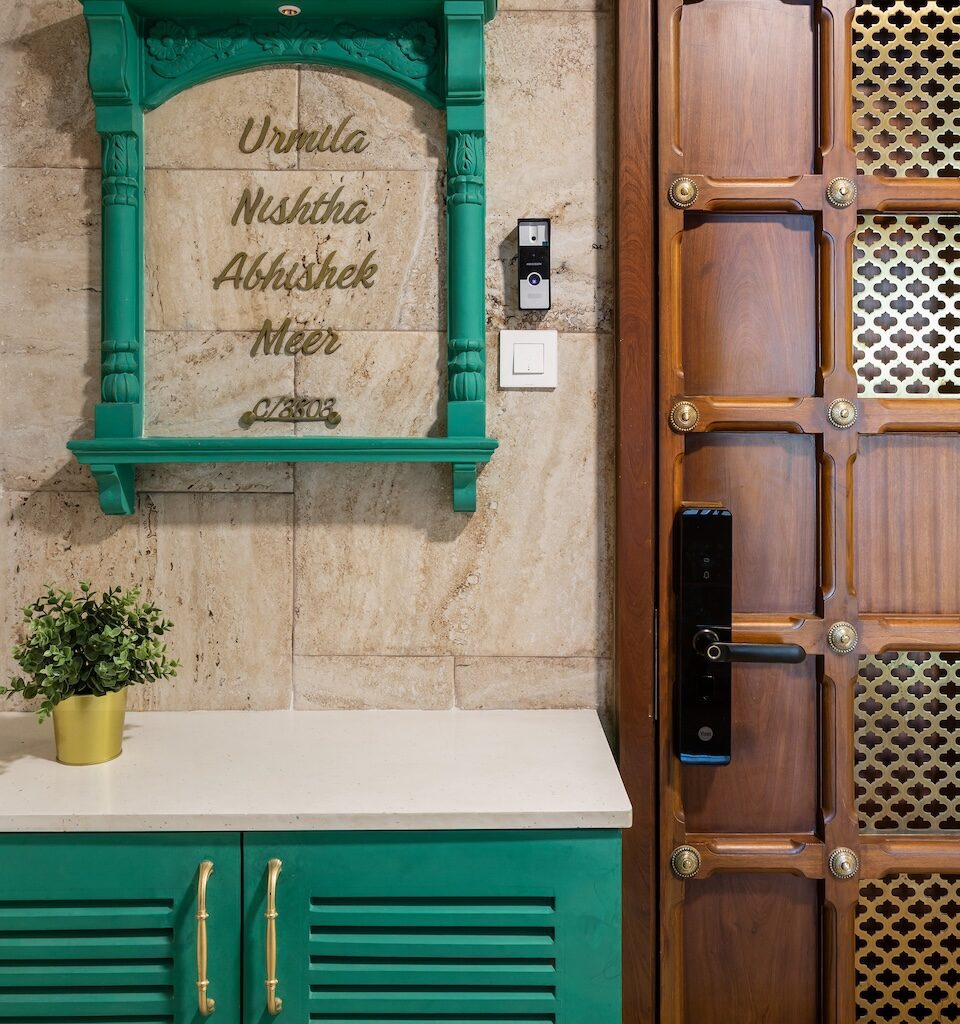
The design story of this home begins at the entrance, where Rajasthani architecture sets the tone. A Burma teak door with veneer finish, its joints detailed with brass domes and jaali, gives the threshold a vintage allure. Beside it, a turquoise jharokha-style nameplate with delicate peacock carvings makes a vivid first impression. The raw texture of a sandstone-finished shoe rack, fitted with brass handles, reinforces the sense of tradition—utility softened with elegance. Overhead, corniced ceilings run across the apartment, tying the interiors together with a quiet layer of refinement.
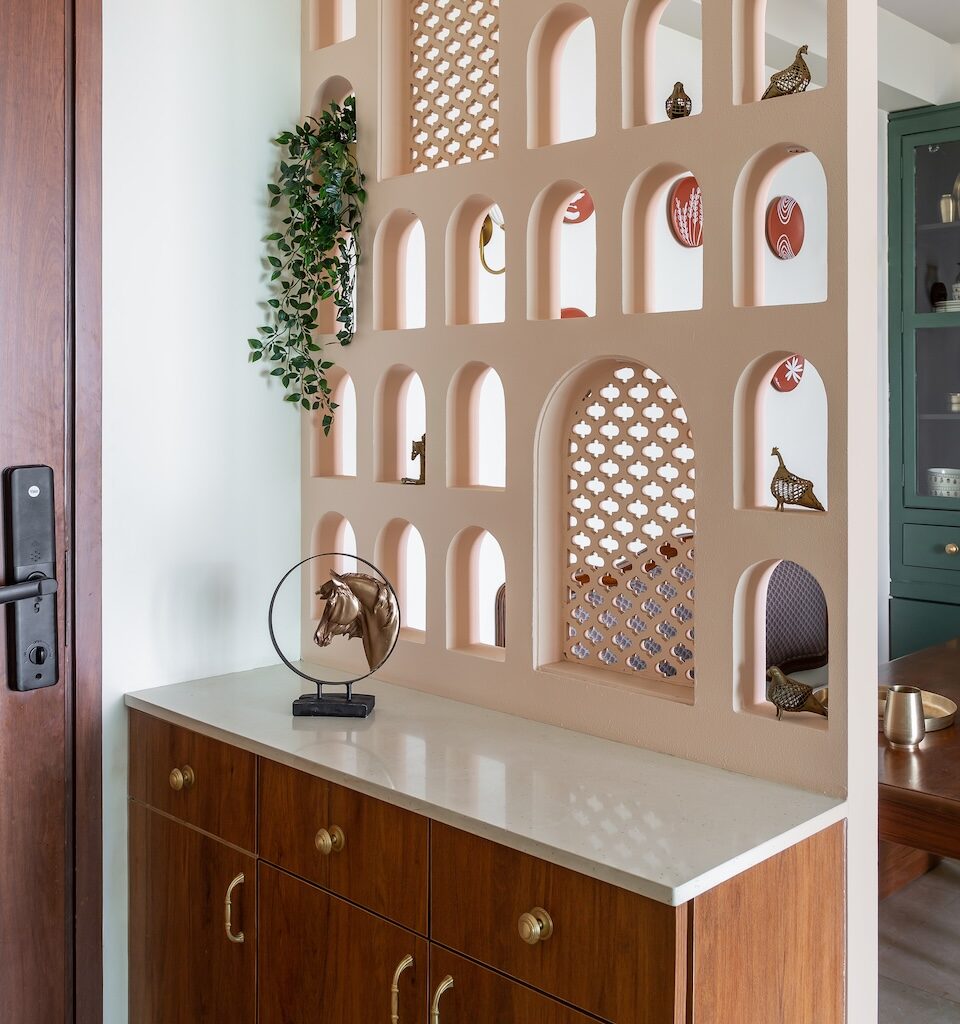
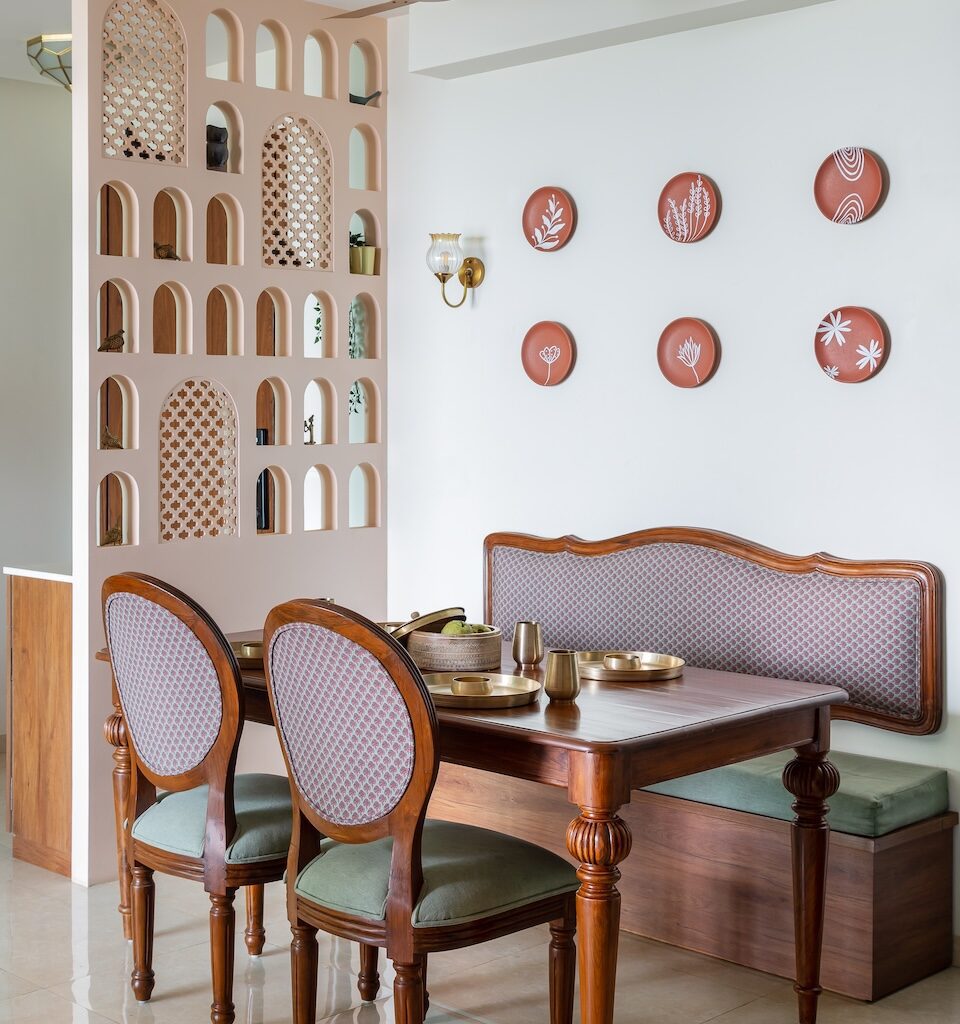
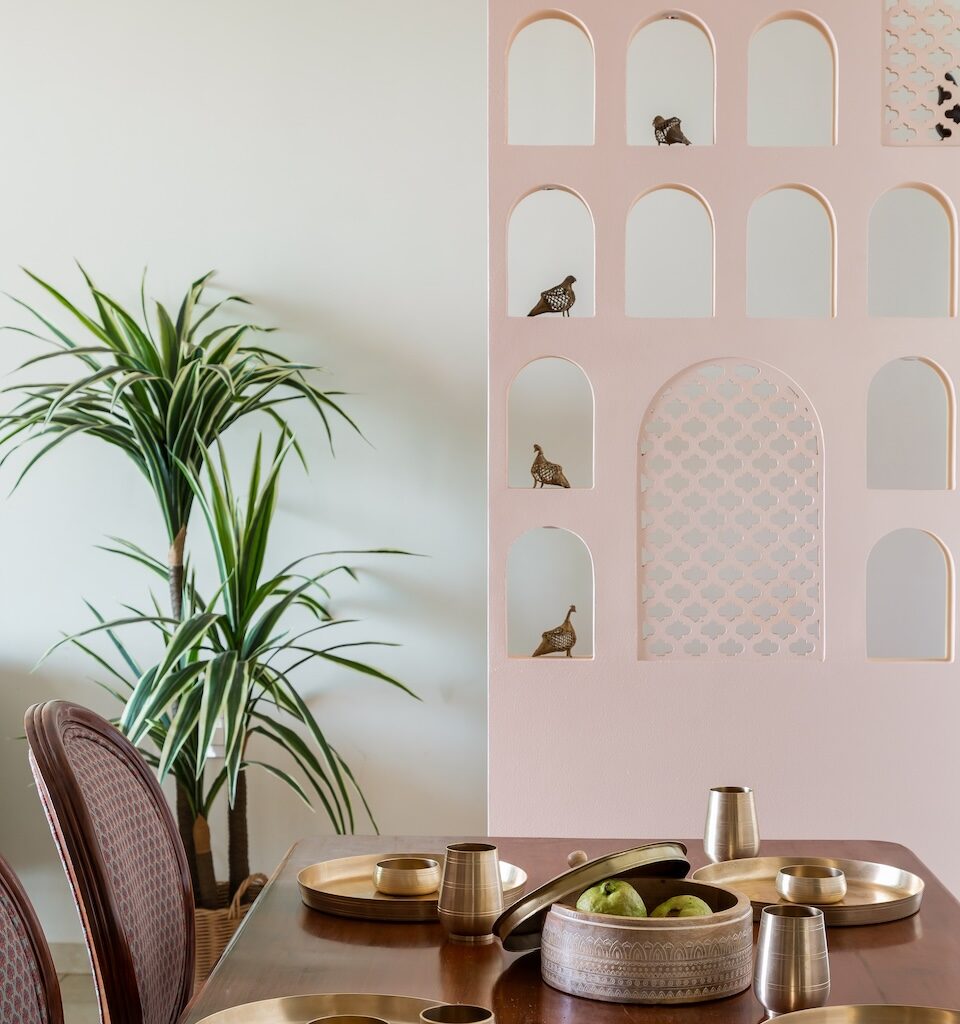
The living-dining area reflects the couple’s desire for the vibrancy of Jaipur’s Hawa Mahal, yet reinterpreted for their Mumbai setting. Jaali-inspired arches finished in warm sandstone frame the transition from the entrance to the dining corner, creating a sense of movement rather than division. The dining table, crafted from solid wood and upholstered in block-printed fabric, becomes a stage for the couple’s treasured Kansa thali set. Behind, terracotta plate art fills the wall with bursts of colour.

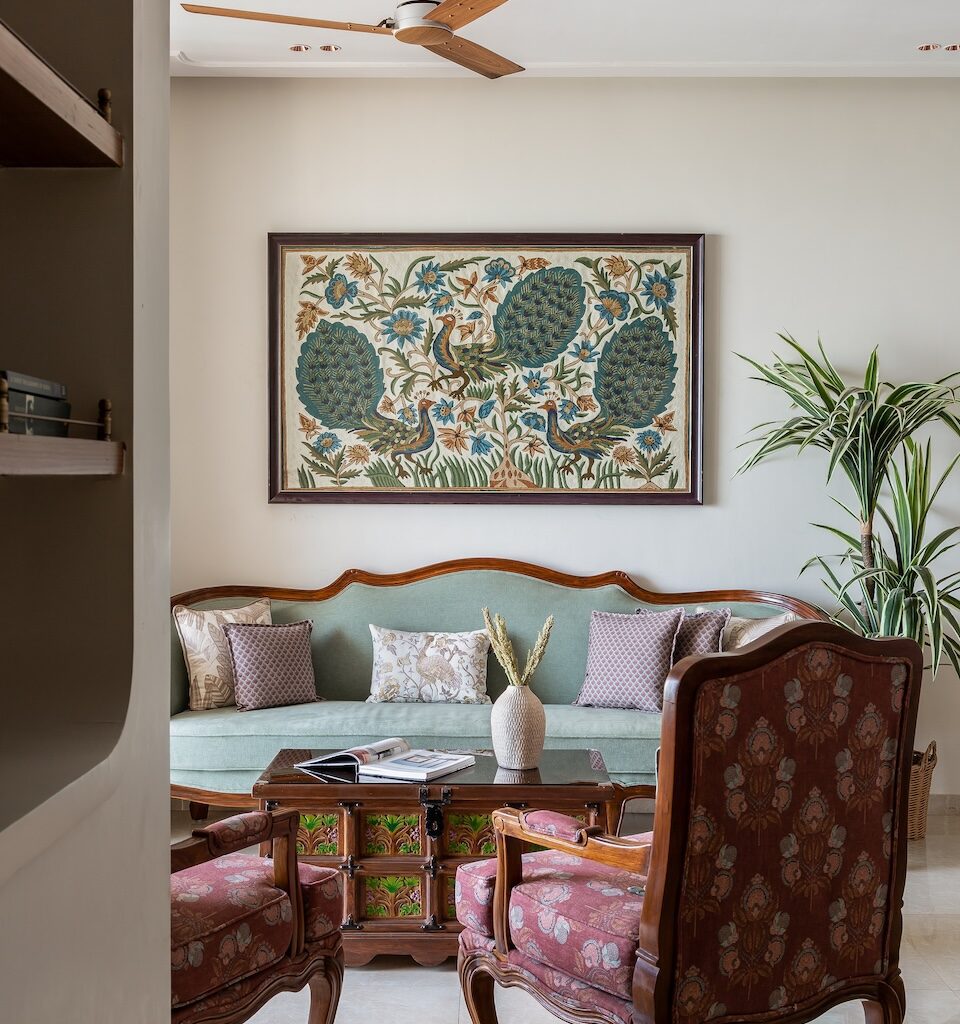
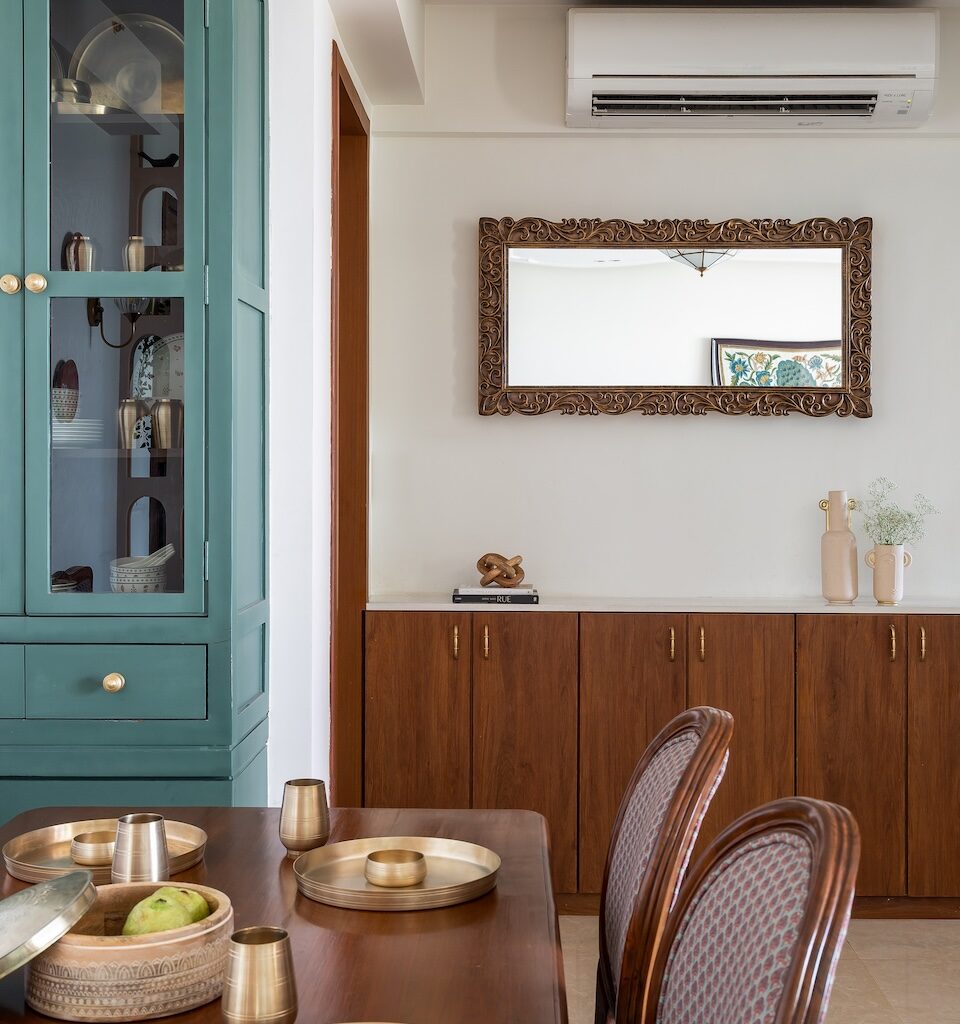
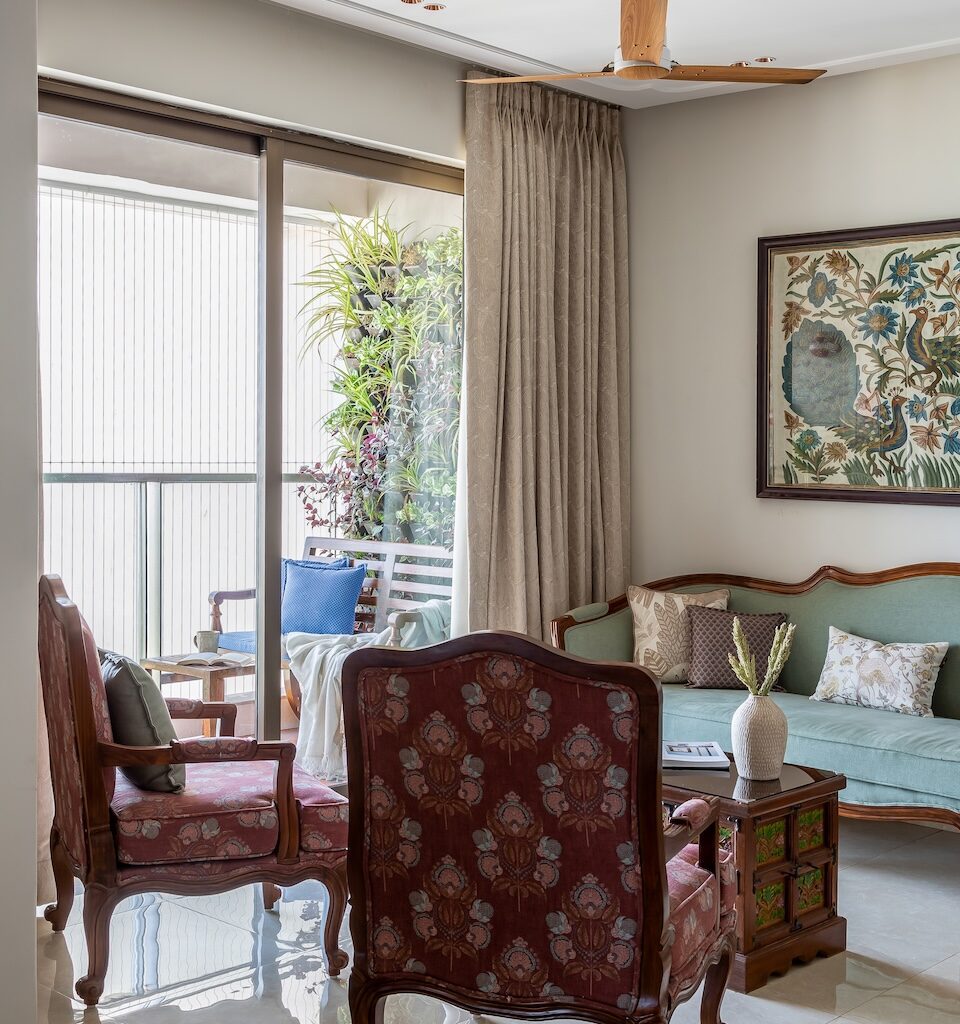
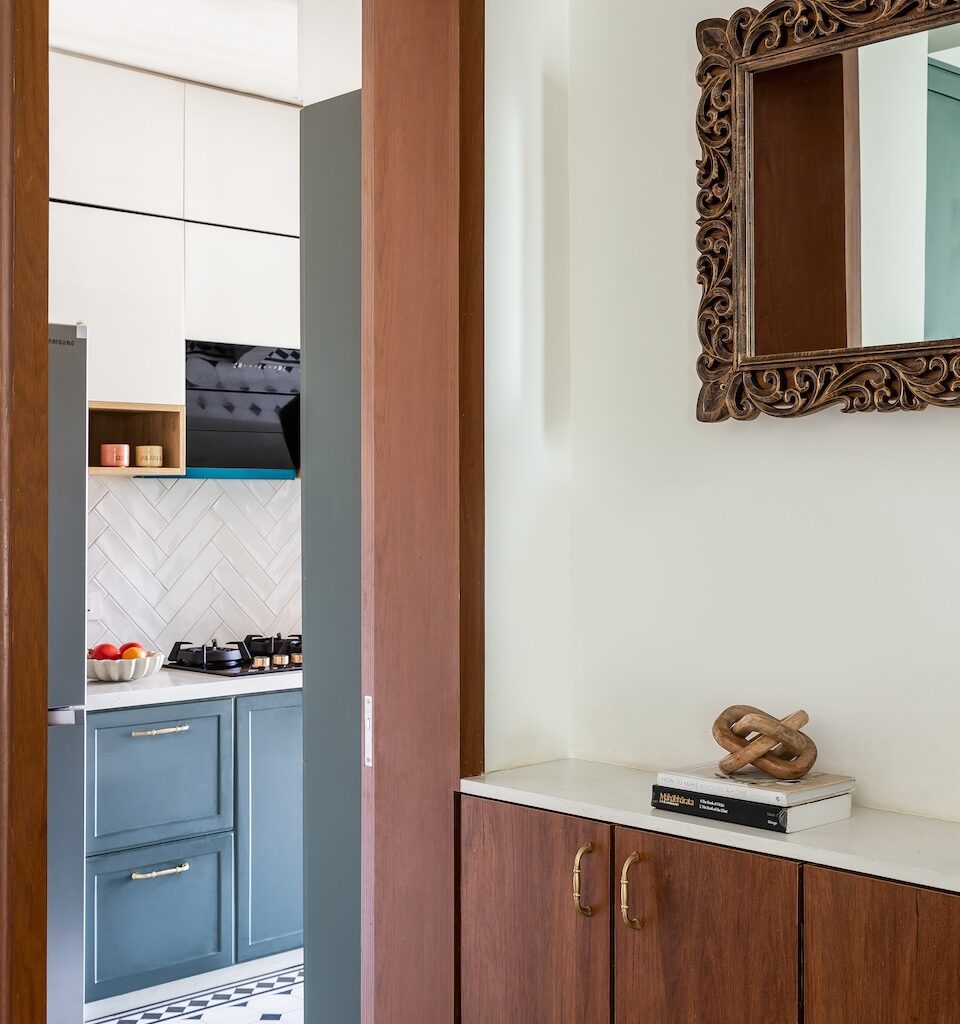
The living–dining zone carries some of the home’s most inventive touches, where heritage blends with the everyday in thoughtful gestures. Traditional furniture finds new life here: once functional pieces are recycled, repurposed, and refashioned to meet the present. A tall bookshelf, for instance, has been reborn as a striking peacock-green crockery cabinet, adding both storage and character. An ornamental mirror conceals a neat storage unit behind its detailed frame, merging grace with practicality. At the centre of the room sits a sandook, refashioned into a glass-topped table that grounds the seating area while nodding to family heirlooms. The seating itself is an embrace of texture and colour: a deep green sofa with block-printed cushions, paired with maroon accent chairs in traditional fabrics, anchors the space in warmth. These arrangements are not just functional but expressive, reinforcing the narrative of a Rajasthani-inspired apartment where every piece has a story, whether inherited, reinvented, or crafted anew.
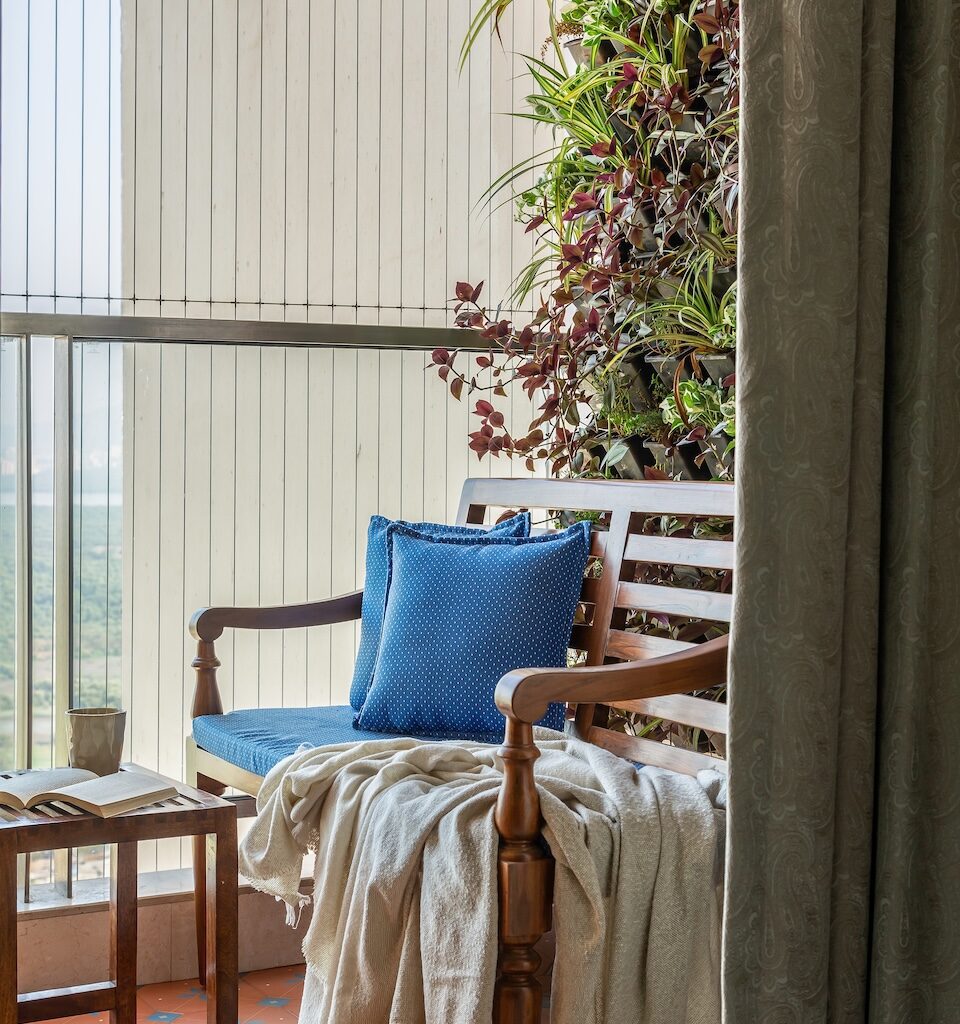
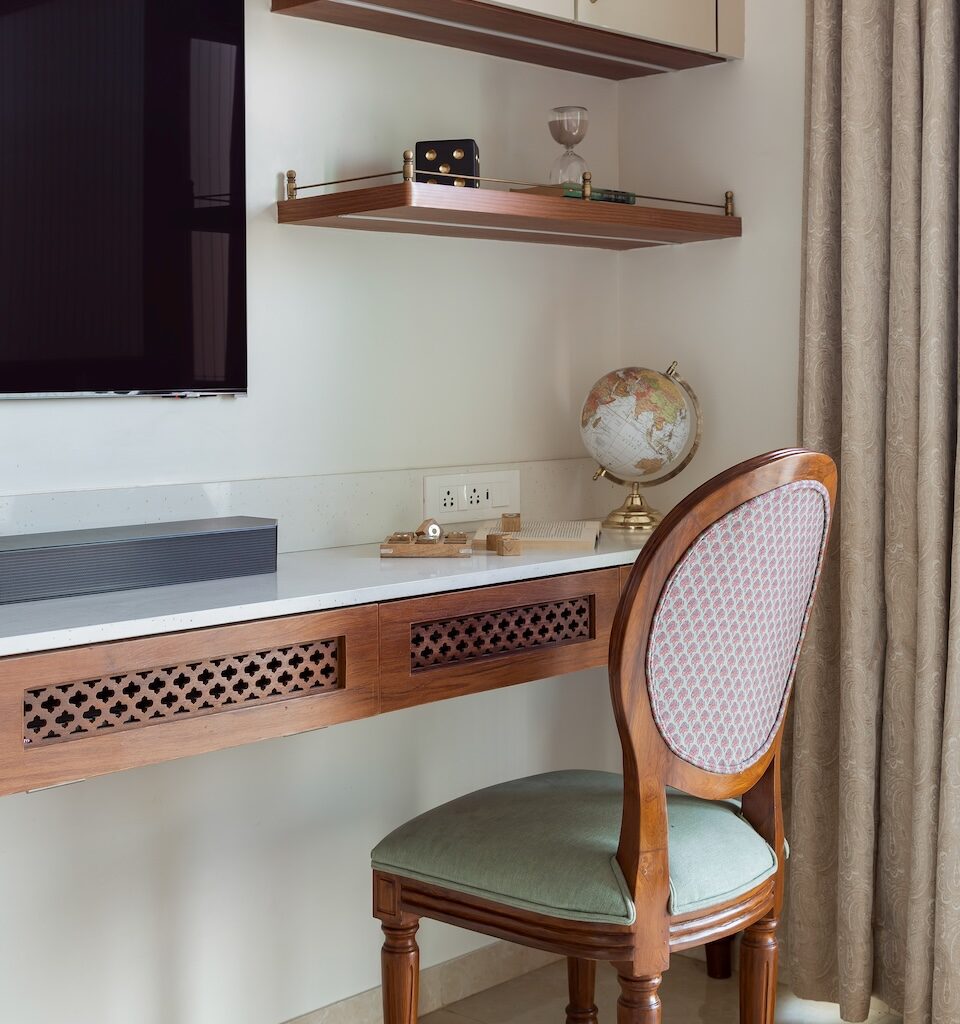
Other highlights of this free-flowing space is a hero painting on the ascent wall which continues the peacock motif theme, planters that add freshness, and a custom bookshelf which celebrates the couple’s love for art and literature. Lighting is deliberately warm and ambient, coaxing a sense of intimacy. Just beyond, the balcony extends the home’s playfulness: brick-orange and blue floral mosaics underfoot, a carved bench, vertical garden, and artful pot-light installations. A foldable study ledge completes the picture, layering practicality onto charm. The kitchen sees a play in contrasts: black-and-white patterned flooring meets the deep richness of peacock green cabinetry. Textured herringbone subway tiles line the backsplash, while ornamental handles add a delicate flourish.
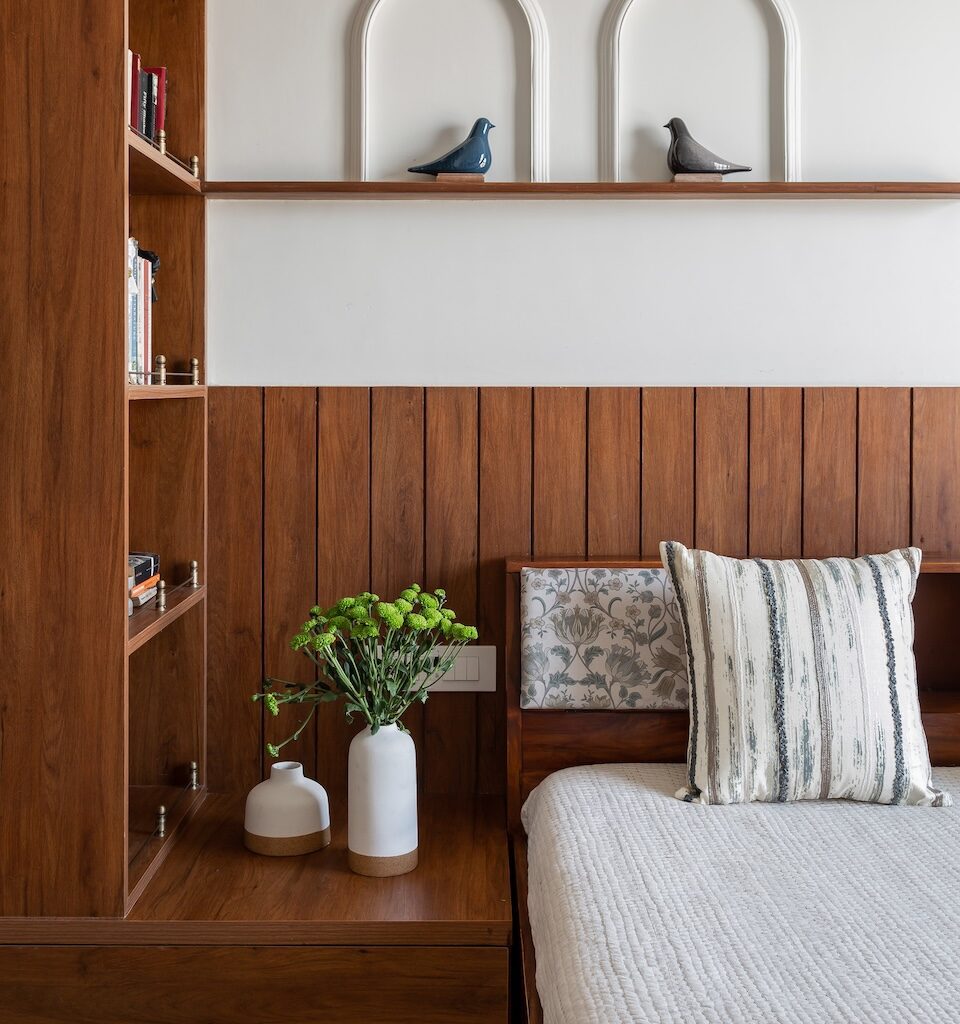
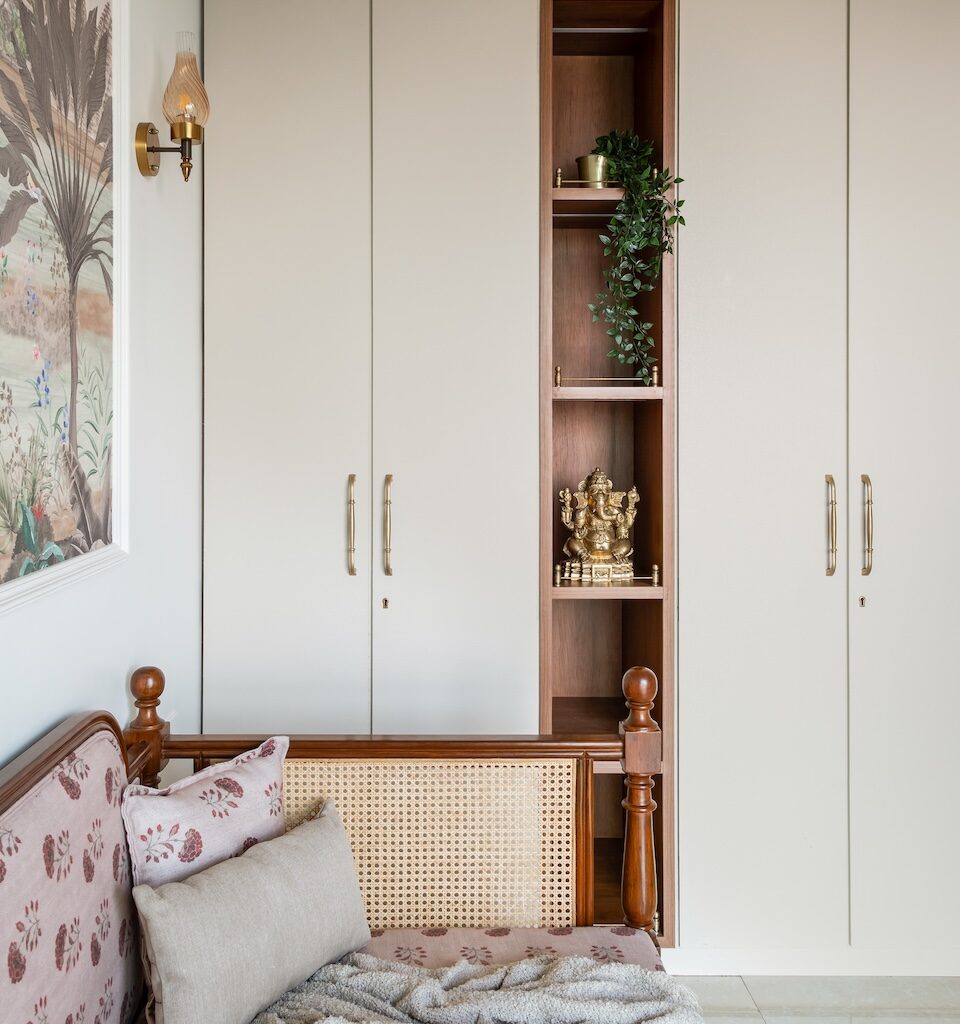
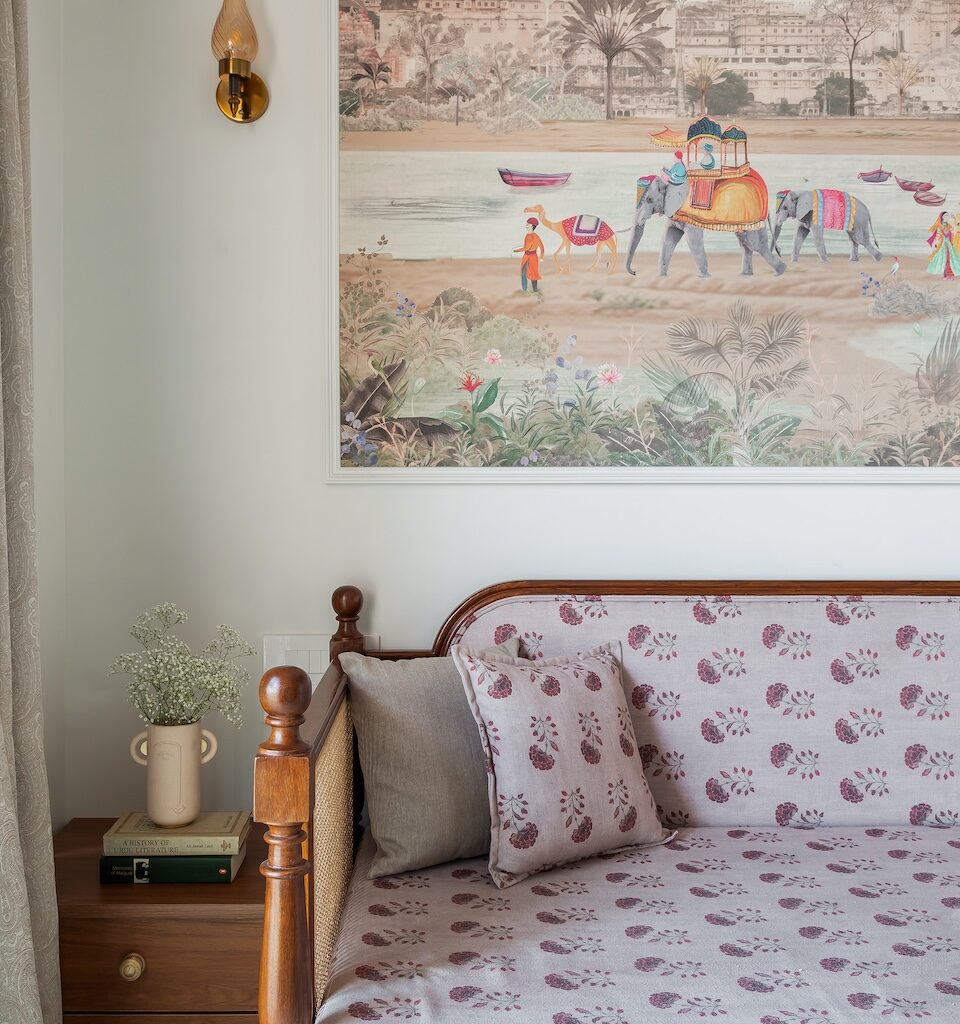
Each bedroom then unfolds with its own personality. The parents’ room, wrapped in Kalakari Haath wallpaper blooming with garden motifs, is softened by a brass-detailed bookshelf and bird-themed décor. A grooved headboard faces a Madhubani painting, while an arched mirror and compact mandir with a brass jaali door echo the home’s overarching motif. The guest room pairs a floral block-printed sofa-cum-bed with heritage wallpaper and rattan accents, balancing nostalgia with versatility.
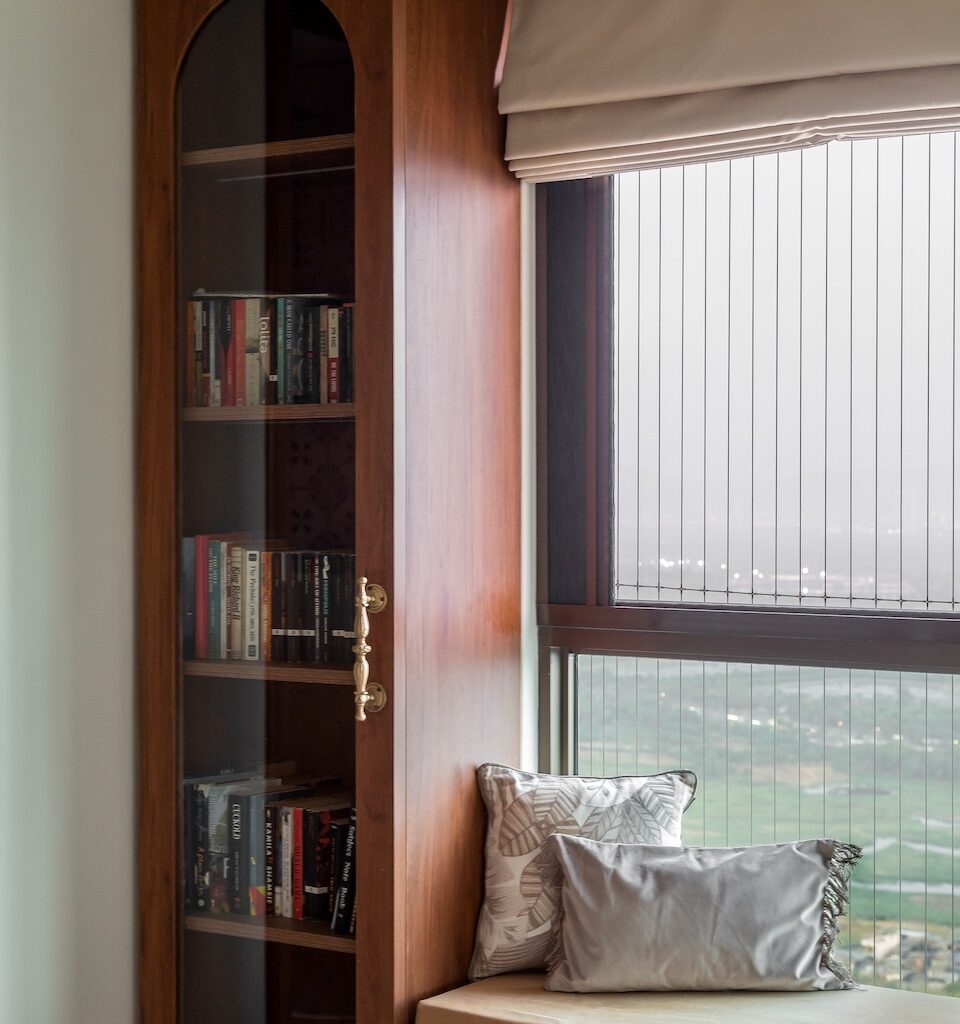
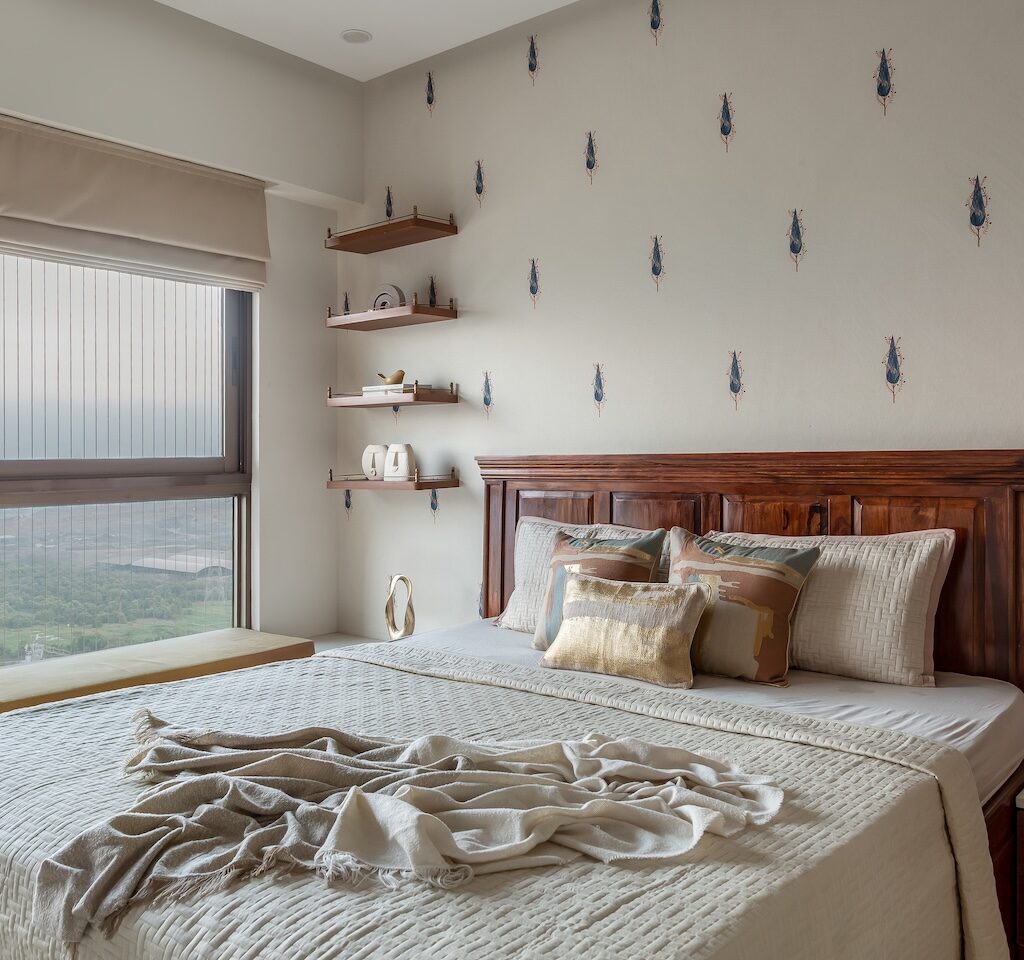
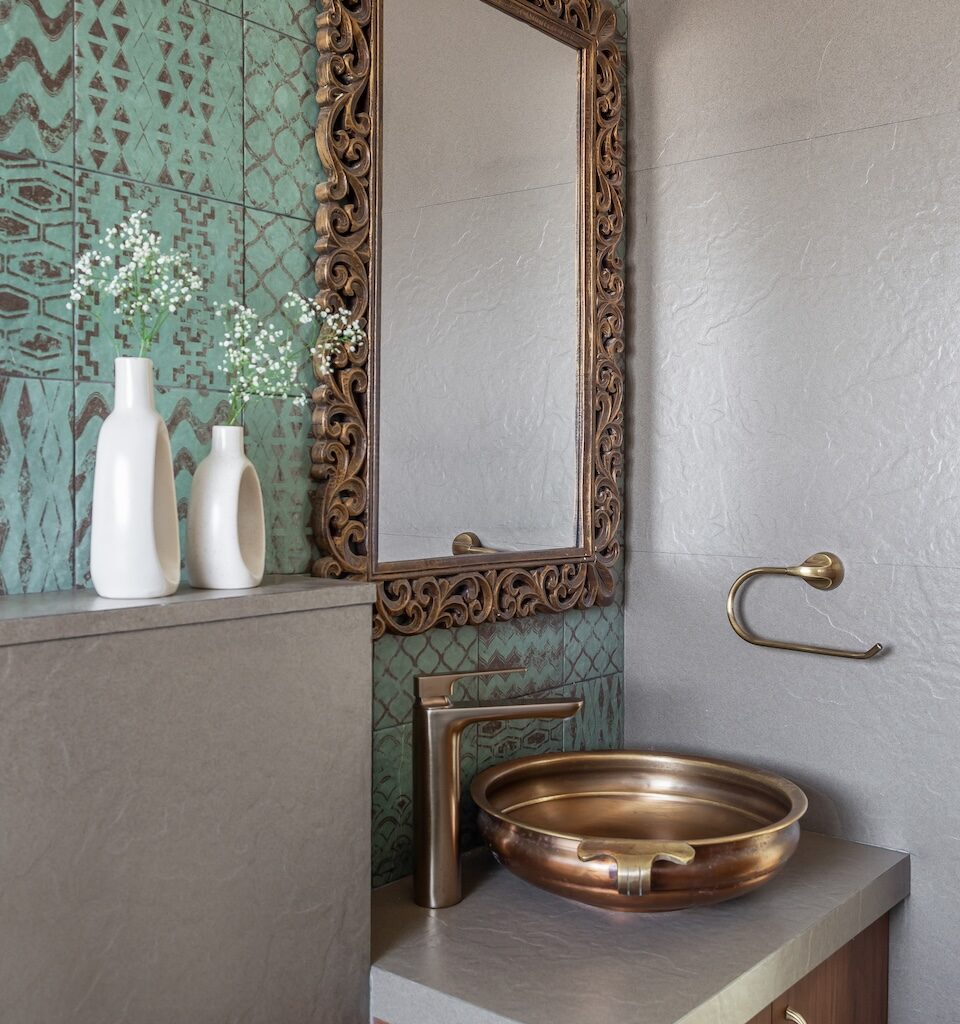
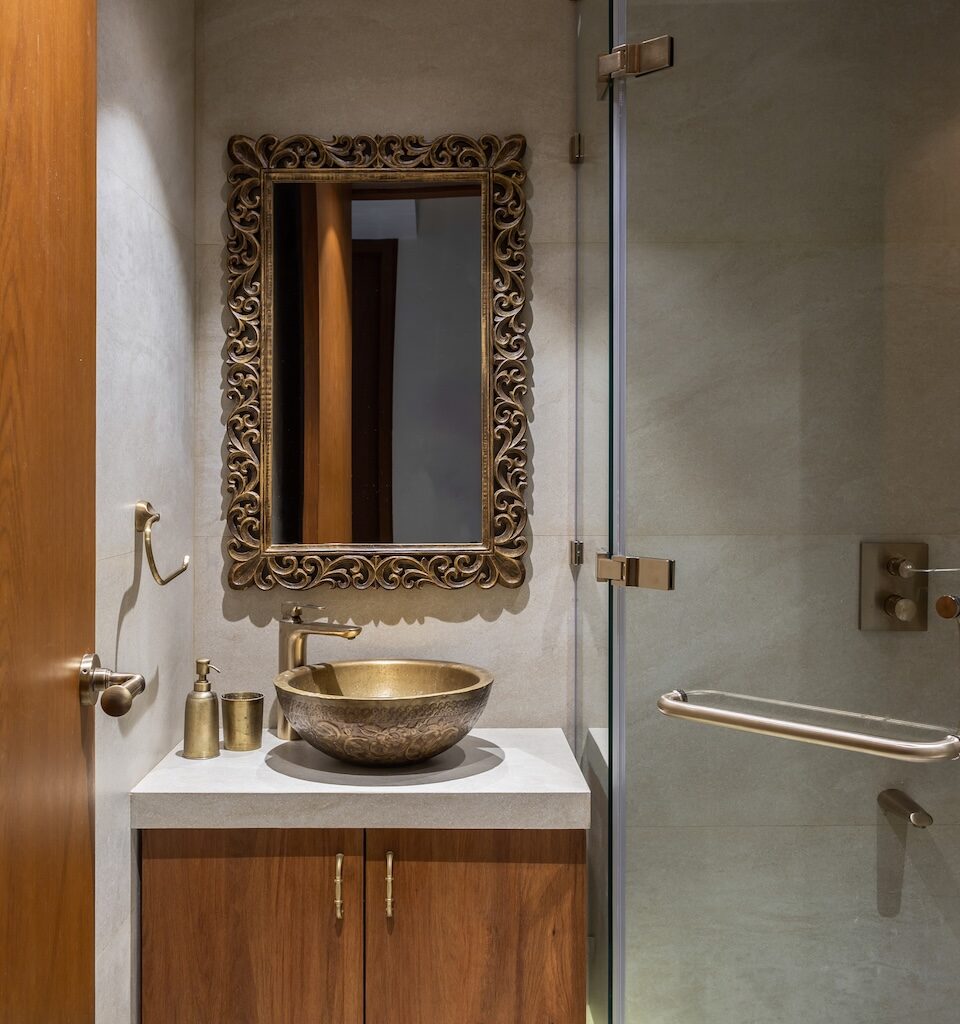
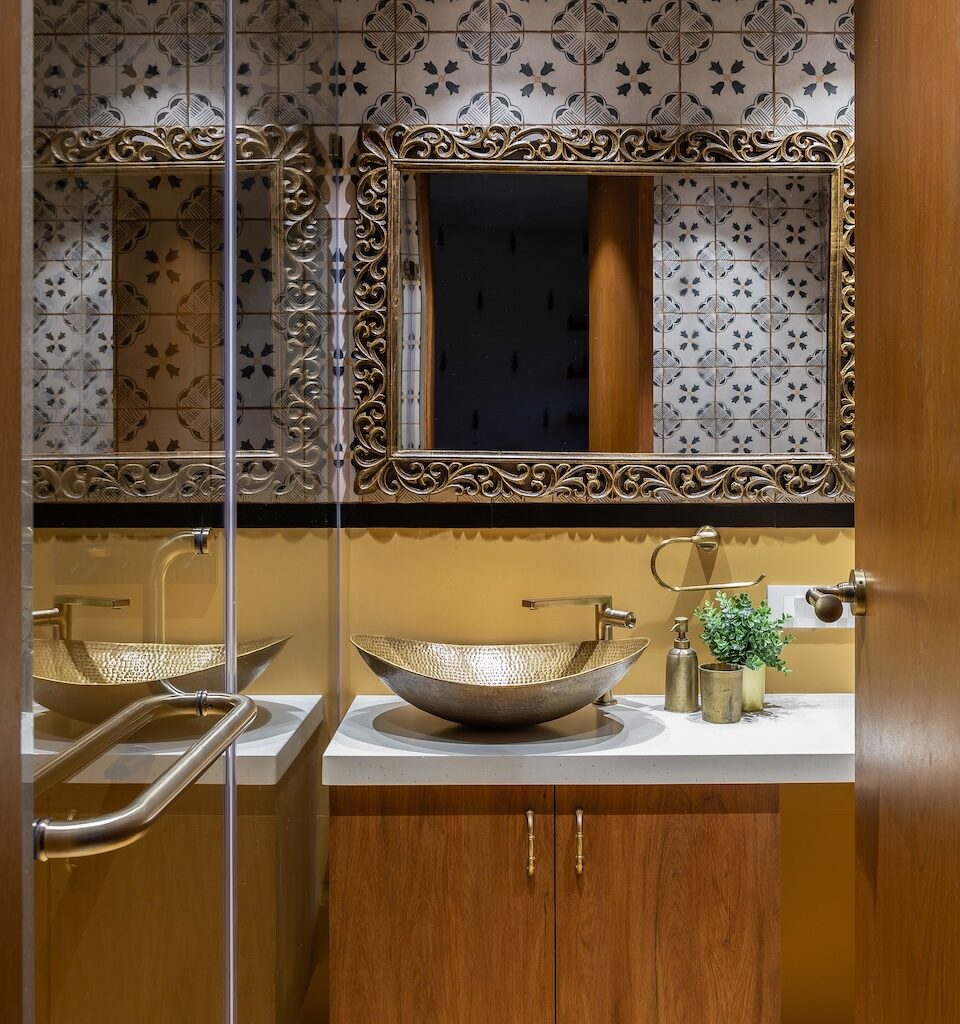
The master suite is layered in regal restraint: a classic bed backed by Kalakari wallpaper, a mustard-yellow window seat, floating bookshelves, and arched wardrobes. A small reading nook, perched by the window, opens up to the city beyond. Bathrooms, too, carry their share of storytelling—mustard tiles paired with patterned surfaces in the master, Moroccan flooring and antique brass fittings in the common bath. Ornamental mirrors, placed in both, complete the palette with timeless grace.

The highlights
Ishwar says that while every bookshelf in the apartment has been designed differently, there’s a sense of cohesion that runs through them, brought together by recurring details like warm wooden finishes and elegant brass railings. He points out how the jaali motif quietly ties the home together—whether it appears on the safety door, the arched partitions, the mandir shutters, the guest bedroom’s TV unit, or even something as unassuming as the Wi-Fi box in the passage. For him, it is this attention to detail in every corner that gives the space its character and continuity.

The challenges
The principal architect admits with a smile, “The challenging part was to manage all the detailing in a frame aesthetically, without overpowering the functionality of the space.”
FACT FILE
Project: The Royal Nook
Location: Runwal Bliss, Kanjurmarg, Mumbai
Area: 1,150 sq ft
Principal architect: Ishwar Rungta





Add a Comment