
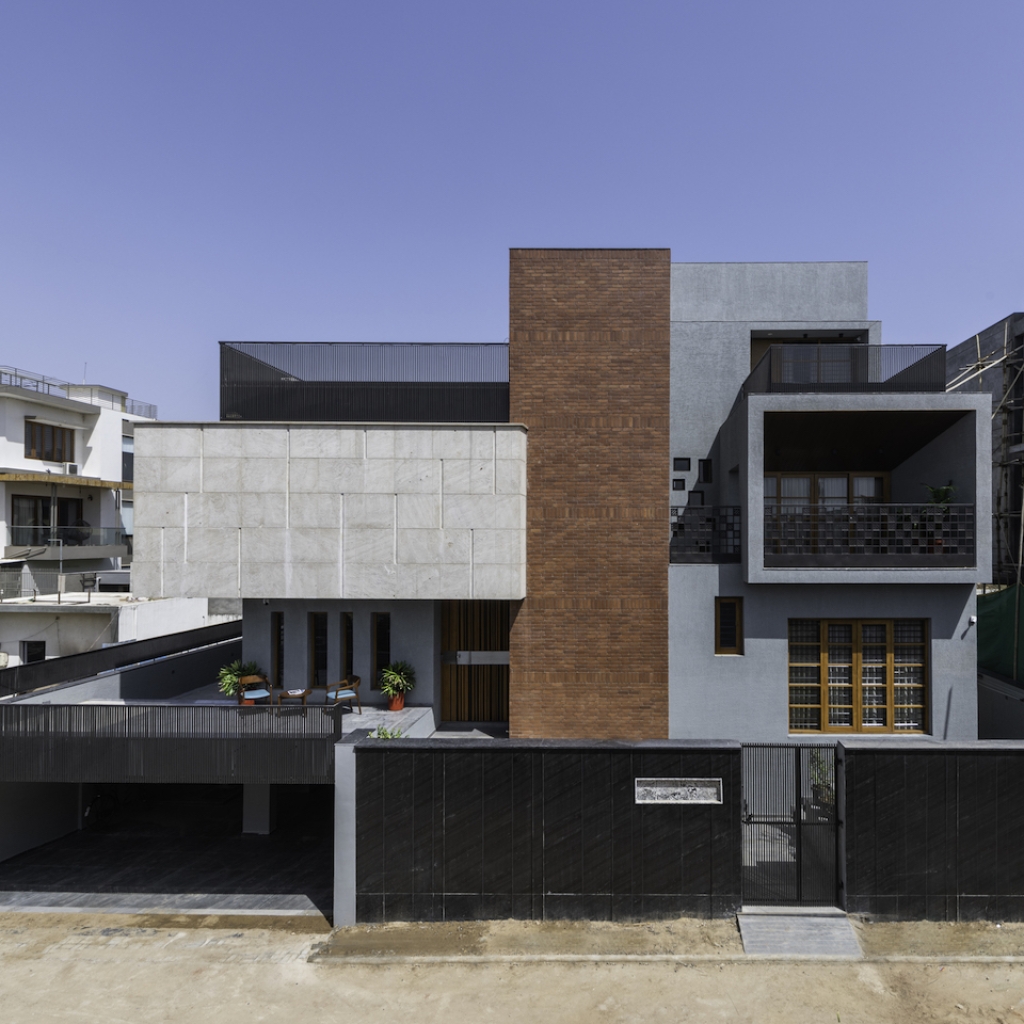
Ignitus Architectural Studio creates a contemporary environment that responds to the climate and the needs of the occupants.
Curated by: Rupali Sebastian
Photographs: Photographix India; courtesy Ignitus Architectural Studio
The site
Located in the bustling suburbs of Ahmedabad, House of Nine Cubes sprawls over 5,000 sq ft, and features five bedrooms and a lavish entertainment room. Home to a joint family of nine residents, it is a newly inspired take on contemporary Indian vernacular architecture.

The brief
The clients required the architect, Chirag Panchal of Ignitus Architectural Studio, to design a home that accommodates three generations of a family, ideologies, and different design sensibilities, living together under a roof. They required space with parking for three cars, a spacious outdoor area, two living rooms, five bedrooms, an open kitchen dining, and an entertainment room.
“What was laid out most importantly at a very early stage of discussion,” reveals Chirag, “was the clients’ need to have an open layout for the common areas of the house to freely engage with the space as well as its occupants.”
The built-form
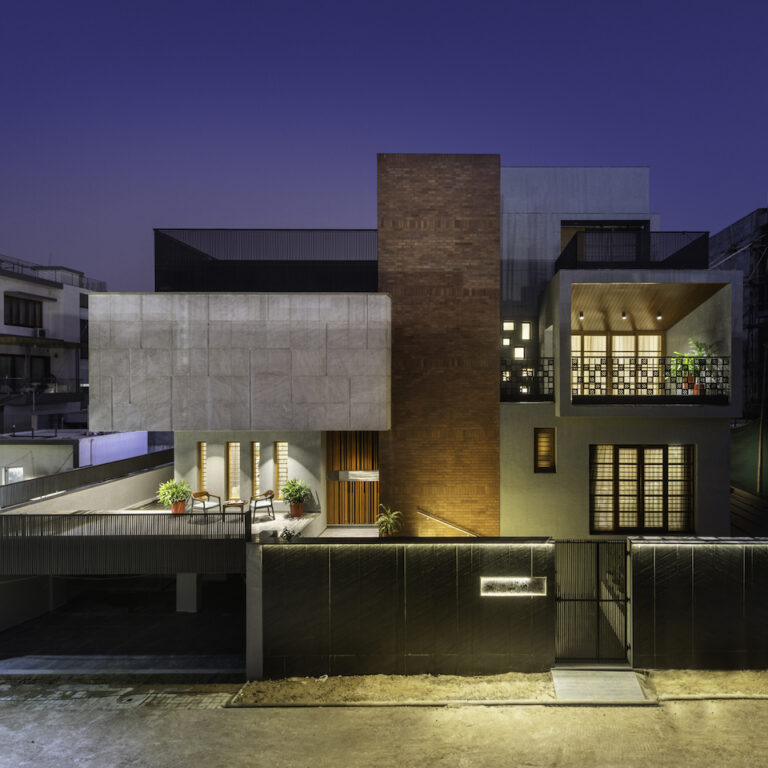
The minimal and neat architecture responds to the hot and dry climate of Ahmedabad in materiality and design. The project derives its name from the orchestration of nine cubes representing as many essential functions. “The number nine is also believed to be the number of completion and fulfilment according to Vaastu,” says architect Chirag Panchal whose Ignitus Architectural Studio was commissioned this assignment.
The structure is strategically aligned towards the east‐west direction to maximise the northern light and south‐west winds. A simple exterior material palette with stone, wood, and exposed brick paired with textured plaster envelopes the house in a warm embrace.
The front elevation of the house faces the west, and establishes a definite presence with its play of protruding and recessed cubes and cuboids with strategic use of materials. To reduce heat gain, this façade features very few openings except for a balcony perched onto the first floor to avoid the formation of any heat enclosures within the space. Accommodating the drawing‐room and the master bedroom on the first floor, the northern side has wider openings to allow the northern soft sunlight to filter into the house. The entry to the house is raised to make room for underground parking. The elevated ground becomes the outdoor deck for the family to enjoy peaceful evenings.
The spatial planning
The shell of the house is sculpted in a manner that interestingly captures the play of light, space, and volume together. To achieve this, the open spatial planning plays an integral role. All the key areas are placed and designed in a fashion that they seamlessly weave into each other.
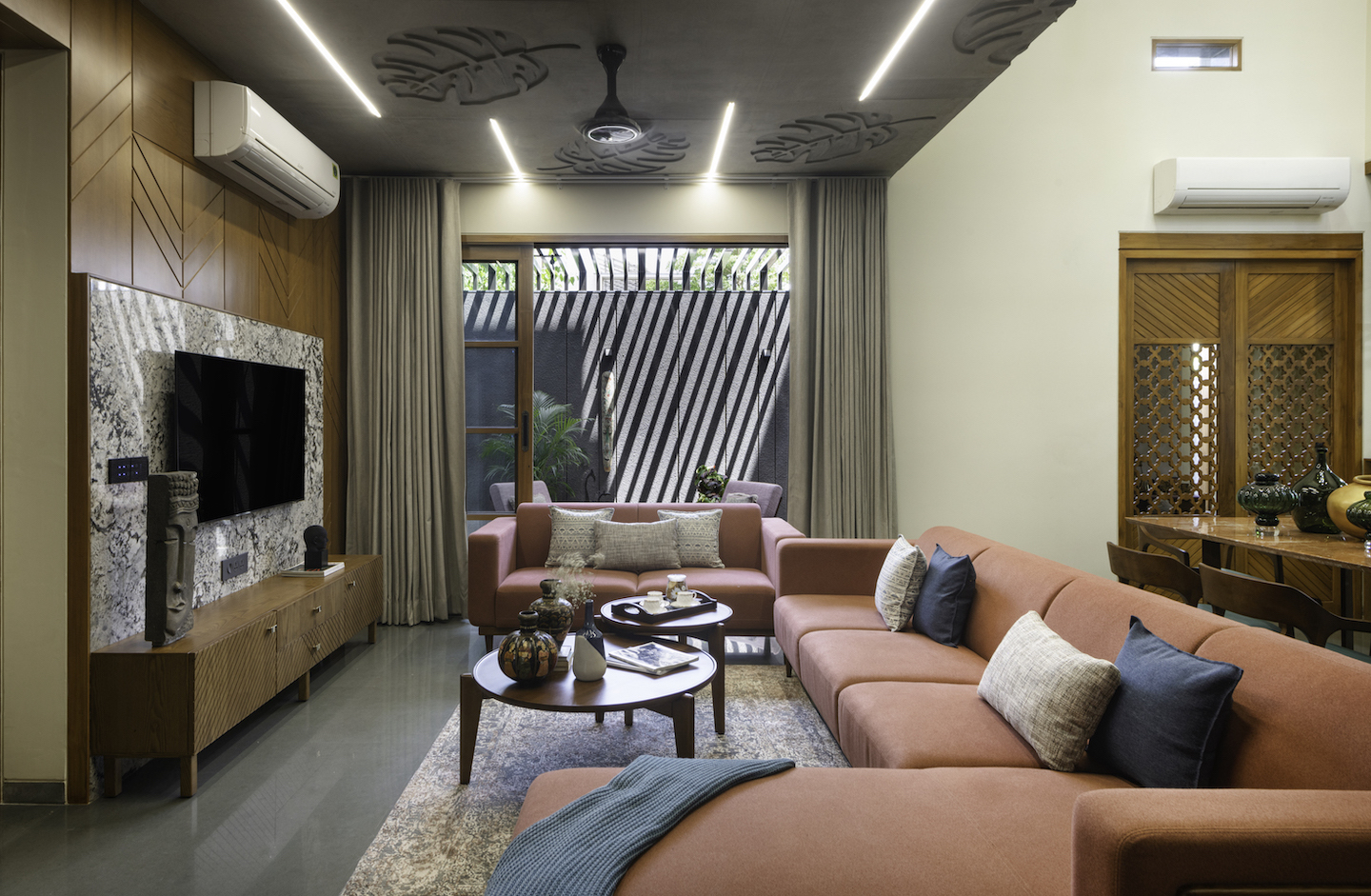
The drawing room, encompassed by a clear glass partition, spills onto the outer deck, connecting the indoors seamlessly with the outer space. The living, dining, and kitchen areas are a large singular linear space which encourages the family to freely interact and engage with the space.
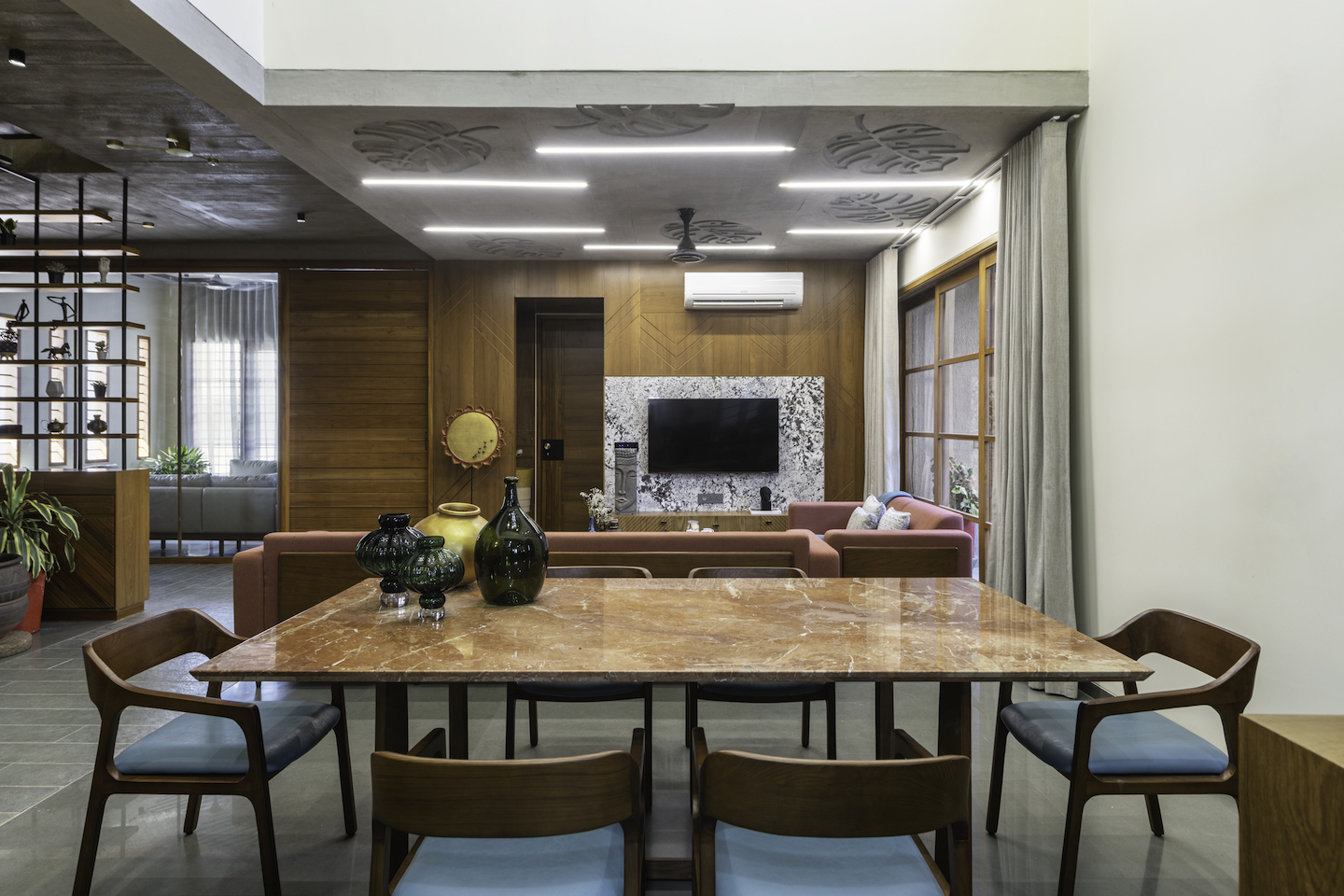
The dining area is accommodated in a double‐height space, which creates a sense of openness in the house. At the same time, it allows vertical connection with the floors above. One can peer down at the dining area while standing on the first‐floor passage area.
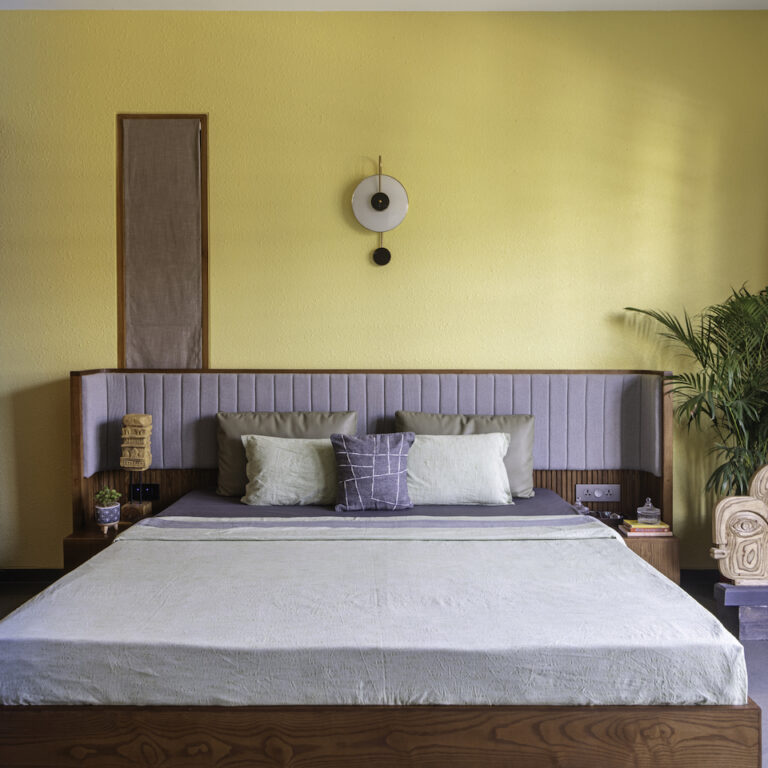
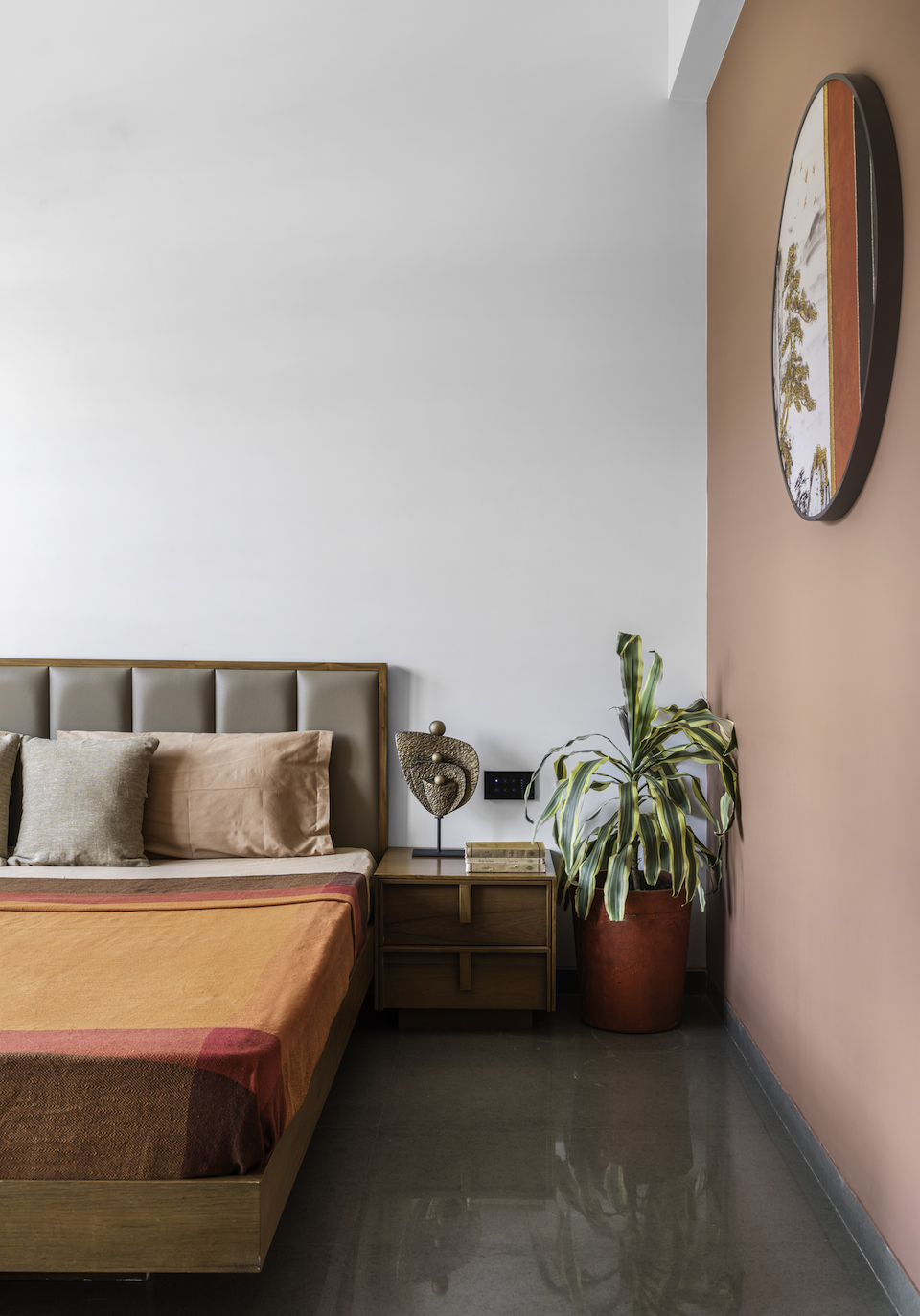
The ground floor also accommodates two bedrooms, one for the elderly parents and a guest bedroom. The parent’s bedroom is placed near the entrance on the west which provides ease of access to move about freely. Narrow window openings cut down the harsh sunlight. The guest bedroom is placed on the north east façade, making for a comfortable room filled with natural light.
The passage serves as a transition space from the common spaces of the house to their private areas. The first floor is essentially a private space for the family. With two master bedrooms and attached balconies and a kid’s bedroom.
The material palette
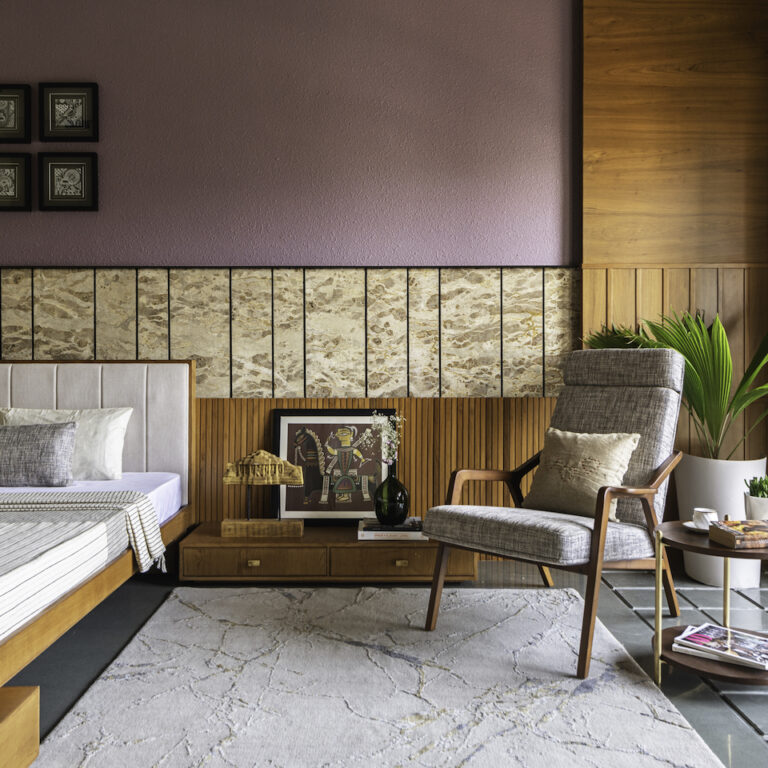
The interior of the house primarily makes an alluring play of materials by using rich teak veneer, locally sourced Kota stone, hints, and slivers of brass engraved in marble cladded accent walls. One clever feature of the house is its flooring. While the entire floor plate of the house is laid down with durable and long‐standing Kota stone, its finish alternates between mirror and river wash polish. The high‐traffic areas of the house, mainly the shared spaces, are treated with anti‐skid river wash flooring whereas the rest of the areas are treated with beautifully gleaming mirror polish Kota stone.
Fact file
Project: House of Nine Cubes
Location: Ahmedabad
Area: 5,000 sq ft
Principal architect: Chirag Panchal
Design team: Jignesh Vidja, Richa Chauhan and Aarushi Sandal
Styling: Stylefix India
Add a Comment