
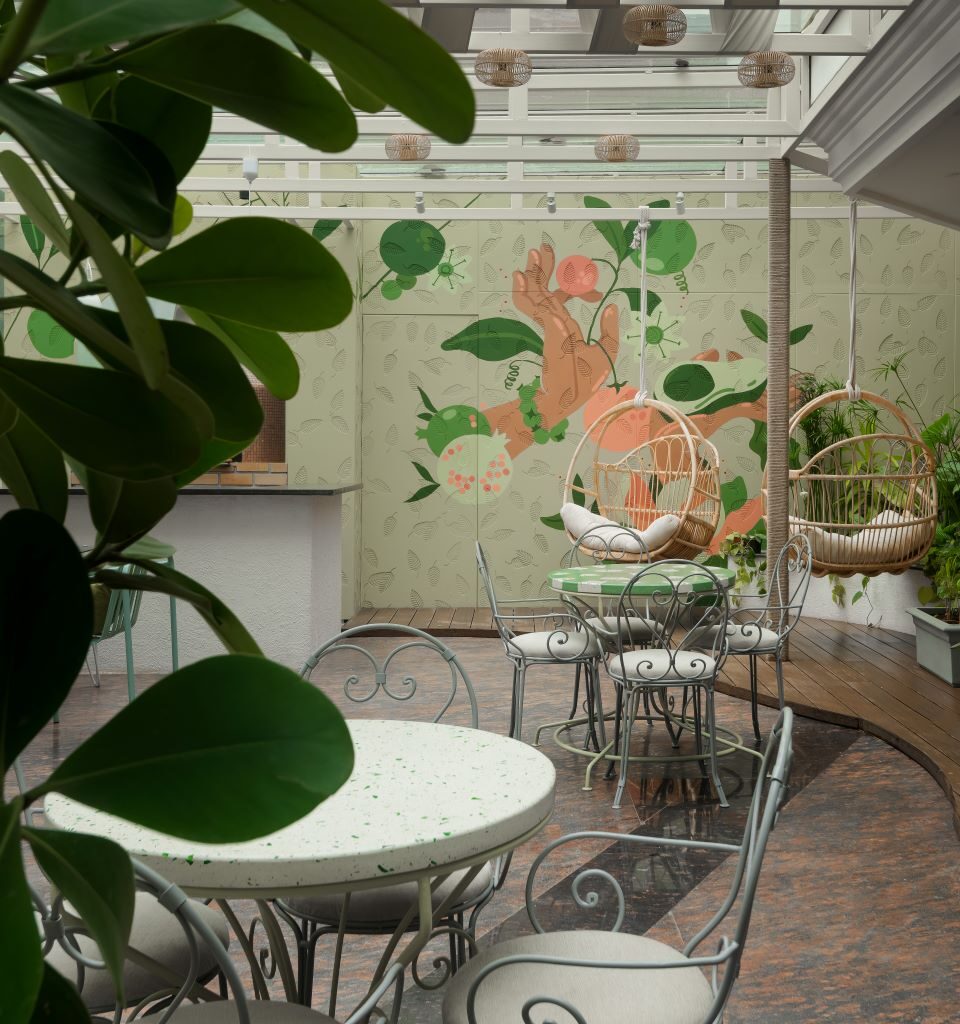
Maze Concept Design LLP use earthy hues and natural materials to create a soothing and warm ambience for the patrons of Sante Spa Cuisine, a fine dining restaurant.
Curated by: Deepa Nair
Photographs: Arjun Krishna; courtesy Maze Concept Design LLP
 The site
Located at Jayanagar in south Bengaluru, Sante Spa Cuisine (@santeblr) relaxes in an old villa inspired by colonial architecture. Surrounded by high-rise buildings (on the north and south) and a residence (on the west), this east facing villa was repurposed and upgraded into a fine dining restaurant by the talented duo, Priyanka MC and Koushik Ramesh, principal architects, Maze Concept Design LLP.
 The brief
The brief was to design this outlet around the whole cuisine and essence of Sante Space Cuisine, a well-established brand that served vegan/vegetarian food made using locally sourced fresh ingredients. The set of guidelines included: the use of sustainable materials, a green material palette, and to bring in a Buddhist cultural influence to create a sense of calmness and serenity. The design team also had to ensure that the kitchen and service area was placed according to vastu, and are tucked away from the dining spaces to soften the noise generated in these busy zones. All this while maintaining the functionality and ease of servicing and maintenance.
 The design intent
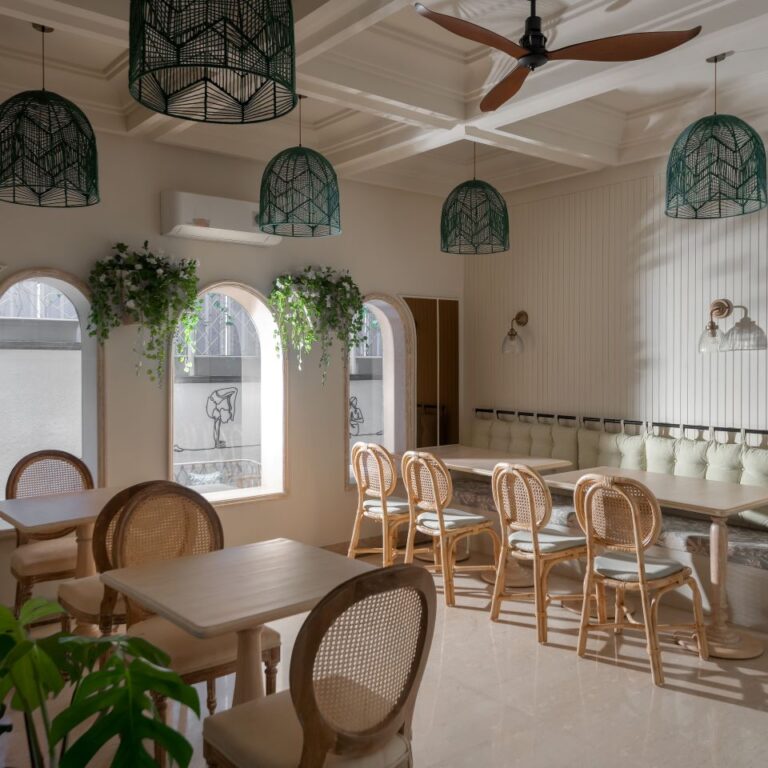
“The project was envisioned to be a fine dine vegetarian restaurant with importance given to the sourcing of fresh ingredients which are locally produced. The cuisine and menu was set to create an experience which would in a way feel like a spa for the inner body. We designed the project keeping this as the core source of inspiration,” says Priyanka. “Shades of green were used for different elements in the design, naturally occurring materials like cane, jute, clay sheets, wood, limestone, dried flowers and leaves, and banana leaf fabrics were used. Cultural influence was brought in by using elements from Buddhism and representing the same through different murals and materials, which created a sense of calmness and serenity. Indoor and outdoor tropical plants were used extensively,” adds Koushik.
 The civil interventions
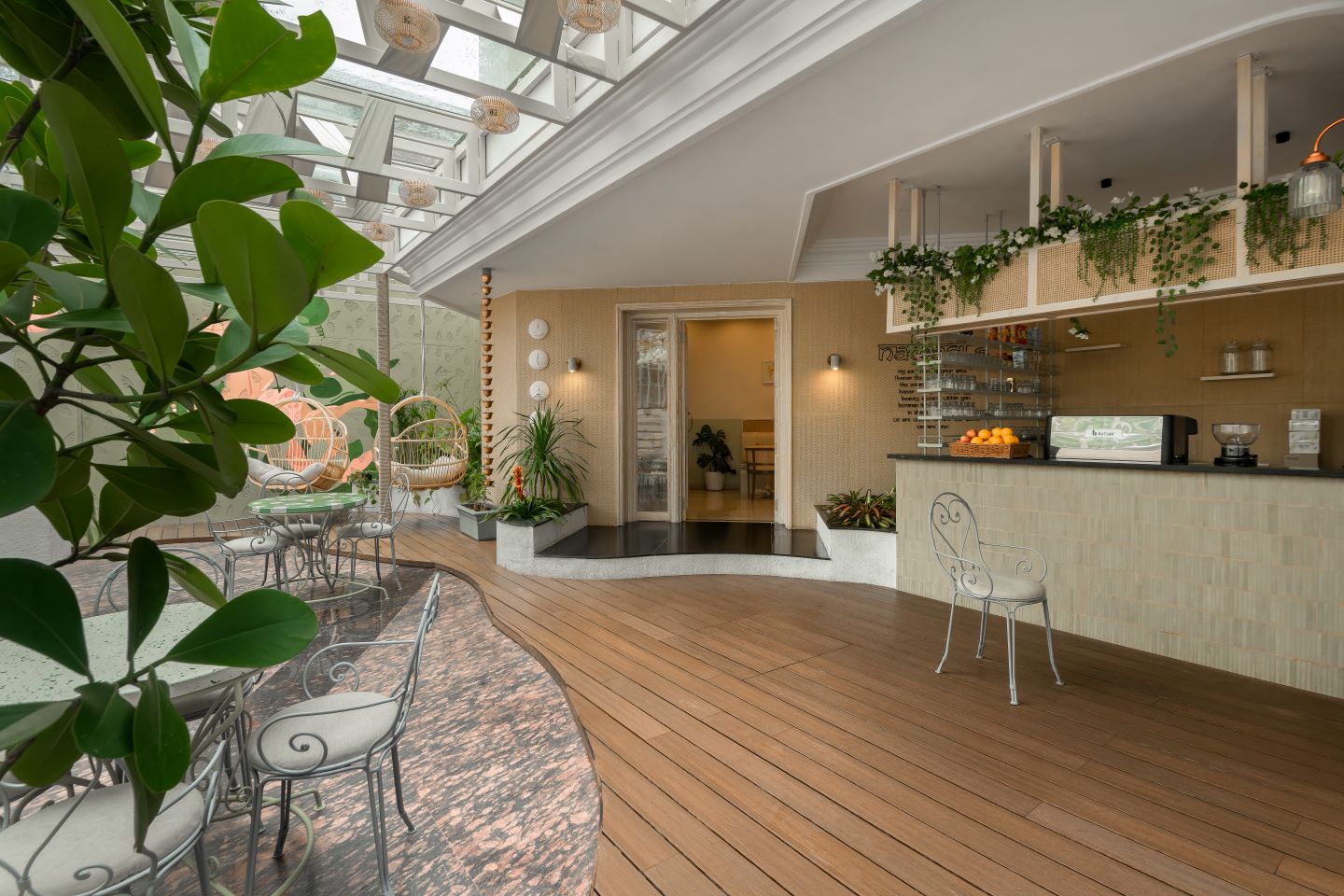
The architects made changes to the existing structure as per vastu and reworked on the lighting, electrical and plumbing services. The service, kitchen and seating area were completely separated, and the setback was used to create a service pathway and different entries were provided for the staff moving in and out of the kitchen.
The whole of south Bengaluru, where the restaurant is located, has large avenues with a lot of greenery and the design team tried to create a space which would blend in and not stand out in the context. This was achieved by painting the sloped Mangalore tiled roof into hues of green and white while at the same time staying true to the brief put forth by the clients.
 The design and material details
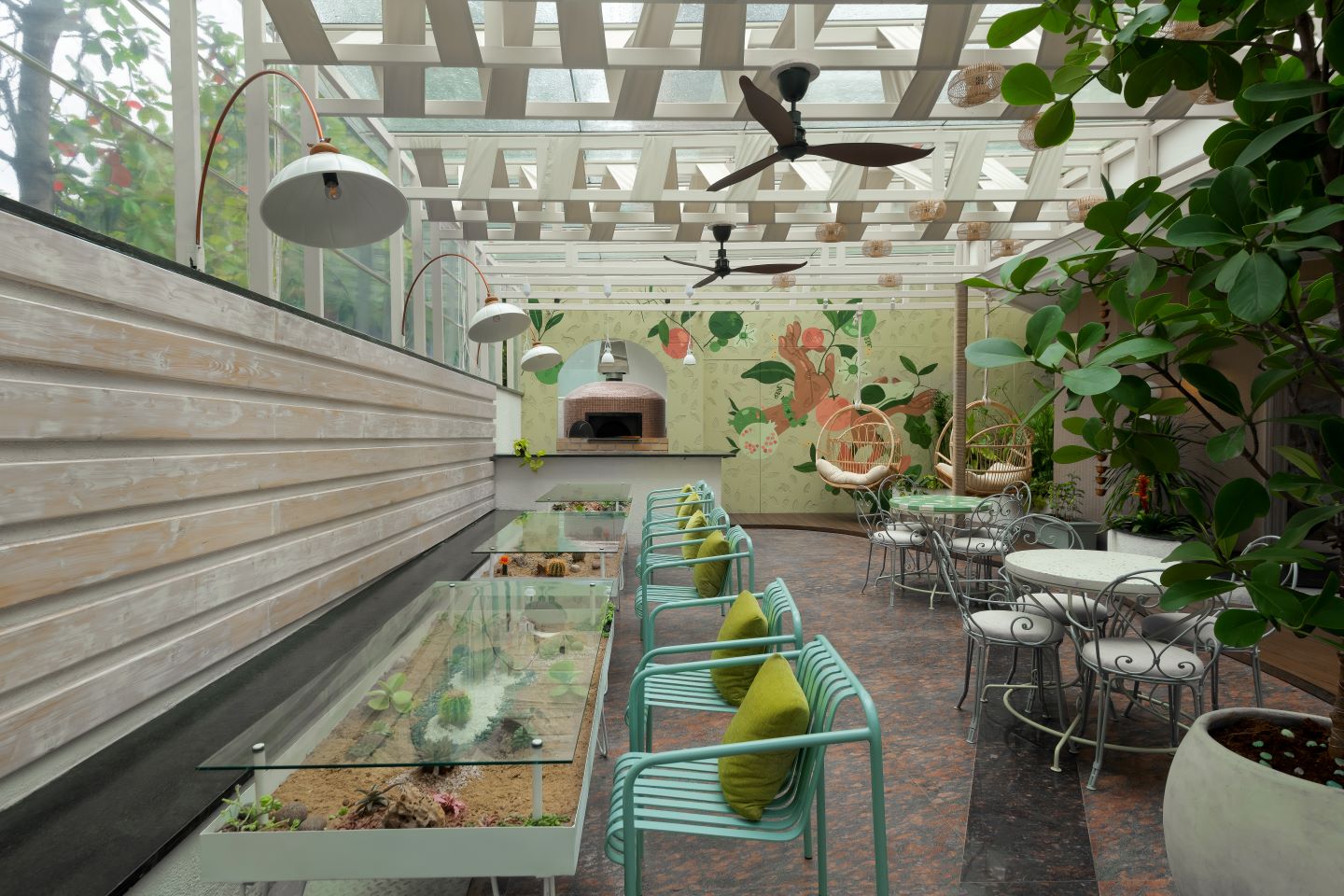
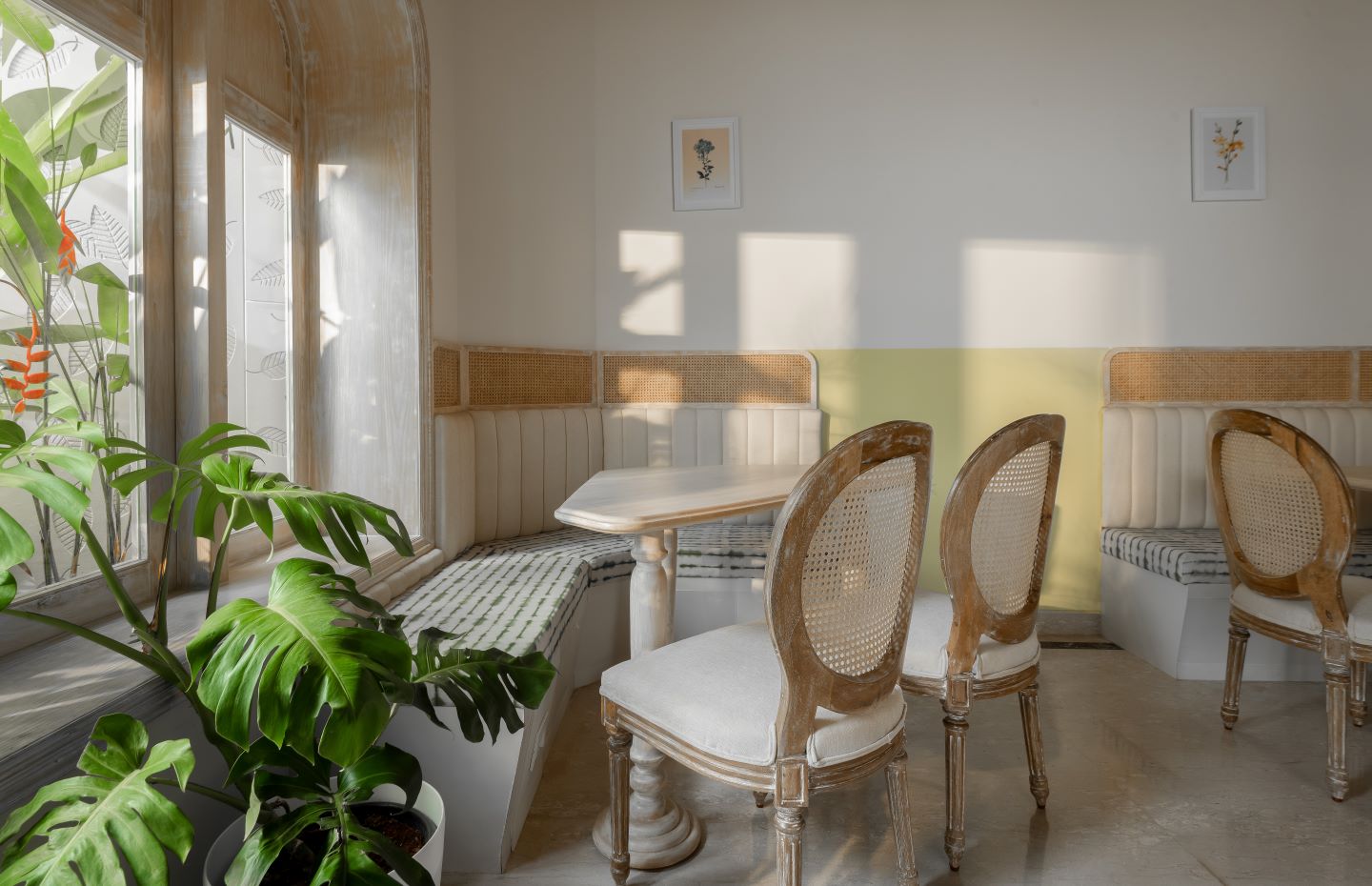
The extensive use of natural materials stayed true to the whole brief and theme. The theme and vibe of the space was set with natural materials and hues of green in all forms in terms of paint colours, fabrics, murals, etc. The existing flooring was retained and everything was designed around it. Natural materials like cane, banana leaf fabric, textured clay cladding sheets, dried leaves and flowers, jute rope and a few other materials were used in the design.
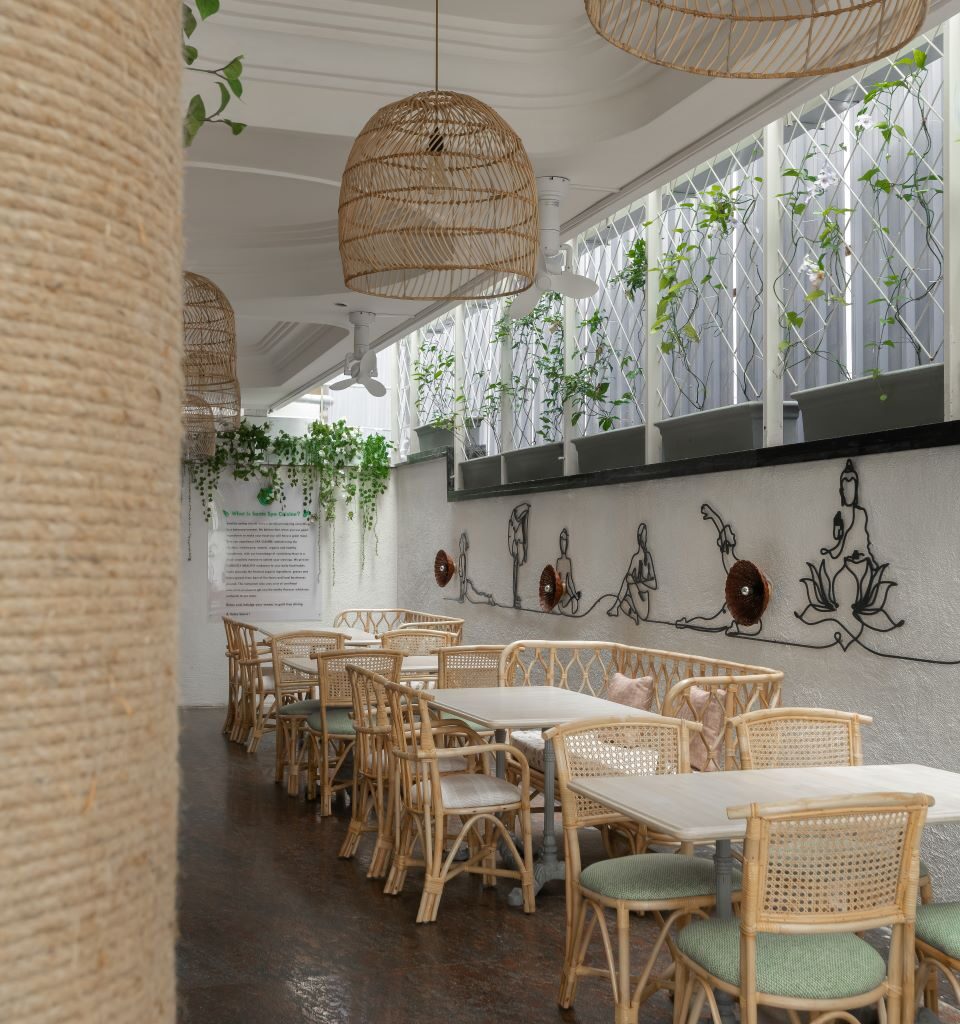
Engaging terrariums were created in some of the dining tables that extensively used sal wood. The finish of all furniture and wood was a distressed natural finish. For the main door, dried and treated natural flowers and leaves were sandwiched between two glass panels. A natural dried banana leaf fabric was used as a false ceiling, so were rattan weaves of traditional origin made by skilled local craftsmen. Character and cultural influences was brought into the space by representing the ideals of Buddhism through different art forms and materials. A wall mural in a line diagram showcasing different yoga asanas was installed using a continuous CNC cut metal panel.
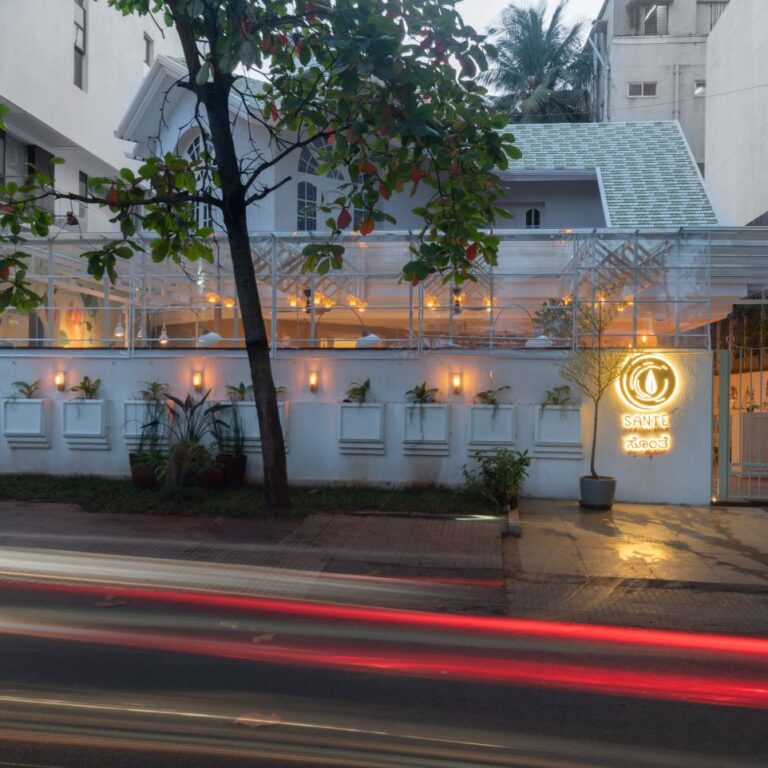 As energy usage was of major concern, a vertical generator which occupied lesser space and at the same time was more efficient was opted for. The whole boundary of the site was surrounded with plants to reduce the heat coming through to the seating and indoor area reducing the usage of air conditioners during summer. A copper rainwater chain was used instead of a pipe which to create a serene entryway next to the main entrance. Very dim lighting with low wattage and warm colour was used to create a cosy vibe during the evenings and night time.
Fact File
Project: Sante Spa Cuisine
Location: Jayanagar, Bengaluru
Area: 3,500 sq ft
Principal architects: Priyanka MC and Koushik Ramesh
Design team: Chandana Gopalakrishna
Add a Comment