
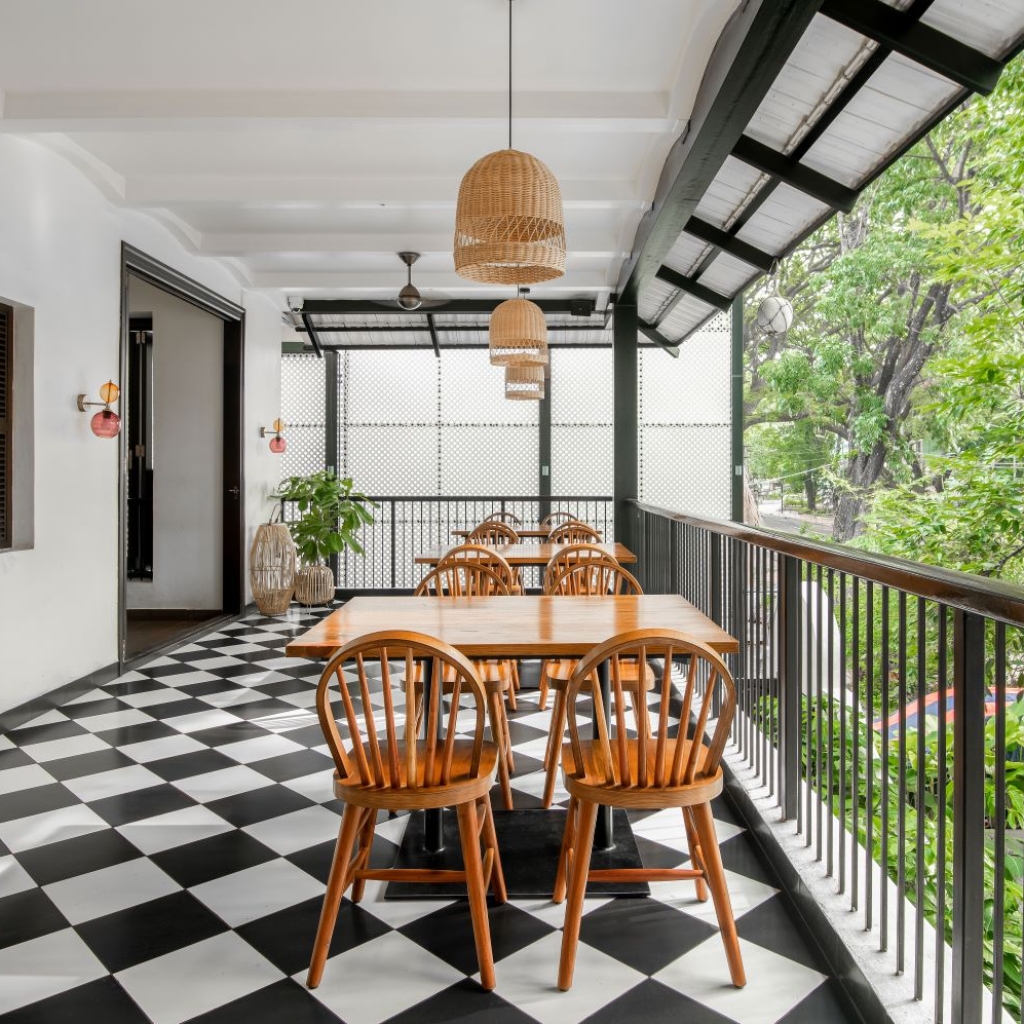
Maya, designed by Maze Concept Design LLP, takes inspiration from Sri Lanka’s tropical architecture.
Curated by: Deepa Nair
Photographs: Arjun Krishna; courtesy Maze Concept Design LLP
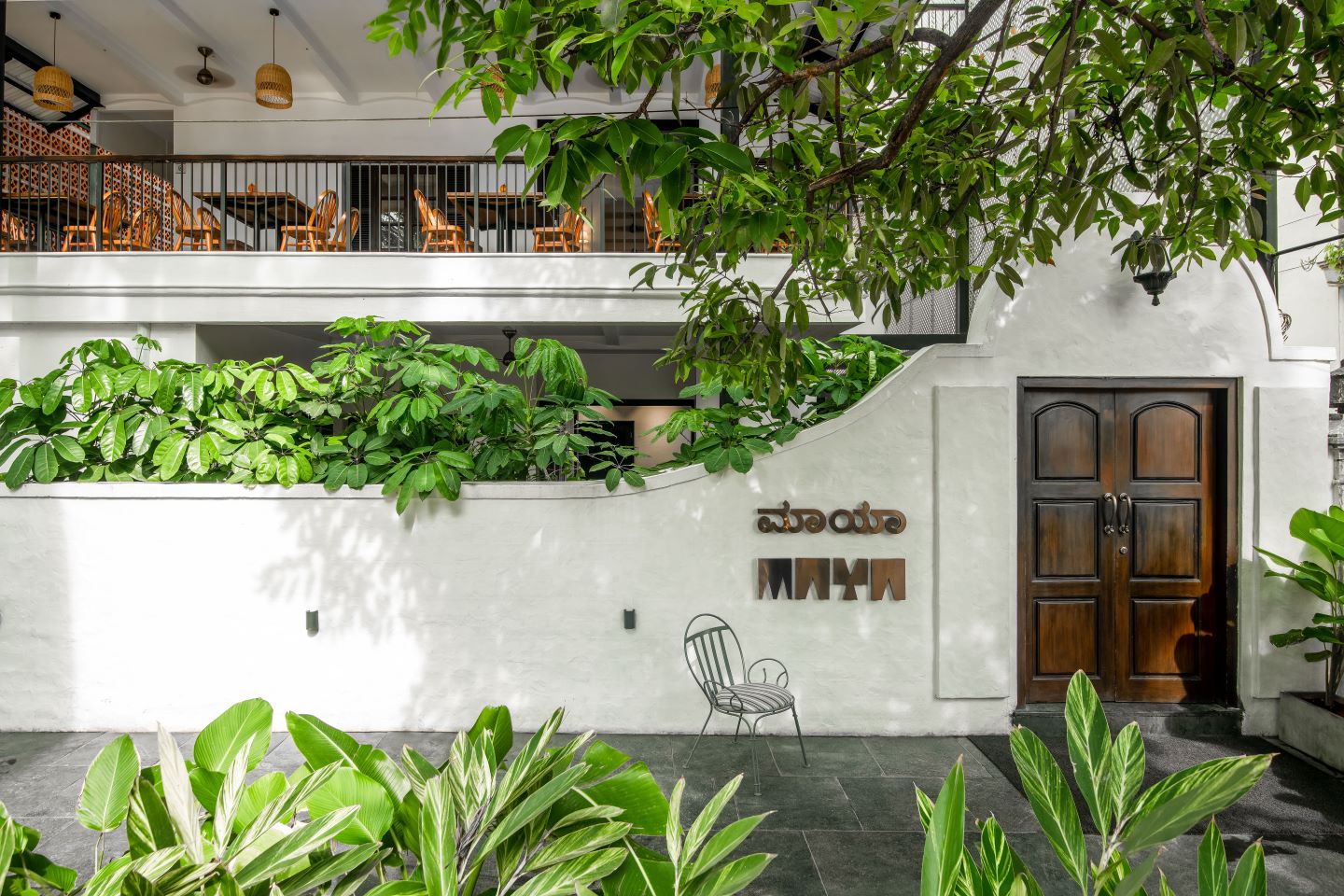
The site
Maya, an art gallery-restaurant, resides in a bungalow located in south Bengaluru, and is set in a residential area that is slowly converting into a commercial street. This 30-year-old bungalow was extremely compartmentalised with small rooms and living areas when architects Koushik Ramesh and Priyanka MC of Bengaluru-based Maze Concept Design LLP first saw it. This ground plus one structure with a common staircase had a conventional grid system with slabs, beams and thick brick walls. It had quite a large frontyard and shared compound walls with another residence and a commercial building which was quite dilapidated.
The brief
“Our client, Sumukh Tallam, is an extremely passionate foodie and has finished a course in culinary arts. This was his dream project and he wanted to bring out a very unique concept and culinary experience to the people of Bengaluru. He was very inspired by Sri Lankan architecture, the pure simplicity and functionality of the designs blending in with its surroundings and having a great connect with nature,” says Koushik. “He didn’t want too many covers at Maya, instead he wanted more focus given to the whole experience of dining out — right from the interiors of the space, to the way the food is presented and served to the customers. He also wanted the kitchen and services to be separated with its own circulation for easy movement and coordination within their own team,” adds Priyanka.
 The design intent
The intent was adaptive reuse of the bungalow — to maximise the usability of the space after studying the existing structure in depth, with its limitations. The architects tried to add minimal details which would create a larger impact to the overall aesthetics and feel of the space. The idea was to create areas which were lit only through indirect lighting, a contrast between the floor and the ceiling, and spaces where artworks would stand out the most with a few vernacular details added on to bring out a tropical vernacular character and vibe. Maya has taken immense inspiration from eminent architect Geoffrey Bawa’s works.
The civil intervention
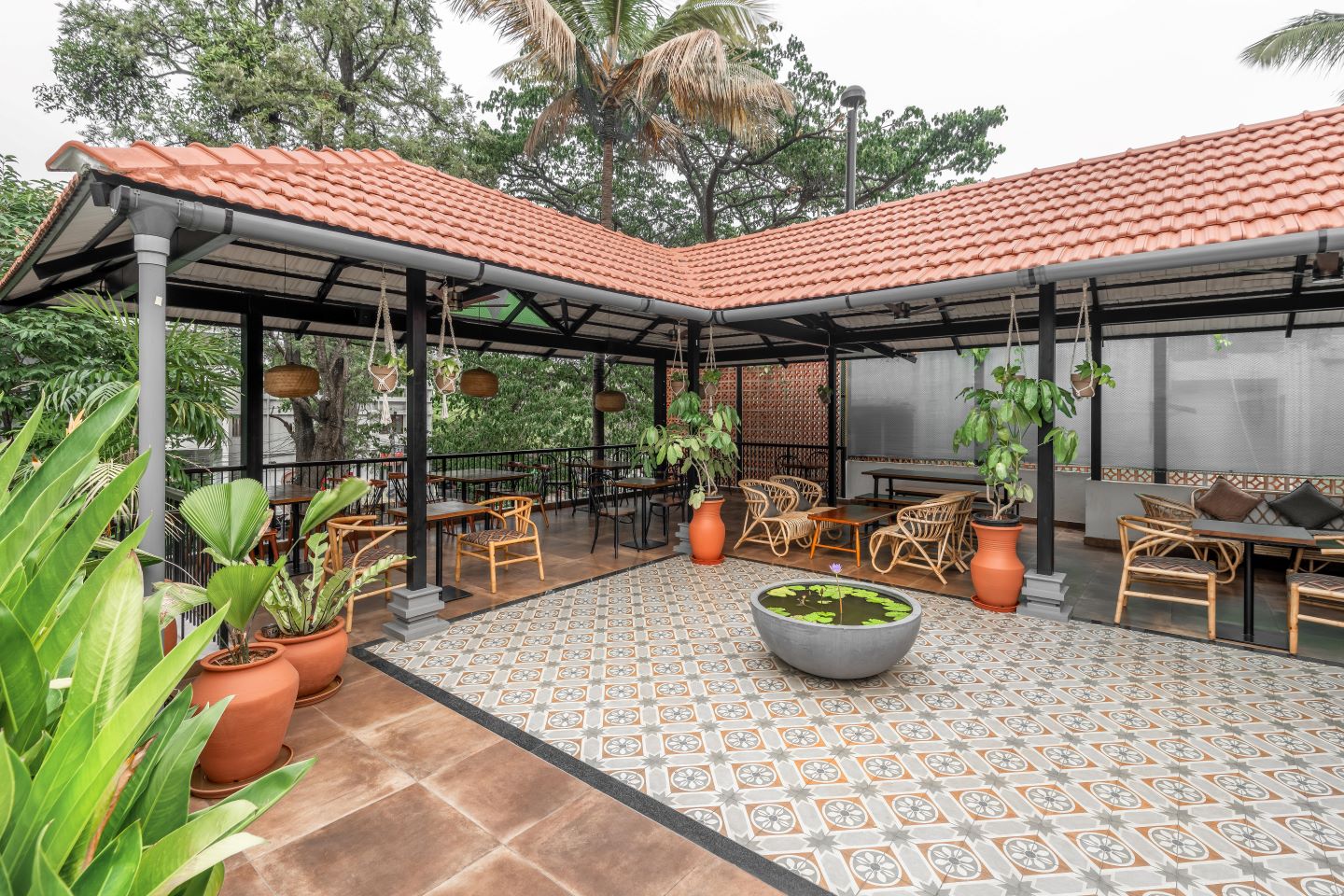
The existing structure underwent many changes. Firstly, smaller rooms were knocked off to create large open spaces. A whole new extension was constructed on the first floor, which acted as a semi-outdoor seating area. It is made up of a decking slab and new metal columns are used to support it. A new metal service staircase was built at the rear, connecting the kitchen with all the service areas on all the floors, including the terrace. Further, a dumbwaiter was added to connect the kitchen with all the floors. A new flight of stairs was erected to attach the existing staircase to the terrace floor. A Mangalore tiled sloped roof was built to cover the terrace for the seating and create a courtyard effect.
 The existing slabs and beams were strengthened by anchoring ISMB’s from beam to beam wherever required. Another room with a terrace was created on the second floor which was only accessible by the service staircase and this floor plate accommodated all the services equipments and machines. The architects also had to cover the outer boundaries of the restaurant due to the presence of a dilapidated structure on one side, and a private residence on the other. They created provisions and planted creepers at the top which would eventually grow and create a green wall.
The spatial configuration
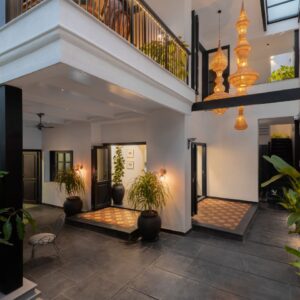
A beautiful rain tree right in front of the site which was on a wide footpath was developed to create a nice planter with a mix of tropical plants — next to this is the main entrance to Maya. A double-height lobby area featuring long cane chandeliers inspired from Buddhist stupas was introduced to form the entrance to the art gallery, and the staircase which leads to the main dining area. The ground floor is largely used for the kitchen and other utilities.
 The first floor consists of an indoor and semi-outdoor seating area. The indoor seating area has a mix of booth seating, four-seater pockets and a bar counter. All the service areas, office and dumbwaiter is located at the rear and is connected by a service staircase — this arrangement ensured the services had a separate circulation.
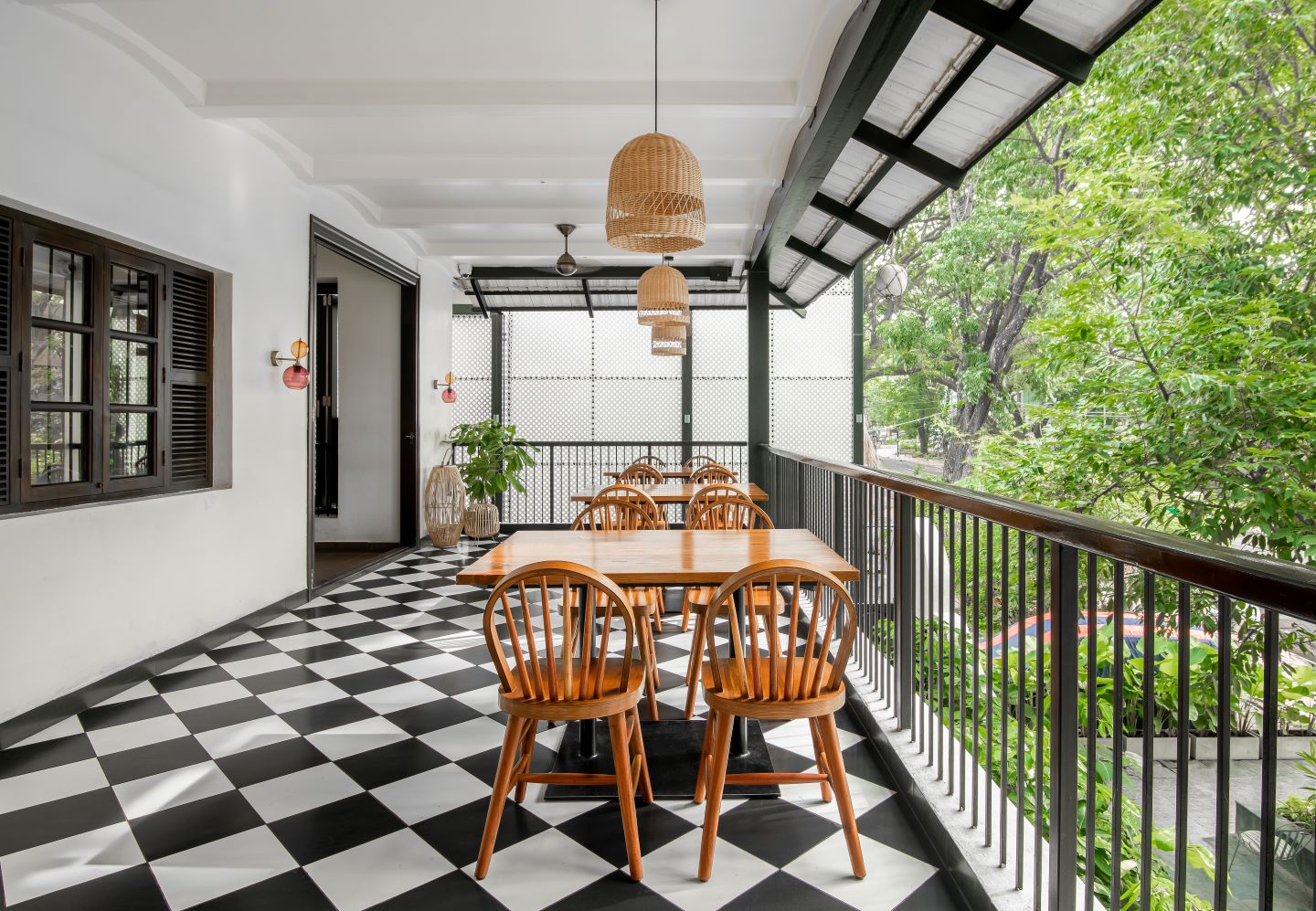
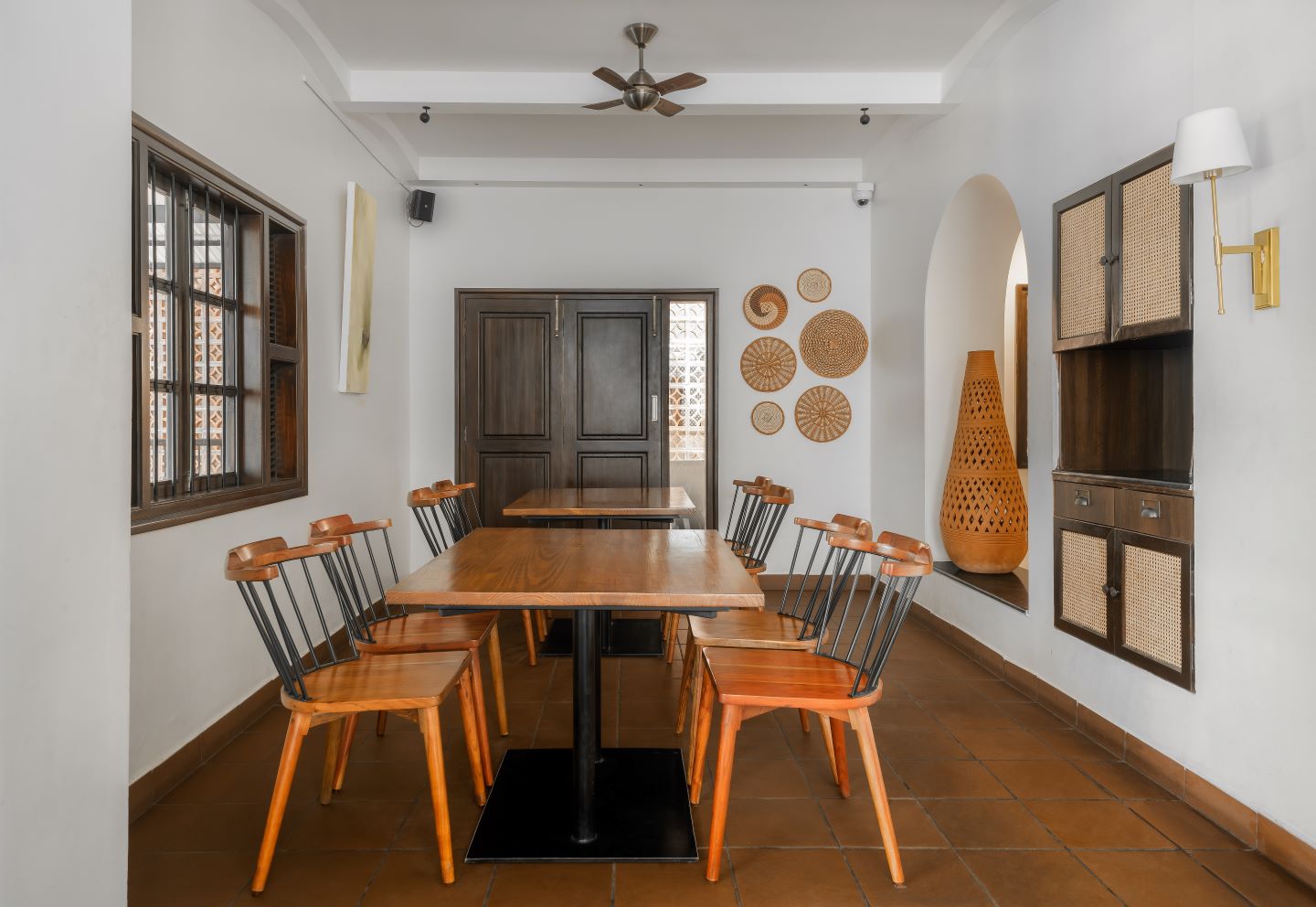
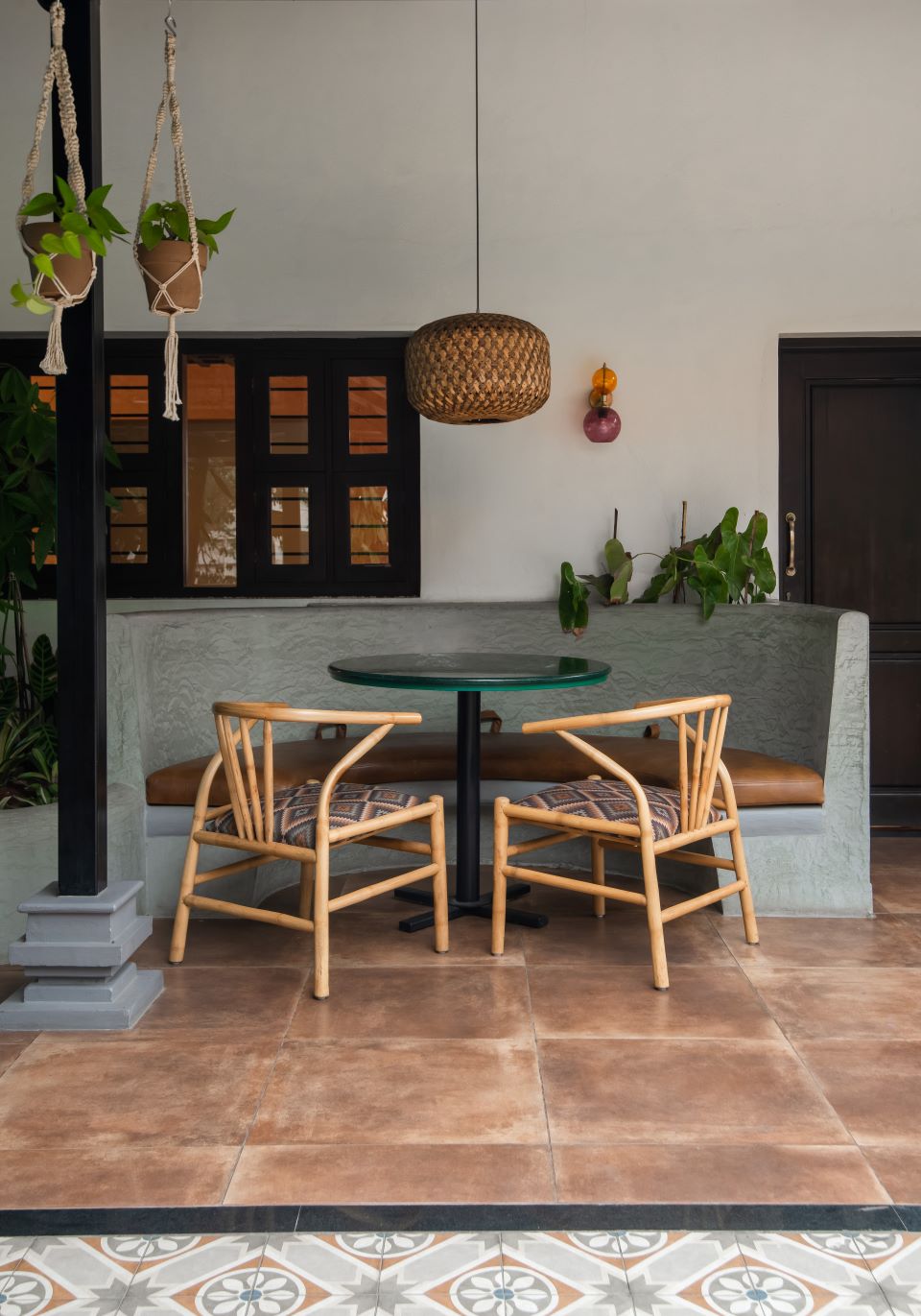
On the second floor a lovely courtyard with a lotus pond at the centre welcomes the guests. All the other areas of this floor is covered with a sloped Mangalore tiled roof creating a semi-outdoor seating area. Here, the architects have played with different kinds of seating arrangements — a booth seating with masonry, and a concrete finish with a planter box. A private dining area has also been incorporated here which has the provision to host workshops and special events as well.
 The highlights
One of the highlights of Maya is the entrance which is completely camouflaged by tropical plants; and also the double-height lobby with the cane chandeliers. According to the architects, the battened false ceiling on the first floor helped them conceal the additional ISMB beams, all the wires and conduits, and also helped them bring out the vernacular character of the space. They also point out that the furniture crafted for Maya is a significant highlight — it is designed to be simple and sturdy, mostly in wood and wicker to merge with the aesthetic of the space. Earthy tones of fabric was used along with wood polished in a walnut finish. The fabric used for the upholstery were mainly black and white patterned prints.
 The challenges
“The project was based on the concept of adaptive reuse, the structure itself was very old and we did not have any drawings or details. For these reasons, we took a complete hands on approach where we spent majority of our time at the site to understand the limitations and develop the design along this entire process of reshaping the spaces on the inside. A lot of design decisions were taken at site level through creating samples and mock ups and we worked very closely with the execution team,” explain the architects.
Fact file
Project: Maya
Client: Sumukh Tallam
Location: Jayanagar, Bengaluru
Area: 6,000 sq ft
Principal architects: Koushik Ramesh and Priyanka MC
Design team: Dhanush K and Deeksha Manjunath
Add a Comment