
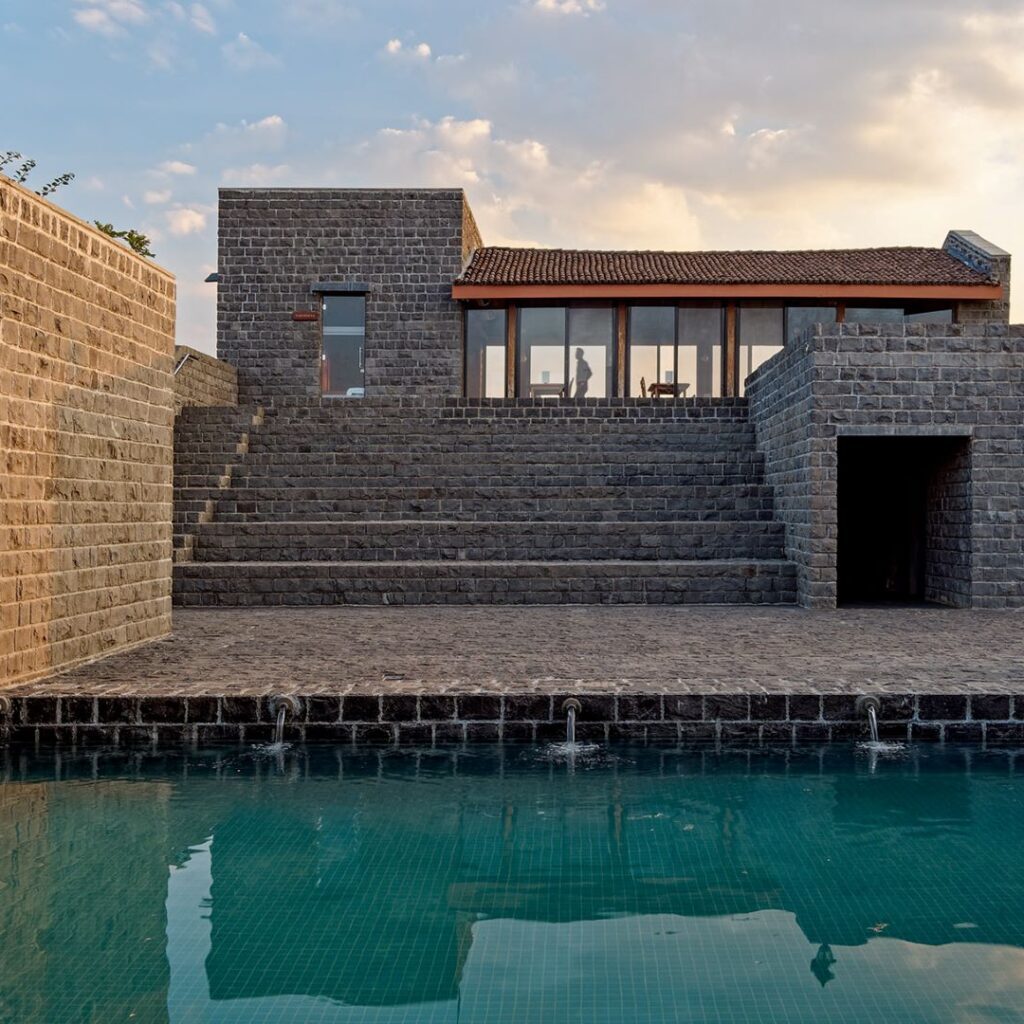
At the Viveda Wellness Village in Nashik, A for Architecture crafts a cluster of monolithic structures using humble materials which consciously frames the picturesque surroundings and the various spaces of the building — pushing the attention of the person from the building to the landscape, the environment around, and perhaps even to oneself.
Curated by: Deepa Nair
Photographs: Hemant Patil; courtesy A for Architecture
The site
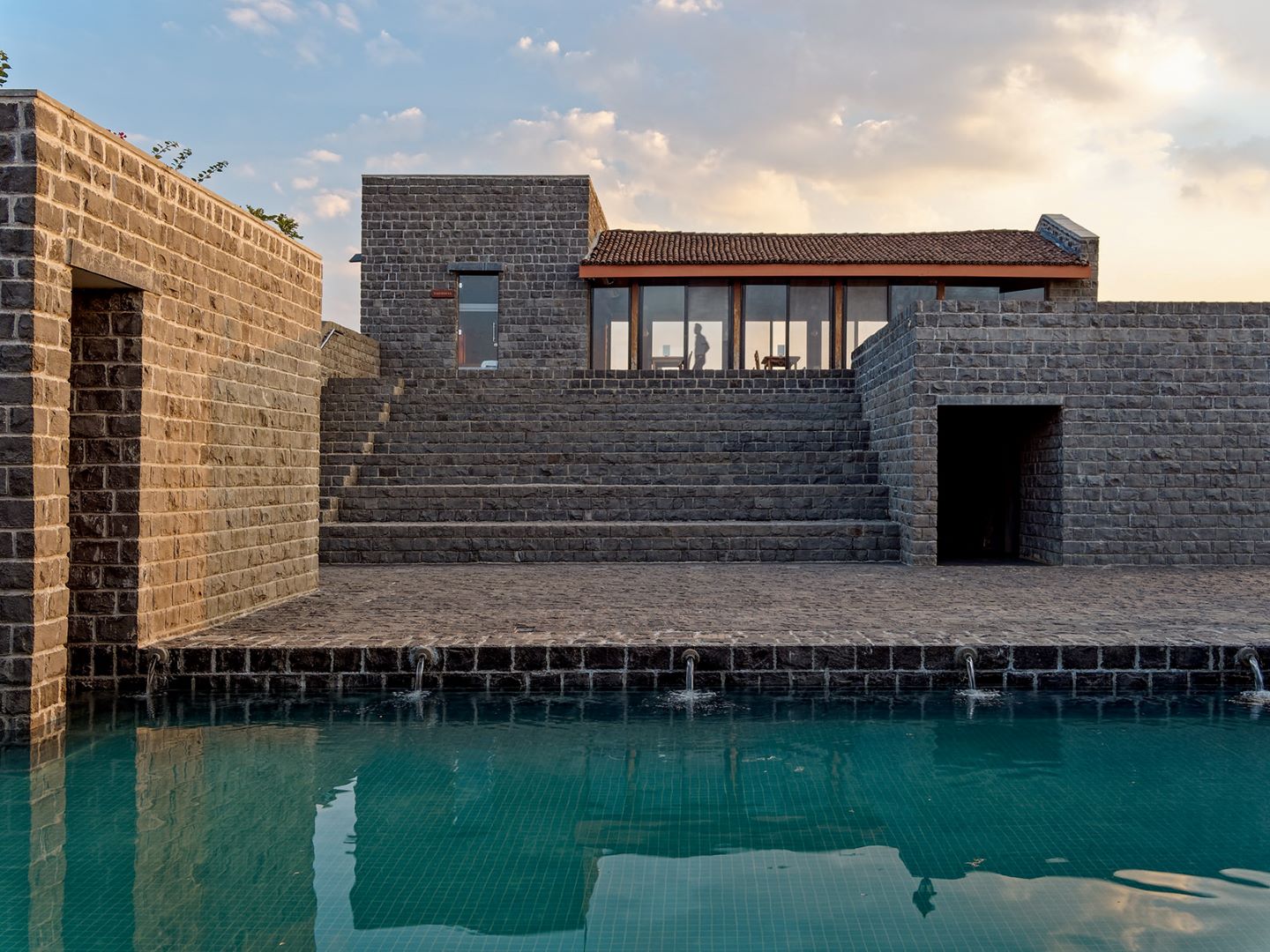
A for Architecture, the creators of the Viveda Wellness Village in Nashik, say that one of the most striking features of the project is its setting. The site is situated between the gigantic Sahyadri mountain range, the mesmerising waters of Gautami Godavari dam and a mosaic of multi-toned farmlands, sporadic trees and cattle.
The design intent
The design team’s foremost intention was to create spaces which responds to the region’s climatic conditions — which is hot and dry during summers, with pleasant monsoons and winter months. Most of the spaces are designed to create shade with minimum walls to allow maximum natural light and ventilation. All the buildings are perforated with courtyards and green pockets making them breathable, thereby decreasing the ambient temperature and adding the necessary moisture required in a hot and dry climate.
The architectural response
Spatially the project intends to invoke a sense of inhabiting the historically prominent architectural types of the region — the medieval forts (typically built on top of the mountains); Wadas (beautifully crafted medieval houses of the rich merchants); Kunds (subterranean water bodies popular since the Harappan cities but explicitly seen in the temple towns across the regions); Chaityas (the beautiful and tedious Buddhist caves and monasteries); Ghats (the sacred river-front stretches of steps leading to various rivers where architecture and landscape becomes one). Each of these building types have a very specific and memorable spatial quality which is invoked in various parts of Viveda Wellness Village.
For instance, in the amenities block made of five squares, each of the squares is designed separately with five different functions and a corresponding spatial quality: Naturopathy cluster as Wada; Massage rooms as courtyard houses; yoga and meditation dome as Chaityas; swimming pool as Kund; and the amphitheatre and restaurant as ghats. The five squares are merged into one long block, with specific transition spaces, to create a spatial sequence with different volumes, qualities of light and shadow, textures and movement patterns that are learnt from the architectural types, and an in-depth understanding of the respective functions.

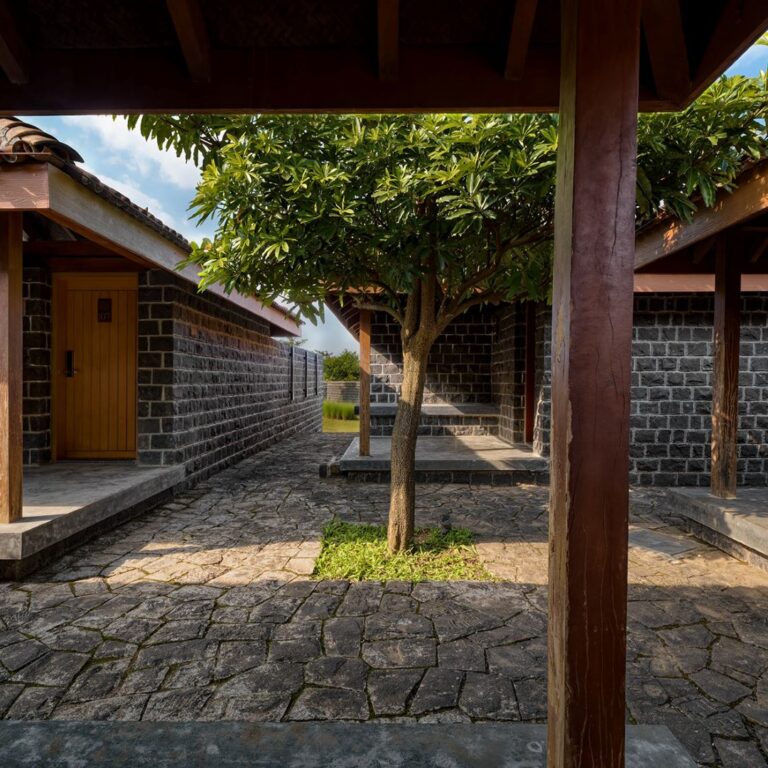
The guest rooms are mainly conceived as clusters from a small settlement with winding streets and courtyards. Each cluster is organised as a circle, freely placed on a natural sloping ground to create a meandering path around all the clusters at different levels. The common court shared by four cottages becomes a social space for the guests to interact with each other and enjoy the distant views of the landscape, sitting in their verandahs.
The material palette
A for Architecture wanted to understand and incorporate building practices from Nashik’s Beze village and surrounding settlements. Typically, houses in the village have a stone plinth, timber framework, brick or mud walls and clay pot tiles for roofing. Construction activities, like most other activities are seen as a cooperative set of activities and form of mutual exchange of skills, labour and resources. Typically, a mason builds a house for a farmer who in turn pays him back in grains or by offering other skills. To that extent, the project is designed with three materials: Basalt Stone, Timber frame and pot-tile roof. Since the project is in a remote location, it helped to employ and collaborate with the local craftsmen who have a long lineage of working with these materials. Concrete and steel are consciously kept to a minimum in the project. All materials have been sourced locally (within 20 to 50 km), reducing the embodied energy.
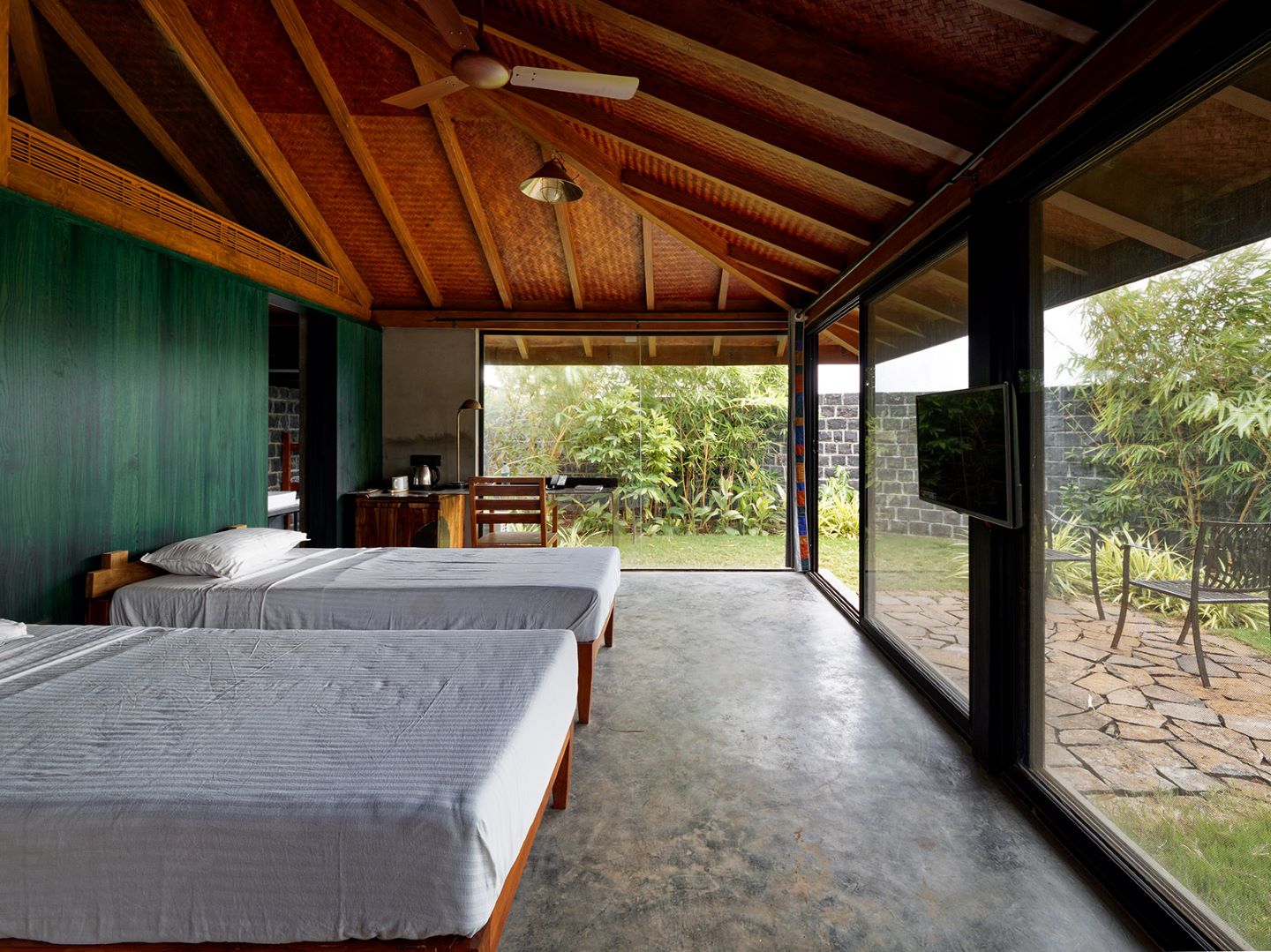
The stone work on the site was mainly carried by the Wadari community — expert stonemasons particularly settled in Maharashtra and Northern Karnataka belt of India. Basalt stone, available in plenty in the region, was hand-quarried, chiselled and fitted on site by these stonemasons. The stone was used to create load bearing walls, steps, courtyards, landscape etc. This is done to deliberately create a monolithic character for the building, like a solid stone mould sitting gently on the landscape.
Two kinds of timber were used in this project: Haladu (yellow toned timber, which derives its name from Haladi or turmeric); and upcycled wood – Indian teakwood, salvaged from 100 to 150 old dilapidated buildings in the region. Haludu was primarily used for the roofing system and columns in certain spaces; while the upcycled wood were used for carpentry work.
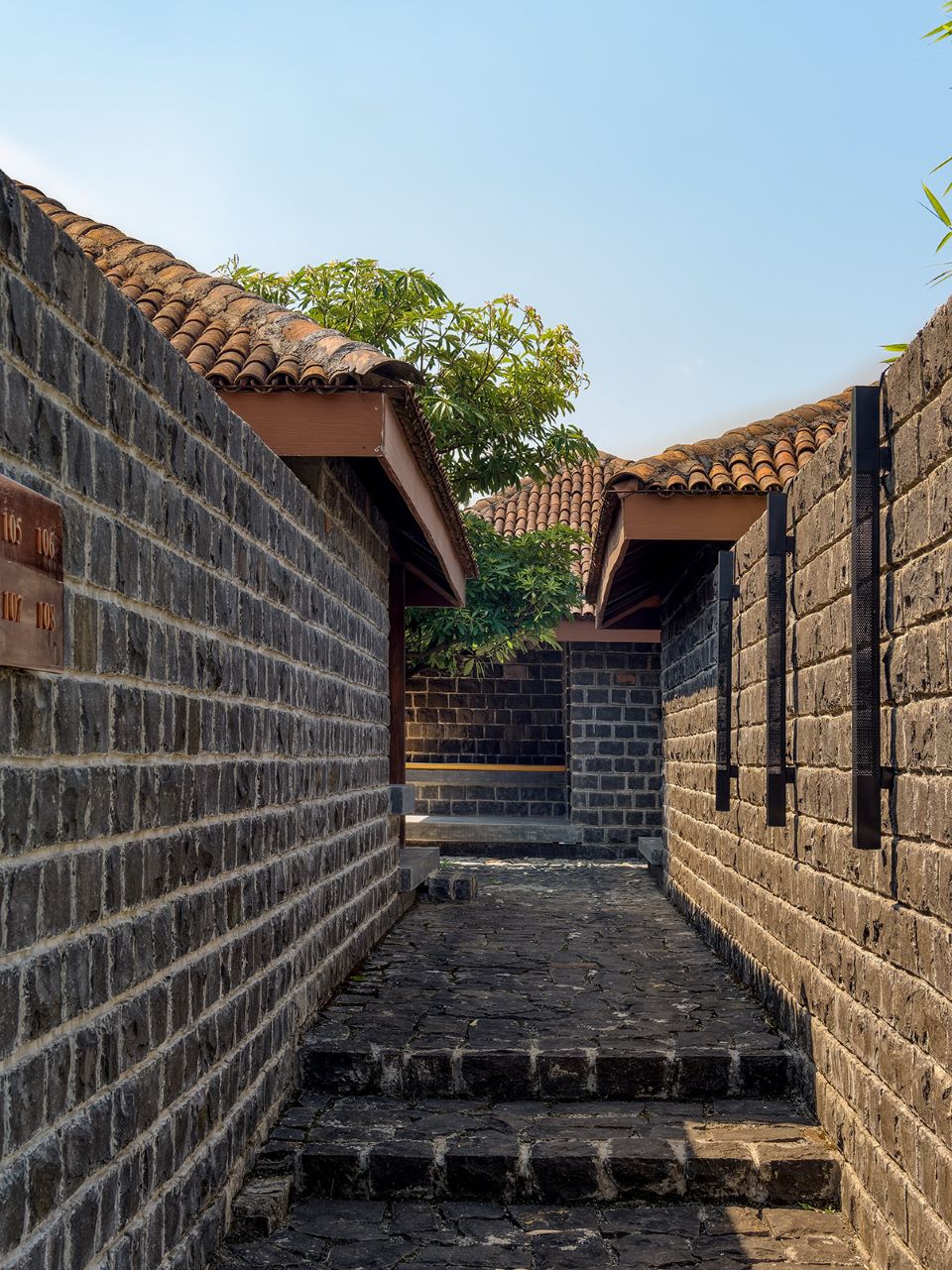
The clay pot tiles which were used for roofing are made by a kumbhar (from the potter community) using the traditional methods learnt over decades. The changing economy and building practices in the villages narrowed their practice down to only pot making. This was the largest consignment of pot tiles the kumbhar had ever received. As the kumbhar involved various family members and other villagers in the process, it became a good economic opportunity for the community.
Fact file
Project: Viveda Wellness Village
Client: Viveda Wellness Retreat
Location: Trimbakeshwar, Nasik, Maharashtra
Area: 25000 sq m (site) and 3,900 sq m (built-up)
Principal architects: Ajay Sonar and Monali Patil
Design team: Tejas Pai
Landscape consultants: Monali Patil and Mahesh Nampurkar (Suman Shilp)
Add a Comment