

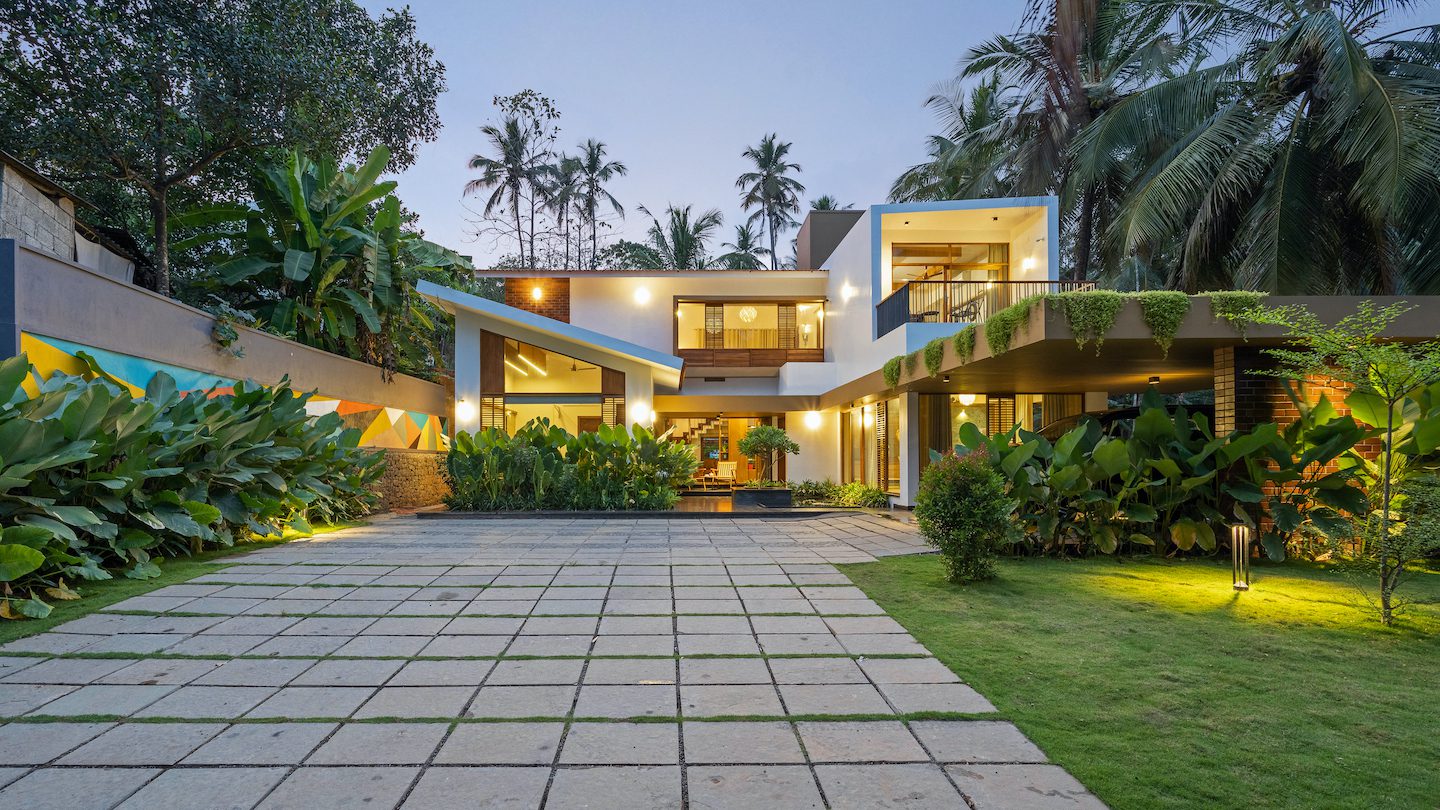
Rendered in clean, crisp lines, the Dr Raoof Residence by Farsa Buildesign nevertheless leaves a palpable sense of traditional familiarity underpinned by greenery, wooden expanses and light.
Curated by: Rupali Sebastian
Photographs: Nathan Photos; courtesy Farsa Buildesign

The inspiration
The design of the four-bedroom residence, serving as home to a young couple and their two children, is sculpted around the client’s lifestyle and is also inspired by Kerala’s native vernacular architecture.
The visual vocabulary
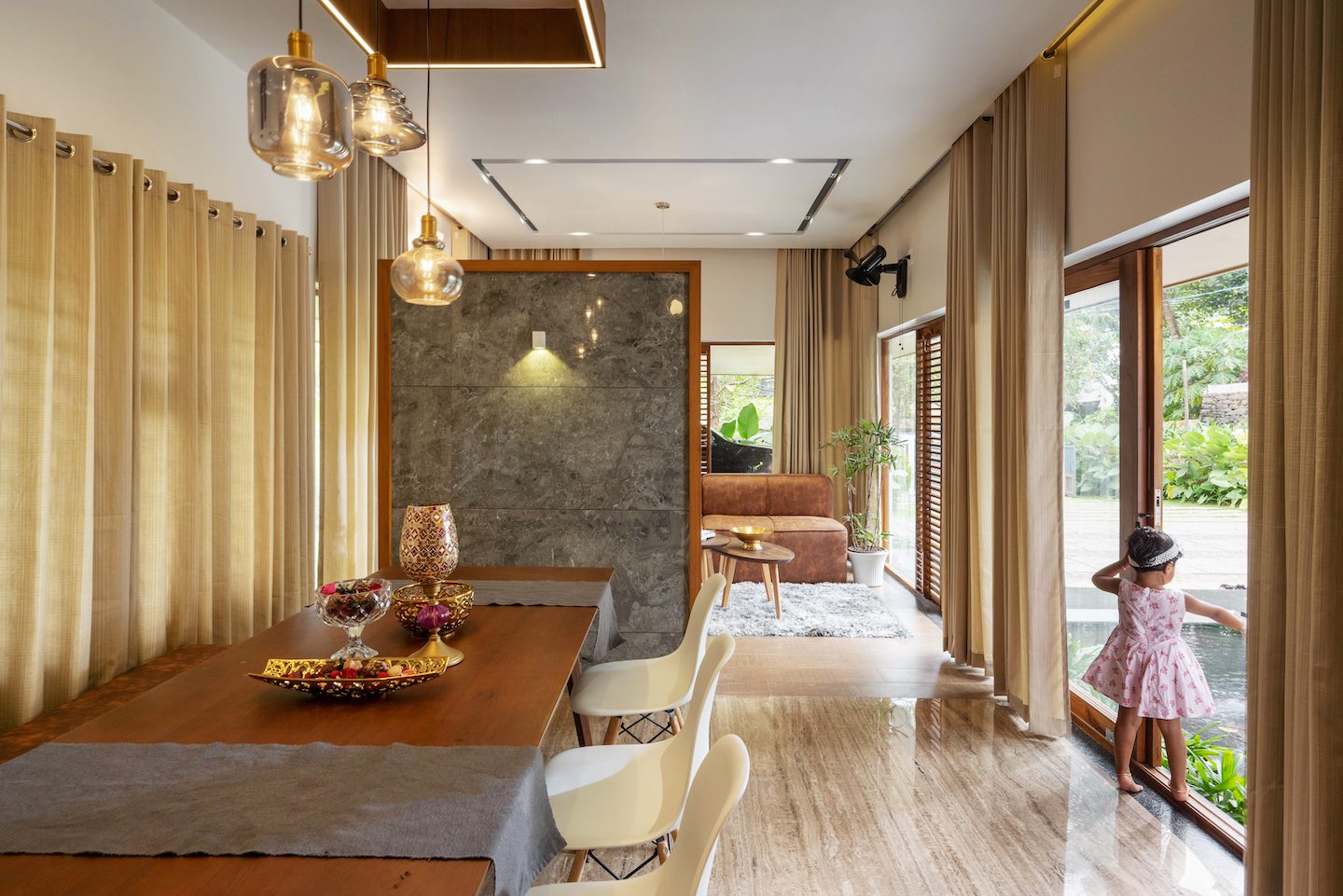
The spaces are planned keeping in mind the time of use and the optimal requirement of light. Interiors are deliberately devoid of decor, but become a canvas for the ever-changing play of natural light, which is more experiential than visual. “The quality of light is carefully modulated in the interiors as per the functional and psychological needs of each area. Windows, therefore, become the main part of the design, and feature a combination of full glass for lighting and shutters for ventilation,” reveals Risiyas Farsa, principal architect at Farsa Buildesign.
The spatial flow
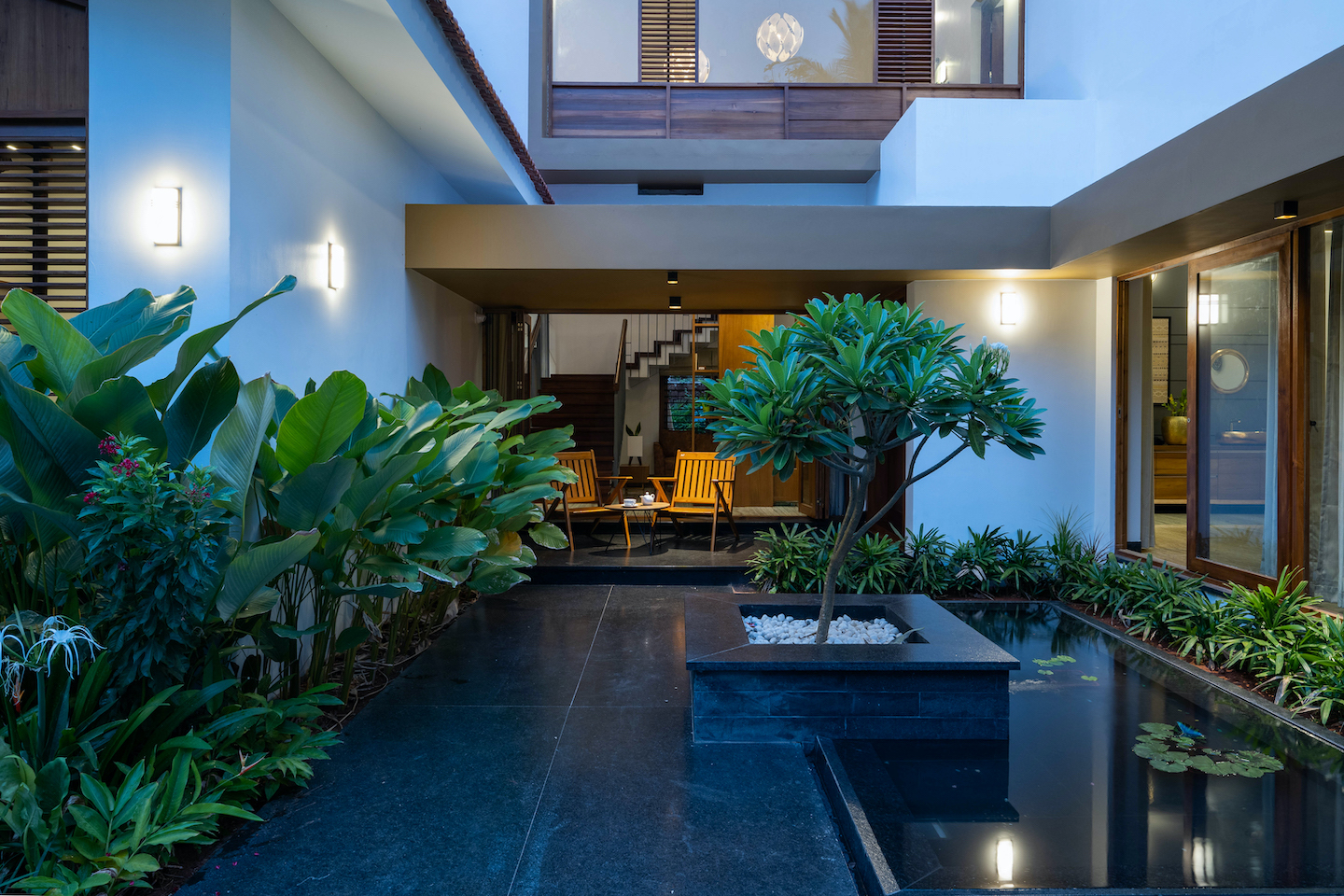
The greenery of the general landscape continues right upto the entrance of the bungalow. A small lappato-finish granite waterbody and a single frangipani create a minimal, yet inviting gesture. This composition is seen from most parts of the house, and therefore functions as a design focus. A small sit-out, screened by plantation and tucked way on a split level just beyond the court, allows you to enjoy the beauty of the surroundings.
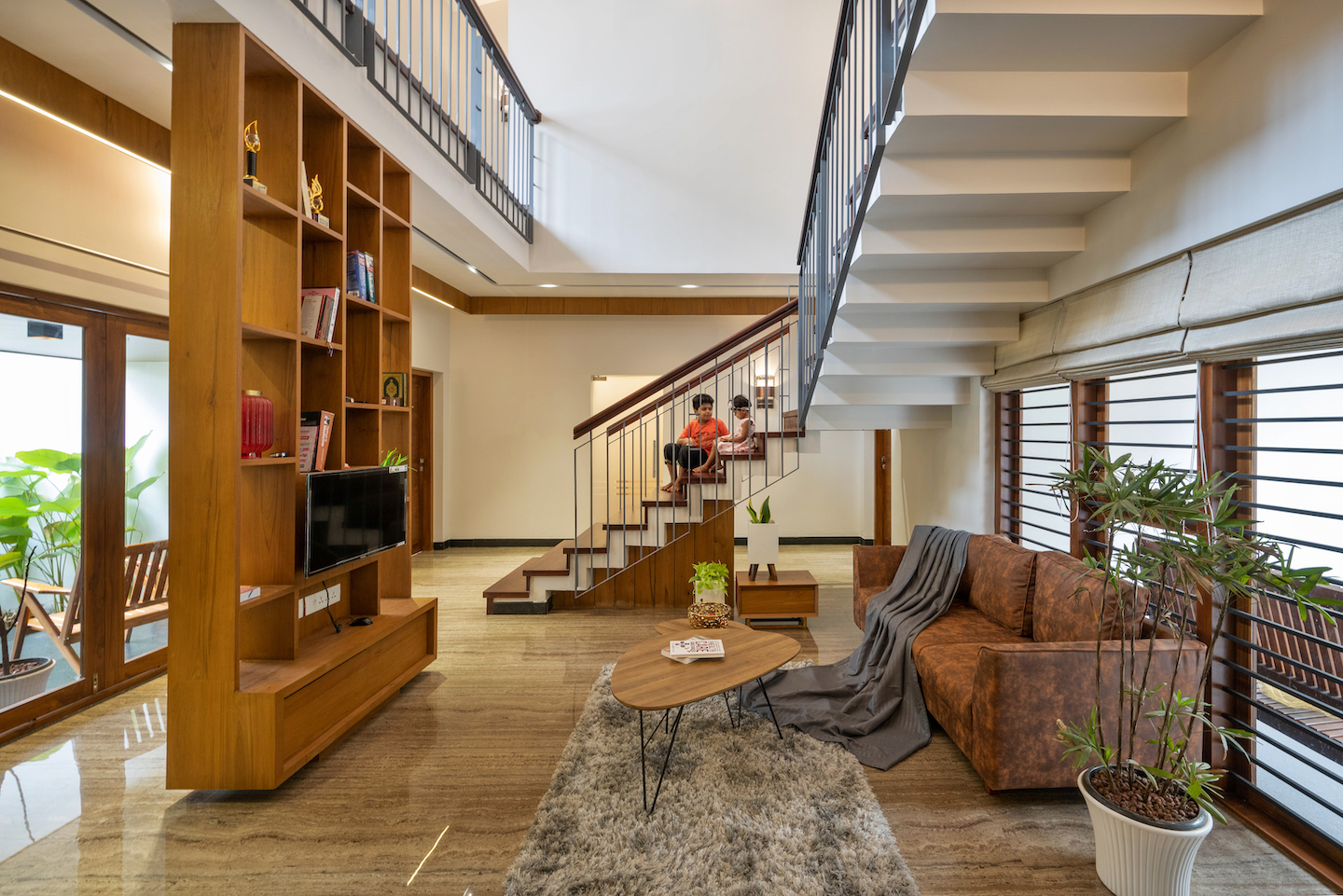
The interior programme sees minimal walls, and different ‘rooms’ flow seamlessly into each other. Both, the dining and formal living, face the landscape step and the pond. Situated in the north-west, the modular kitchen also affords a great view of the patio. It connects to the family living area, which is actually the central area of the house. A small TV unit gives it its own identity without fragmenting the volume. A master bedroom, a guest room and a prayer room complete the functionalities on this level. From the family living room, a staircase connects to the upper level with another master bedroom and the fourth bedroom. The landing is resolved as a small sitting area for reading and studying with a pleasant view to the landscape.
The material palette
The material palette for the house comprises exposed paint finish, brick, clay tiles, buffed cudappa flagstones, kota, granite, Nilambur and Burma teak, and polished metal sheets. Nilambur teak is used throughout the project in various forms as furniture, window frames because of its abundant availability in the locality. All the furniture is customised and made in plywood and veneer. The RCC staircase has wooden treads and a wood and steel handrail. Flooring material shifts with functionalities: the sitout and patio have lappato-finish granite, while dining and other common area are fitted with Italian marble tiles. In the private spaces, the tones change to a more rustic feel: the bedrooms and the open balcony on the first floor feature wooden-finish tiles and mud tiles respectively.
The challenge
The main challenge was security. “In this house, we provided full glass windows without any sort of safety grilles for the windows and sliding doors. That’s not the norm in Kerala,” says Risiyas. “Most houses have thick doors and all windows are protected by metal grilles. But that would have destroyed the minimal feel we were trying to achieve. We overcame this with electronic security. The house is secured with good CCTV surveillance.”
The highlights
Risiyas votes for natural light, the entrance court and the clean, minimal lines of the architecture as the important features of the design.
Fact file
Project: Dr Raoof Residence
Location: Perinthalmana, Malappuram, Kerala
Area: 3,100 sq ft (built-up)
Principal architect: Risiyas Farsa
Add a Comment