
Colours, patterns, textures and forms climax in the interiors of this Ahmedabad villa designed by 180 Degrees.
Curated by: Rupali Sebastian
Photographs: Photographix India; courtesy 180 Degrees

The site
The scene of this assignment was an existing bungalow in Ahmedabad.
The brief
The succinct brief spelt out little with regards to functionality and aesthetics. The main requirement, however, was a space with natural and earthy tones and a unified feel.
The civil intervention
180 Degrees founders Tanvi Shah and Dhwanit Shah focused on making the programme more open while simultaneously unifying the additions for cohesiveness and staying true to the bones of the original architecture. To this end, walls were moved, ceiling were raised and new windows were put in.
The spatial configuration
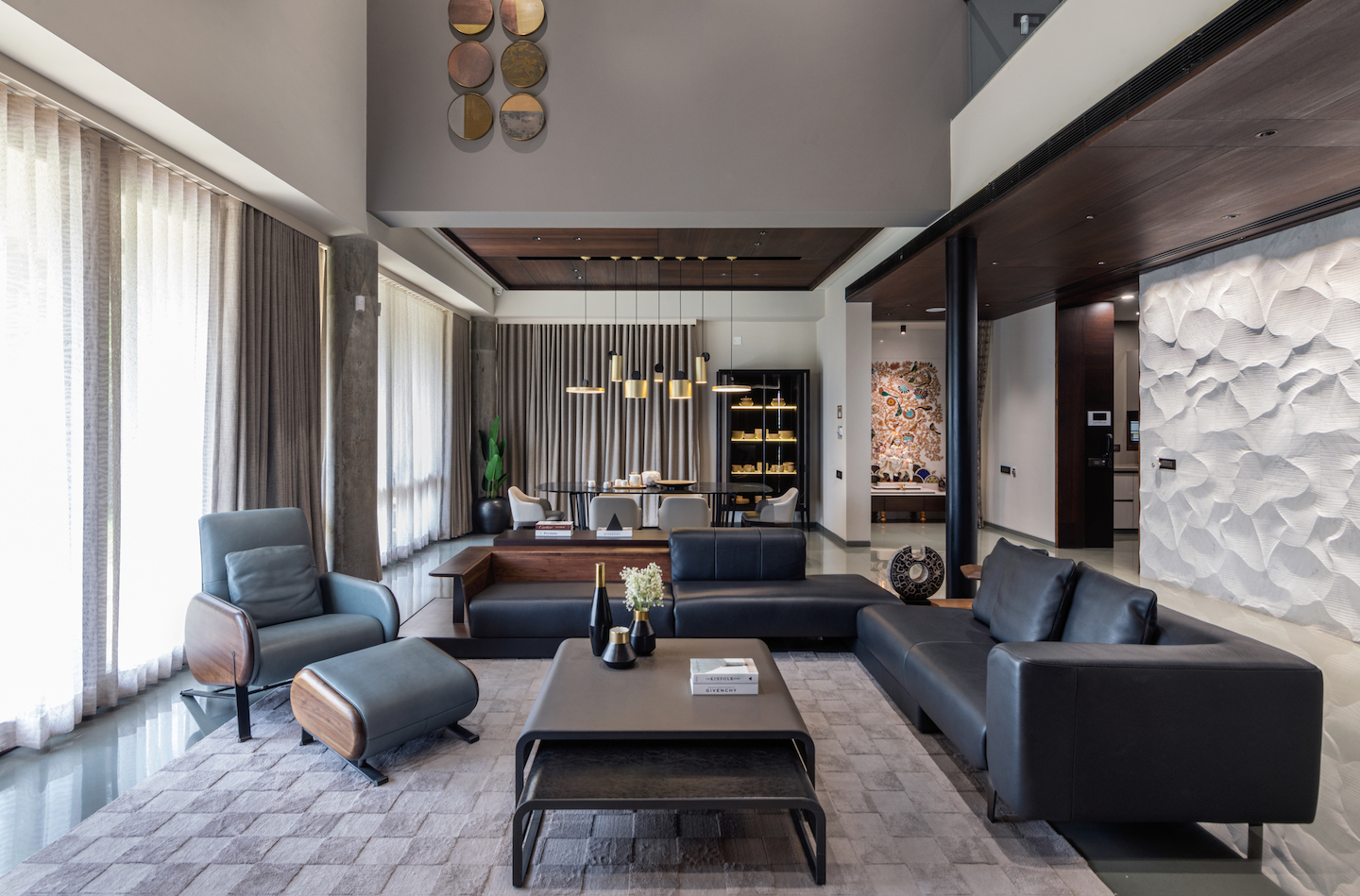
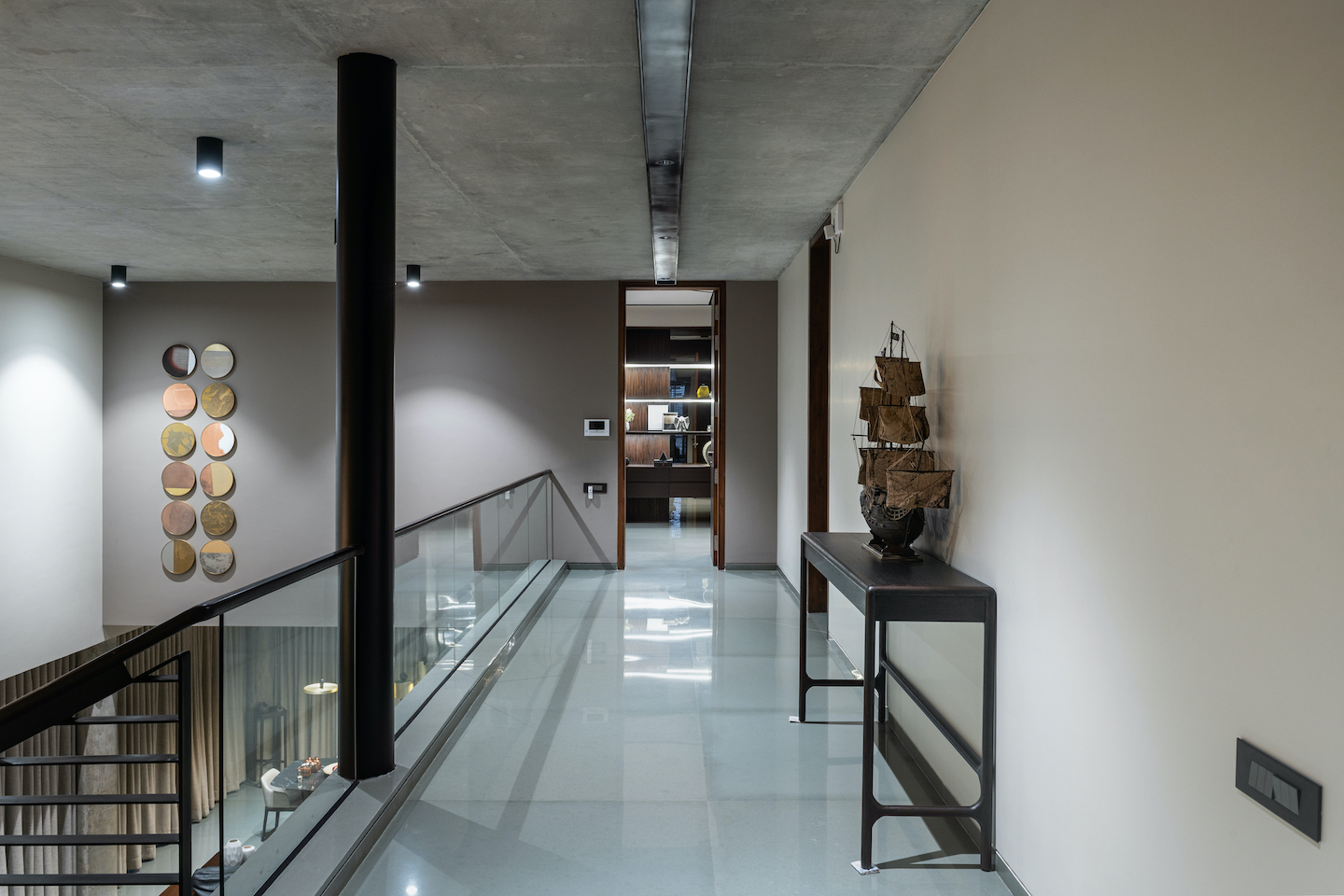
The rectangular two-level house features a formal drawing room (near the entrance), a double-height living room (reserved for family and friends), a dining area, two guest rooms and the kitchen on the ground floor and three bedrooms (used by the family) on the floor above. The passage that connects the latter, abuts and overlooks the volume of the living room.
The design intent
“Our philosophy was that each room should have a language of its own, but not lose sight of the the client’s requirement,” Tanvi and Dhwanit tell us. “The single most crucial point was to create an experience of furniture, pattern and art that complemented each other. When you moved from room to room the feeling, we were looking for ‘openness and expressiveness’,” they add.
The visual vocabulary
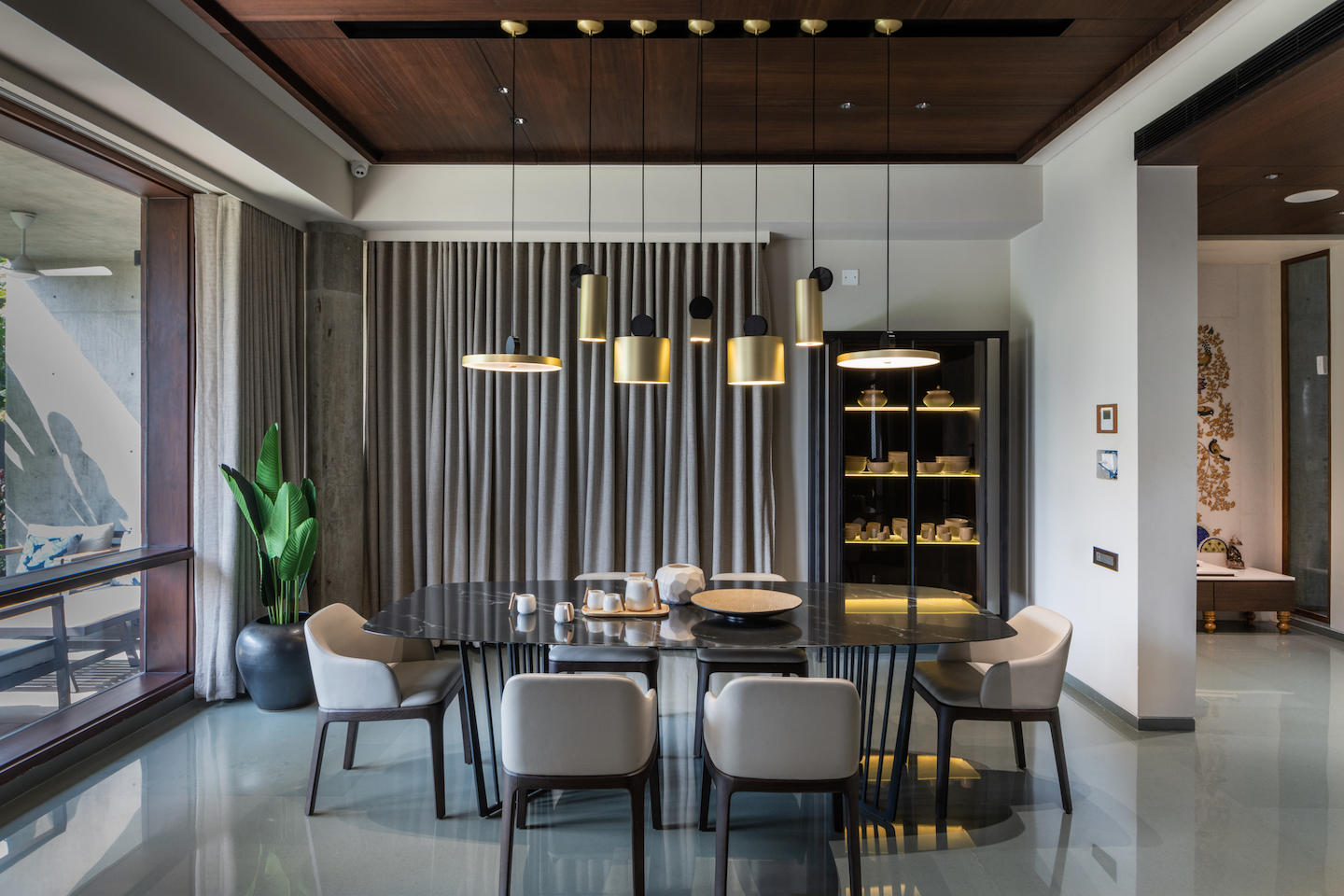
While playing with myriad aspects of colours, patterns, textures and forms, the interior designers duo aimed for a felling of stability and balance. The clients directive for an earthy shell also allowed pops of colour in different parts of the house to really stand out. The resulting, a space that blends aesthetics and art, is immersive, modern and, most importantly, personal.
The material palette
Natural wood and RCC cement walls and ceilings are paired with kota stone flooring to add warmth and personality. This combination works well with the exposed pillars in the living room and the bedrooms. Subtle details such as the engraved Statuario marble and sandstone expanses, wood panelling, wood-block screens, stone veneer and glass achieve the goal of an interior design scheme that felt both current and timeless.
The challenges
“It is no fun working if there’s no healthy challenge,” smiles the duo. “We would say the most challenging part of this assignment was balance. We had to introduce current trends into the narrative while also ensuring that it was timeless and personalised,” they state. “We love mixing metals, bright, open spaces and pops of colour… and this project helped us achieve that.”
The highlights
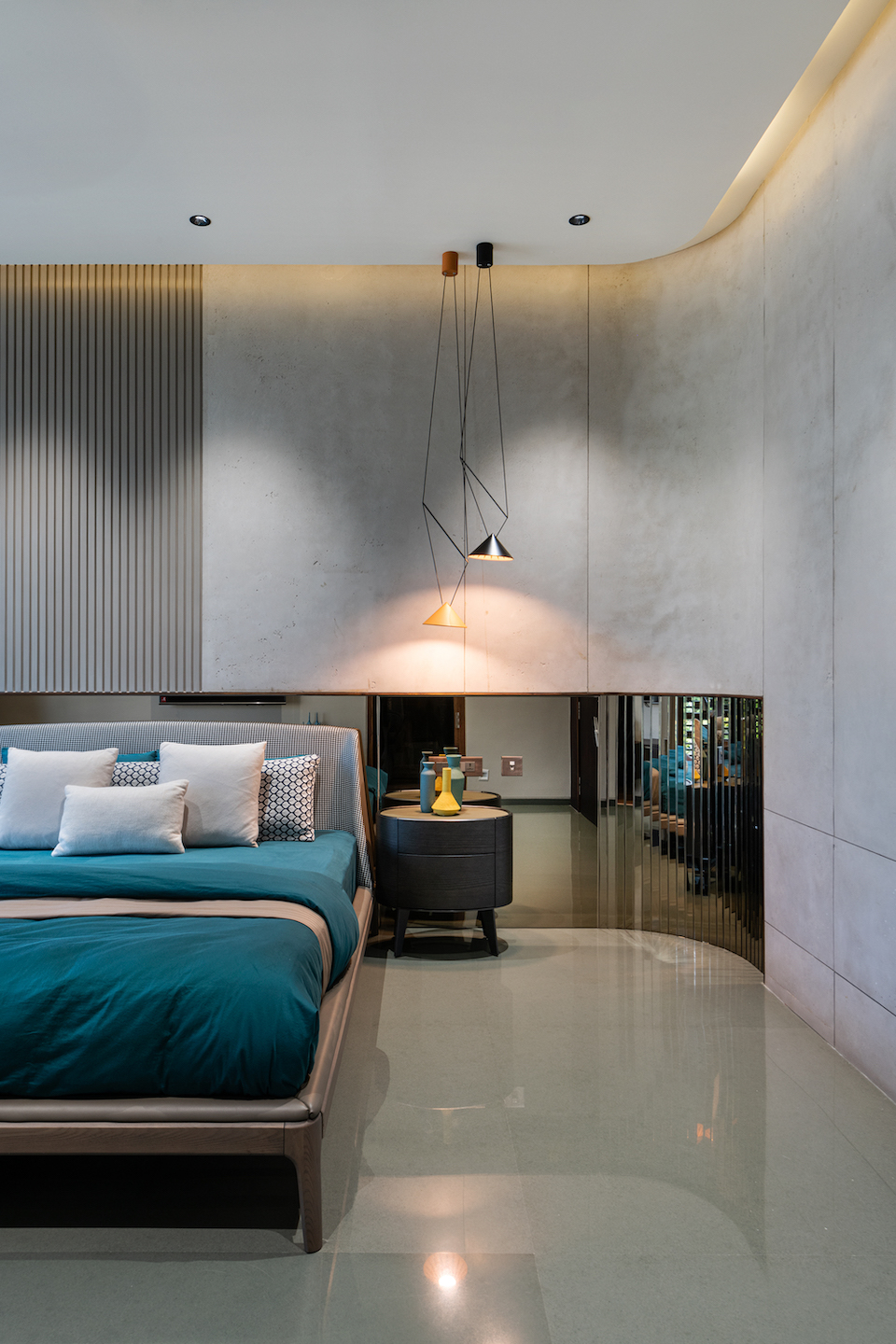
The one thing the designers are particularly pleased with is the lighting. “We have always felt that right lighting adds an extra element to any space,” they say. “The play of light and shadow within every room was aligned in respect to the natural light of that particular room.” Additionally, different wall textures, in conjunction with lighting, add to the richness of each room.
Fact file
Project: Dwarkesh
Location: Ahmedabad
Area: 12,500 sq ft (built-up)
Principal designers: Tanvi Shah and Dhwanit Shah
Add a Comment