
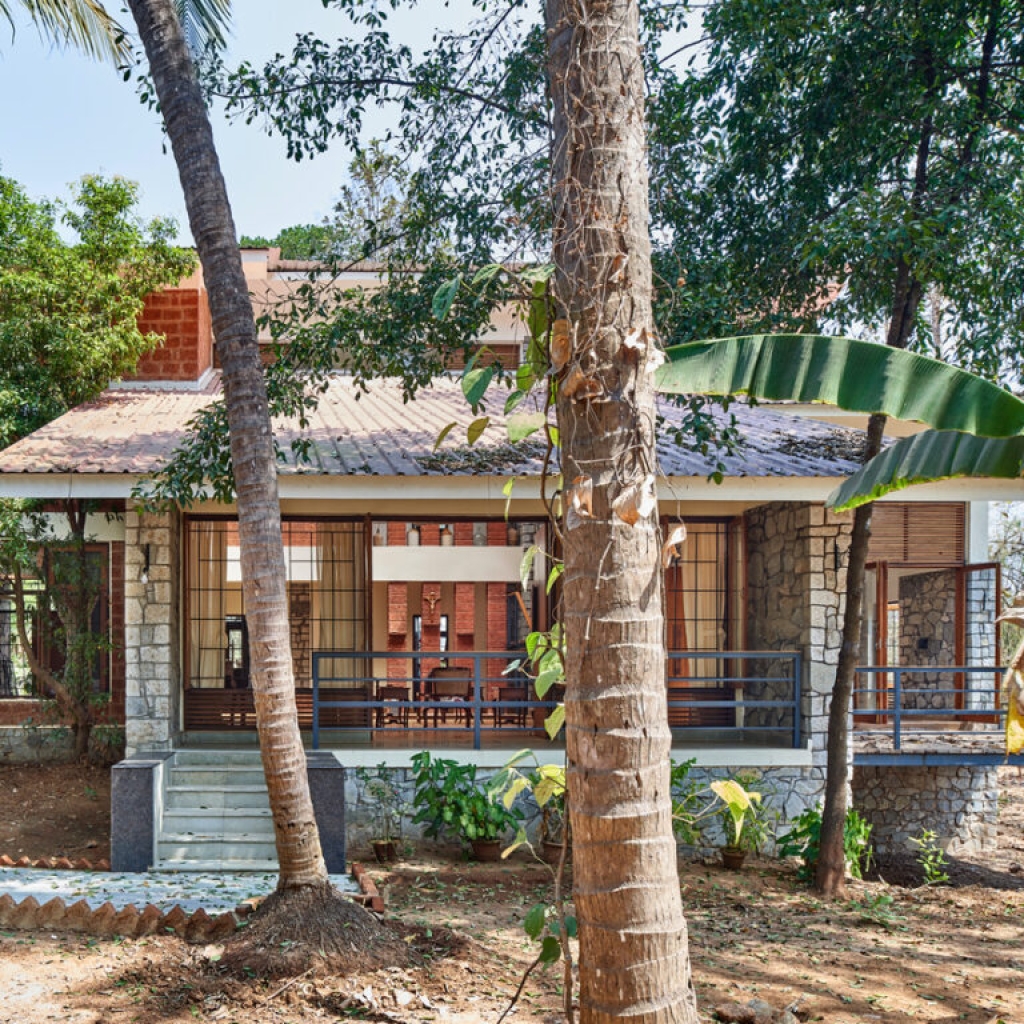
Located in a quiet village in south Goa, Mascarenhas House, designed by Studio 15,73, establishes a built-presence that is in harmony with the heavily wooded surroundings.
Curated by: Rupali Sebastian
Photographs: Harshan Thomson; courtesy Studio 15,73
The setting
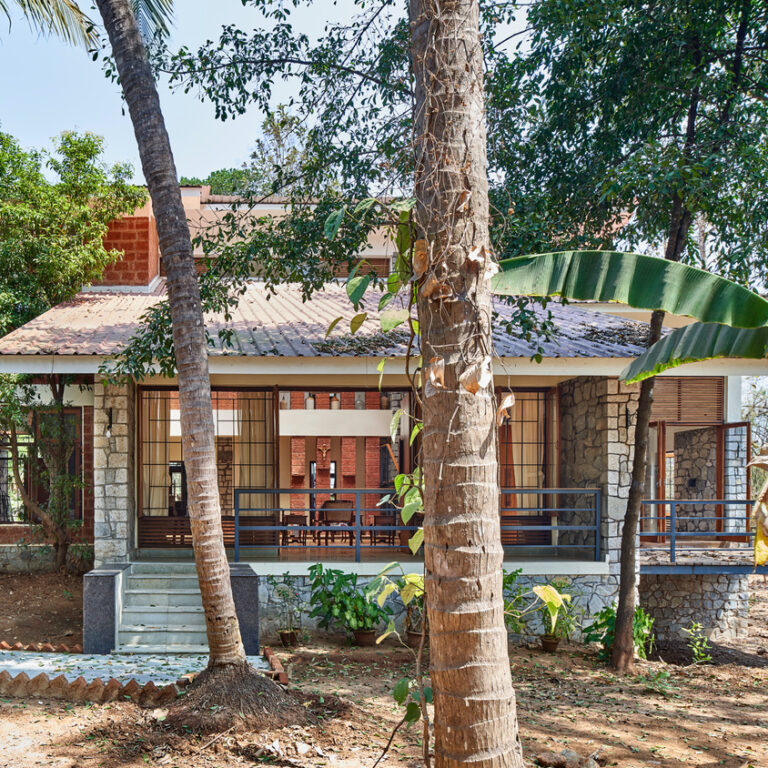
The site is located in Guirdolim, a quiet village in the south of Goa. The 6,000-sq-m plot is full of trees and is surrounded on all sides by beautiful views of forests and the countryside.
The brief
The client is a young pilot based at the time in Chennai, but whose original home is on the same property. “Our brief was to build a compact four-bedroom house which complemented and preserved the connection to his existing ancestral home, on which his parents would continue to live,” elucidates Rajiv D’silva, founder and principal architect, Studio 15,73, a boutique architectural and interior design practice based in Bambolim, Goa.
The design intent
The idea was to keep it simple, use locally-available material, and produce a house that would be comfortable, airy and light-filled.
The architectural response
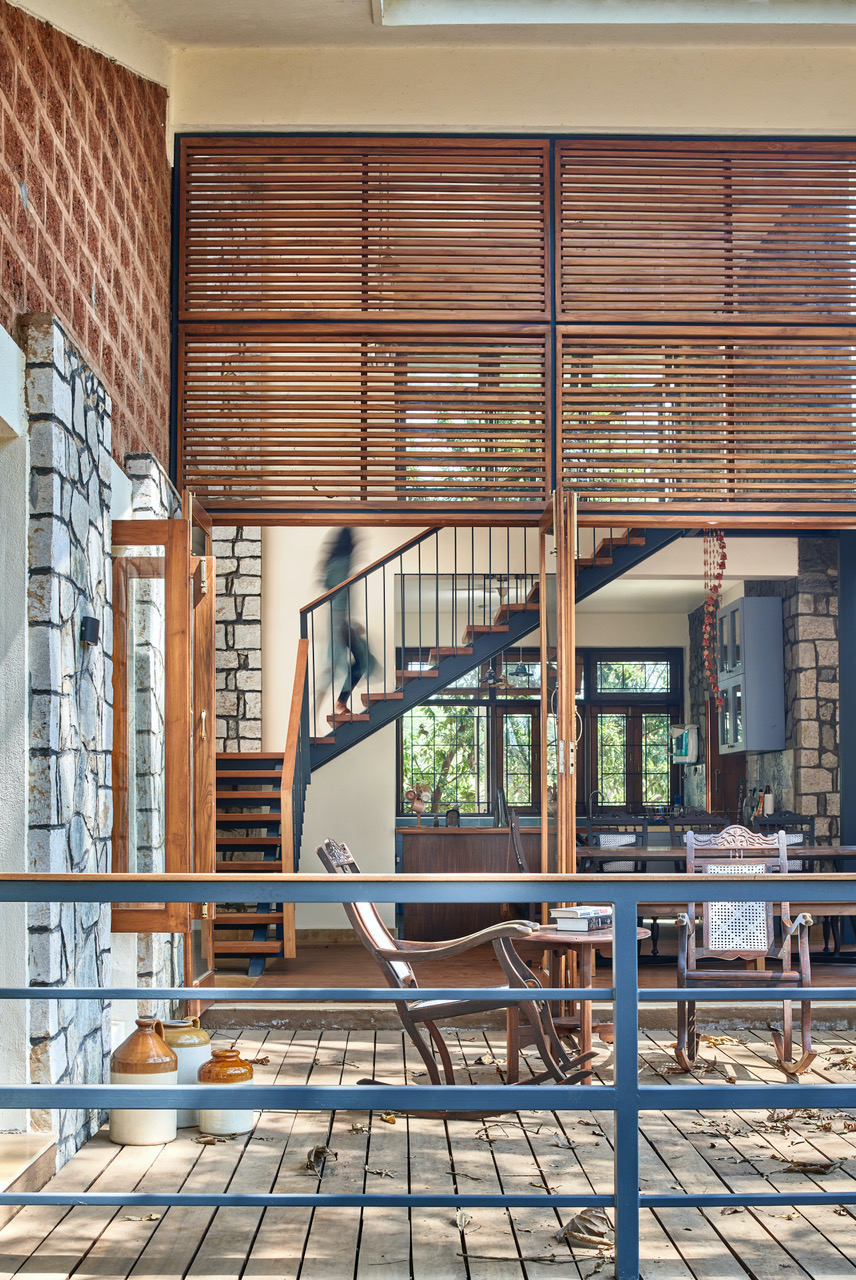
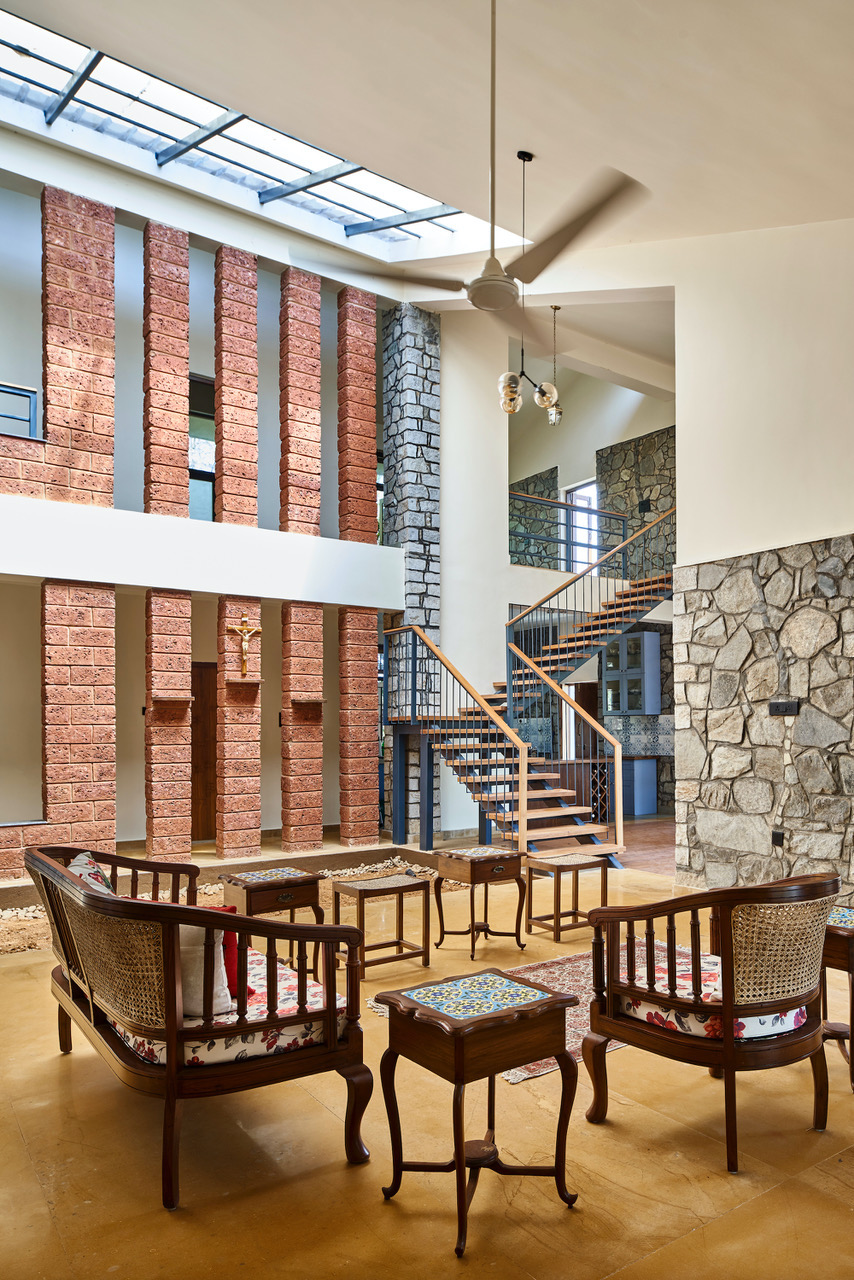
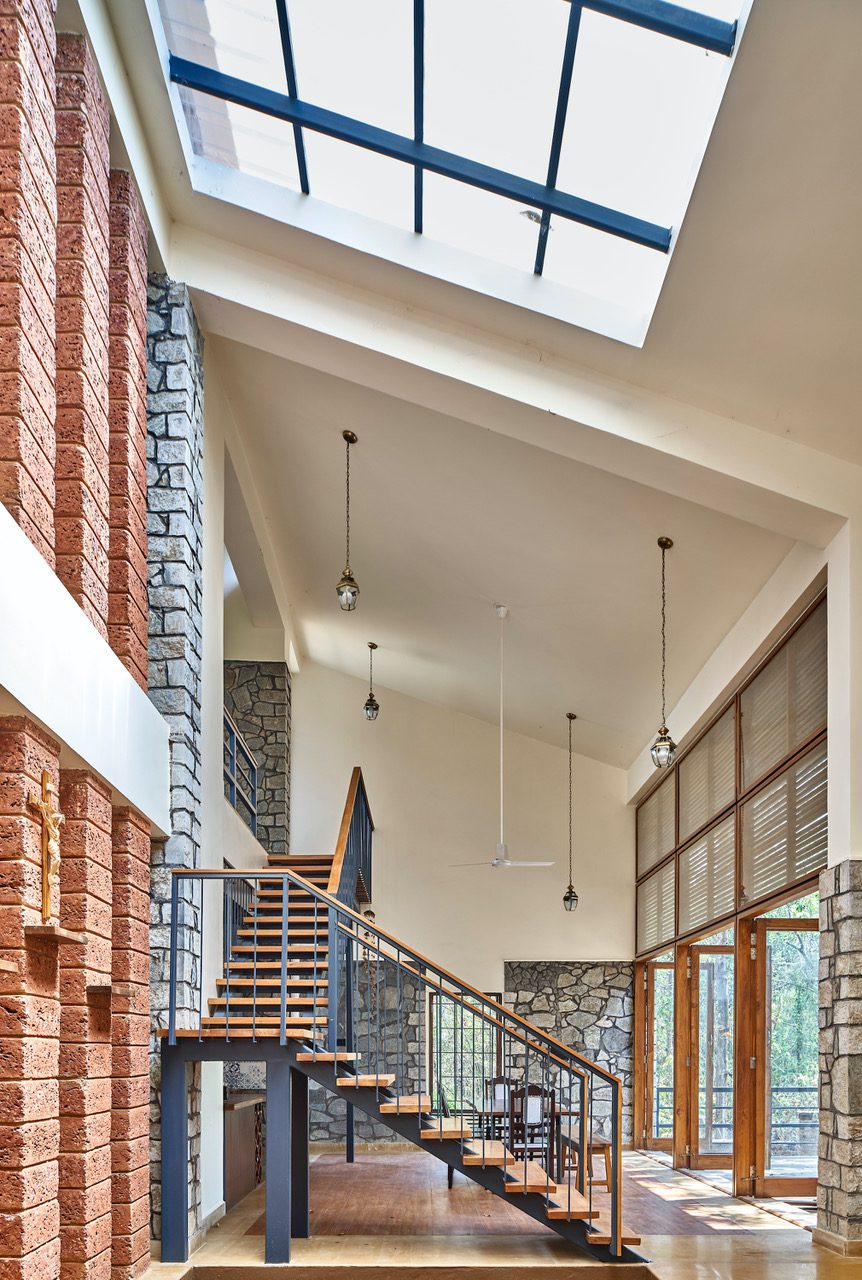
“We chose to site the building at a location that would be adjacent to the old house, and took advantage of a natural dip in the terrain at that spot. We opted for load-bearing walls built with laterite and basalt, running in a north-south direction, with only minimal external walls running in an east-west direction,” reveals Rajiv. This enabled the team to have large, expansive openings facing the north and south — which brings in plenty of diffused light throughout the day. While the walls are visually and structurally heavy and stolid, the openings are of steel, glass and wood, all materials that are light both visually and structurally, and contrast with the walls. “And we decided to puncture the building with a central skylit courtyard that brings light to the interior and also draws hot air upwards to cool the interior and accentuate the cross-ventilation,” adds the architect. “We sited the building carefully so that no trees would be cut, and each large opening framed a view of the trees just outside it.”
The programmatic flow
The programme consisted of four bedrooms, two of them en-suite and two with shared bathrooms. The open-plan living-dining-kitchen zone flows in between the central courtyard and an external deck that is built around a large tree. The two bedrooms on the first floor are connected by a family lounge that overlooks the living-dining and the courtyard. The parents’ bedroom on the ground floor is sited adjacent to the old house, with a verandah giving easy and direct access to it.
The material and colour palettes
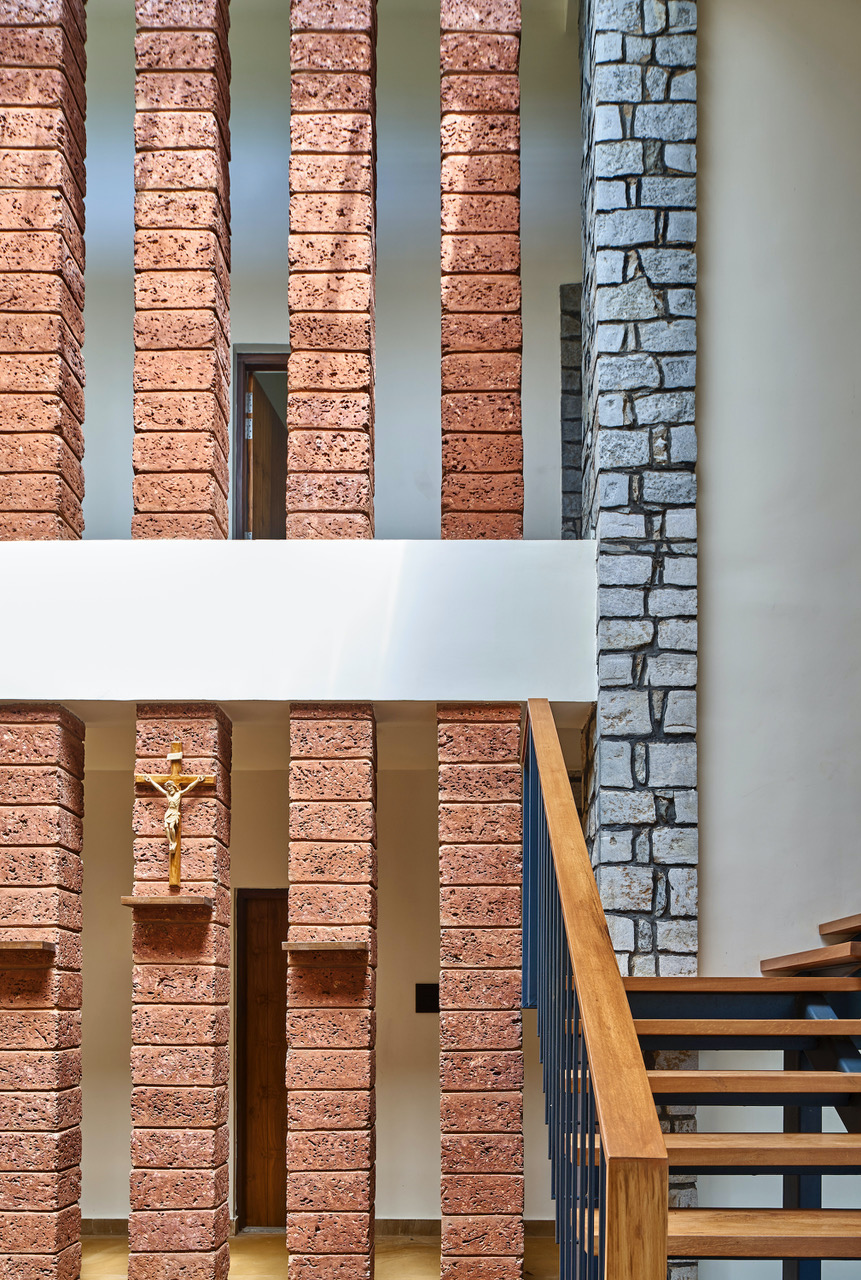
The structural materials largely determined the colour and material palette. “Thus we have the rugged grey of random rubble basalt masonry juxtaposed against the more earthy red of the dressed laterite masonry,” elaborates Rajiv. The steel tubes used to frame the large openings and for railings and barriers were painted an industrial grey, softened by teak wood polished to enhance its natural colour. The living room floor sees the use of Jaisalmer stone slabs, which bring a dash of colour to an otherwise-subdued interior palette. The dining room, on the other hand, features a teakwood floor that complements the wood of the deck and the wood screen that separates them. The floors of the bedrooms are polished honey kota, while those of the bathrooms are leather-finish grey kota.
The challenges
“There were none, really,” says Rajiv. “The building was built without a main contractor. The client’s father instead managed the construction himself, sourcing all the materials and engaging labour contractors for the different works. The only minor challenge — one we have whenever we’re working with a contractor or artisans that have not done the kind of work we do before — is to make sure they can do it the way we want. Our team spends a lot of time on site with the workers, instructing them how to do it, and making sure they’re getting it right.”
Fact file
Project: Mascarenhas House
Location: Guirdolim, Salcete, Goa
Area: 3,300 sq ft
Principal architect: Rajiv D’Silva
Design team: Chrissie Pereira, Orville Monteiro, Neville Coutinho, Soham Raje, Kuber Manocha, Anirudh Jaiswal (architecture) and Yogesh Bhobe (structural design)
Add a Comment