

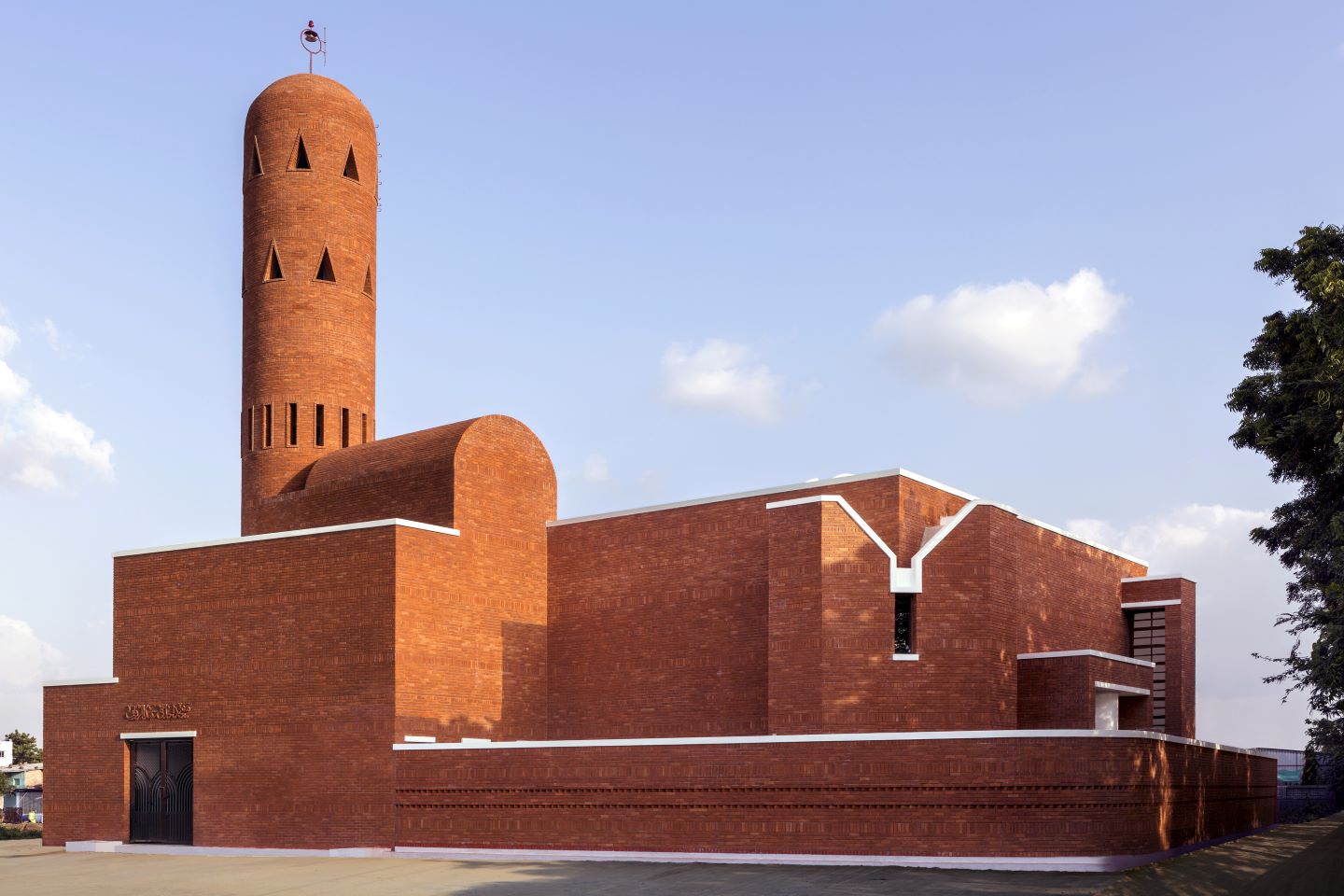
The design of Masjid-e-Haji Abdur Rauf created by NBZ Architectural Consultants in Malegaon incorporates the essential elements of a masjid into a new form.
Curated by: Rupali Sebastian
Photographs: Ashfaq Aboojiwala and Hasnain Zafar, courtesy NBZ Architectural Consultants
The design intent
To create a place of spirituality as well as a space for congregation. Conceptually and spatially, light is integrated in the design as a physical component and a spiritual element.
The design
The design incorporates the essential elements of a masjid into a new form articulated as a monolithic composition featuring a series of cuboids of different sizes accentuated by a minar. The result is a well-balanced skyline and varying volumes that project changing functions. Indirect natural light through south-west and north-west corners of the west wall and a diffused light from the dome in the main prayer hall create an ethereal atmosphere.
The planning
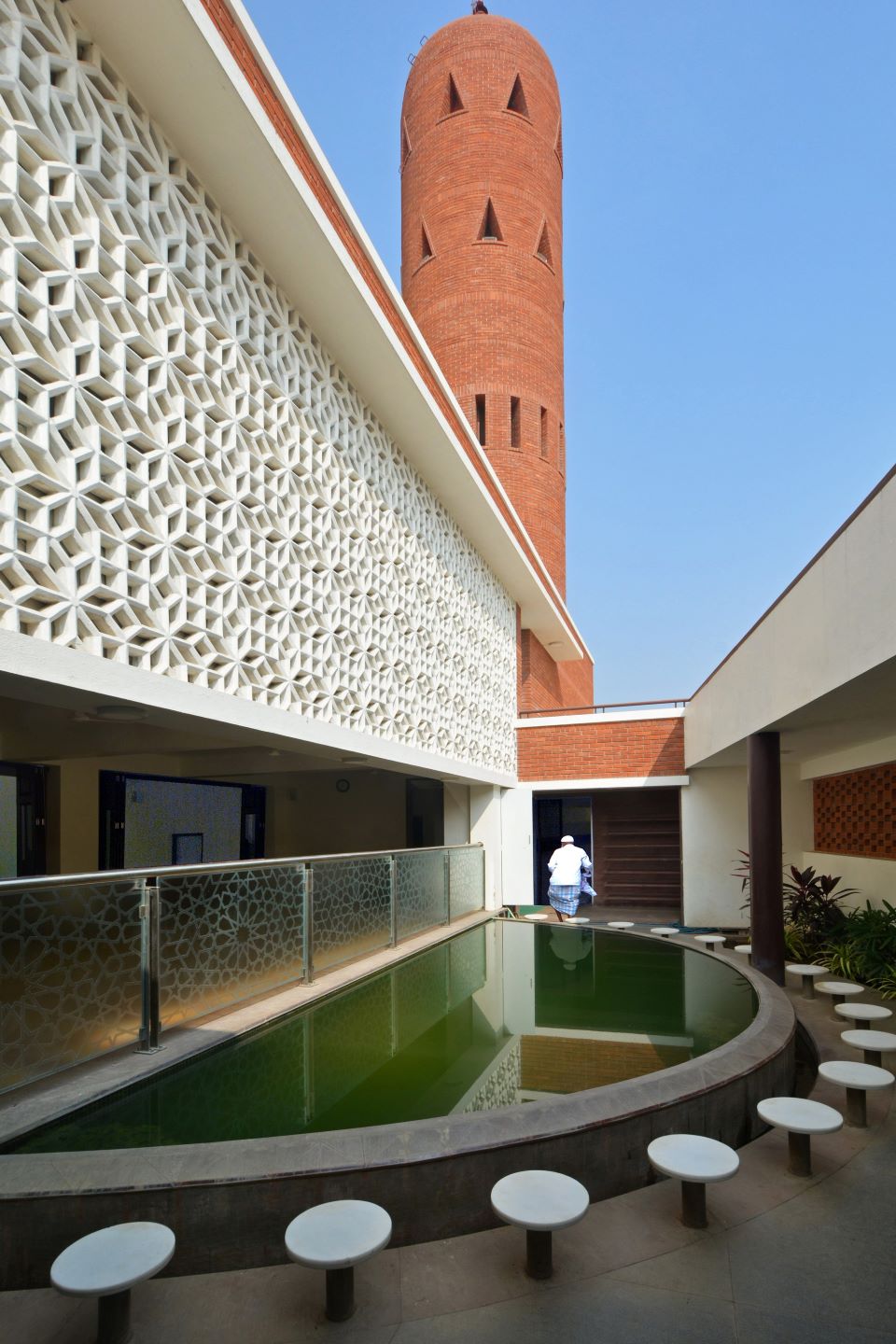
The plan is aligned to minor roads on the north and south and the #qibla direction on the west where the major road lies. The resultant skew houses ablution facilities, the office and the store on the north-east and south-east sides. The main prayer hall and the secondary prayer area (sehan) are integrated with a semi-circular open-to-sky waterbody and plantation court. Entrances from the north and south create a movement axis which does not disturb the main prayer hall, with the former connecting to stairs that lead to a prayer hall on the mezzanine level.
 Contextuality and materiality
The structure responds to Malegaon’s harsh climate of hot-dry summers and cold-dry winters. The main envelope is wrapped in double-skin masonry cavity walls and hollow clay block insulation for the roof. Controlled openings and indirect light from the façade and the roof provide comfort. Exposed #brickwork follows fine lines with precise junctions reflecting spirituality of form.
Fact File
Project: Masjid-e-Haji Abdur Rauf
Location: Malegaon
Built-up: 900 sq m
Architectural team: Late Noor Aboojiwala, Bakir Zafar and Sunil Thanekar
Add a Comment