
Volume and Space Genesis Studio design a residence in Raigarh for a multigenerational family, where expansive volumes, Vastu-led planning, and a restrained material palette come together to balance scale with simplicity.
Curated by: Deepa Nair
Photographs: Manish Malli; courtesy Volume and Space Genesis Studio
The brief
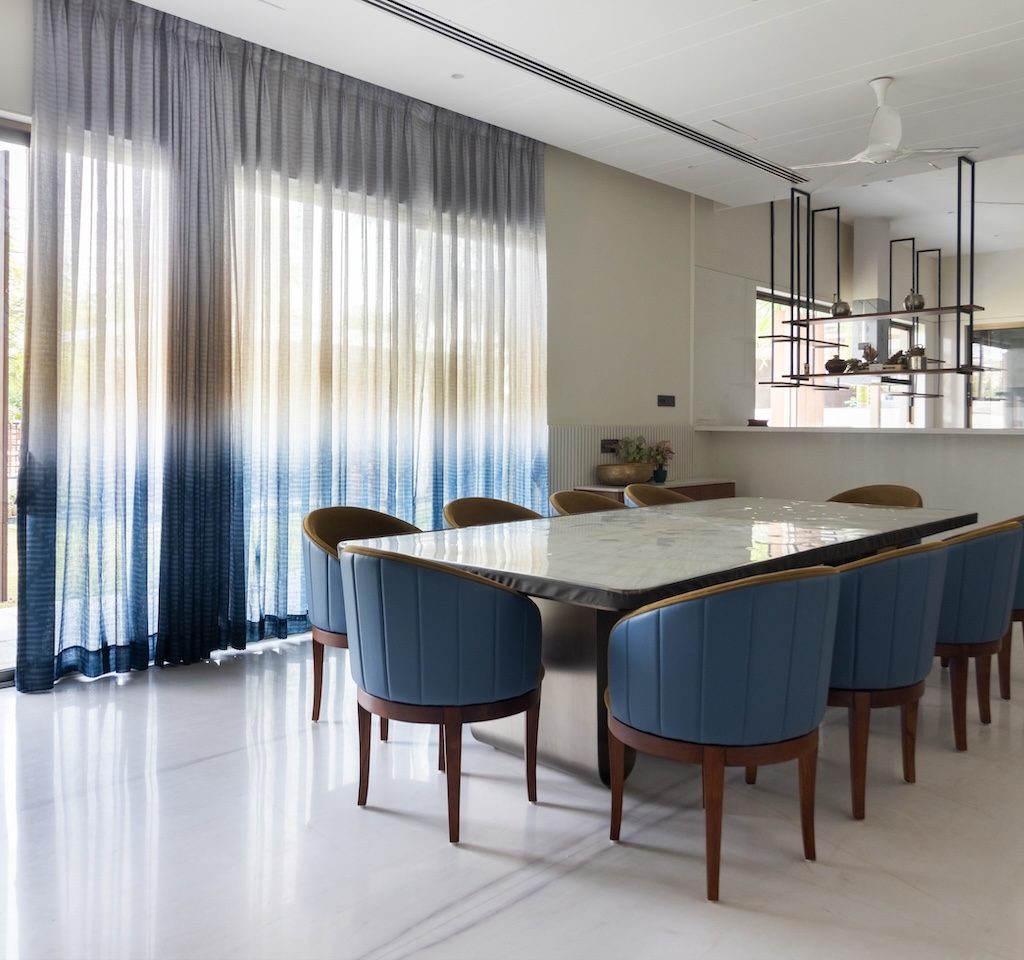
Designing a home for a multigenerational family is often less about scale and more about how different lives come together under one roof. For this 13,000 sq. ft. residence in Raigarh, Volume and Space Genesis Studio was tasked with shaping a space that could hold a family of nine with ease—where shared moments and individual routines could coexist without conflict. The clients envisioned a home that felt expansive in every sense, yet never excessive, allowing openness to be experienced through proportion, light, and clarity rather than ornament. The brief called for expansiveness across every room, but with a measured sense of restraint, allowing the home to feel open without becoming overwhelming.
A key mandate within the brief was strict adherence to Vastu principles, which the clients envisioned as the foundation of the home’s planning. They sought a layout guided by a disciplined rectangular grid that would bring order, clarity, and a sense of balance to the entire house. Adding to this was the complexity of the family structure itself. The clients required identical layouts on the ground and first floors to accommodate the parallel lifestyles of their two sons’ families, ensuring equity and ease of use in everyday living. At the same time, it was important to them that the residence did not feel like two independent apartments stacked vertically. The expectation, instead, was for the home to read as a single, cohesive entity—one that could support multiple households while still holding a unified identity.
The design intent
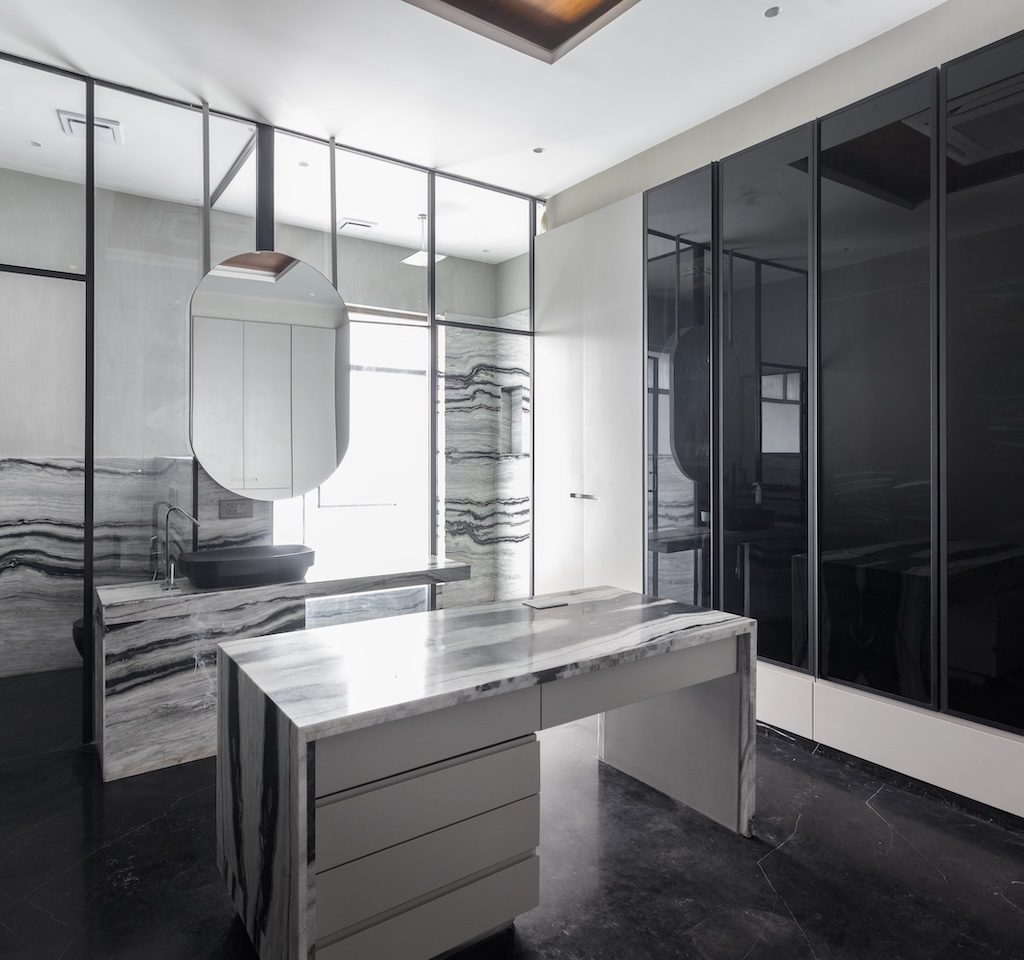
The design intent centres around the idea of “grounded luxury,” where scale and restraint come together to shape the spatial experience of the home. Both the architectural and interior language draw from a disciplined approach, where strong grids and generous proportions establish a sense of order, while raw, tactile materials introduce depth and character.
Luxury, here, is not expressed through ornamentation but through the clarity of space, the honesty of materials, and the way light interacts with them. The emphasis remains on creating an environment that feels composed and enduring—where each element contributes to a larger, cohesive vision without demanding attention in isolation.
The spatial configuration
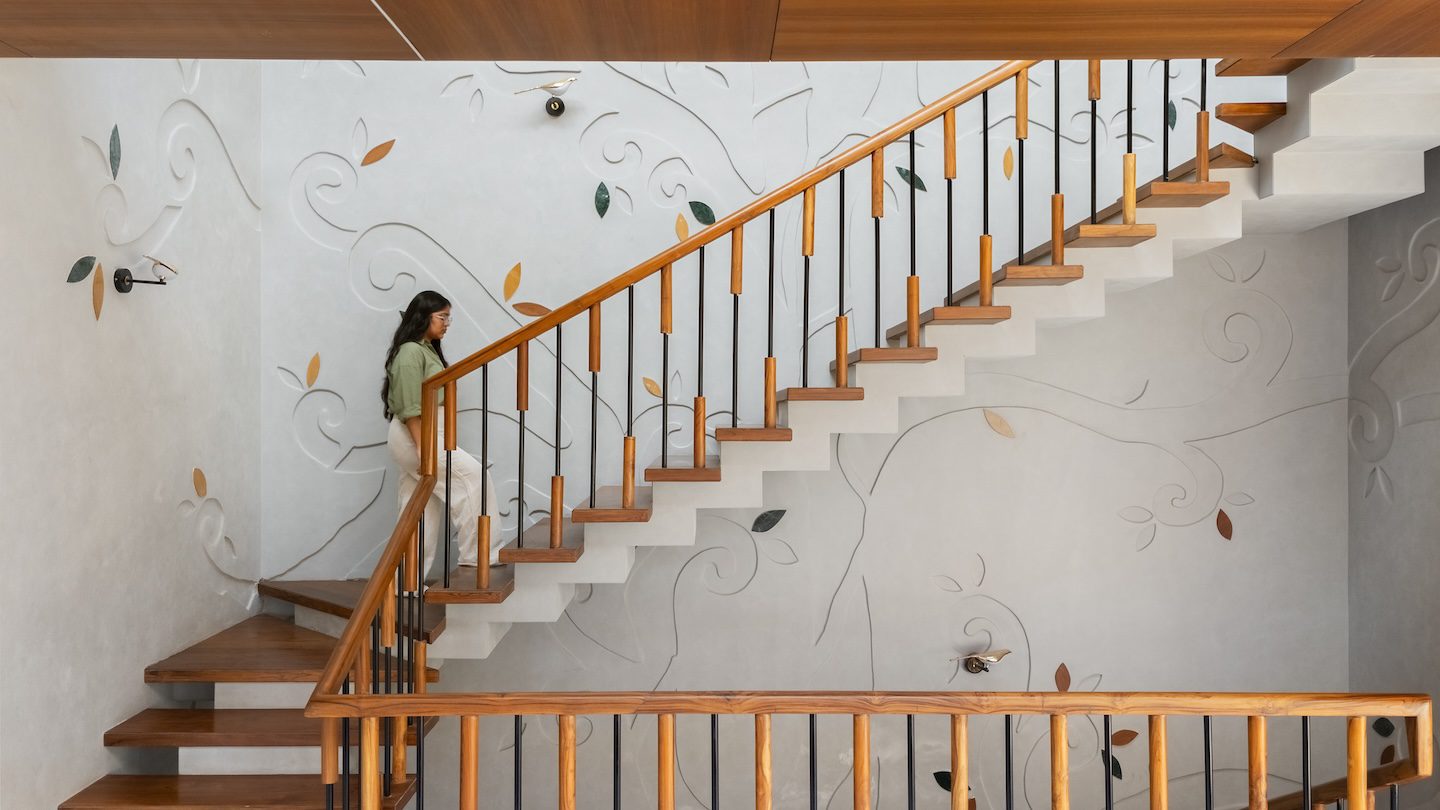
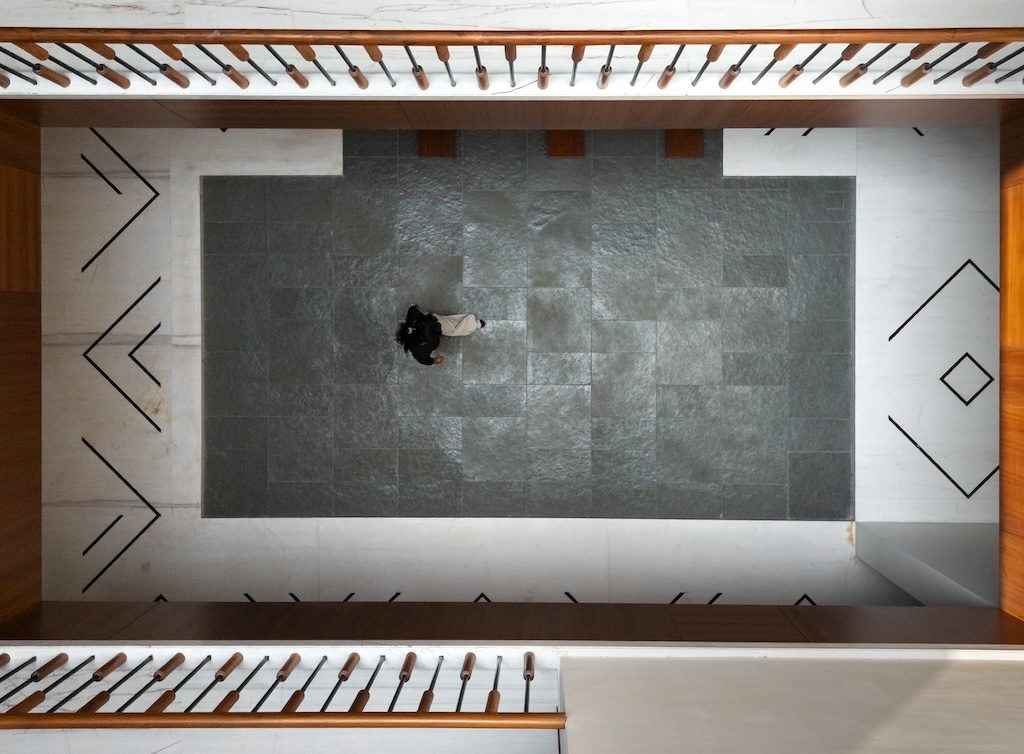
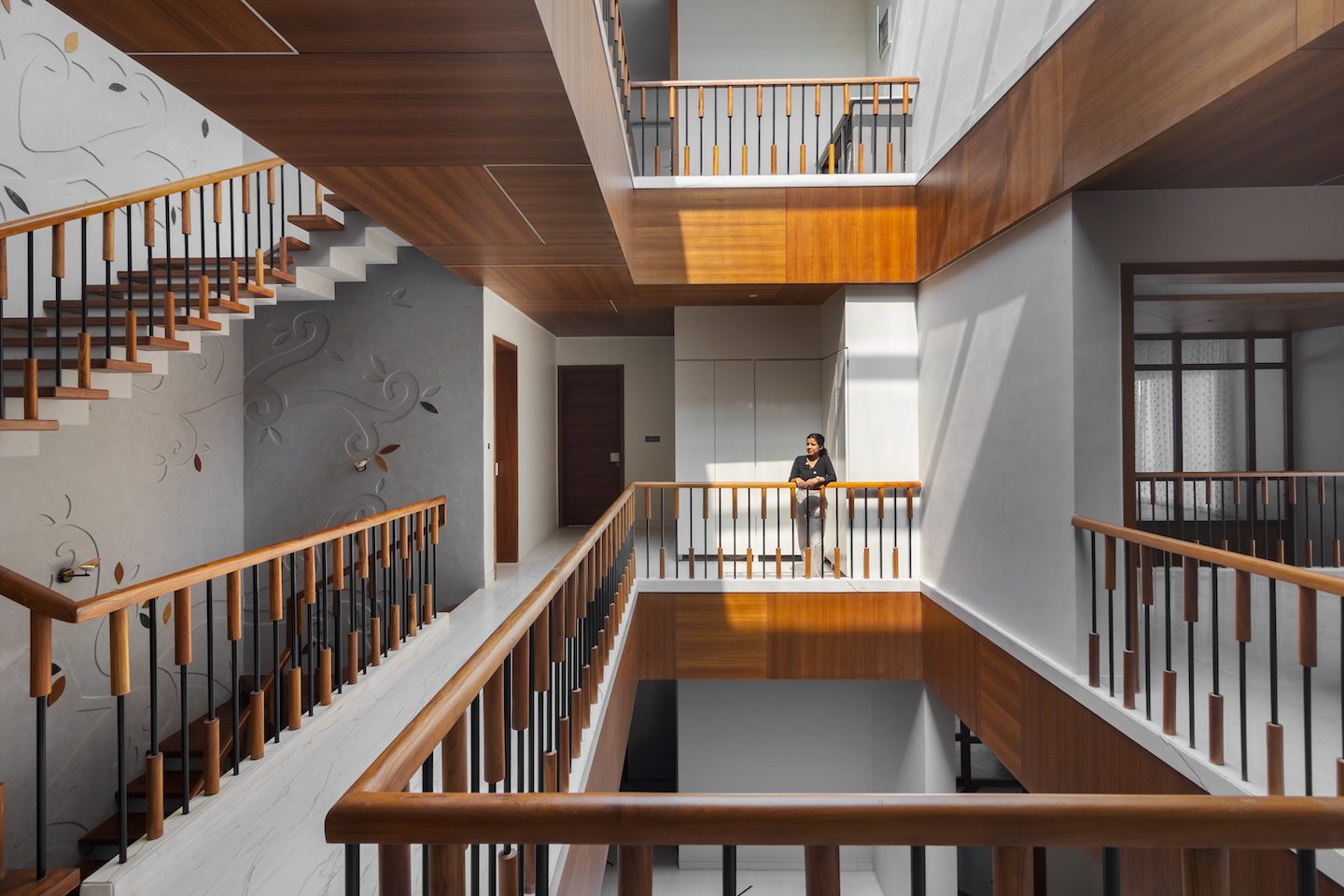
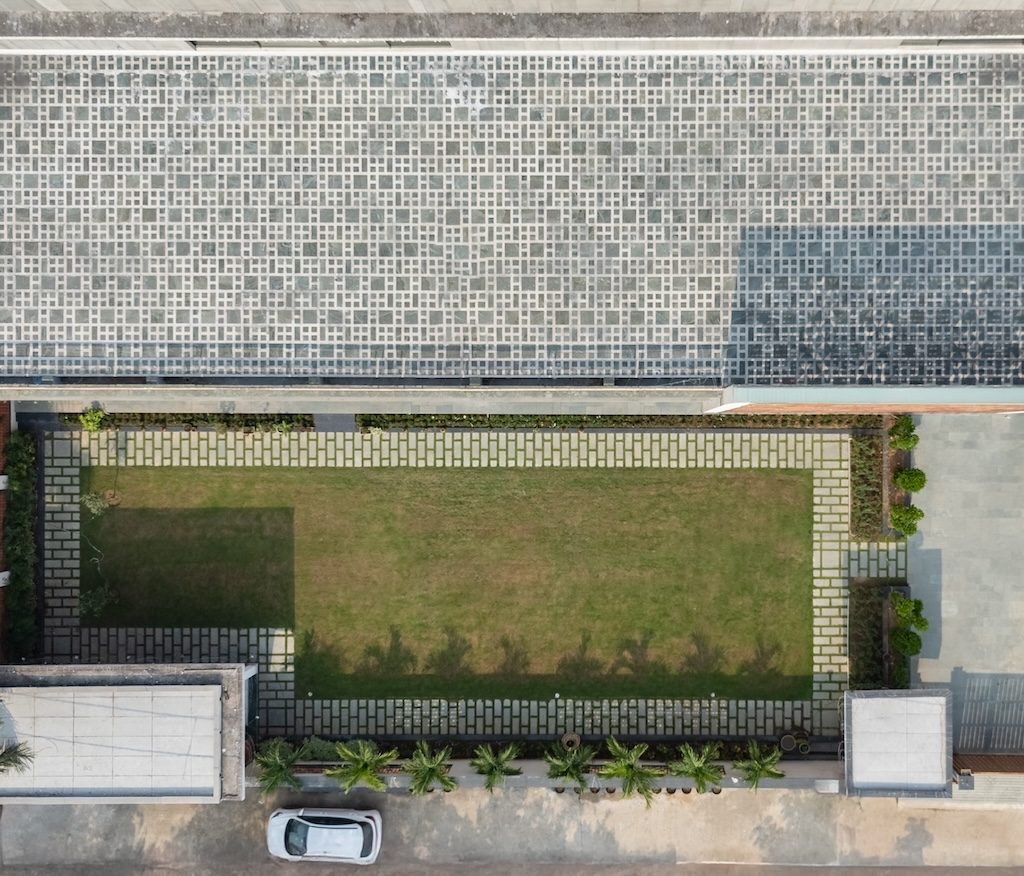
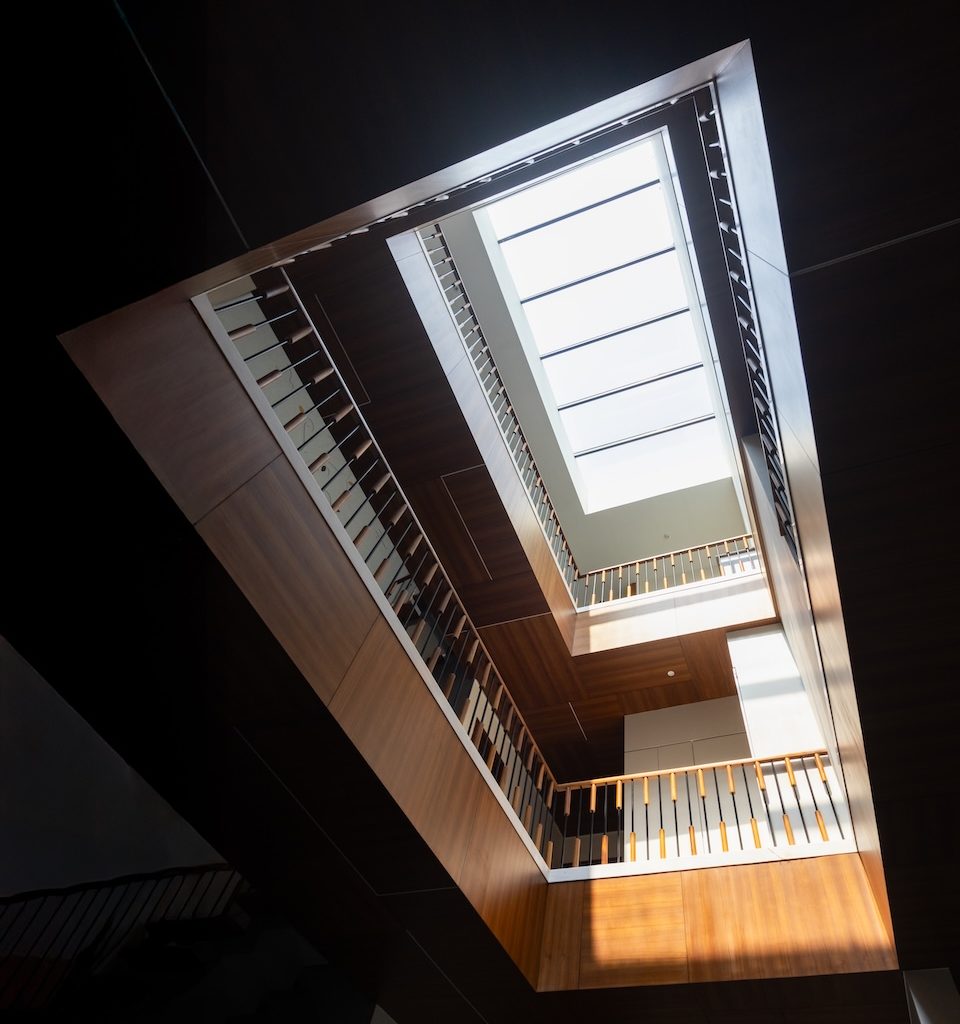
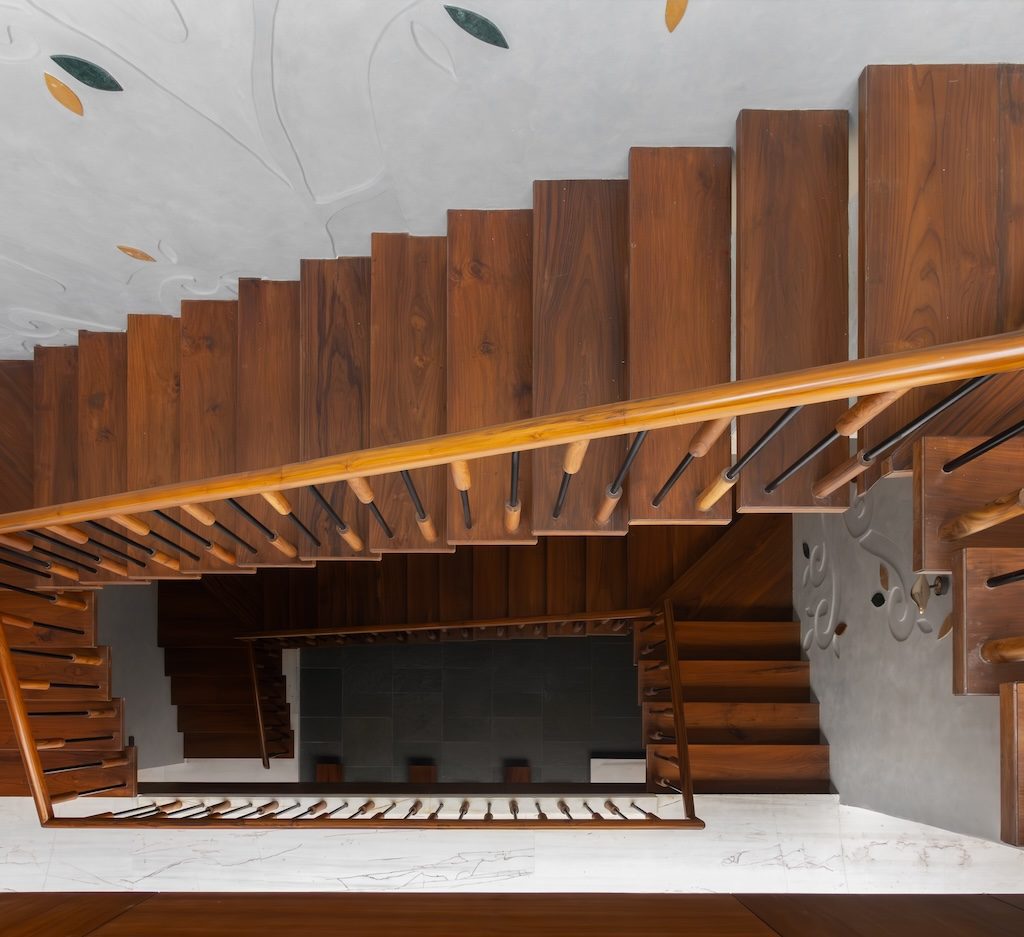
Emerging from a disciplined 3×3 Vastu grid, the plan organises the home around a central courtyard that anchors both movement and experience. More than a source of light, this courtyard becomes the heart of the house—a shared pause point around which everyday life unfolds. At its centre, the courtyard opens into a dramatic atrium, which is shaped in tandem with the staircase to create a vertically expansive volume that connects all levels of the home. Sunlight filters through this space, moving across surfaces through the day and bringing a sense of change and movement to the interiors.
This central volume does more than illuminate the house. It establishes visual connections between floors, allowing spaces to feel linked without losing their sense of separation. The atrium becomes both a social and spatial connector, encouraging moments of interaction while still preserving the privacy required within a multigenerational home.
The design and material details
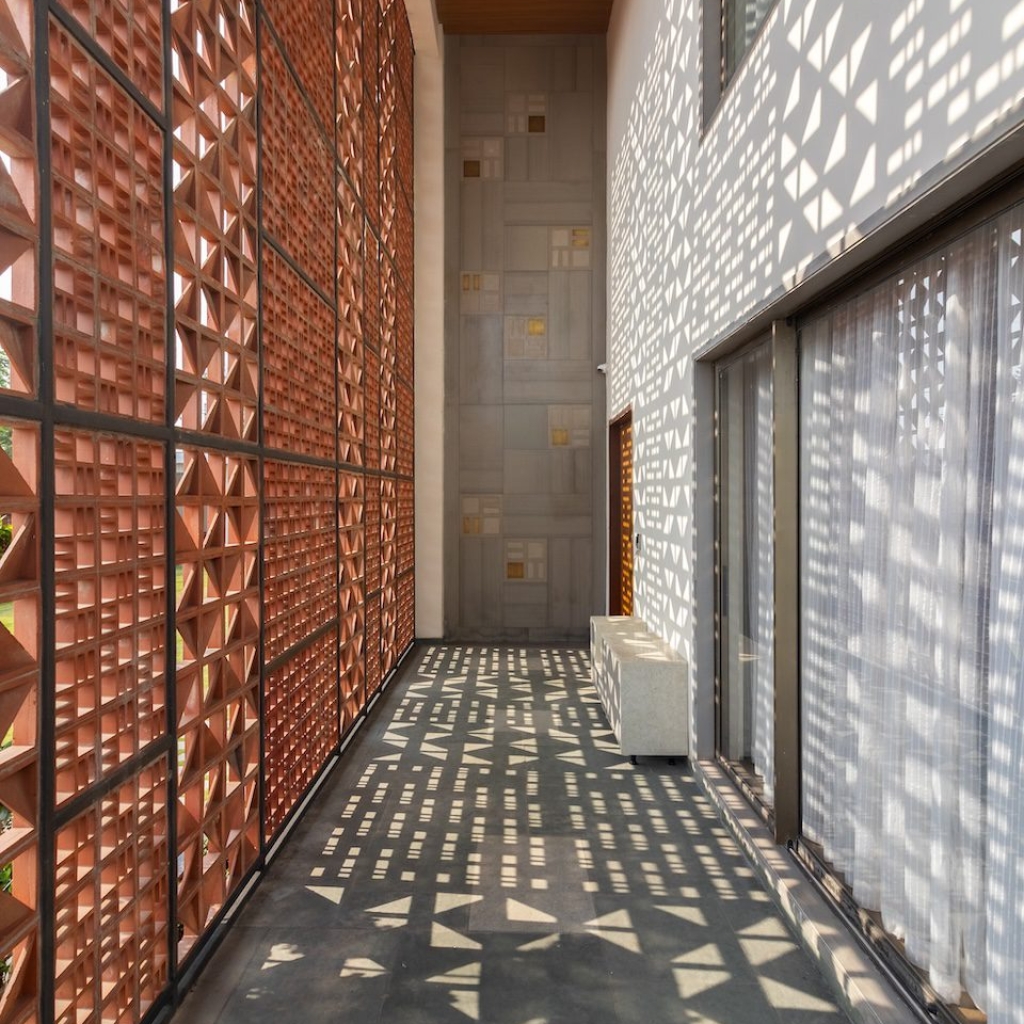
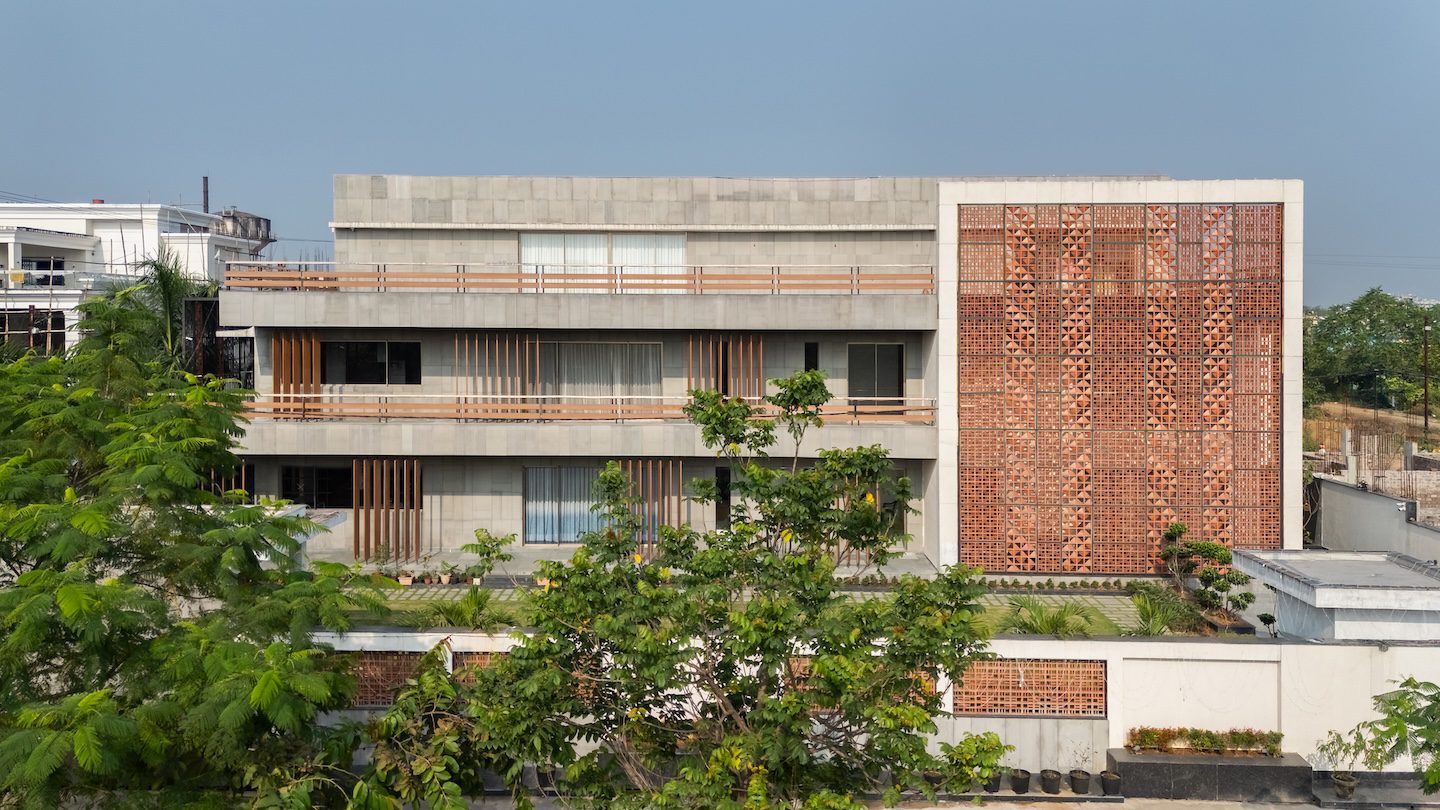
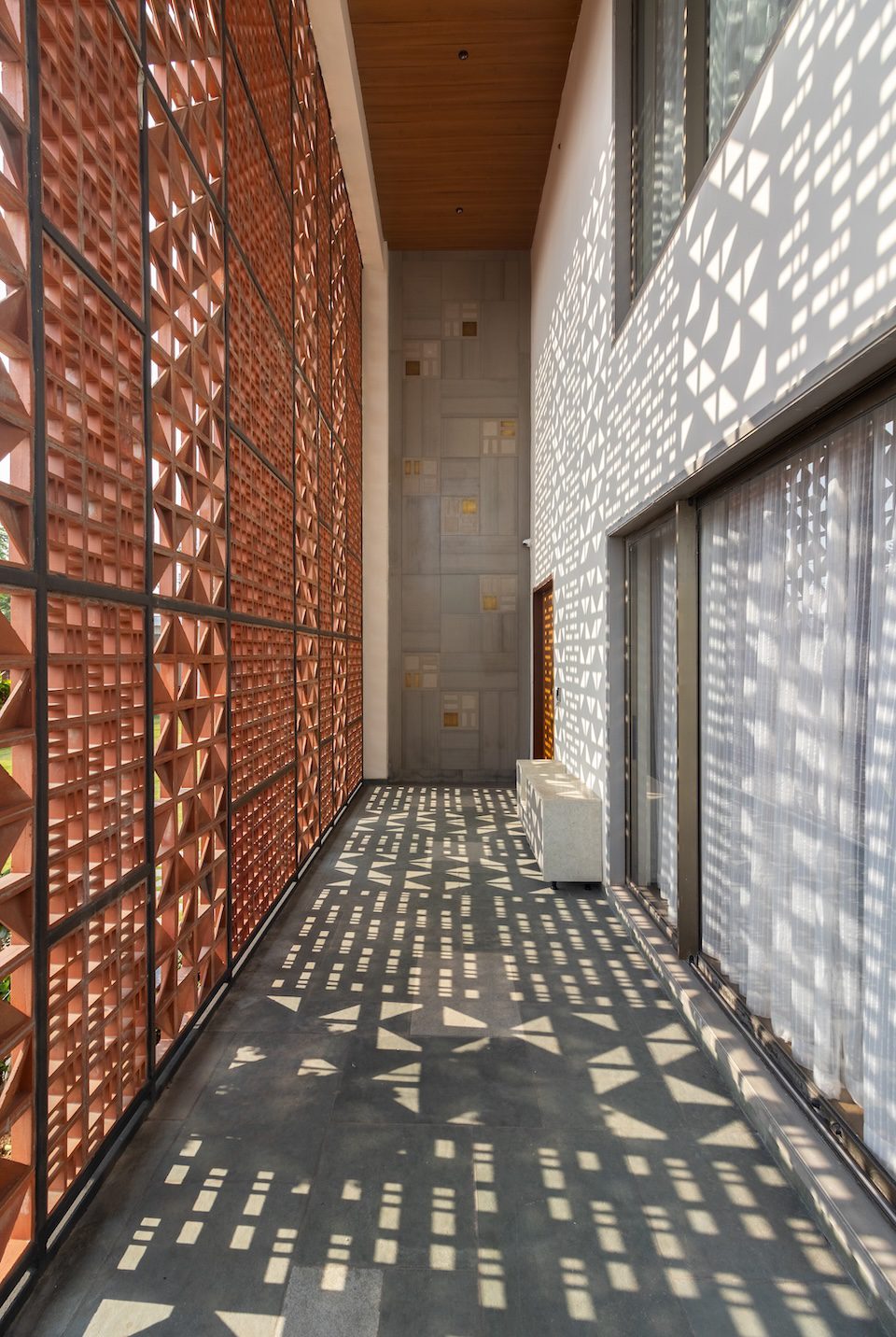
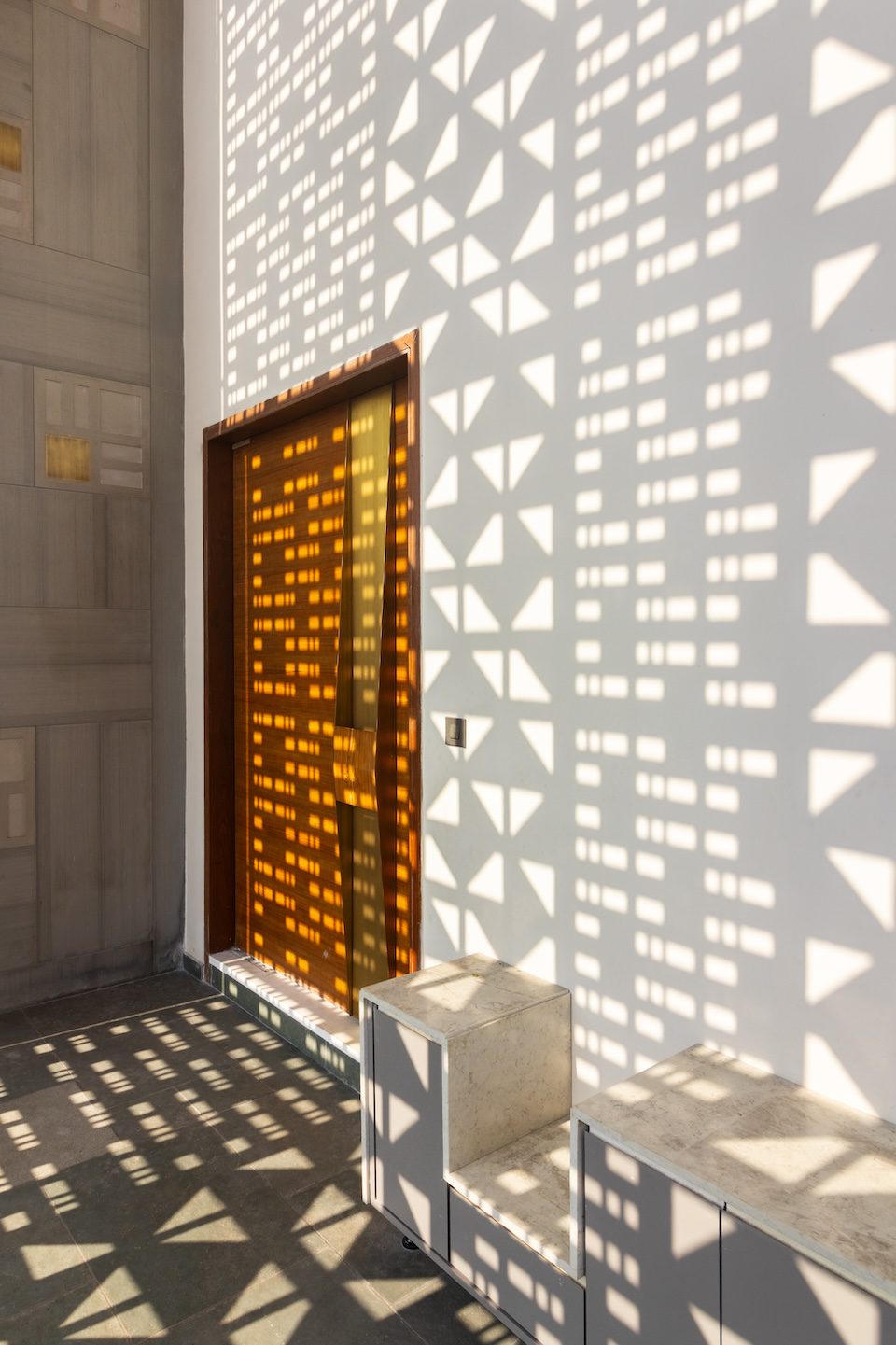
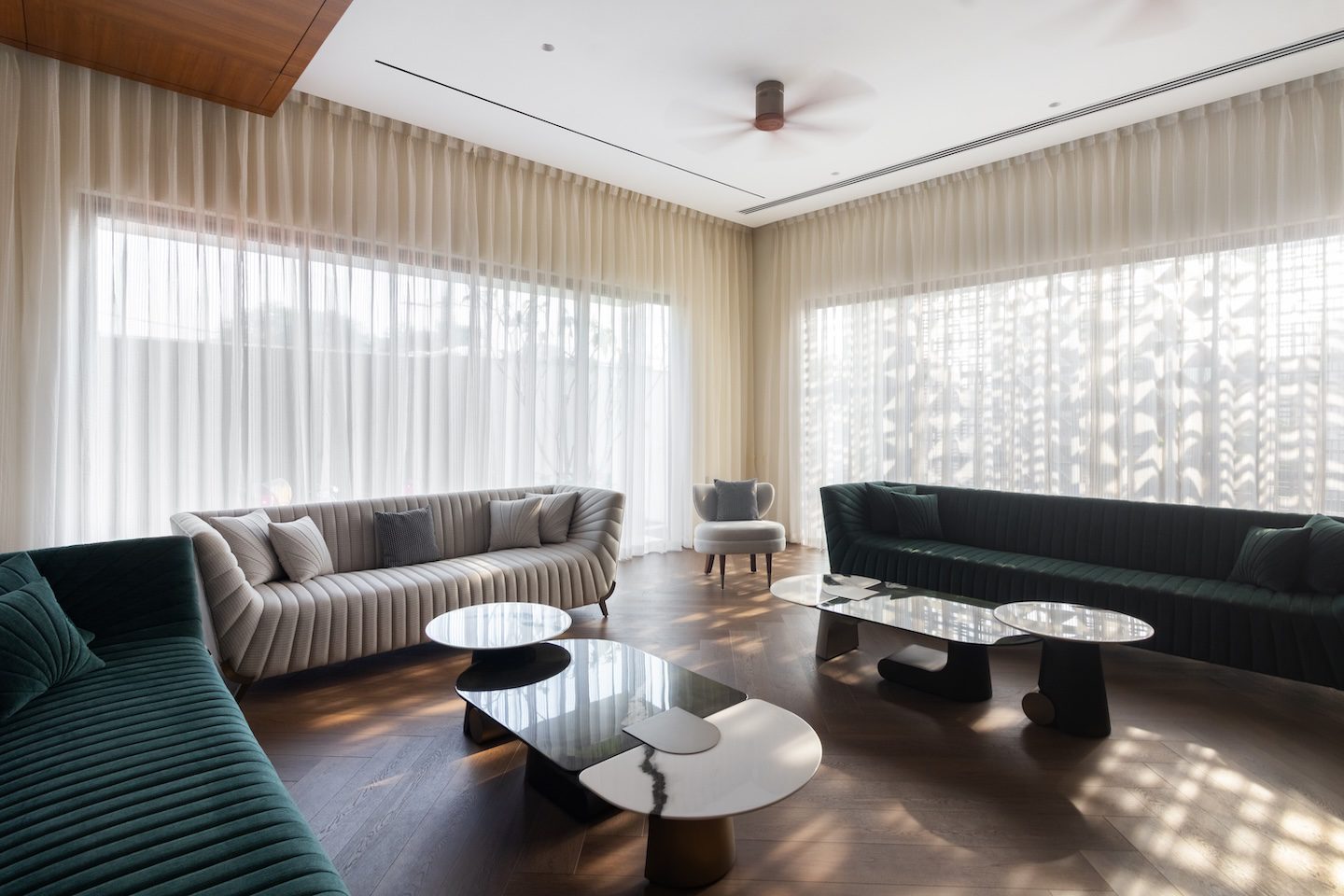
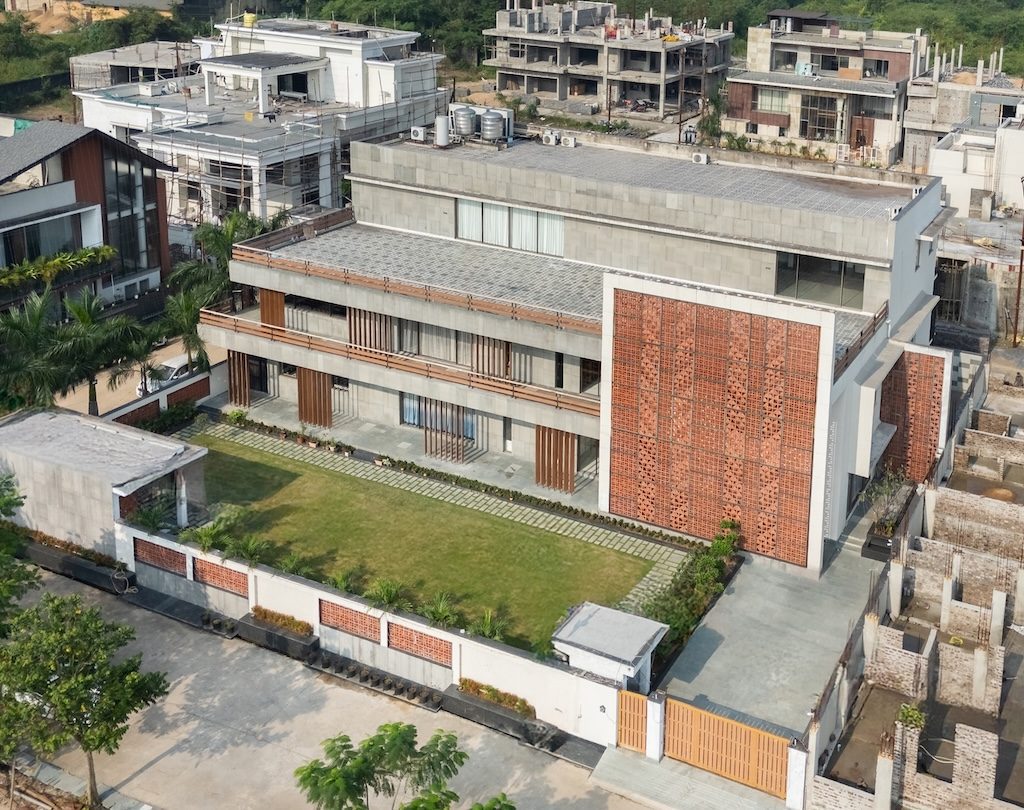
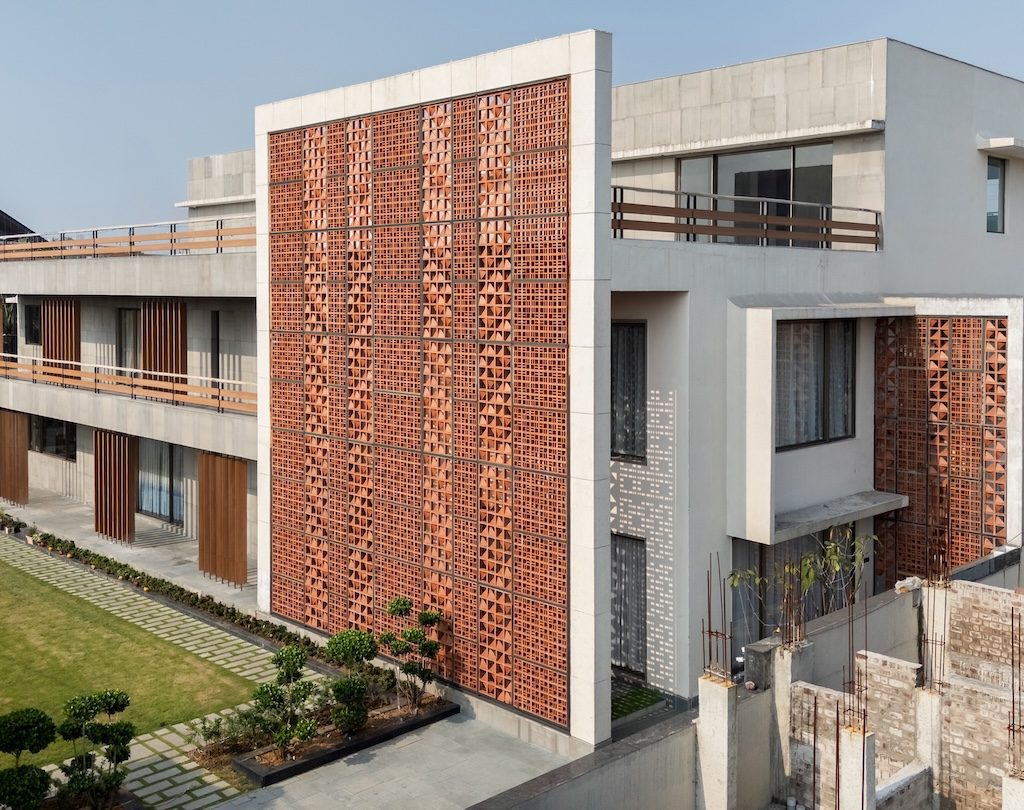
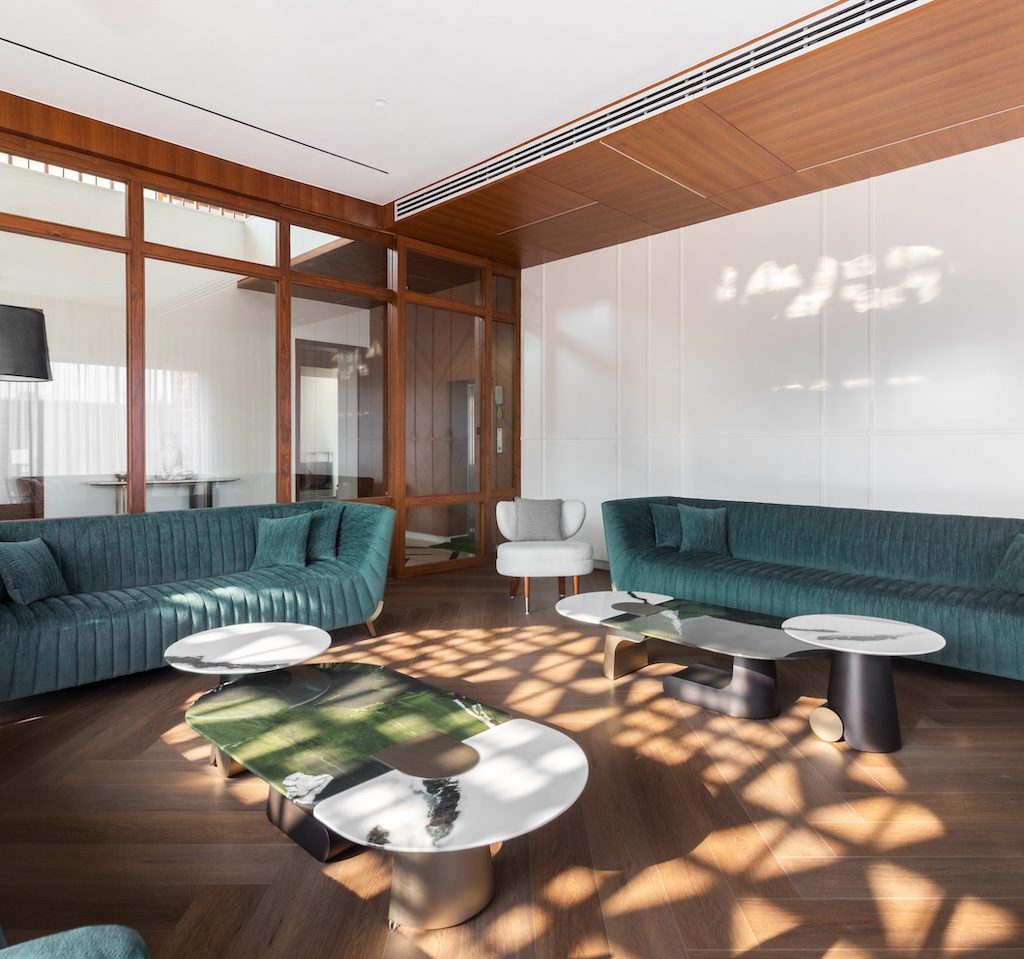
The facade is constructed using three primary elements—terracotta jalis, deep verandahs, and fixed wooden-finish louvers—each responding to climate, light, and privacy. A striking three-storey terracotta screen marks the main entry and public zones, establishing a strong visual identity while filtering harsh sunlight. As light passes through, it casts shifting patterns across both the facade and the interiors, lending the surfaces a sense of movement through the day. On the opposite side, fixed wooden-finish louvers line a 7-foot-deep verandah, softening light and creating a layer of privacy for the living and dining spaces within. Together, these elements shape a climate-responsive facade that feels open yet protected.
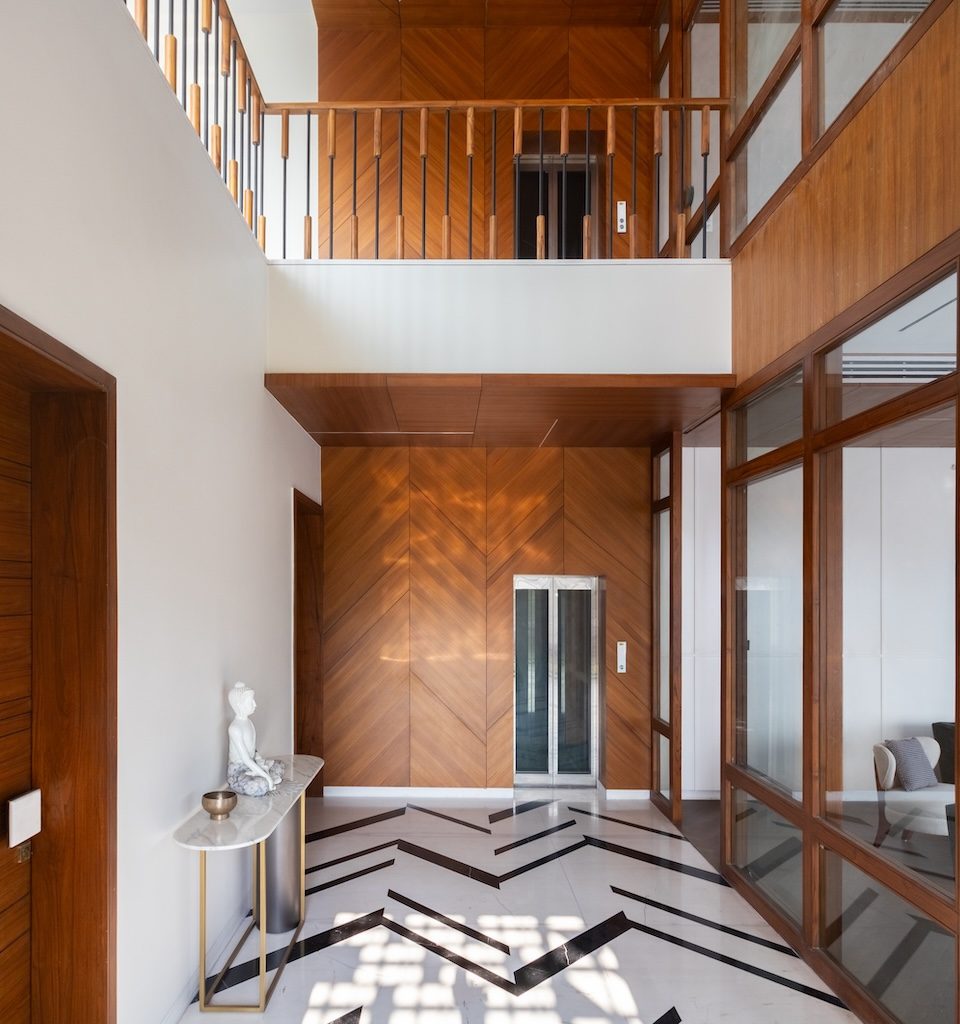
This sense of verticality continues as one moves inside. The entrance foyer is anchored by bold black-and-white marble flooring, introducing a formal presence that is balanced by the warmth of teak wood in the ceilings and detailing. The transition from exterior to interior feels cohesive, with materials carrying forward in a considered manner.
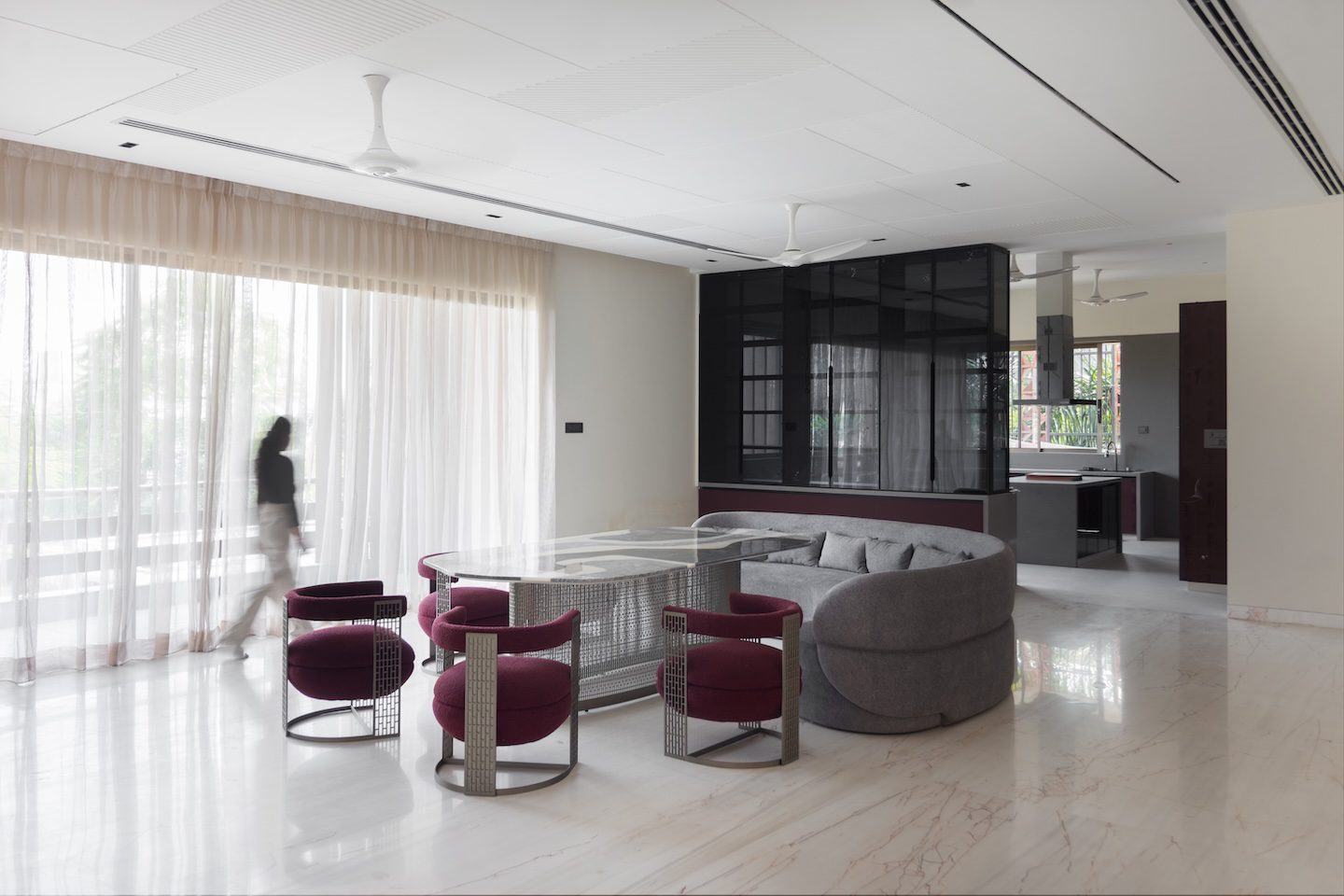
At the centre of the home, the courtyard and staircase core are expressed through a restrained palette of grey Kota stone, white marble, micro-concrete, and wood. Left largely untreated, these materials bring a natural depth and tactility to the spaces. Along the staircase wall, a bespoke “Tree of Life” artwork is delicately inlaid using fragments drawn from the home’s material palette, tying the narrative together. More than a circulation spine, this central core becomes the emotional anchor of the house—where light, material, and daily life converge, binding the home into a singular, connected whole.
Fact File
Project: House Of Screens and Shadows
Location: Raigarh, Chhattisgarh
Area: 17,000 sq ft (gross built-up)
Principal architects: Garima Patel and Pramesh Savalia
Add a Comment