
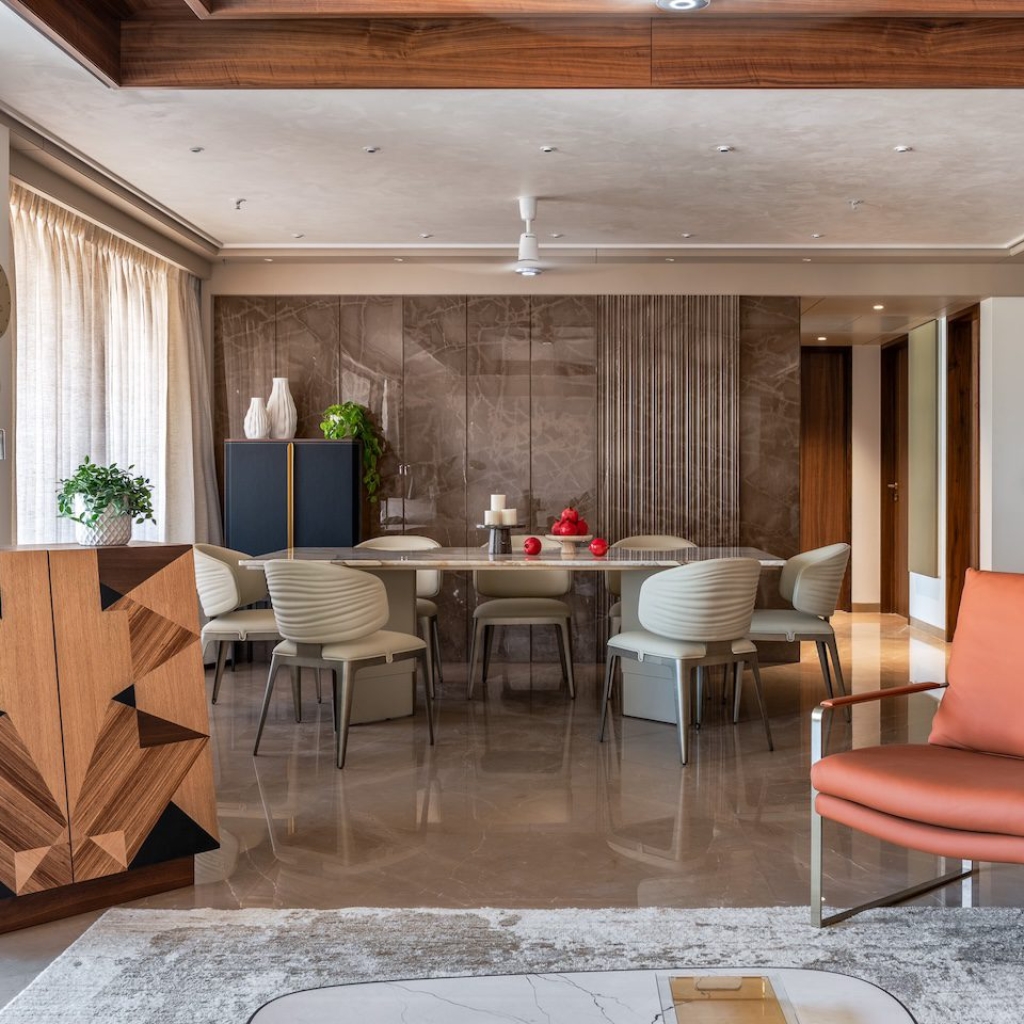
In this thoughtfully composed residence by Amit Shastri Architects and Interior Designer, restrained materials and careful spatial planning come together to create interiors defined by texture, proportion and quiet luxury.
Curated by: Rupali Sebastian
Photographs: Photographix India I Sebastian Zachariah; courtesy Amit Shastri Architects and Interior Designer
The project
This Santacruz residence explores a quieter expression of contemporary luxury. Rather than relying on visual spectacle, the design focuses on materiality, proportion and carefully composed architectural details to shape the experience of the home. Natural stone, timber surfaces and a palette of warm earth tones establish a calm and tactile interior language. The design resists decorative excess, instead building richness through texture and craft. The result is a home that feels composed and grounded—spaces designed to temper the pace of city life while offering a sense of warmth and visual clarity.
The site
Located within a dense residential neighbourhood in Santacruz, the apartment was received as a standard builder flat. While the structure offered generous floor area, the original layout felt typical of urban apartments, with limited spatial character. The design intervention therefore focused on reworking the planning to better suit the clients’ lifestyle while introducing a more layered material vocabulary. The aim was to transform a conventional apartment shell into a home that felt deliberate and curated.
The brief
The homeowners sought a residence that would feel contemporary yet warm—an interior that balanced refinement with comfort. Rather than prescribing a strict stylistic direction, the clients placed considerable trust in the design team. The brief evolved into creating a home where spatial calm and material richness would define the experience of everyday living.
The design intent
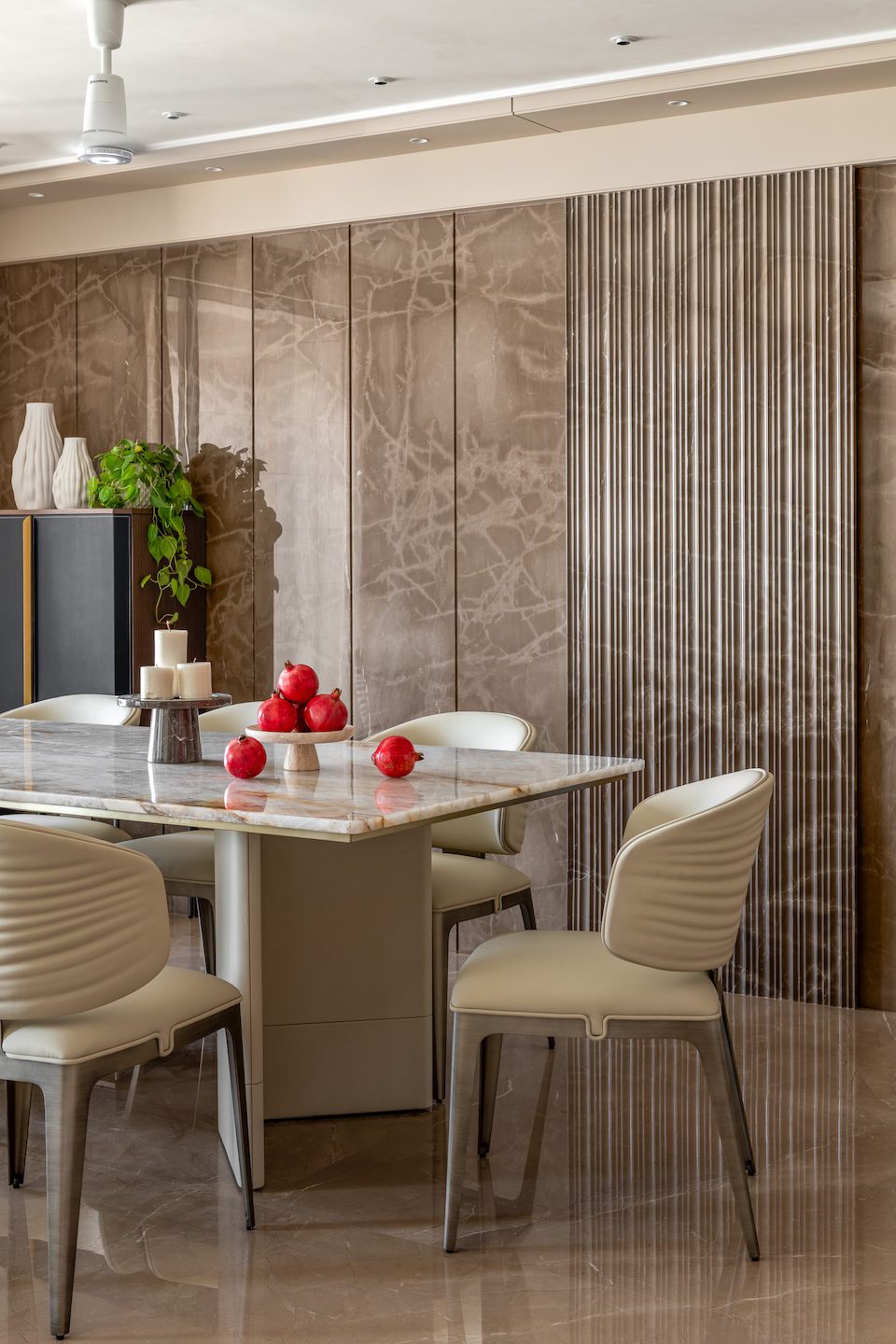
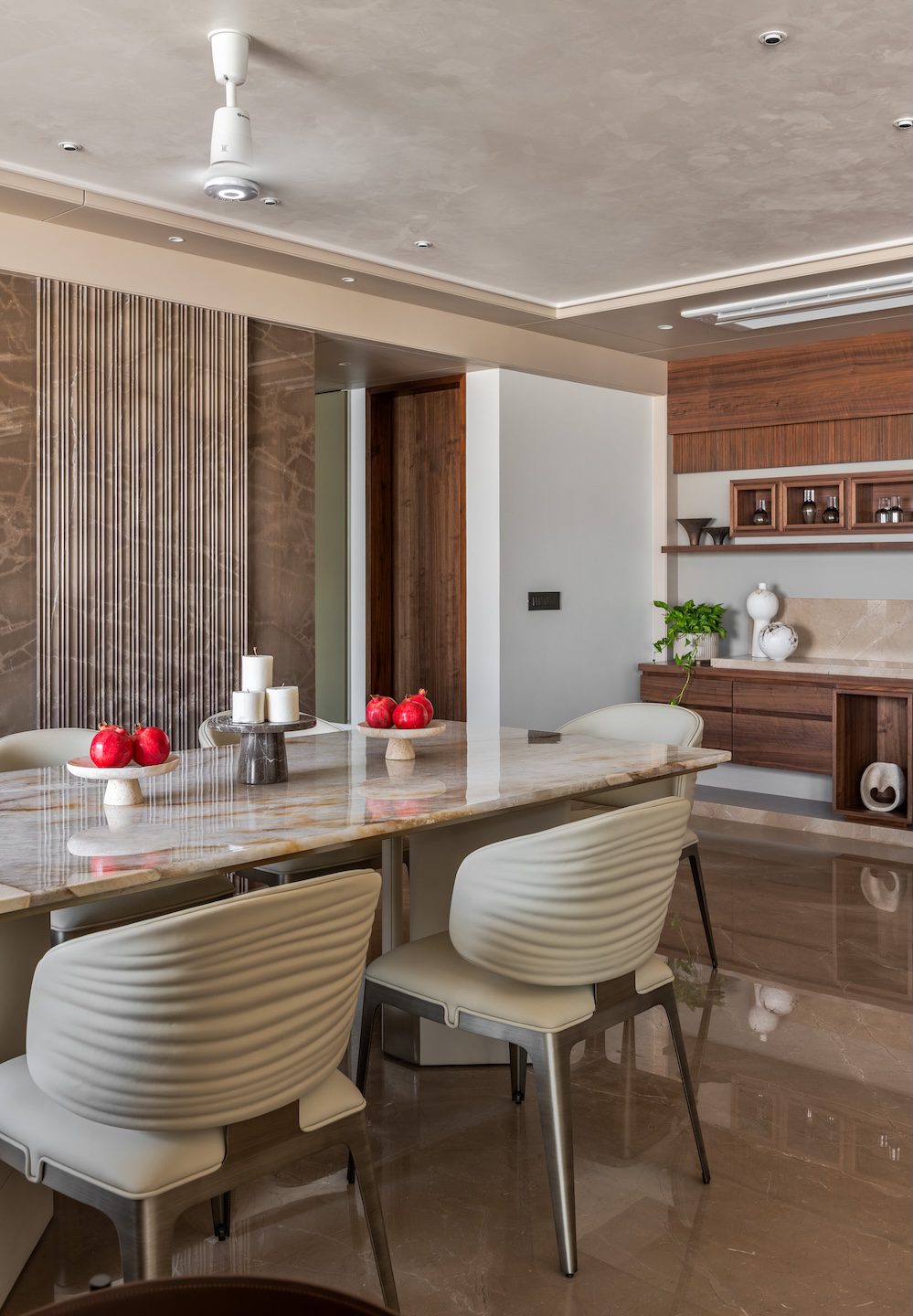
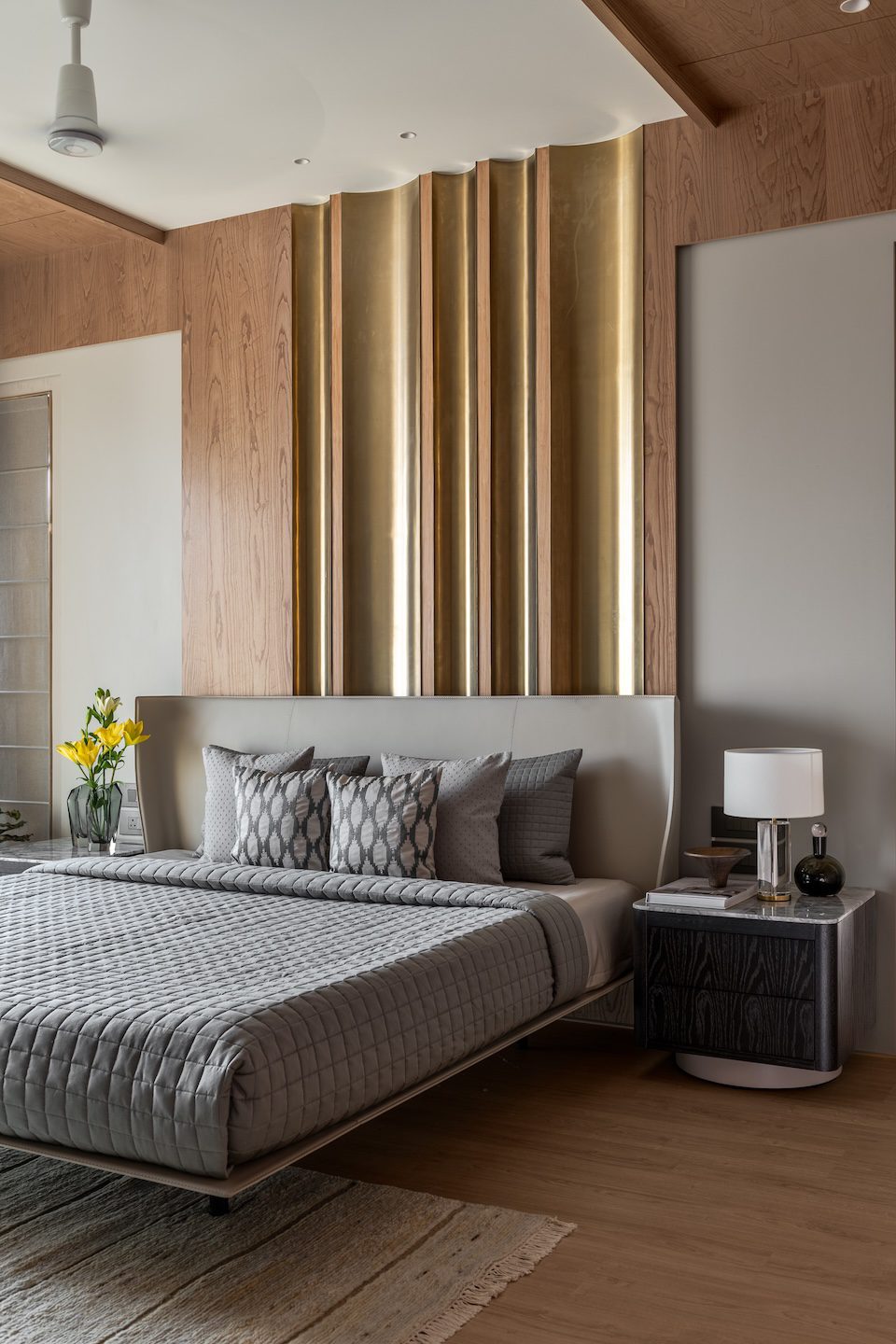
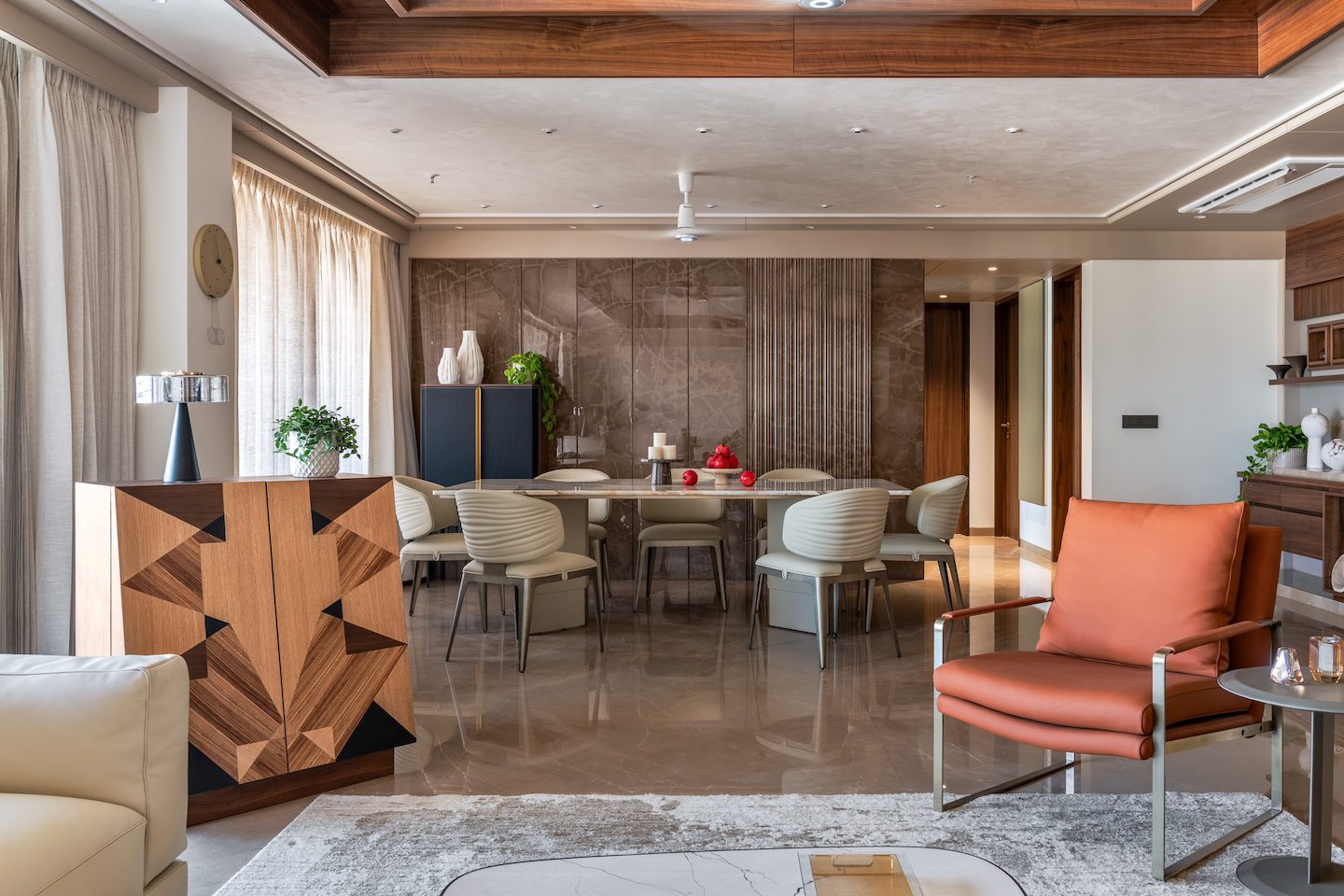
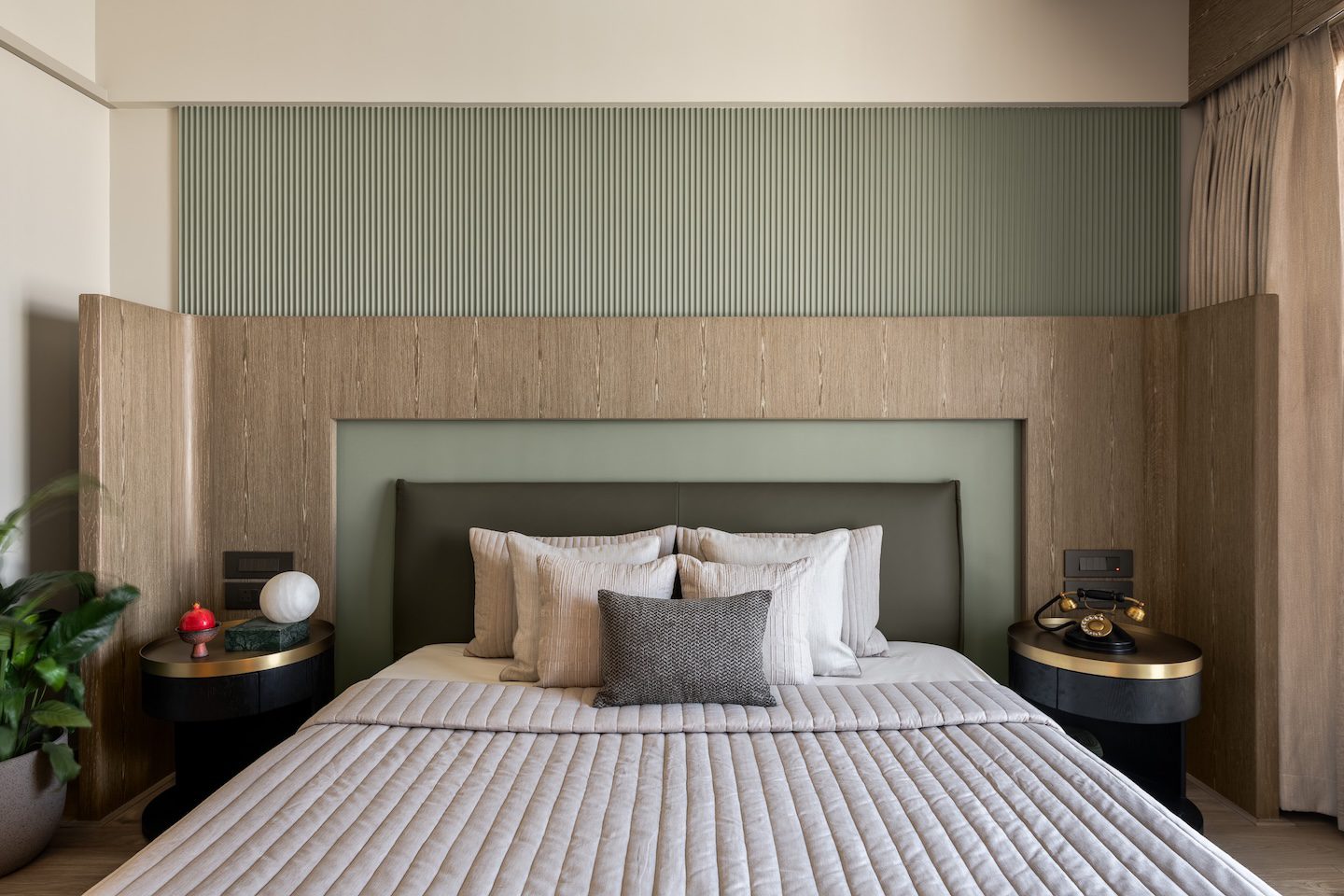
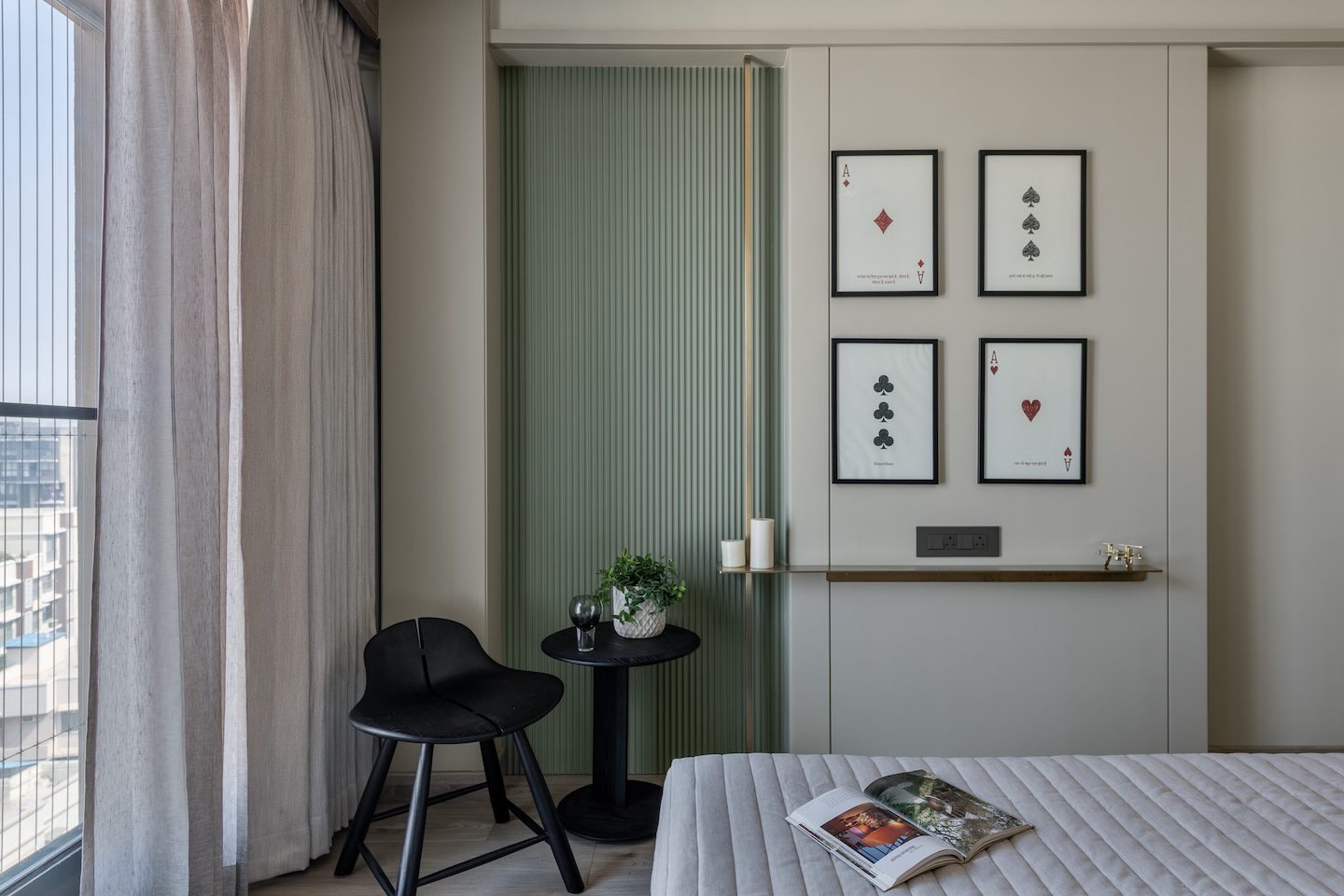
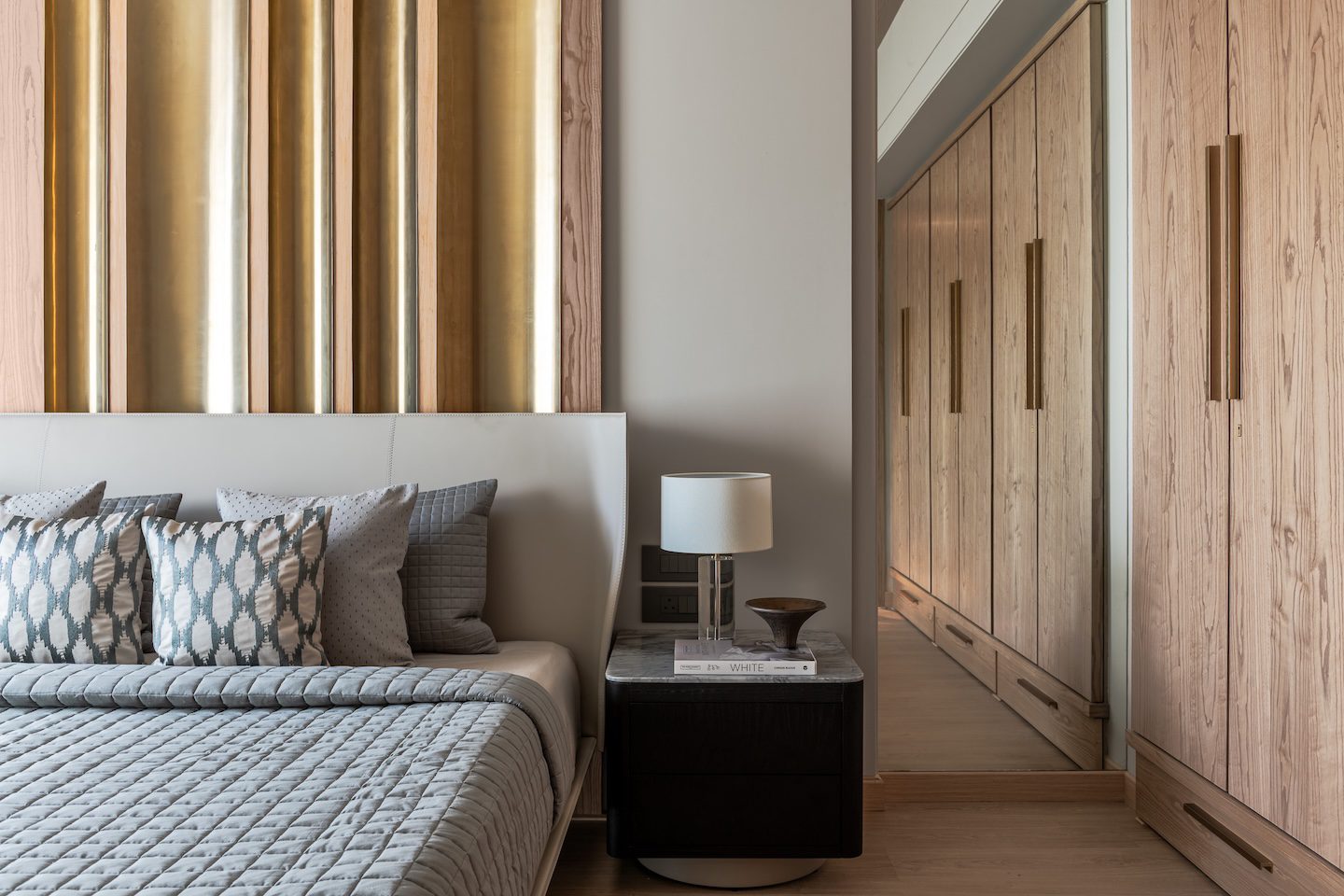
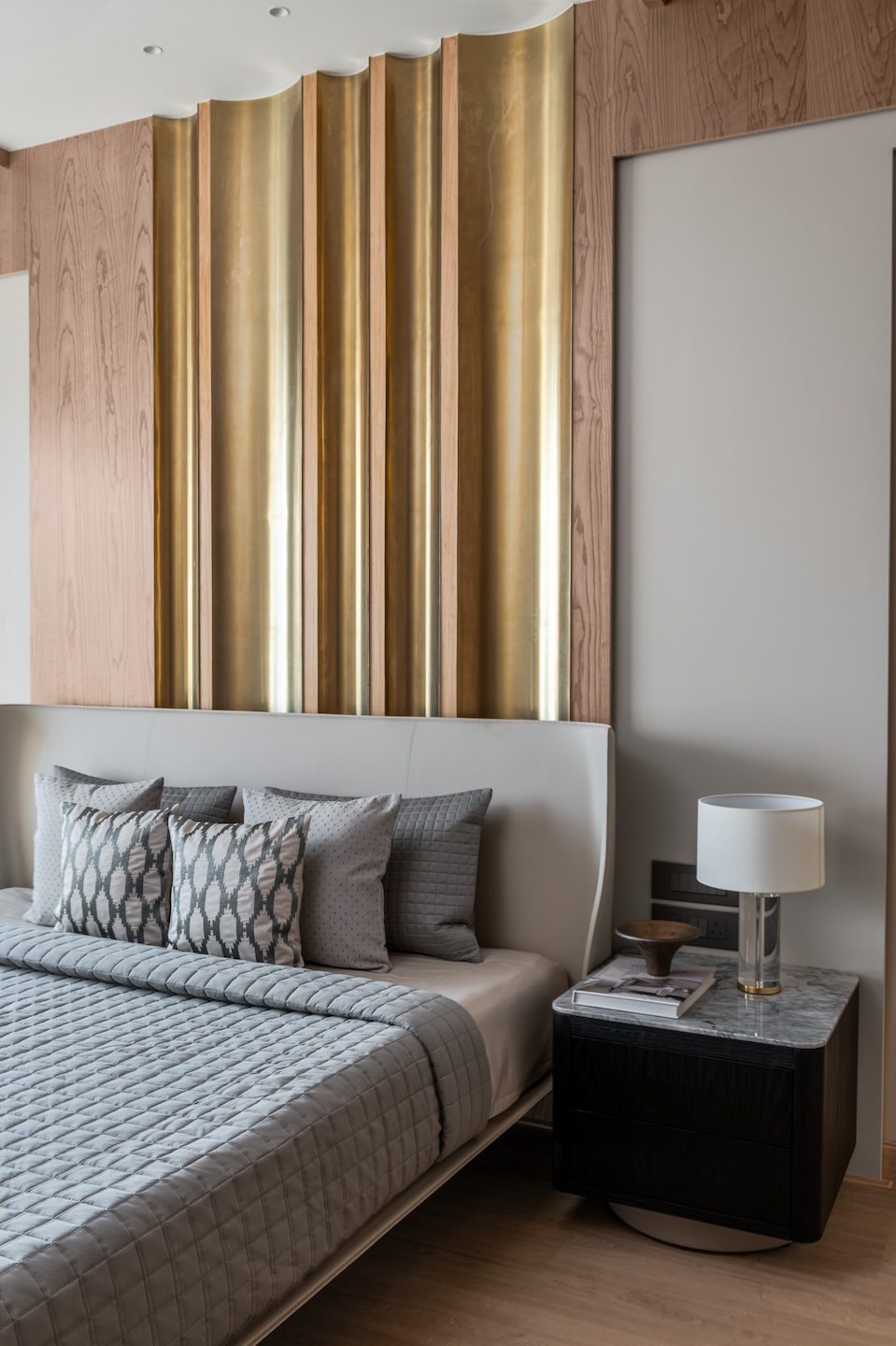
Texture and material transitions form the central theme of the project. Fluted stone walls in the dining area and rhythmic timber panelling in the master bedroom introduce layers of visual depth while maintaining overall restraint. The design carefully juxtaposes contrasting materials—stone, wood and metal—allowing each to complement the other through subtle transitions. As architect Amit Shastri explains, “True luxury lies in the transition between materials; the point where cold stone meets warm wood is where a house becomes a home.” Rather than decorative embellishment, these controlled material relationships become the primary design gesture throughout the residence.
The civil intervention
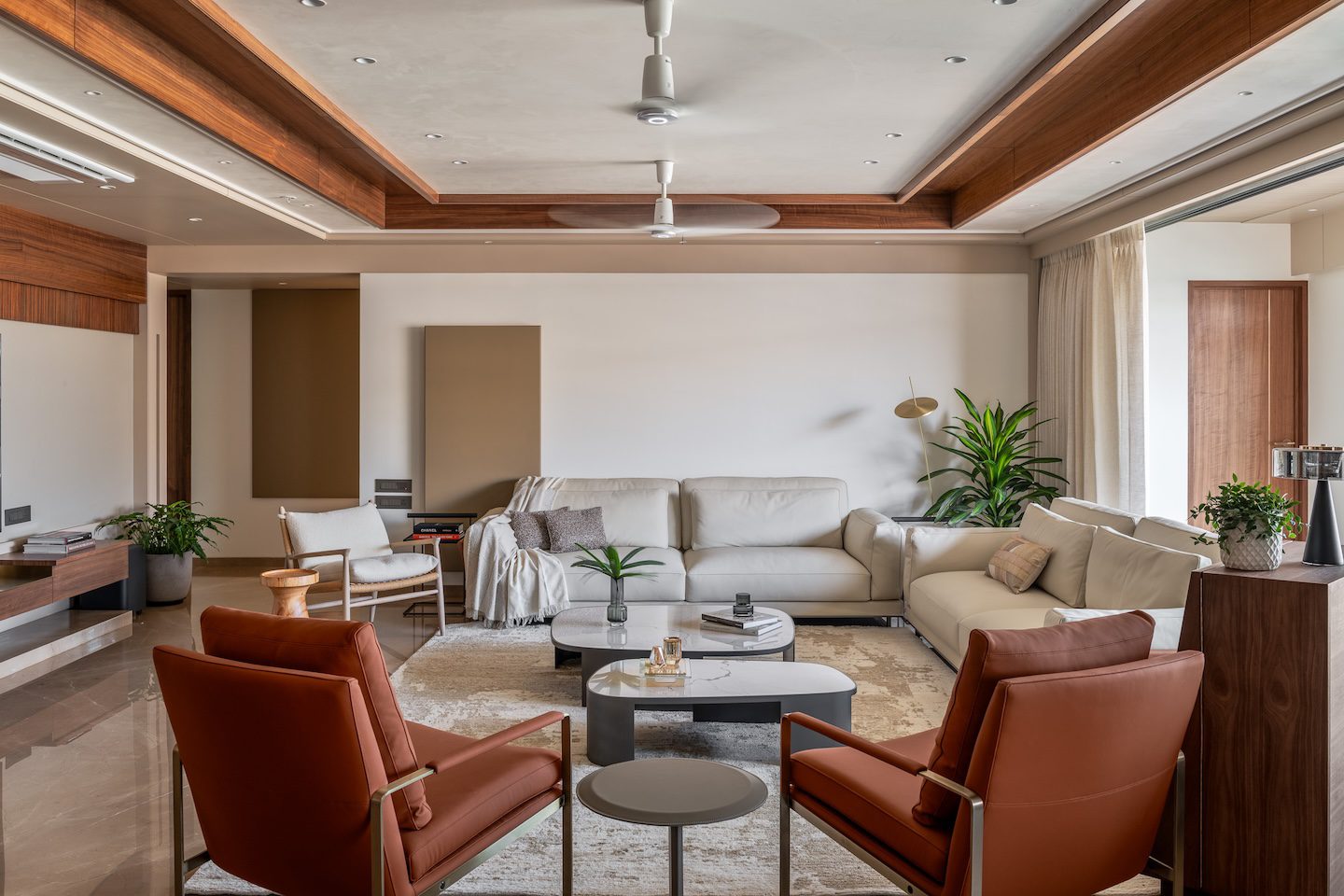
A key spatial move involved merging two existing three-bedroom apartments into a single residence. The reconfigured plan accommodates a generous four-bedroom home. Internal partitions were selectively removed to create a large open-plan living and dining space of approximately 650 sq ft. This intervention established greater visual continuity across the main living areas while allowing natural light to travel deeper into the apartment.
The spatial flow
The home opens into a spacious living and dining area that acts as the central gathering space. Large openings connect this zone to the balcony, strengthening the relationship between interior spaces and the outdoors. Private areas branch out from this central volume and include the master suite, children’s bedrooms, a guest room that doubles as a gym and a dedicated mandir. The overall layout allows public and private zones to remain distinct while maintaining an intuitive sense of flow. Existing ceiling coffers and service channels were integrated into the design, enabling concealed services without compromising the perceived height of the interiors.
The design and material details
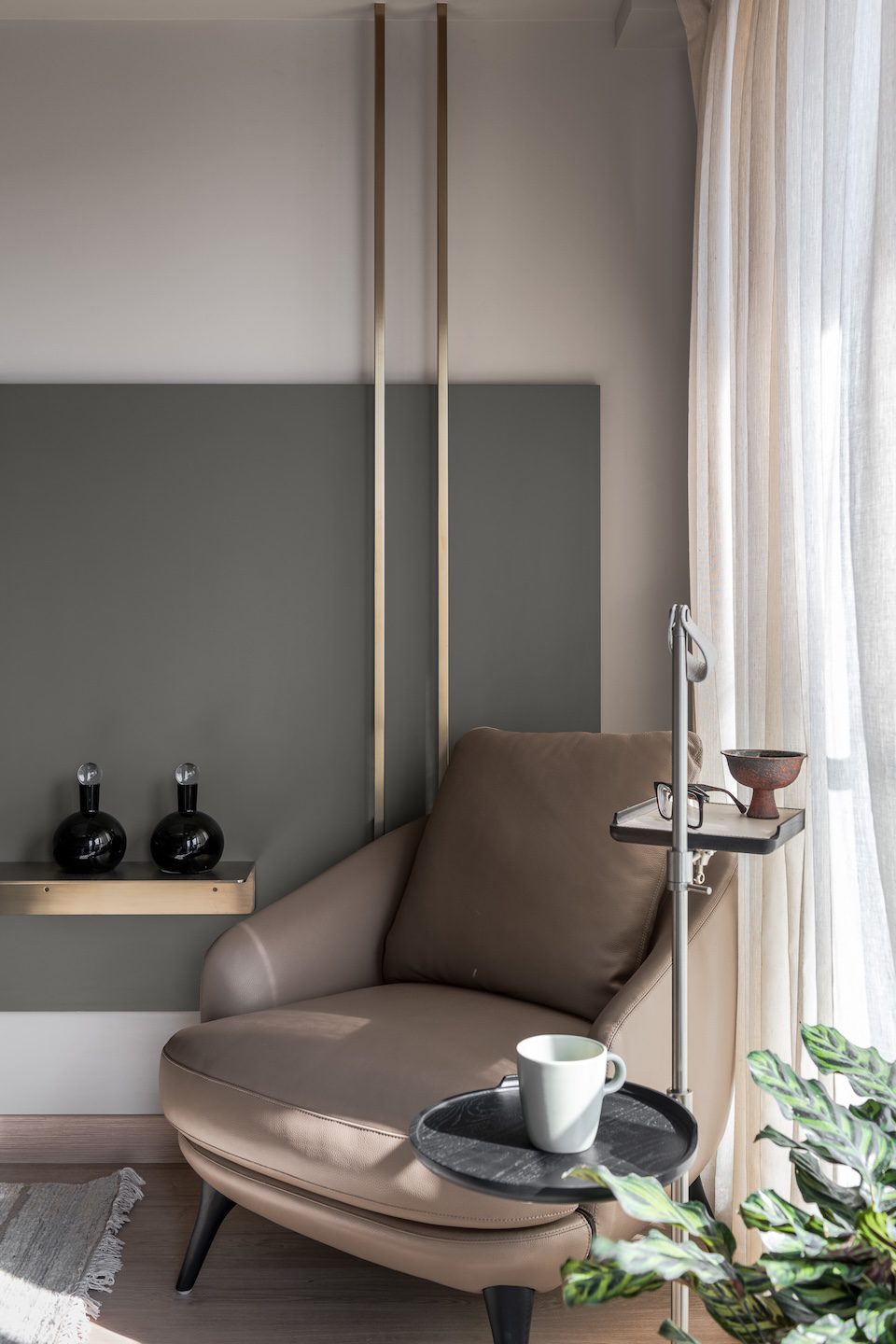
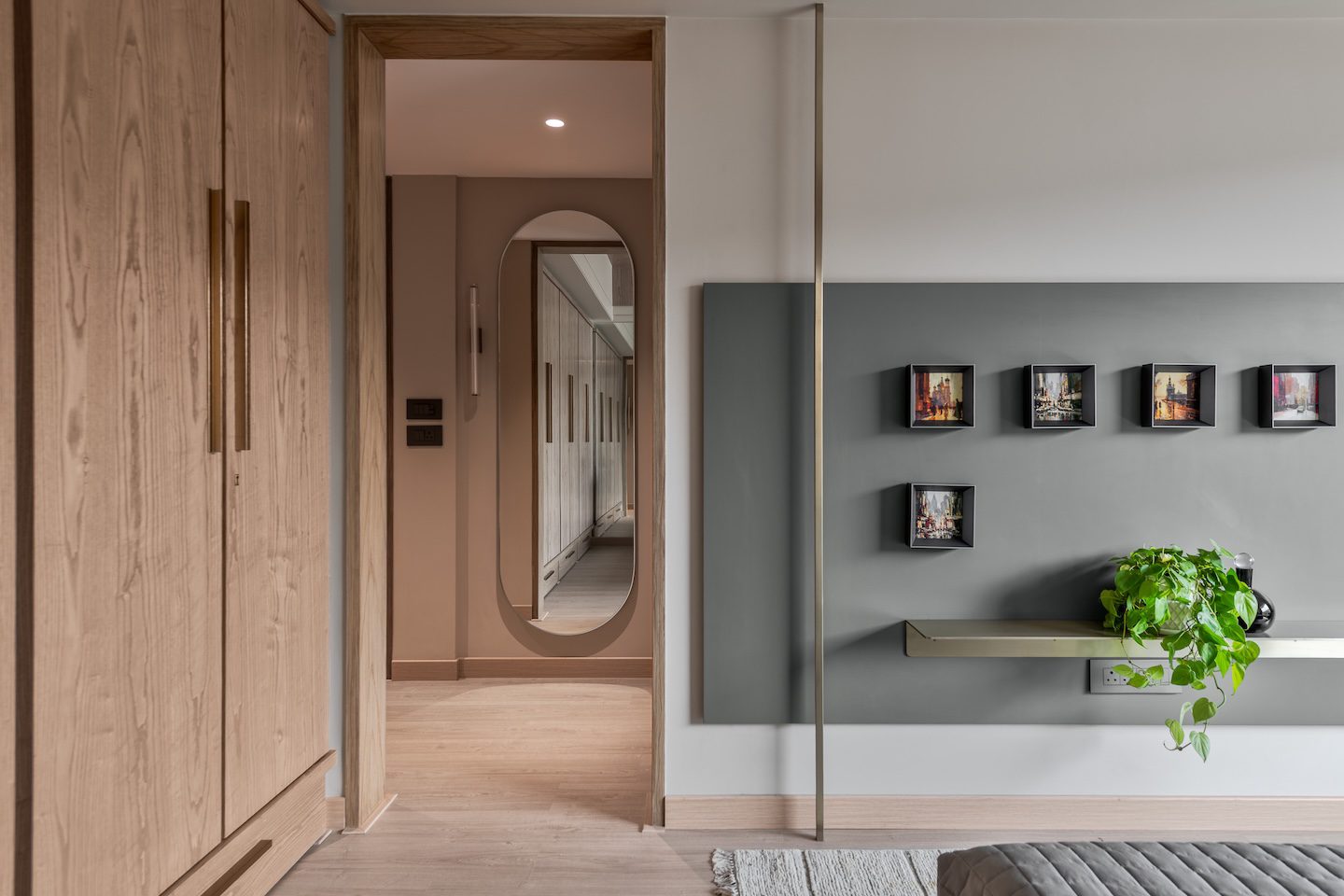
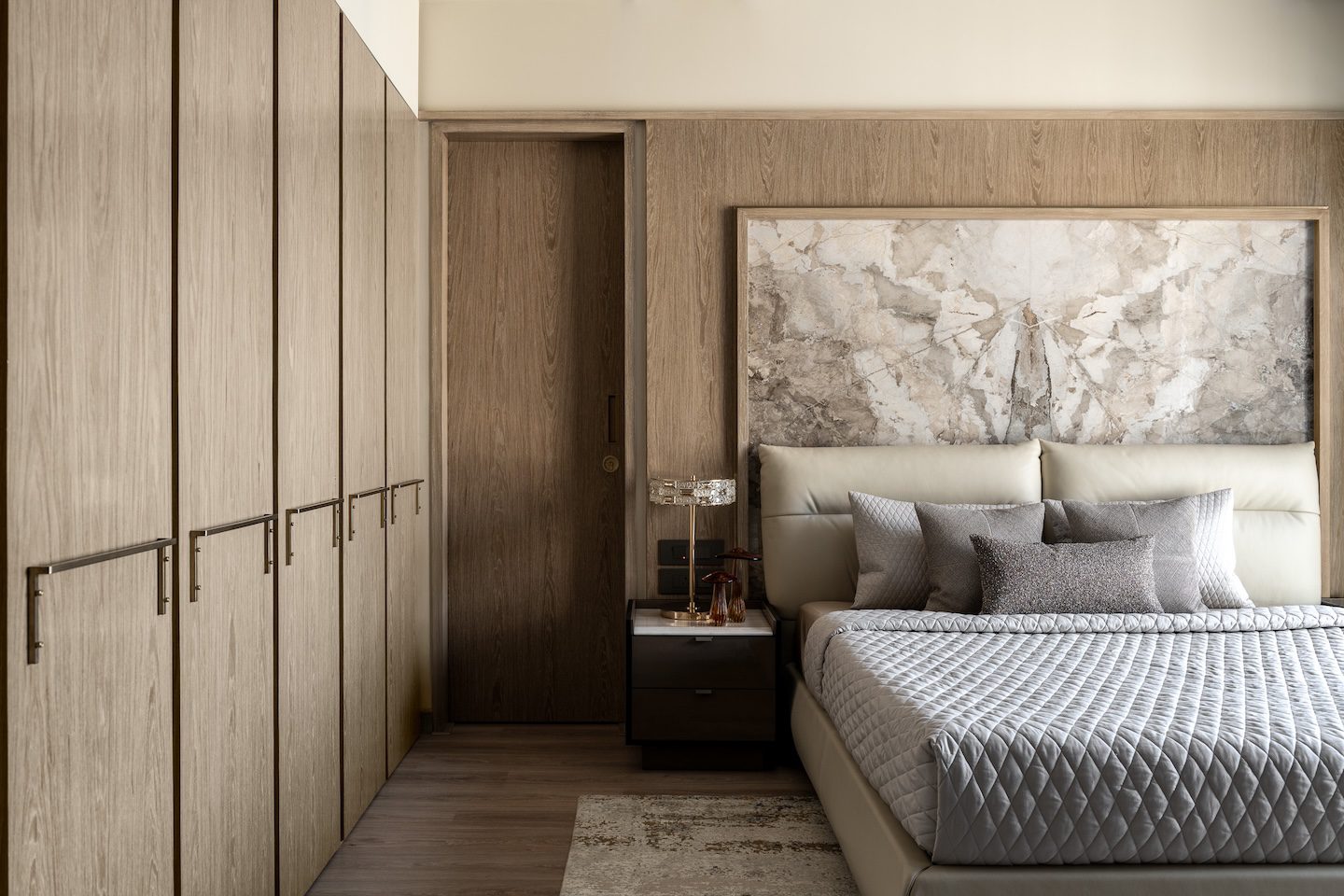
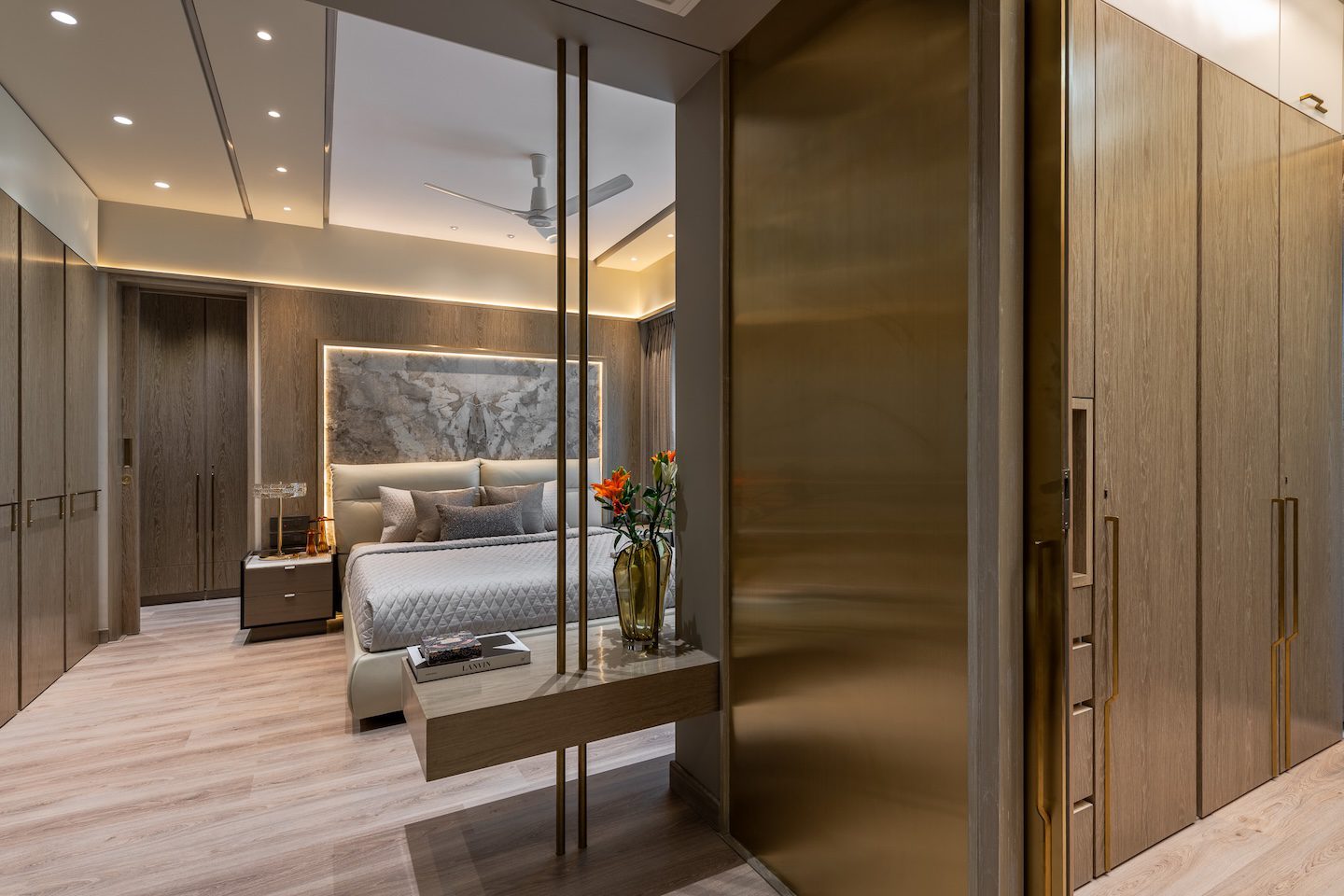
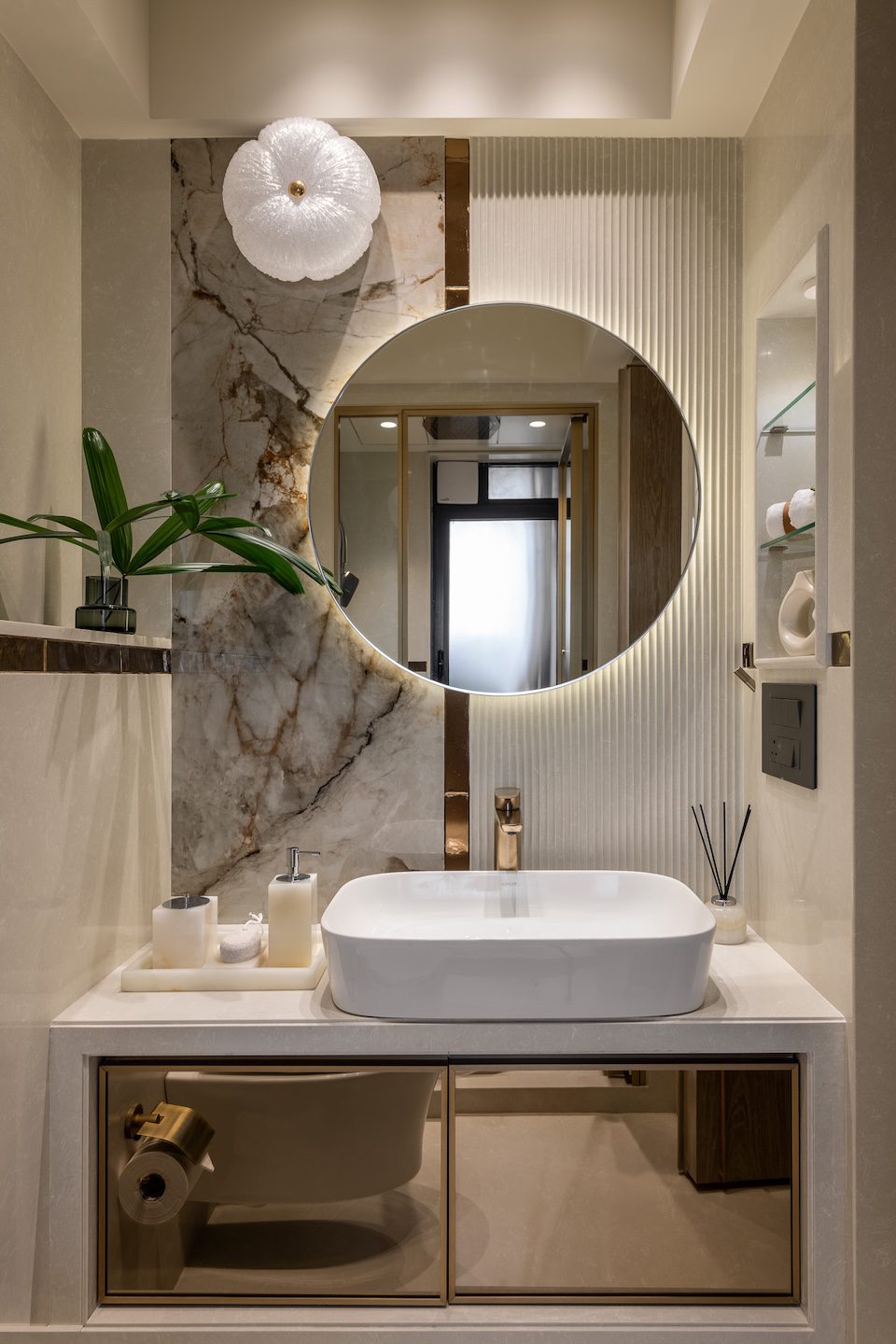
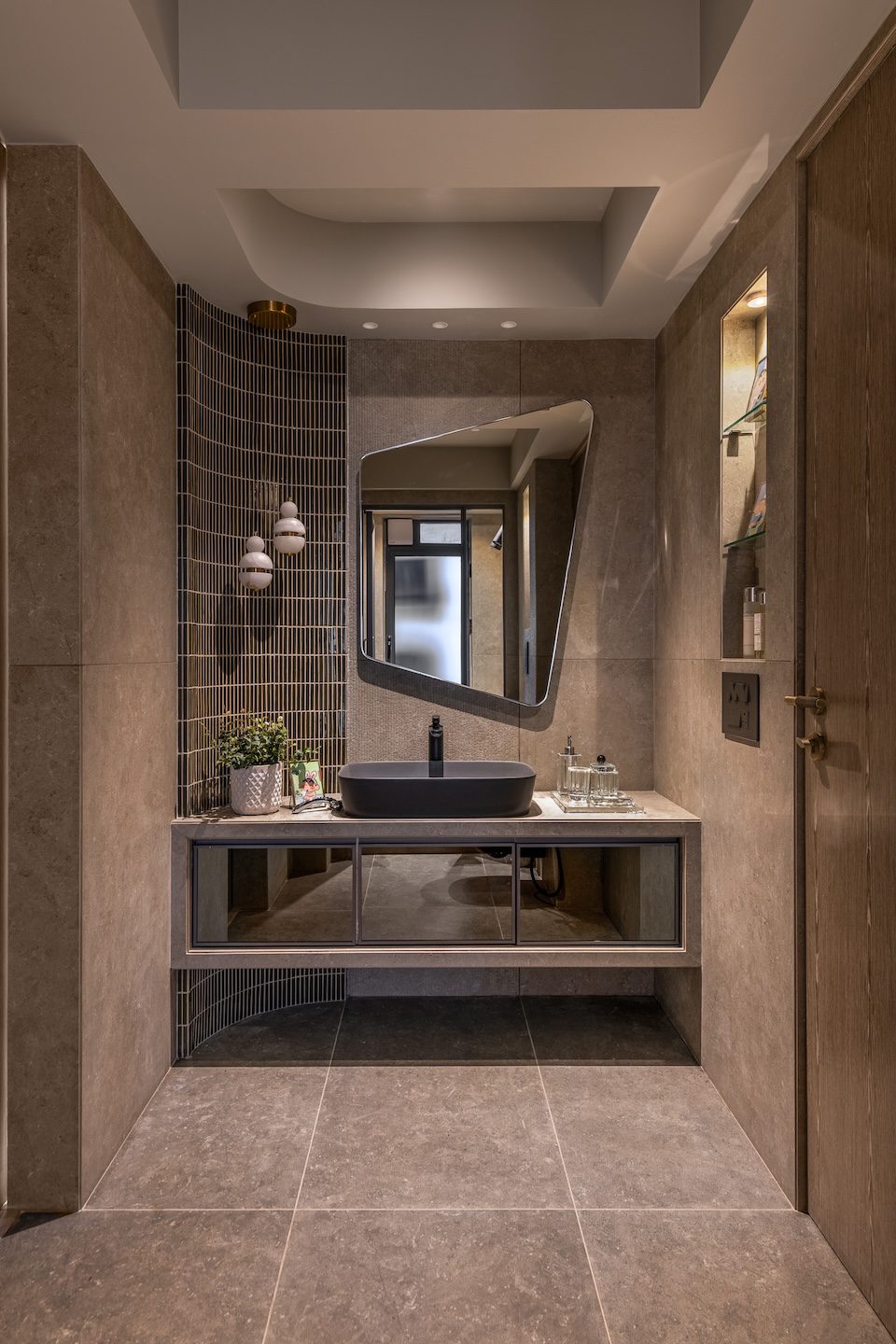
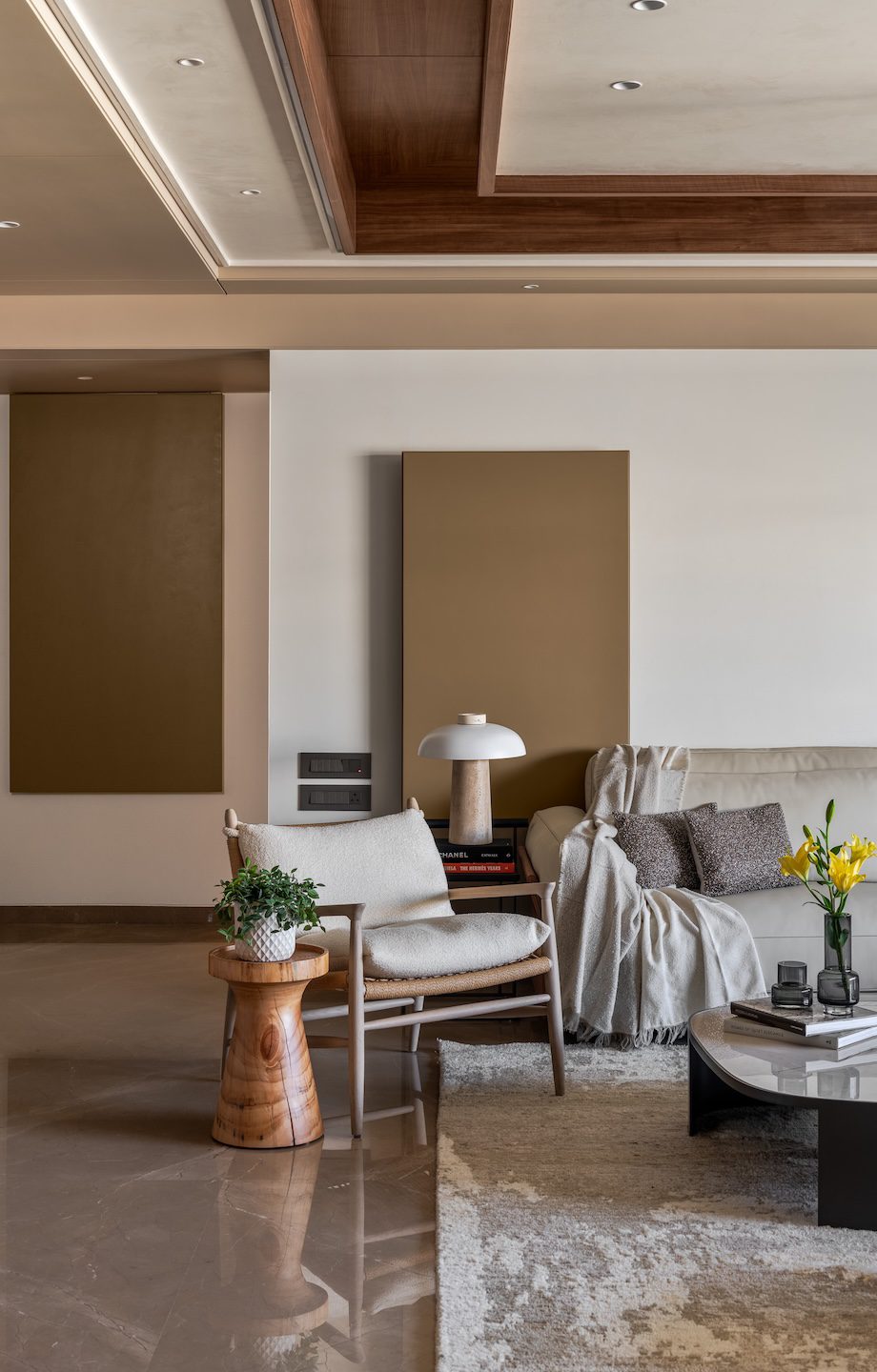
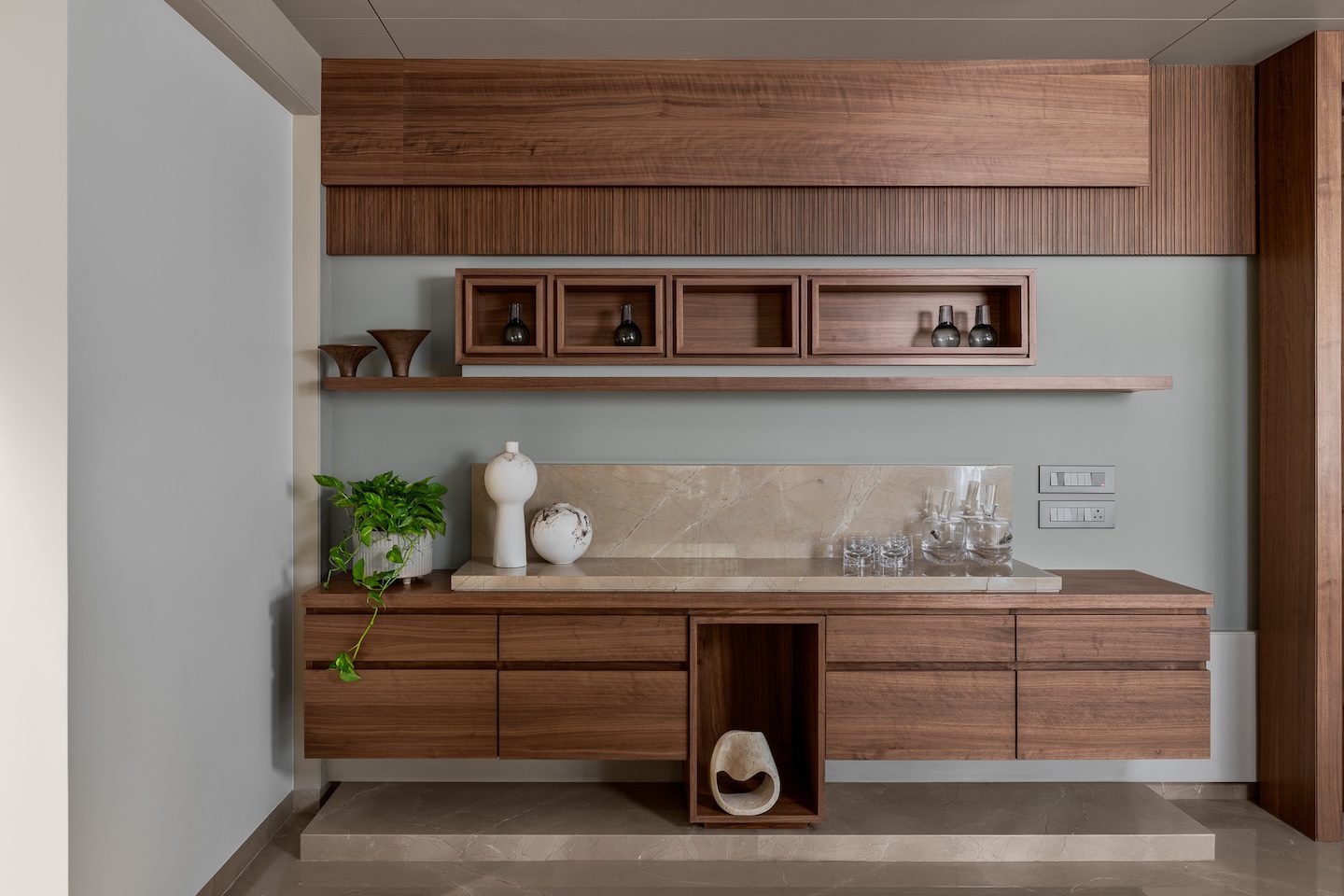
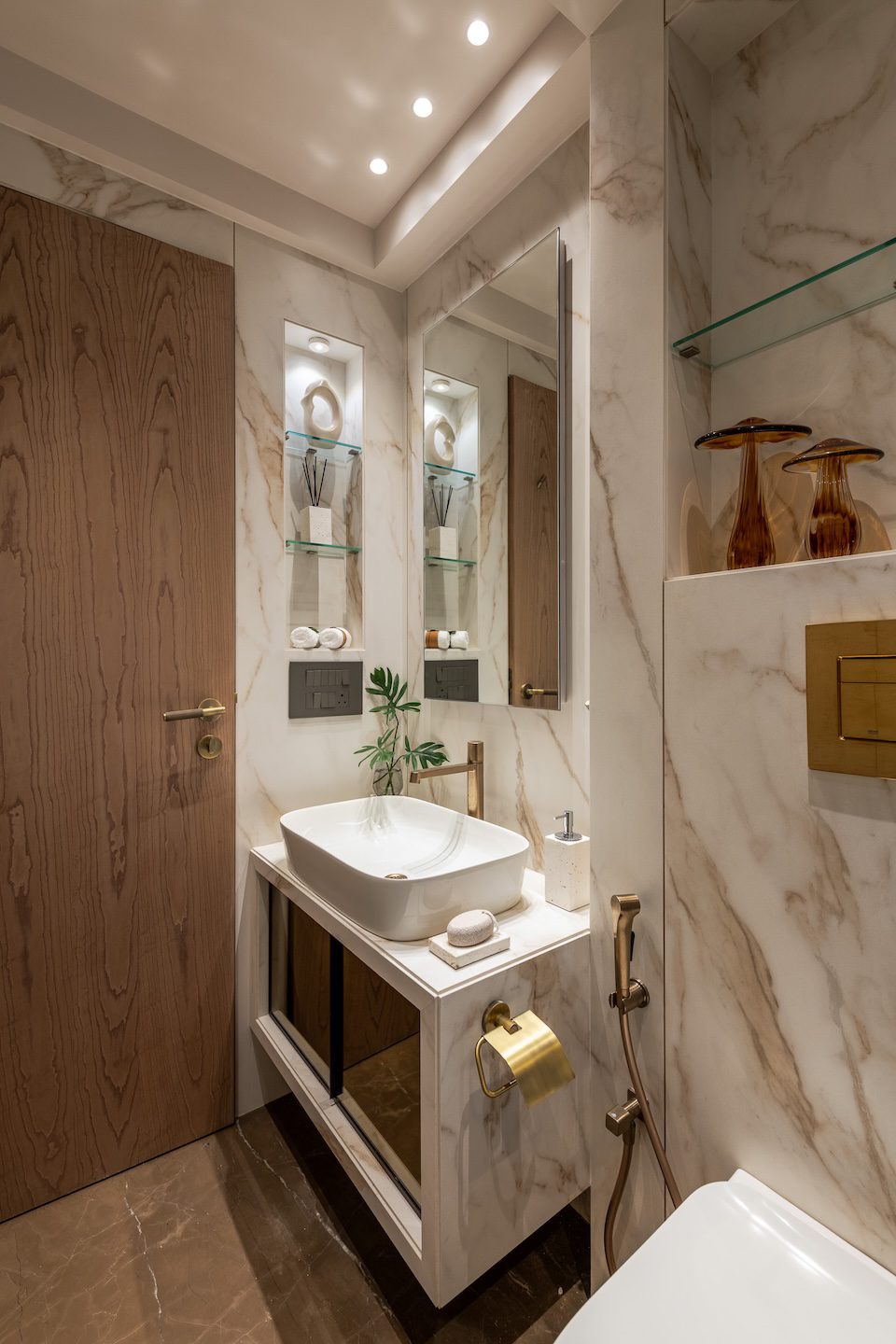
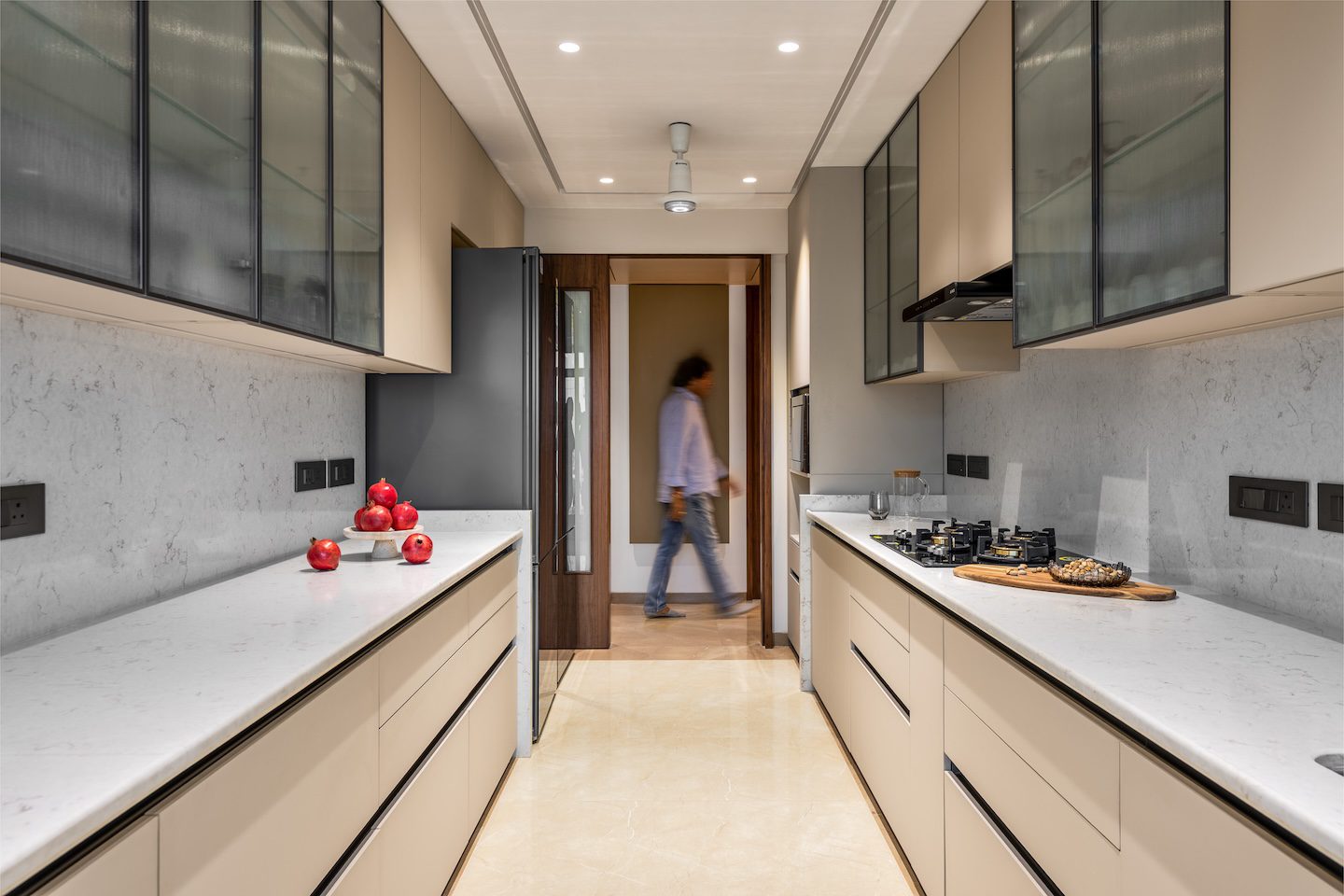
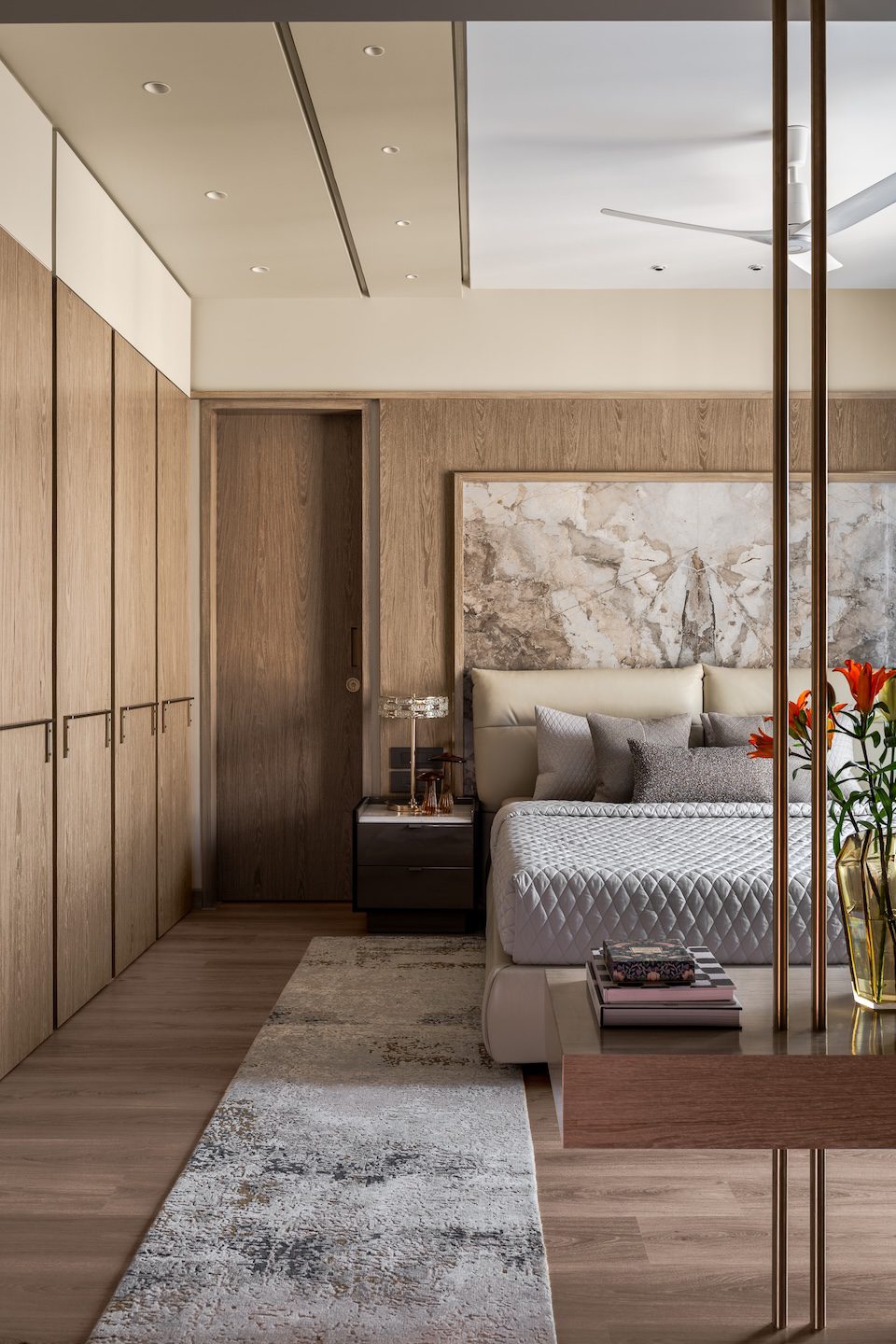
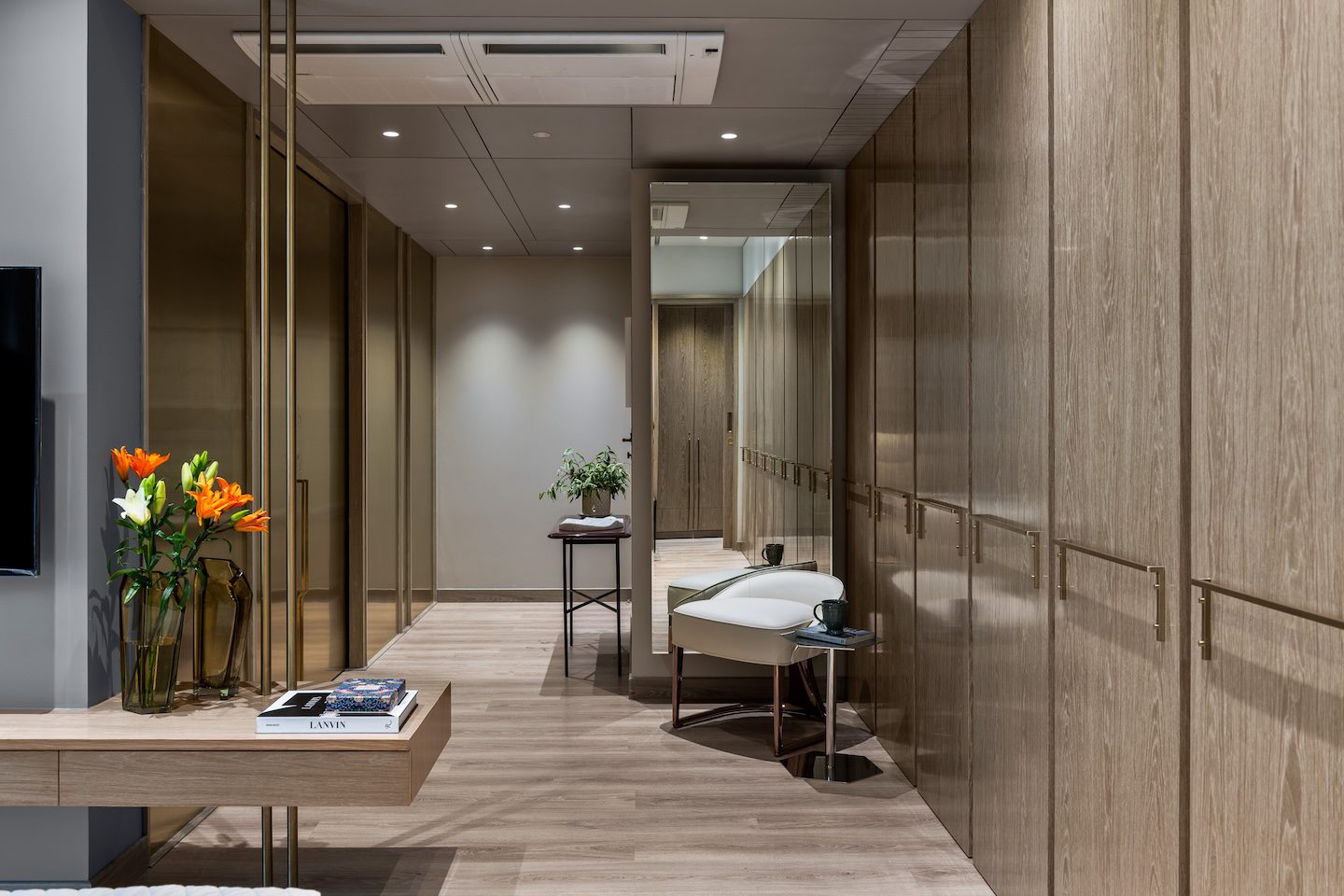
Material layering plays a defining role in shaping the interiors. Polished stone flooring and marble cladding provide a strong architectural base, softened by timber finishes and textured upholstery. Wood surfaces appear throughout the home in the form of cabinetry, wall panelling and custom-designed furniture. Bouclé fabrics and rugs introduce tactile warmth, balancing the solidity of stone. Subtle metallic accents—including slender brass elements and integrated lighting—act as refined highlights rather than decorative statements. Within the living and dining spaces, neutral seating arrangements sit against a calm material backdrop while sculptural lighting elements introduce vertical emphasis. In the master bedroom, light oak wardrobes extend floor to ceiling, creating a seamless visual plane that enhances the room’s proportions. The headboard combines stone and ribbed panelling, forming a layered backdrop that anchors the space. The washroom continues the material narrative through matte black fixtures, charcoal-toned kit-kat tiles and an asymmetrical mirror that introduces a quiet geometric gesture.
The highlights
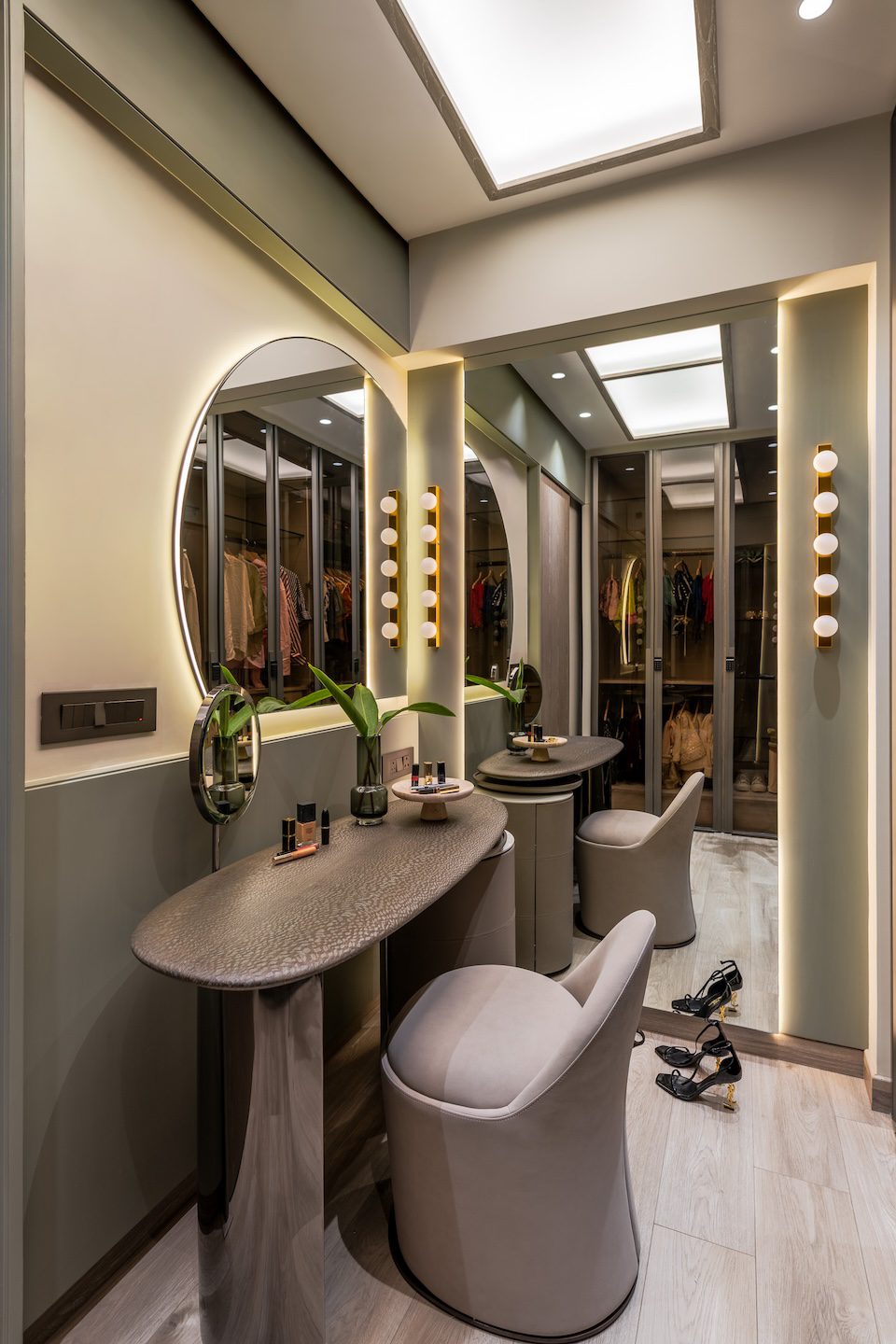
The project’s strength lies in its attention to crafted details. Cantilevered vanities and floating shelving units introduce visual lightness while allowing heavier stone surfaces to remain balanced. Elsewhere, subtle geometric interventions animate the interiors. In the washroom, a trapezoidal mirror interrupts the rigidity of stone walls, while curved mosaic corners soften the composition. These moments reinforce the project’s central philosophy—that luxury often resides in restraint and precision rather than overt display.
The challenges
Transforming two conventional apartments into a single cohesive residence required careful spatial restructuring. Internal partitions had to be removed while maintaining structural integrity and functional efficiency. Another challenge lay in achieving the right balance between minimalism and warmth. With a palette centred on stone, timber and neutral tones, the designers worked to ensure the interiors remained tactile and inviting rather than austere.
Fact file
Project: The Quiet Luxury
Location: Santacruz, Mumbai
Area: 2,350 sq ft
Design firm: Amit Shastri Architects and Interior Designer
Principal architect: Amit Shastri
Design team: Hajra Shaikh
Add a Comment