
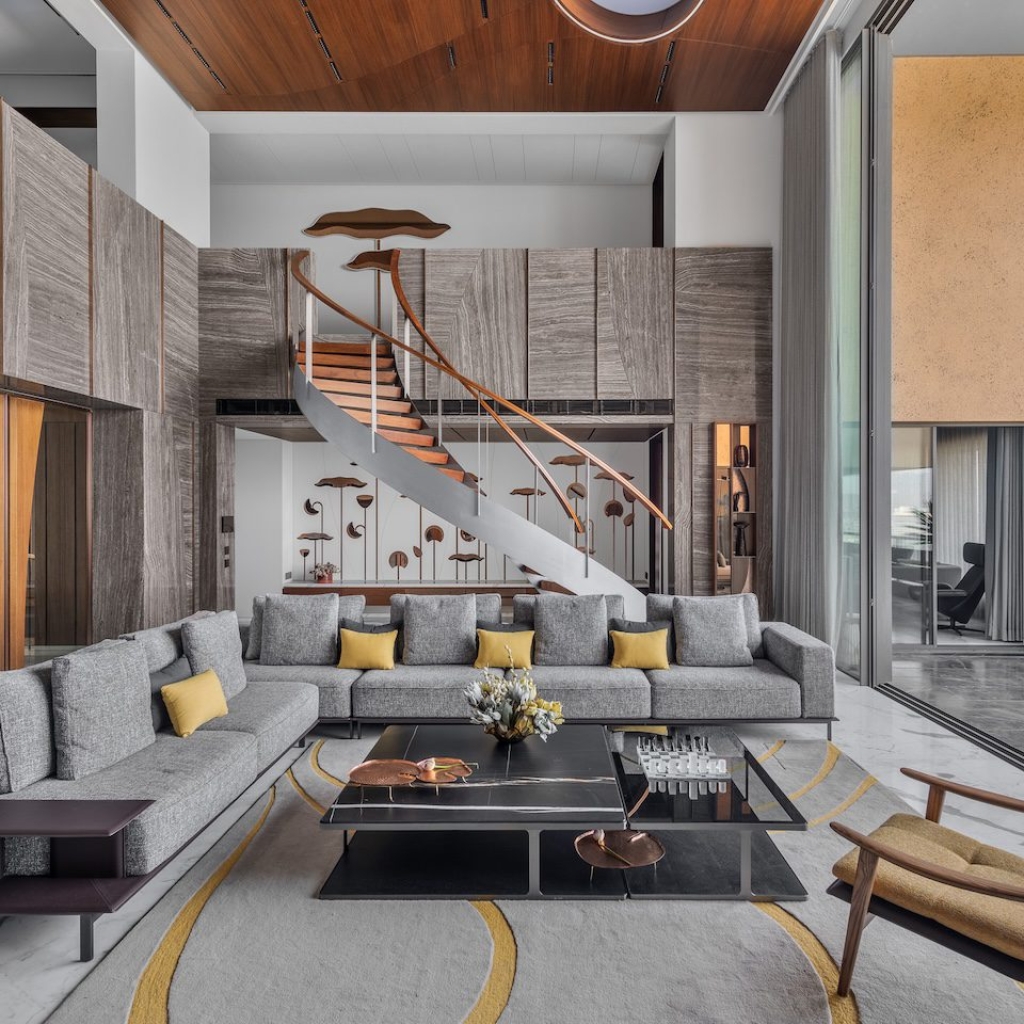
At Vora House in Ahmedabad, Ahmedabad Matrix reshapes a conventional apartment into a spatially layered home anchored by a double-height living room and a sculptural staircase.
Curated by: Rupali Sebastian
Photographs: PHX India I Jacob Nedumchira; courtesy Ahmedabad Matrix
The project
Vora House is a 5,500 sq ft double-storey apartment in Ahmedabad conceived as a residence that privileges openness, clarity and material richness. Designed by Ahmedabad Matrix, the home brings together three bedrooms, a study lounge and a series of interconnected living spaces organised across two levels.
Rather than relying on decorative excess, the project explores a quieter language of luxury—one where proportion, materiality and carefully composed architectural gestures shape the experience of the home.
The site
The apartment occupies a generous footprint within a residential development and was originally planned with a fairly conventional internal layout. The developer’s scheme included an enclosed staircase positioned within the double-height living room and bedroom plans where wardrobes and washrooms were accessed through separate enclosed zones.
While the spatial volume of the apartment was substantial, the original arrangement limited visual continuity between spaces.
The brief
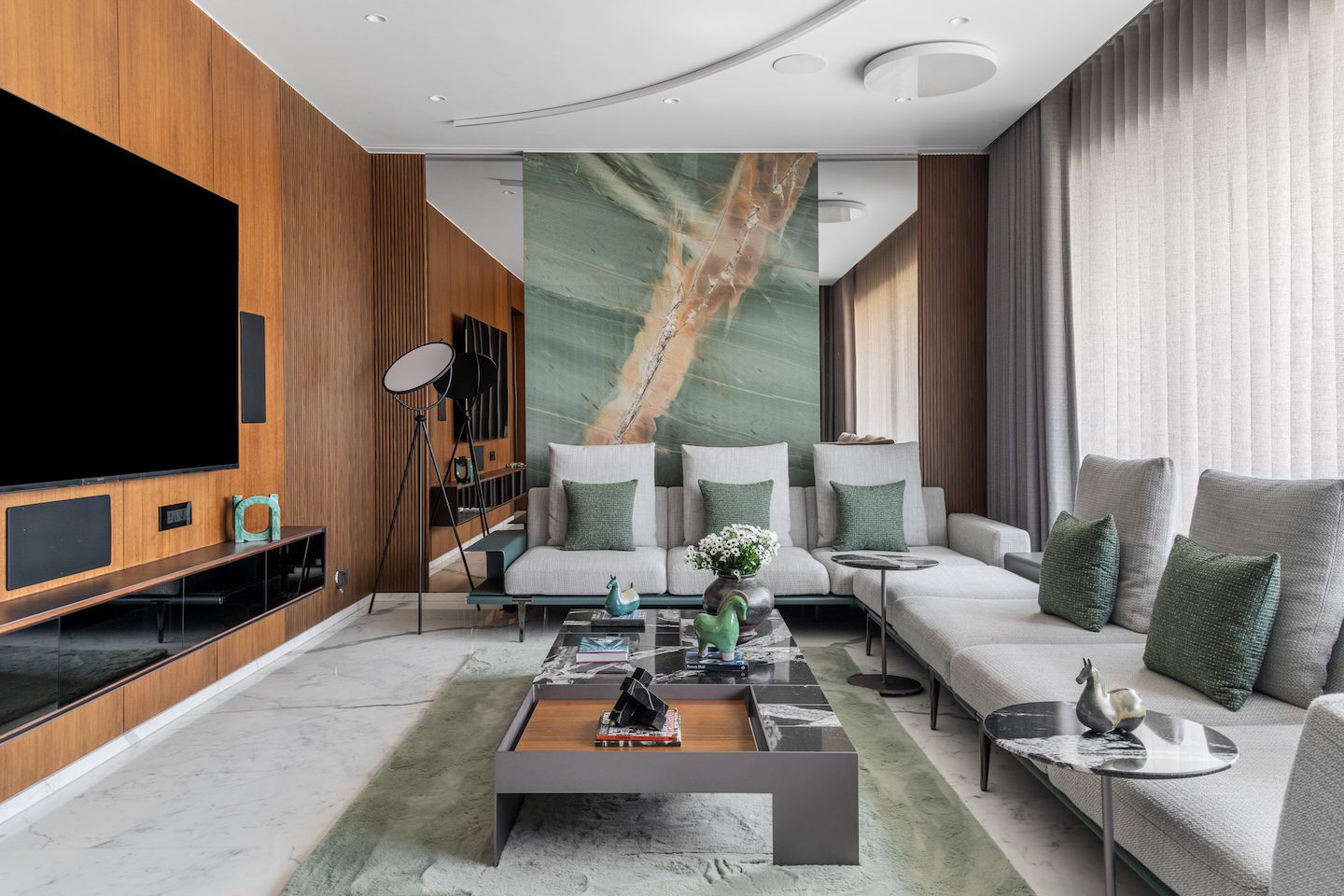
Early conversations with the homeowners revealed a clear preference for interiors that would feel elegant yet restrained. The aim was to move away from conventional luxury interiors and instead create a home defined by calm surfaces, custom-crafted furniture and a carefully curated palette of materials. Equally important was the desire to make the apartment feel more fluid and spatially generous than the original layout allowed.
The design intent
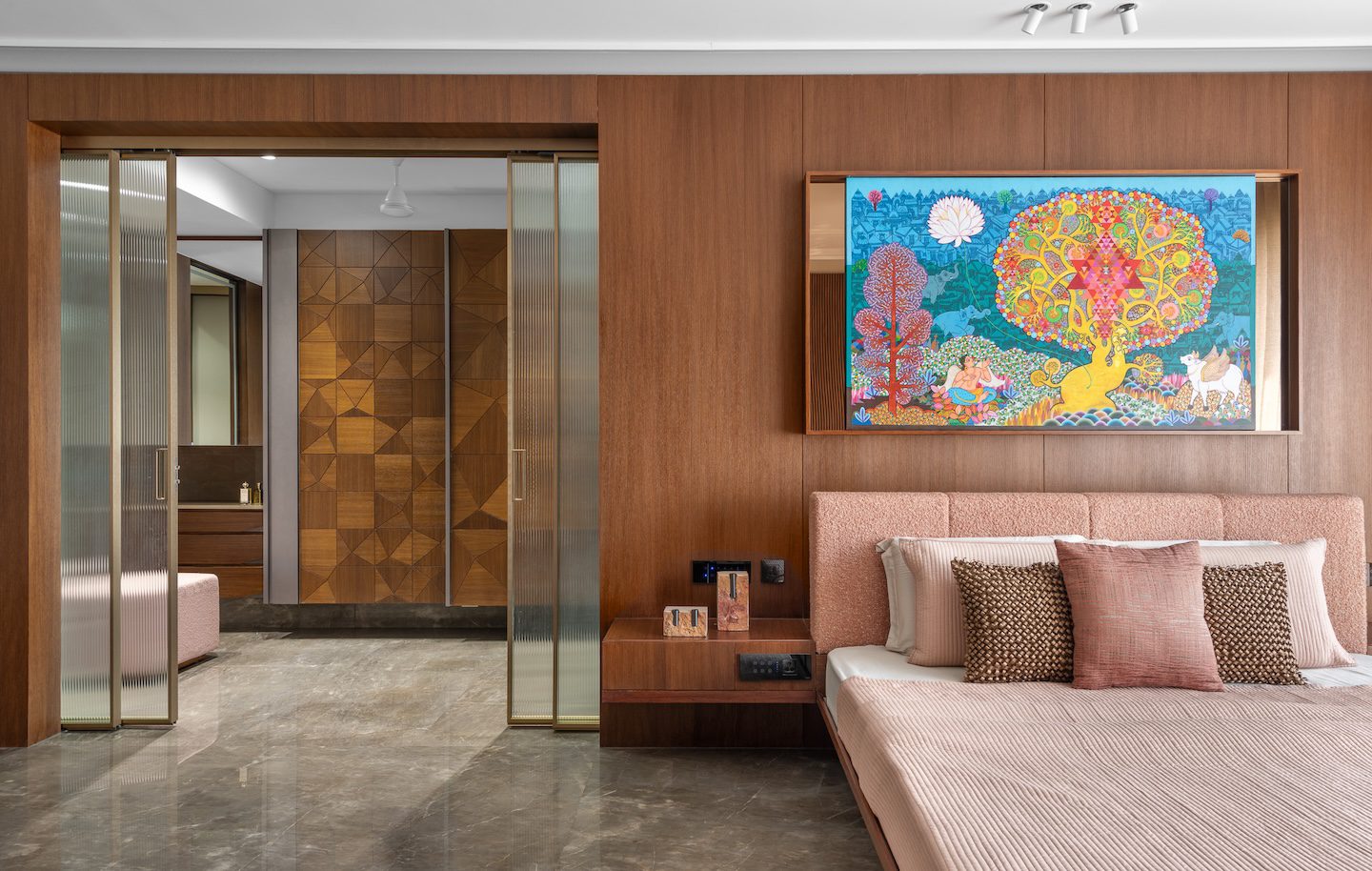
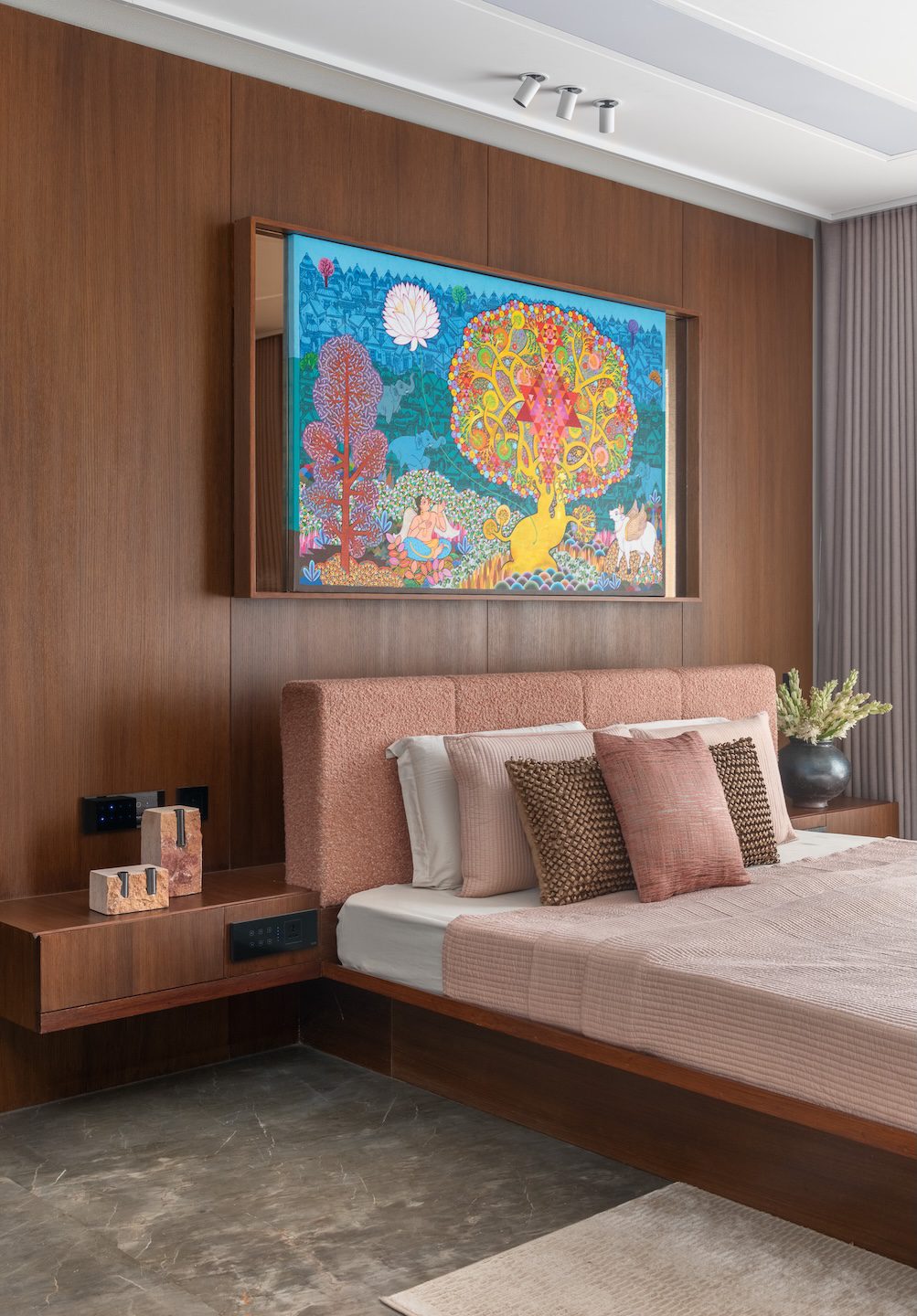
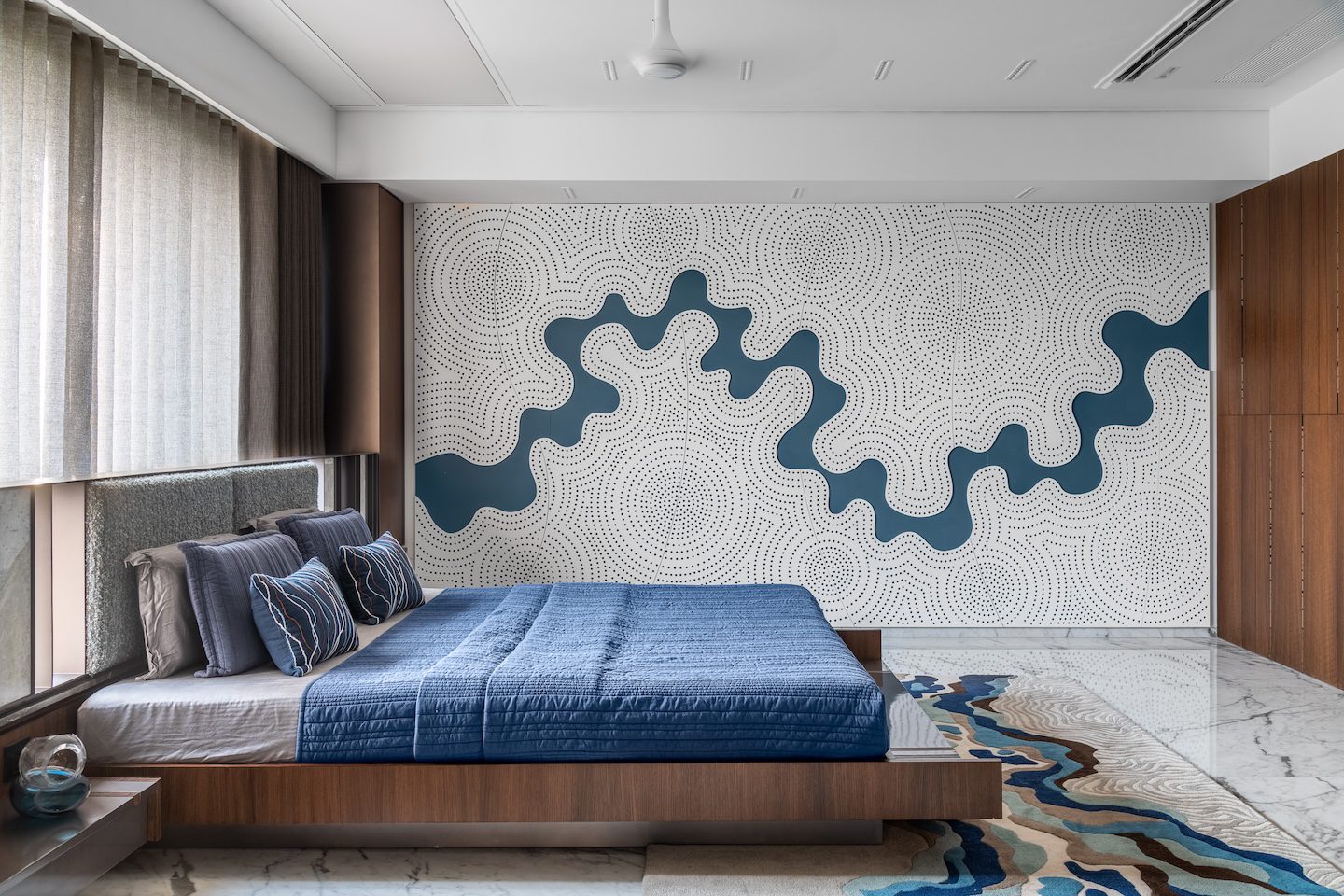
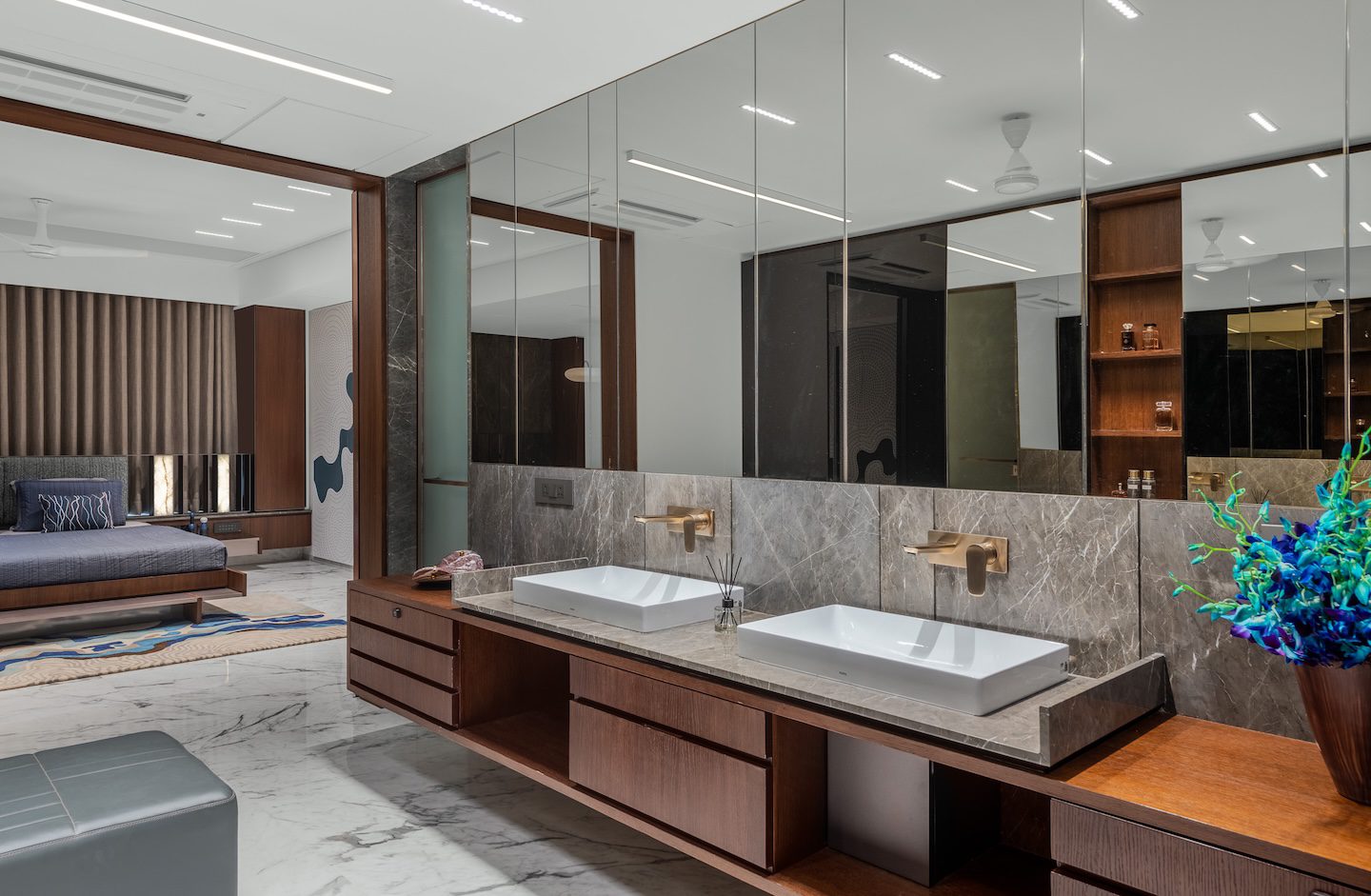
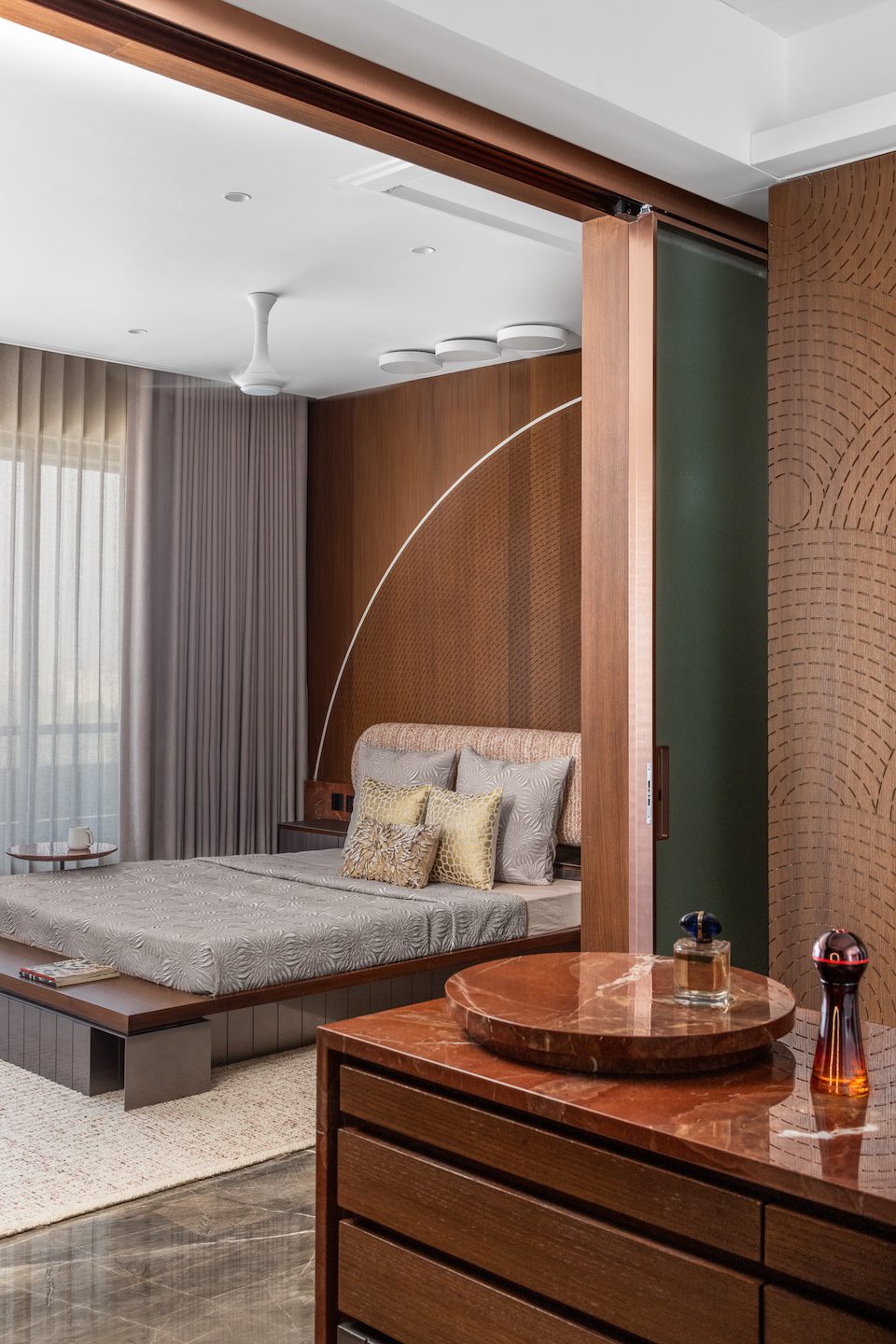
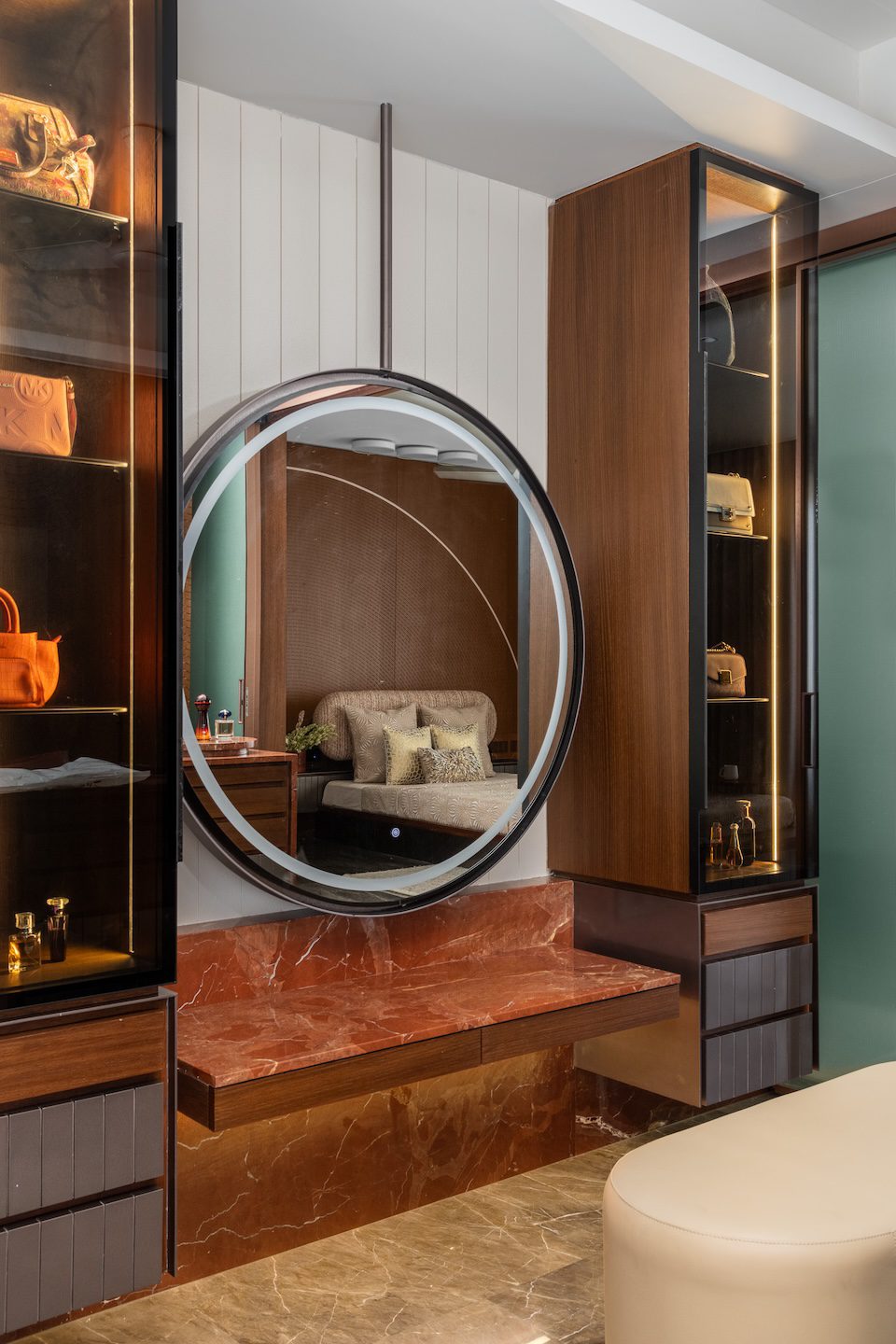
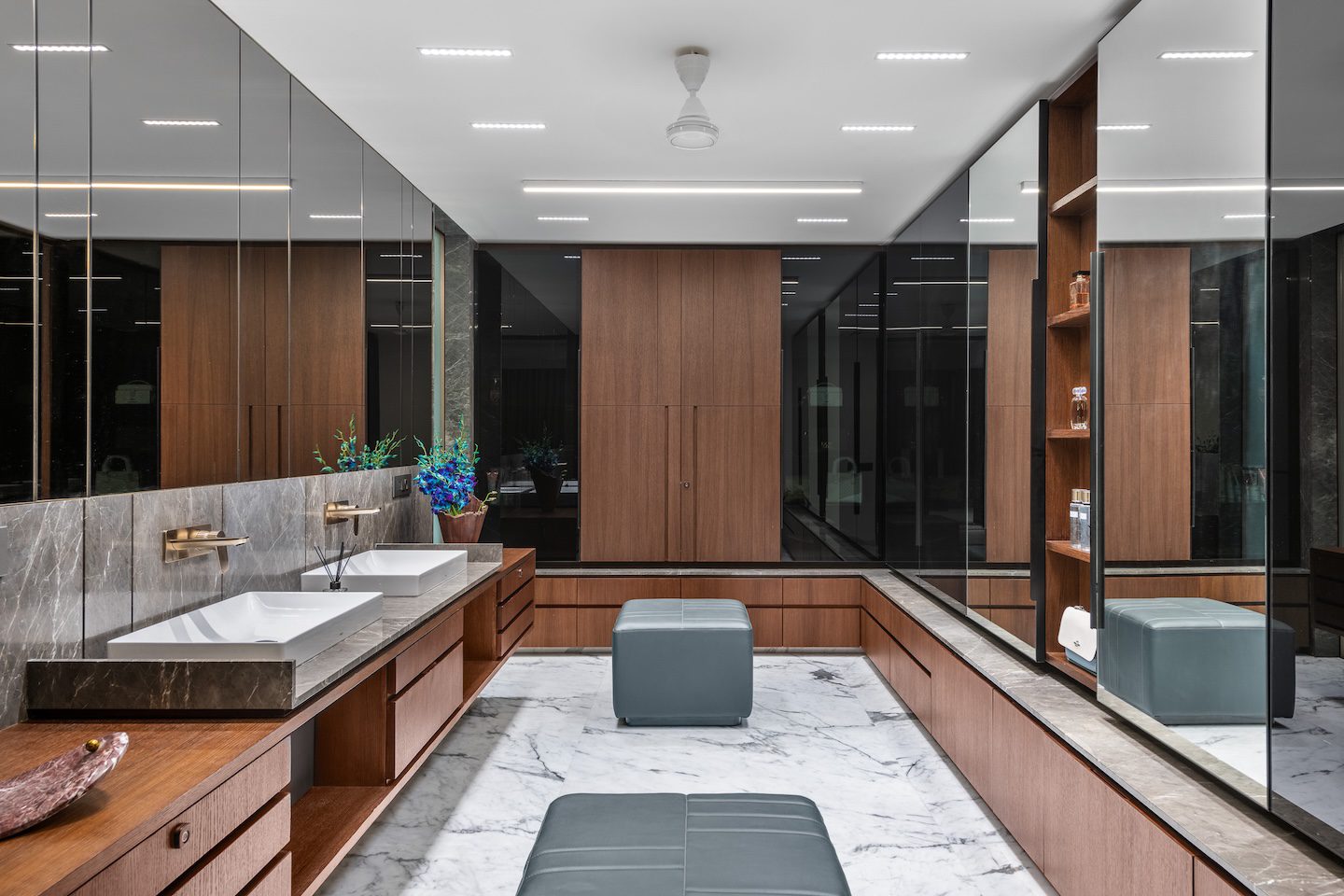
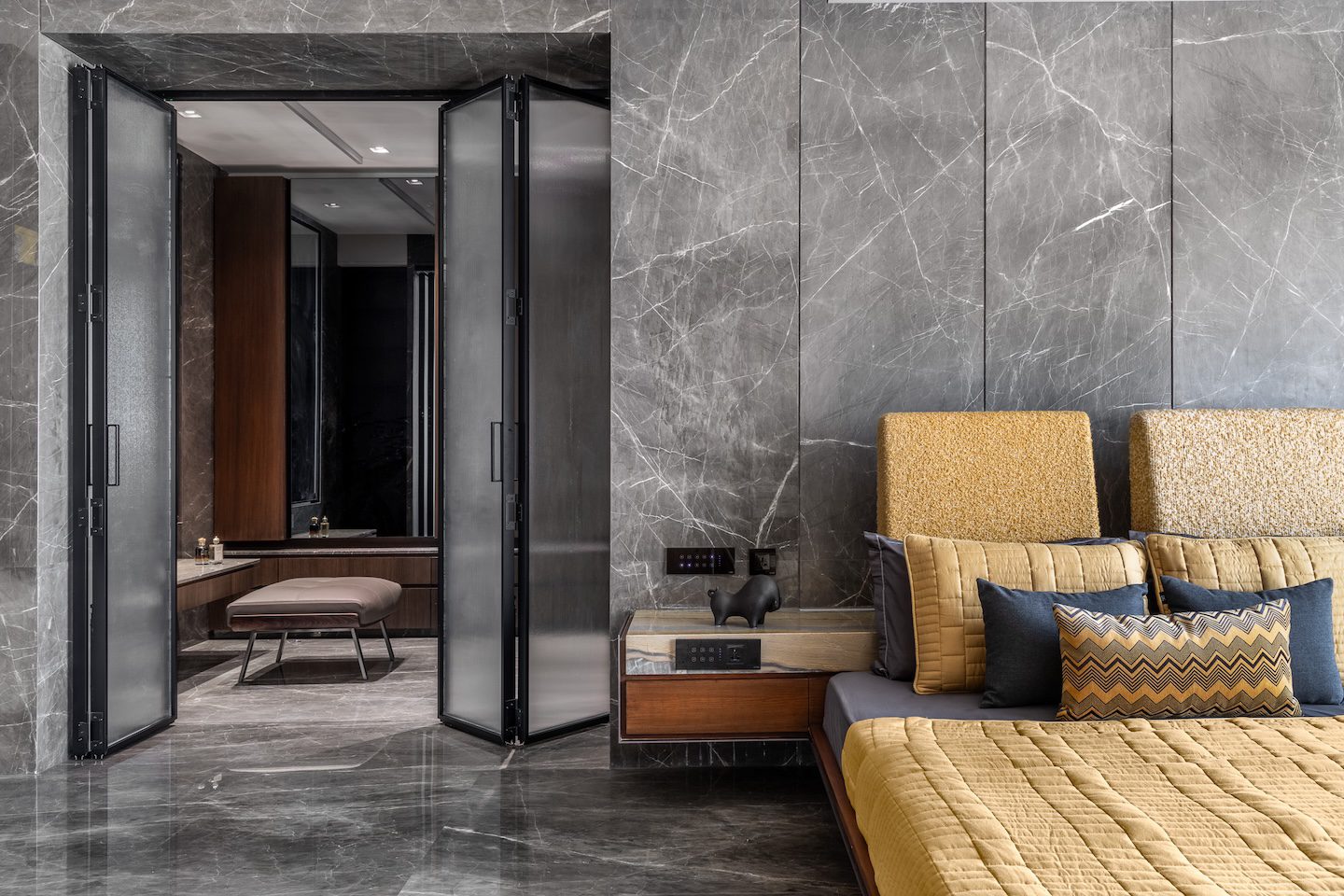
The design strategy focused on opening up the apartment’s internal structure while allowing materials and architectural elements to carry the visual narrative. Rather than compartmentalising spaces, the designers sought to create rooms that feel connected to one another through long sightlines and controlled transitions. Bedrooms were planned so that wardrobe and washroom areas integrate more seamlessly with the sleeping spaces, giving each room a more open and expansive character.
The civil intervention
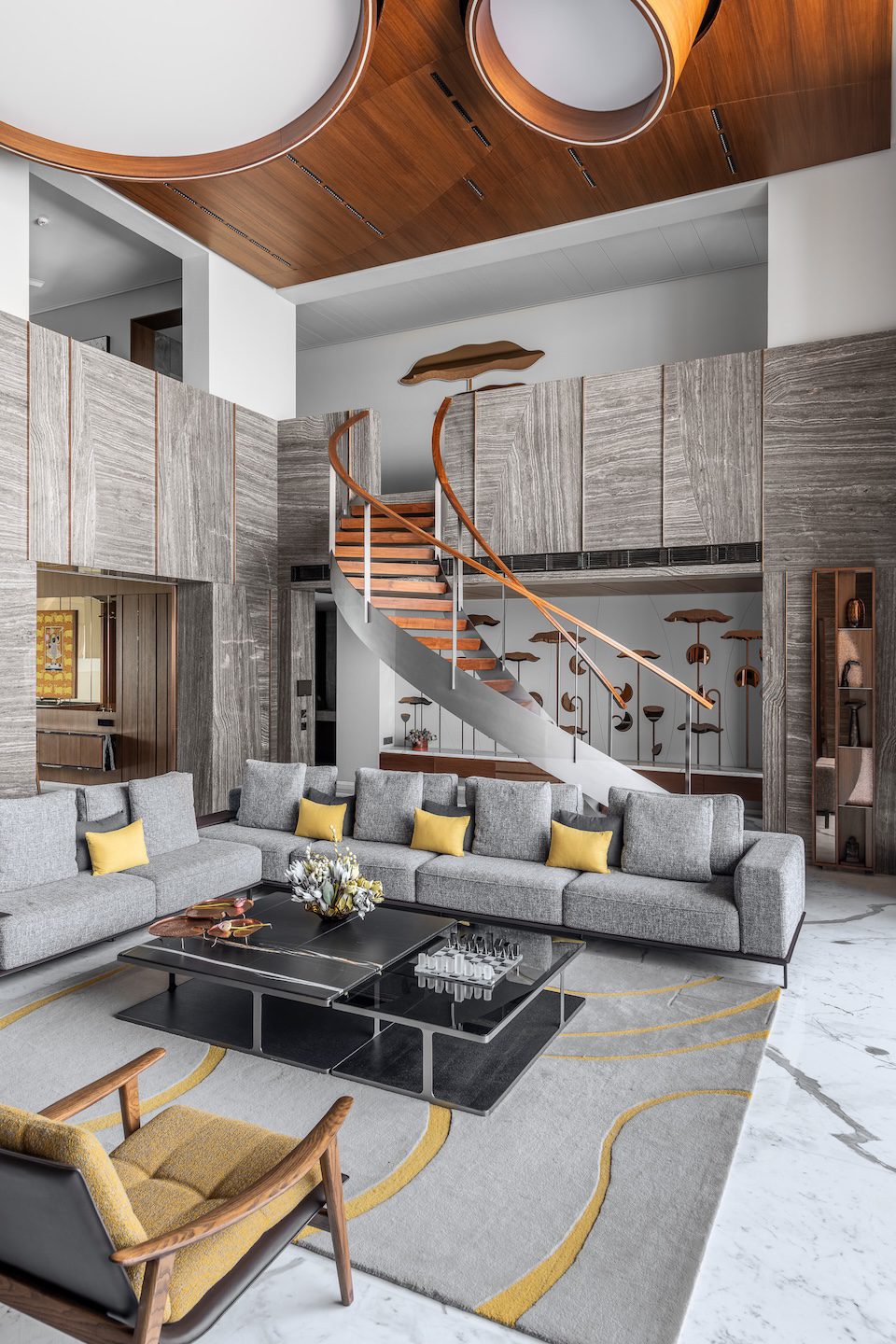
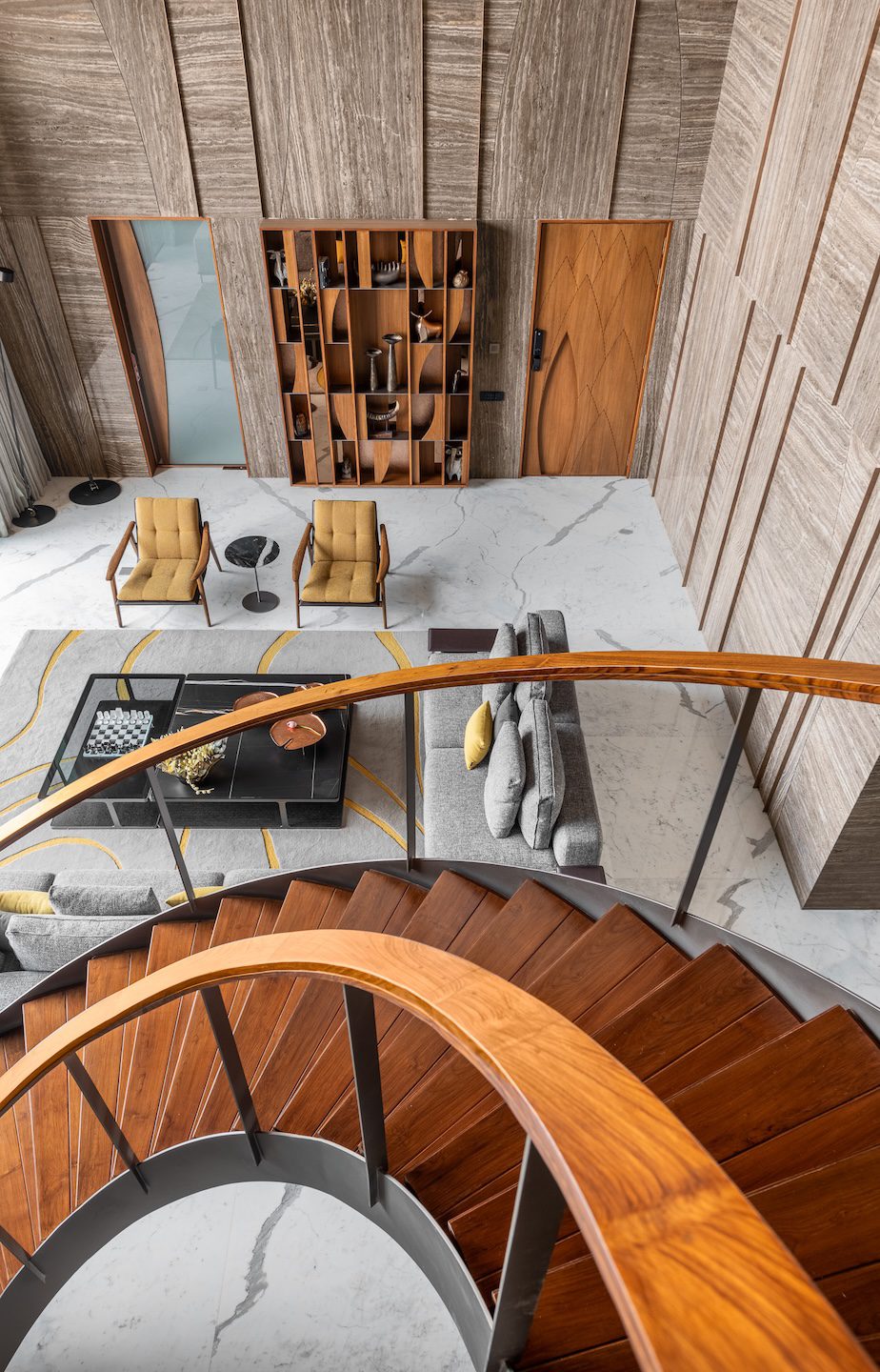
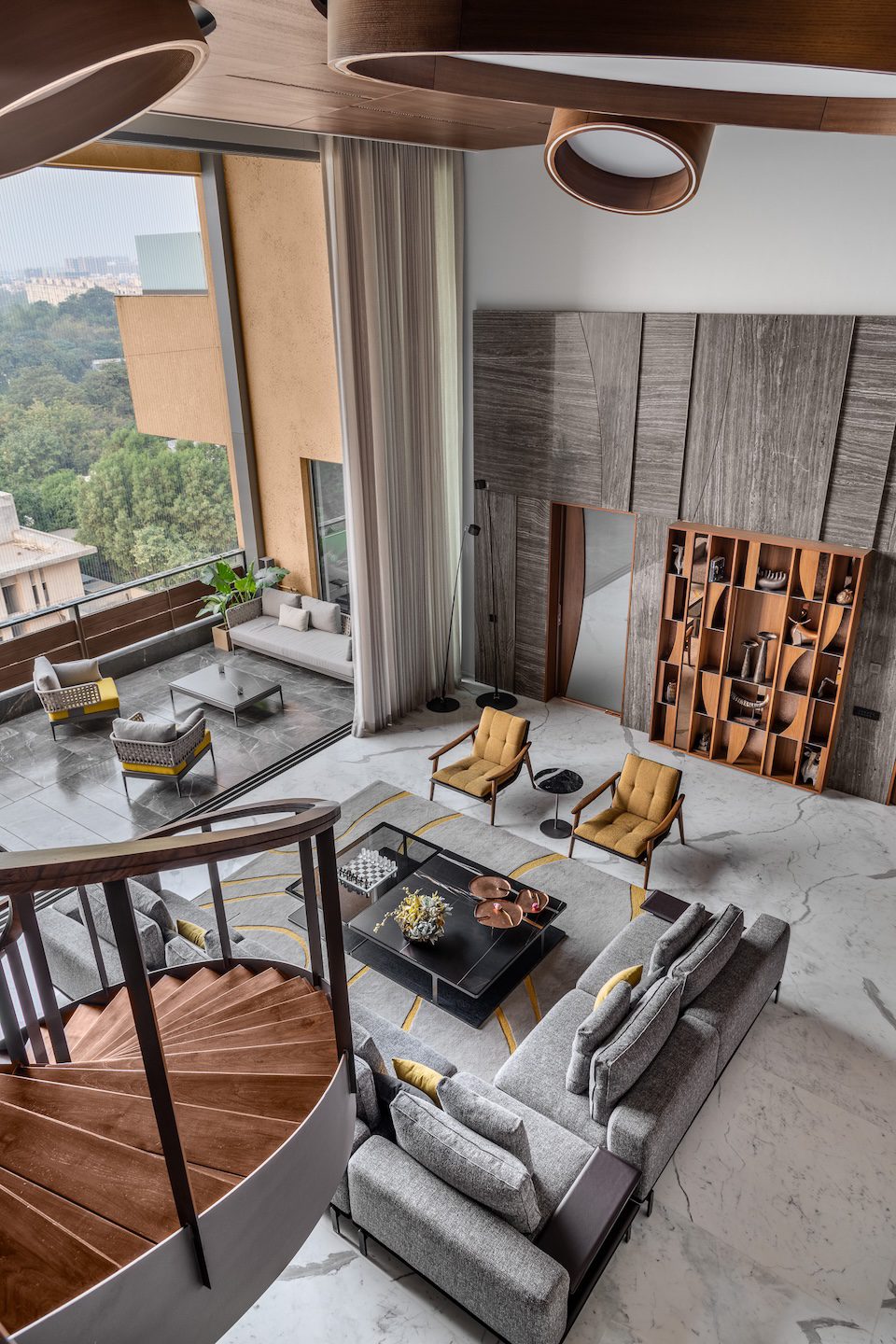
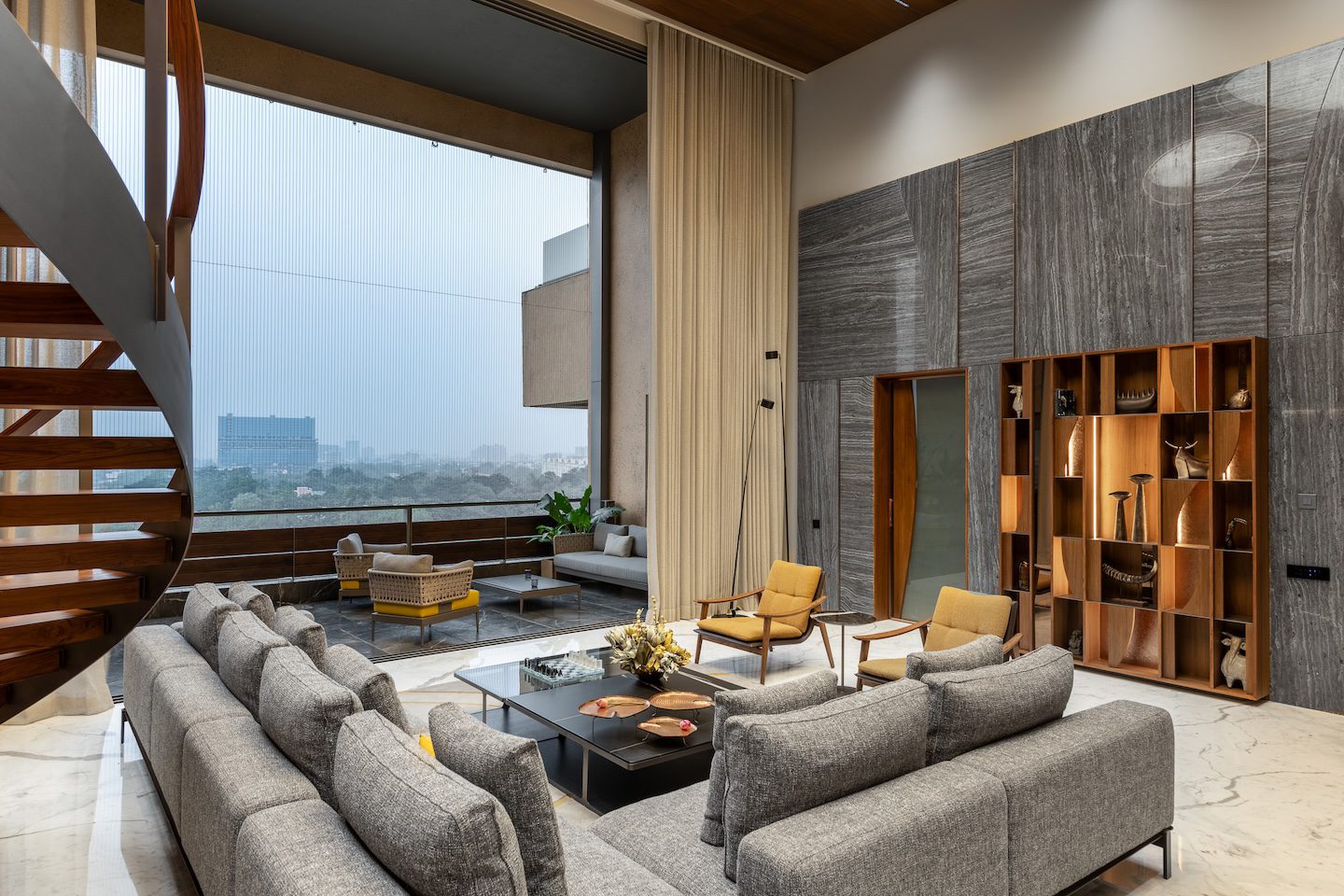
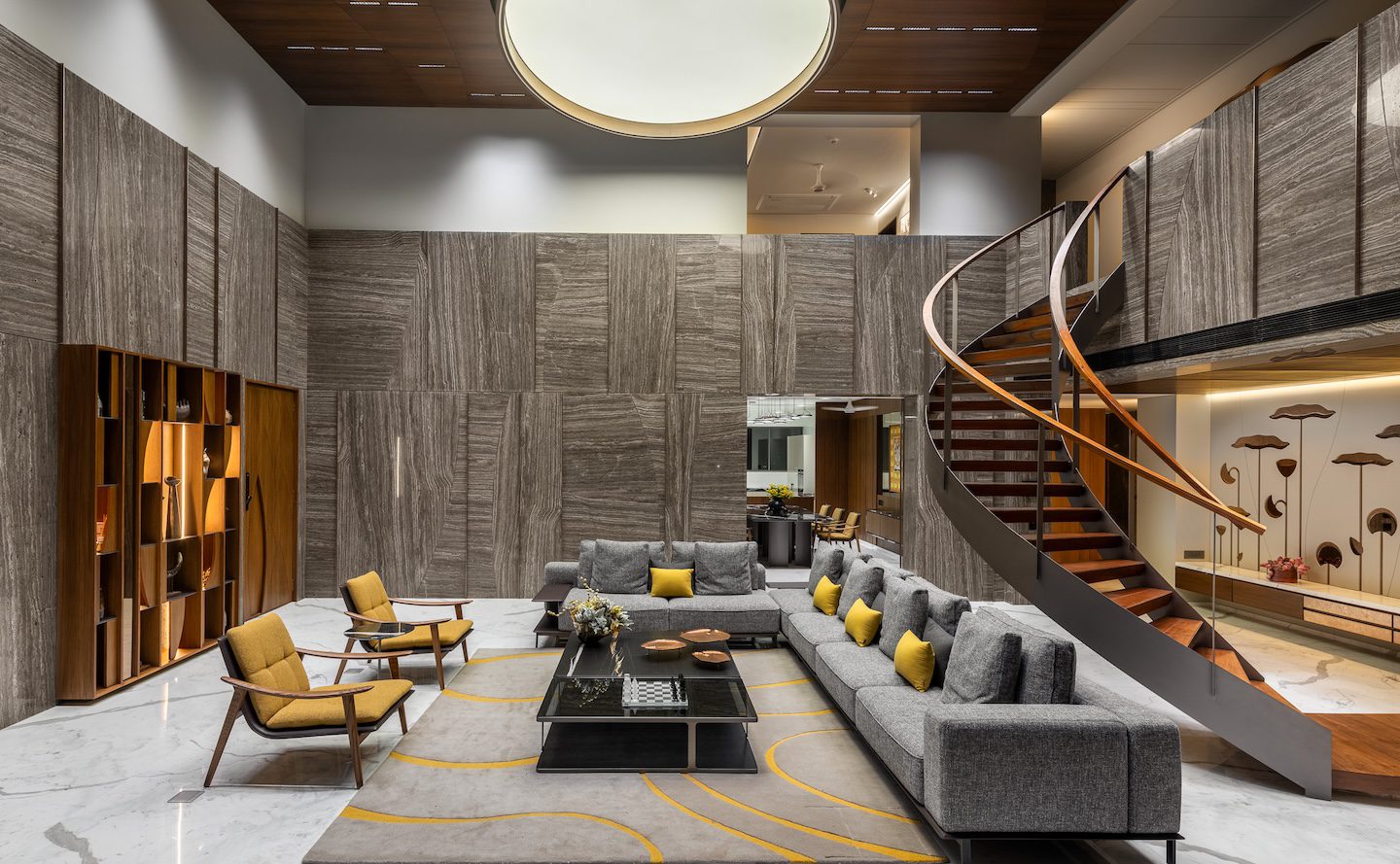
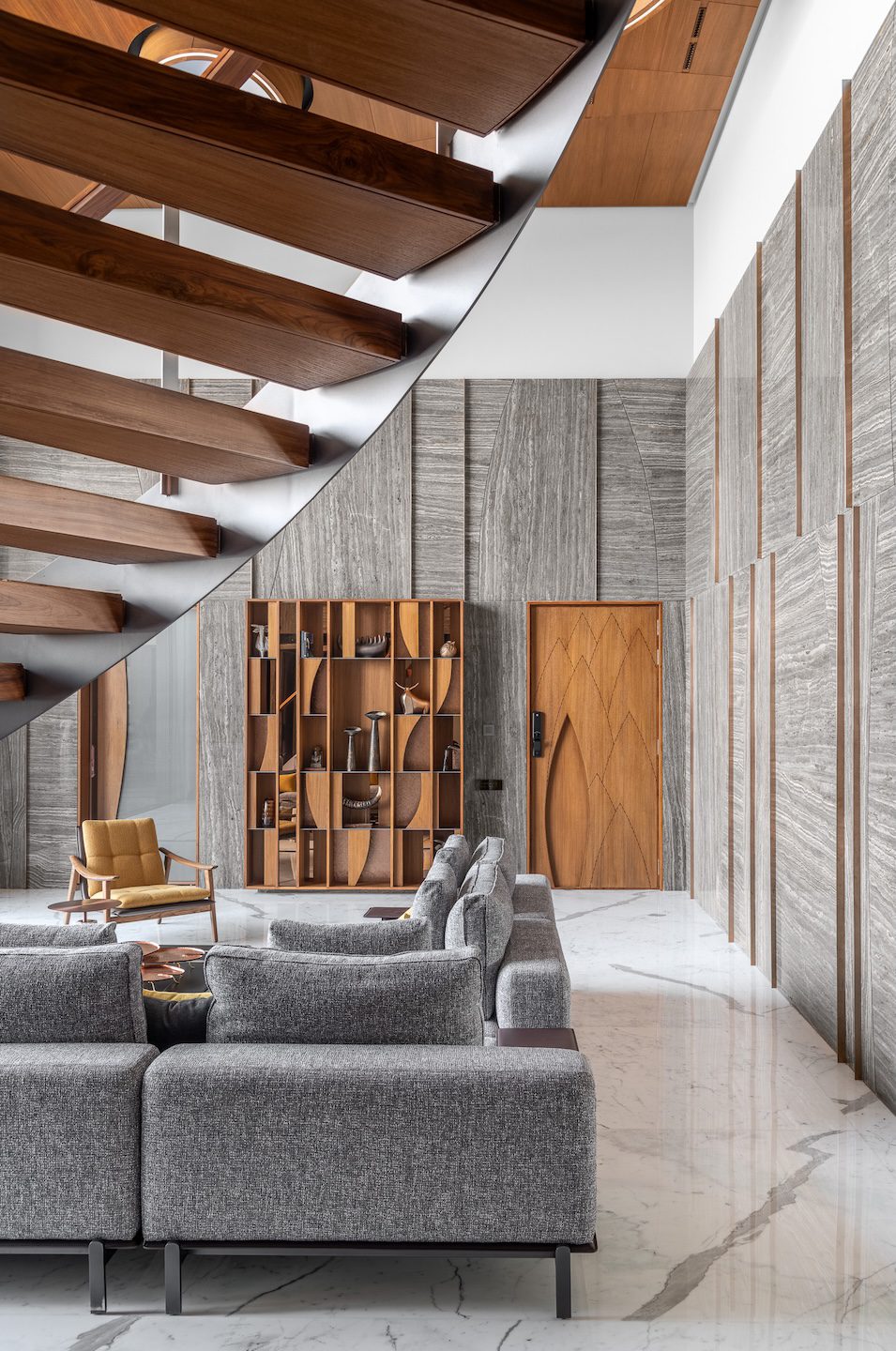
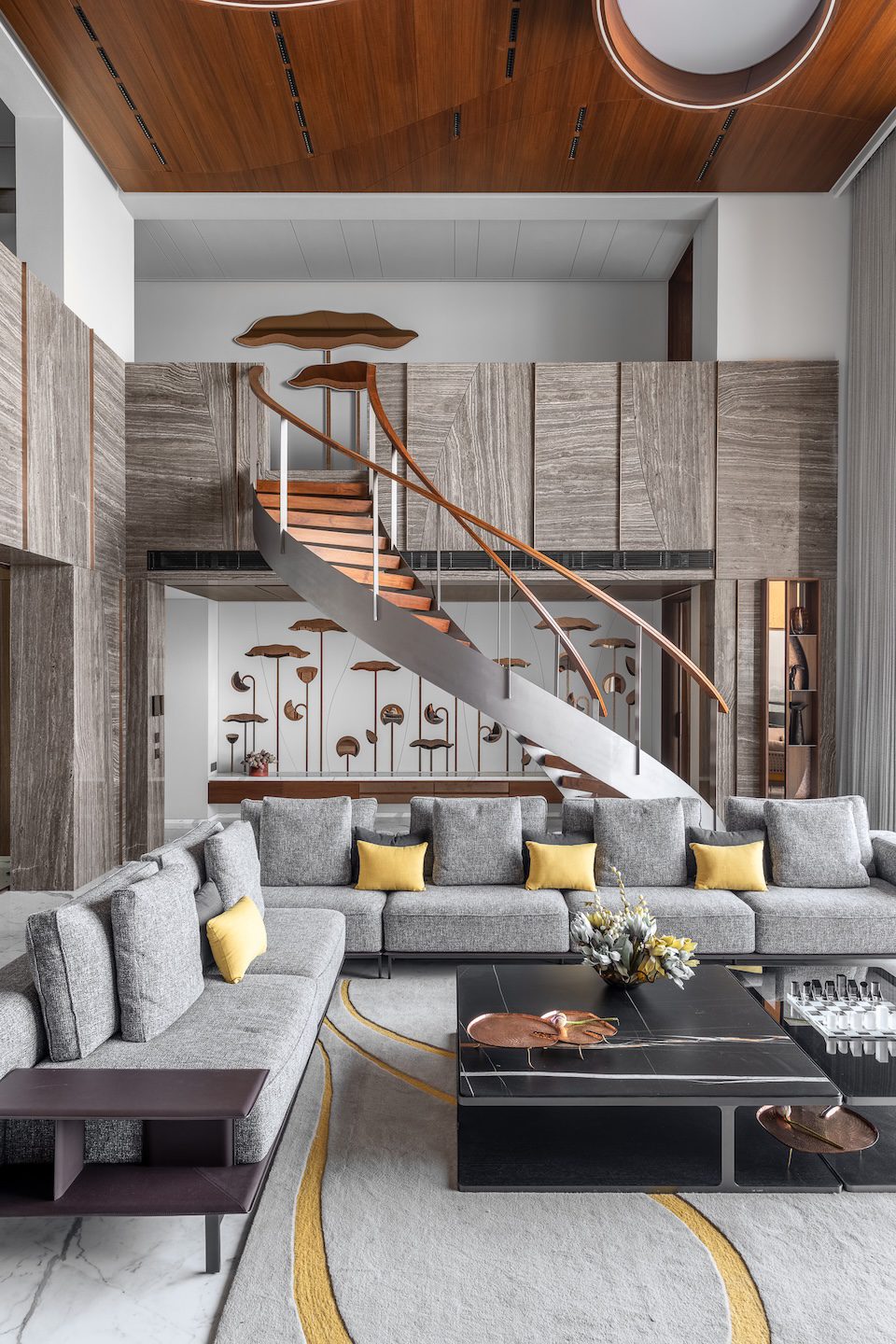
The most significant intervention involved replacing the originally proposed linear staircase with a circular sculptural staircase within the double-height living room. This gesture not only occupies less floor area but also opens up views across the living space and towards the rear of the apartment. At the same time, the staircase becomes a defining architectural presence—an element that anchors the double-height volume while introducing movement and rhythm into the interior.
The spatial flow
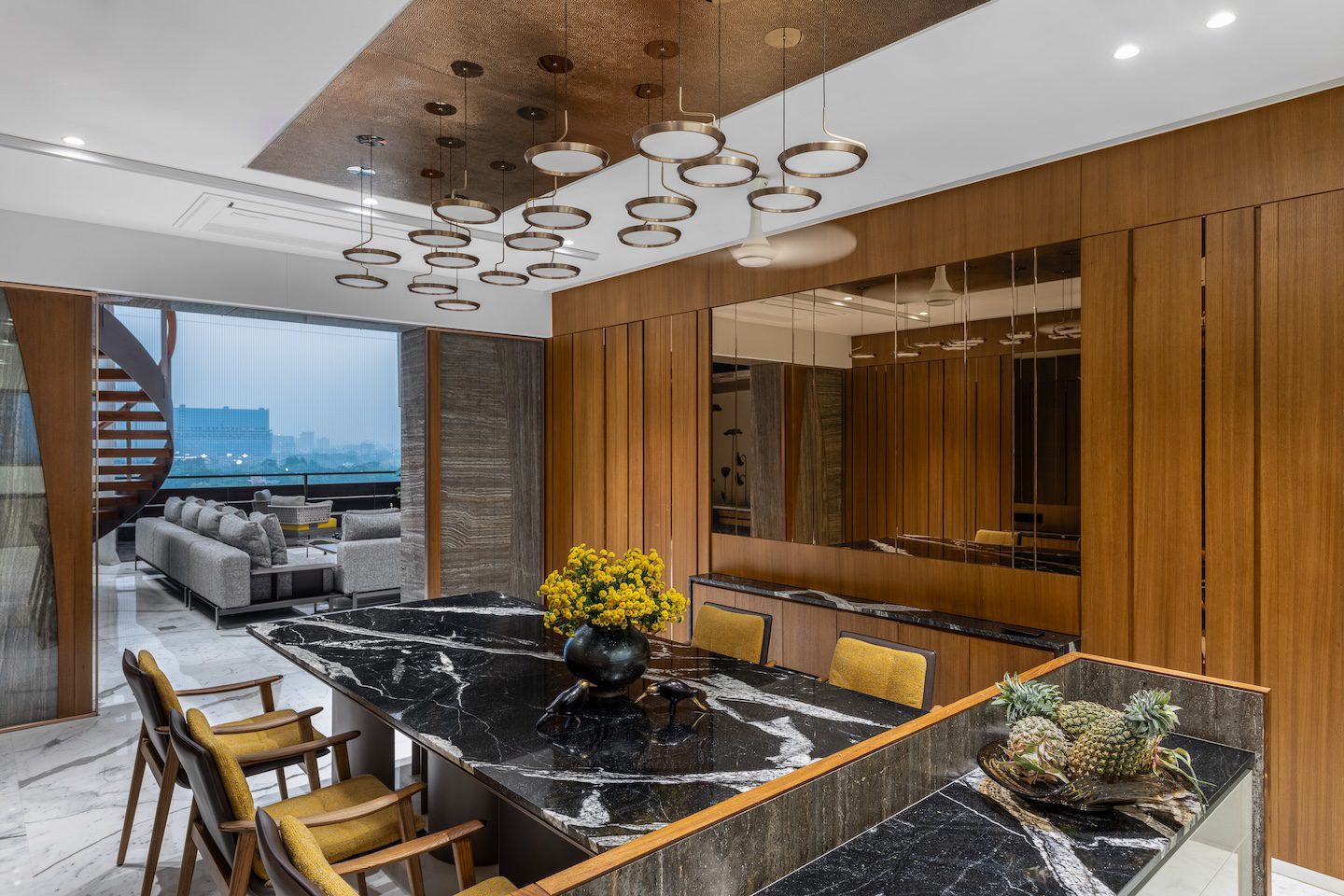
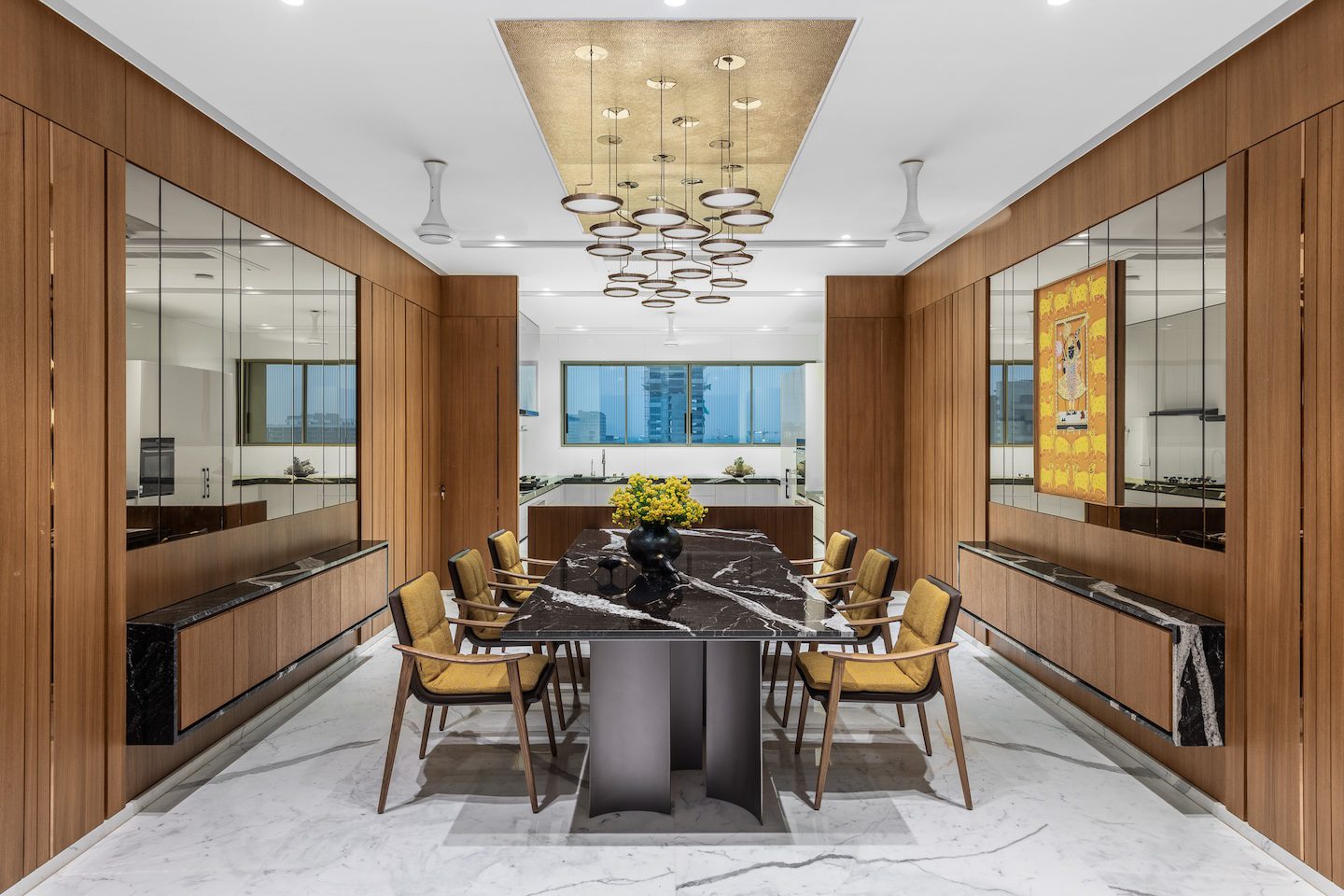
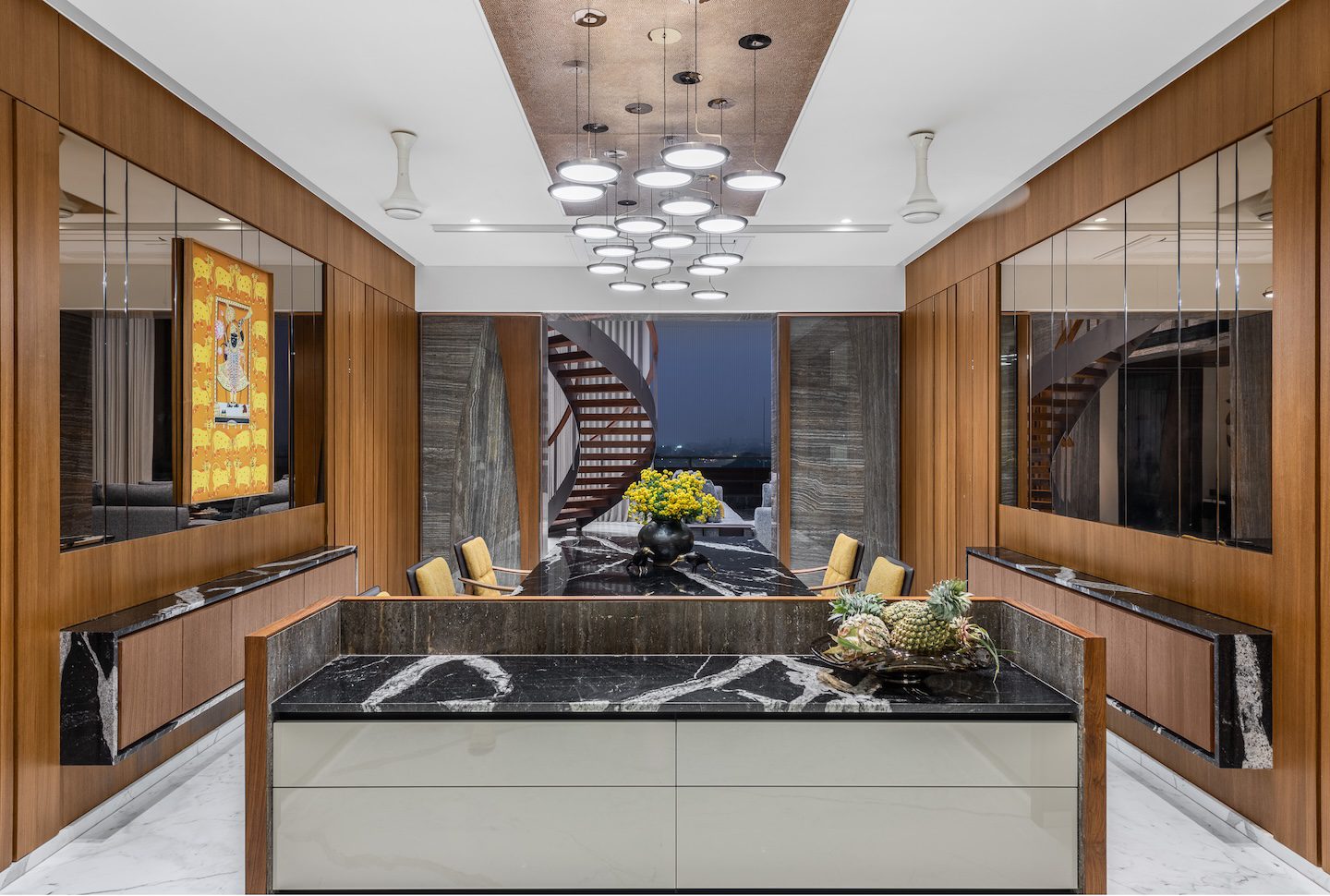
The lower level houses the principal social spaces of the home, including the double-height formal living room, a family seating area, dining space and the main kitchen supported by a butler’s kitchen. Two bedrooms are also located on this level. The upper floor accommodates the remaining bedroom spaces along with a study lounge, creating a layered arrangement where private and shared zones are distributed across two levels while remaining visually connected.
The material palette
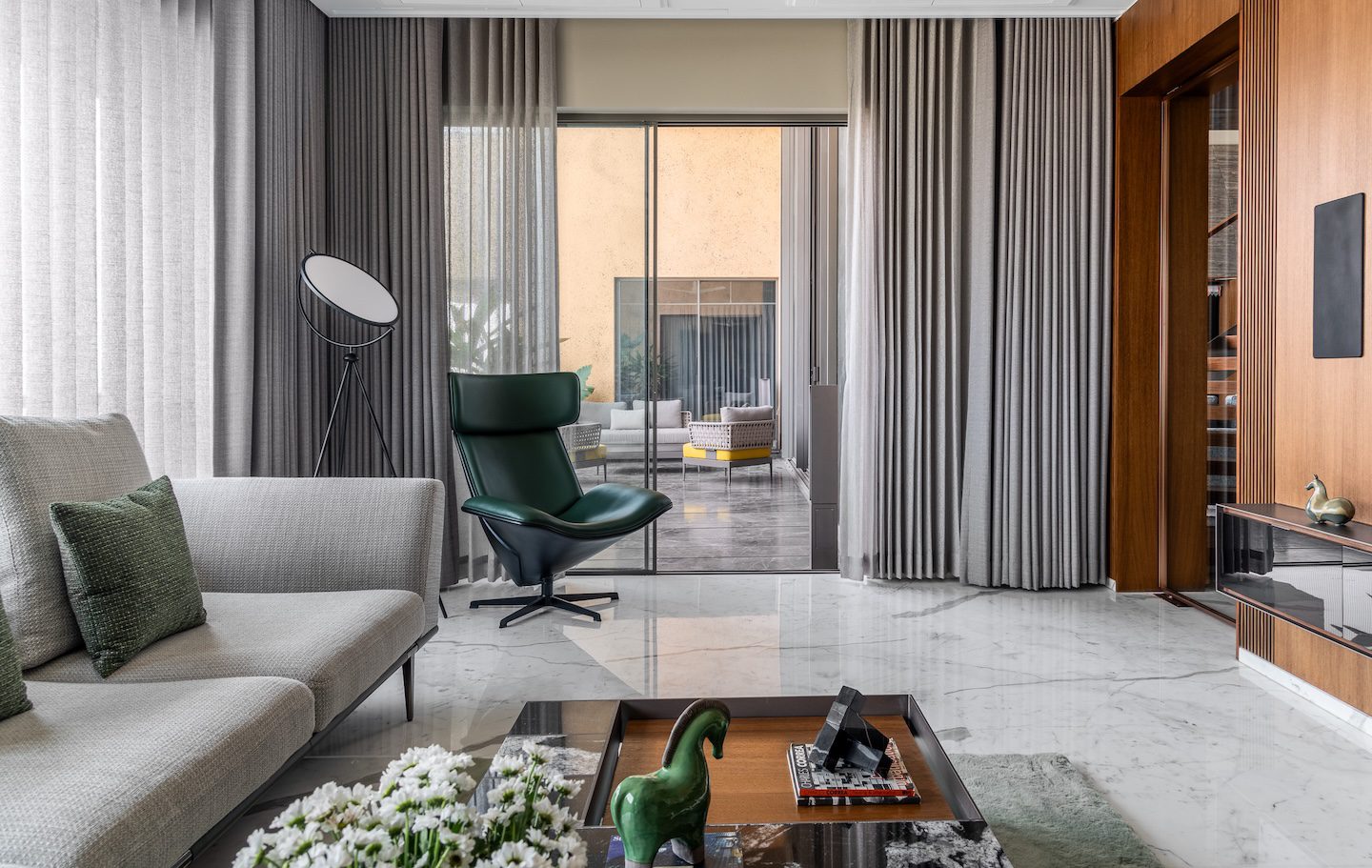
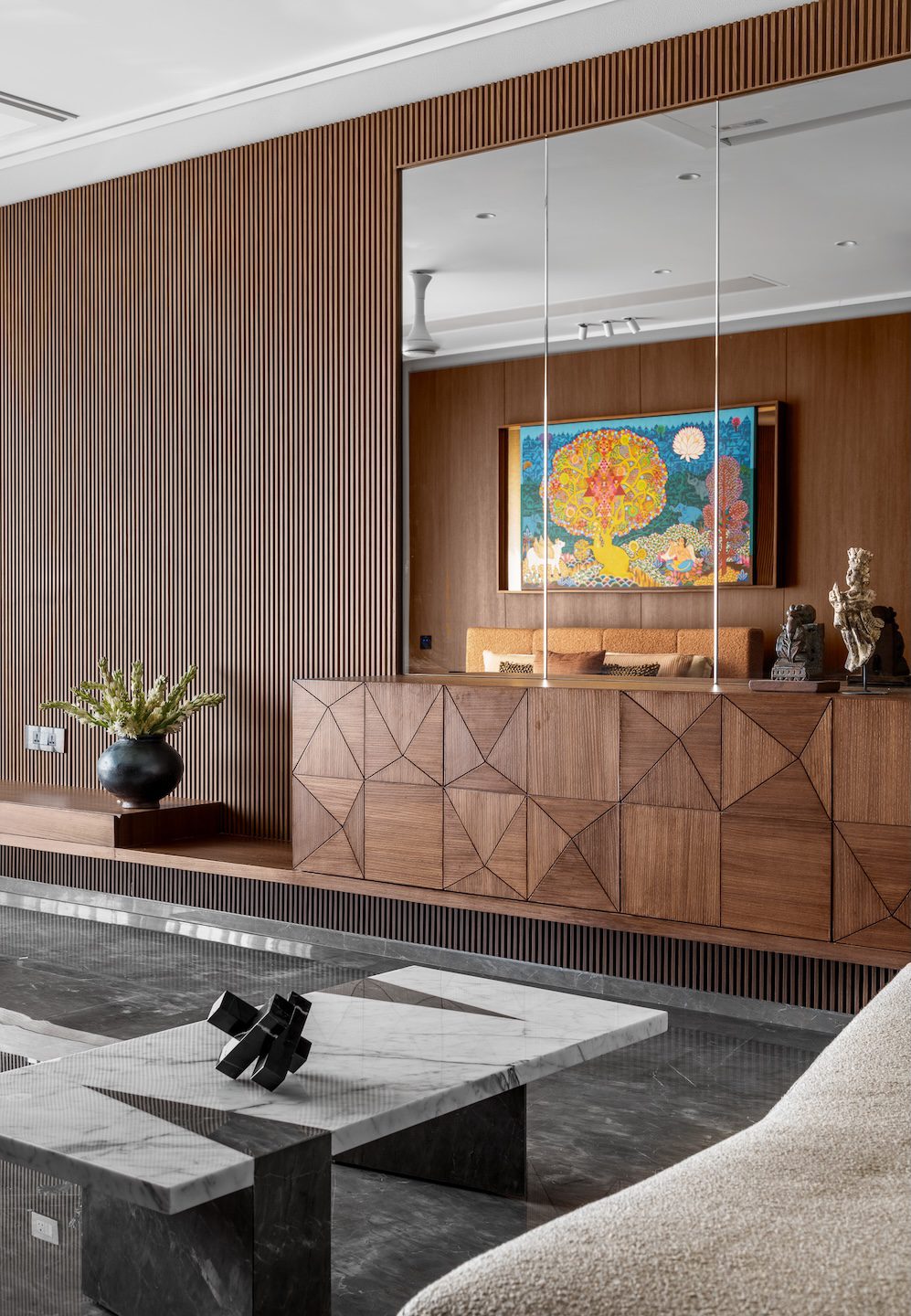
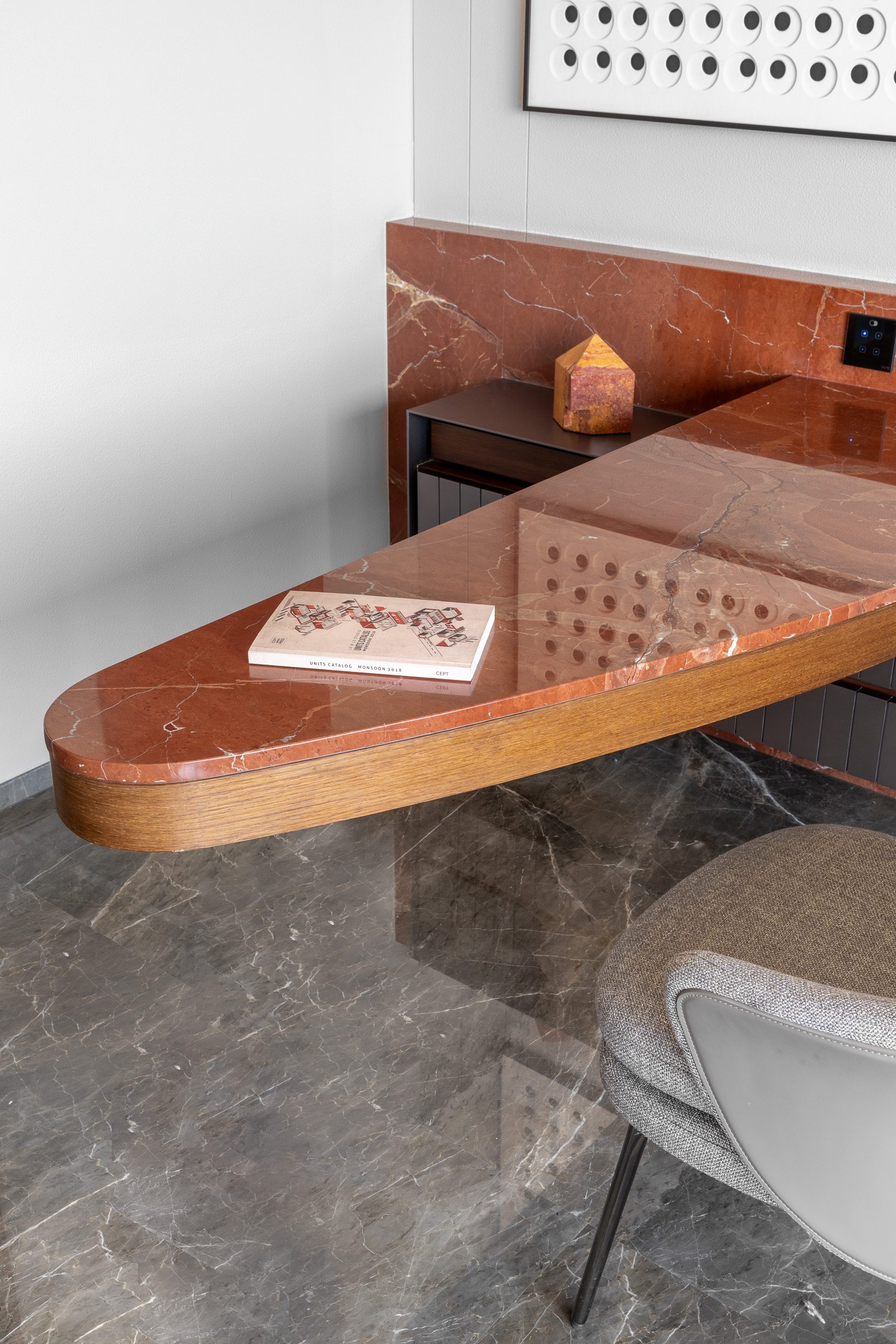
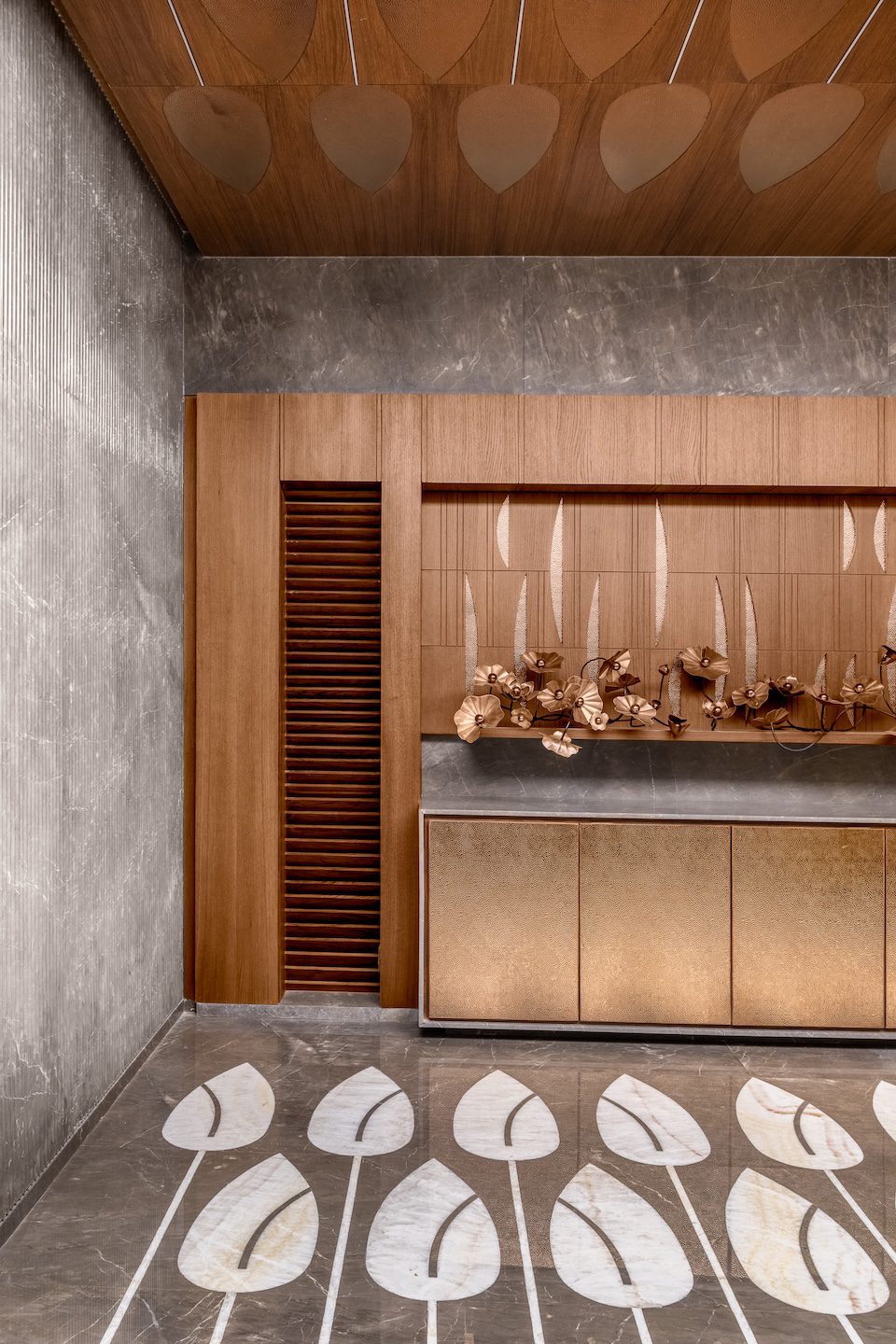
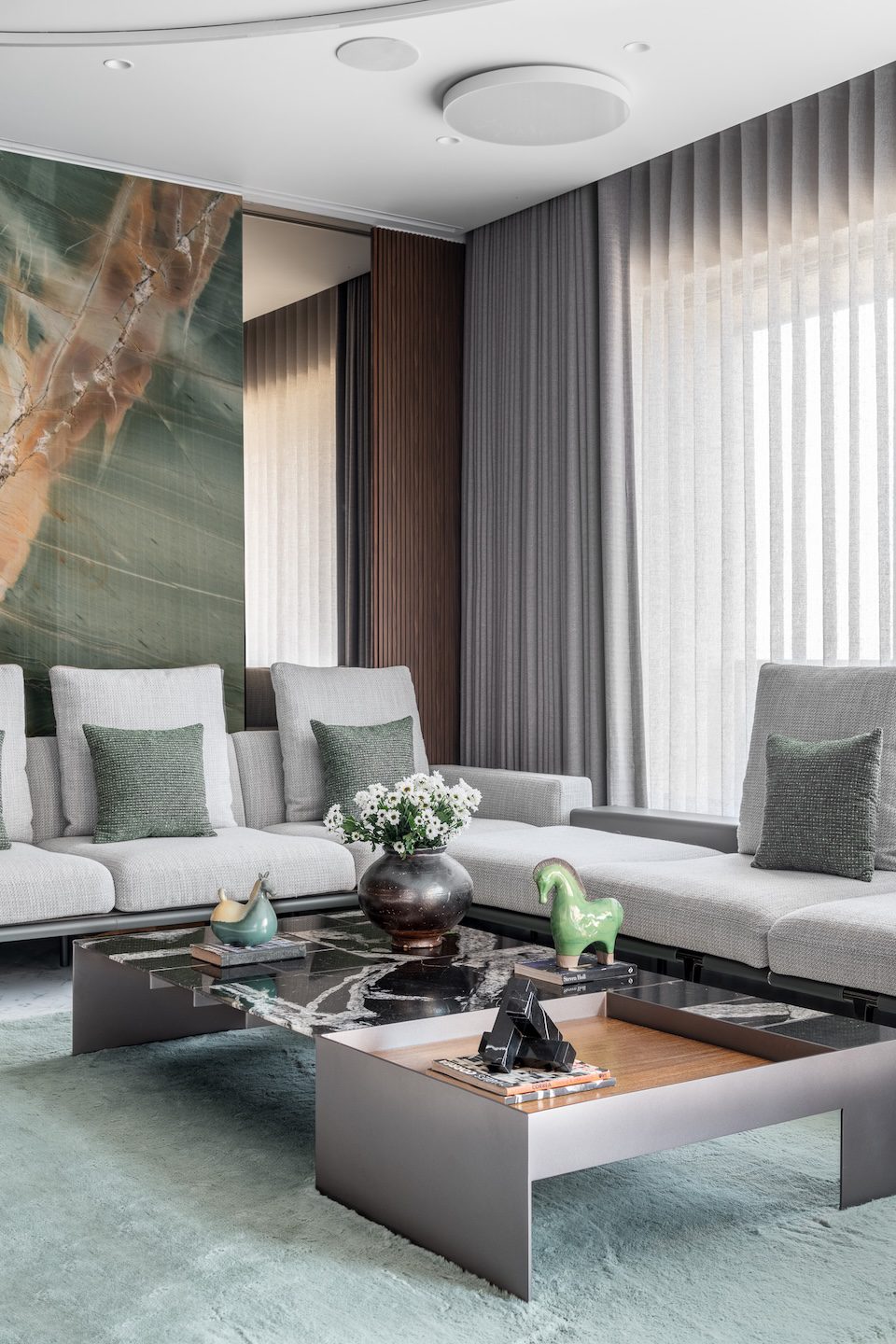
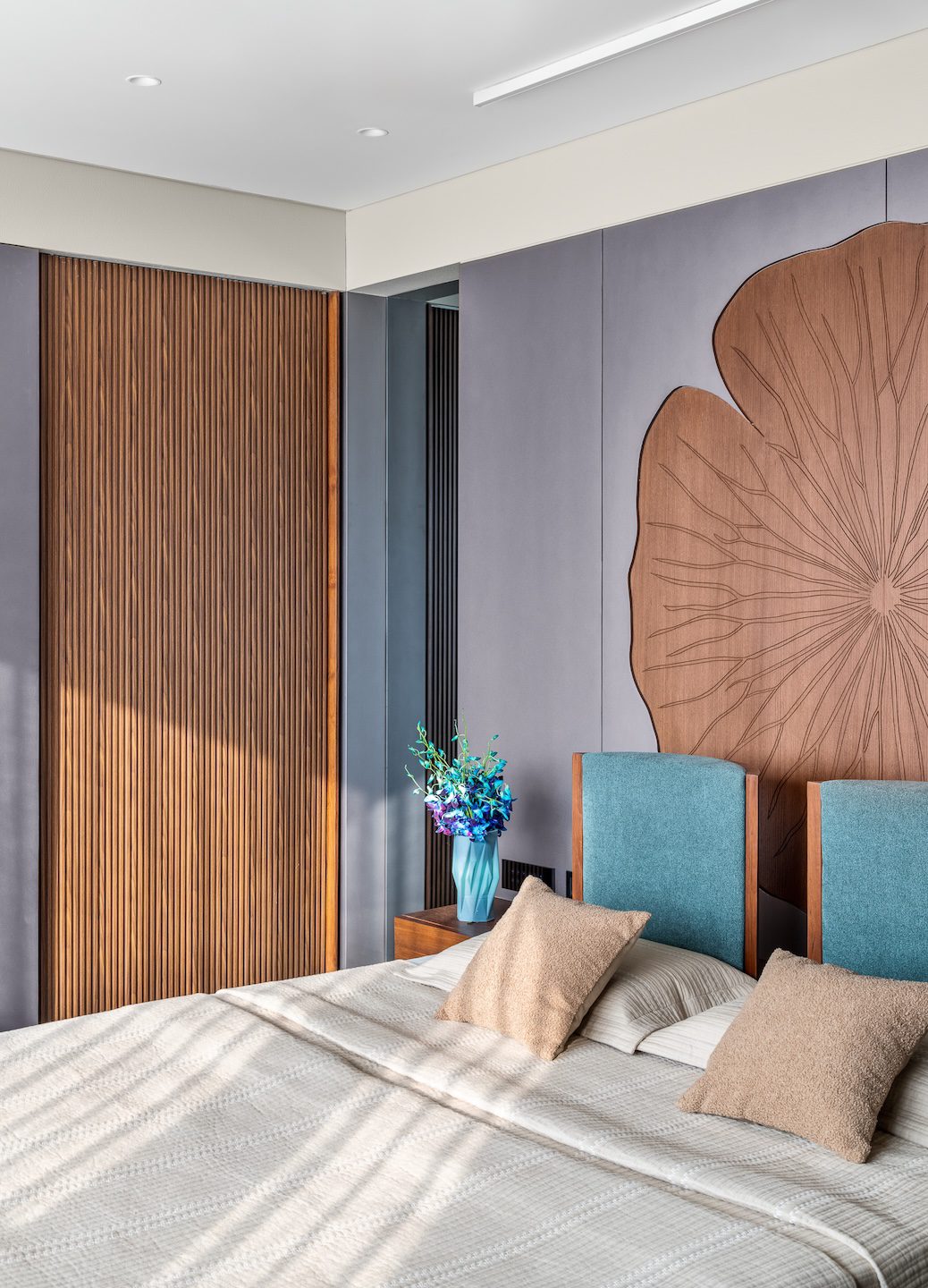
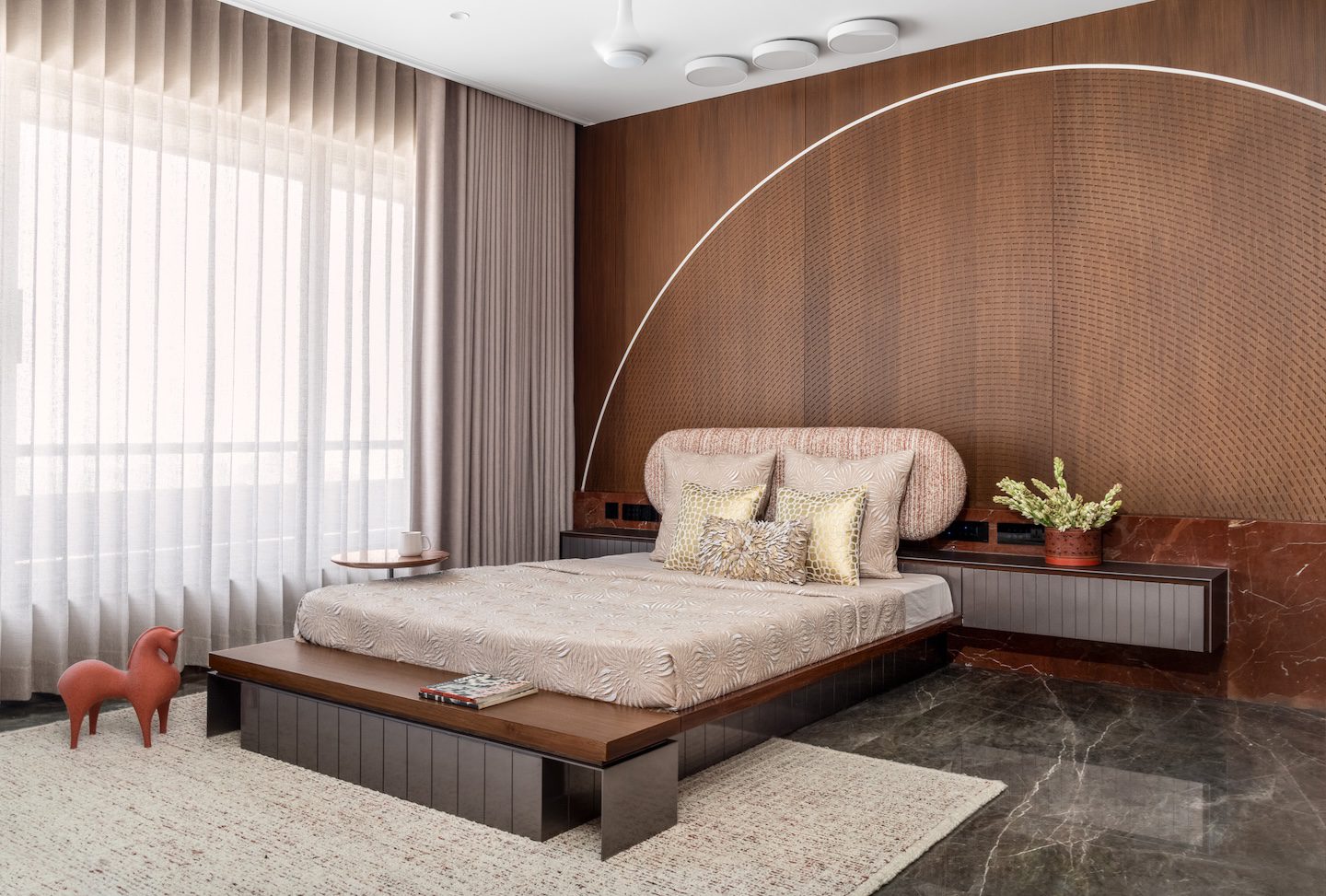
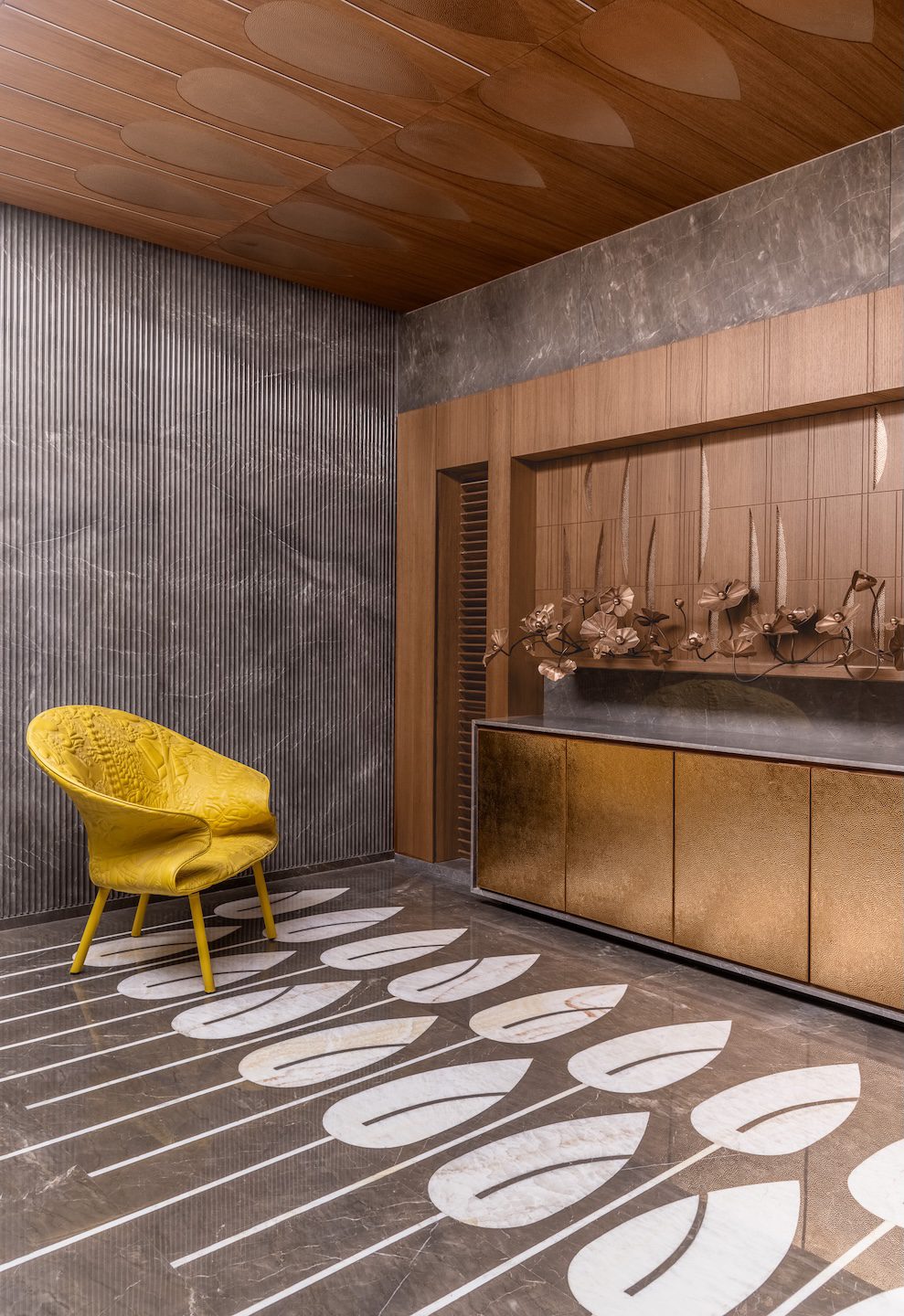
Material selection forms the backbone of the project’s understated luxury. Marble flooring, granite countertops, marble wall cladding and refined textiles establish a palette that is both timeless and tactile.
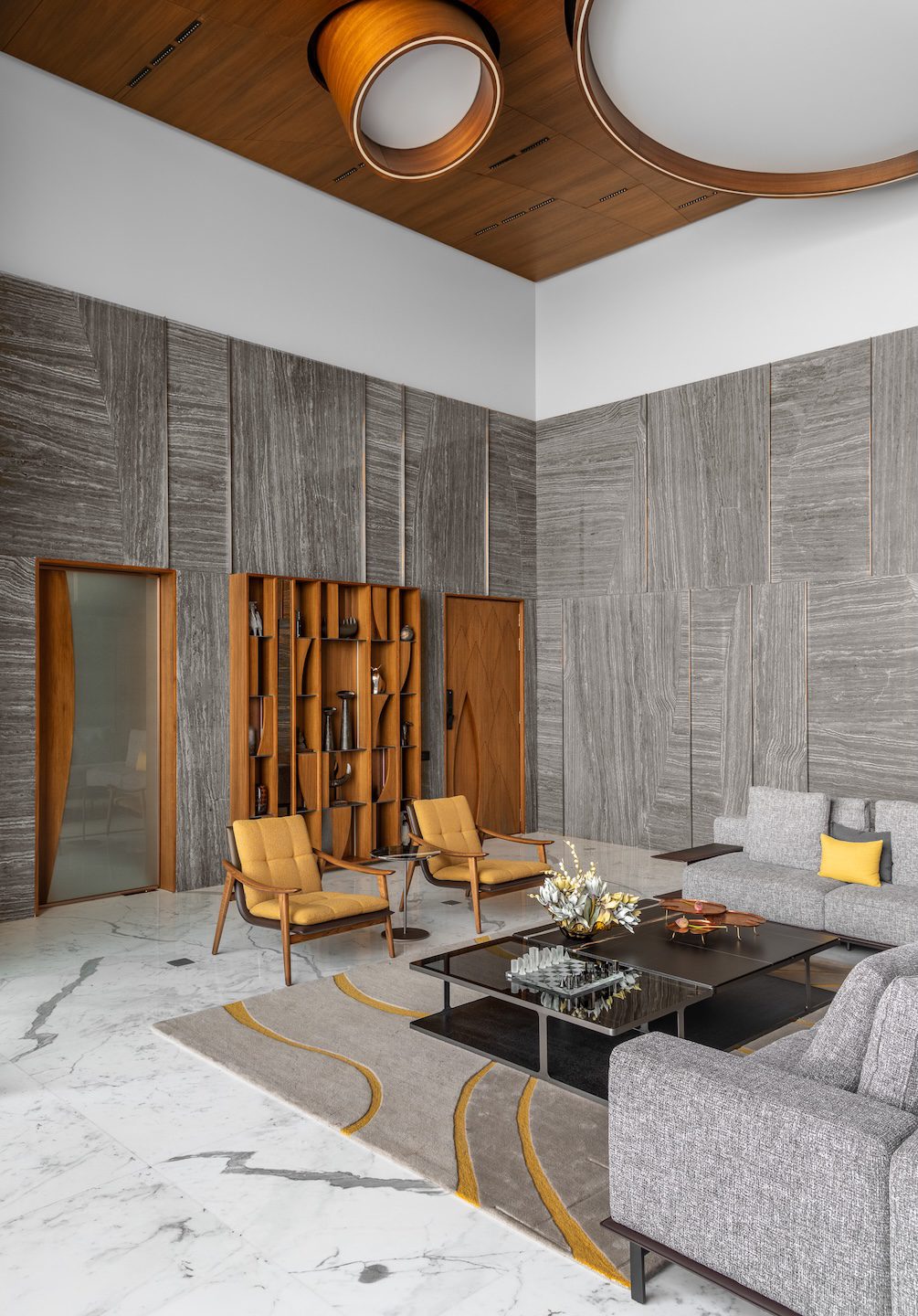
Within the double-height living room, a C-shaped marble-clad wall wraps around three sides of the space, visually tying together the otherwise fragmented volume created by multiple openings. This element introduces warmth and cohesion while anchoring the expansive living area.
Large cylindrical lighting elements suspended within the double-height volume bring a dramatic vertical presence to the space, casting soft pools of light across the seating area. Veneer ceilings further temper the marble surfaces, adding warmth and depth to the overall composition.
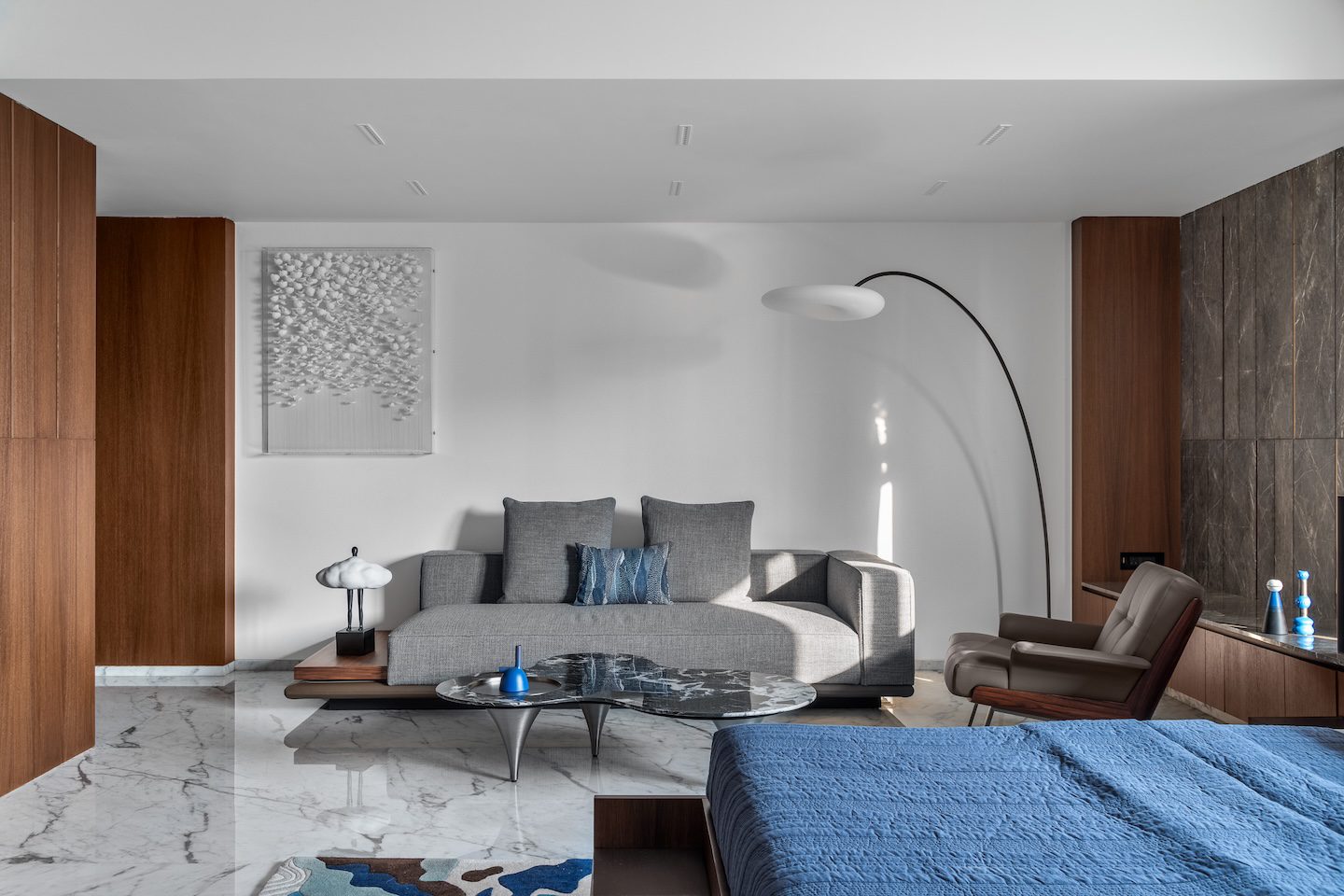
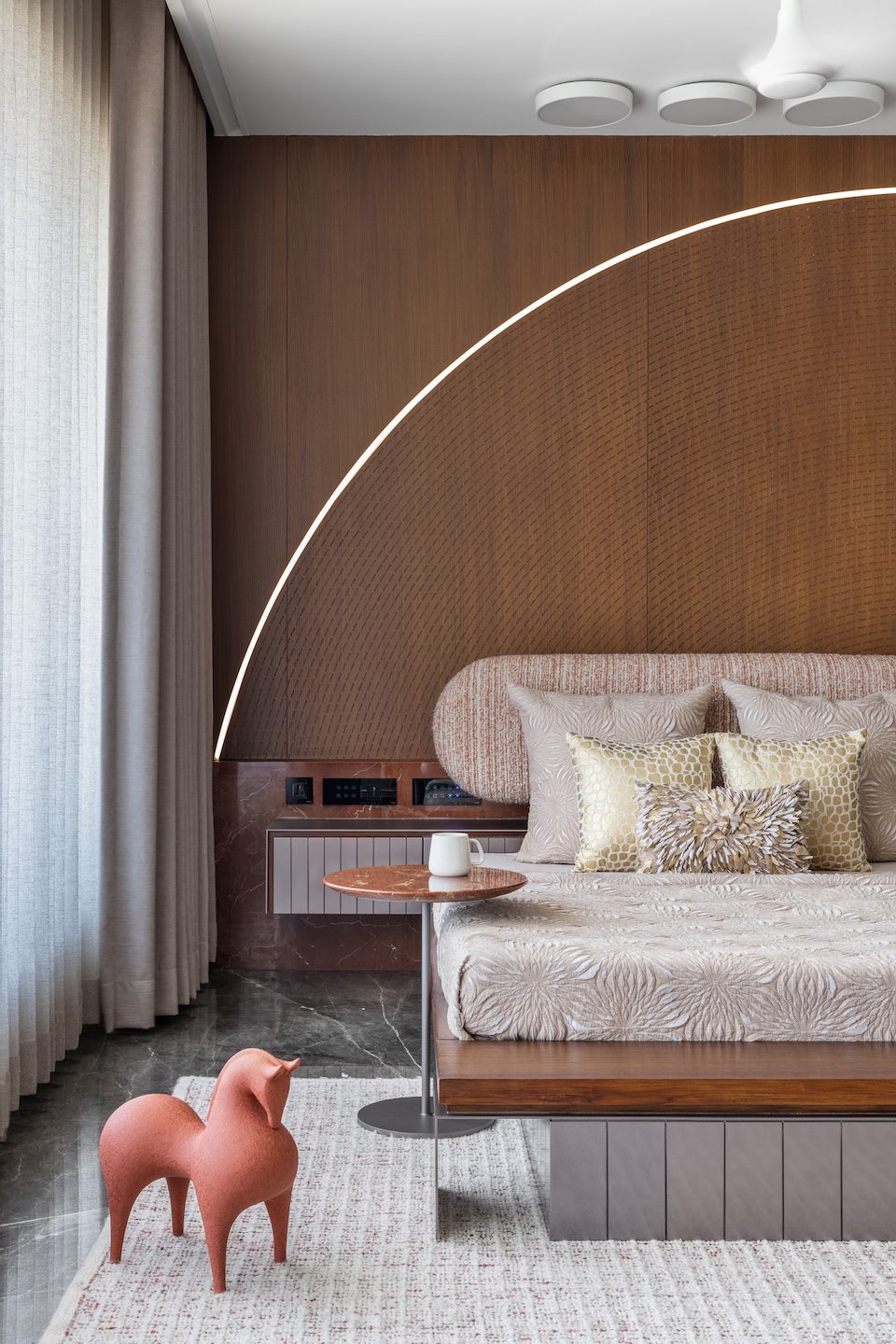
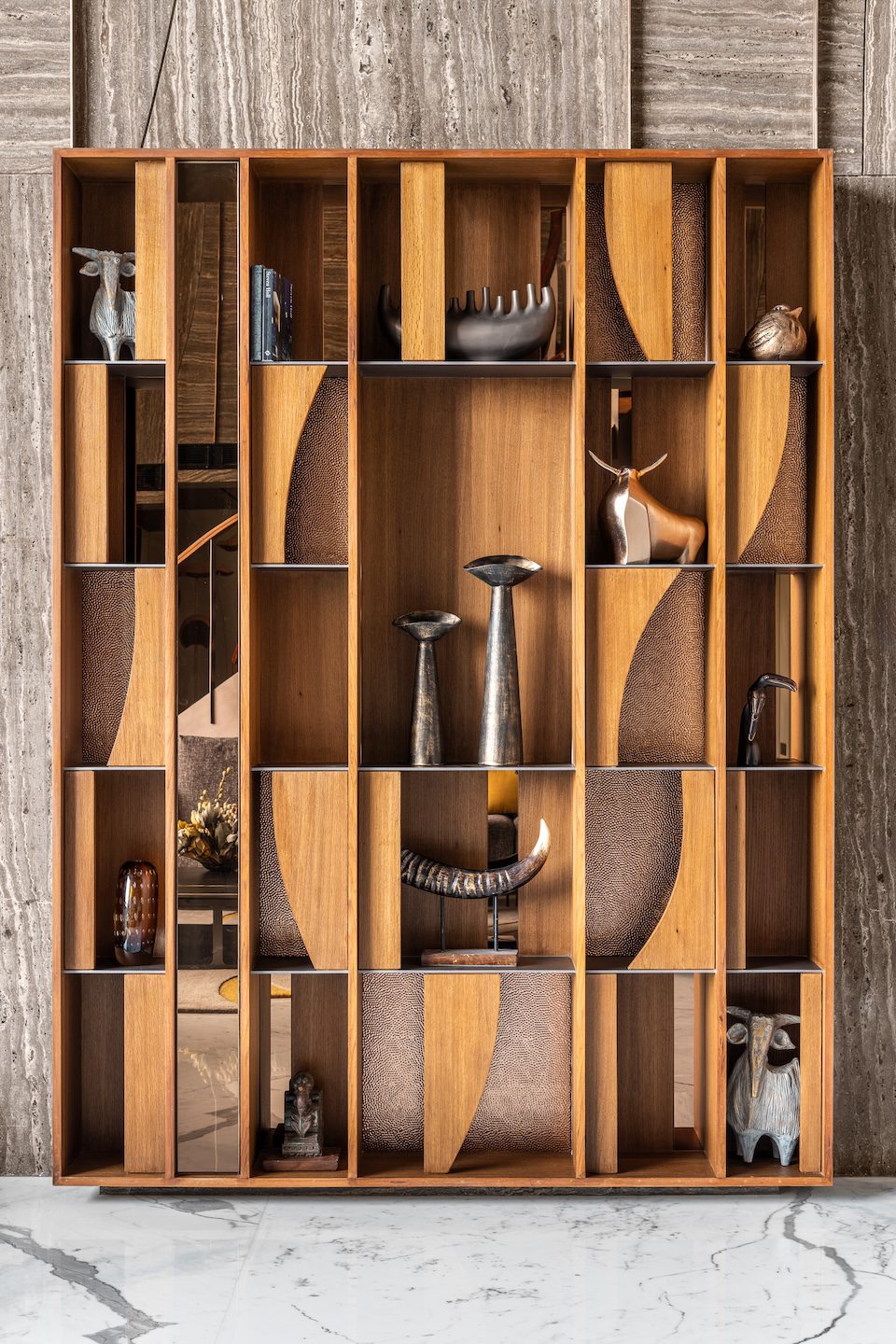
Much of the furniture throughout the residence is custom-designed, ensuring that proportions remain precise and that each element aligns with the home’s restrained aesthetic language.
The highlights
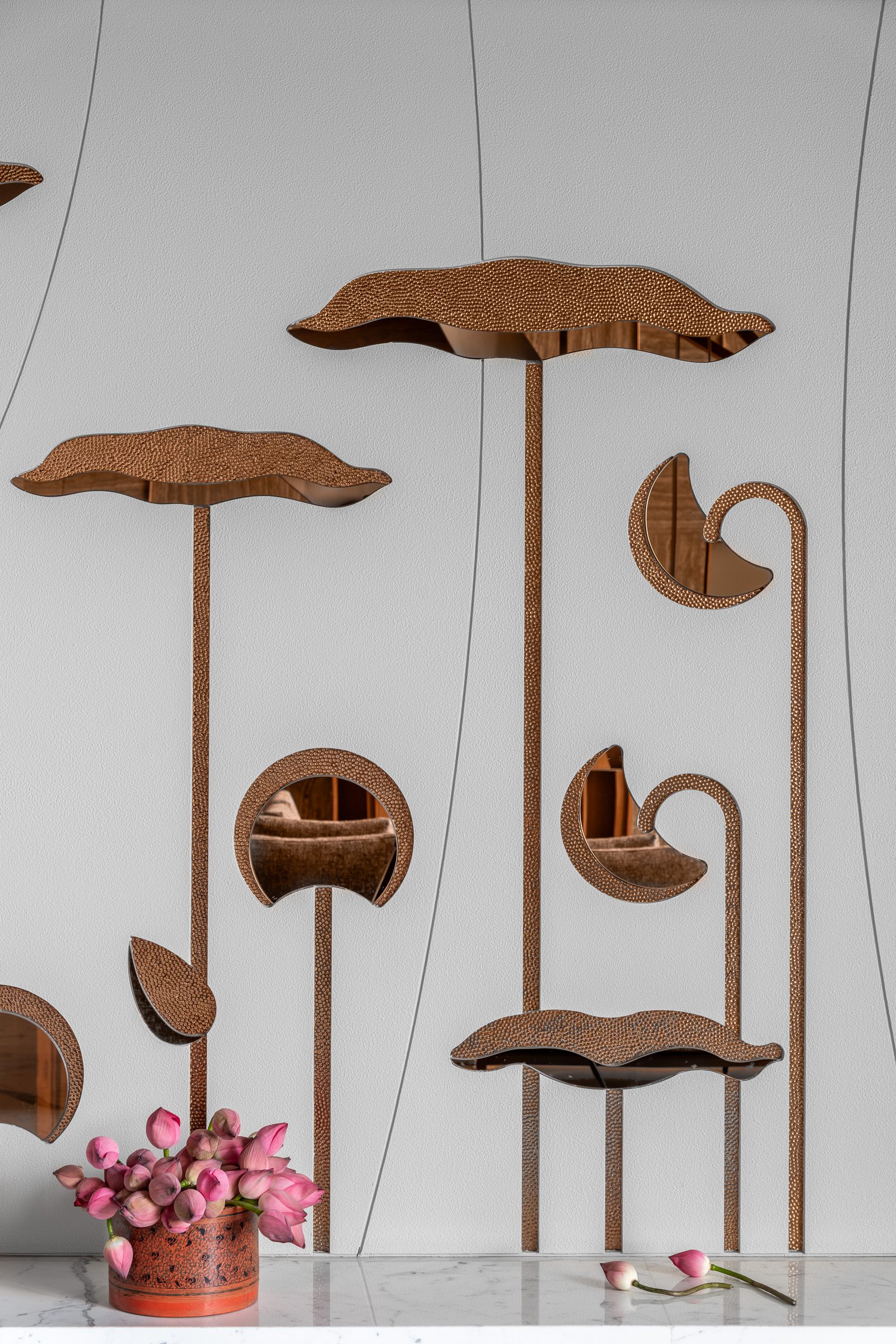
The circular staircase within the double-height living room stands out as the project’s most striking spatial feature—both a functional element and a sculptural centrepiece. Equally significant is the marble-clad wall that frames the living space, introducing a strong architectural gesture without overwhelming the minimalist composition. Across the bedrooms, subtle variations in colour, artworks and finishes allow each room to reflect the preferences of its occupants while remaining consistent with the home’s overarching design vocabulary.
The challenges
One of the key challenges lay in transforming the developer’s conventional layout into interiors that felt open and residential rather than compartmentalised. Achieving a balance between minimalism and luxury also required careful calibration. Materials needed to convey richness without overwhelming the spatial calm the designers were aiming to achieve.
Fact file
Project: Vora House
Location: Ahmedabad
Area: 5,500 sq ft
Design firm: Ahmedabad Matrix
Principal designers: Chintan Tamboli and Nehal Tamboli
Styling: Sania Tadha
Add a Comment