
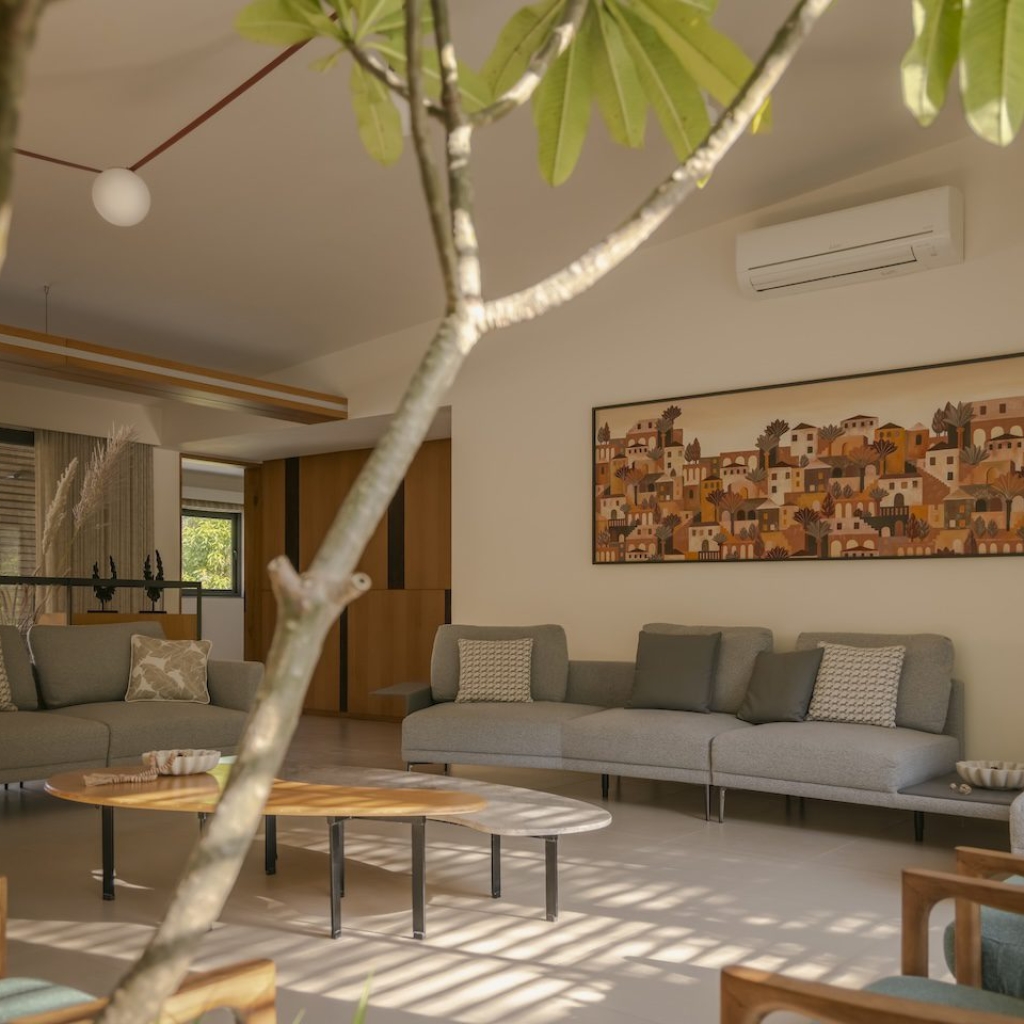
Designed by Salt Studio, this expansive family home on the outskirts of Ahmedabad is conceived as a calm, horizontally grounded retreat where nature, memory, and slow living shape everyday life.
Photographs: Karan Gajjar; courtesy Salt Studio
Curated by: Rupali Sebastian
The project
The Discrete House is conceived as a light-filled, multi-generational retreat rooted in comfort, legacy, and sustainable living. The architecture prioritises calm, openness, and emotional connection, creating a home where different generations can gather while maintaining individual privacy.
The site
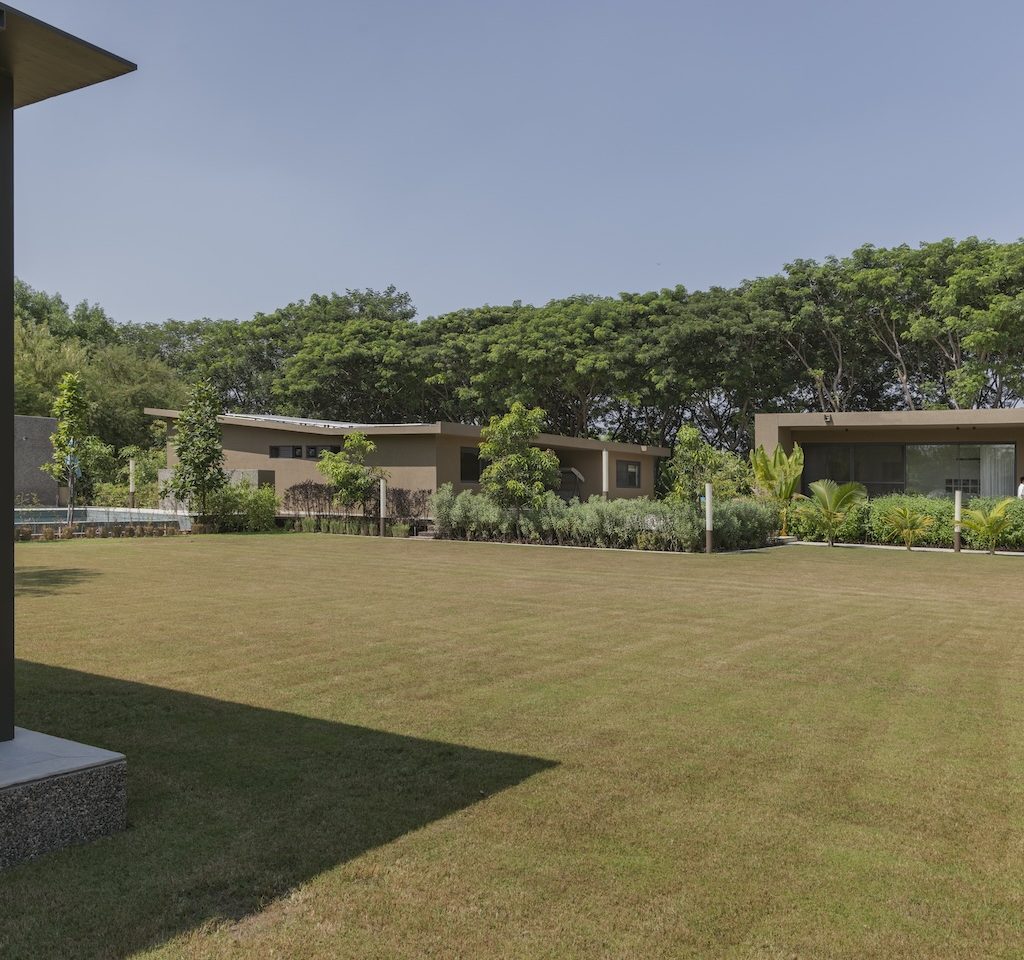
The project sits on a large plot formed by the combination of three parcels of land in the peri-urban outskirts of Ahmedabad near Kadi village. The surrounding area is part of a luxury weekend plotting development. Originally a vacant site with a lawn and peripheral trees, the plot allowed the architecture to remain horizontally grounded in accordance with local development regulations, reinforcing the idea of a retreat rather than a dominant built object. Access occurs via a quiet internal road, ensuring a calm residential environment.
The brief
The clients envisioned a multi-generational home capable of supporting collective family life while allowing private spaces for different age groups. The brief emphasised clear zoning between social, private, and recreational areas so that activities could occur simultaneously without overlap. Comfort and ease of movement were particularly important for the retired parents.
Aesthetically, the clients sought a timeless and understated design language centred on natural materials, muted tones, and tactile finishes rather than overt luxury. Personalisation through artwork, handcrafted details, and curated furniture was also integral to the brief.

The design intent
The architecture was conceived as quiet and unobtrusive, allowing nature, daylight, and everyday life to take precedence. The design philosophy emphasises retreat rather than display, with built forms acting as calm backdrops to living.
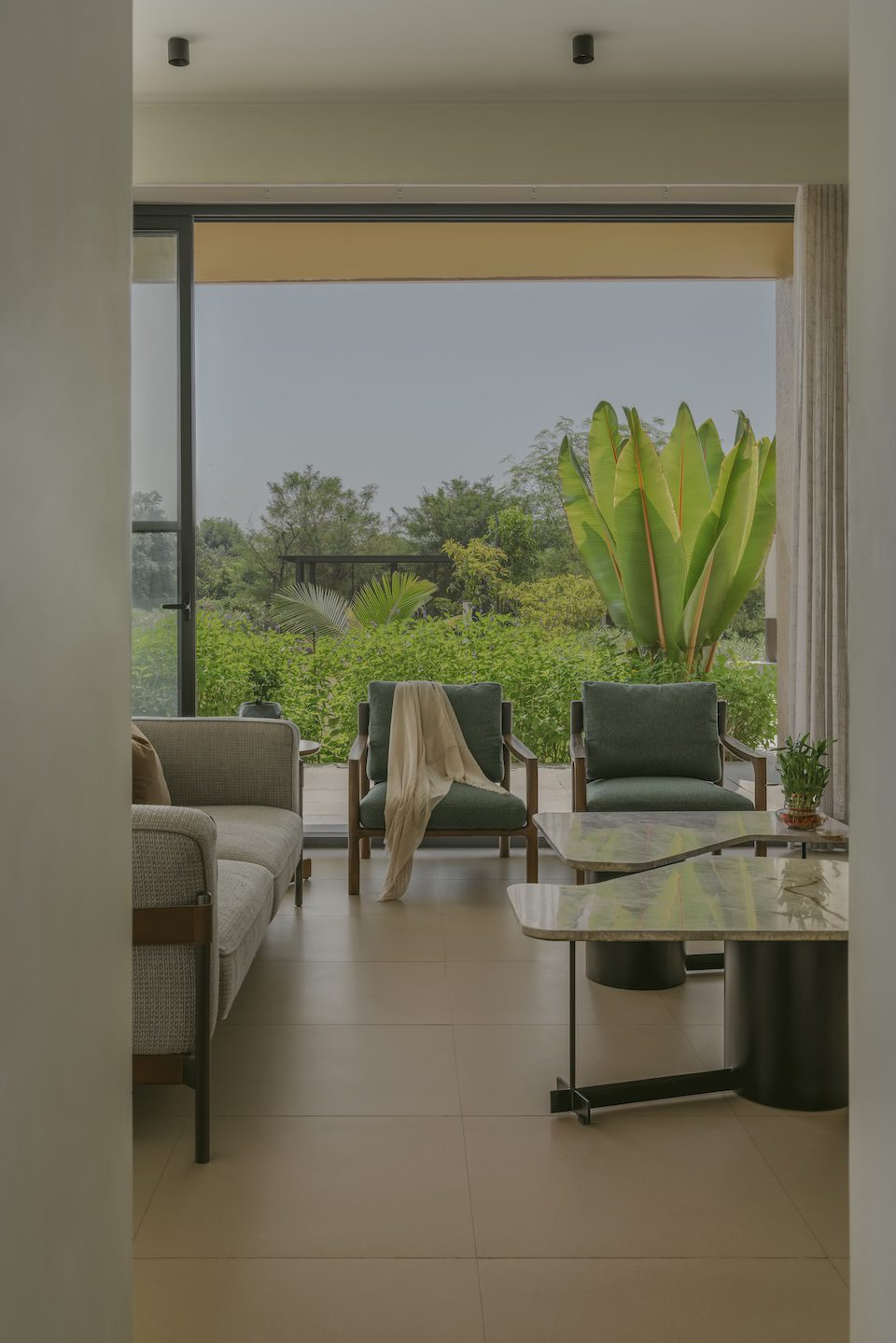
Spatial planning focuses on blurring the boundary between indoors and outdoors through visual continuity, natural ventilation, and daylight-driven spaces. Material choices and detailing remain restrained, supporting a sense of slow living and emotional comfort across generations.
The civil intervention
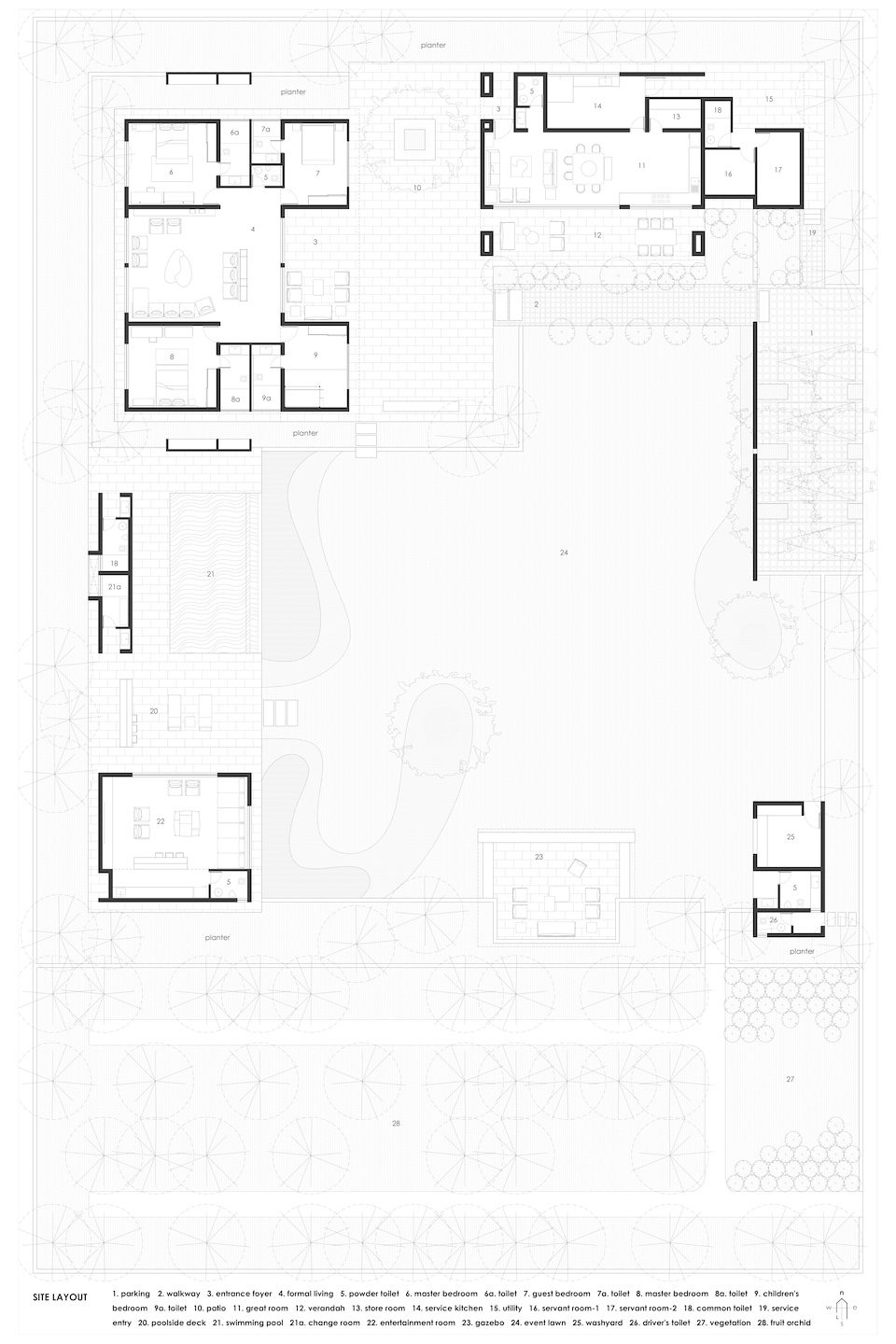
The project involved structuring the site into three interconnected built volumes. The buildings were positioned to respond to site orientation, ensuring optimal daylight and cross ventilation. Large structural openings and shaded transitional spaces were introduced to strengthen the relationship between architecture and climate while maintaining privacy and flexibility across the different units.
The spatial flow
The architecture begins with built forms set back from the road, creating a gradual transition from the public edge into a more private, inward-looking environment.
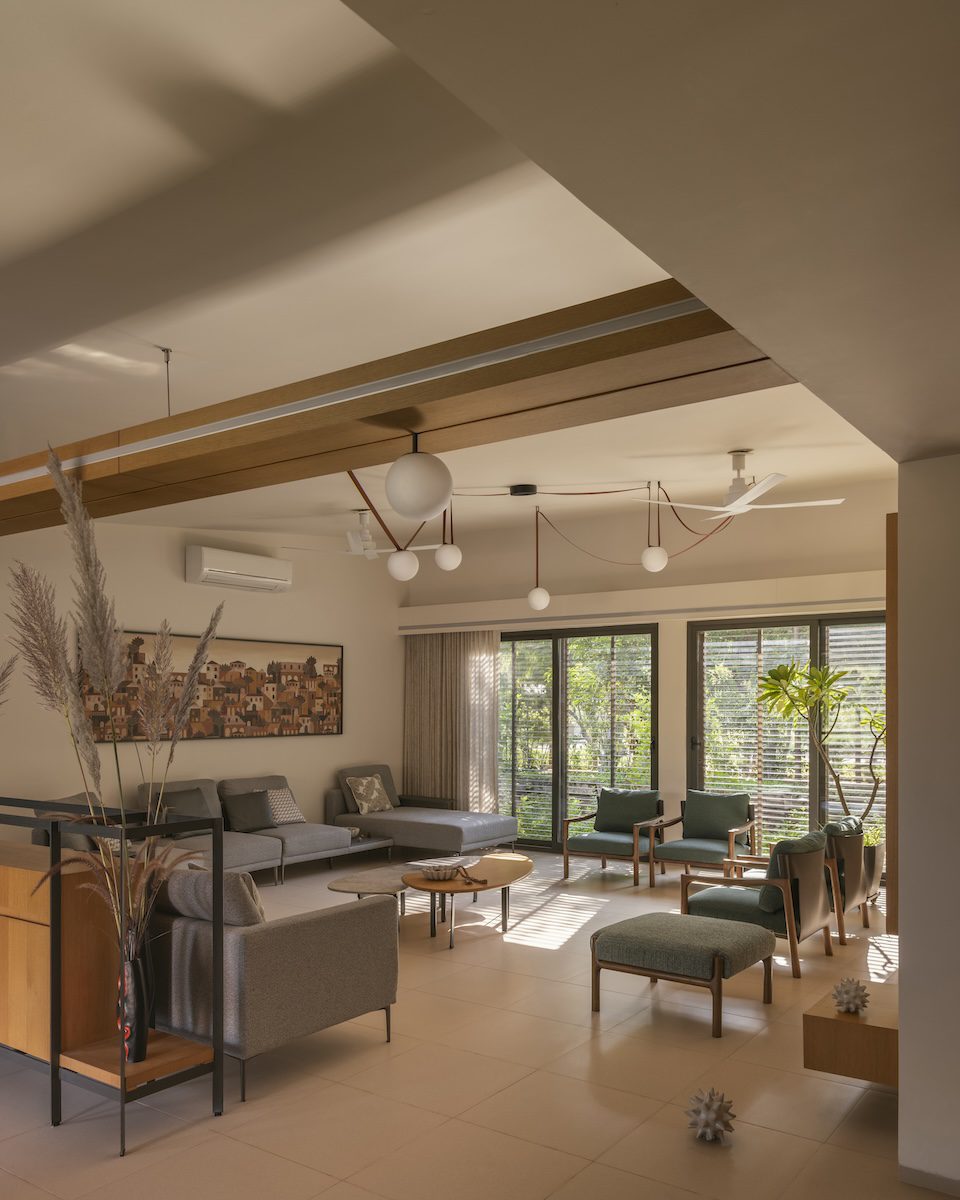
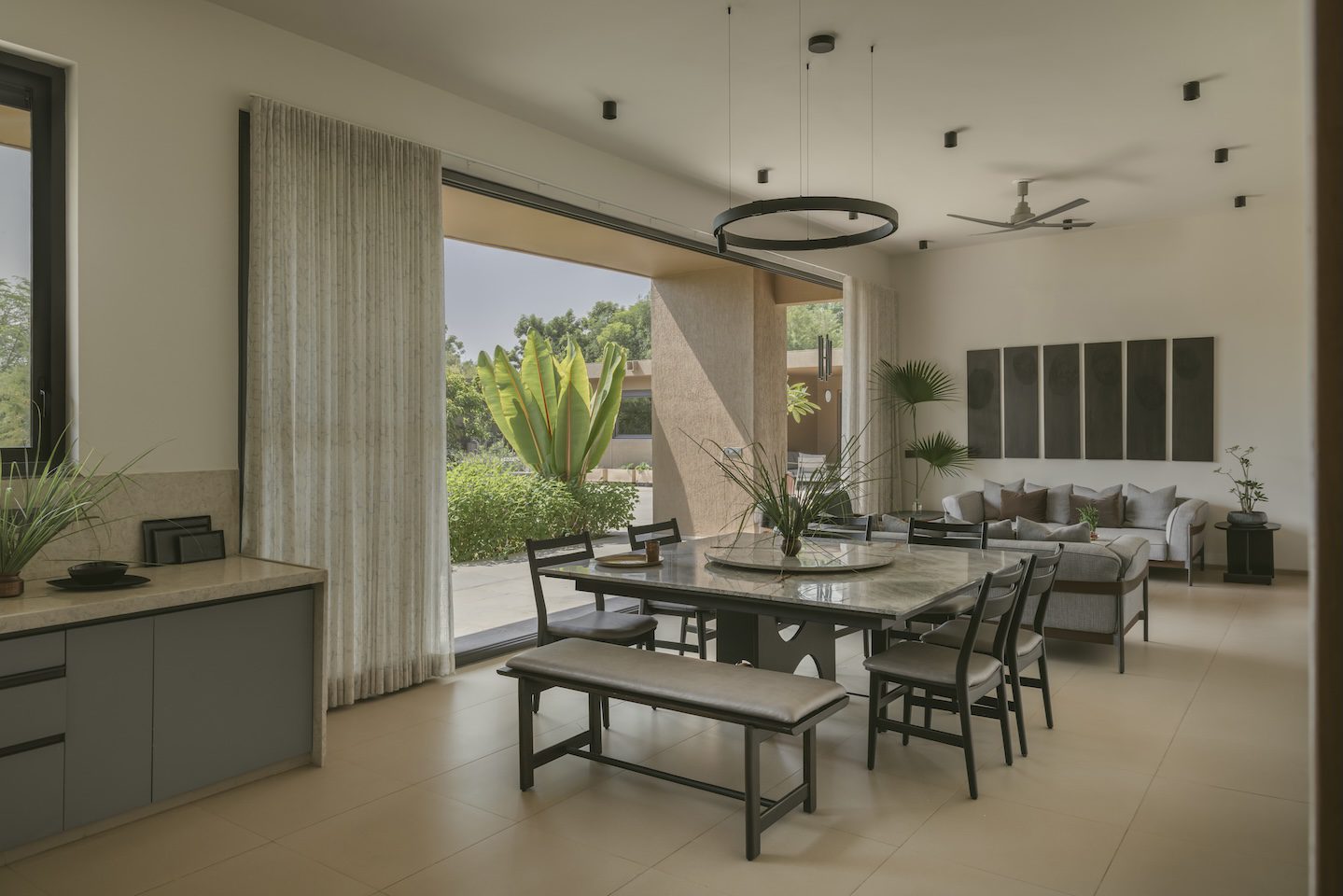
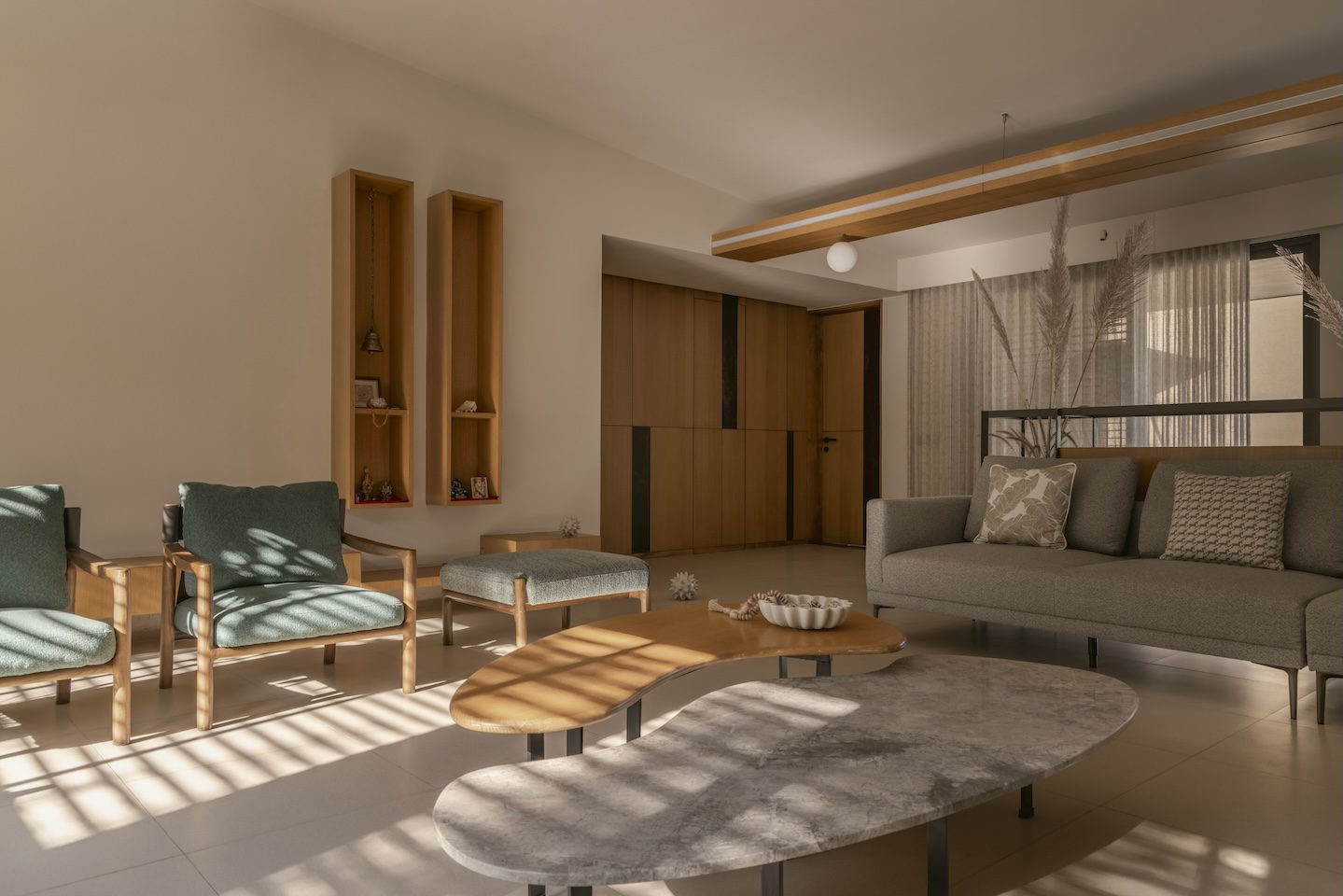
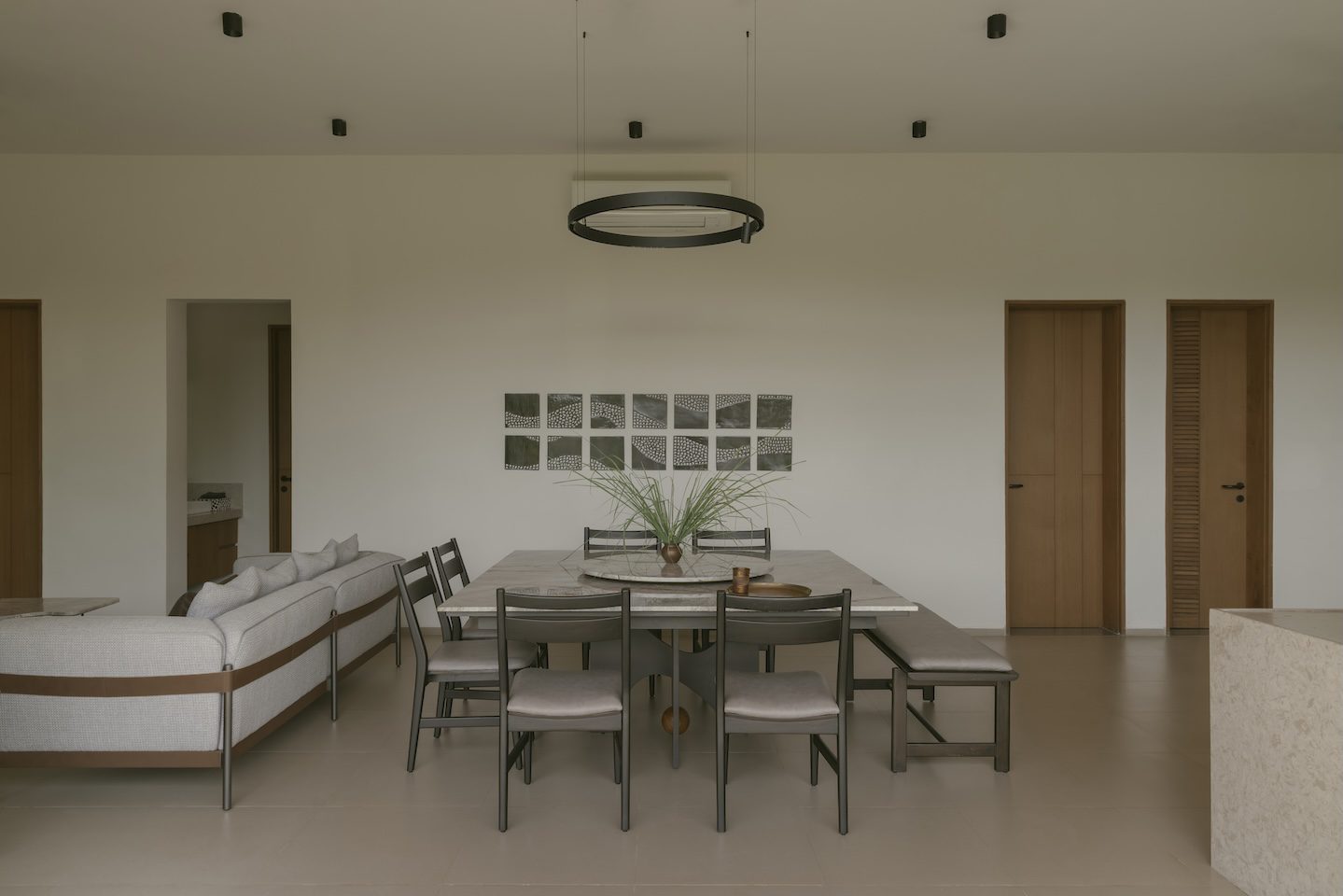
At the centre lies the great room, which integrates the living, dining, and kitchen areas while opening directly to the surrounding landscape. From this nucleus, circulation branches toward the private bedroom wing and an informal family lounge intended for quieter gatherings.
A separate yet connected path leads to the recreational outhouse, which opens toward outdoor leisure spaces including the pool and gazebo. This configuration enables multiple activities to occur simultaneously while maintaining clear spatial hierarchy.
The material palette
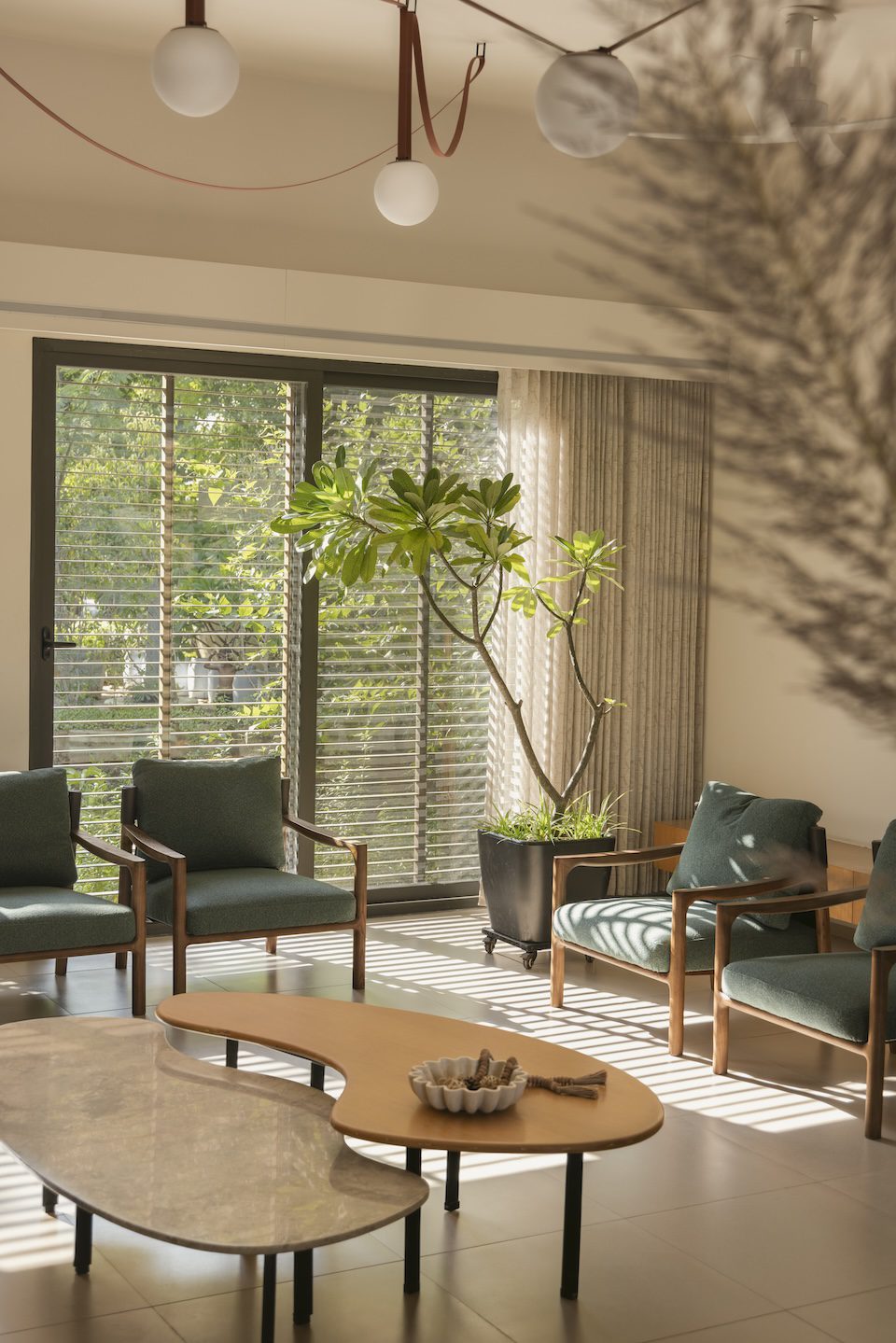
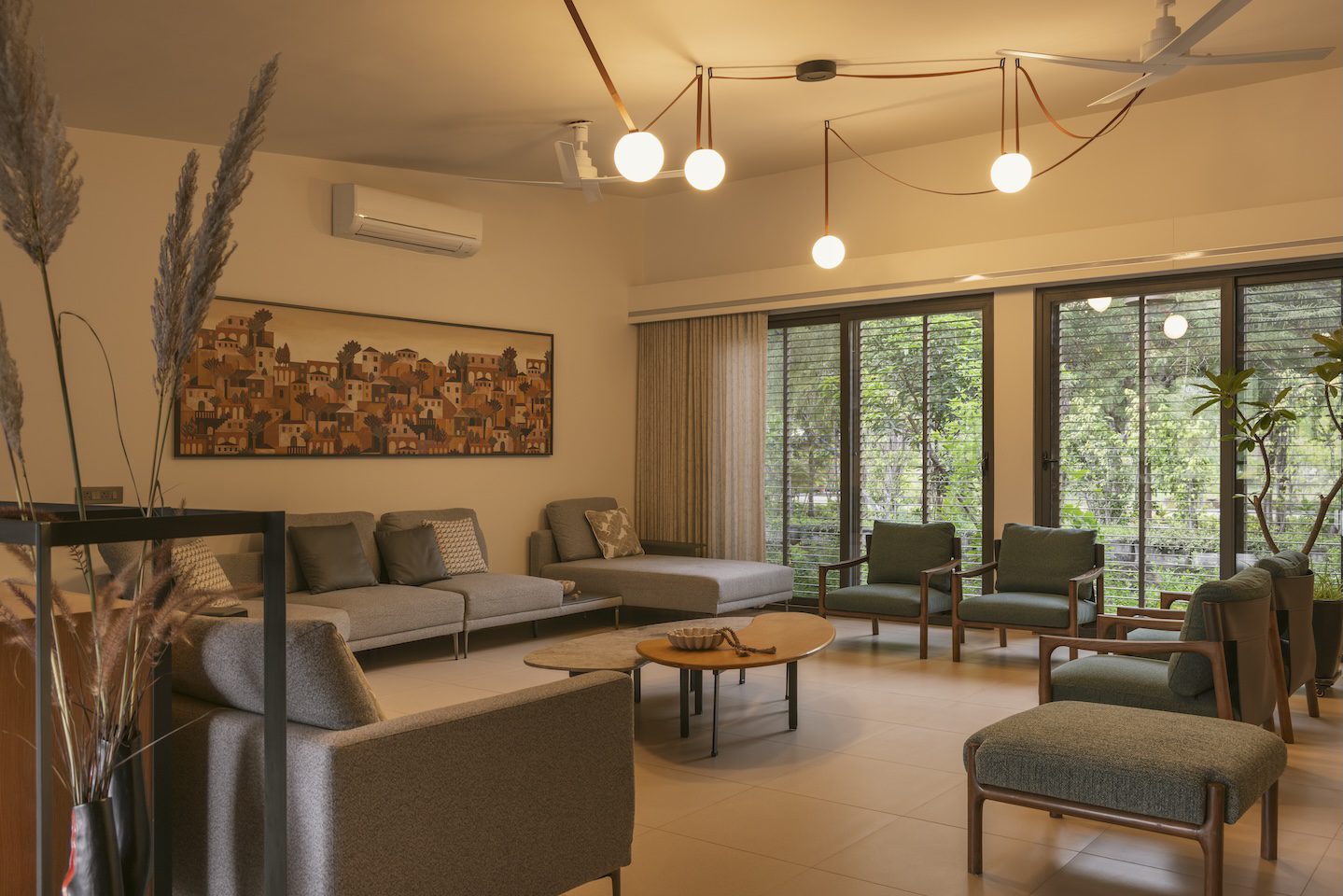
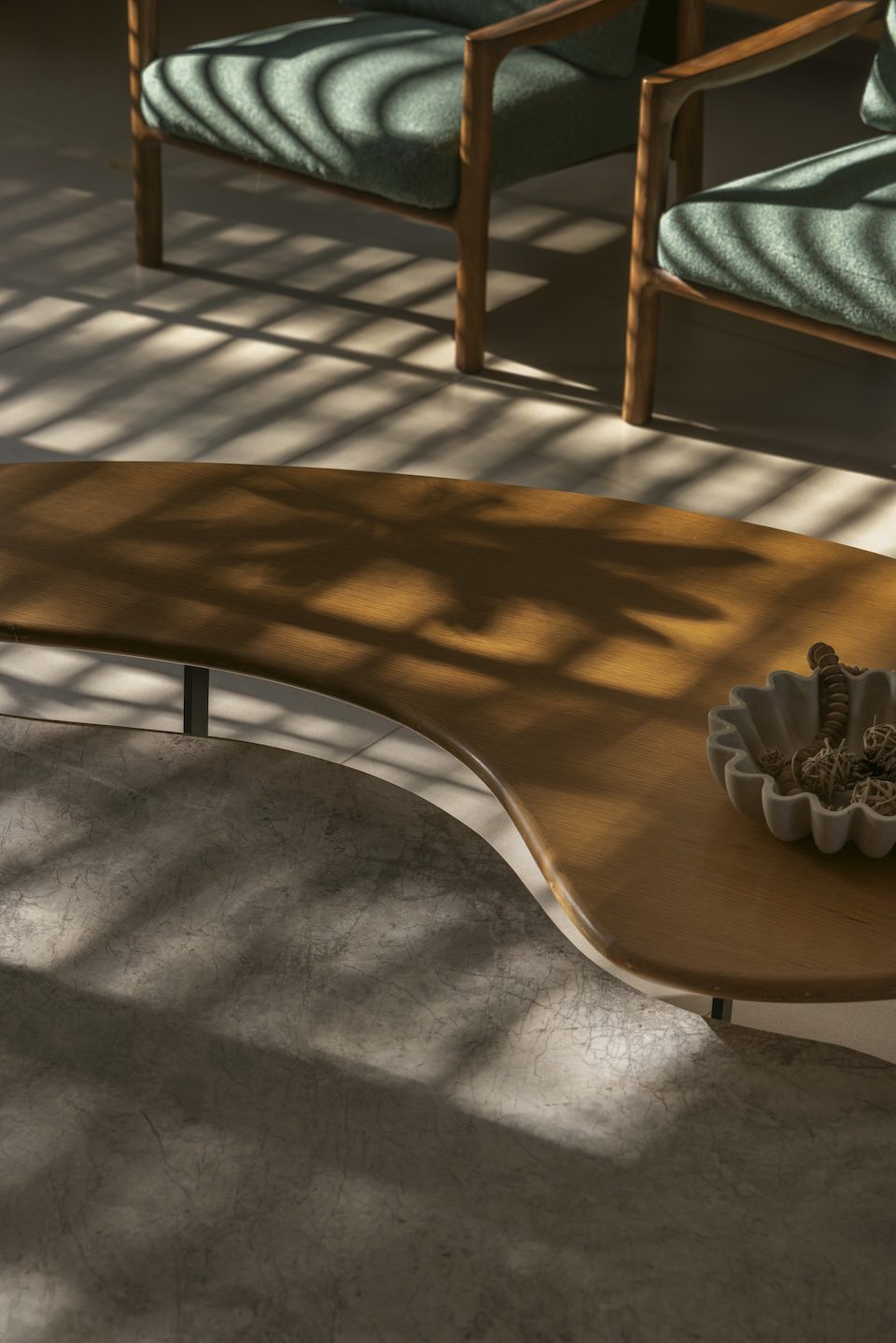
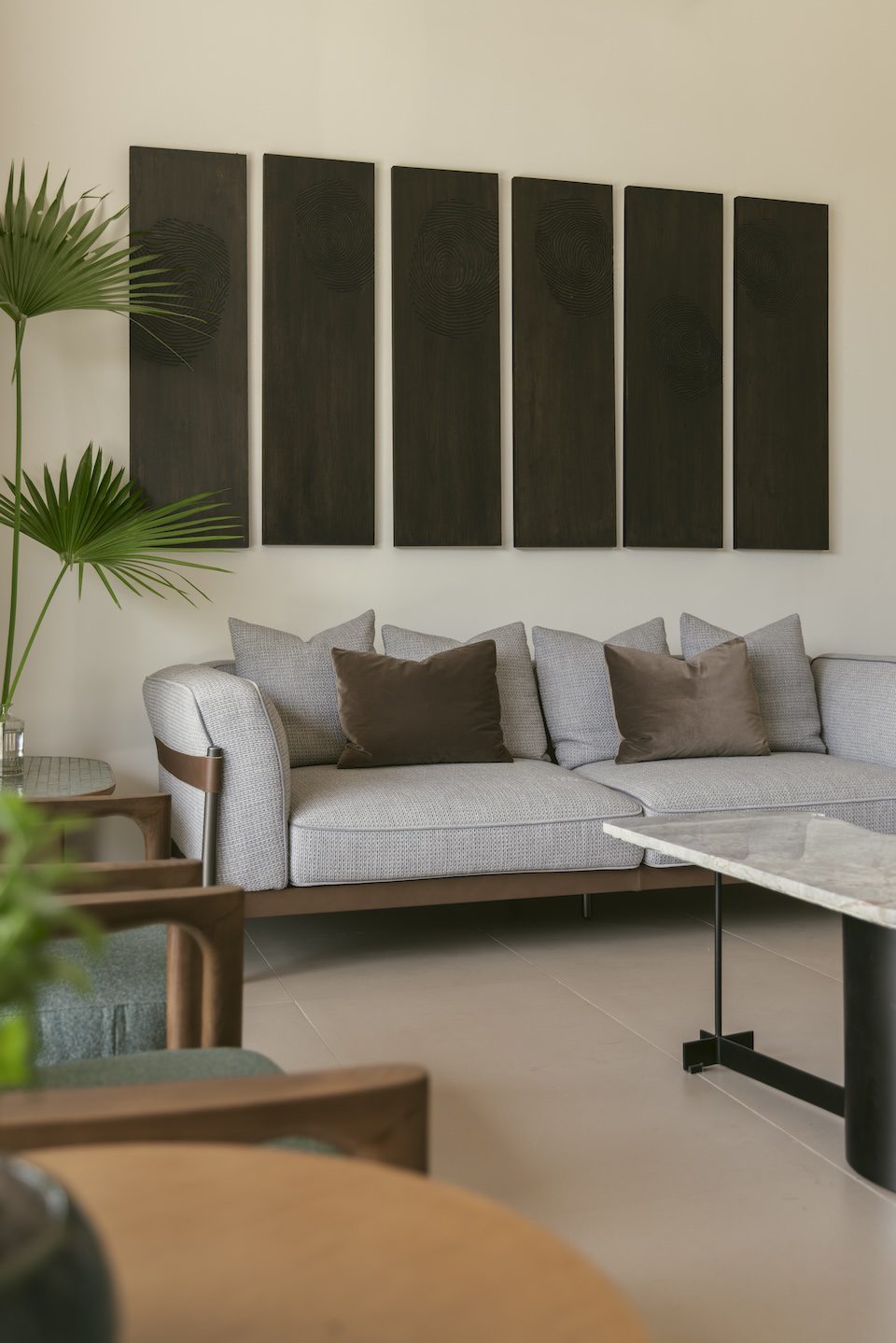
Large openings frame evolving views of the surrounding landscape, in the living-dining-kitchen unit, allowing daylight to function as an active design element. Muted materials, warm wood tones, and clean-lined furniture establish a timeless interior environment. A customised fingerprint artwork etched into seasoned wood records the unique imprint of each family member, transforming the space into a living archive of shared memory. Handmade ceramic tile artwork reflects the fluidity of the space and reinforces its communal character.
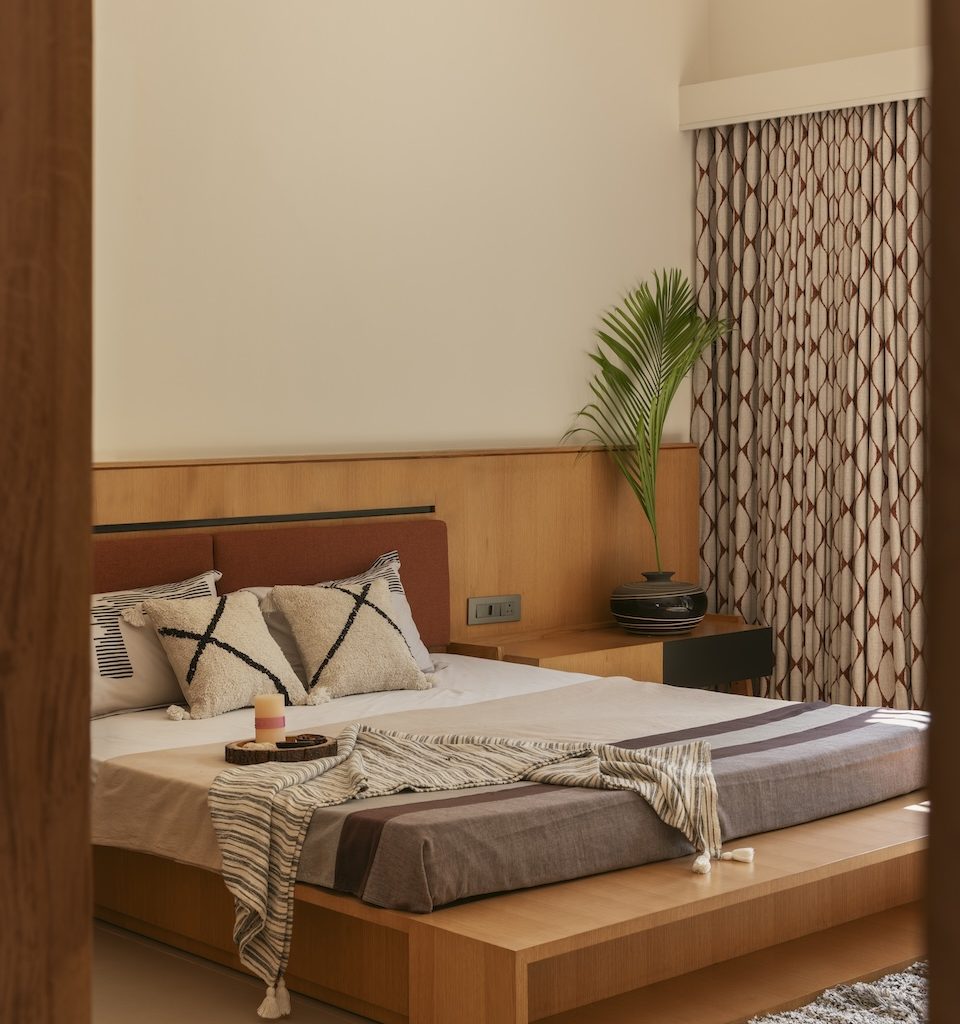
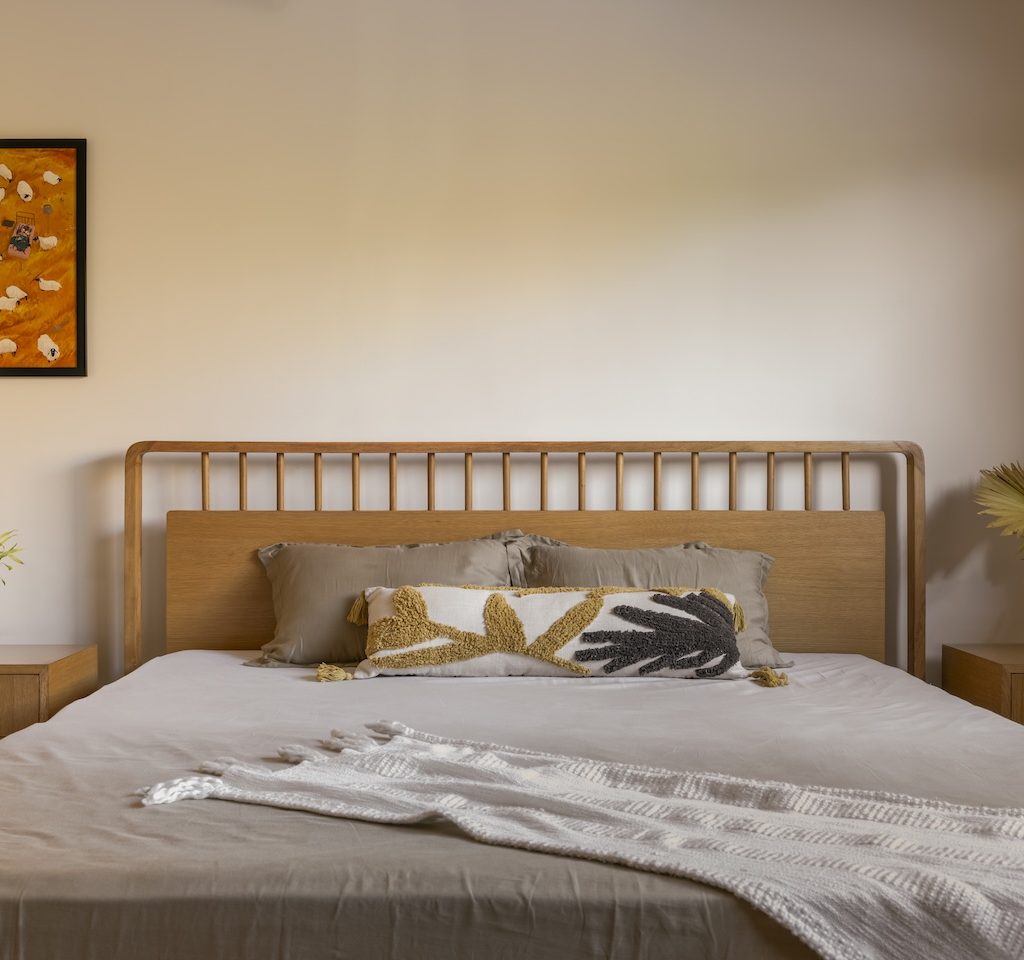
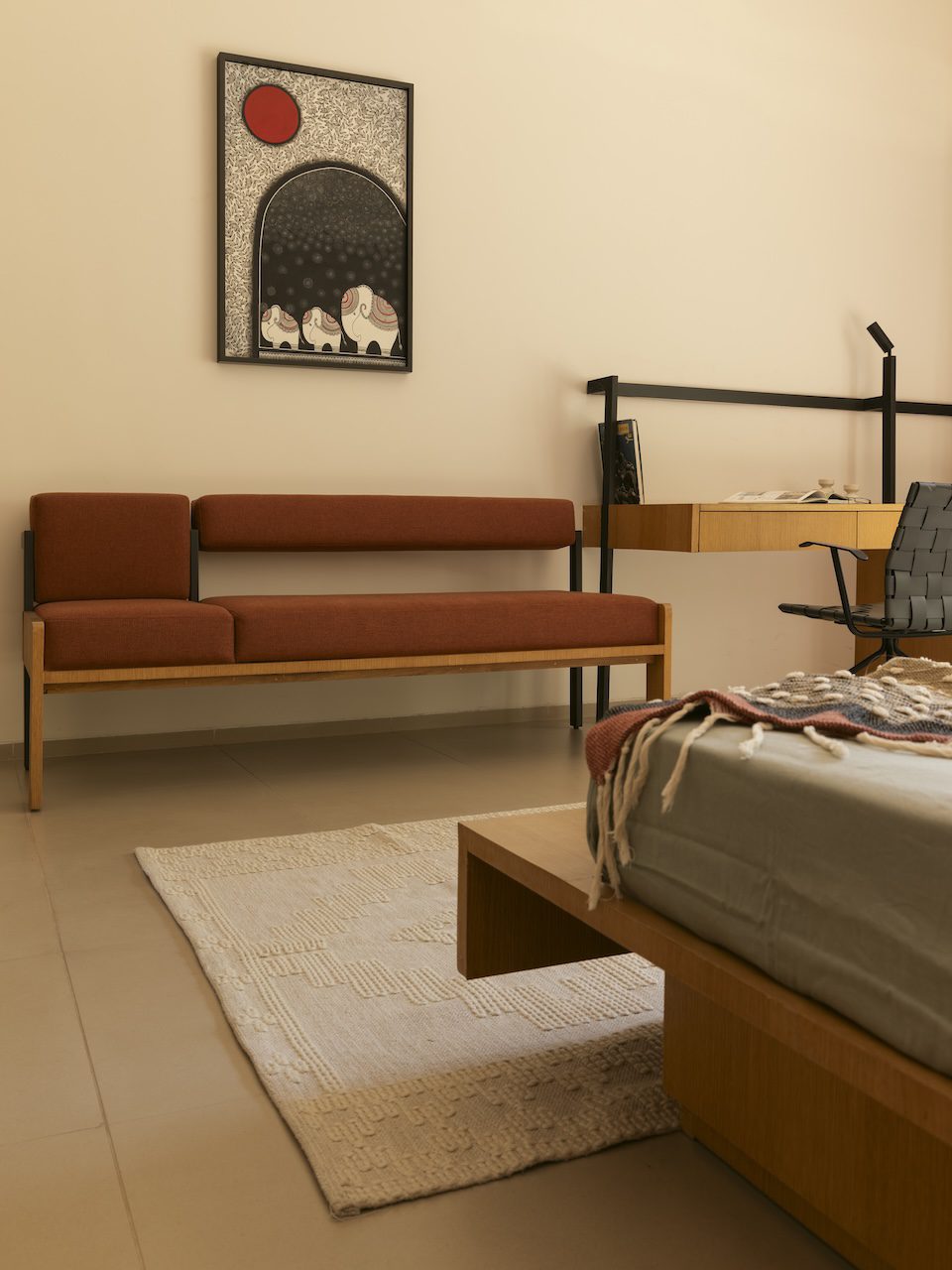
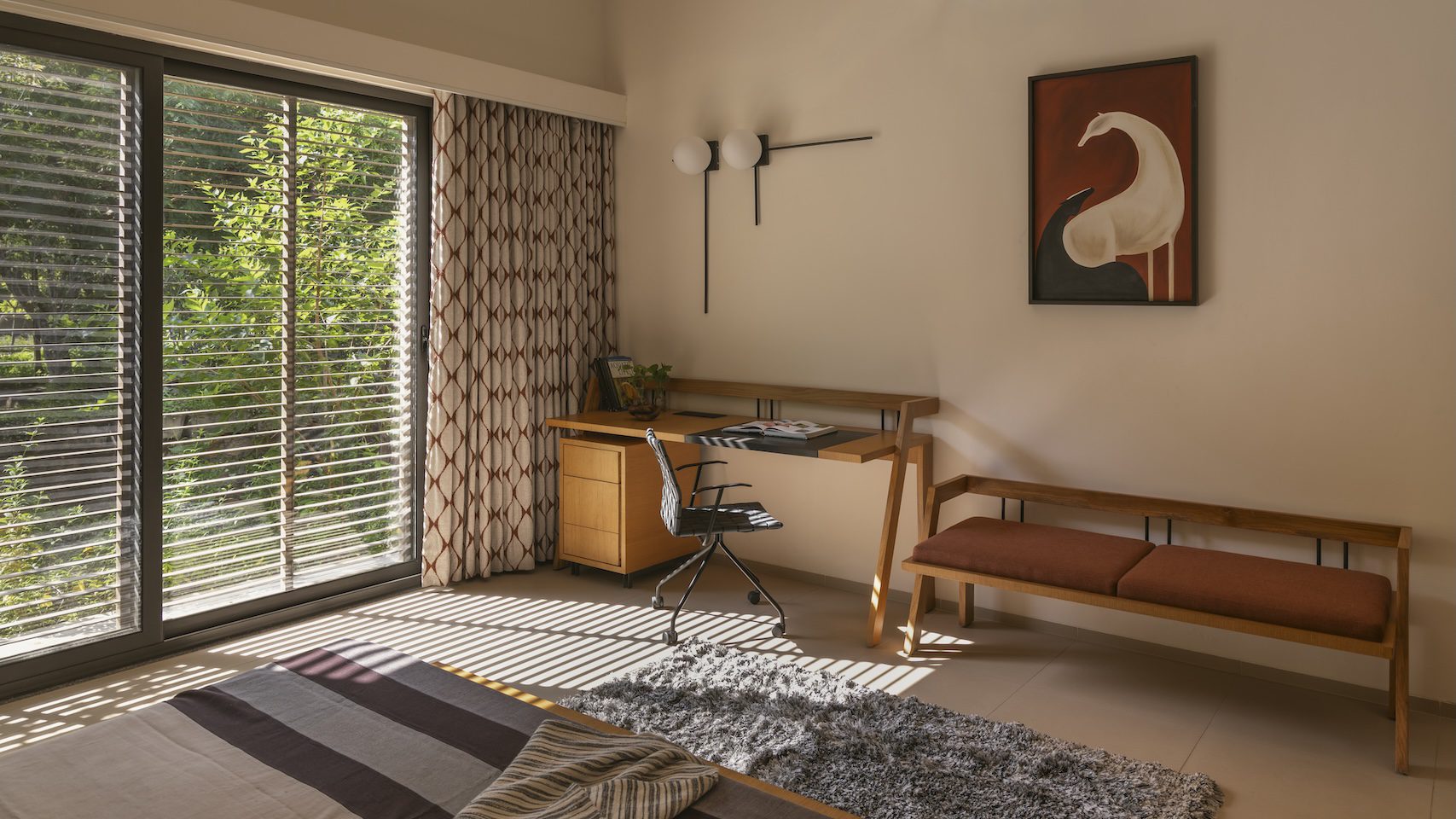
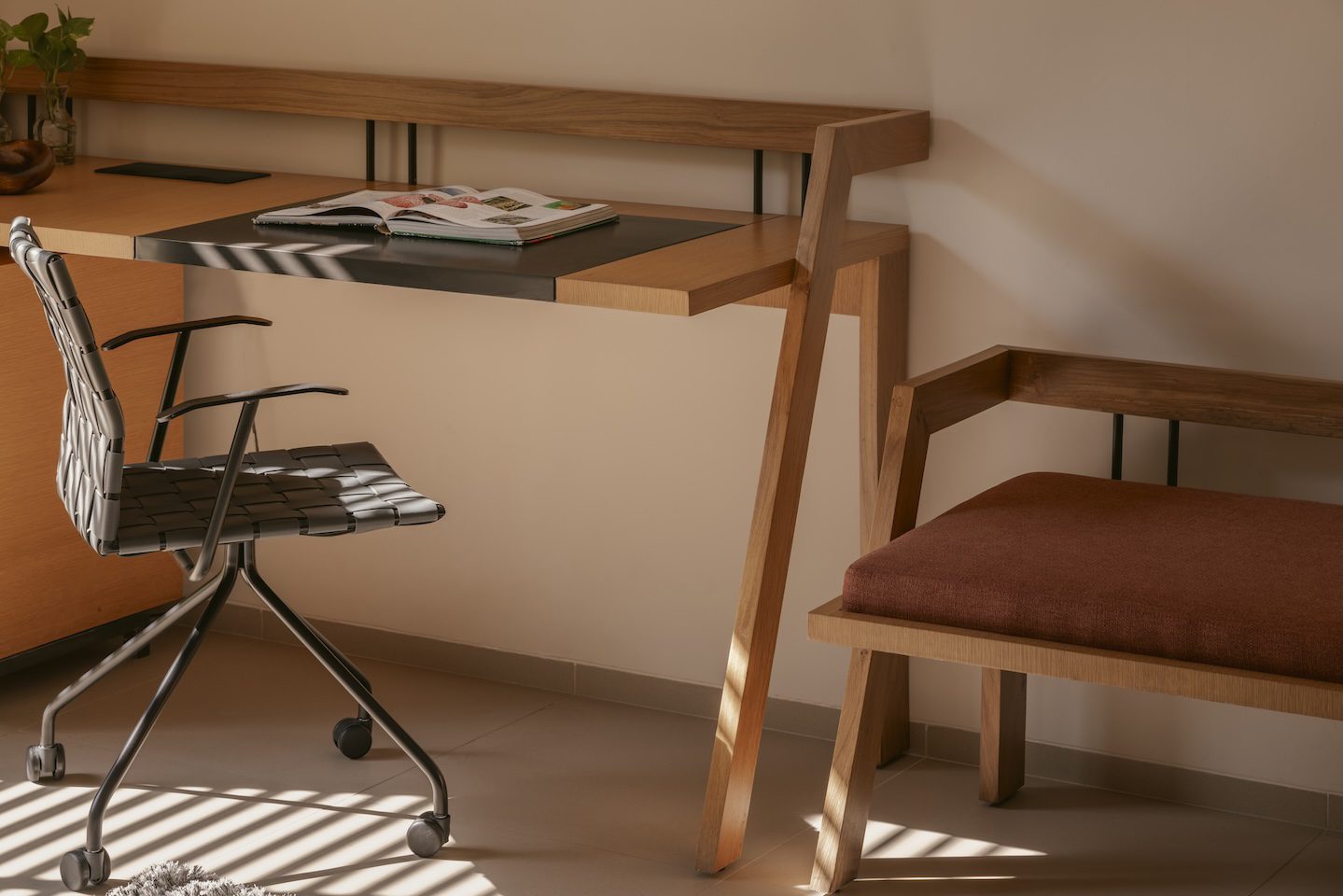
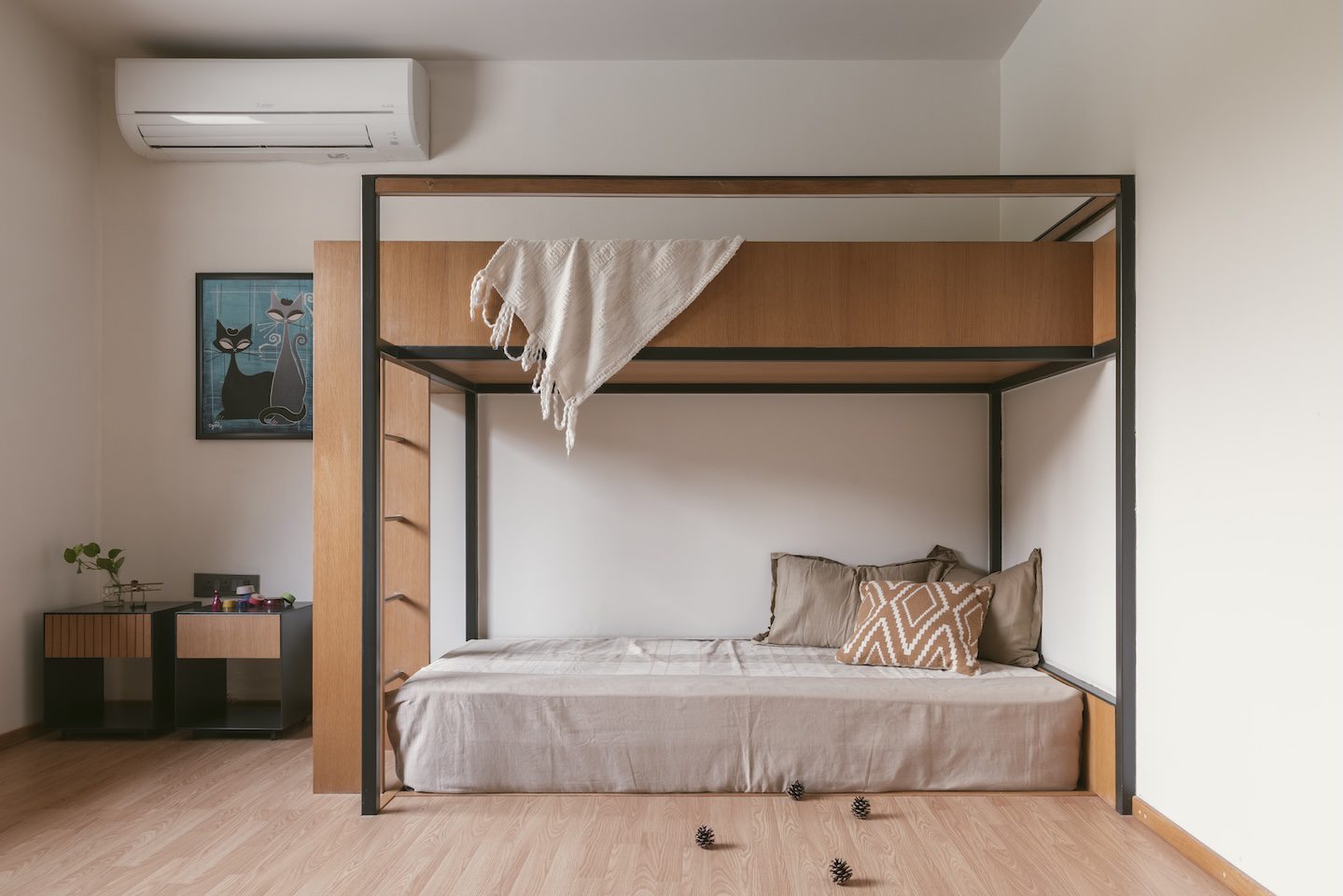
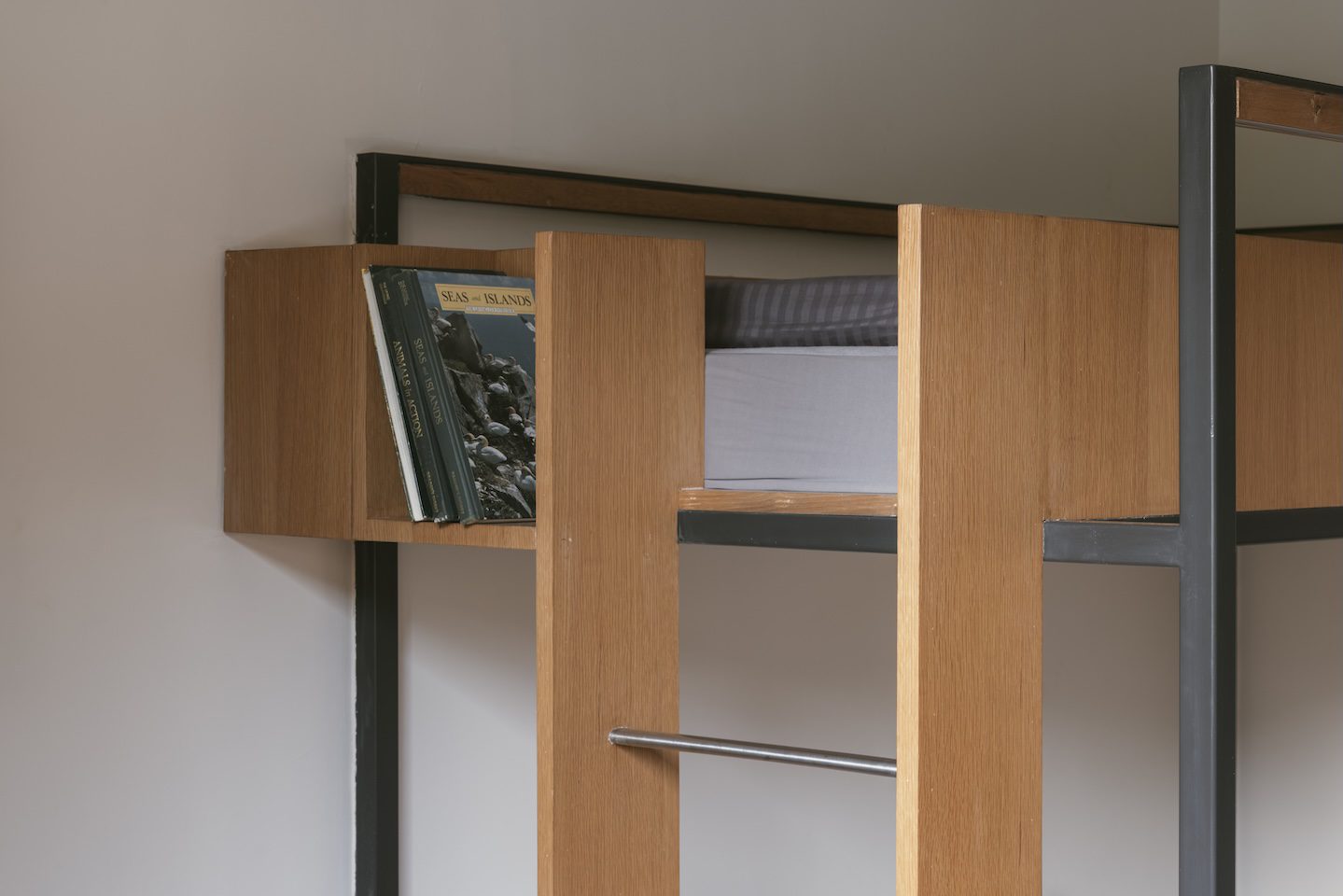
The second unit forms the private wing containing four bedrooms and an informal family lounge. Each bedroom carries a distinct identity through curated artwork and colour palettes reflecting the personality of its occupant. Despite these variations, filtered light, earthy textures, and restrained detailing unify the spaces into a cohesive environment of calm and comfort.
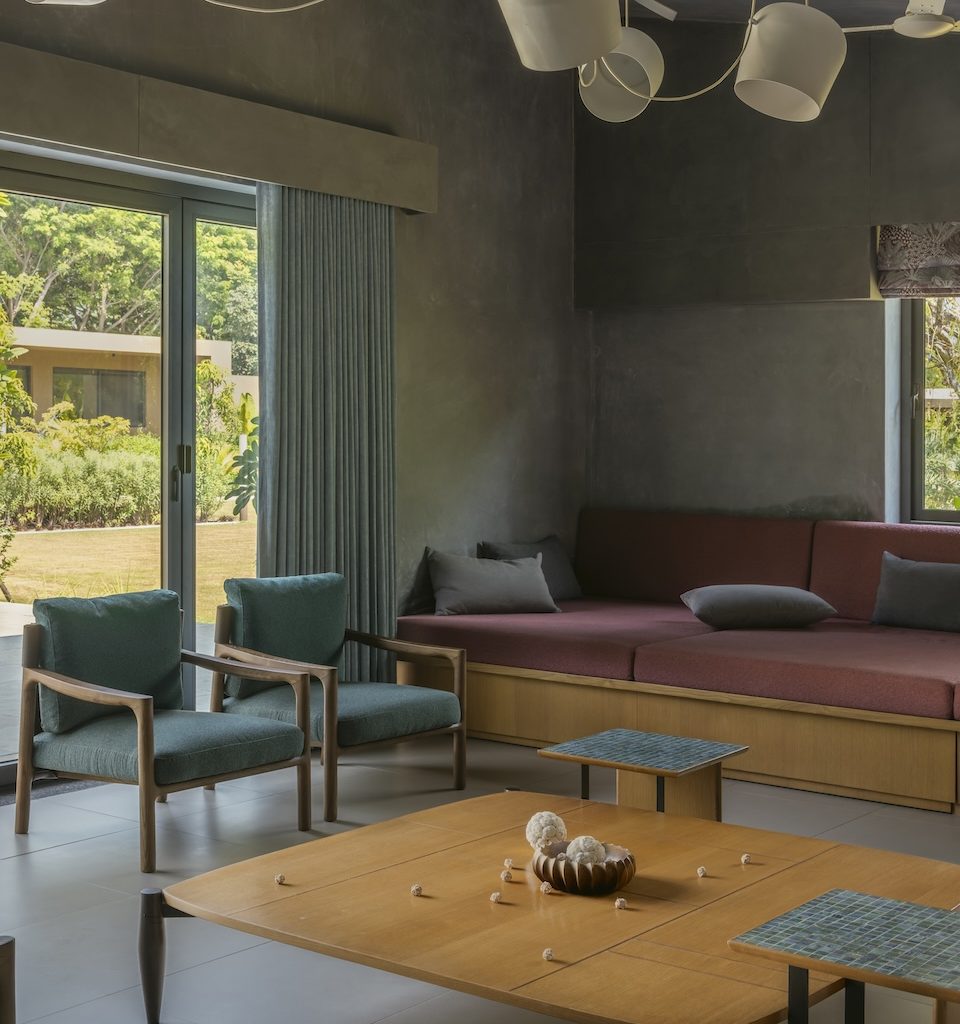
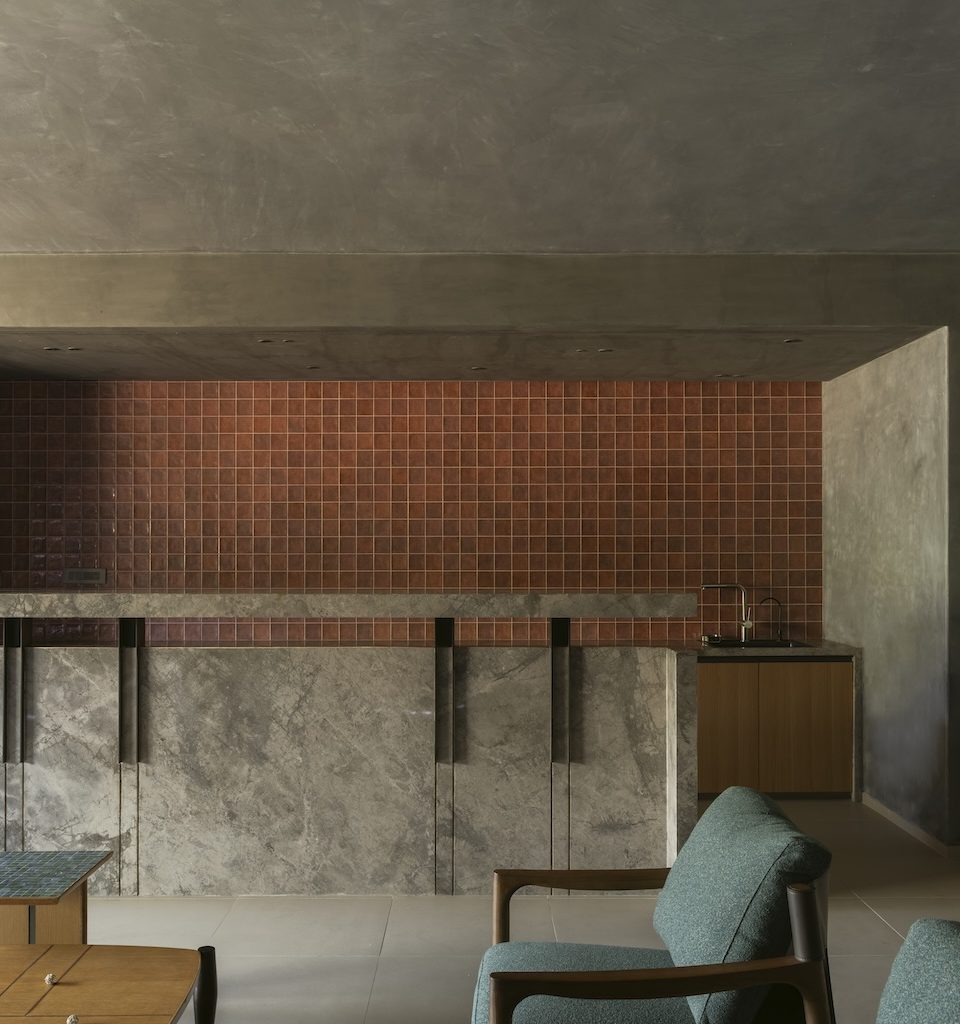
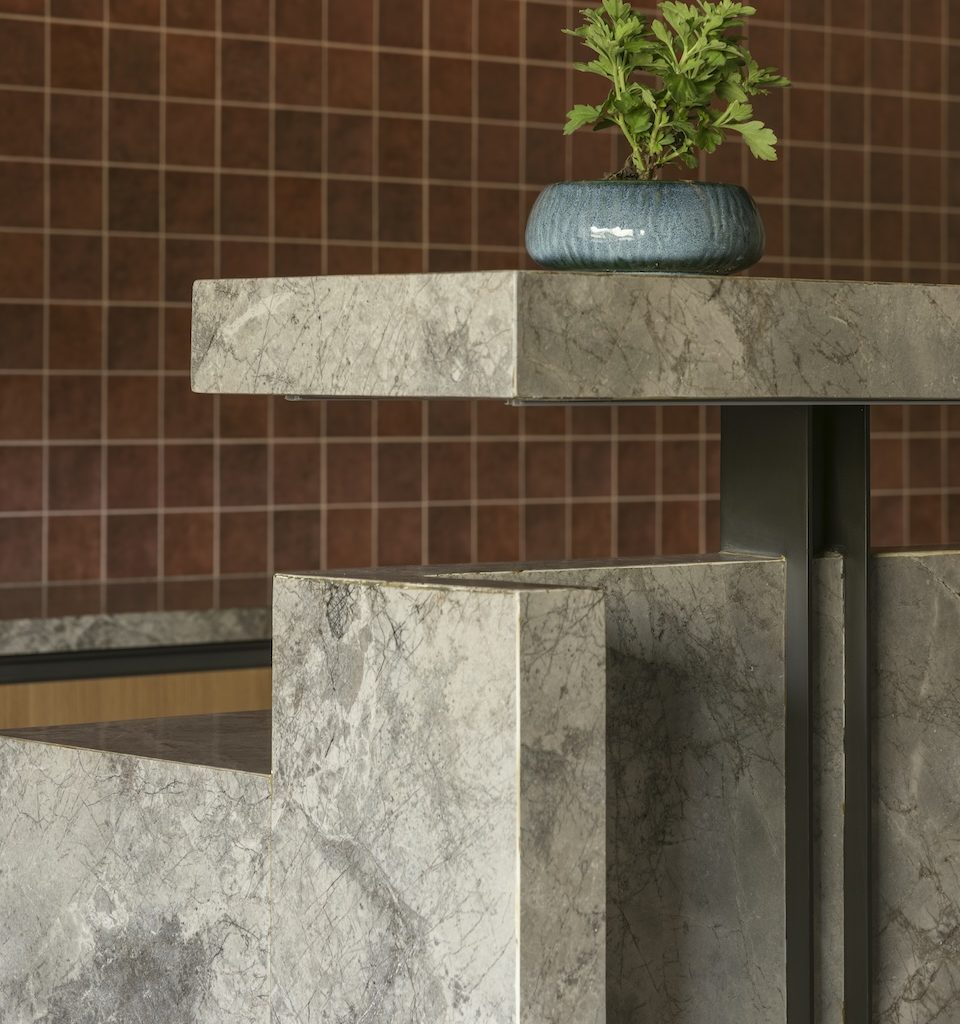
The recreational outhouse introduces a more relaxed atmosphere. A floating bar counter and lounge-style seating support film screenings and informal gatherings. Handmade terracotta tiles, hand-painted ceramic artworks, and traditional lime plaster create a richer tactile palette while helping regulate indoor temperatures in Gujarat’s climate. A large central table anchors the room for board games and group activities.

The highlights
The home integrates personalised artworks that reflect the identity of each family member. Fingerprint engravings in the great room symbolise shared memory, while paintings across the bedrooms reference the personalities and stories of the occupants. The separation of the home into three interconnected units allows collective living while preserving individual privacy.
The challenges
Extreme climatic conditions required the design of customised ventilated windows to maintain air circulation even when the home remains unused for extended periods. Lime plaster was incorporated to improve thermal comfort and reduce indoor temperatures.
The takeaway
The Discrete House demonstrates how architecture can quietly support family life across generations by prioritising climate sensitivity, personal memory, and the enduring relationship between landscape and living.
Fact file
Project: The Discrete House
Location: Ahmedabad, Gujarat, India
Area: 4,266 sq yard
Design firm: Salt Studio
Principals: Id. Kripa Ramani and Ar. Anish Ramani


Add a Comment