
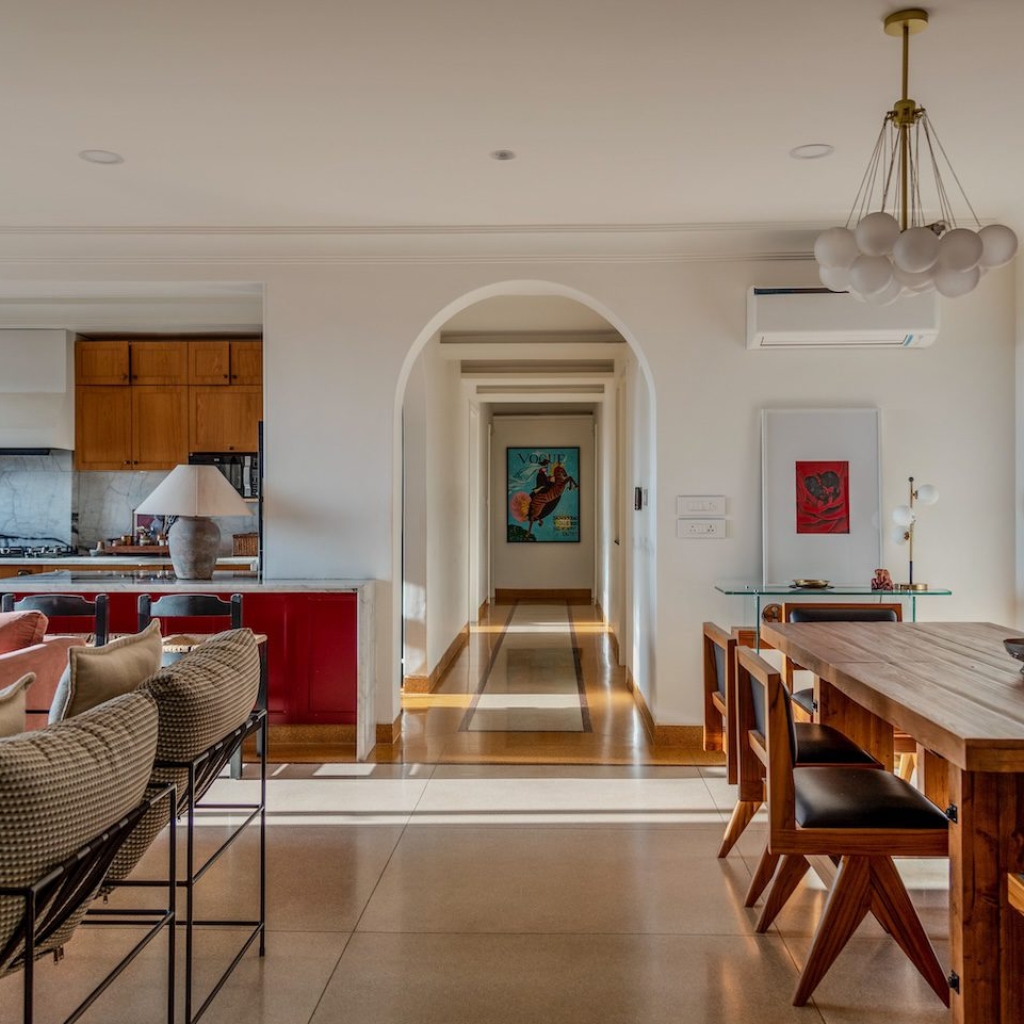
Figure Ground Inc designs a tranquil holiday home in Jaipur where arches, soft light, and a restrained material palette create a setting for slower, more connected family living.
Curated by: Deepa Nair
Photographs: Aastha Chaturvedi; courtesy Figure Ground Inc
The brief
This 2,000 sq ft sanctuary (read apartment) is a holiday home in Jaipur conceived by design studio, Figure Ground Inc, for a young couple and their daughter. The clients envisioned a calm, timeless holiday home that would stand in contrast to their fast-paced life in Hong Kong. Conceived as a place of pause and restoration, the house was meant to offer a slower pace of living—where the family could retreat, reconnect, and spend time together away from the rush of the city.
Functionally, the home needed to accommodate four bedrooms along with clearly defined formal and informal living areas that would support both gatherings and everyday family life. The spatial planning also called for careful consideration of privacy and proximity within the bedrooms. The master suite was to be positioned close to the daughter’s bedroom, reinforcing a sense of familial closeness, while the guest bedroom was designed to remain more private for visiting friends and extended family. Alongside these requirements, the overall layout was envisioned as open and fluid. Aesthetically, the clients sought restraint. The design language was imagined as contemporary yet warm, classical yet not ornate—rooted in Indian sensibilities while remaining globally relevant.

The site
Located in a residential neighbourhood of Jaipur, the apartment forms part of a multi-storey housing development. The flat was handed over as a conventional developer-grade layout – compartmentalised rooms, standard vitrified flooring, gypsum-finished walls, and limited spatial articulation. While the structure offered generous natural light along the periphery, the internal planning restricted daylight penetration into the deeper areas of the home.
The design intent
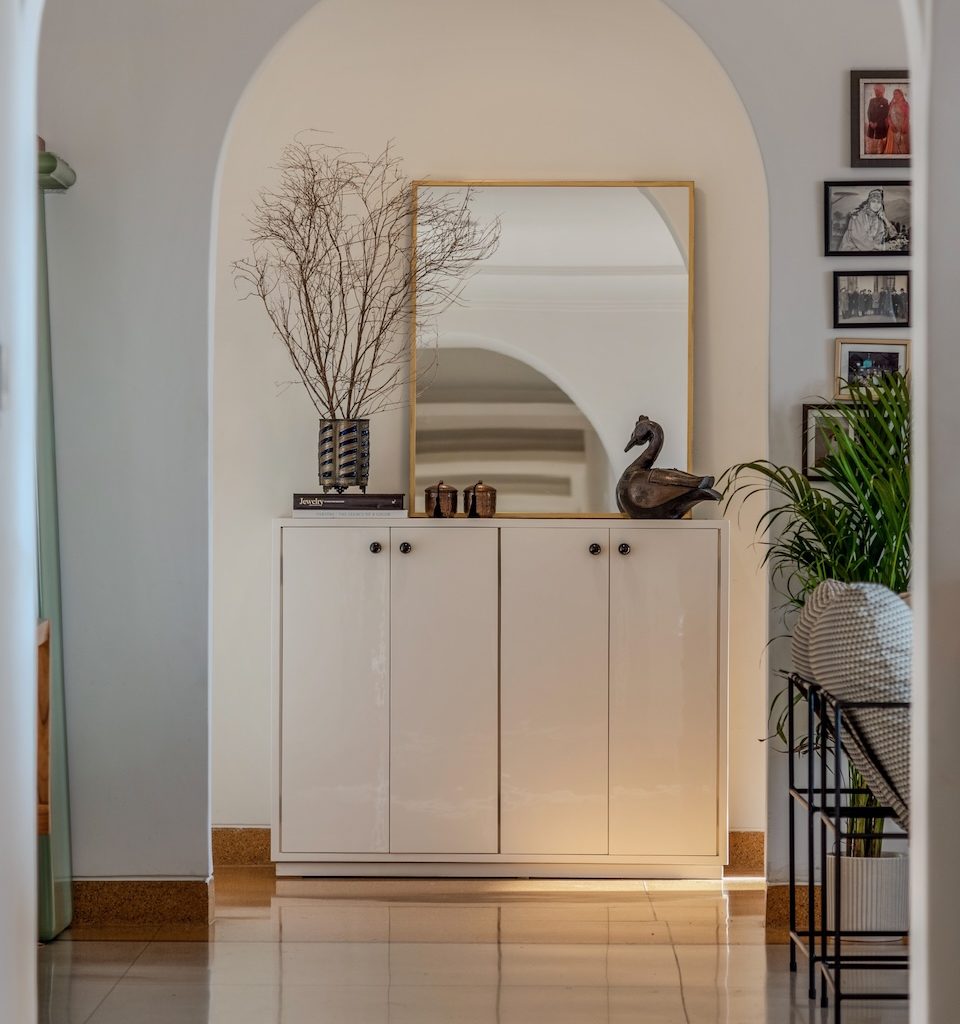
The project was conceived as an exploration of thresholds—both literal and experiential. Rather than treating the home as a collection of isolated rooms, the design allows it to unfold as a sequence of spatial moments. Classical architectural elements such as arches, symmetry, and framed vistas are reinterpreted here as spatial tools rather than decorative devices. These elements help organise the interior while guiding the way spaces connect and reveal themselves.
Subtle references to Jaipur’s architectural heritage appear through gentle curvature and a sense of procession, yet the approach deliberately avoids overt ornamentation. Movement through the apartment is choreographed by arched transitions, filtered views, and shifting light conditions. This choreography of light and movement allows everyday routines to unfold through layered spatial experiences, where each transition subtly frames the next.
The civil intervention
The design intervention centered on reorganising the internal layout to enhance spatial continuity, improve the flow of light, and refine functional zoning, all while retaining the existing structural framework. Rather than introducing major structural changes, the approach focused on subtle yet effective modifications that could transform how the home was experienced and navigated.
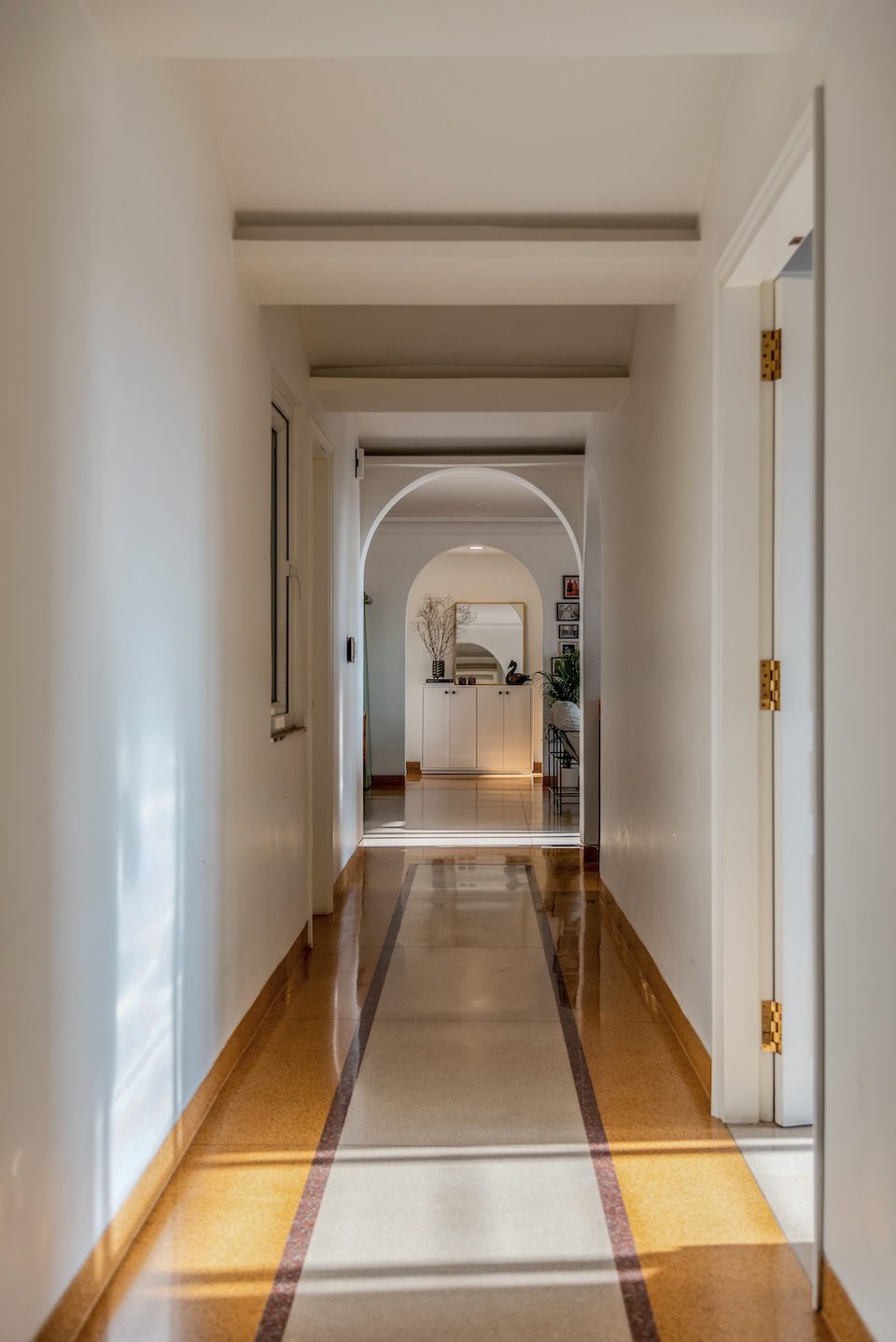
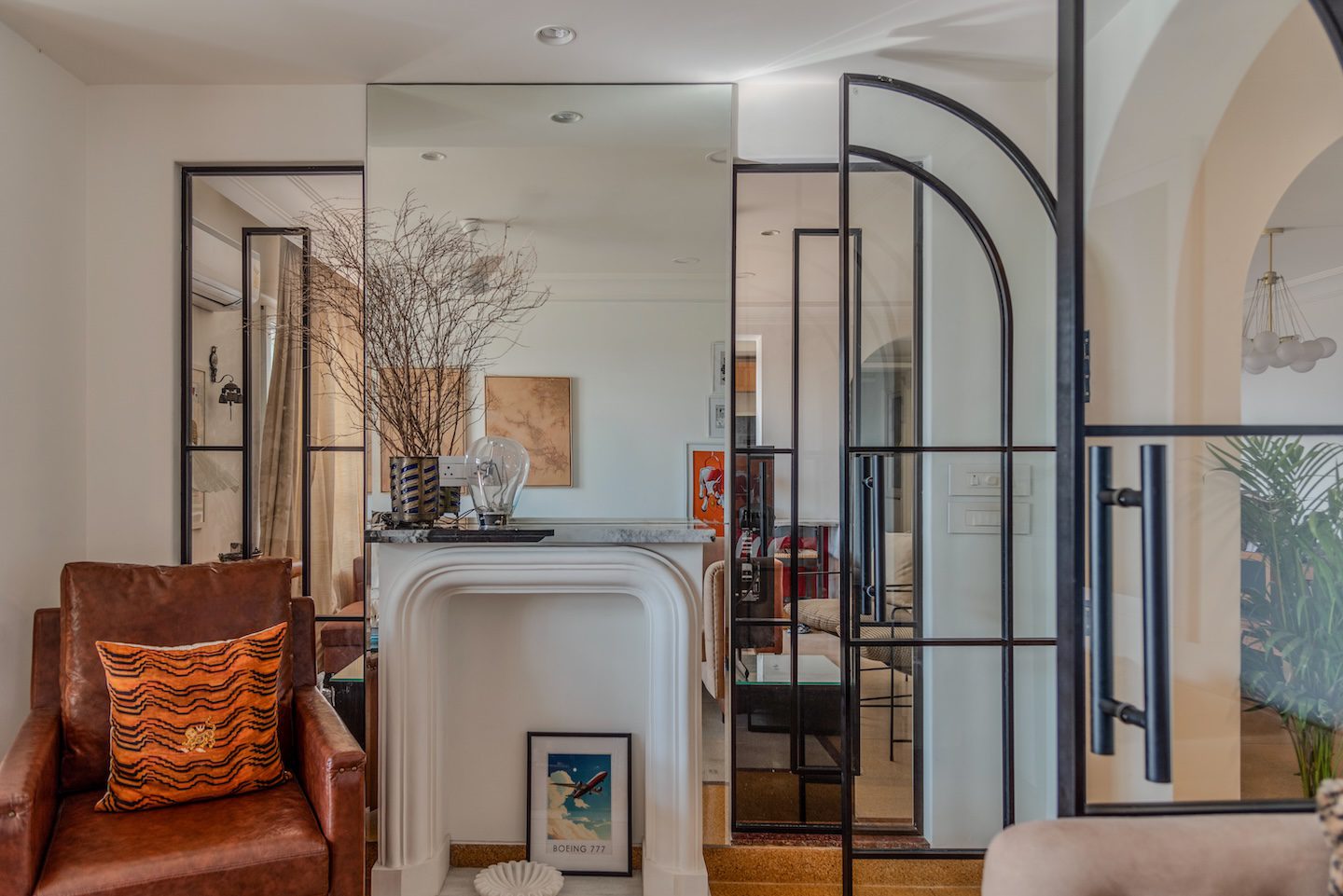
Non-structural partition walls were removed to establish stronger visual continuity across the interiors, allowing spaces to feel more open and interconnected. Lightweight masonry arches were introduced at key points to create gentle transitional thresholds between zones. A central circulation spine was also established to organise movement and provide clarity to the overall layout. To maintain a balance between openness and spatial definition, custom metal-framed glass partitions were integrated. These elements help define different functional zones while preserving visual permeability and the passage of light across the home.
Material interventions also played a significant role in refining the interiors. Standard flooring was replaced with cast in situ terrazzo, lending the spaces a more cohesive and timeless character. Meanwhile, the plumbing cores were largely retained in their original positions, ensuring minimal disruption to the structural framework. Storage and service areas were streamlined to improve overall efficiency and functionality.
The spatial configuration
The completed layout is organised around a central circulation spine that visually anchors the apartment and brings clarity to movement within the home. This spine becomes the organising element around which the various living and private spaces are arranged. The entrance opens into a transitional foyer that gradually introduces the interiors, gently revealing the formal living area beyond. From this point, a series of arched thresholds guide movement through the home, leading toward the formal living room, the informal family lounge, the dining space, and the corridor that connects the bedrooms.
The private areas are arranged with careful consideration of proximity and privacy. The master suite and the daughter’s bedroom are positioned adjacent to one another, ensuring functional closeness, while the guest bedroom is located toward the periphery of the plan to provide greater privacy for visiting guests. Rather than relying on abrupt separations, the layout allows each zone to unfold gradually. Arches and metal-framed glass partitions frame views into adjoining spaces, creating visual connections while maintaining a sense of spatial definition.

The design and material details
The entry establishes the tonal language of the home through muted walls and diffused light. A framed arch introduces the first threshold moment, gently marking the transition from the outside into the interior. Underfoot, terrazzo flooring flows seamlessly inward, reinforcing continuity and setting a calm, understated foundation for the spaces that follow.
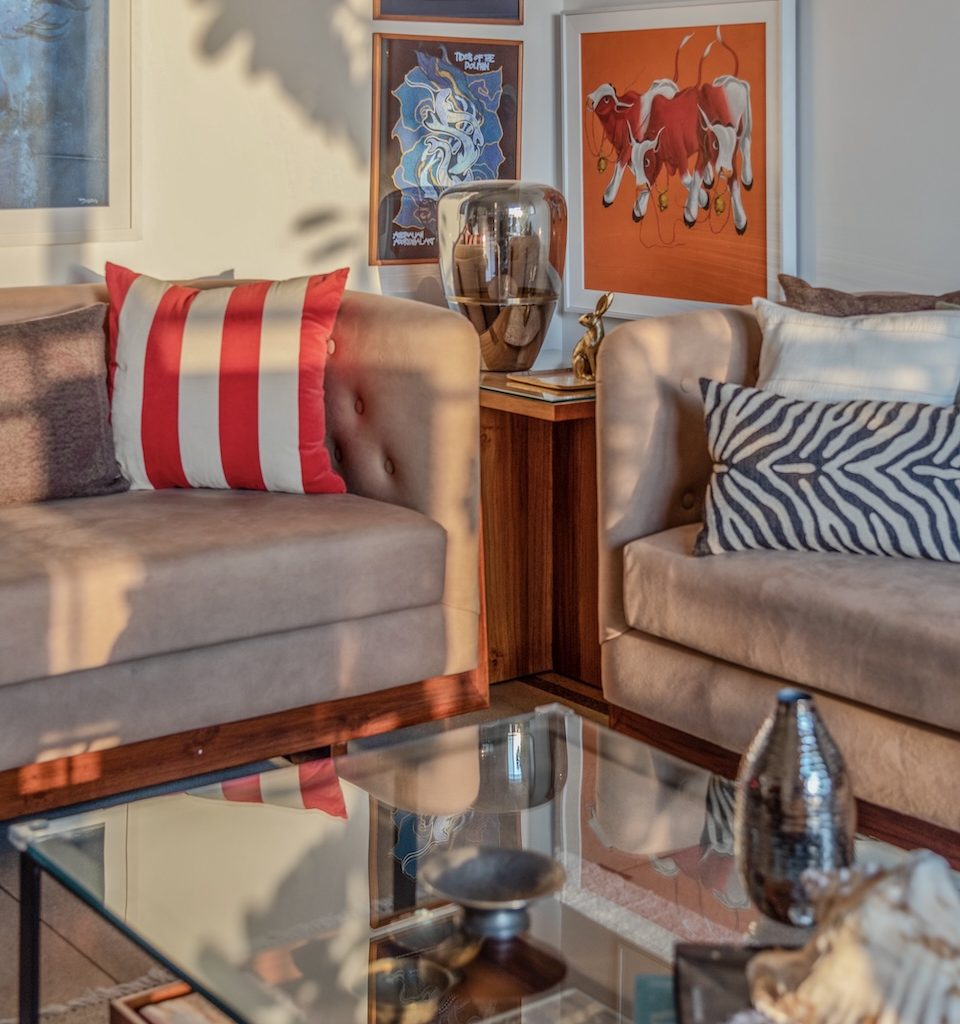
Defined by symmetry and proportion, the formal living area is conceived as a composed and balanced setting. Custom-designed sofas upholstered in textured neutral fabric anchor the space, while blackened metal detailing within the partition frames introduces subtle contrast. Soft off-white walls allow daylight to circulate freely through the room, enhancing its sense of openness. Arched openings frame views into adjoining spaces, maintaining visual continuity while preserving the hierarchy of the formal setting.
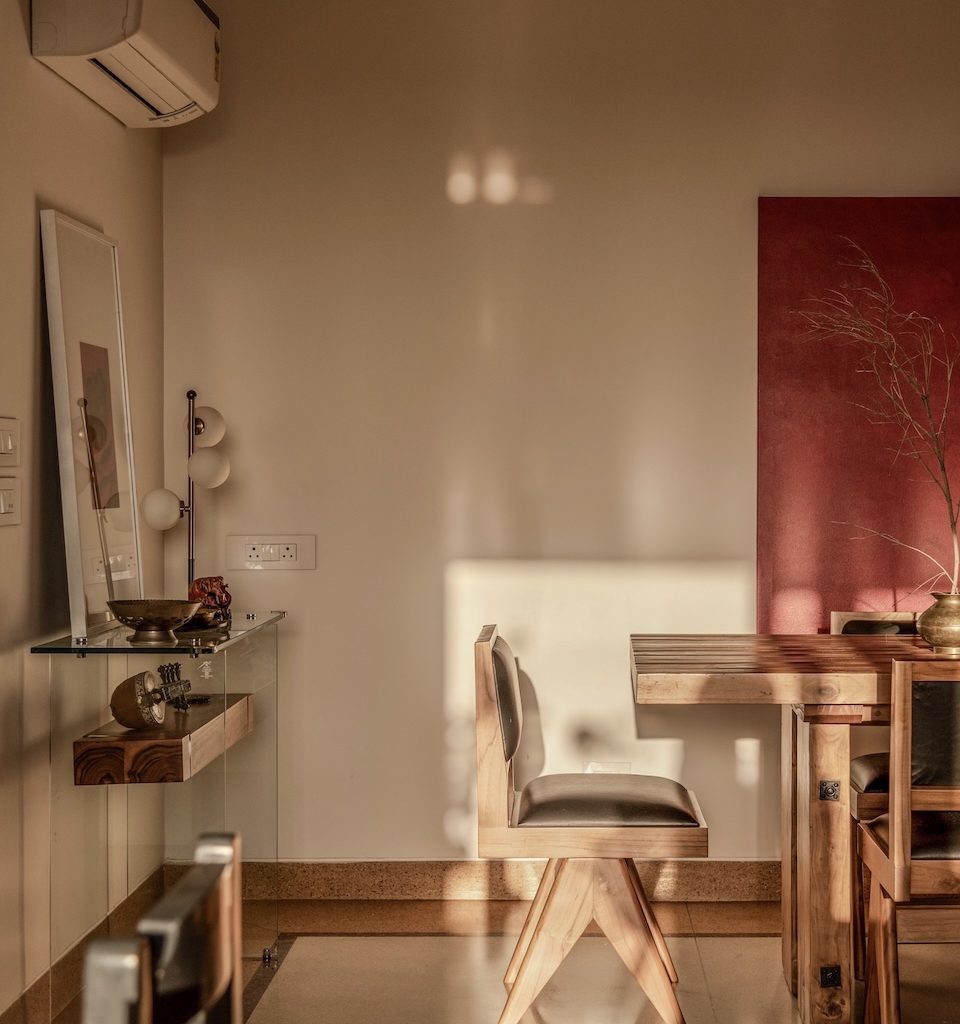
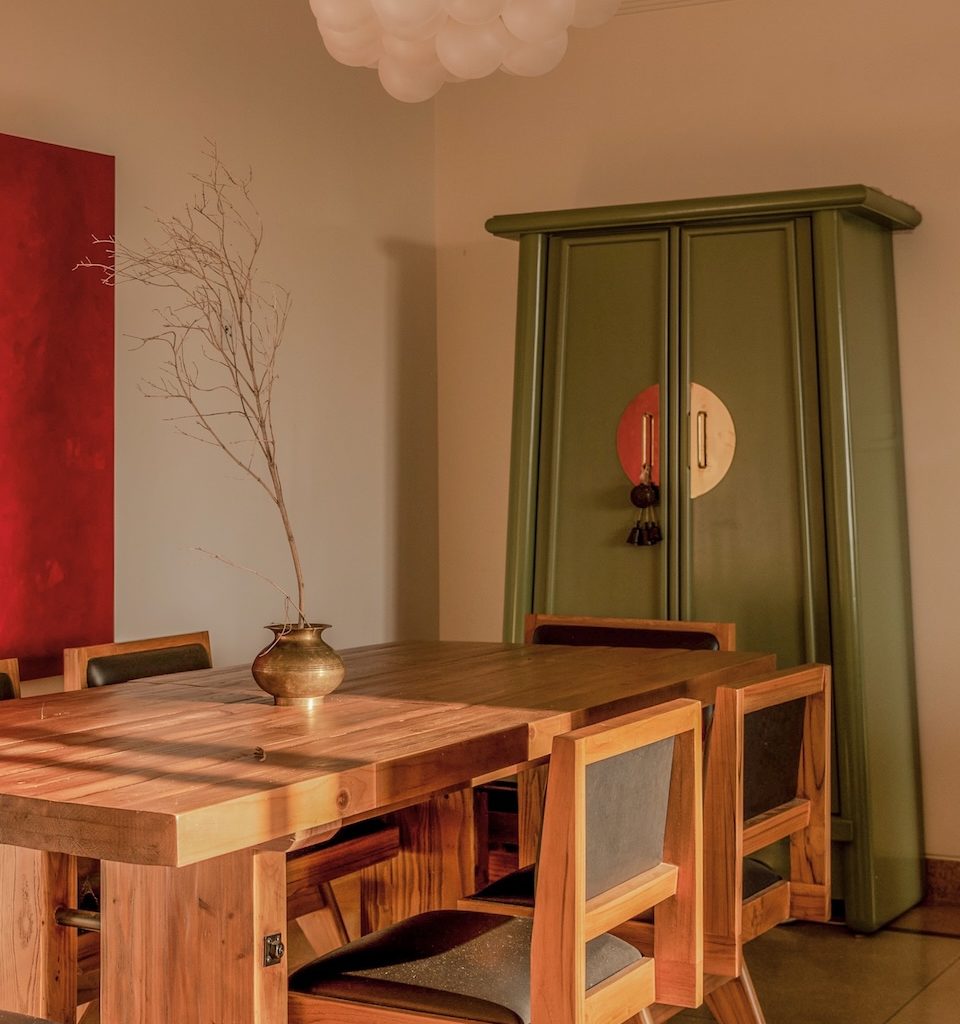
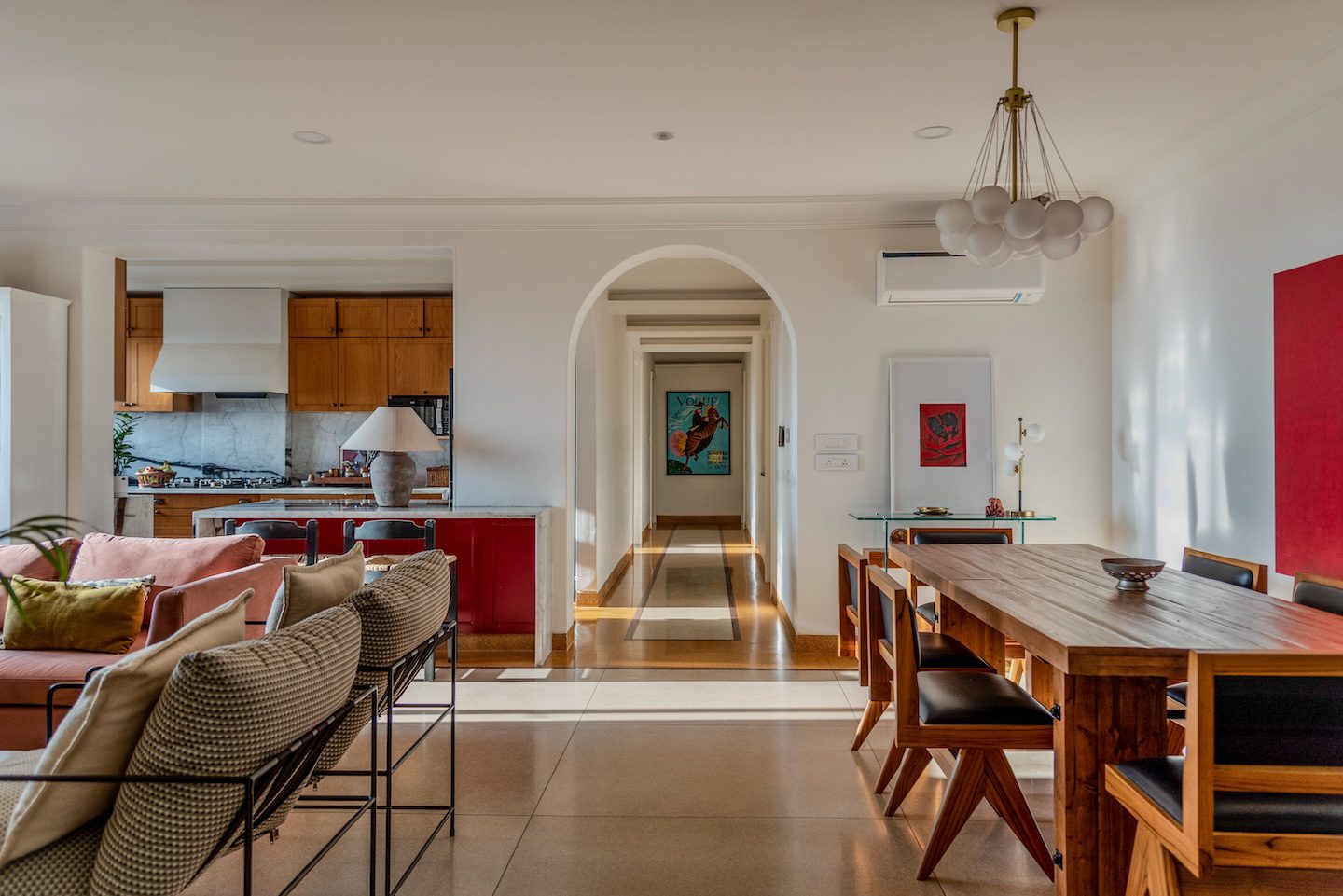
In contrast to the formal living room, the informal lounge adopts a more relaxed expression. The space features custom low-seating furniture that encourages a casual mode of sitting and gathering, complemented by natural wood finishes that lend warmth to the interiors. Layered soft furnishings in warm neutral tones add comfort and depth, creating a setting suited to everyday family life. Its proximity to the dining area allows movement between the two spaces to remain fluid, particularly during gatherings.
Positioned along the central circulation spine, the dining area benefits from cross-lighting that brightens the space throughout the day. A custom dining table crafted in natural wood forms the focal point, surrounded by upholstered dining chairs finished in muted fabric. Overhead, a statement light fixture anchors the table, lending the space a quiet sense of presence within the larger spatial sequence.
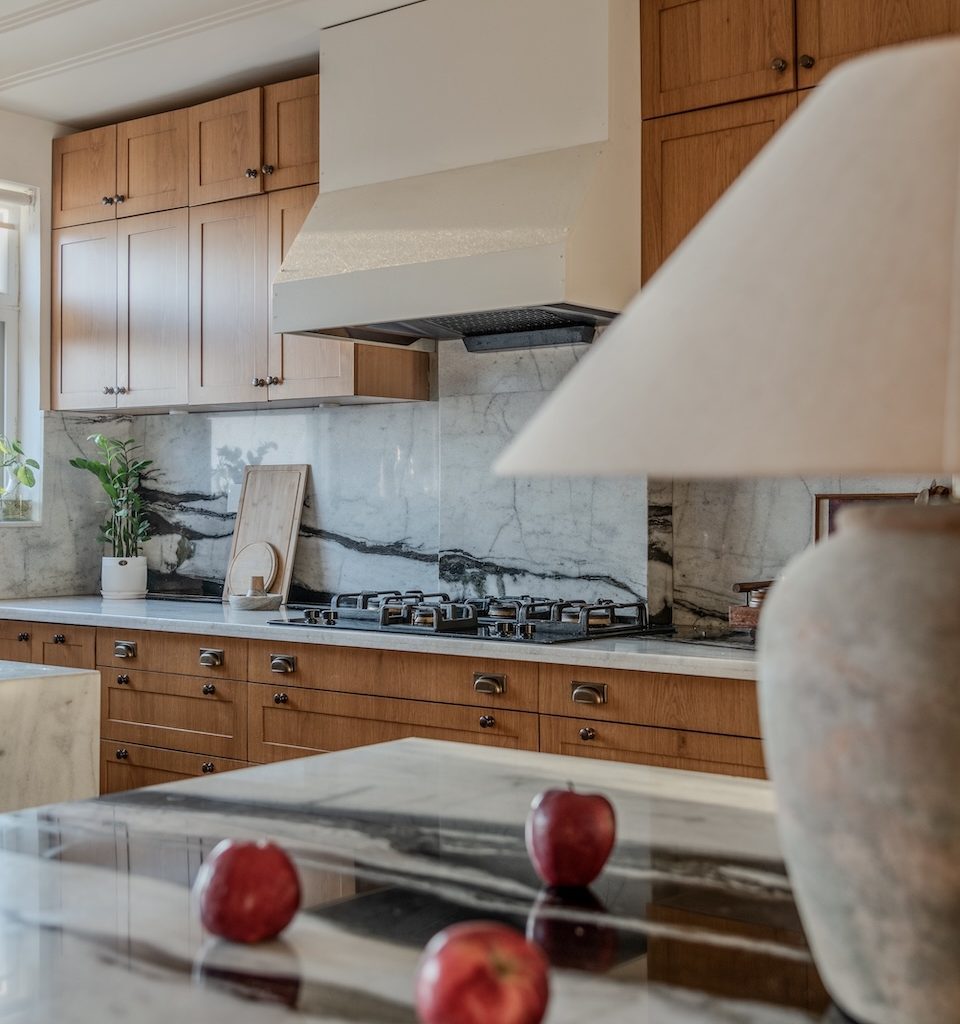
The kitchen is designed with clean-lined cabinetry finished in muted tones, reinforcing the home’s restrained material palette. The layout prioritises functionality and ease of maintenance, ensuring the space remains efficient for everyday use. Hardware and fixtures are deliberately kept minimal, aligning with the overall architectural language of clarity and simplicity.
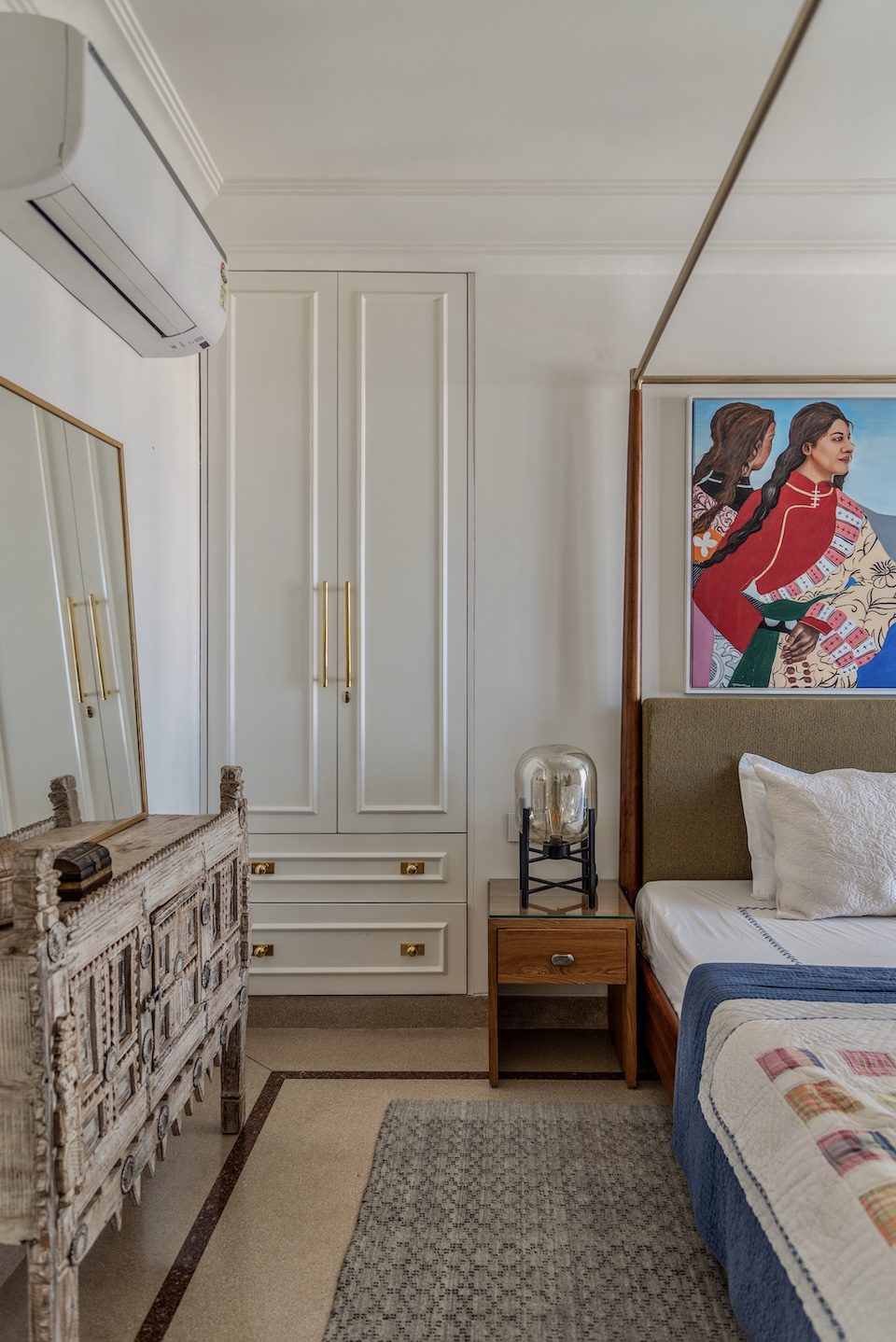
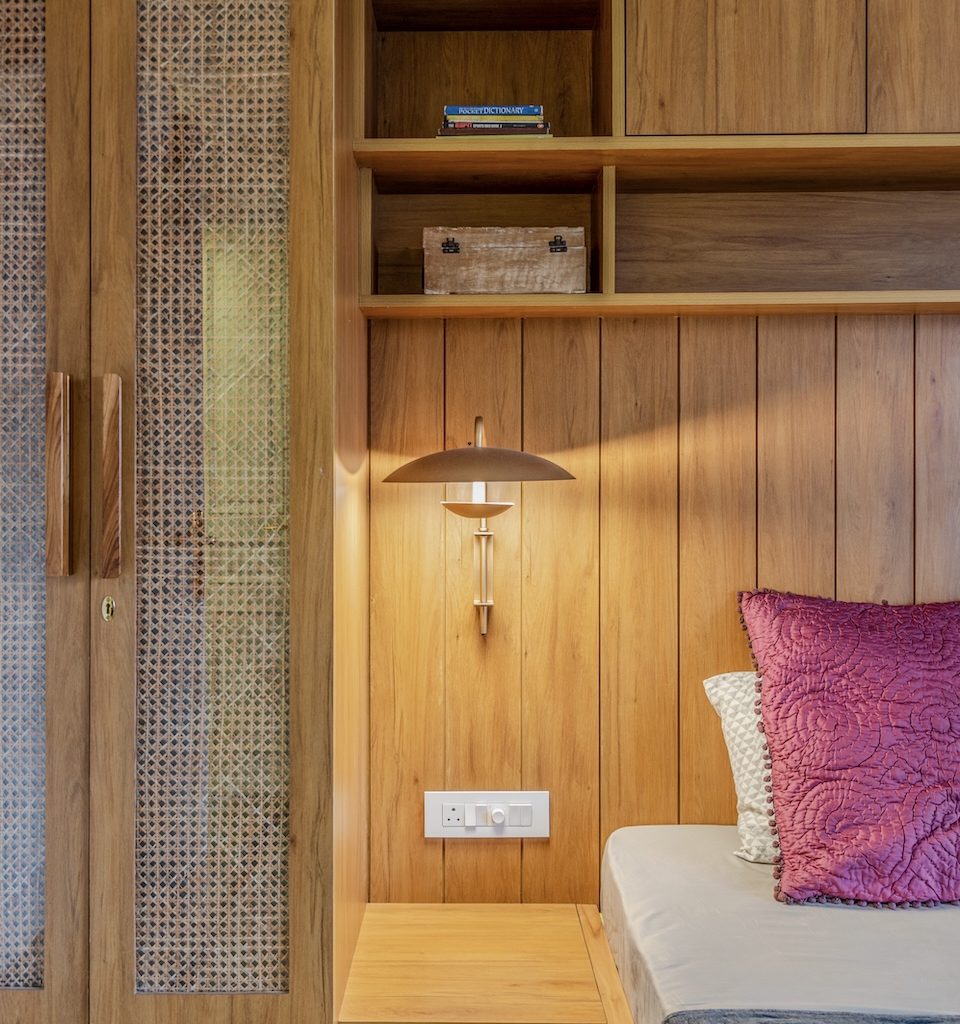
Continuing the neutral palette seen throughout the home, the master suite is conceived as a space of comfort and retreat. A custom headboard anchors the bed, accompanied by integrated bedside units that maintain visual continuity and reduce clutter. Warm wooden accents introduce depth to the room, while soft fabric finishes enhance the sense of calm and intimacy.
Located adjacent to the master suite, the daughter’s bedroom introduces a slightly lighter, more playful character while remaining consistent with the home’s overall restraint. Gentle colour accents lend the space subtle vibrancy, while rounded detailing softens the visual language. Functional storage is seamlessly integrated into the design, ensuring the room remains practical as well as visually balanced.
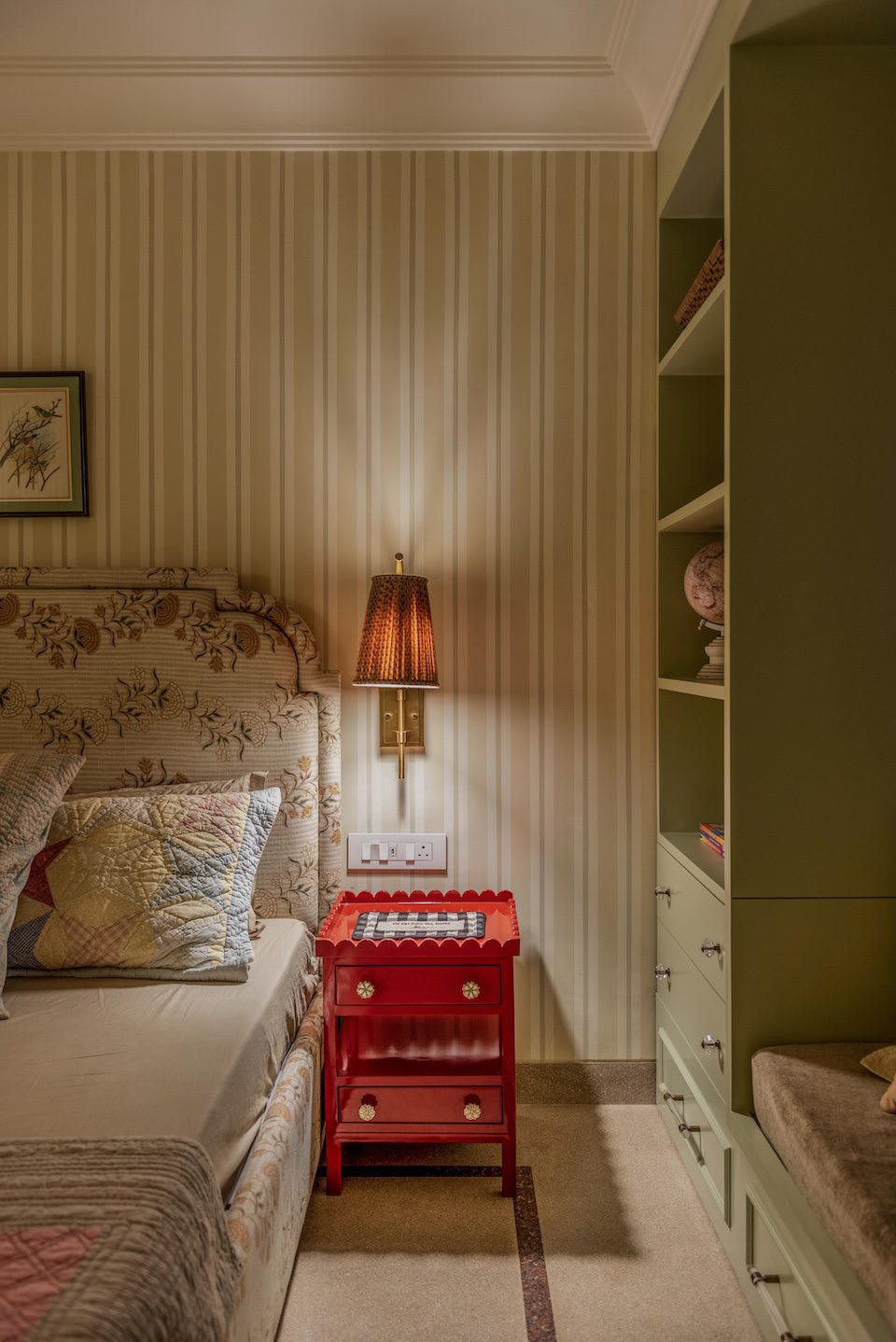
Positioned to offer a greater degree of privacy, the guest bedroom is designed to feel calm and self-contained. While it continues the home’s broader material language, the space carries a slightly more formal tone, creating a comfortable setting for visiting friends and family.
Material consistency plays an important role in maintaining continuity across the home. Cast in situ terrazzo flooring in warm yellow-beige tones runs through the interiors, creating a cohesive base that visually ties the spaces together. Hand-applied plaster finishes highlight the arches, lending them subtle texture while reinforcing their architectural presence within the home.
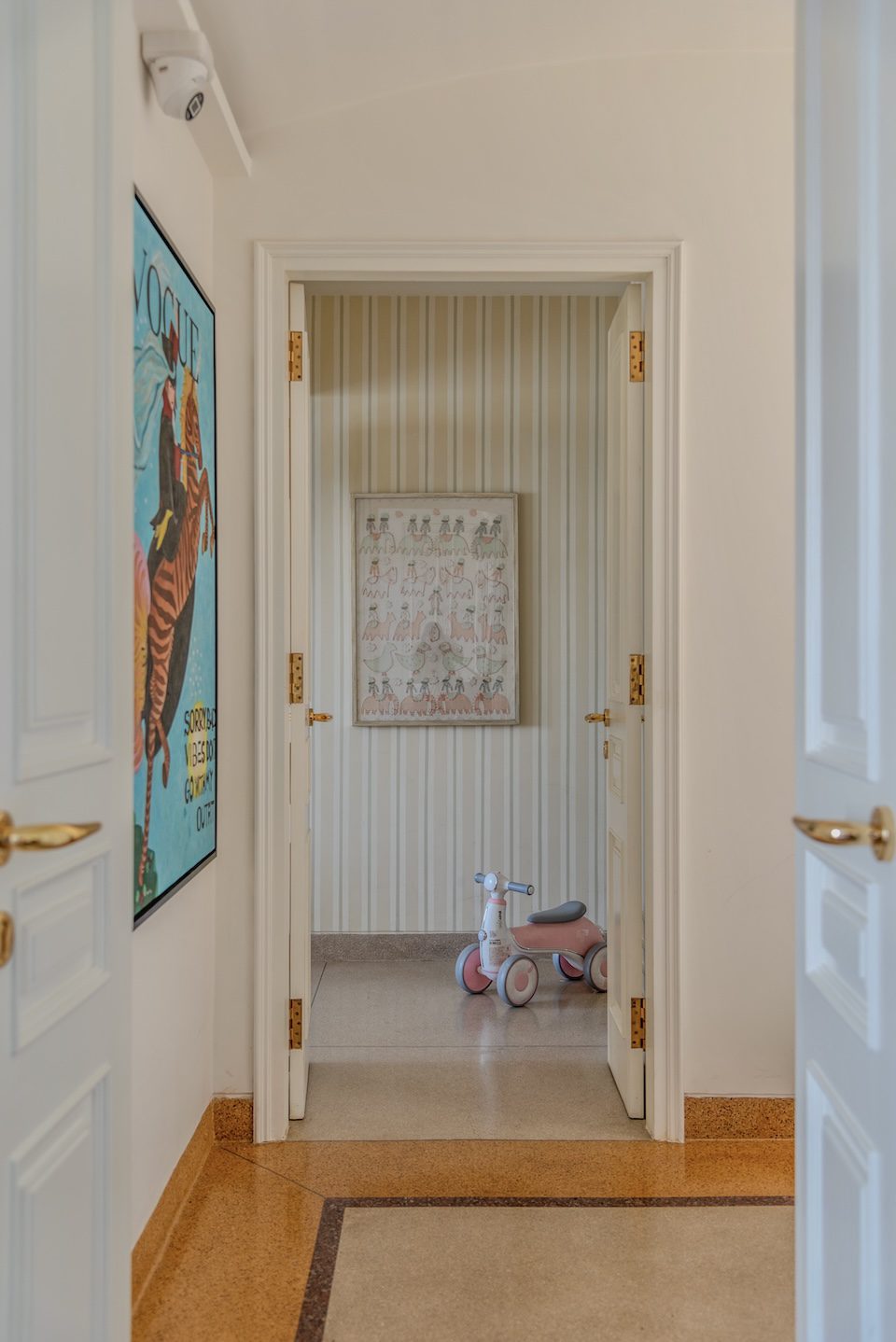
Blackened metal accents appear across partitions and detailing, introducing contrast against the otherwise soft palette. The walls are finished in muted off-whites and warm neutral tones, allowing natural light to reflect gently across the interiors while keeping the atmosphere calm and understated. To ensure visual coherence throughout the home, all furniture pieces were custom-designed. This approach allowed each element to be carefully calibrated in proportion and scale, while maintaining harmony with the overall material palette and architectural language of the space.
Fact File
Project: An Apartment of Thresholds
Location: Jaipur, Rajasthan
Area: 2,000 sq ft
Principal architect: Ankit Sampatram
Principal designer: Malvika Rautela
Design team: Manvi Jain
Add a Comment