
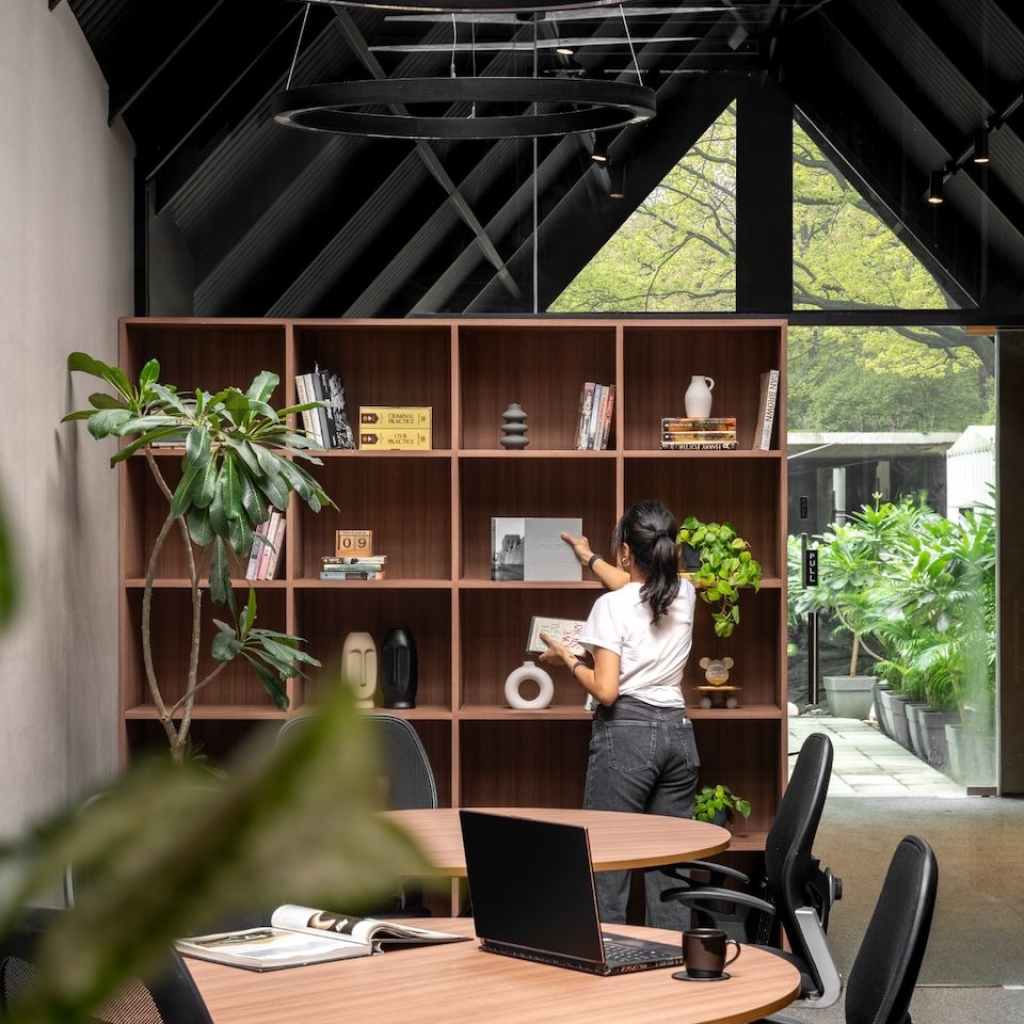
Plug Collective designs a demountable sales office for Mahavir Group’s redevelopment project in Mumbai—transforming a temporary structure into a carefully articulated architectural statement rooted in light, trust, and material responsibility.
Curated by: Deepa Nair
Photographs: Anish Pathrikar; courtesy Plug Collective
The brief
In Mumbai Plug Collective approaches the idea of a sales office not as a temporary necessity, but as an architectural proposition. Commissioned by Mahavir Group for an ongoing redevelopment project, The Light Pavilion was envisioned as a demountable, sustainable structure that could operate within a tightly constrained site bordered by neighbouring buildings. Yet beyond its physical limitations, the brief carried a more nuanced responsibility—to shape confidence.
The project needed to build buyer trust in a future yet to be constructed, while ensuring that the structure itself did not feel fleeting or disposable. Within a compact footprint, the design was required to function efficiently as a sales office, accommodate discussions and presentations, and reflect the developer’s larger ethos. Sustainability was not optional but integral, demanding a construction strategy that aligned with temporary use without generating waste.
“It was important that the sales office not feel provisional or disposable, but also communicate trust, care, and long-term intent. The client sought a space that could function efficiently as a sales office while also acting as a tangible representation of their values: quality, transparency, and thoughtful development,” shares Param Gala, principal architect, Plug Collective.
The site
Set within an established residential society in Chembur, Mumbai, the site is woven into a dense urban fabric of multi-storey housing blocks, internal roads, and compound walls. The allocated plot for the sales office is compact and flat, visually enclosed on most sides by neighbouring buildings that limit expansive outward views.
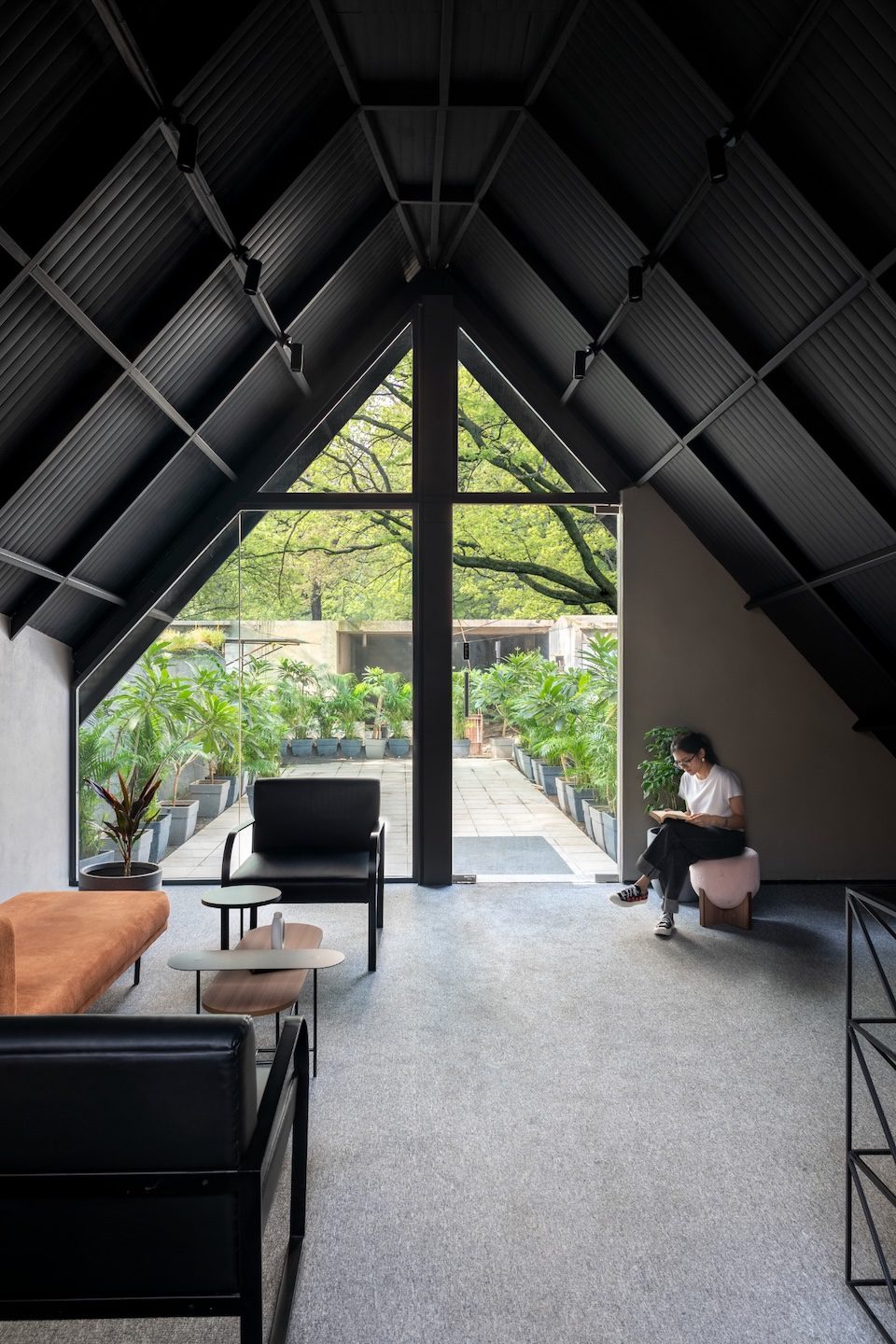
This condition of compression informed the architectural strategy. Rather than relying on lateral openness, the design turns upward—privileging vertical light, filtered illumination, and a sense of internal spatial permeability. The absence of sweeping vistas becomes an opportunity to shape experience inwardly, allowing light and volume to define the pavilion’s character.
Positioned along a primary internal circulation route within the society, the structure benefits from natural visibility and easy access. Yet it integrates with restraint, ensuring that its presence feels considered within the existing residential setting rather than imposed upon it.
The design intent
The Light Pavilion is grounded in the belief that temporariness need not equate to transience in thought. For Plug Collective, the sales office was never conceived as a disposable enclosure, but as a carefully articulated system that considers assembly, occupation, and eventual disassembly as part of a continuous architectural lifecycle.
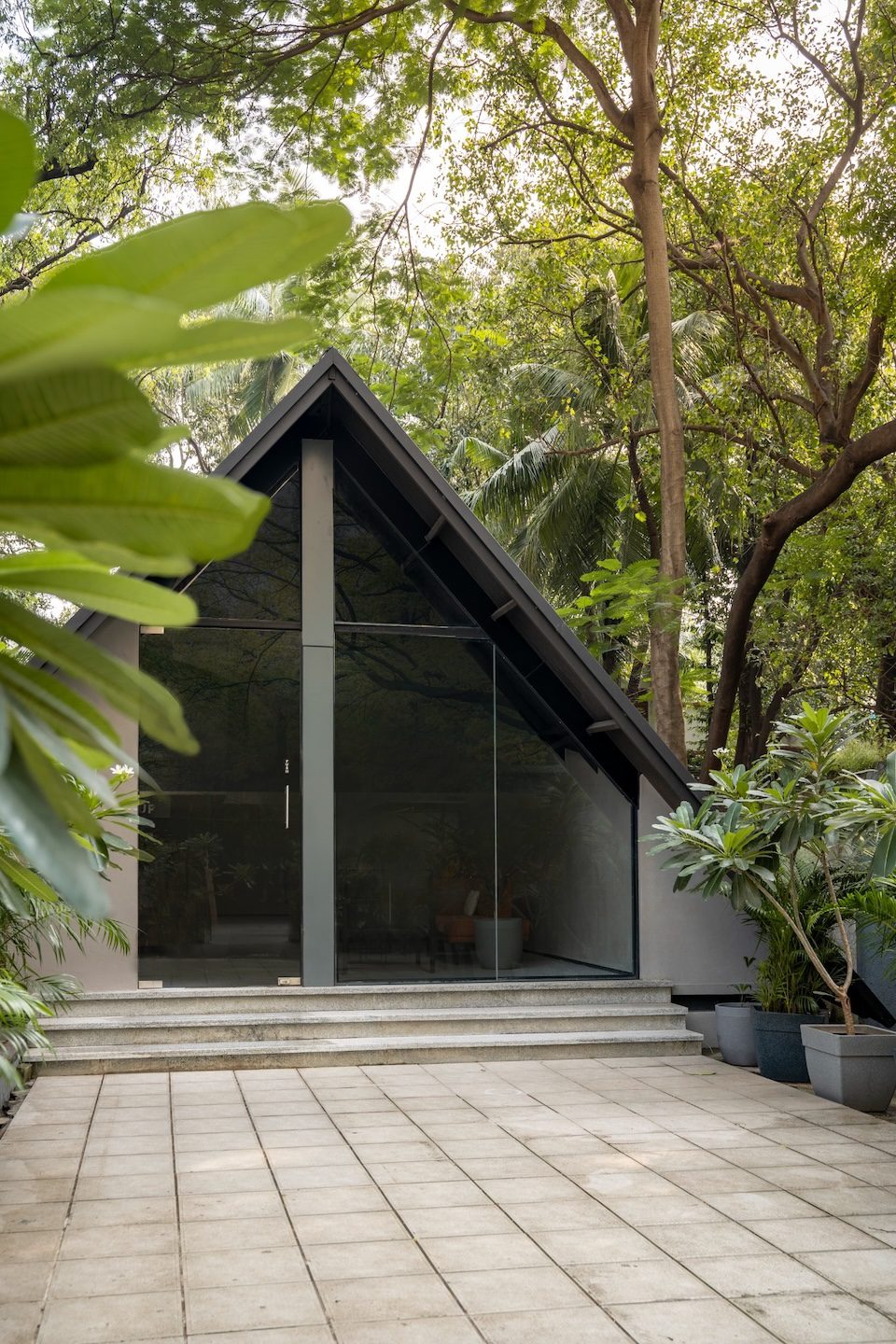
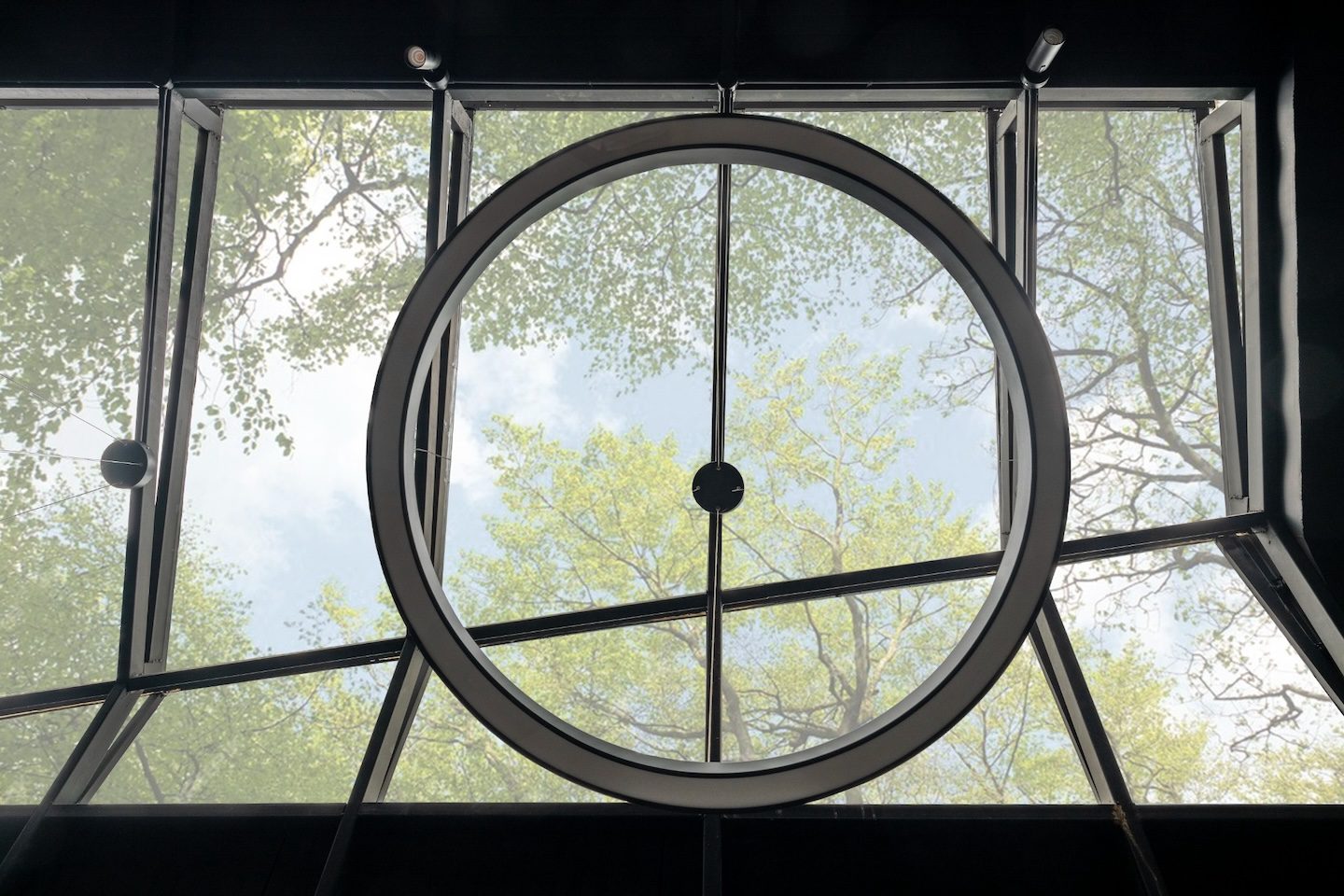
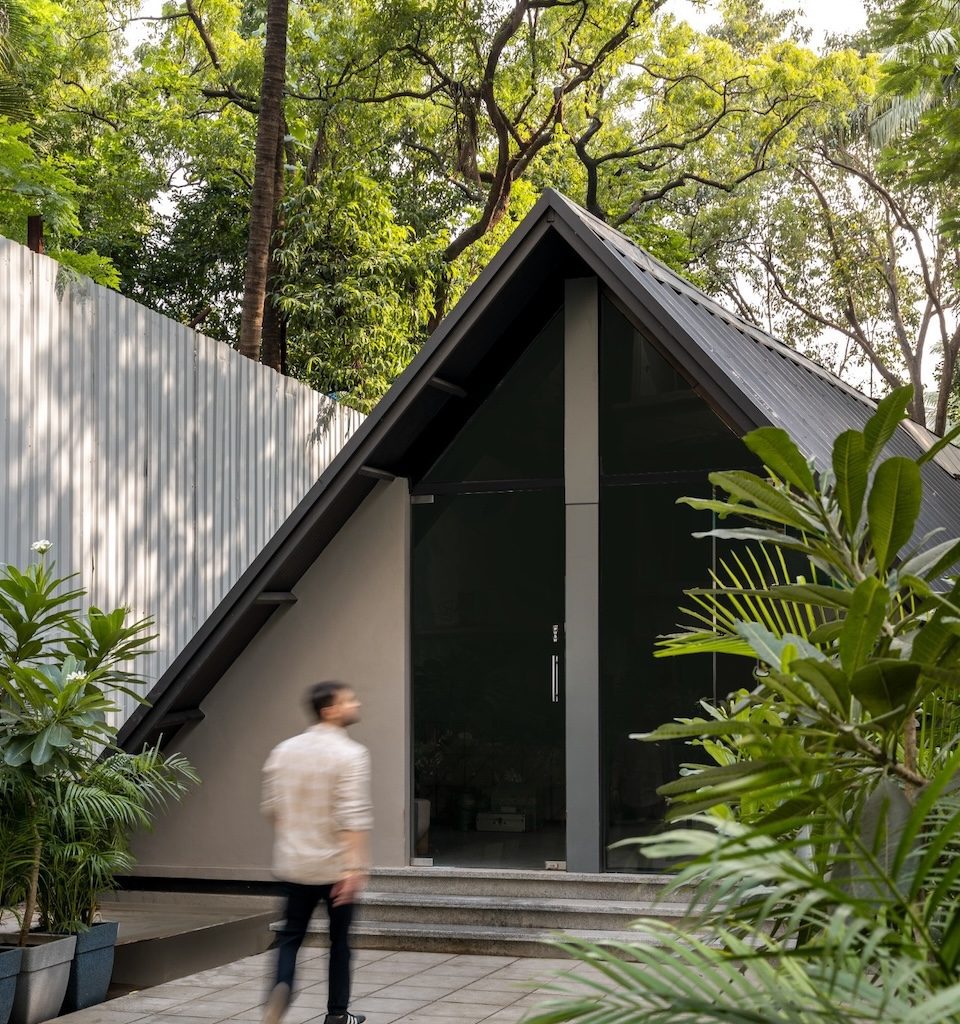
Its defining gesture is the folded roof geometry, which lends the pavilion a distinct visual identity within its constrained surroundings. More than a formal expression, the roof operates as an environmental instrument. It draws in daylight, filters illumination, and allows light to become the primary spatial generator within a site limited by adjacent buildings. In doing so, it reduces reliance on artificial lighting while giving the interiors depth, variation, and character.
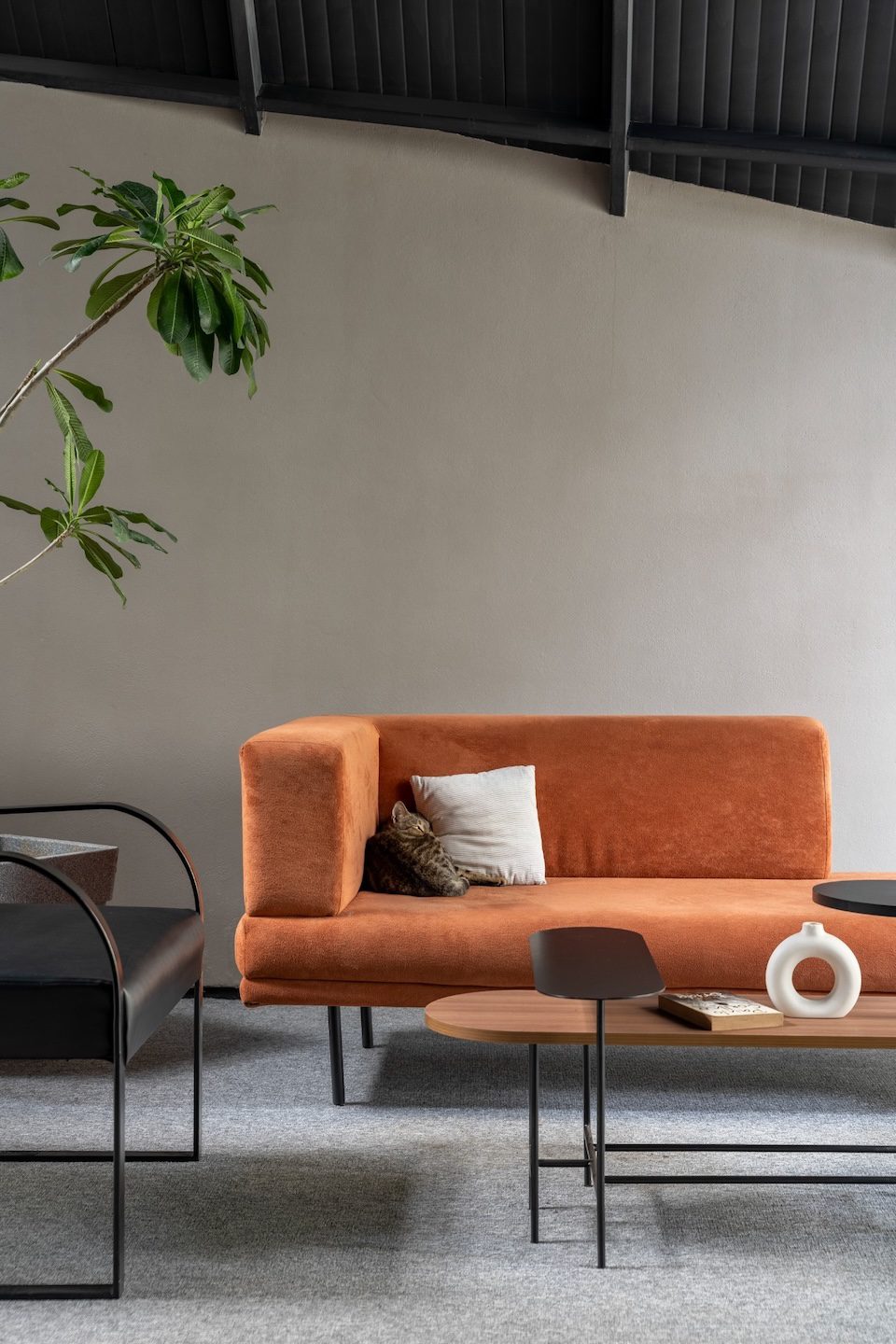
Dismantlability remains central to the project’s ethos. Constructed through dry, bolted connections and reusable components, the pavilion is designed to be taken apart with precision once its purpose is fulfilled. This strategy ensures that materials can be recovered and redeployed, reinforcing a commitment to circular thinking. Here, architectural intent and material responsibility operate in tandem allowing the structure to serve its present function while anticipating its future beyond the site.
The spatial configuration
The pavilion unfolds through a fluid, linear sequence that guides visitors intuitively from arrival to engagement. The journey begins at the entrance and reception, positioned beneath the ascending fold of the roof, where the architectural form immediately establishes a sense of openness and direction. From here, the space transitions into a central display and model area, dedicated to project visuals, drawings, and scaled architectural models—forming the experiential heart of the pavilion.
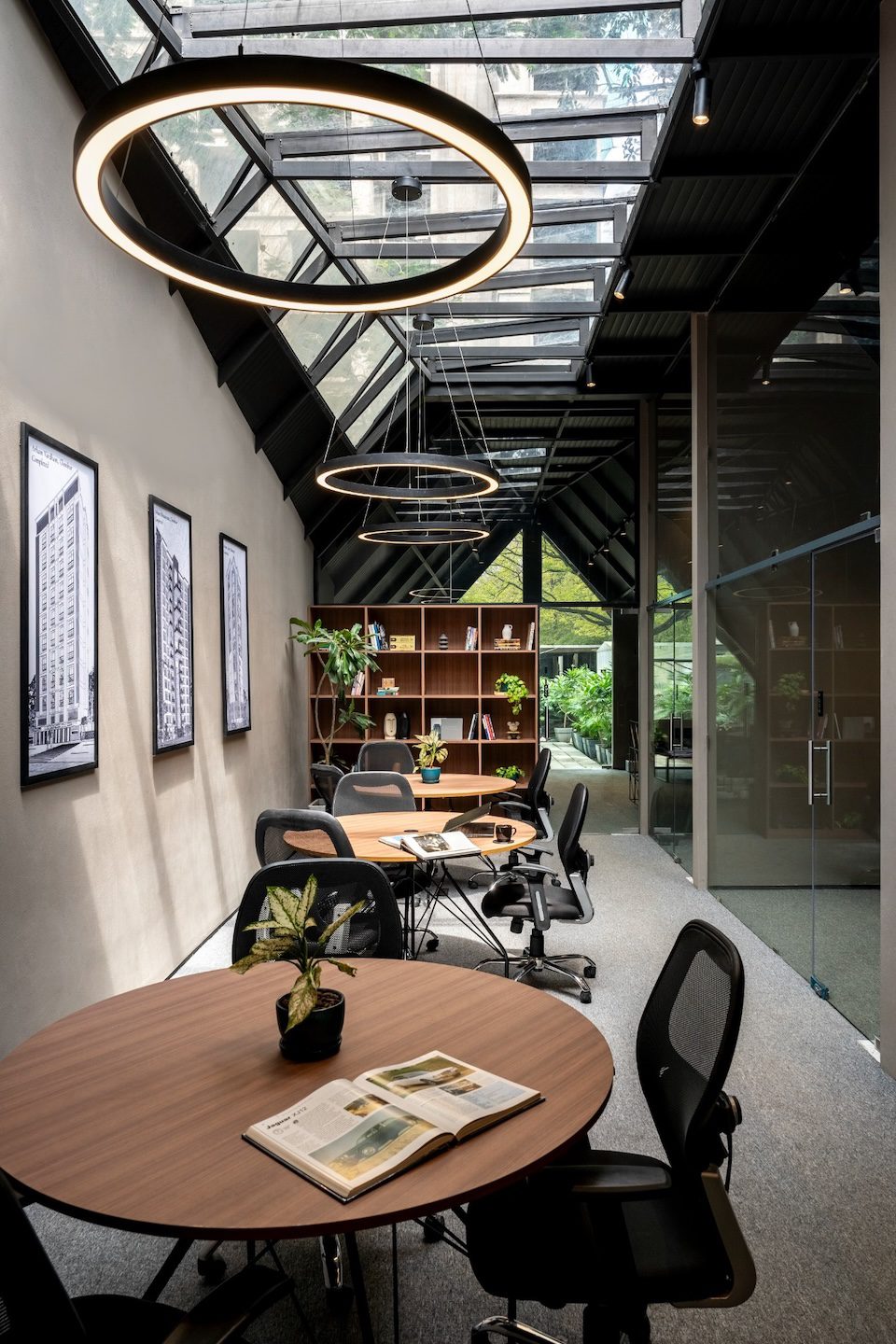
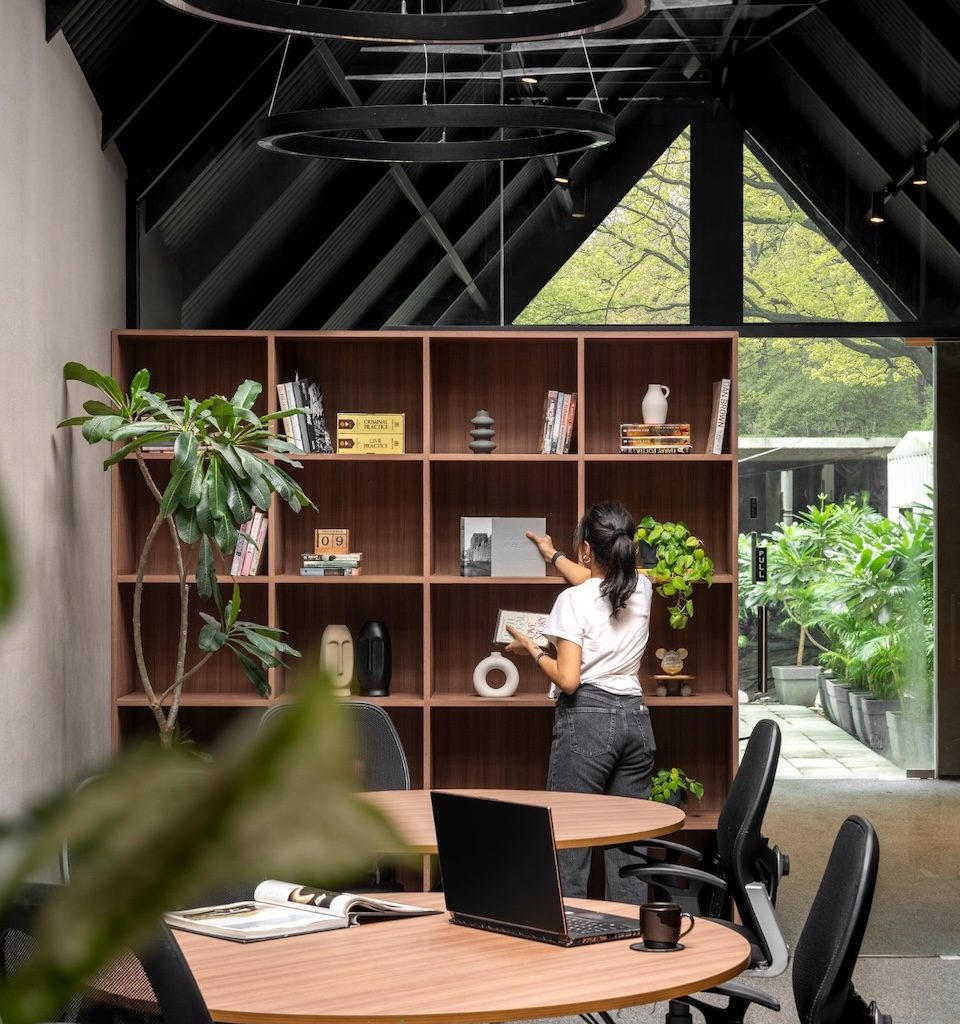
Aligned along the skylight is a semi-private client meeting zone, where discussions take place under filtered natural light. Toward the rear, sales workstations are organised with functional clarity, ensuring operational efficiency without disrupting the visitor experience. Back-end utility and storage areas are discreetly integrated, maintaining the pavilion’s clean spatial language.
A continuous skylight along the roof’s ridge acts as the spatial spine, both visually and physically connecting each zone. It draws daylight deep into the interior, reinforcing the linear flow while binding the programme into a cohesive architectural narrative.
The material palette
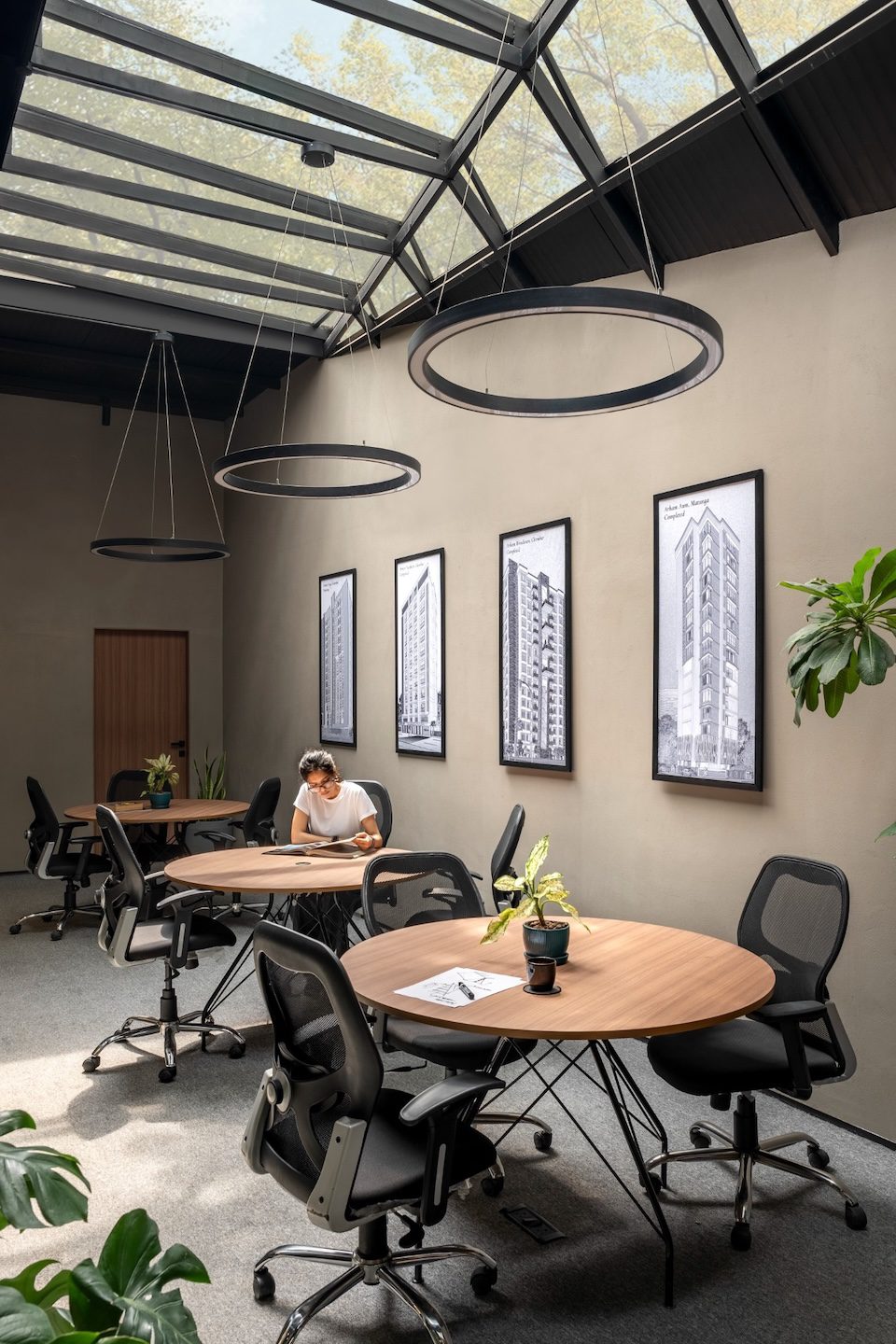
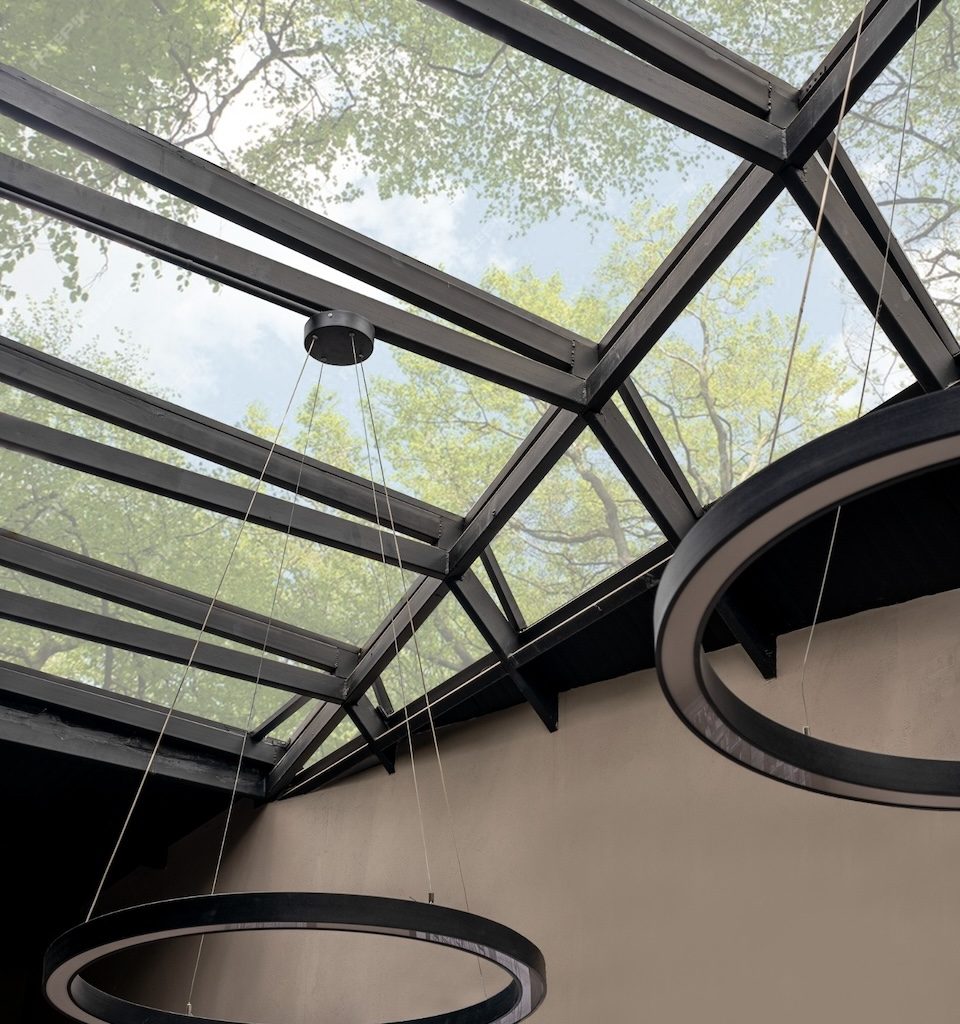
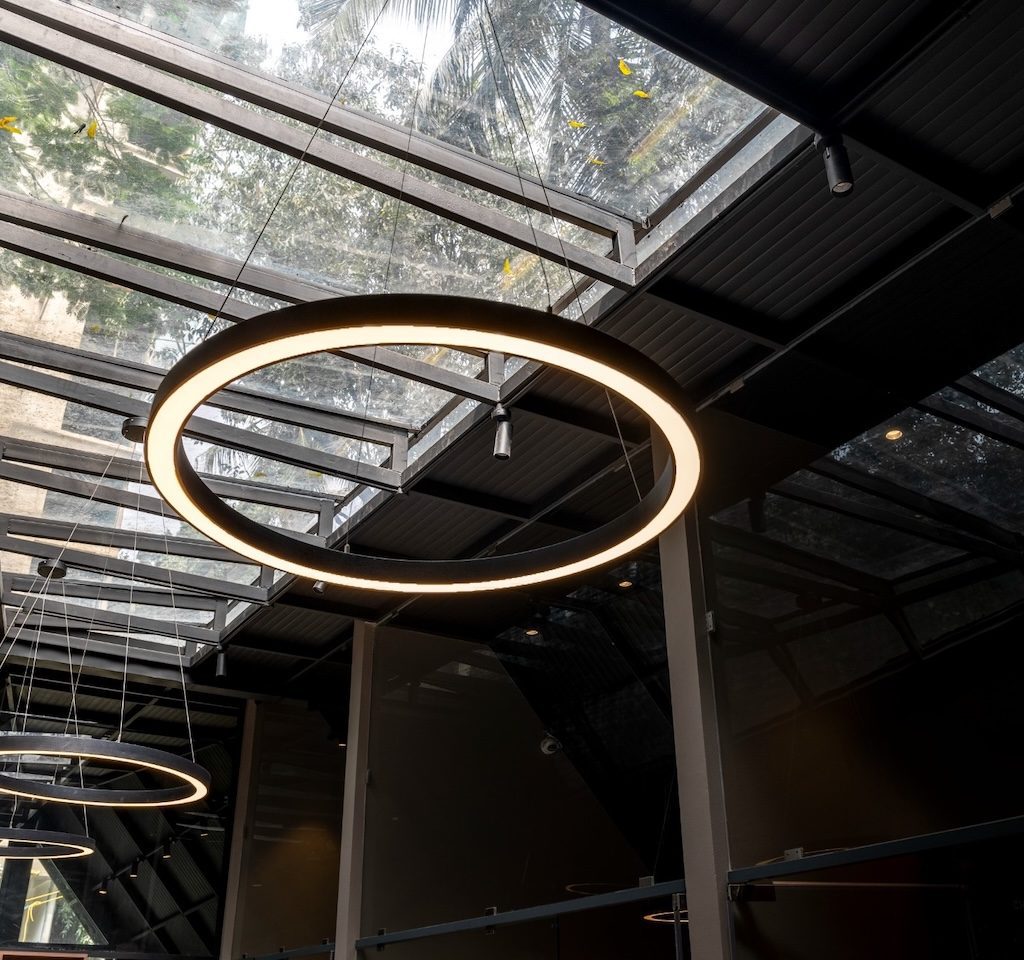
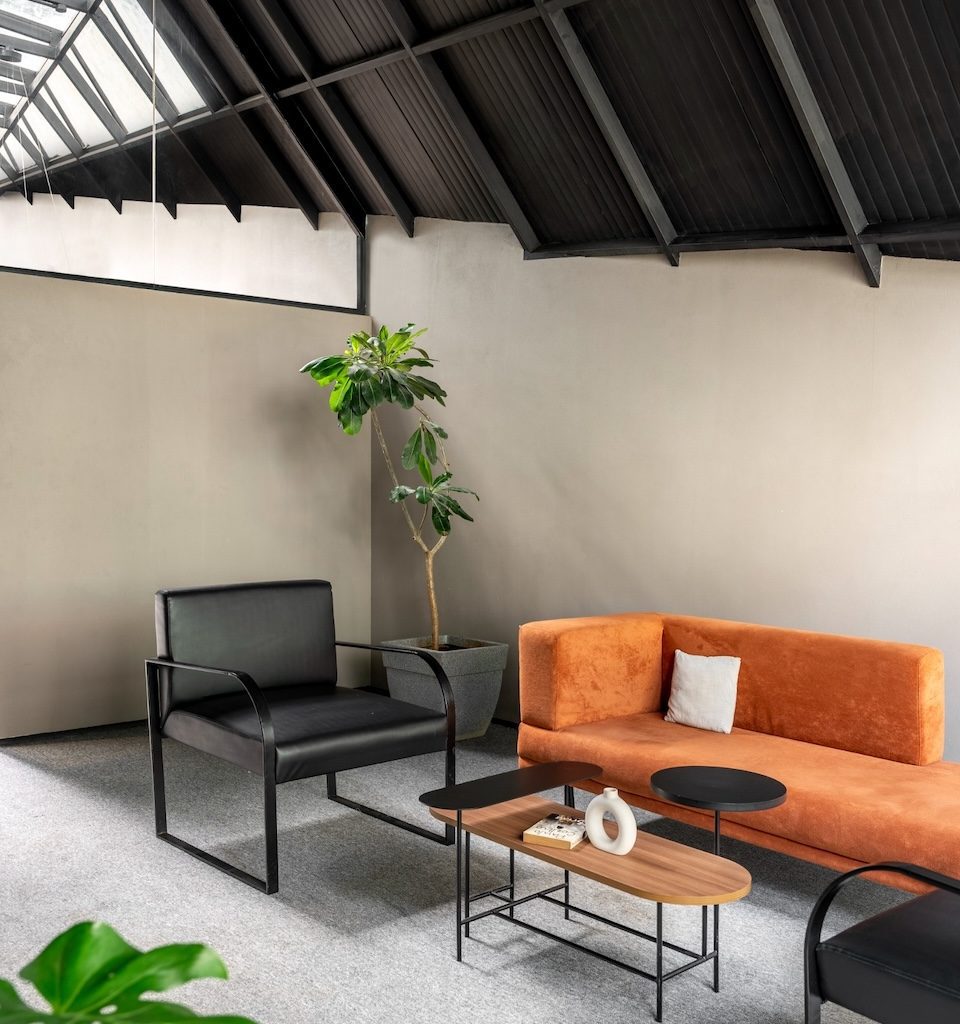
The pavilion’s identity is shaped by its folded, faceted roof—a composition of triangular planes that rise and intersect to form a distinct silhouette. Framed in lightweight steel and clad in insulated composite panels, the structure is assembled through dry, bolted connections, reinforcing its capacity for dismantling, reuse, and relocation. Running along the ridge, a continuous linear skylight introduces diffused daylight deep into the interior. Double-layered polycarbonate glazing moderates heat gain while maintaining thermal comfort, allowing the pavilion to rely less on artificial lighting during the day.
Underfoot, carpeted flooring improves acoustics within the lightweight shell, reducing reverberation and fostering a quieter, more comfortable environment for client interactions. Walls are finished in textured paint that achieves a raw, concrete-like expression without the weight or permanence of cast material—an approach that aligns with the pavilion’s temporary yet deliberate character.
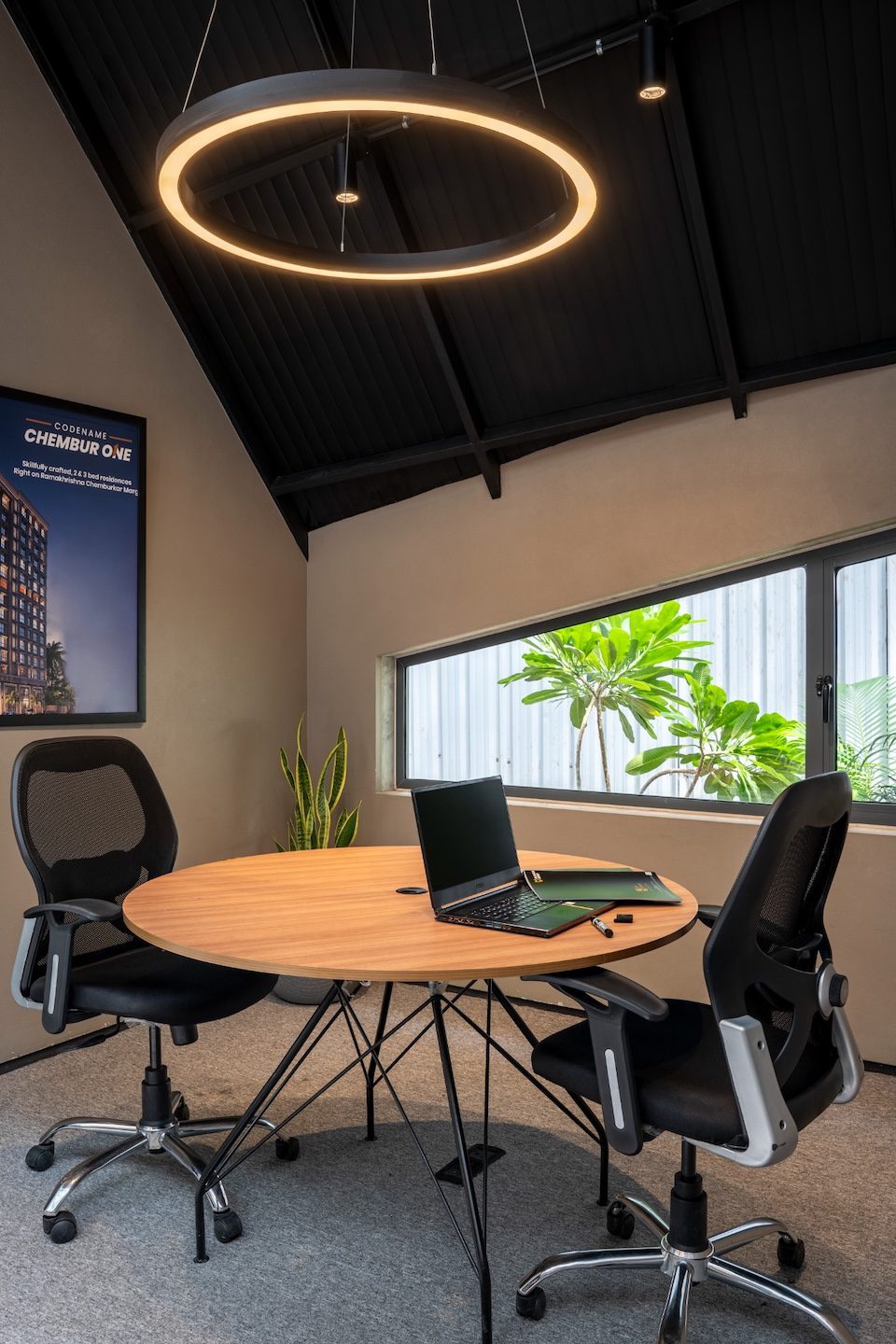
The ceiling exposes the steel roof framework, with visible bolts and joinery left intentionally apparent to underscore the demountable logic of the construction. Windows depart from conventional rectangular openings, instead taking on angular, faceted forms that echo the folded roof geometry. These inclined apertures are especially significant in the private meeting areas, where controlled daylight and ventilation are required without compromising privacy. Their orientation allows deeper light penetration, minimises glare from adjacent buildings, and facilitates airflow within enclosed zones.
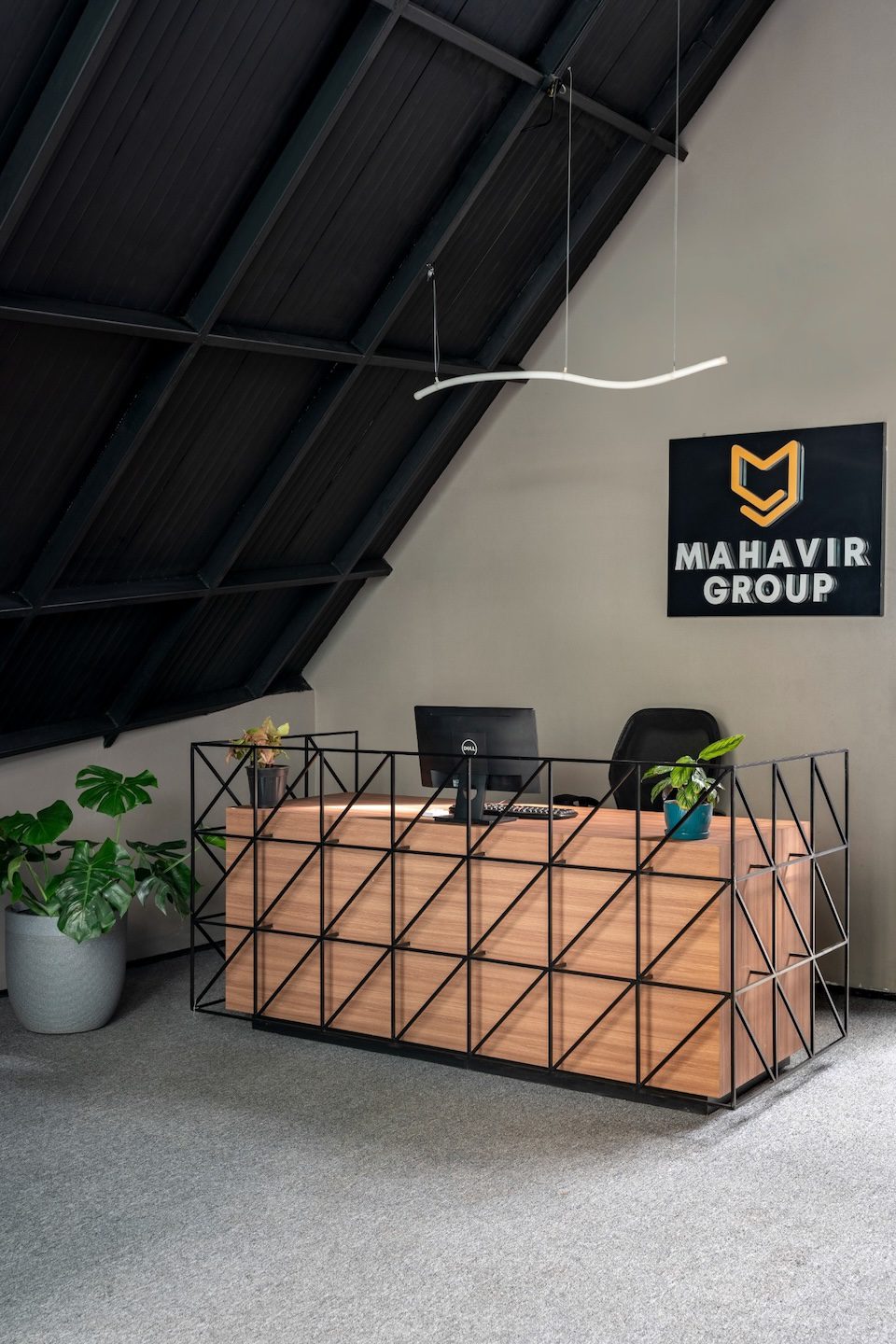
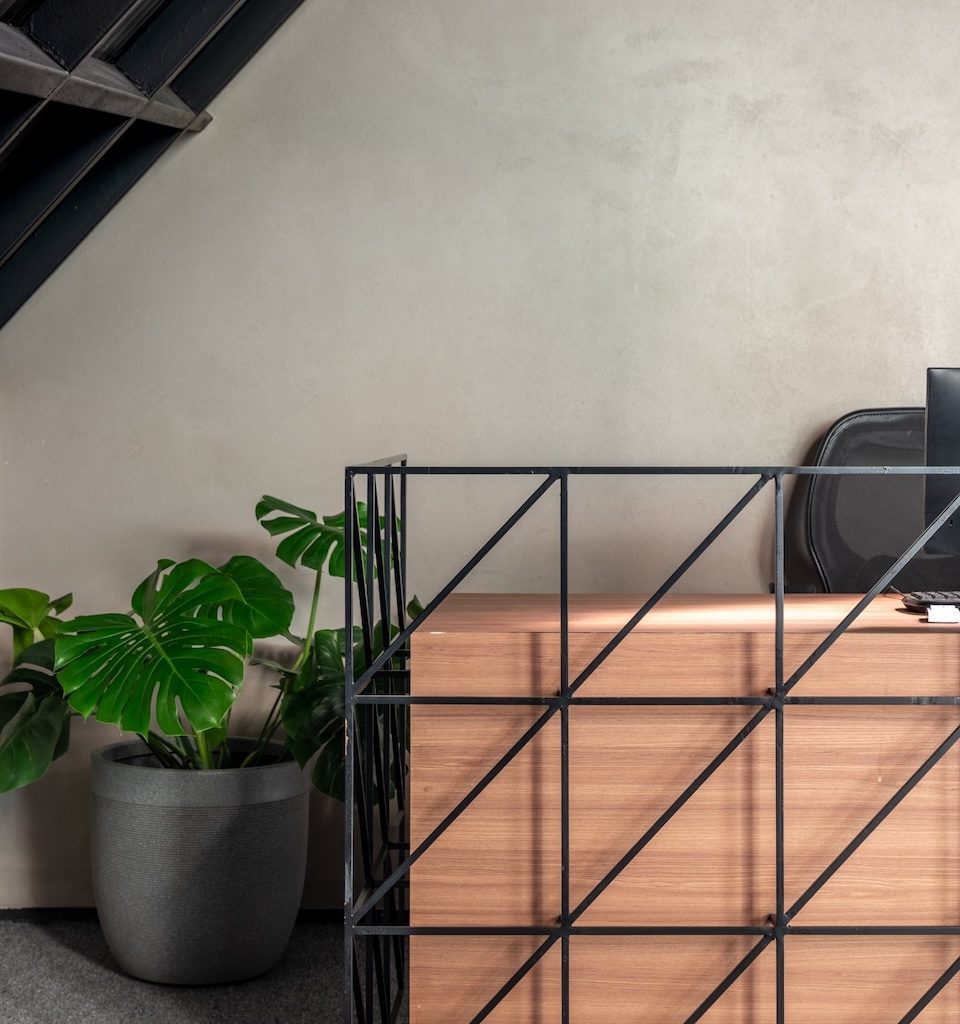
The reception desk, crafted in laminate and plywood with a metal framework, subtly references Mahavir Group’s real estate identity while retaining a restrained, contemporary aesthetic. A custom circular meeting table with modular legs reinforces flexibility, enabling assembly and disassembly as needed. Suspended lights positioned above the tables create focused illumination and intimate zones, visually aligning with the linear skylight above.
Fact File
Project: The Light Pavilion
Location: Chembur, Mumbai
Area: 1,200 sq ft
Principal architect: Param Gala
Client: Mahavir Group
Add a Comment