
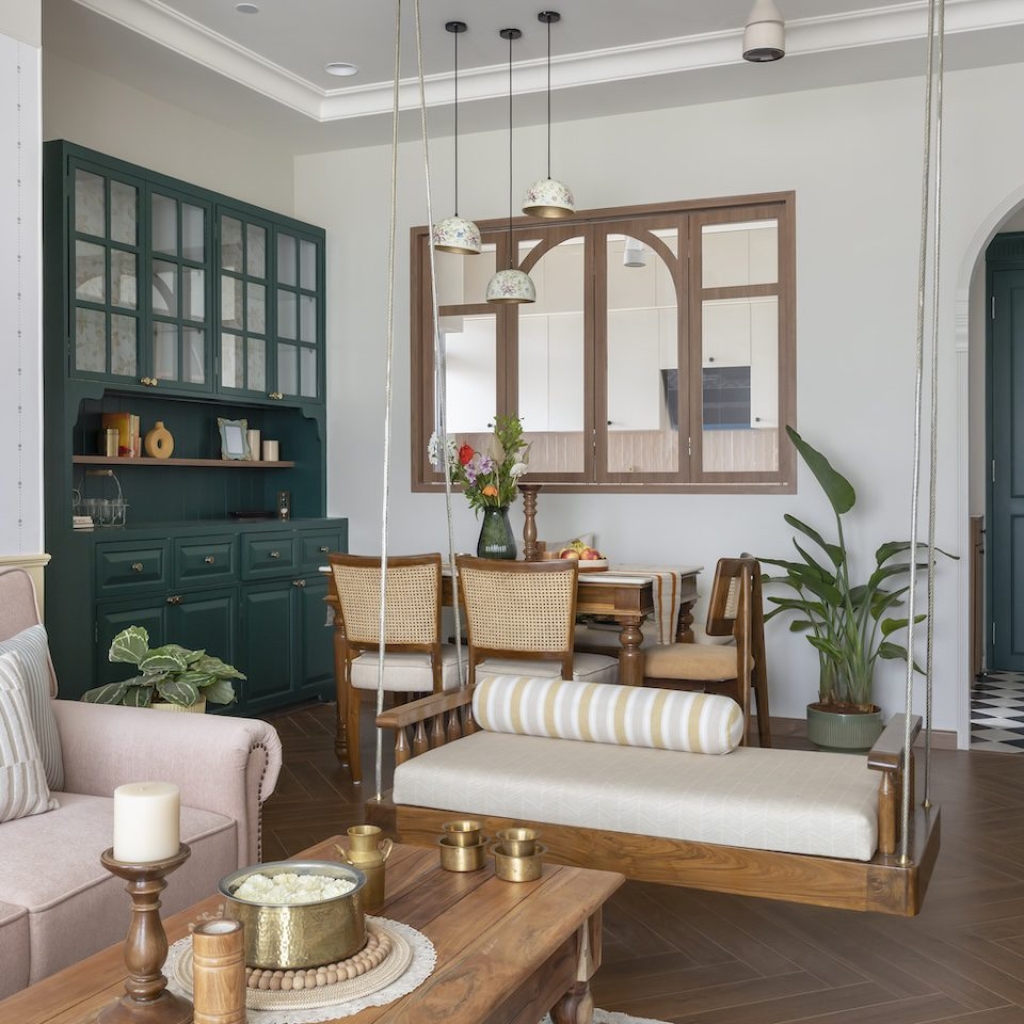
Designed by Alchemy Collective, Aurelia is a 1,050 sq ft residence in Mumbai, where bohemian warmth, layered colour, and spatial openness come together in a deeply personal urban home.
Curated by: Rupali Sebastian
Photographs: photographsbyprabal; courtesy Alchemy Collective
The project
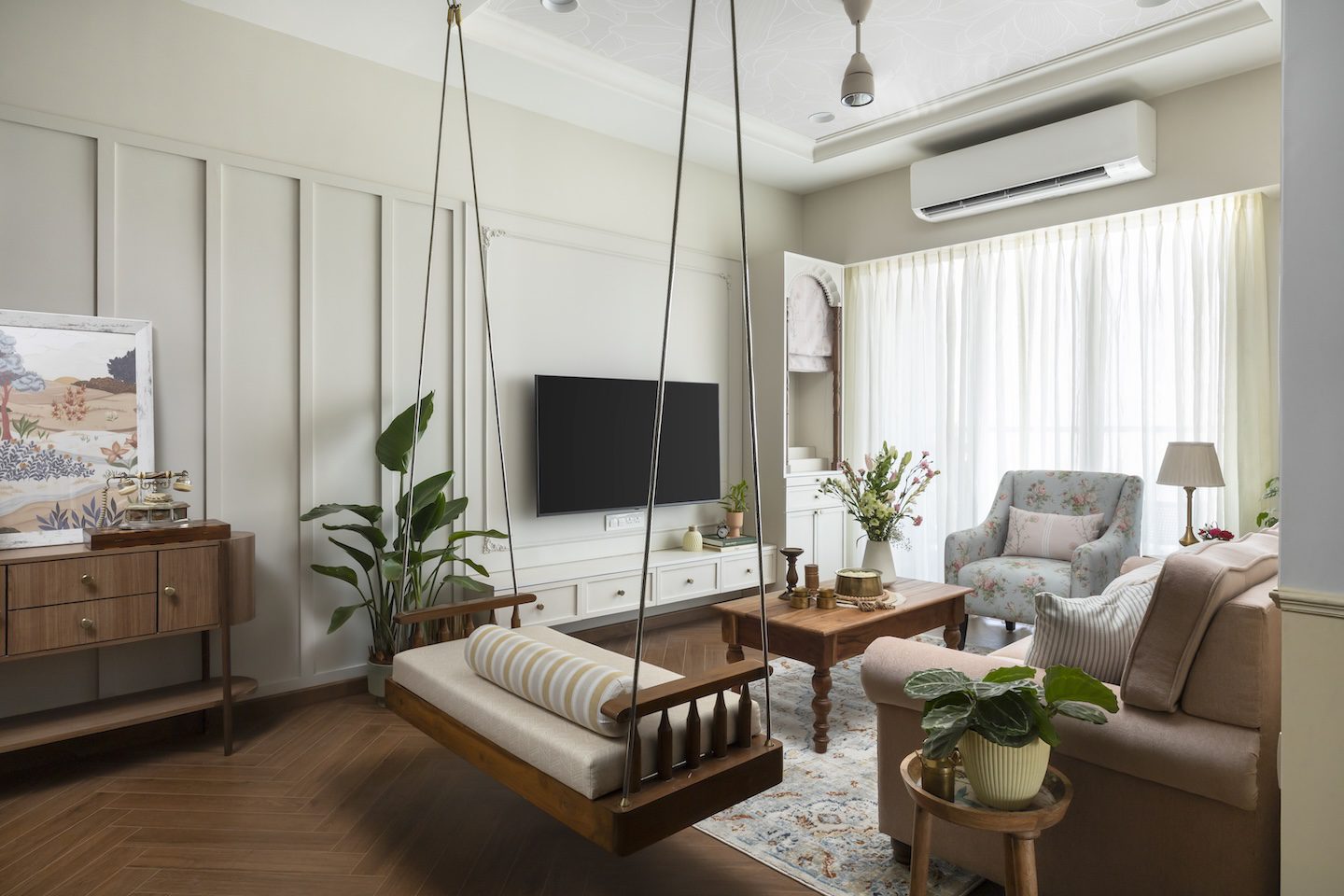
Aurelia is a 1,050 sq ft 3BHK residence in Kandivali East, Mumbai, conceived as a warm, eclectic home rooted in everyday comfort. Designed for a client deeply invested in both functionality and aesthetics, the project balances bohemian expression with thoughtful spatial planning.

The site
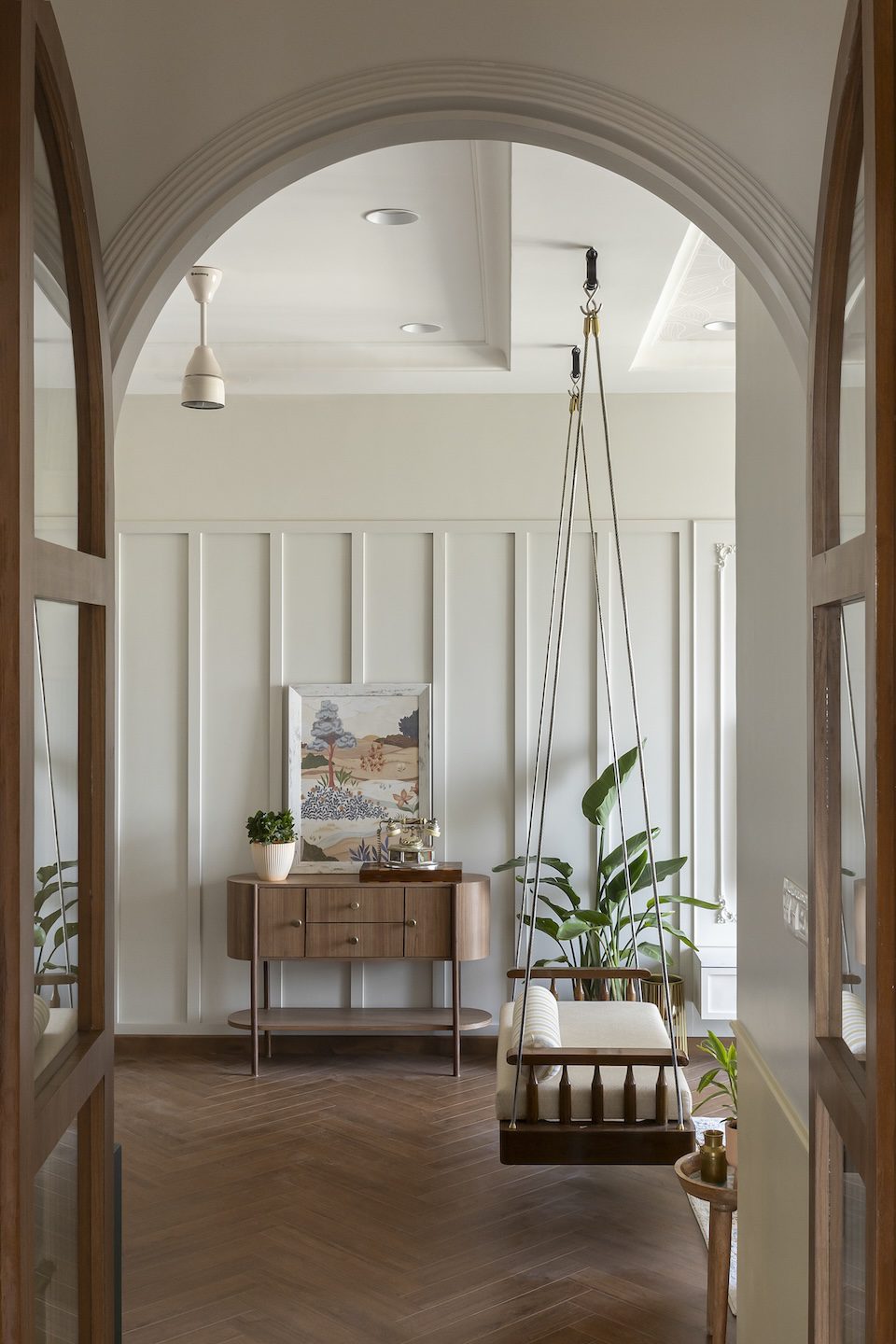
Located within a residential apartment complex in Kandivali East, the home was received in a standard builder condition. The layout offered clearly demarcated rooms and a closed kitchen, which the redesign sought to soften through selective structural interventions and improved connectivity.
The brief
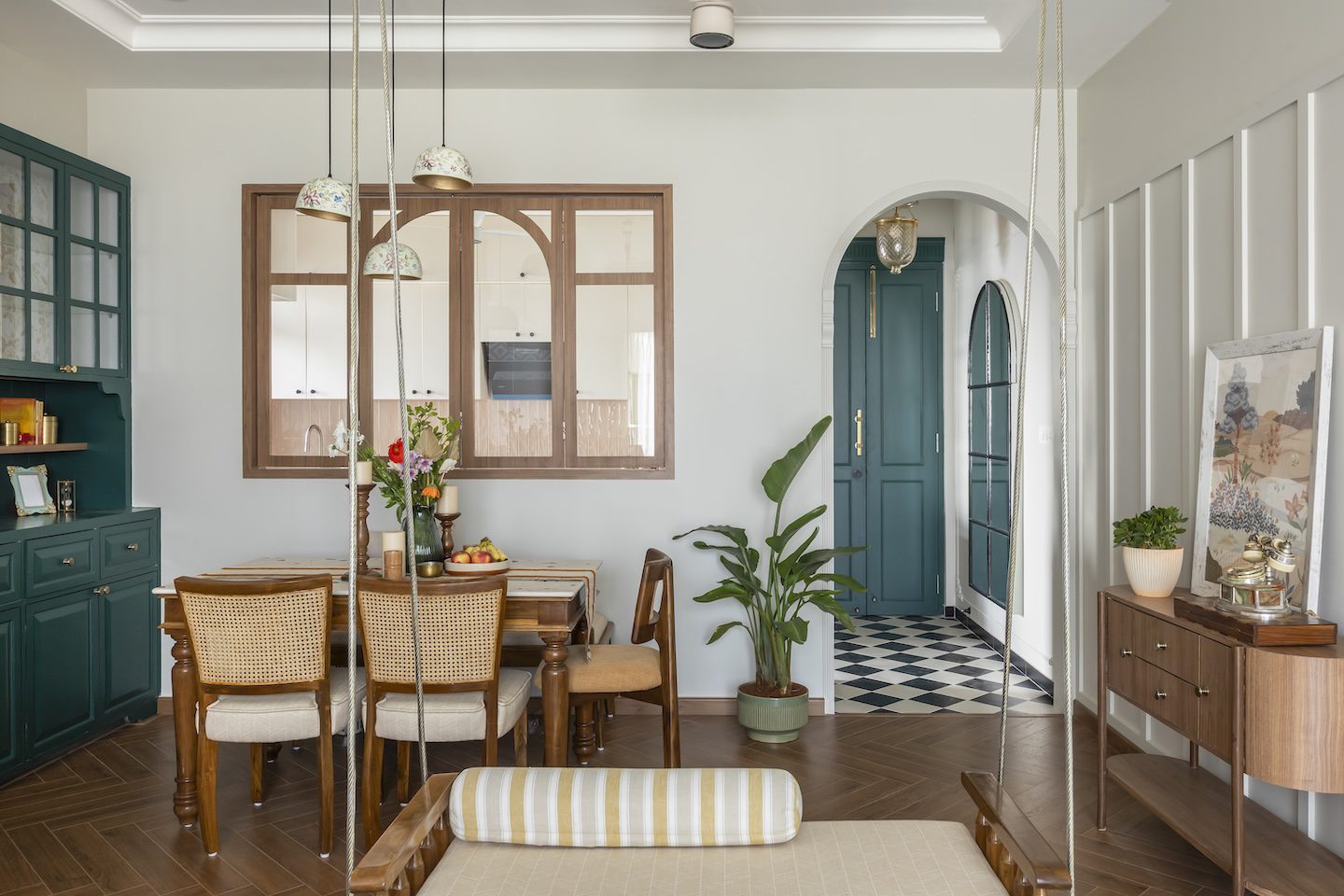
The clients envisioned an eclectic, bohemian home infused with colour and personality. A key requirement was an open kitchen that remained visually and socially connected to the living space. The client also wished to incorporate a wooden swing from his parental home into the living room, preserving it as a meaningful memorabilia element. Functionally, the home needed to feel open and interactive; aesthetically, it had to remain layered yet cohesive.
The design intent
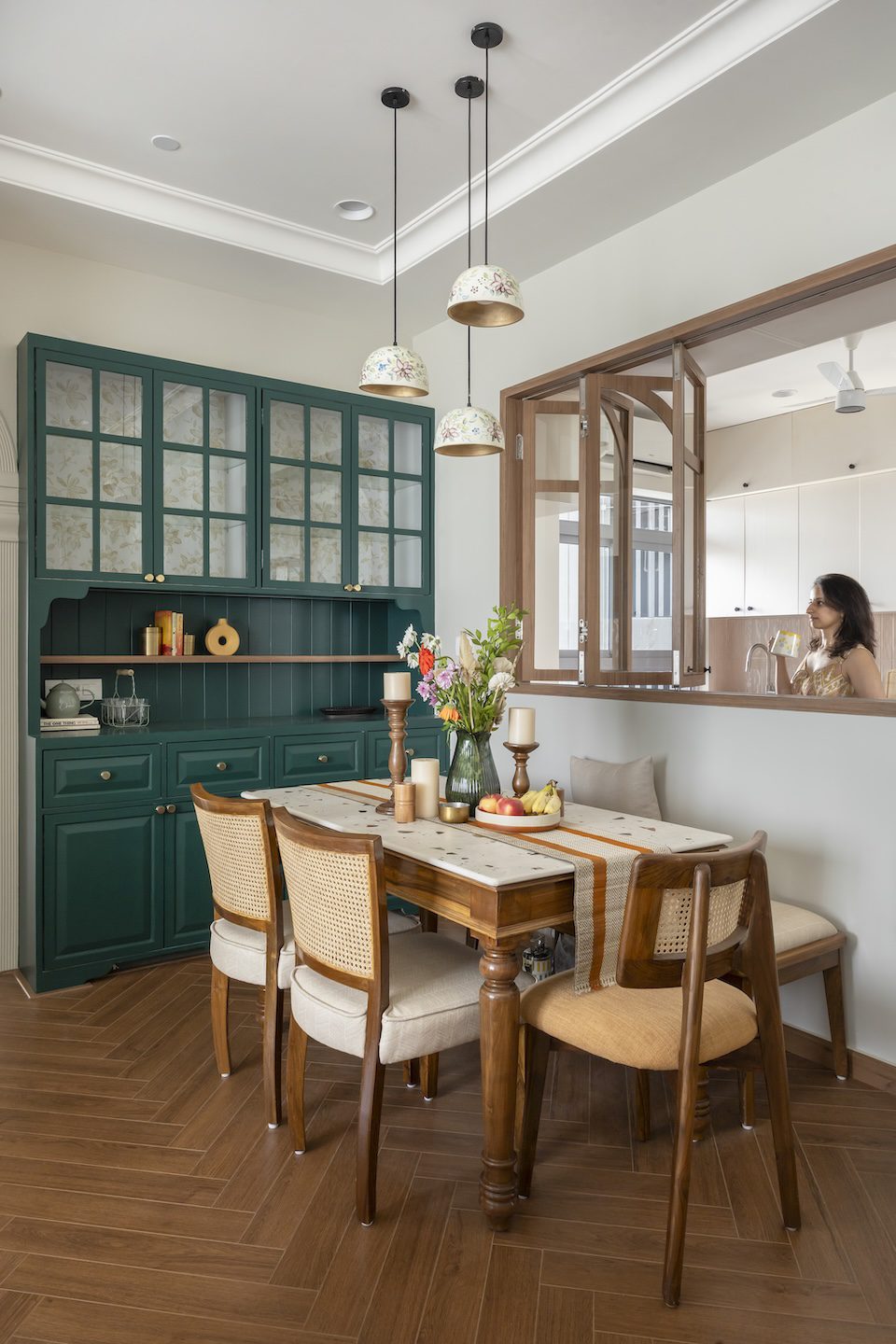
The residence was envisioned as a warm, lived-in home balancing classic detailing with contemporary boho comfort. The design embraces a layered aesthetic drawing from bohemian influences, subtle European undertones, and Indian sensibilities—translated into a modern urban setting. At its core, the philosophy revolves around slow living—spaces that invite pause, conversation, and comfort while remaining practical for daily family life.
The civil intervention
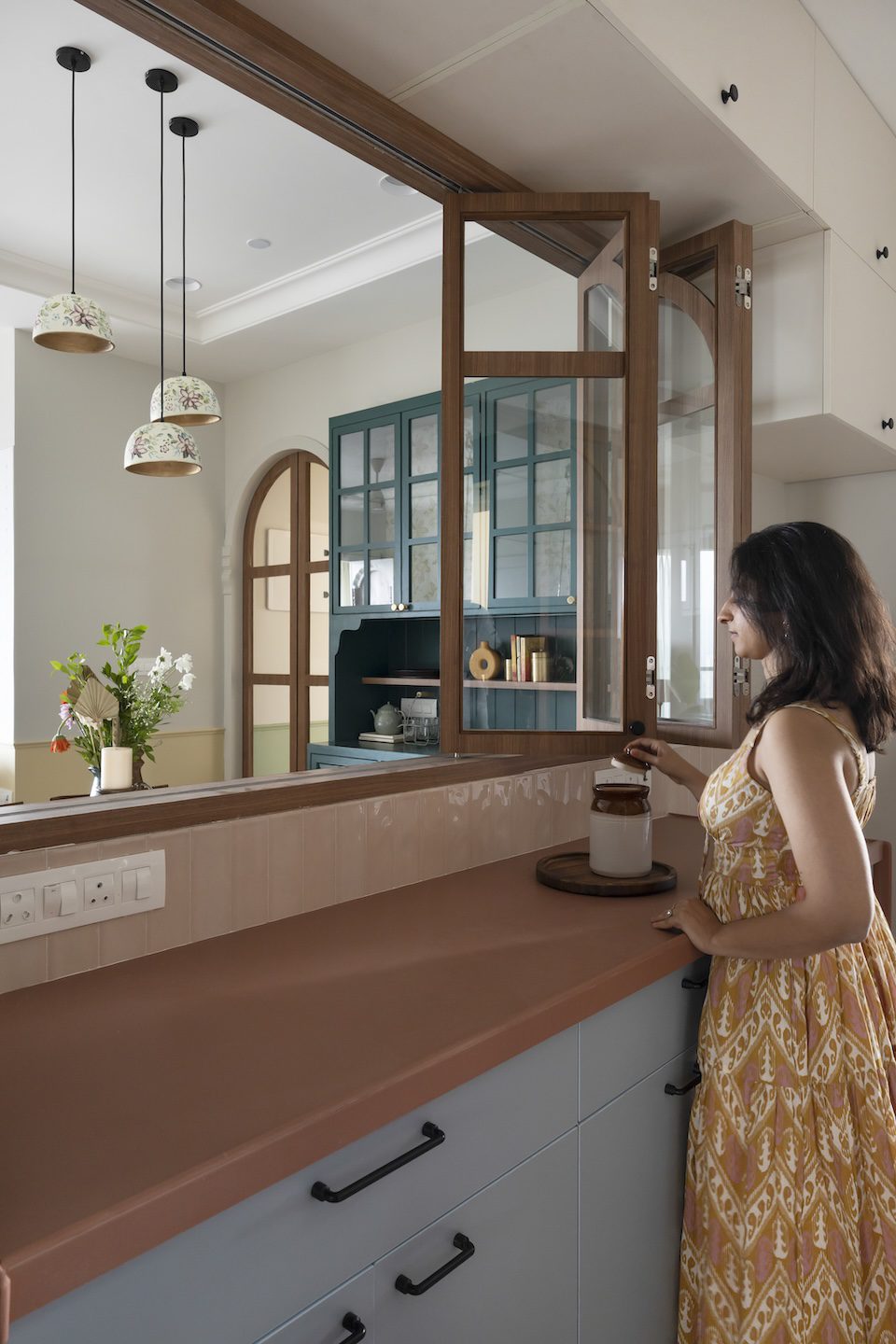
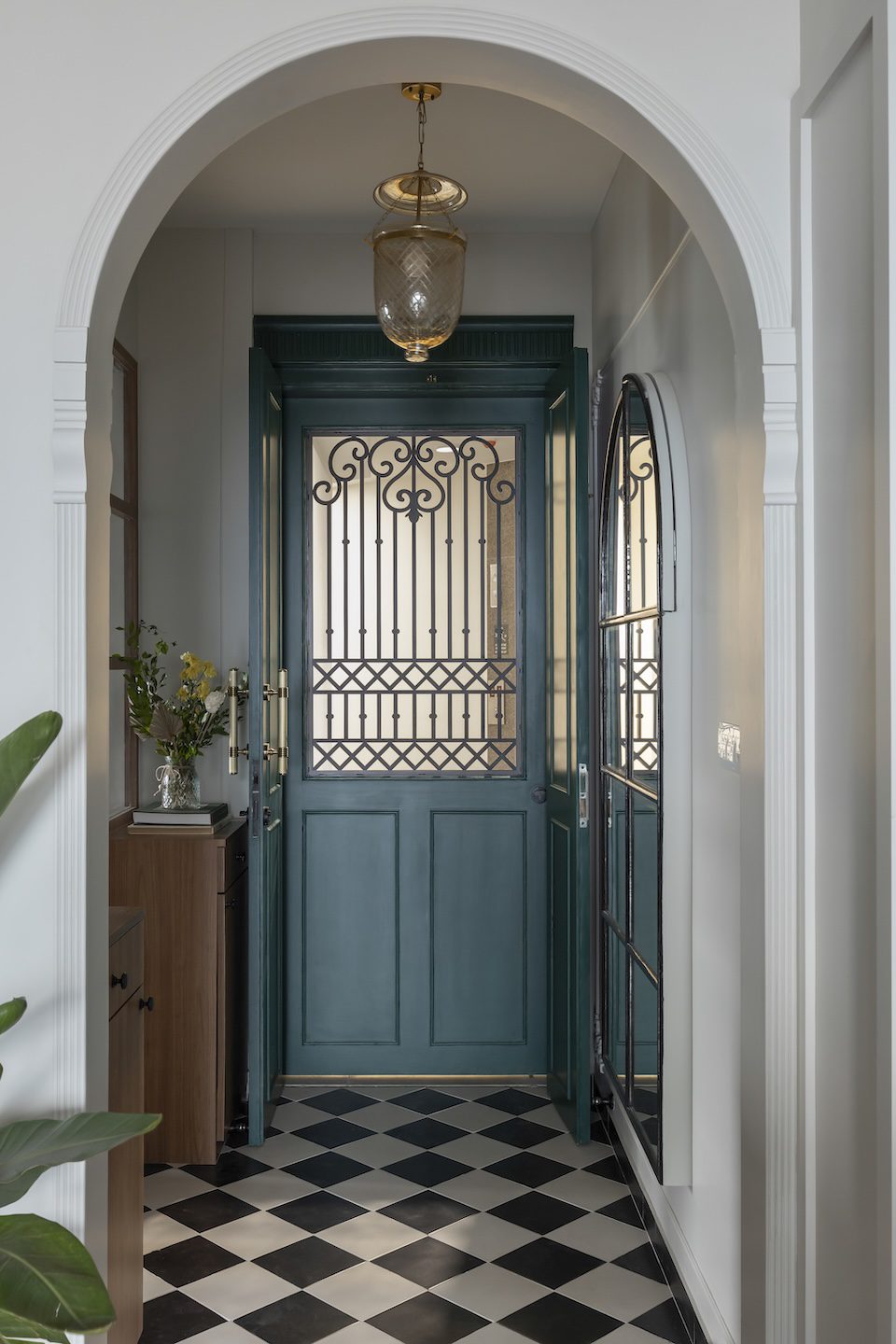
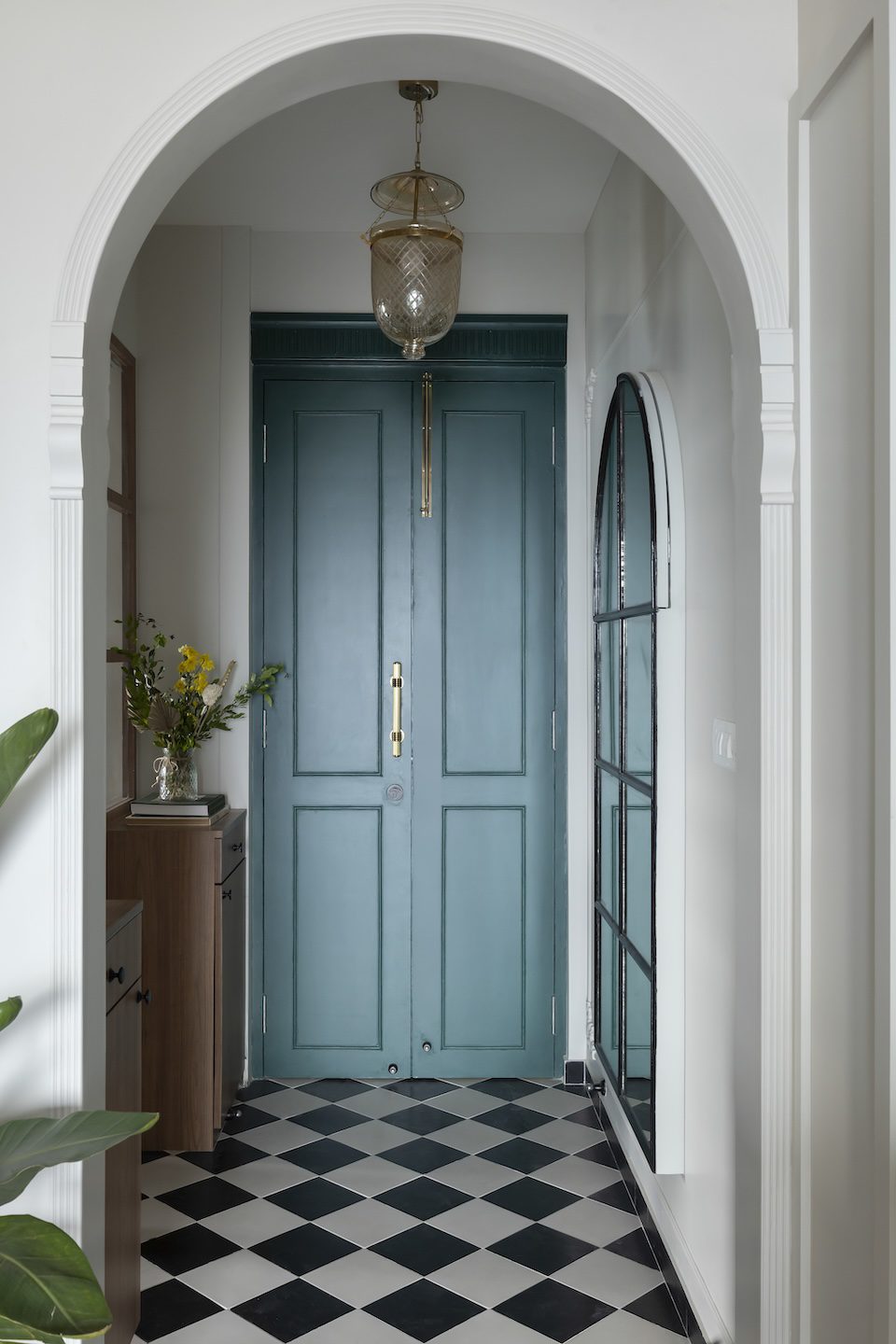
The kitchen entry wall was broken and repositioned to create a partition wall, allowing additional space in the foyer for a shoe cabinet. The common wall between the kitchen and dining was partly opened to introduce a sliding-folding window, ensuring uninterrupted connectivity between zones. These interventions enhanced flow without over-altering the structural framework.
The spatial flow
The sequence unfolds from the entrance foyer into the dining and living areas, followed by a passage leading to the powder room and three bedrooms. The open kitchen visually engages with the living area, reinforcing spatial continuity and shared activity. Each bedroom branches off privately while remaining connected to the home’s central rhythm.
The material palette
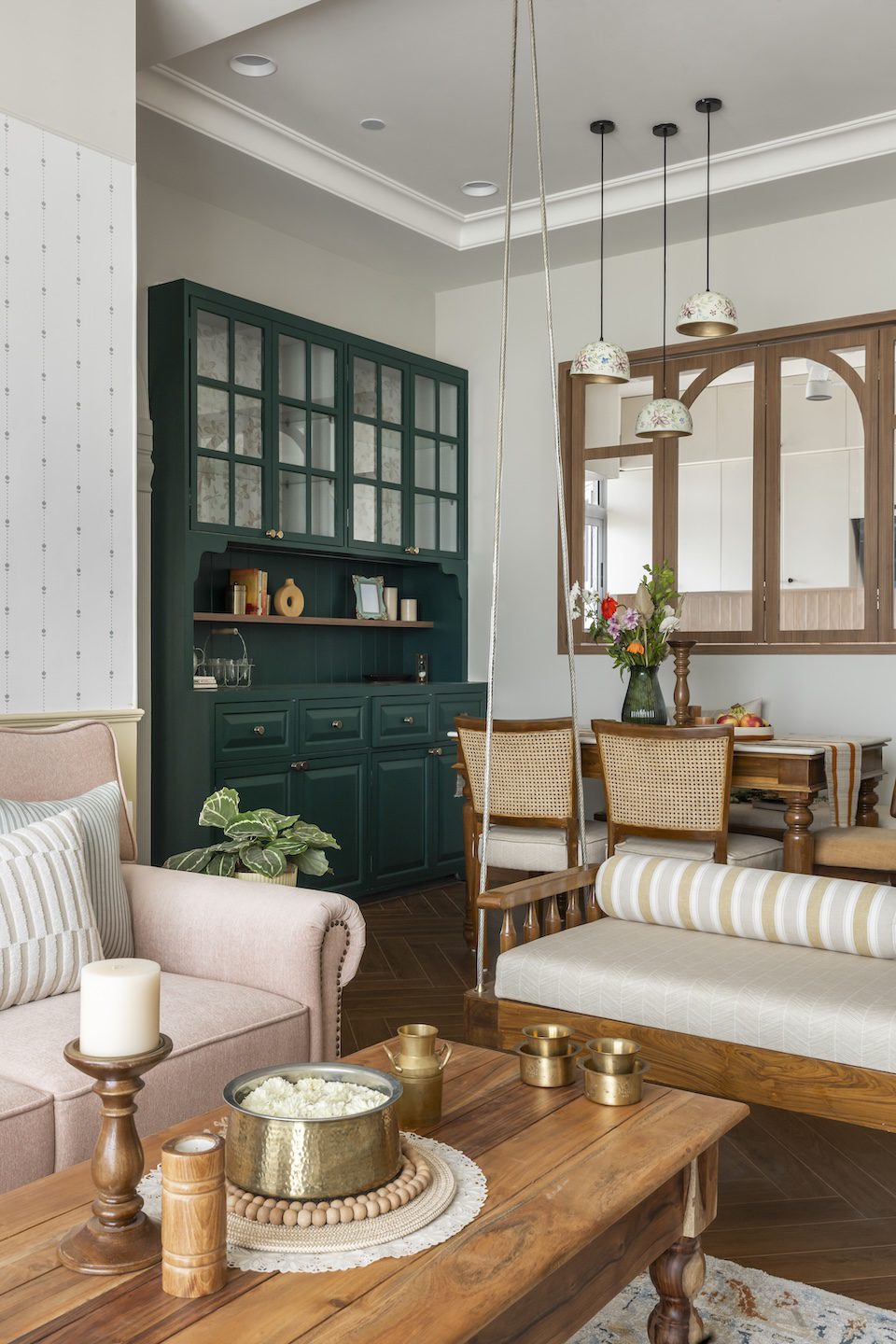
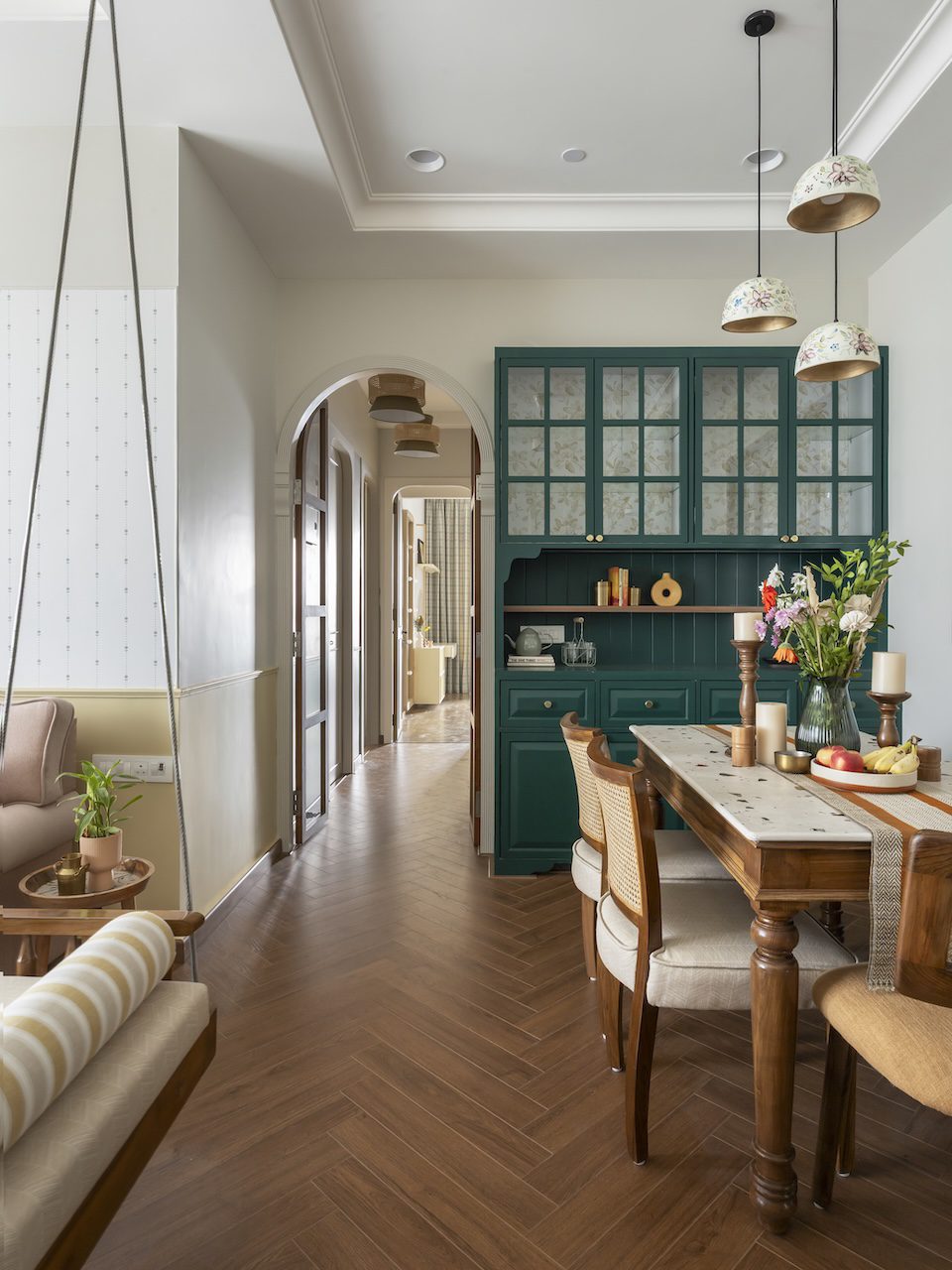
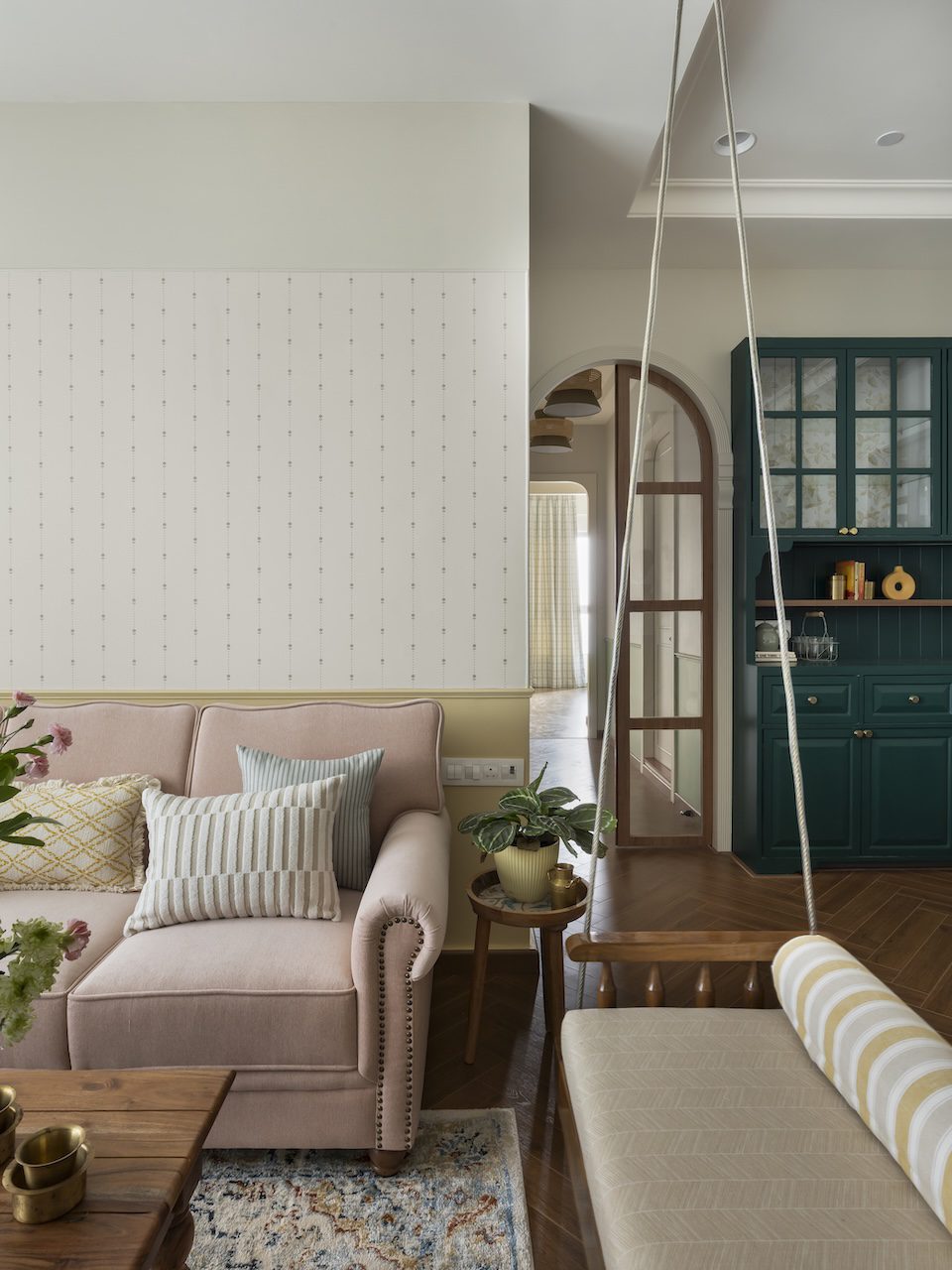
The living room sets the tone with arched openings, a kitchen window that enhances visual continuity, and a soft neutral base layered with deep green cabinetry, warm wood, cane details, and subtle brass accents. Patterned flooring at the entrance transitions into herringbone wooden floors, establishing rhythm and texture. A wallpapered ceiling introduces softness without overwhelming the palette.
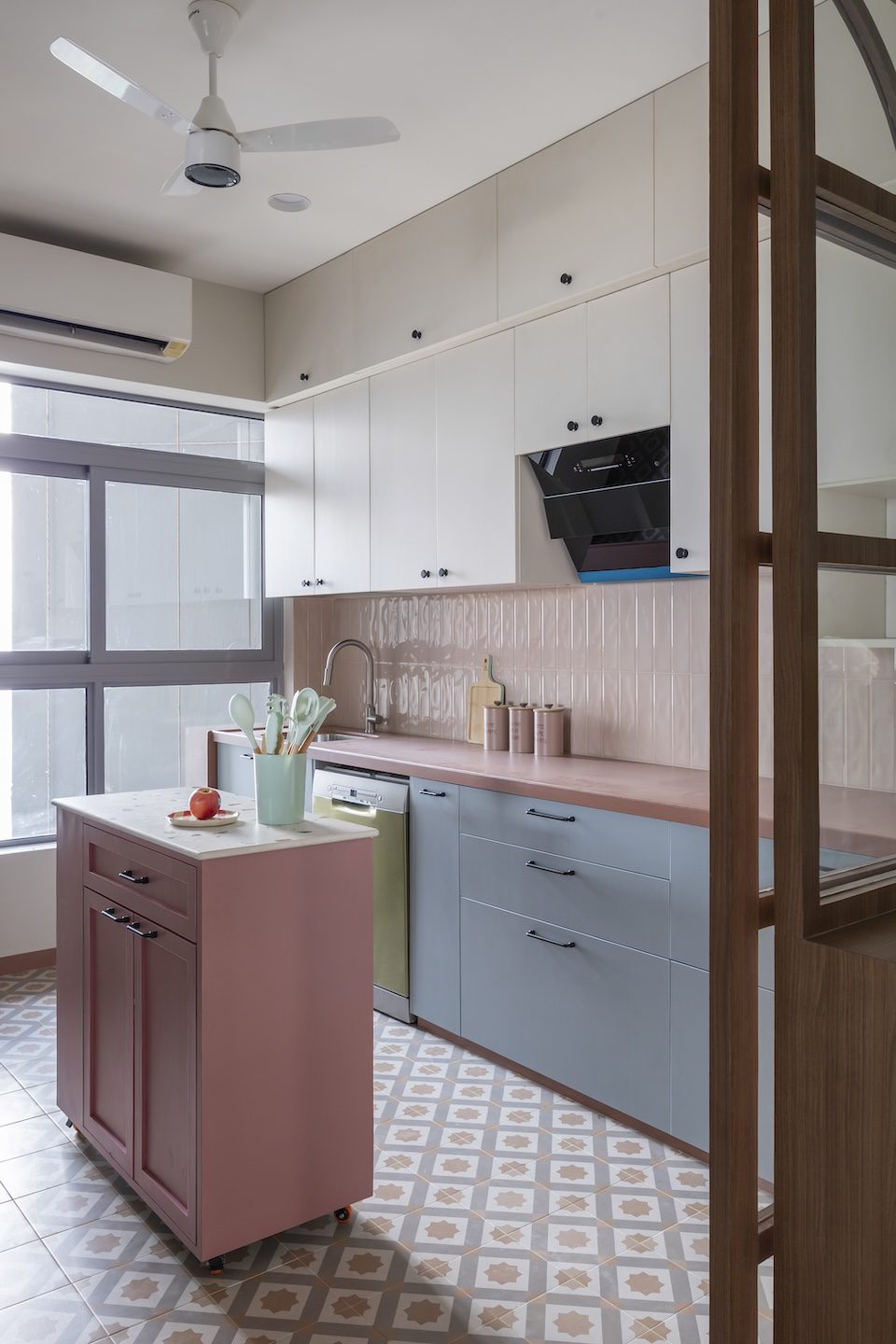
In the kitchen, patterned tiles with ochre undertones ground the space, while soft pink and blue cabinetry contrasts against a rich brown counter. The introduction of an island between parallel counters transforms it into a central working hub.
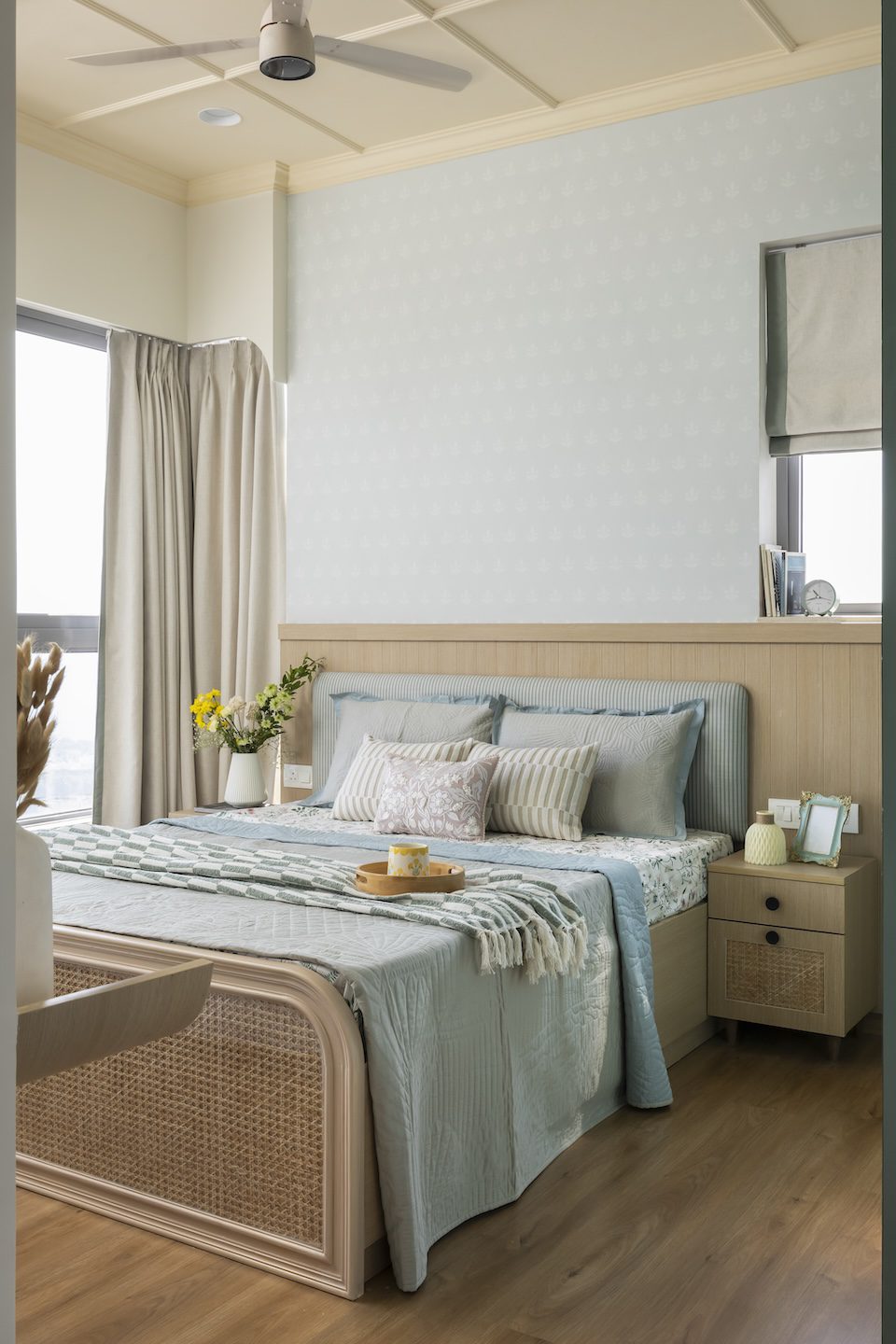
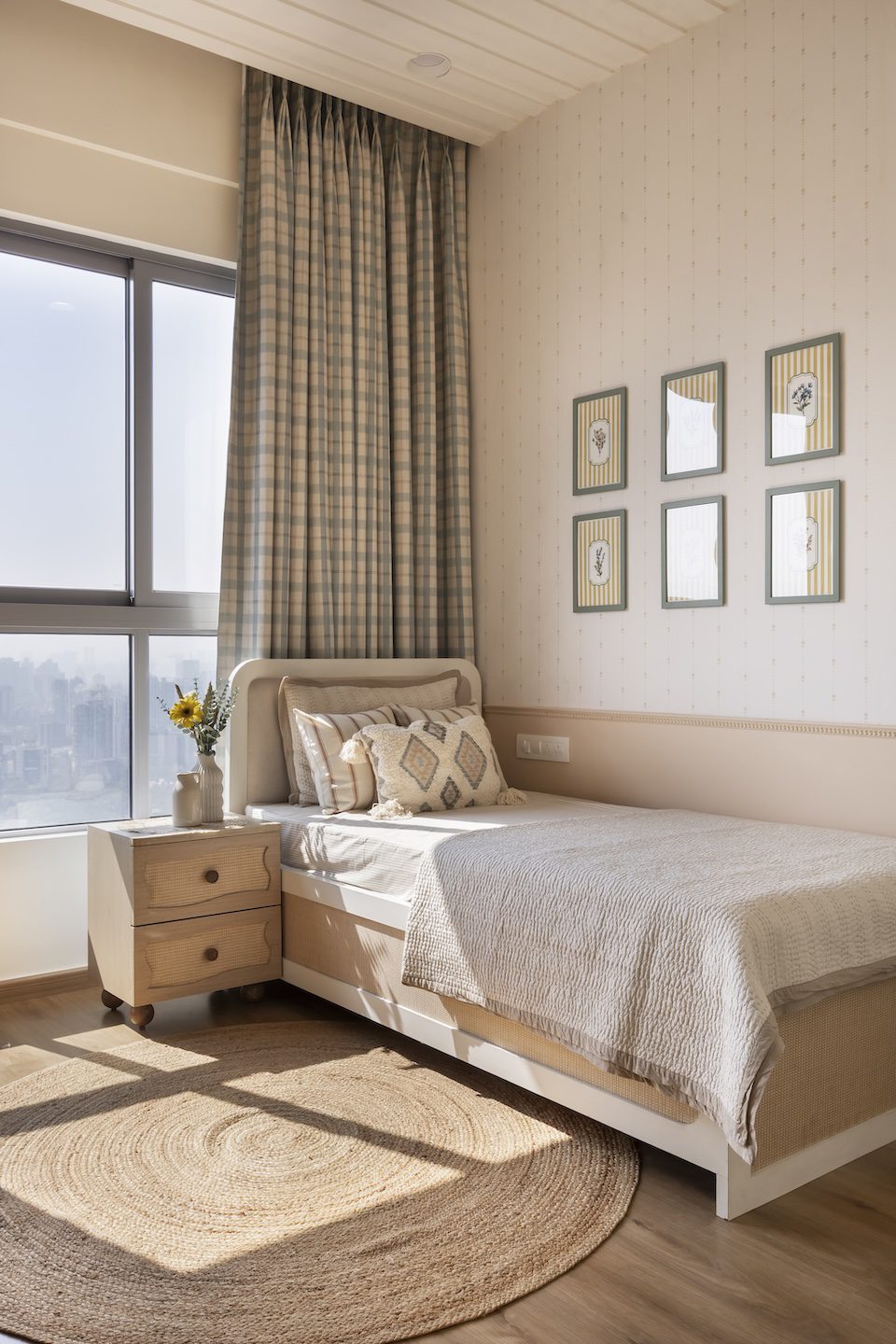
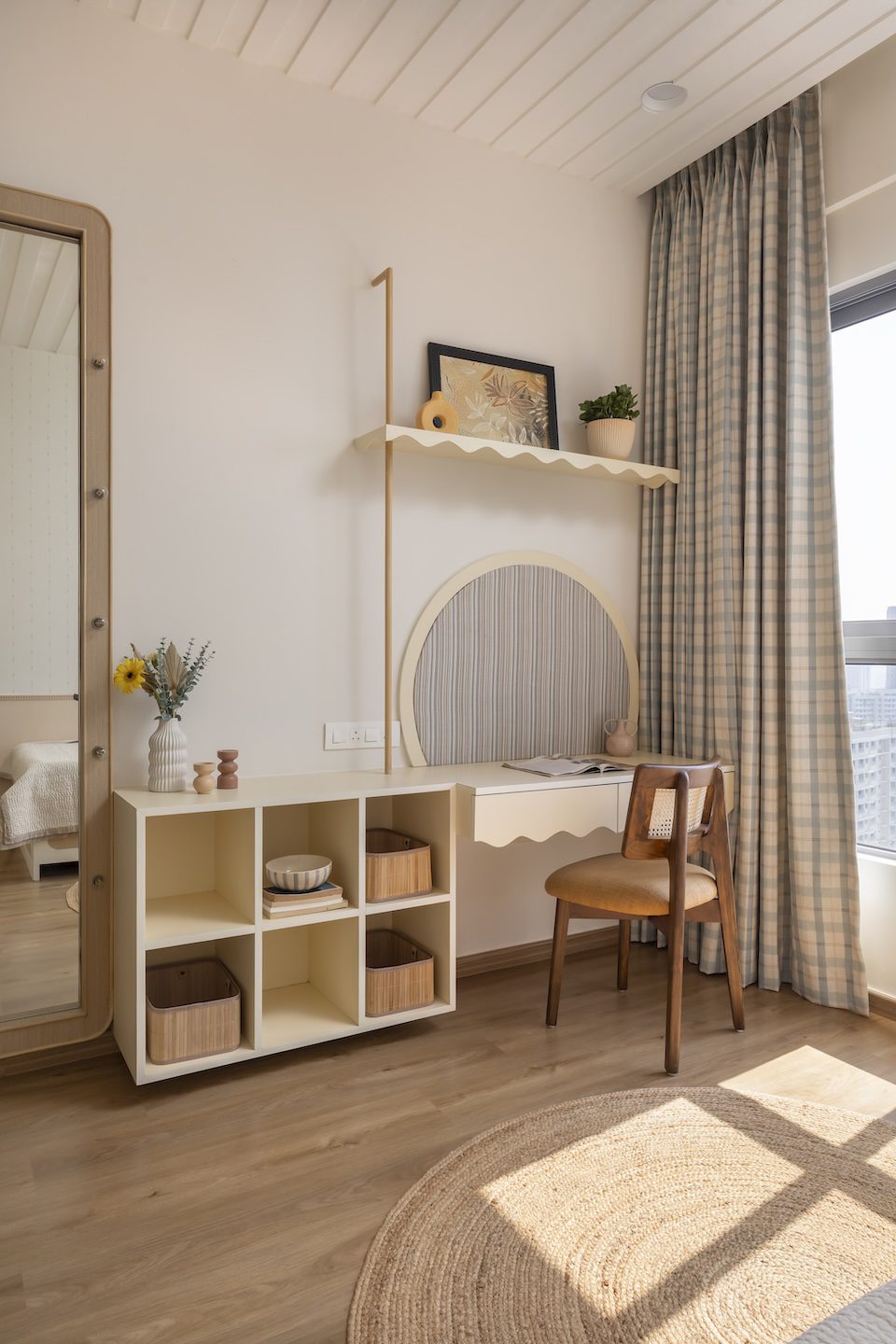
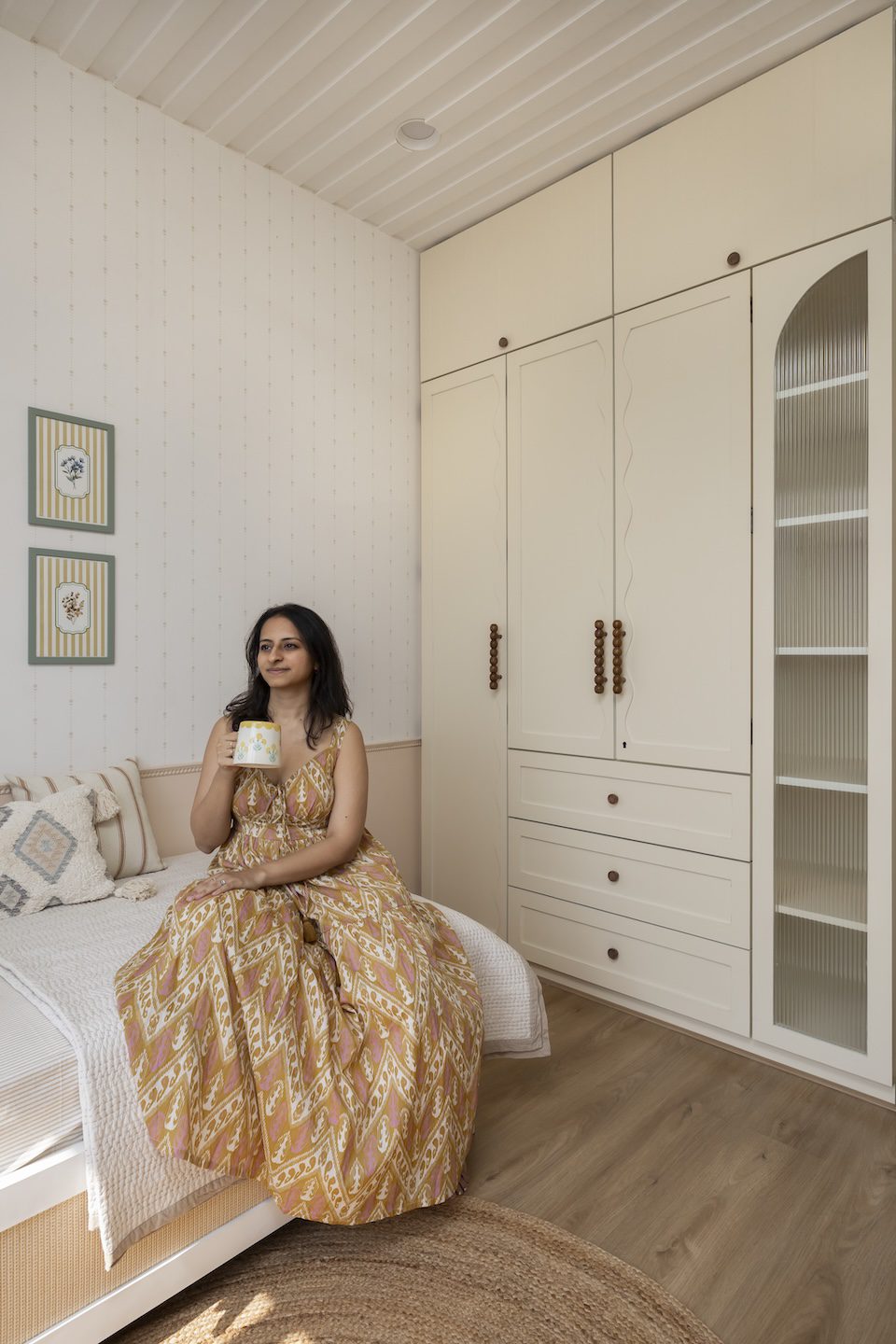
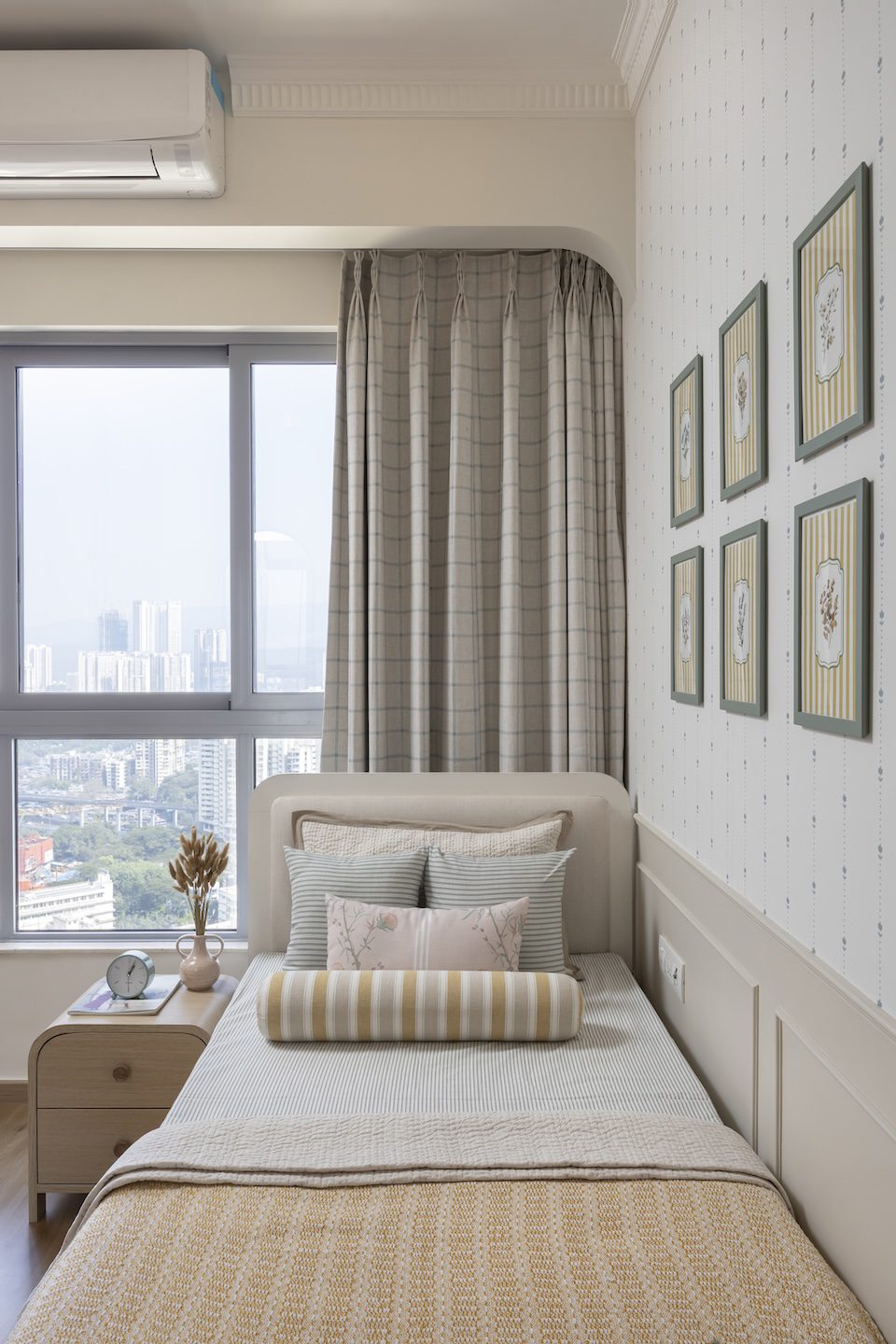
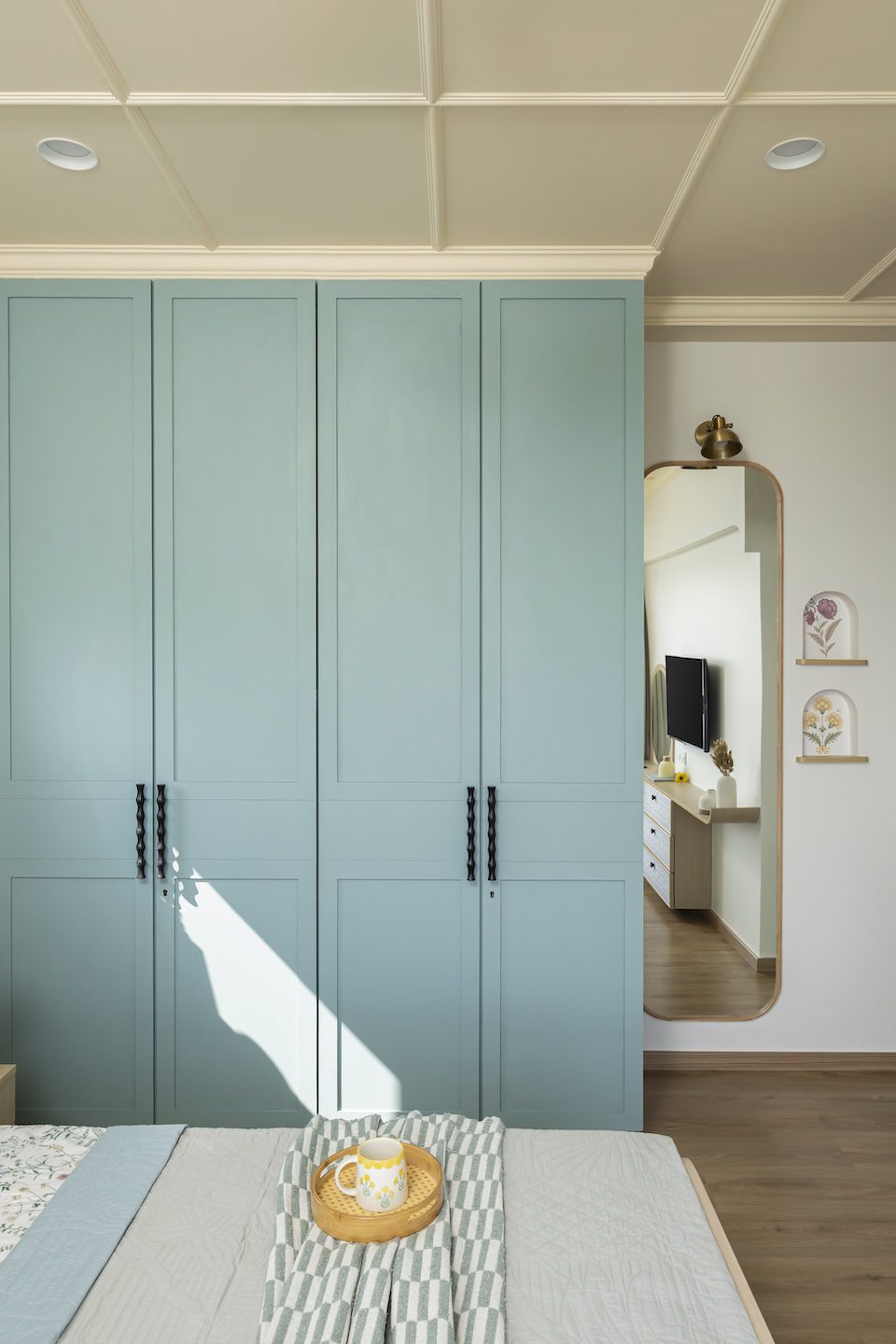
The master bedroom adopts muted blue-green tones paired with beige accents and light wood finishes, softened by layered textiles and cane detailing. One daughter’s bedroom carries a blush base accented by light blue curtains and cane elements, while the second embraces beige and soft yellow tones punctuated by blue checkered drapes. Across spaces, colour is expressive yet measured, ensuring longevity.
The highlights
The open kitchen concept establishes continuous visual interaction between zones. The integration of the inherited wooden swing introduces emotional memory into the living space. Arched openings, patterned flooring, and layered colour stories give the home a distinctive yet balanced character. The foyer intervention cleverly maximises storage without compromising openness.
The challenges
Reworking the kitchen entry and common walls required careful planning to preserve functionality while improving connectivity. Balancing the clients’ strong aesthetic preferences with spatial clarity demanded thoughtful layering to ensure the eclectic palette remained cohesive rather than overwhelming.
The takeaway
Aurelia demonstrates how colour, memory, and spatial openness can coexist in a compact urban footprint. By combining bold personal elements with considered planning, the home achieves warmth without excess and individuality without visual chaos.
Fact file
Project: Aurelia
Location: Kandivali East, Mumbai
Area: 1,050 sq ft
Design firm: Alchemy Collective
Principal designers: Grishma Thakkar and Niyati Gala
Design team: Renuka Patkar
Photography: photographsbyprabal



Add a Comment