
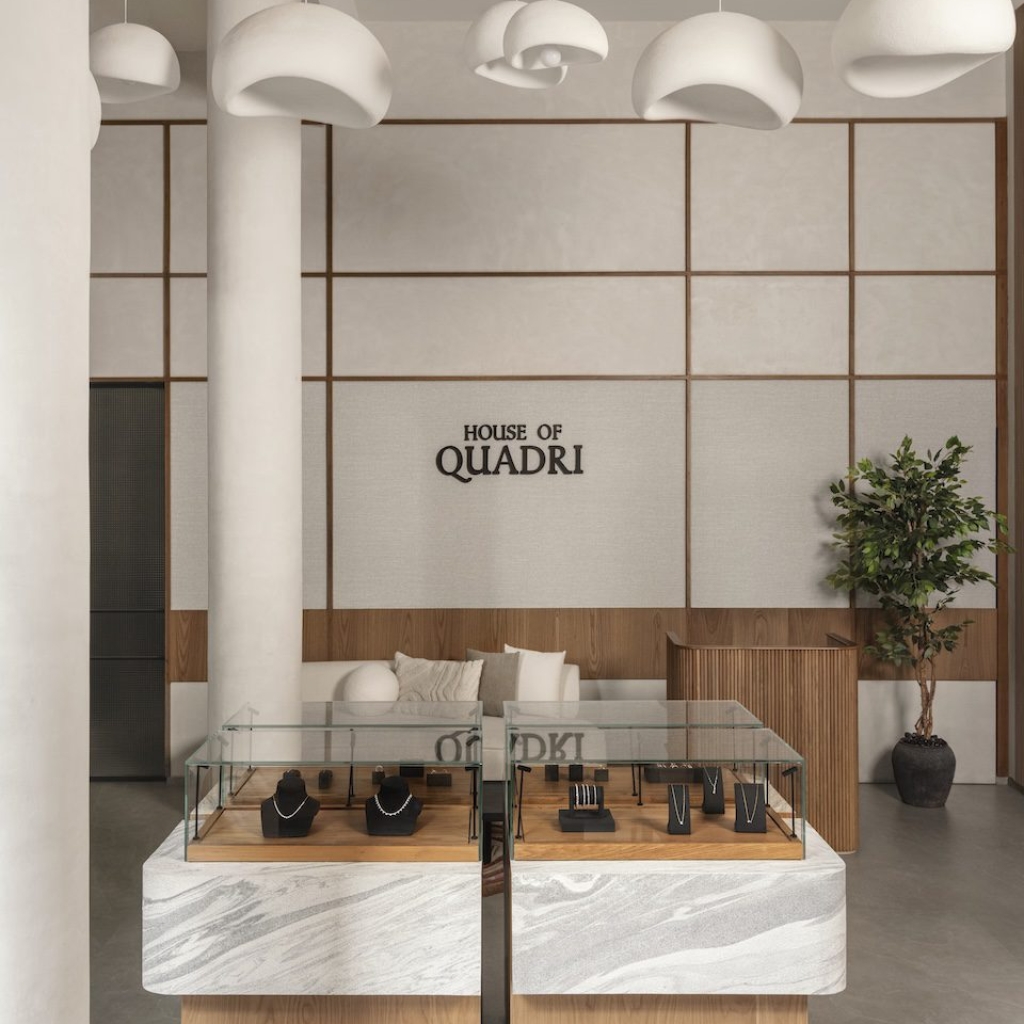
The House of Quadri flagship in Mumbai–designed by Aashni Kumar–offers a deeply personal retail experience, where the craftsmanship of lab-grown diamonds unfolds within a setting that balances contemporary refinement with historic character.
Curated by: Deepa Nair
Photographs: Saurabh Suryan; courtesy Aashni Kumar
The site
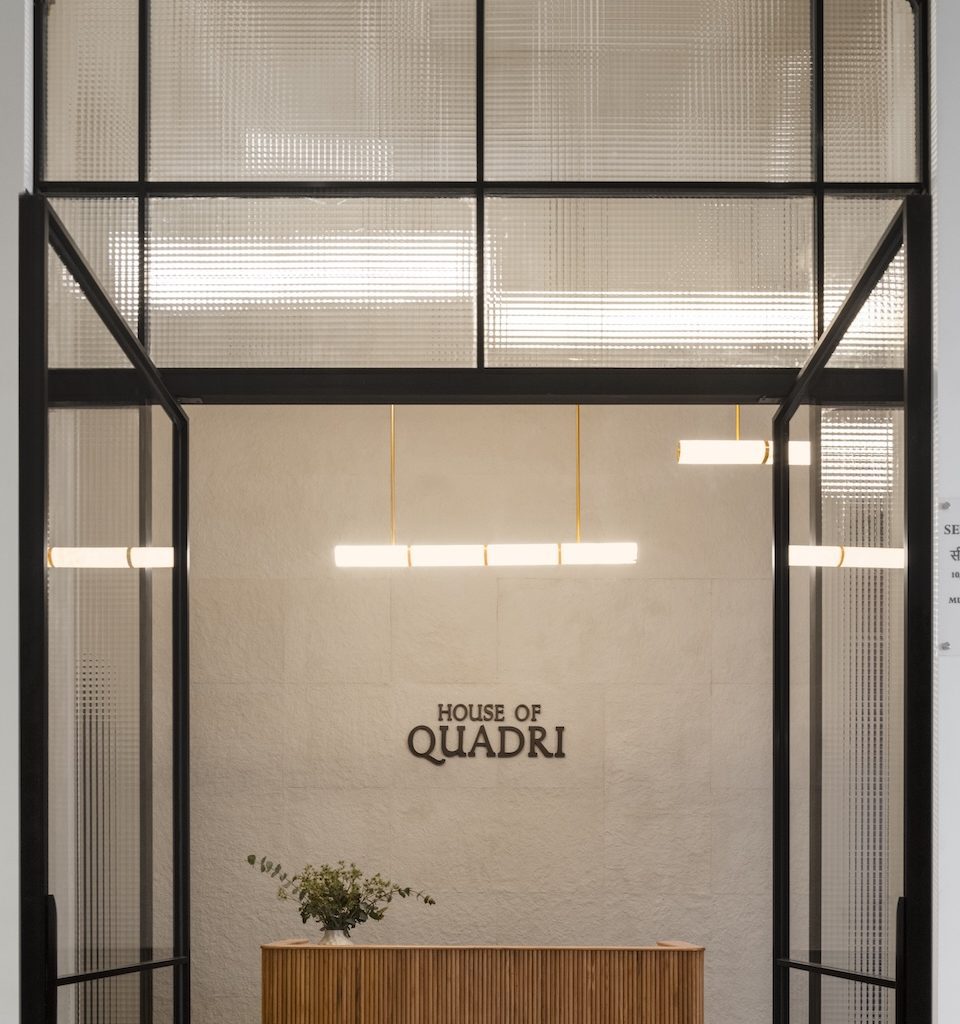
The newest address of House of Quadri, the diamond jewellery boutique, at Kitab Mahal in South Mumbai, is a study in muted opulence. In a retail landscape often driven by spectacle, the idea here finds expression through restraint and quiet sophistication, shaped within the shell of a historic building. The setting could not have been more fitting: a neoclassical landmark built in 1890, located within the heritage-rich precinct of Fort.
The brief
Known for its forward-looking approach to lab-grown diamonds, the brand collaborated with designer Aashni Kumar to envision an immersive retail environment that reflects its refined sensibility and enduring elegance, while remaining deeply responsive to the architectural character of its historic address. Conceived as the brand’s first physical retail presence, the brief sought to honour both legacy and location.
The design intent
The Fort boutique unfolds as a study in contemporary minimalism, with palette of earthy hues, soft textures, and gentle red accents referencing the brand’s identity with precision. For Aashni Kumar, the project extended beyond the creation of a retail environment; it became an exercise in shaping the brand’s visual and emotional language, one that would inform its future retail experiences. Working closely with House of Quadri founder Vaibhav Karnavat, Aashni translated the brand’s ethos into a space that feels aspirational yet approachable. “Vaibhav’s vision was clear,” she reflects. “We wanted to create a space that resonates with a generation that values conscious luxury, craftsmanship, and authenticity.”
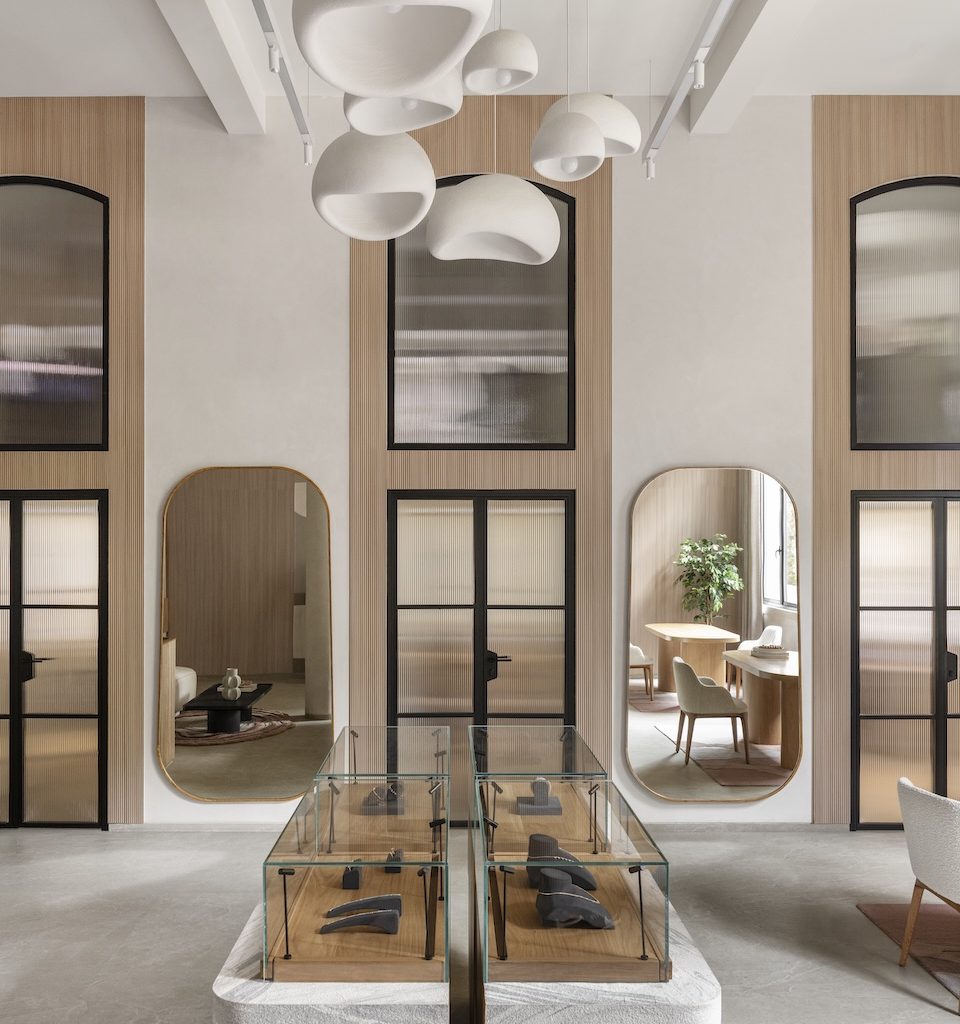
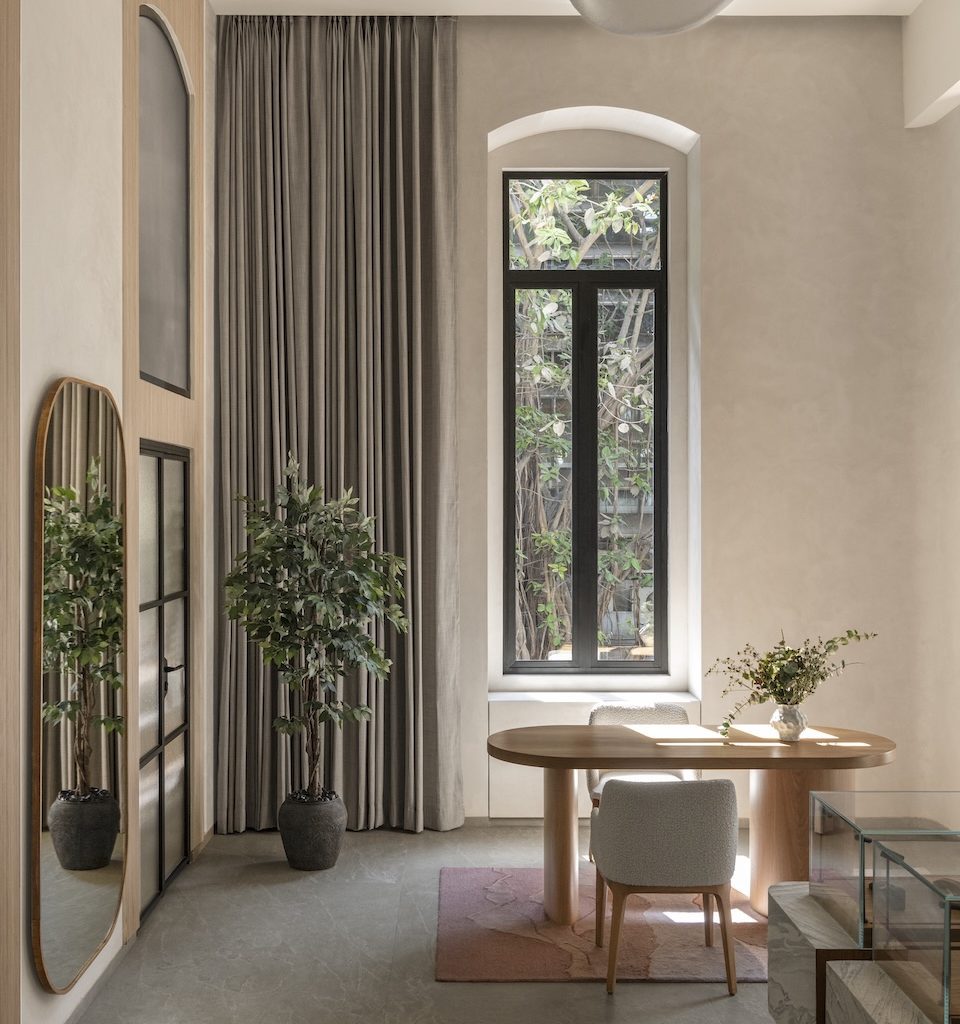
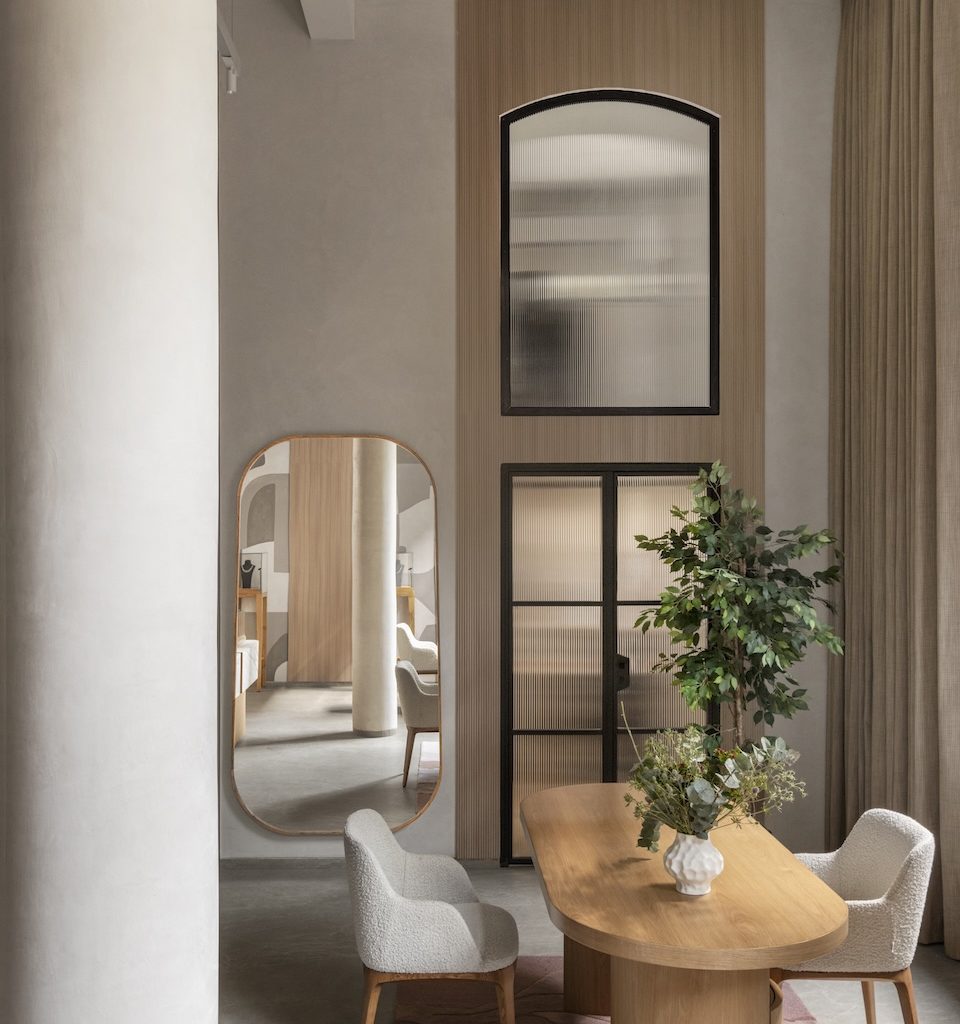
Designing a retail space within a nineteenth-century neoclassical structure demanded a sensitive and measured approach. Drawing on her experience with context-driven projects across India, the Middle East, and London, Aashni approached the brief with deep respect for the existing architecture. “The arched windows and generous proportions guided our design process from the very beginning,” she notes. The resulting space strikes a careful balance between historic reverence and contemporary clarity, where every material choice and spatial proportion feels deliberate and meaningful.
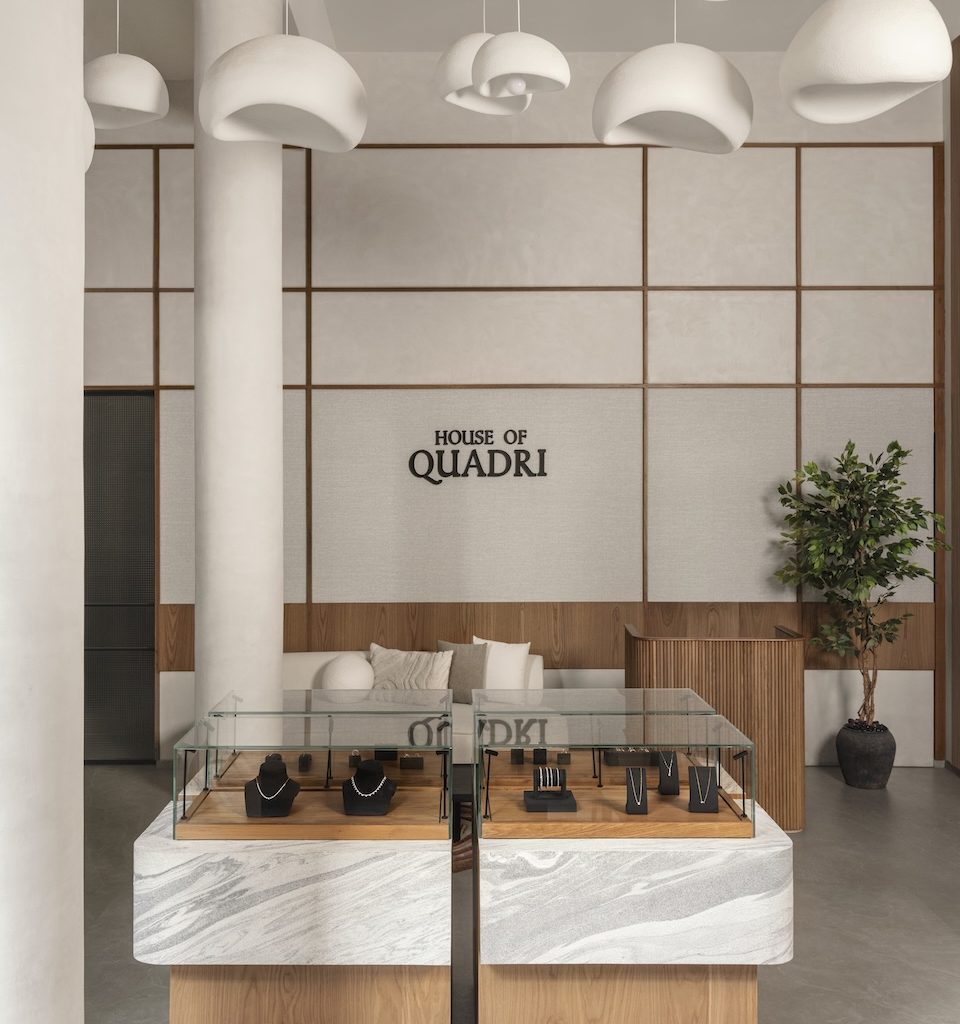
The design and material details
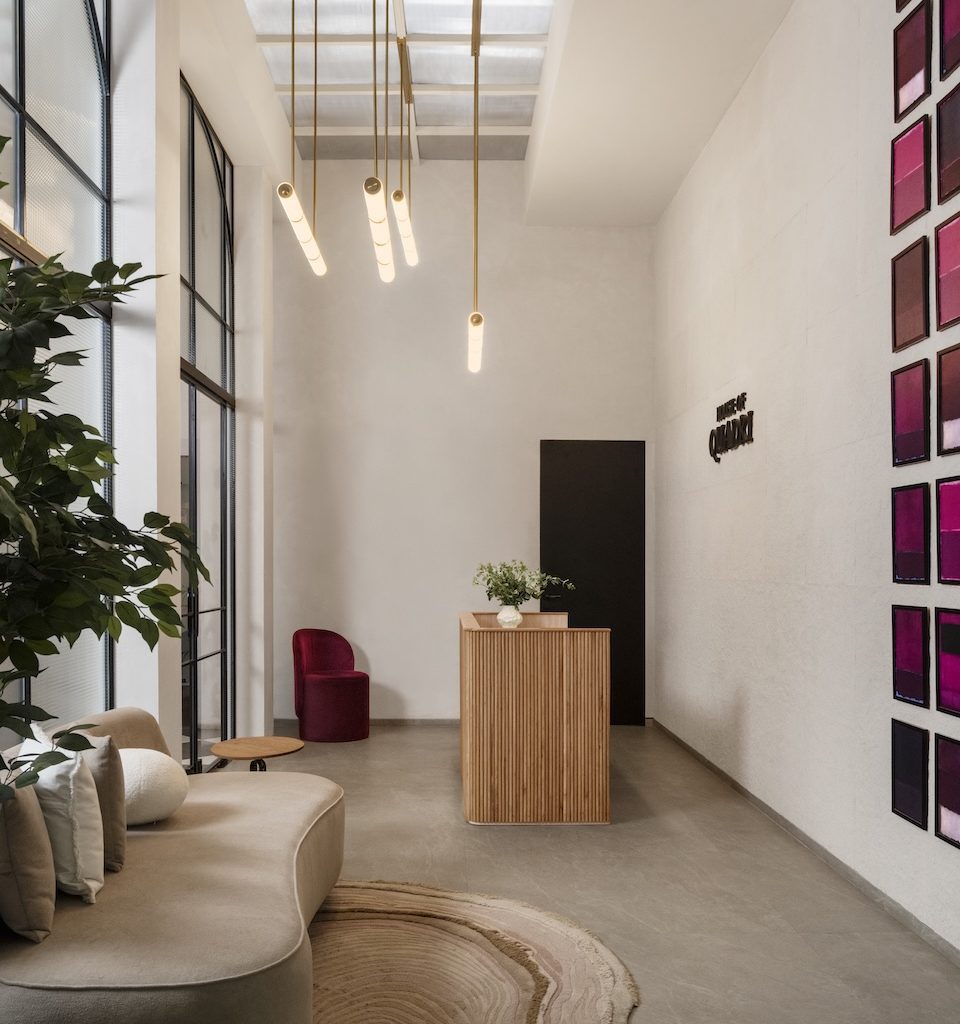
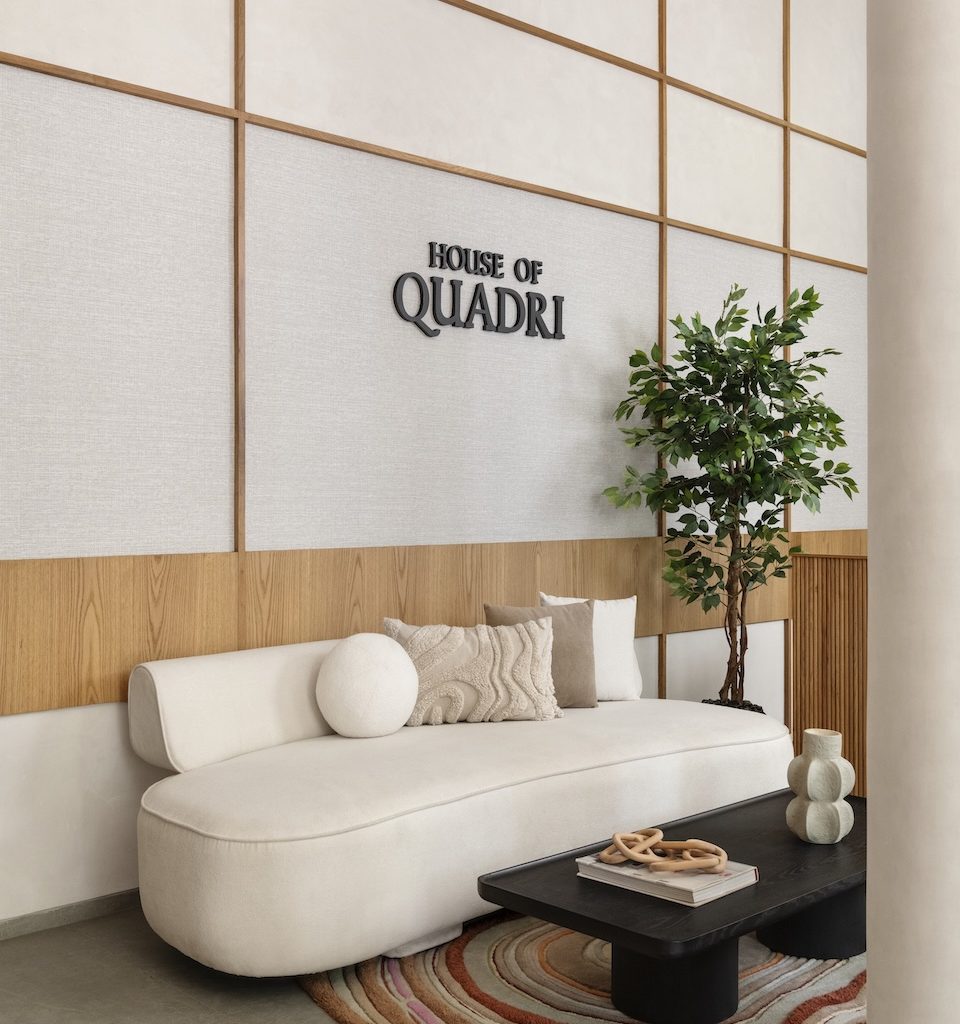
The reception area sets the tone for what follows. Here, a curvilinear white sofa by Bareeki, a wooden table by Josmo Studio, and a hand-tufted rug by Loops by LJ, inspired by the rhythmic patterns of tree rings, come together in an earthy, composed arrangement. Stone flooring, lime-plastered walls, and warm wooden detailing establish a sense of balance, while finishes by Nexion, Neocoats, and MCM Cladding lend subtle refinement.
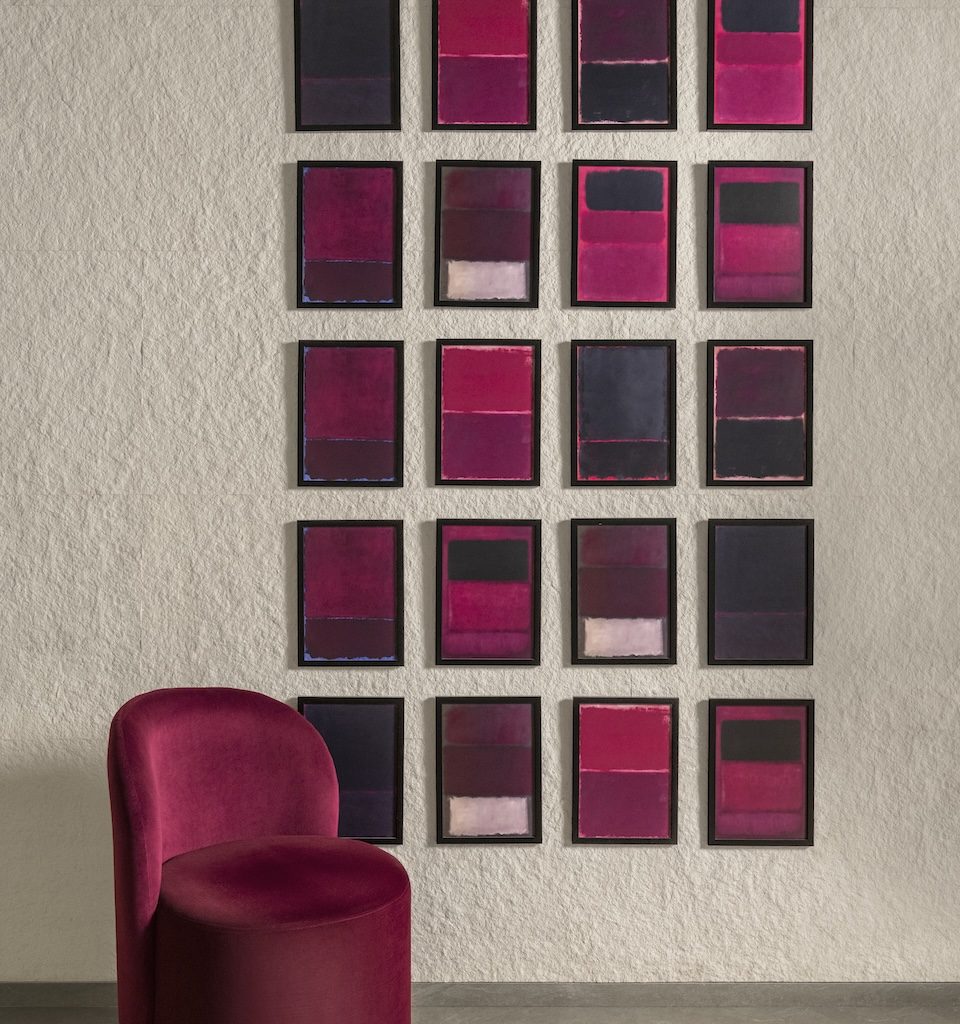
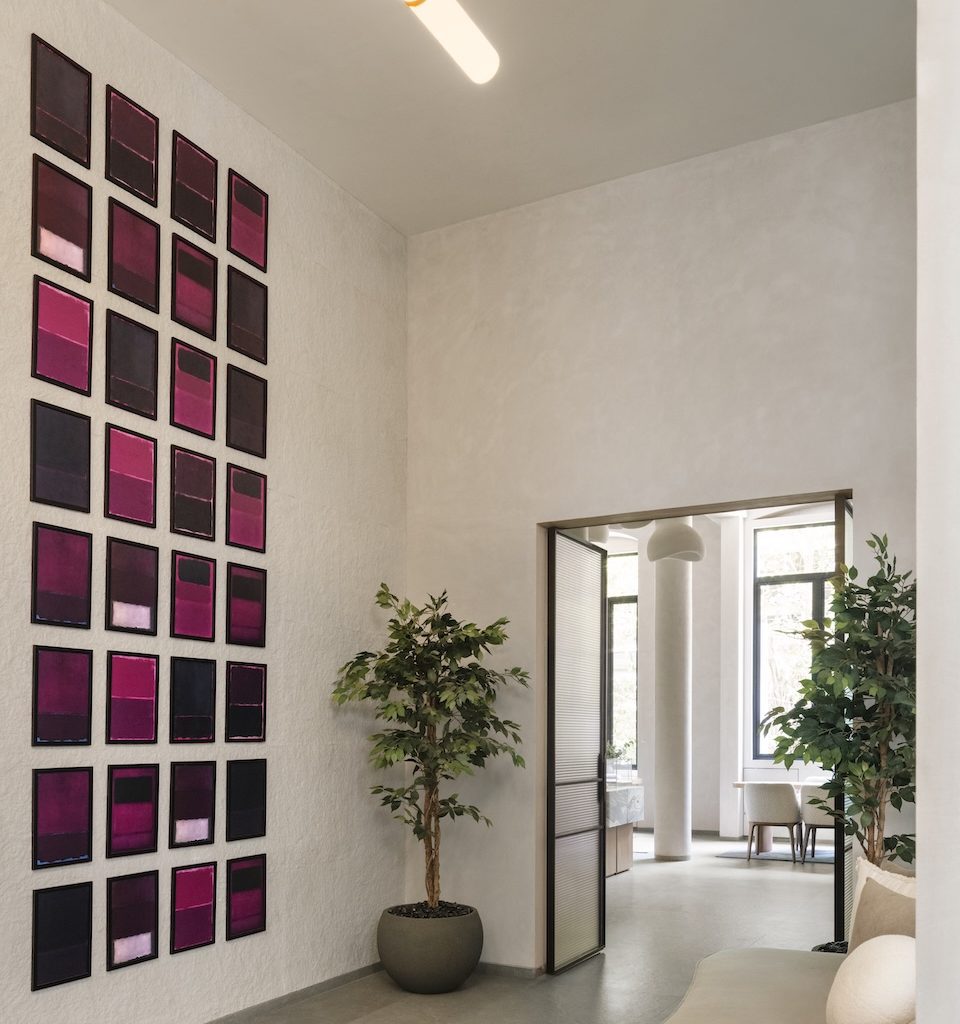
Lush greenery introduces an element of calm, while the brand’s signature red appears with restraint through a gradient art wall in shades of pink, red, and burgundy, featuring abstract compositions inspired by Mark Rothko. “Red conveys strength,” explains Aashni. “We wanted it to act as a focal point and storytelling element, introducing vibrancy without disrupting the serene mood of the interiors.”
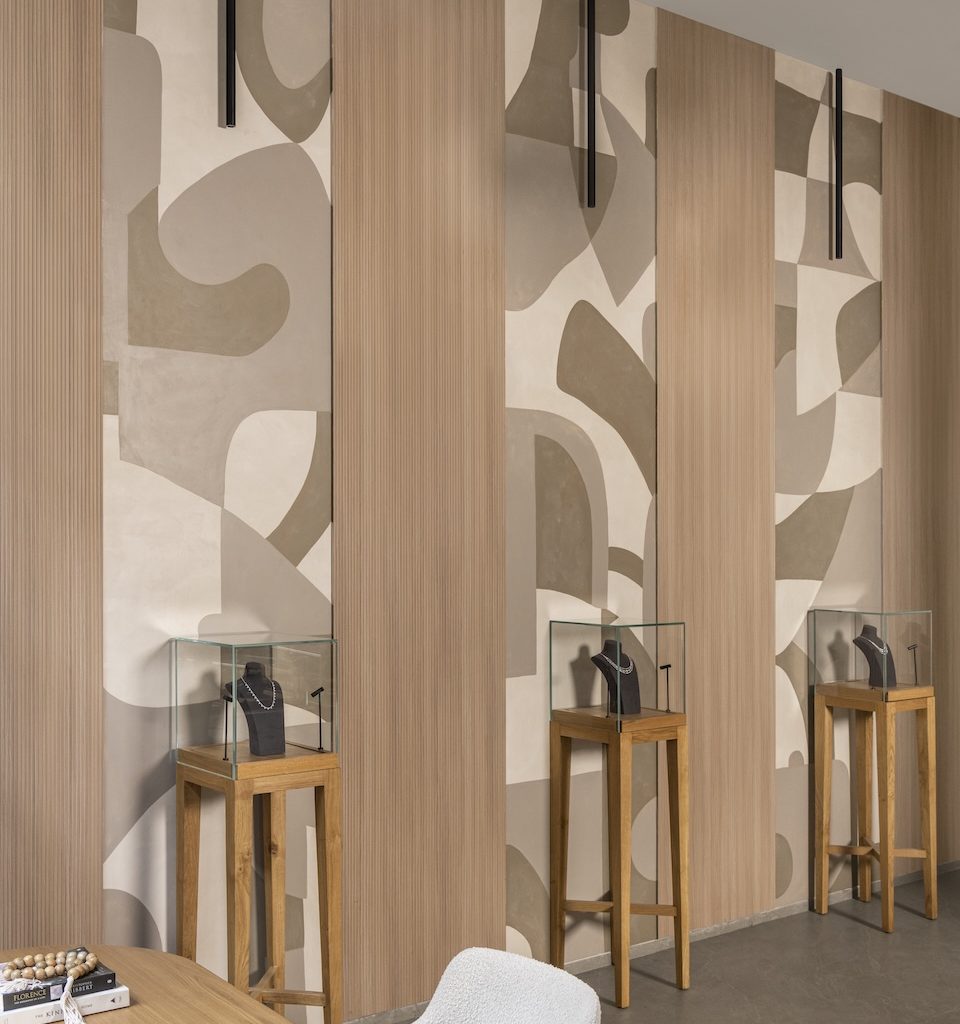
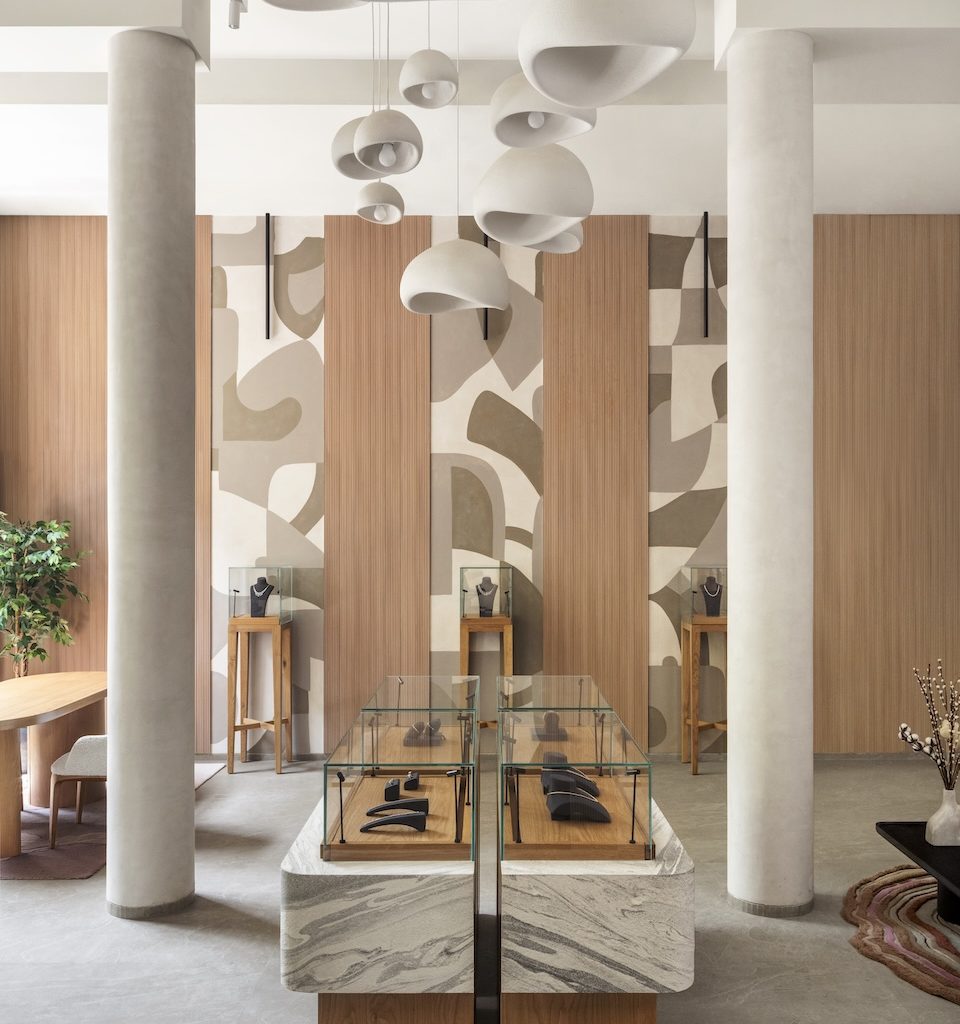
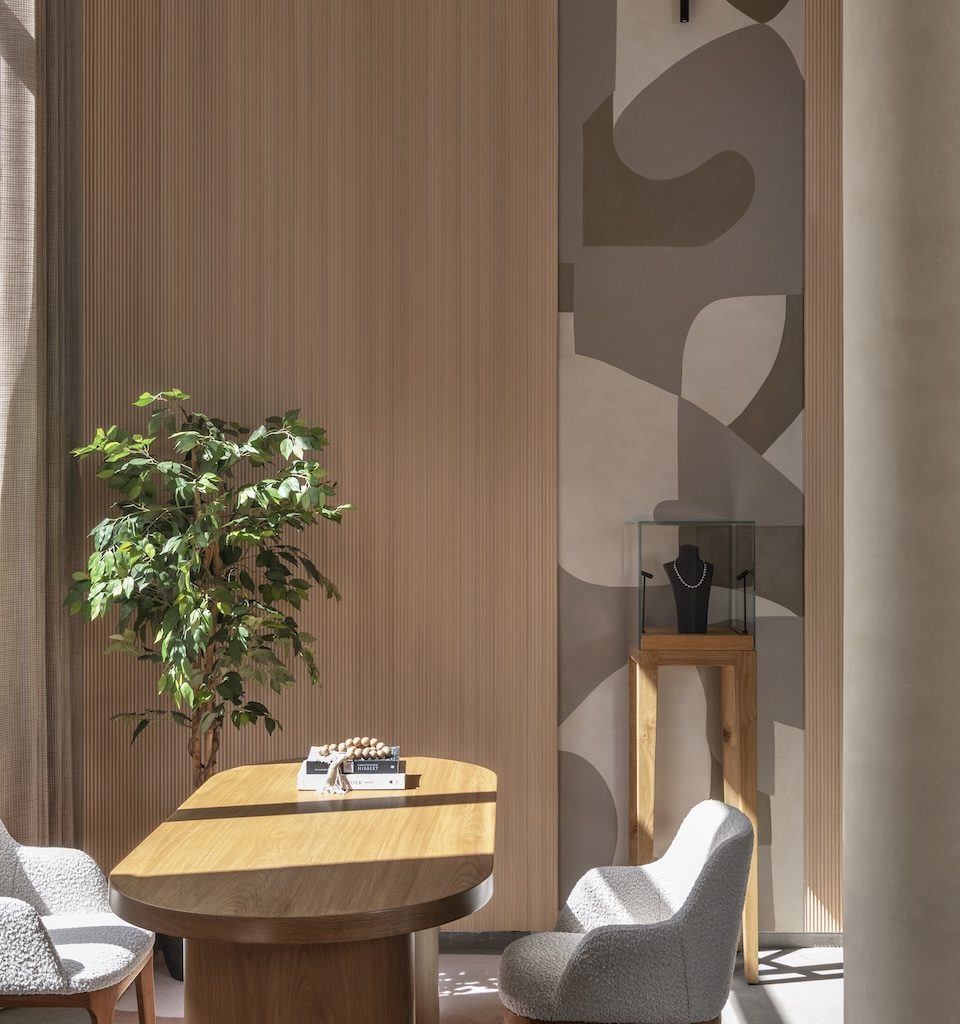
As one moves deeper into the space, tall, slender vitrines by Arjunvir Gujral Design Studio draw the eye. These crisp, frameless glass displays line the periphery, allowing the jewellery to take centre stage. “They feel like quiet stages where the diamonds can truly shine,” says the designer. Central display counters in marble and wood introduce a sense of permanence, balancing solidity with softness—a reflection of the dual qualities inherent in fine jewellery.
Natural oak fluting by Magvee introduces warmth and rhythm, while subtly accentuating the double-height volume of the interiors. To complete the spatial composition, Aashni introduced a hand-painted mural by artist Rudranee Chiman after the store’s completion. Rendered in organic, flowing forms and soft tones of beige, taupe, and brown, the mural emerged as a defining backdrop. “It was the missing element,” she says. “The mural brings depth and movement, adding an artistic layer without overpowering the calmness of the space.”
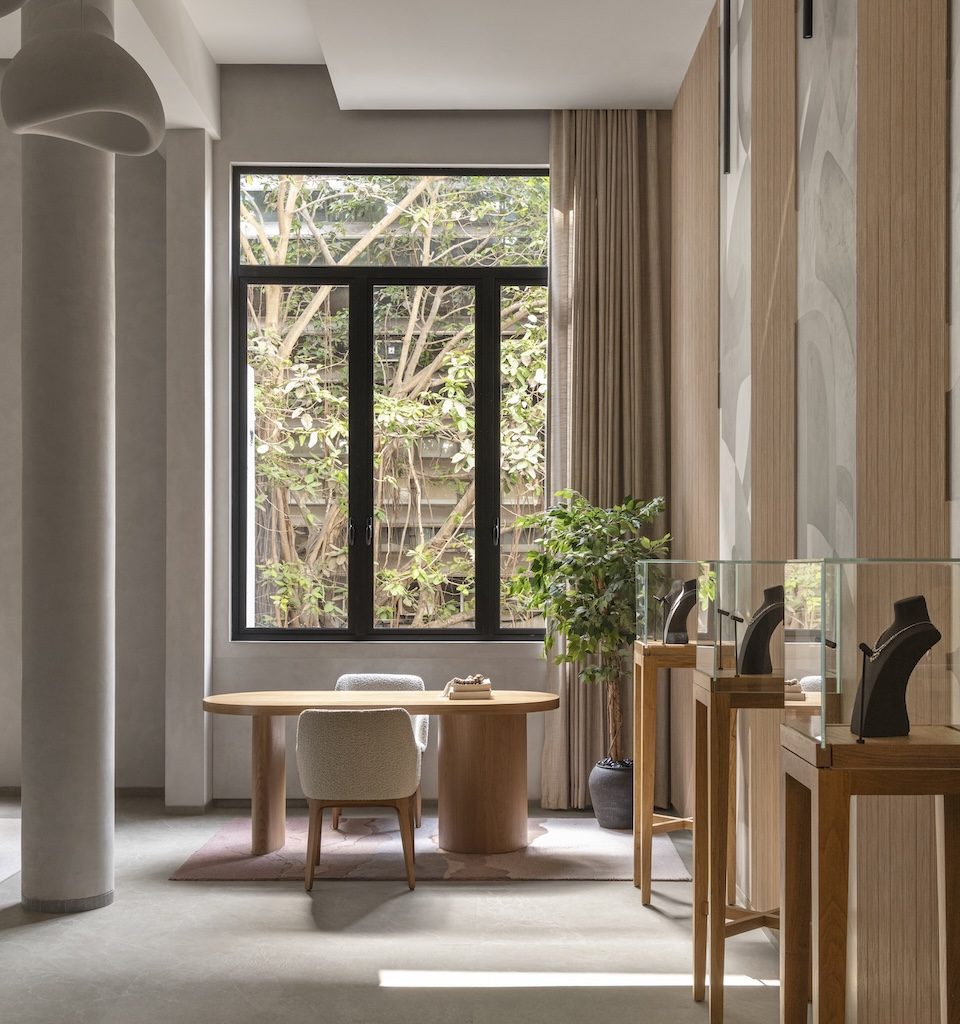
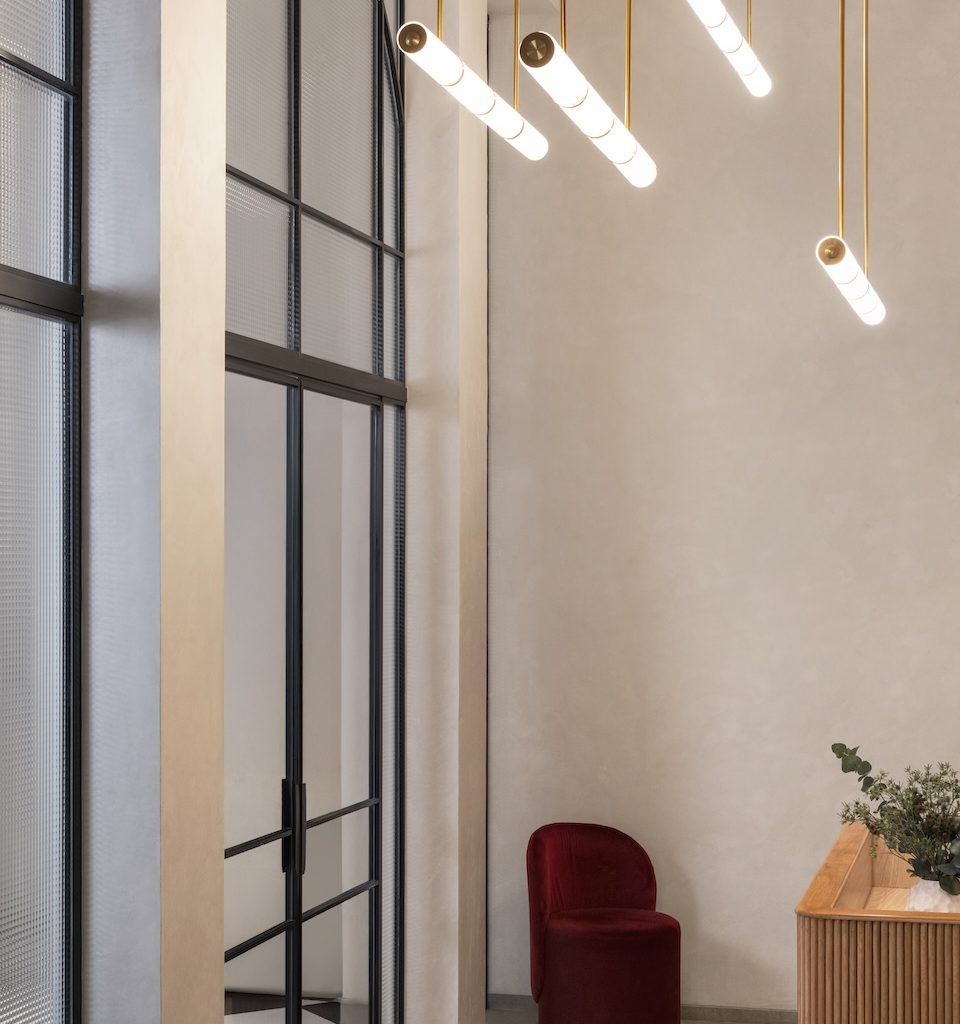
Light—both natural and artificial—was treated as a foundational design material. Generously proportioned windows and an existing skylight allow daylight to flood the interiors, while a carefully calibrated artificial lighting scheme ensures the diamonds’ brilliance is revealed without glare. By working with the building’s inherent strengths, the design allows light to enhance the space gently, never dominating it.
Beyond the retail floor, the project extends into private meeting rooms, ancillary zones, and office spaces for the brand’s executive and creative teams. “The reception acts as a shared point of connection between the retail and office areas,” says Aashni. “Every zone was conceived as part of a single, cohesive narrative, ensuring the brand’s identity remains consistent throughout.”
Working within a heritage structure, however, brought its own set of challenges. “The tall ceilings and expansive windows offered a remarkable starting point, but they also introduced structural constraints that required careful planning,” Kumar notes. Achieving the right balance between minimalism and luxury demanded restraint and precision at every stage. “We wanted the space to feel serene and understated, while still carrying the sense of exclusivity that a fine jewellery boutique deserves,” she adds.
Fact File
Project: House of Quadri
Location: Fort, Mumbai
Area: 2,700 sq ft
Principal designer: Aashni Kumar
Add a Comment