

Designed by Studio Saransh in Ahmedabad, NG Apartment reimagines the memory of Corbusian Ahmedabad within a contemporary high-rise setting. The home draws from the city’s modernist legacy to create interiors shaped by exposed surfaces, proportion, and restraint.
Curated by: Deepa Nair
Photographs: Ishita Sitwala; courtesy Studio Saransh
The brief
When the client, a true-blue Amdavadi, approached Studio Saransh to design their apartment, the brief required a shift away from typology and toward architectural memory. Kaveesha Shah, principal designer of Studio Saransh recalls, “The space should not feel like an apartment but rather like a home where the essence of modernist Ahmedabad lingers, in its materials, in its textures and the air.”

The design intent
The design mandate for this project was to evoke the nostalgia of Corbusian Ahmedabad within the constraints of a high-rise apartment. Rather than borrowing surface references alone, the approach translates the architectural language of the city’s modernist legacy into the interior. It engages with exposed brick and concrete geometries, structural clarity, and elemental detailing. At the same time, it draws from the ideologies and aesthetic sensibilities that shaped Ahmedabad’s modernist identity.
The civil intervention
The design process began with a deliberate act of erasure. Standardised finishes and furnishings that came with the apartment were stripped away to reveal its raw surfaces, allowing the space to be reimagined from its core. Only a few measured civil interventions were introduced, each carefully considered rather than extensive. As Kaveesha explains, “While the apartment came with a layout like any other flat, we didn’t want to simply decorate it. We wanted to shift its nature entirely, through space and substance.”

The spatial configuration
The spatial layout subtly pushes against the conventions of a typical apartment. The entry leads directly into the drawing room, establishing a formal front zone, while a long linear corridor extends inward to connect the more private areas of the home. Four bedrooms are arranged along this passage, with the guest room positioned toward the entrance and the master bedroom located at the rear. At the end of the corridor, an existing bedroom has been reworked into a lounge, creating a quiet retreat removed from the home’s formal spaces. The kitchen, placed adjacent to the drawing room, is separated by a translucent glass door that allows light to pass through while maintaining visual privacy.

The design and material details
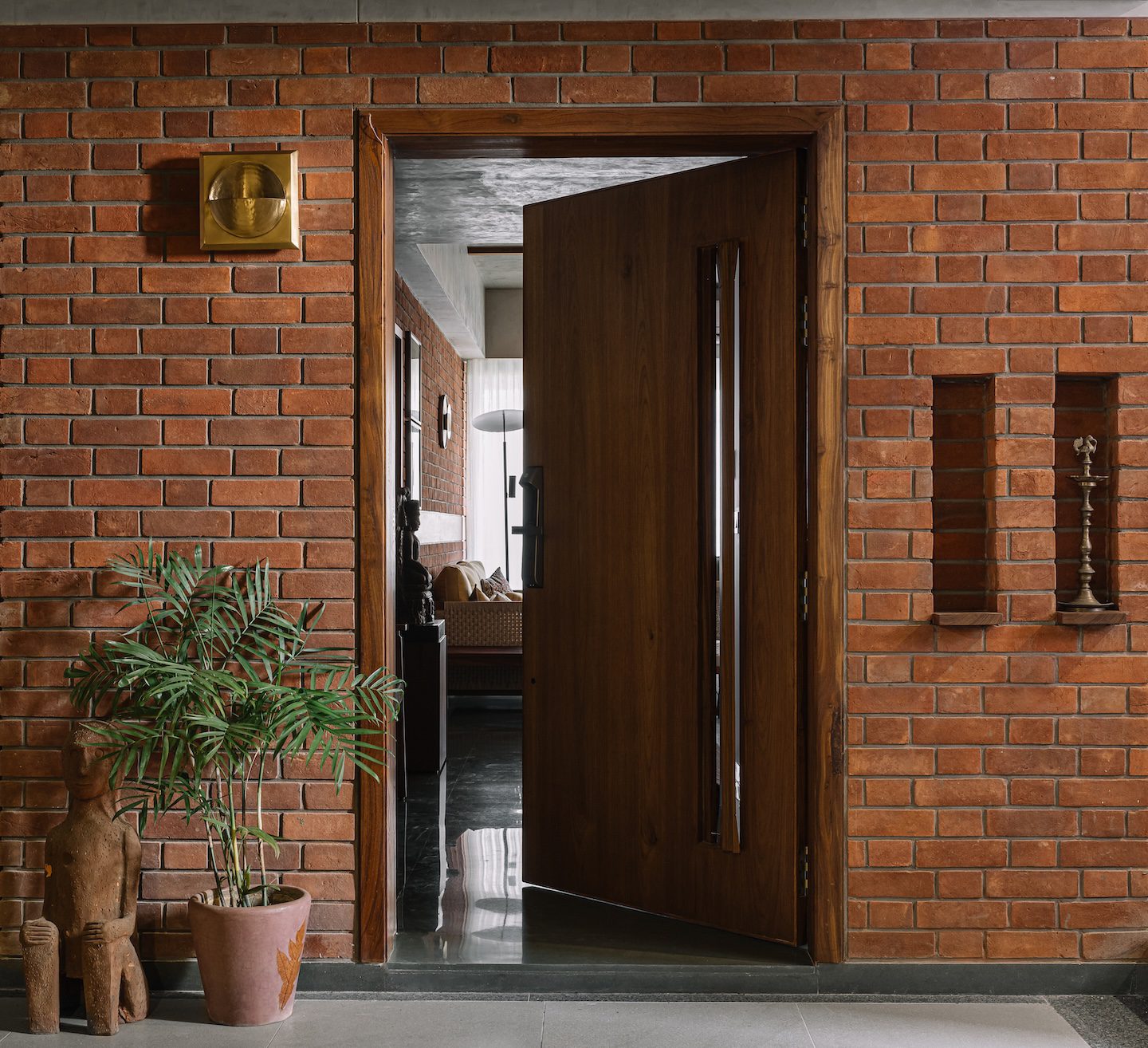
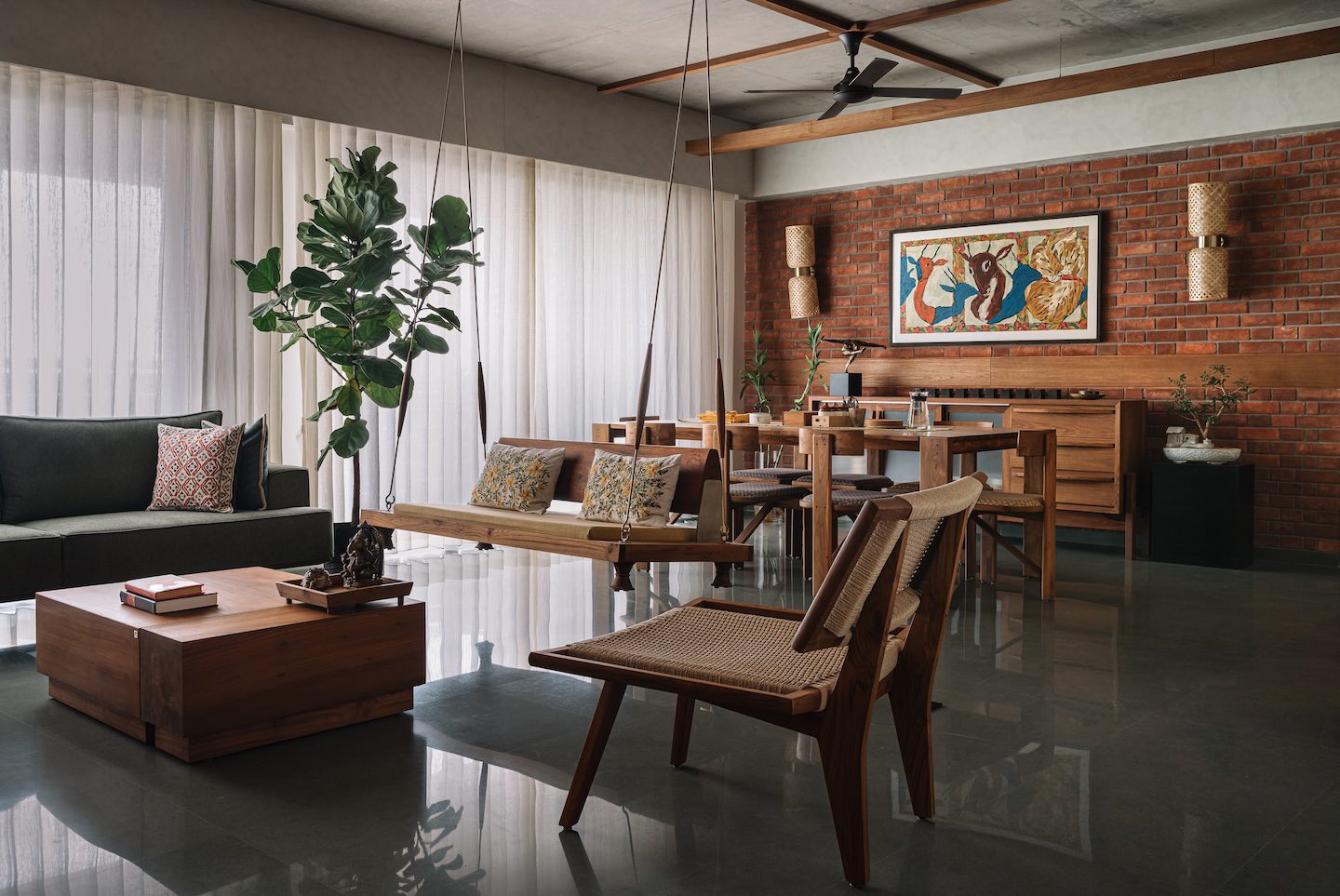
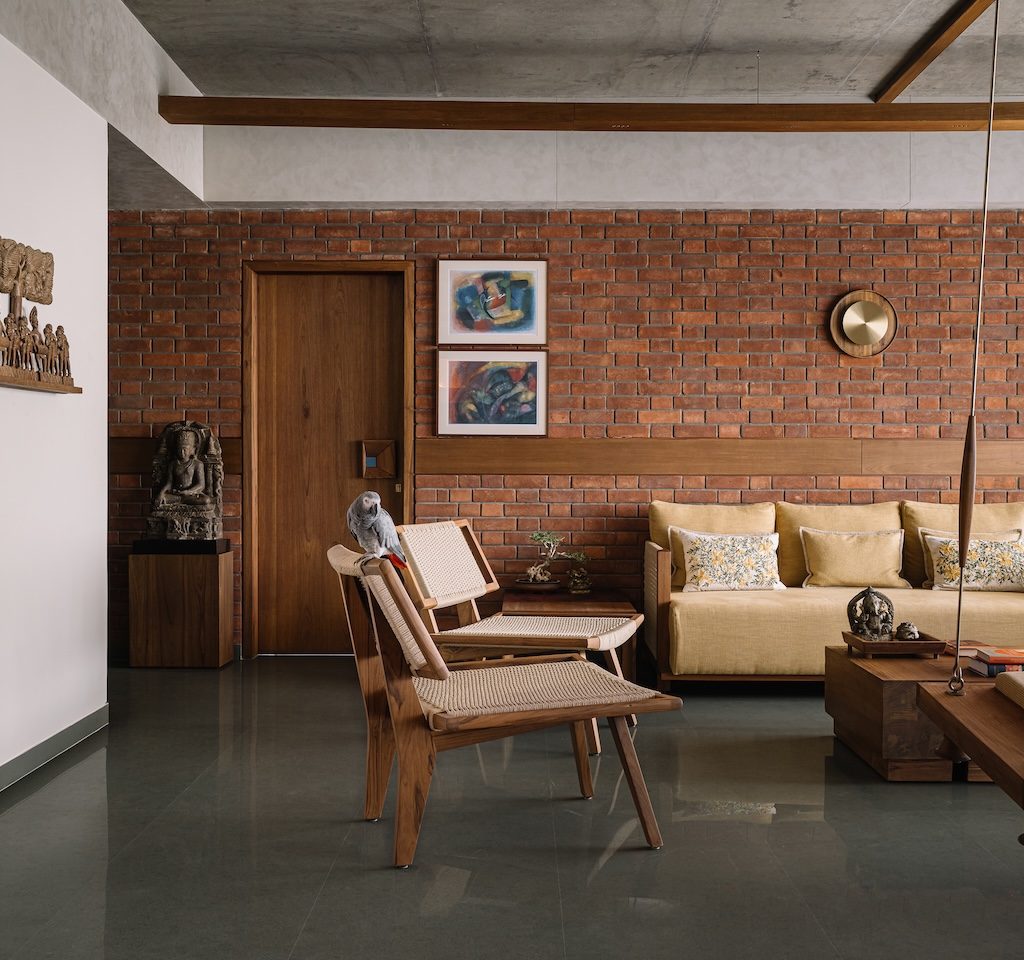
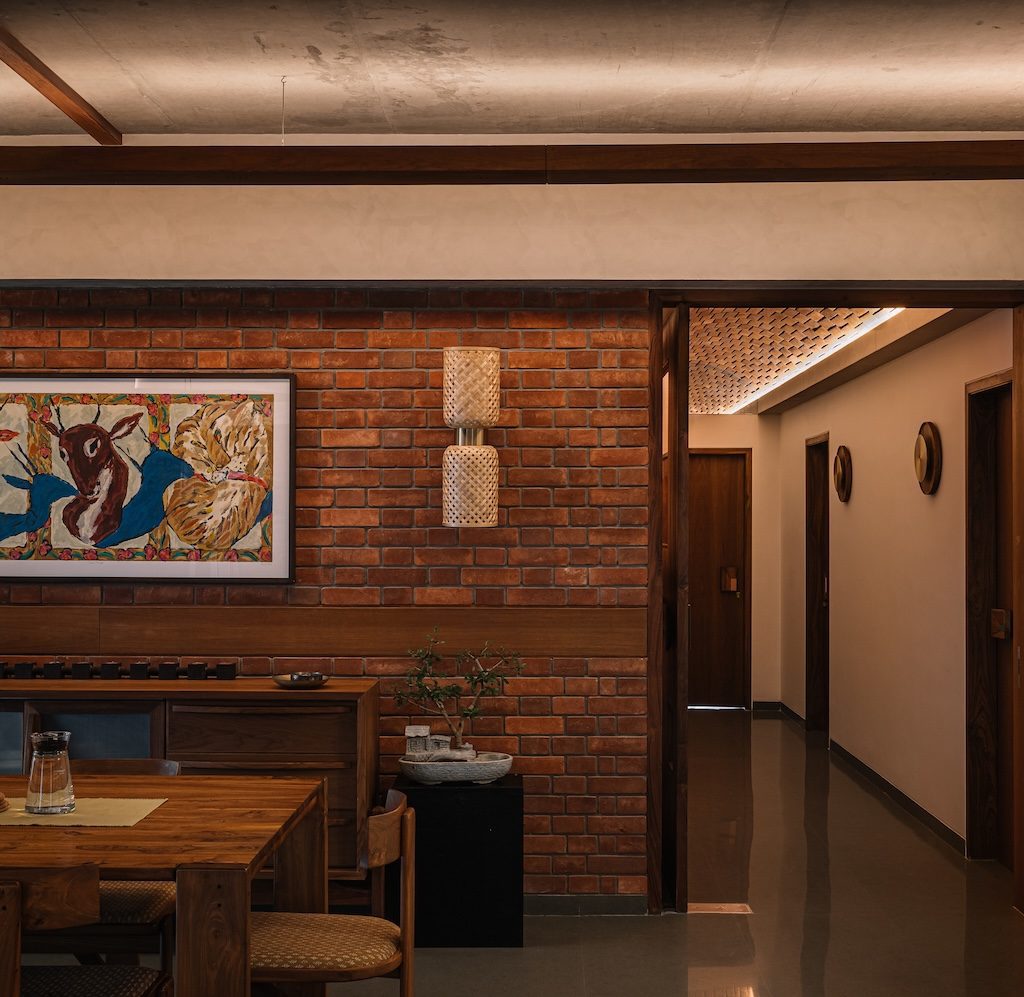
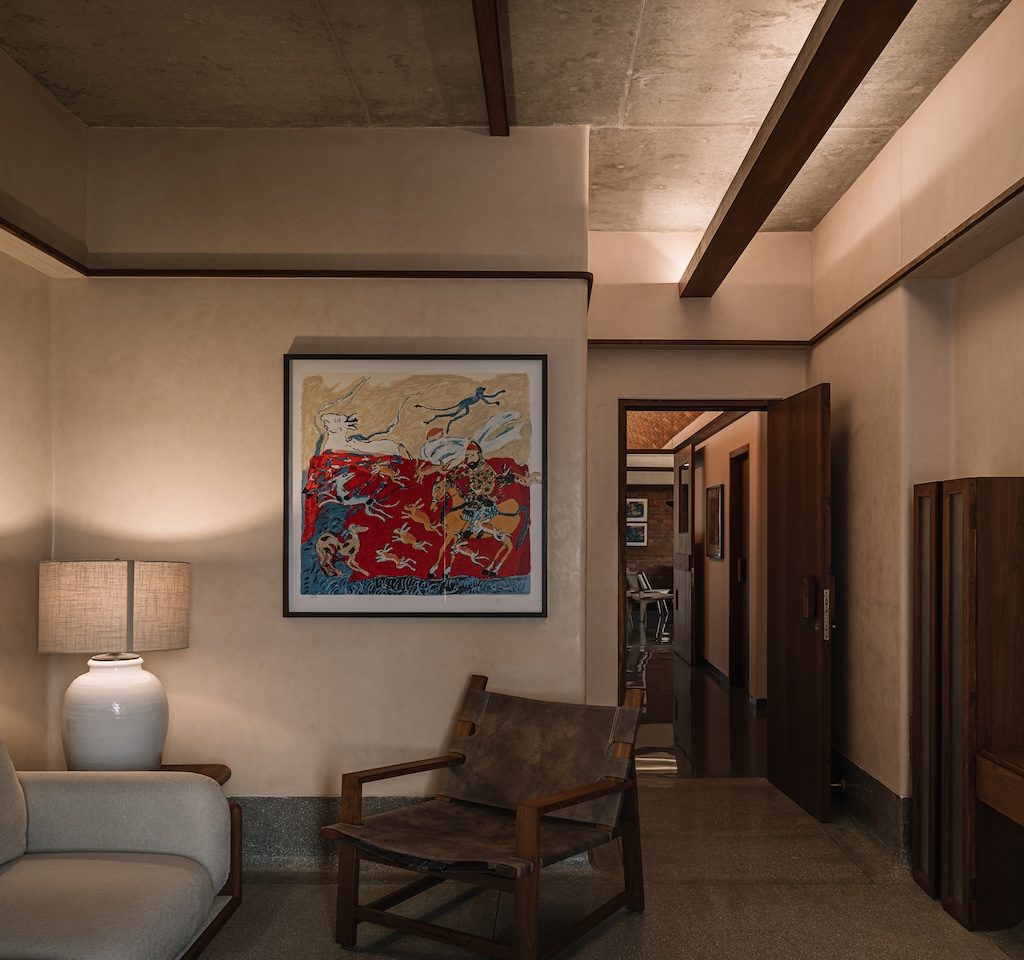
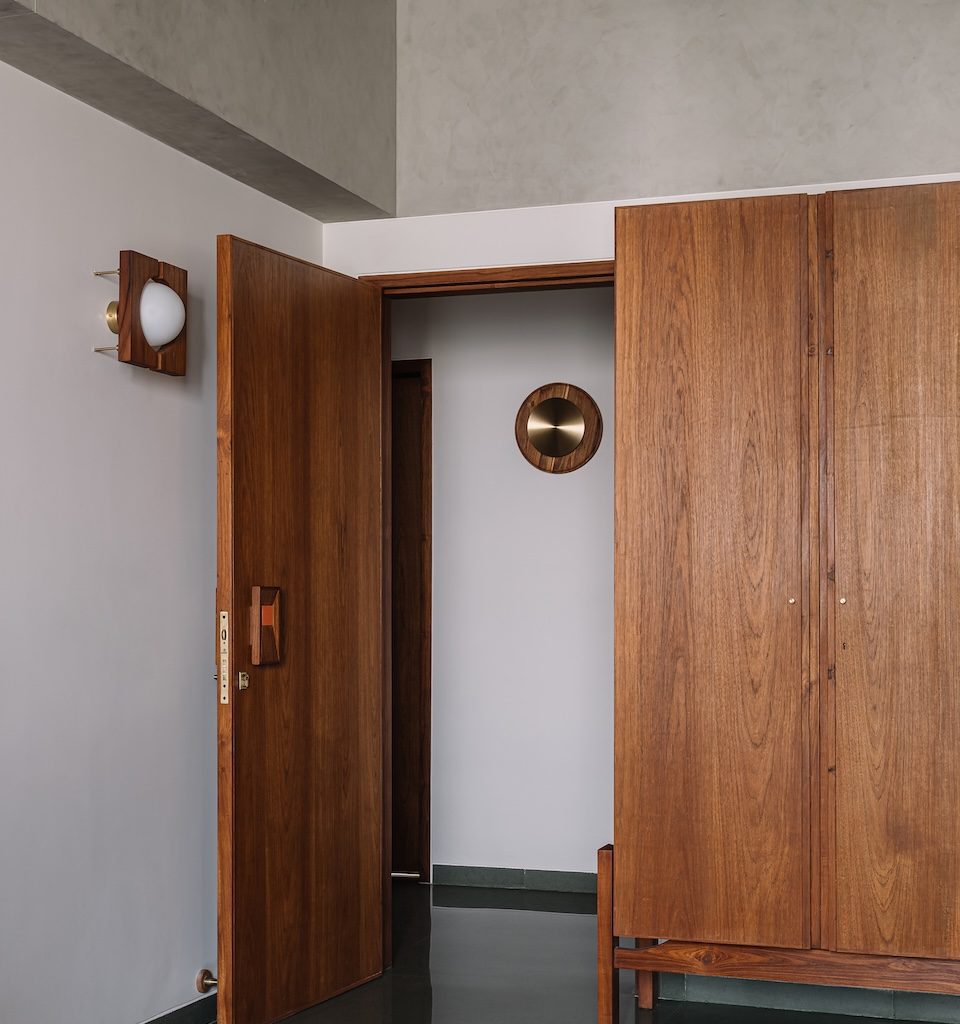
As one approaches the home, the memory of old Ahmedabad begins to surface. The main door, crafted from reclaimed Valsadi teak wood, sets the tone for what unfolds inside. Within, a restrained palette of brick-clad walls, exposed RCC ceilings, and polished Kota stone flooring recalls the material vocabulary of the city’s modernist homes.
Running continuously along the walls is a wooden datum that references Corbusier’s preoccupation with proportion and order. Beyond its visual role, it discreetly conceals electrical wiring, reinforcing the home’s clean and uncluttered rhythm. Lighting is integrated with similar restraint—concealed behind circular brass plates or embedded within thick suspended channels—ensuring that illumination supports the architecture rather than competing with it.
This attention to detail extends into the finer elements of the home. Door handles across the apartment subtly echo the silhouette of the iconic windows at Notre Dame du Haut, translating a well-known modernist motif into a tactile, everyday detail. Furniture sourced from Tectona Grandis Furniture and Studio Works continues the narrative through mid-century modern geometries, reinforcing the home’s architectural lineage. At the centre of the living space, a traditional hinchko anchors the room, introducing a familiar domestic gesture drawn from Gujarati homes.
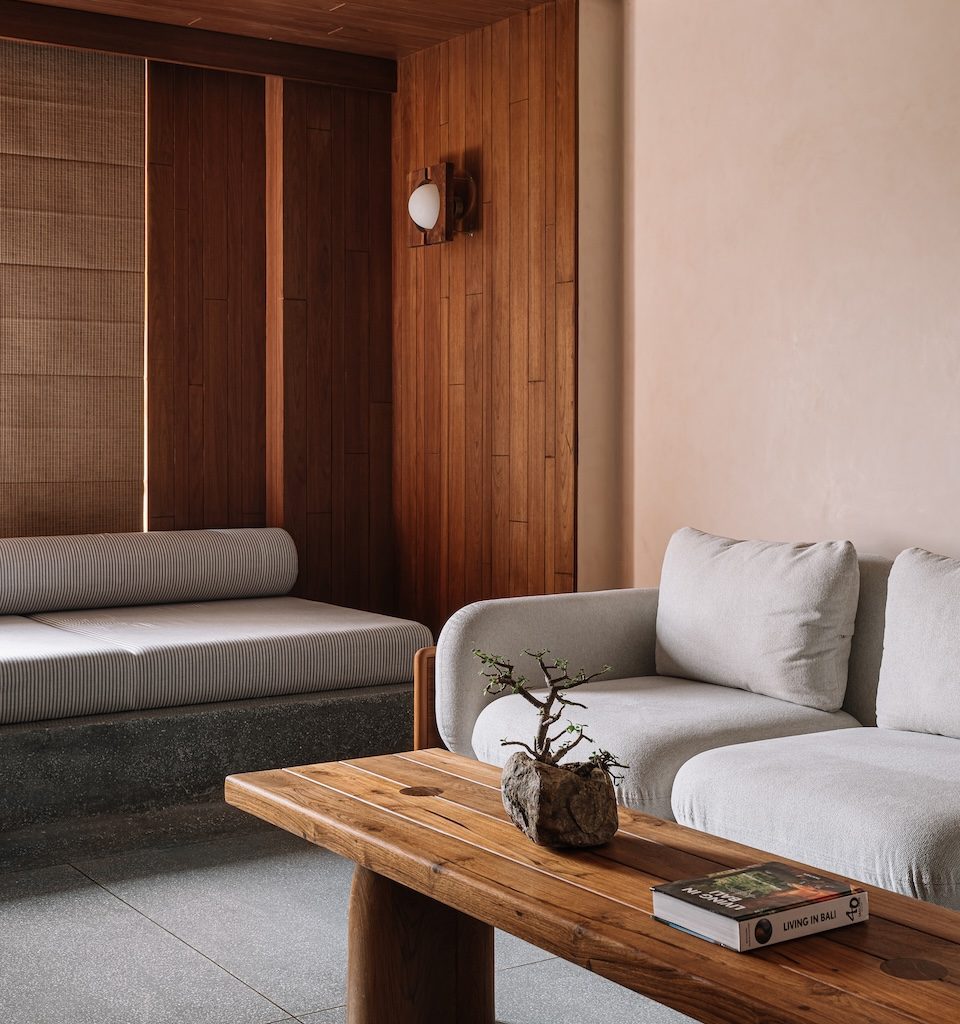
Even the corridor, a space often overlooked in apartment layouts, carries this sensibility forward. A brick vault spans its ceiling, recalling the jack arches of Villa Sarabhai (designed by Corbusier in 1955). Mirrors placed at both ends reflect the curve of the vault, creating the illusion of an endless brick passage. “It’s one of those things you don’t notice at first,” as Kaveesha rightly points out, “and then suddenly, you do.”
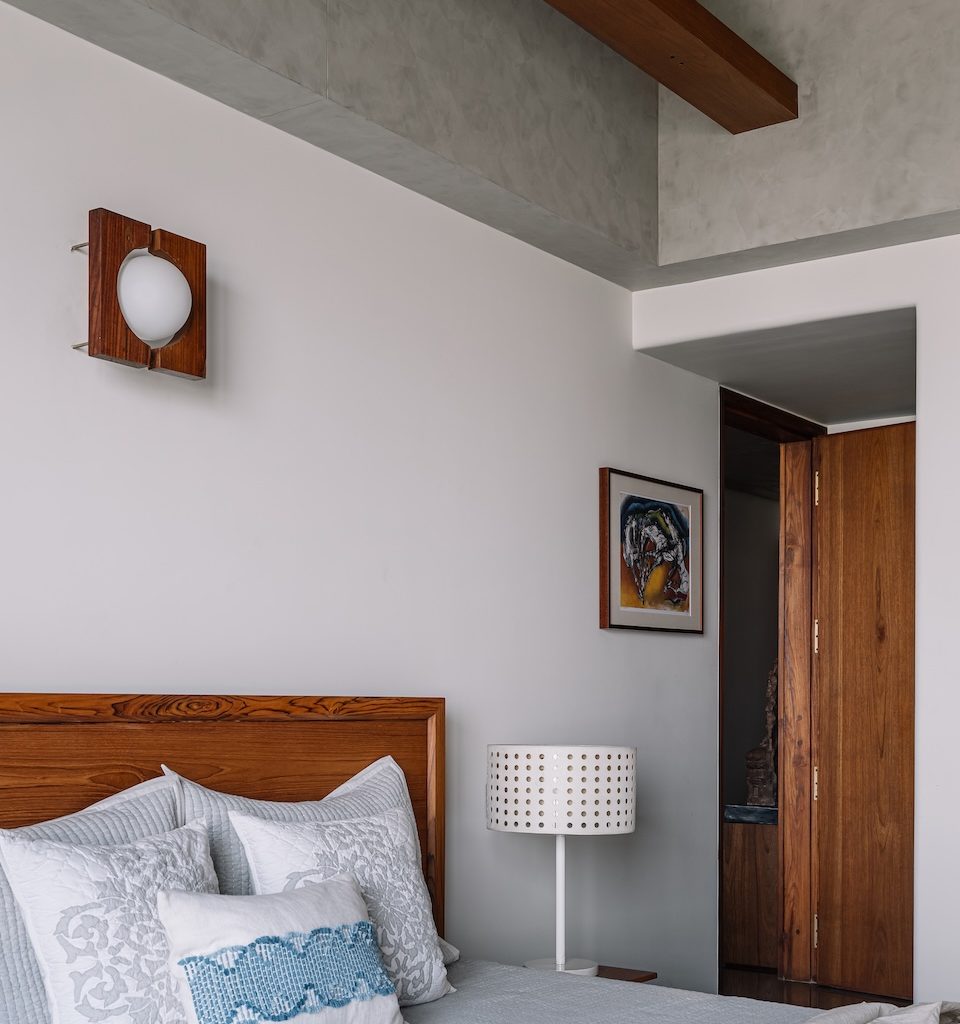
The corridor extends inward to the bedrooms, arranged along either side of the passage. The master bedroom is anchored by a minimalist four-poster bed, introducing a subtle sense of nostalgia. While the material language of the drawing room—exposed RCC, brick-clad walls, a horizontal timber channel, and suspended lighting conduits—continues into the space, the flooring shifts to wood, lending the room a warmer, more intimate tone.

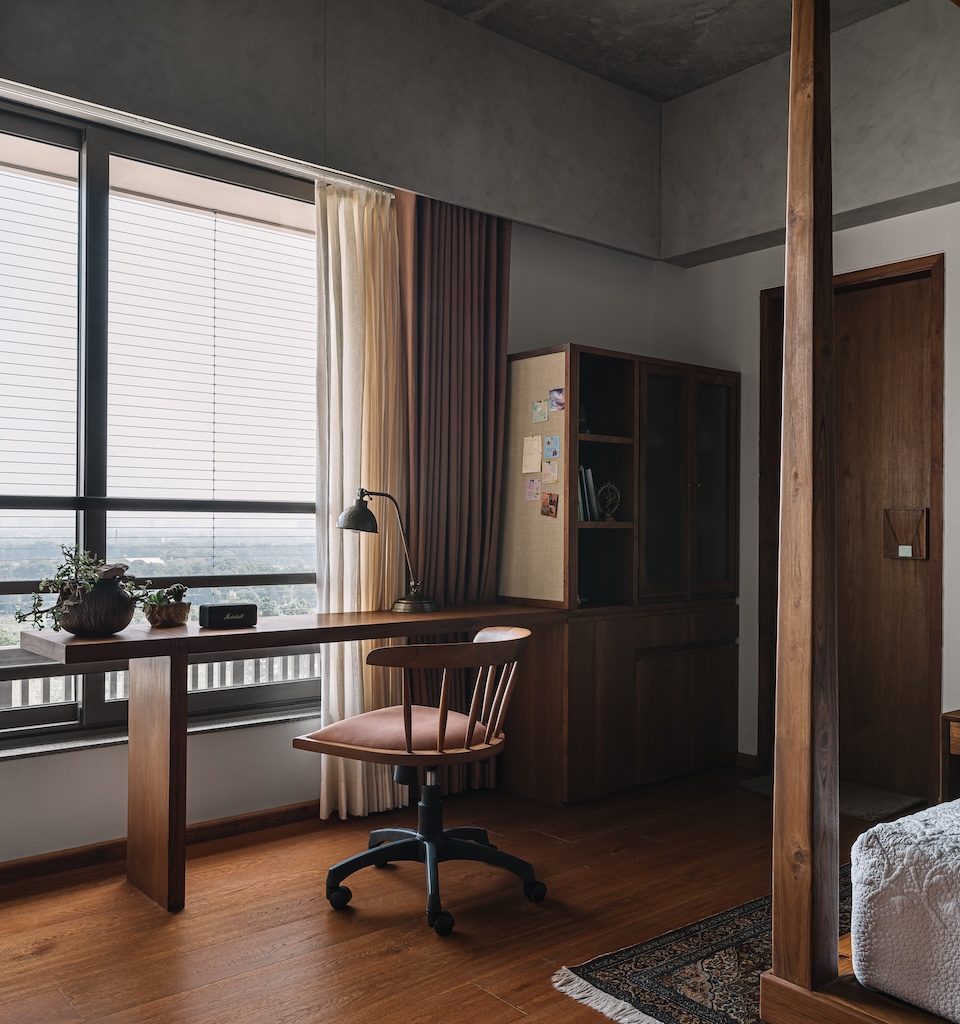
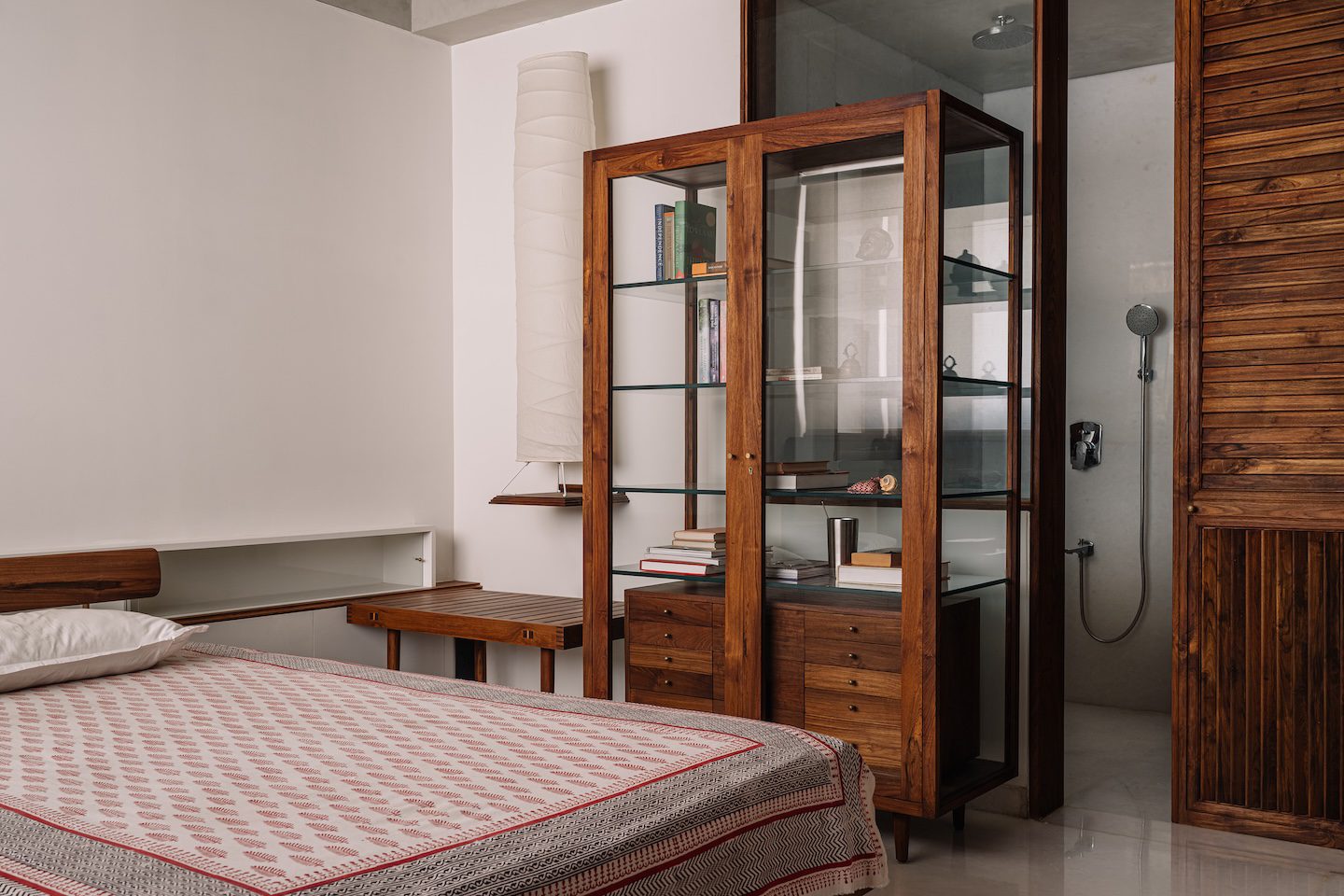
The son’s bedroom, designed by himself, introduces a sense of elegant impermanence. Departing from the conventions of a typical bedroom, the layout replaces the wardrobe with a bespoke library unit that runs along the wall, paired with a low console designed specifically to hold a suitcase. The arrangement reflects a lifestyle shaped by movement rather than permanence.
The bathroom is visually connected to the sleeping area, with a solid wall replaced by a large glass opening that allows light and spatial continuity to flow between the two zones. When privacy is required, sliding wooden shutters with operable louvres offer a flexible enclosure. Furniture for the room, crafted by Amolakh, features mindful joinery in reclaimed teak, reinforcing the room’s material restraint and understated character.
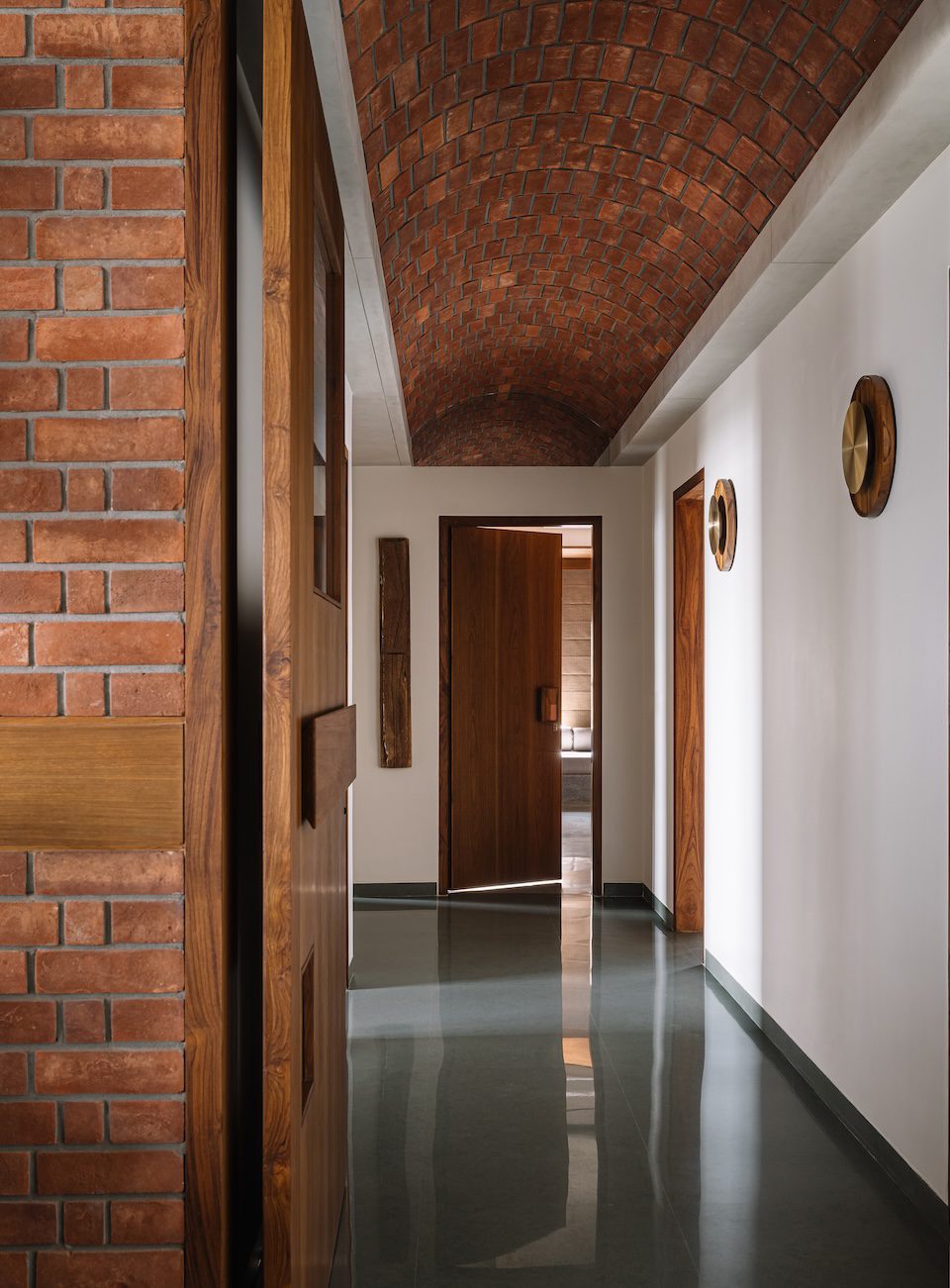
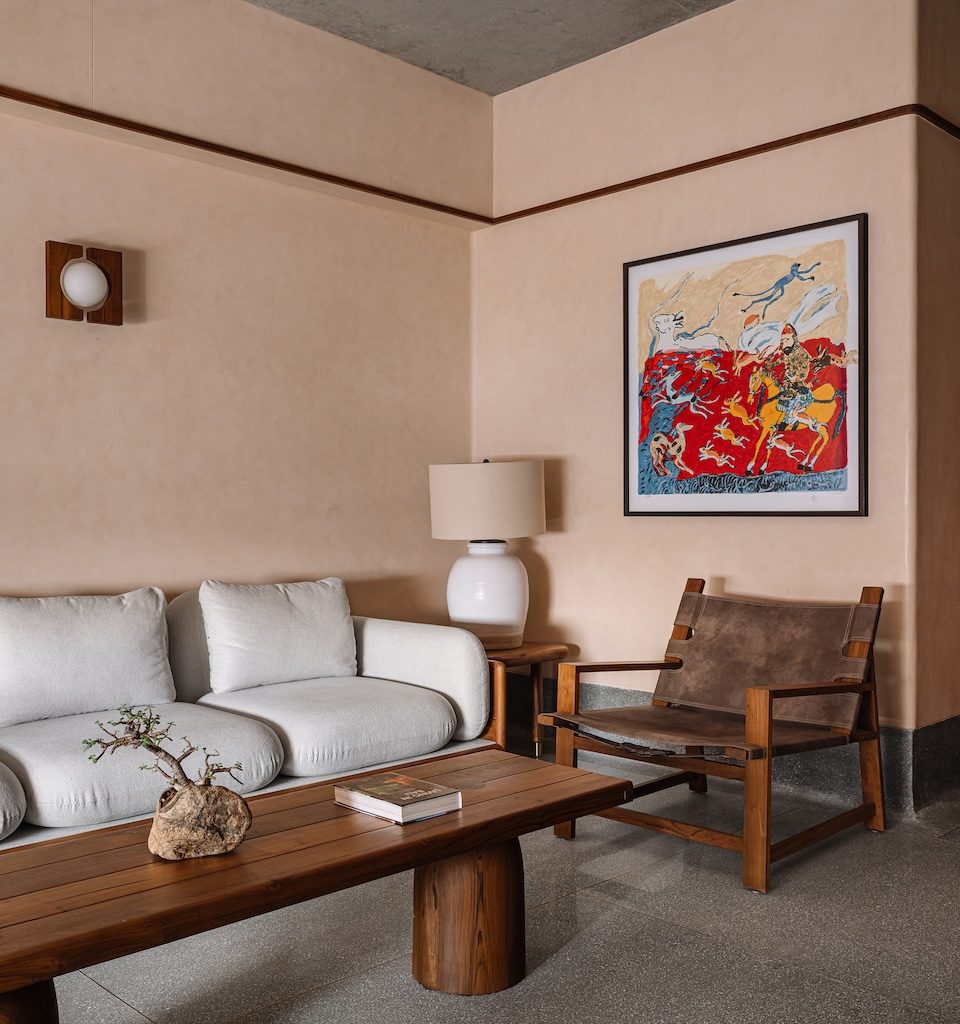
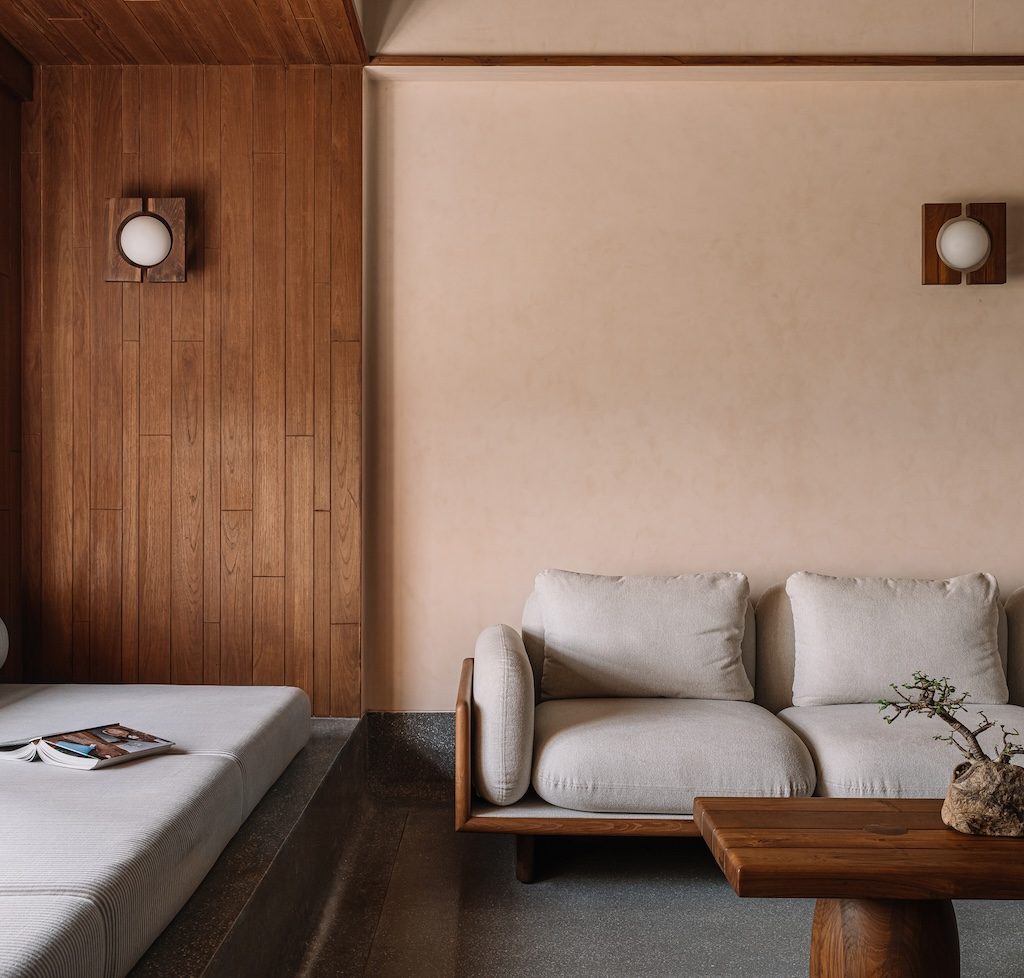
The lounge marks a deliberate departure from the material palette that defines the rest of the apartment. Conceived as a retreat, it is designed to feel like an escape—a space set apart for slowing down and unwinding. The flooring is cast-in-situ terrazzo, lending the room a handcrafted texture that feels grounded and cool underfoot. Walls are finished in stucco and rise uninterrupted to the ceiling, giving the space a sense of enclosure and continuity.
While the horizontal datum that runs through the house remains present here, it is reinterpreted as a wooden fascia band at lintel level, subtly anchoring the room within the larger architectural language. Even the skirting is treated as a design element—higher than usual and gently curved, aligning with the brick-infused terrazzo that extends toward the window ledge. Tucked away in a corner of the home, the lounge reads almost like a den, removed from the rhythms of daily life. As Kaveesha Shah puts it, “The idea is that when you enter this room, you feel like you’ve entered the weekend.
Fact File
Project: NG Apartment
Location: Ahmedabad
Area: 2,690 sq ft
Principal designer: Kaveesha Shah
Design team: Muskaan Agarwal





Add a Comment