
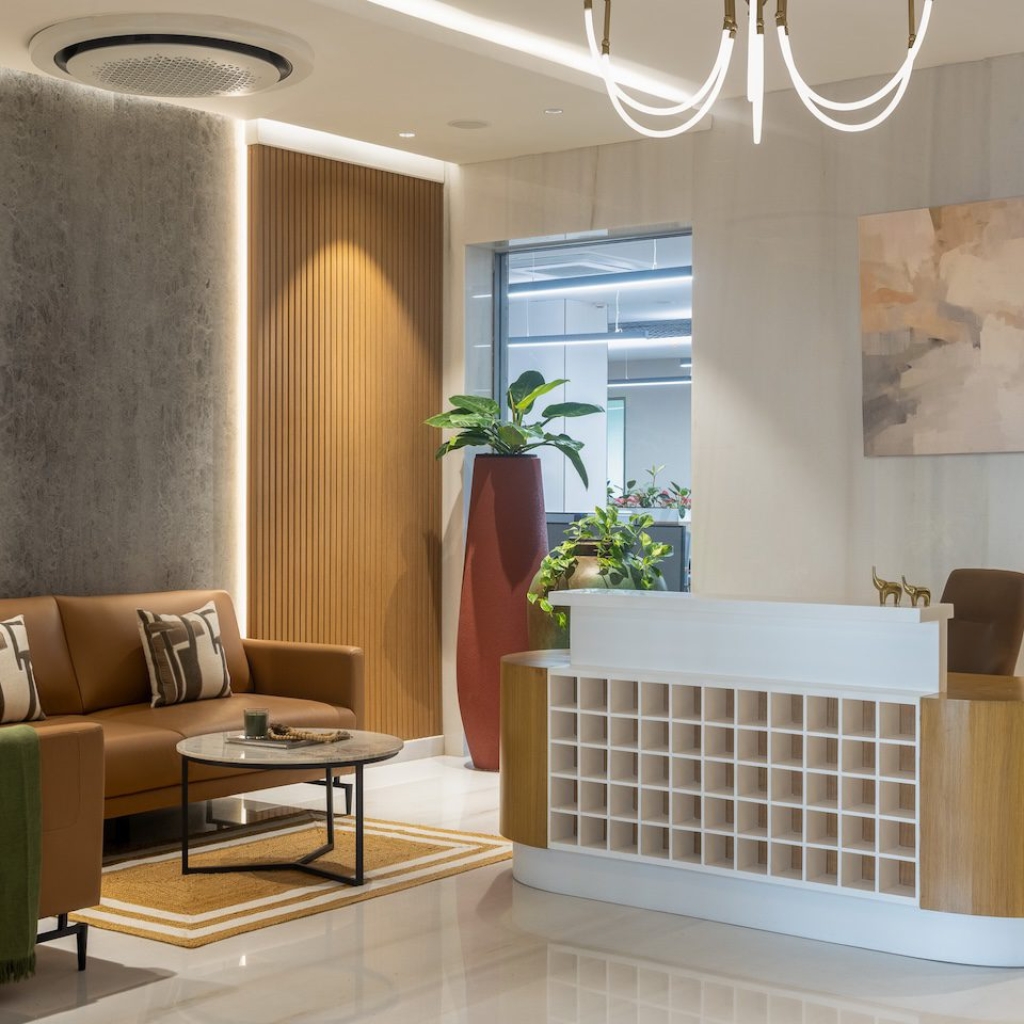
Designed by Turnkey 5.0 for a film production house, this Bengaluru office balances confidentiality, collaboration, and calm through precise planning and a restrained material language.
Curated by: Rupali Sebastian
Photographs: Parth Swaminath I PHX India; courtesy Turnkey 5.0
The project
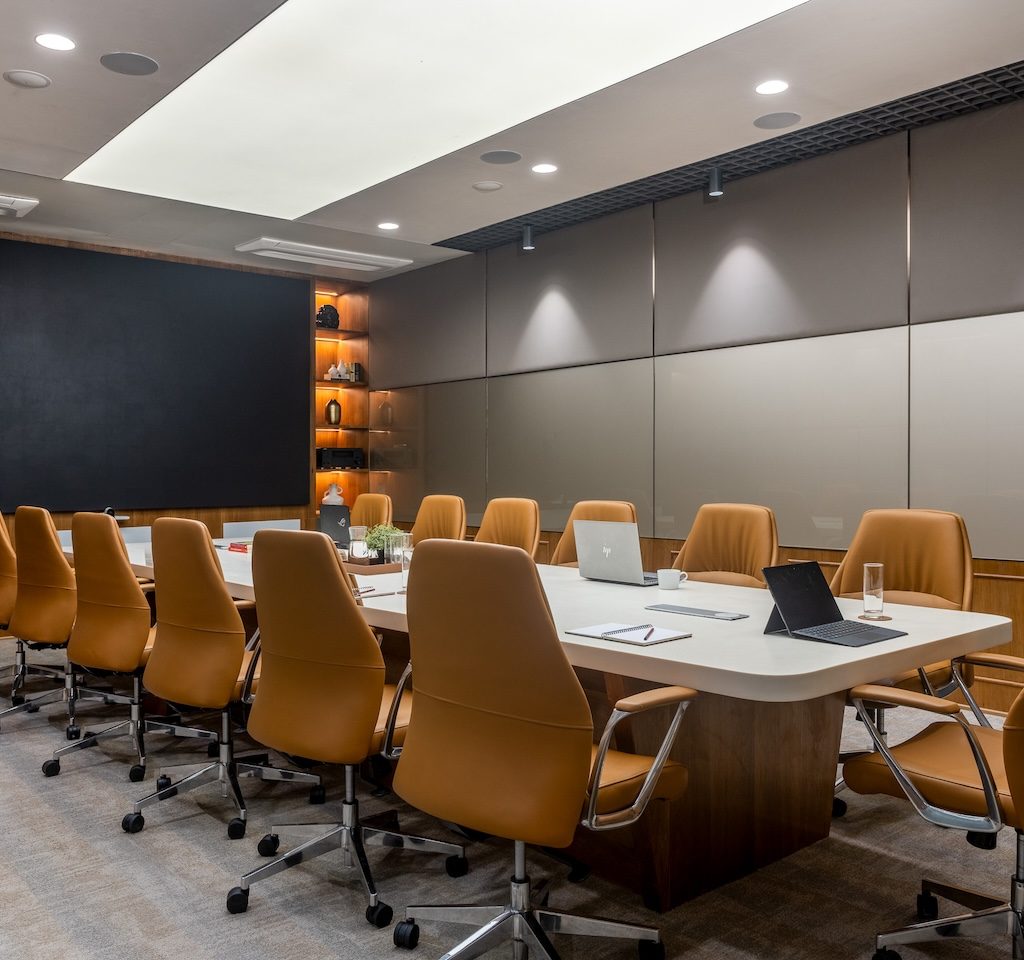
Located on the 23rd floor of Prestige Trade Tower in Bengaluru, the 20,000 sq ft corporate office of KVN Productions has been designed and executed by Turnkey 5.0. Conceived for a film production company, the workspace needed to support confidentiality, focused creative work, and seamless collaboration—without resorting to overt theatricality. Instead, the design adopts a measured, minimal approach, allowing planning, acoustics, and material restraint to define the experience.
The site
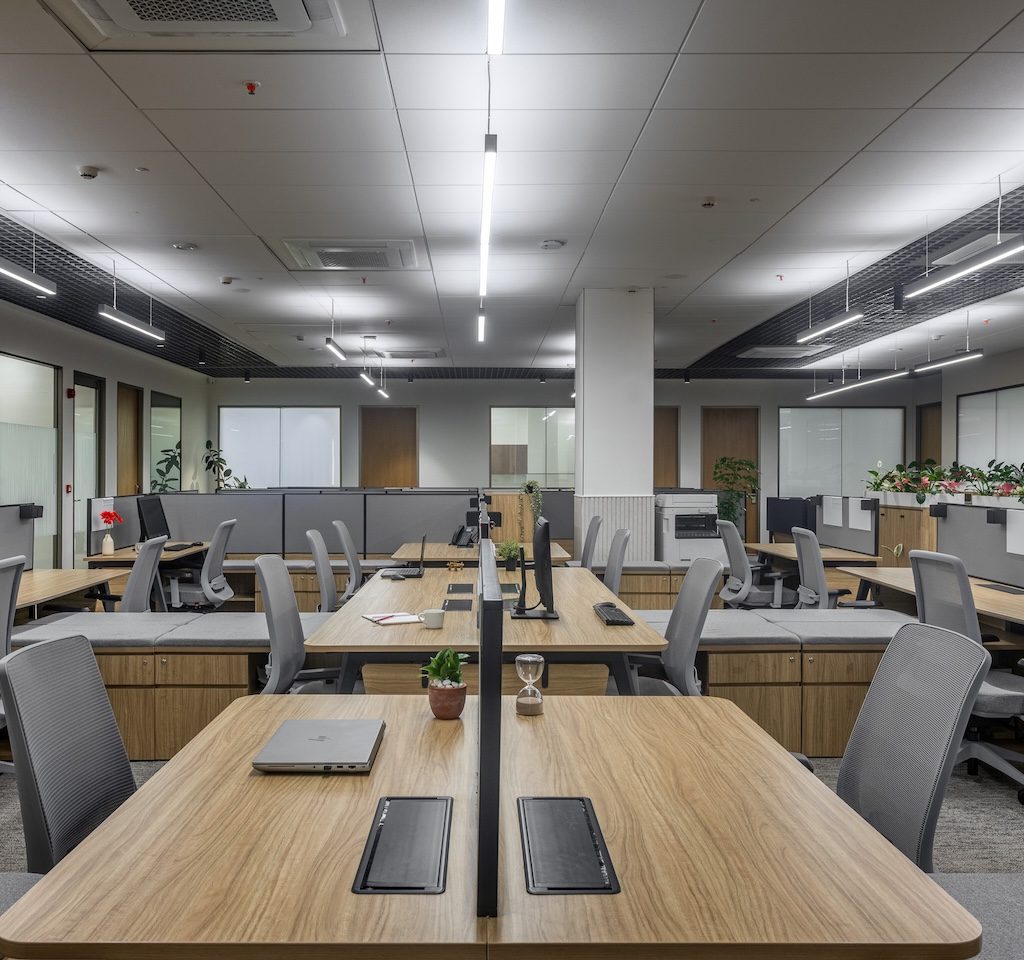
The project involved the transformation of an existing high-rise corporate floor into a workspace tailored to the specific operational rhythms of a production house. Received as a standard office floor plate, the site required careful reorganisation rather than structural overhaul. All interventions were planned with respect to the existing building framework, ensuring that the original structure remained intact.
The brief
The brief called for an interior that could accommodate a wide range of functions—private cabins for sensitive discussions, collaborative zones for ideation, and controlled environments suited to editing and screen-based work. Alongside functionality, the client sought a workspace that felt calm, efficient, and professional, avoiding visual noise while still reflecting the creative nature of the organisation.
The design intent
The design approach prioritised clarity of planning and sensory comfort. Rather than introducing dramatic architectural gestures, the focus remained on spatial hierarchy, acoustic sensitivity, and a controlled visual language. As principal architect Ar. Masoom Jindal explains, “The idea was to create a workspace that supports storytelling without performing it—where every element works quietly in service of focus, comfort, and efficiency.”
The civil intervention
Non-load-bearing partitions were reconfigured to establish a clear spatial order and improve circulation across the floor. Ceiling systems were modified to support lighting layouts and acoustic treatments, while electrical and data services were carefully integrated to meet the demands of equipment-heavy production workflows. These changes were executed with minimal invasive work, allowing the office to evolve without disrupting the existing structure.
The spatial configuration
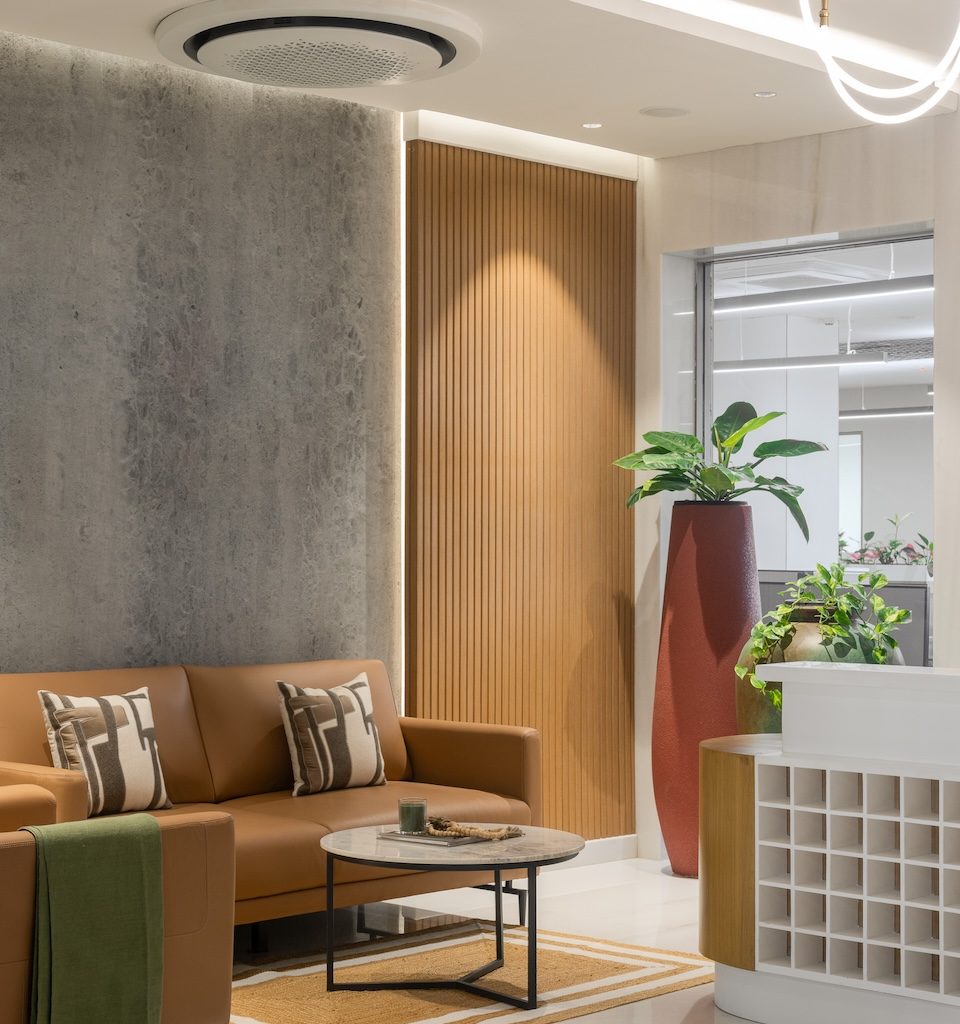
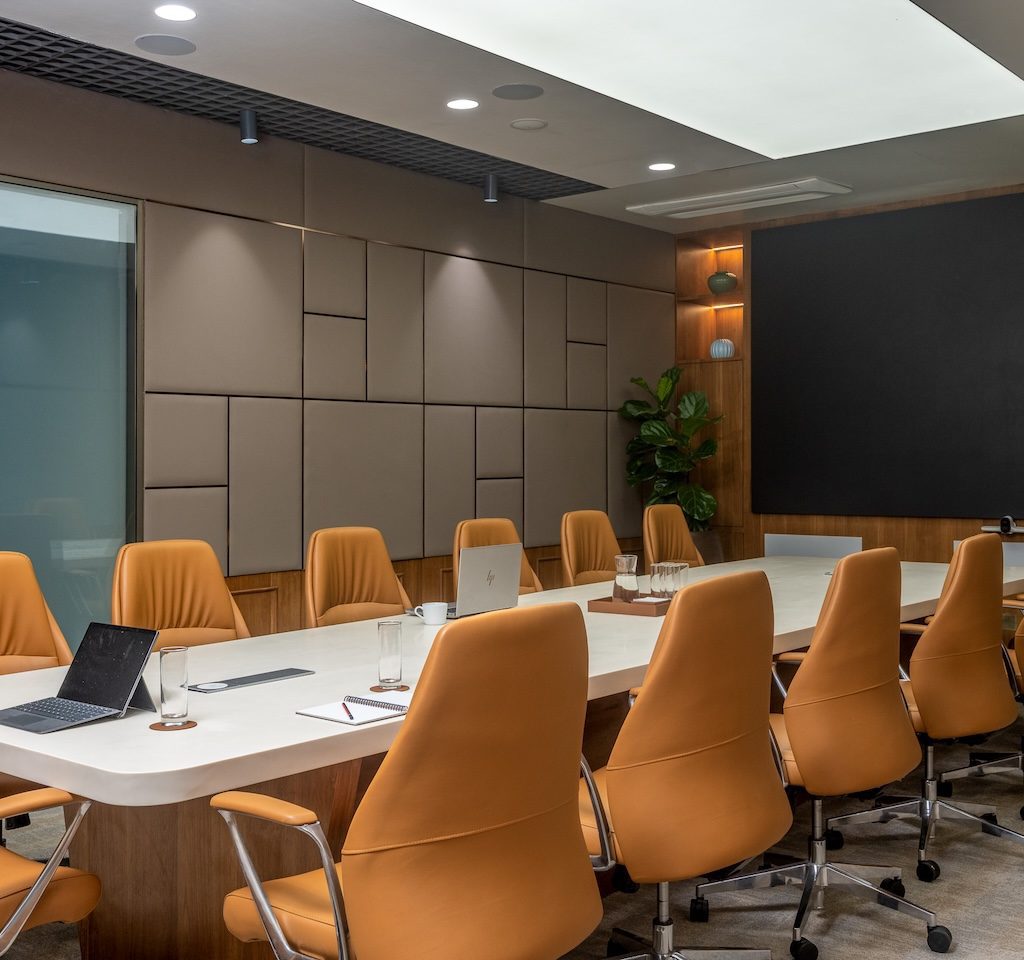
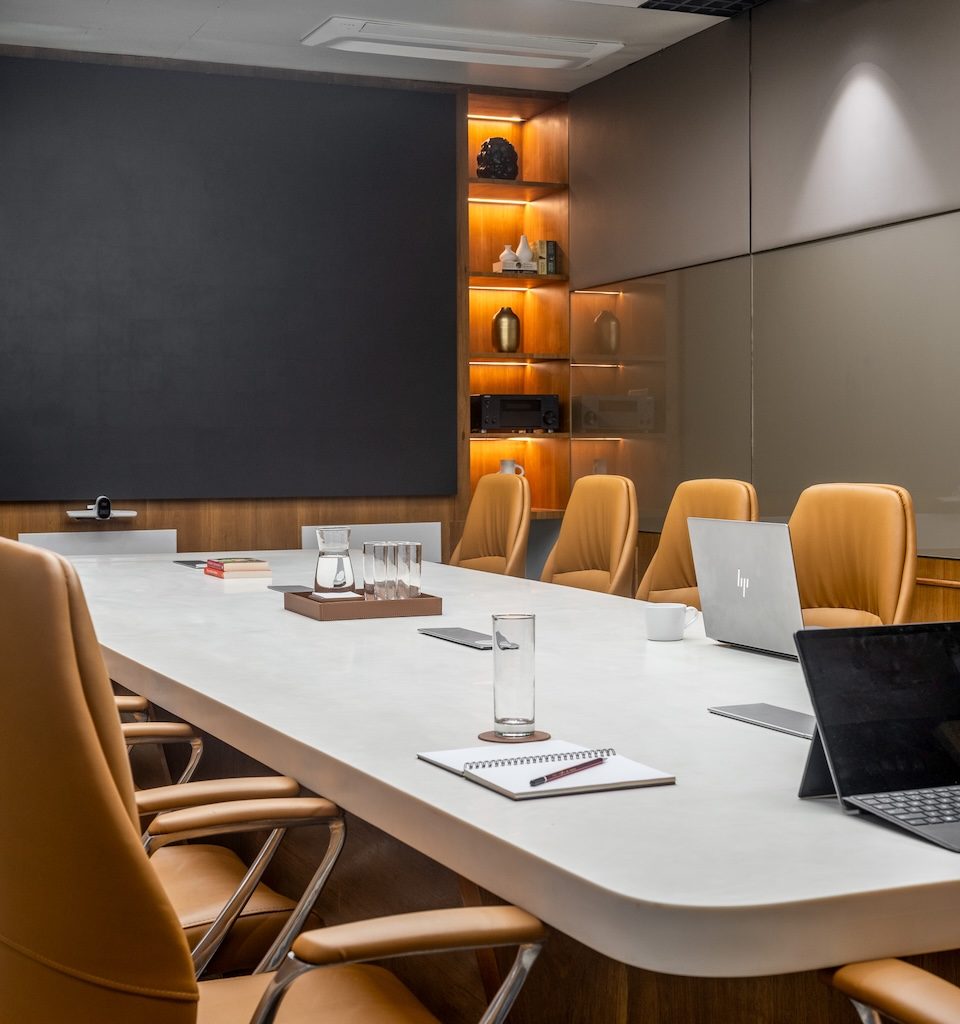
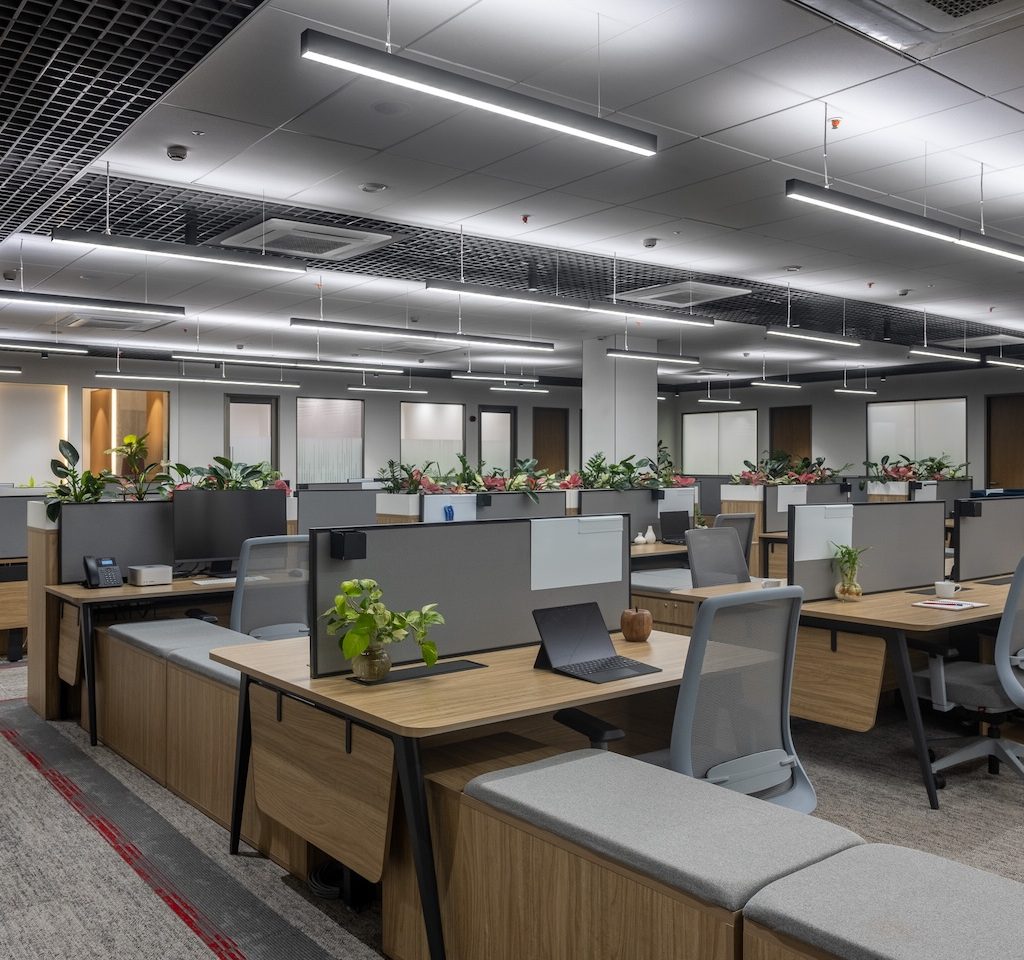
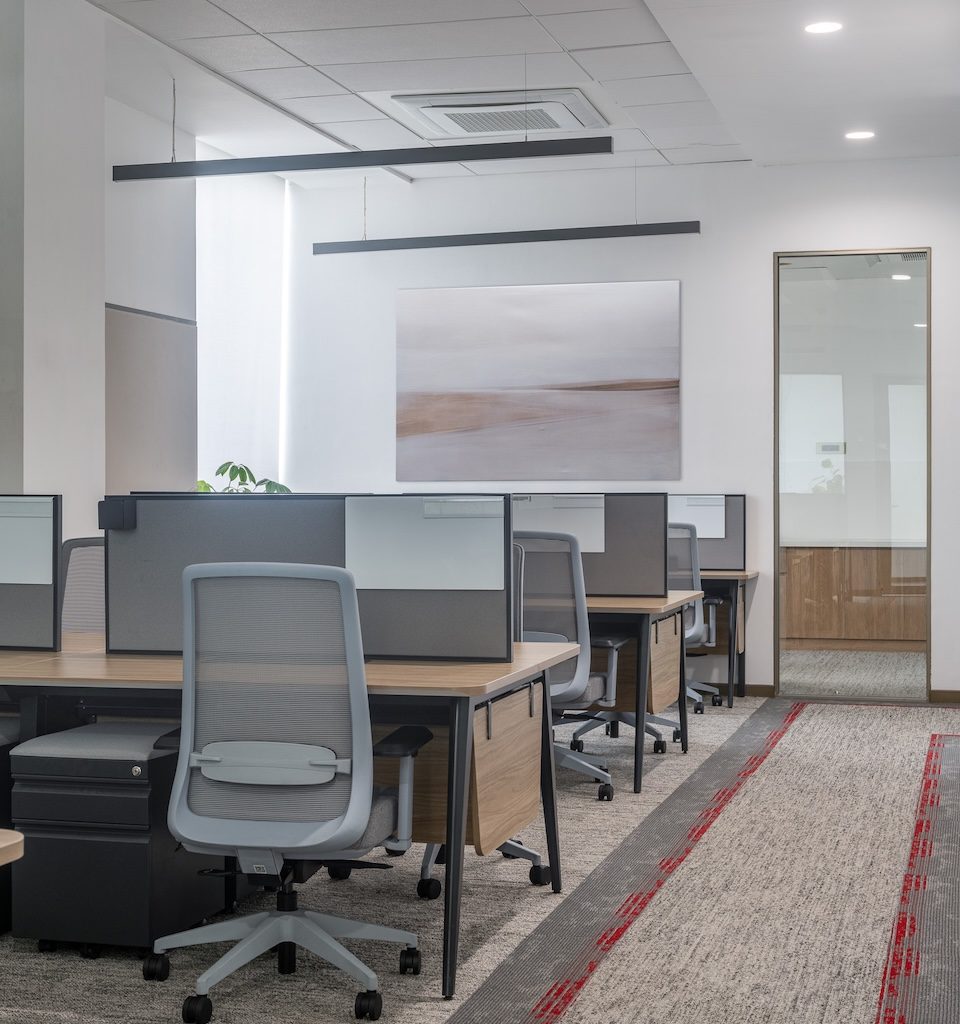
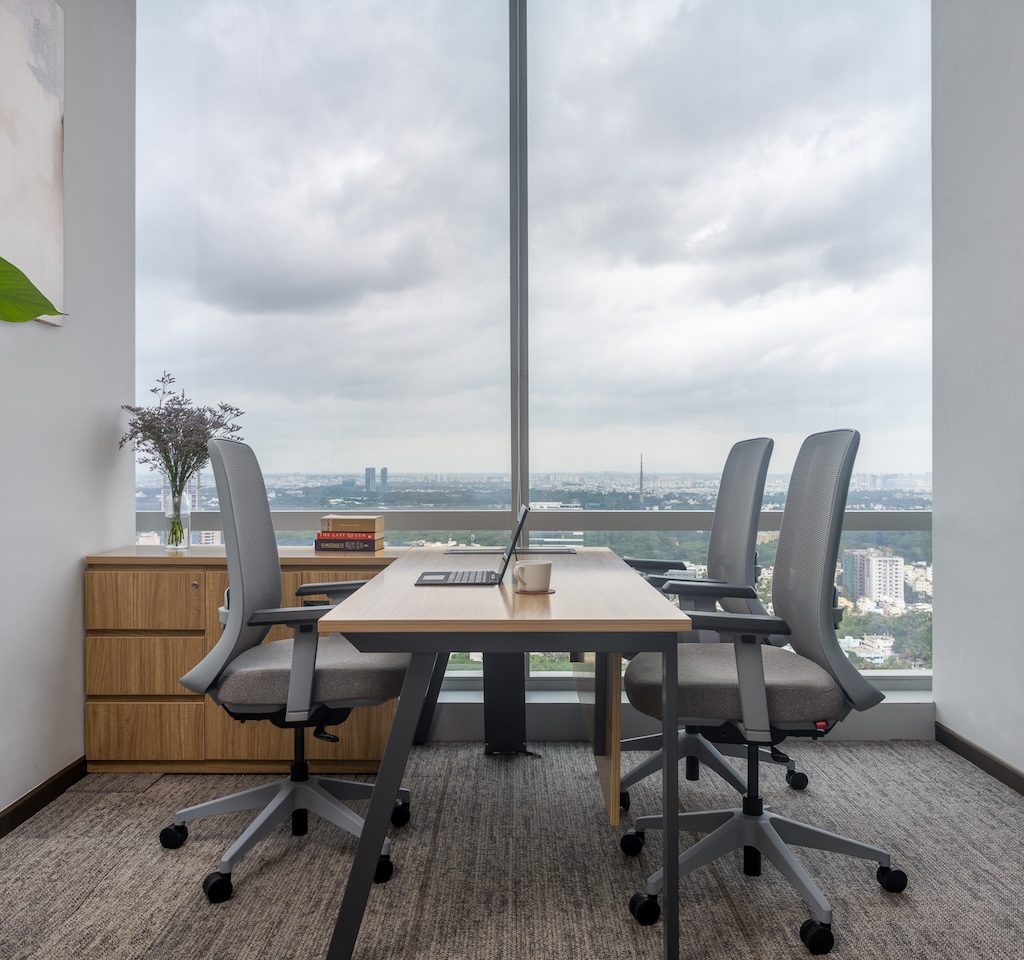
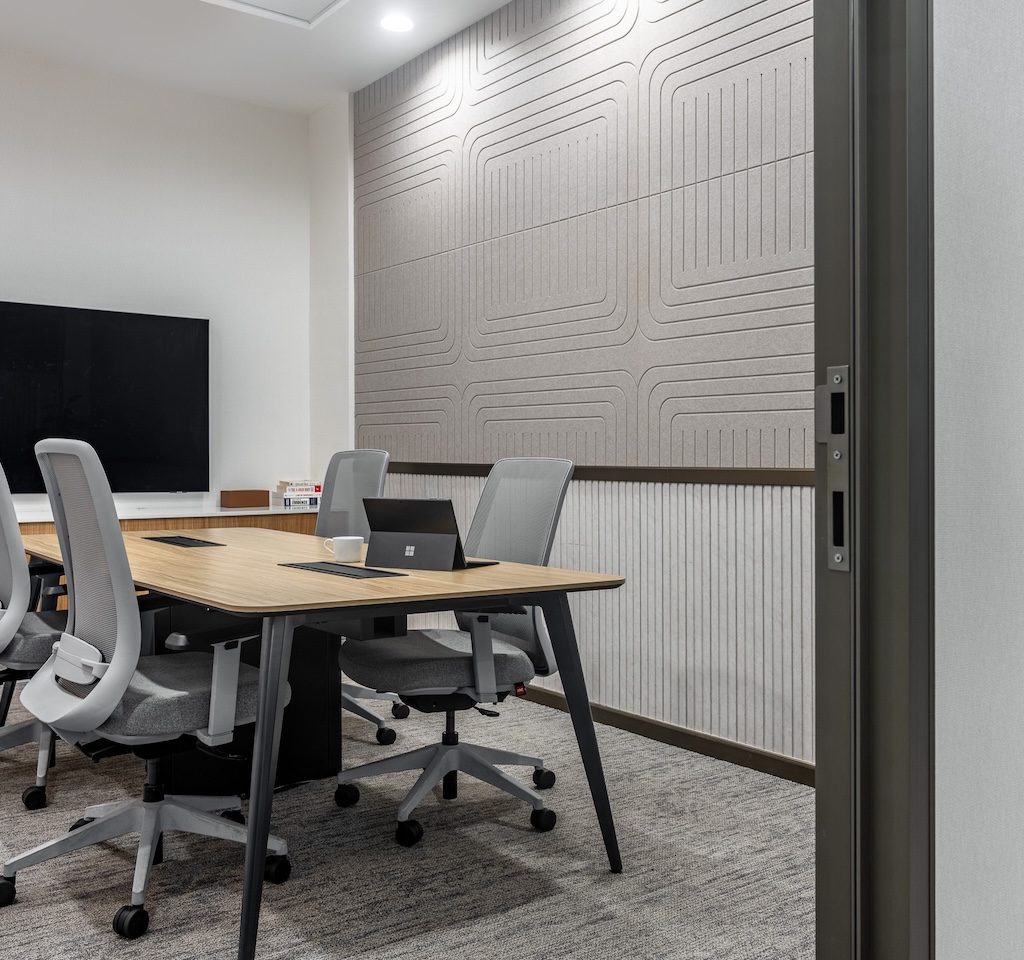
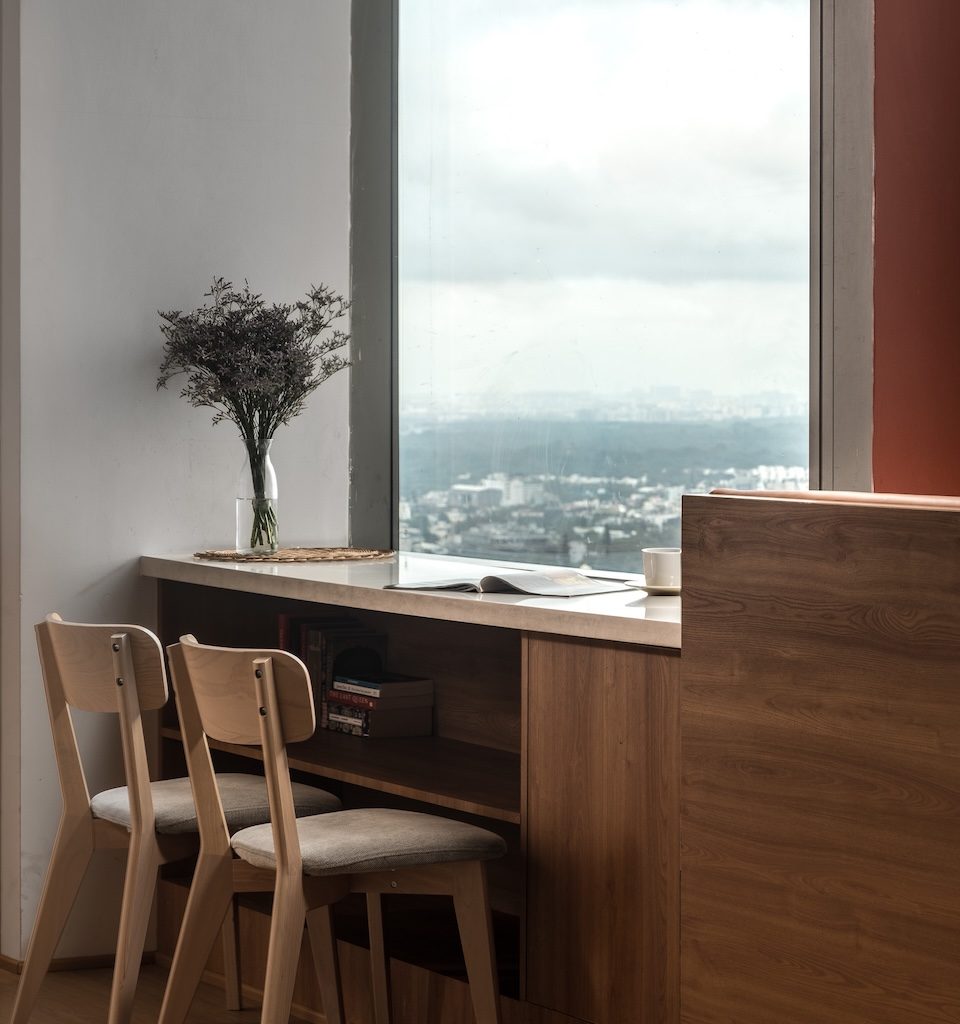
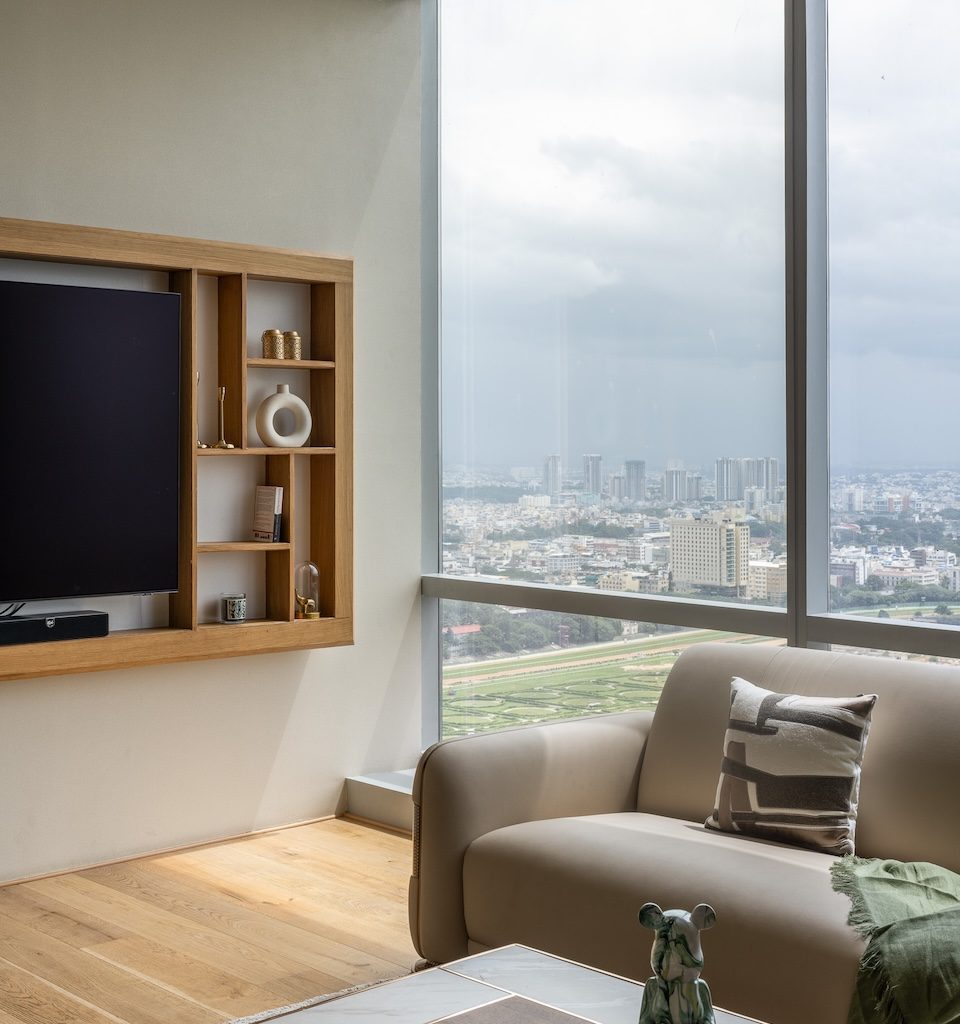
The office unfolds through an intuitive sequence calibrated for varied modes of work. Visitors enter into a composed reception zone before moving into a clearly structured layout where executive cabins, meeting rooms, and collaborative areas are carefully zoned for privacy and focus. Editing suites and screen-intensive workspaces are positioned to minimise both visual and acoustic disturbance, allowing multiple workflows to operate simultaneously. Lighting is deliberately calibrated across the floor plate—balanced to support long hours of screen-based work while maintaining a warm ambient quality. Natural light is maximised wherever possible, reinforcing a sense of openness within the high-rise setting.
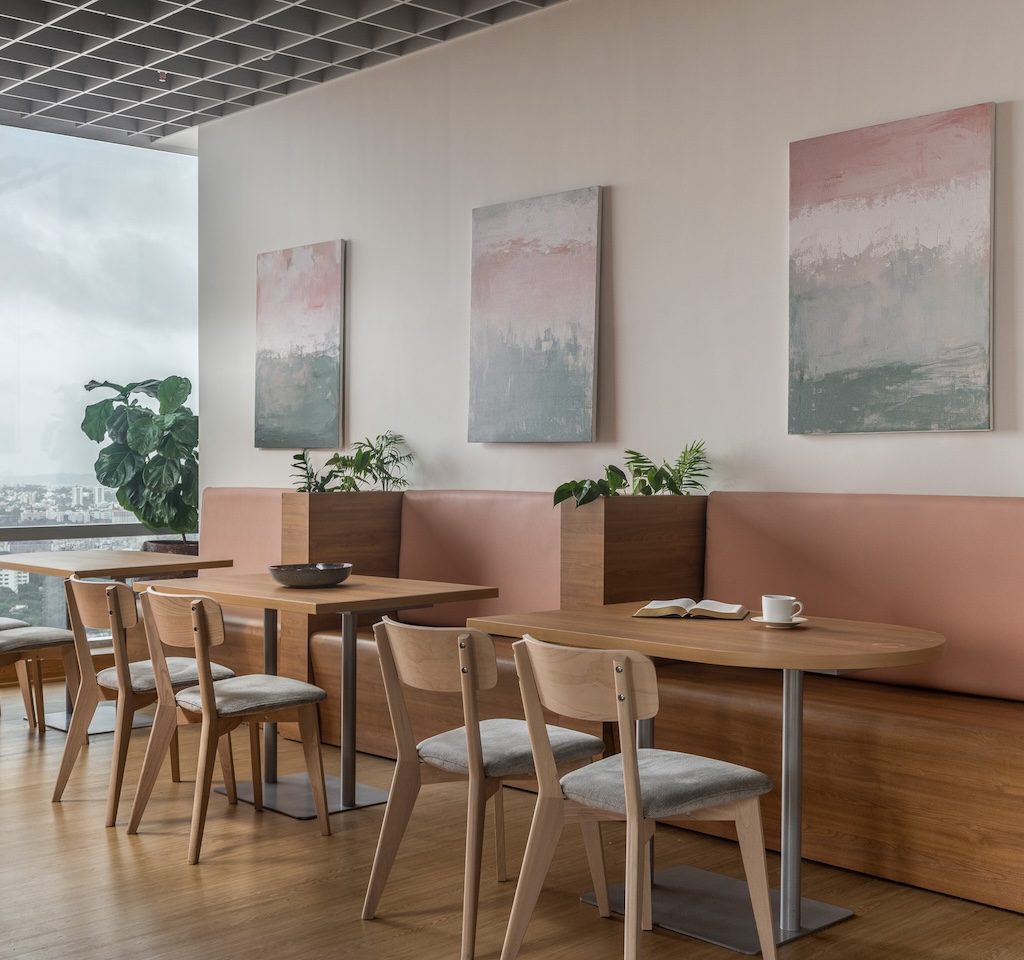
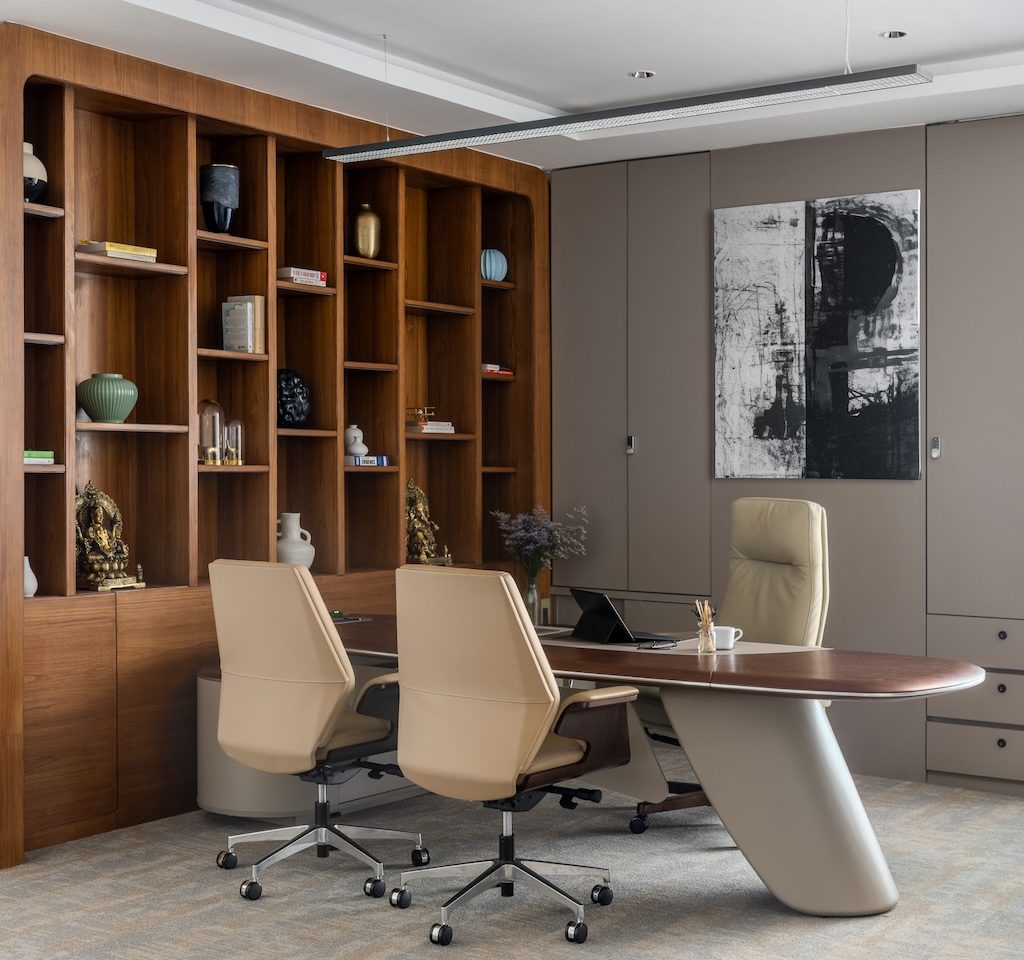
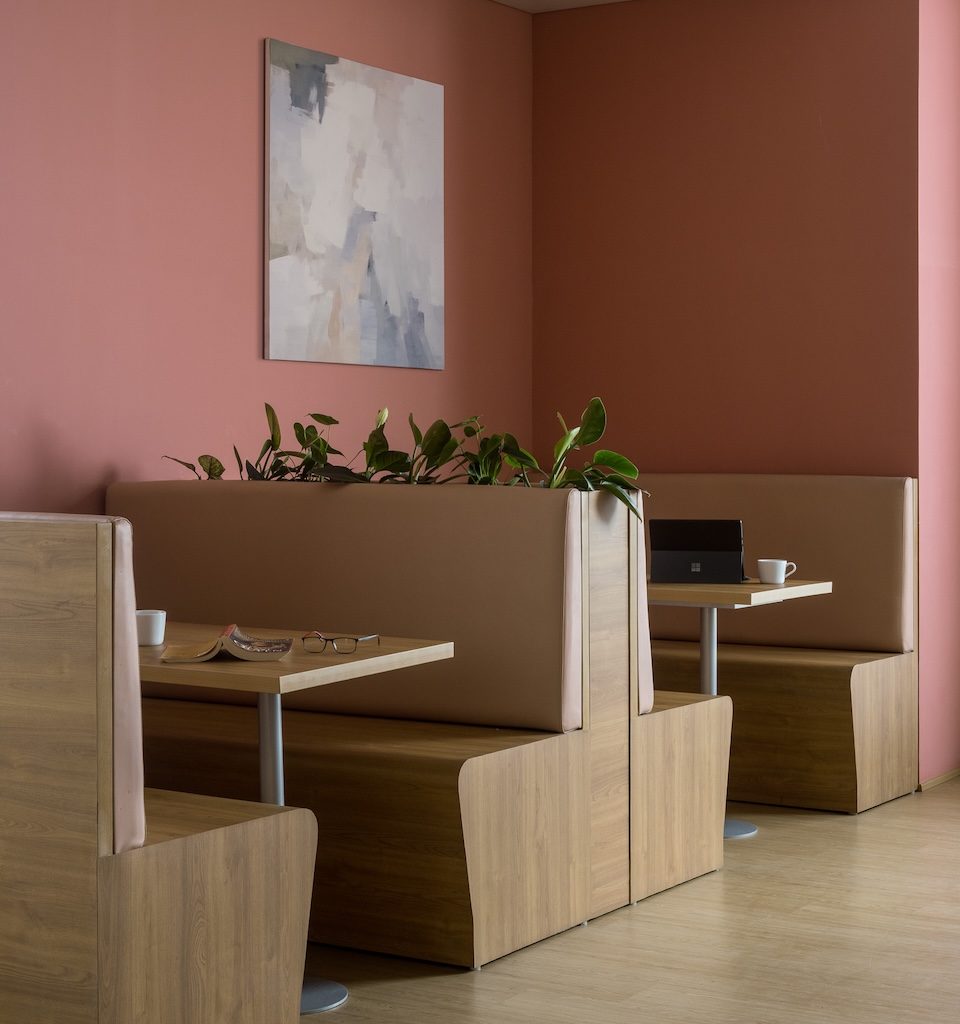
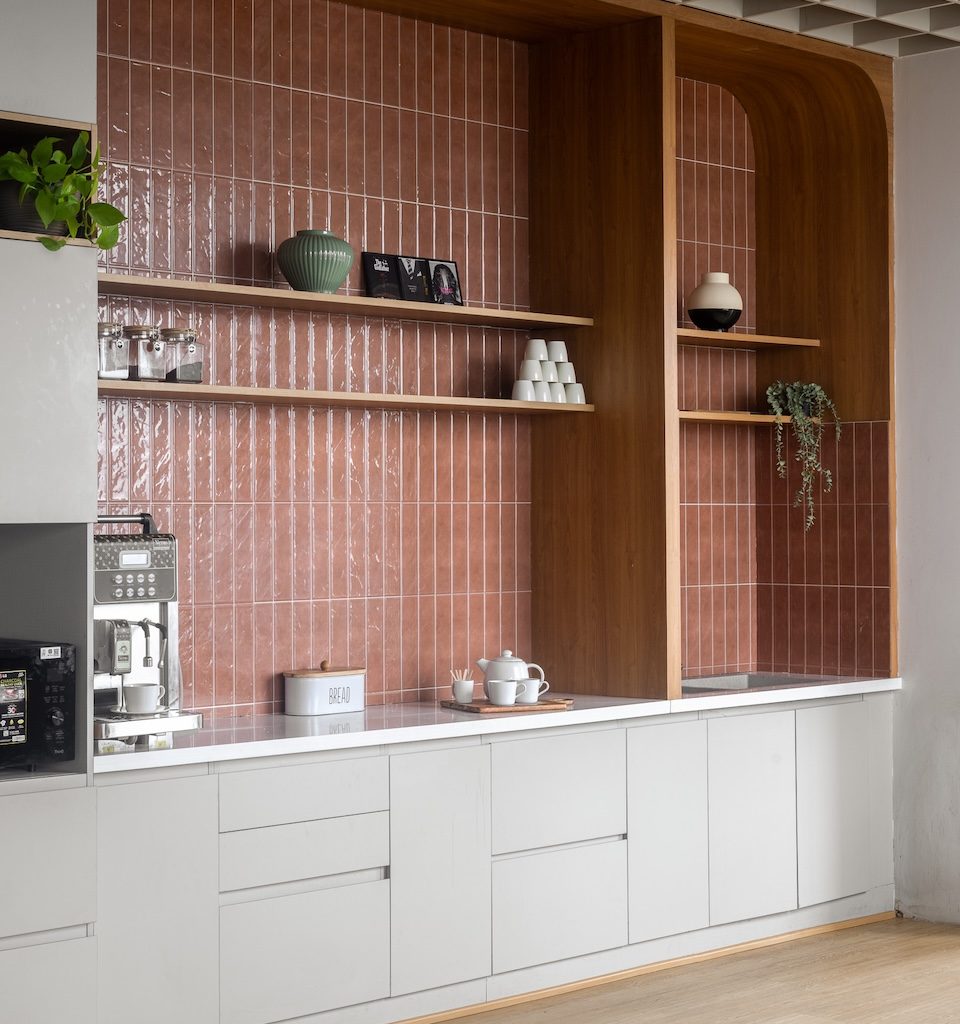
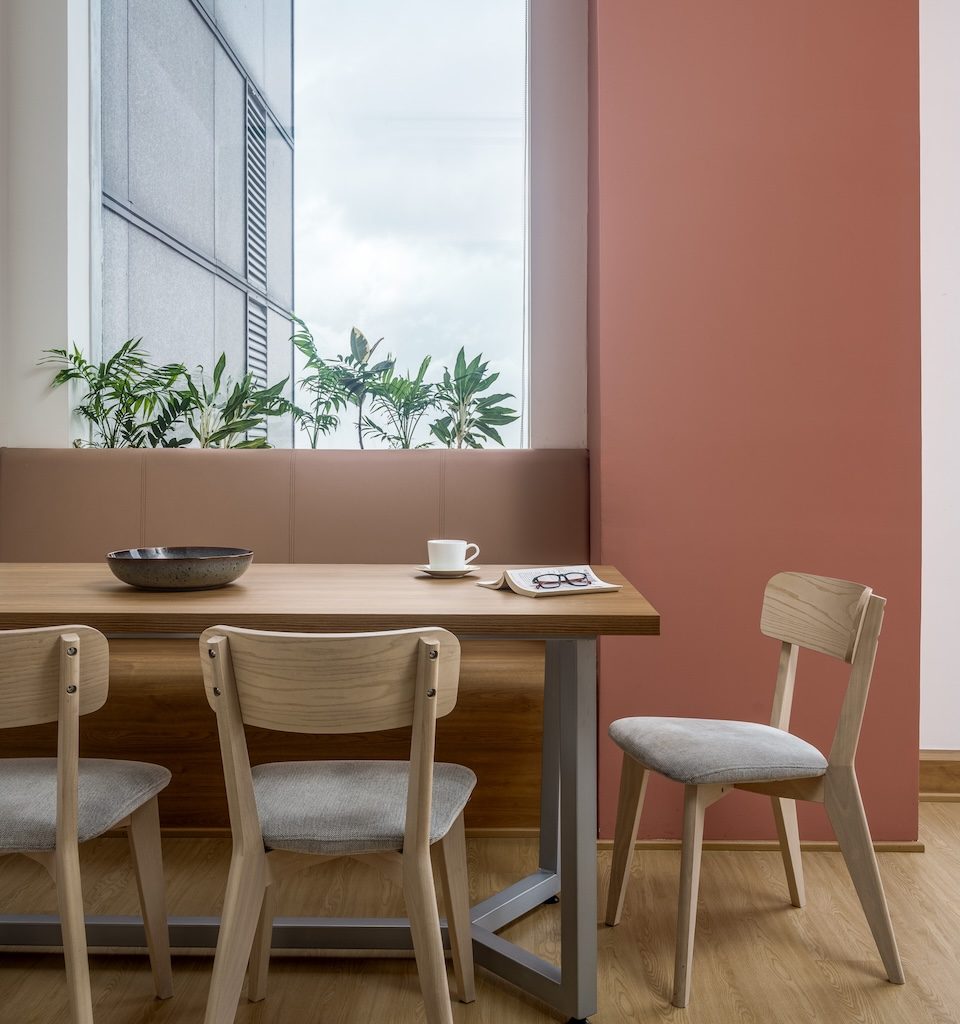
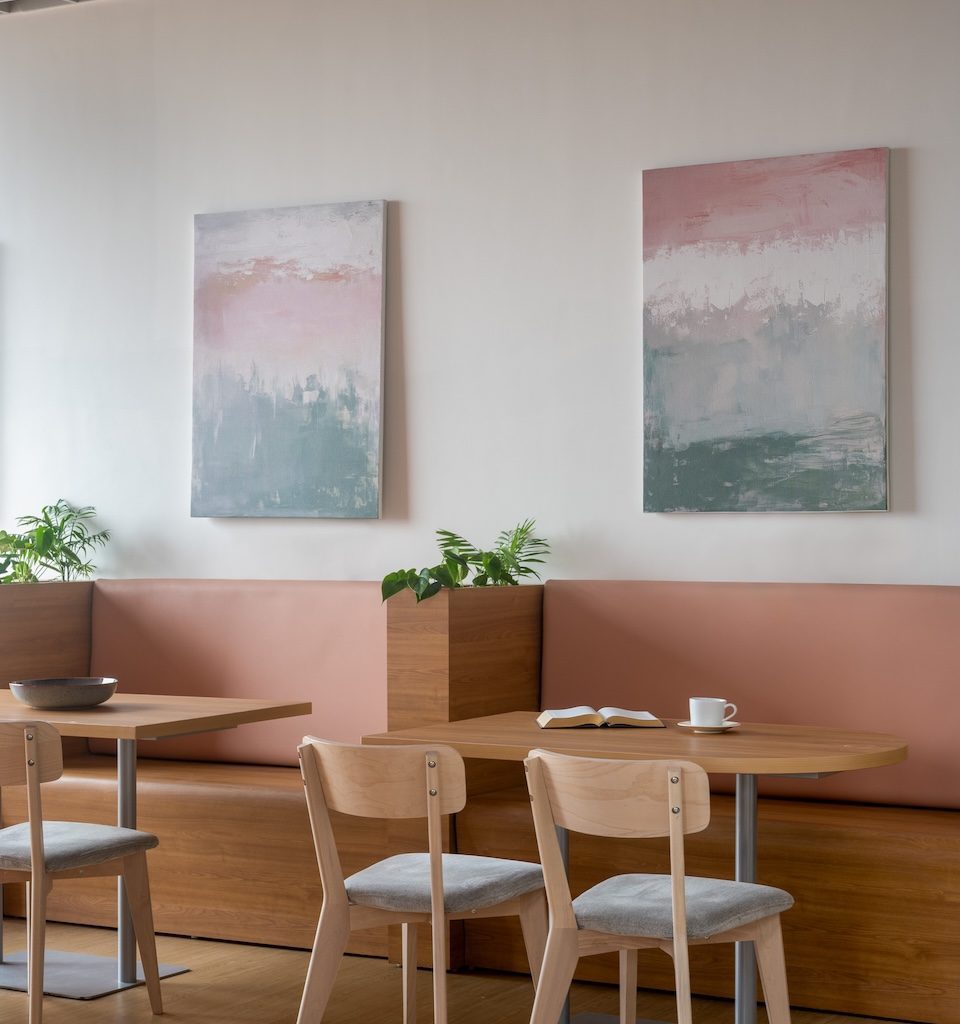
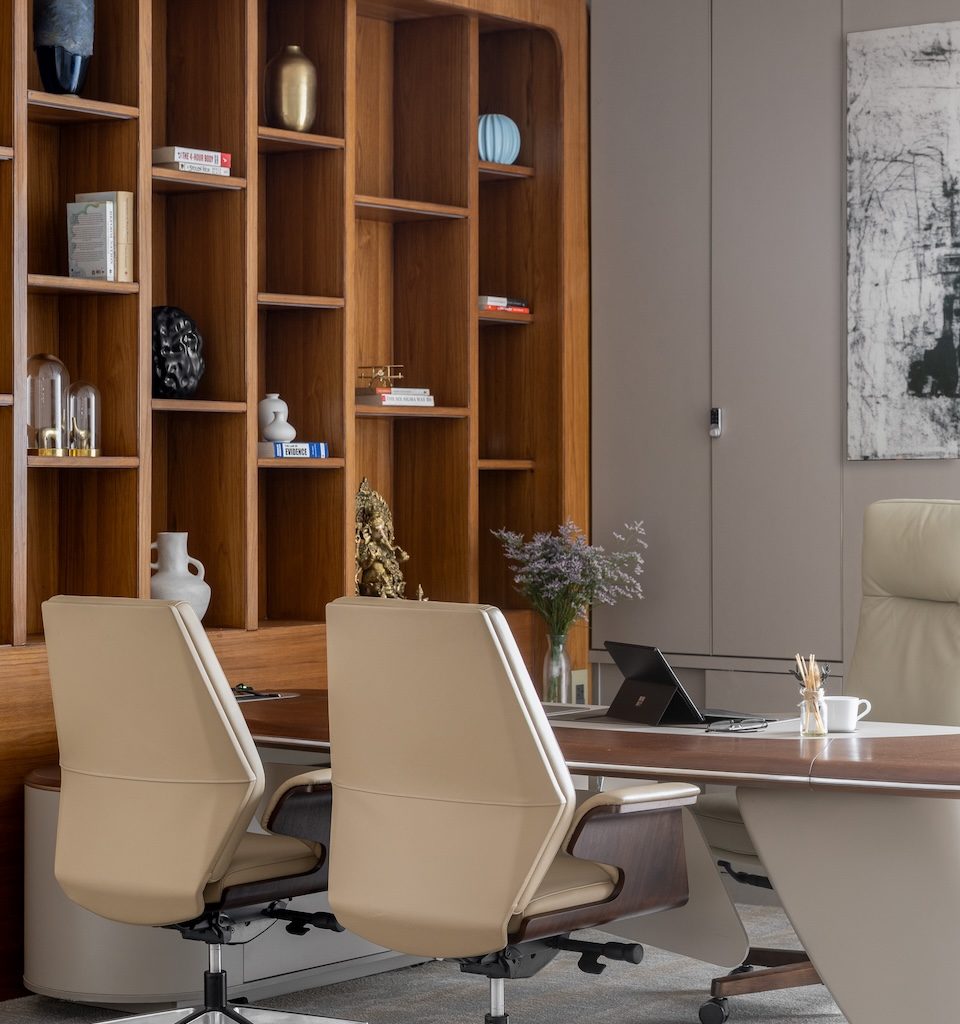
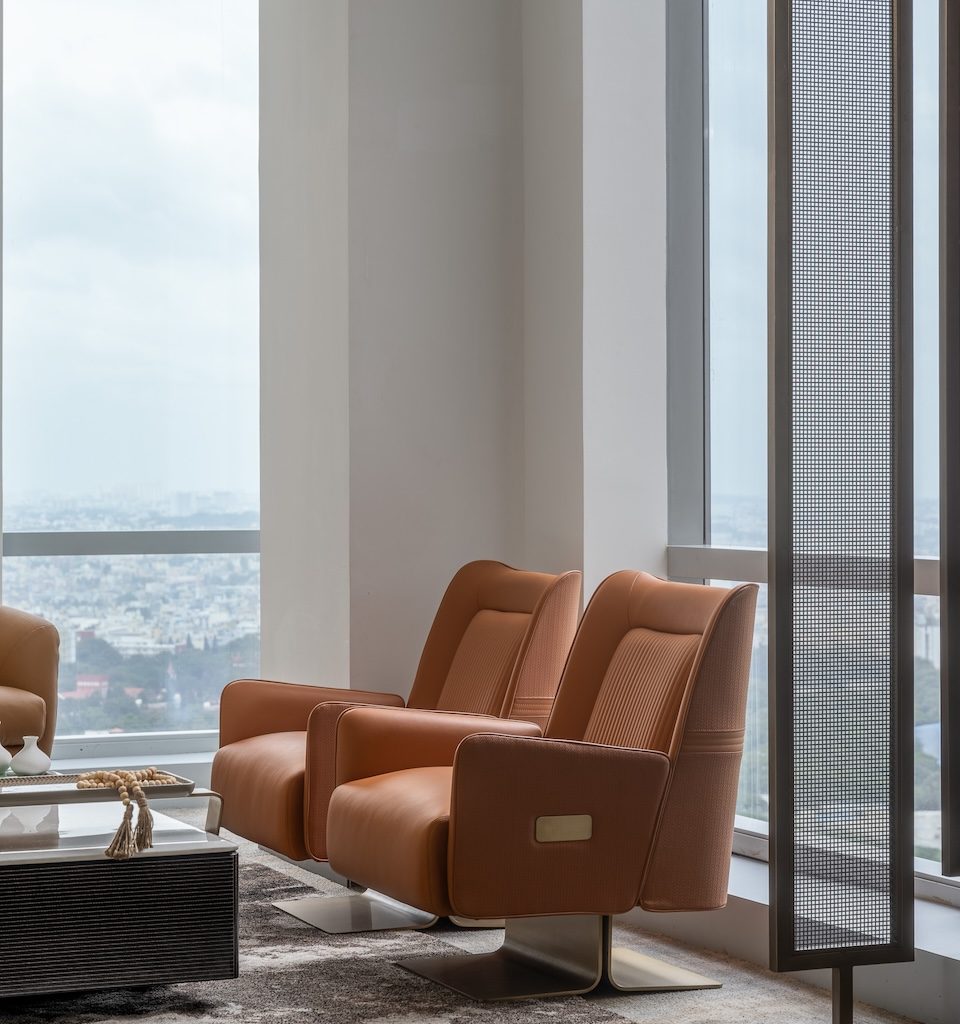
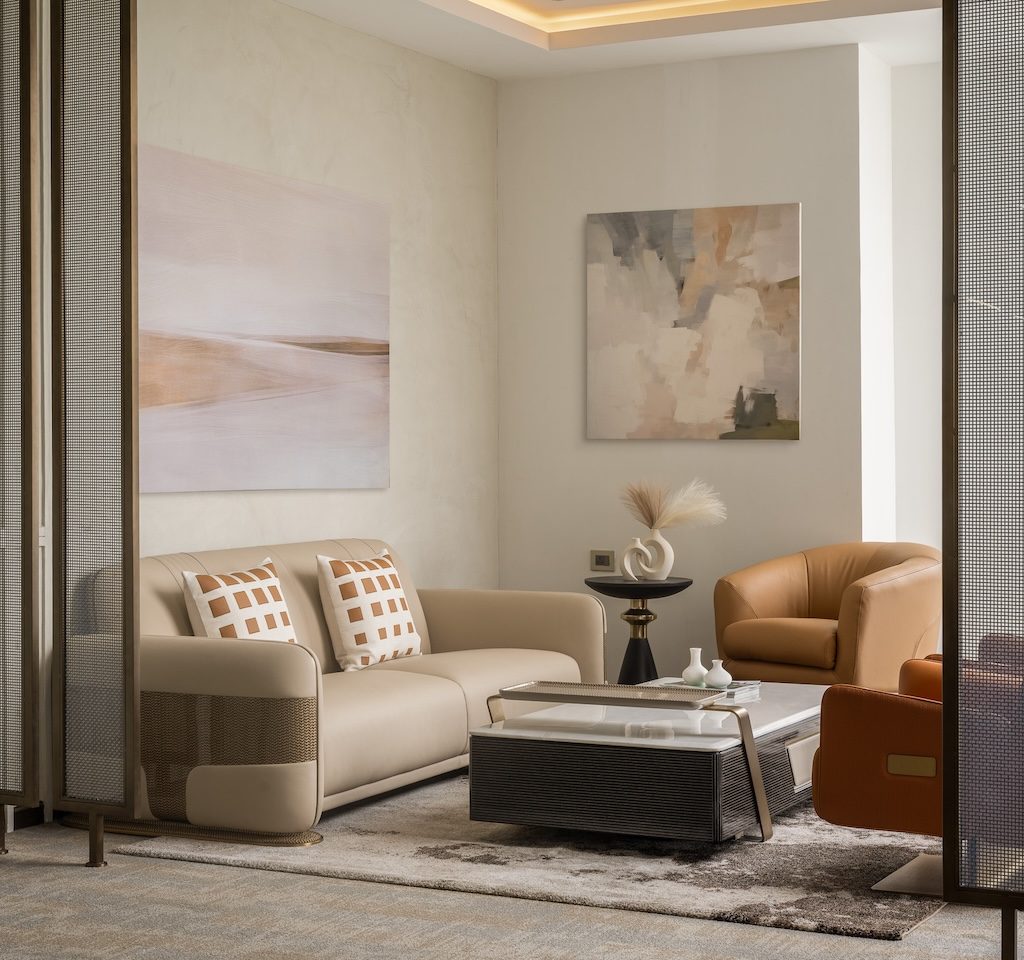
Private spaces such as the CEO cabin are conceived as composed environments that balance authority with comfort, using controlled lighting and refined material choices to support focused decision-making. Informal zones, including the pantry, are treated as moments of pause within the workday—quietly designed to encourage brief interaction without disrupting the overall tone or efficiency of the office.
The material palette
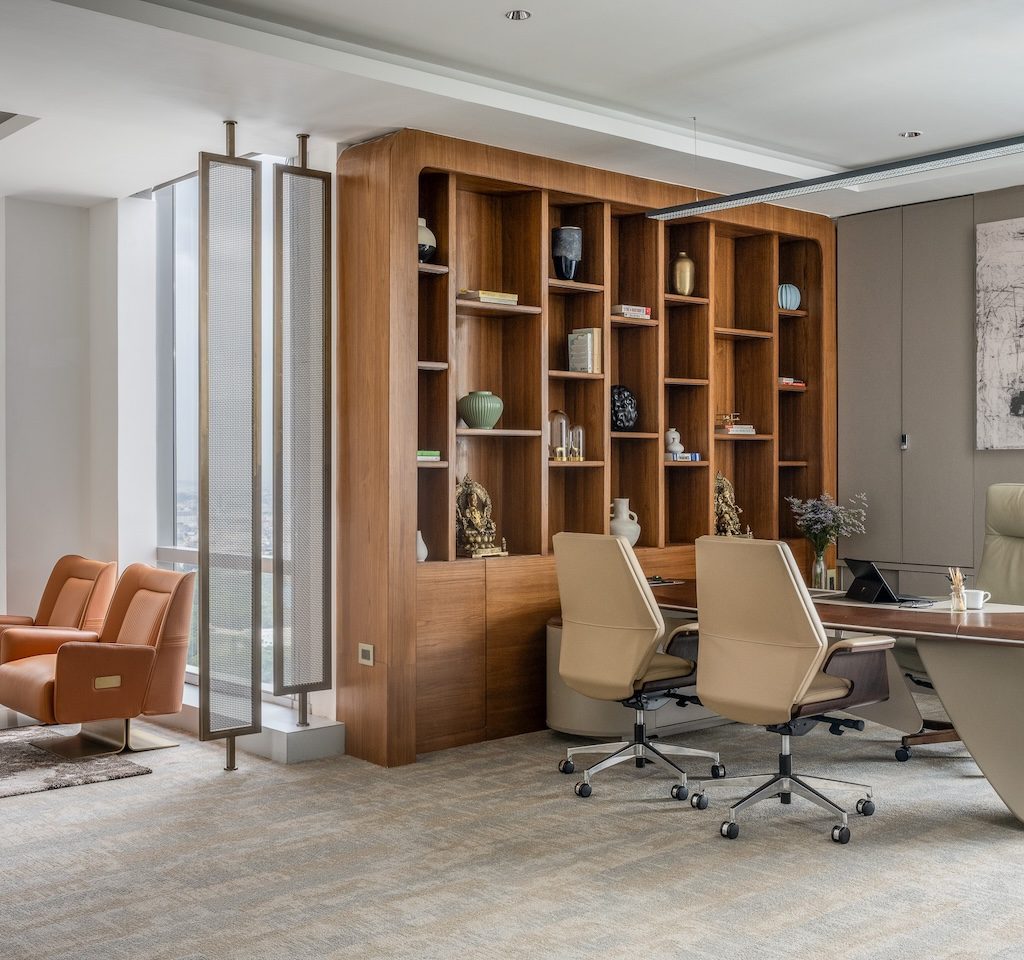
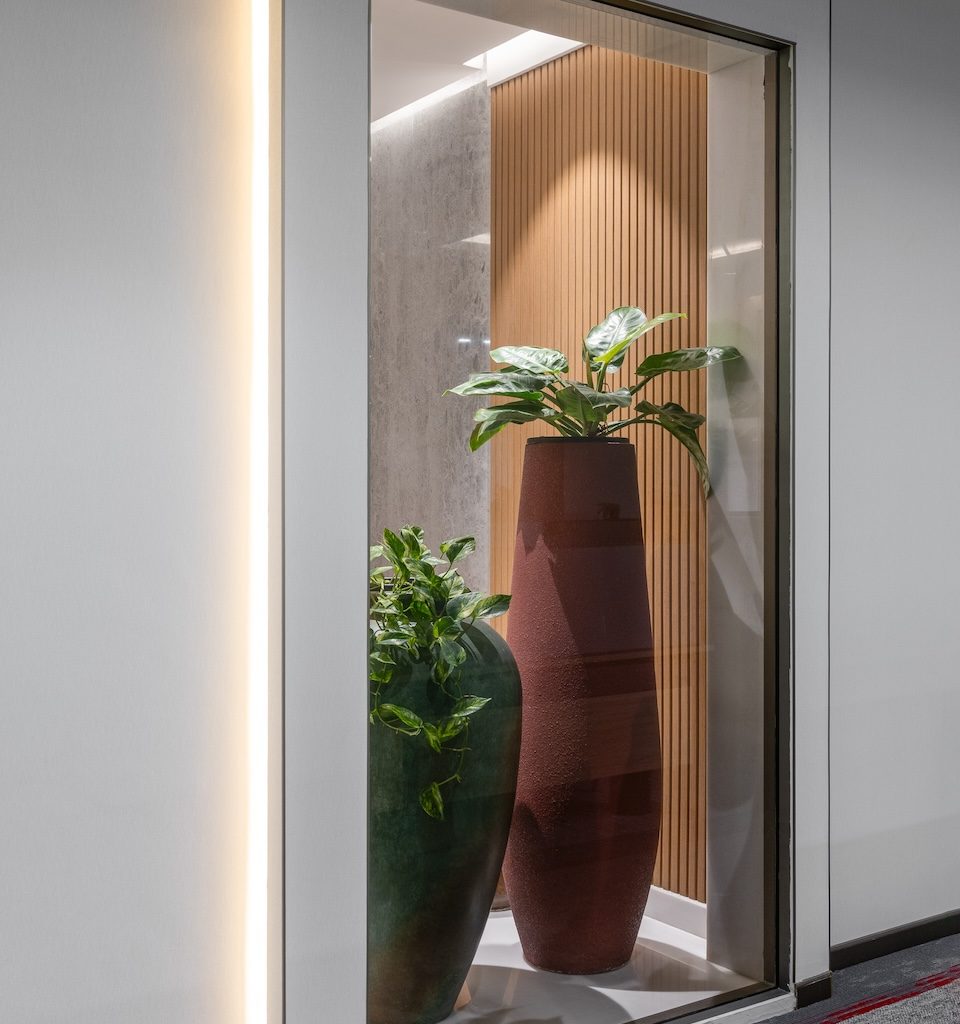
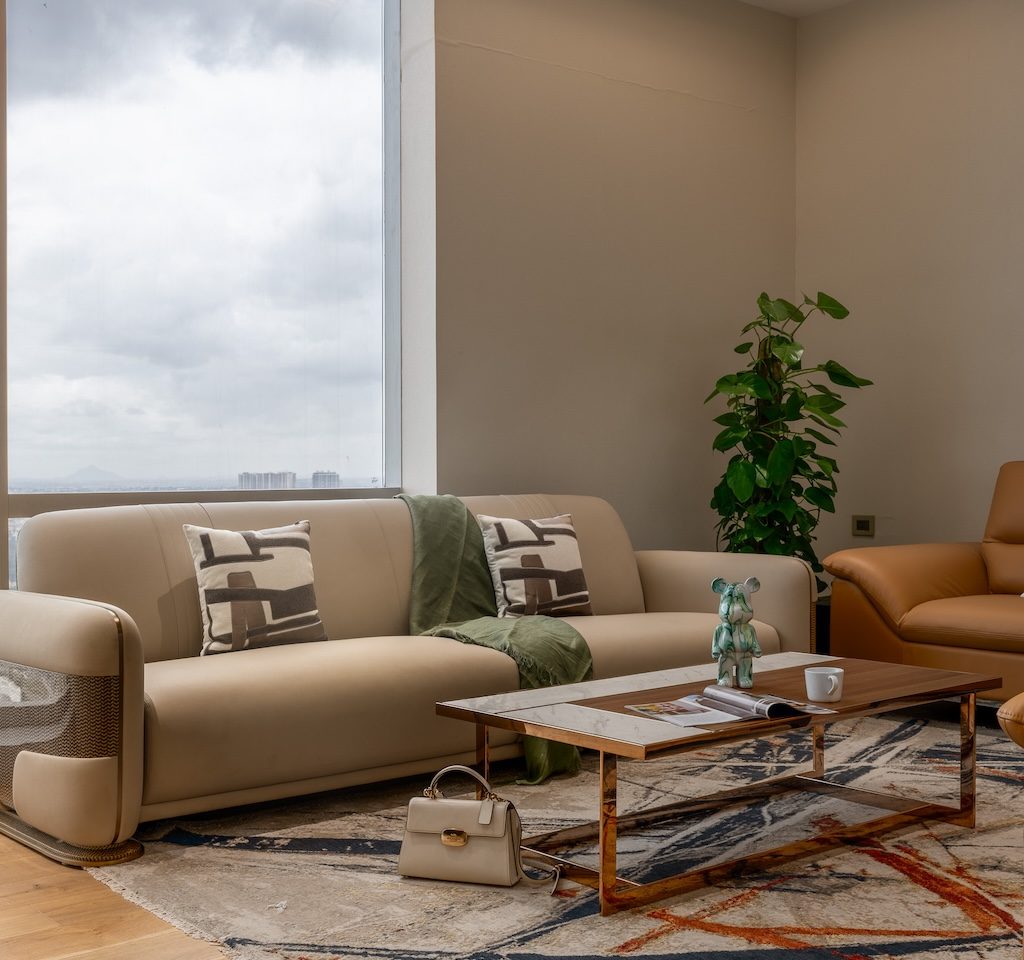
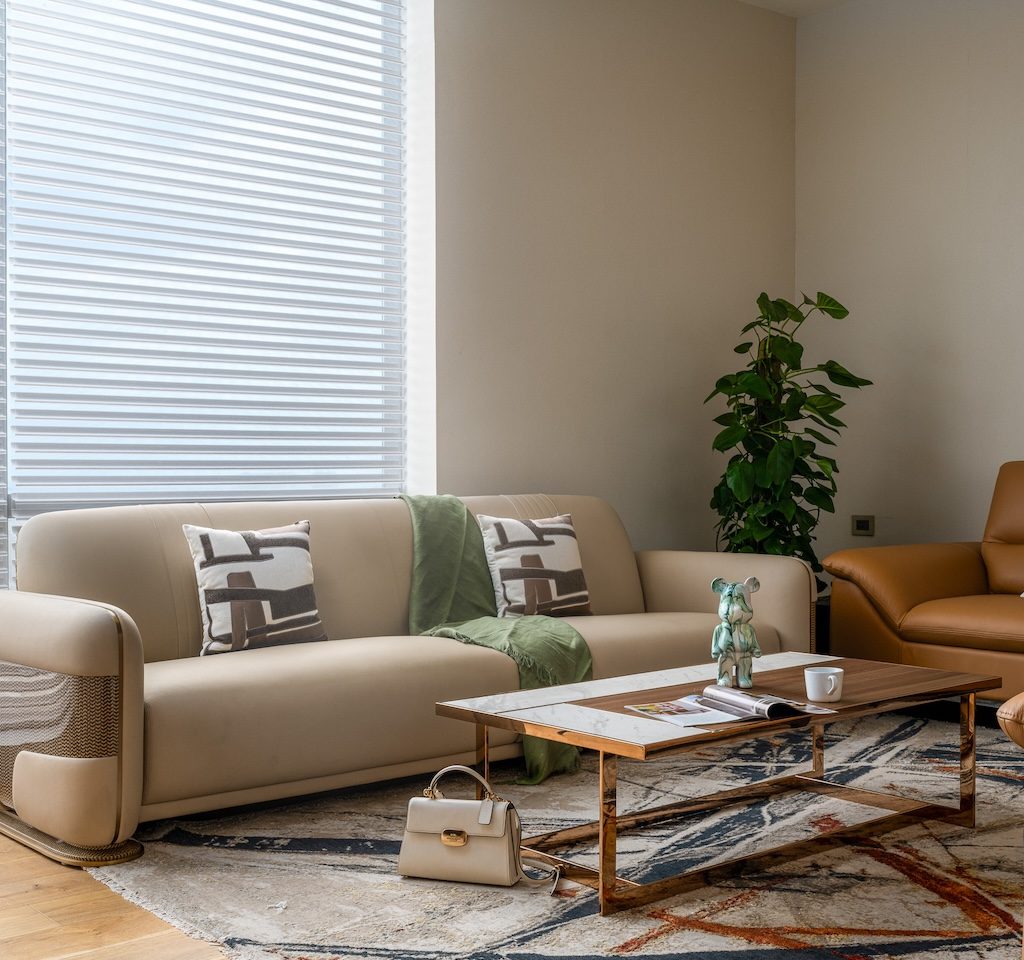
The material language is subdued and cohesive, supporting both visual calm and acoustic comfort. Wood tones are used extensively to introduce warmth and soften the minimal aesthetic, while matte finishes and neutral wall colours create a glare-free environment suited to extended working hours. Textured wall and ceiling panels perform a dual role, adding subtle depth while absorbing sound, ensuring that collaboration and focused work can coexist without interference. Select metal accents bring refinement without drawing attention away from the overall restraint of the space.
The challenges
The primary challenge lay in reorganising the spatial layout without altering the extensive existing service infrastructure. Fixed AC lines, speaker placements, and fire-safety systems demanded inventive detailing and precise planning to ensure the new layout felt seamless rather than constrained.
The highlights
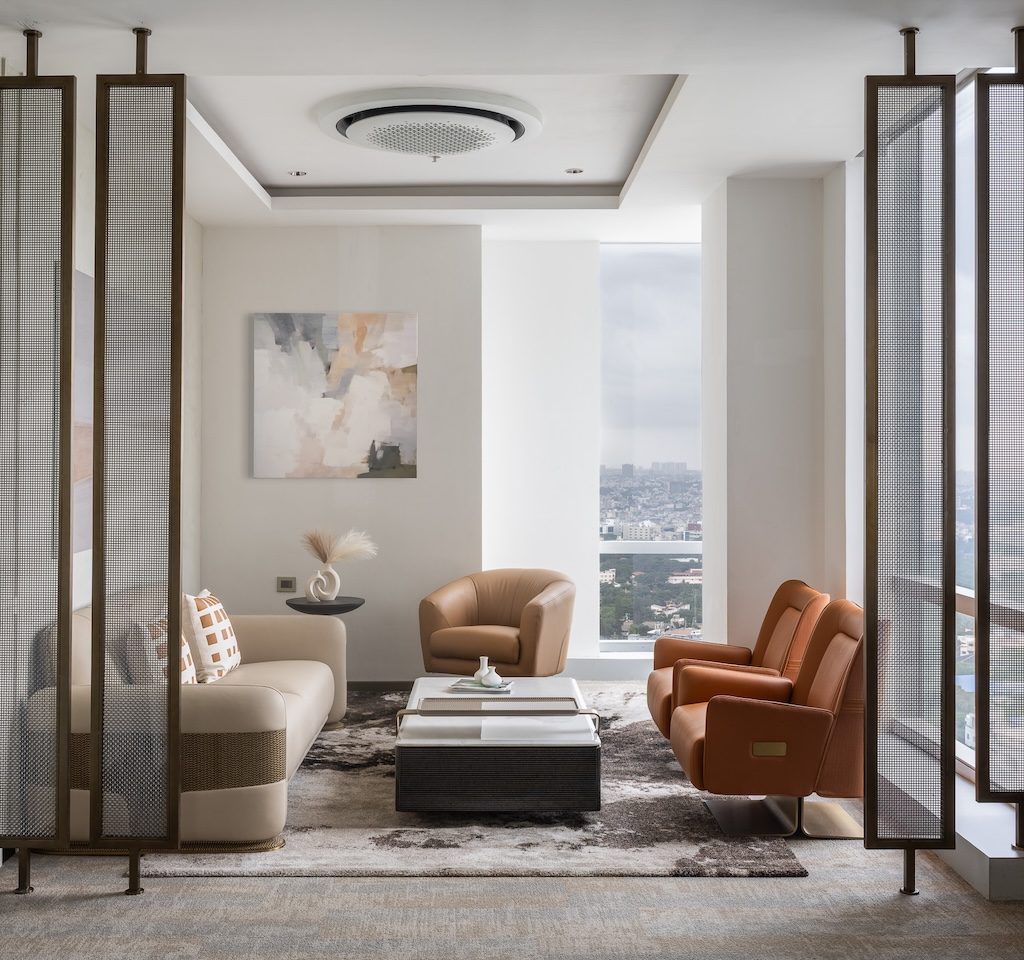
A disciplined planning strategy, calibrated lighting, and acoustic control define the office’s character. The clear zoning allows confidential work and collaborative activity to occur in parallel, while material restraint ensures the space remains calm despite the intensity of production workflows. The CEO cabin and informal pantry zones stand out as carefully balanced environments that support both authority and ease.
The takeaway
The KVN Productions office demonstrates how a restrained, context-sensitive design approach can respond effectively to the needs of a creative industry. Through careful planning, acoustic control, and material clarity, the project delivers a workspace that supports complex workflows while maintaining coherence, focus, and quiet confidence.
Fact file
Project: KVN Productions Office
Design firm: Turnkey 5.0
Location: Bengaluru
Area: 20,000 sq ft
Principal architect: Ar. Masoom Jindal
Add a Comment