
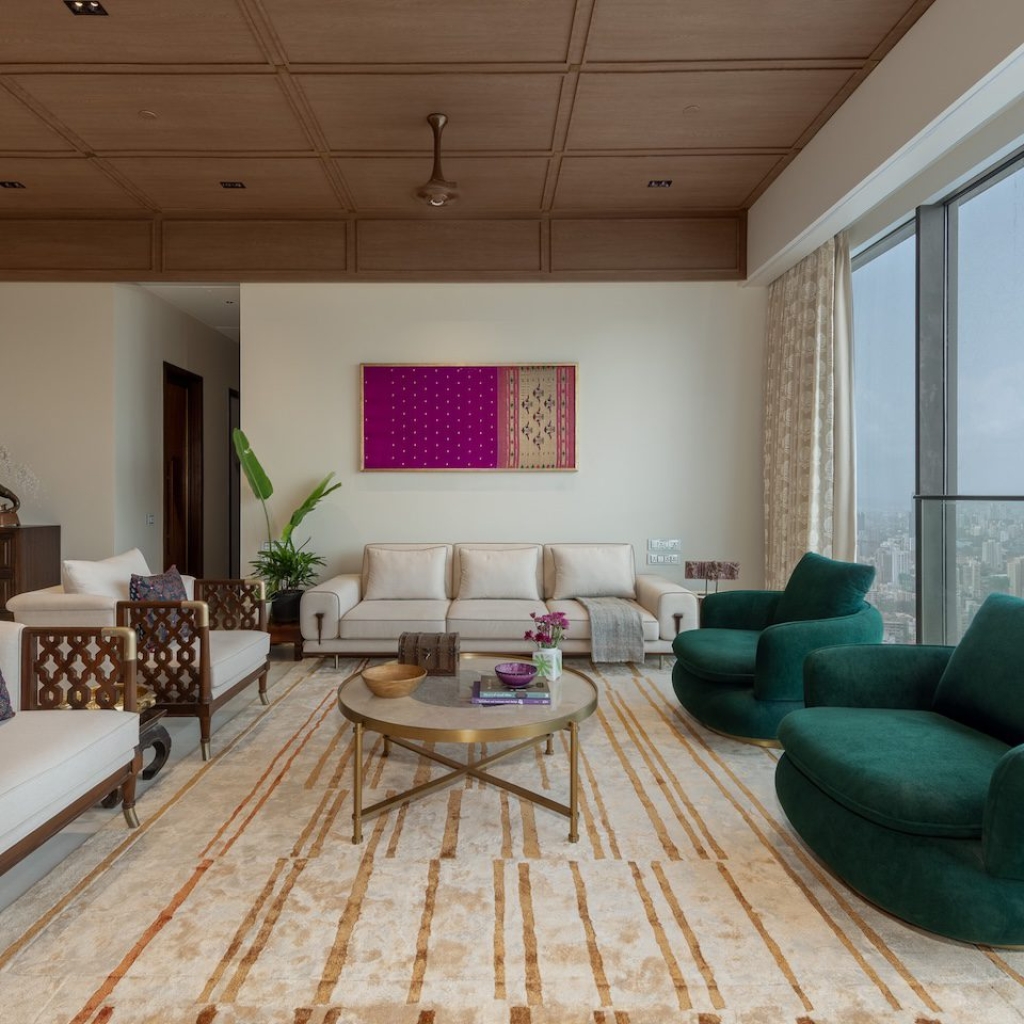
This Mumbai home designed by Ishaay Interiors for a three-generation family brings together cultural memory, crafted detail, and contemporary restraint.
Curated by: Rupali Sebastian
Photographs: Aaditya Kulkarni + Shubhangi GuptaI PHX India; courtesy Ishaay Interiors
The project
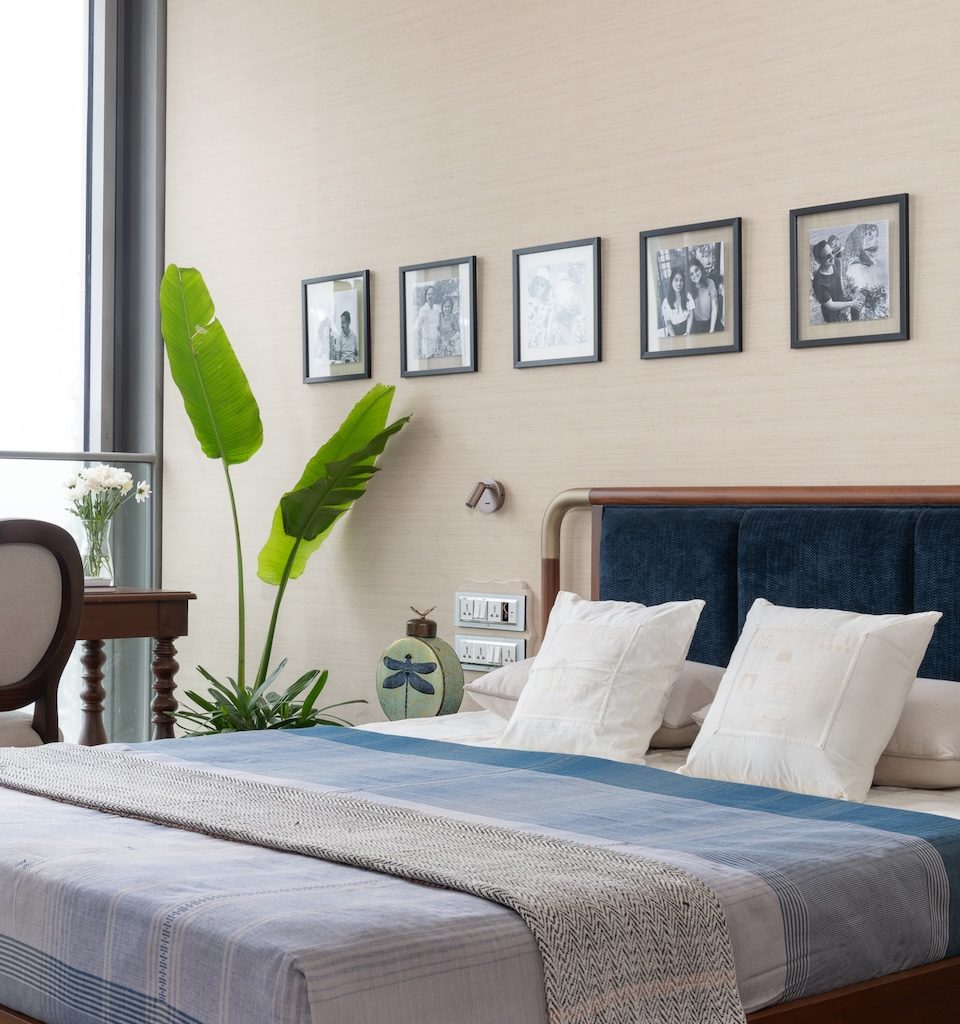
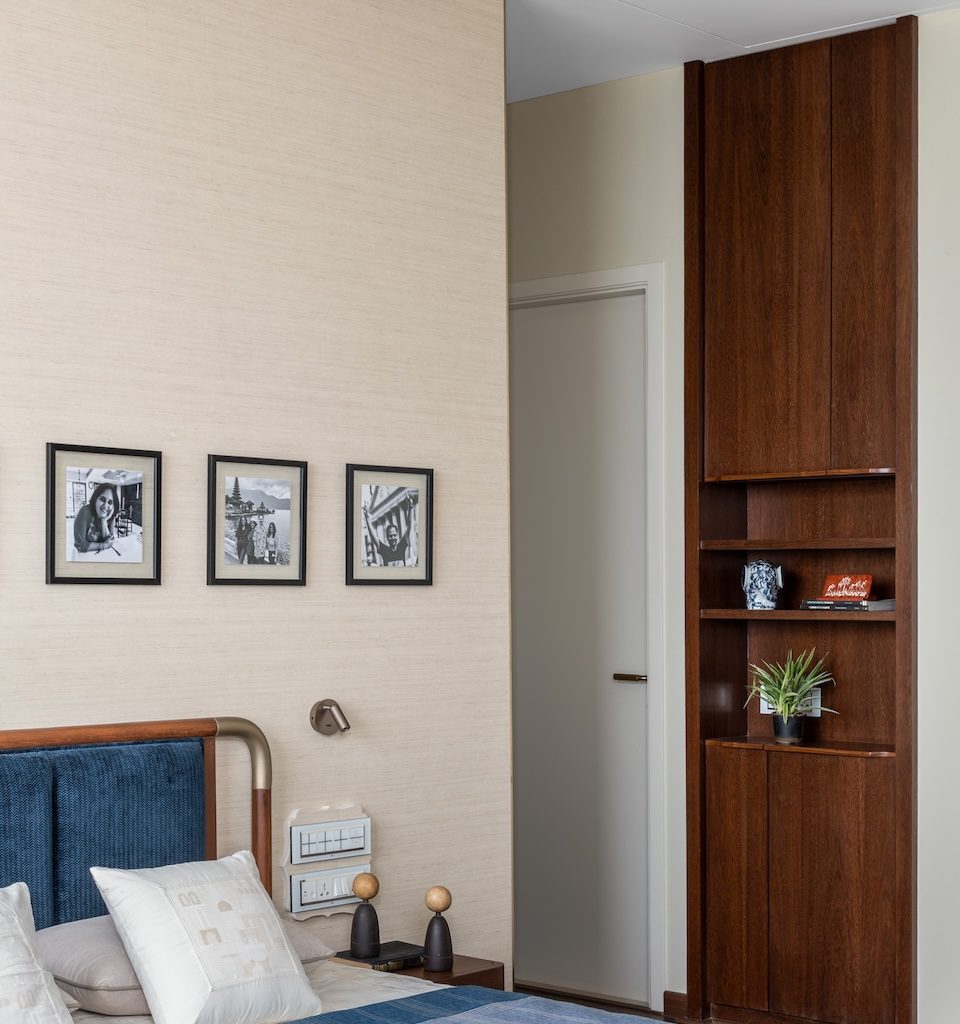
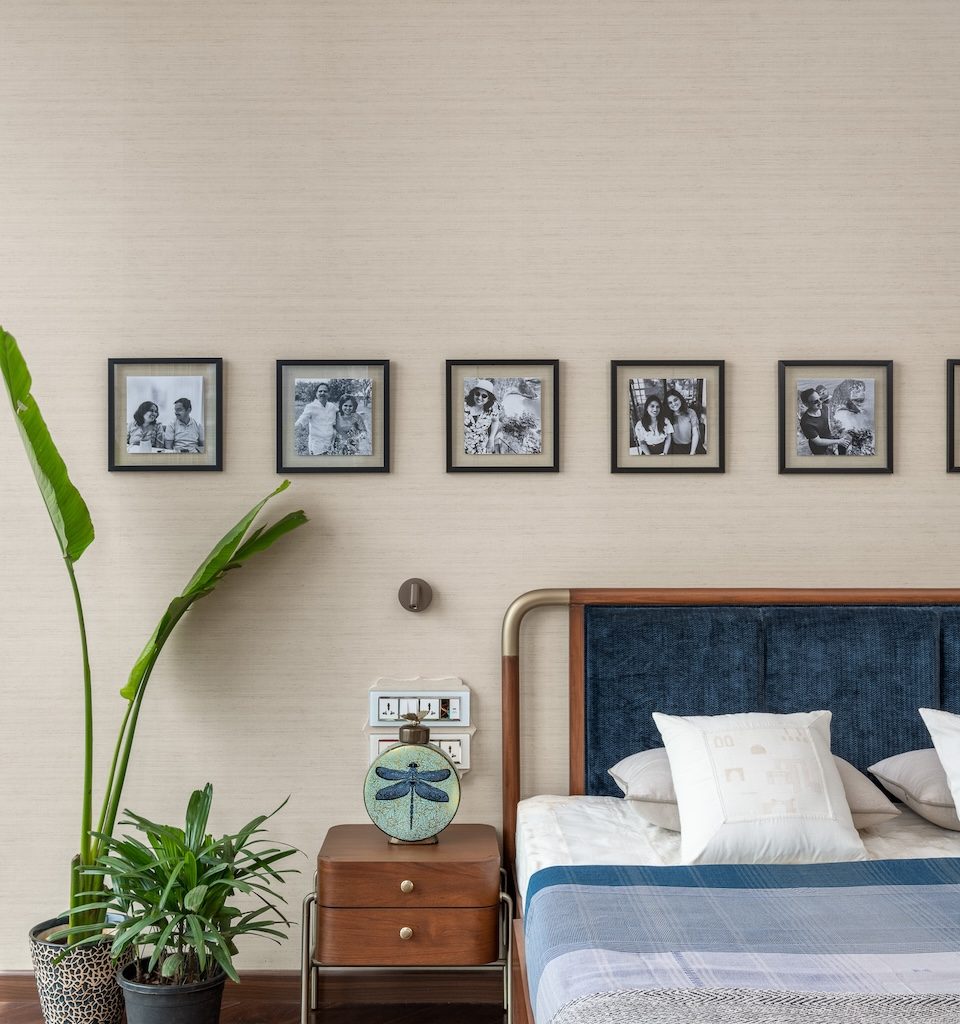
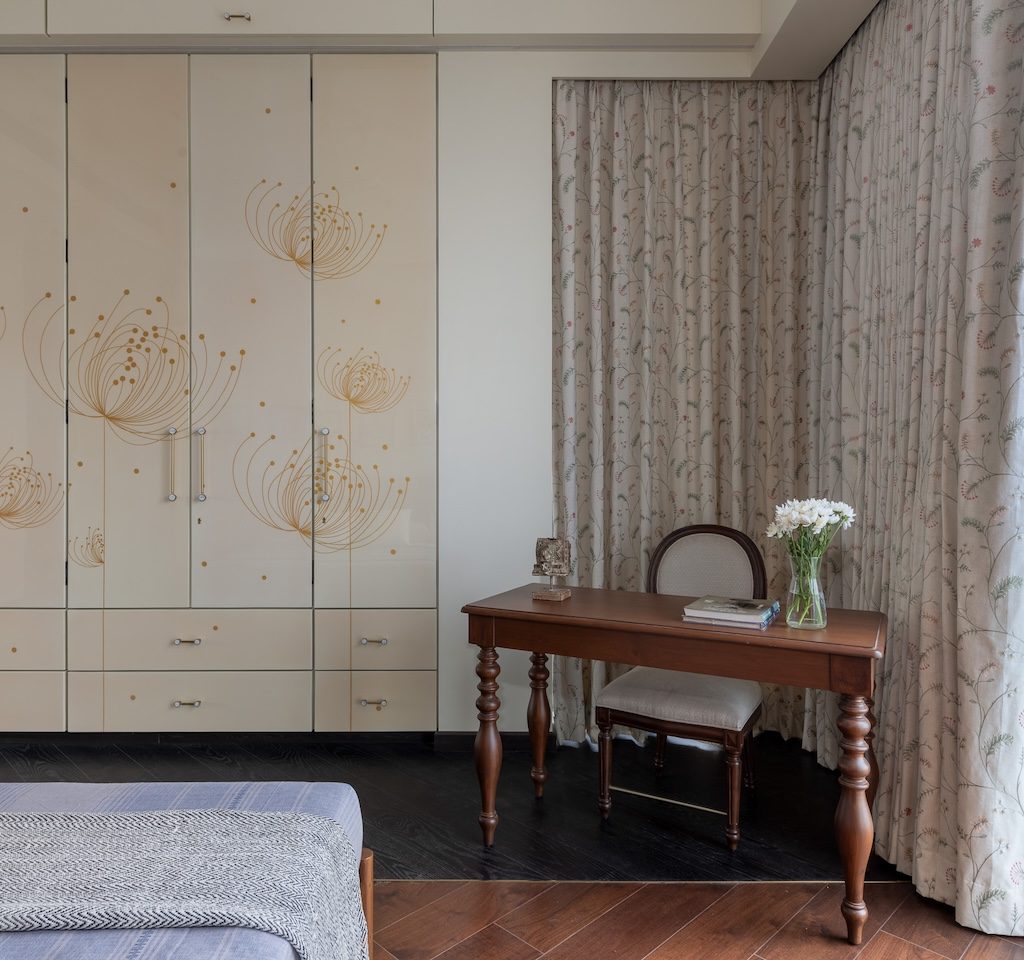
This 1,900 sq ft private residence at Rustomjee Crown, Mumbai, designed by Ishaay Interiors, is a layered home for a three-generation family—one that balances contemporary living with deeply rooted cultural memory. Rather than leaning into overt luxury, the project explores restraint, warmth, and storytelling, shaping a space that feels personal, lived-in, and quietly expressive.
The site
Located within a newly constructed residential tower, the apartment was received as a clean shell with standard builder-provided amenities. This blank canvas allowed the design team to focus on atmosphere and detail, crafting interiors that respond less to structural constraints and more to the emotional rhythms of everyday domestic life.
The brief
The clients sought a home that could offer relief at the end of hectic days while accommodating the needs and sensibilities of three generations under one roof. A modern lifestyle anchored in tradition shaped the brief—one that called for simplicity without starkness, comfort without clutter, and cultural references that felt embedded rather than ornamental.
The design intent
The home is conceived as a meeting ground between tradition and modern sensibilities, where timeless materials and bespoke craftsmanship lend character without excess. Longevity—of materials, of memory, of use—emerged as a central idea. As principal architect and designer Pathikk Shah notes, “We wanted each space to evoke a feeling, not just serve a function.” This philosophy guided decisions across the apartment, allowing emotion and utility to coexist.
The spatial configuration
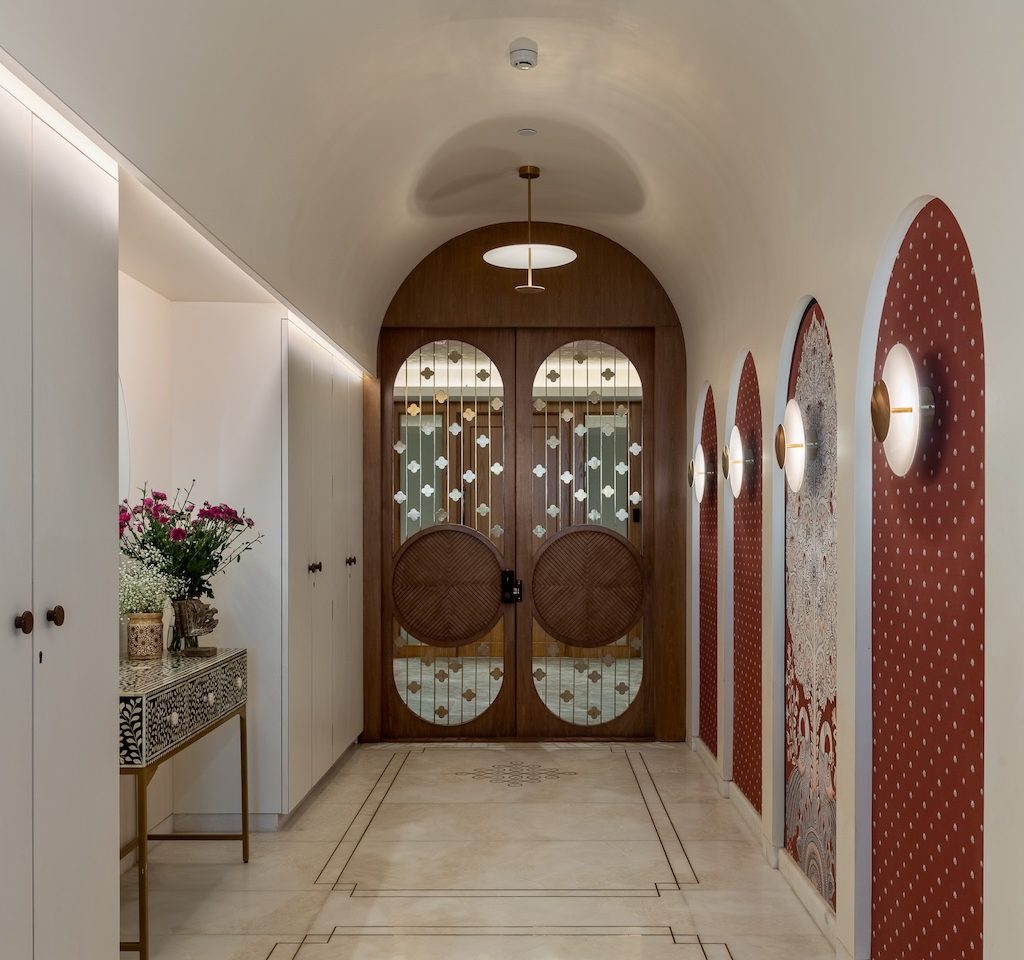
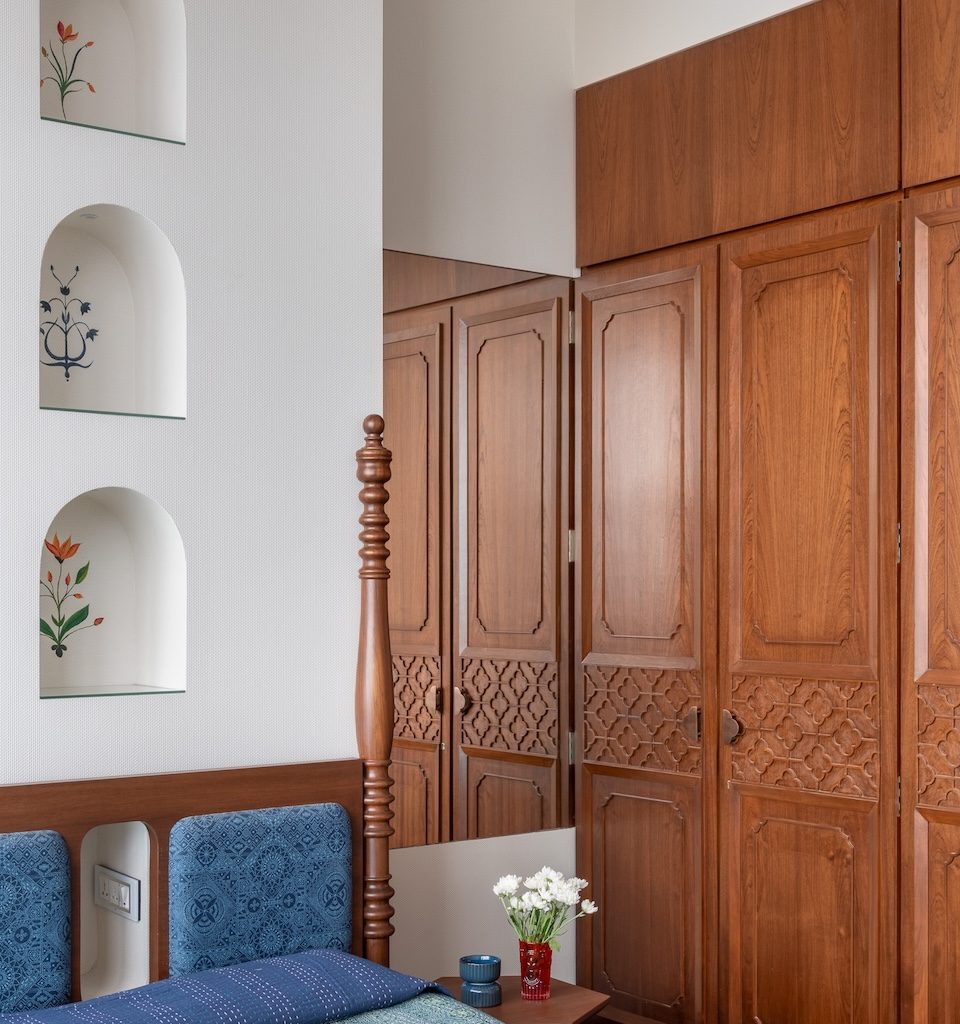
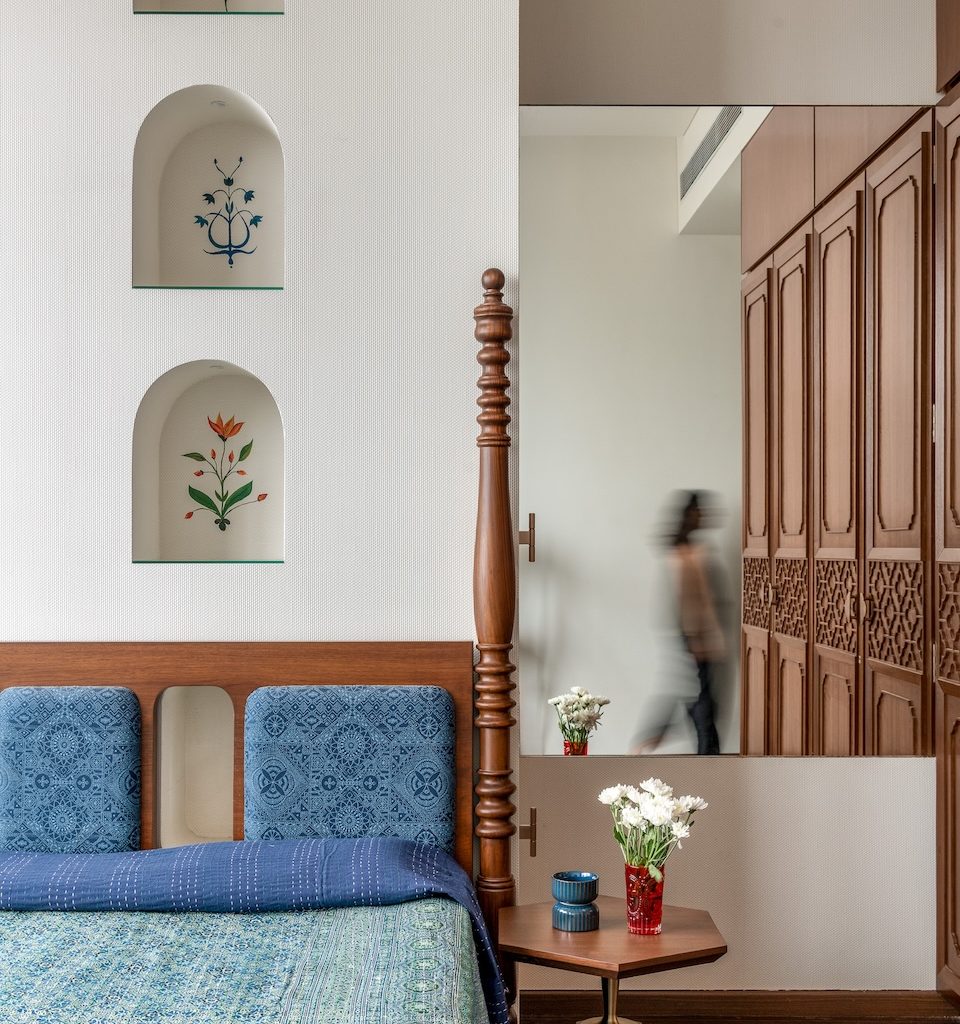
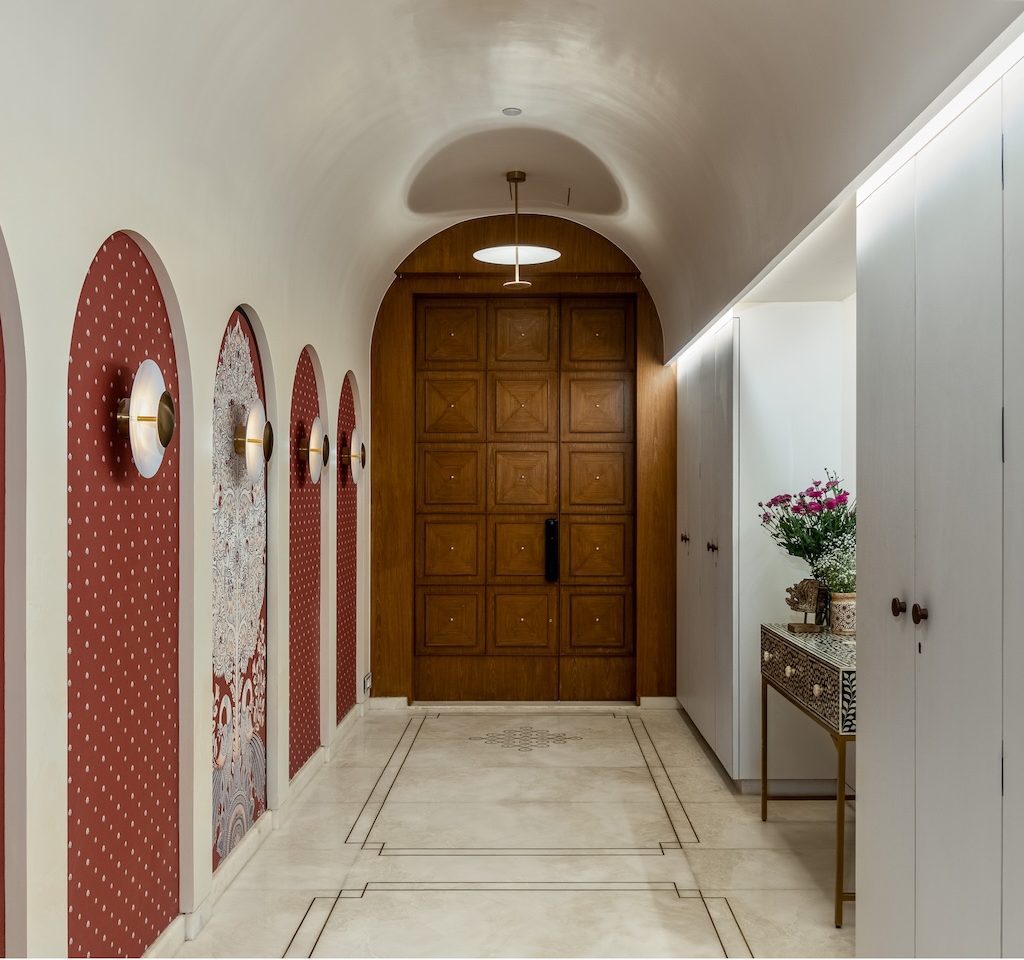
The apartment unfolds through a series of carefully calibrated moments. The entryway sets the tone with an arched ceiling and curated lighting that creates a sense of arrival, leading towards a striking wooden front door whose inset grid panels reinterpret classical Indian craftsmanship in a contemporary language. Embedded into the flooring nearby is a permanent rangoli motif—an understated yet powerful gesture of welcome and cultural continuity. “We wanted to preserve the idea of rangoli not as decoration, but as hospitality and memory,” shares the designer. “Making it part of the floor allowed it to become a silent, lasting blessing.”
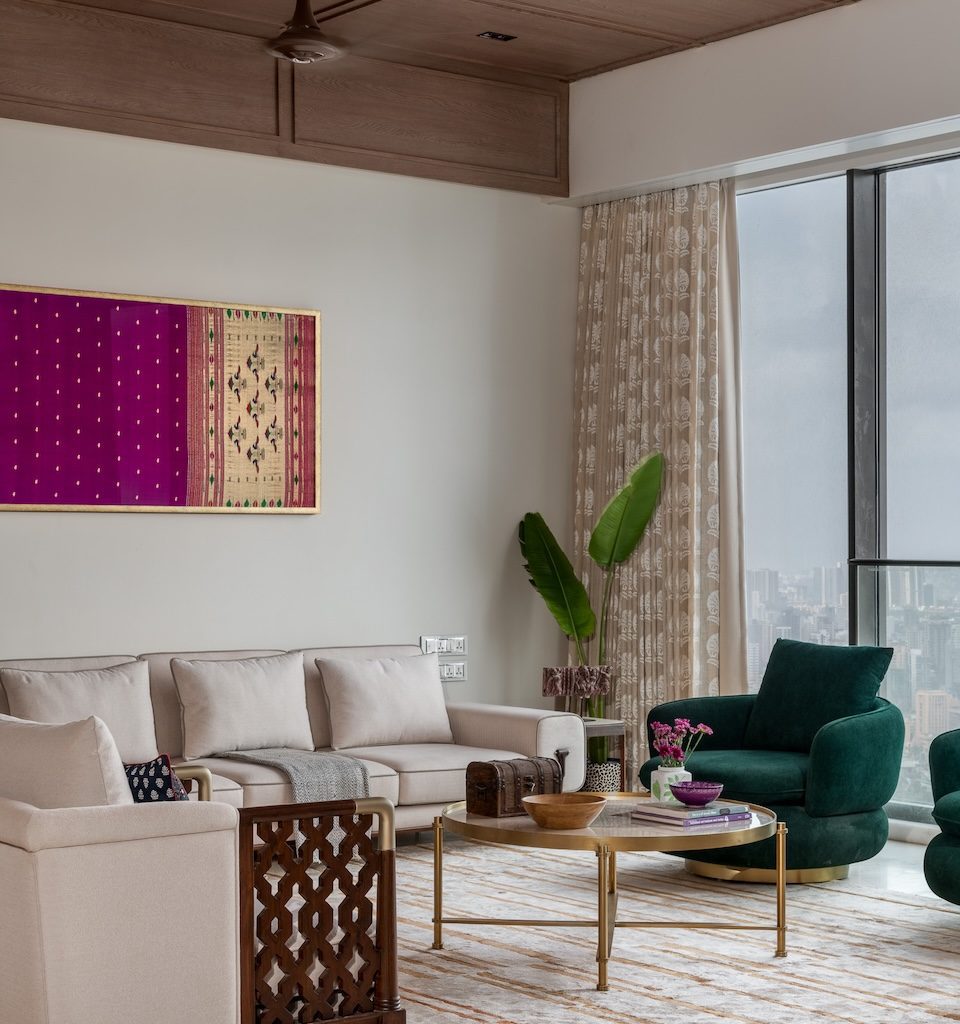
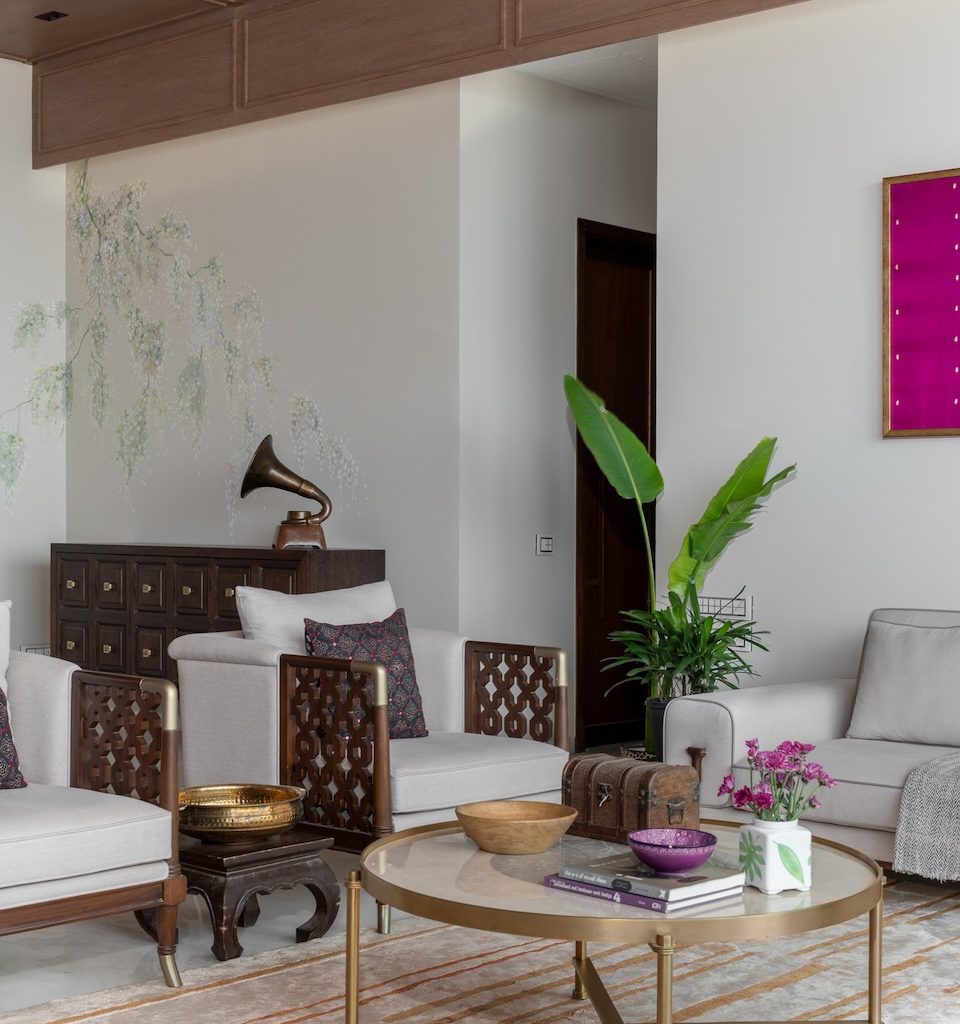
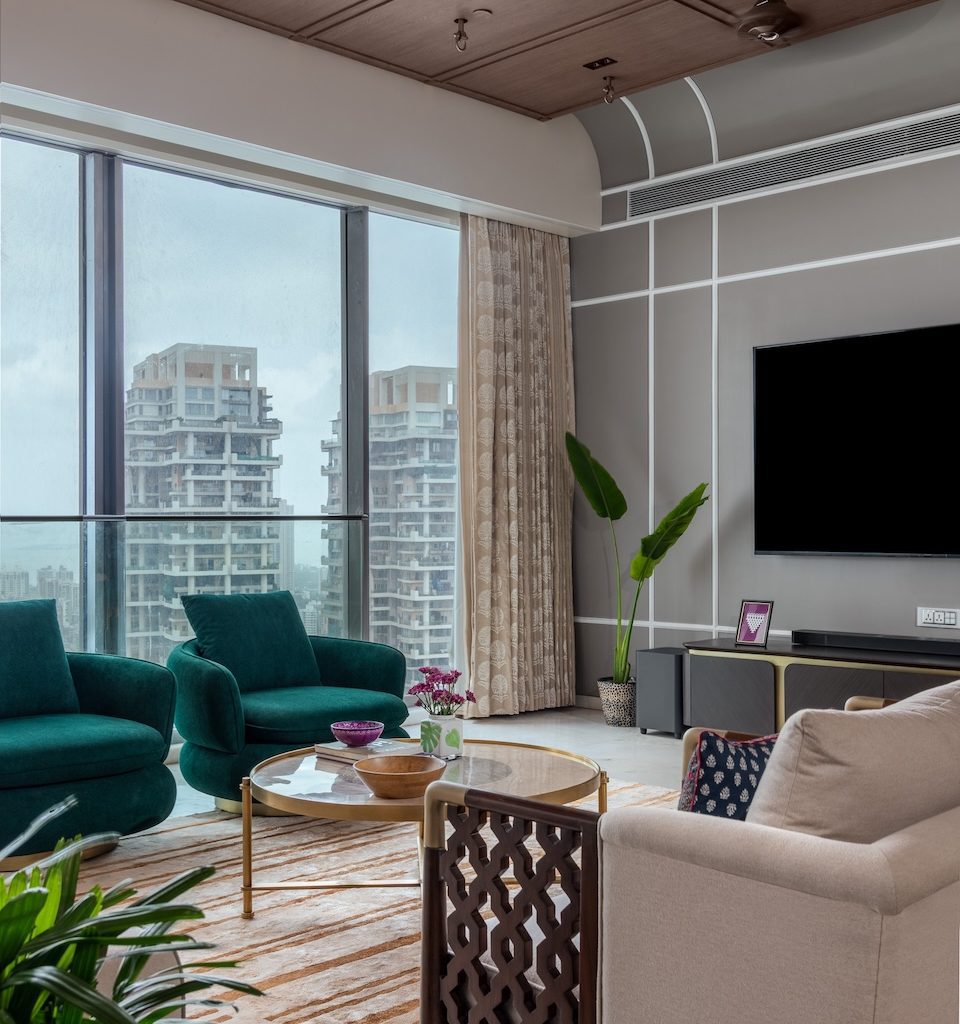
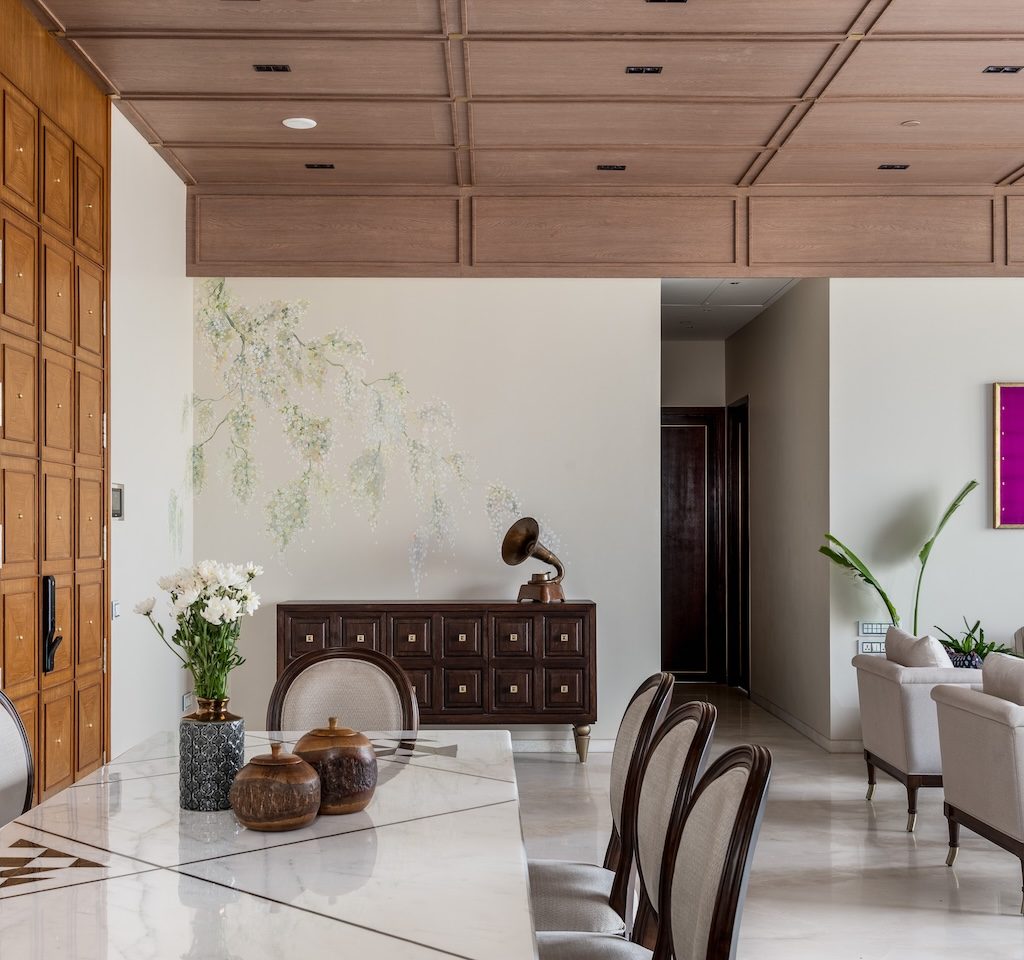
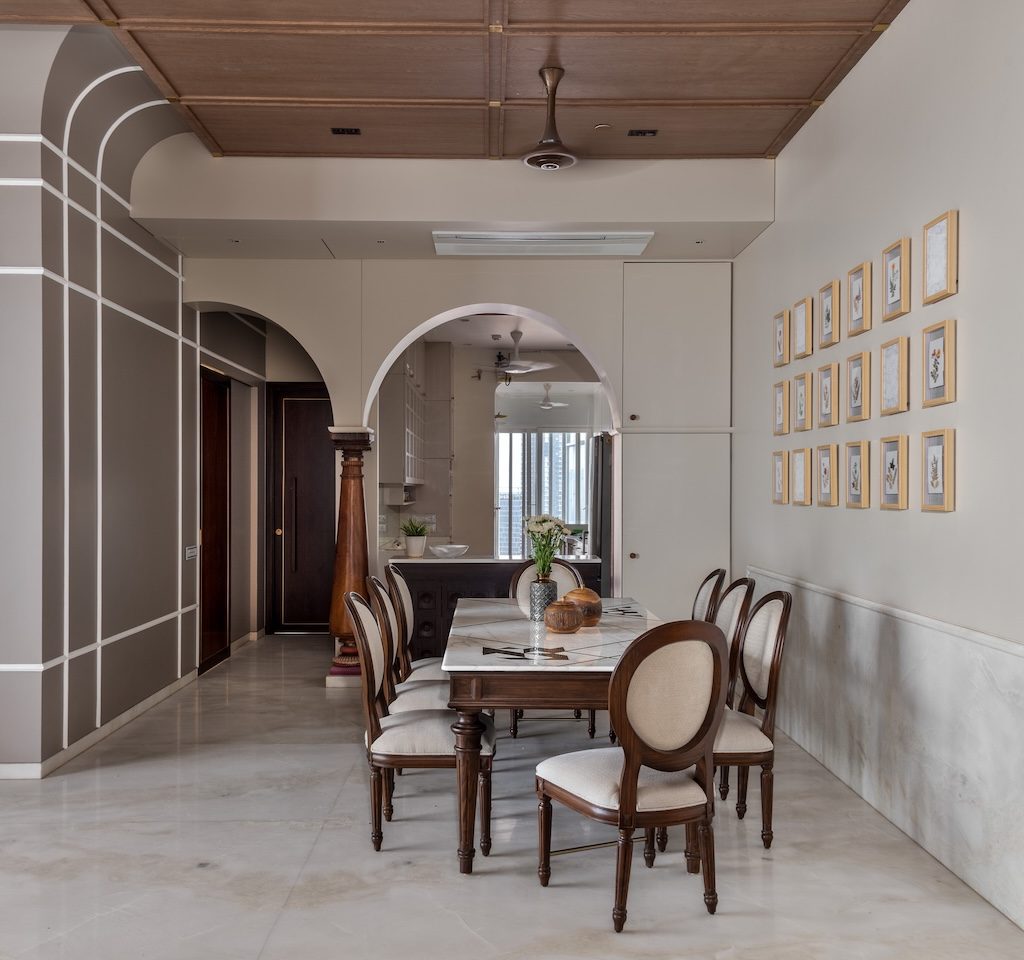
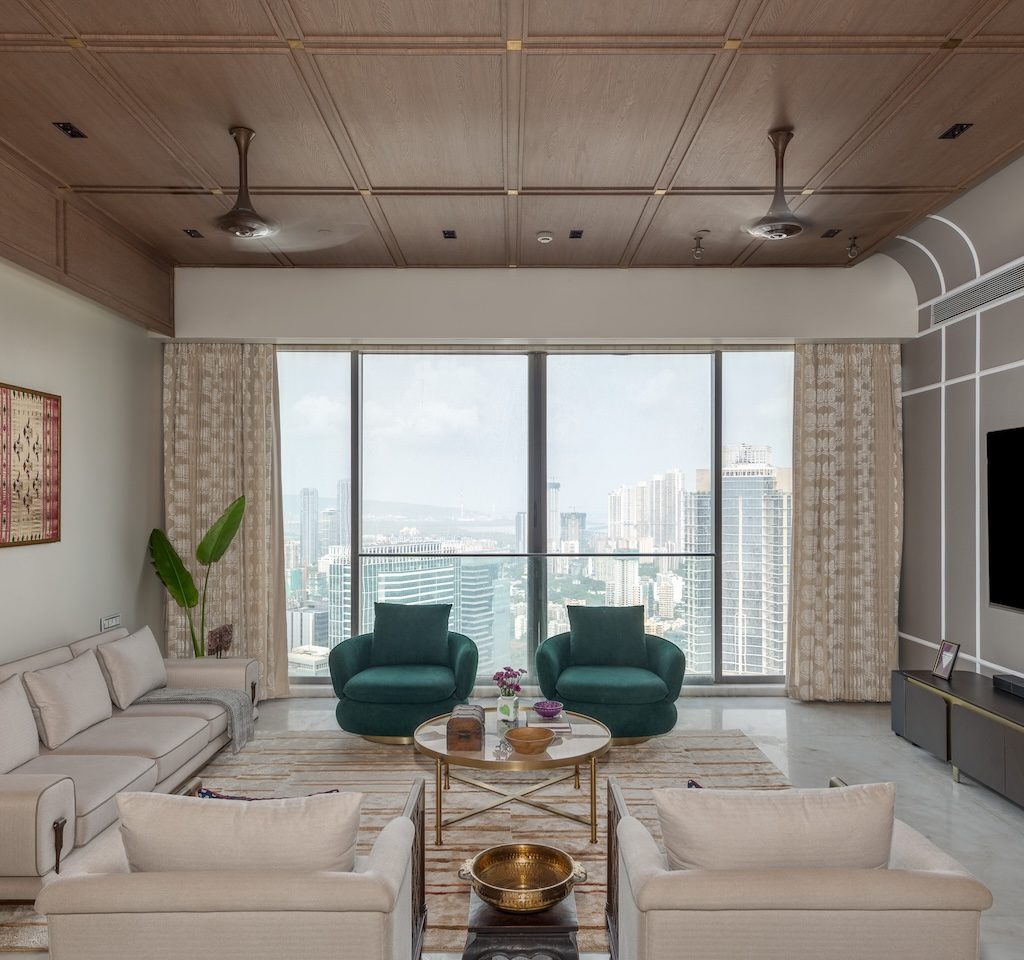
Beyond this threshold, the living and dining areas open out as a generous, calming expanse. Earthy tones and classic textures dominate, with a wooden ceiling adding both intimacy and gravitas to the open-plan layout. Neutral sofas and armchairs maintain visual ease, while a framed heirloom Paithani saree introduces colour, history, and personal narrative. “Textiles carry memory,” says Shah. “They speak of hands, of time, of rituals. Framing the saree was our way of giving it the reverence you would a painting.”
The material palette
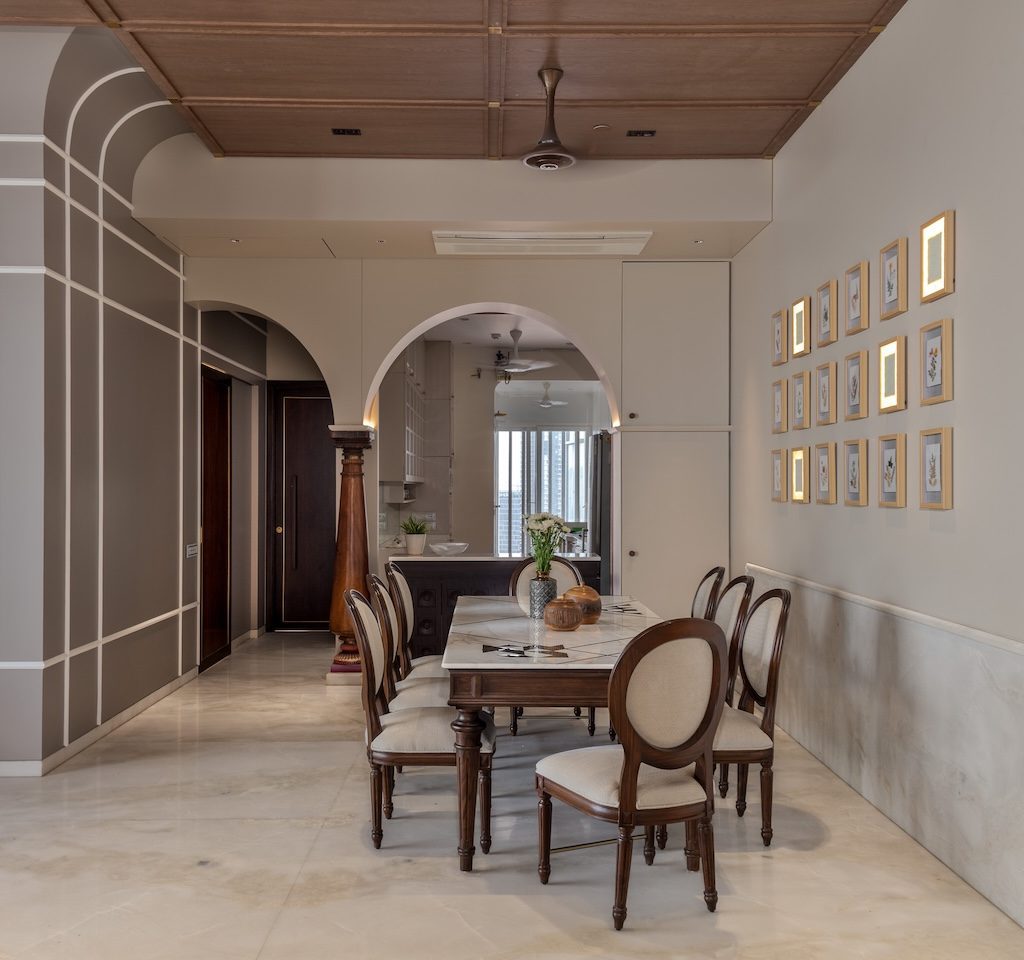
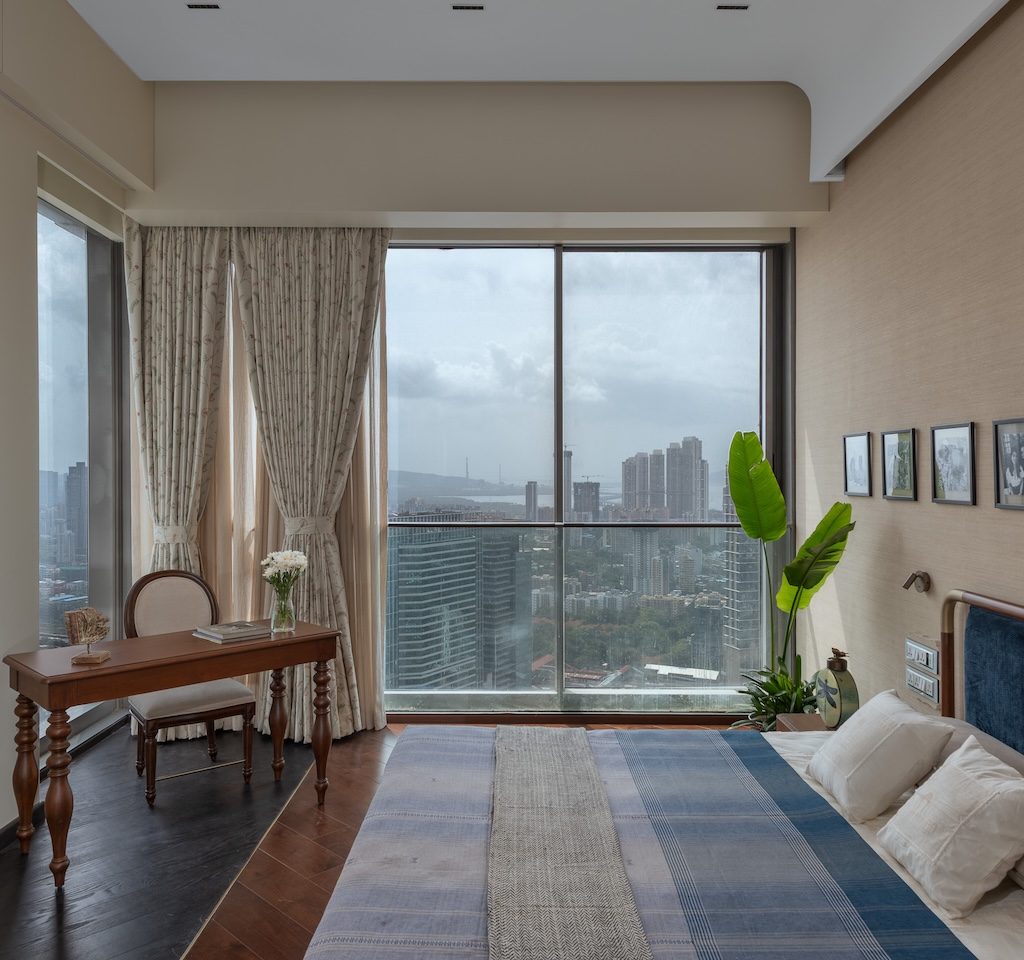
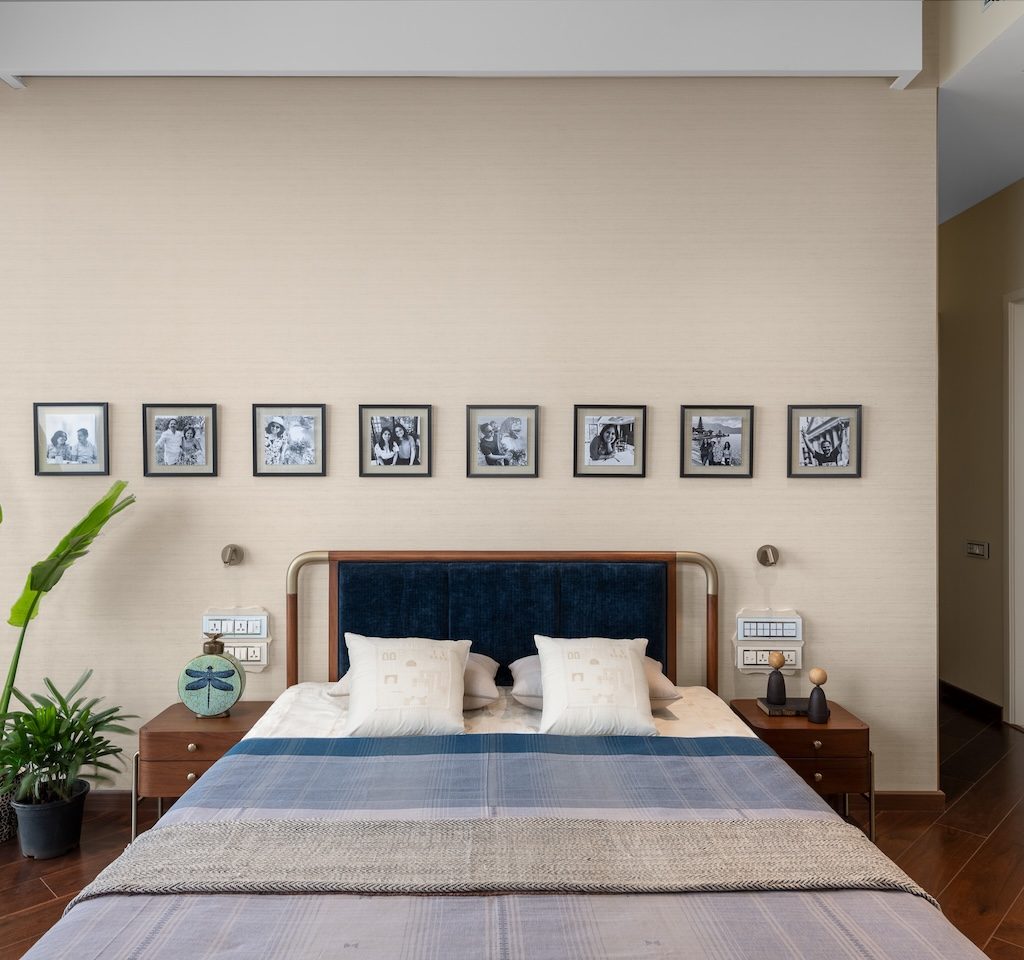
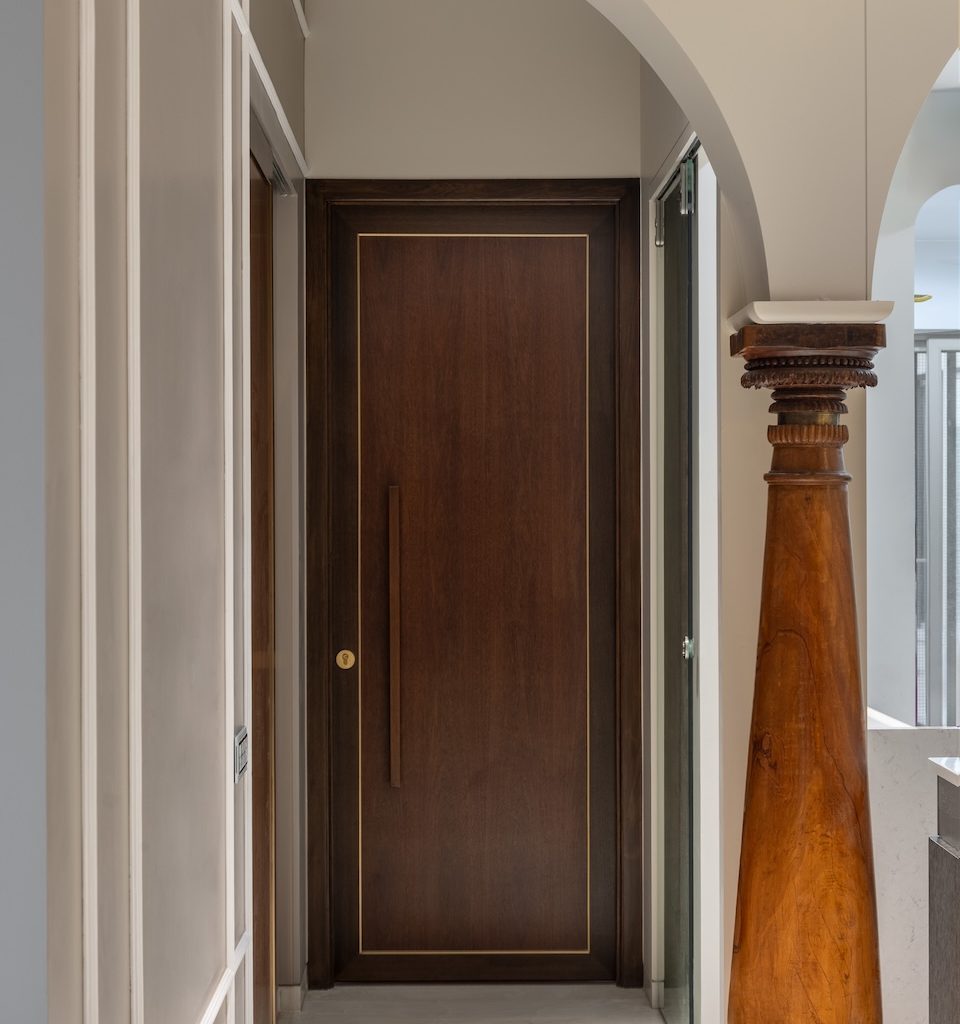
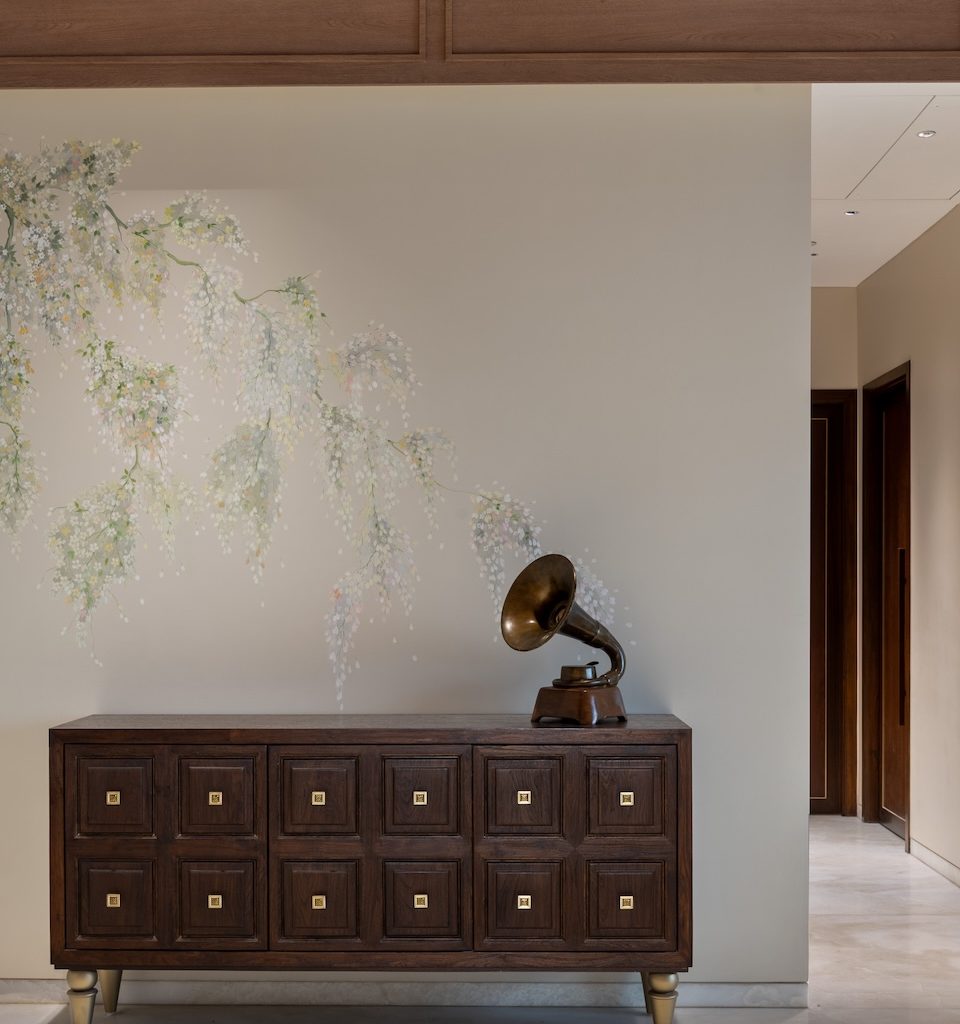
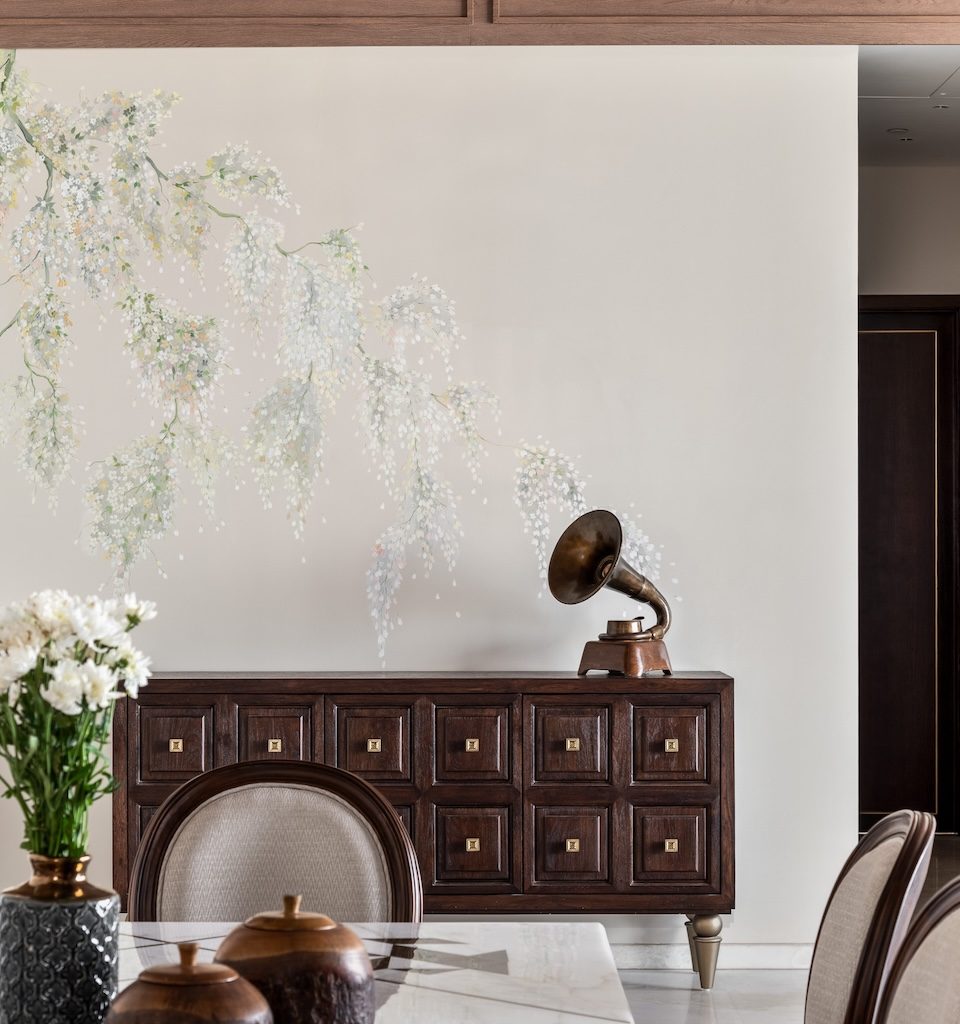
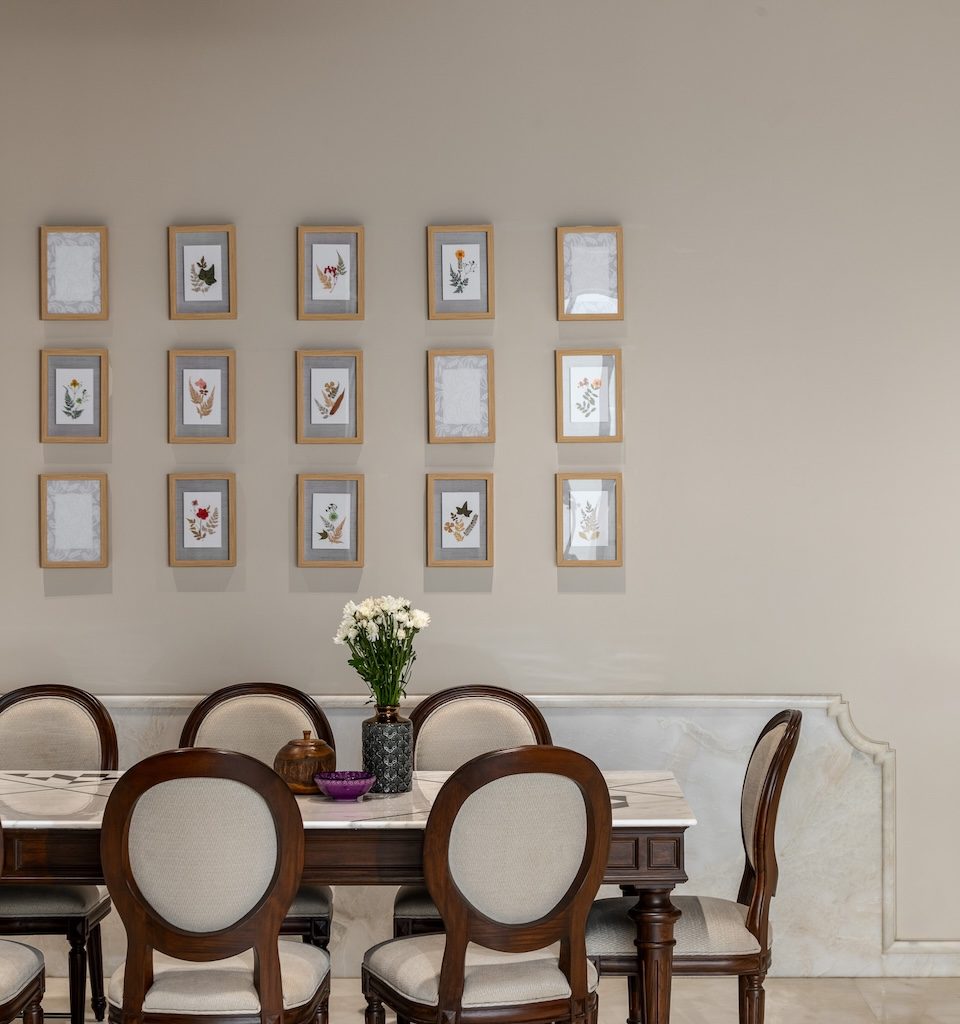
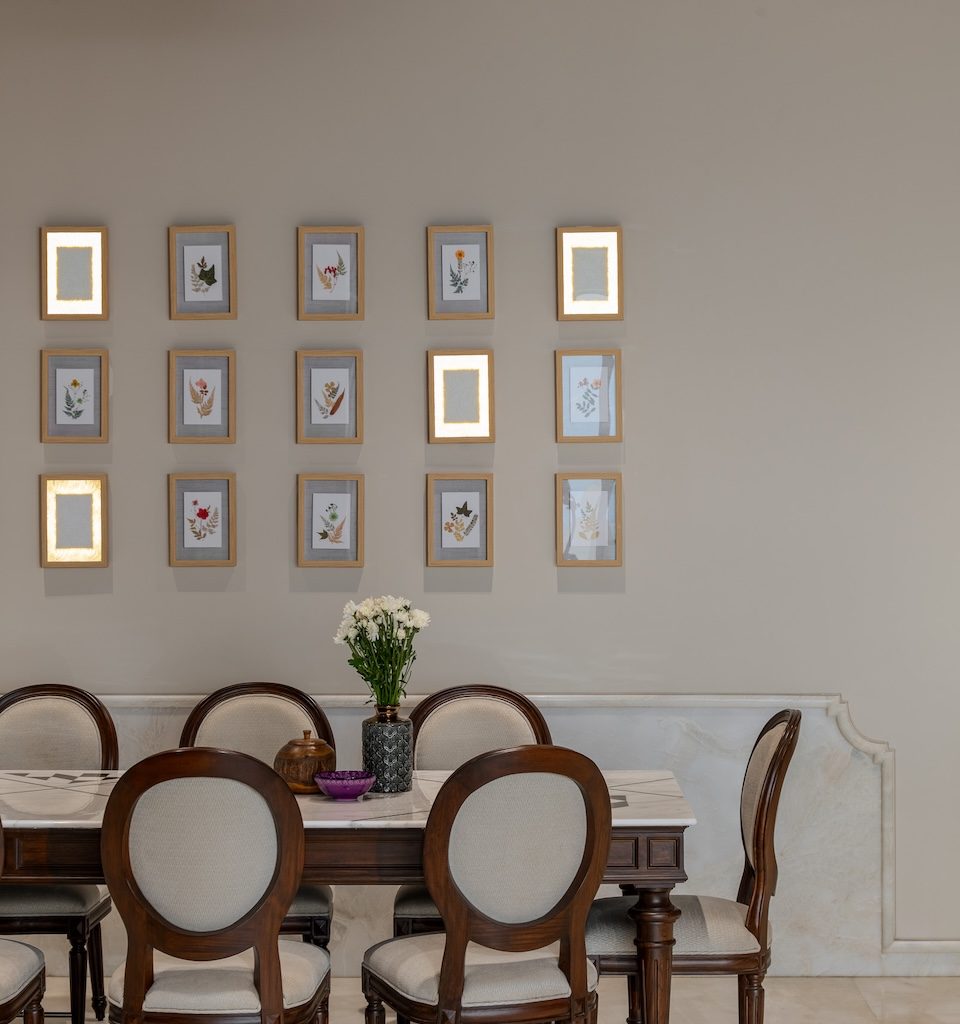
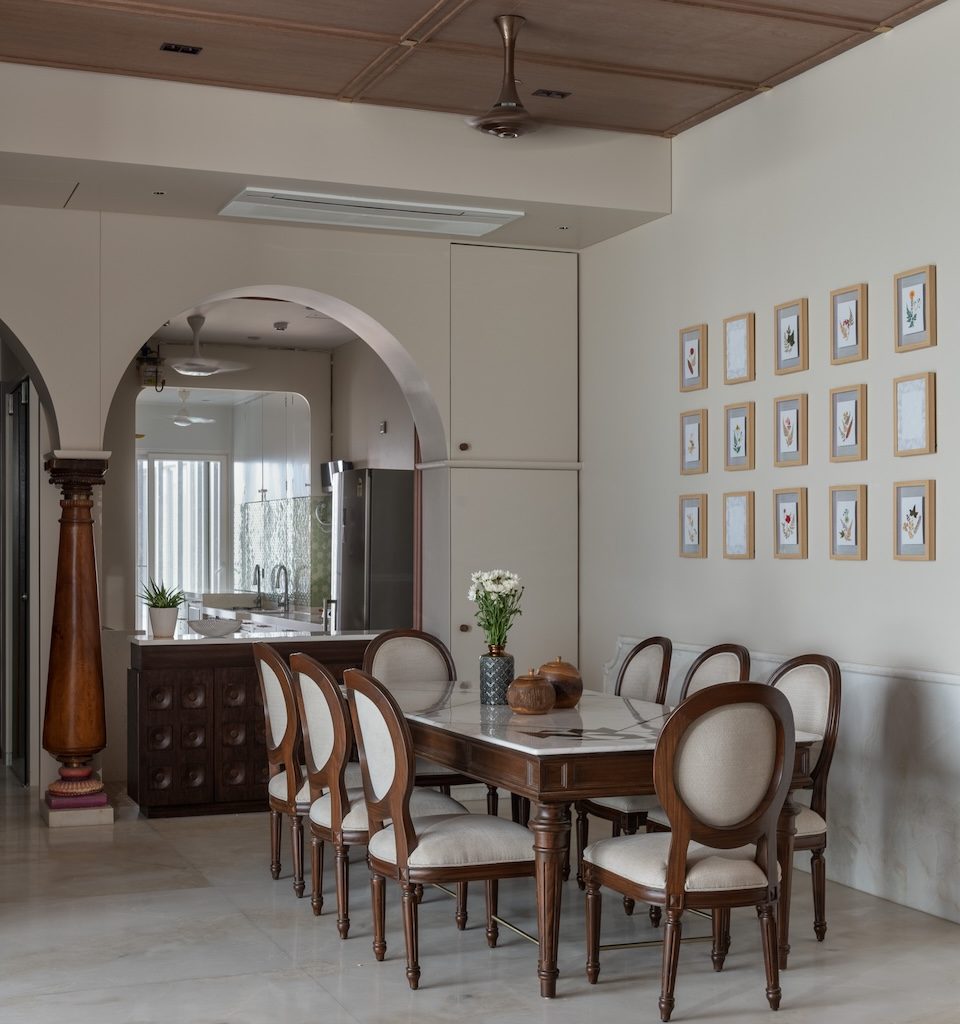
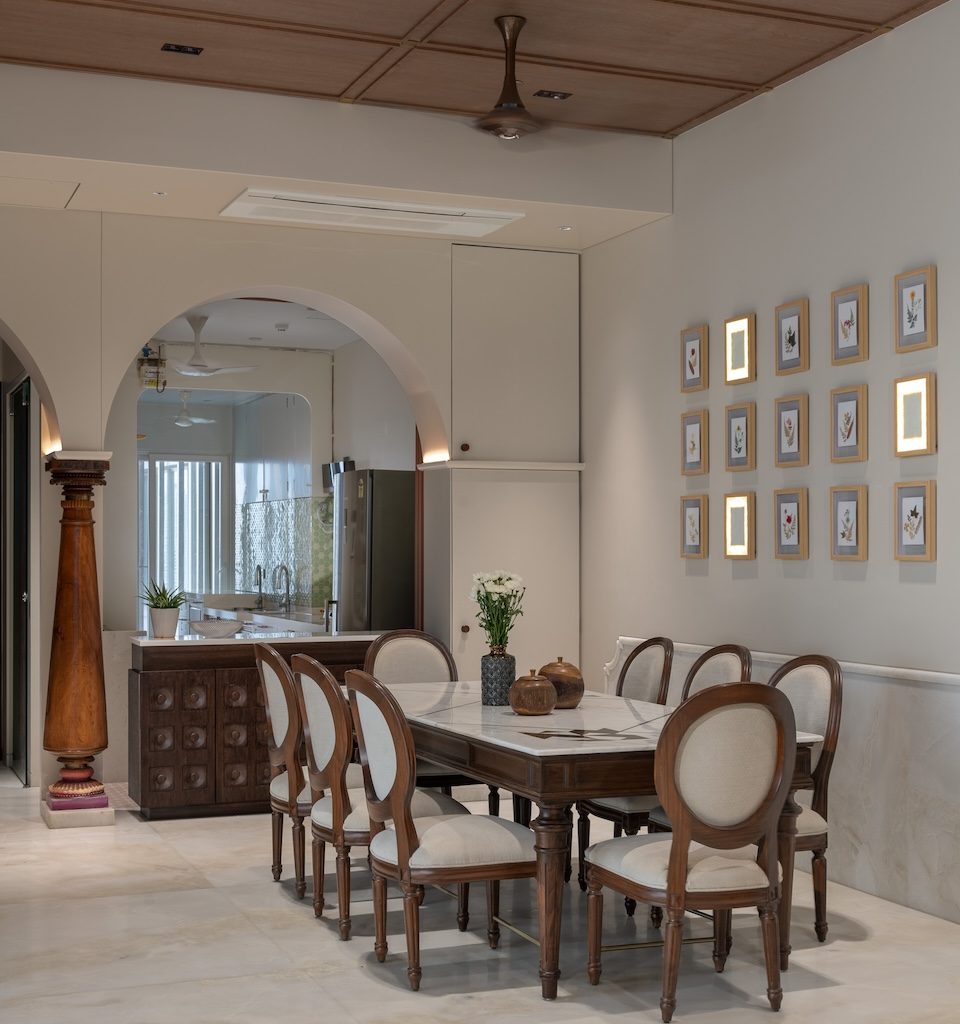
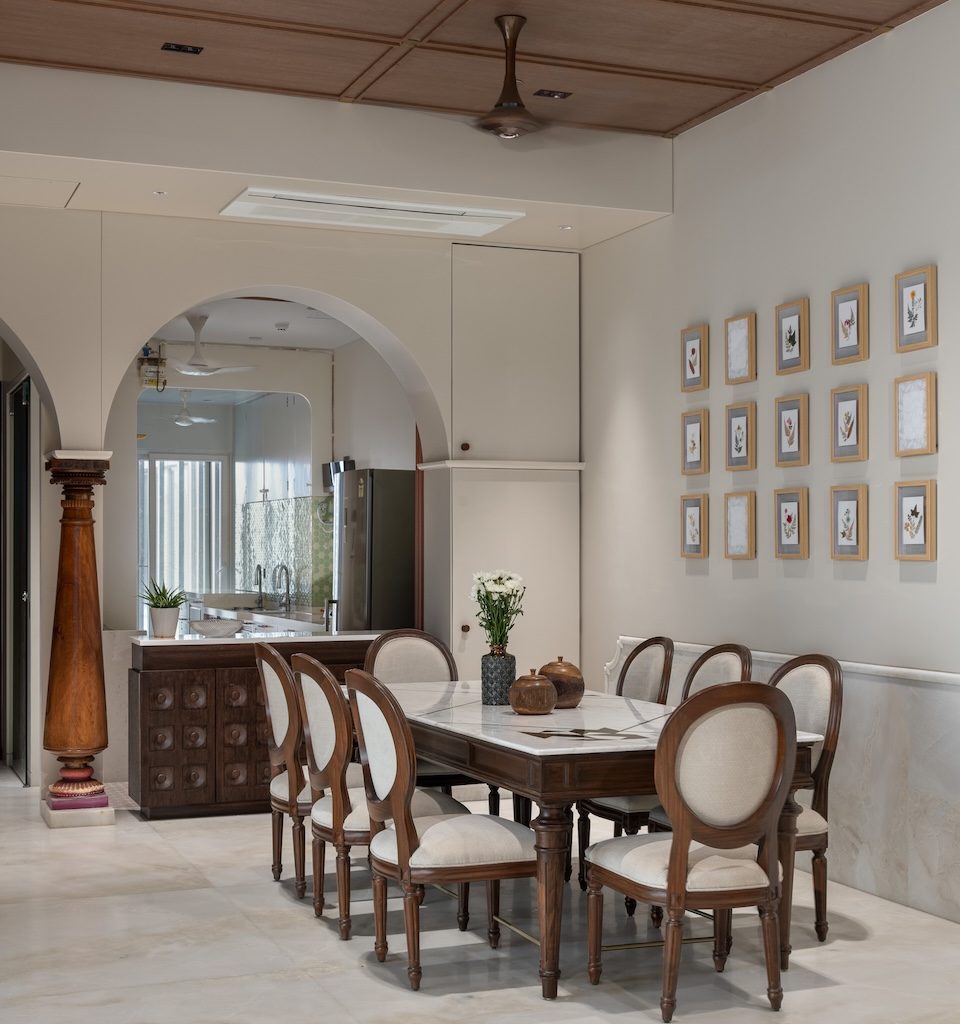
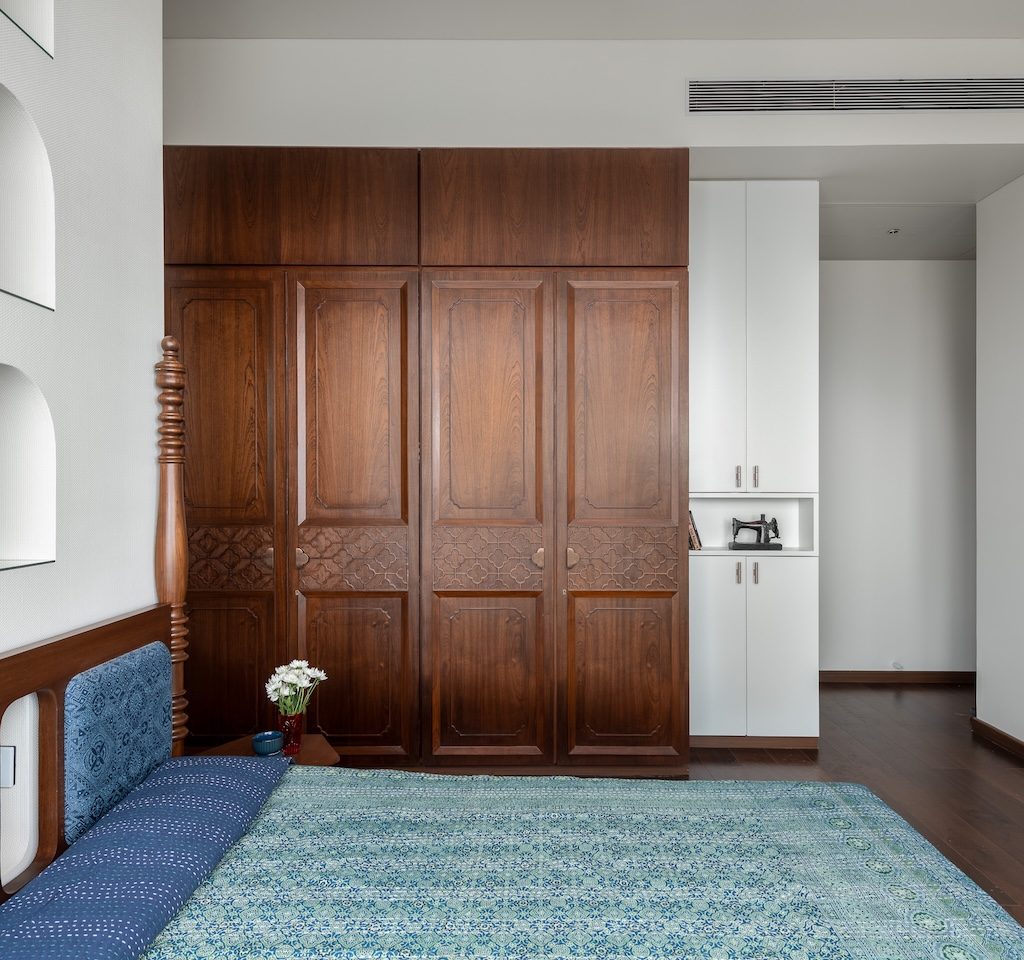
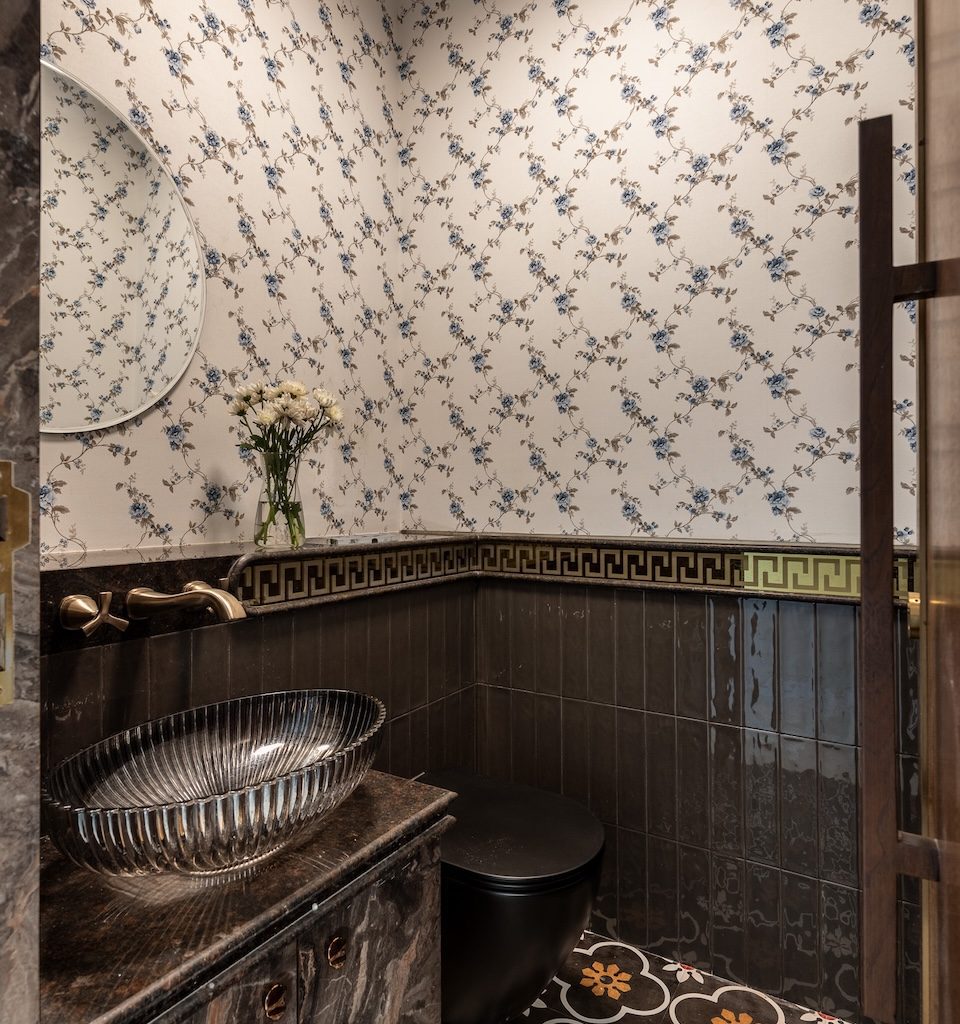
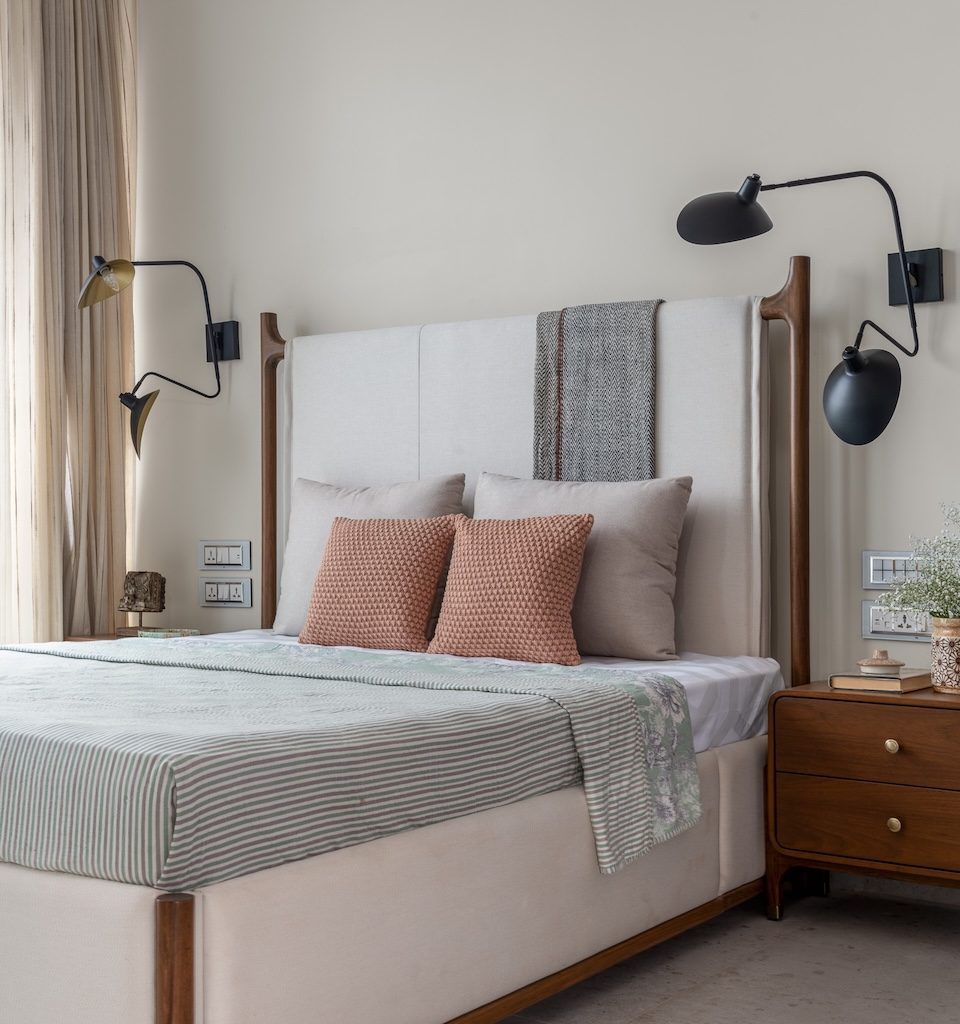
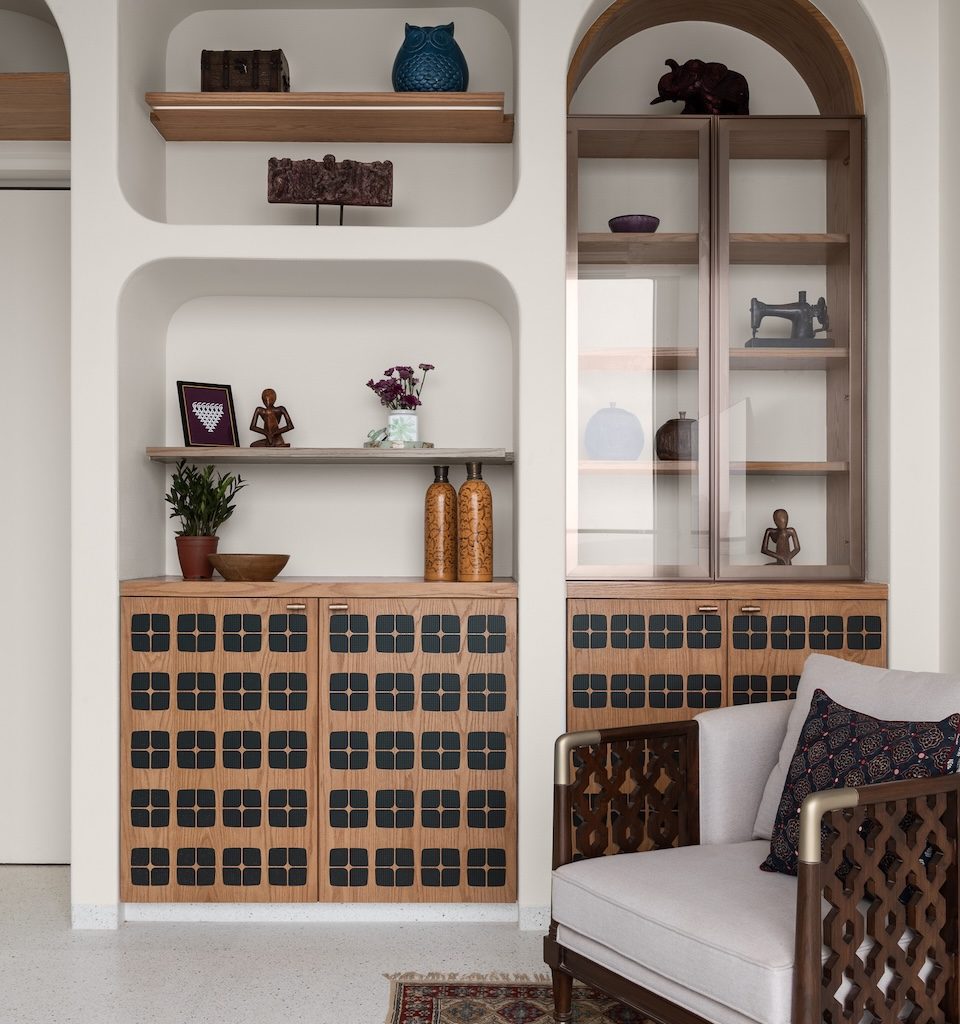
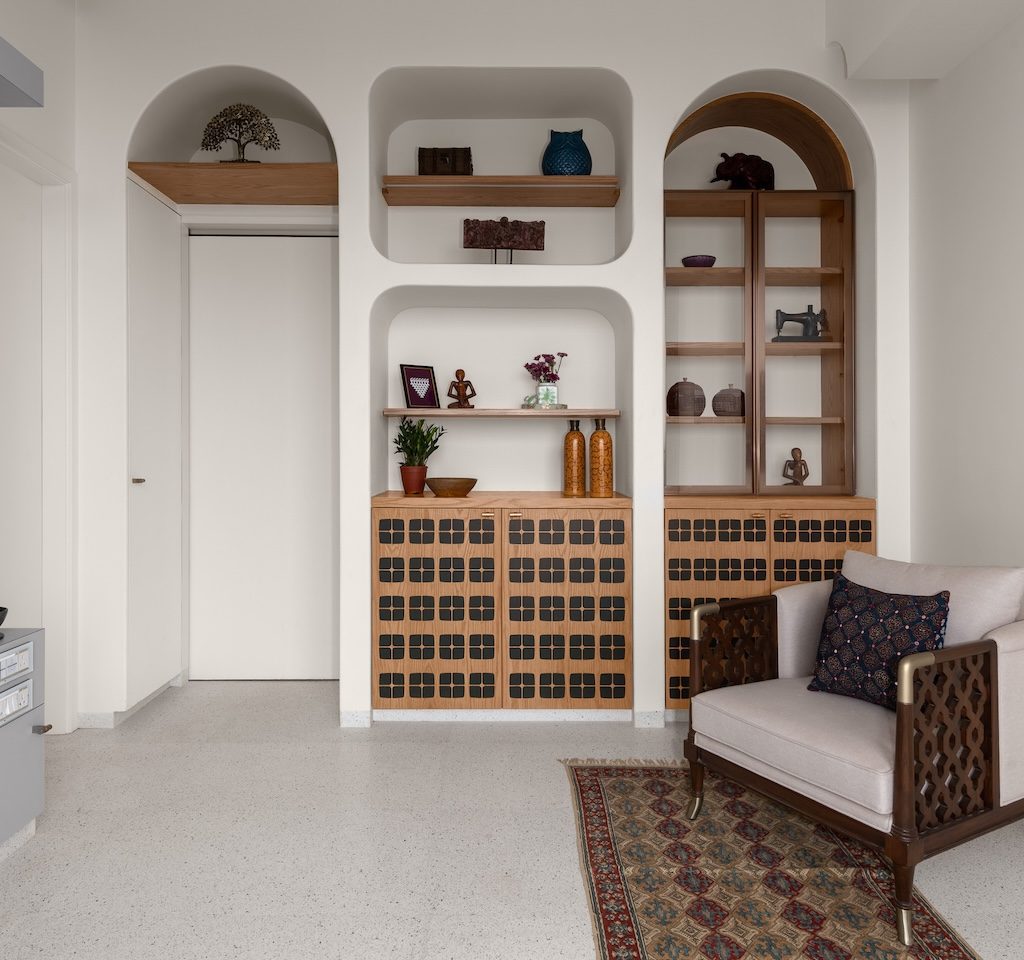
Materiality is used as a storytelling device rather than a display of finishes. Muted greys and creamy taupes form a calm base, punctuated by moments of crafted detail. A carved wooden column in the dining area becomes a tactile focal point, anchoring the space in artisanal tradition. Botanical illustrations line the walls, accompanied by wall lights that echo their presence, adding a layered play of light and shadow.
The highlights
From the cinematic entry sequence to the thoughtful integration of heirloom textiles and handcrafted details, the project’s strength lies in its quiet confidence. Cultural references are embedded into daily life rather than presented as statements, allowing tradition to surface naturally through use and memory.
The takeaway
This project reaffirmed the value of balance—of being bold without being loud, luxurious without excess, and expressive without spectacle. By allowing materials, craft, and personal history to guide the design, the home demonstrates how contemporary interiors can remain deeply rooted, enduring, and emotionally resonant.
Fact file
Project: Private Residence at Rustomjee Crown
Design firm: Ishaay Interiors
Location: Mumbai
Area: 1,900 sq ft
Principal designer: Pathikk Shah
Design team: Ashwini, Juhi
Styling: Ankita Shukla I Stylefix
Add a Comment