
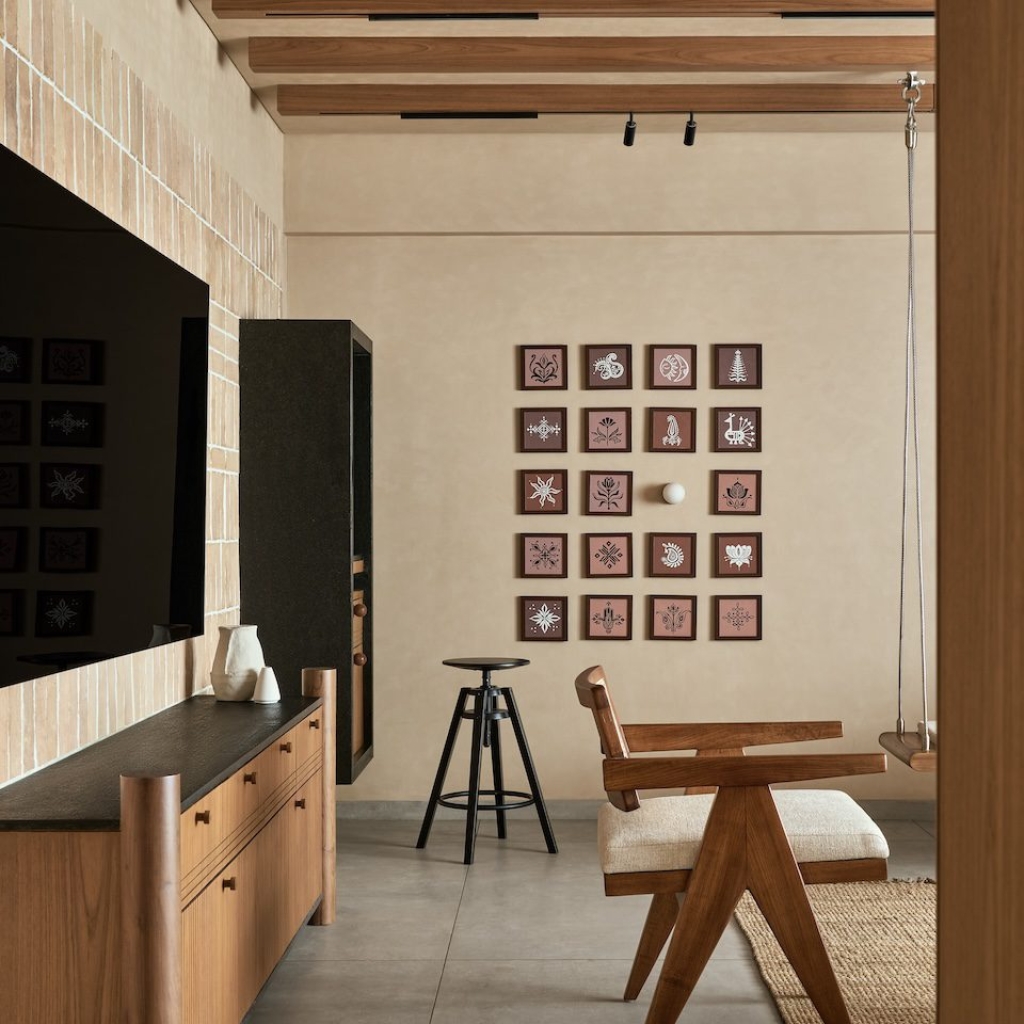
One Habitat Studio designs a home in Pune, that draws from childhood memories of rural life while embracing the pace and sensibilities of contemporary living.
Curated by: Deepa Nair
Photographs: Yadnyesh Joshi; courtesy One Habitat Studio
The brief
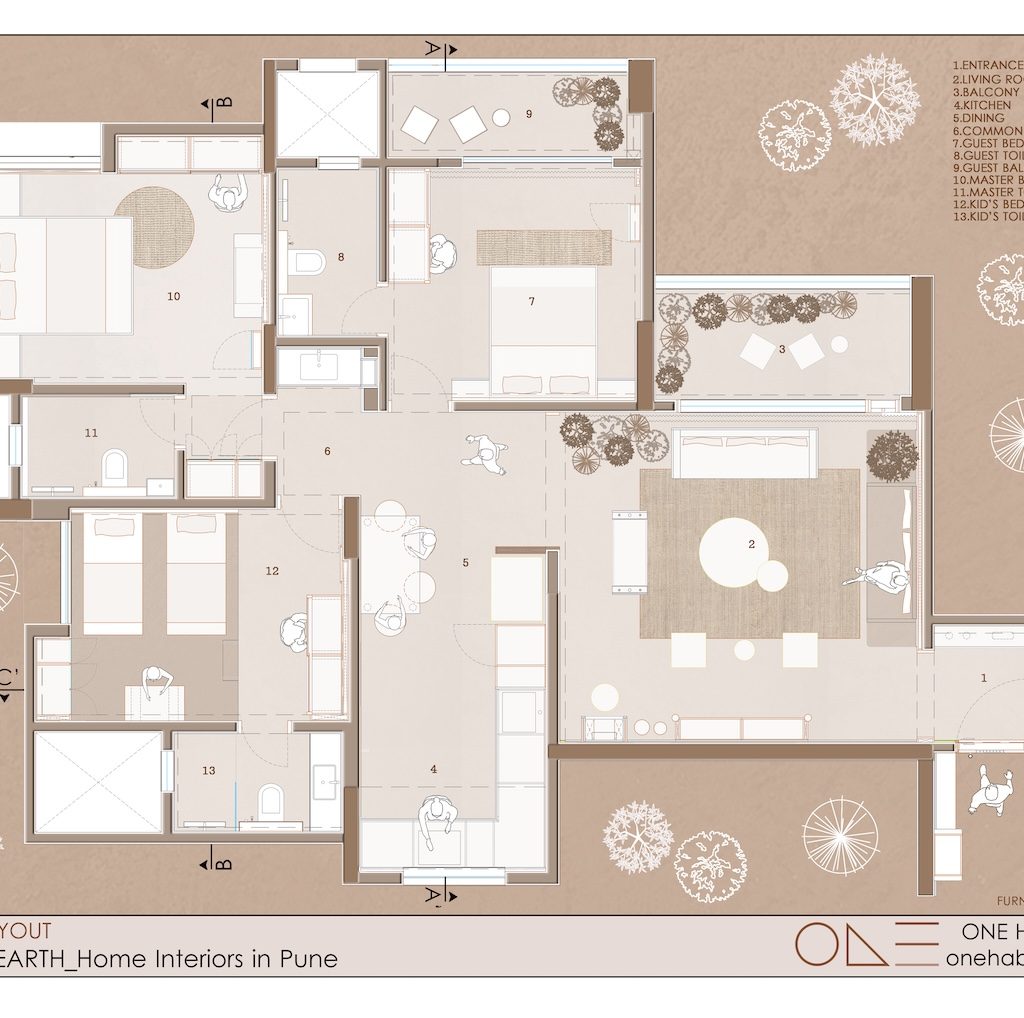
One Habitat Studio, led by architects Yash Shah and Anuja Sawarkar Shah, was commissioned by Wai-based (a countryside town in Maharashtra) clients to transform a standard builder-provided layout into a home that felt instinctively theirs. Set in Pune, the project called for a sensitive reimagining rather than a dramatic overhaul.
Early conversations revealed that the clients’ strongest associations with home were tied to nature and rural life. Memories of playing in the soil, the scent of rain on warm brick, and the understated rhythms of the countryside shaped the emotional framework of the brief, becoming guiding cues for both spatial decisions and the overall atmosphere of the home. “Their brief was refreshingly straightforward; they wanted a functional home with calm, subtle vibes that reflected their own grounded personalities,” shares Yash.
The design intent
Understanding this, the Yash and Anuja proposed bringing a fragment of the clients’ roots into the apartment through an honest use of natural materials drawn from their native surroundings. Brick, basalt stone, wood, and lime-based textures form the core material palette, allowing the home to carry the warmth and familiarity of the countryside while still responding to an urban lifestyle.
The three-bedroom residence is shaped by a restrained fusion of traditional and contemporary sensibilities, where the ruggedness of stone, the organic familiarity of wood, and the timeless tactility of exposed brick establish a material narrative that feels grounded yet modern. “This exploration of earthy colours and textures ultimately creates spaces in which the clients can recognise their own stories and sensibilities, which is expressed through honest materials rather than over the top design gestures,” explains Anuja.
The design and material details
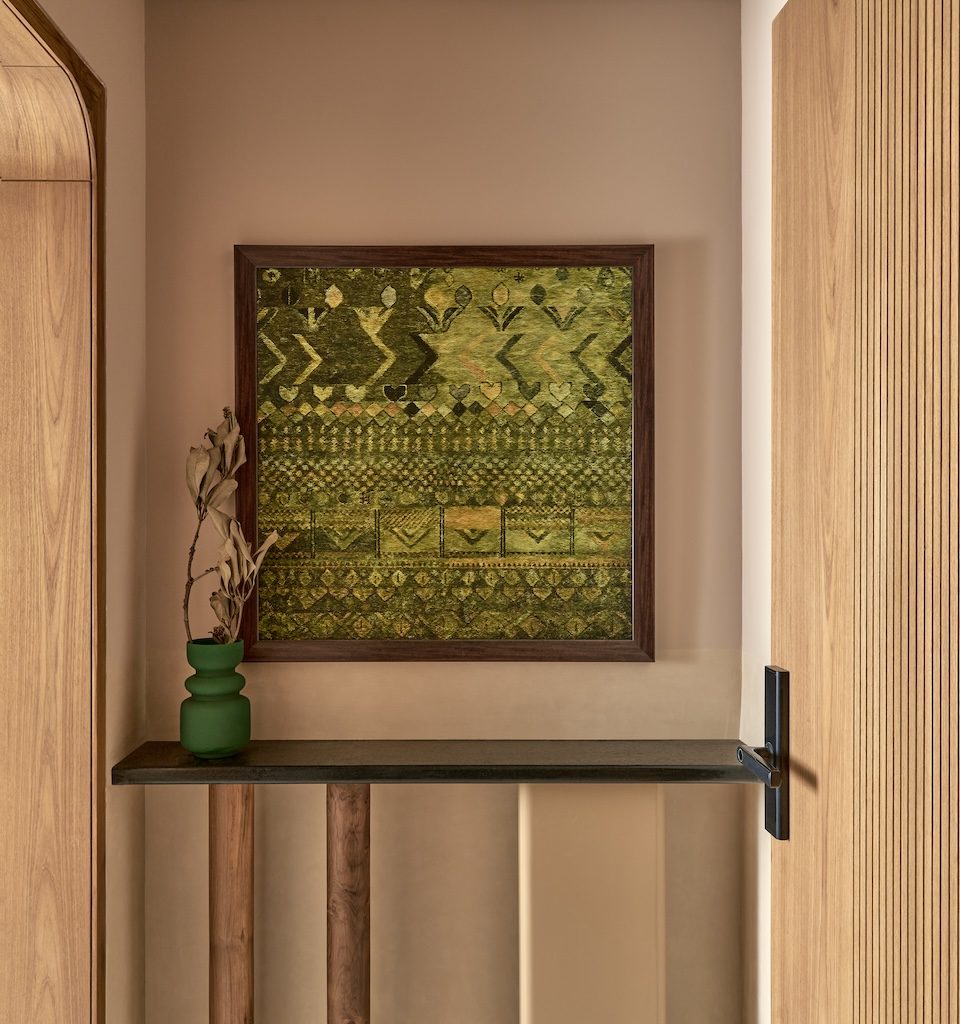
The apartment opens into a compact foyer that sets the tone for what lies ahead. A bespoke stone-topped console with rounded wooden legs introduces the first note of crafted detailing, while a rug-inspired artwork in deep green tones draws the eye, marking the beginning of the home’s art narrative. As one moves inward, linear geometries are softened by gentle curves, easing the visual experience and establishing a sense of continuity.
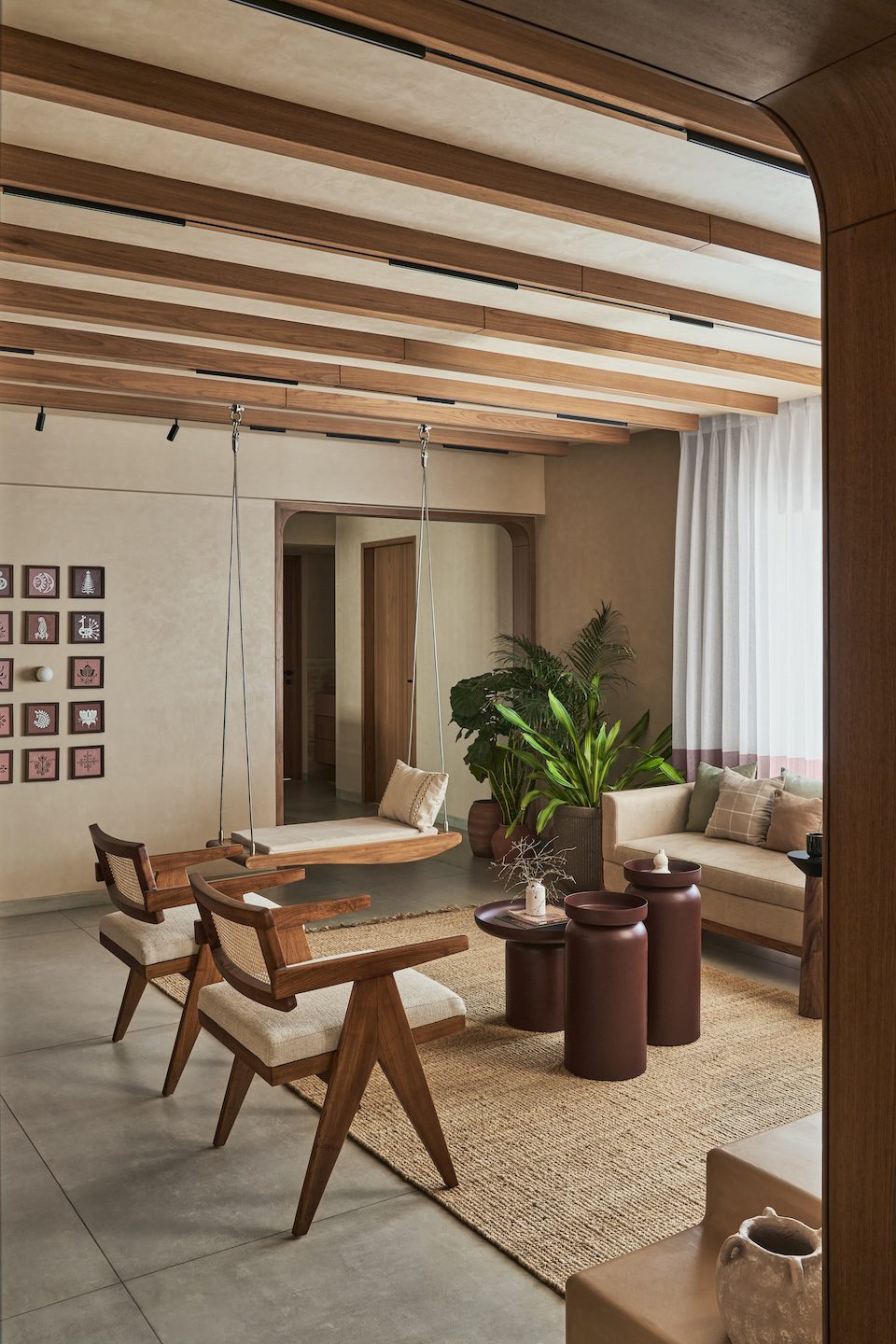
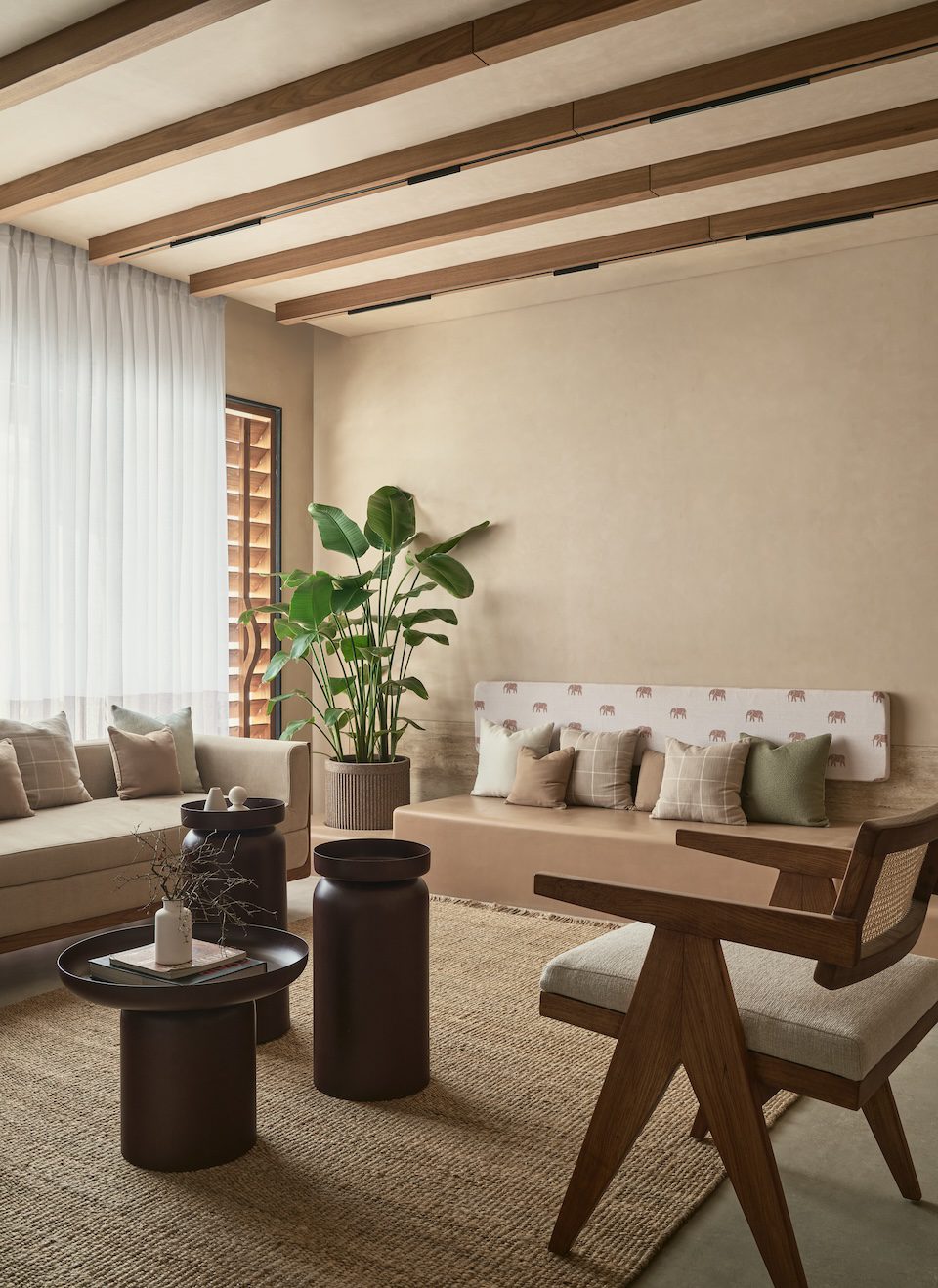
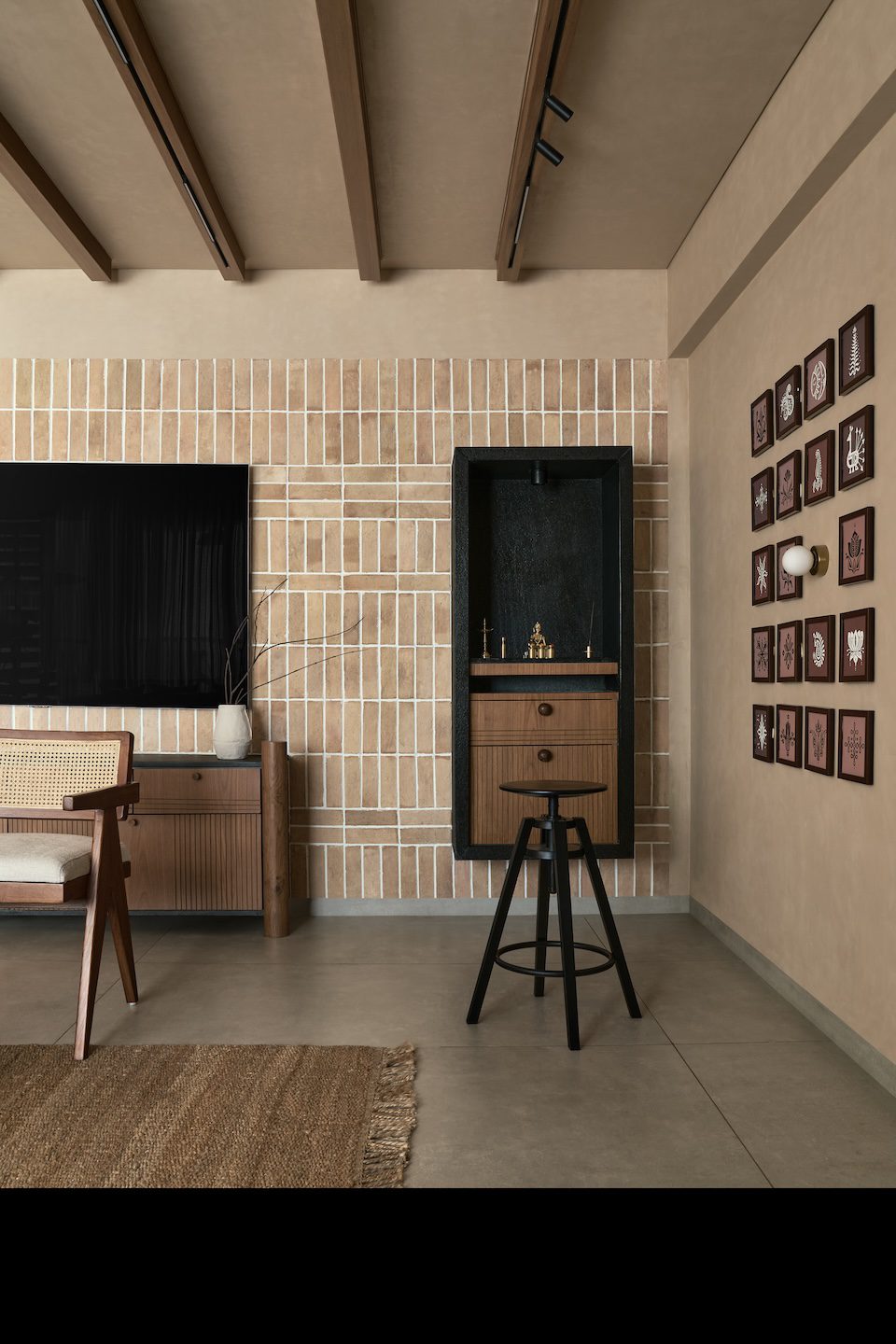
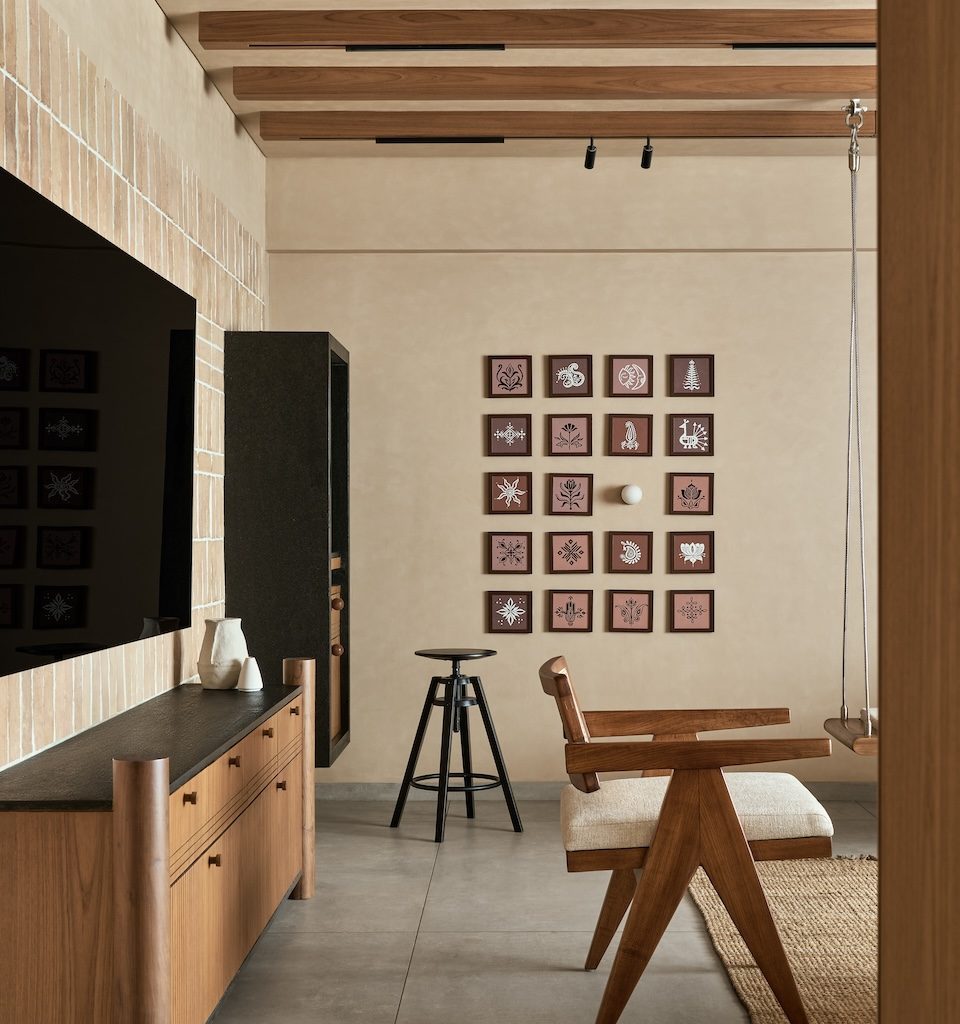
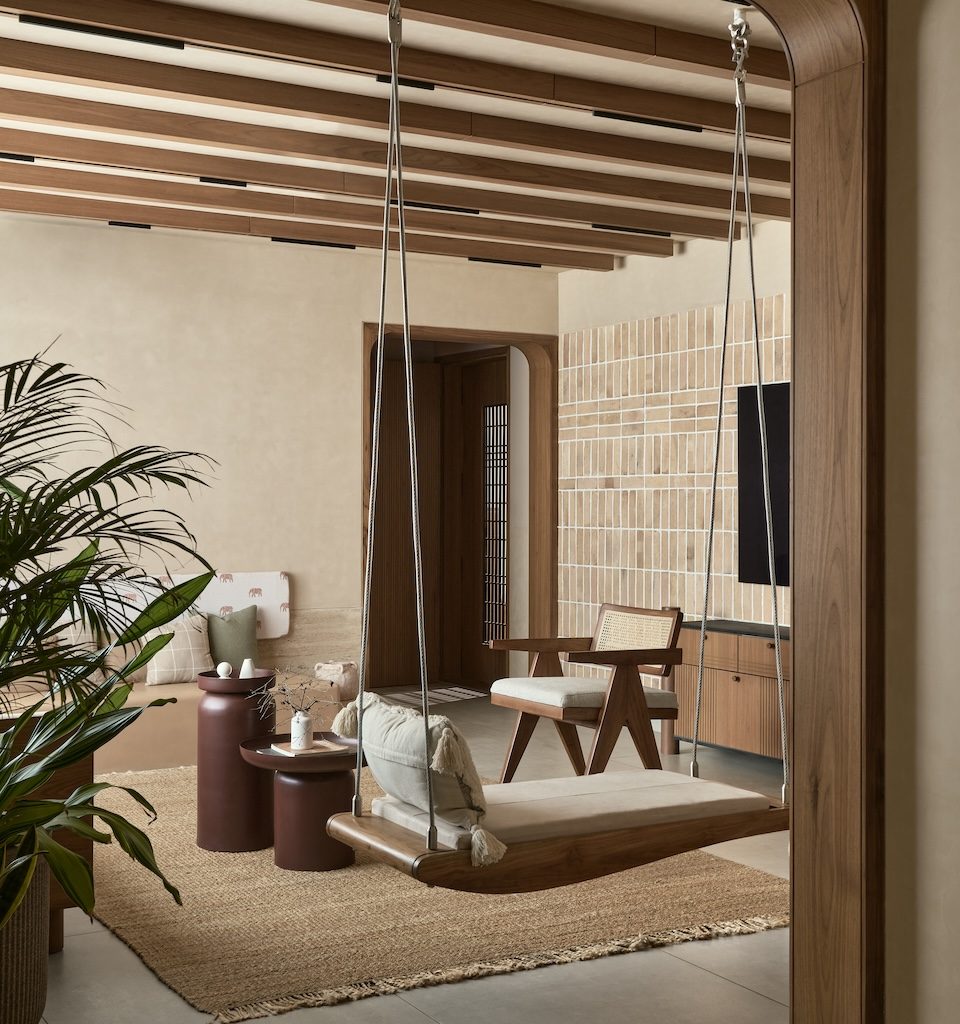
The heart of the home is designed for gathering, hence multiple seating arrangements that comfortably accommodate large groups were custom designed. A bespoke wooden sofa anchors the space, and is complemented by the katta-inspired seating where a plant finds a natural place within the composition. They are accompanied by wooden cane chairs, and a curved swing. Though distinct in character, these elements come together to create a cohesive visual language. The TV unit, detailed with cylindrical wooden legs and fine grooves, aligns seamlessly with the brick-clad wall behind. Close by, a basalt stone mandir is integrated into the living space, anchoring the home to the clients’ cultural roots in Wai. Here, the dialogue between brick and stone is enhanced by warm wooden accents, which also shape the storage elements throughout the space.
Textures take on an experiential role within the apartment, unfolding through leather-finished travertine behind the katta, rugged basalt, coarse brick surfaces, and lime-washed walls in earthy tones. Light filters through site-made wooden louvers, animating these materials with shifting patterns of shadow through the day. Contemporary insertions such as floating rafters that stop just short of the wall, sleek metal tables, and layered indoor greens lend a refined counterpoint to the raw material palette. Completing the narrative are hand-painted artworks by Anuja (who is also an artist, and the founder of One Art Lab), that draw on Indian motifs and a colour palette rooted in soil and earth.
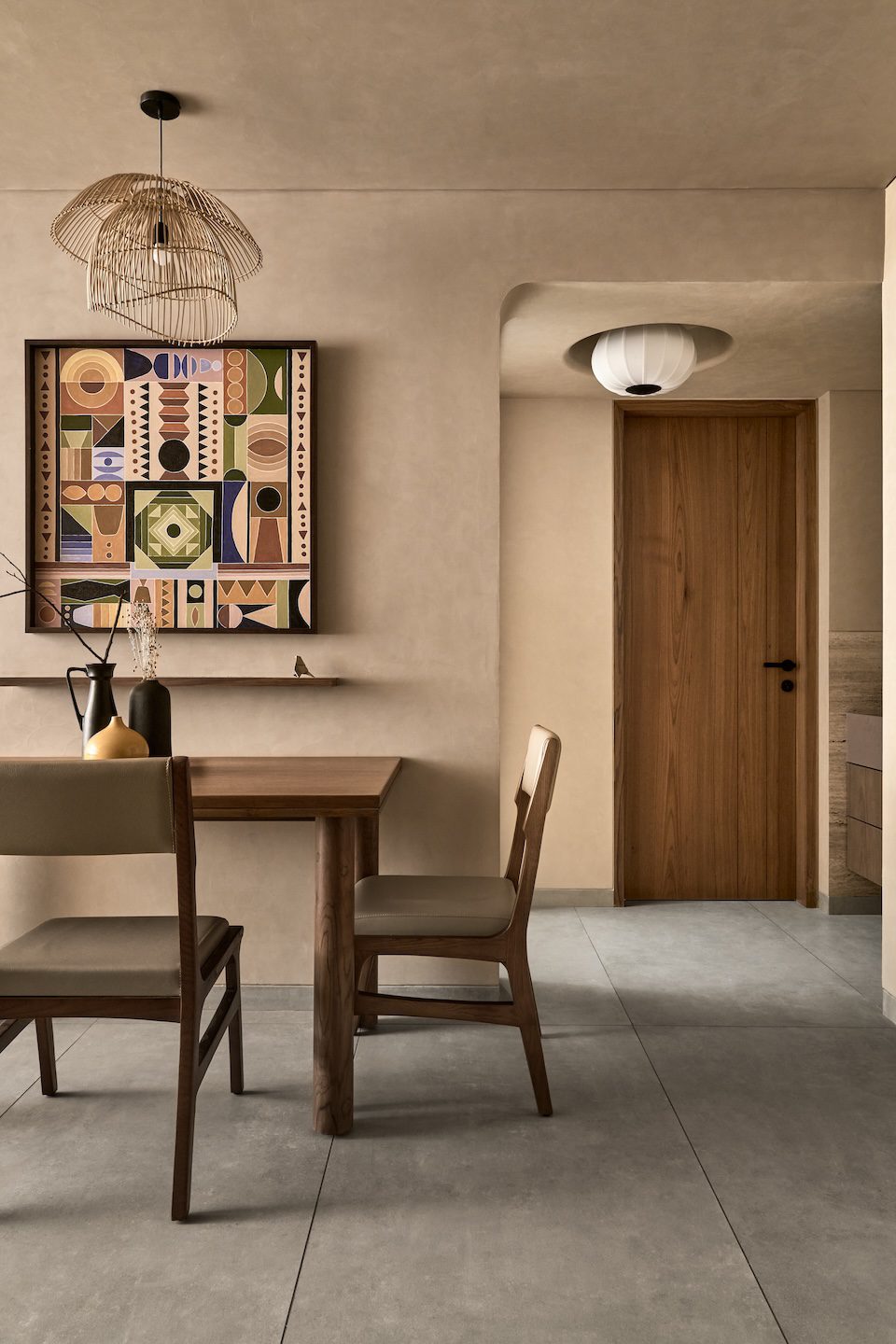
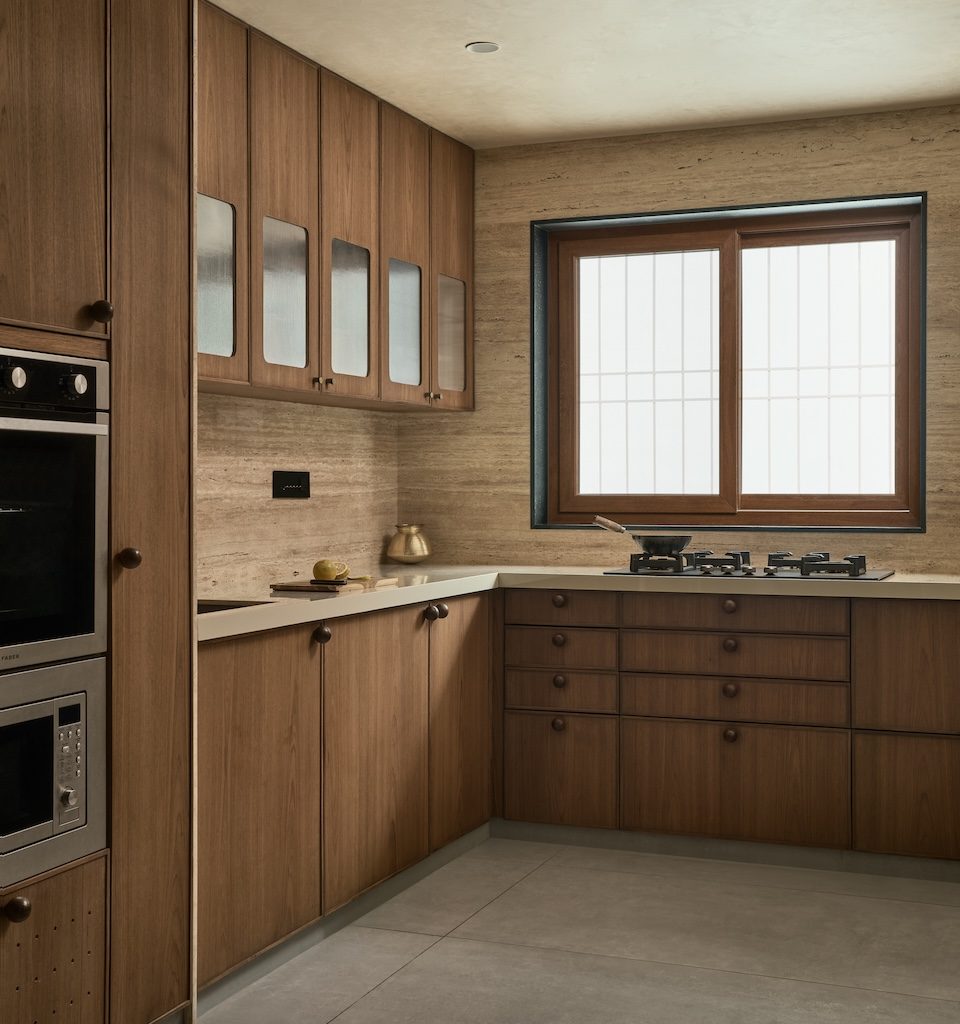
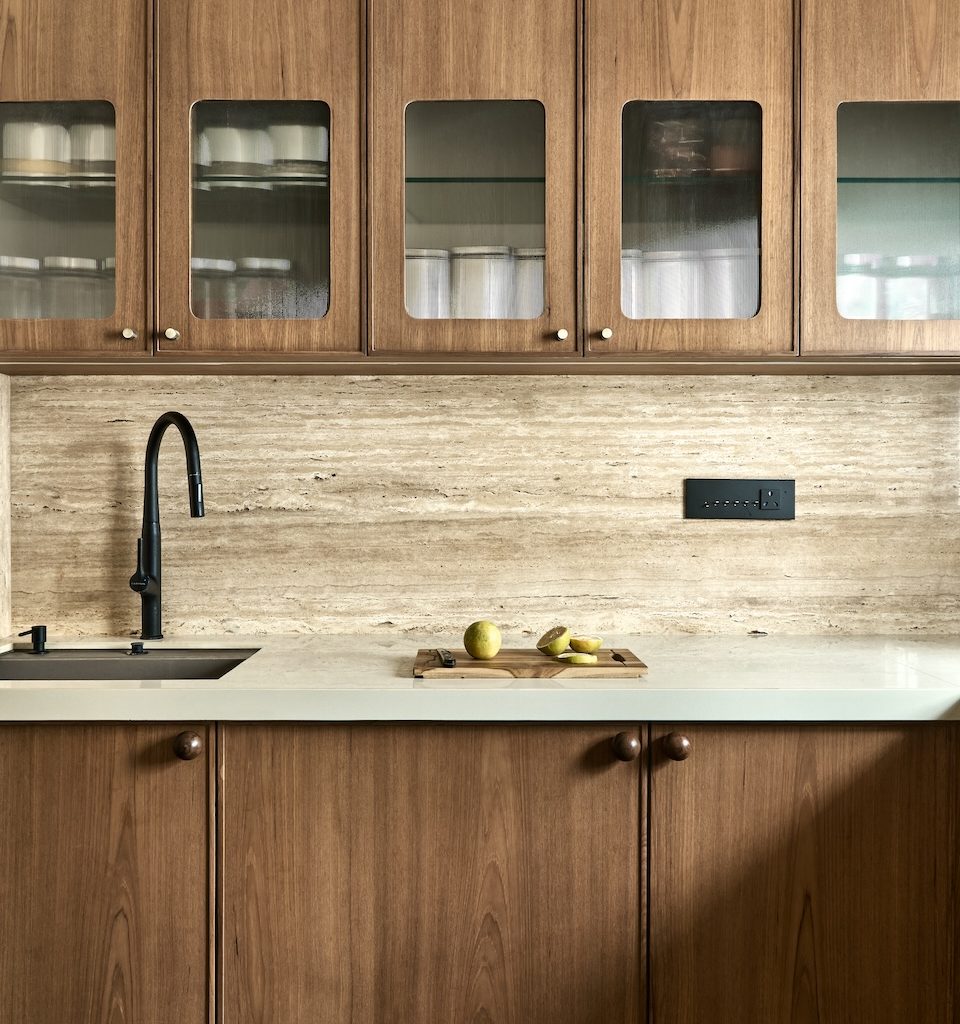
Customisation runs through the home with a consistent design language. The dining table, detailed with cylindrical legs that echo the living furniture, features a sculpted wooden top that visually connects the two spaces. Above it, a hand-painted artwork by Anuja brings together Indian undertones and a contemporary sensibility, grounding the dining area within the larger narrative of the home. The kitchen, crafted entirely on site, draws on an old-world character through wooden storage finishes, spherical knobs, fluted glass shutters, and a travertine backdrop that aligns seamlessly with the material palette used across the house.
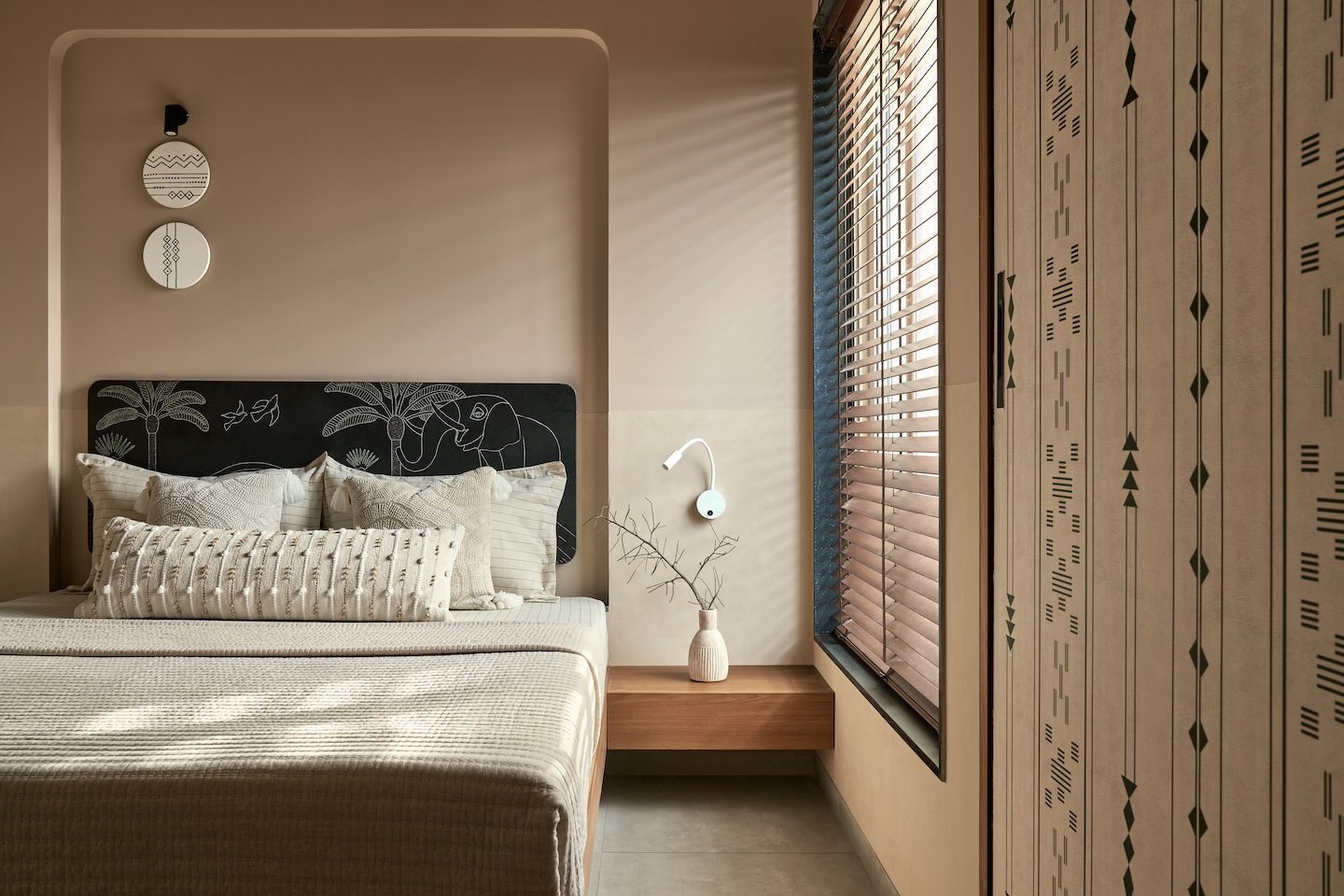
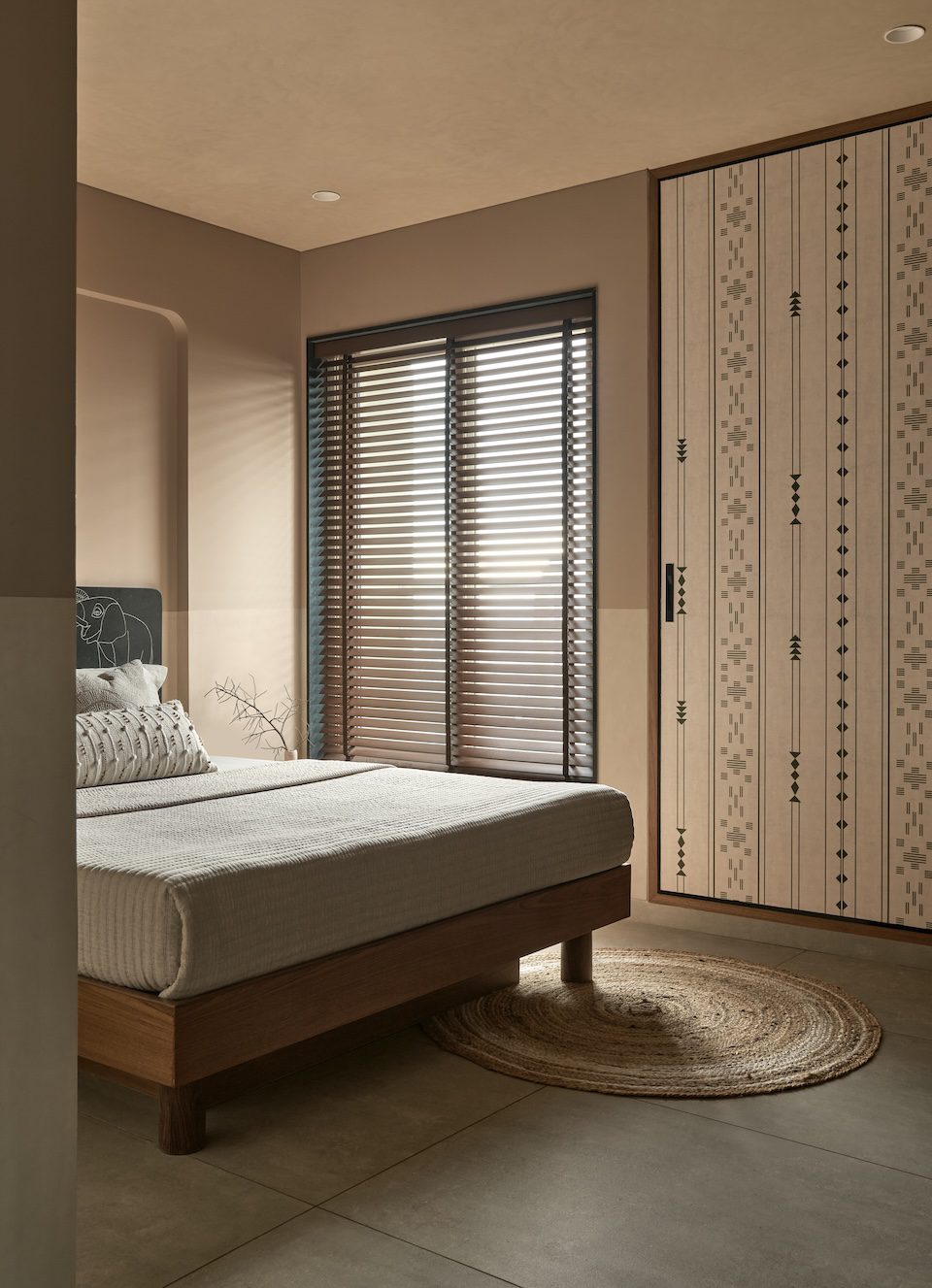
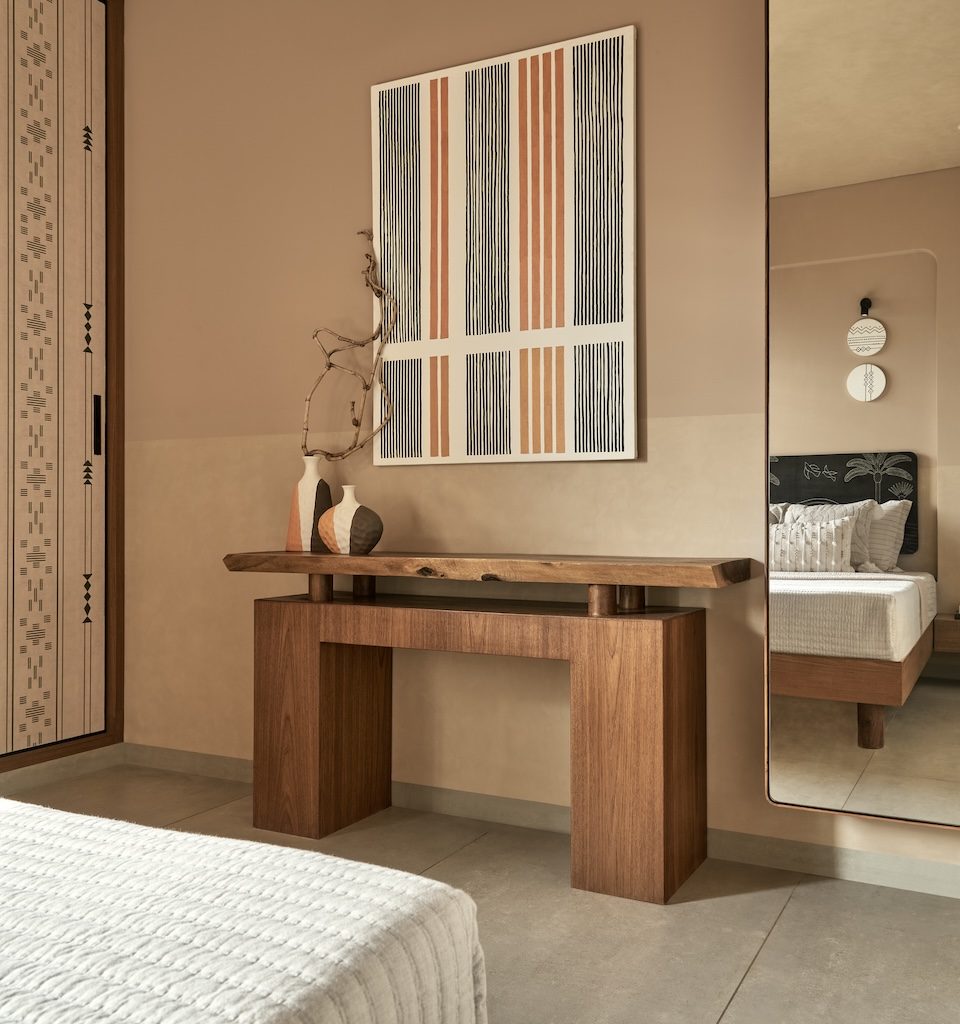
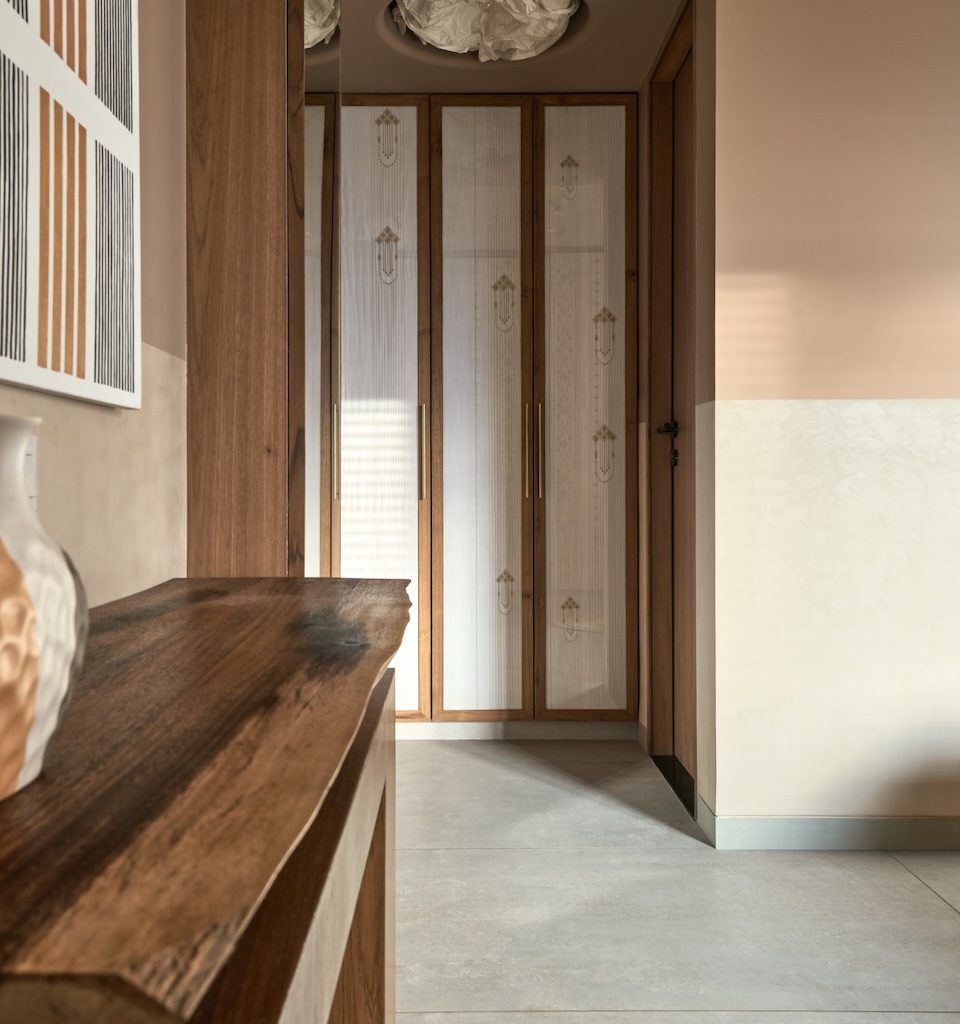
In the master bedroom, texture and tradition come together through a carefully layered material palette. Lime-finished walls transition into smooth matte surfaces, forming a restrained backdrop for the custom-built bed. Its hand-carved black basalt headboard, created by a skilled Rajasthani karigar using traditional tacha techniques, reads as a sculptural focal point. A console made from reclaimed wood retains its raw, organic edge and rests on minimal cylindrical supports, while a bold mustard geometric artwork above introduces a contemporary Indian vibrance. The sliding wardrobe, clad in custom wallpaper, becomes a defining visual element, complemented by additional storage finished with advanced shutters featuring fabric sandwiched between glass and detailed in brass.
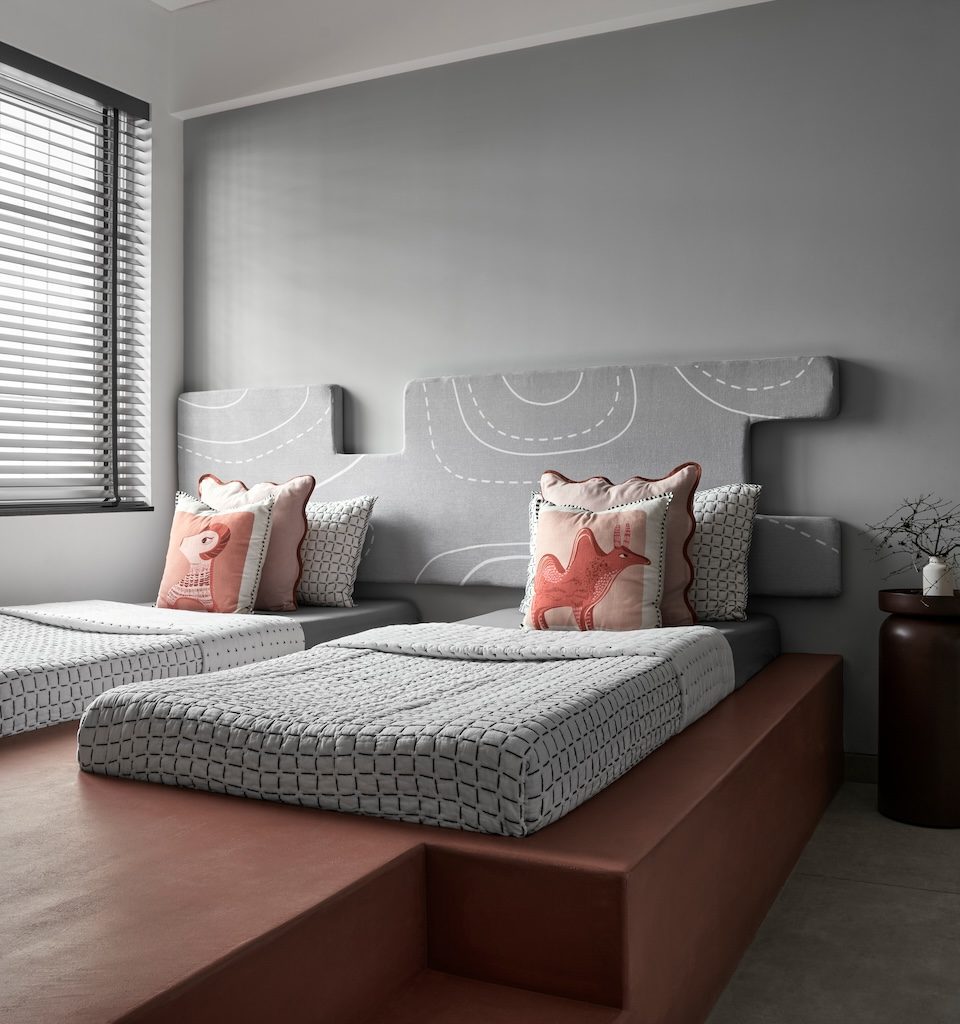
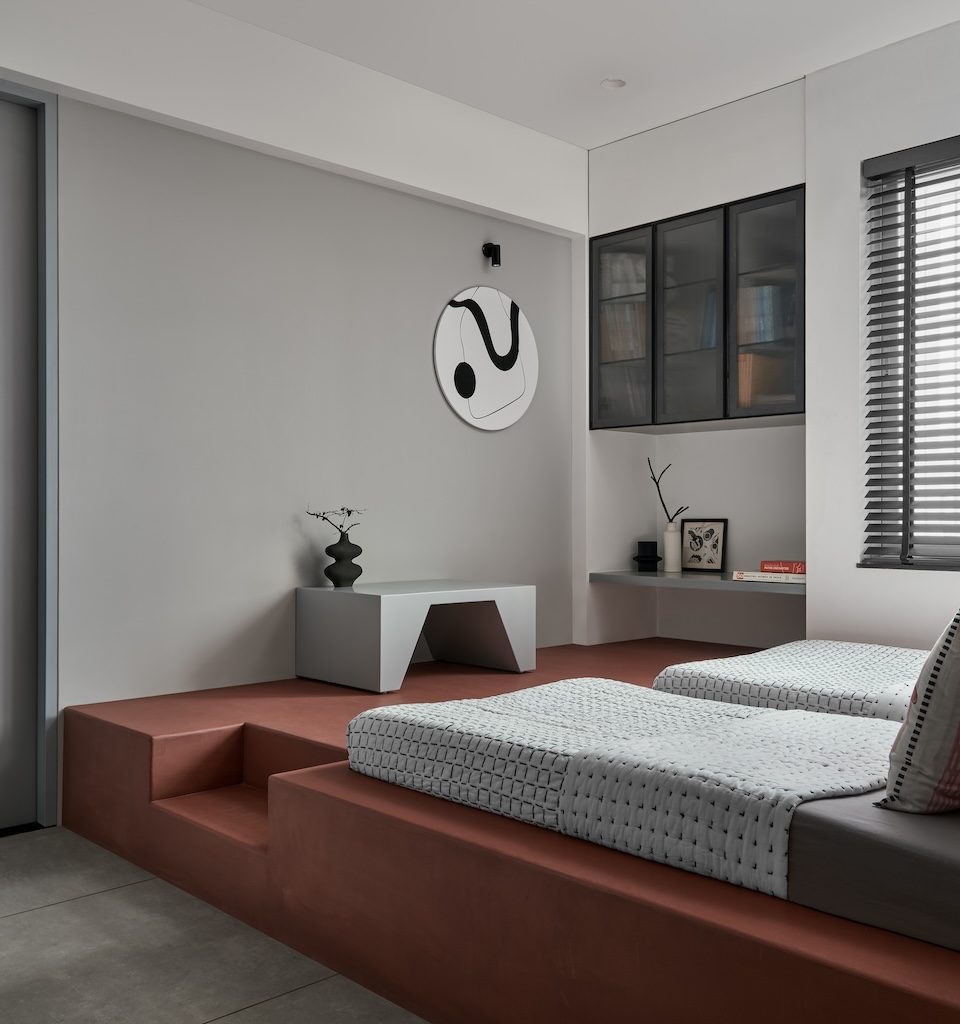
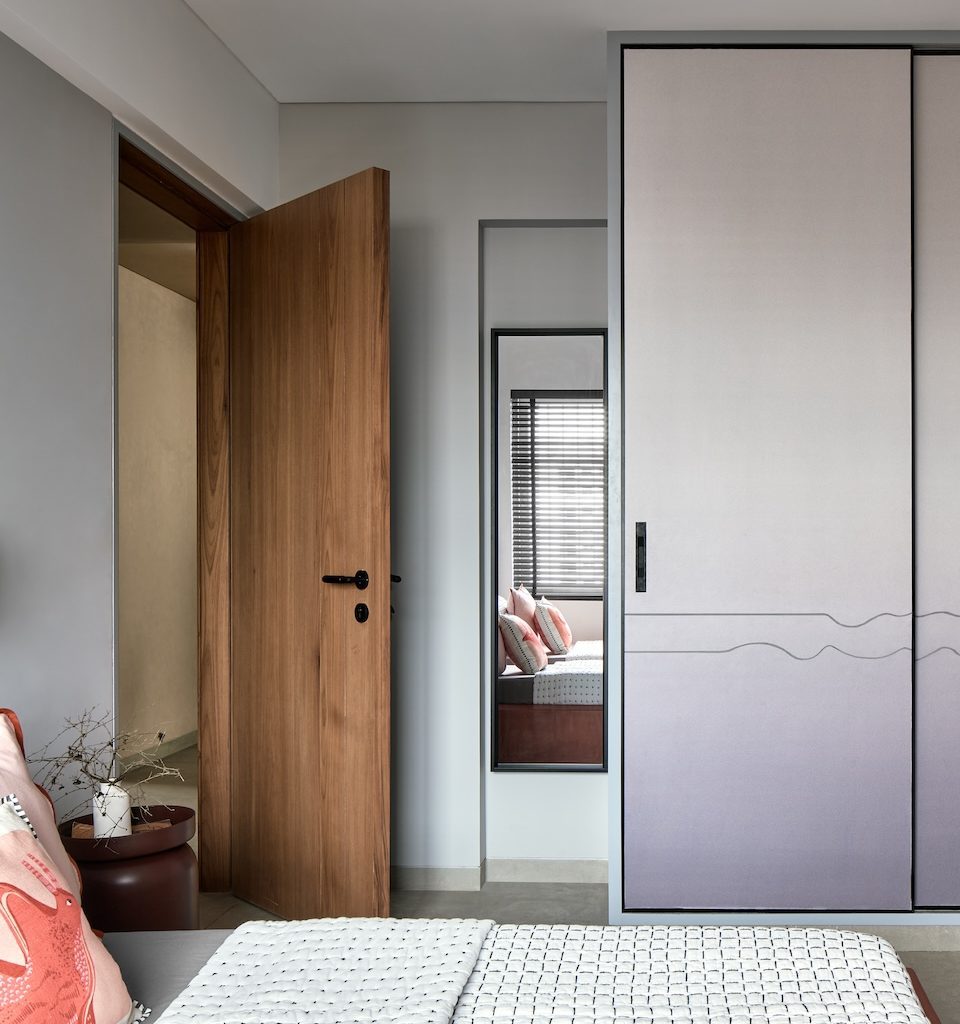
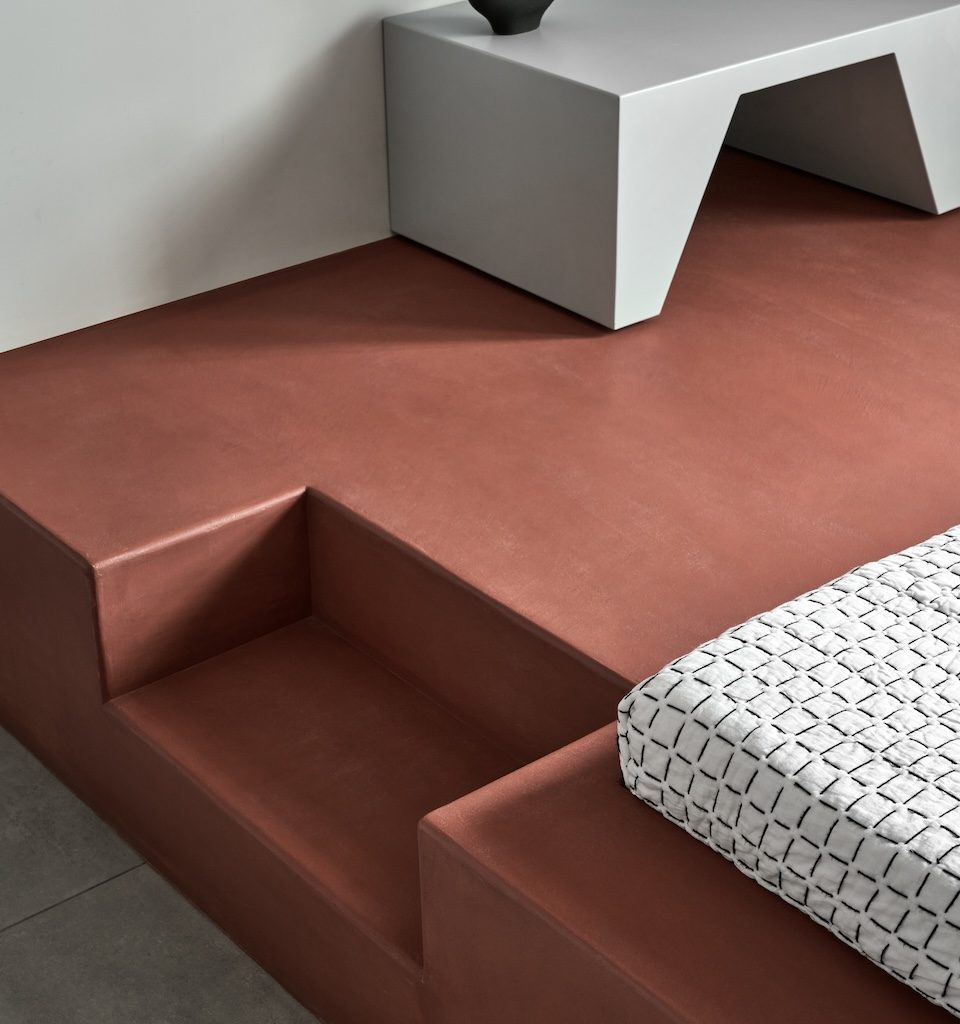
In contrast to the warmer tones used elsewhere, the children’s bedroom adopts a fresher palette of greys and whites, punctuated with playful brick-red accents. A custom platform bed, soft bespoke headboards, an ombre-finished wardrobe, and dual study zones come together to create a space that is both functional and expressive, designed to evolve with the children over time.
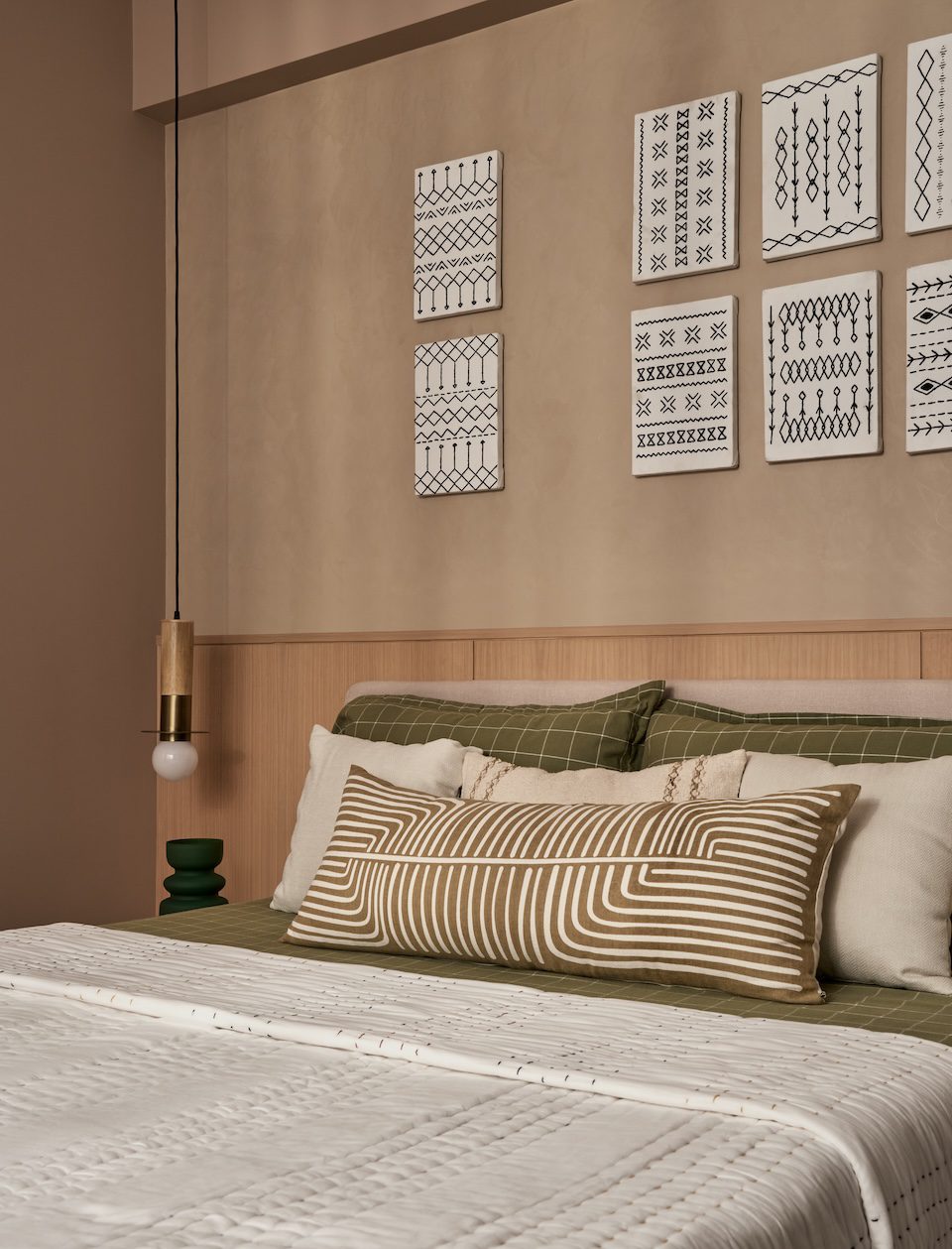
The parents’ bedroom is designed to maximise space while maintaining a sense of lightness. Lighter ash-wood finishes paired with olive accents lend visual airiness to the compact room. Hand-woven artworks inspired by Indian weaving traditions introduce texture and craft, created using wool threads on canvas. This piece, crafted in-house by a designer, adds a personal layer to the space.
Fact File
Project: Shades of Earth
Location: Pune, Maharashtra
Area: 1,200 sq ft
Principal architects: Yash Shah and Anuja Sawarkar Shah
Add a Comment