
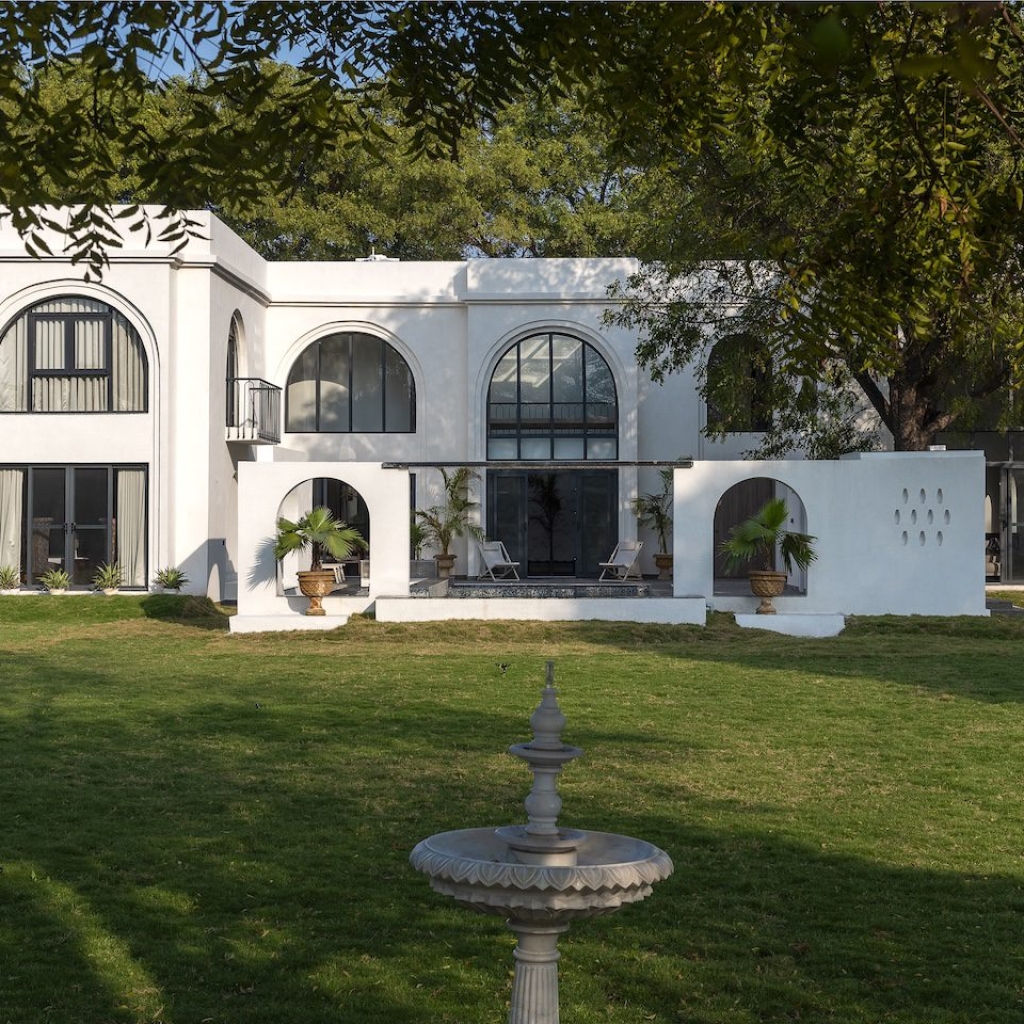
In Faridabad, The Arch Abode by Metaphor Creators unfolds as a courtyard home shaped by axial planning, shaded thresholds and a deep engagement with land, light and memory.
Curated by: Rupali Sebastian
Photographs: Sanjay Sakaria; courtesy Metaphor Creators

The project
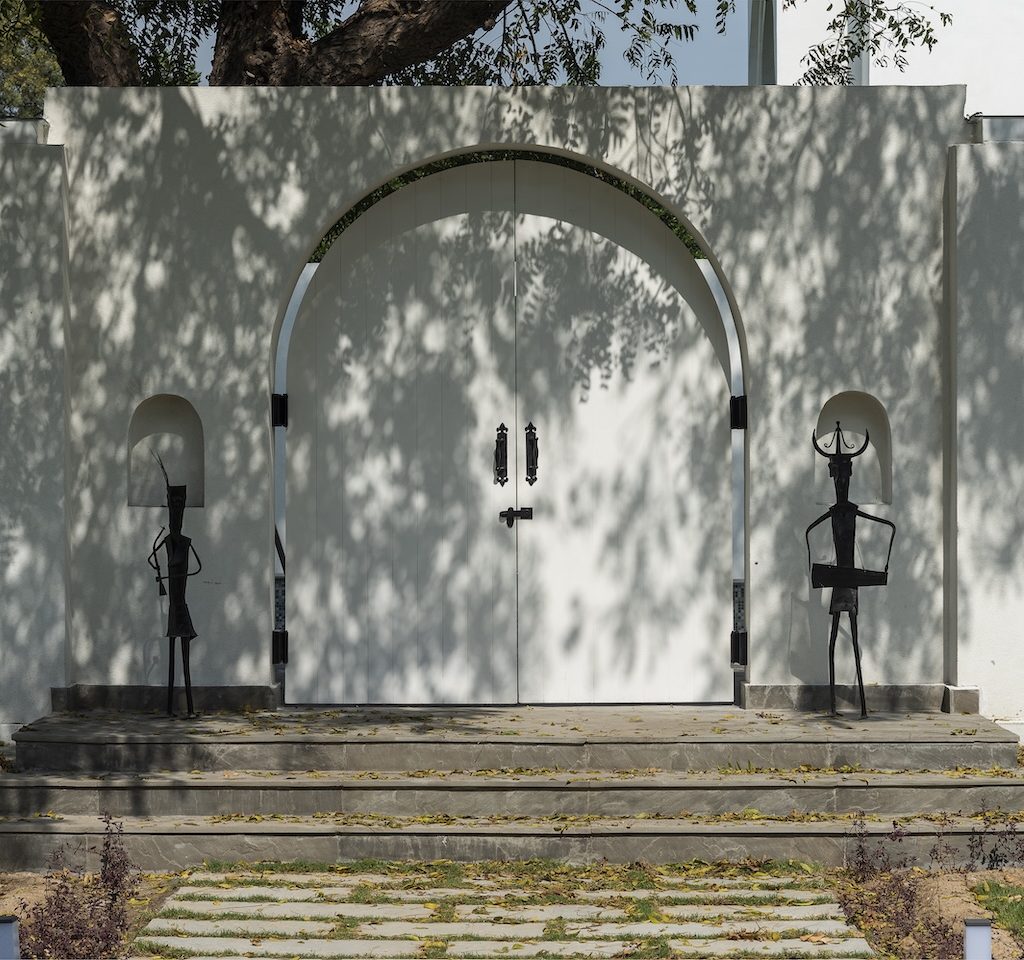
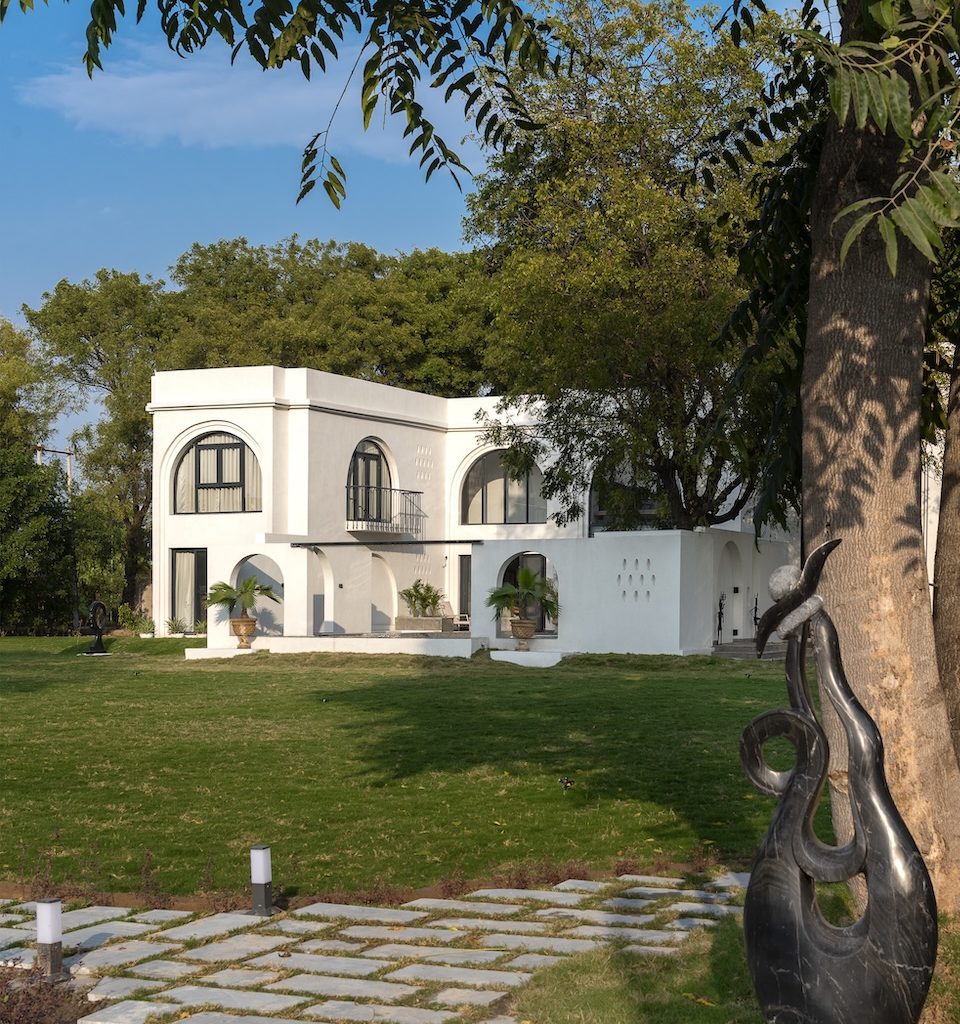
The Arch Abode is a 4,400 sq ft private residence in Faridabad that draws from time-tested spatial principles while responding quietly to contemporary life. Designed by Metaphor Creators, headed by principal architect Sunny Thakur, the home is organised around a strong central axis, using built form to frame movement, pause and transition rather than impose hierarchy. The architecture is deliberately inward-looking, allowing everyday life to unfold around courtyards, shaded corridors and carefully composed openings.
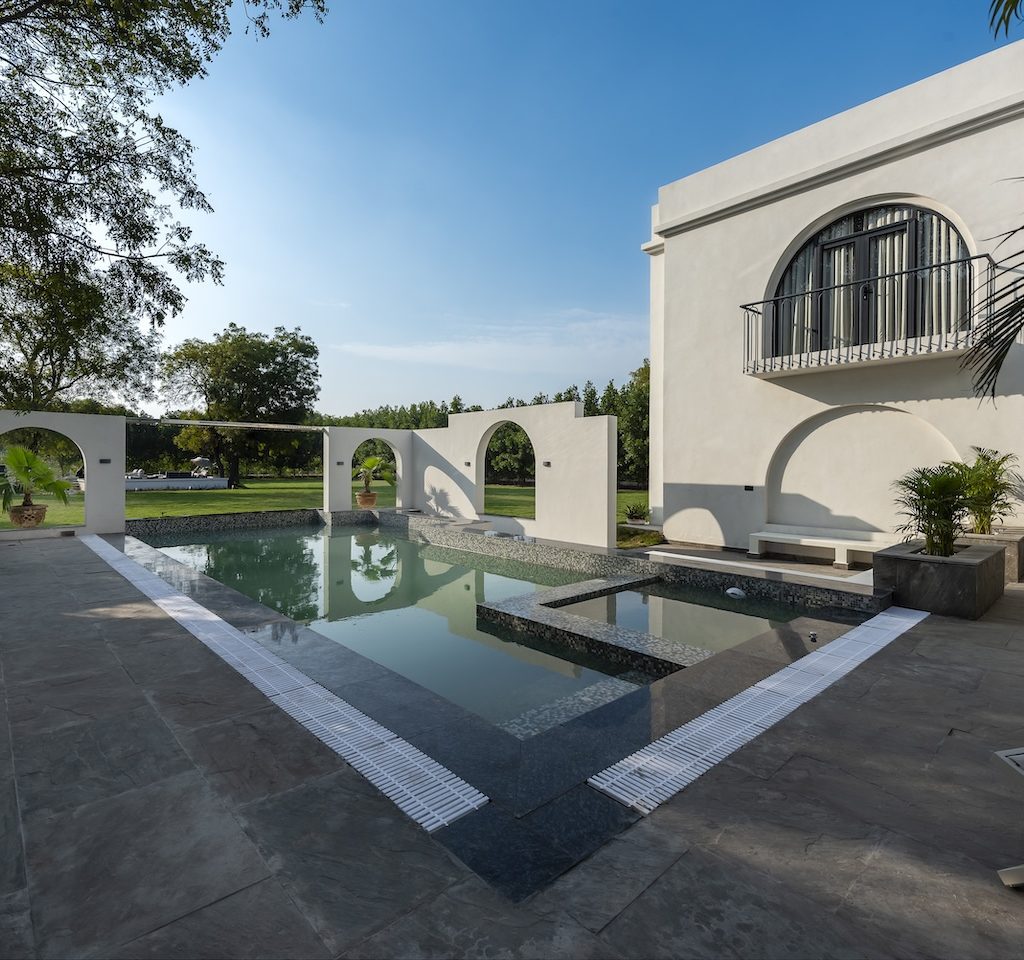
The site
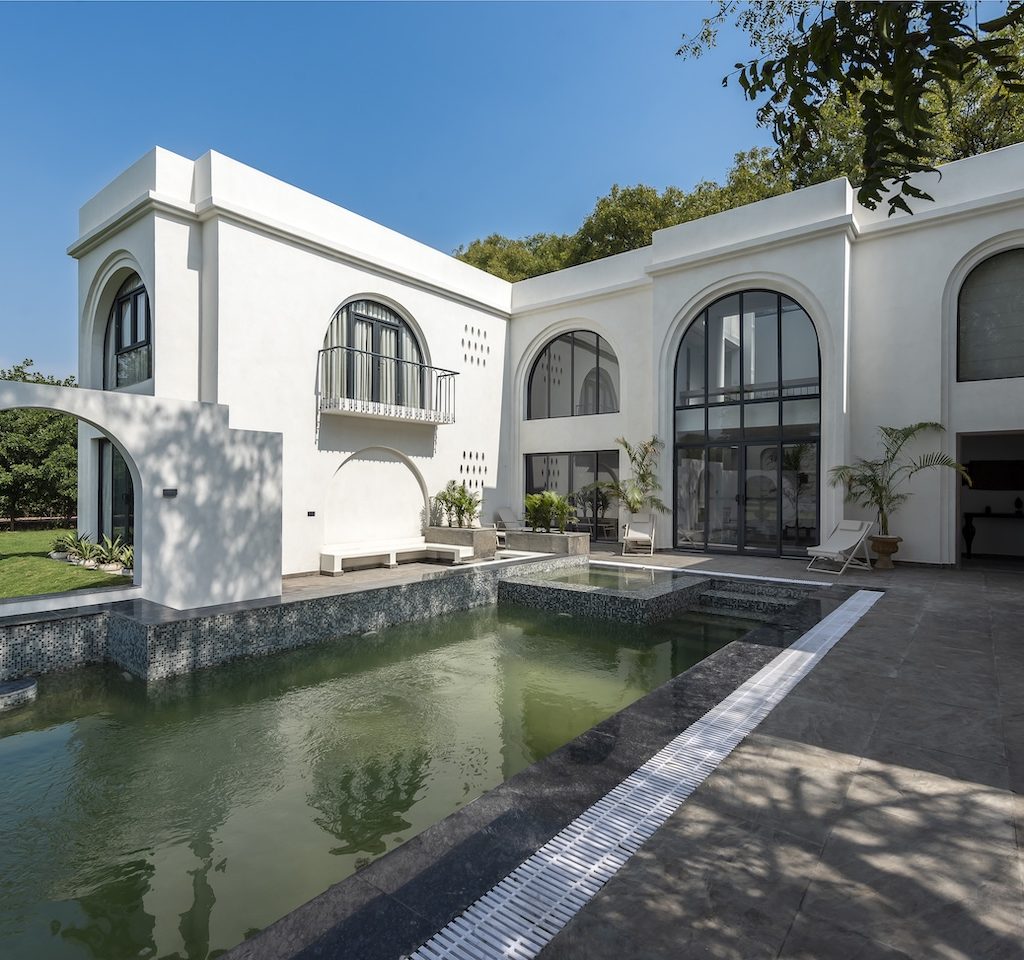
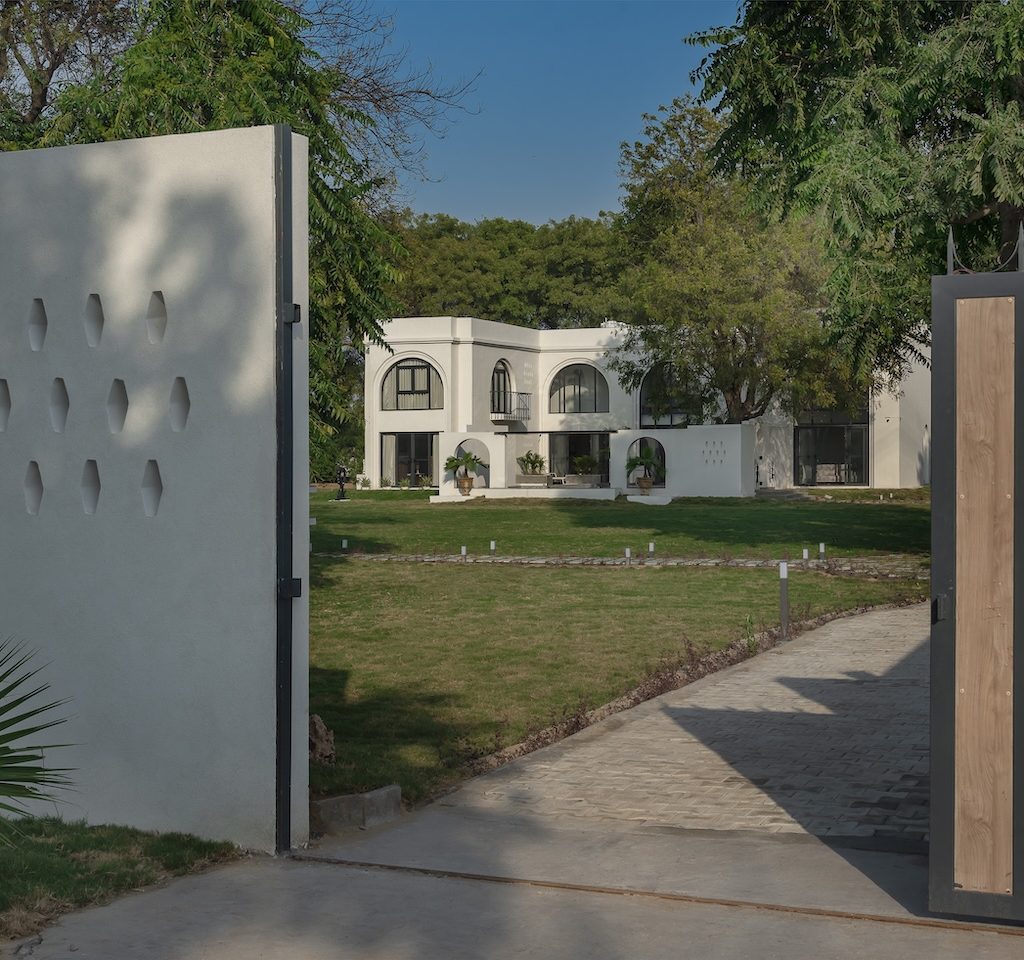
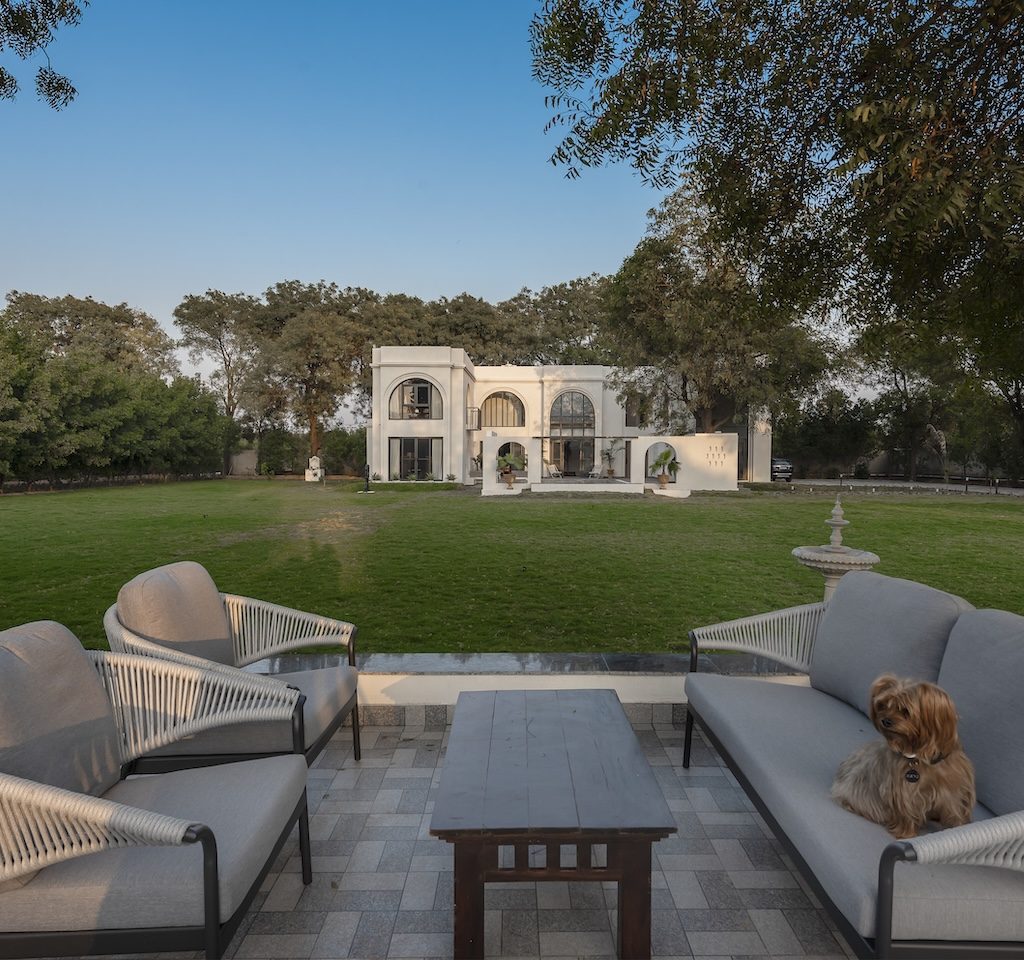
Located on a residential plot in Faridabad, the site was defined as much by its constraints as by its opportunities. Existing trees, orientation and neighbouring structures informed the placement of built volumes, encouraging a plan that works with the land rather than against it. Instead of treating the site as a blank canvas, the design responds to its natural anchors, allowing open spaces to emerge as generators of form.
The brief
The clients sought a home that felt rooted, calm and private—one that could accommodate family life while remaining deeply connected to nature. They were keen on a layout that prioritised openness without exposure, and material choices that aged gracefully rather than asserted themselves. The brief called for a house that felt lived-in from the outset, not staged or overtly stylised.

The design intent
At the heart of the project lies a desire to slow movement and heighten awareness of space. The architecture privileges procession—how one enters, moves through and inhabits the home. As principal architect Sunny Thakur explains, “The idea was to create a sequence of spaces that unfold gradually, allowing light, air and landscape to guide the experience rather than walls or doors.” This approach results in an architecture that is intuitive, where transitions are as significant as destinations.
The civil intervention
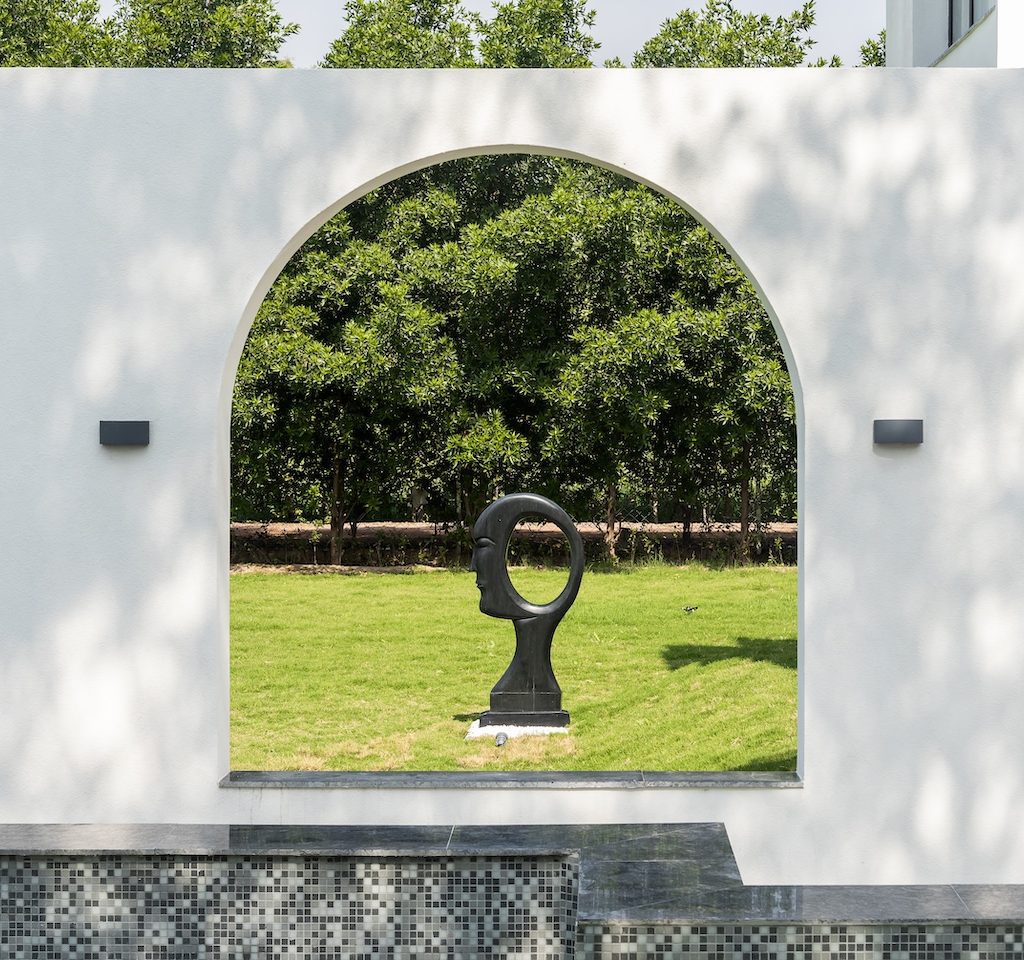
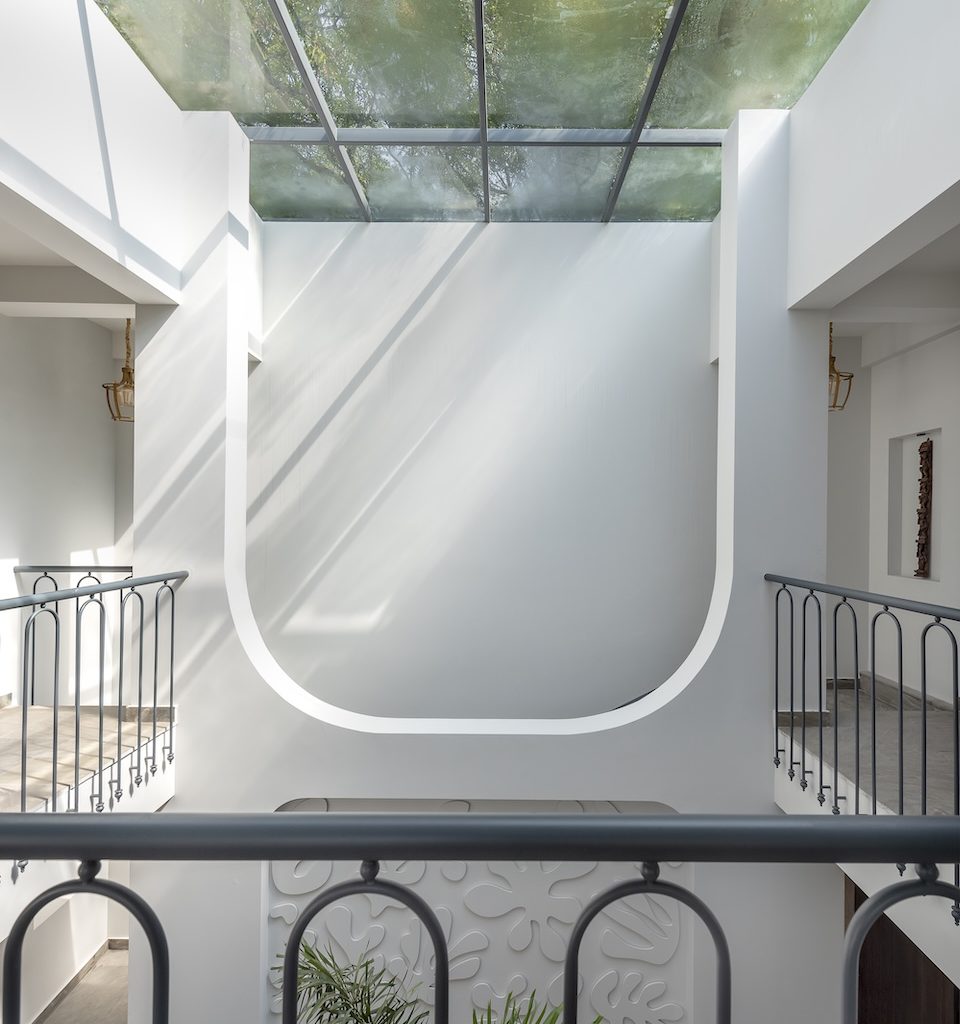
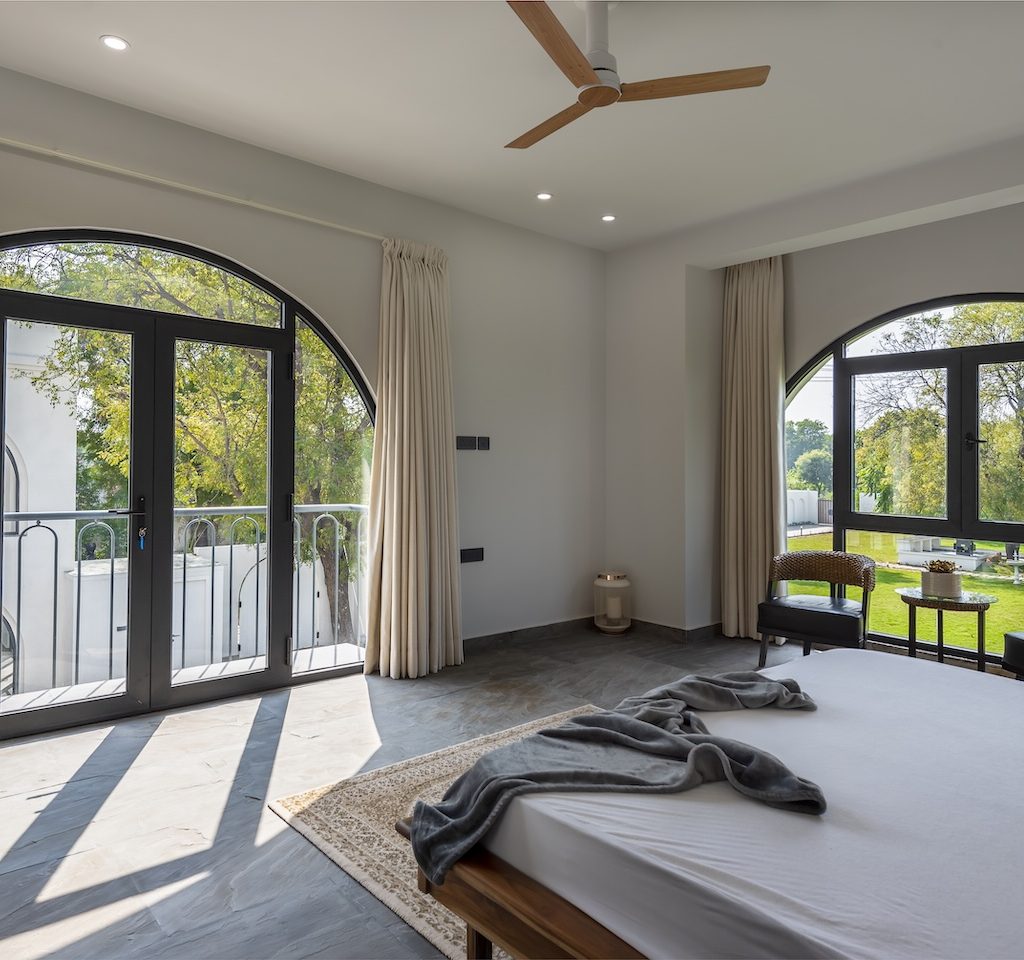
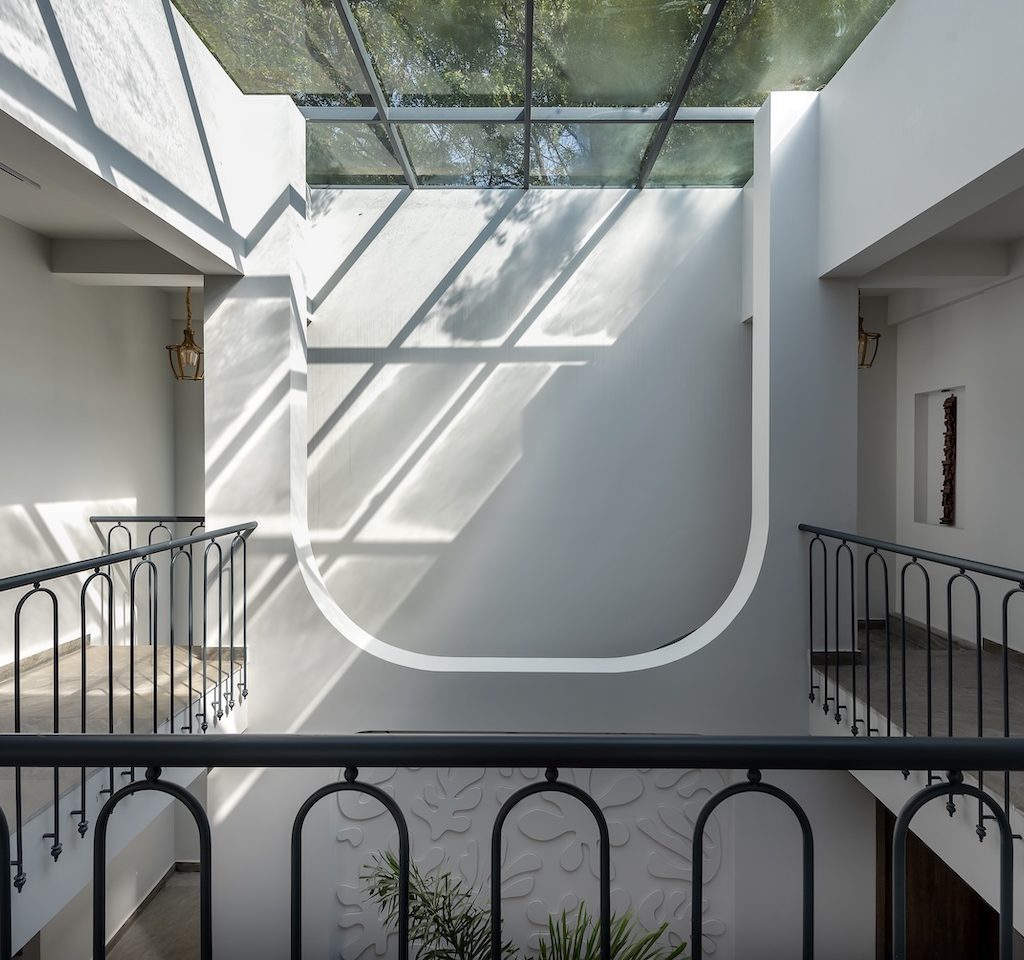
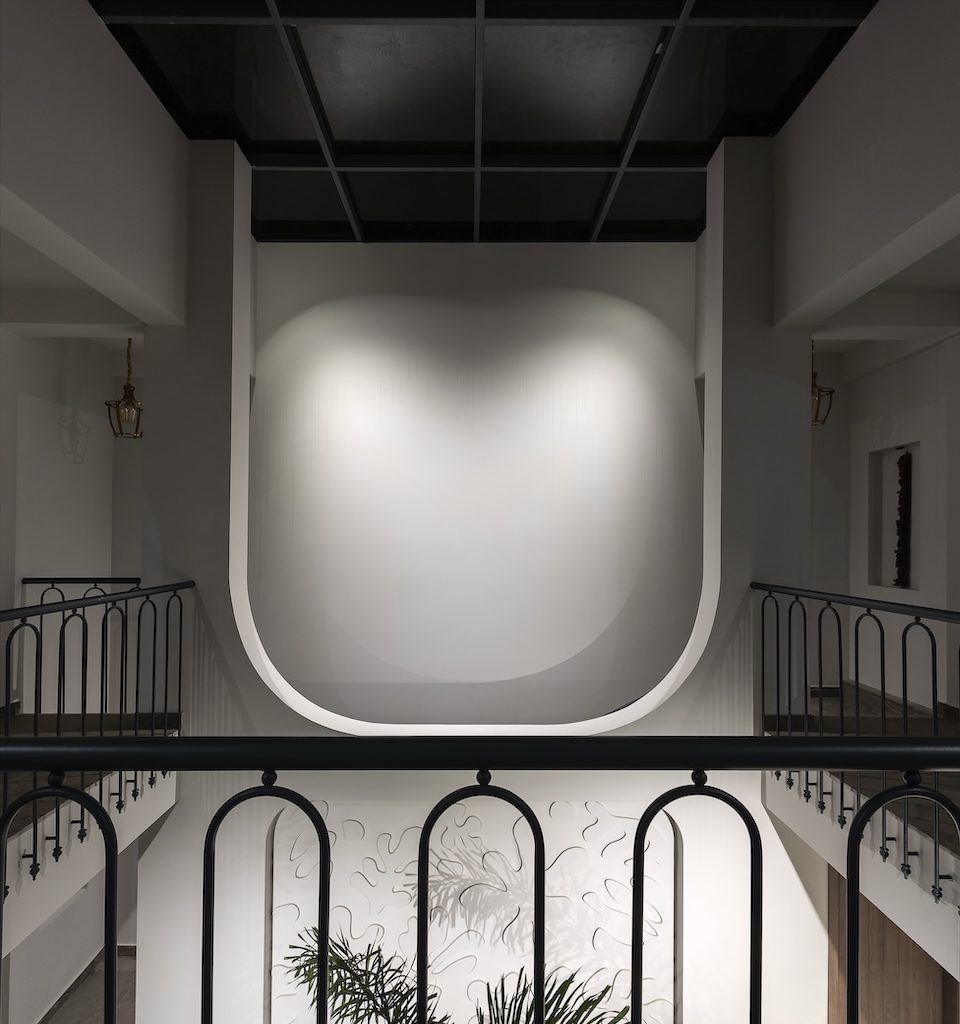
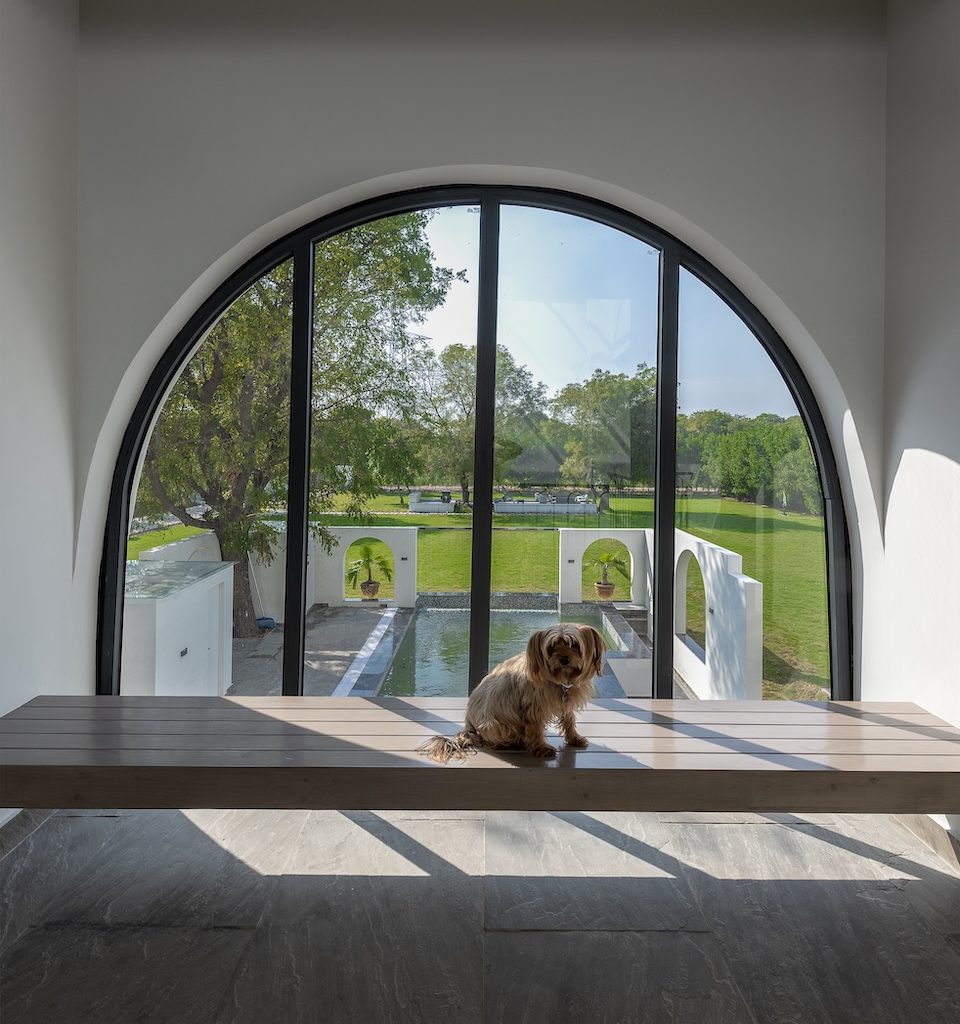
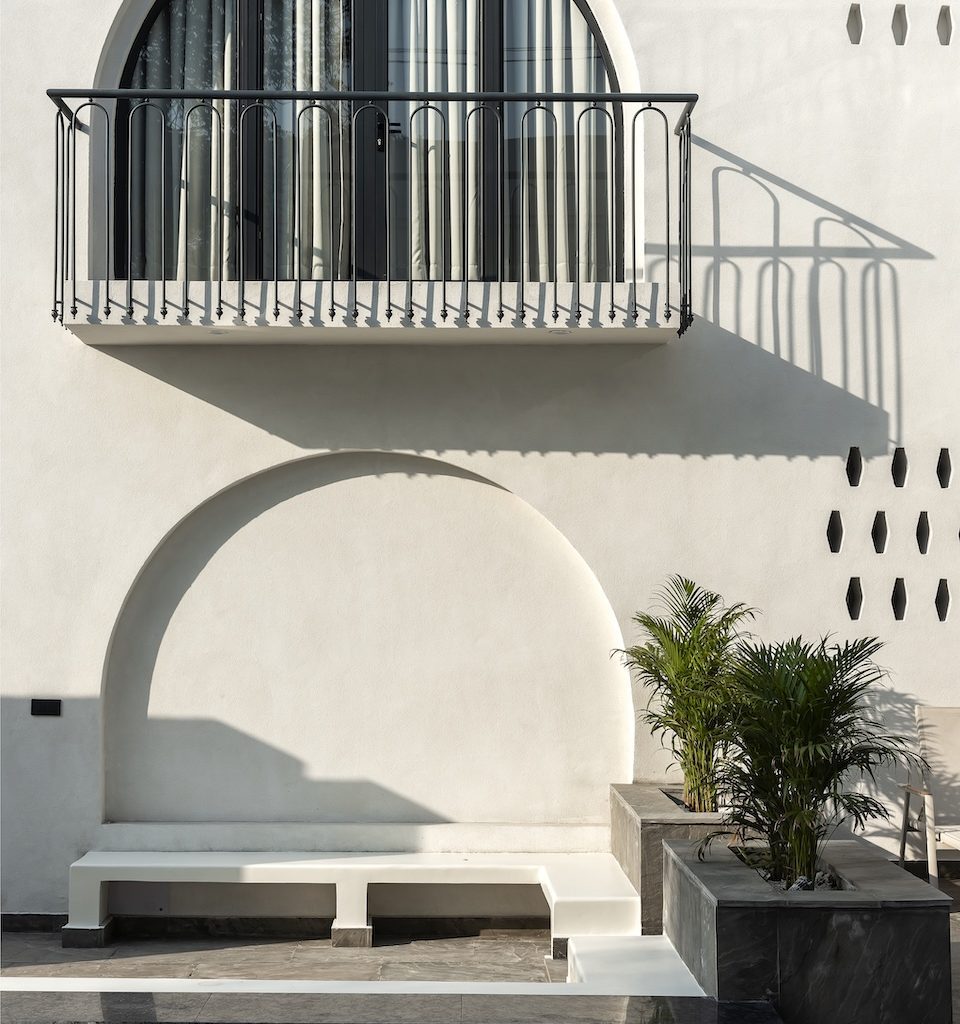
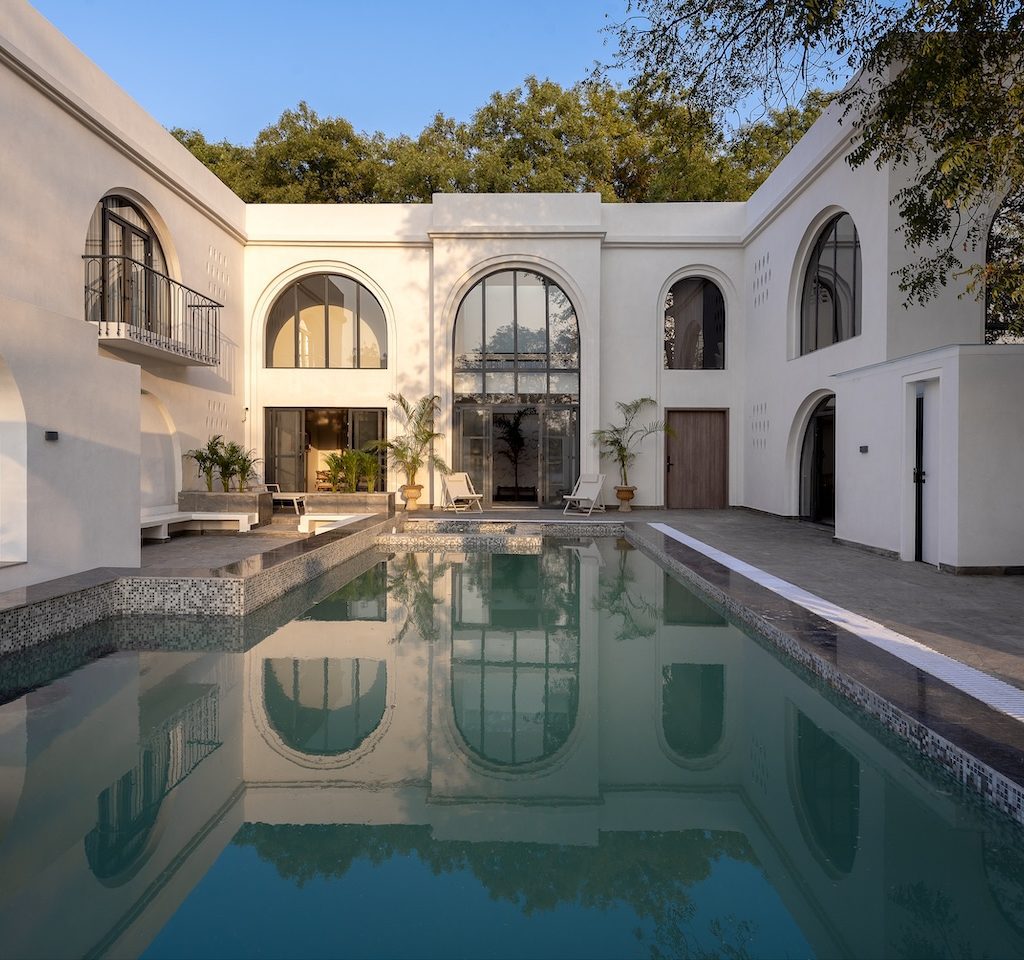
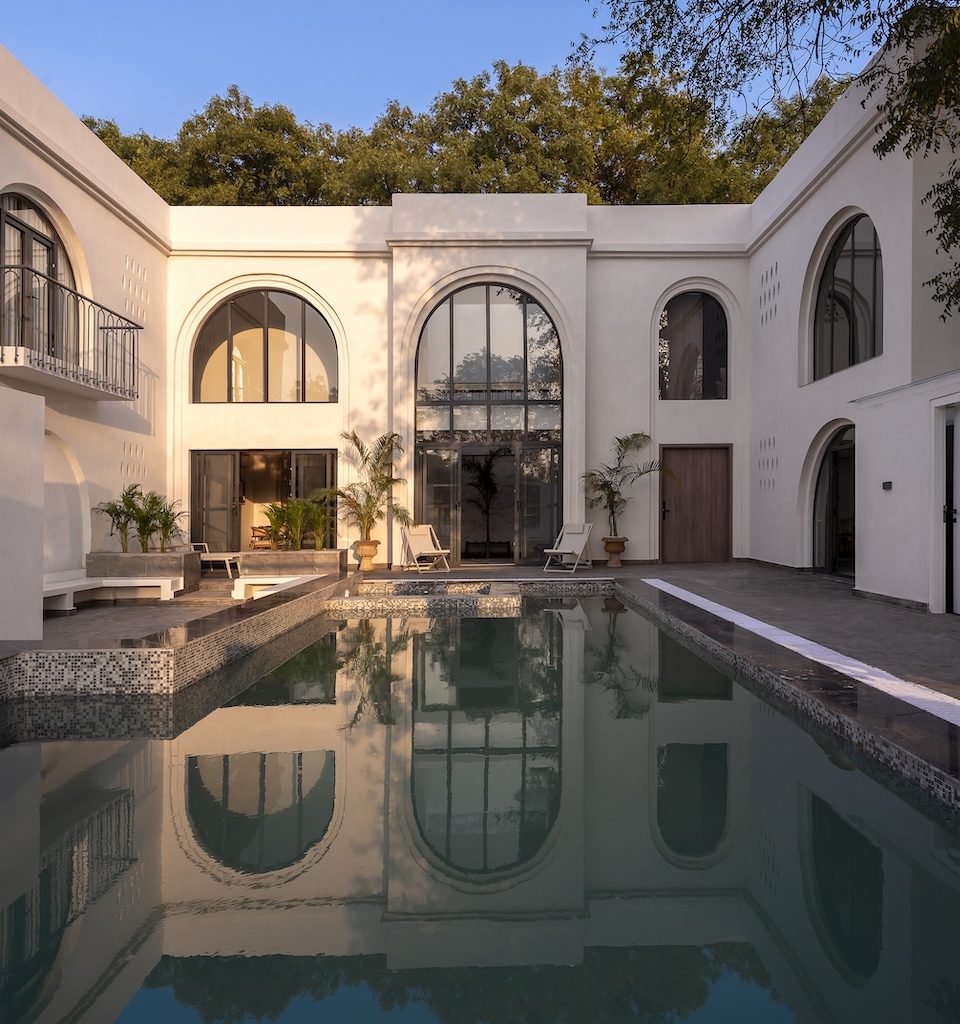
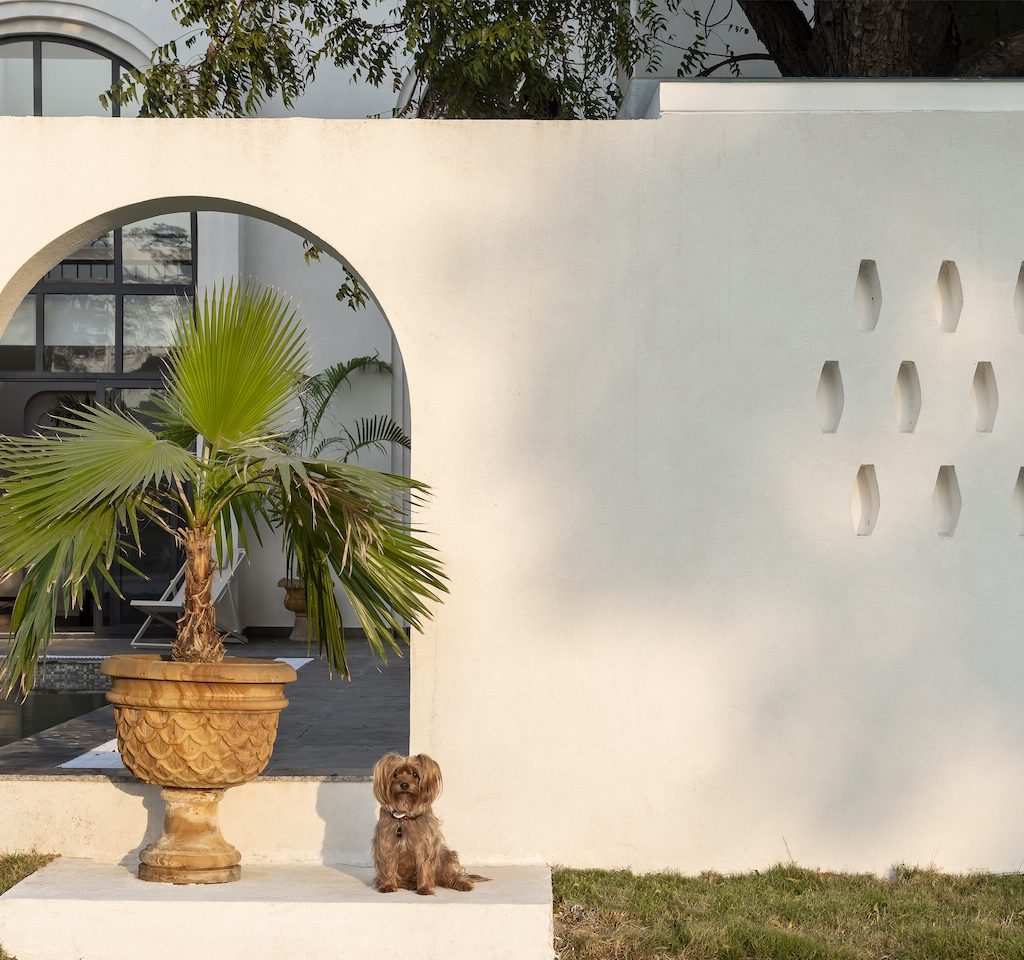
The built form is articulated through a series of intersecting volumes organised along a central axis. Structural elements are deployed with restraint, allowing courtyards and semi-open spaces to breathe between enclosed rooms. Arches are used not as decorative motifs but as spatial devices, mediating scale and framing views while lending rhythm to circulation.
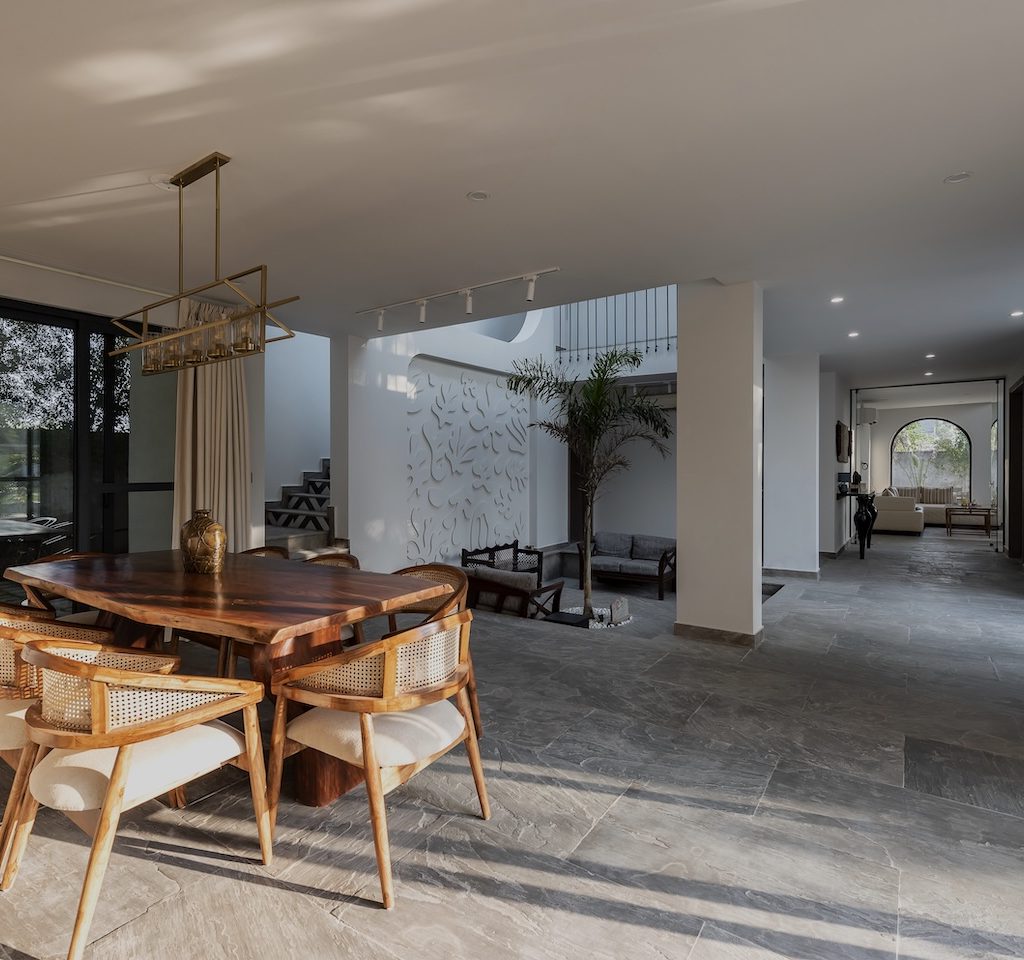
The spatial flow
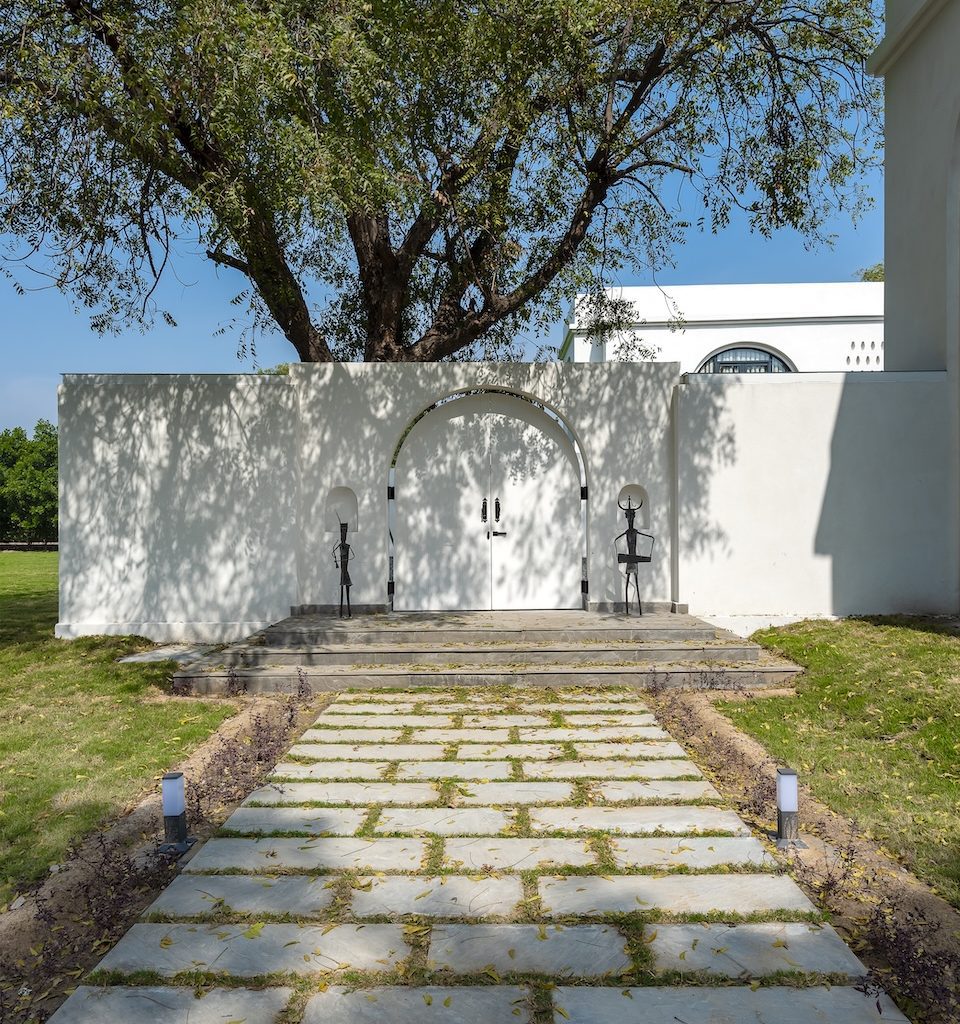
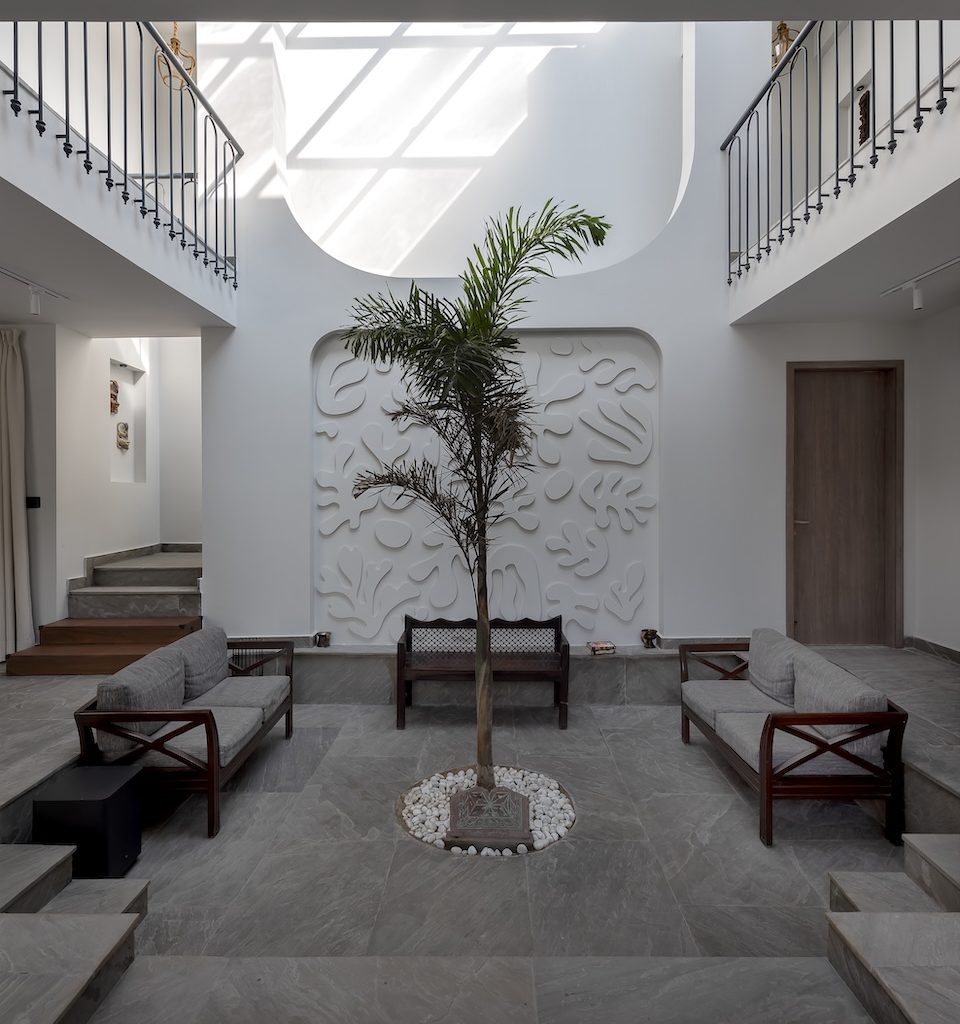
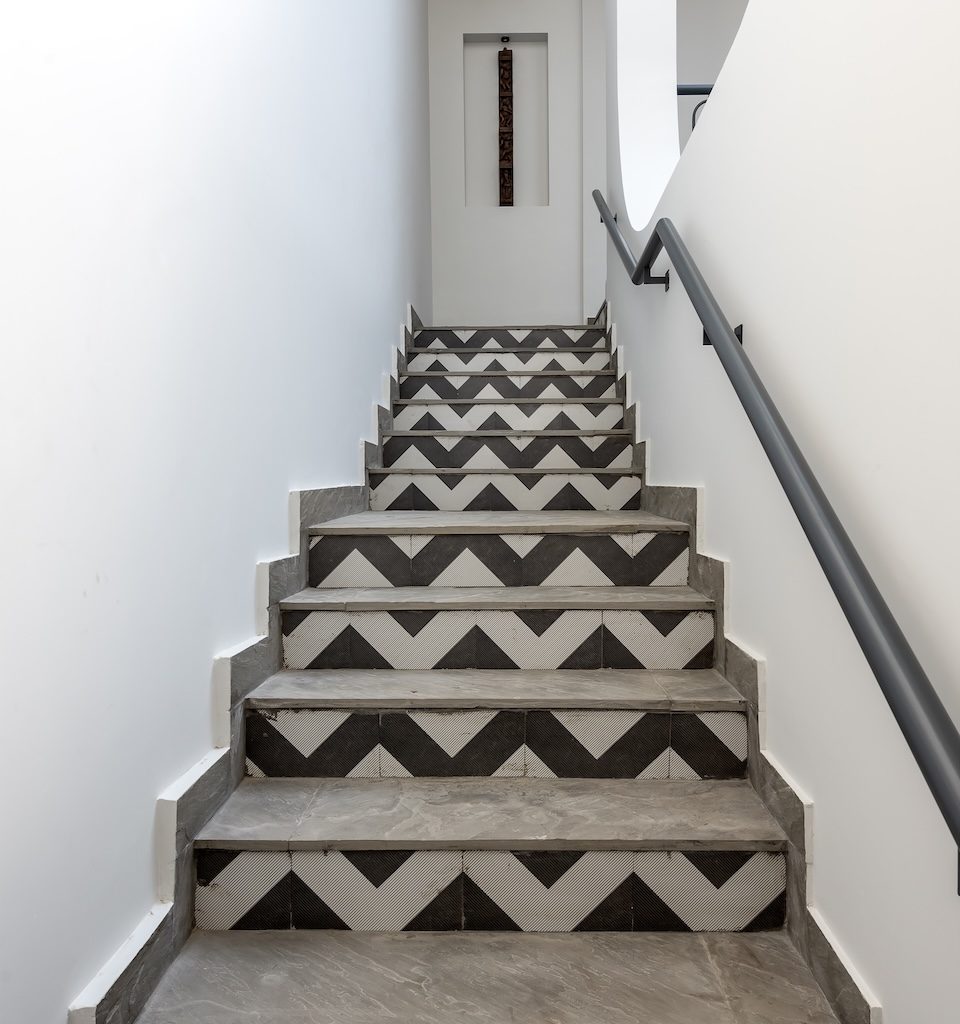
The house is planned as a continuous spatial loop rather than a collection of discrete rooms. Entry leads into a shaded threshold that opens into the central courtyard, from where living, dining and family spaces branch out organically. Visual connections are maintained across spaces, ensuring that movement feels fluid and uninterrupted. Private rooms are positioned to enjoy quieter corners of the site, while common areas remain closely tied to open-to-sky spaces, reinforcing the home’s inward focus.
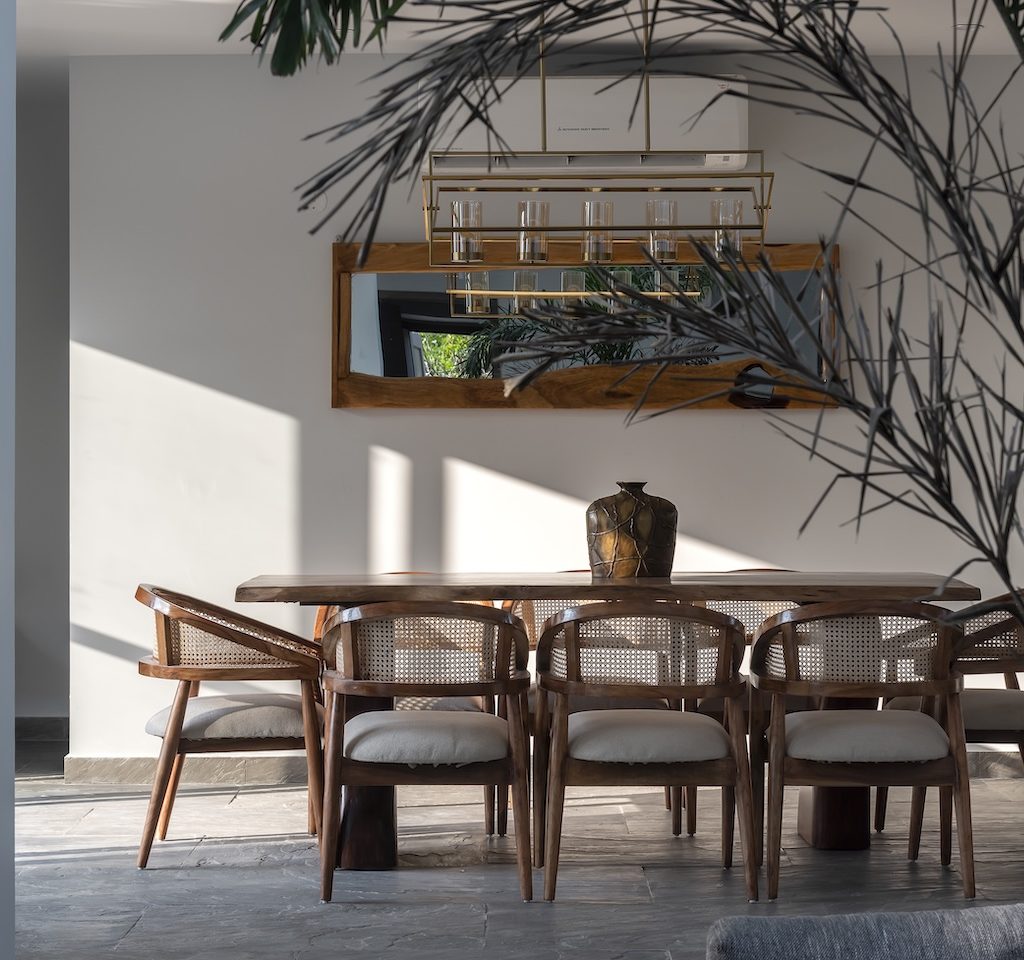
The material palette
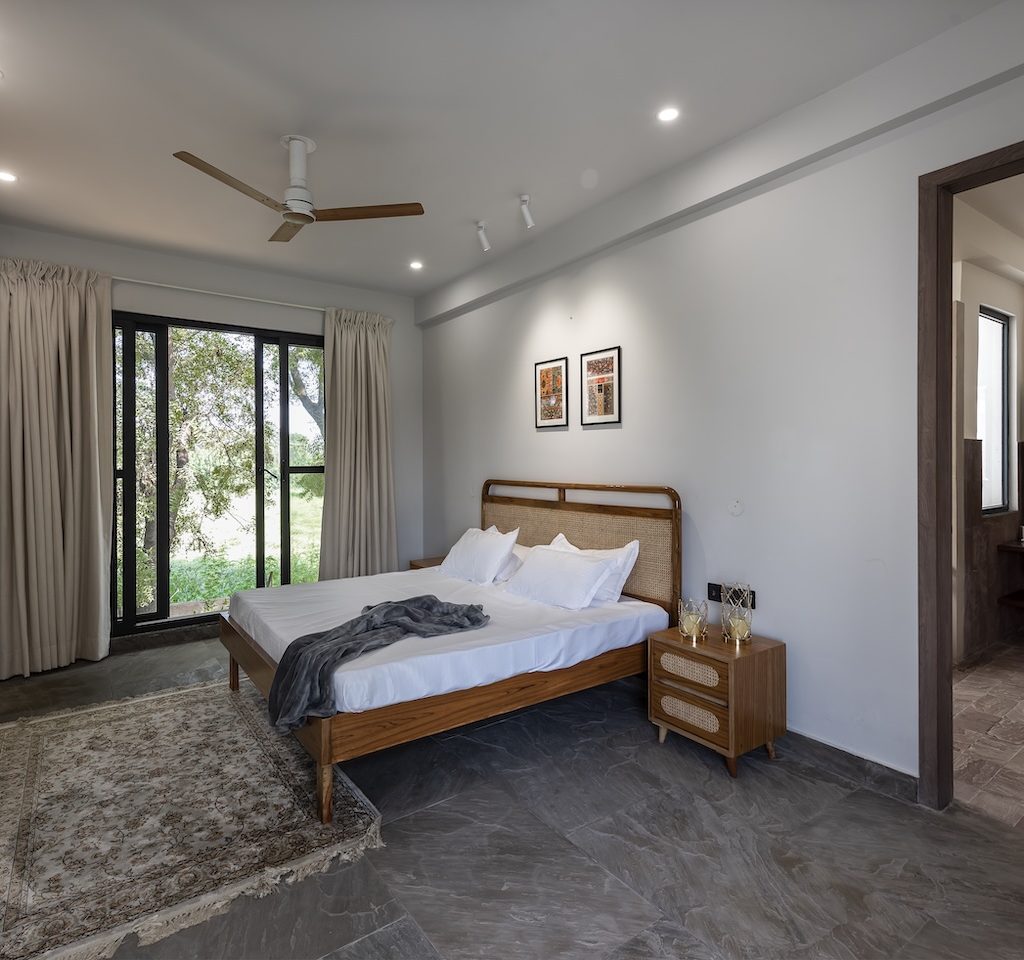
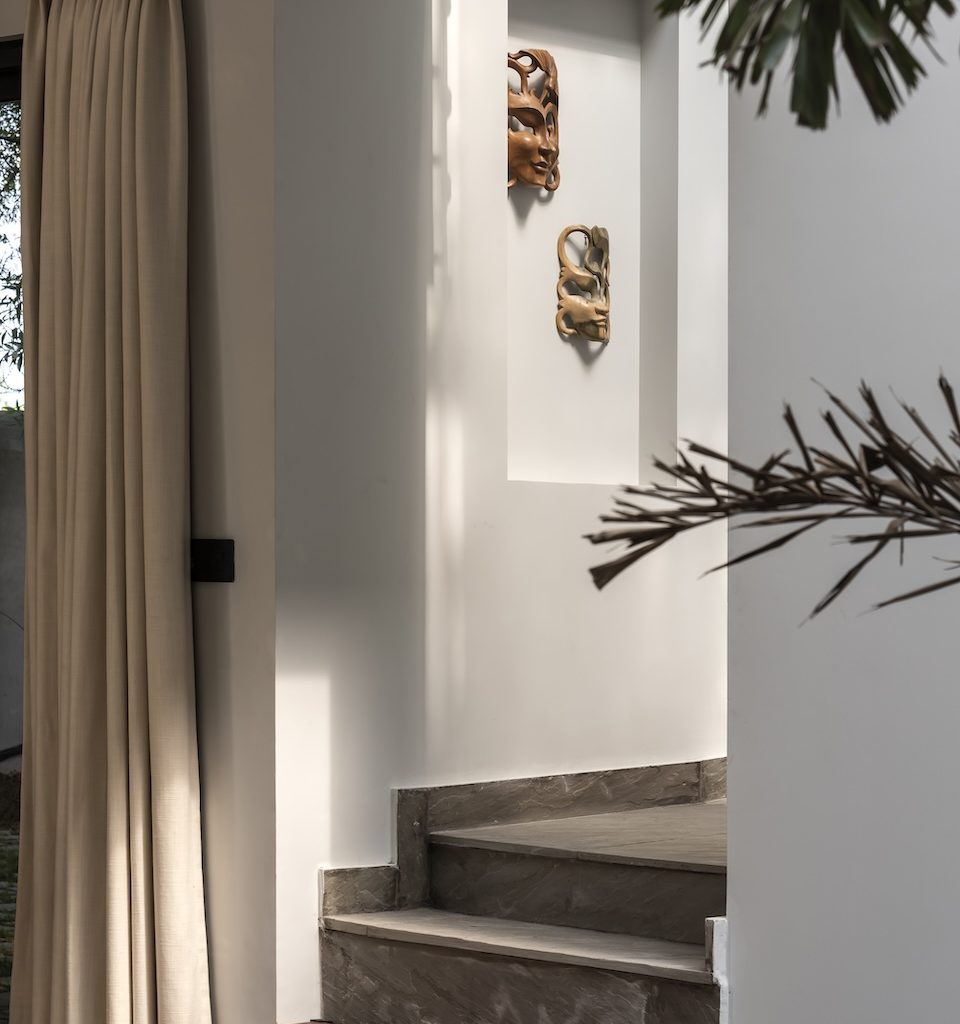
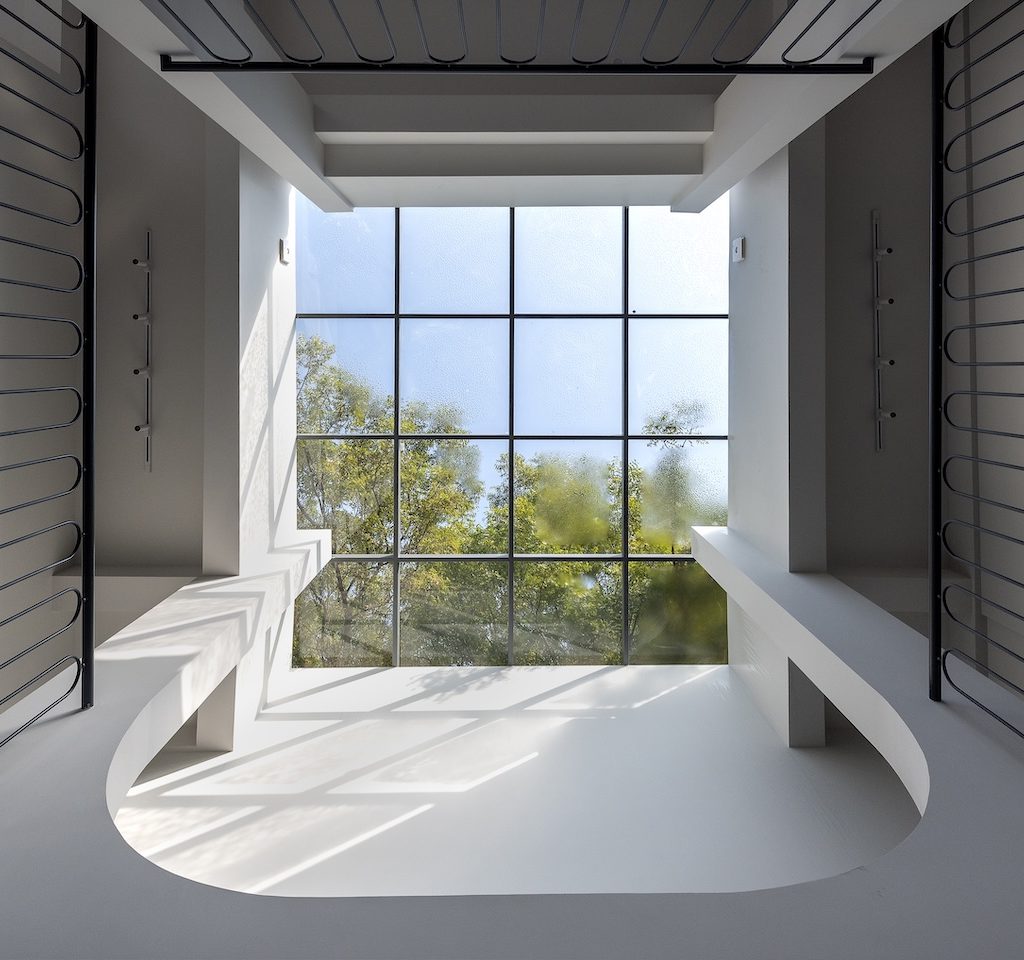
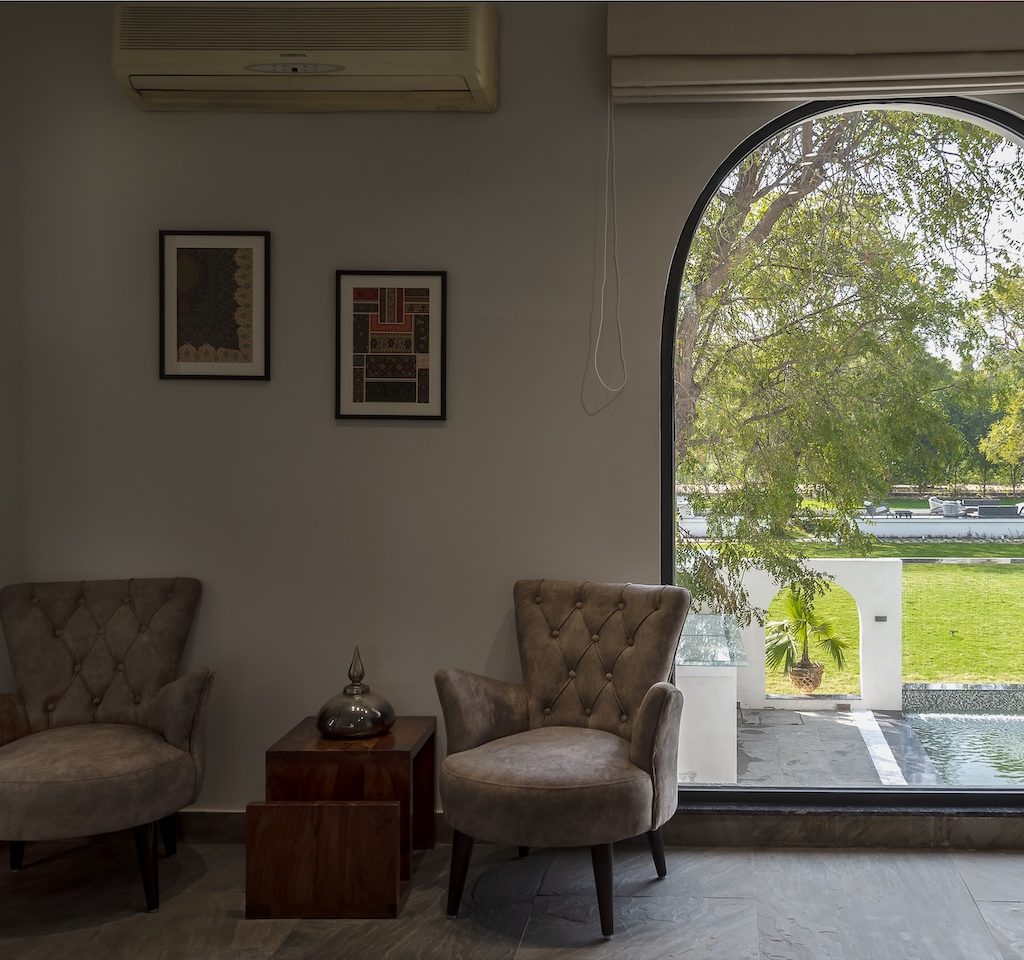
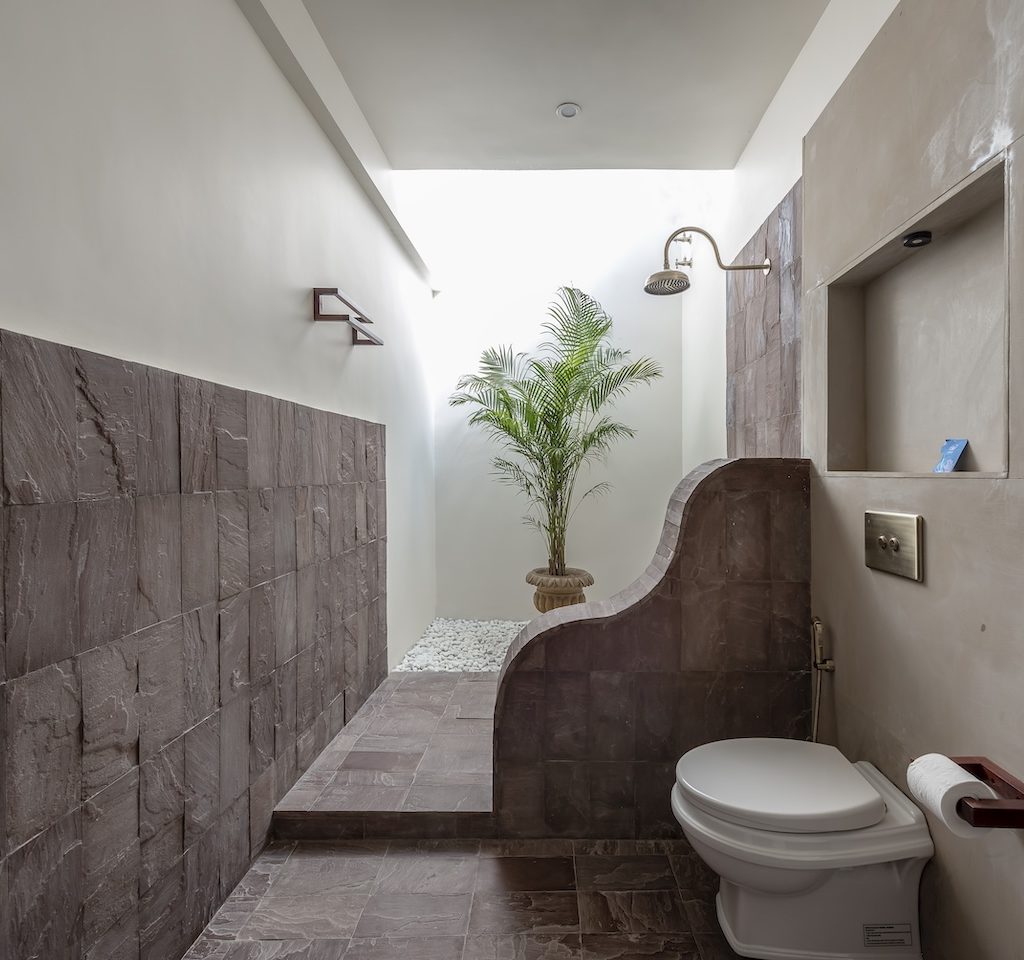
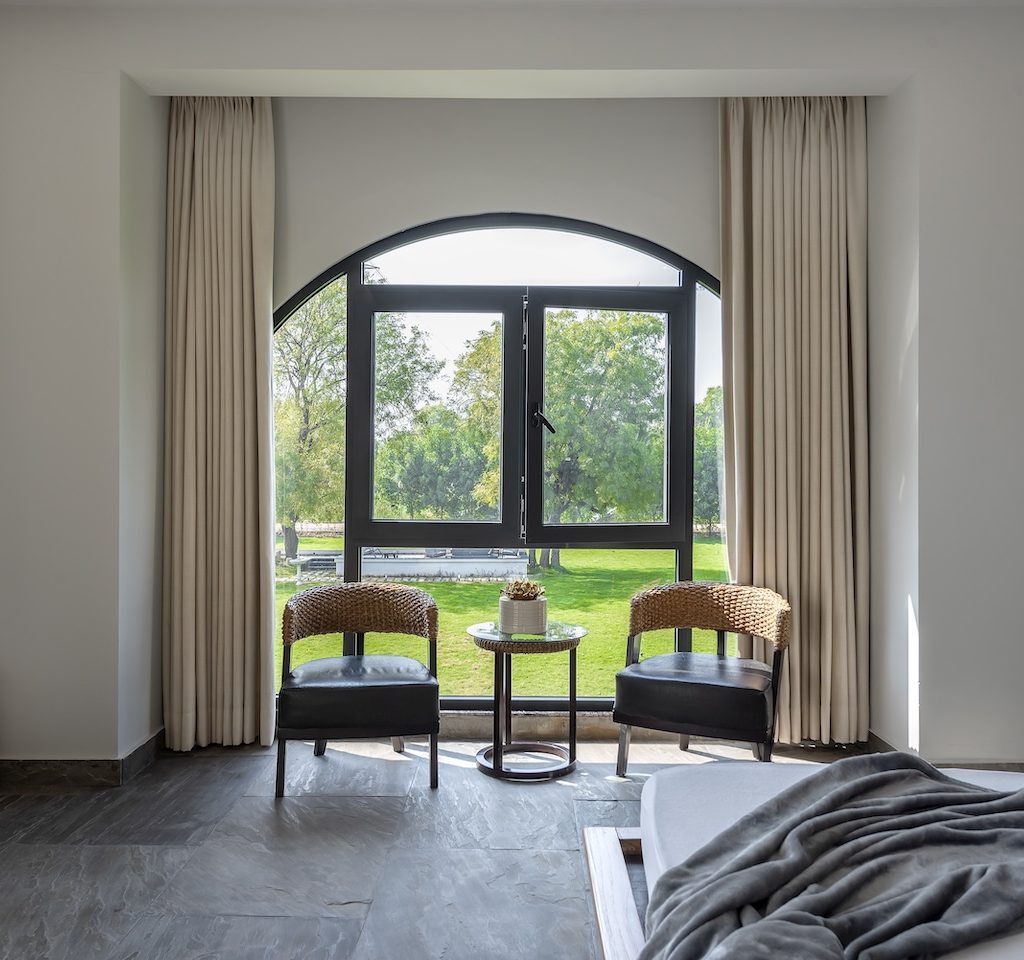
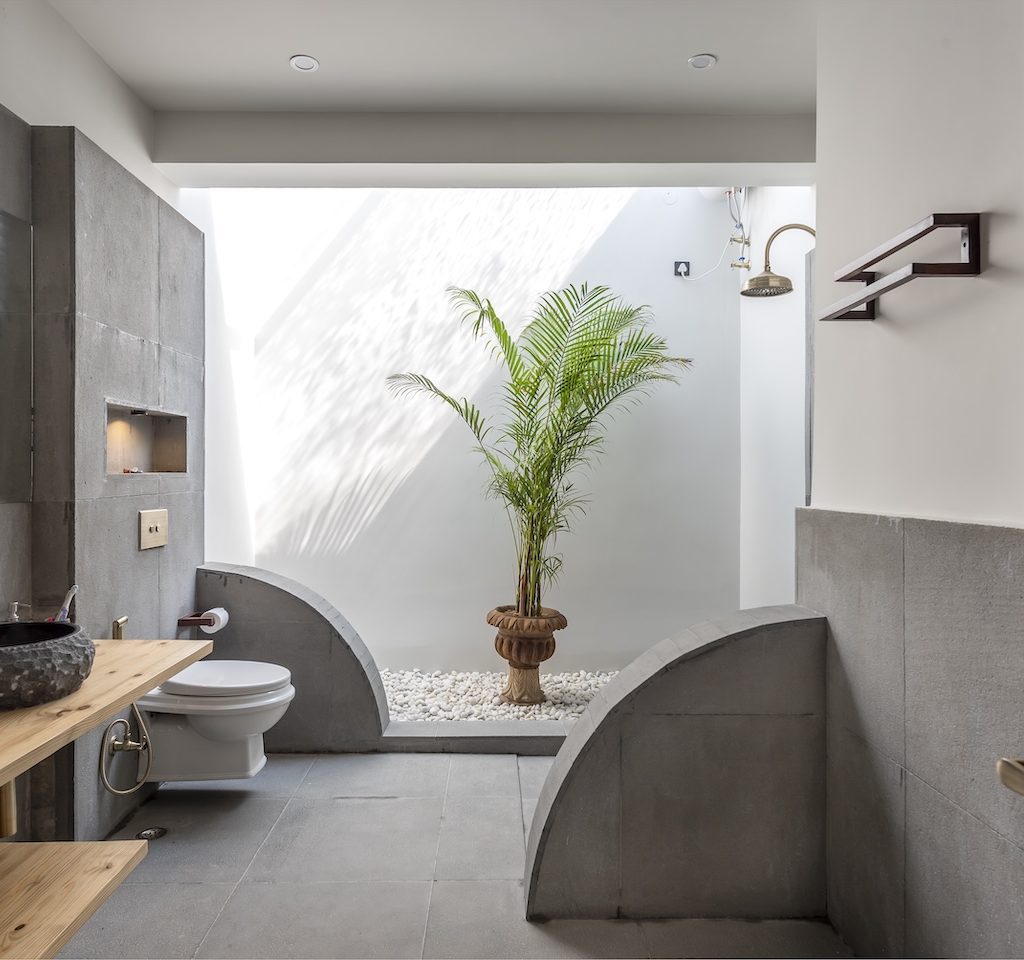
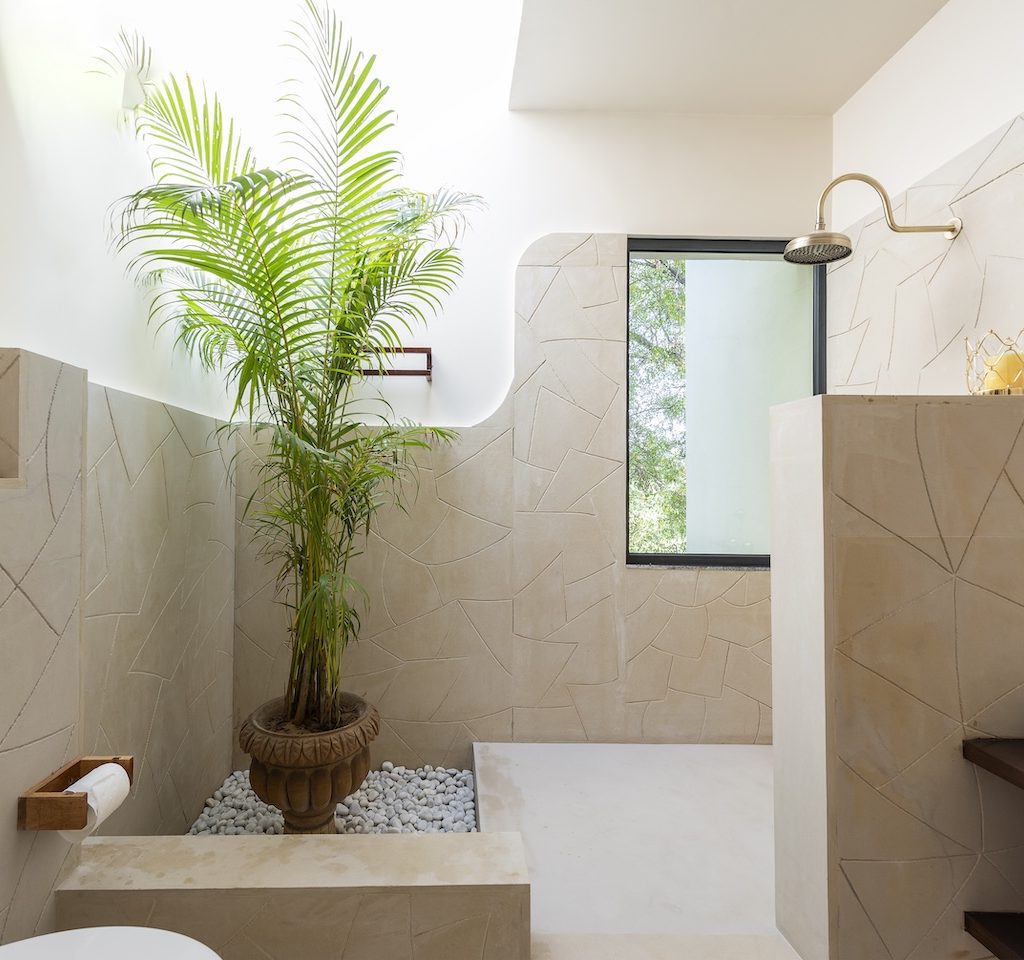
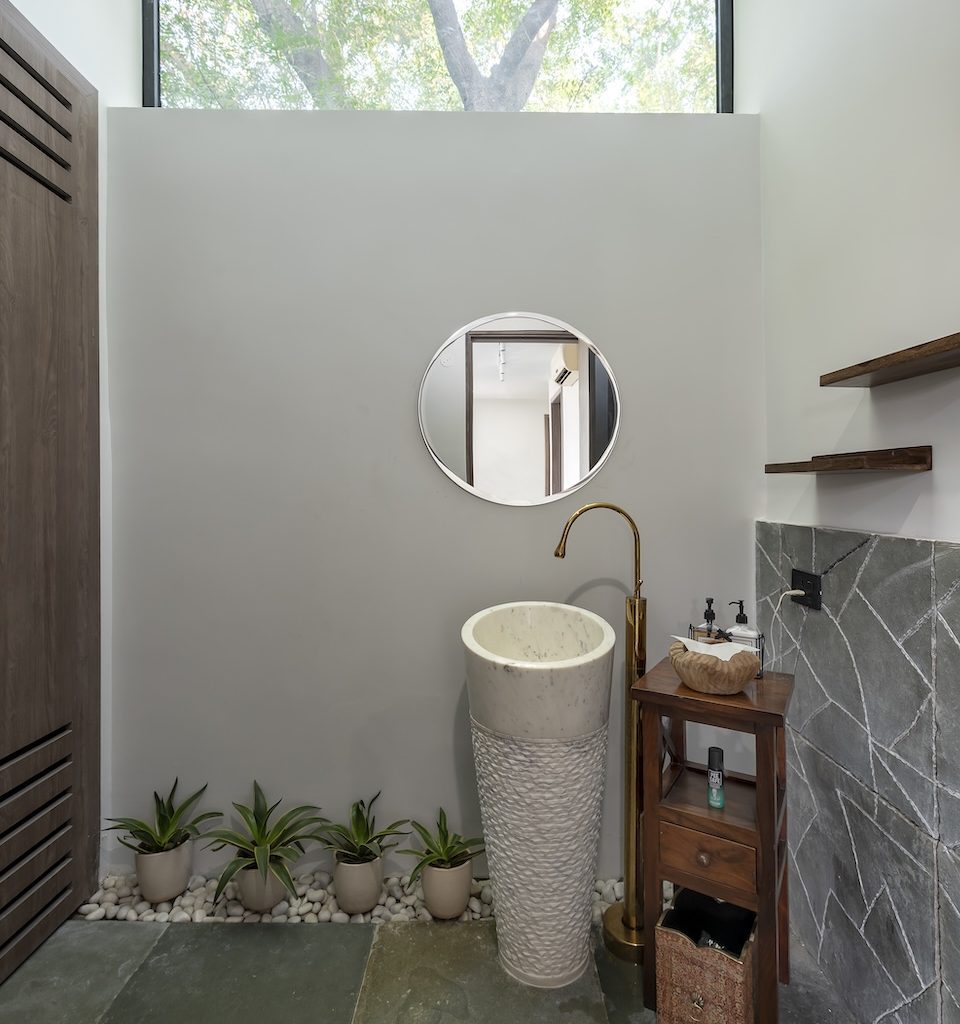
Material choices are grounded and tactile. Natural stone, textured plaster and timber surfaces establish a palette that is restrained yet rich in nuance. These materials are allowed to weather and patinate over time, reinforcing the home’s connection to place. Openings are calibrated to modulate light rather than flood interiors, creating a play of shadow that shifts across the day. As Neeti Thakur notes, “The materials were chosen to feel familiar and enduring—elements that quietly support daily life without demanding attention.”
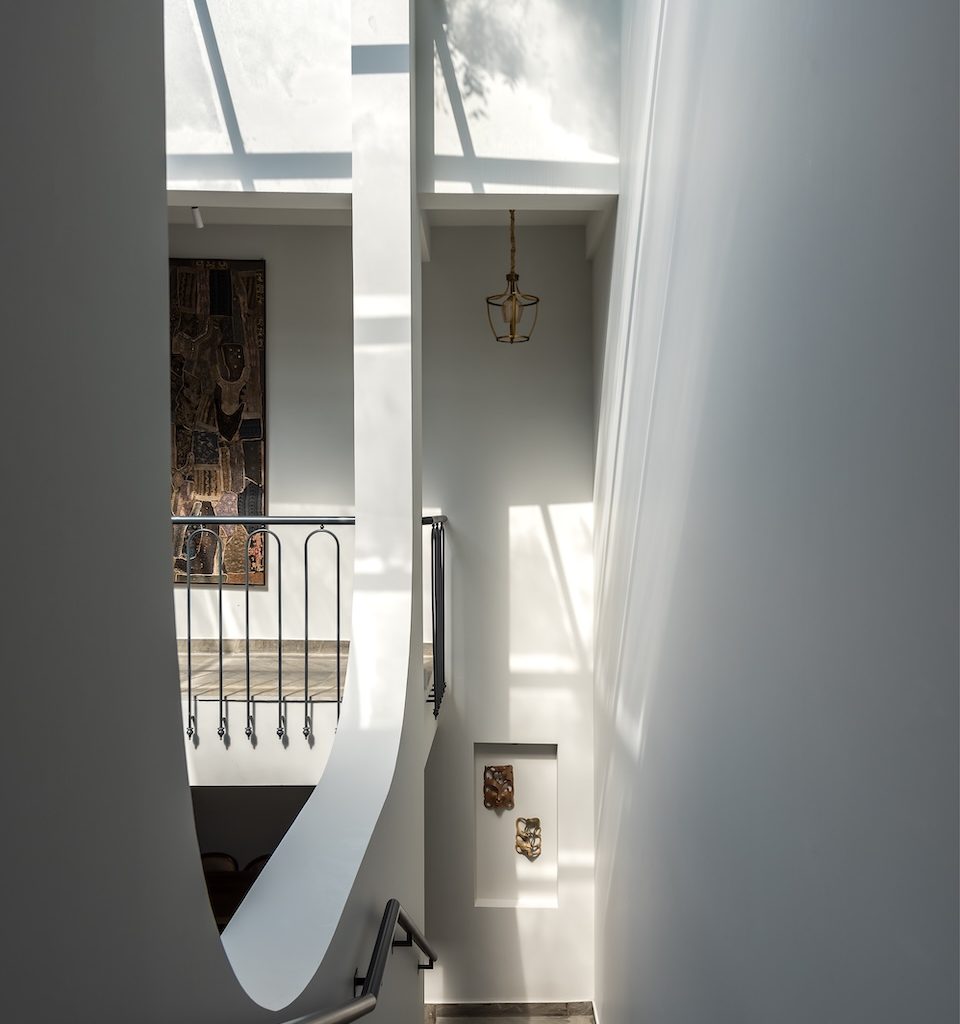
The challenges
One of the key challenges was balancing openness with privacy within a residential neighbourhood. The design had to ensure inward-looking spaces without cutting off light or ventilation. Integrating existing trees into the layout while maintaining structural clarity also required careful coordination between planning and execution.
The highlights
The central courtyard emerges as the emotional core of the home, anchoring movement and offering moments of pause. Arched openings, layered thresholds and framed views create a sense of depth and continuity. Rather than relying on singular gestures, the project’s strength lies in its consistency and restraint.
The takeaway
The Arch Abode demonstrates how architecture can be both expressive and reserved. By drawing from vernacular planning principles and reinterpreting them through a contemporary lens, the project creates a home that feels grounded, generous and quietly assured—an architecture that reveals itself over time.
Fact file
Project: The Arch Abode
Location: Faridabad, Haryana
Area: 4,400 sq ft
Principal architect: Sunny Thakur
Design team: Neeti Thakur, Mohd Salman, Sagar Sharma, Aman Verma


Add a Comment