
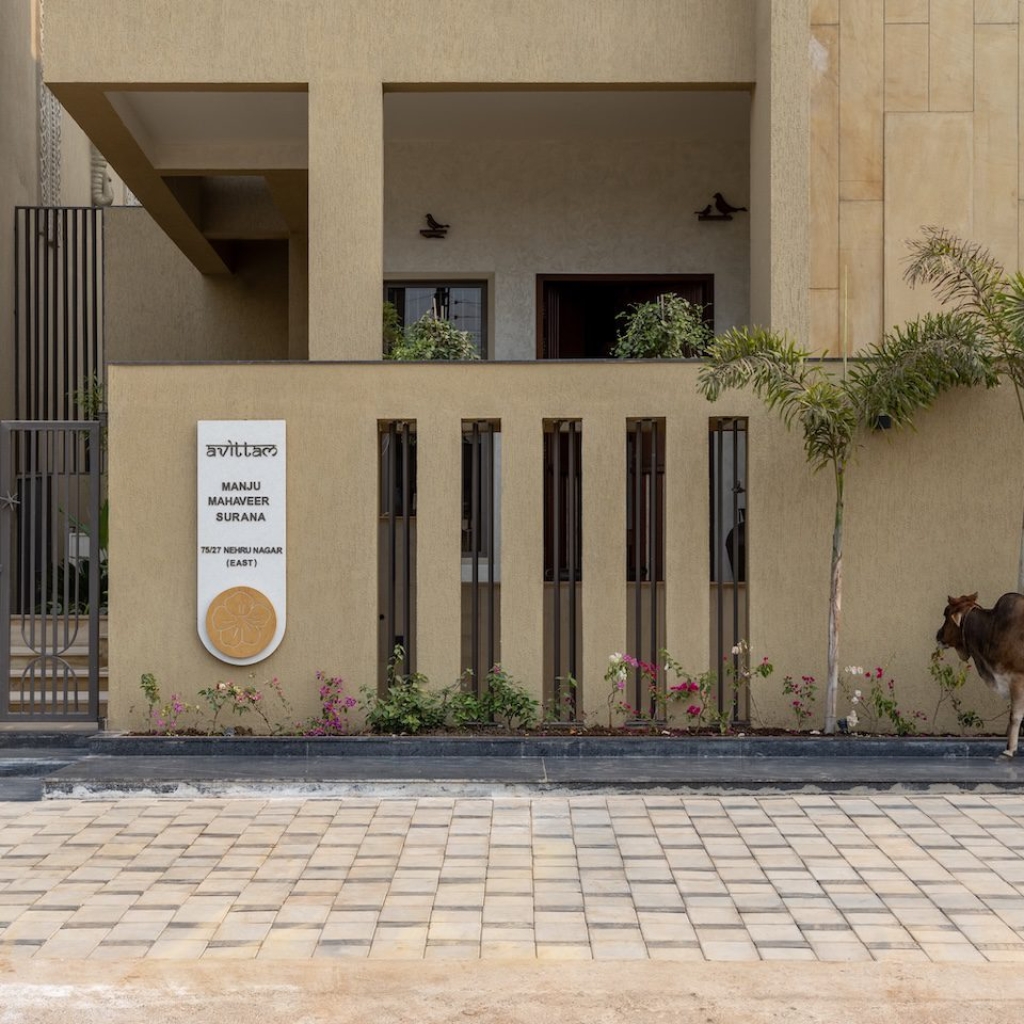
In Bhilai, Avittam House by White Tree Architects embodies classical Indian sensibilities through sandstone, handcrafted details and a restrained material palette that brings both warmth and continuity to a multigenerational home.
Curated by: Rupali Sebastian
Photographs: Yash Katariya; courtesy White Tree Architects
The project
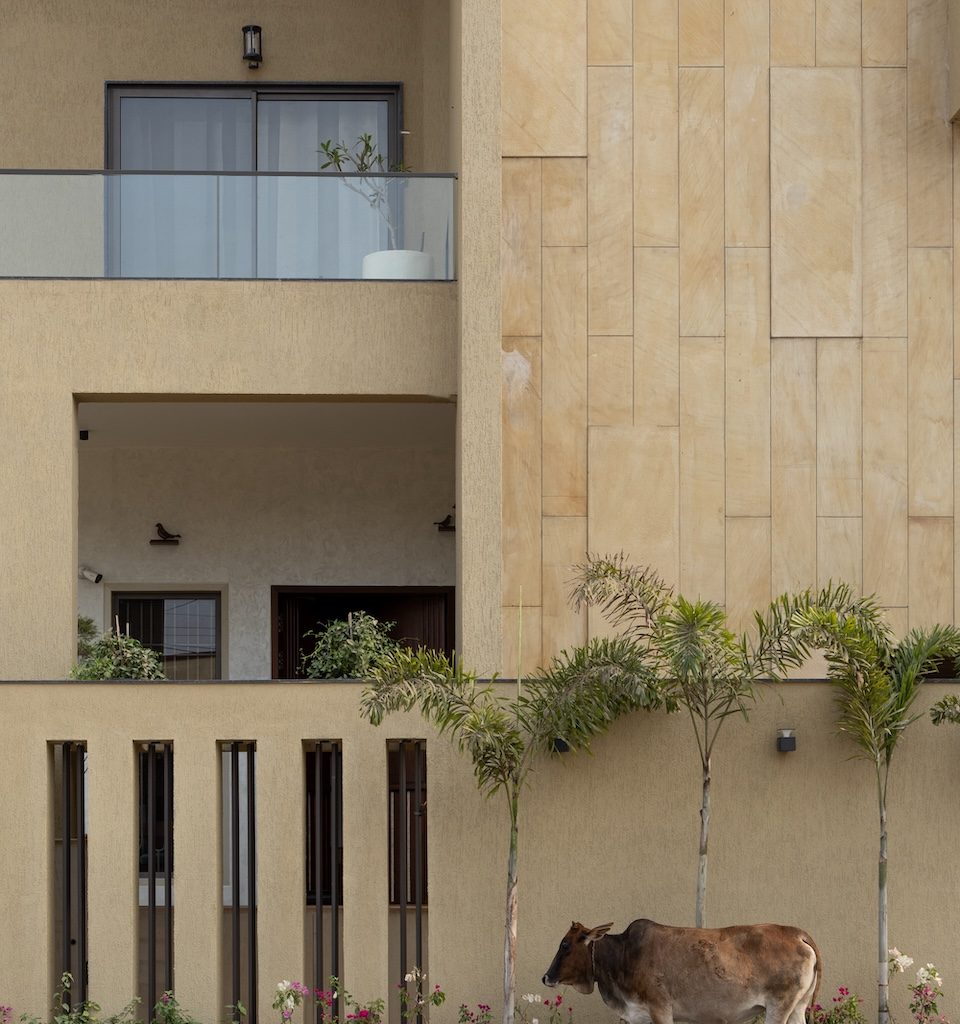
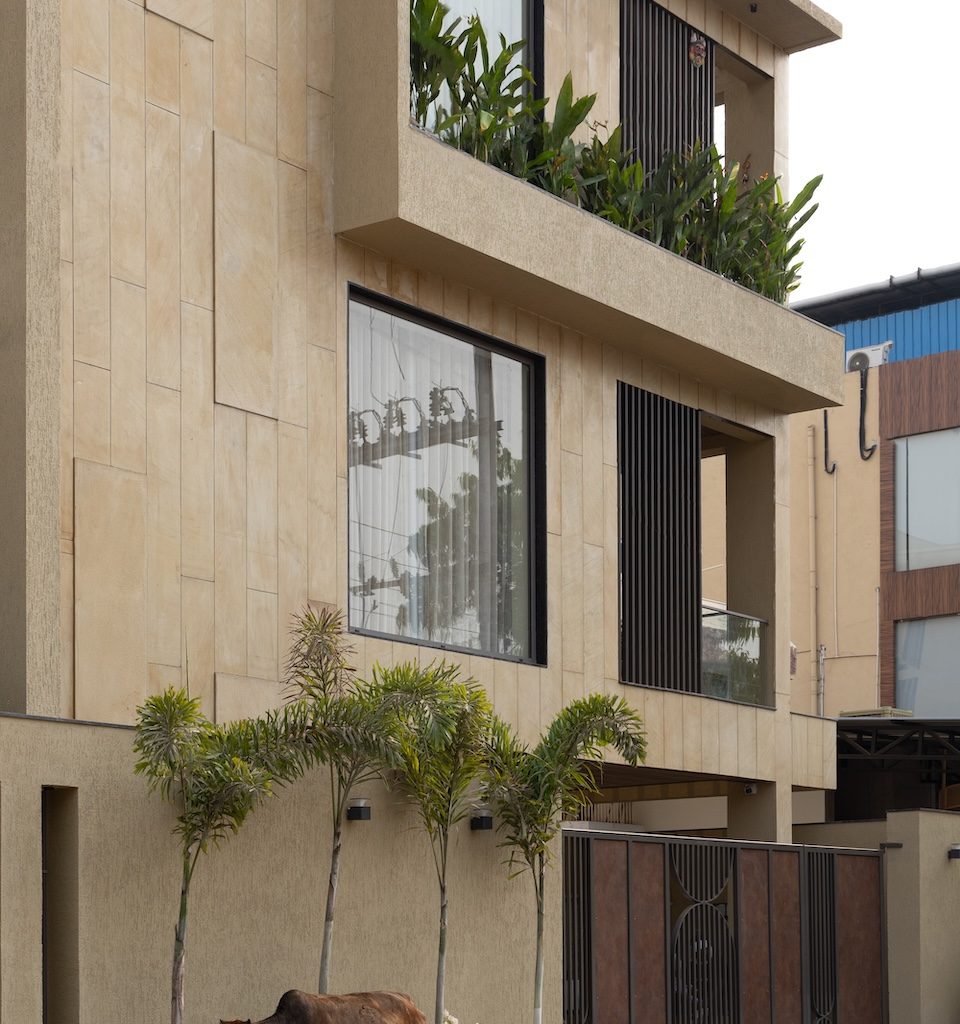
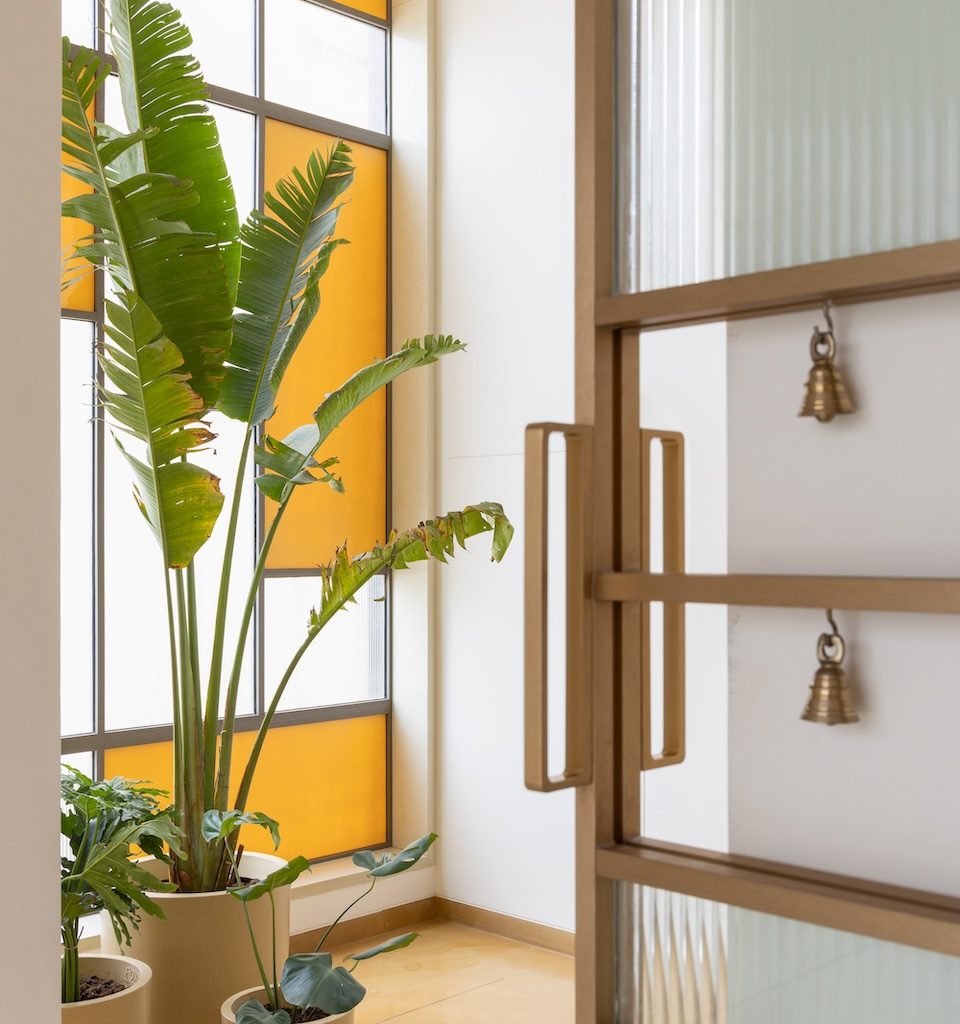
Avittam House is conceived as a calm, earthy 4,000 sq ft residence for a family returning to Bhilai after years in Mumbai. The brief to White Tree Architects called for a home that felt rooted in classical Indian design while remaining light, practical and welcoming. Sandstone, warm neutrals and handcrafted detailing set the tone, shaping a home where tradition finds contemporary quietude.
The site
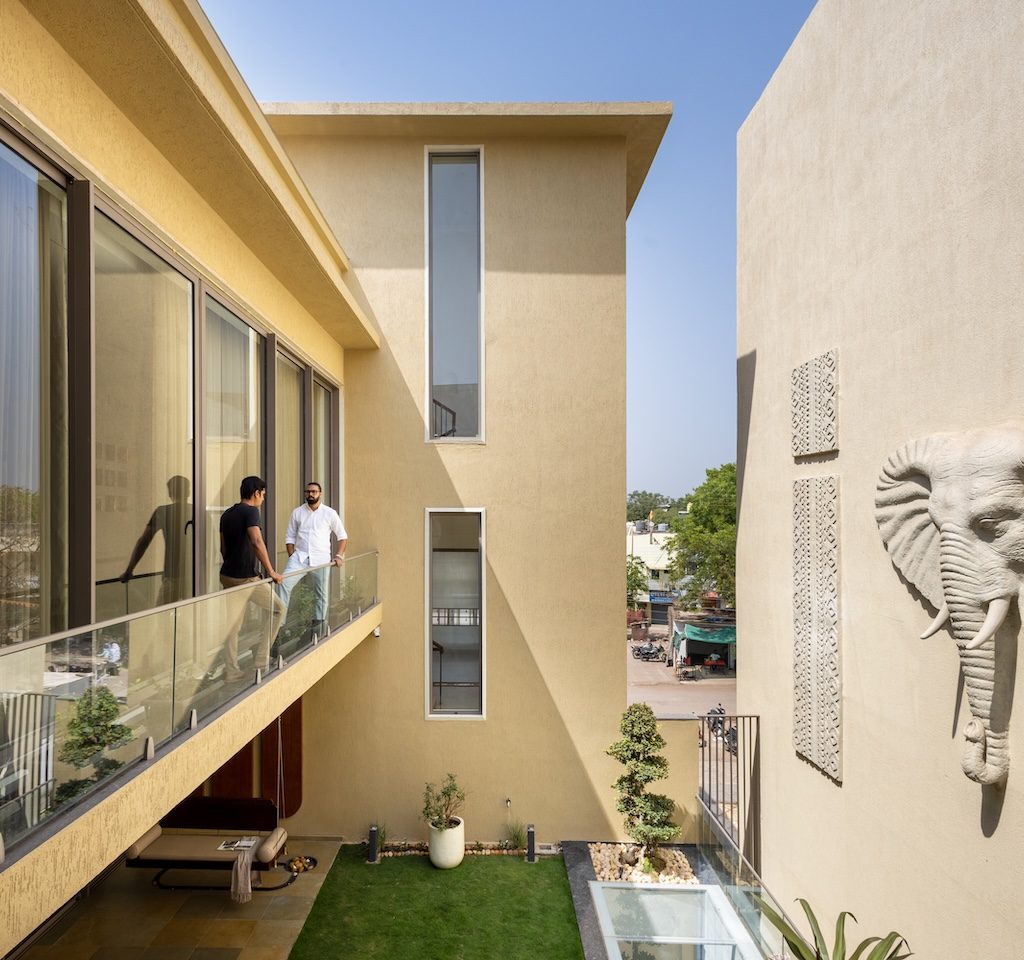
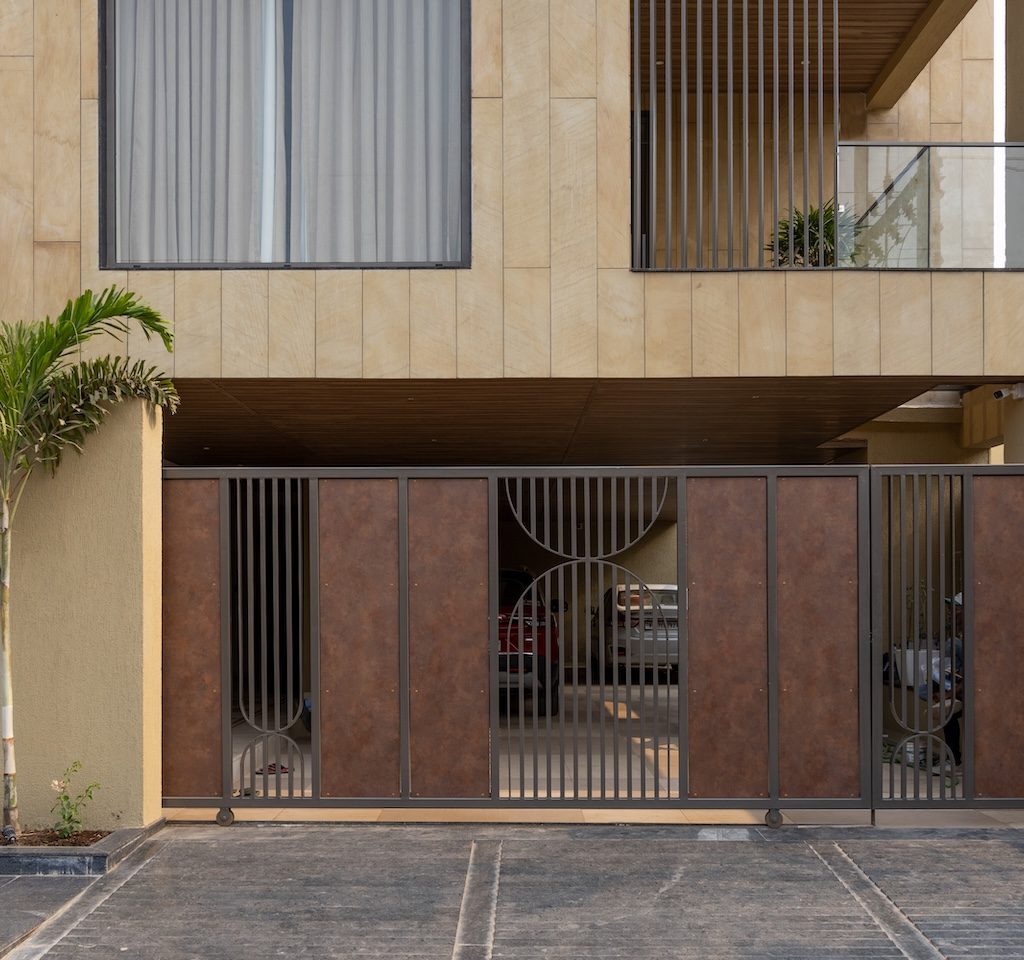
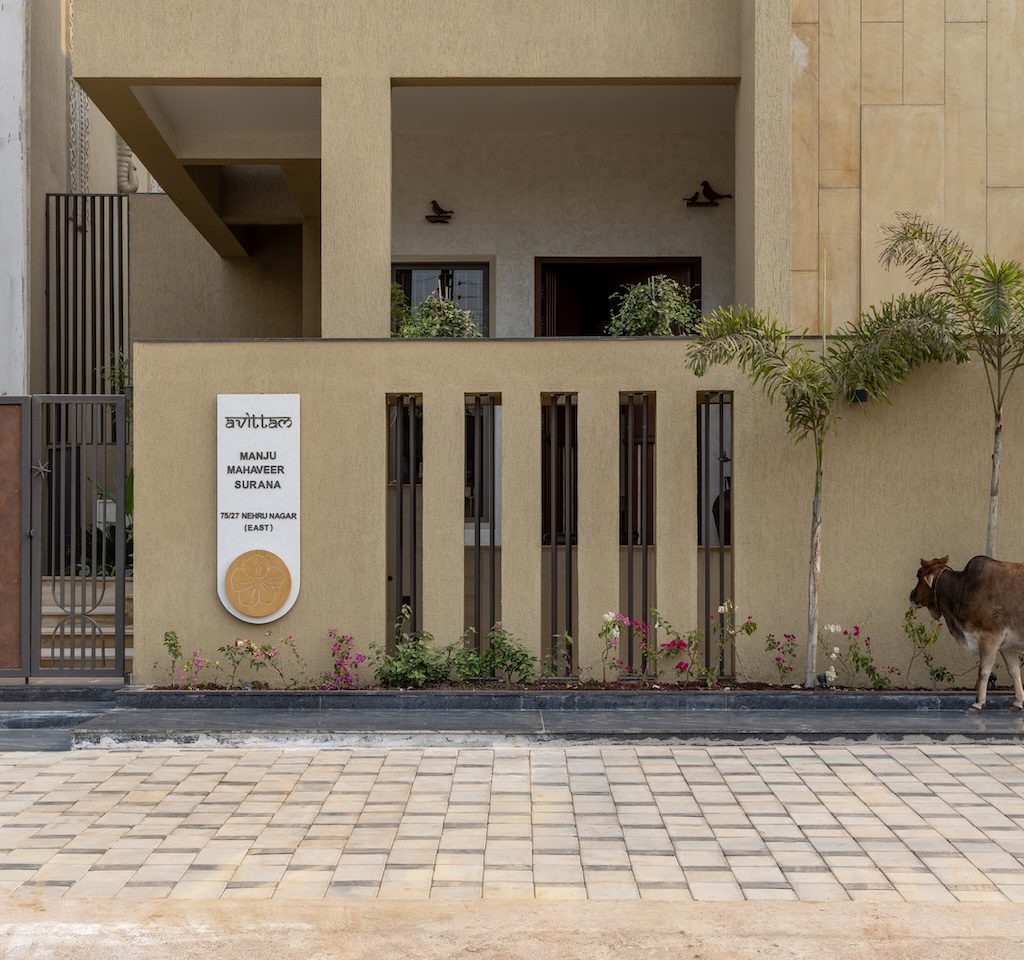
Set within a plotted development in Bhilai, the home takes advantage of its clean rectangular footprint to establish a clear north–south axis. The site’s modest scale encouraged a compact, efficient layout that keeps the home connected through visual and material continuity. Natural light and ventilation informed the massing, while the façade’s sandstone expression offers a grounded presence in the neighbourhood.
The brief
The homeowners wanted a house that reflected their cultural values — simple, serene and grounded — without excess ornamentation. Earthy tones, classical motifs and a sense of balance were essential, as was a layout that allowed each family member privacy while keeping the shared areas cohesive and warm. Durability, ease of maintenance and a sense of timelessness guided the material and spatial choices.
The design intent
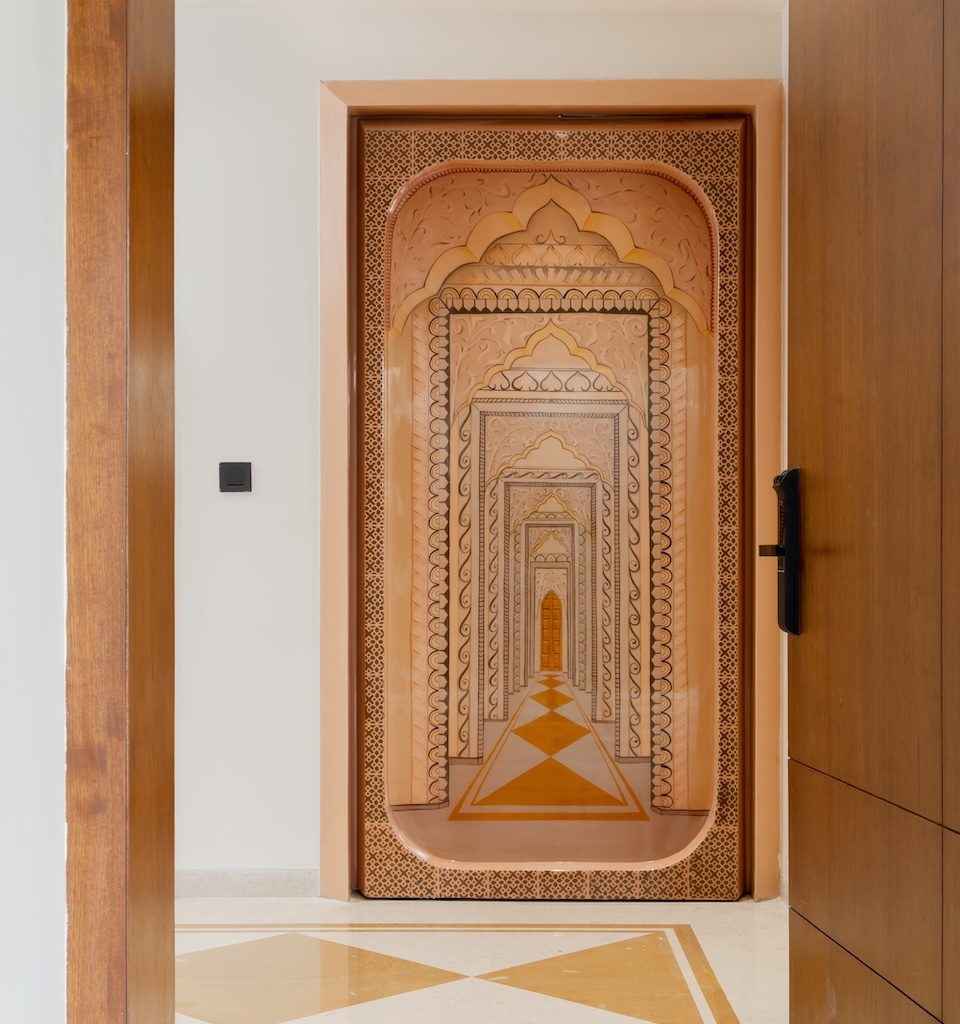
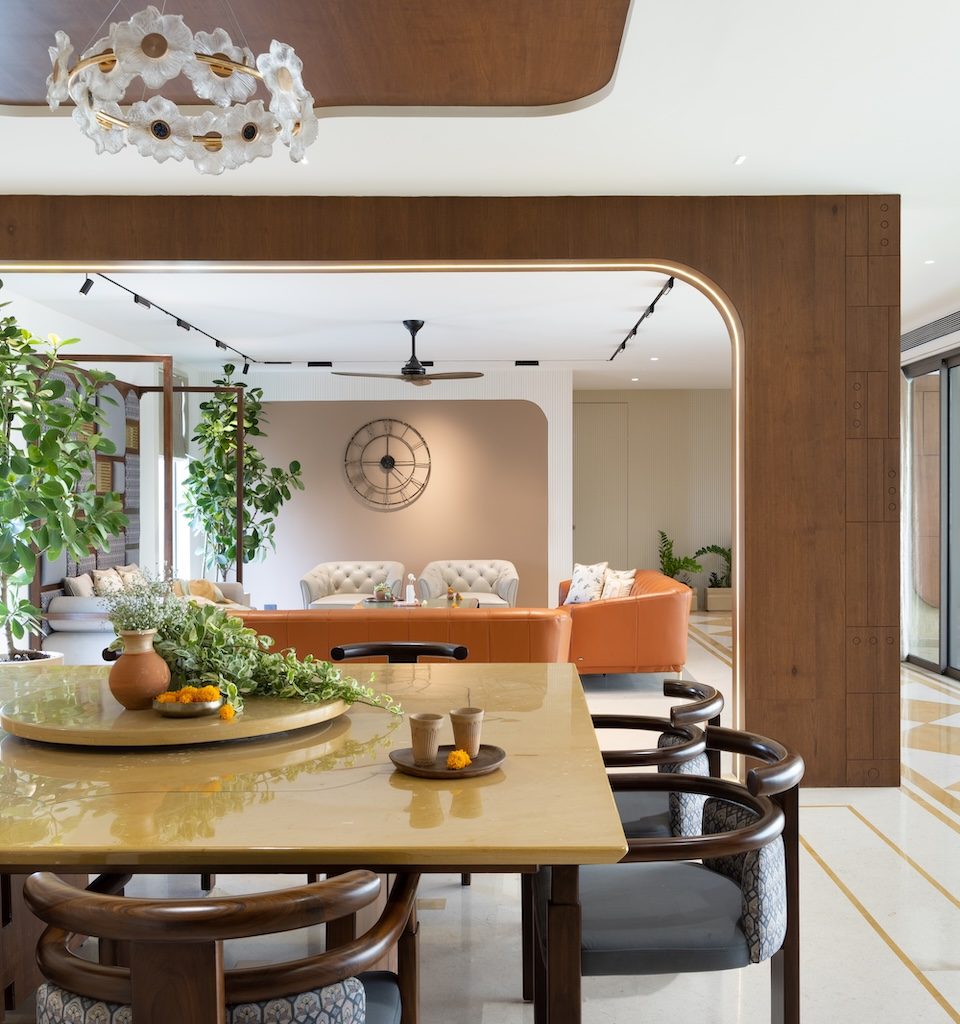
For architects Shivani Tiwari and Vishal Chandra, the intention was to reinterpret classical Indian principles through a contemporary lens. “For us, the aim was to let classical Indian sensibilities breathe in a contemporary setting. Sandstone, proportion and handcrafted detail allowed the home to feel rooted yet uncluttered,” they share. The home relies on symmetry, material honesty and warm, earthy textures to express tradition without ornament. Clean lines, soft transitions and natural light shape a quiet, grounded architectural language that remains timeless and culturally resonant.
The civil intervention
The layout was refined to improve circulation and to align interior spaces with natural light. Partition walls were adjusted to create continuous visual planes, and openings were calibrated to increase ventilation while maintaining privacy. Structural changes were minimal, allowing the material and architectural clarity to take precedence.
The spatial flow
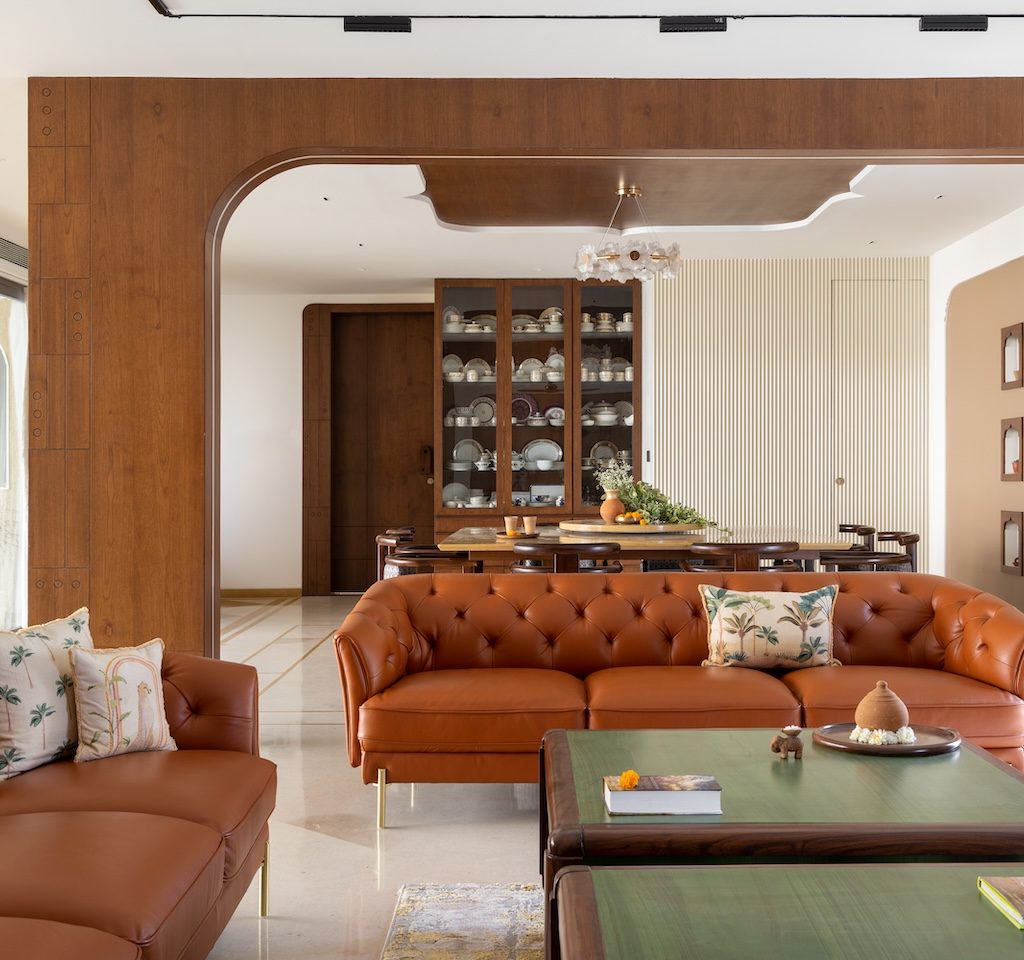
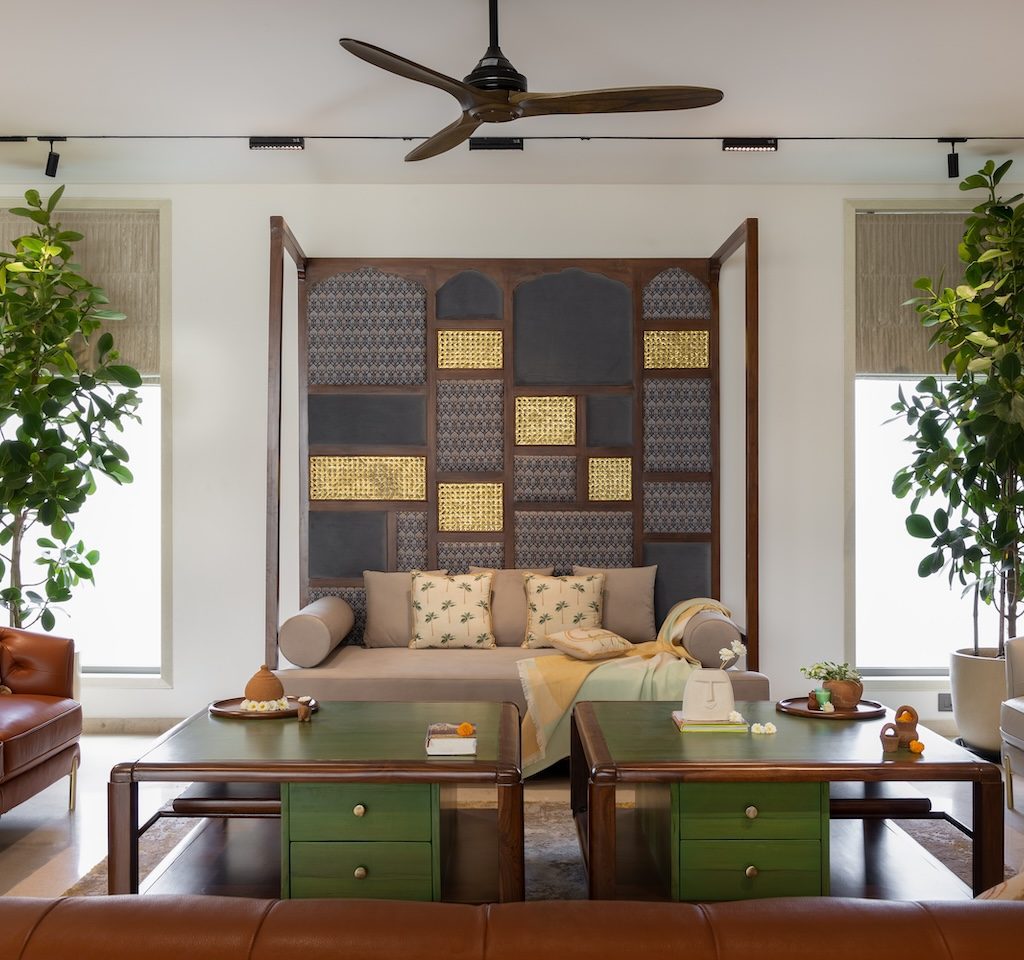
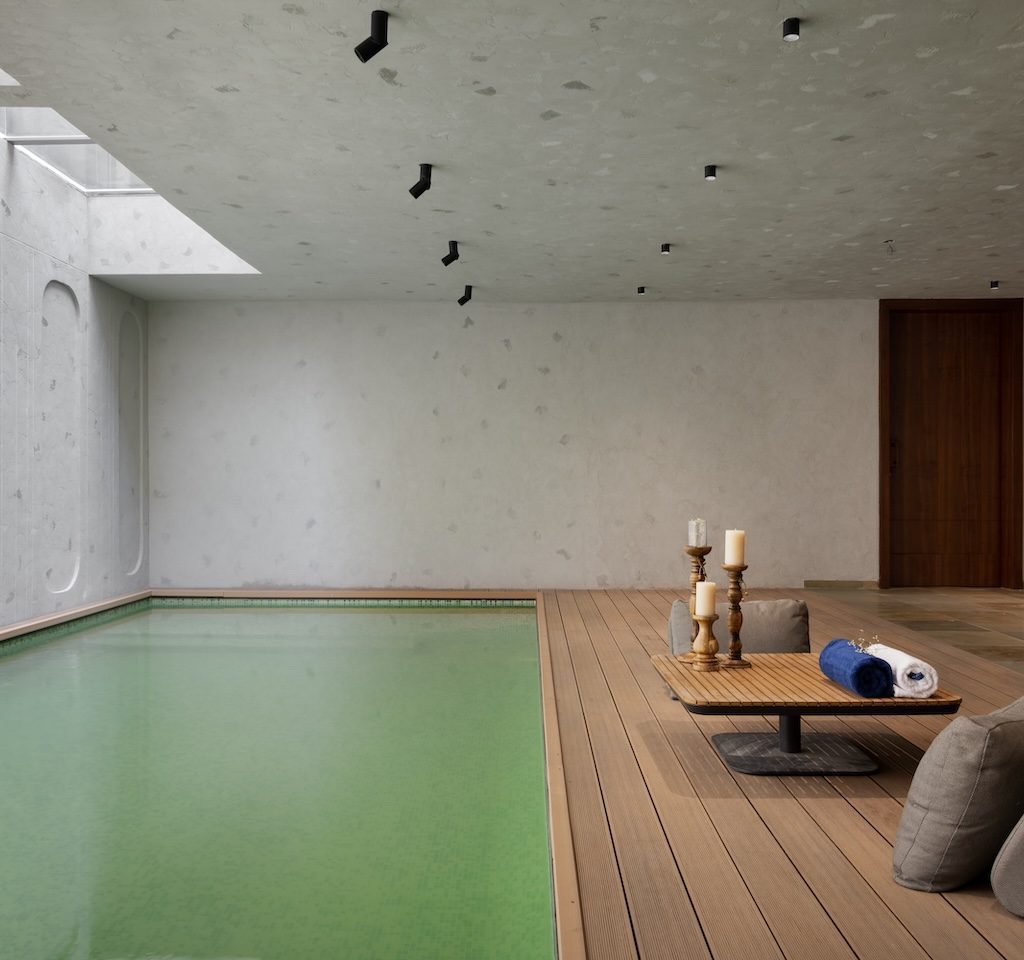
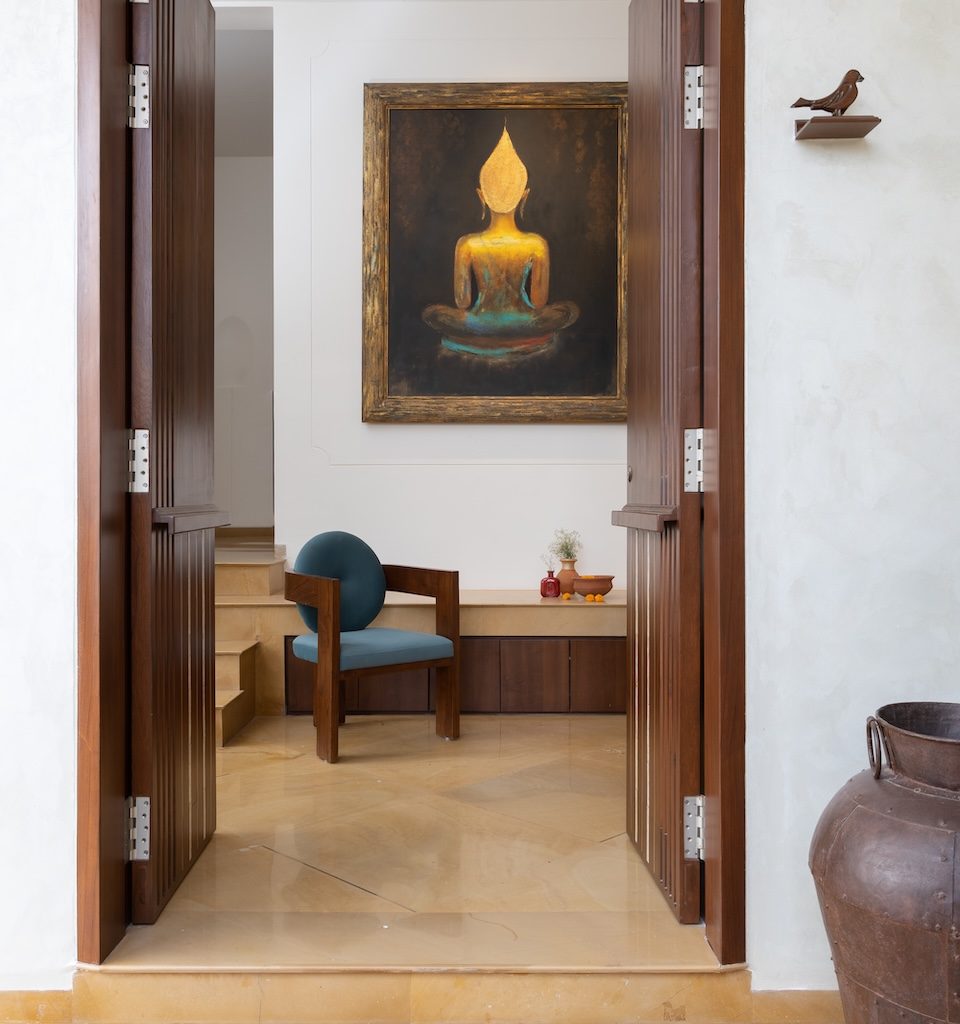
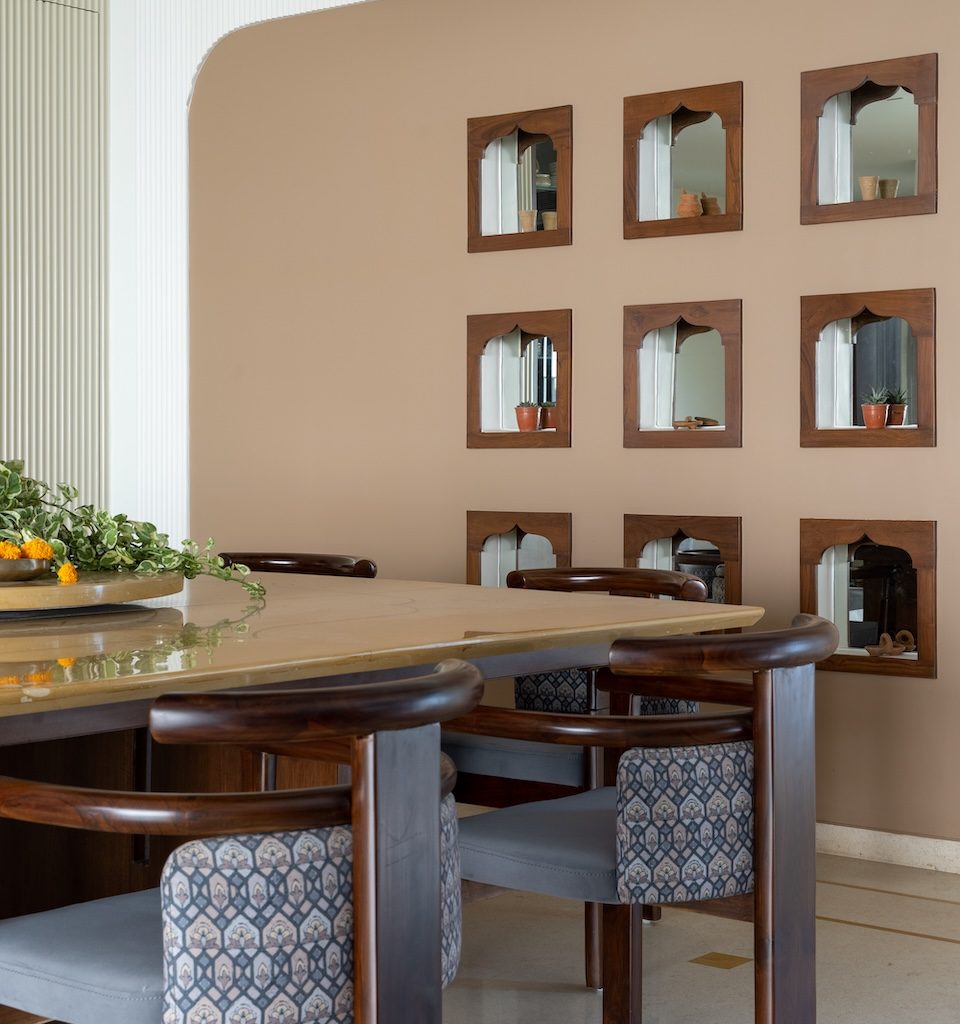
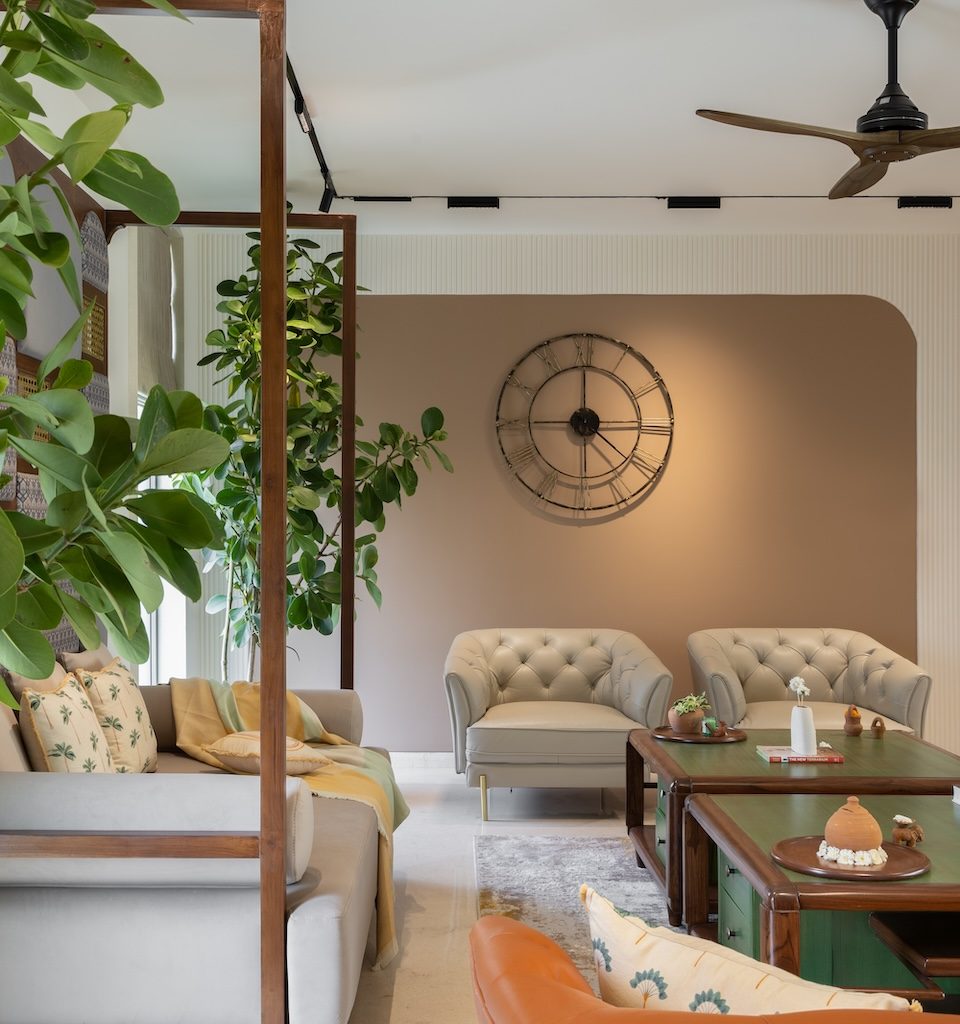
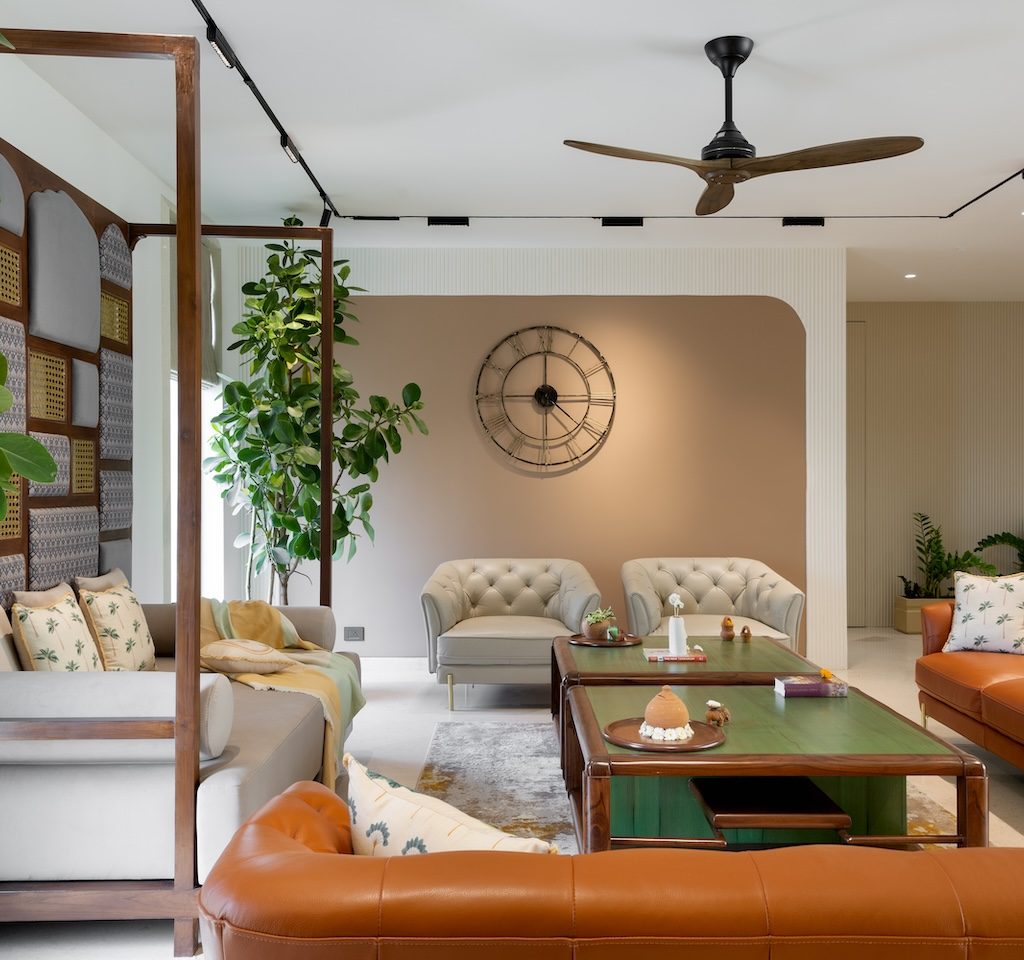
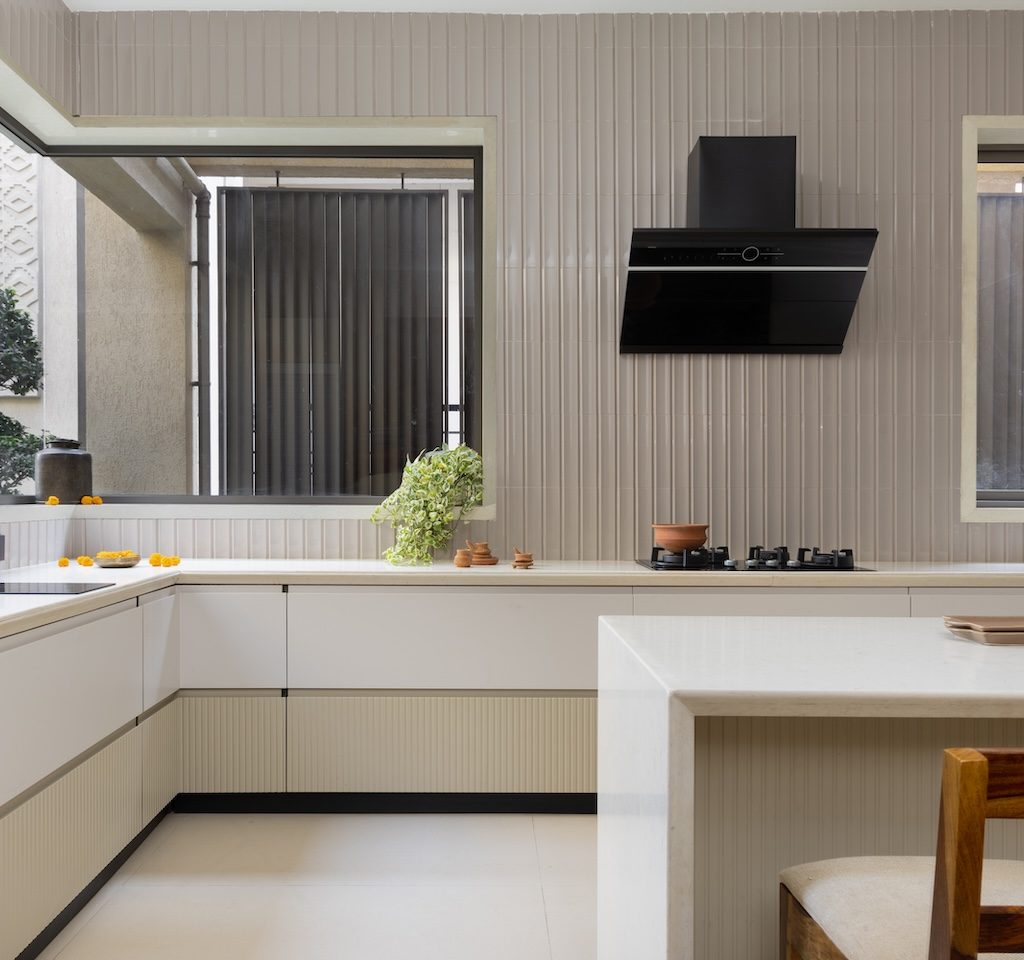
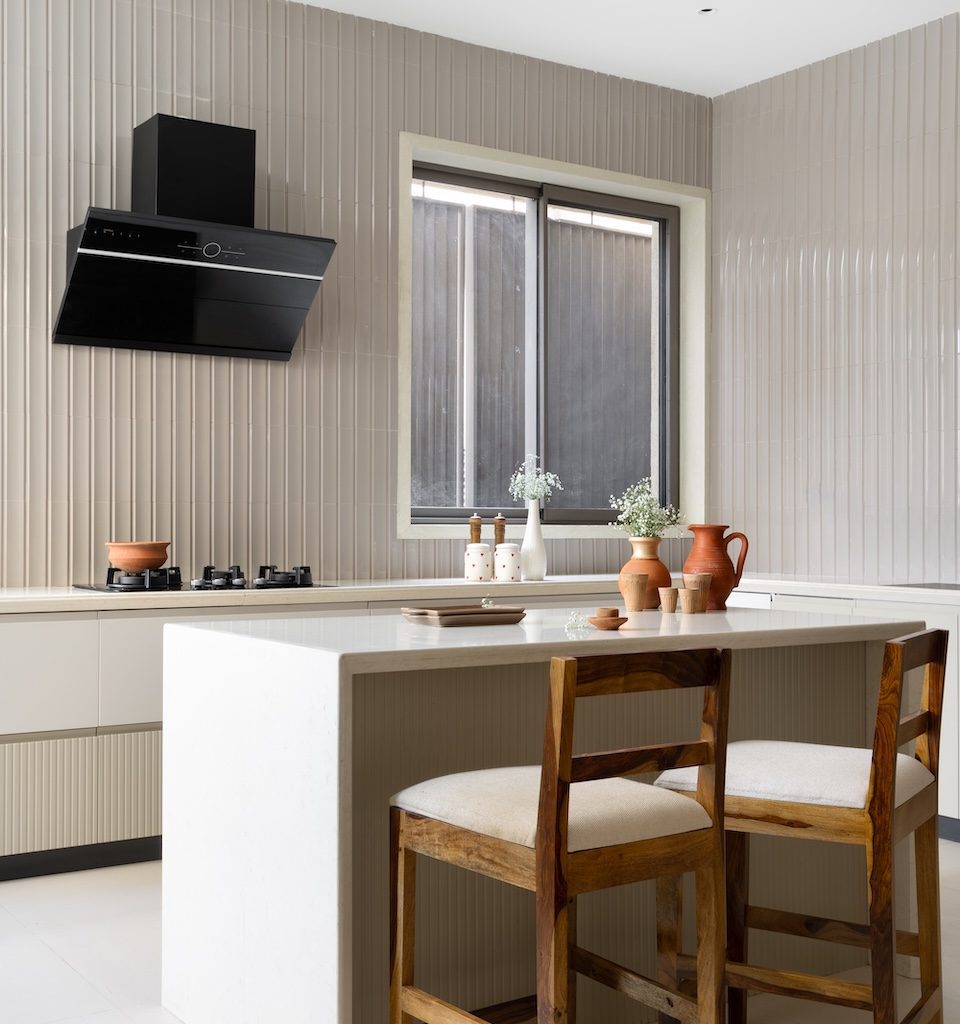
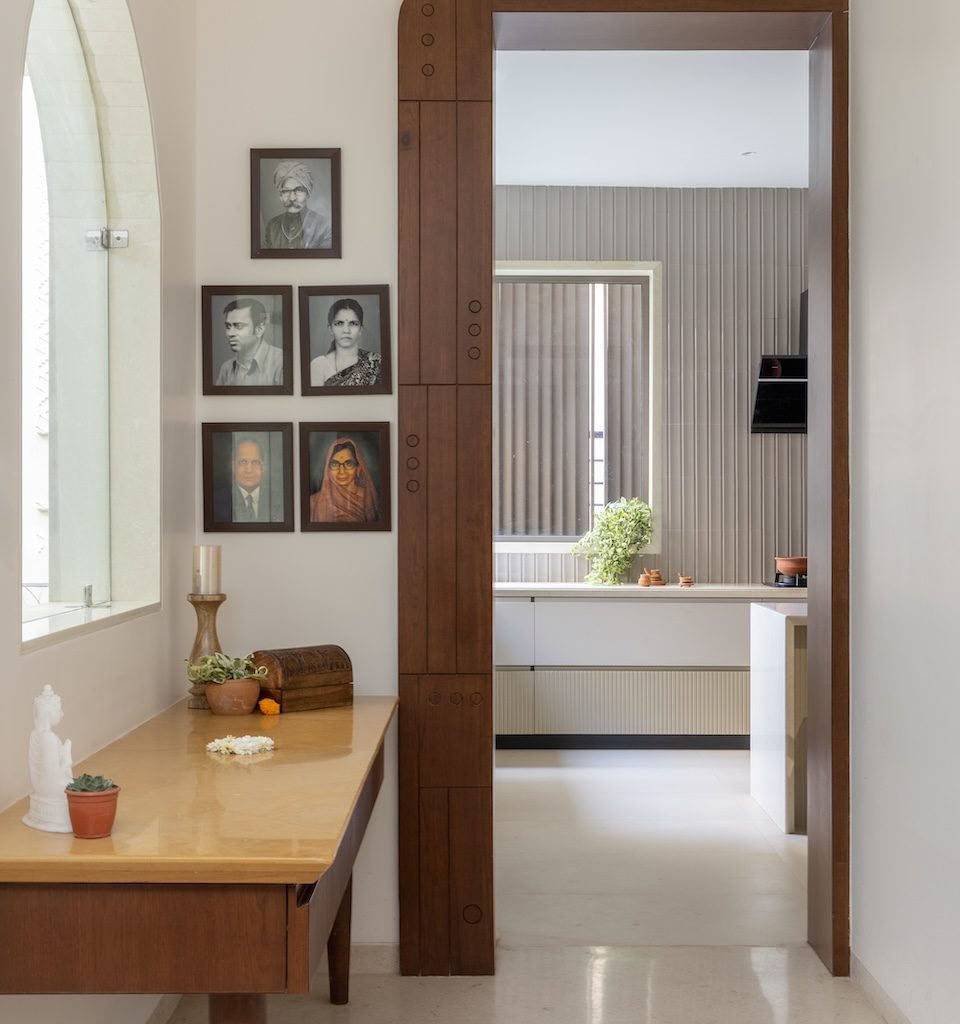
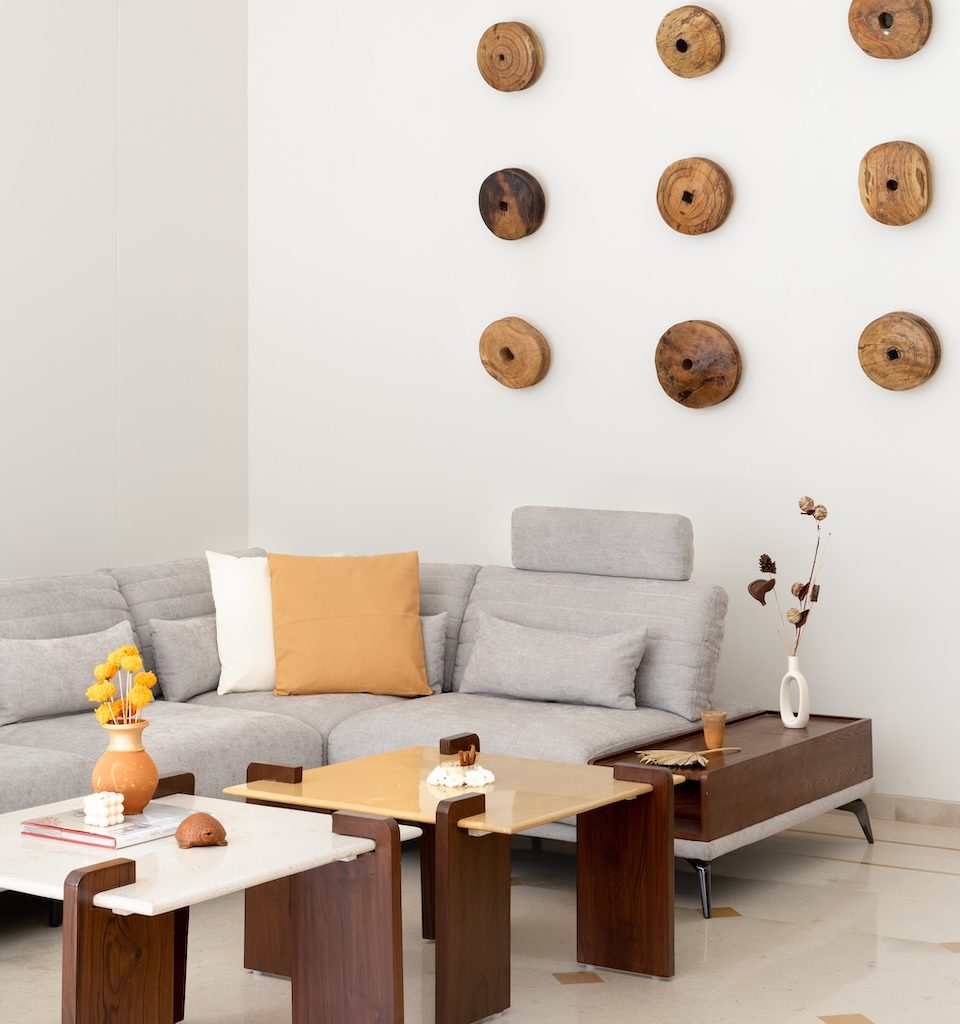
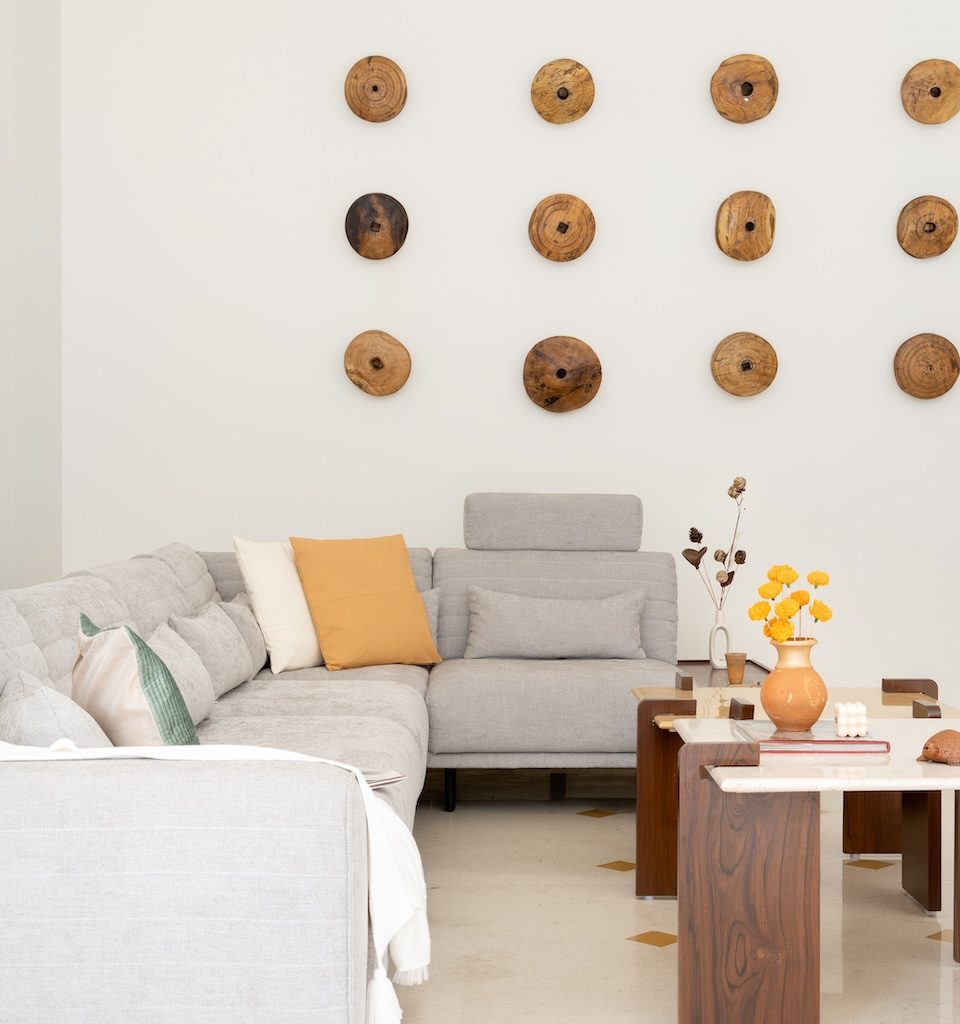
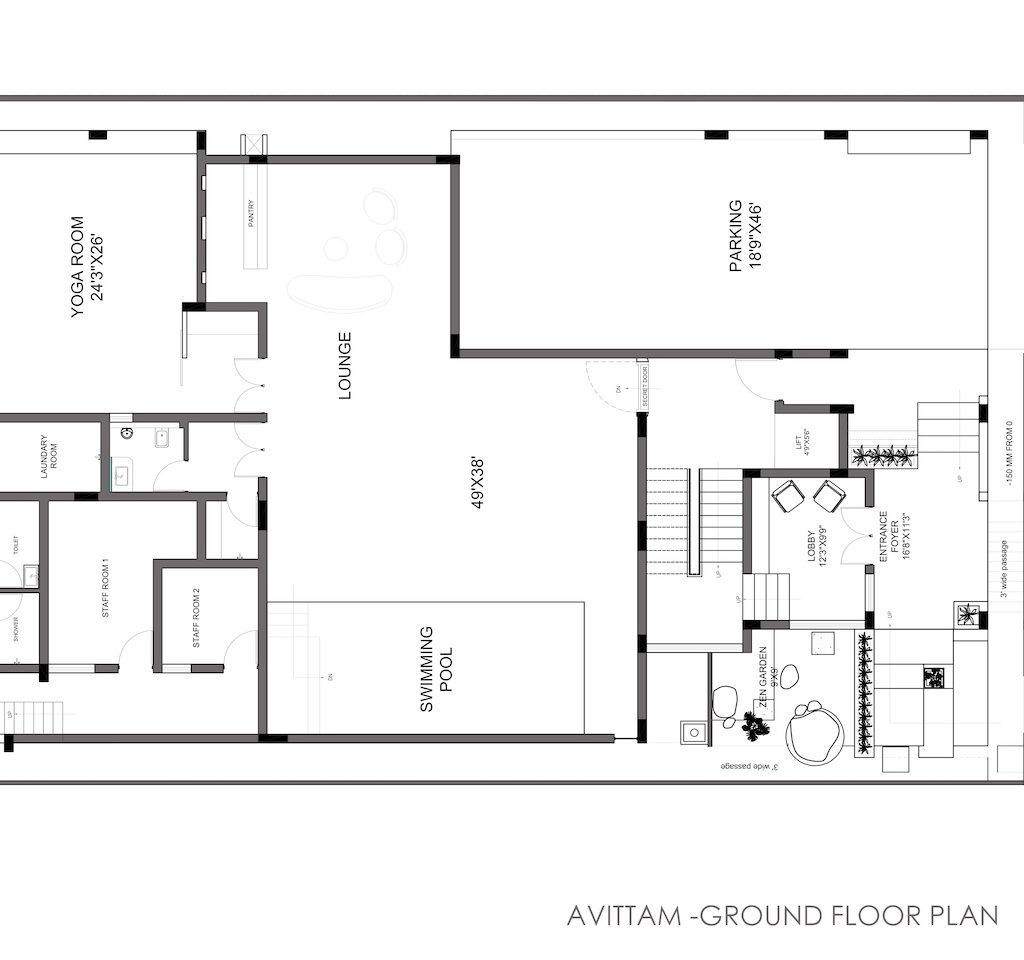
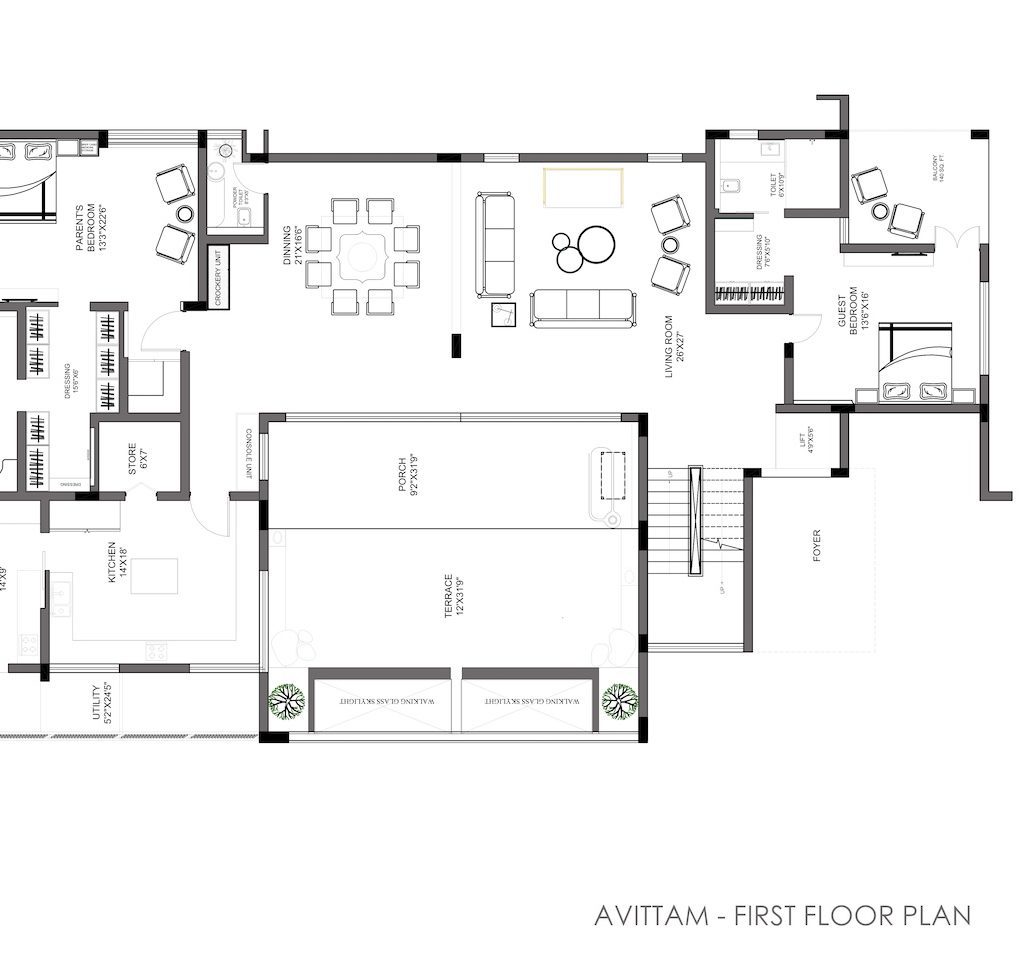
The home opens into a welcoming living area where sandstone and warm neutrals establish the design vocabulary. This space extends into a dining zone positioned for natural light and everyday interaction. The kitchen, planned for efficiency and family use, sits adjacent but maintains its own sense of enclosure.
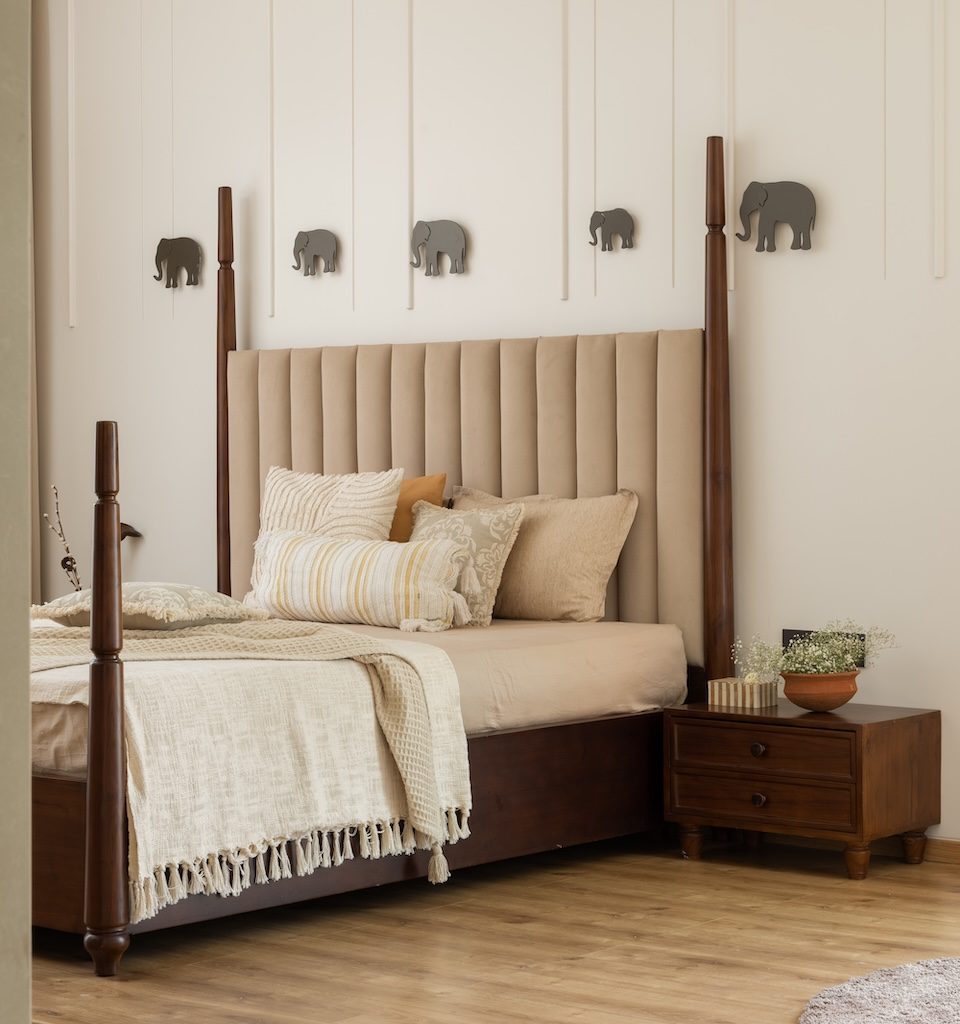
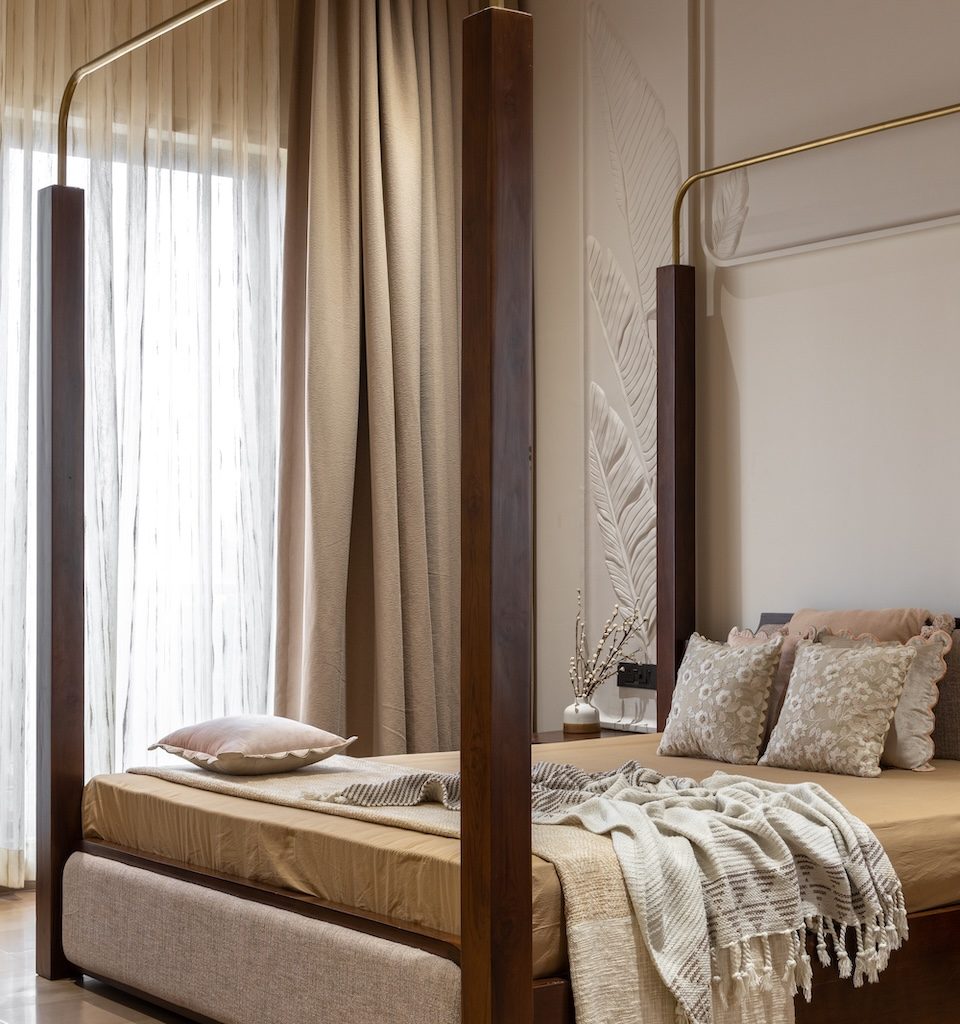
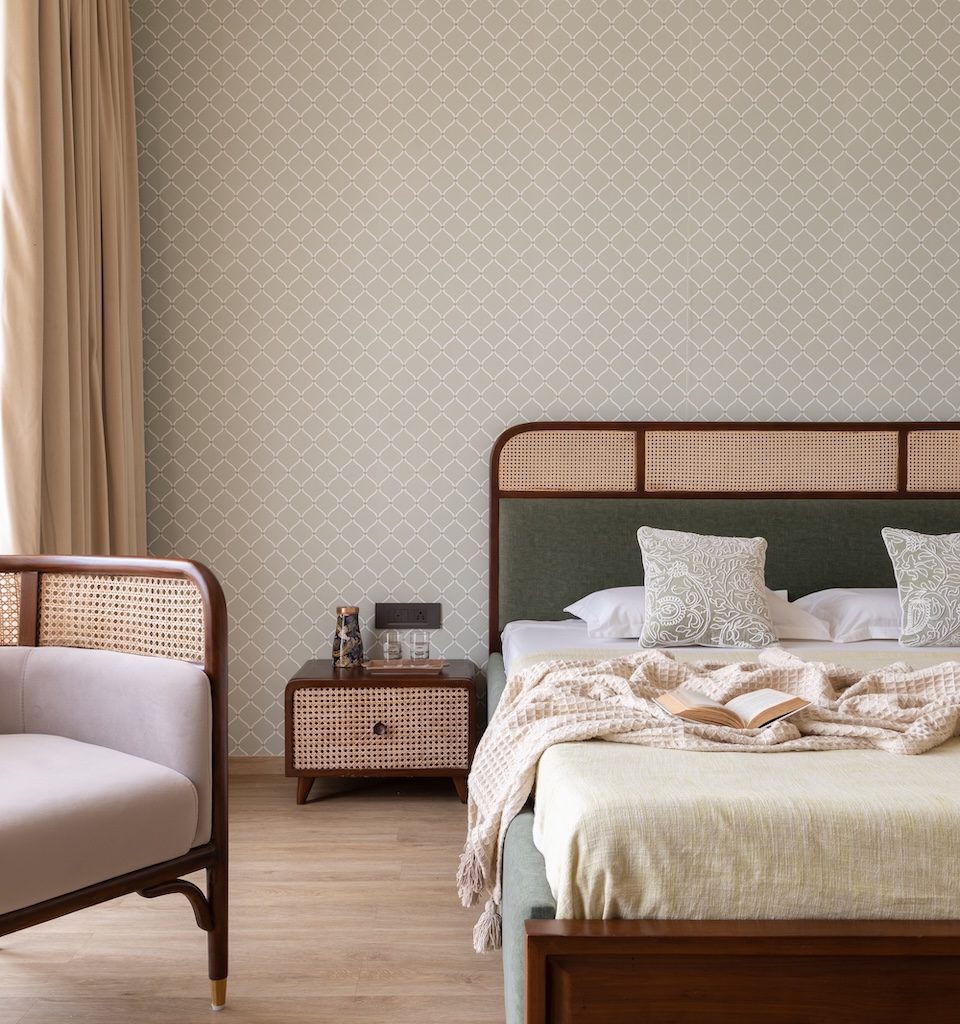
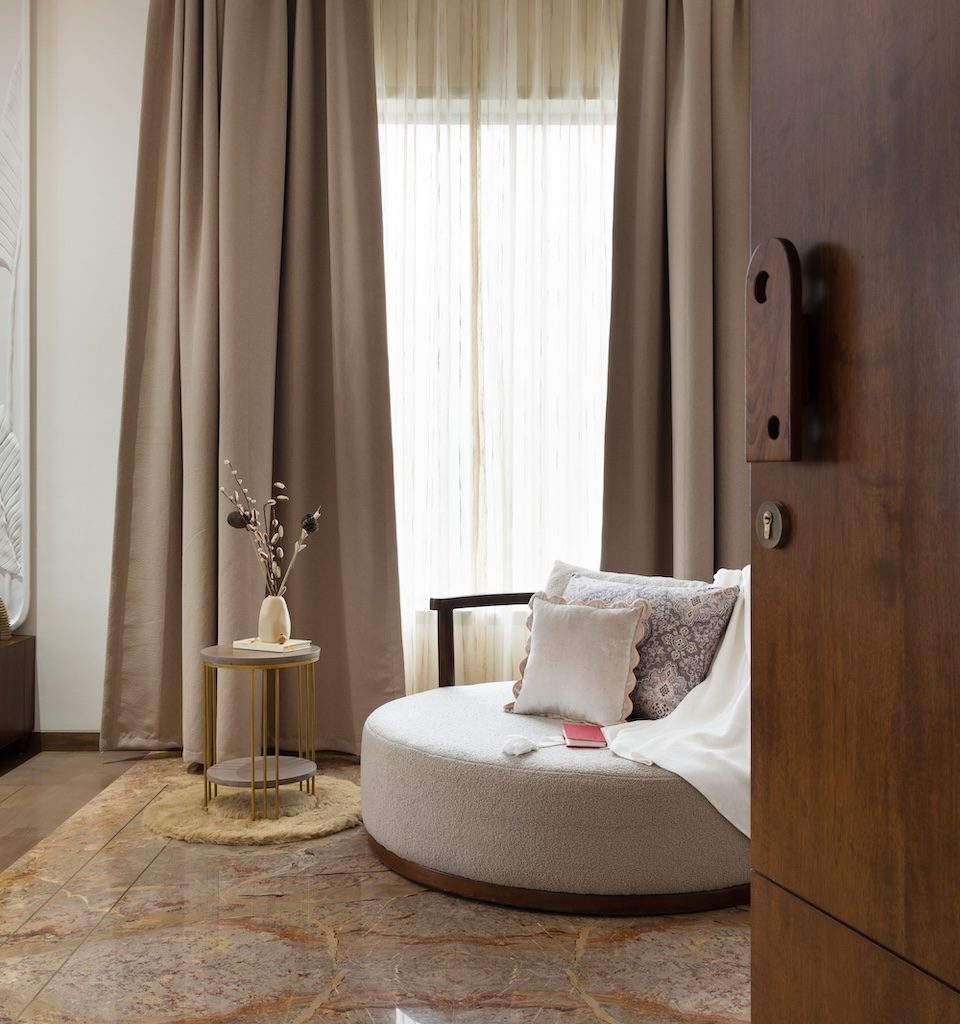
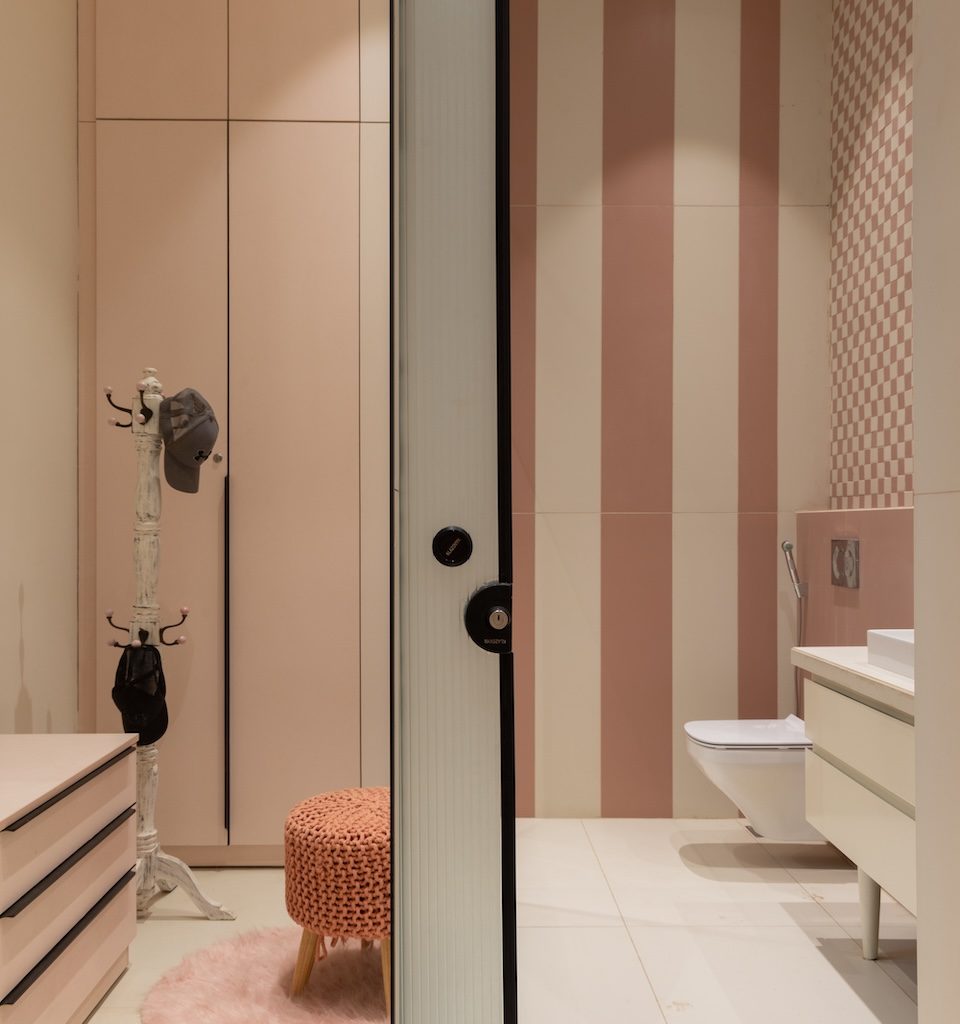
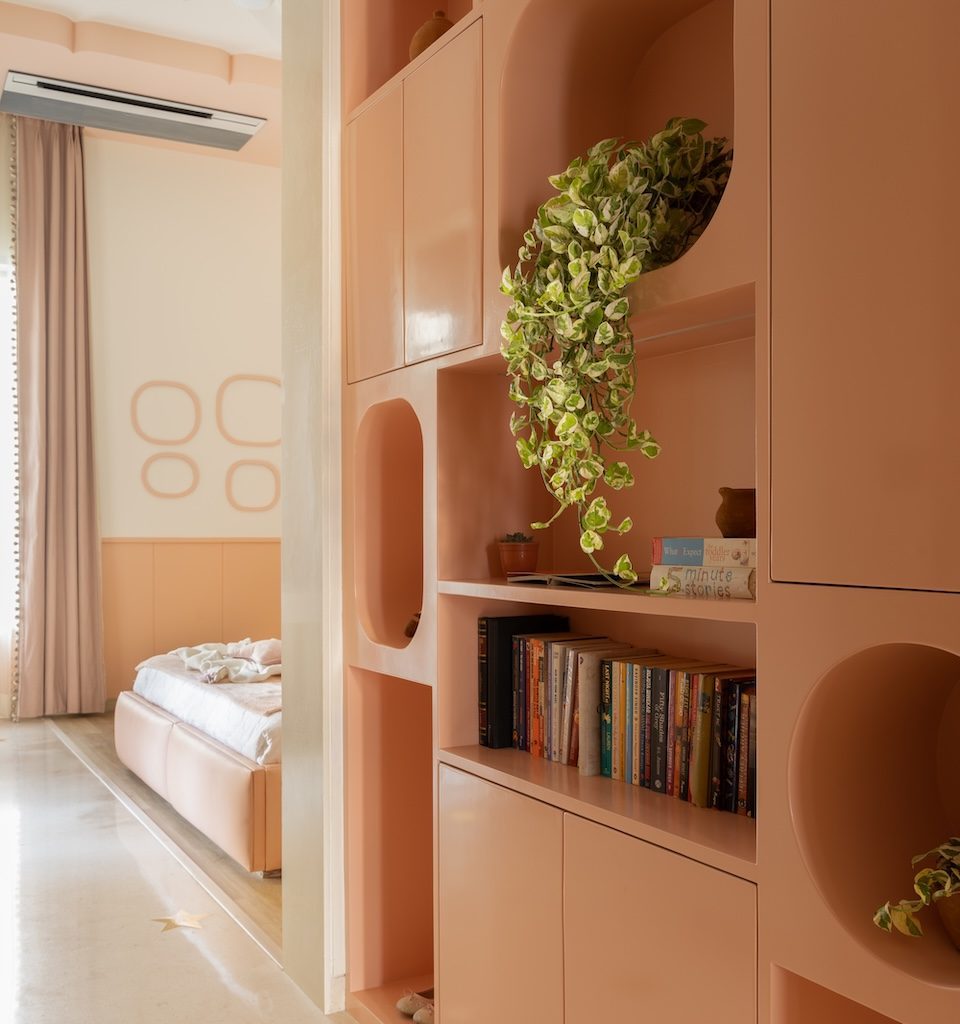
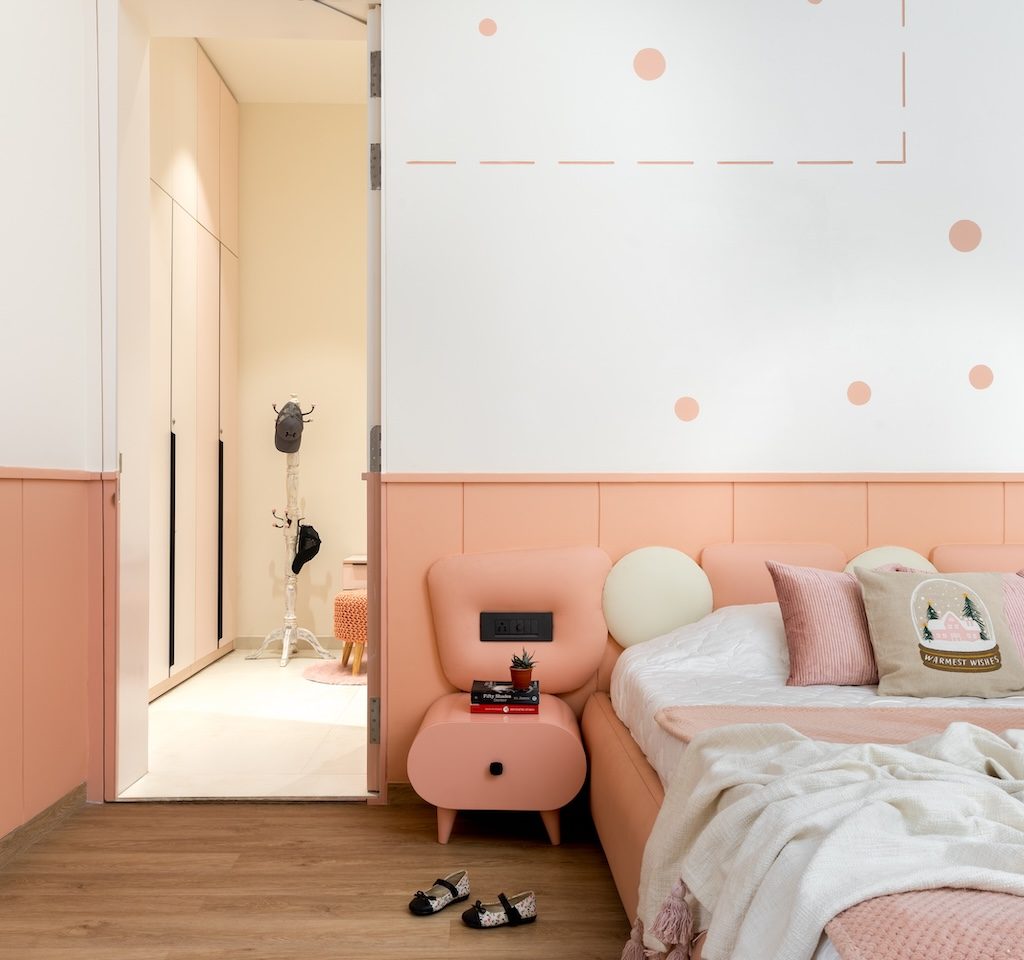
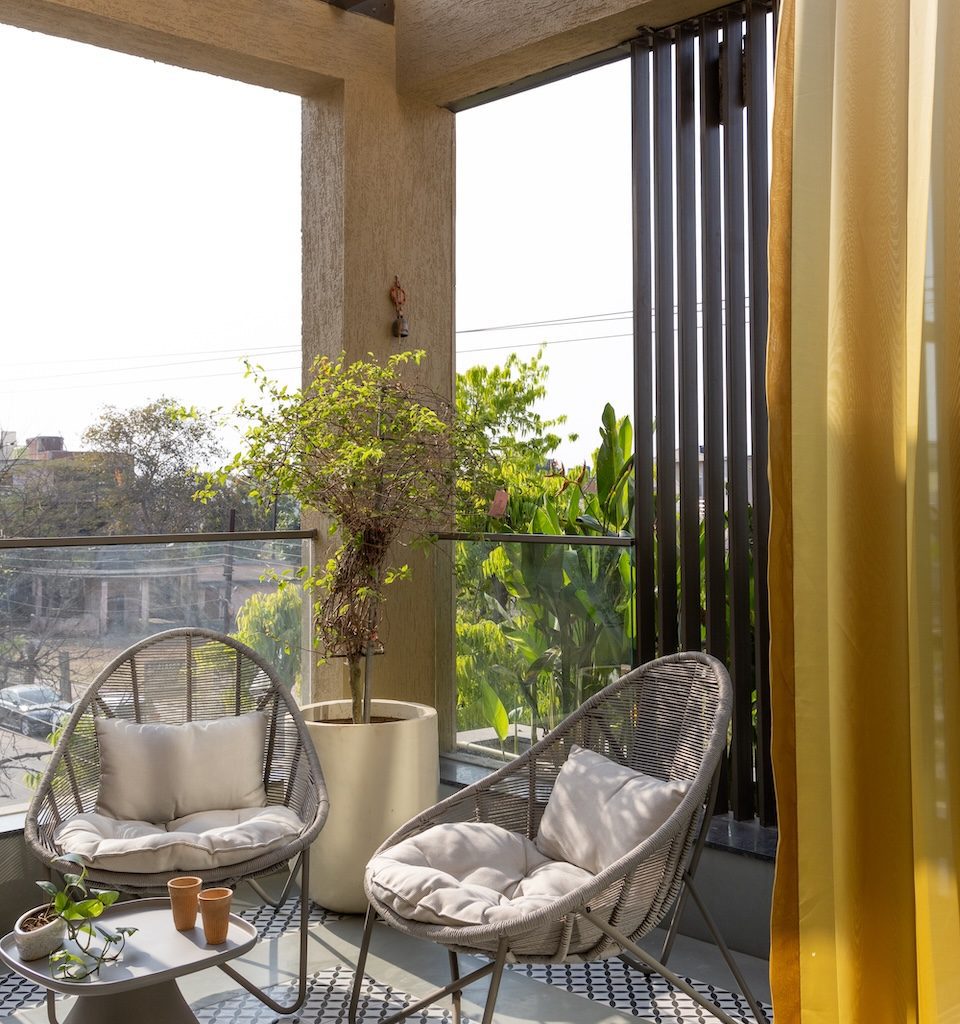
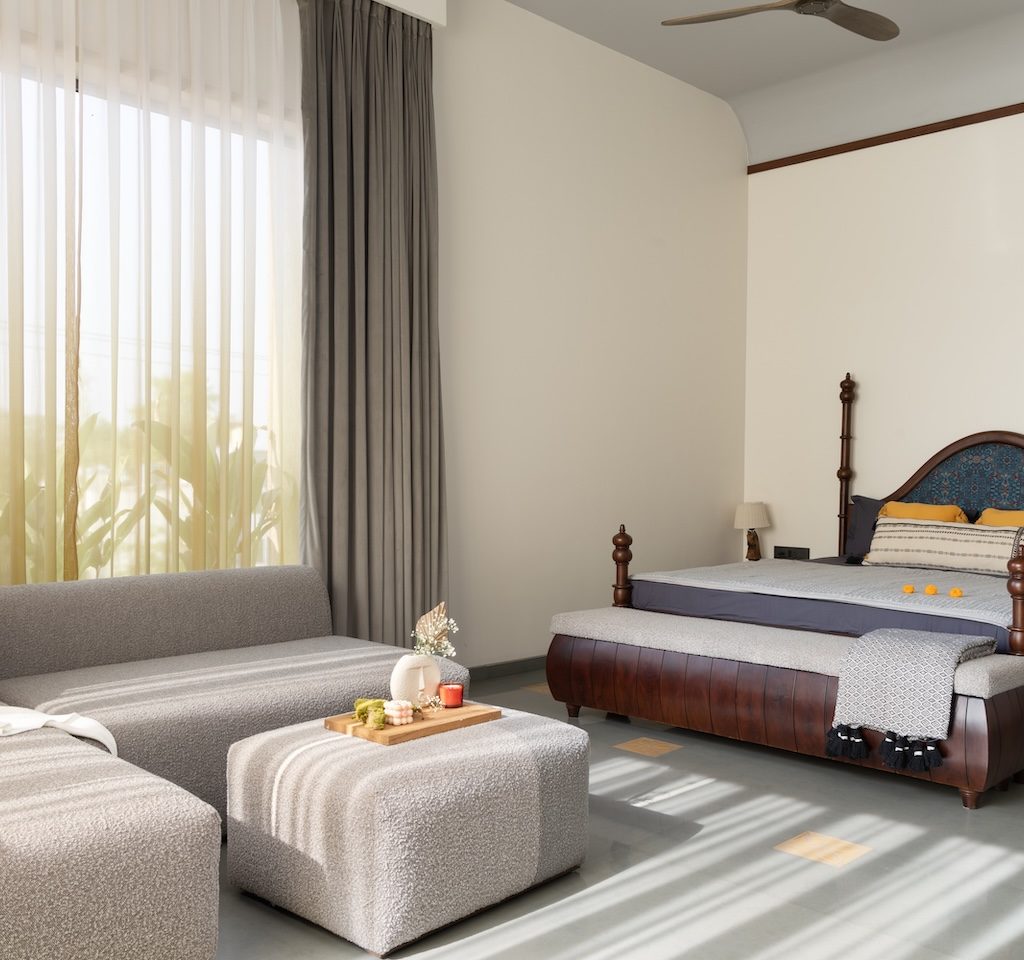
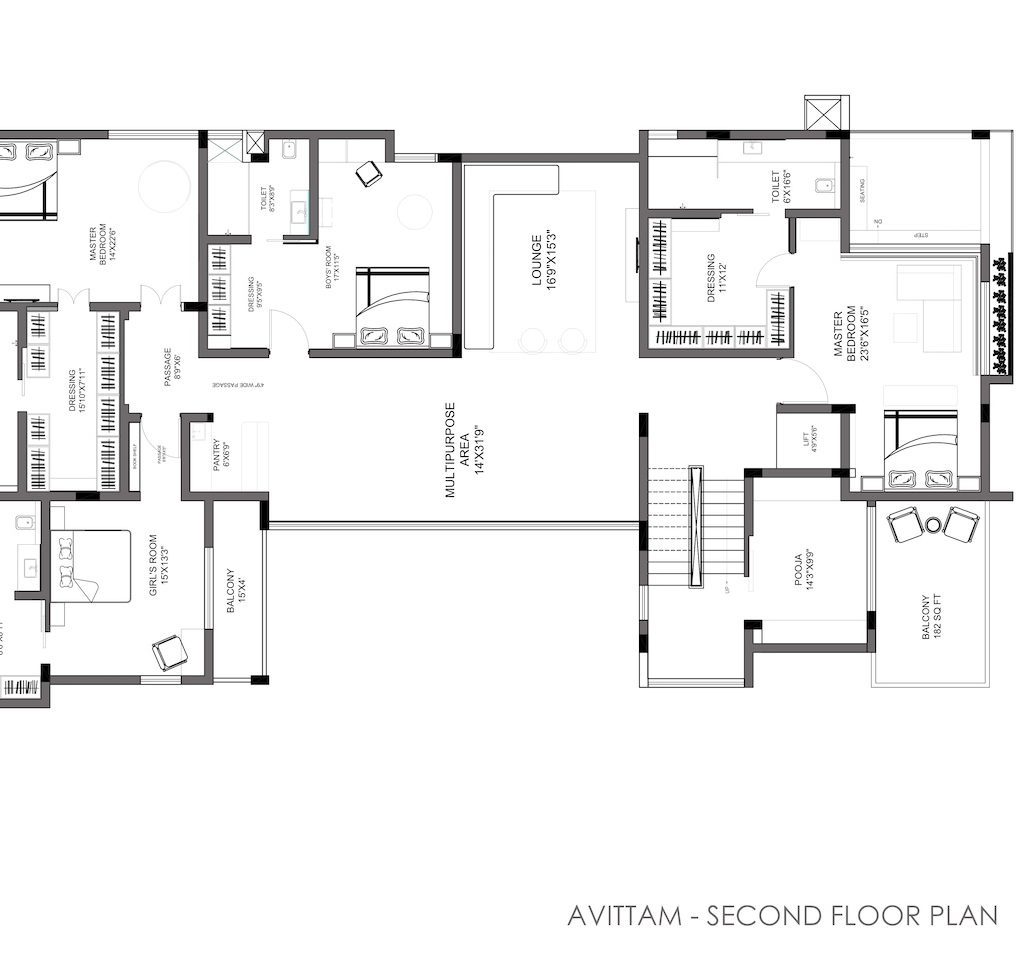
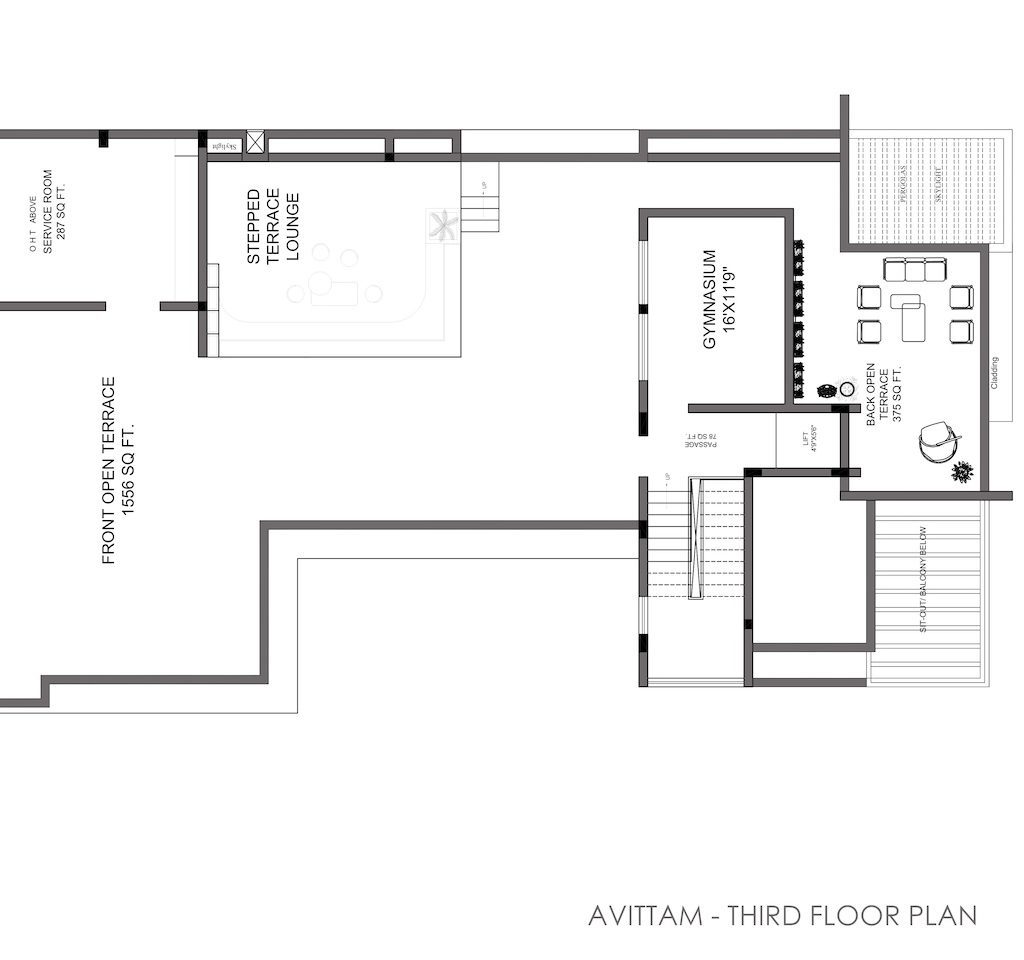
Private rooms are arranged along the periphery, each receiving ample daylight and framed views. The master bedroom adopts a grounded palette anchored by sandstone and wood, while the children’s rooms introduce gentle personalisation without straying from the home’s overall calm. Circulation between levels is framed by clean planes and measured proportions, giving the home a rhythmic, uninterrupted flow.
The material palette
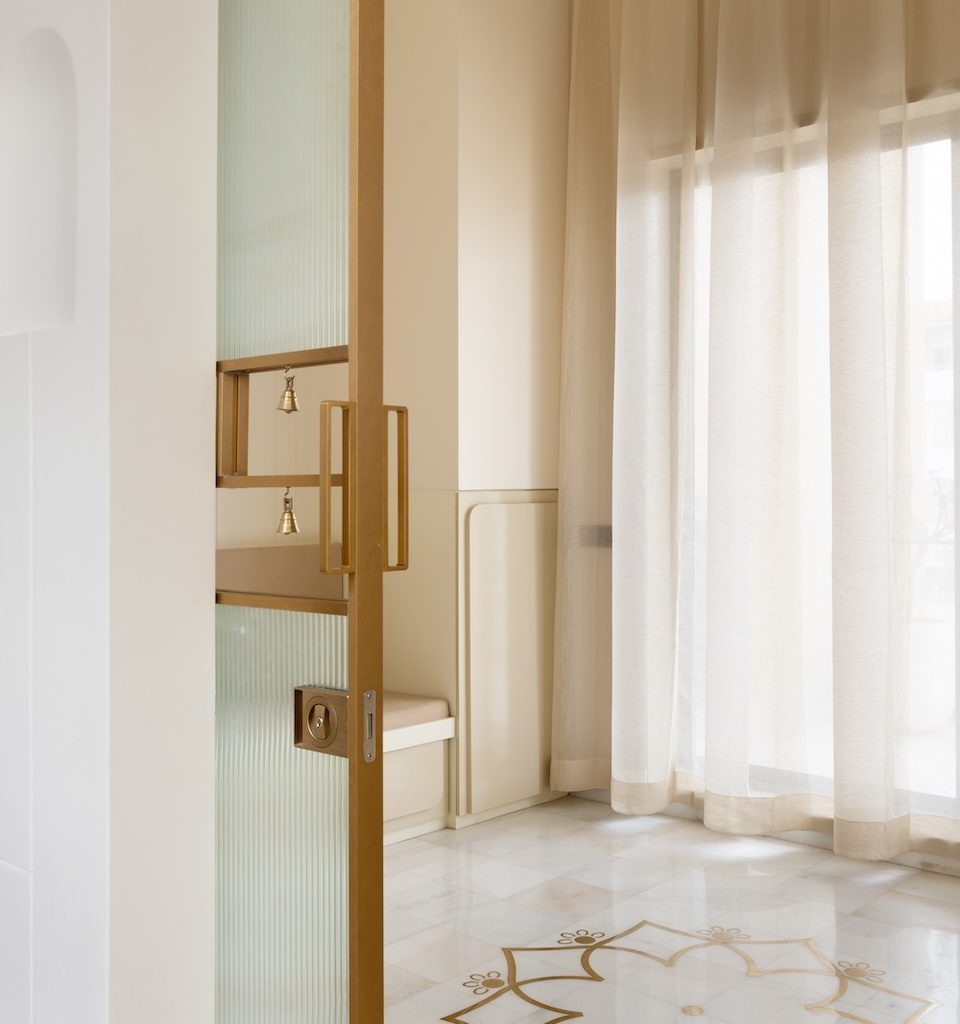
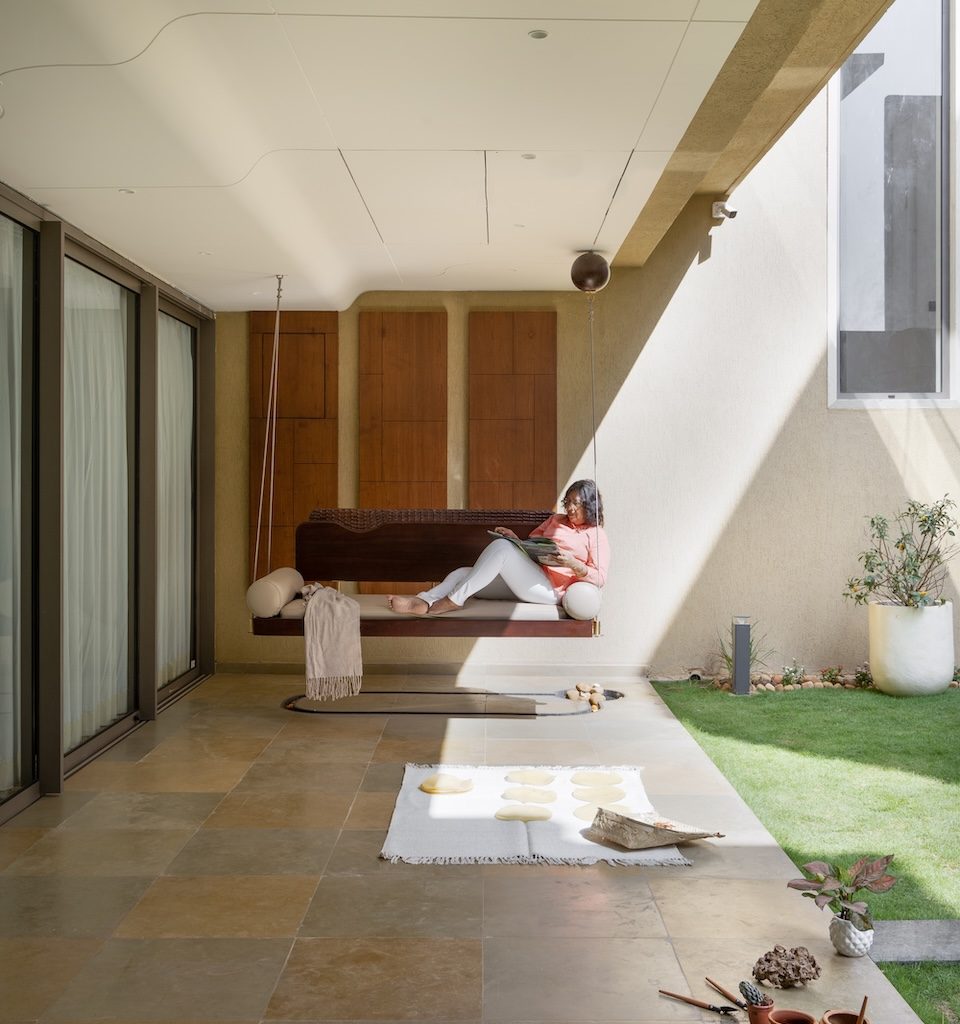
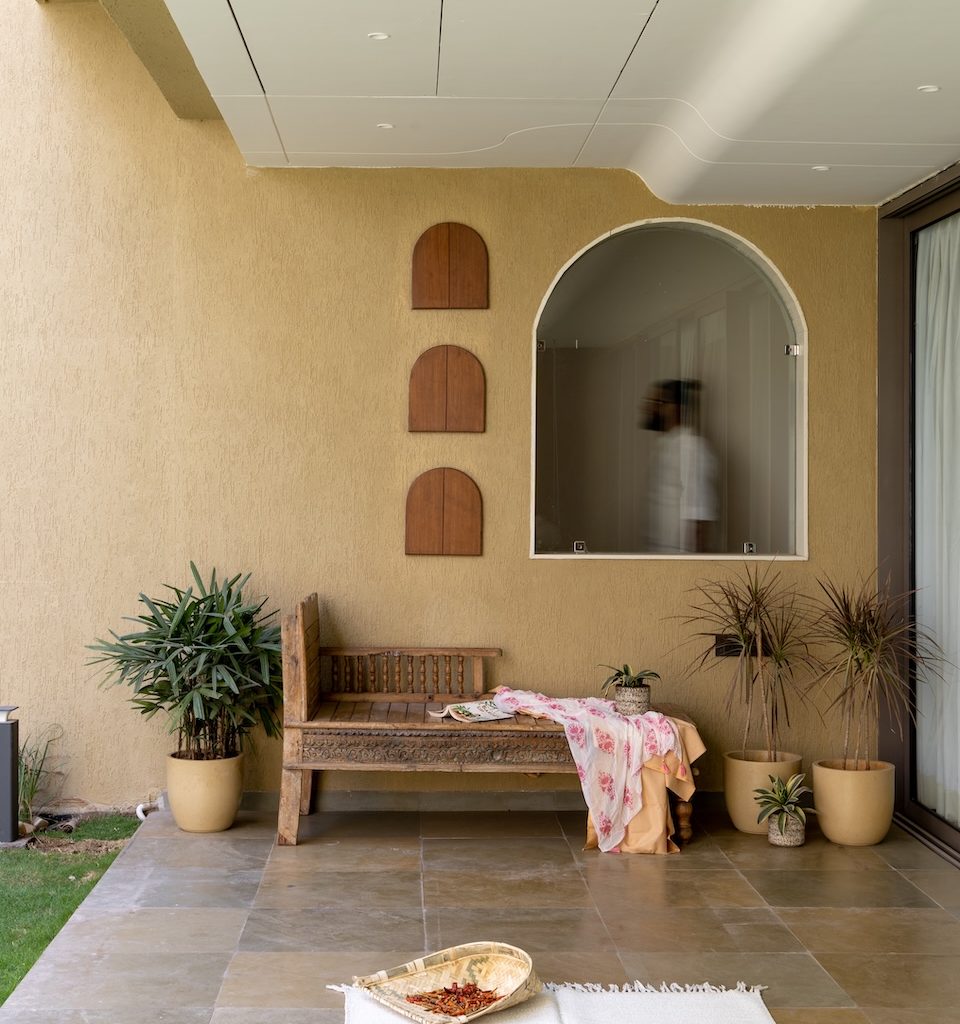
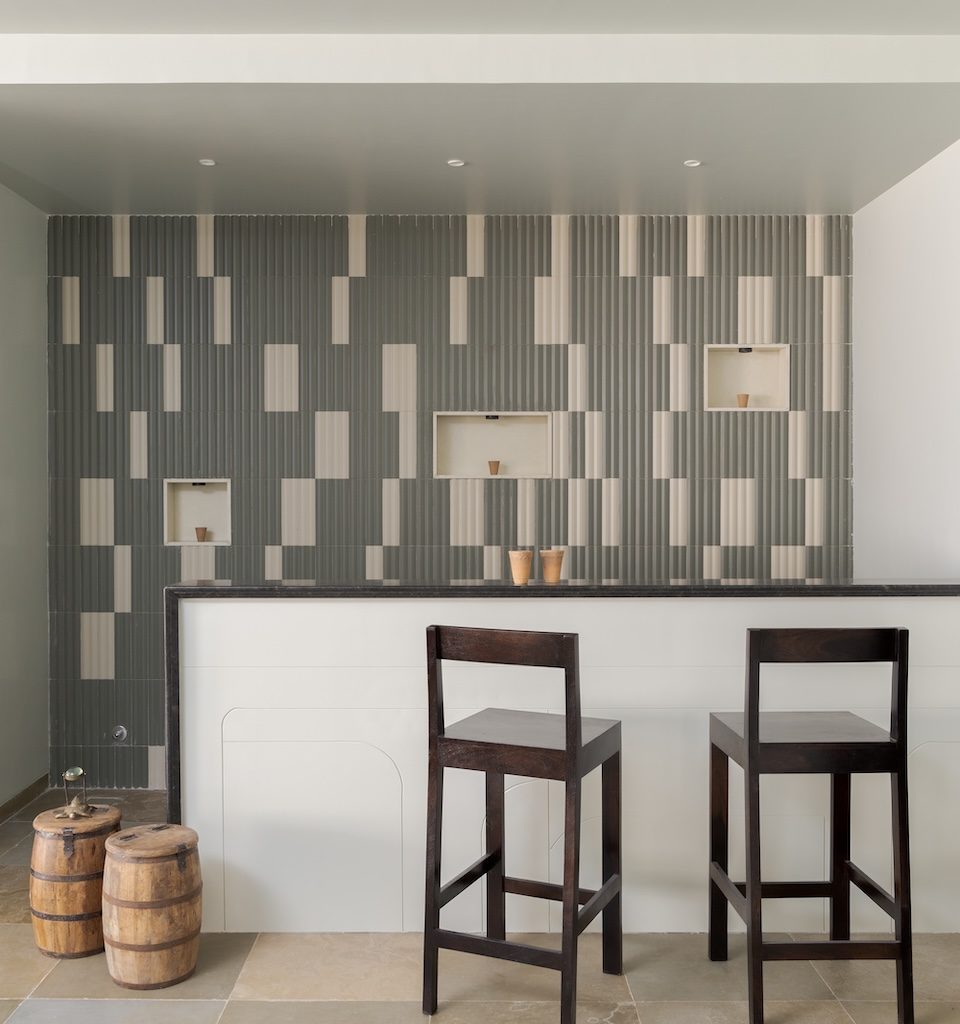
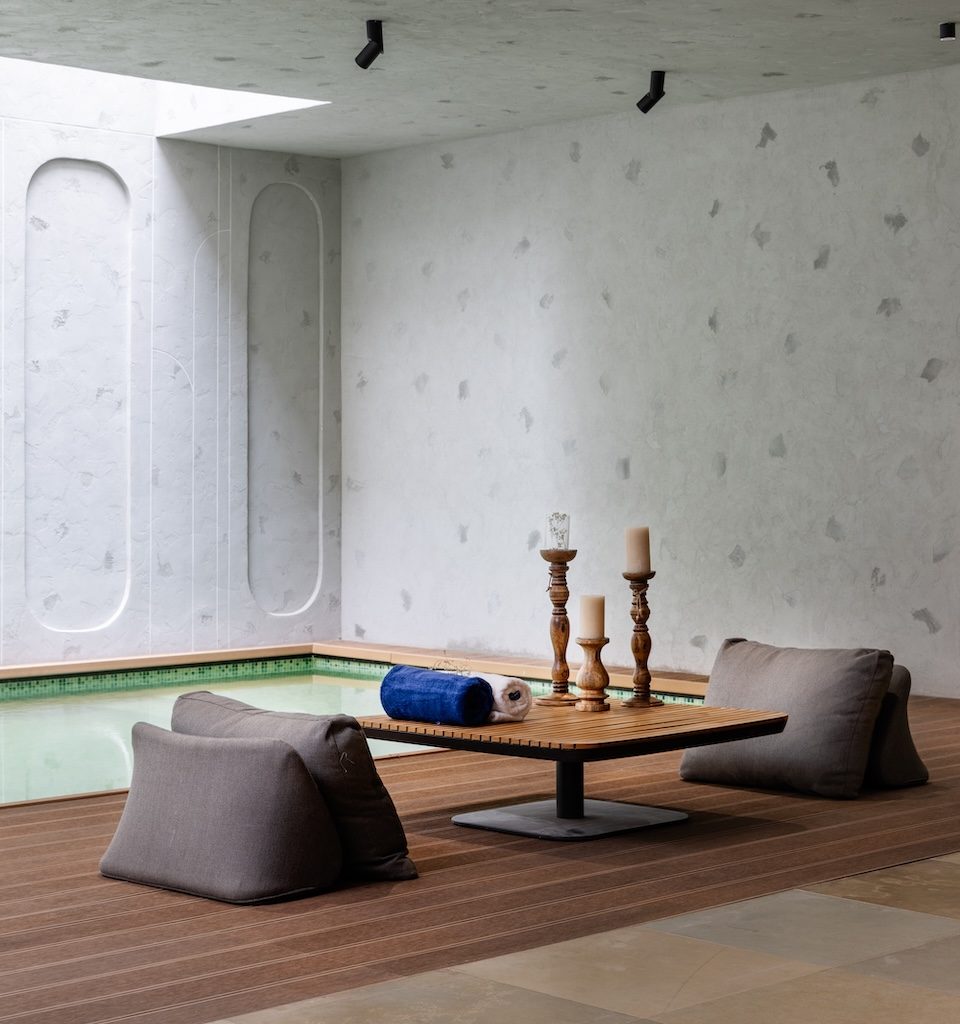
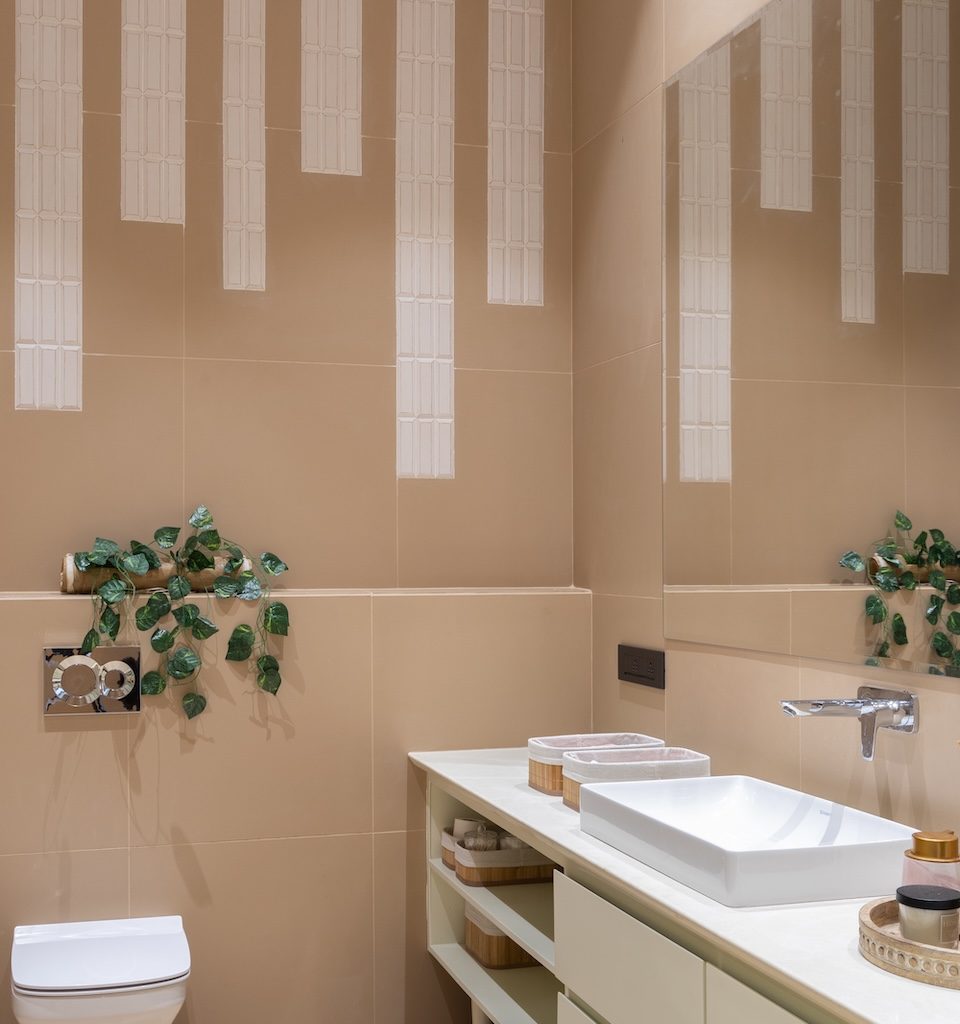
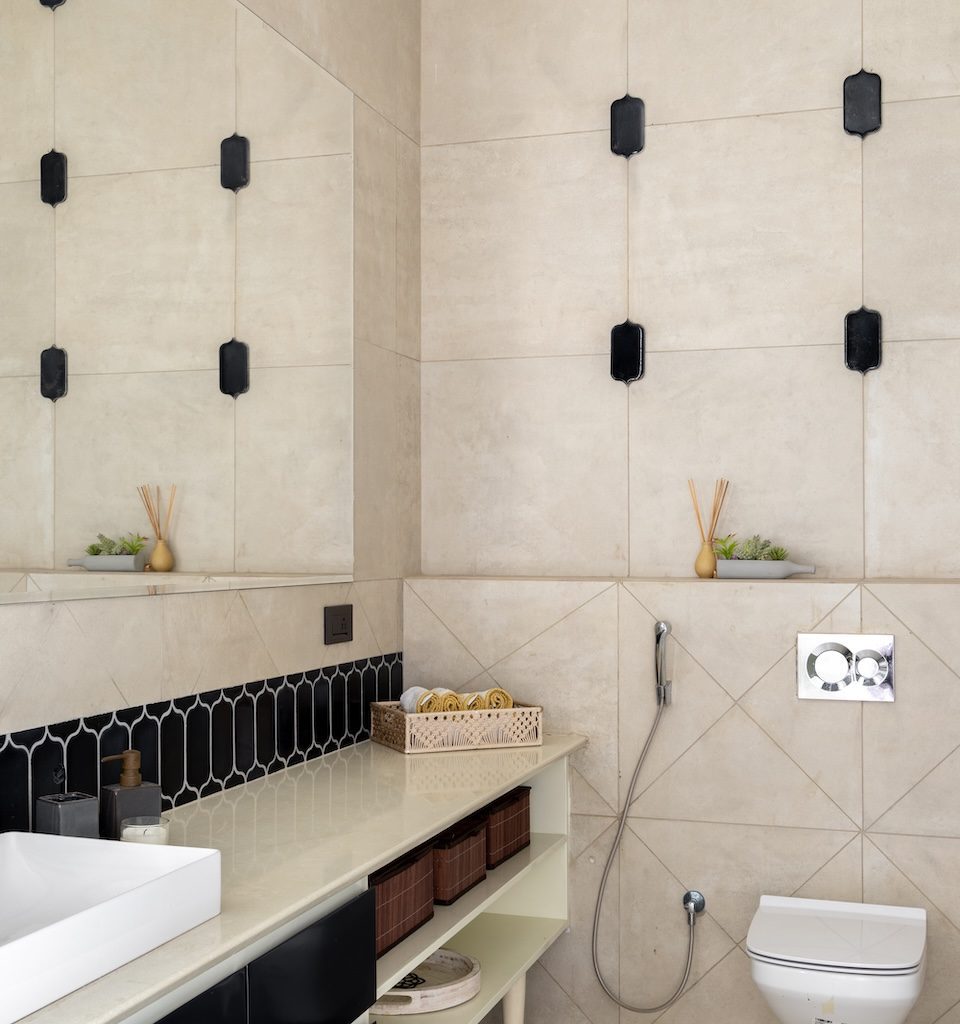
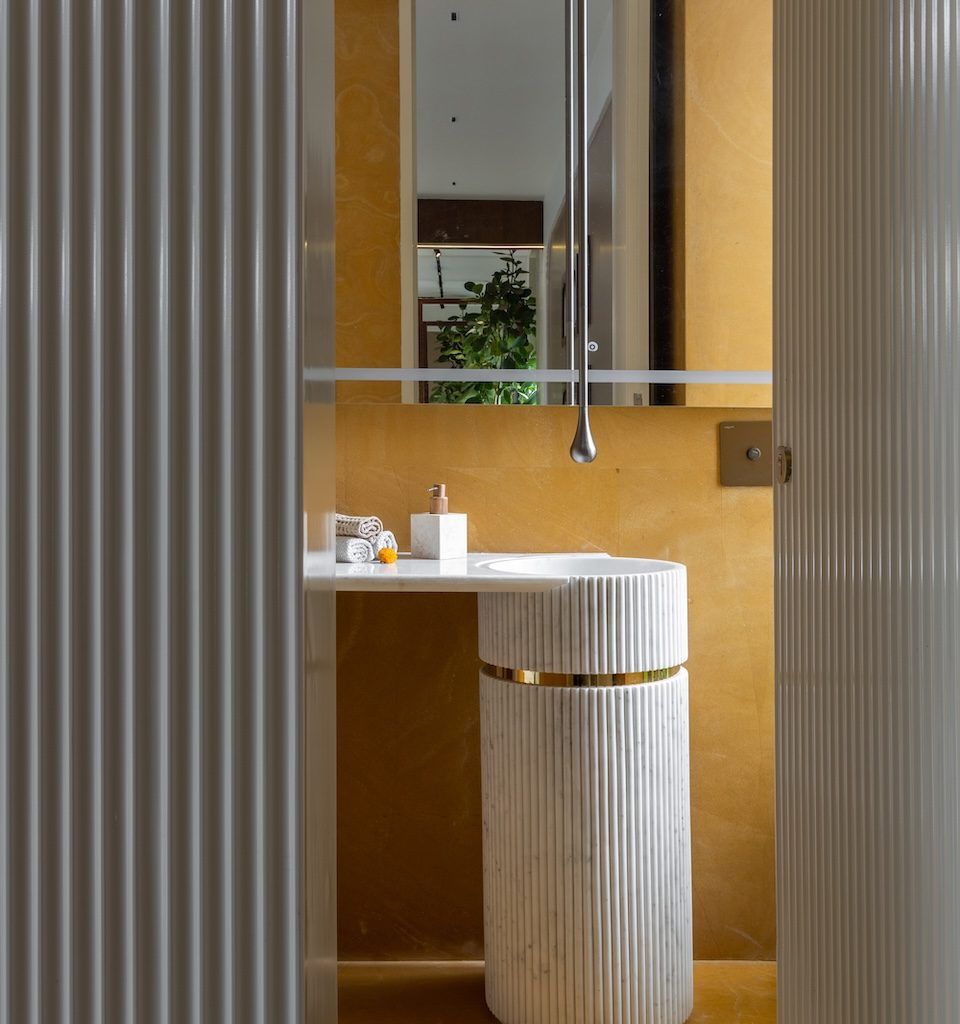
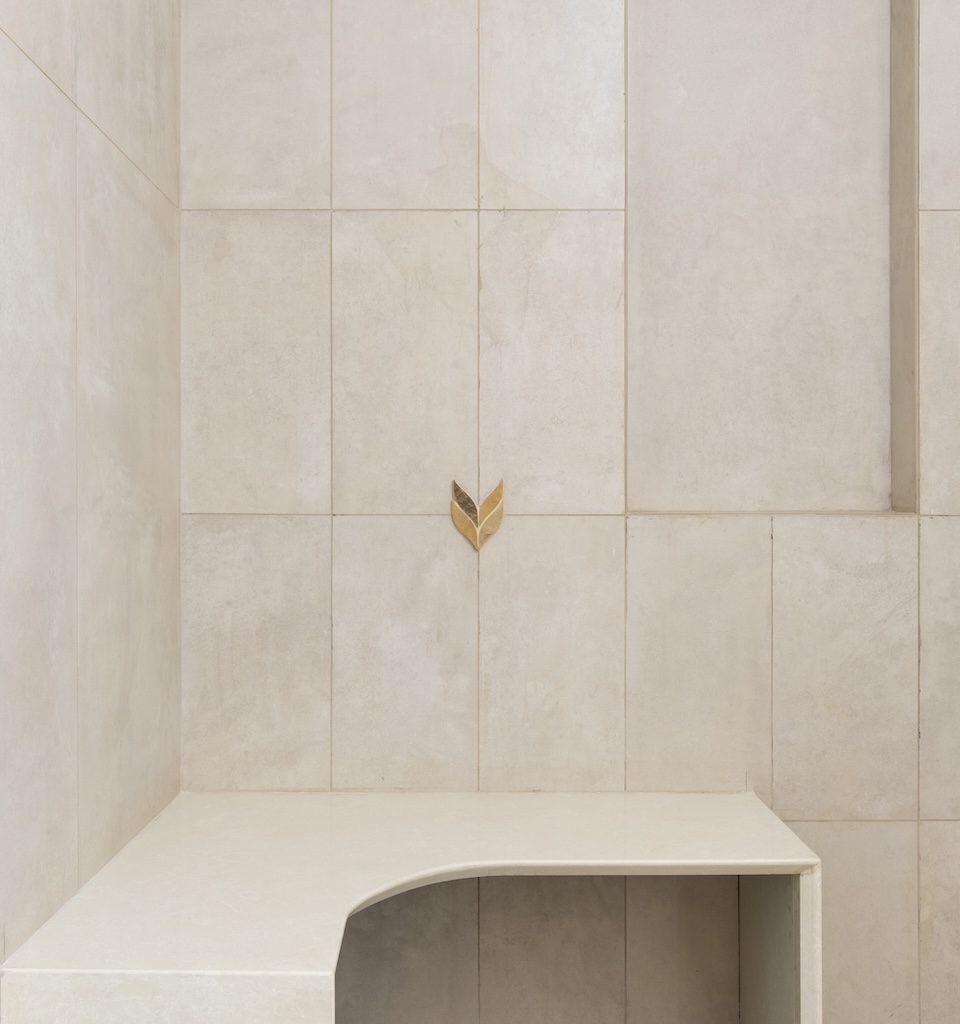
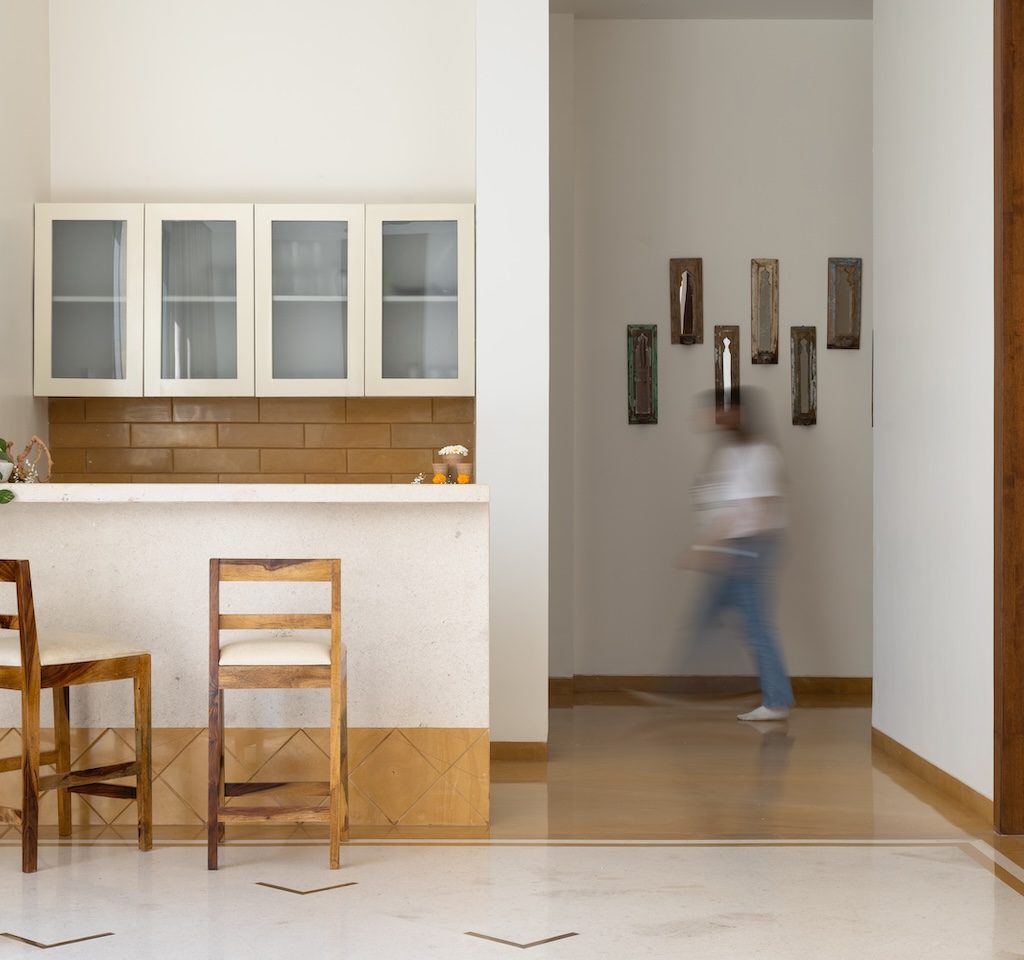
Sandstone forms the architectural heart of the project — used across floors, walls and key details to evoke timelessness and Indian craft. It is paired with warm neutral paints, solid wood accents, soft fabrics and handcrafted décor. The palette relies on depth through texture rather than colour variation, resulting in a cohesive envelope that feels both grounded and refined.
The challenges
Balancing a classical Indian aesthetic with contemporary restraint required careful editing. The designers had to ensure that the extensive use of sandstone remained warm rather than heavy, and that handcrafted elements supported spatial clarity instead of competing with it. Time, budget and material availability demanded efficiency in detailing without compromising the intended expression.
The highlights
Sandstone detailing across the living and dining areas creates a continuous visual language, while handcrafted touches lend intimacy and cultural resonance. The interplay of light on textured surfaces softens transitions between spaces. The restrained palette provides consistency and calm, allowing the home’s proportions and materiality to speak more strongly than ornament.
The takeaway
Avittam House demonstrates how classical Indian sensibilities can be expressed through restraint, proportion and material clarity. By grounding the architecture in sandstone and warm neutrals, the home achieves a timeless atmosphere where memory and modern life coexist gracefully.
Fact file
Project: Avittam
Design firm: White Tree Architects
Area: 4,000 sq ft
Location: Bhilai
Principal architects: Ar. Shivani Tiwari and Ar. Vishal Chandra
Add a Comment