
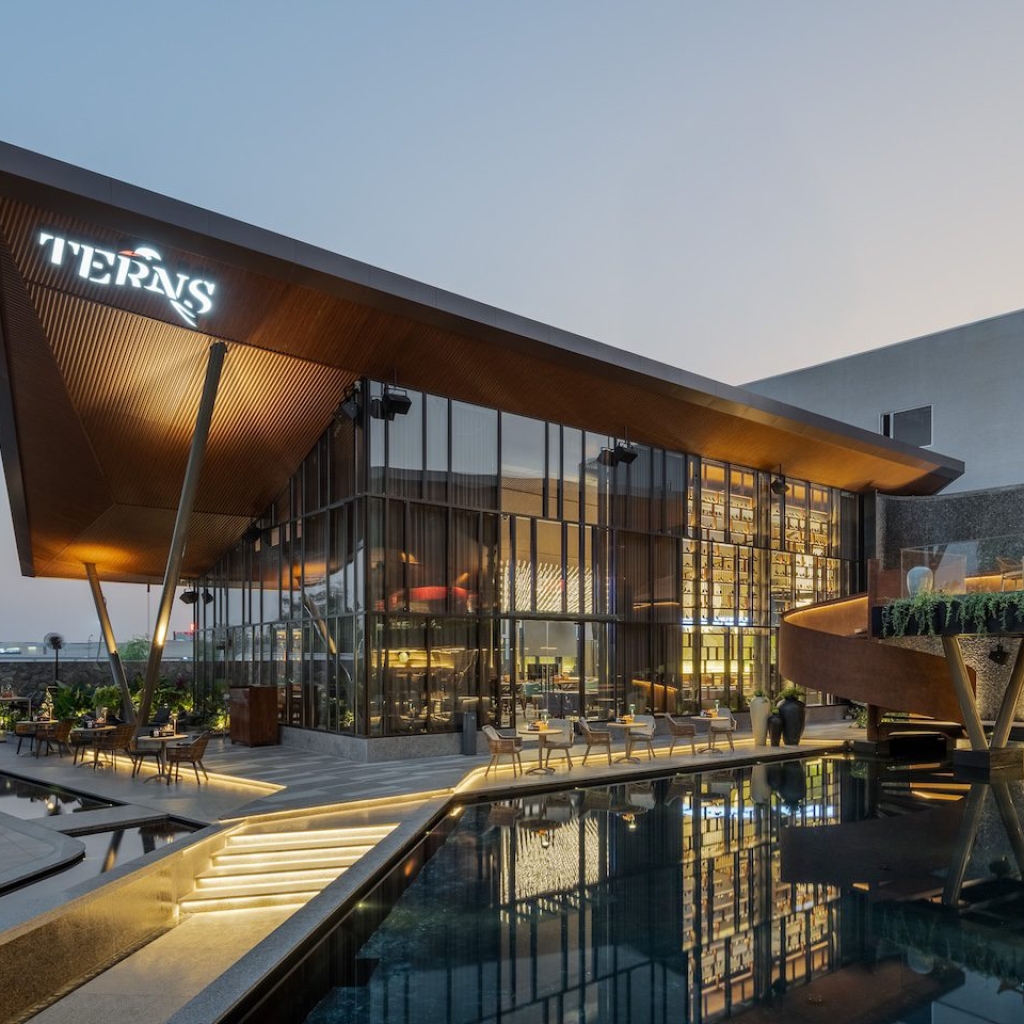
In Coimbatore, Ksquare Architects creates a 31,529 sq ft restobar defined by bold roof planes, reflective pools and seamless indoor–outdoor transitions that elevate the social experience.
Curated by: Rupali Sebastian
Photographs: Aaditya Kulkarni I PHX India; courtesy Ksquare Architects
The project
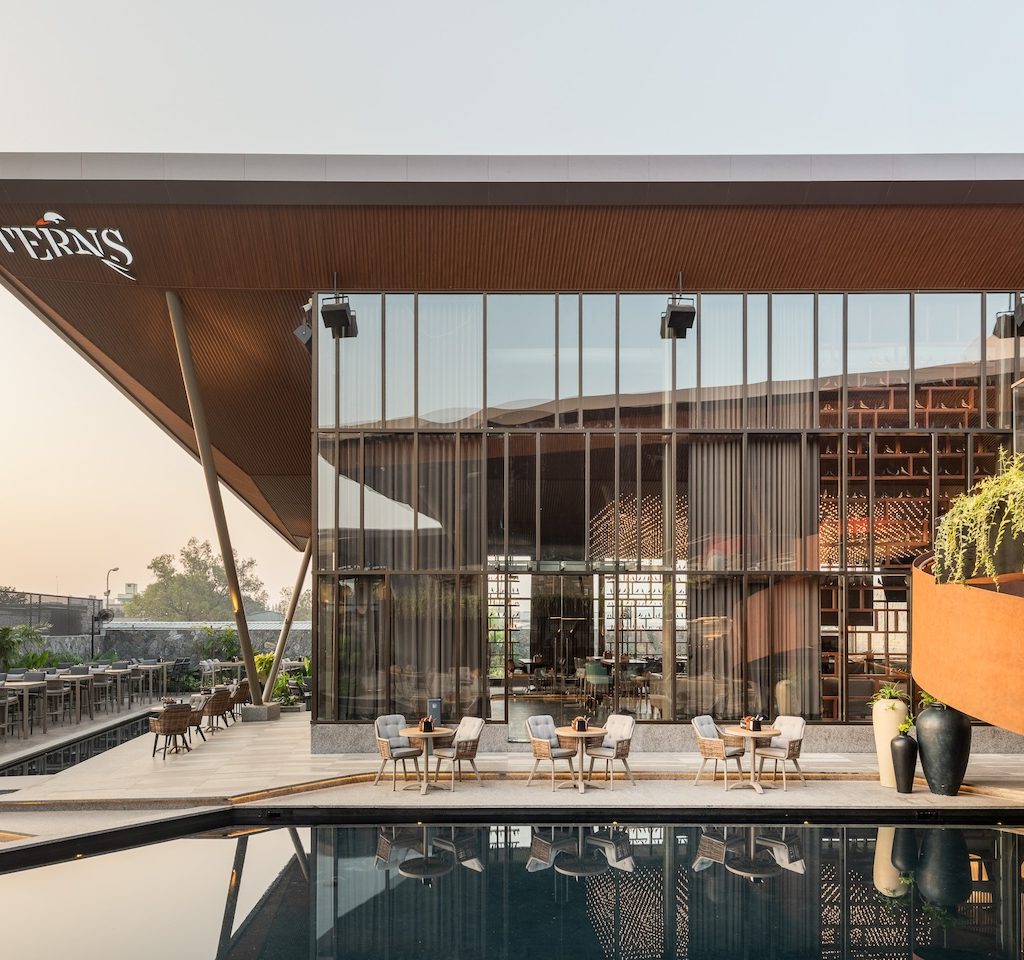
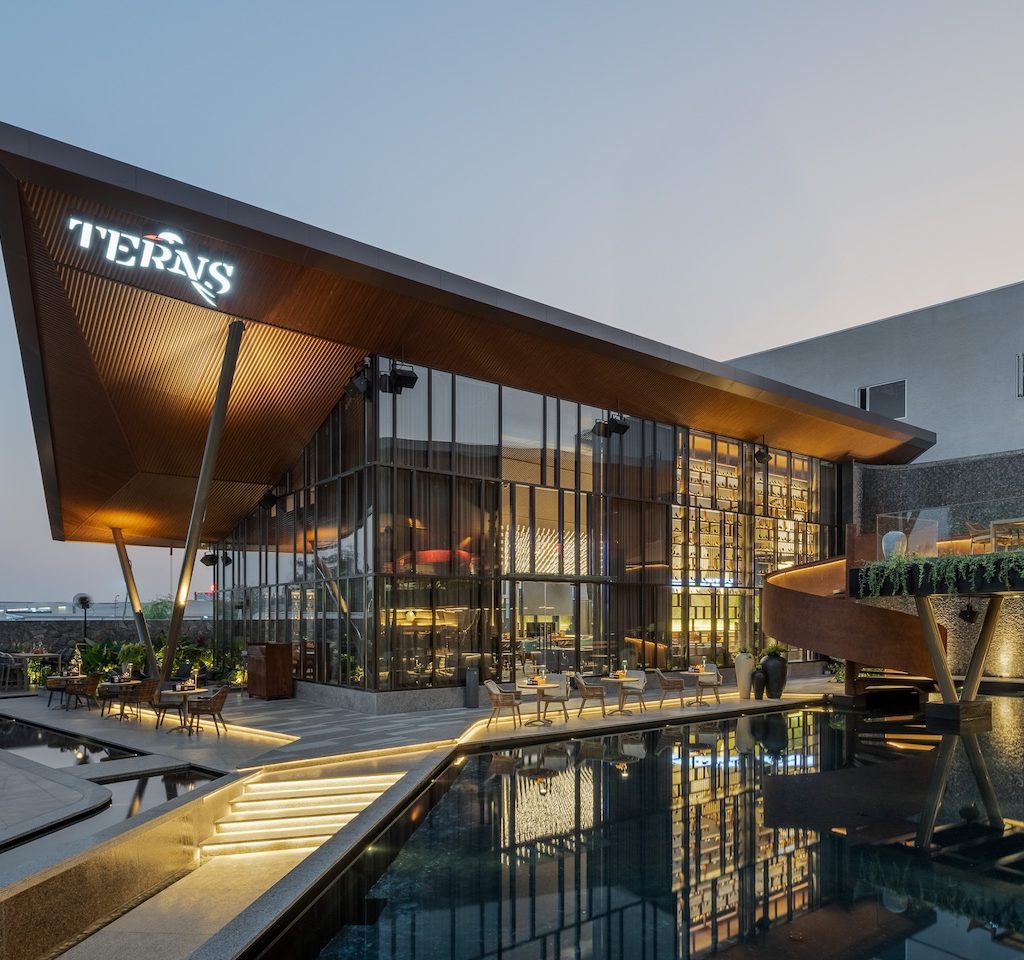
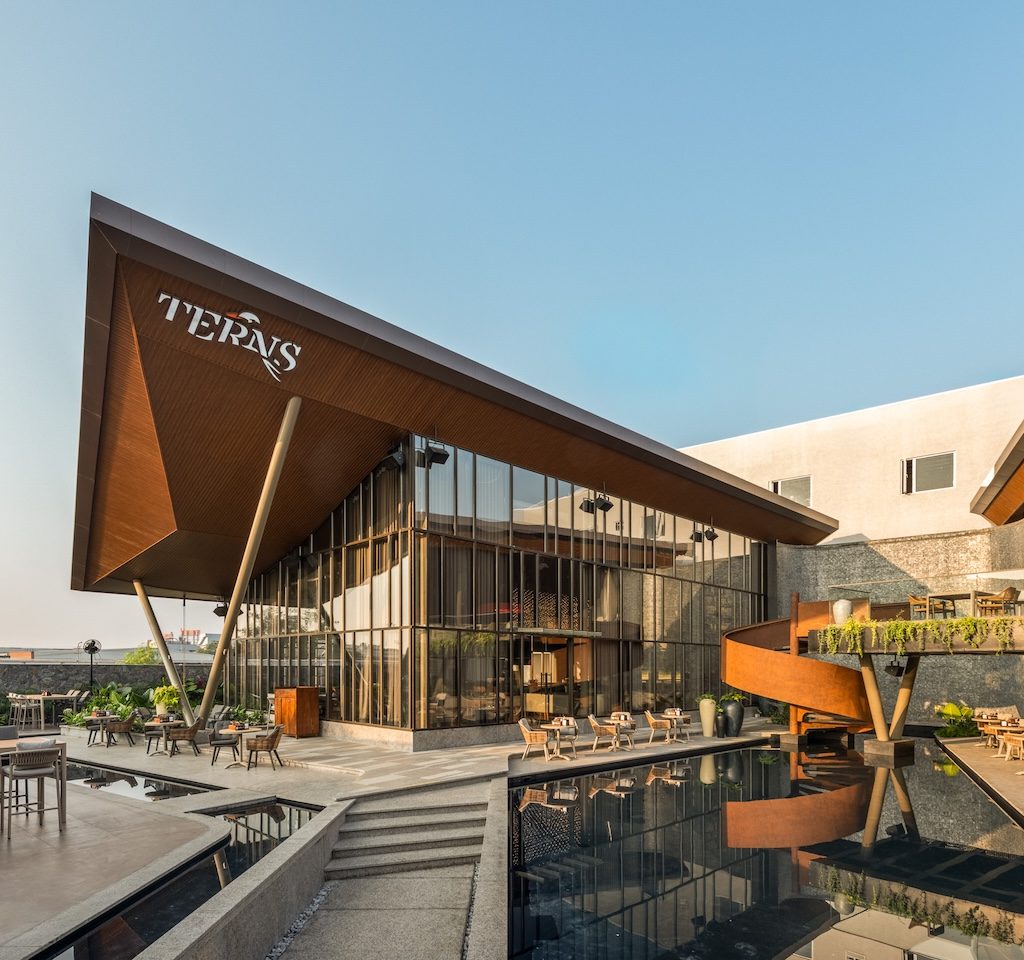
Terns is envisioned as a contemporary restobar where architecture and atmosphere work in tandem to create an immersive social setting. Designed by Ksquare Architects, the project brings together expressive roof forms, water, landscape and carefully choreographed spatial openness. The result is an environment that feels simultaneously sophisticated and relaxed—a destination built around leisure, movement and visual connection.
The site
Located in Thottipalayam, Coimbatore, the restobar sits within a rapidly developing precinct of mixed residential, commercial and industrial activity. Its position along a busy arterial route offers visibility and strong connectivity, while the suburb’s relatively open skyline lends the project breathing room. Low-rise surroundings and open plots allow the architecture, landscape and water elements to come into full view without obstruction.
The brief
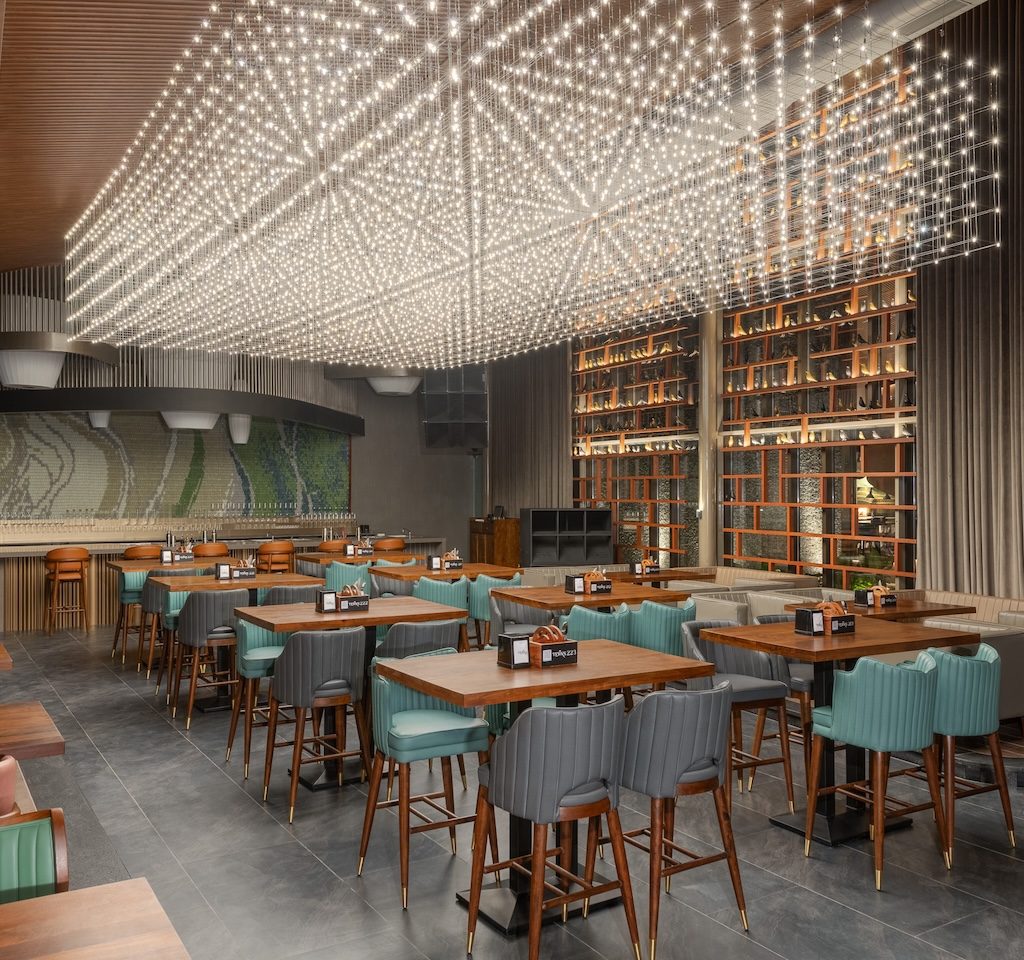
Functionally, the client required a premium restobar that could support both high-energy gatherings and quiet, intimate dining. Indoor lounges, semi-open decks and generous outdoor seating needed to coexist with smooth staff circulation and efficient service operations.
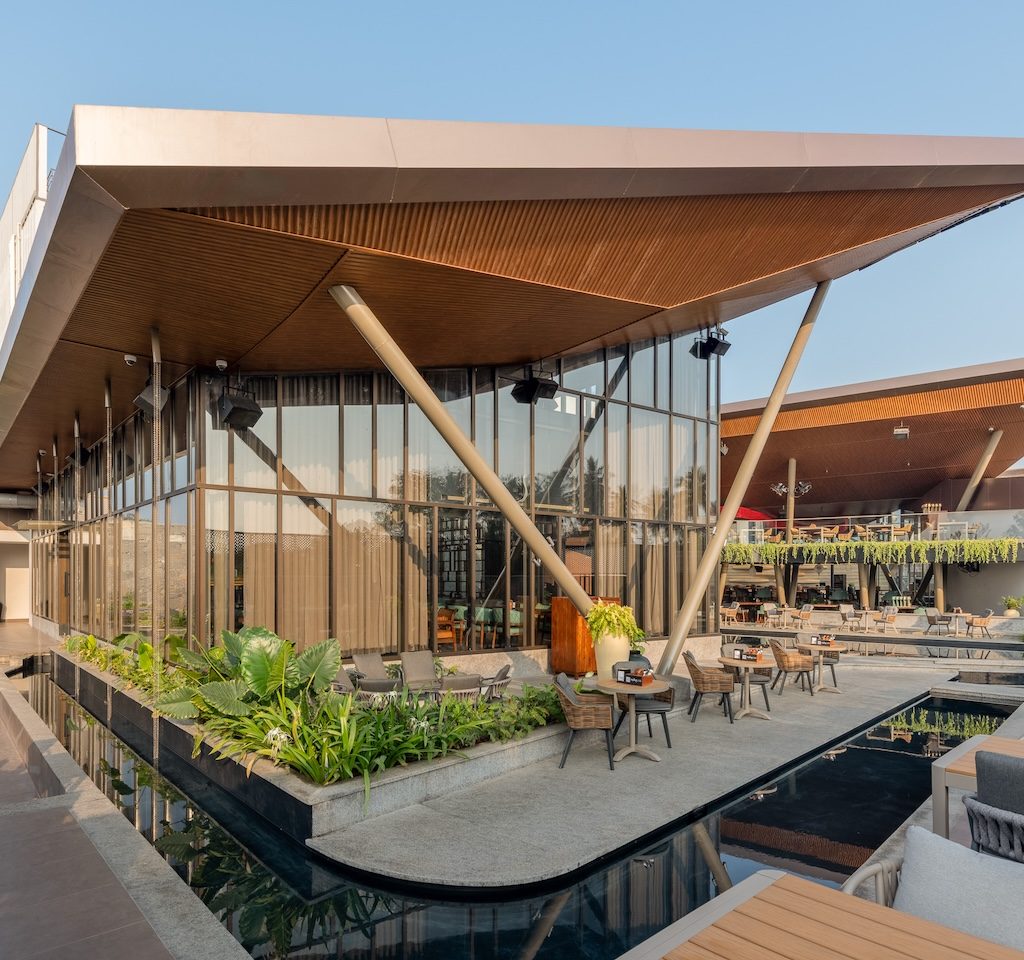
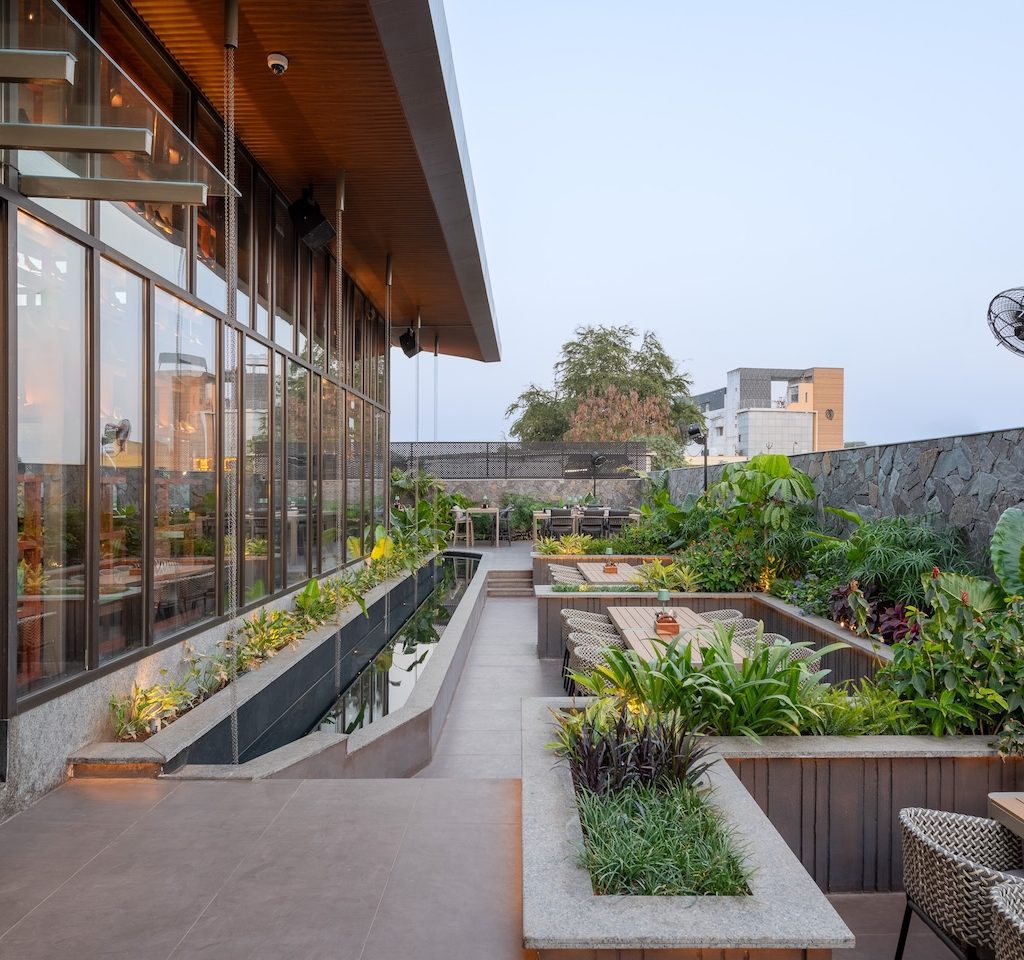
Aesthetically, the ambition was to create a destination that expressed modern luxury softened by nature. Bold roof profiles, water features, lush pockets of green and warm materiality were essential to shaping an identity that shifts gracefully from day to night — tranquil in daylight, atmospheric after dusk.
The design intent
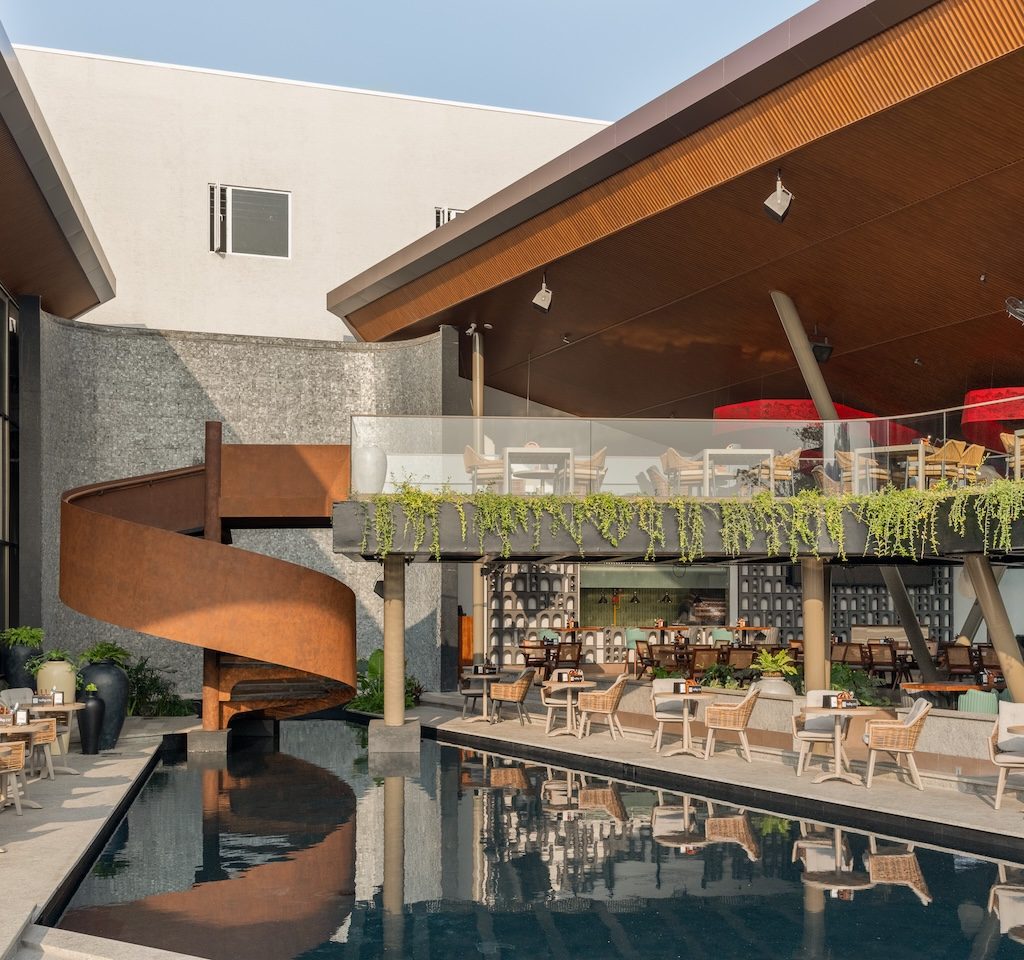
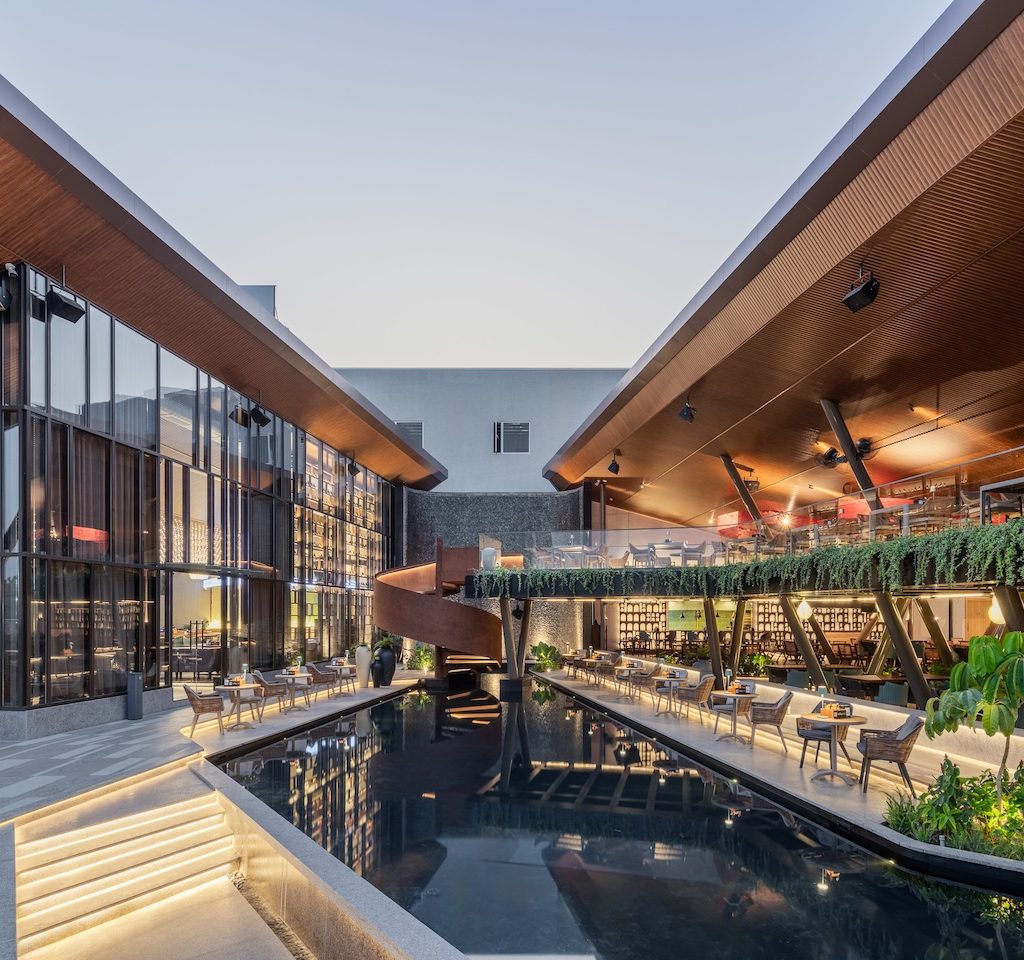
For principal architect Krishna Kishore, the restobar was an opportunity to fuse hospitality and architecture into a single, fluid experience. “Our aim was to let architecture set the mood. The roof forms, water and landscape were all designed to work together so the experience would feel fluid, calm and connected at every level,” he says. The design prioritises openness, visual continuity and the interplay of natural elements. Roof planes float over water and landscape, while inside and outside merge through transparency and level transitions. The intent was to create a place where form, function and ambience reinforce one another — an elevated dining environment rooted in calm, light and spatial generosity.
The spatial flow
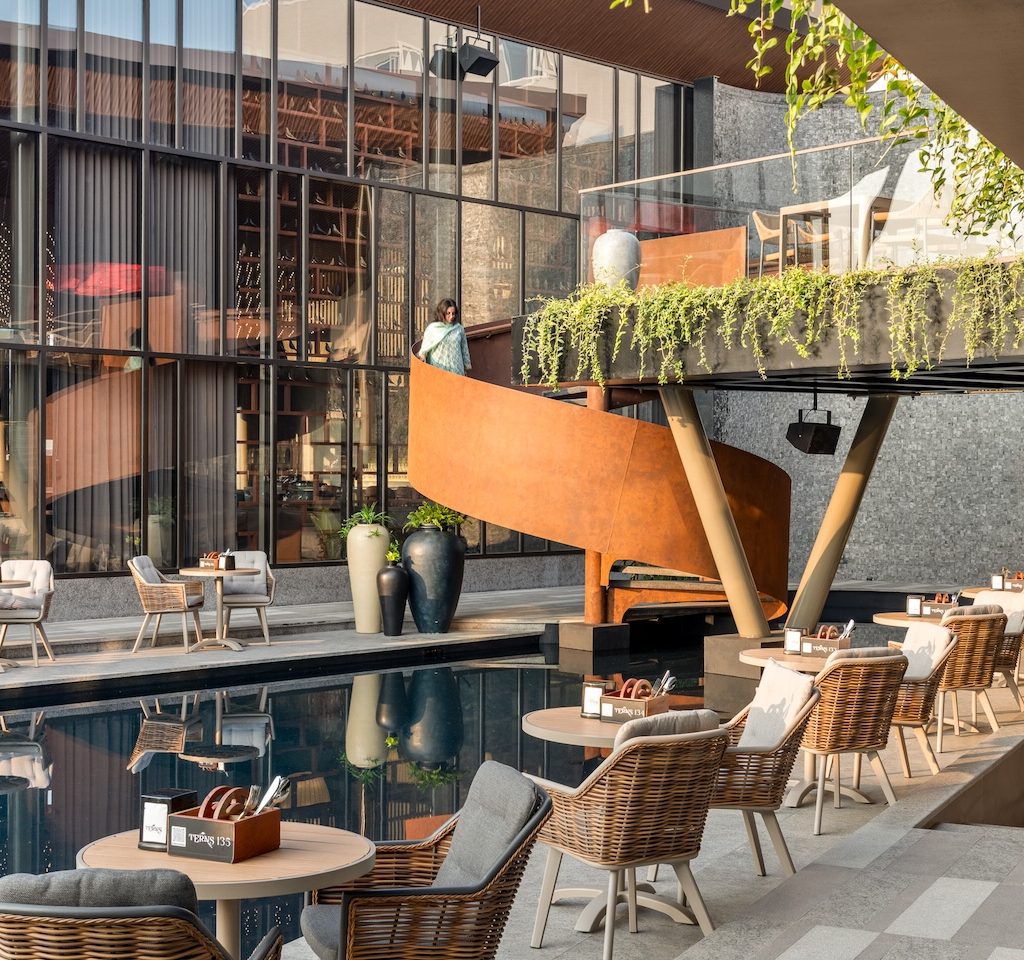
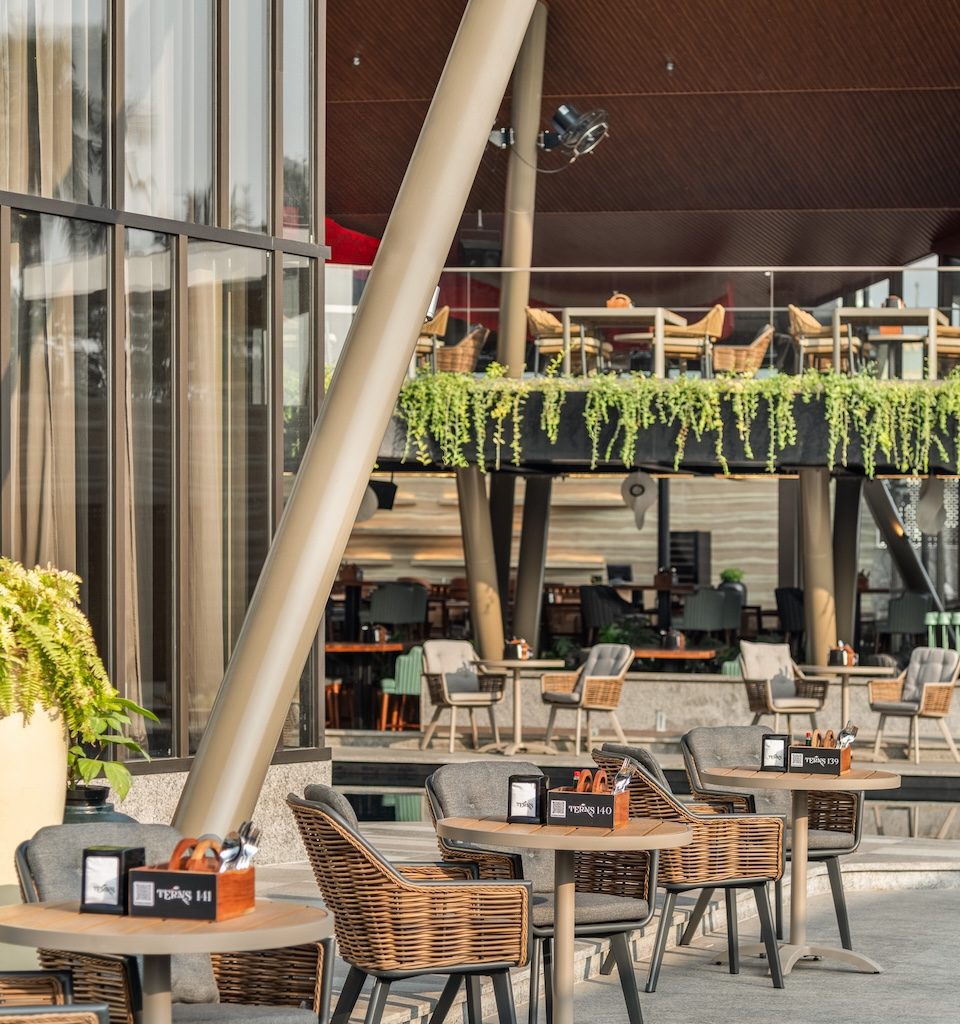
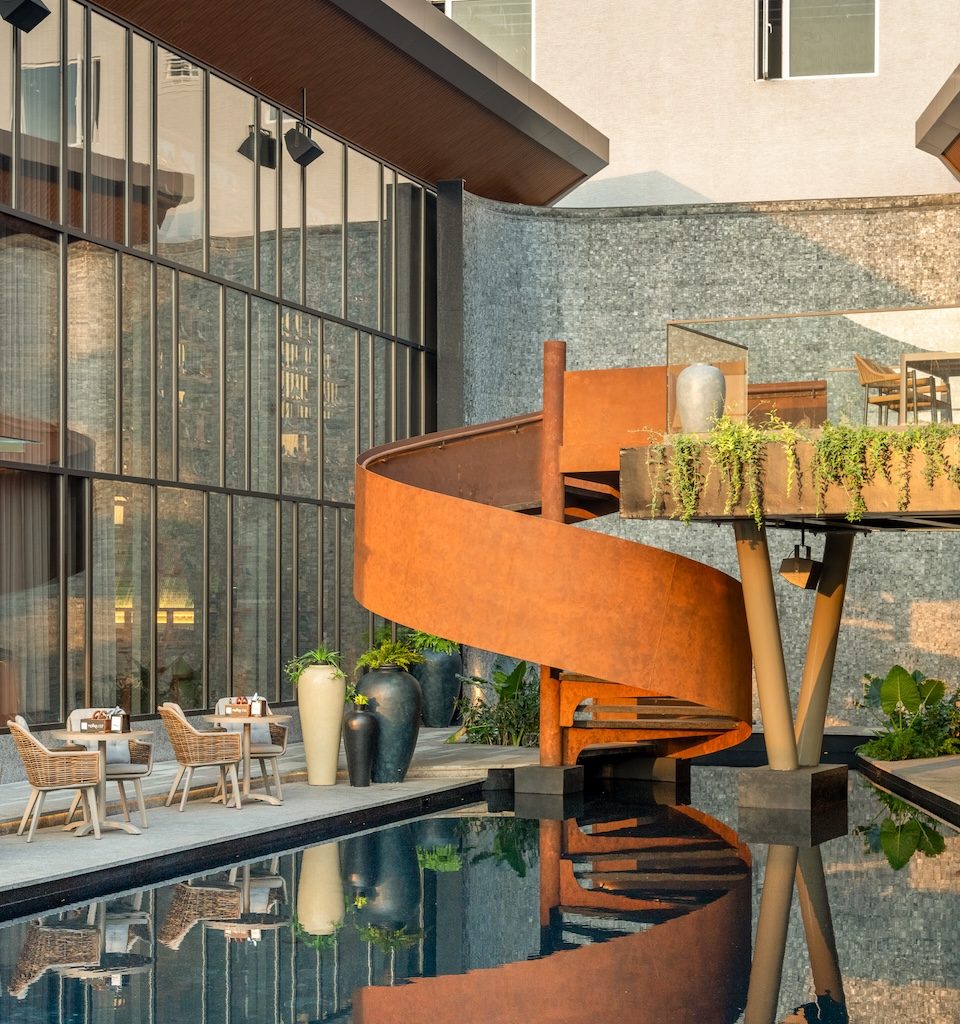
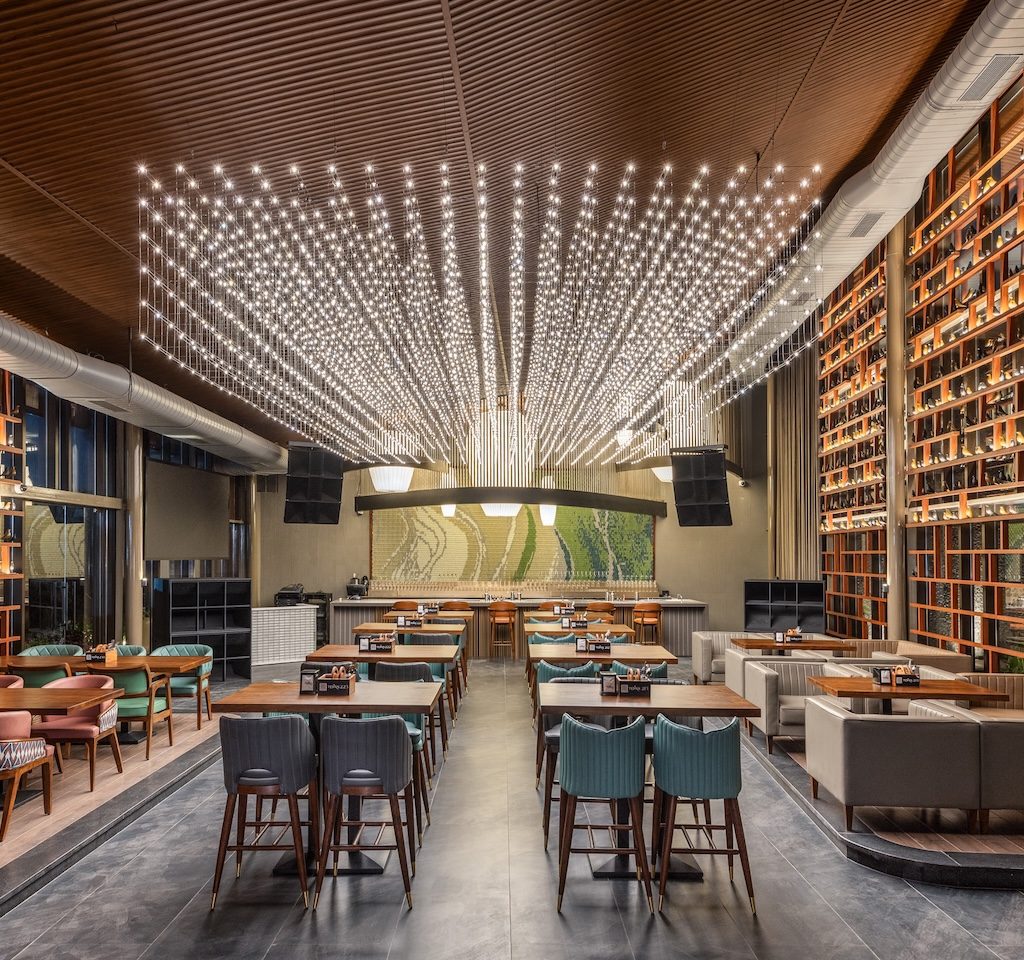
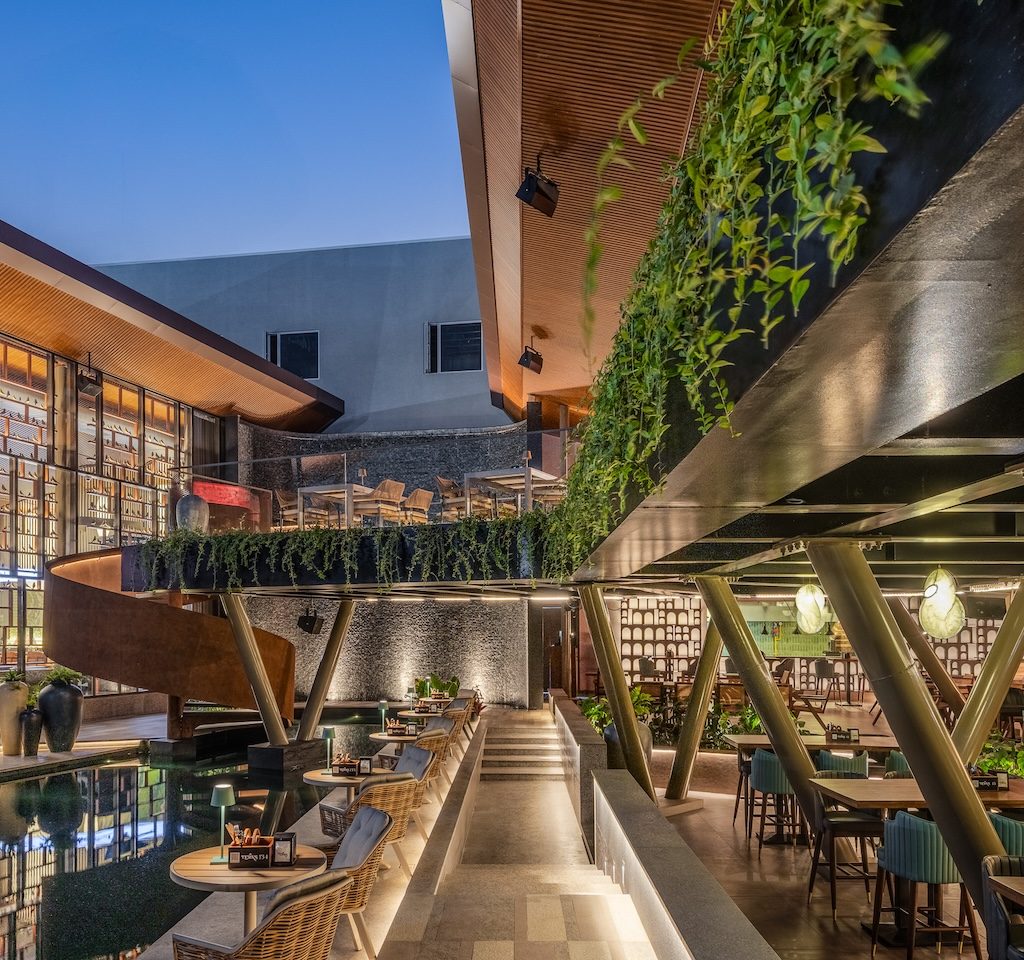
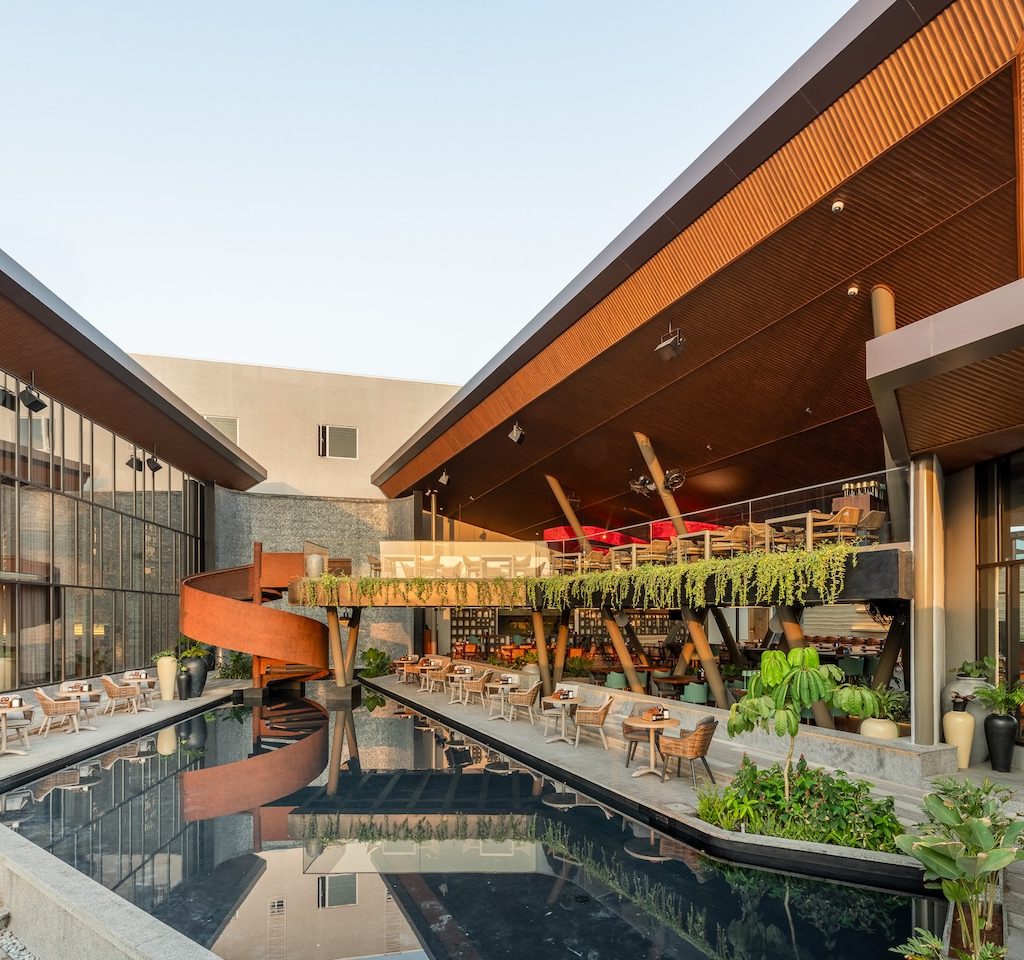
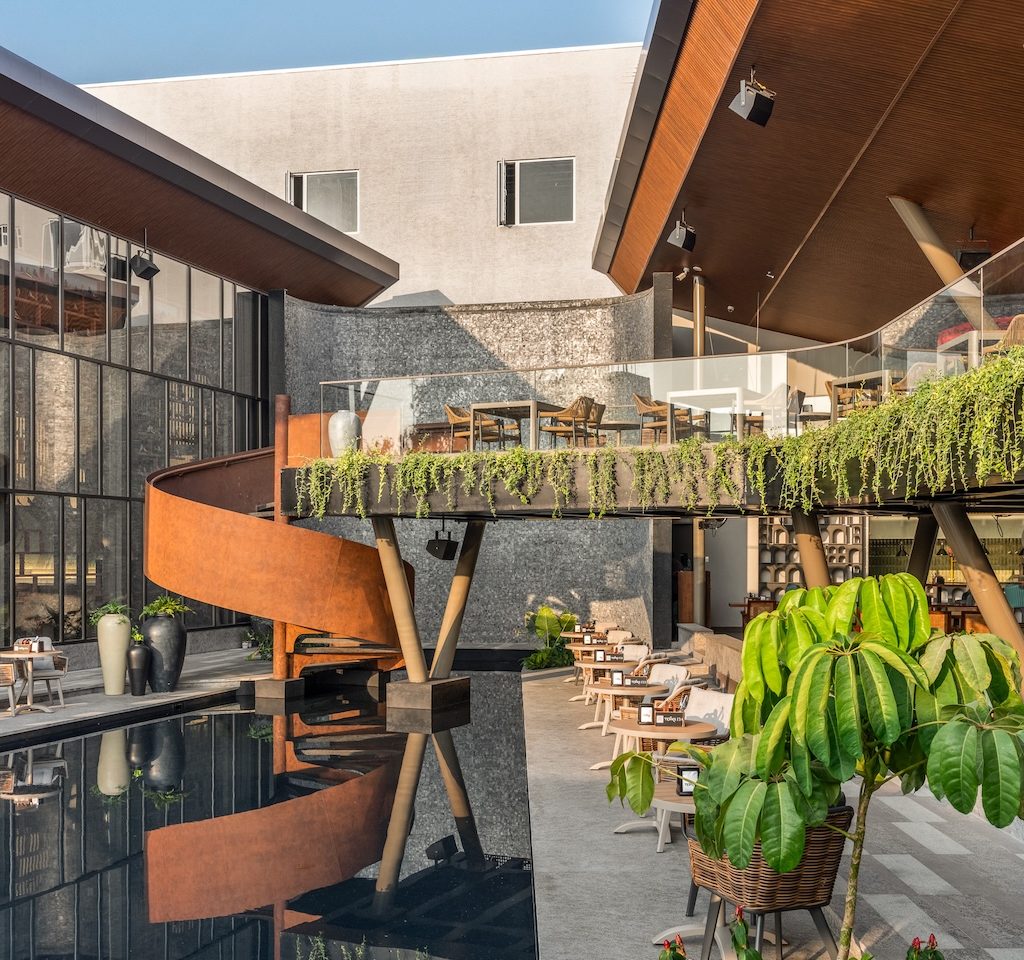
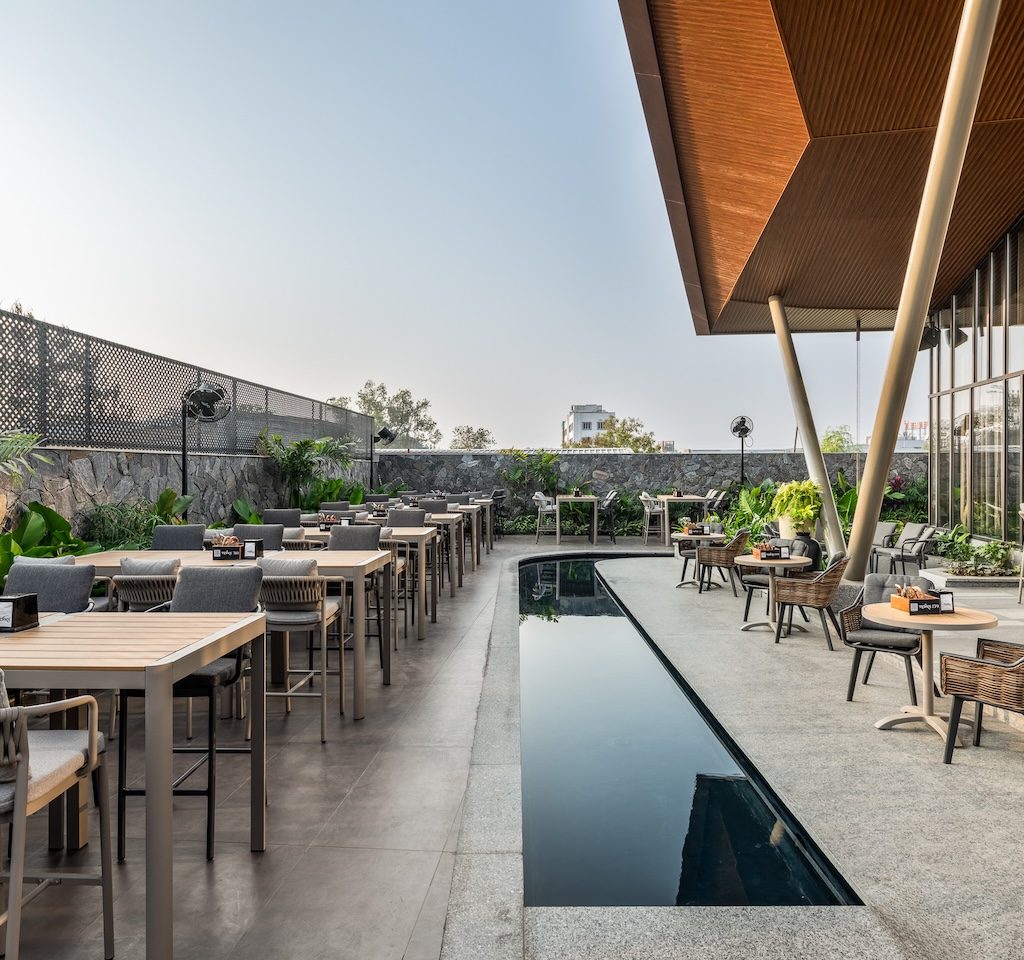
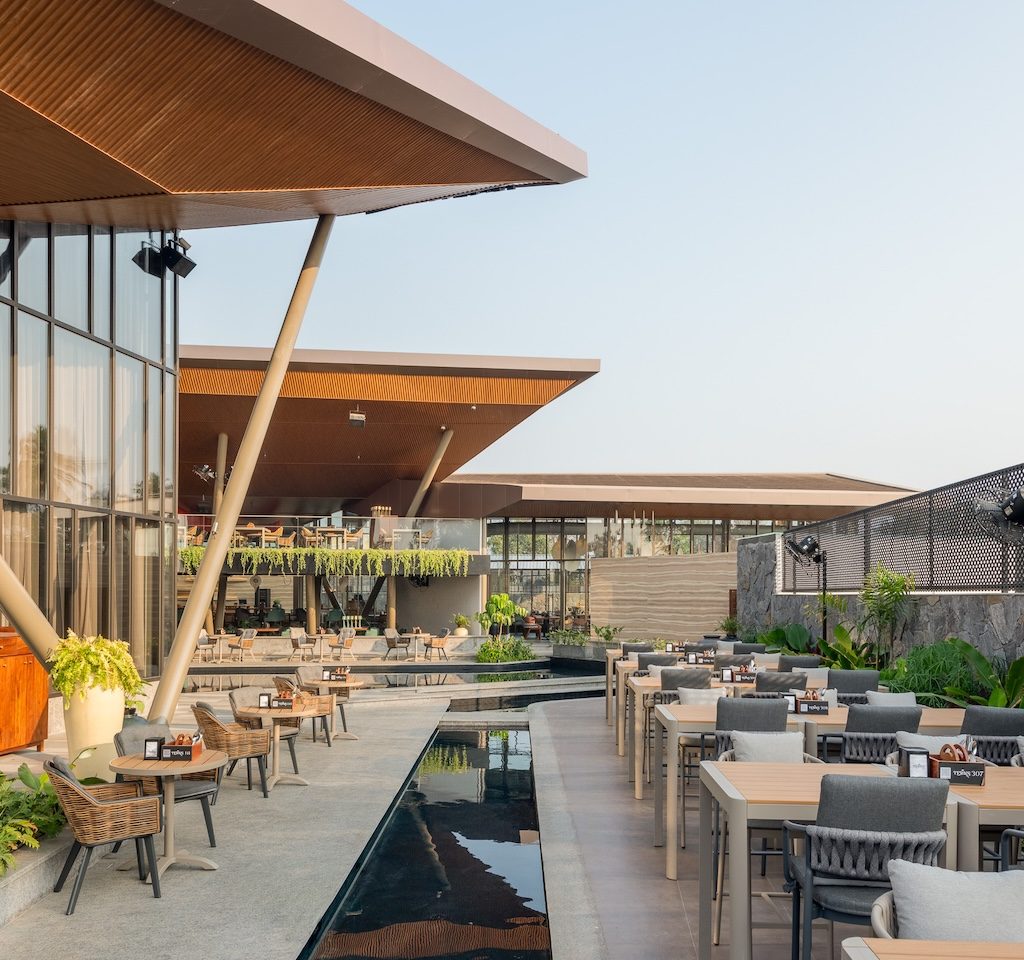
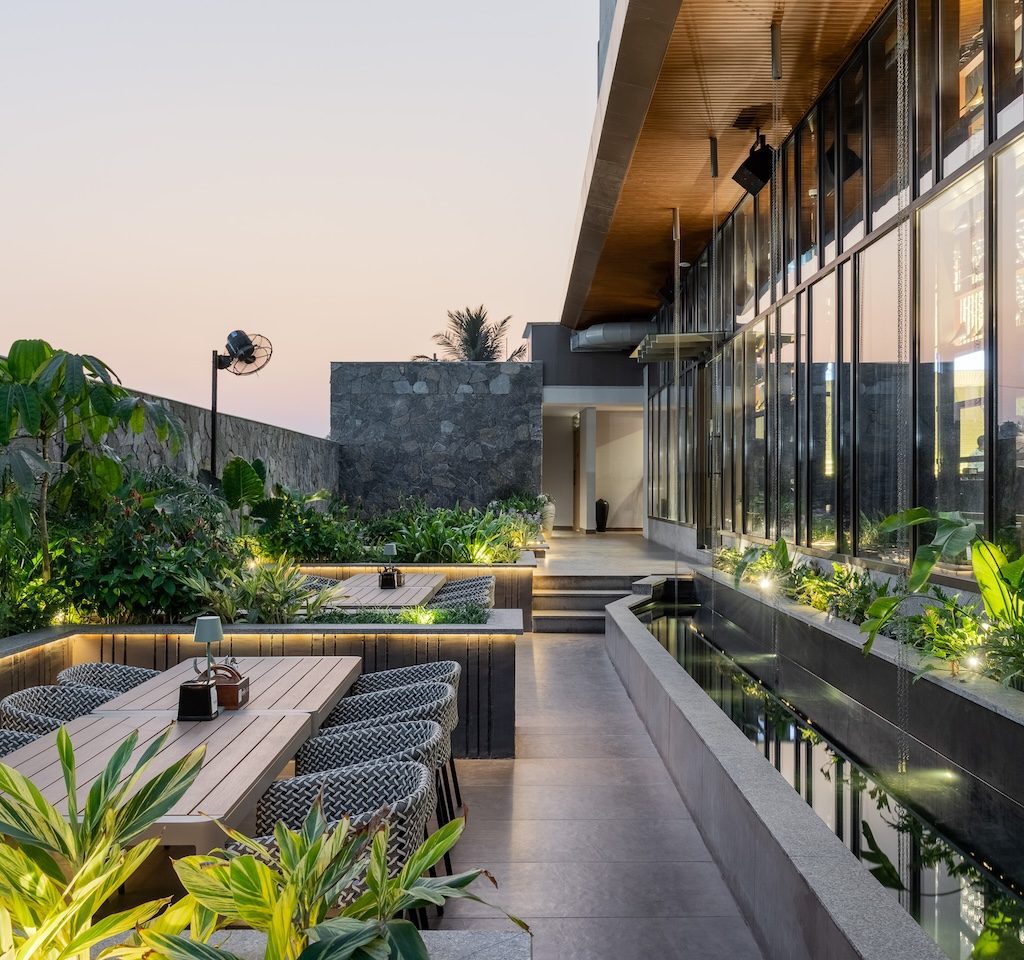
The plan is organised around a central reflective water body that becomes the heart of the experience. It acts as a climatic buffer and a visual anchor, stitching together dining, lounging and circulation zones. Split levels offer multiple vantage points — indoor lounges close to the water, semi-open decks that hover between landscape and structure, and elevated terraces that overlook the entire setting. These varied levels allow guests to experience the restobar differently at every turn while maintaining cohesion across the space.
The material palette
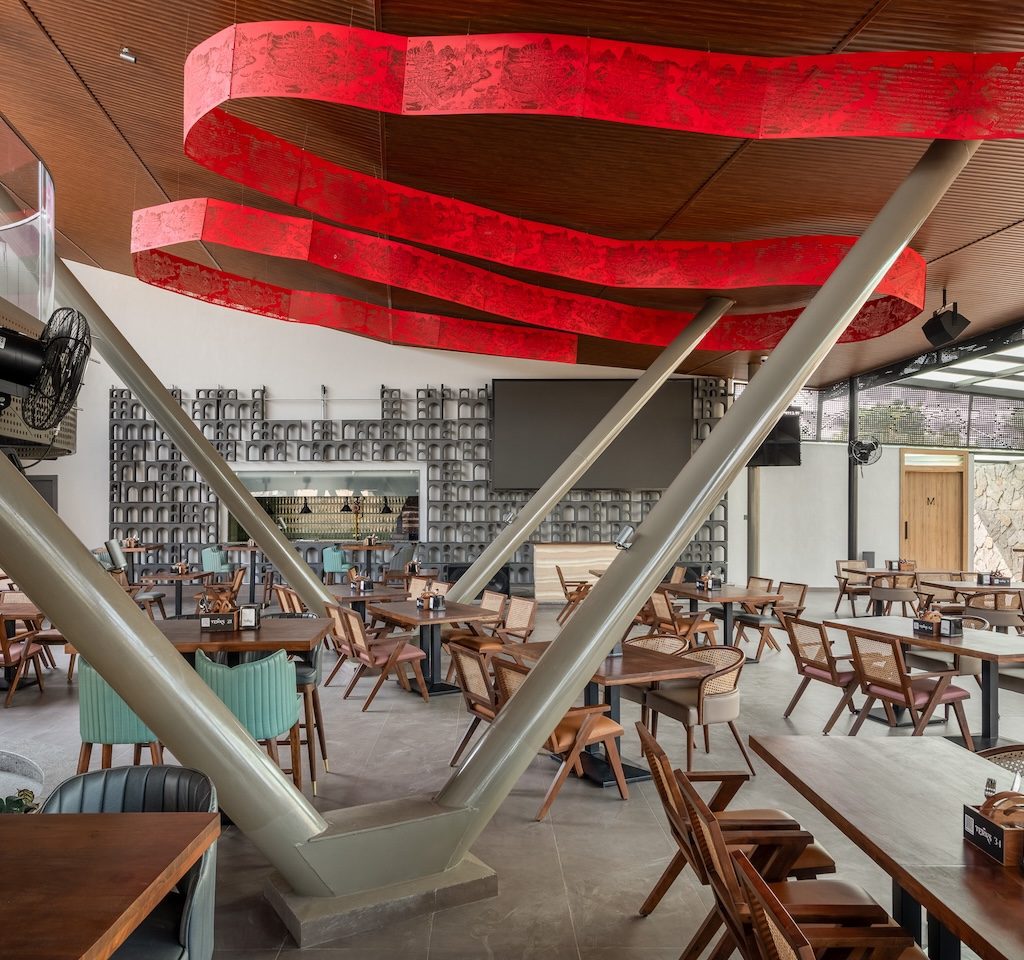
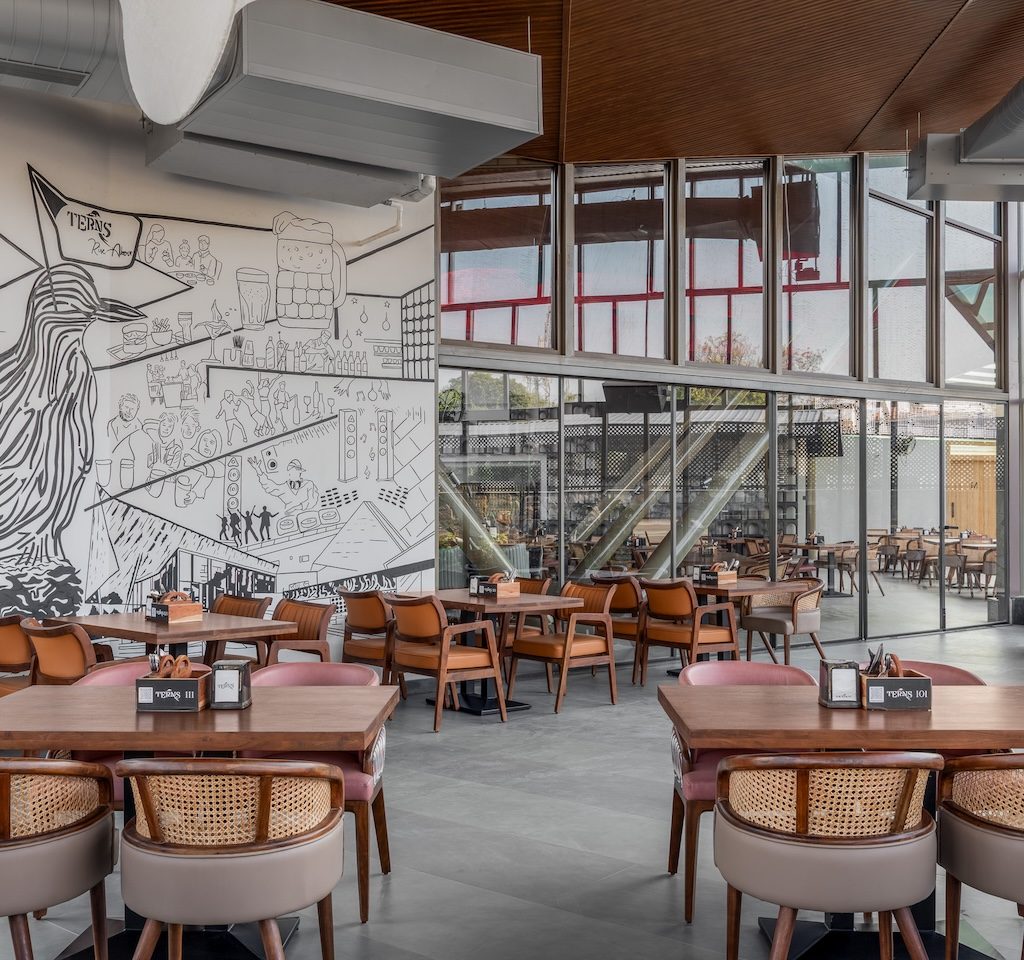
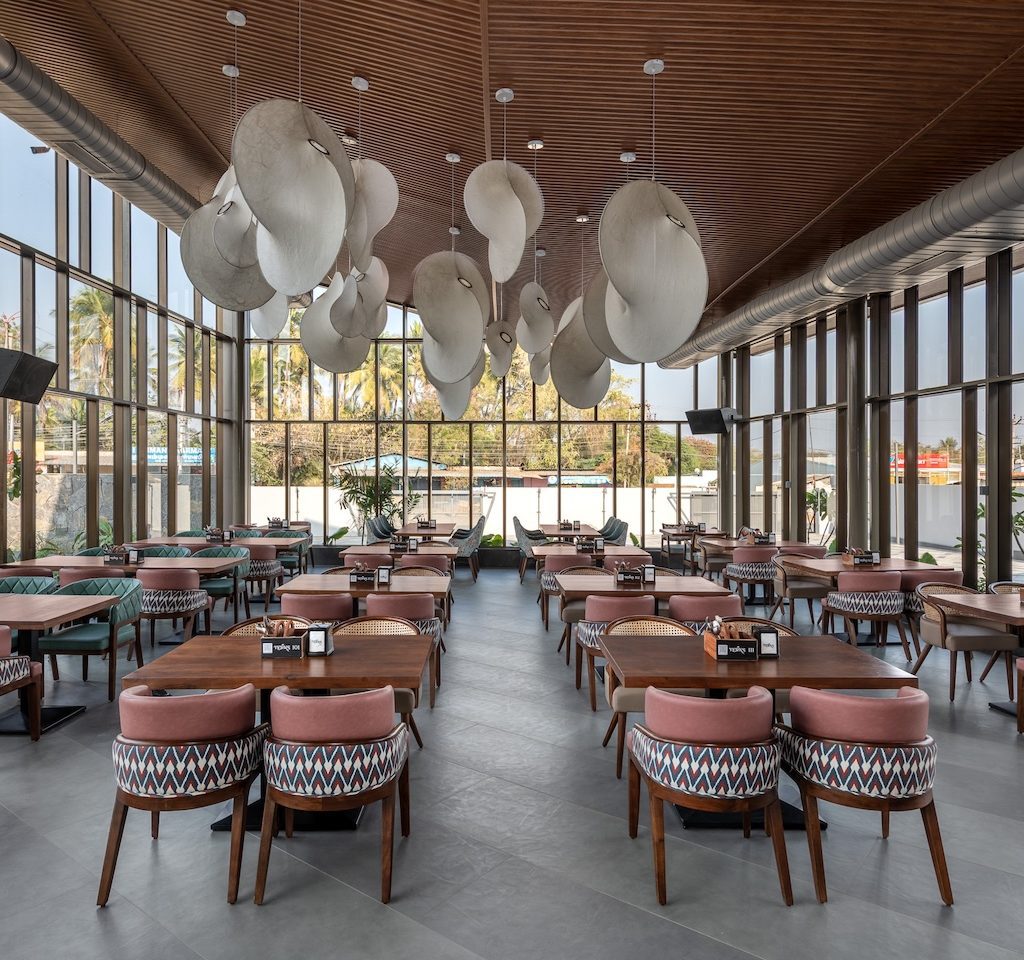
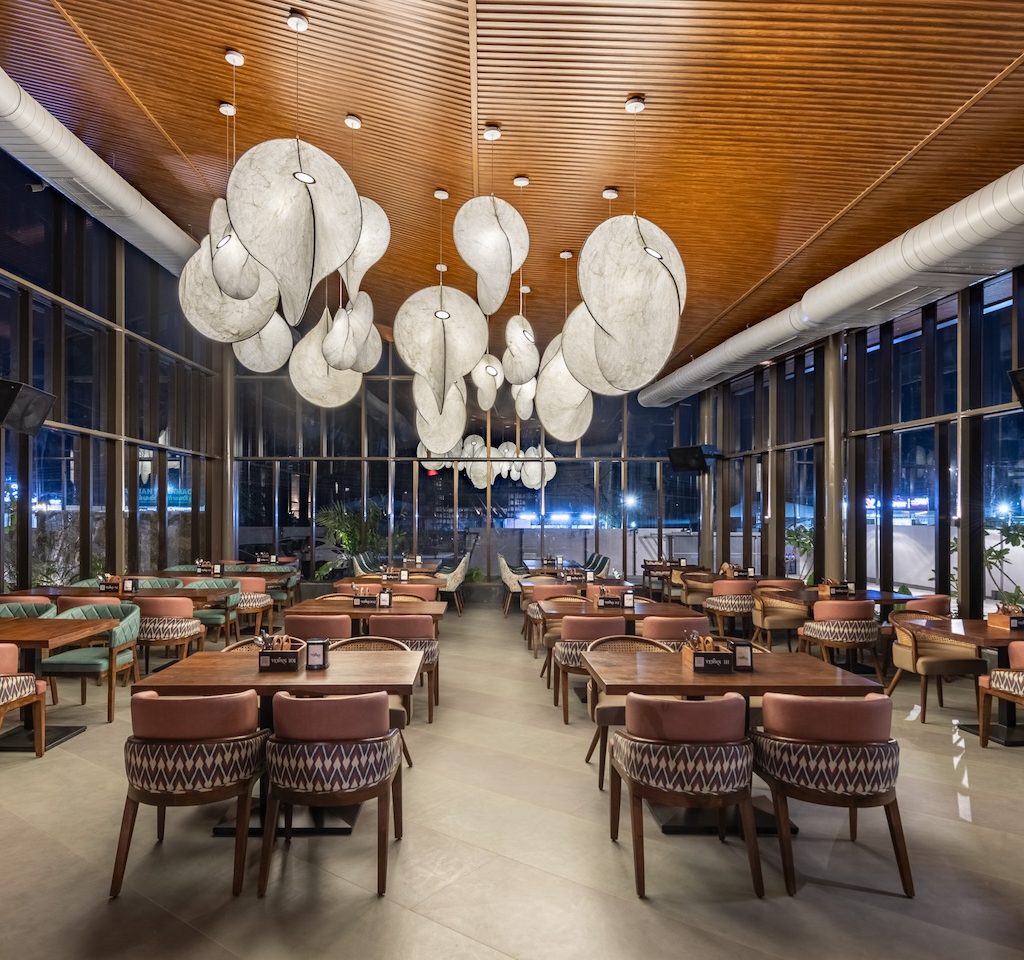
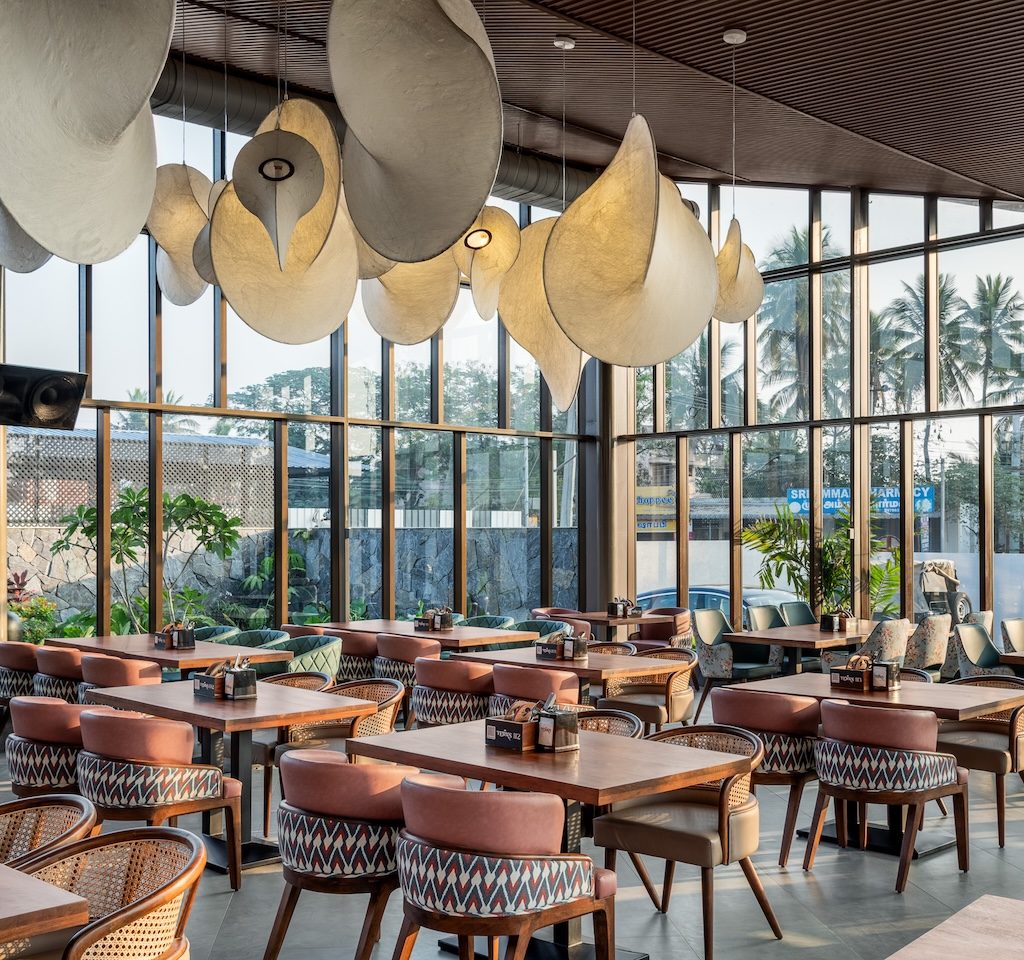
Warmth and refinement guide the palette. Rich wooden soffits line the expressive roof, their depth contrasting with slender exposed steel columns and frames that lend lightness. Generous glass façades dissolve boundaries between inside and out.
Walls combine locally sourced natural stone, exposed concrete and smooth plaster, creating a dialogue between texture, roughness and refinement.
Flooring materials are chosen for durability and spatial hierarchy: natural stone pavers and textured ceramic tiles outdoors, darker matte-finish stone inside to create a cosy, evening-ready ambience. Granite defines weather-exposed dining areas, ensuring resilience without compromising elegance.
The challenges
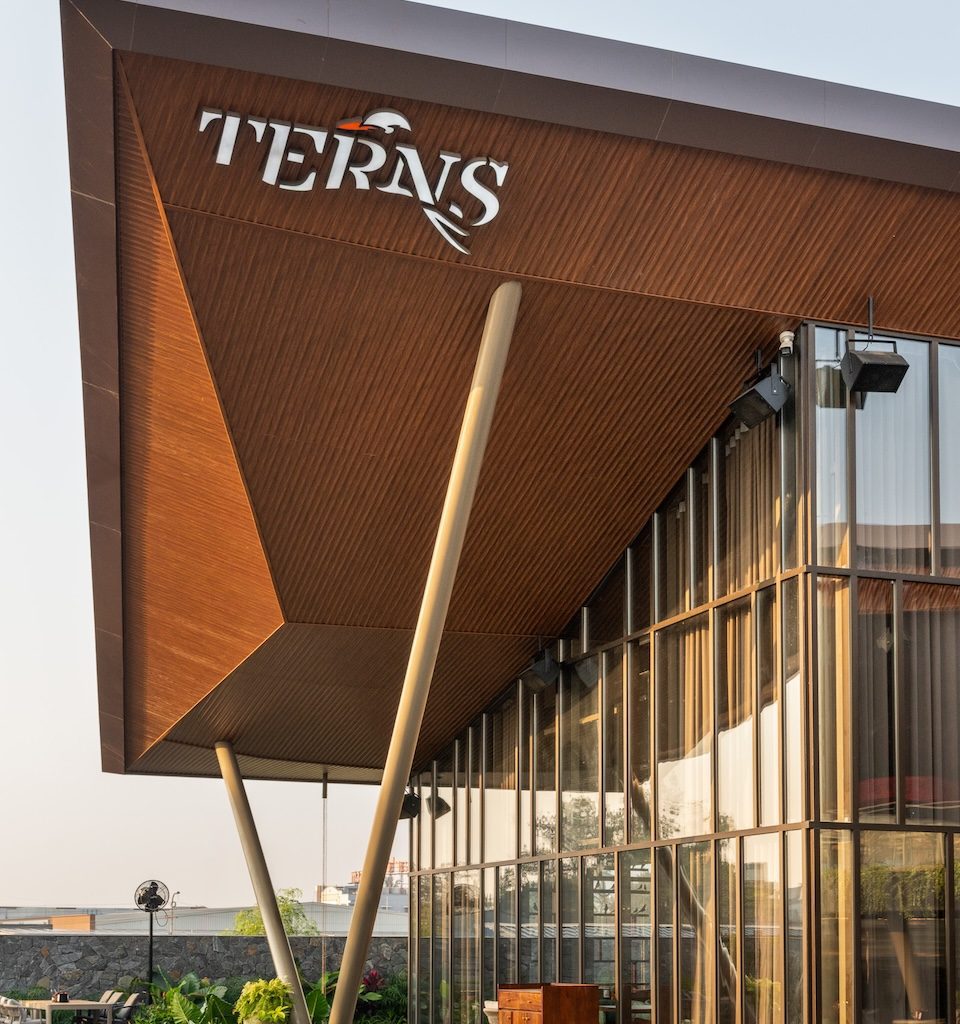
Realising the dramatic floating rooflines required structural precision. Large cantilevers demanded careful engineering to maintain slenderness without compromising stability. Achieving this balance — expressive form supported by structural logic — required close collaboration between architect and structural team. Integrating water, landscape and open spans while maintaining seamless operations added further layers of complexity.
The highlights
The central reflective pool is the project’s defining gesture, mirroring architecture and lighting while enhancing the microclimate. Indoor–outdoor transitions unfold effortlessly through glass, level changes and landscape integration, ensuring every seating zone maintains a relationship with nature.
The exposed steel structure, detailed with care, adds contemporary sharpness and visual finesse, underscoring the precision behind the floating roof forms.
The takeaway
Terns demonstrates that bold architectural ideas can coexist with structural logic when both work in harmony. From cantilevered roof planes to open-plan dining zones, the project reaffirms the value of integrating engineering clarity with design ambition. The space’s transformation from sunlit calm to evening glow captures the essence of the restobar — a place where architecture and atmosphere shift seamlessly with time.
Fact file
Project: Terns
Design firm: Ksquare Architects
Area: 31,529 sq ft
Location: Coimbatore
Principal architect: Krishna Kishore
Design team: Solai Karthikeyan, Abubakkar Sithik
Add a Comment