
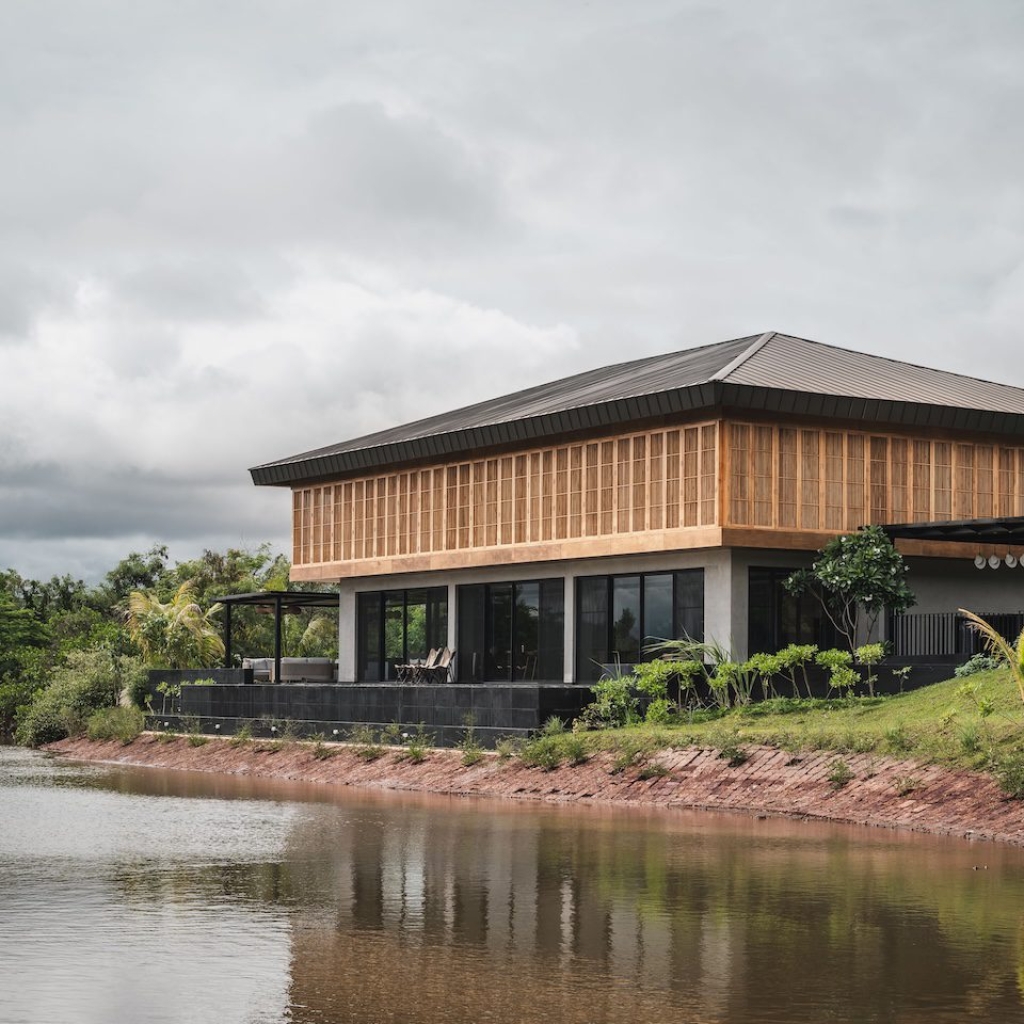
We Design Studio crafts the Salt Pan House in Goa as an elemental coastal retreat shaped by water, light and landscape. Designed as a sculptural residence on the edge of a salt pan, he home embraces an architectural language grounded in material purity, climatic sensitivity and an intimate connection to its site.
Curated by: Deepa Nair
Photographs: Ishita Sitwala; courtesy We Design Studio
The site
Salt Pan House appears in the landscape almost as if it has been carved out of the elements themselves. Framed by a salt pan on one side and the Chapora River on the other, the structure seems to rise from water, wind and coastal light. It is within this powerful setting that We Design Studio shaped this 6,000 sq ft villa in Agarvado, Goa, approaching the project with a clarity that strips architecture down to its purest expression. Rather than impose form, the studio allowed climate, material and landscape to lead, creating a residence where the natural forces take on the role of storytellers. The house becomes a silent mediator between land and water, grounded in its place yet deeply responsive to the world around it.
The site sits on a secluded 10-acre property bordered by the river on one side and a dense mangrove belt on the other. Three man-made salt pans define the terrain, creating a reflective landscape that immediately establishes both the mood and the architectural direction. These pans act not only as the conceptual anchor for the home but also as its physical determinant, influencing orientation, proportion and the way the structure reaches outward into the landscape. Positioned along the southern edge of the largest salt pan, the house is able to take in long, uninterrupted views across the shimmering water.
The brief
The clients wanted a home that felt deeply rooted in its setting, one that responded to climate and landscape with restraint and clarity. This intention aligned seamlessly with the vision at We Design Studio—led by architects Nupur Shah and Saahil Parikh—a practice that works on holistic and highly customised design solutions and believes in building with restraint, order and control. Together, they imagined an architecture that was unadulterated in its expression, guided by honesty of material and free from unnecessary flourish. Cement and wood became the primary construction materials, chosen for their integrity and ability to age gracefully in a coastal environment.
Functionally, the villa had to support two scales of living. It needed the capacity to host large gatherings while remaining intimate and comfortable for everyday life. The programme included indoor and outdoor living areas, a pool, wellness spaces, guest suites and spaces for recreation, each one designed to open out to the landscape in a meaningful way. Aesthetically, the brief called for a home grounded in indigenous craft and a visual language that felt timeless, allowing the architecture to sit lightly within its expansive natural context.
The design intent
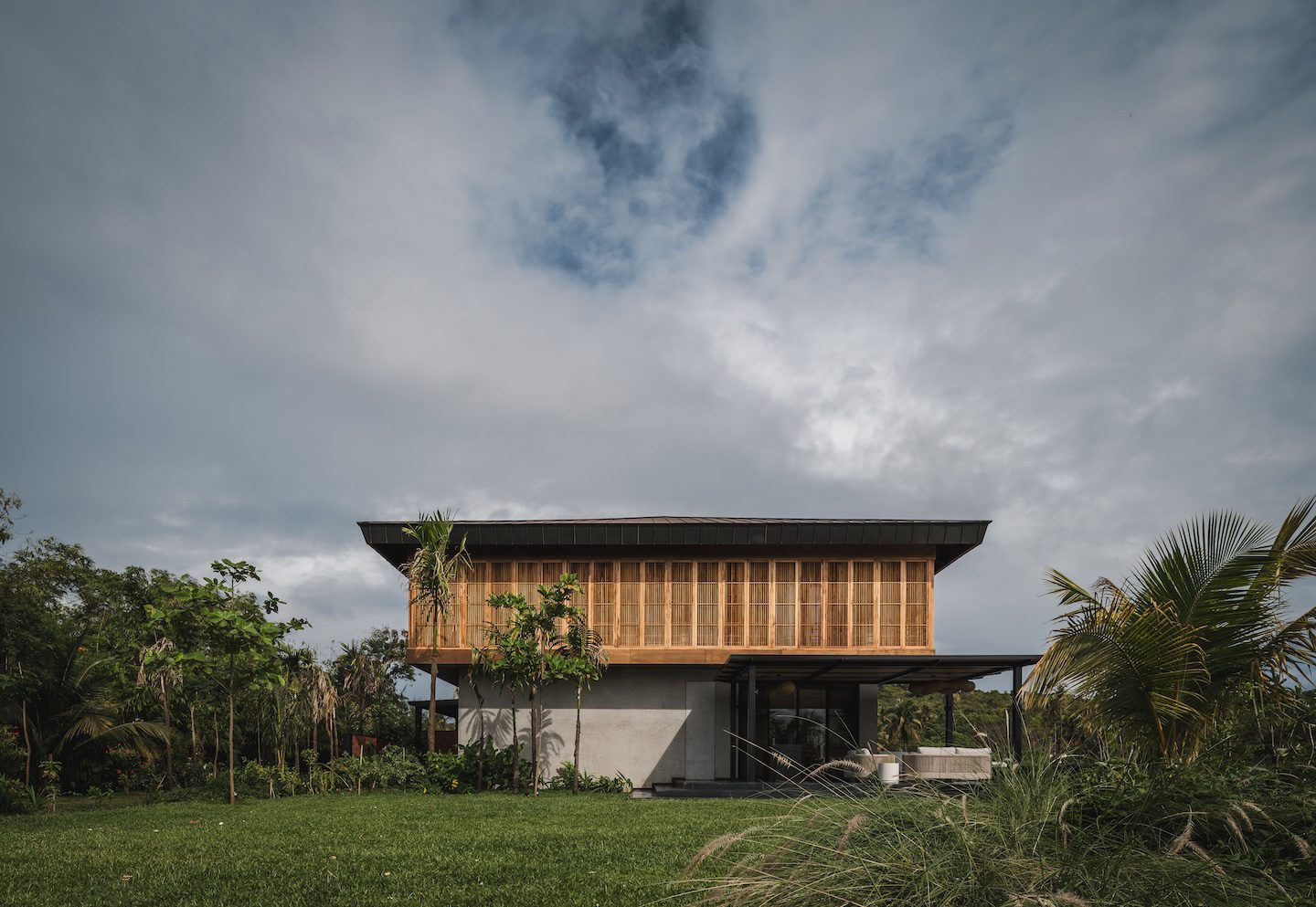
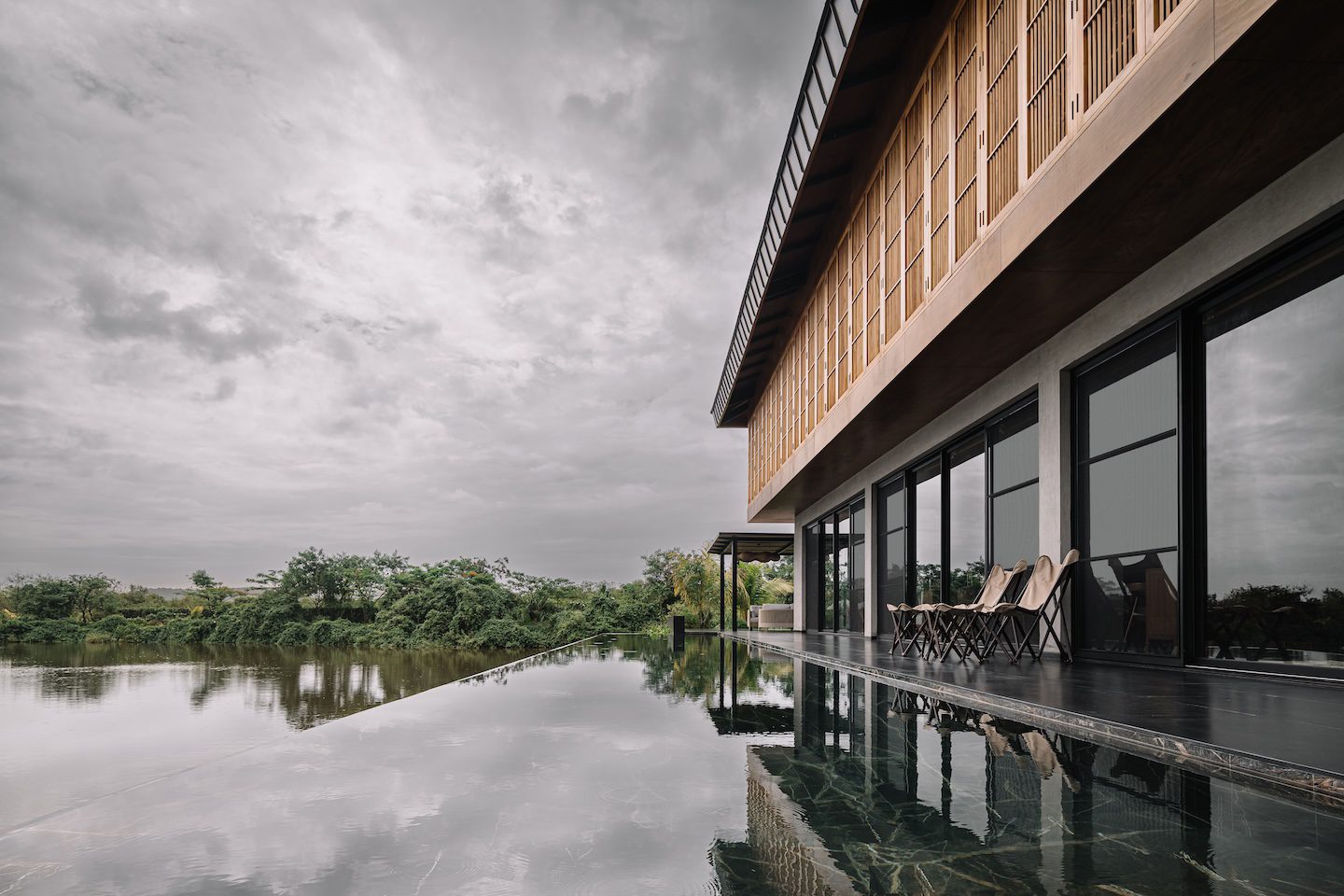
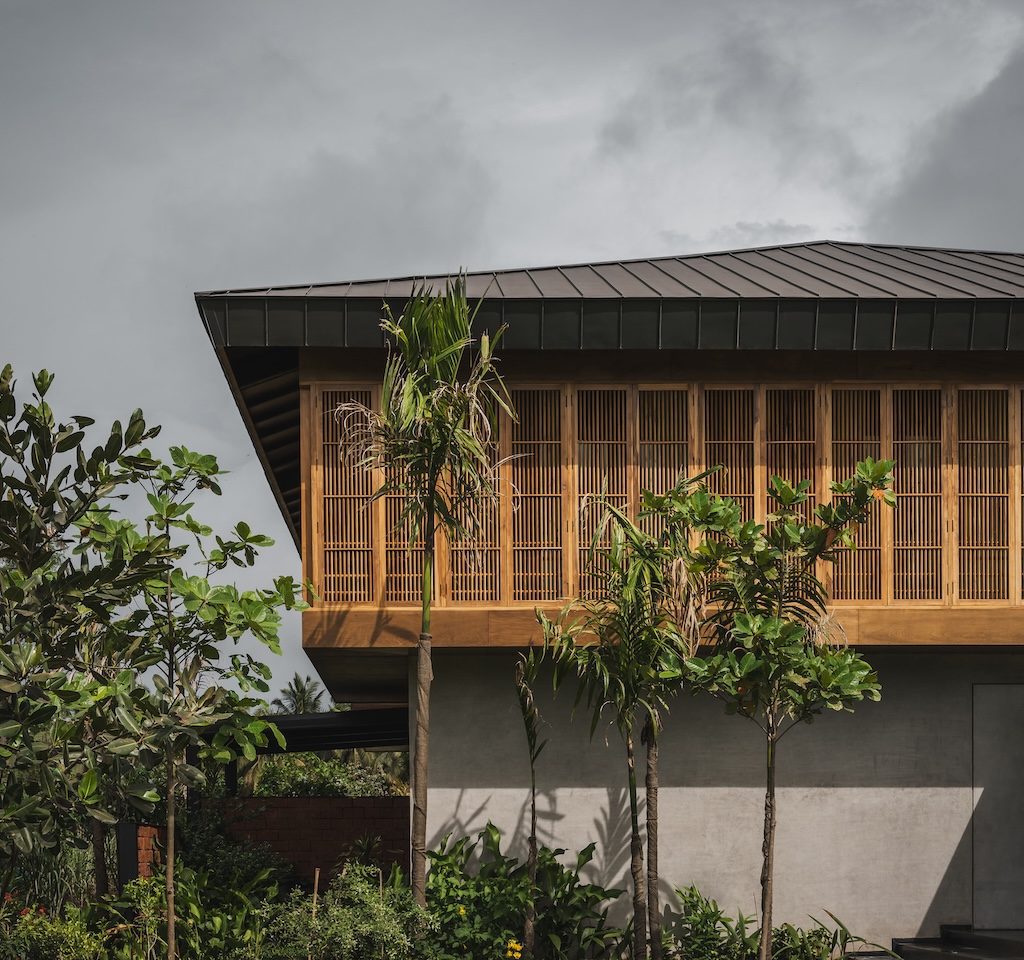
The design rests on a philosophy of elemental architecture, where climate, context and material purity guided every decision. The home was not imagined as something to be adorned, but as something to be uncovered slowly, allowing its form and experience to emerge through light, proportion and material. “The intent was to craft a vertical triptych of materials: a raw concrete base; a teakwood louvered middle volume; and a lightweight titanium-zinc alloy roof. This layered approach balances mass and lightness, opacity and permeability, creating a home that sits quietly in the landscape yet carries a powerful presence,” explains Sahil.
The architectural form
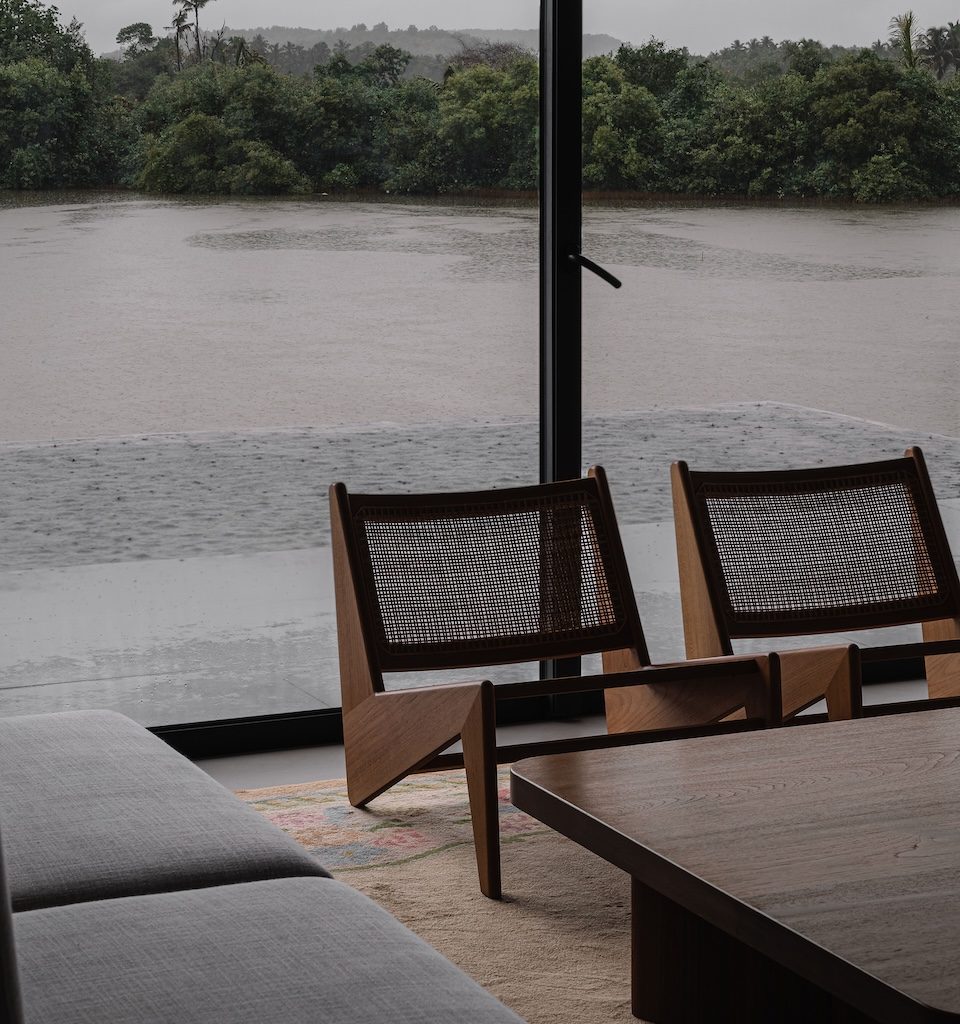
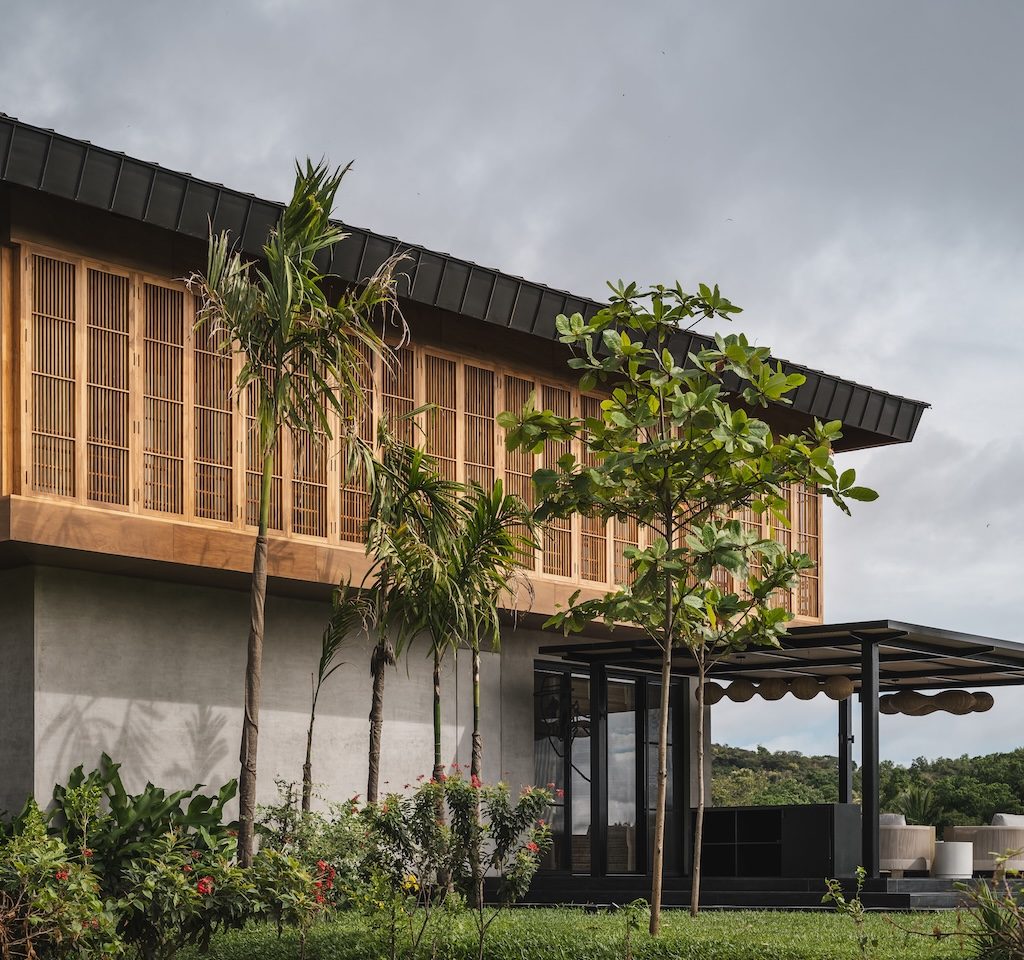
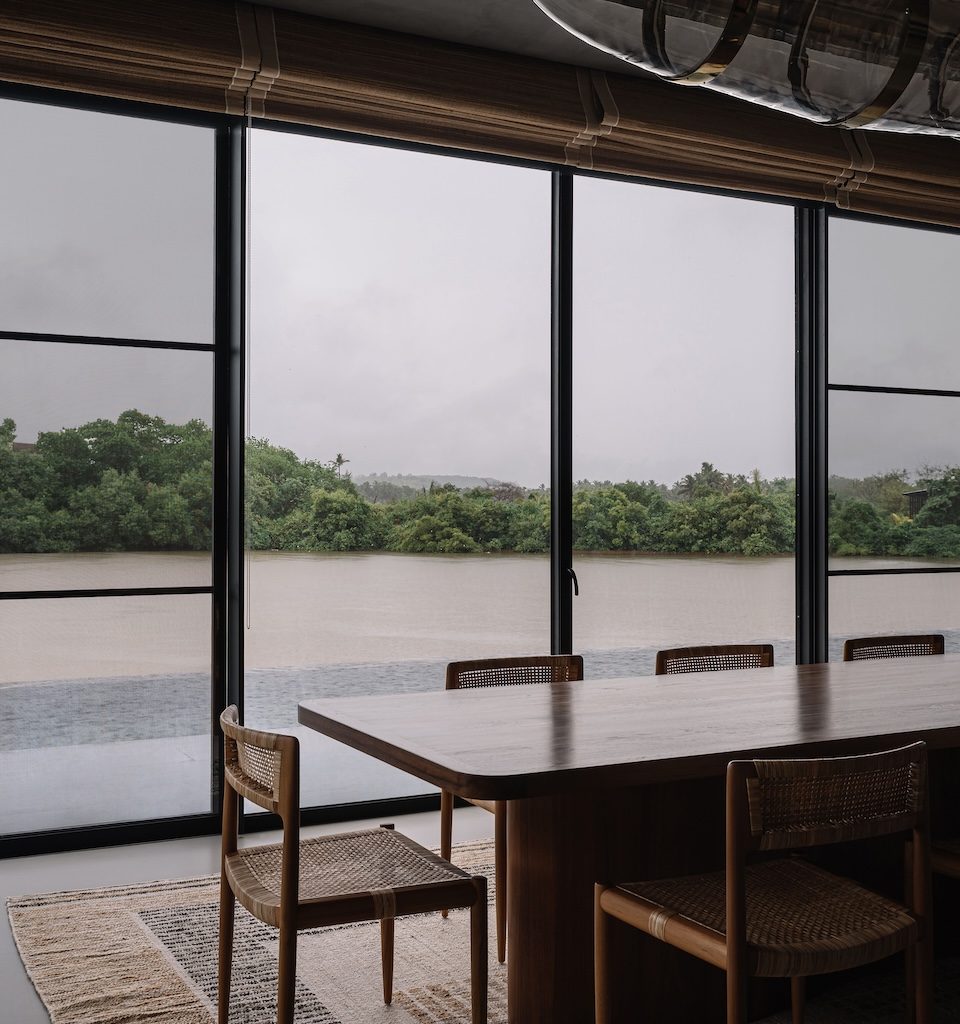
The architectural approach remains pure and considered. A rectilinear ground plus one volume, articulated through concrete columns, beams and slabs, creates a strong structural frame. The home comprises of a series of three volumes stacked one above the other; each different in size, shape, and materiality. A wooden louvered box is sandwiched between a smaller concrete volume and a four-sided sloping cantilevered zinc pitched roof. Full length windows open the interior to the water on the north and east, and to lush green foliage on the south and west, ensuring an uninterrupted dialogue with the surroundings.
The civil intervention
Given the strict coastal regulatory norms, the architectural footprint required precise calibration. “Civil interventions included re-tailoring the site edges to accommodate a linear infinity pool which was aligned with the salt pan, constructing a coffer dam for pool execution, and integrating an open municipal drain within the site planning. Spatially, the ground plane was sculpted to allow seamless access between the residence, pool deck, and extended recreational zones without disturbing the existing ecological patterns,” says Nupur.
The spatial configuration
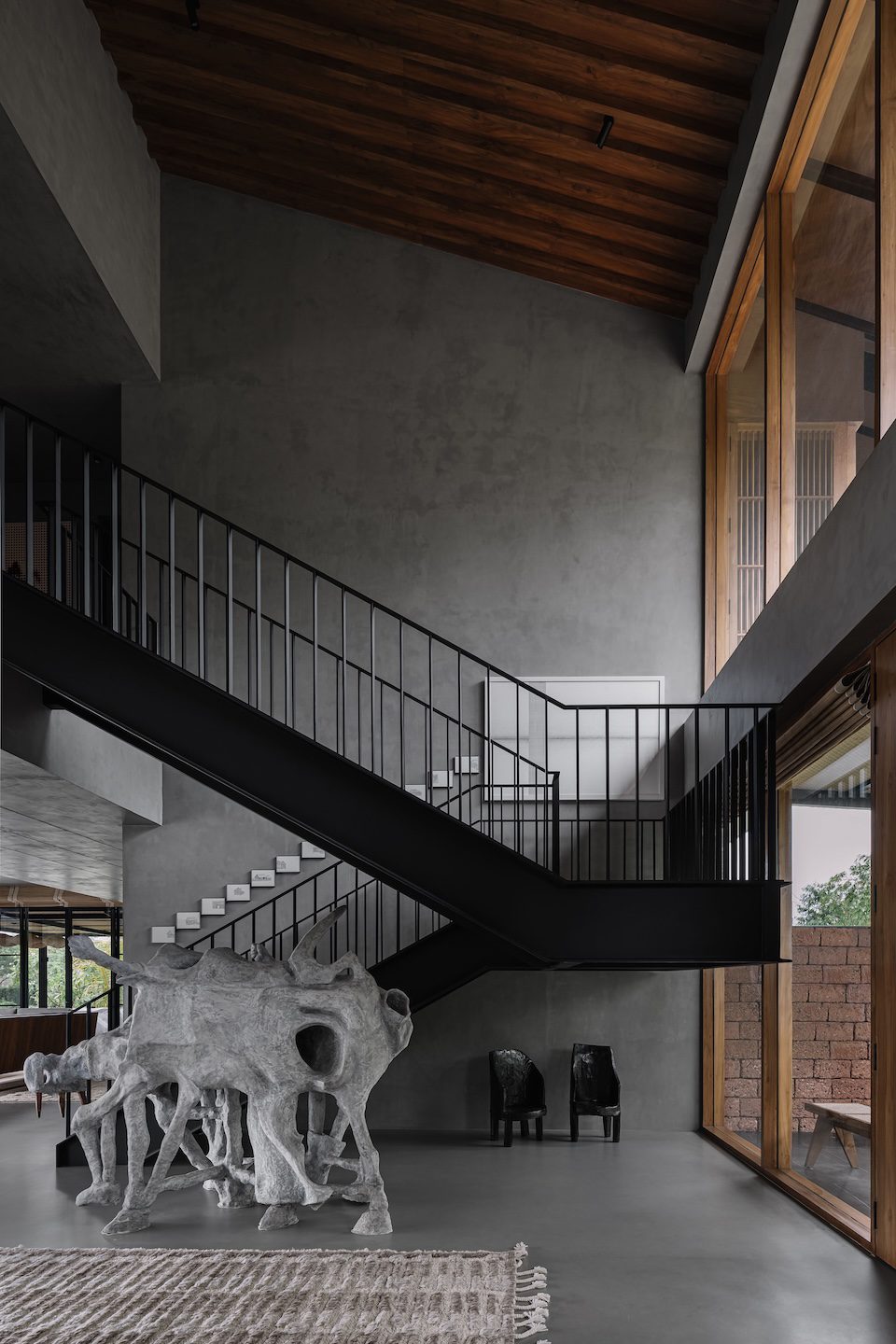
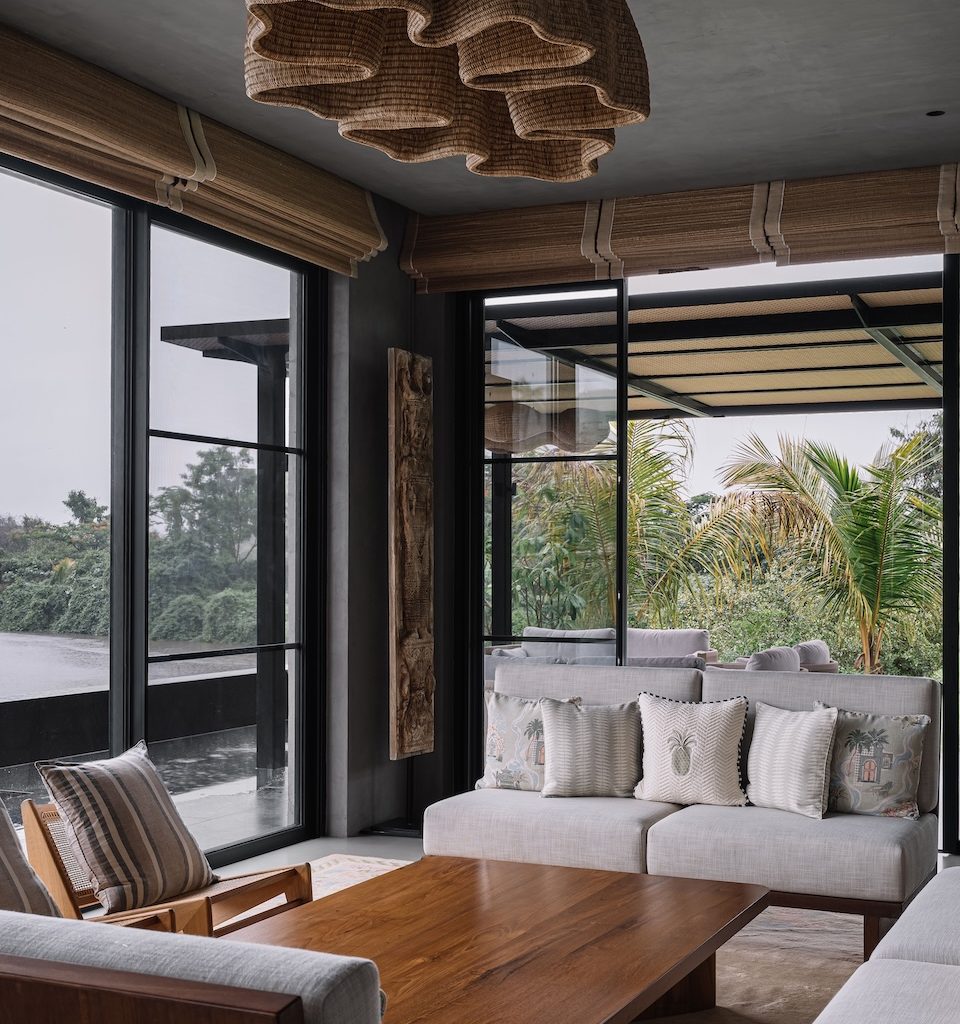
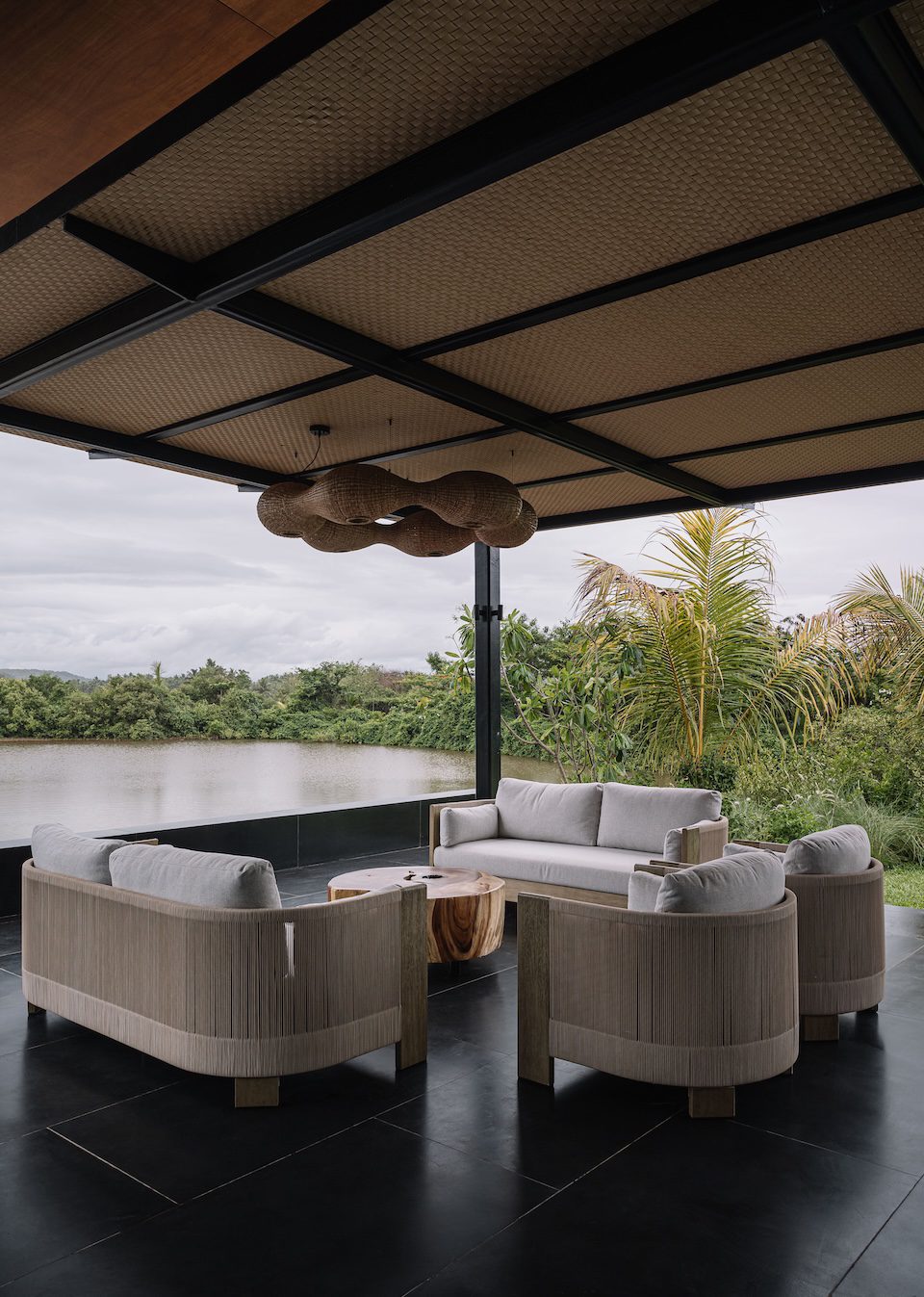
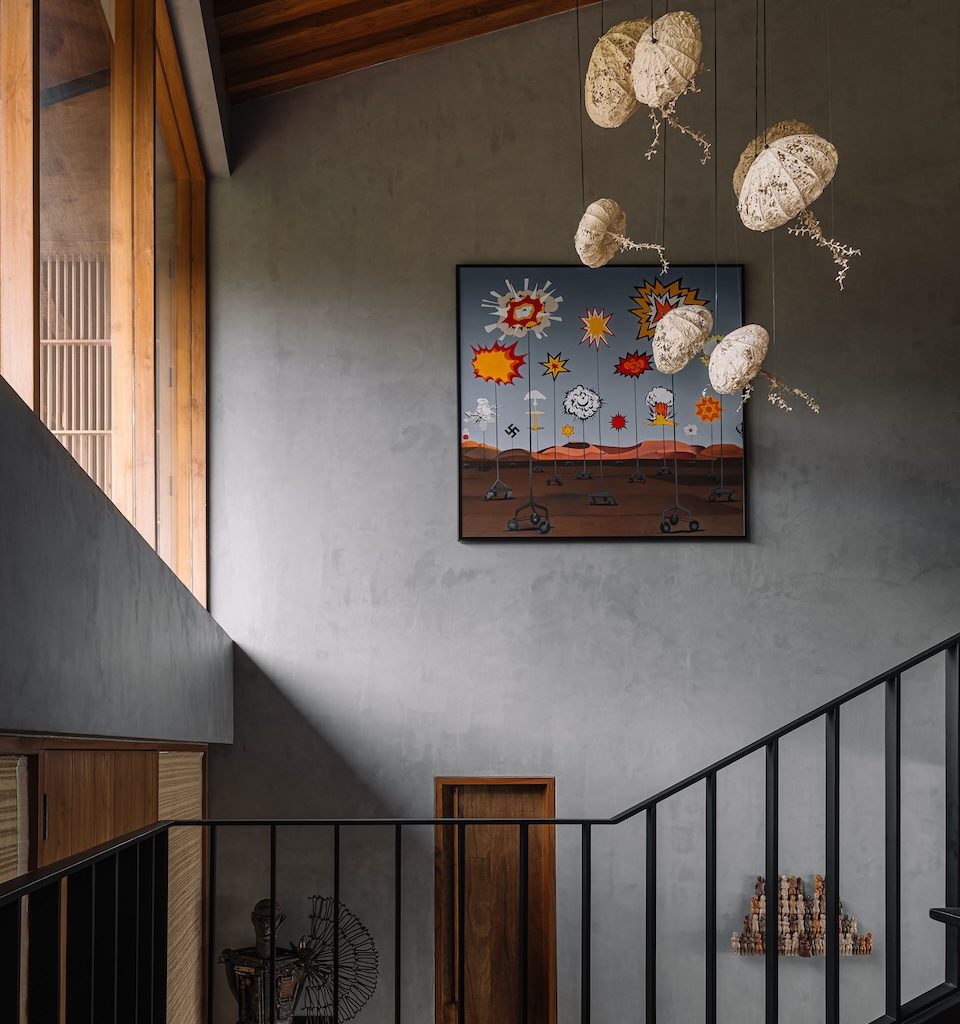
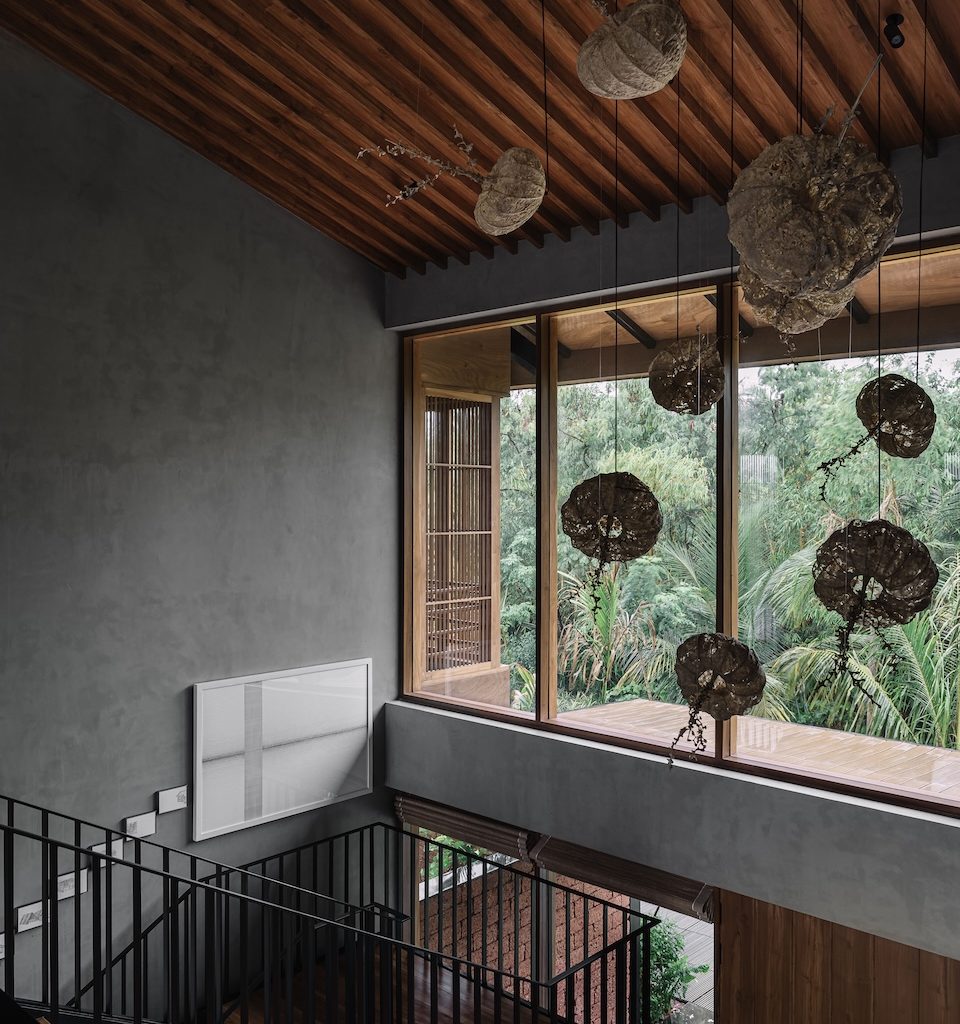
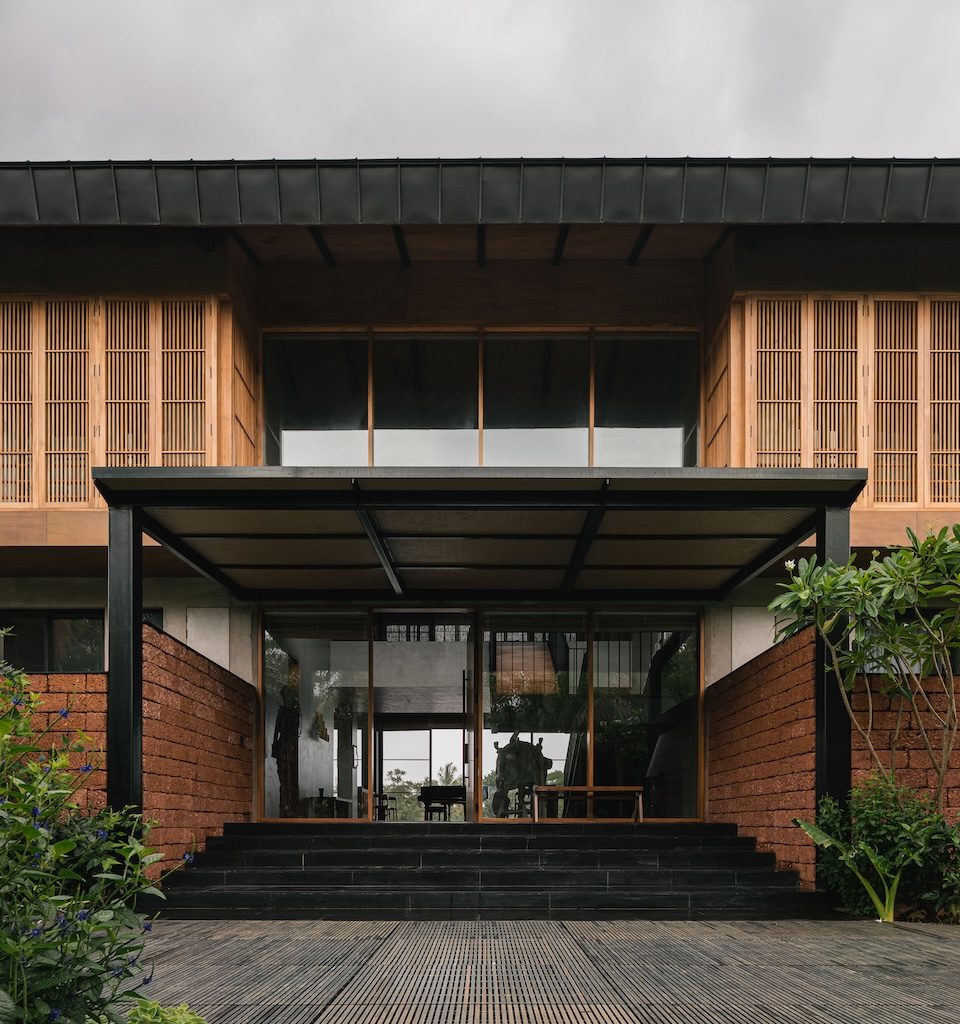
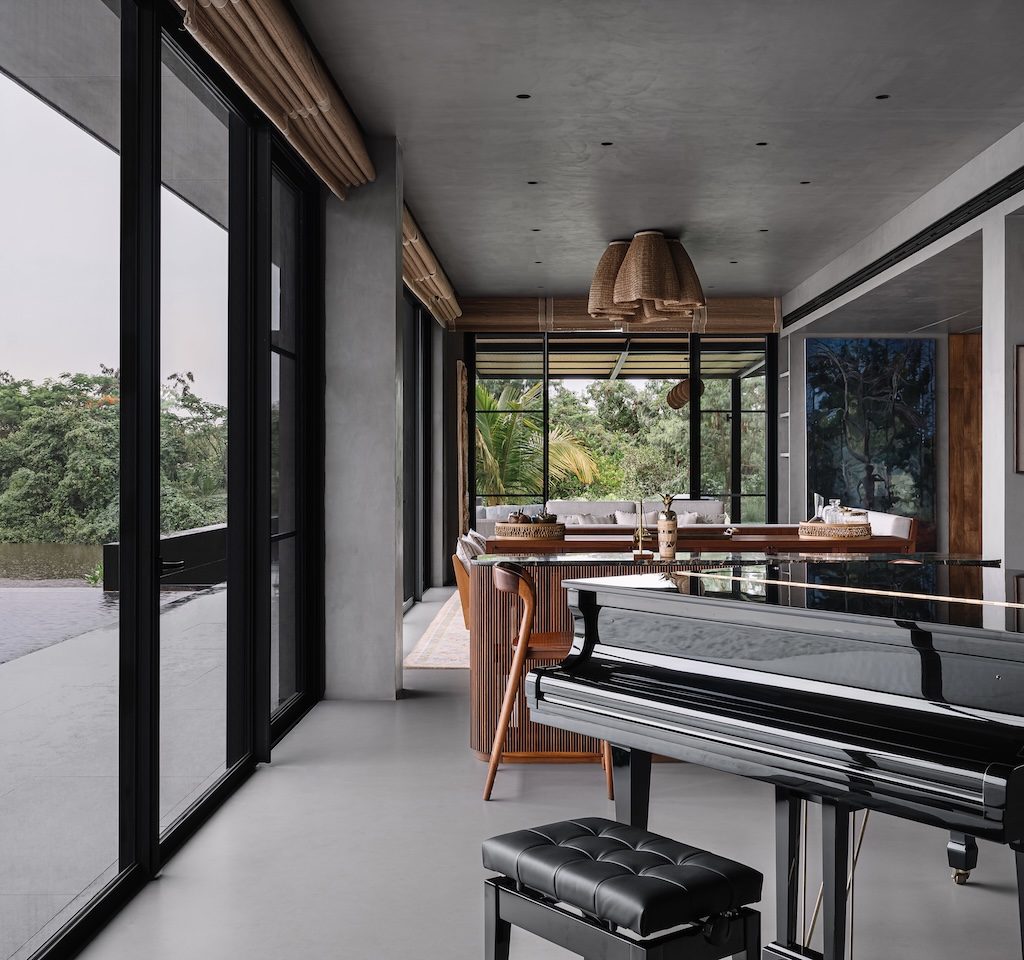
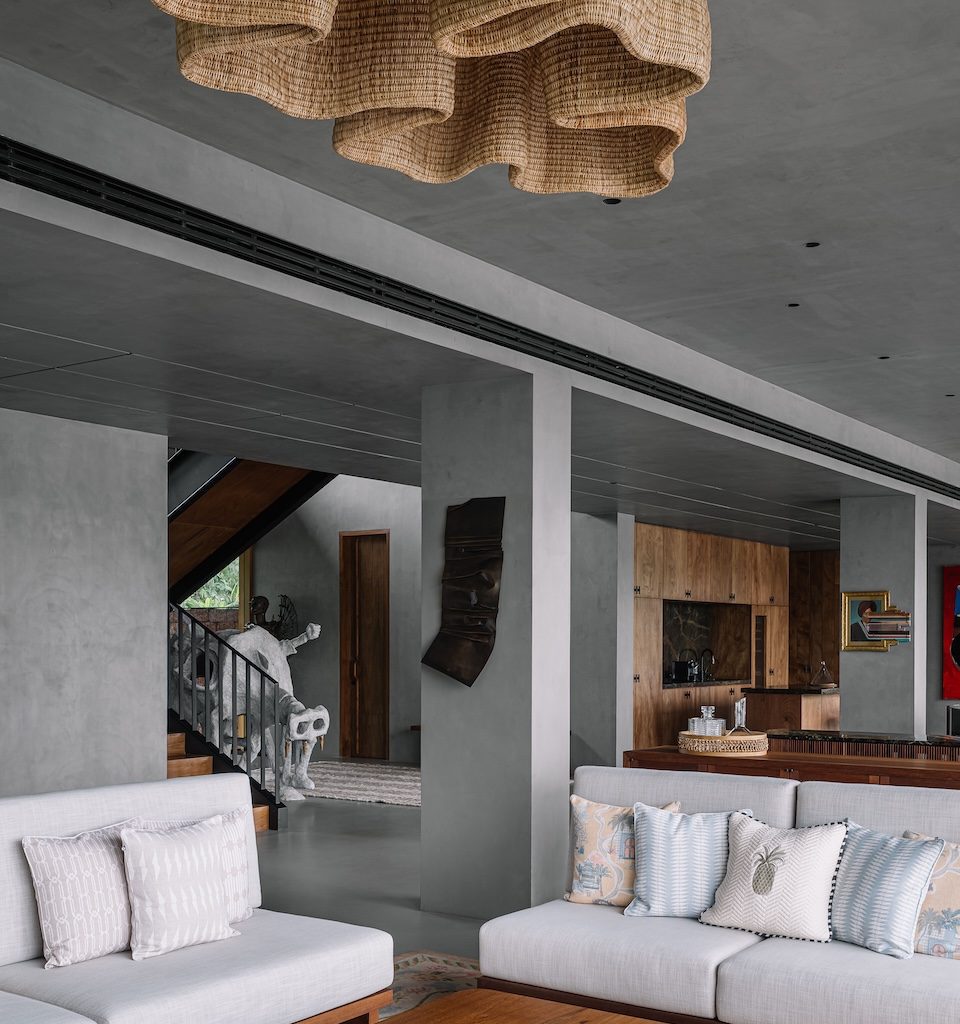
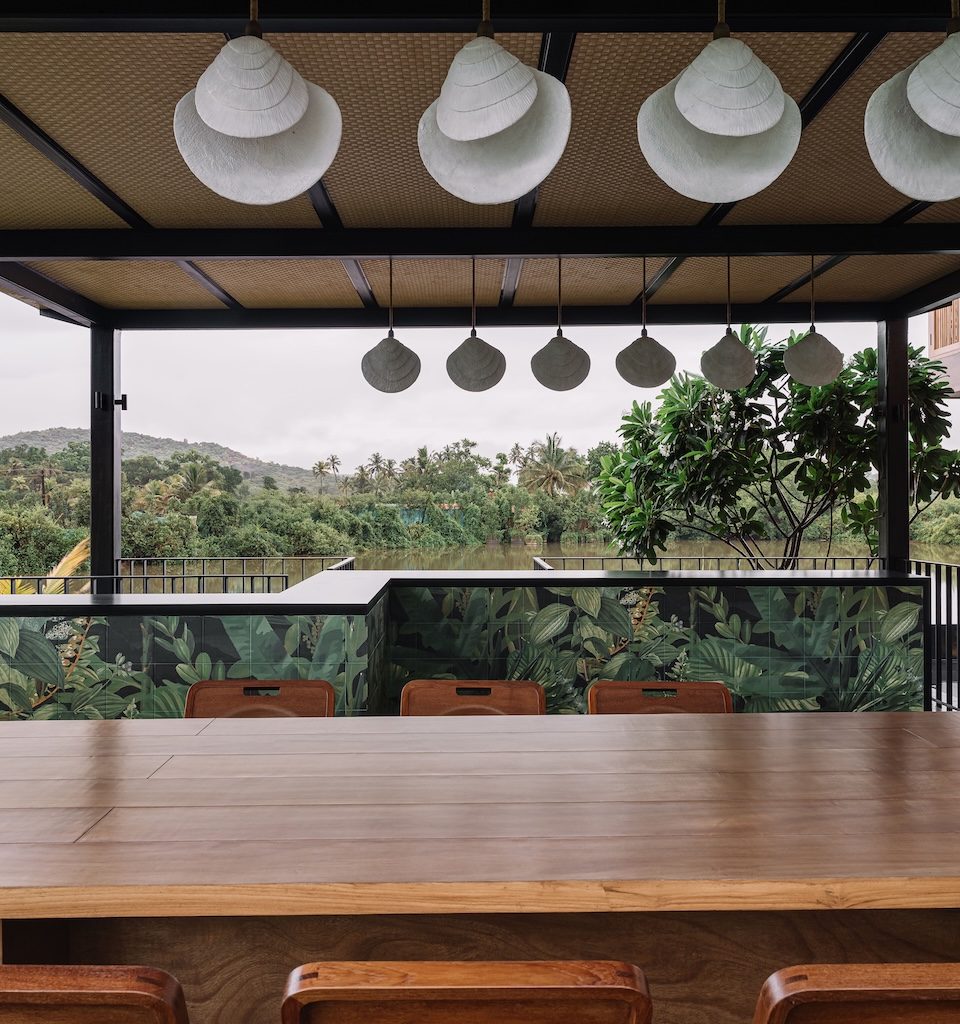
The spatial journey of Salt Pan House is designed as a gentle unfolding, beginning at a steel framed entrance canopy where laterite walls frame the approach and guide visitors into a soaring double height lobby. This space acts as the central spine of the home, setting a calm but powerful tone. From here, the ground floor opens into a generous sequence of living, dining and bar areas, all aligned toward the infinity pool and the salt pan beyond. Expansive glazing and deep verandahs allow the interior to dissolve into the landscape, bringing water, sky and light into the daily flow of the home. Additionally, a guest bedroom was positioned to the south, facing the dense tropical foliage and offering a sense of retreat.
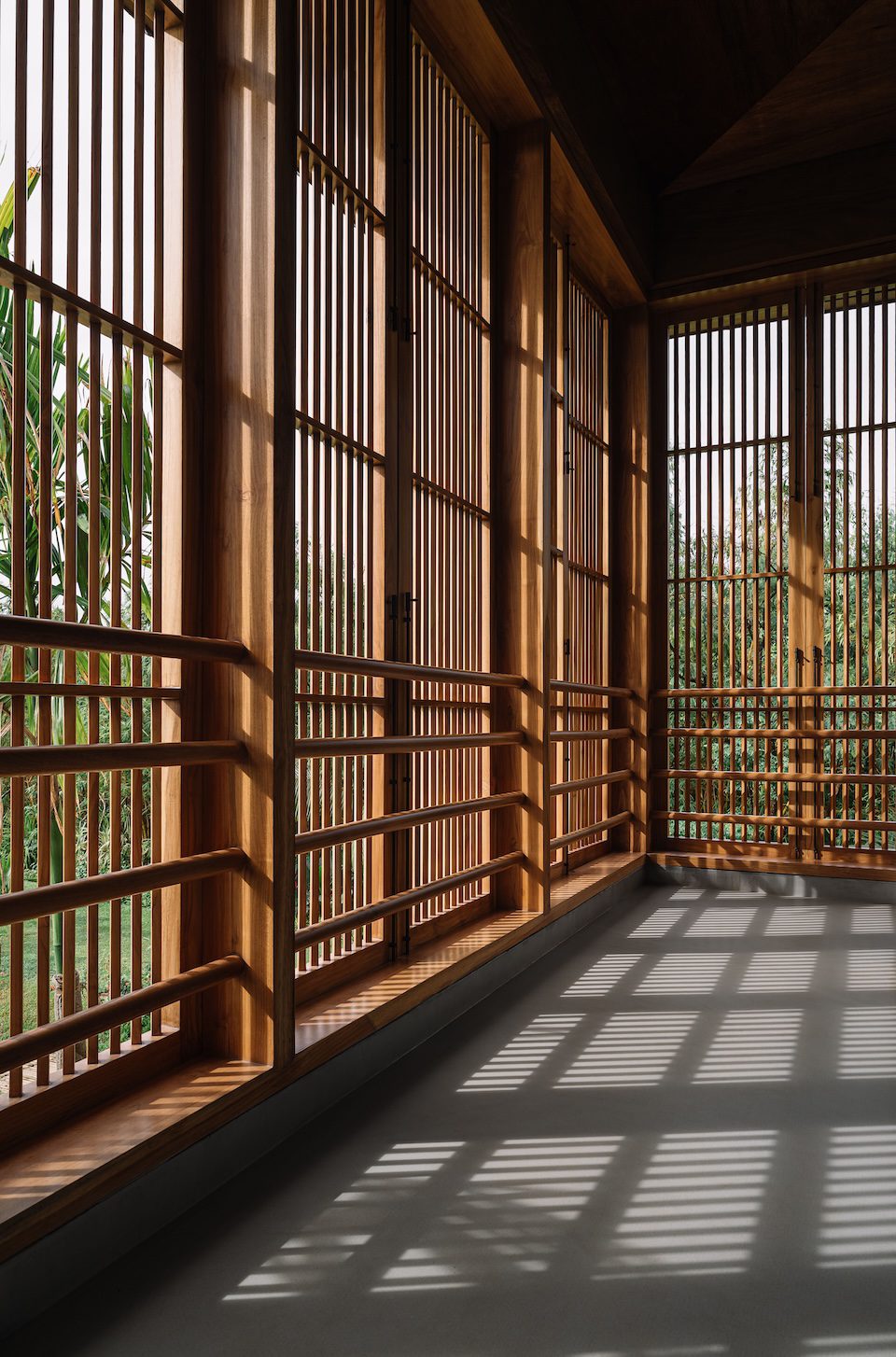
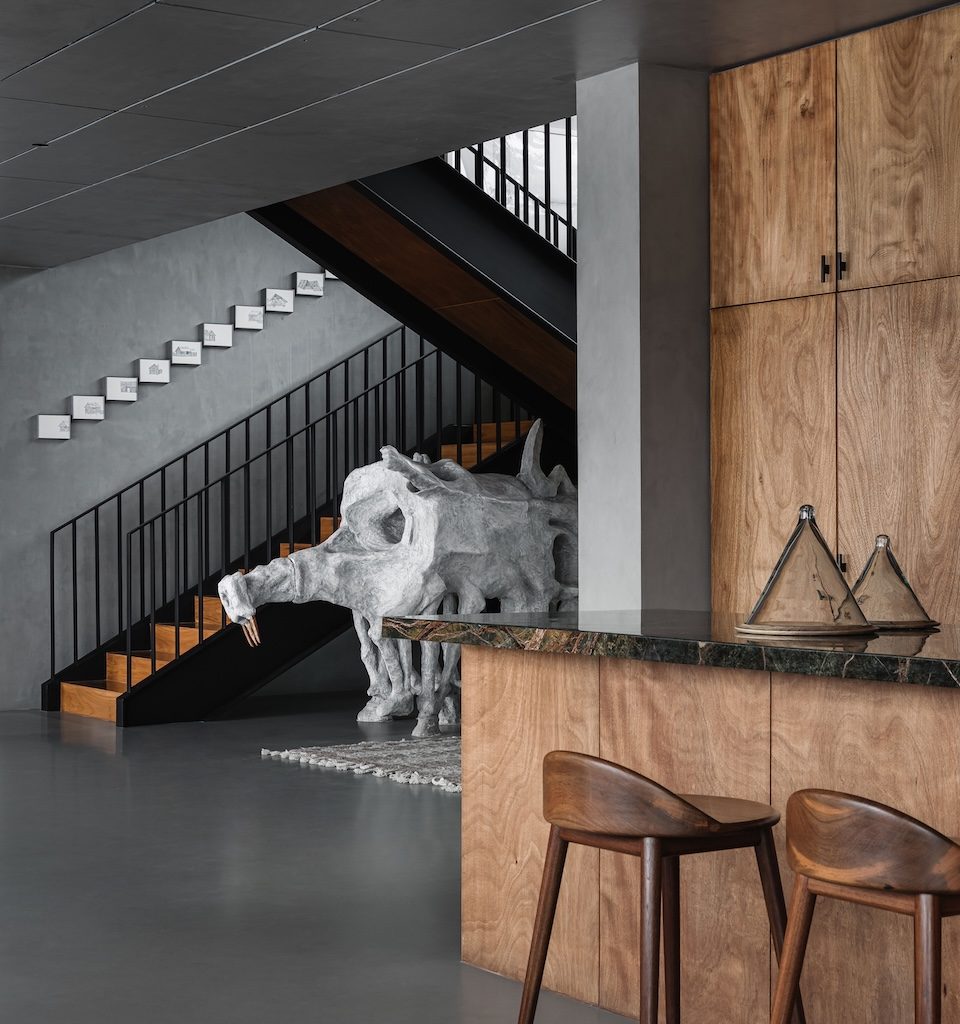
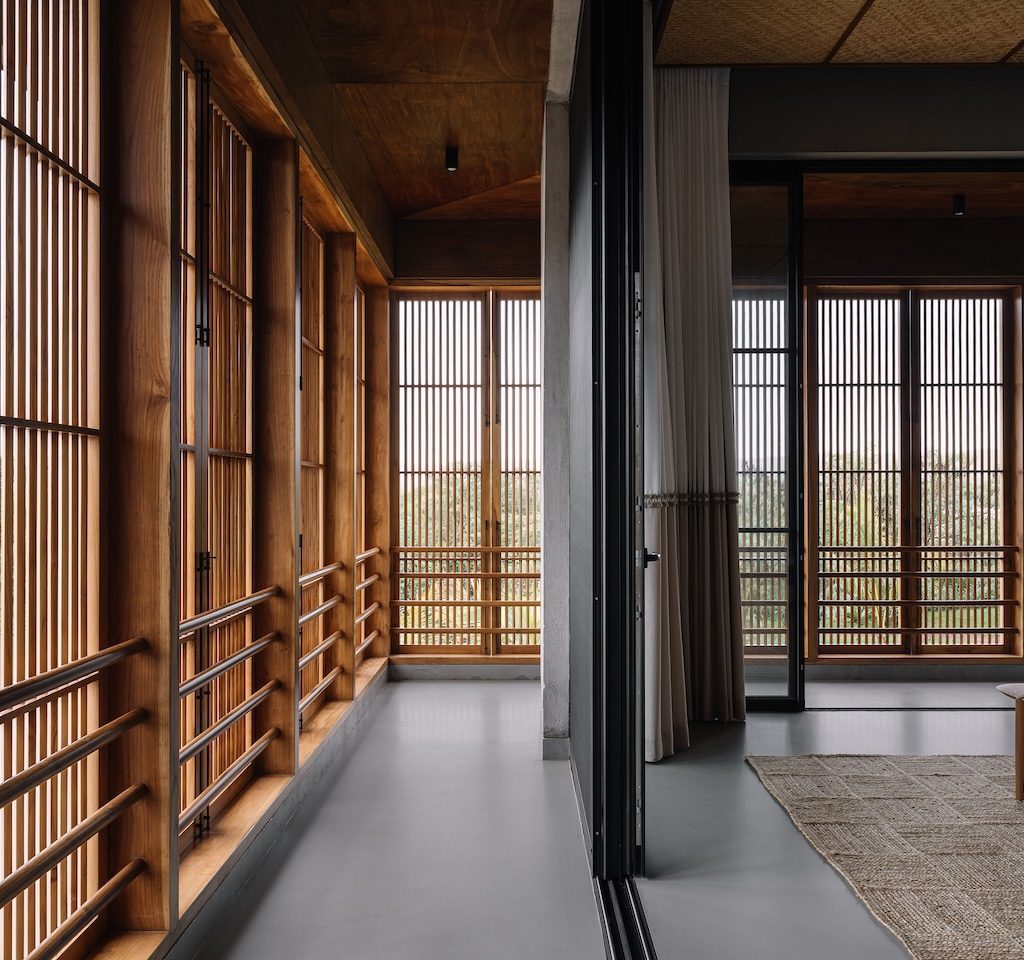
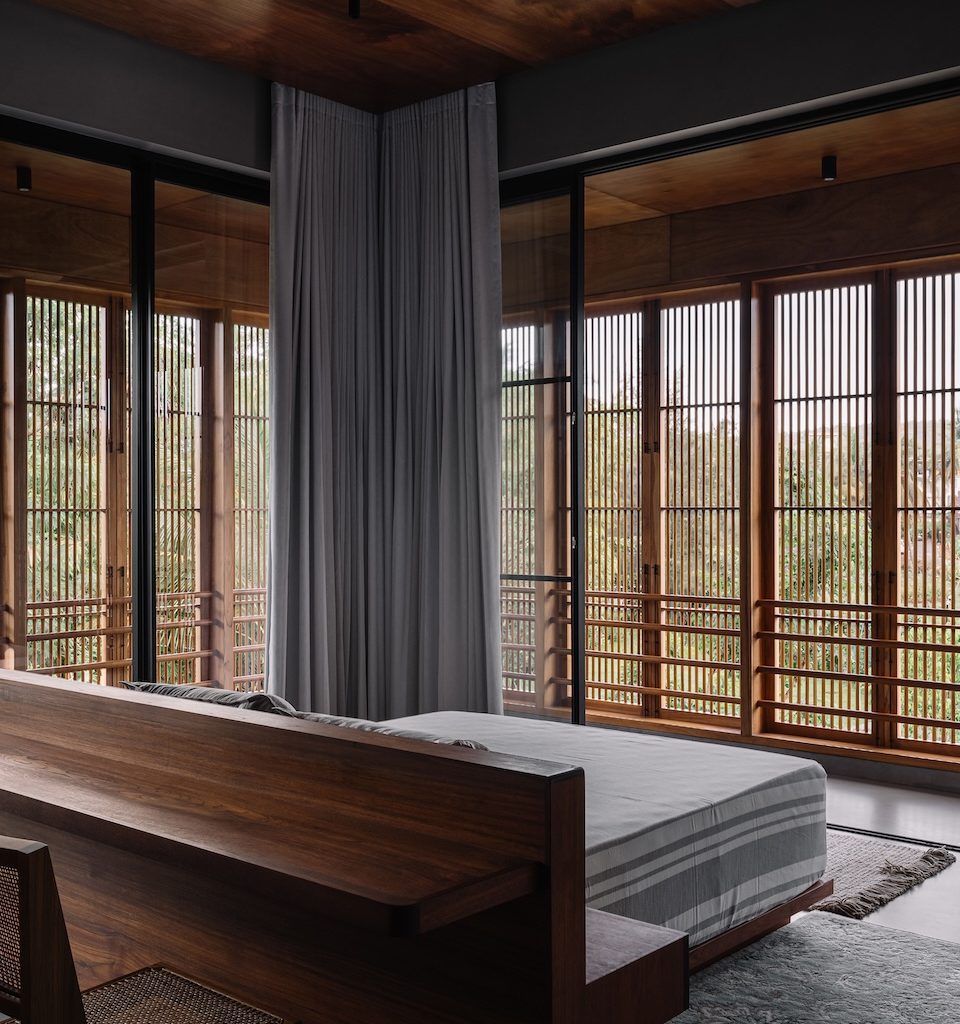
A freestanding metal staircase rises through the double-height lobby volume to the first floor. Four bedrooms and a family lounge are arranged along the perimeter of this level, connected by a continuous balcony lined with operable teakwood louvres. These screens soften the tropical sun, filter breezes and create a cohesive circulation loop that feels sheltered yet open. From the pool deck, a discreet stair descends to the lower ground level, where a spa with steam, sauna and changing rooms forms a dedicated zone for wellness.
Beyond the built structure, the site flows into a series of outdoor amenities, including a greenhouse, pickleball court, yoga pavilion, outdoor gym, and private jetty, each positioned to sustain a seamless relationship with the landscape and to extend the home’s ethos of contemplative, indoor-outdoor living across the ten-acre property.
The design and material details
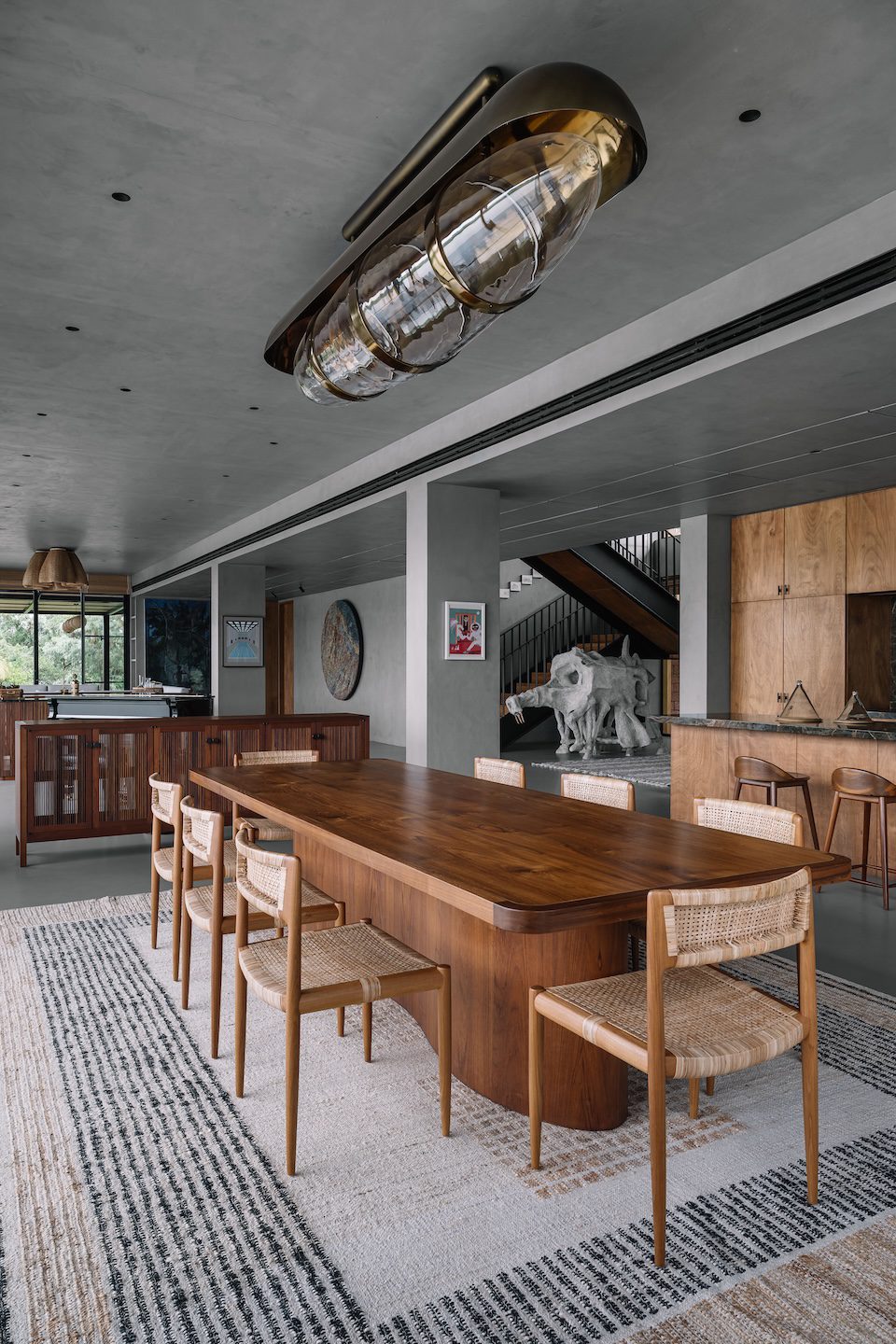
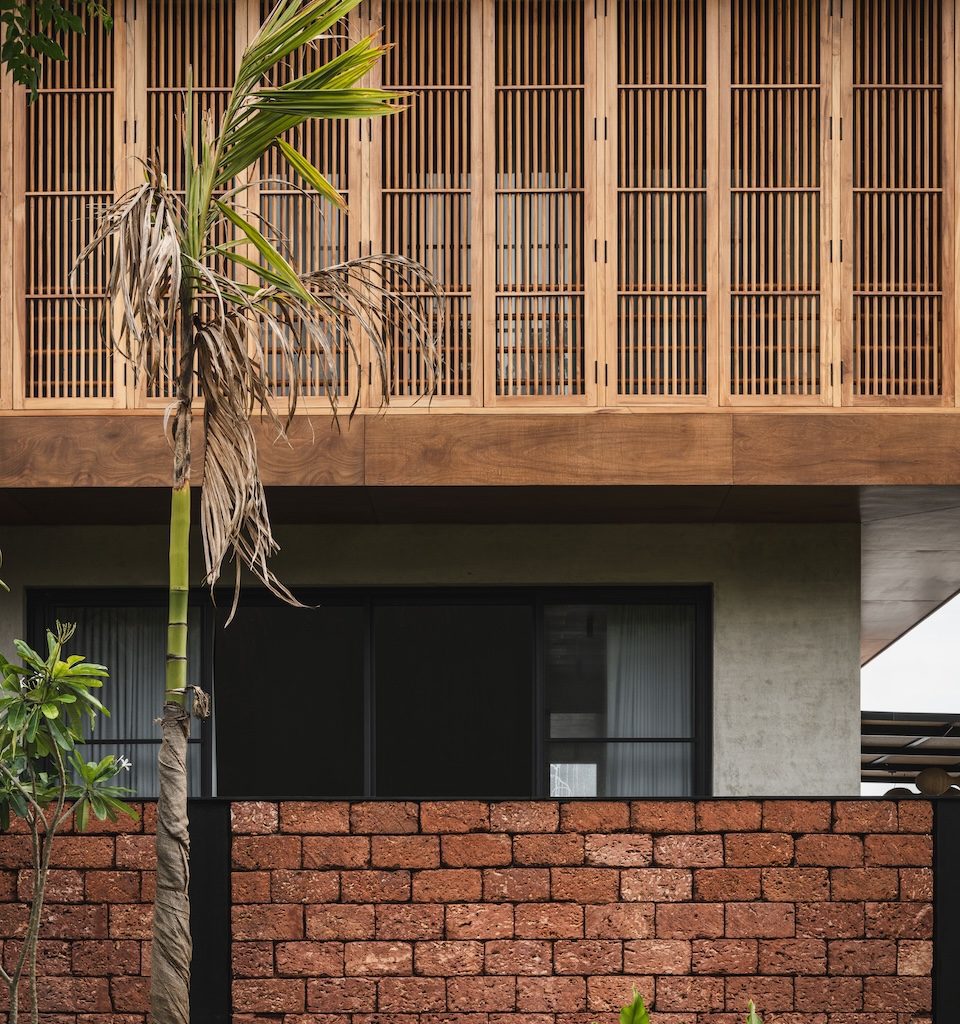
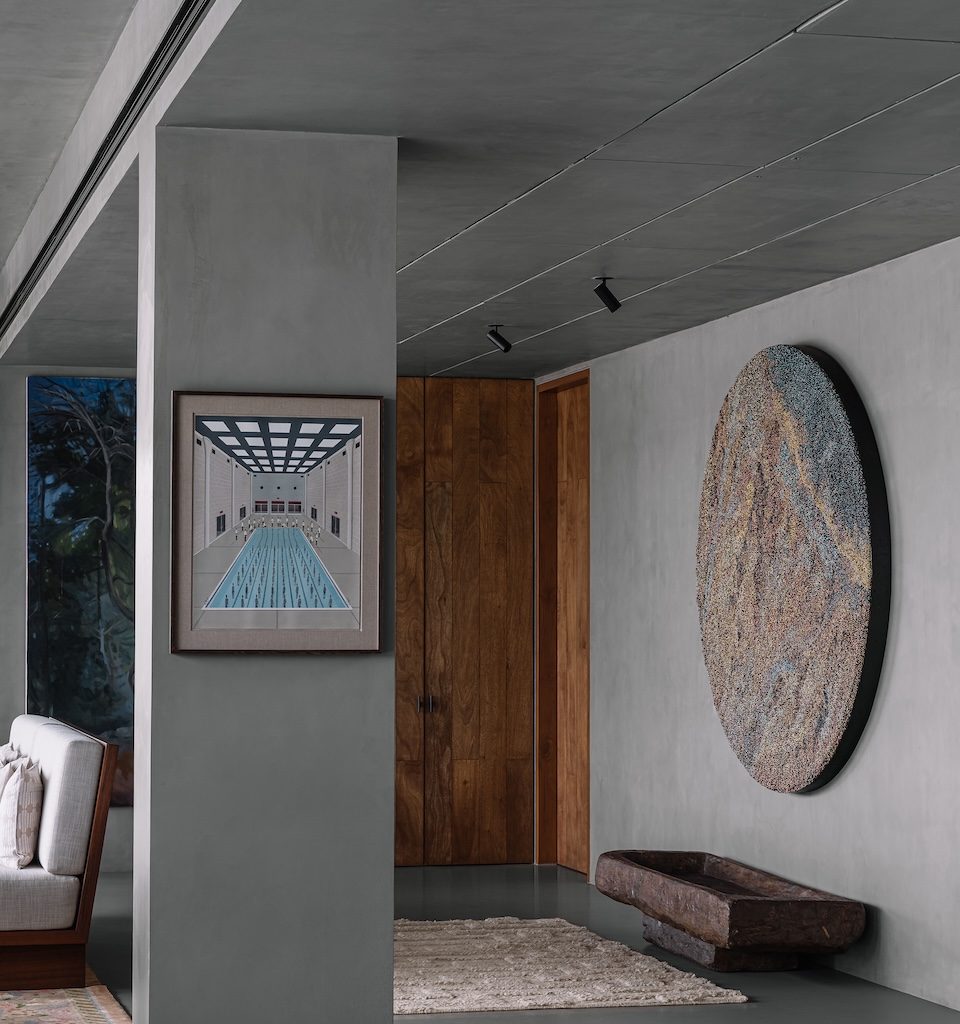
The design language of Salt Pan House is expressed through a three-part architectural composition—a sculpted exposed concrete base supports an upper volume wrapped in teakwood louvres, while a lightweight titanium zinc pitched roof completes the structure with a sense of lift. This palette continues at the entrance, where a steel framed canopy and laterite thresholds lead into a double height lobby finished in polished cement plaster and centred around a freestanding metal staircase.
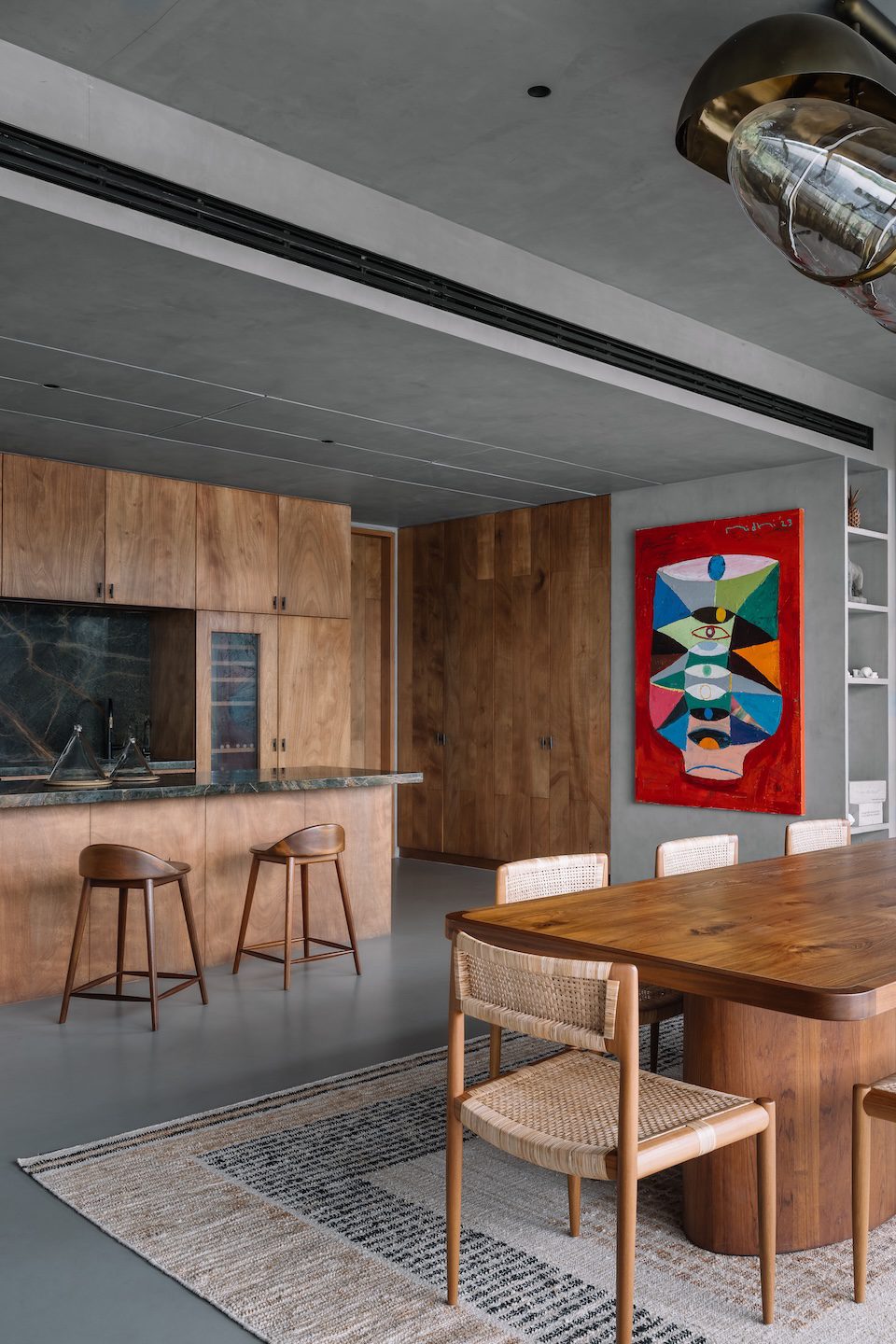
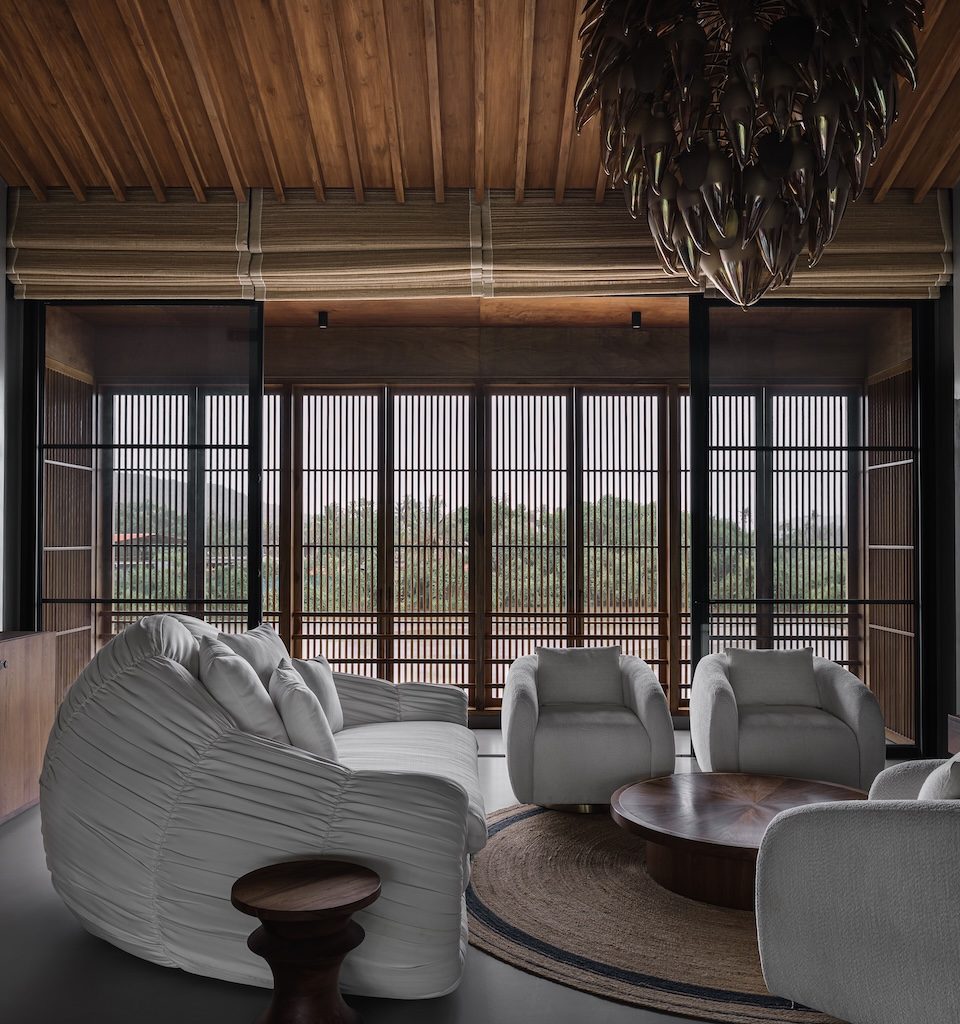
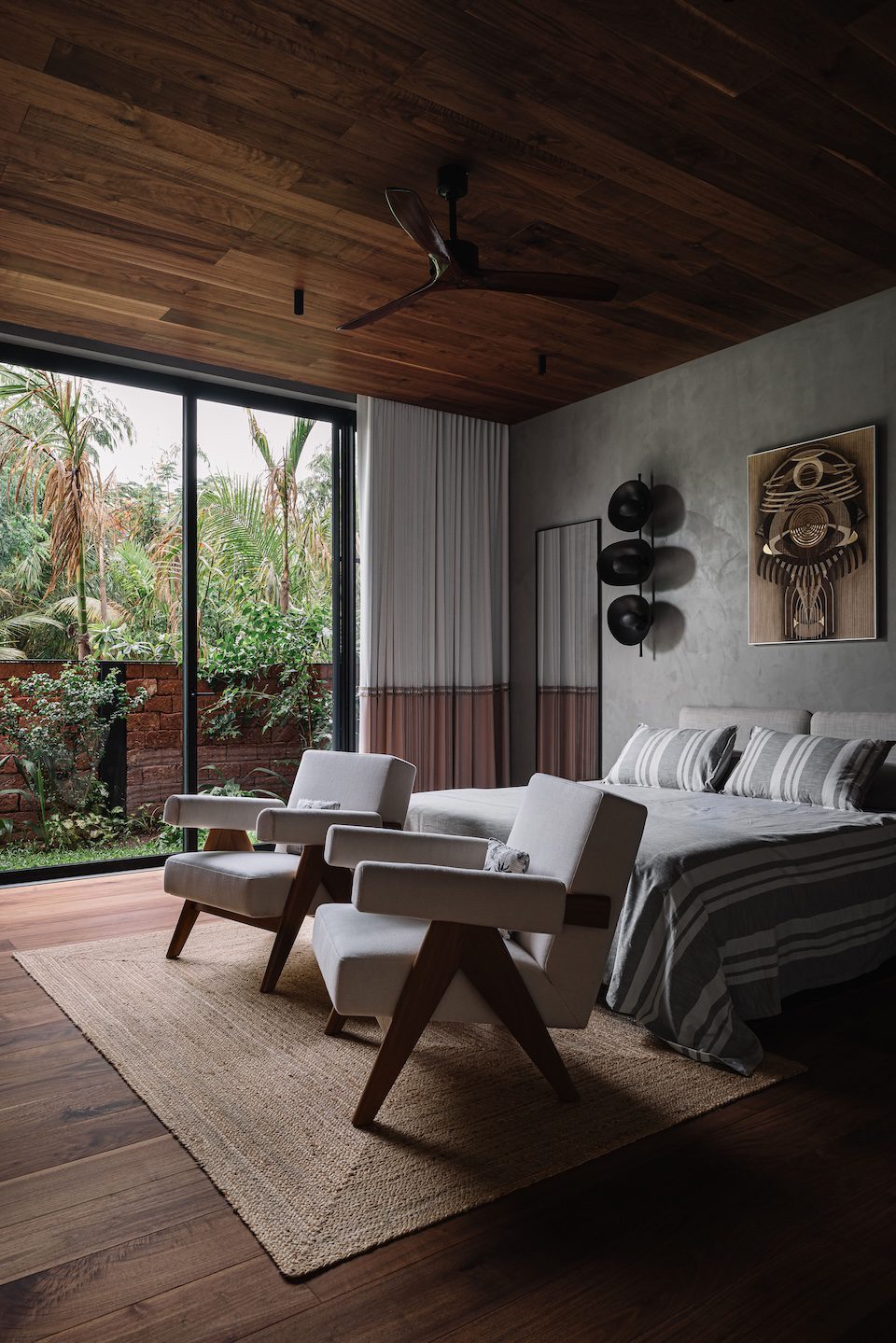
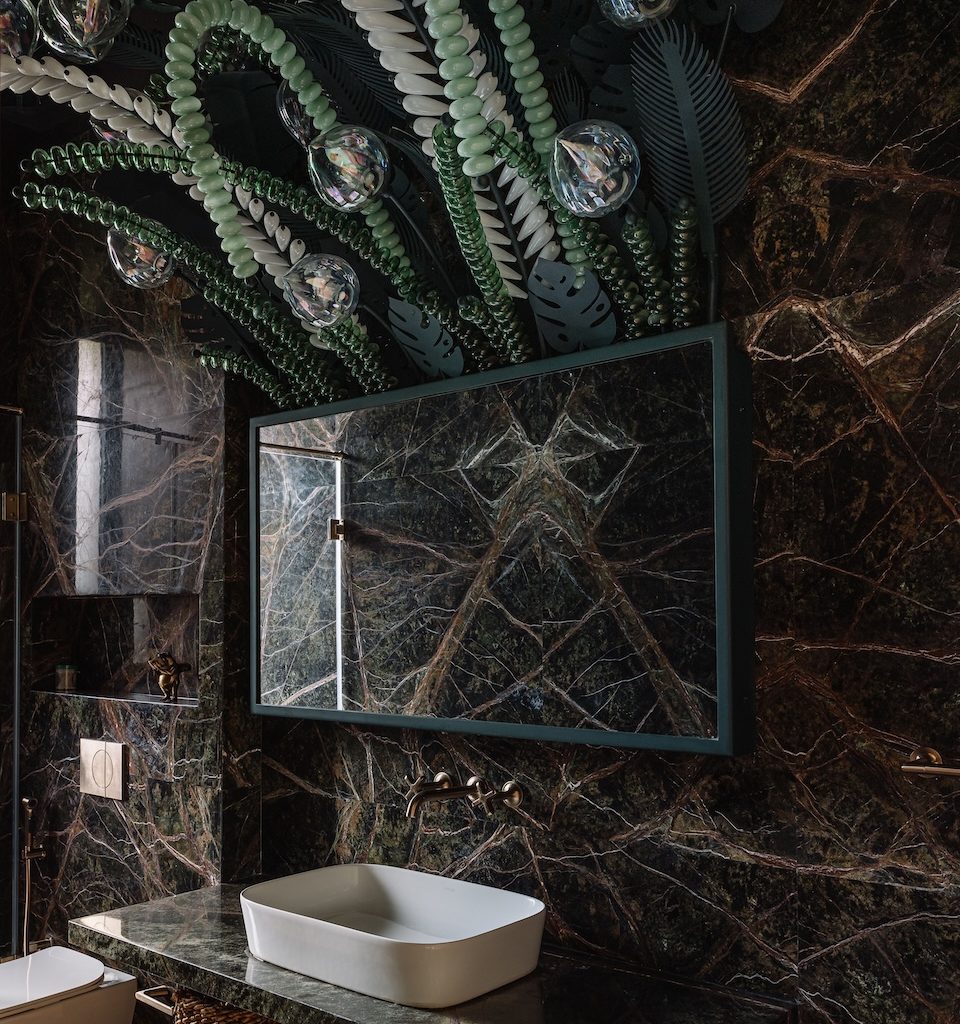
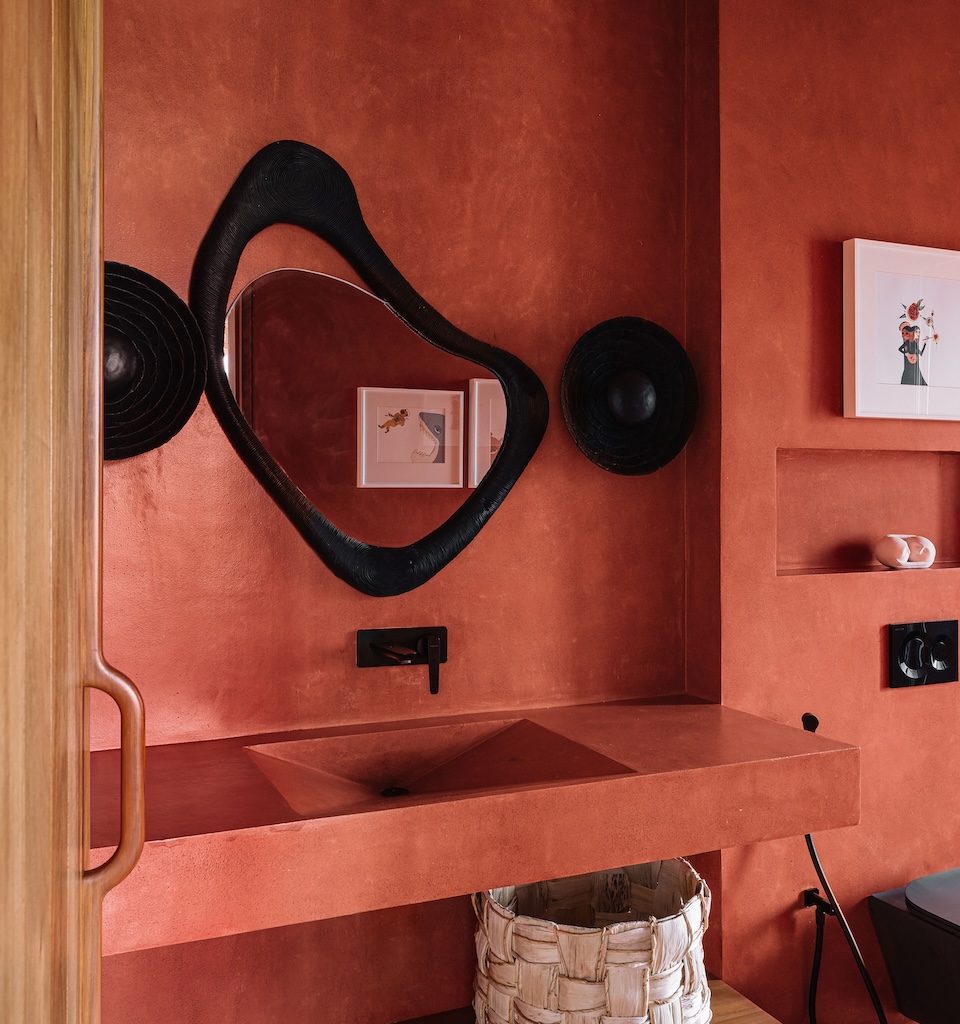
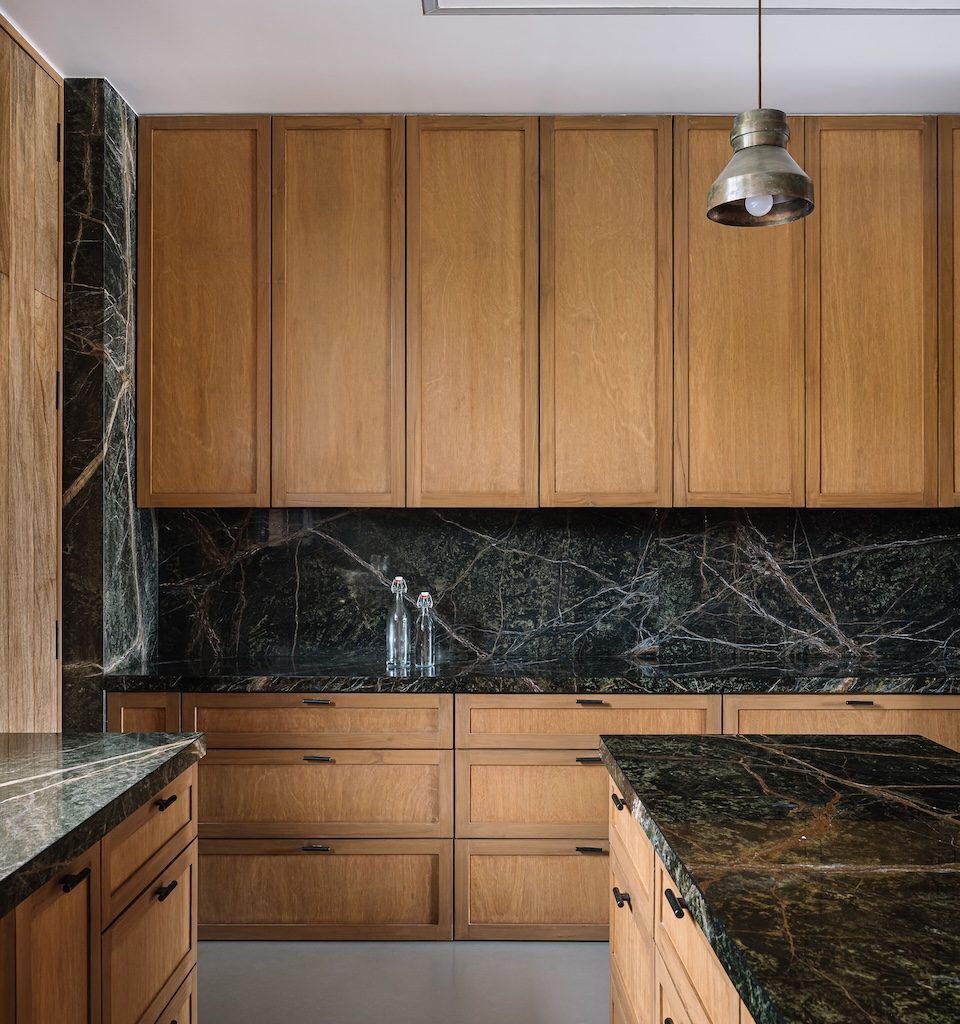
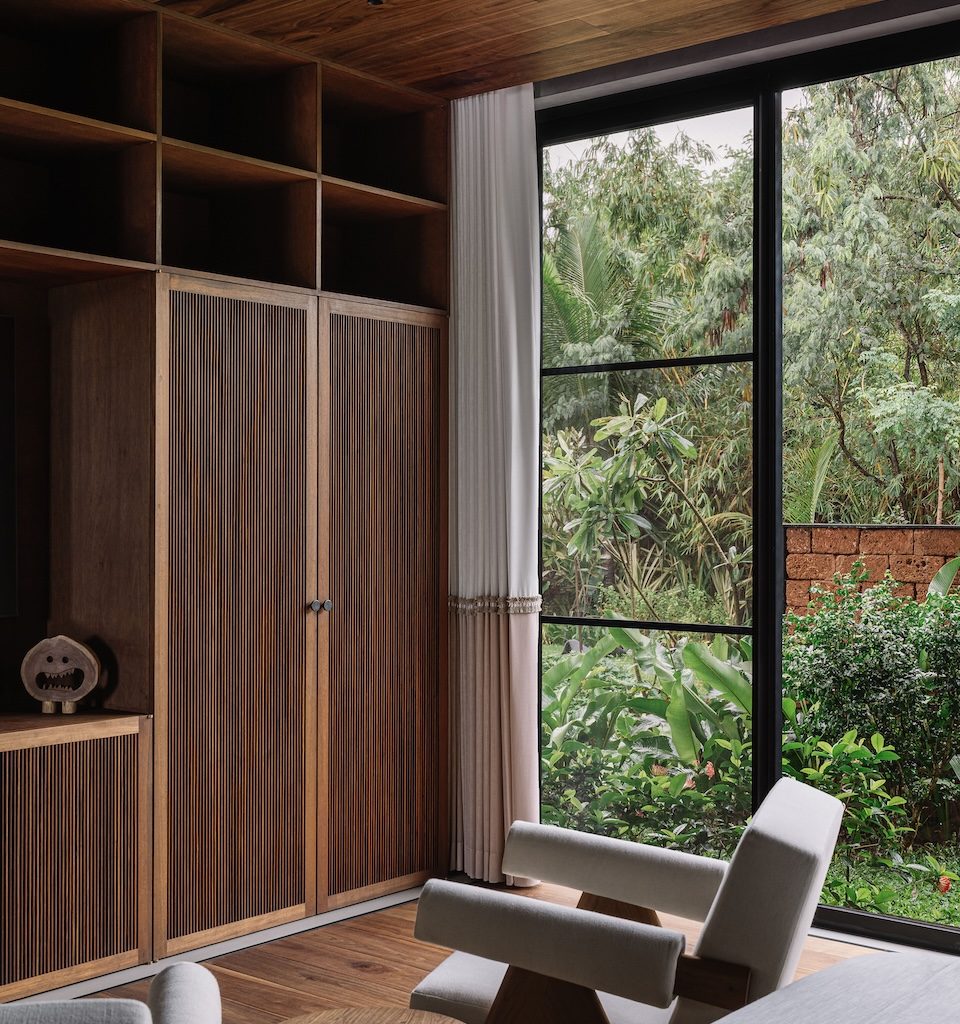
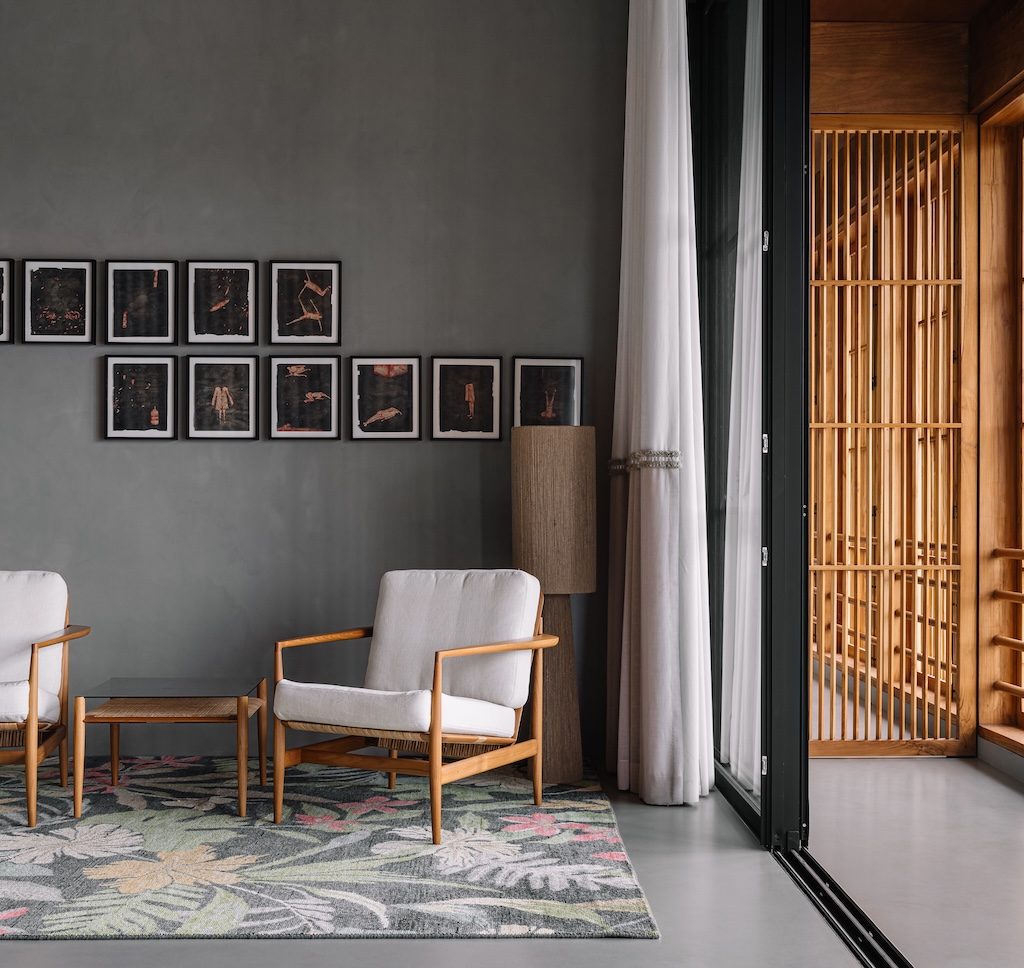
The living, dining and bar areas carry forward this sense of material honesty. Expansive glazing opens the spaces to the landscape, while cement plastered walls in earthy colours sit alongside cane and exposed plywood accents. Furniture crafted from Indian wood and richly veined granite adds depth, and contemporary artworks from the client’s collection introduce moments of colour and culture. Positioned to look into a lush garden pocket, the ground floor guest bedroom echoes this warmth through concrete surfaces, timber details and textiles in muted tones.
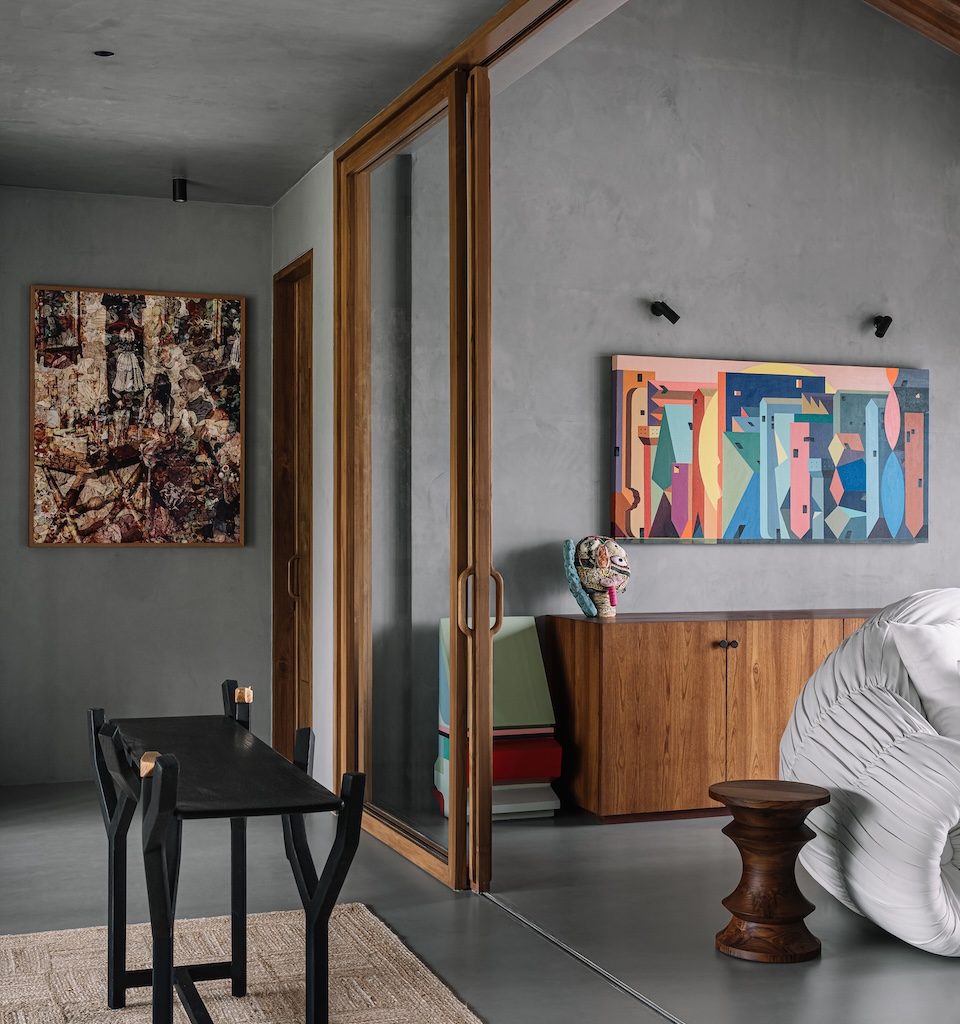
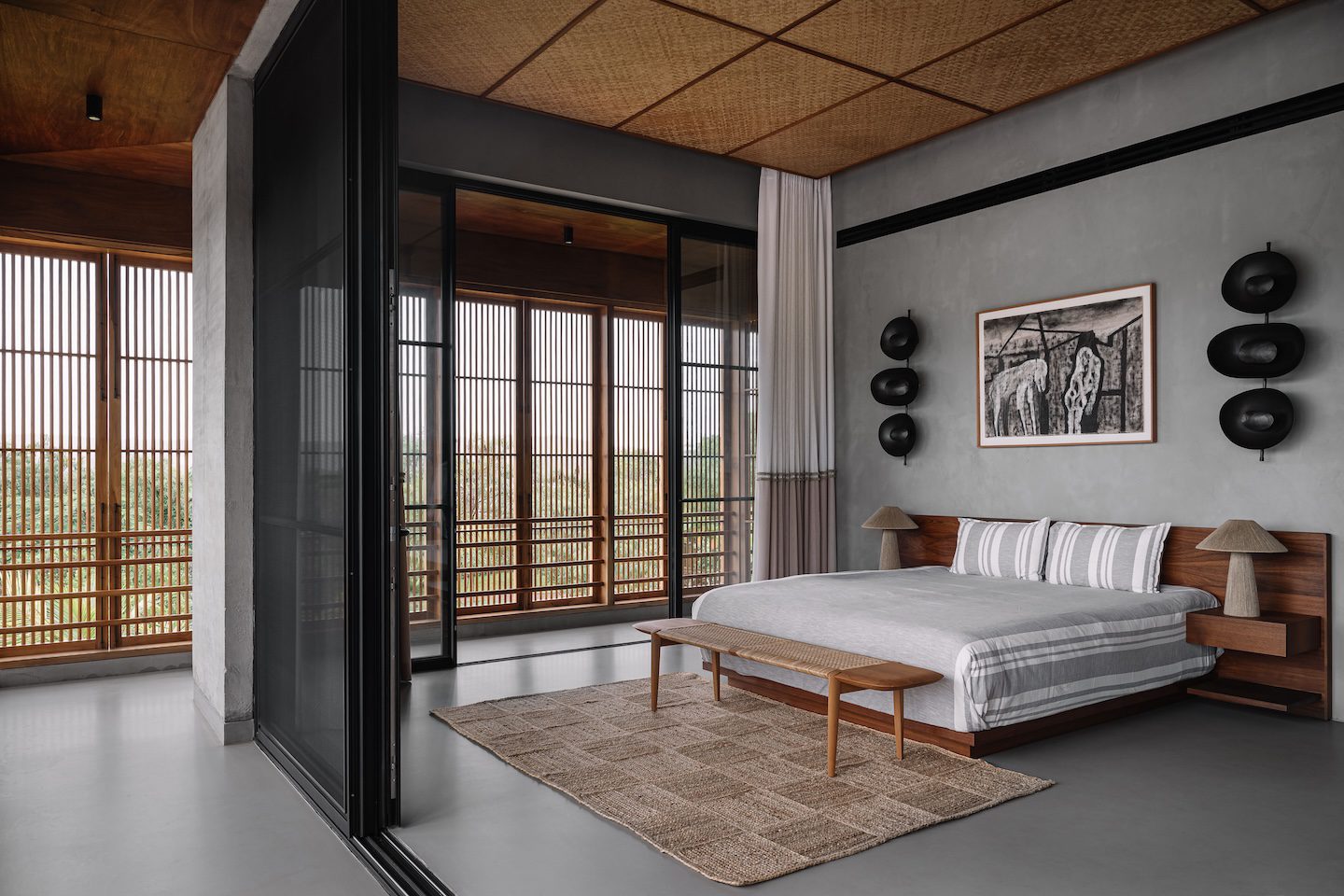
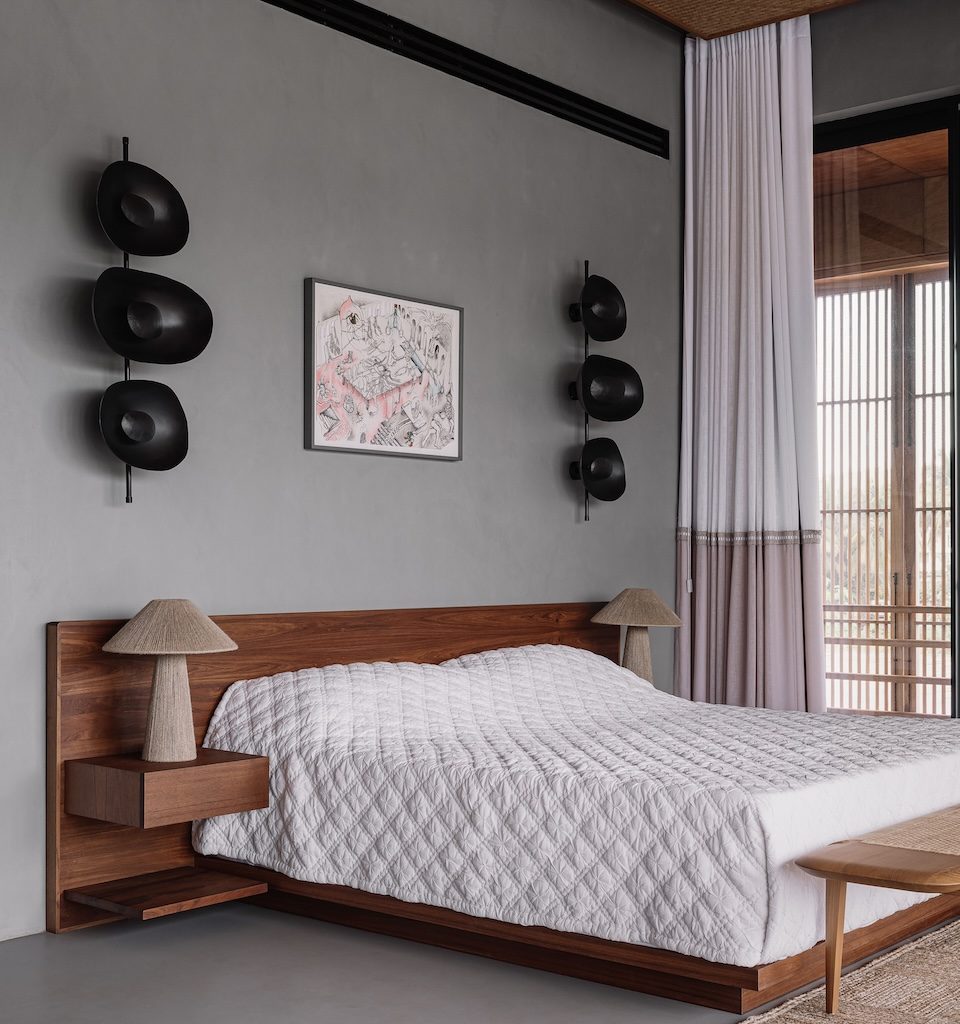
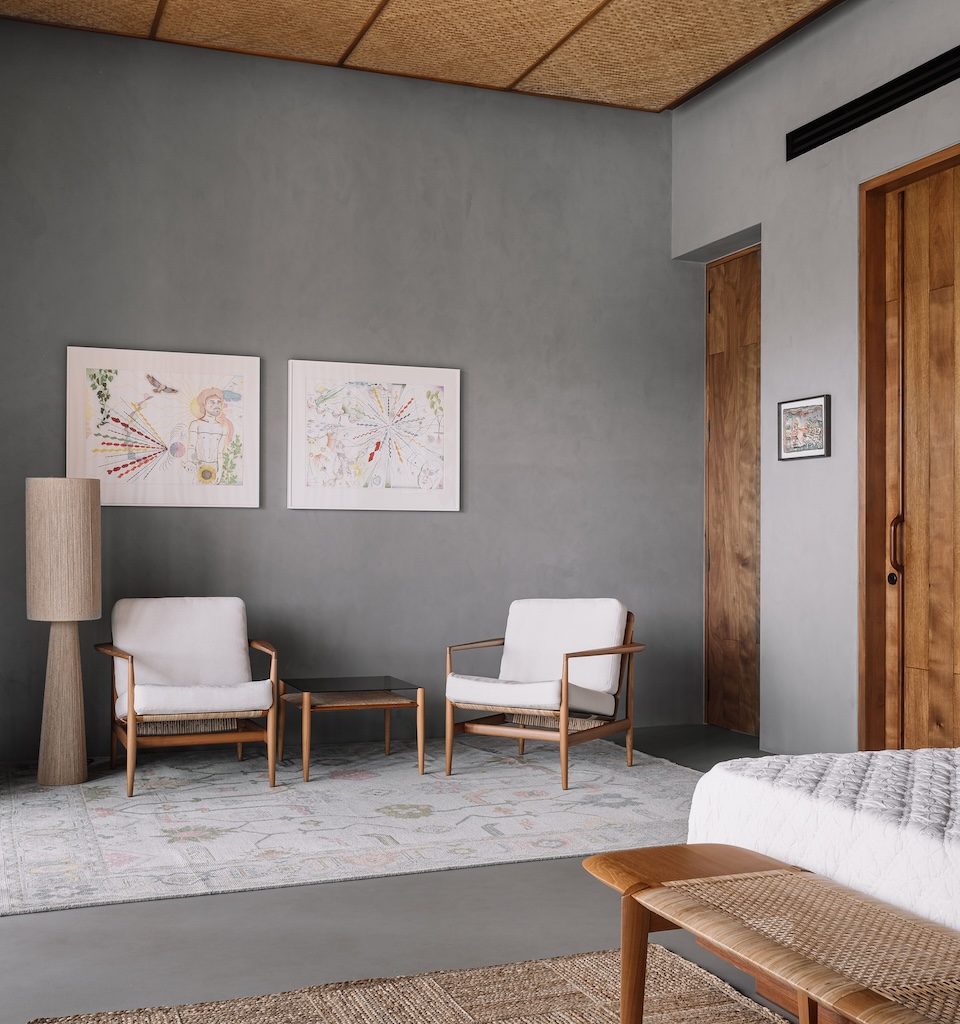
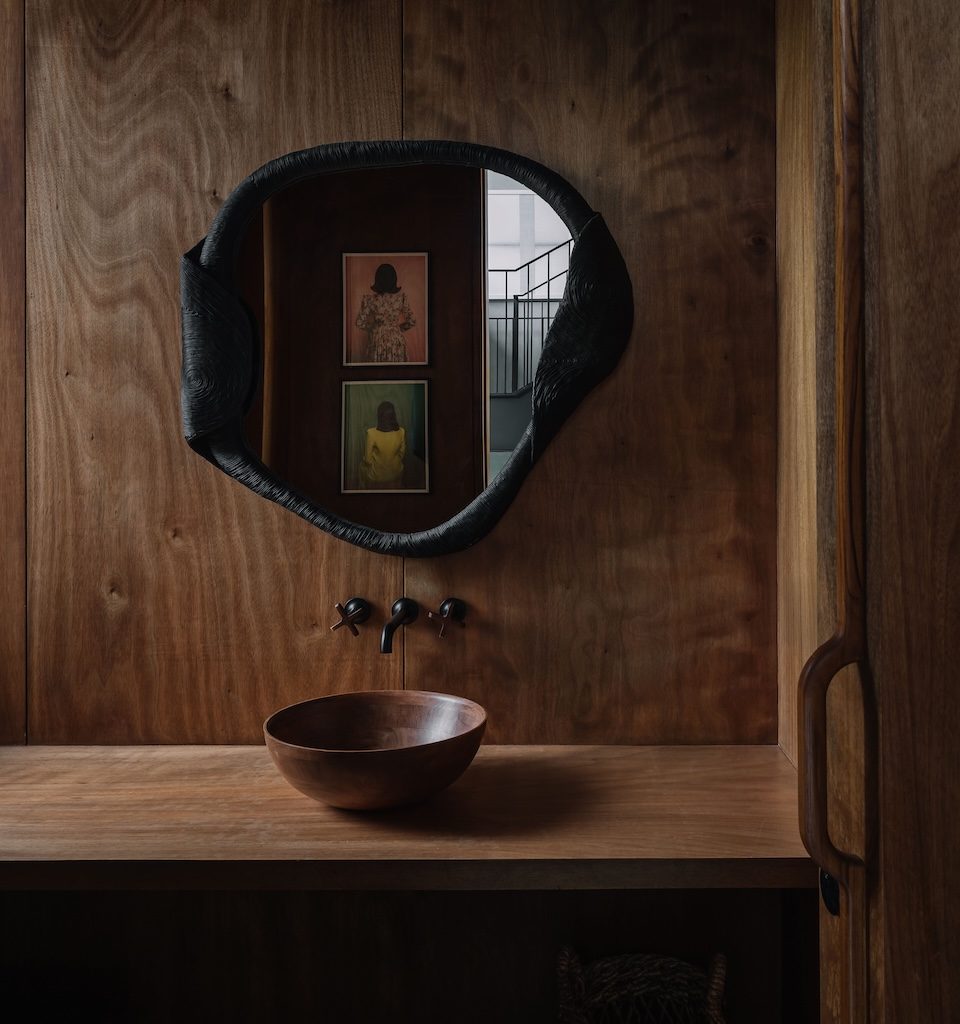
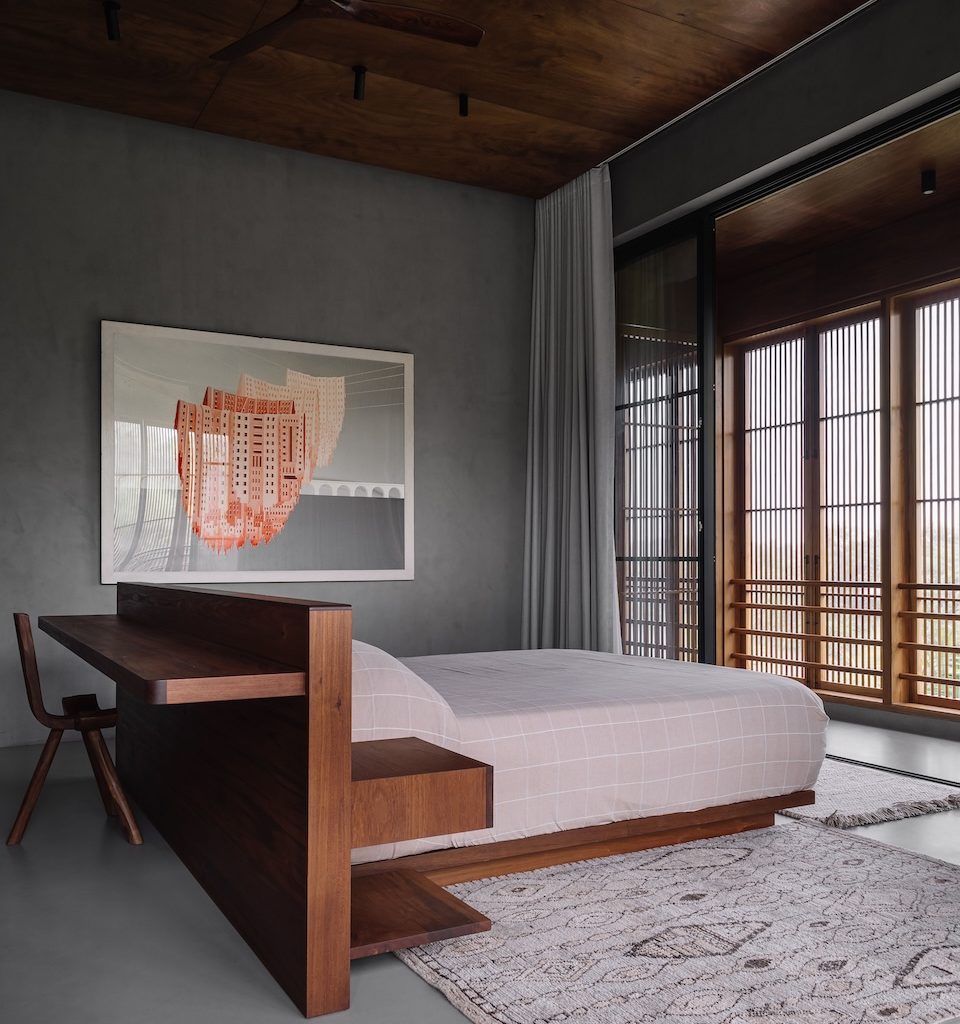
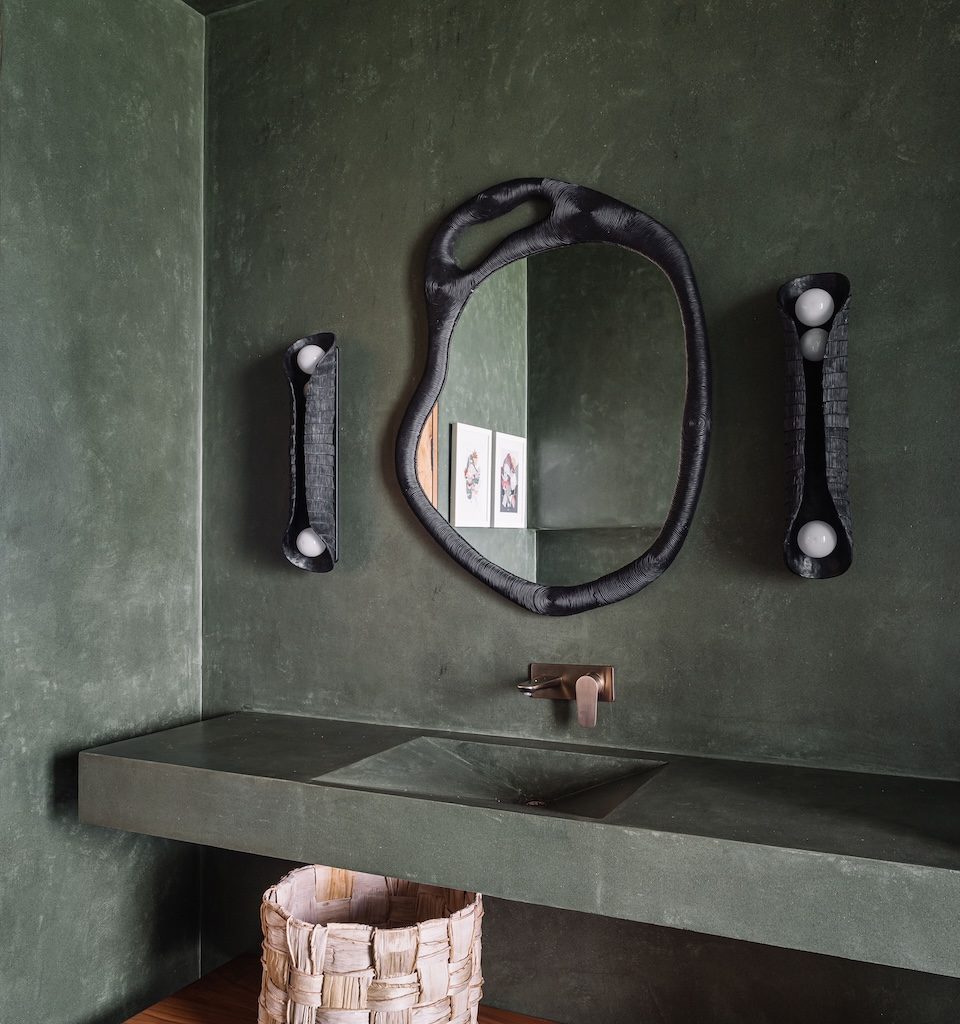
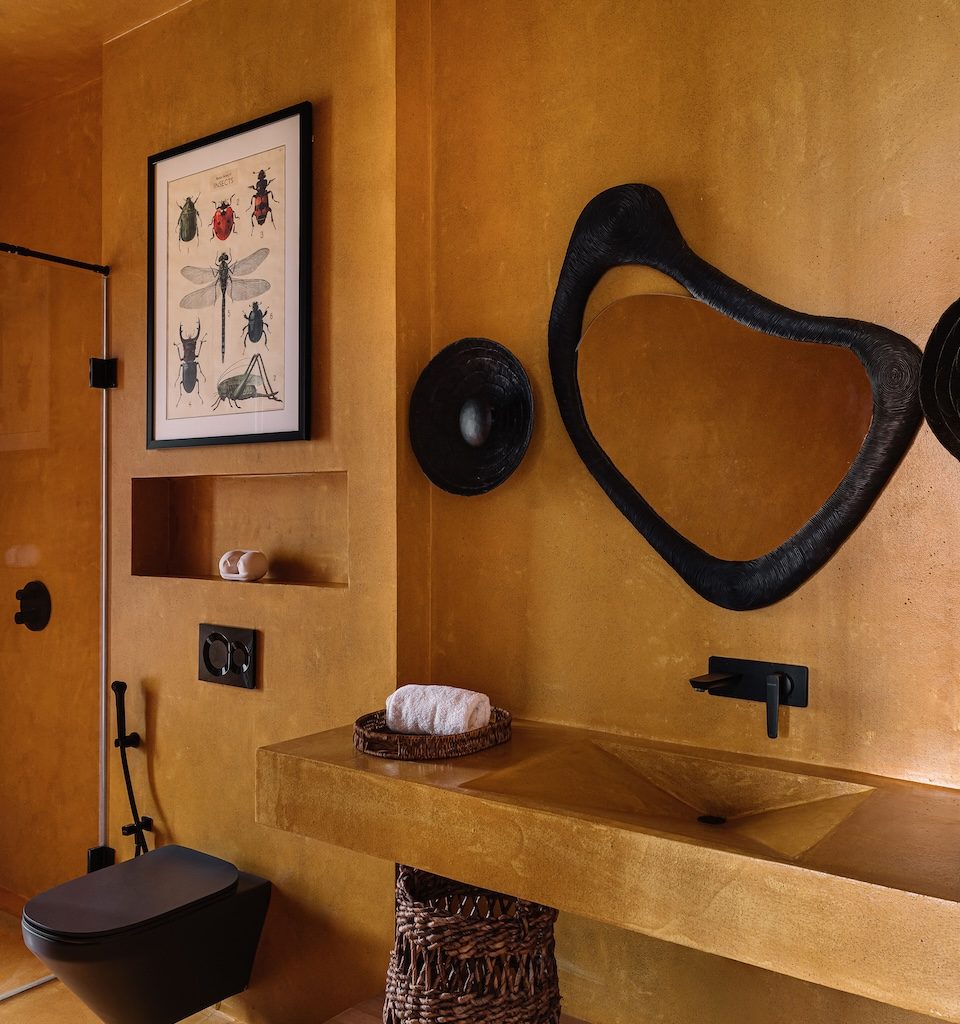
On the first floor, four bedrooms and a family lounge sit behind a continuous balcony screened with operable teak louvres. At night, this level glows softly, while during the day the screens protect the interiors from sun and monsoon. The bedrooms feature cement floors and walls in greys, greens, mustard and terracotta and is paired with bespoke wood and plywood furniture, granite counters and hand selected fabrics that keep the spaces grounded and calm.
Below, the spa level extends the project’s elemental sensibility with minimalist cement finishes in the steam, sauna, and changing rooms, connected seamlessly to the pool deck above. Outdoors, the palette expands into the landscape with recycled-timber gym equipment, laterite pathways, and an infinity-edge pool, a reflective plane that merges visually with the salt pan, while ancillary structures such as the greenhouse, yoga pavilion, pickleball court, and jetty are integrated using local materials that reinforce the home’s ecological and regionally rooted design ethos.
The highlights
The first highlight of the Salt Pan House is expressed in its architecture, where a three-part vertical composition brings clarity to the built form. A grounded concrete base supports a teakwood louvred volume, which is then sheltered by a pitched zinc alloy roof, creating a layered structure that feels measured and composed. This architectural language extends effortlessly into the landscape. The long swimming pool reaches toward the salt pan, its infinity edge dissolving into the reflective waters beyond and deepening the home’s connection to its setting.
The commitment to place is further reinforced through the project’s completely indigenous approach, where every construction material, fitting and piece of furniture has been sourced locally. Outdoors, a greenhouse for organic farming, a fishing deck and an outdoor gym crafted from recycled wood continue this ethos of ecological sensitivity and integrated living. Within the home, the client’s decades long art collection introduces cultural warmth and personal meaning.
The challenges
The creators share that designing and executing the Salt Pan House came with a series of unique challenges shaped largely by its sensitive coastal context and stringent regulatory framework. With tight restrictions on built-up area, the architectural footprint had to be meticulously calibrated to maintain both functionality and spatial generosity without compromising the purity of the design intent.
“The construction of the infinity pool that is set directly along the edge of a salt pan, required significant engineering intervention, including the creation of a coffer dam to stabilise the waterlogged terrain during execution. Integrating an open municipal drain within the site demanded a nuanced planning strategy to ensure ecological safety, seamless visual integration, and unobstructed flow,” says Nupur. “The commitment to using exclusively indigenous materials added another layer of complexity, necessitating precise coordination with local craftsmen and suppliers to achieve the desired level of finish and uniformity across concrete, laterite, teak, granite, and recycled timber,” asserts Sahil. Structurally, balancing the heavy concrete base with the delicacy of the openable teakwood louvered facade and the lightweight zinc roof called for rigorous detailing to maintain both stability and refinement.
Fact File
Project: Salt Pan House
Location: Agarvado, Goa
Area: 6,000 sq ft
Principal architects: Nupur Shah and Saahil Parikh
Add a Comment