
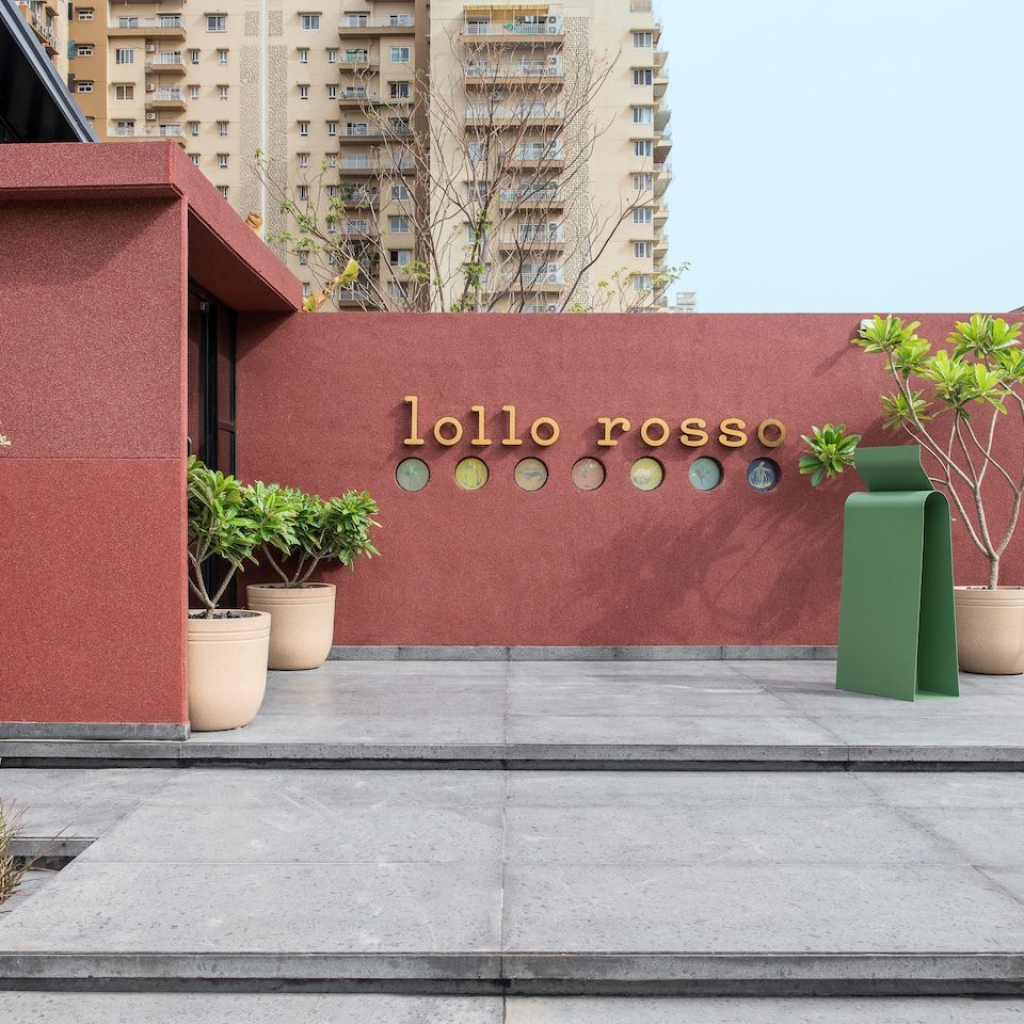
In Ahmedabad, IDO Design’s Lollo Rosso transforms a transparent glasshouse shell into a warm, contemporary Pan-Asian restaurant where red accents, lush botanical prints and soft light converge to create a mood that is equal parts easy-going and elegant.
Curated by: Rupali Sebastian
Photographs: Ira Gosalia I PHX India
The project
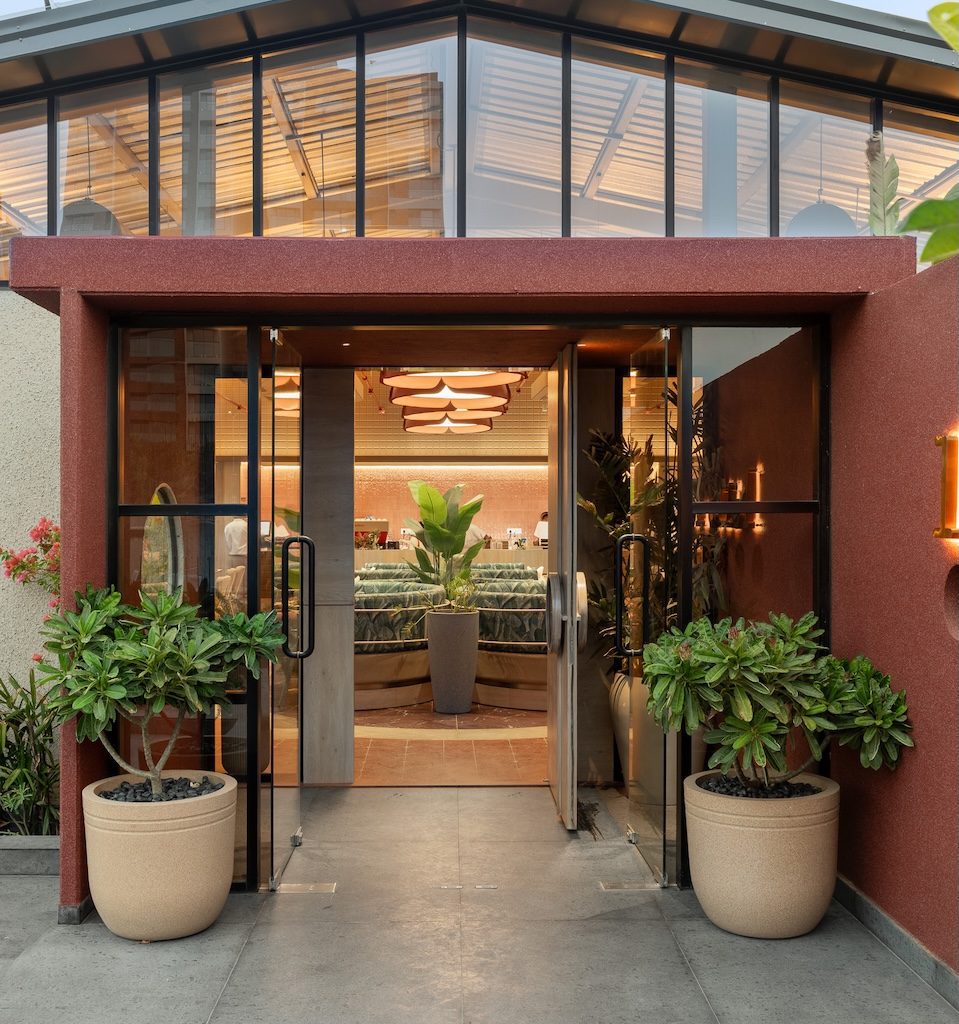
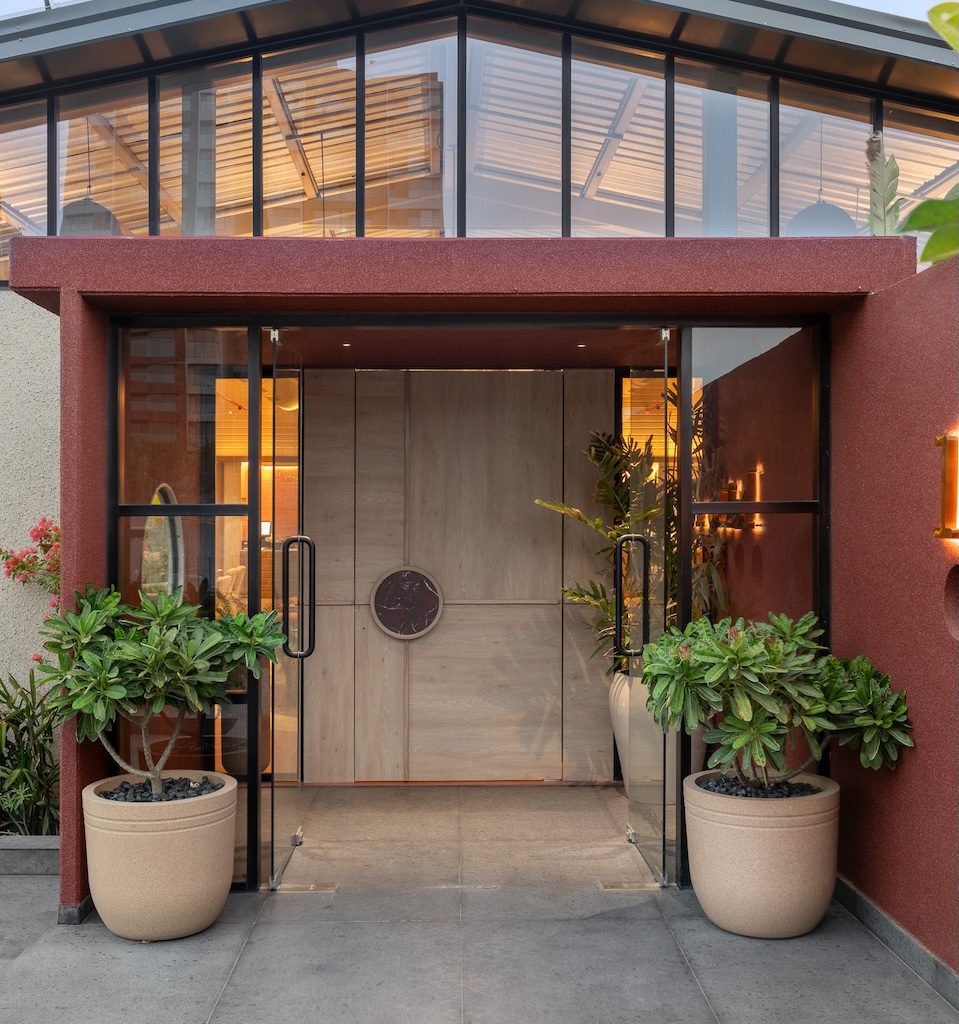
Designed by Ahmedabad-based IDO Design, led by principal architect Niraj Shah, Lollo Rosso is a 3,400 sq ft Pan-Asian restaurant in Adani Shantigram that walks a fine line between café-style informality and polished dining. Conceived as a chic yet approachable glasshouse, the space is crafted to feel effortless—visually light, emotionally warm and quietly theatrical.
The site
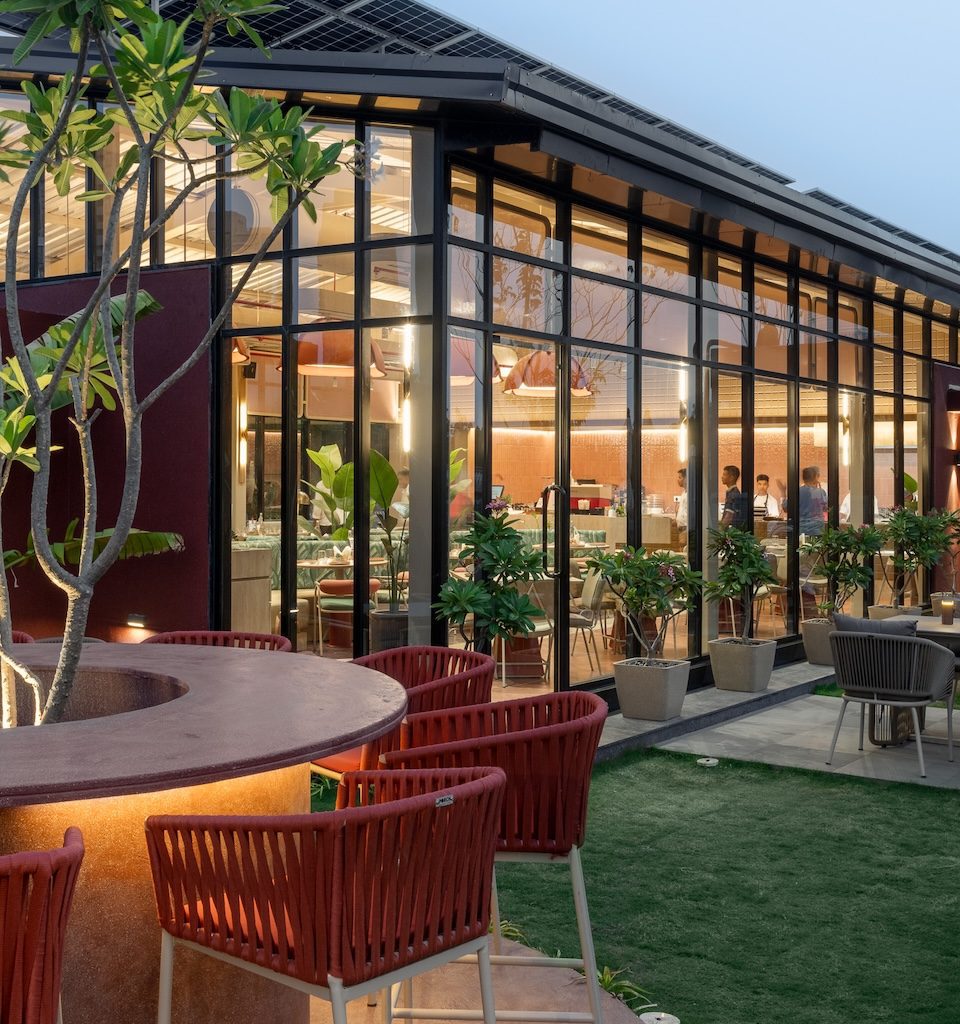
The restaurant occupies an empty plot within Adani Shantigram, beside a developing garden that faces an artificial lake. The starting point was almost abstract—a ground with a plinth and glass walls all around, like a clear canvas waiting for colour and character. That openness, combined with the evolving landscape outside, became the muse for a design that blurs boundaries between interior and setting while allowing the architecture of the glasshouse to stay visible.
The brief
The clients wanted an environment that reflected their brand philosophy—a space poised between café and fine dining, playful yet refined. The restaurant needed to seat over a hundred guests comfortably, accommodate varied group sizes and feel warm, inviting and effortlessly stylish across different dining occasions.
The design intent
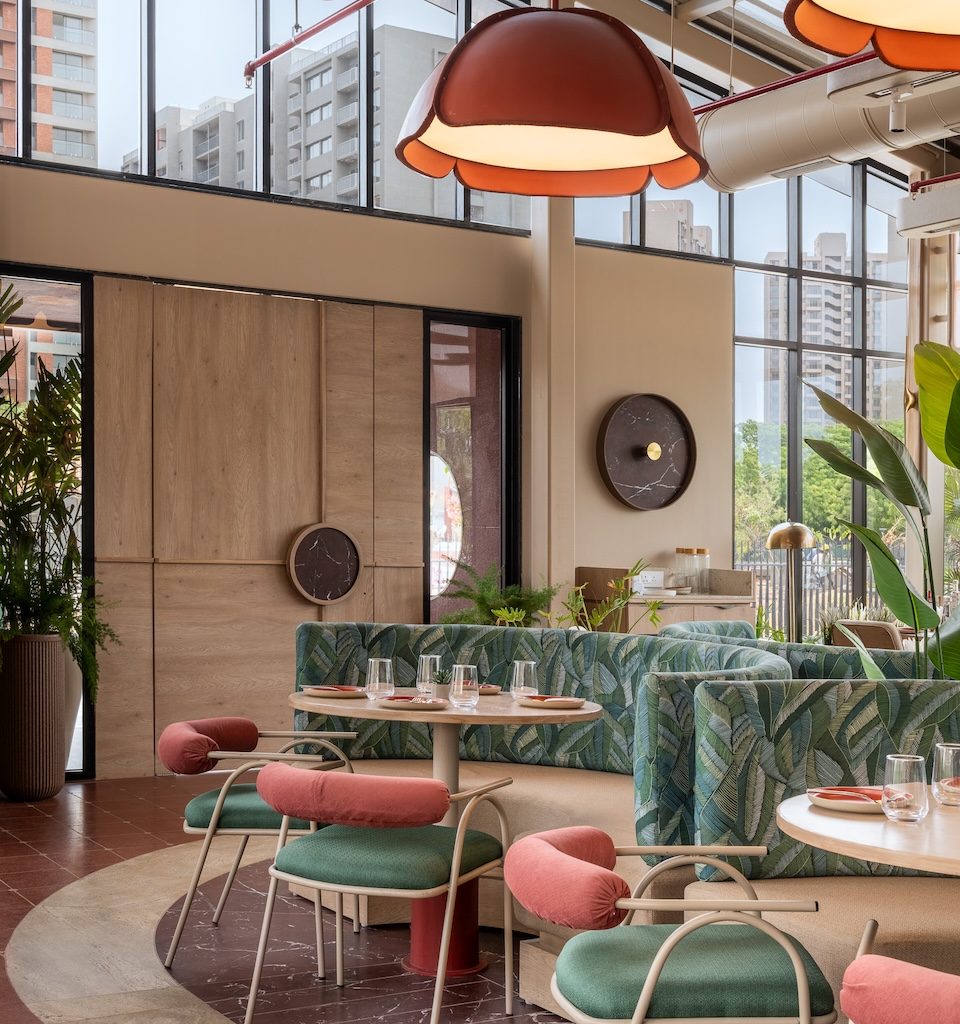
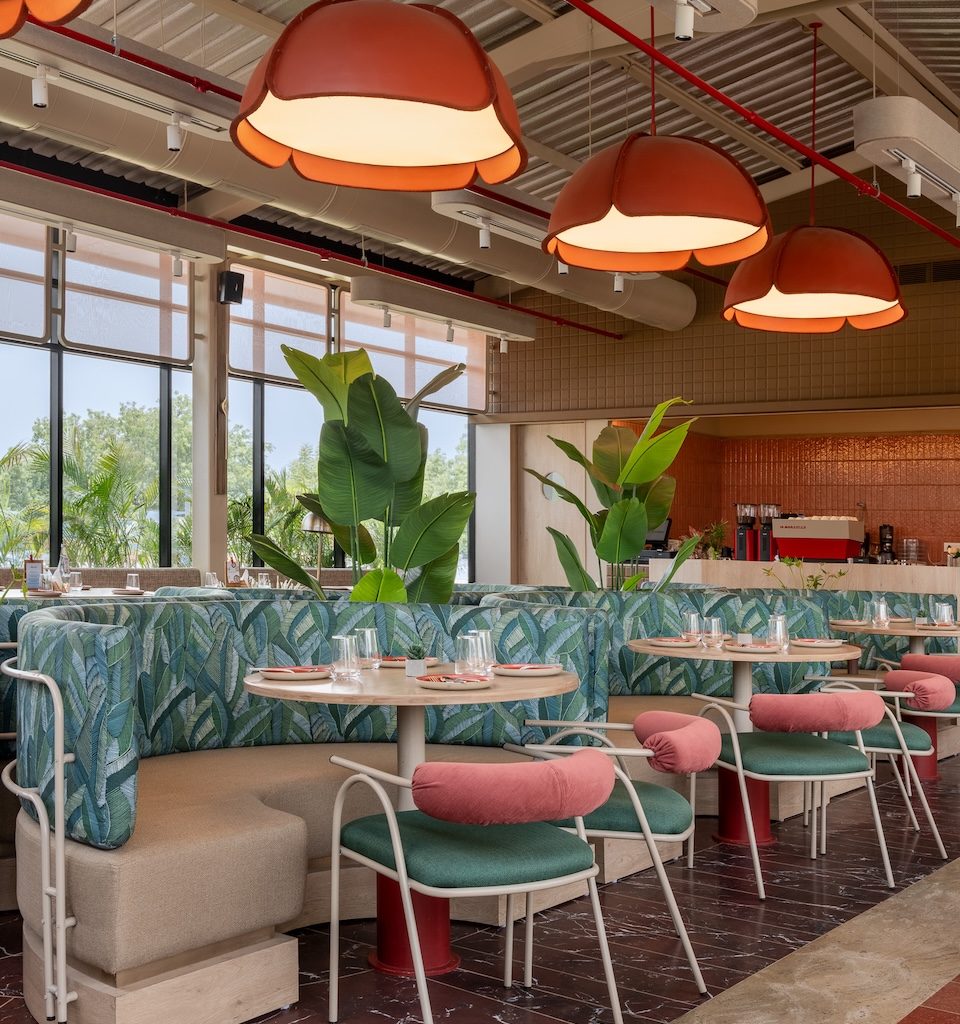
Lollo Rosso—literally red lettuce—became both name and narrative cue. With an all-glass shell as the architectural constant, the intent was for the interior to glow from within, subtle, warm and enticing rather than loud. “We wanted a space that feels sophisticated yet approachable,” says Niraj Shah of IDO Design. Blush and terracotta tones, gentle curves, ribbed surfaces, greenery and patterned upholstery form a Mediterranean-meets–Pan-Asian vocabulary that feels contemporary, calm and quietly joyful.
The civil intervention
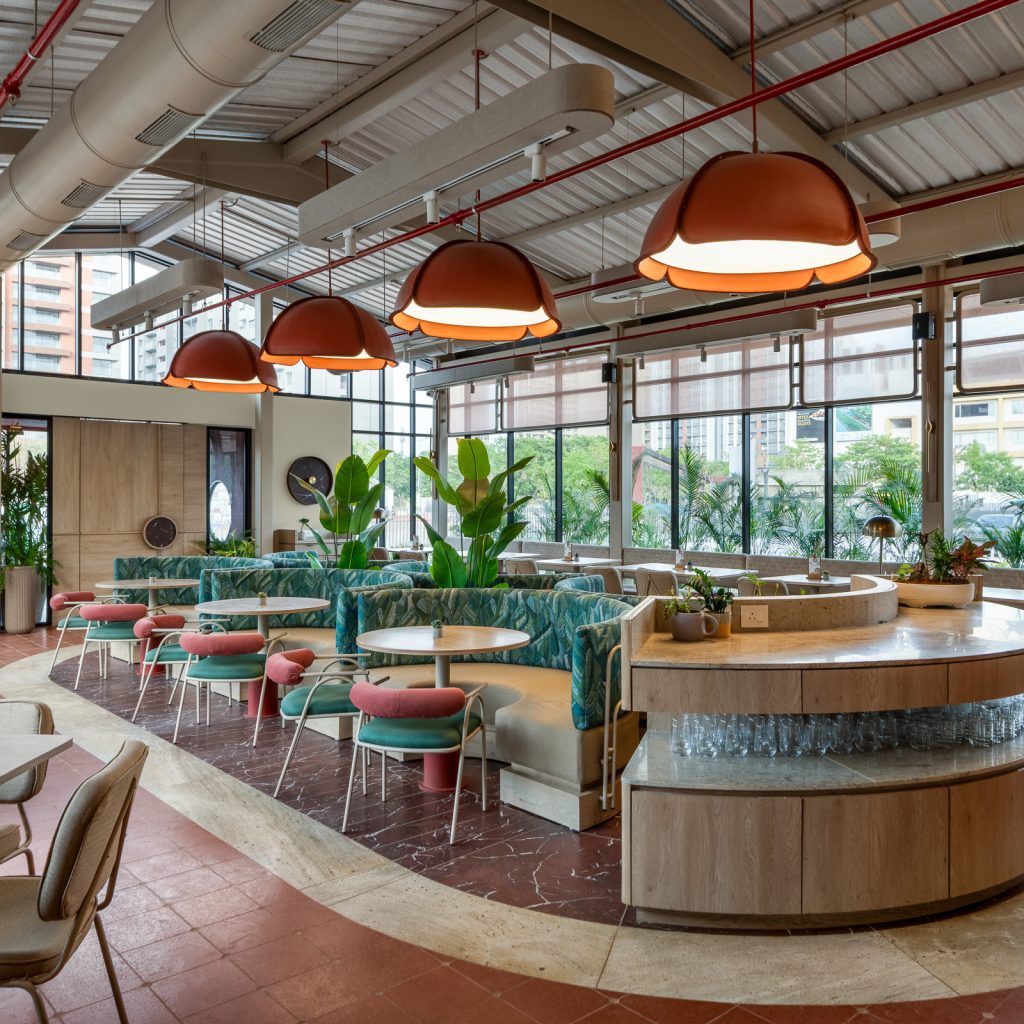
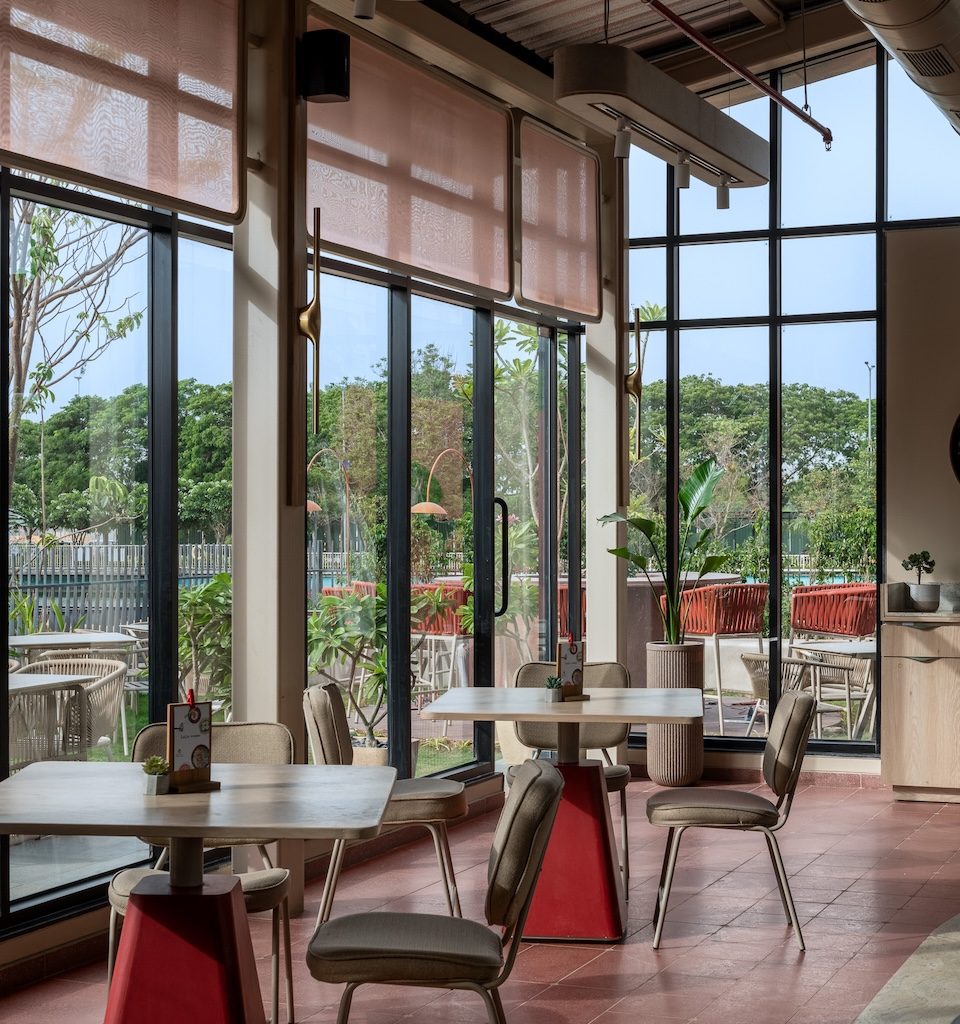
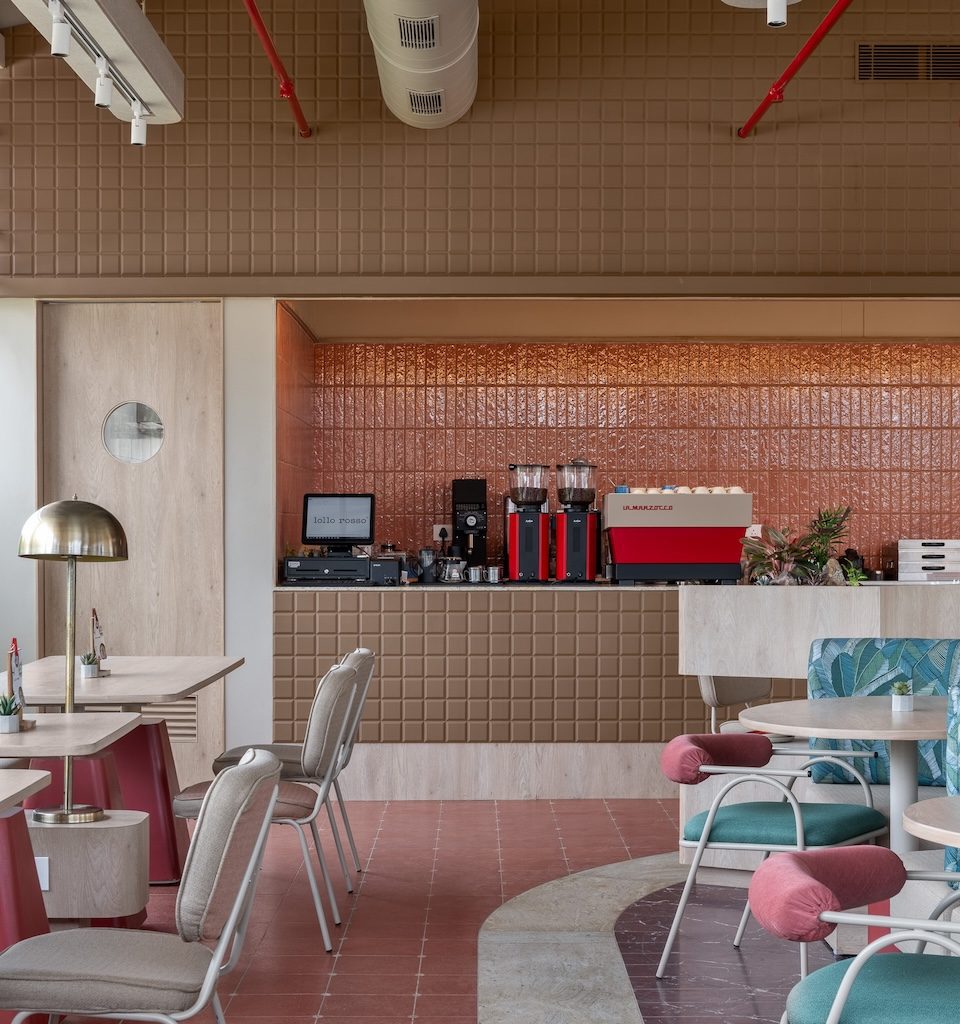
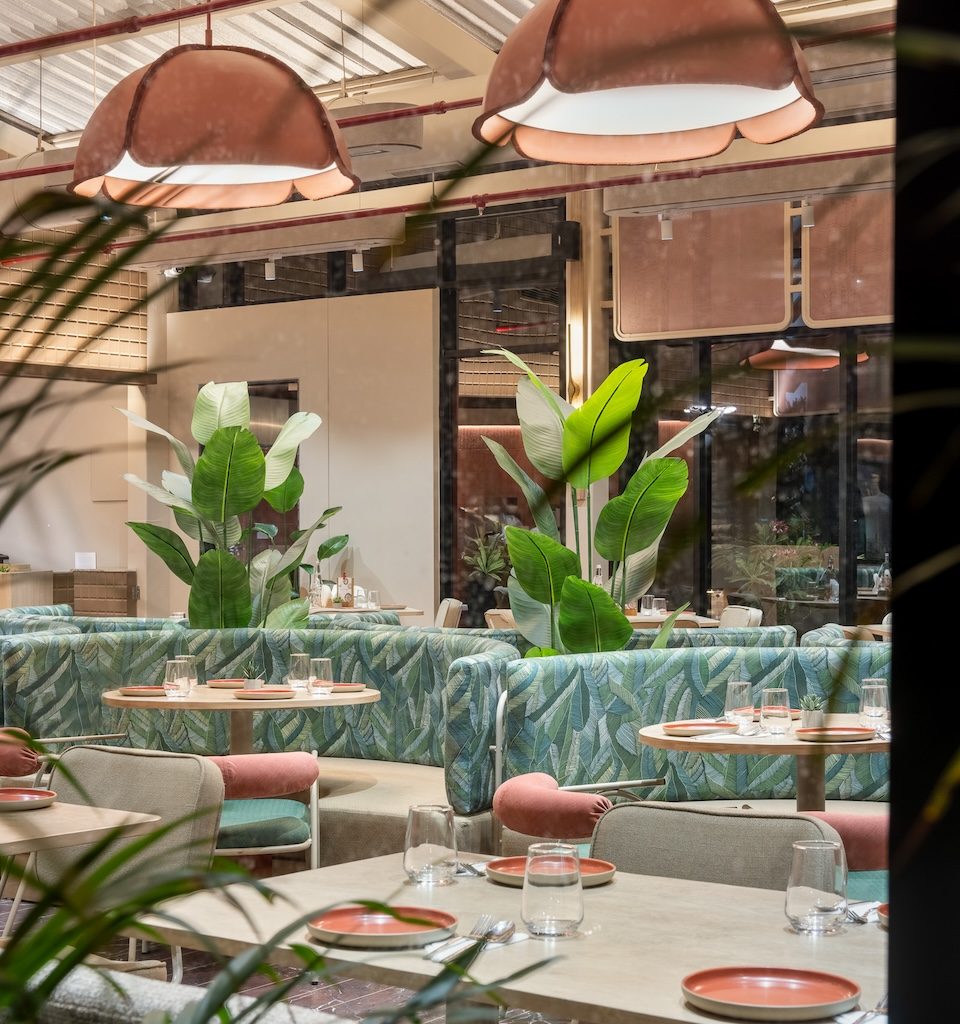
The team chose to work with the industrial glasshouse envelope rather than alter it. The focus was on zoning, insulation and acoustics. The corrugated metal roof was lined with a heat-insulation sheet whose exposed silver foil face now reflects soft light back into the space, becoming a deliberate visual element. Custom pendant fixtures were designed with acoustic material, allowing them to soften both light and sound while adding a sculptural layer.
The spatial flow
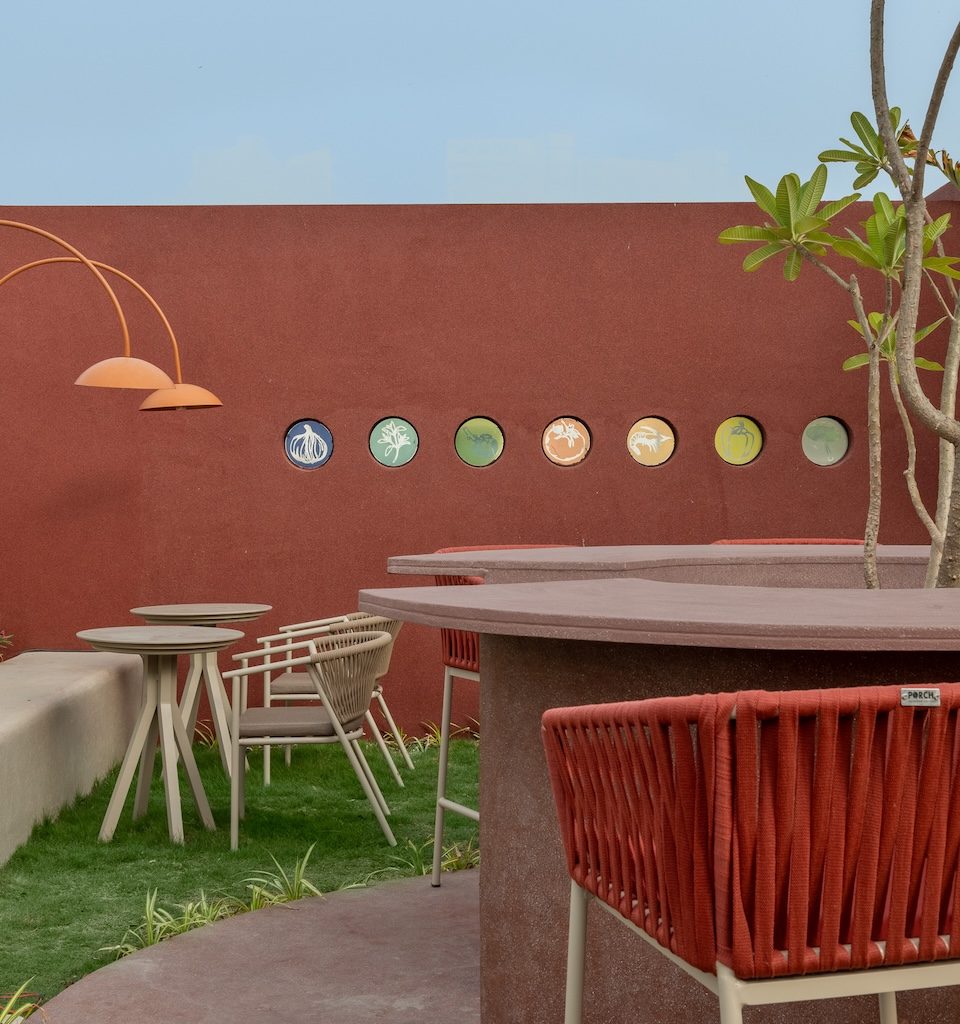
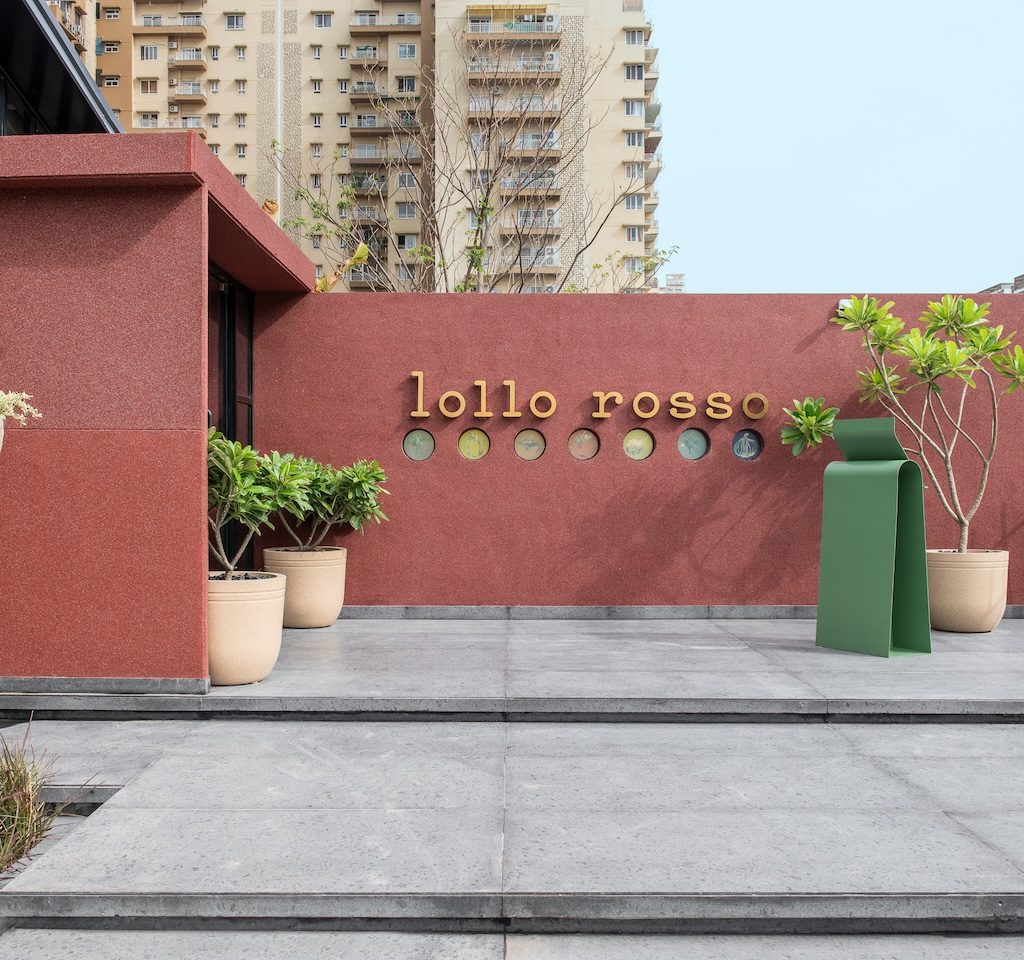
Guests arrive at a striking red wall that carries the Lollo Rosso signage, where seven colours hint at the seven chakras and the idea of energy in balance. From this podium, they move into a buffer zone that gradually releases into the main dining space.
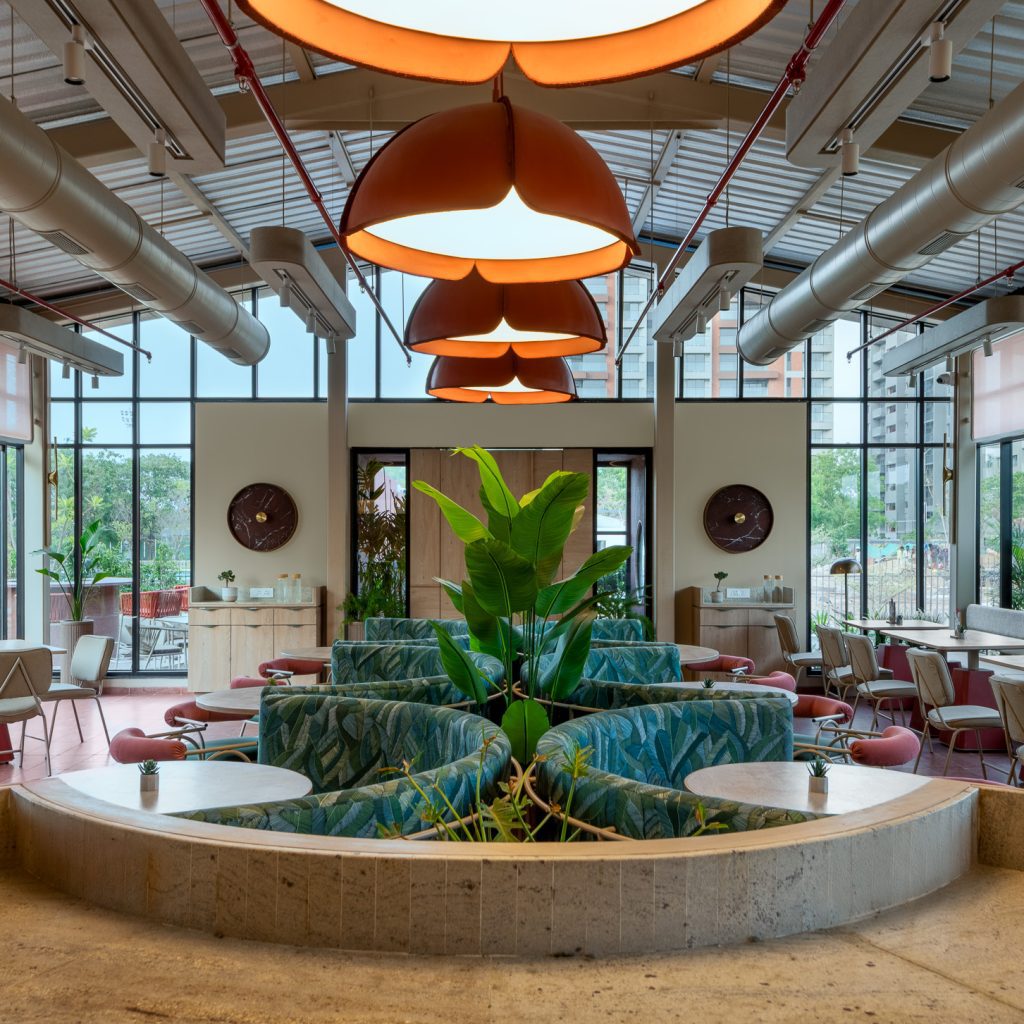
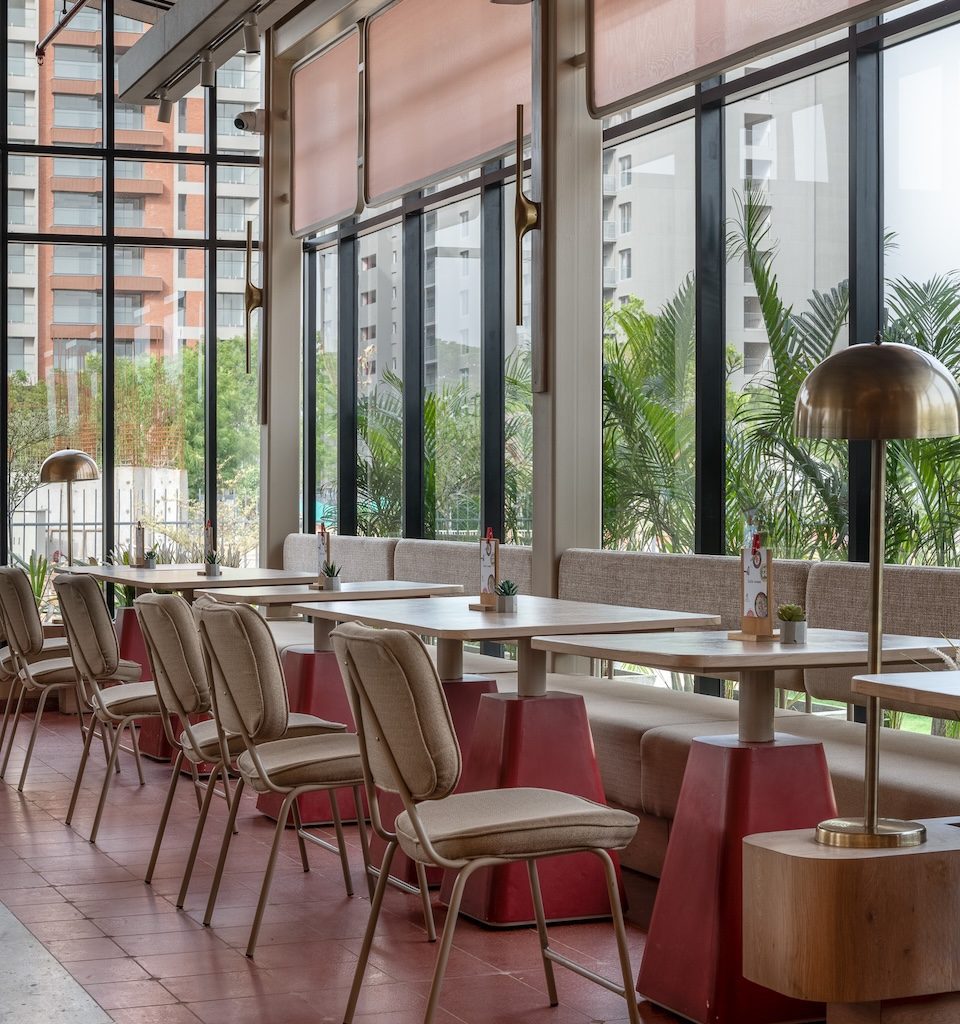
The core of the restaurant is planned as a generous central cluster of round tables and curved booths, creating intimacy within the large glass volume. Along one edge, a continuous upholstered sofa band accommodates two-, four- and larger group tables, maximising capacity while retaining comfort. On the opposite side, lighter four-seater tables keep the layout visually airy. Generous aisle widths ensure that circulation for staff and guests remains smooth even at peak hours.
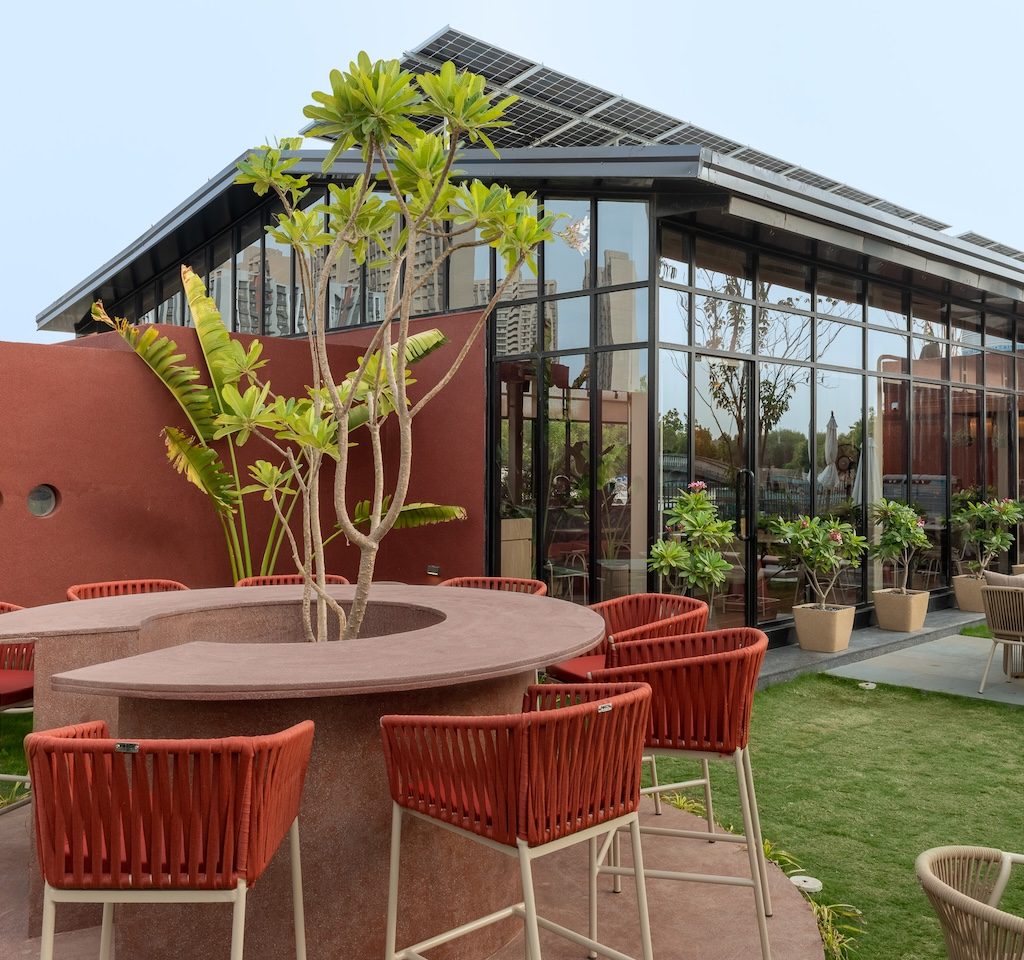
A live kitchen at one end introduces controlled sensory buzz—the aroma of coffee and steam from the Pan-Asian menu—without overwhelming the room. An outdoor extension of the dining area offers multiple seating configurations, including a large round table that comfortably hosts groups. The overall flow feels intuitive for guests and efficient for service, with every zone legible from almost any vantage point.
The material palette
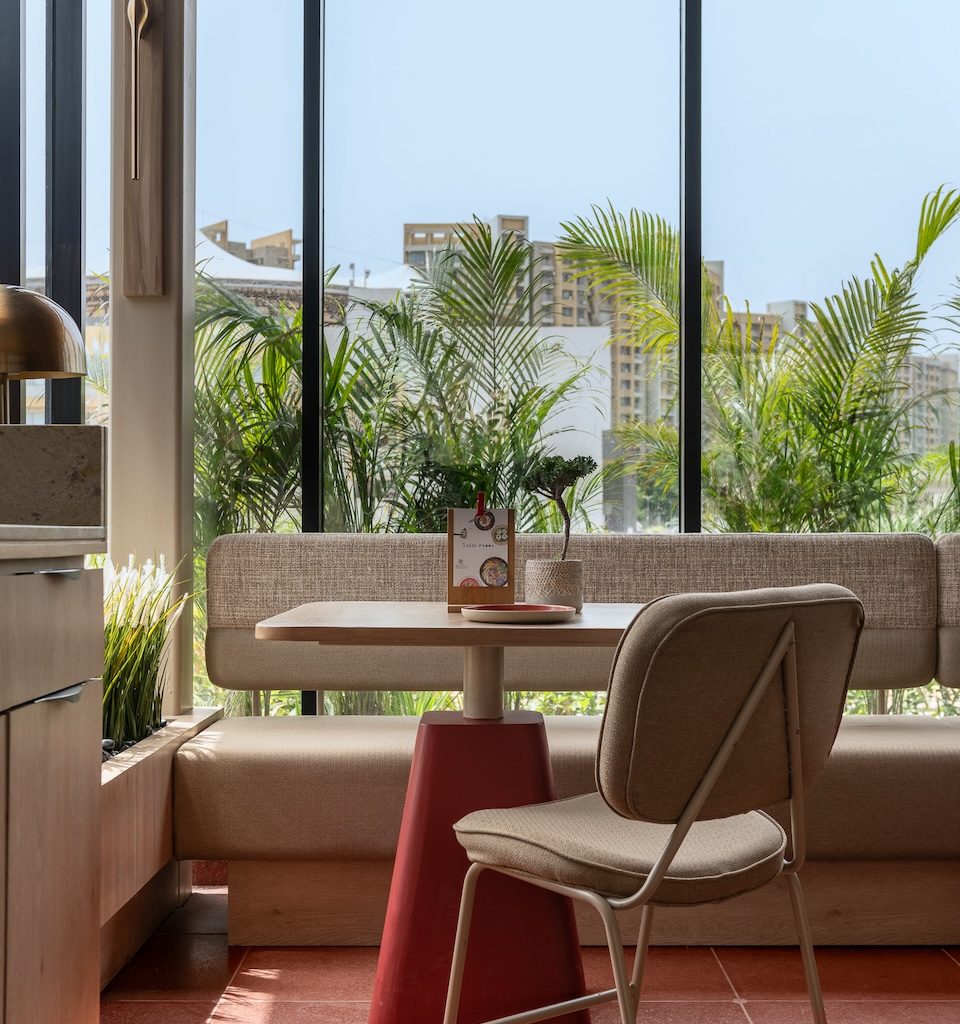
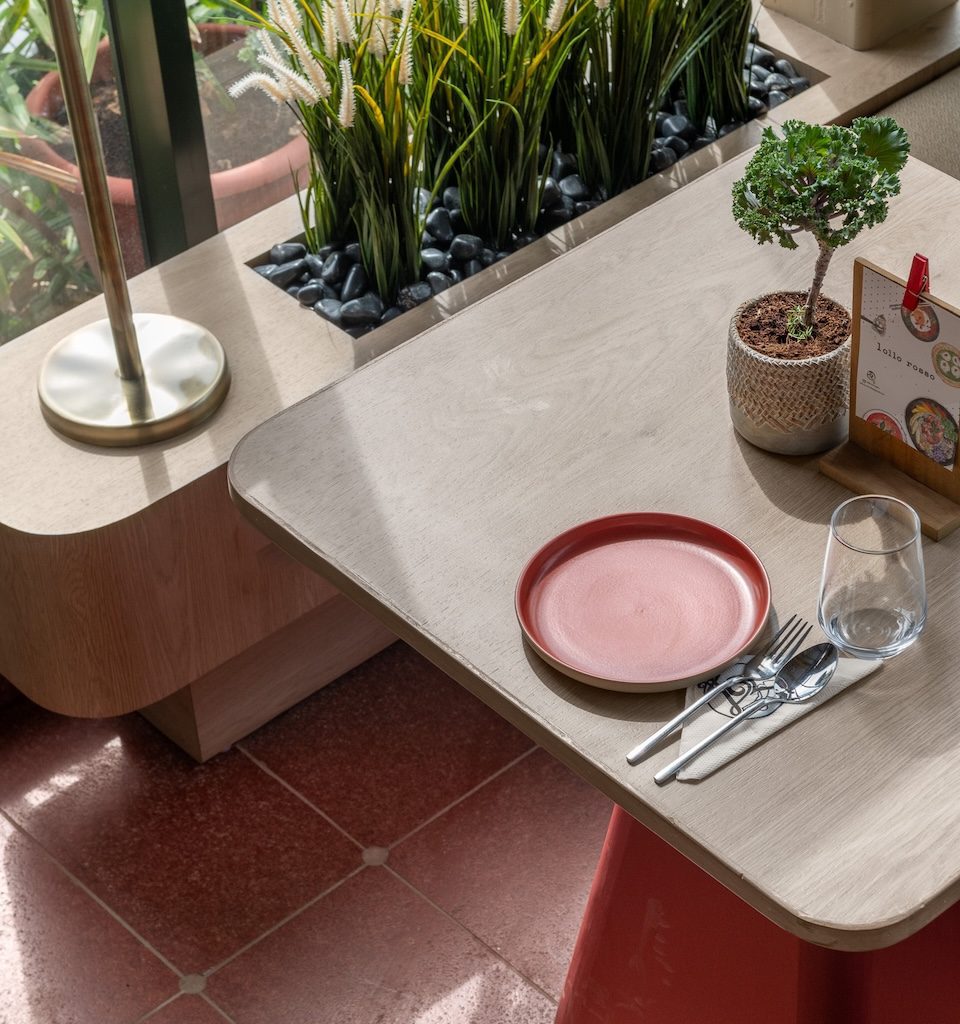
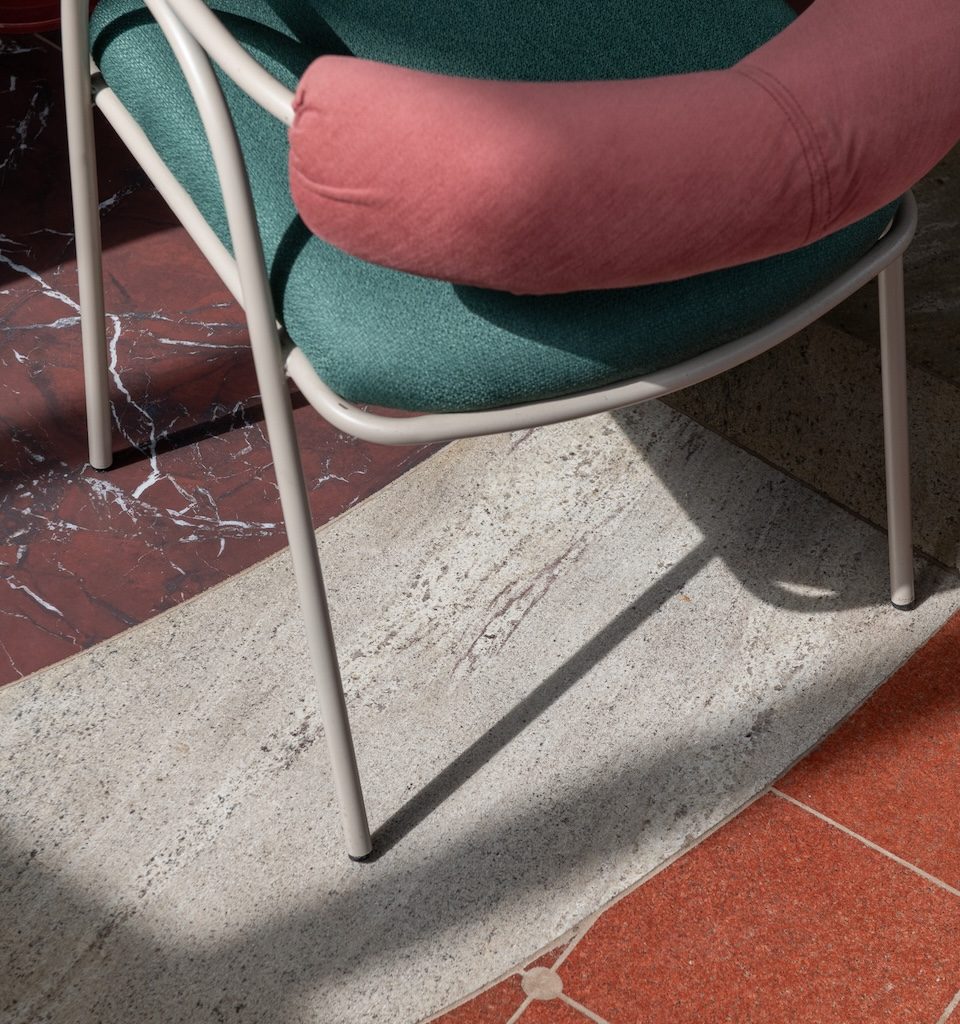
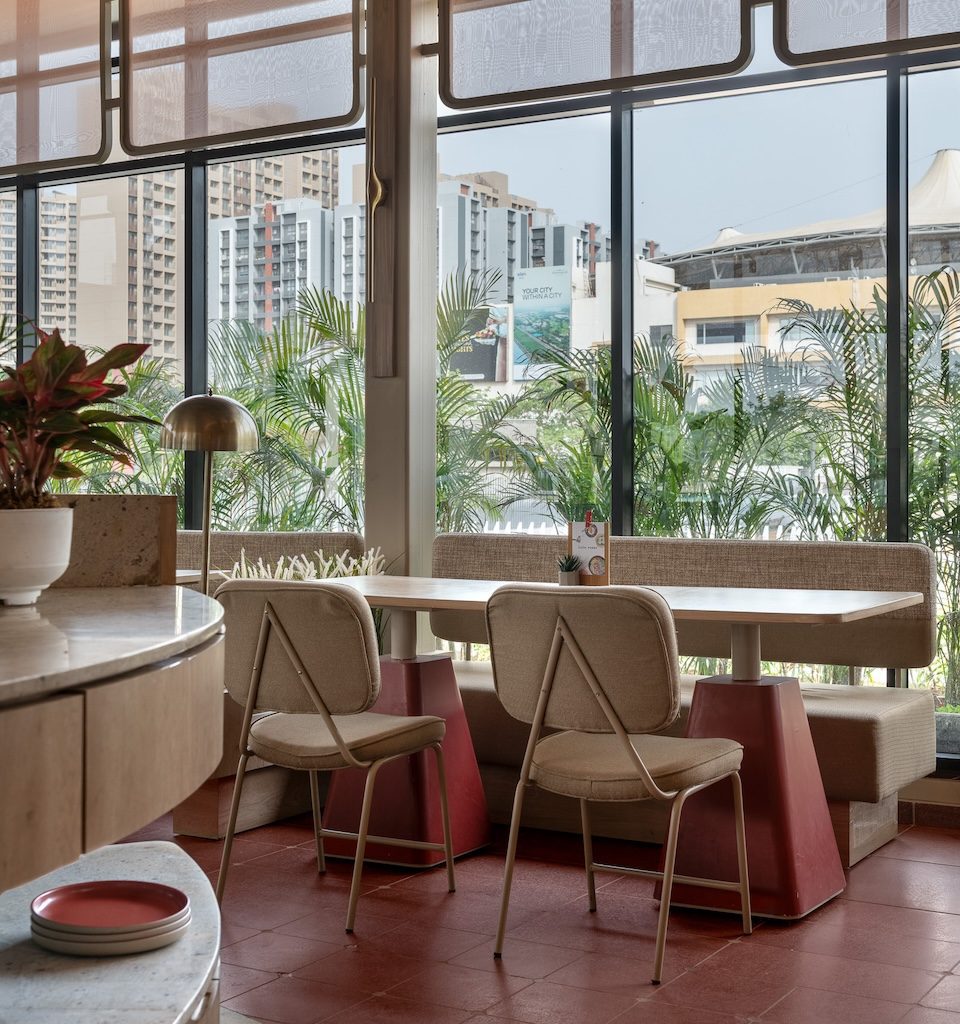
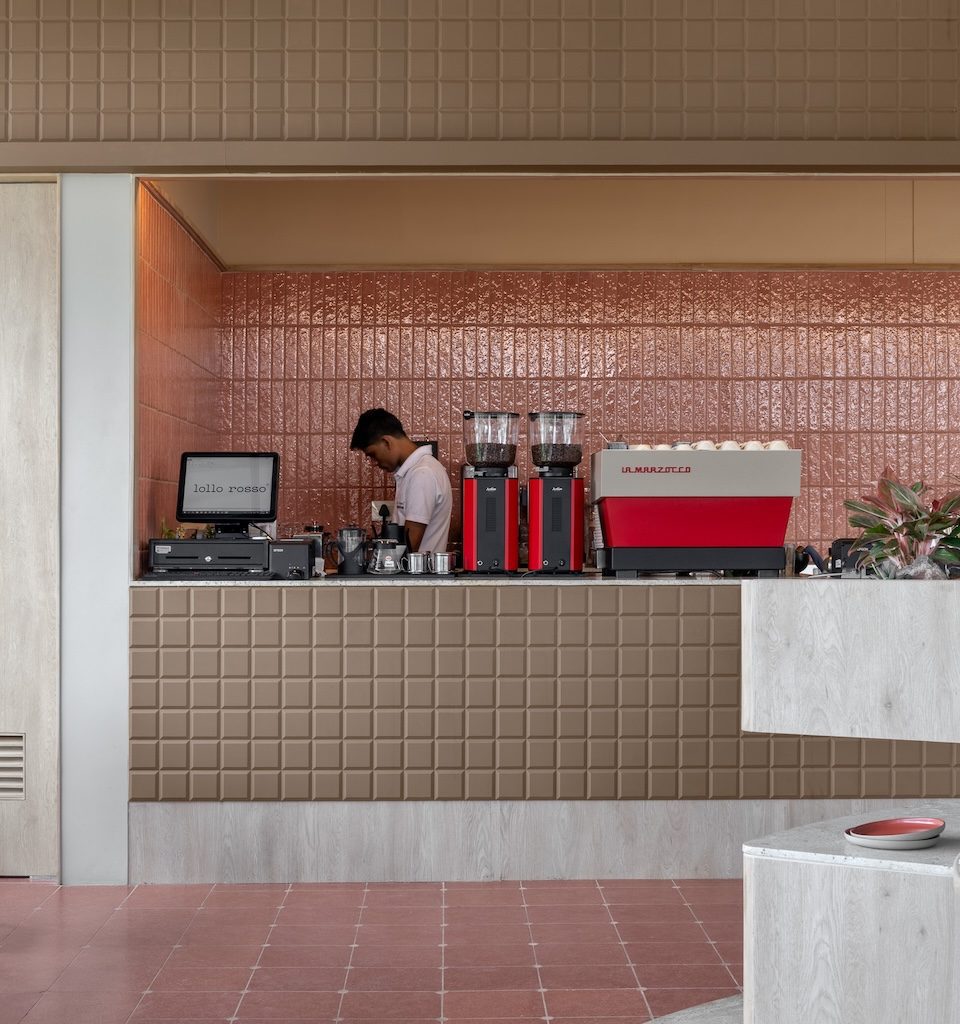
Materiality is central to softening the industrial shell. Lakha Red stone flooring grounds the restaurant with a richness reminiscent of European cobblestone streets. Tiles in varying red tones introduce texture and subtle tonal shifts, catching and diffusing light as guests move through the space. Most of the furniture is finished in laminate that mimics walnut grain in a mid-beige tone, balancing natural warmth with contemporary crispness.
Beige mild-steel rod detailing runs through the space as a slim framework, keeping the overall language light. Botanical-print upholstery pulls the surrounding greenery indoors and lends freshness to the seating. Planting is used as a soft screen and as a way to thicken the edge between interior and glass façade, reinforcing the idea of a glasshouse that is both industrial and inviting.
The challenges
The metal roof, exposed steel structure and expansive glass panels initially presented challenges of heat gain and poor acoustics. The exposed insulation layer helped stabilise indoor temperatures without introducing a false ceiling that would compromise height or honesty of expression. Echo was mitigated through the design of pendant lights that double as acoustic baffles.
In the absence of solid walls, furniture had to shoulder the responsibility of defining both function and mood. Proportion, height and placement of each piece were carefully tested so that the restaurant would feel cohesive and warm rather than cluttered or sparse.
The highlights
Botanical upholstery becomes one of the project’s most recognisable signatures, animating the glasshouse with pattern while staying sophisticated. Accents of red in the floor, lighting and select elements tie back to the name and identity without overpowering the beige envelope. A fourteen-foot feature nicknamed the Cadbury wall provides a playful, graphic moment at the front-of-house and signals the brand’s coffee-led direction. Underfoot, the Lakha Red flooring quietly anchors the entire experience, its cobblestone-like character echoing the idea of layered, carefully composed bowls that define the menu.
The takeaway
For IDO Design, Lollo Rosso reaffirmed the value of working with a site’s inherent character rather than against it. By embracing the glasshouse’s industrial bones and layering warmth through colour, material and zoning, the studio has shaped a restaurant that feels airy, contemporary and distinctly its own—an inviting glasshouse where Pan-Asian dining plays out in a space that is softly lit, gently patterned and full of personality.
Fact file
Project: Lollo Rosso
Design firm: IDO Design
Area: 3,400 sq ft
Location: Adani Shantigram, Ahmedabad
Principal architect: Niraj Shah
Design team: Vedant Parasrampuria
Add a Comment