
Project Arborea—designed by 27MM Collaborative—is a Mumbai apartment where modern minimalism meets emotional warmth, and every element reflects the clients’ desire for comfort, craftsmanship, and a deep sense of belonging.
Curated by: Deepa Nair
Photographs: Murtuza Gandhi; courtesy 27MM Collaborative
The brief
Project Arborea unfolds as a home shaped by restraint and emotion. Designed by 27MM Collaborative, it translates the clients’ desire for balance into a seamless blend of function, warmth, and subtle elegance. Set within Platinum Life, a premium residential complex in suburban Mumbai, the project began as a builder-finished apartment, complete with basic flooring, standard electrical fittings, and finished bathrooms. While the architectural envelope was uninspiring, the space offered a clean canvas and an open-to-sky balcony that hinted at possibility. Bathed in natural light and spatially sound, it provided the right bones for transformation.
“The clients envisioned a home that felt timeless, warm, and deeply personal—a sanctuary that balanced modern design with subtle cues from nature and nostalgia. Functionally, the brief called for a clutter-free, highly adaptable layout that could evolve with their lifestyle: a work-from-home setup that didn’t feel clinical, ample storage without visual heaviness, and inviting shared zones that encouraged connection,” says architect Kruti Mehta, principal architect, 27MM Collaborative. “Aesthetically, they desired an environment that exuded calm and understated luxury. It was important for the home to feel soulful, not showy; expressive, yet rooted. Every space—from the living room to the mother’s bedroom and the meditative balcony—was to carry a calm narrative of belonging,” adds Parth Mehta, principal architect, 27MM Collaborative.
The design intent
At its core, Arborea was envisioned as a home that speaks softly—a space where modern minimalism meets the warmth of nostalgia. The design intent was to create a tactile, emotionally resonant environment where every material, curve, and colour serves a purpose beyond aesthetics, evoking memory, comfort, and calm. The home was approached as a narrative not only of form and function, but of feeling.
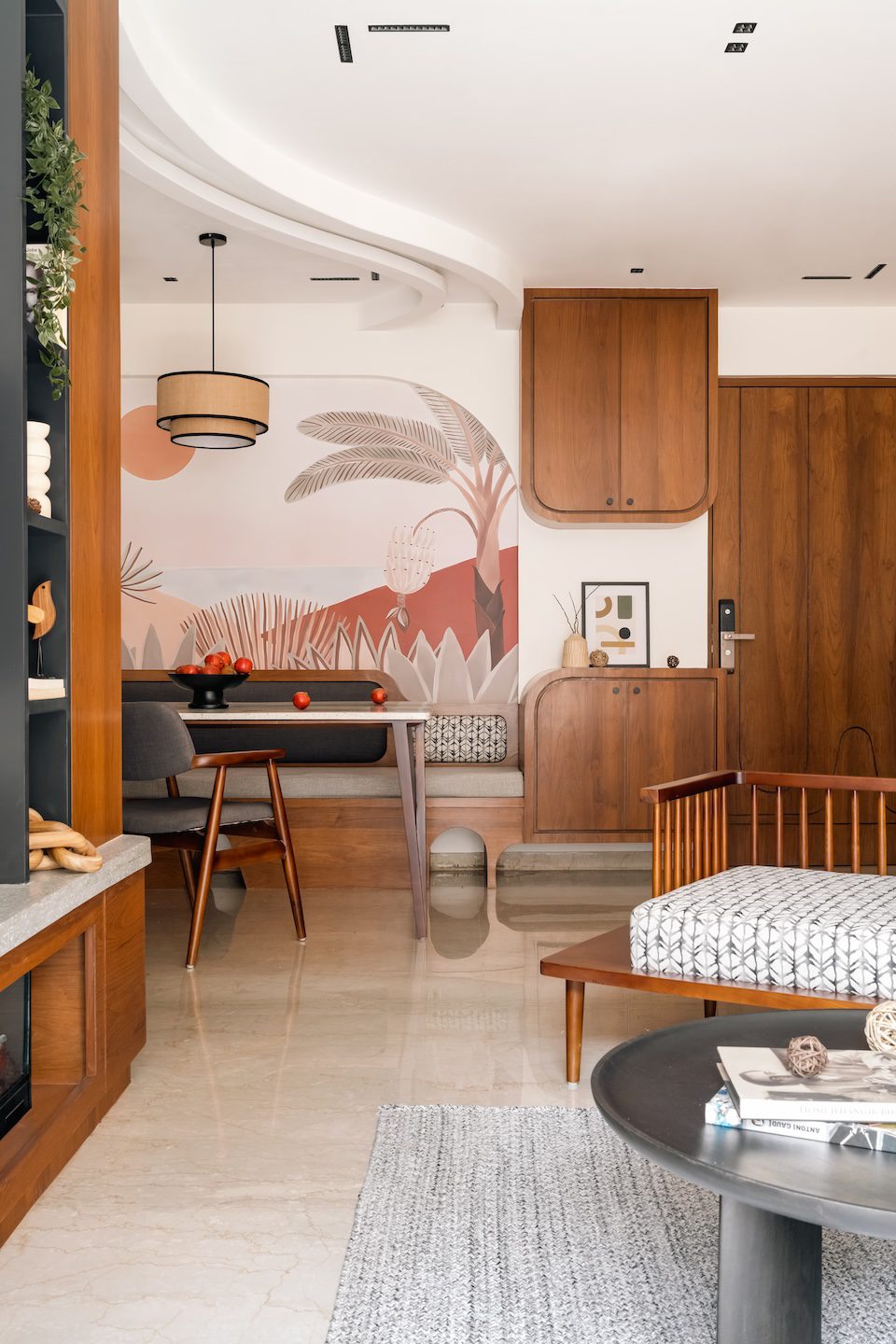
Organic textures such as rattan, jute, and fluted wood were paired with terrazzo and hand-painted botanicals to ground the space in nature. Curves softened the geometry of the apartment’s rigid shell, creating fluid transitions between public and private zones. Rather than impose a singular style, each space was allowed to find its own voice while remaining part of a cohesive whole—earthy, elegant, and enduring. Ultimately, the intent was to design a home that does more than please the eye; it was to shape a space that feels lived in, sincere, and deeply connected to the people who inhabit it.
The civil intervention
While Arborea worked largely within the framework of a builder-finished apartment, a few key civil interventions redefined its spatial experience. The most significant was the removal of a passage wall between the dining area and the common washroom, allowing the corridor to the private zones to feel wider and more open. This subtle change dissolved the sense of a narrow alleyway, creating a smoother, brighter transition that improved both flow and function.
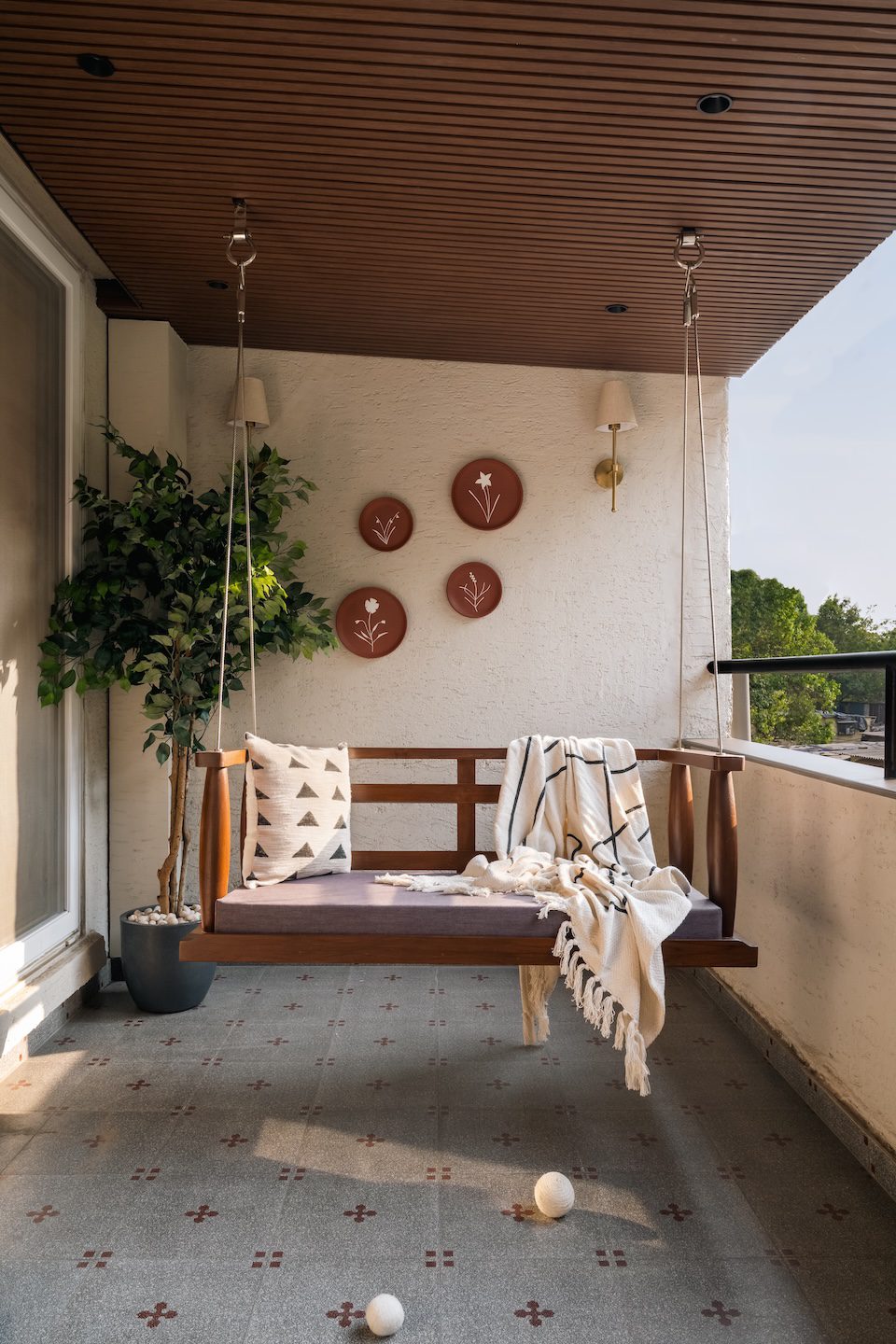
Another notable transformation took place in the balcony. Originally open to the sky, it was reimagined with a ceiling added under the builder’s approved guidelines. This structural enhancement enabled a cohesive, design-forward outdoor zone—one that blends Mediterranean elements with sculpted niches, built-in seating, and a handcrafted swing, turning it into a poetic extension of the indoors. Though minimal, these interventions were deliberate and effective, enhancing openness, softening boundaries, and reinforcing the home’s tranquil sense of retreat.
The design and material details
Arborea is shaped by its reverence for natural textures, timeless craftsmanship, and the interplay of materials. The palette witnesses recurring motifs of rich wood, terrazzo, rattan, and handcrafted finishes binding the home into a seamless whole.
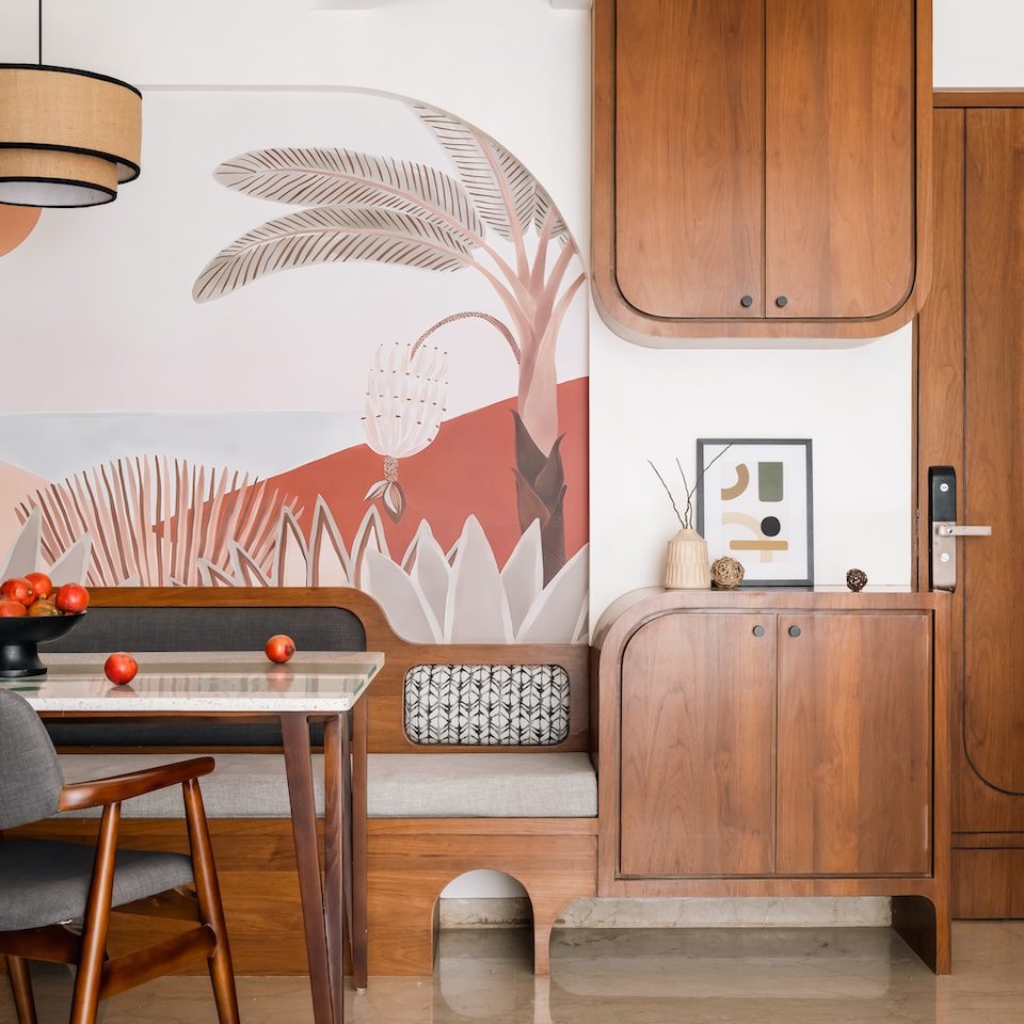
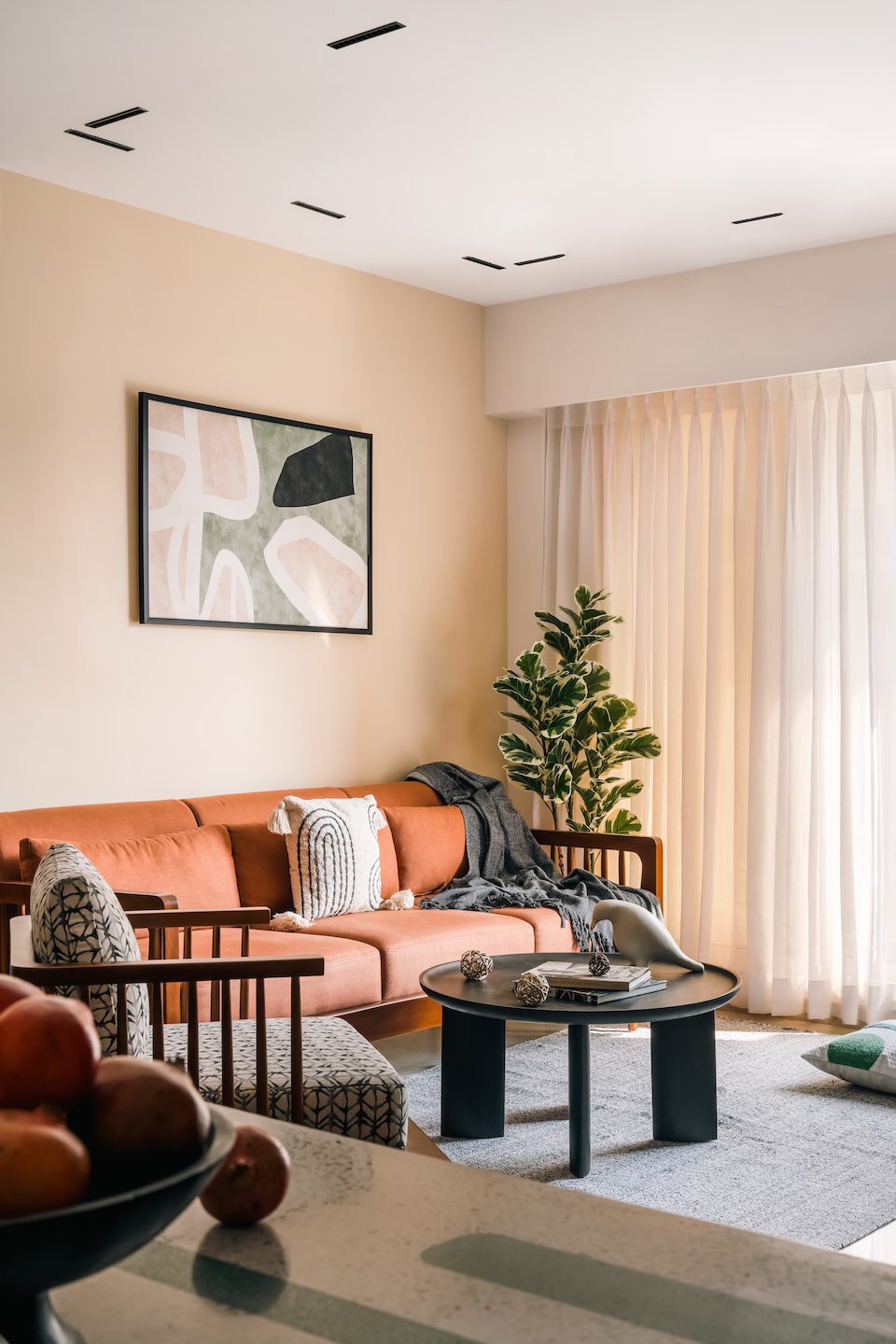
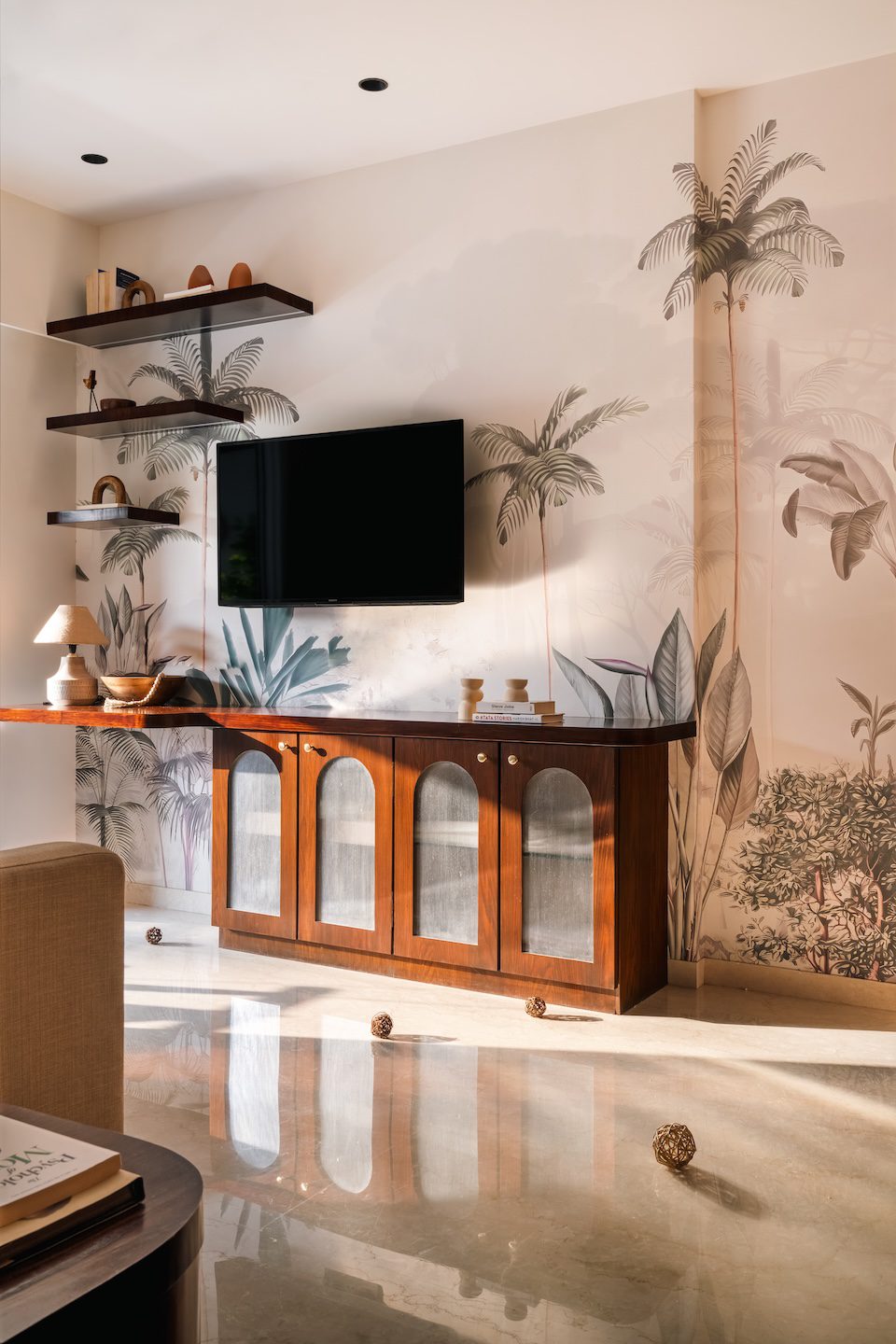
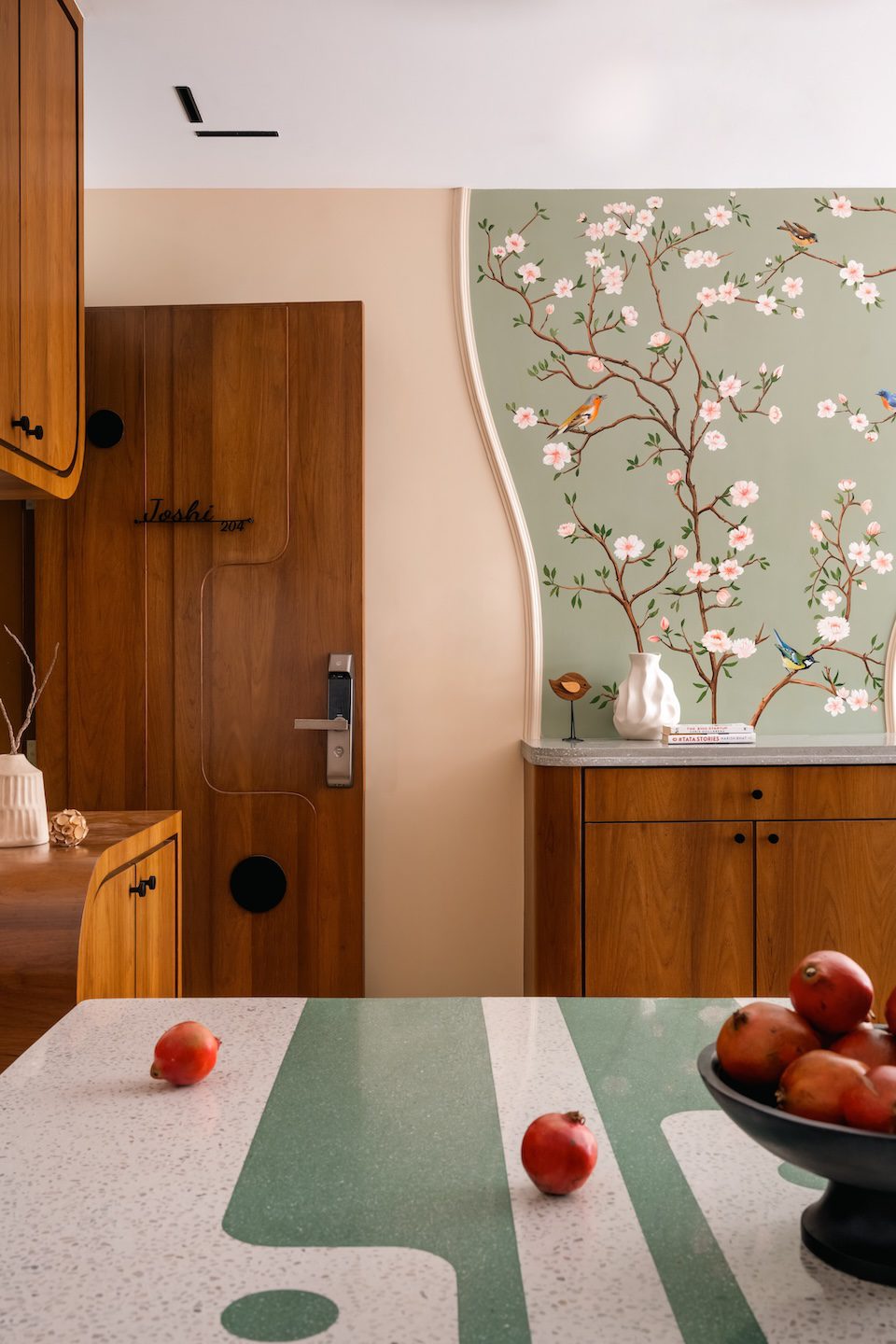
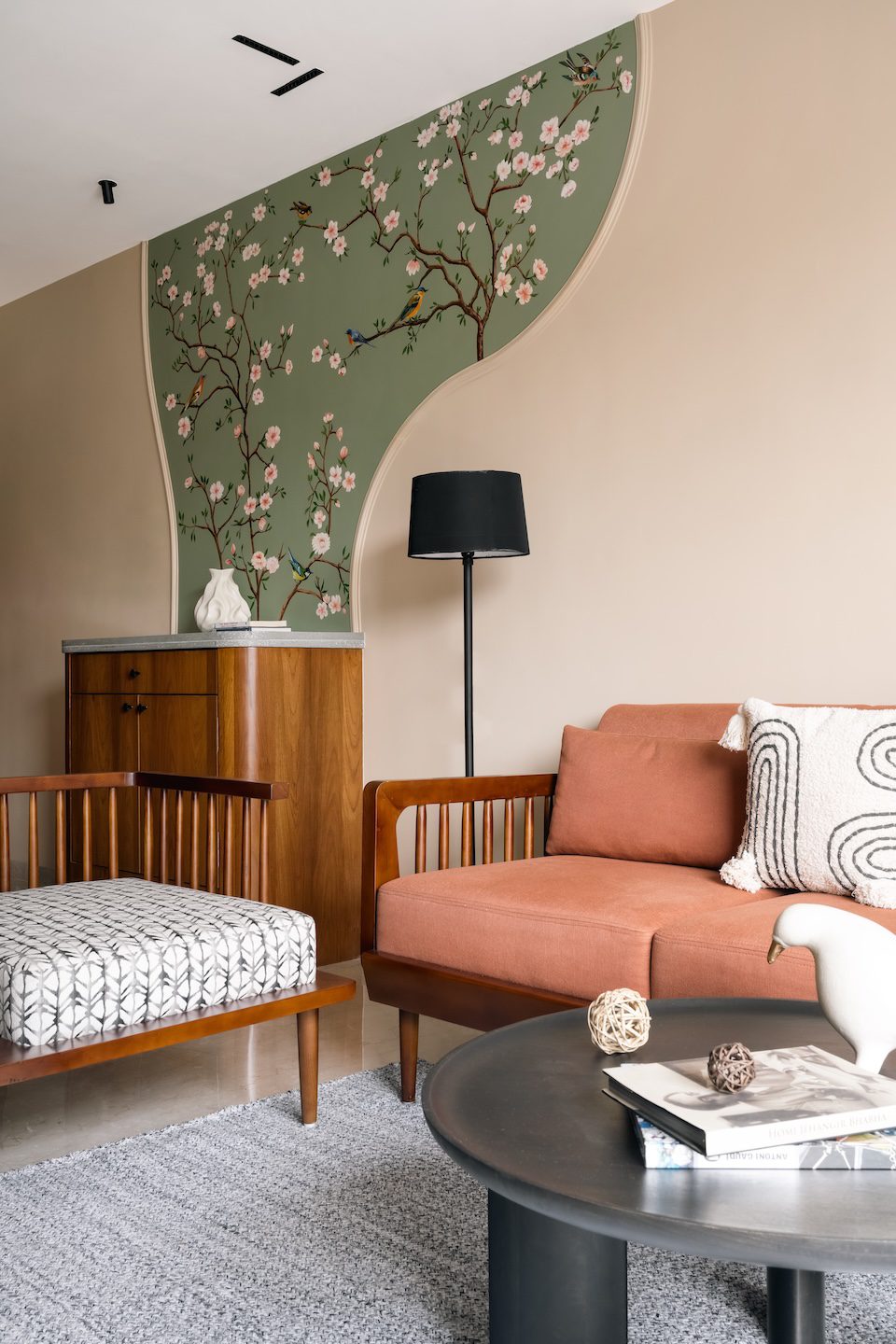
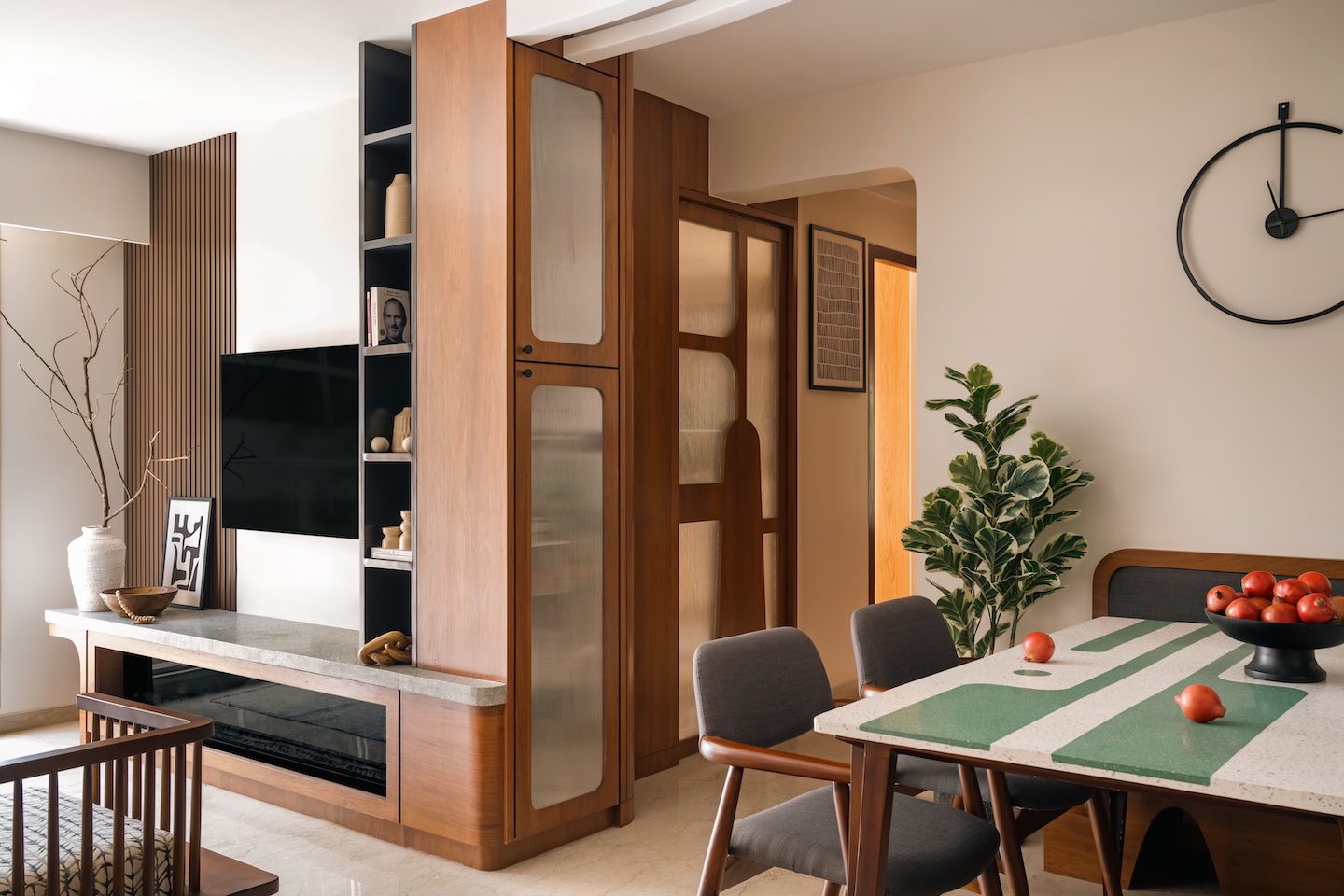
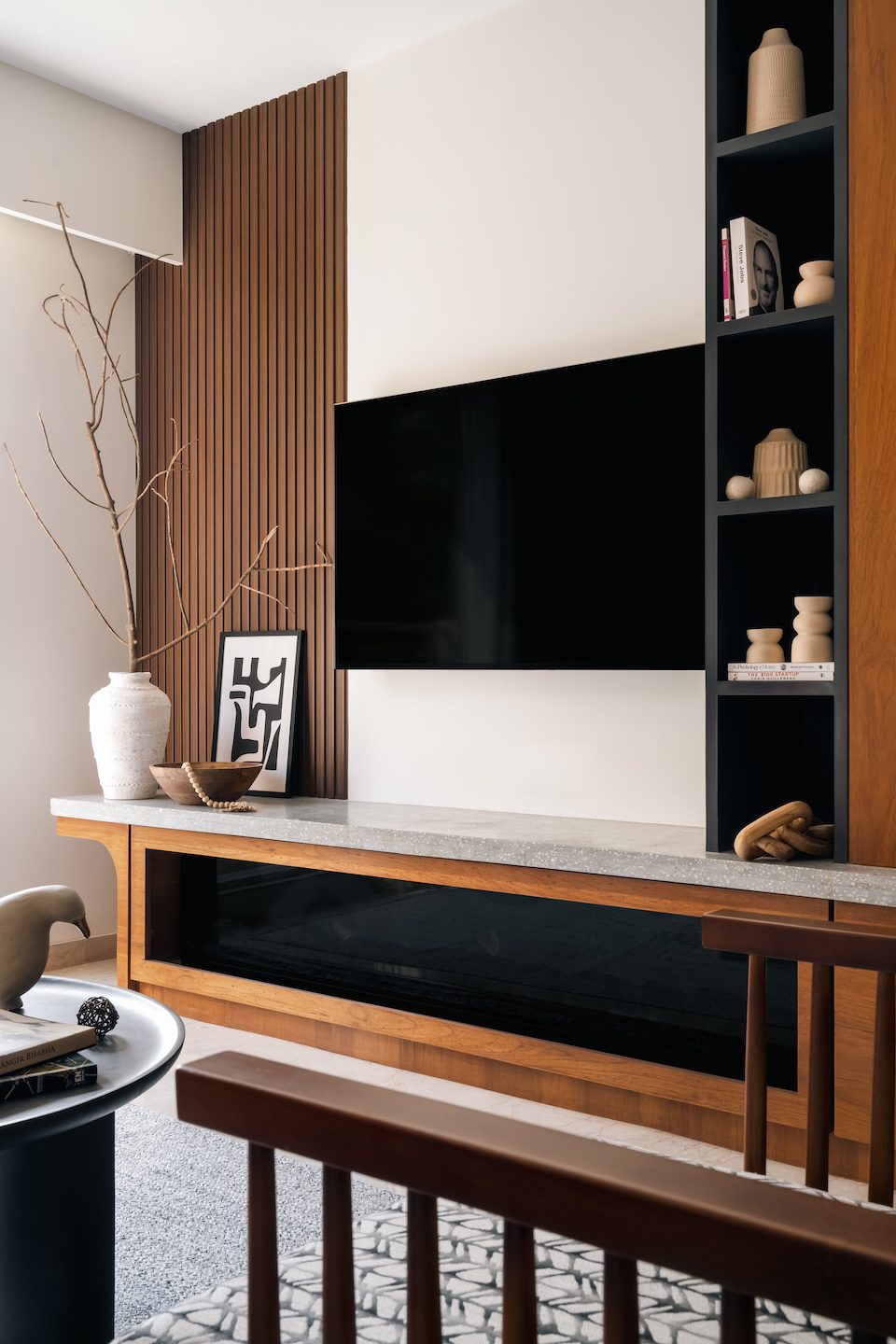
The entryway sets the tone with a hand-painted tropical mural in sage green, alive with delicate songbirds. It evokes the charm of a countryside orchard and introduces the home’s serene narrative. In the living room, a plush three-seater sofa in soft beige anchors the space, and is complemented by a mid-century-style relaxation chair and a sleek terrazzo-top coffee table. Fluted wooden panelling adds warmth to the vertical surfaces, while open shelving displays ceramics, travel finds, and art that reflect the family’s story. In the entertainment area, a curved-edge console with an integrated fireplace takes centre stage, continuing the design language of soft edges and organic forms that flow throughout the home.
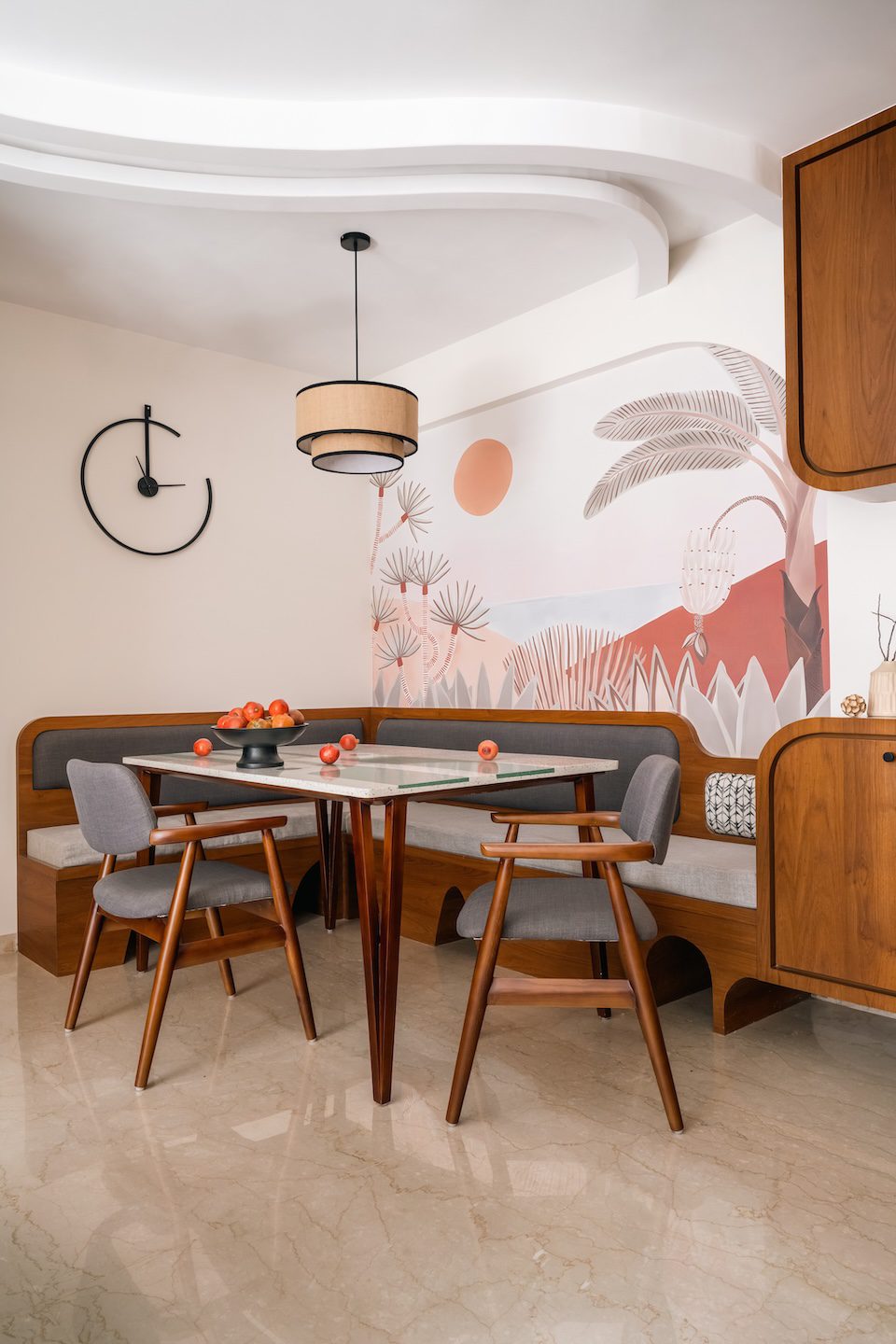
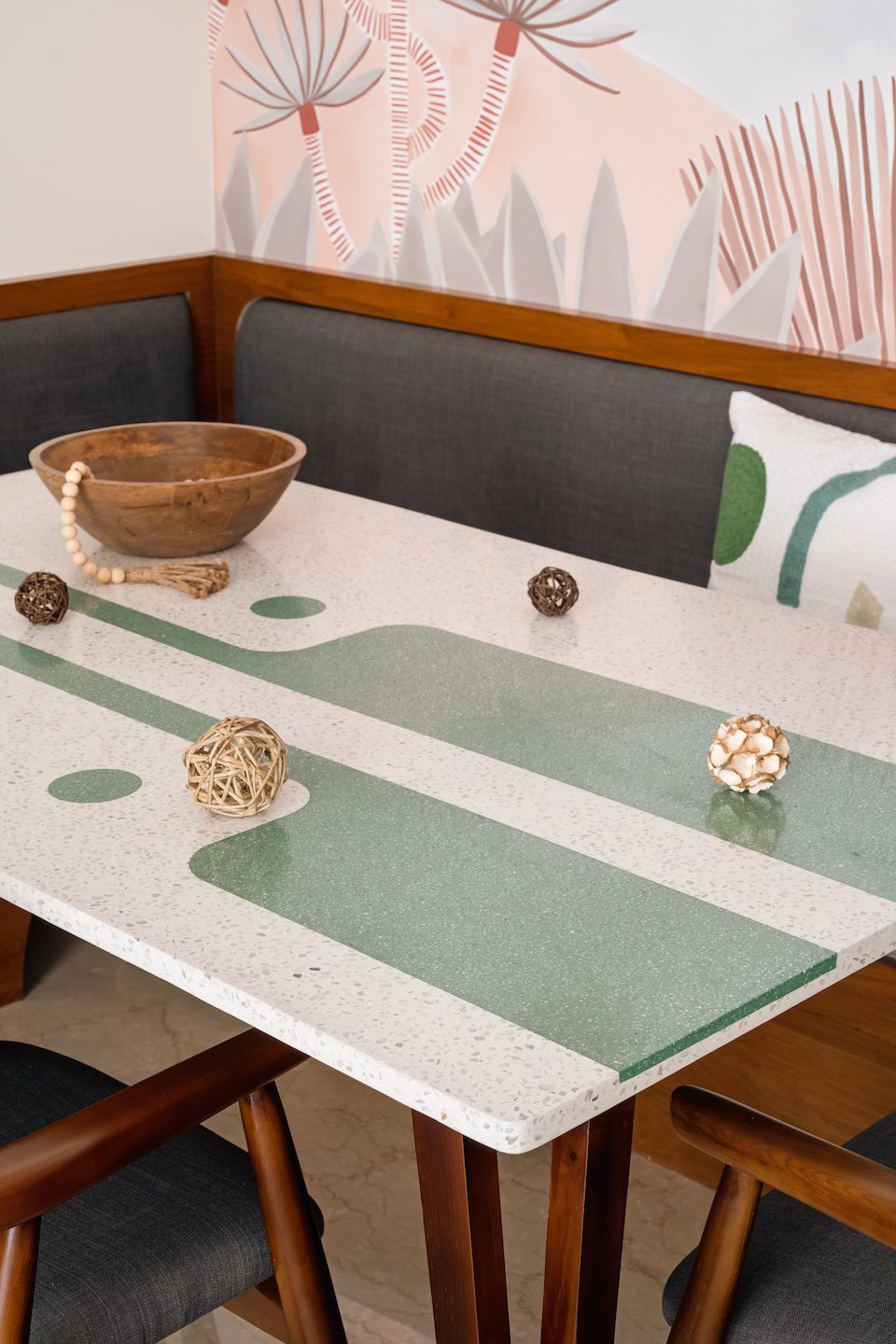
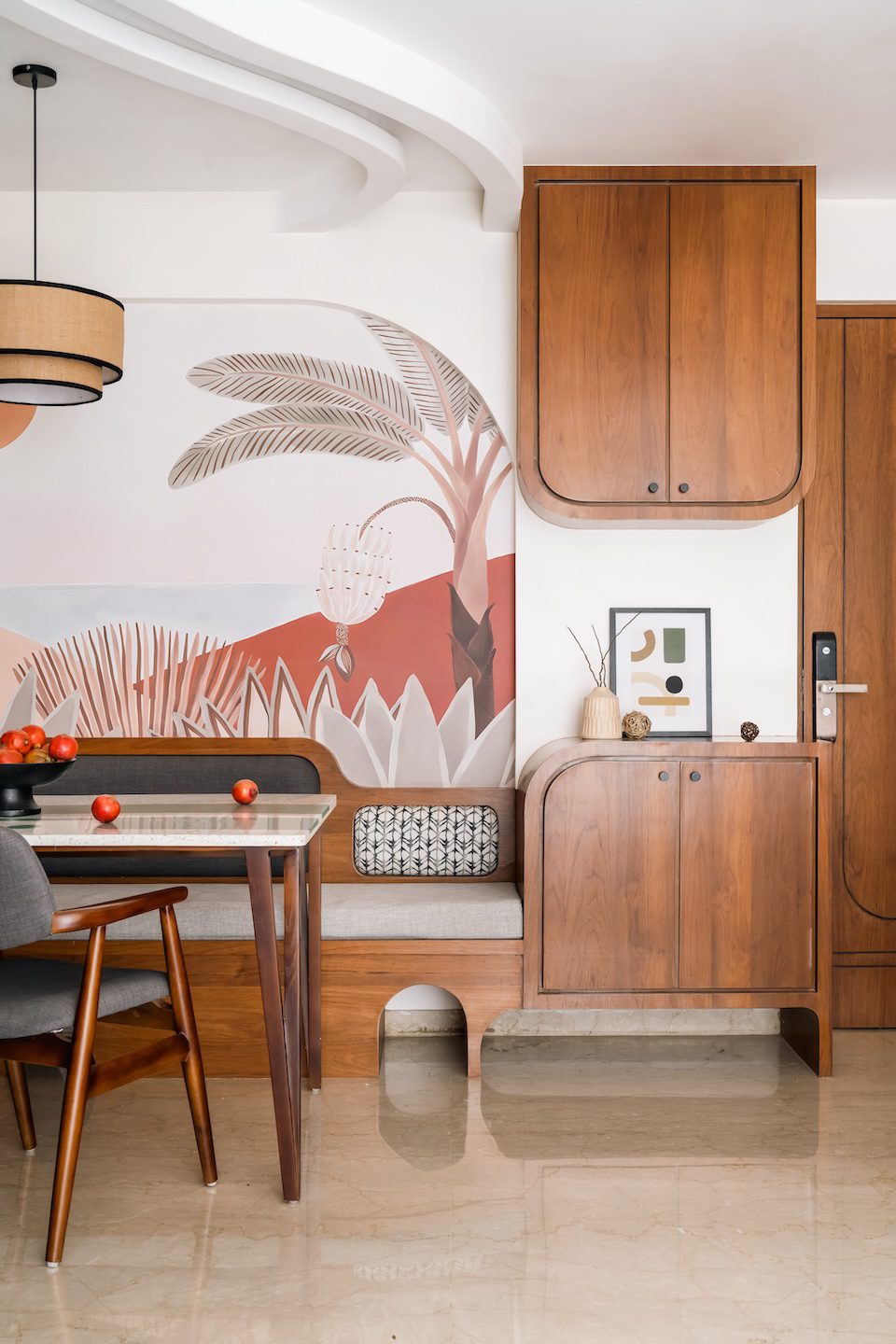
In the dining area, the material palette finds its most expressive moment with a custom terrazzo table featuring bold green inlay forming a sculptural centrepiece. Around it, charcoal grey upholstered chairs with solid wood frames and a curved bench create a sense of intimacy and ease. Curves reappear in the cabinetry, furniture, and ceiling detail, replacing rigidity with gentle movement. Behind the dining space, a stylised desert artwork in shades of peach, rust, and sandy beige deepens the warmth, mirroring the palette of the furnishings and finishes around it.
Tucked within the transitional corridor that links the public and private zones of the home, the coffee bar serves as both a visual pause and a functional delight. Crafted in warm-toned wood and lined with moss-green subway tiles along the open backsplash, this nook is both functional and expressive. It features a built-in counter with ample closed storage below, mirrored by overhead cabinetry for mugs, canisters, and everyday essentials.
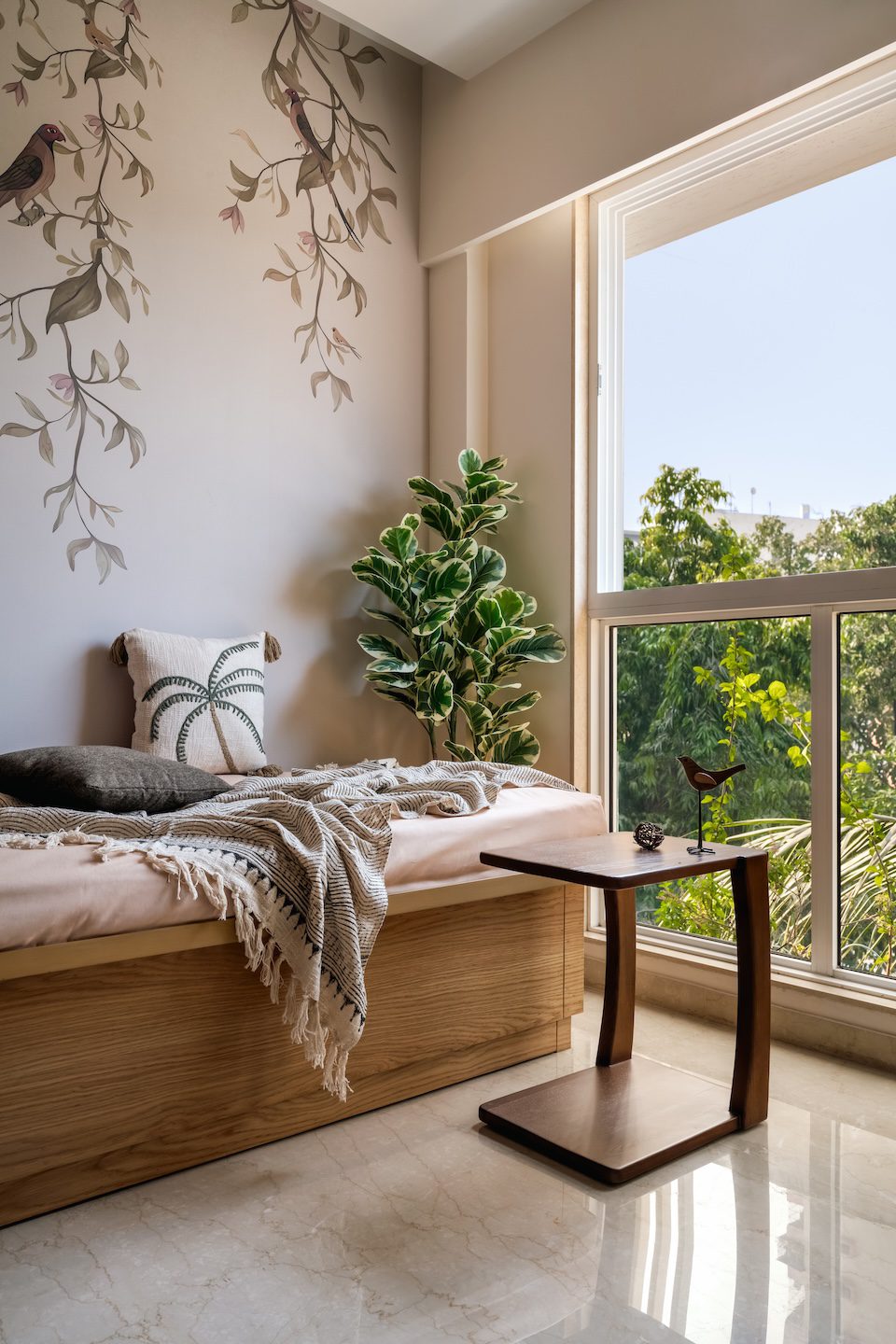
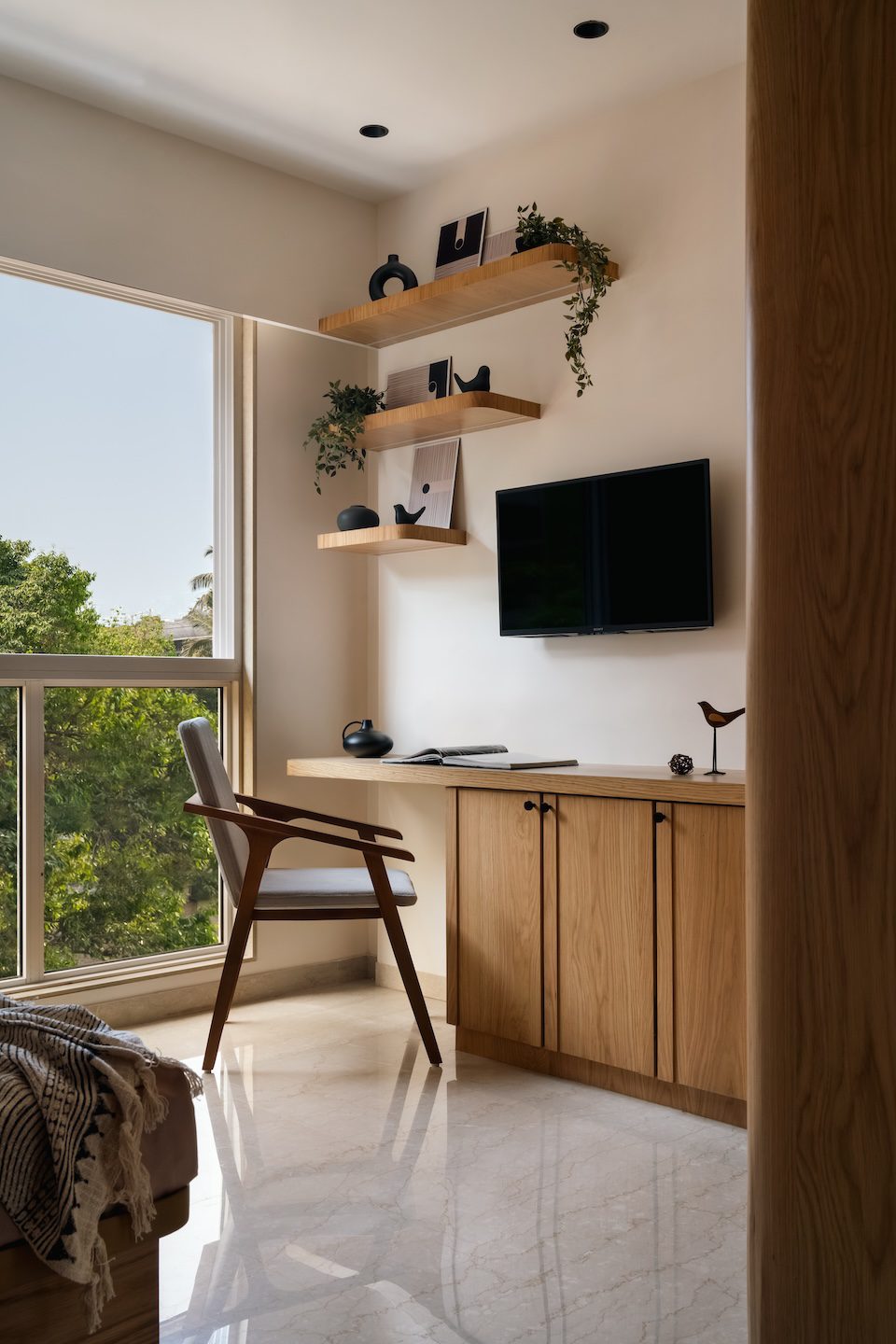
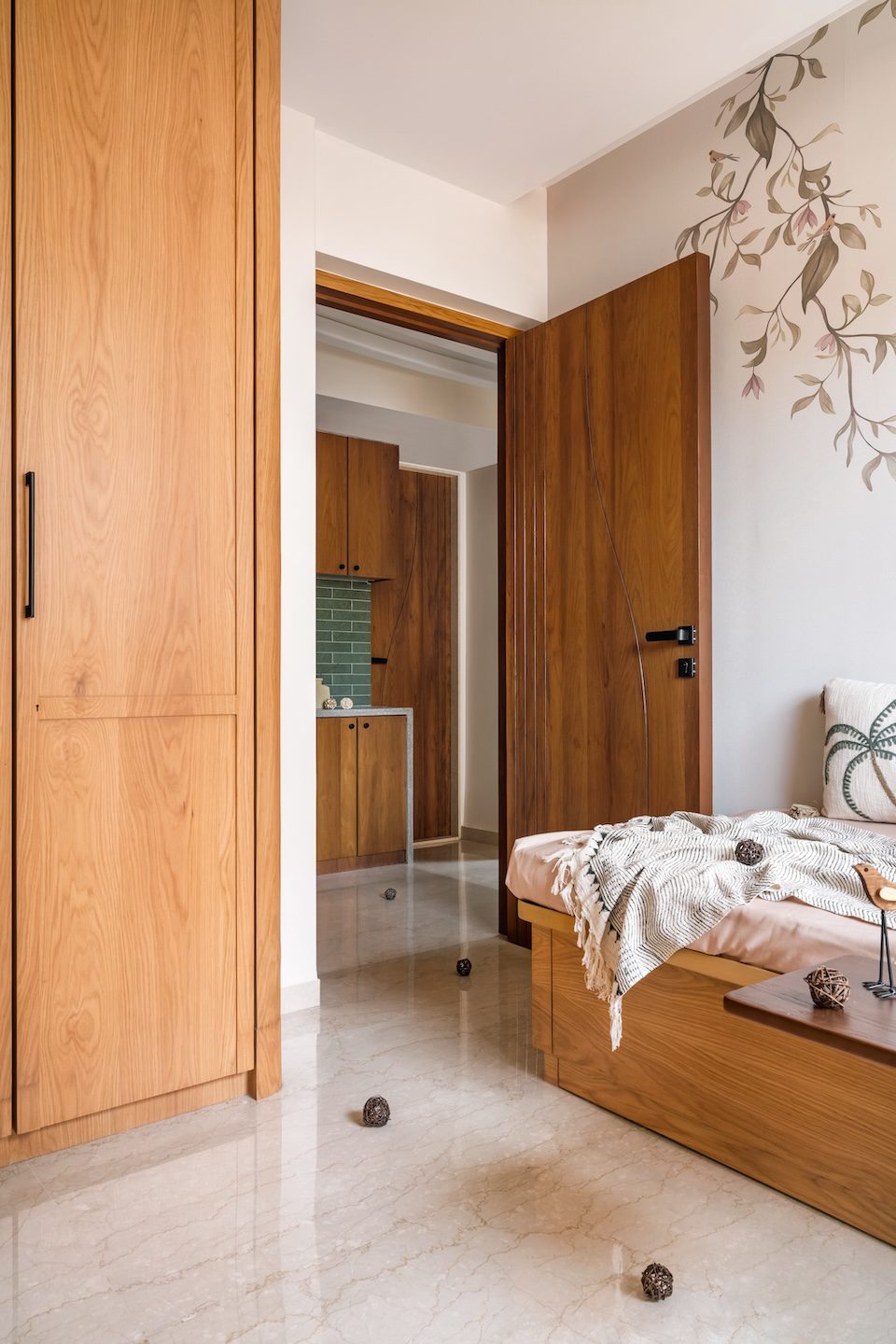
Flooded with natural light, the study is conceived as a calm cocoon of modern minimalism. A streamlined wooden desk free of visual clutter is paired with floating open shelves that keep the space light and purposeful. A soft botanical wallpaper behind the daybed introduces nature’s stillness, while muted furnishings and sheer drapes lend the room an air of ease and focus.
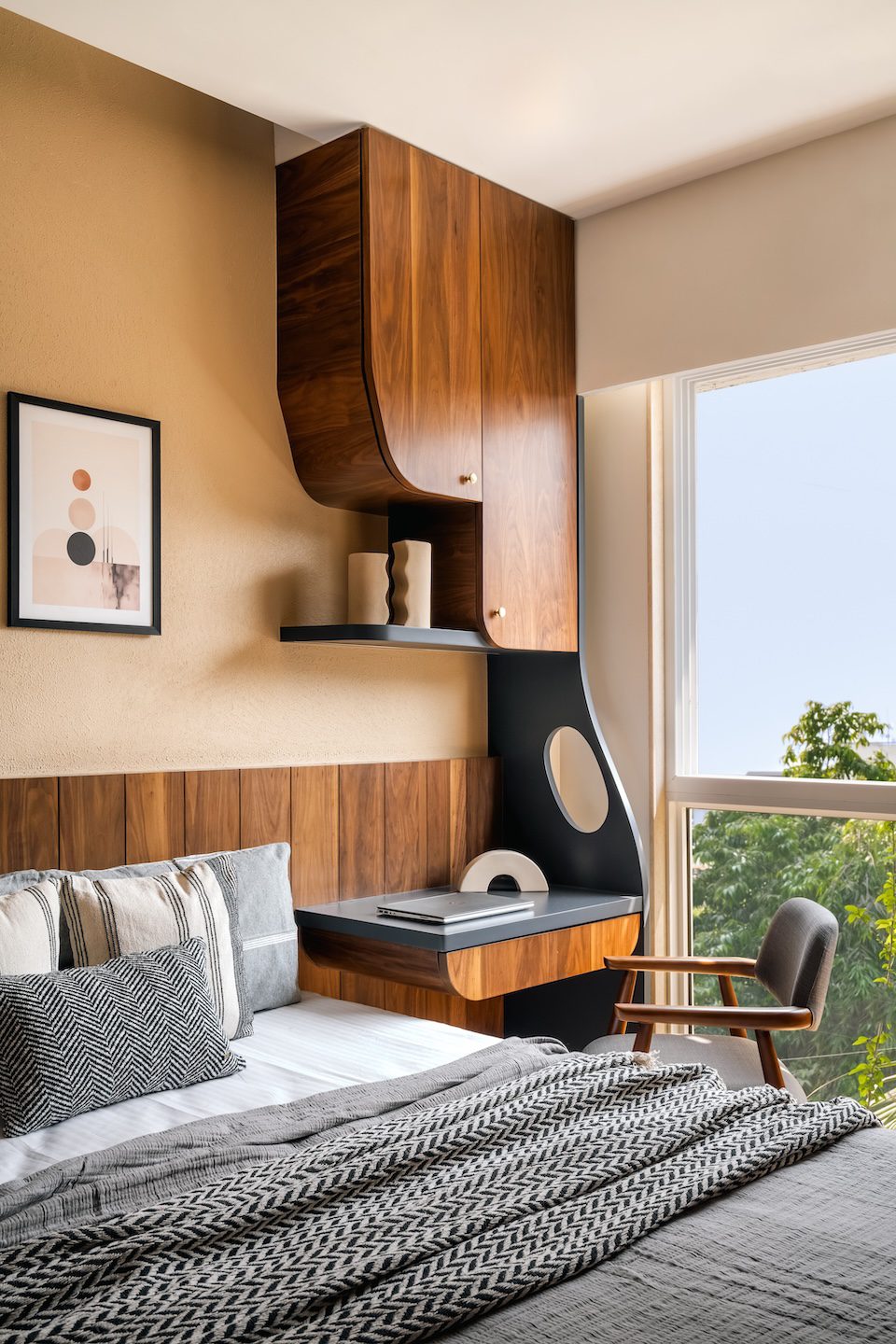
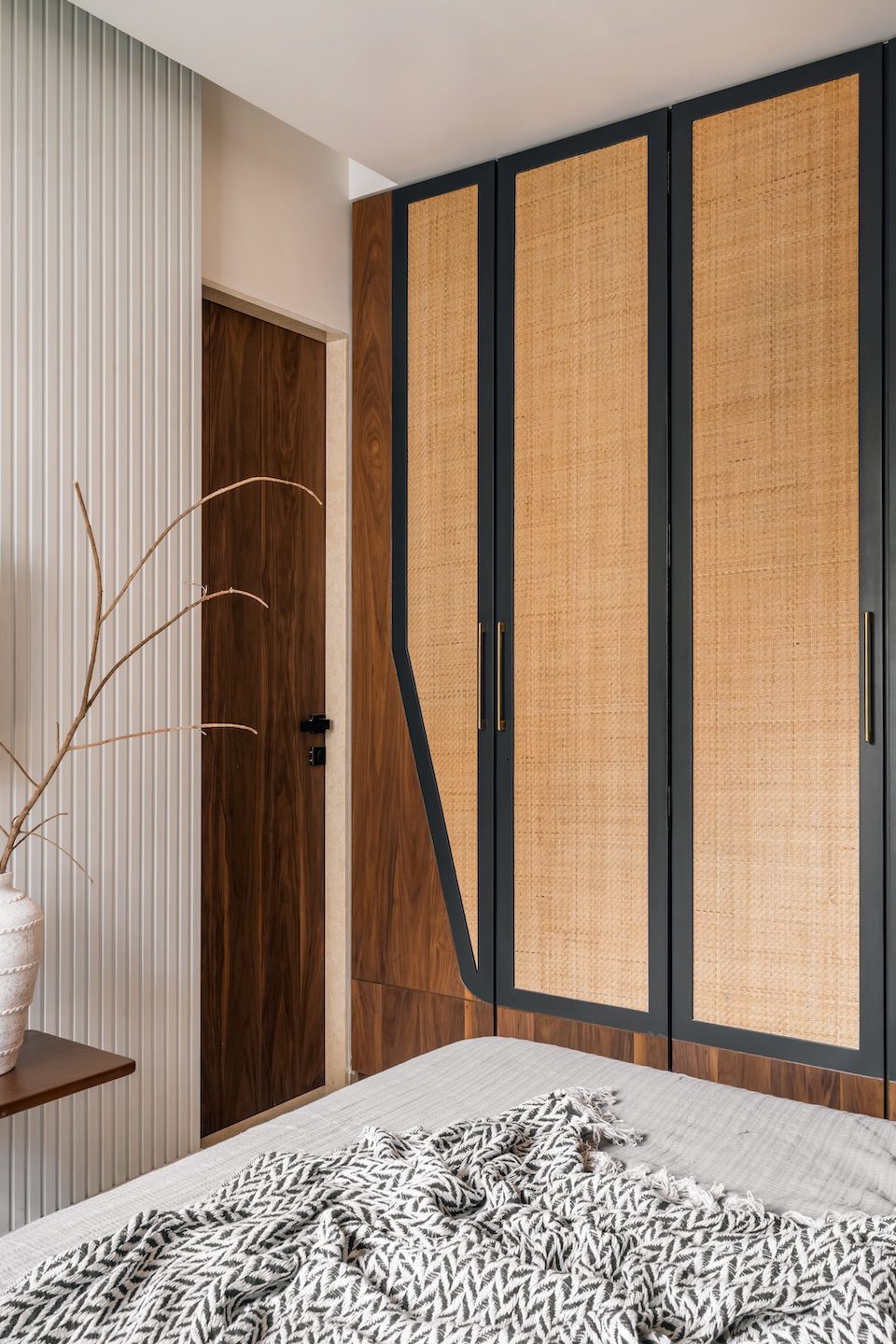
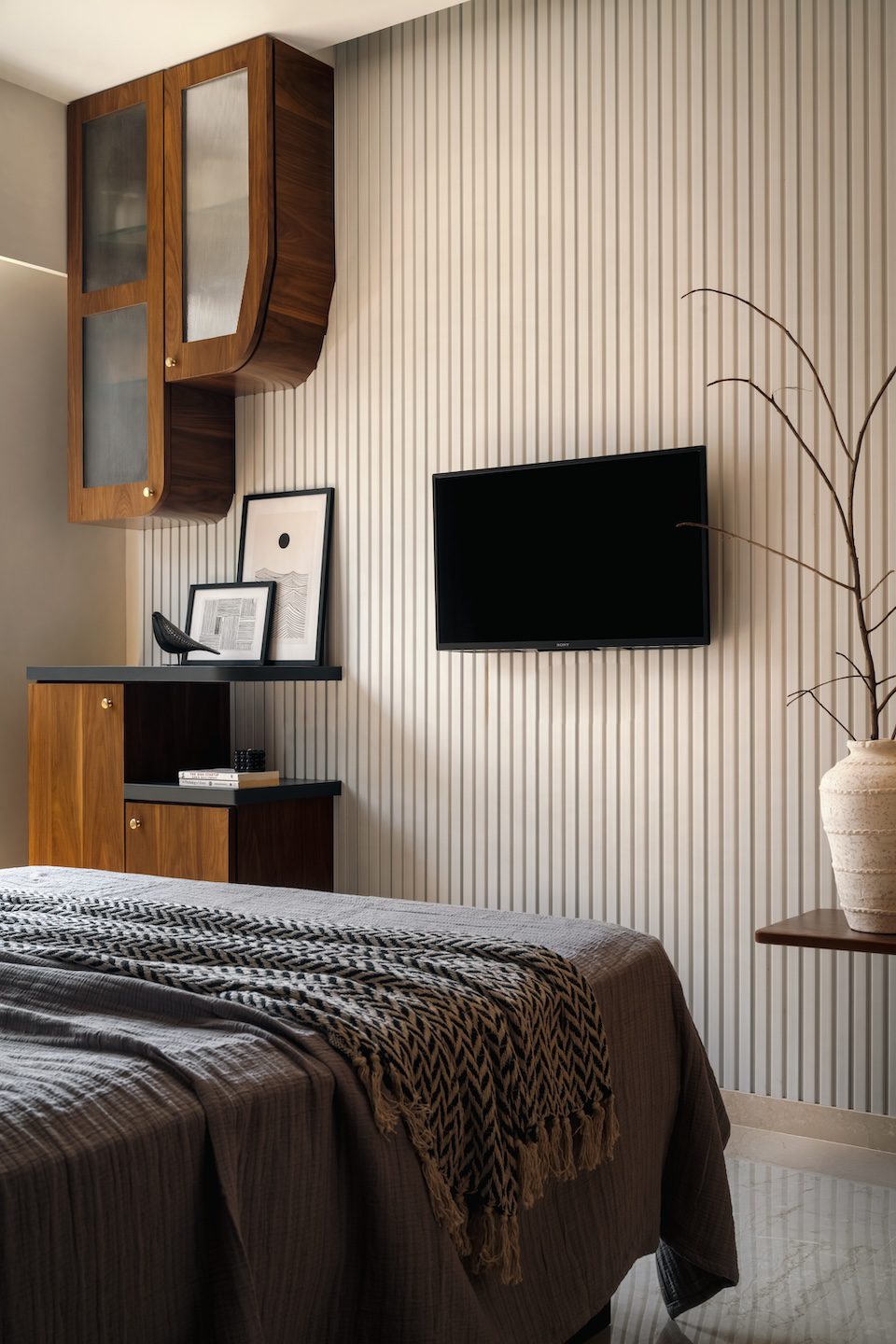
The master bedroom embodies understated luxury. A custom-designed wardrobe stands out with its blend of natural rattan, deep charcoal framing, and veneer. The bed sits against a vertically slatted veneer headboard that extends into an integrated study corner, creating a cohesive backdrop. Earthy tones, textured linens, and brass bedside lights complete the composition, bringing a sense of warmth and balance to the space.
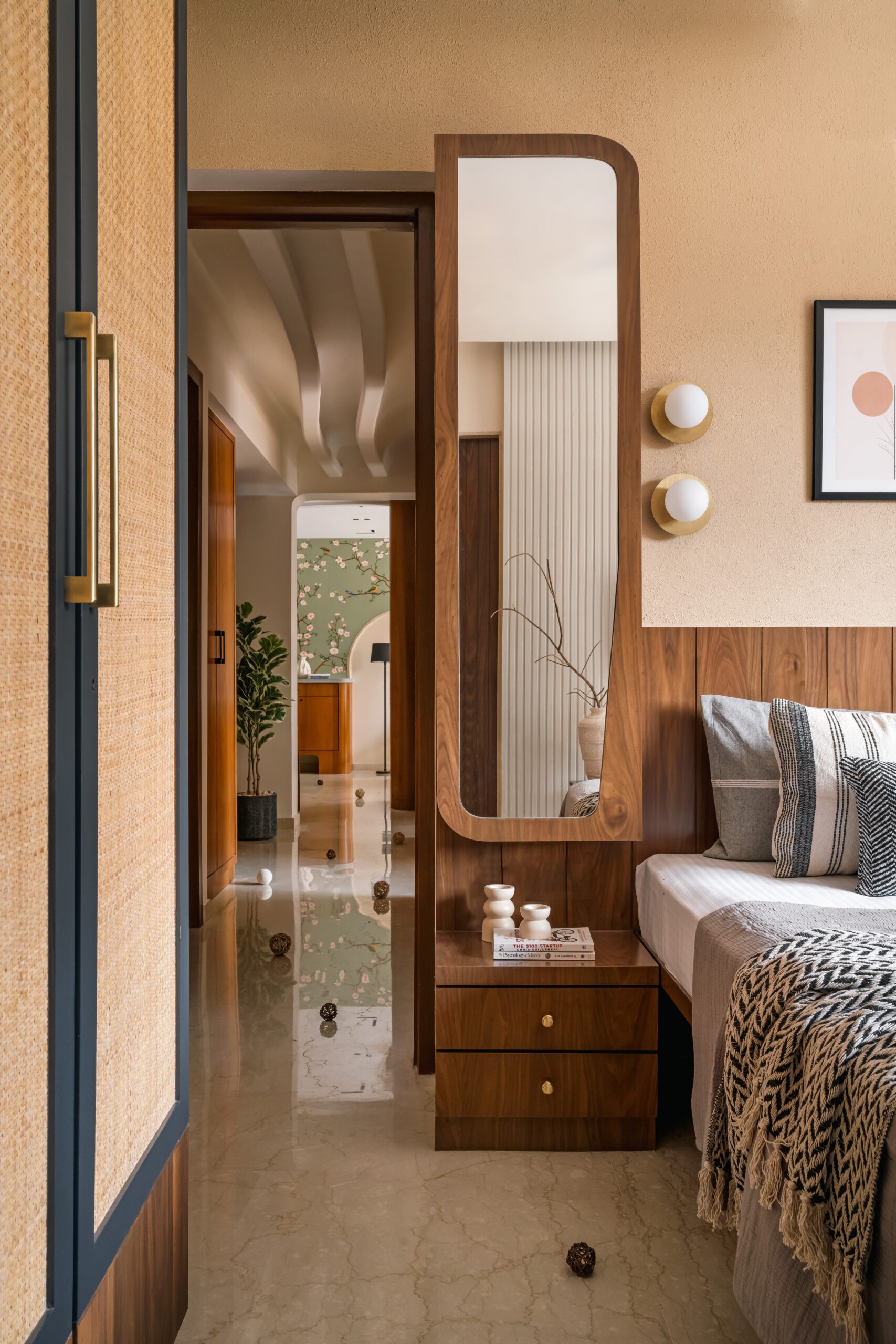
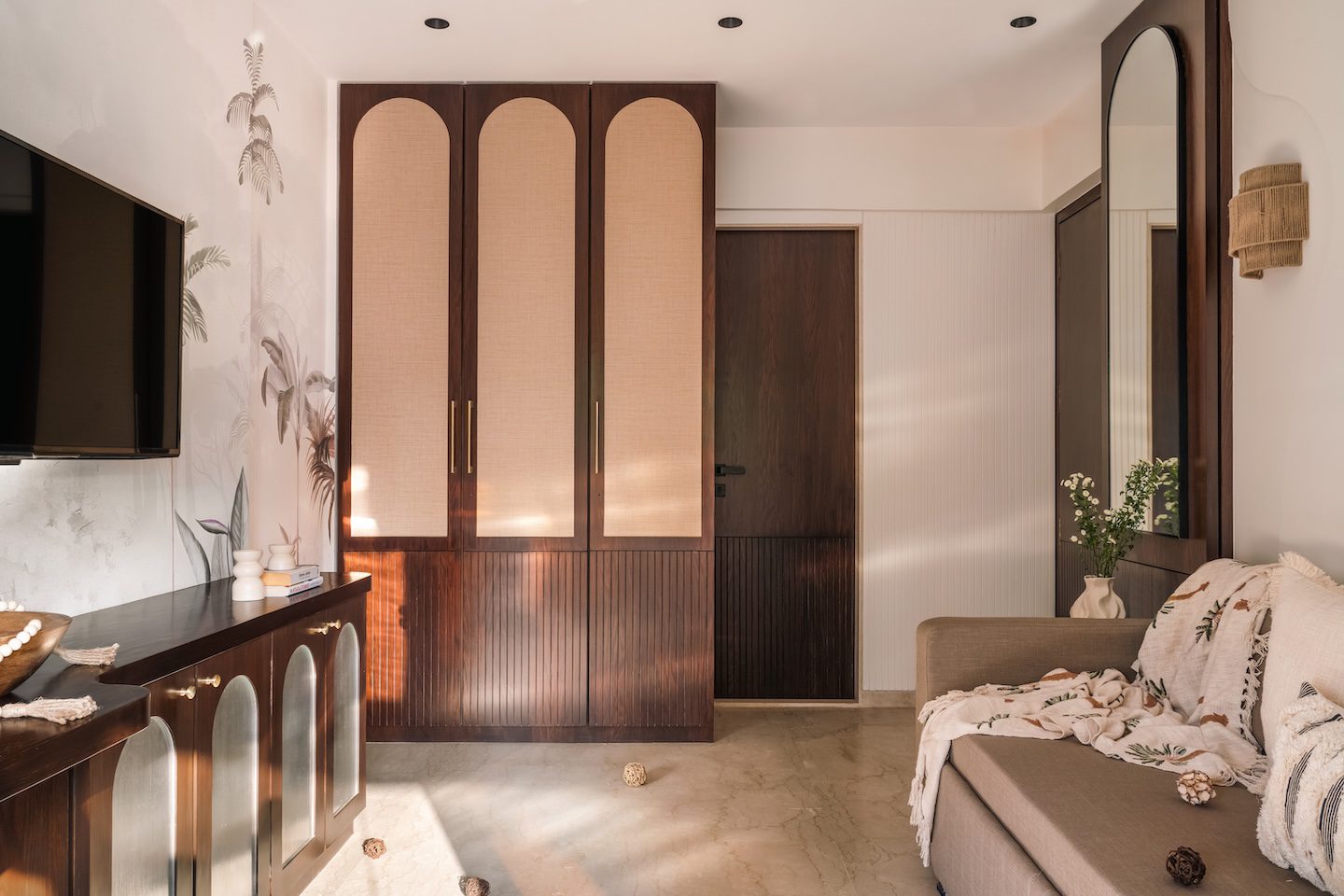
The mother’s bedroom leans into warmth and nostalgia while maintaining contemporary grace. The palette is grounded in neutral tones, accented with deep wood and earthy textures. The wardrobe stands out with its arched panels wrapped in woven jute fabric, fluted wooden framing, and integrated handles. A full-length arched mirror amplifies natural light, while soft tropical wallpaper behind the floating shelves adds depth and visual texture. The curved panelling along the wall behind the sofa-cum-bed becomes an elegant architectural gesture that brings softness and refinement to the otherwise muted space.
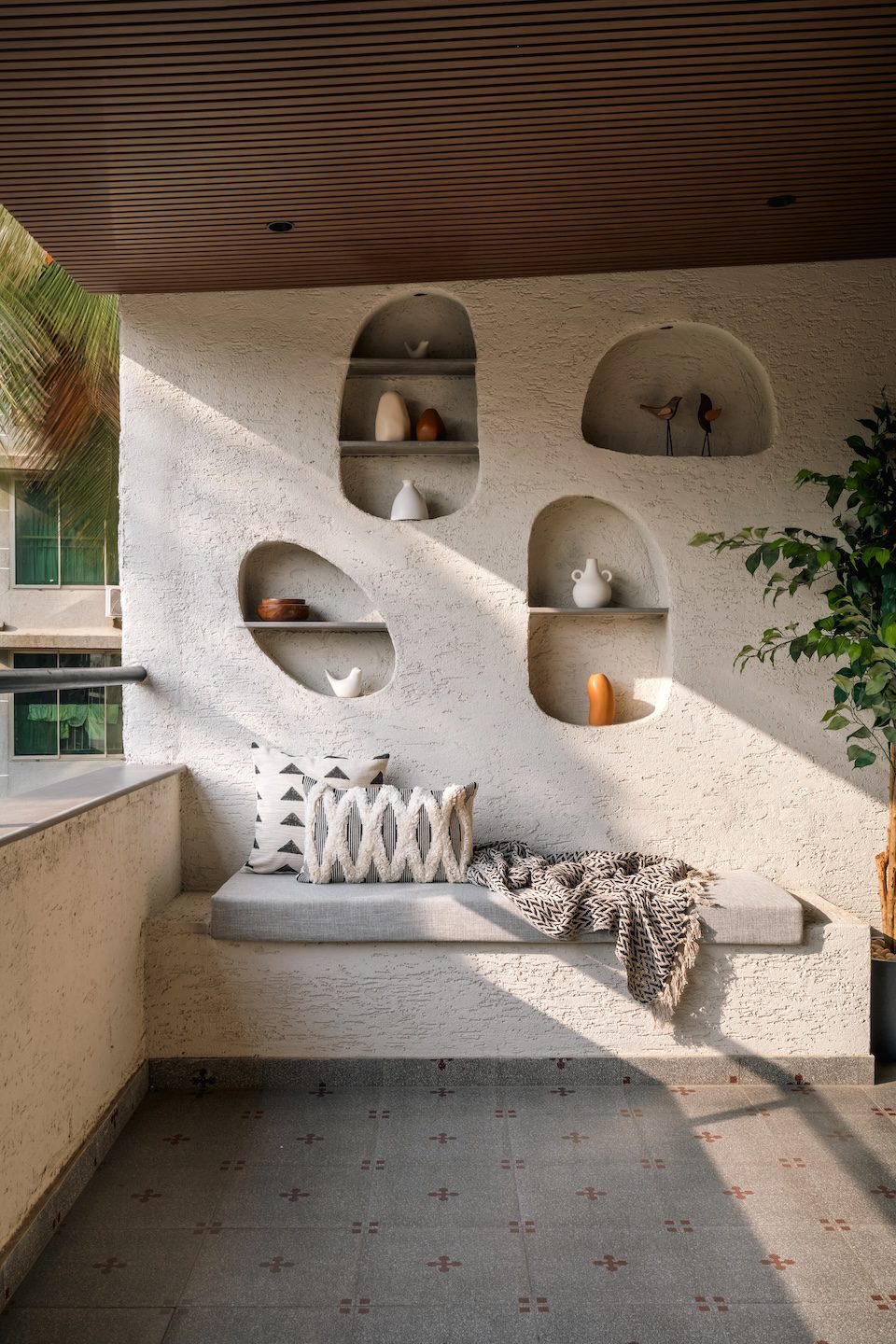
The home features two balconies, each distinct in mood and design. The smaller balcony, adjoining the living room, feels intimate and restful…ideal for a quiet read or morning chai. The larger balcony, accessible through the mother’s bedroom, is envisioned as a Mediterranean-inspired retreat. Sculpted wall niches punctuate textured plaster surfaces, displaying curated pottery and planters. The space has two seating options—a built-in seating nook that runs along one wall which is layered with neutral-toned cushions; and a playful handcrafted wooden swing.
The challenges
“One of the earliest design challenges was spatial: the passage leading from the dining area to the private zones felt narrow and disconnected. It risked functioning more like a transitional tunnel than a part of the home. To counter this, we broke down a segment of the passage wall, a small but transformative intervention that opened up the corridor visually and spatially. By doing so, we introduced a new flow, one that allowed light, sightlines, and a sense of ease to travel freely from the dining space into the more intimate areas of the home,” explains Kruti.
“The balcony posed another unique challenge. Initially an open-to-sky space, it came with structural limitations and weather exposure concerns. However, under the builder’s permissible guidelines, we added a ceiling, a move that unlocked a world of design possibilities. From sculpted niches and built-in seating to a handcrafted swing, we were able to treat the balcony not as an afterthought, but as a poetic extension of the interiors,” she adds.
Parth points out that from an execution standpoint, balancing artisanal detailing with precision was a tightrope walk for them. “Custom terrazzo with green inlay, hand-painted walls, and the use of natural textures like jute, rattan, and veneer required an obsessive attention to craftsmanship. Therefore, coordinating with specialised artisans, ensuring material availability, and aligning multiple layers of detailing all while maintaining the project timeline demanded both patience and agility,” he shares. “Perhaps the most invisible challenge was in holding back, in knowing when to stop. In a world where more is often mistaken for better, curating a space that breathes, that has soul without clutter, that feels layered yet light that was the quiet discipline behind Arborea,” he sums up.
Fact file
Project: Arborea
Location: Andheri, Mumbai
Area: 1,050 sq ft
Principal architects: Kruti Mehta and Parth Mehta
Add a Comment