
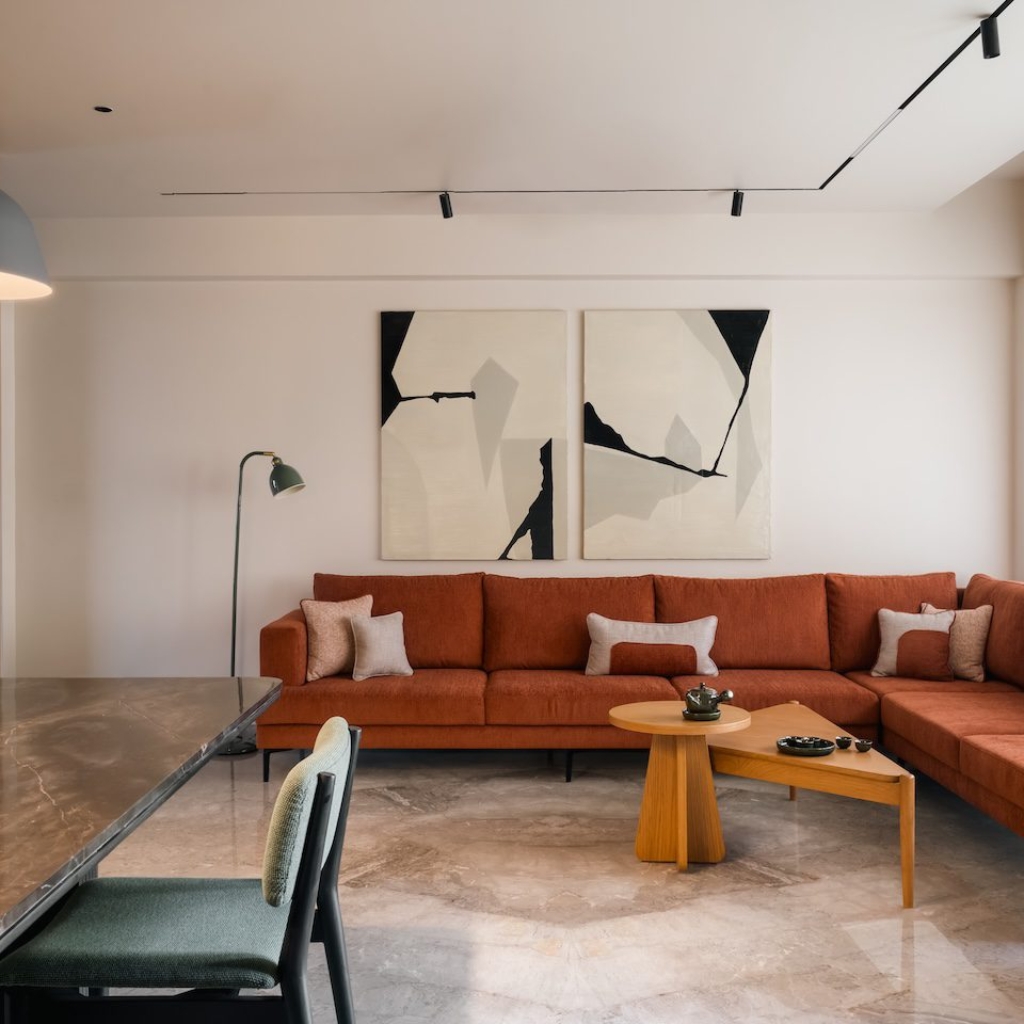
In Ahmedabad, Terra Firma Architects’ Oak House 1 balances minimalism and warmth to create a 1,200 sq ft multigenerational home shaped by care, comfort, and quiet design.
Curated by: Rupali Sebastian
Photographs: MKG Studio
The project
Oak House 1 is a multigenerational apartment in Ahmedabad shaped with a quiet, contemporary sensibility. Designed for three generations living under one roof, the 1,200 sq ft home balances warmth and restraint through flowing spaces connected by oak accents, marble flooring, and soft daylight that together create a setting both timeless and deeply personal.
The site
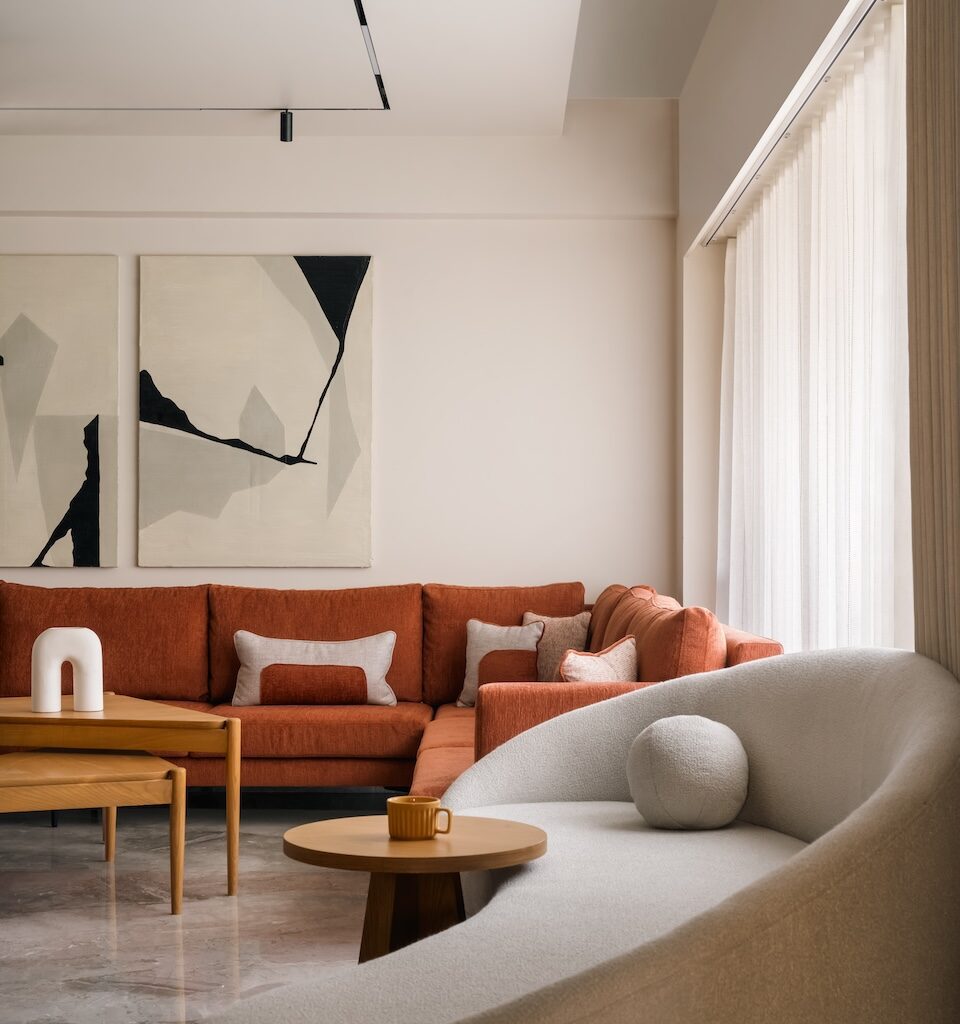
The apartment sits within a dense residential context in Ahmedabad, surrounded by fast-evolving development. The original flat was typical of urban layouts—compartmentalised, with a breakfast counter that interrupted flow. Its compact footprint, however, offered potential: full-height windows allowed daylight to flood in, gently filtered through linen sheers to maintain privacy and softness.
The brief
The family wanted a home that felt minimal yet warm, efficient yet intimate. Functionally, they sought greater seating in the living room for hosting, smart storage, an integrated study for the master suite, and an unobtrusive pooja zone. Aesthetically, they envisioned timelessness—a palette of oak, beige, and terracotta with materials that would age gracefully.
The design intent
Led by principal architects Hitarth Majithiya and Netra Bafna of Terra Firma Architects, the design approach sought calm over showmanship. The architects describe it as “a nonperformative modernism that privileges human use over stylistic gesture.” Spatial fluidity, durable tactility, and a few deliberate compositional moves—curves, concealed joinery, and material contrast—define the home’s rhythm. “Our intent was to design a home that listens before it speaks, where openness feels intimate and every element has a reason to exist,” say Majithiya and Bafna.

The civil intervention
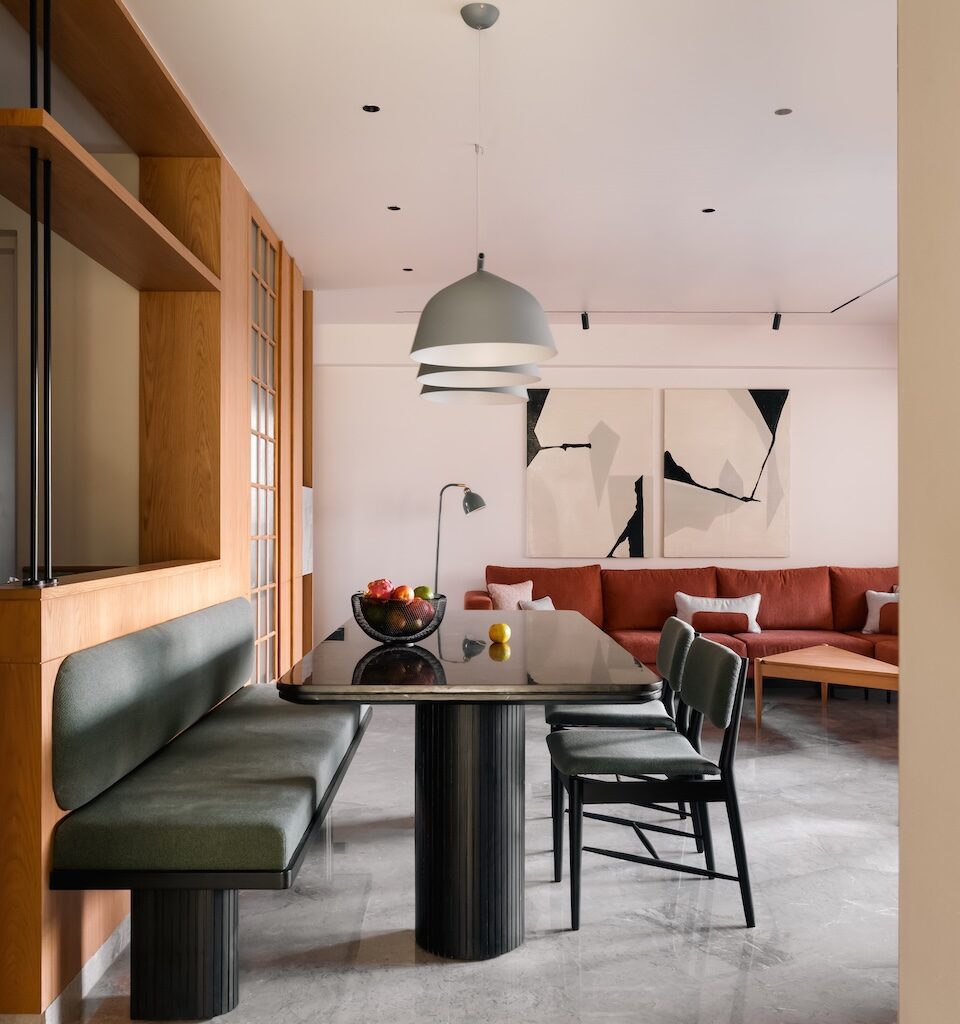
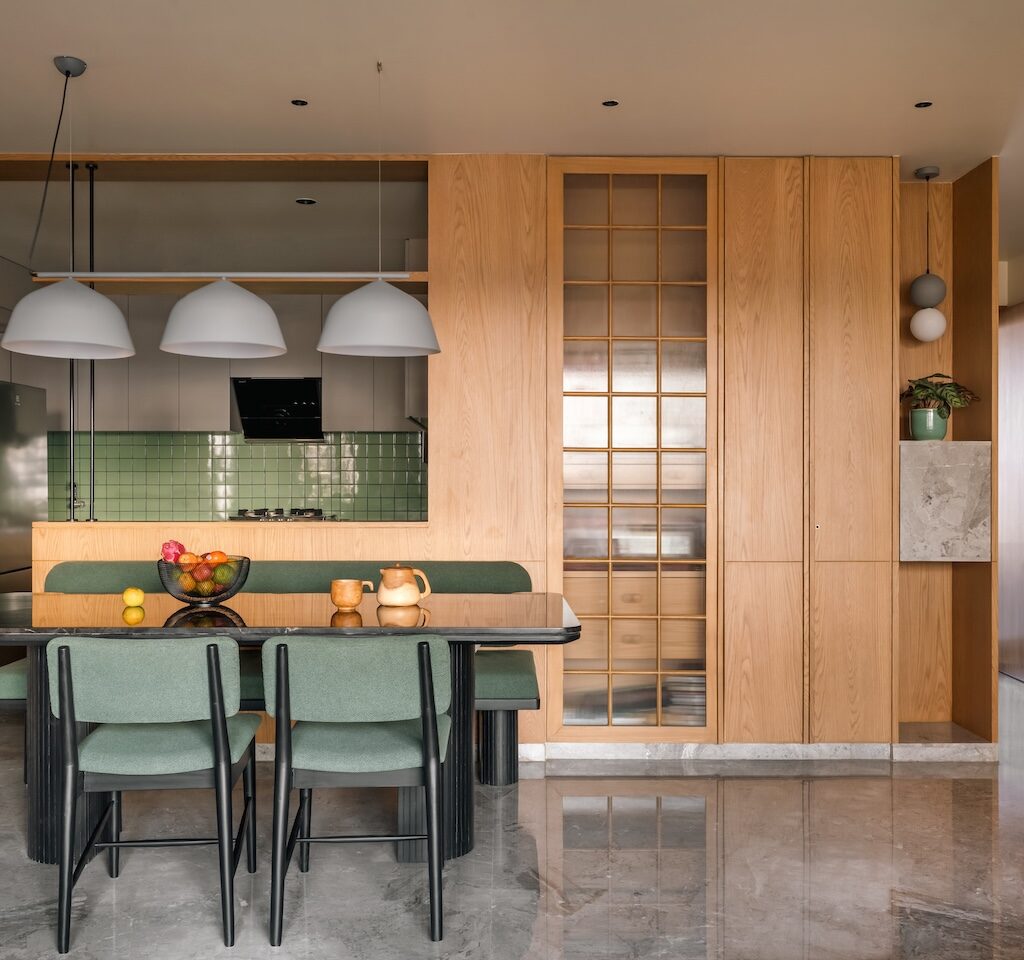
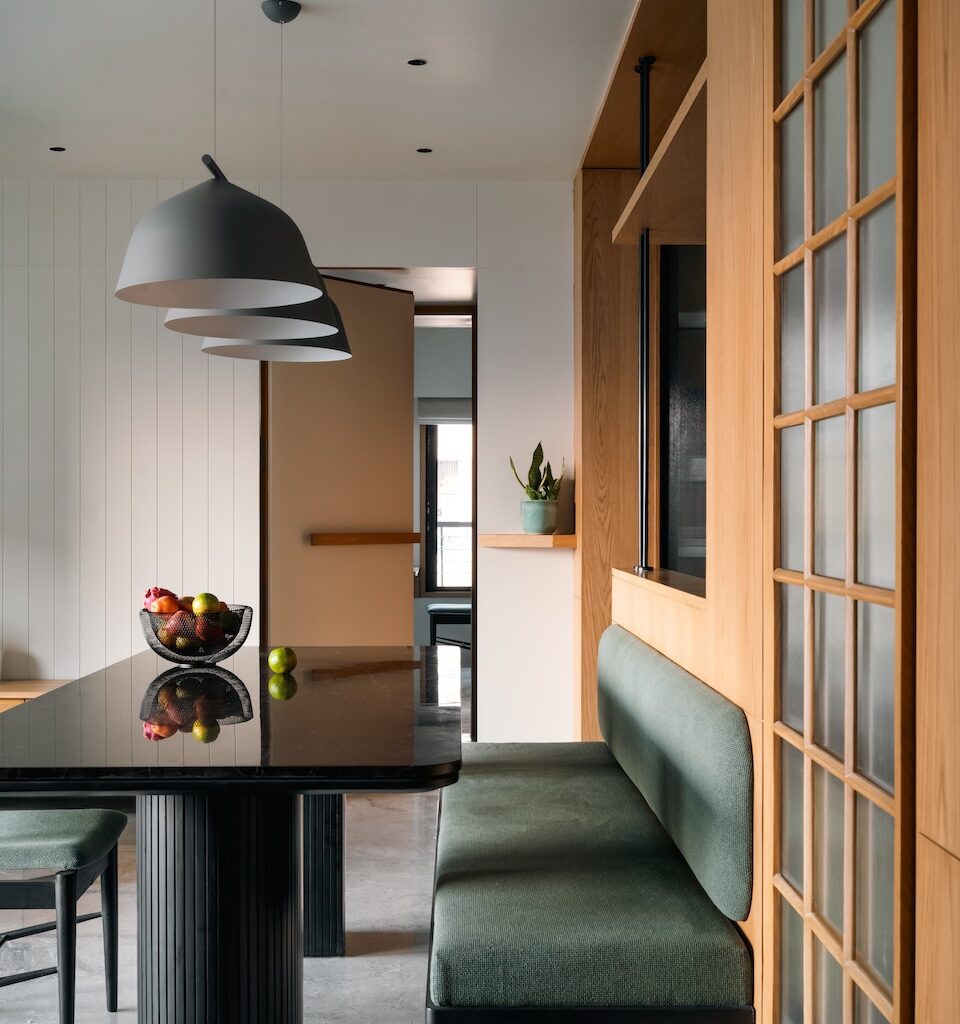
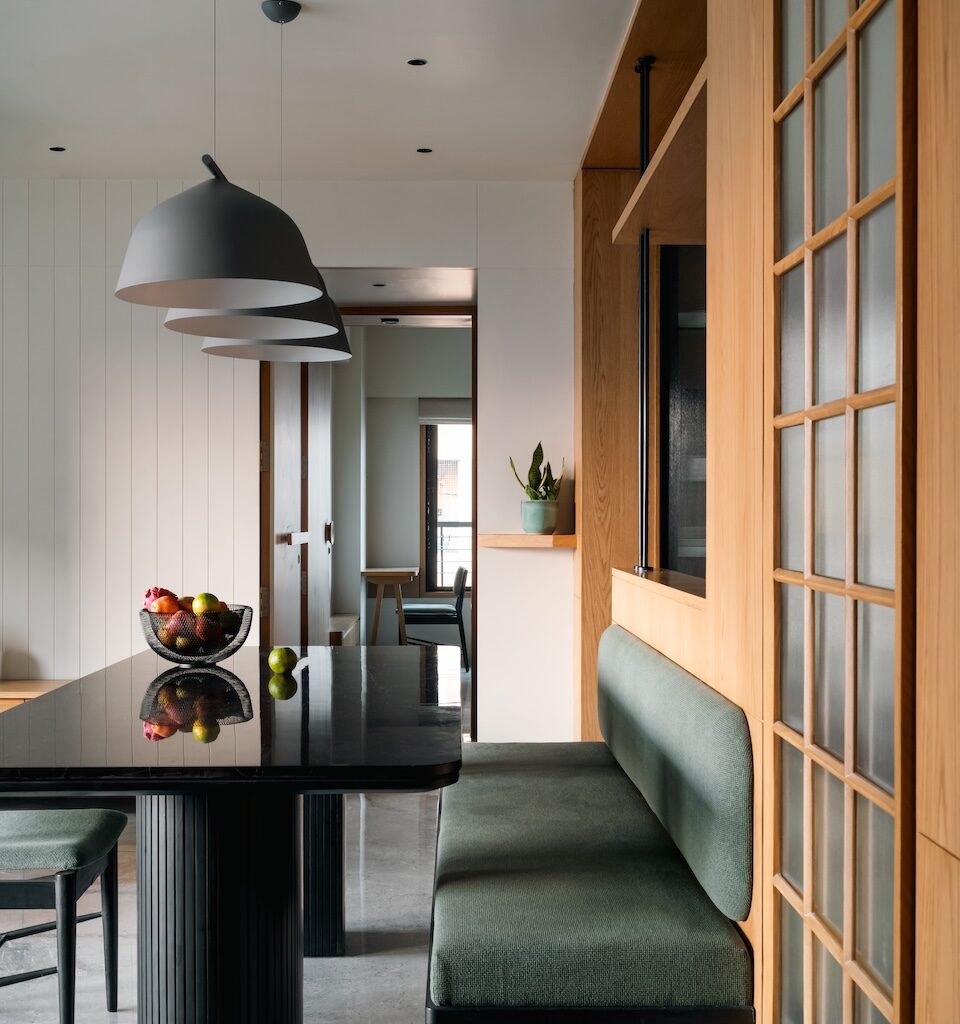
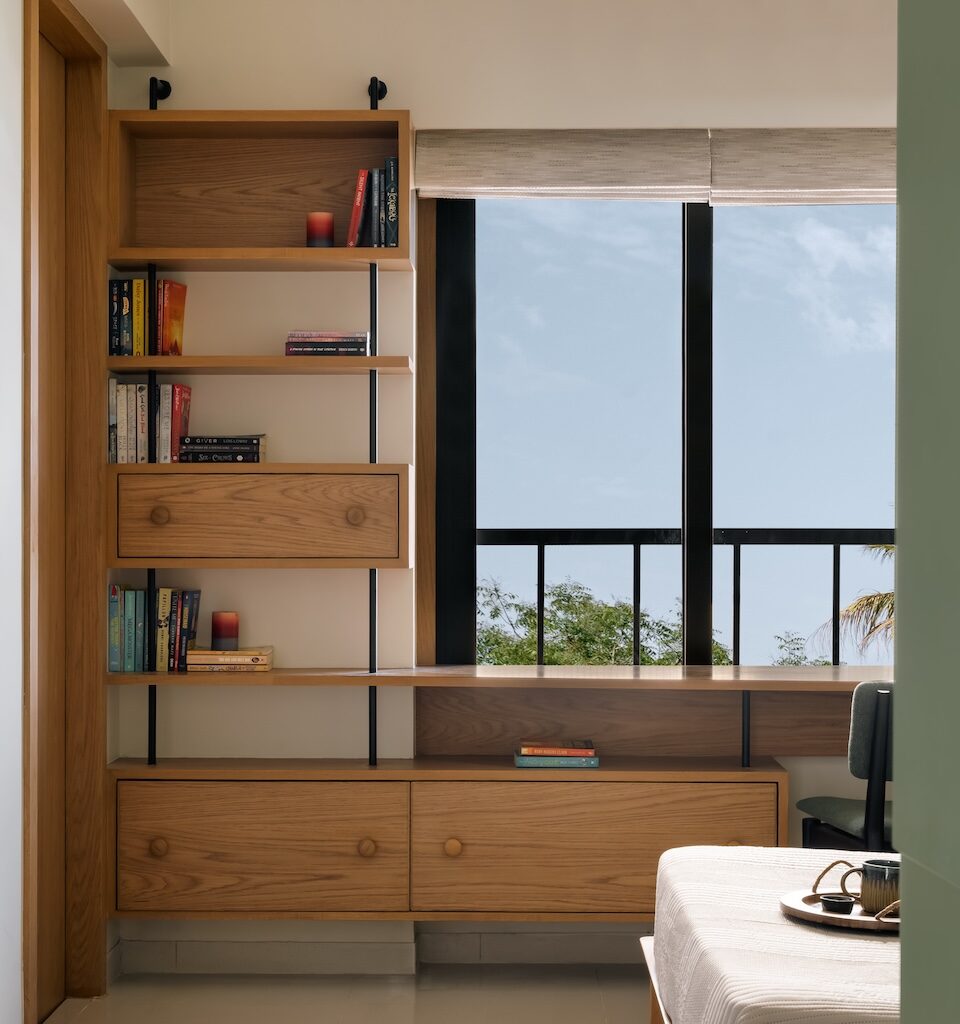
Structural changes were minimal. The breakfast counter was removed to open up the living-dining-kitchen core, non-loadbearing partitions were reconfigured for smoother circulation, and custom joinery integrated utilities seamlessly. A flushed TV wall with a concealed door and an extended shoe–pooja cabinet were designed as functional focal points anchoring the home’s visual flow.
The spatial flow
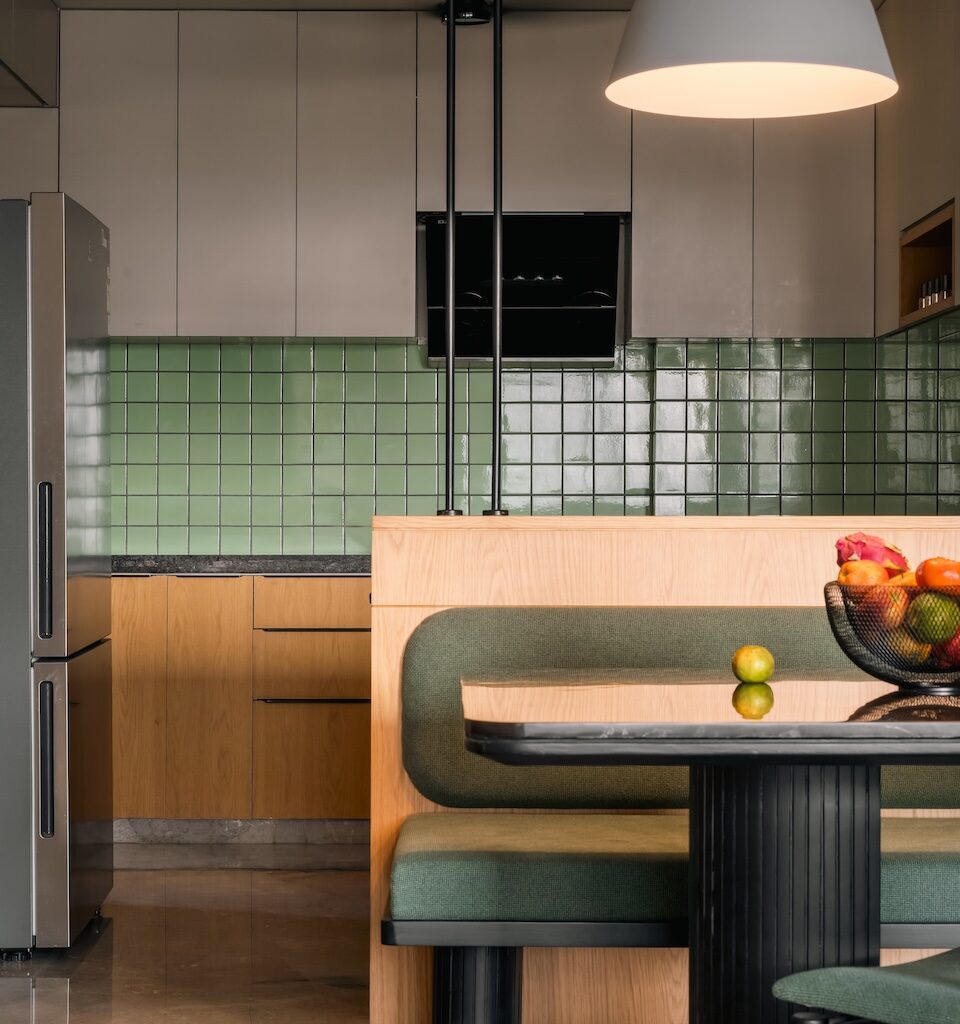
The apartment opens into a foyer defined by a combined shoe and pooja cabinet—an architectural hinge between the outside and the shared domain. This flows into an open living-dining-kitchen volume designed for flexibility, with a rust-hued sectional sofa and a curved ivory lounger framing conversation and movement. A dark stone dining table bridges the social core, replacing the breakfast counter to encourage shared meals and adaptable hosting.
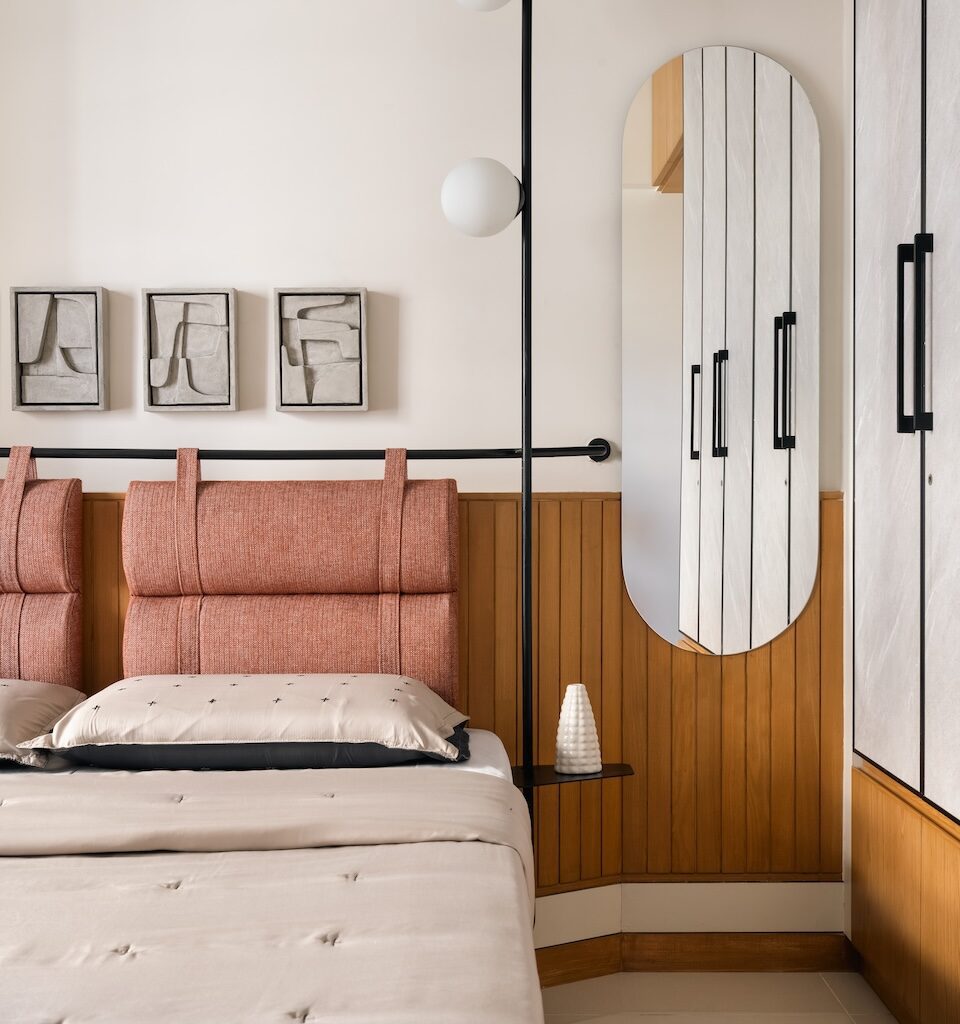
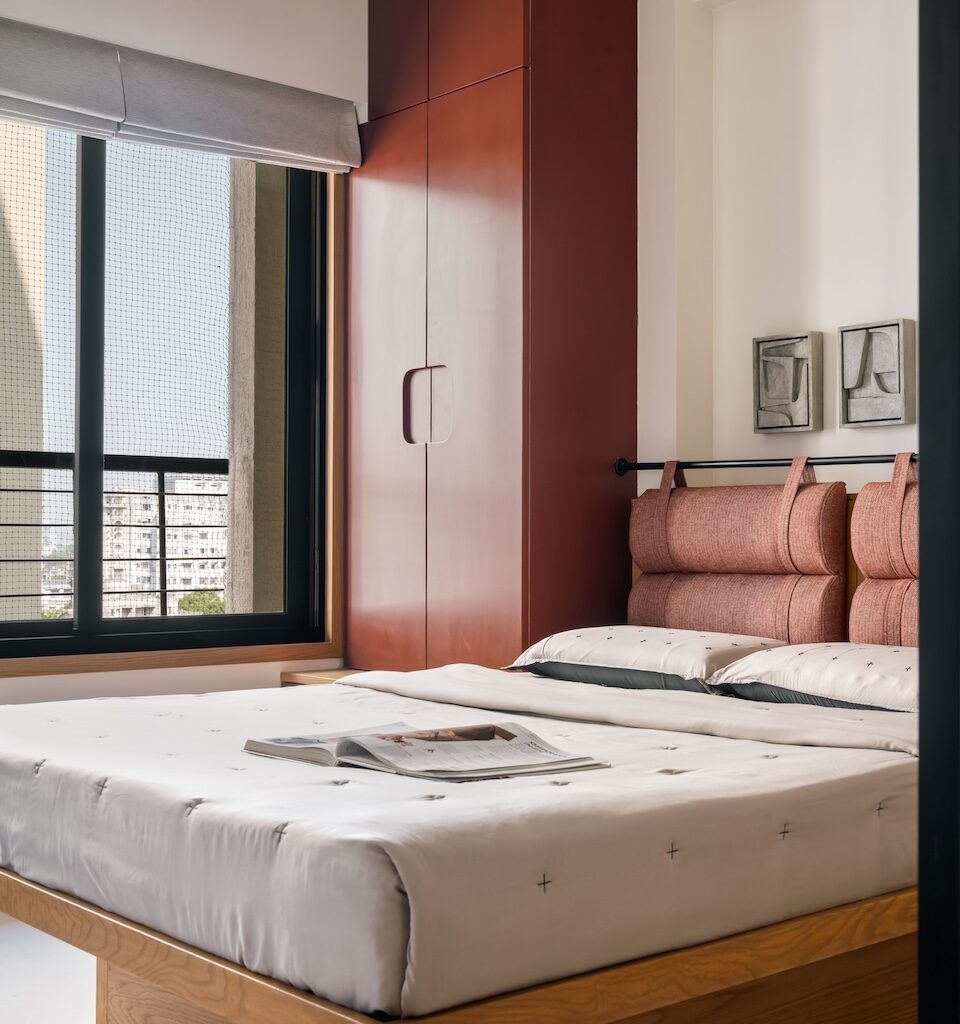
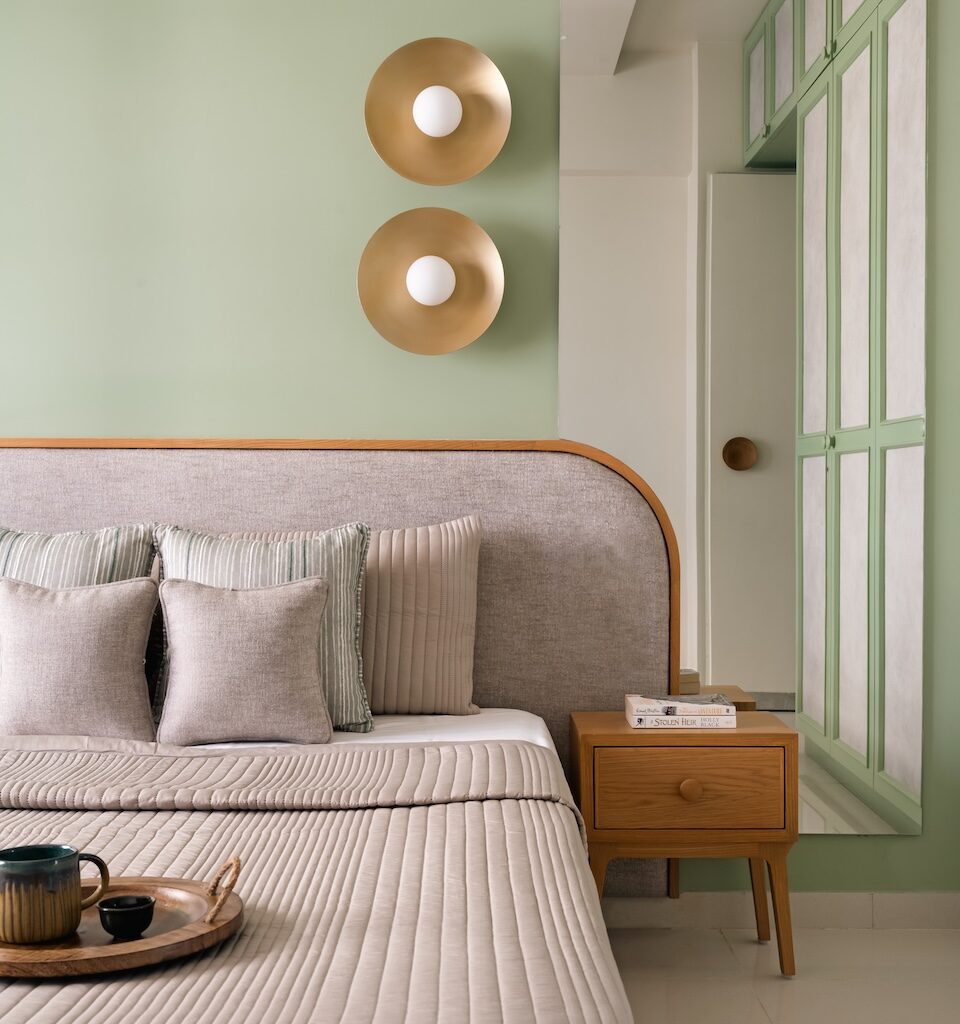
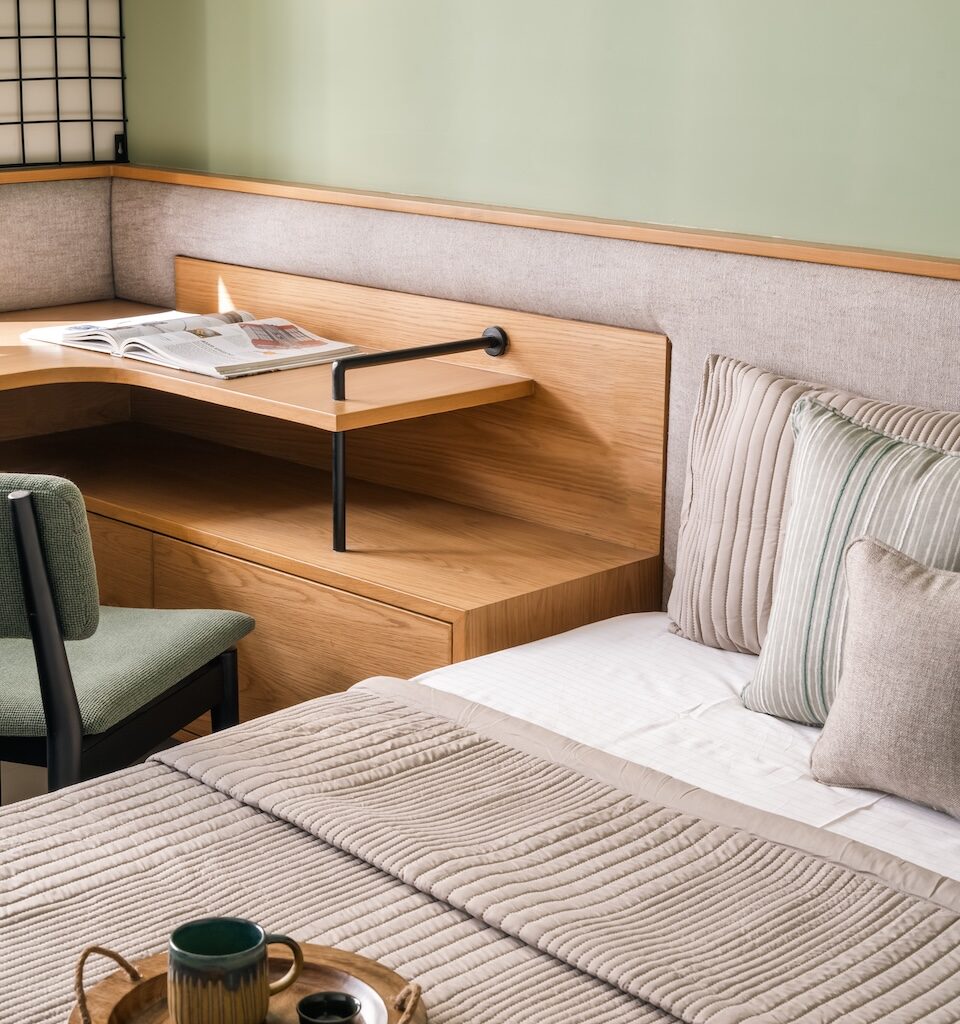
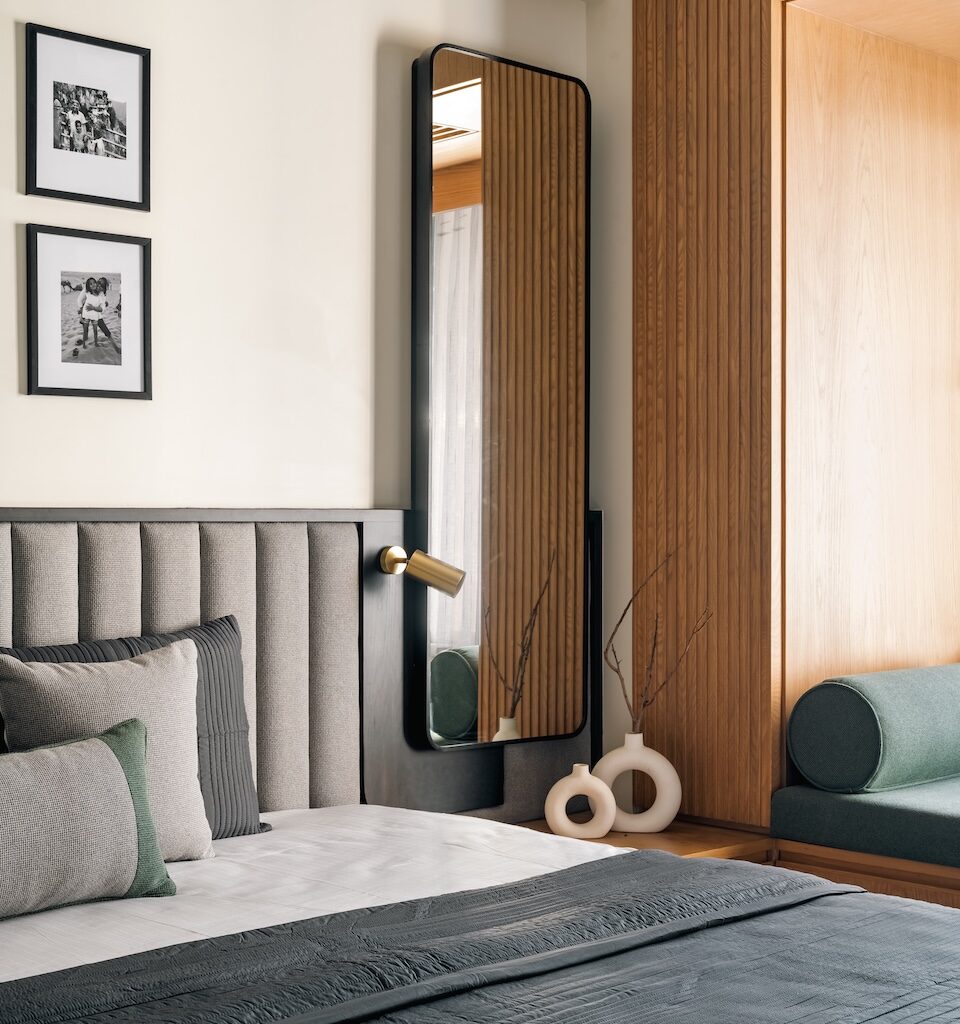
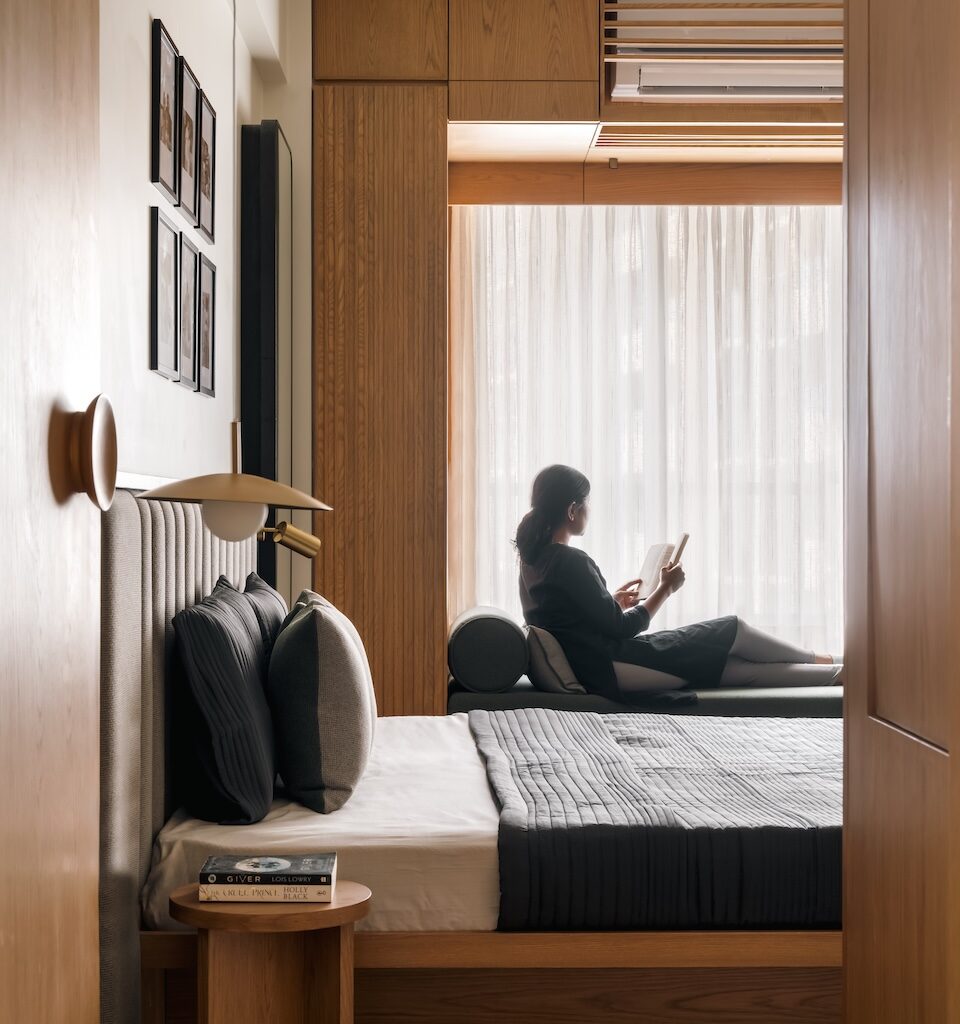
A short corridor leads to the private zone: the master bedroom with a study nook and window seat; the daughter’s room with a playful green palette and integrated study; and the parents’ bedroom anchored by a terracotta headboard and sculptural pipe light. Each room is distinct yet connected through material continuity and restrained detailing.
The material palette
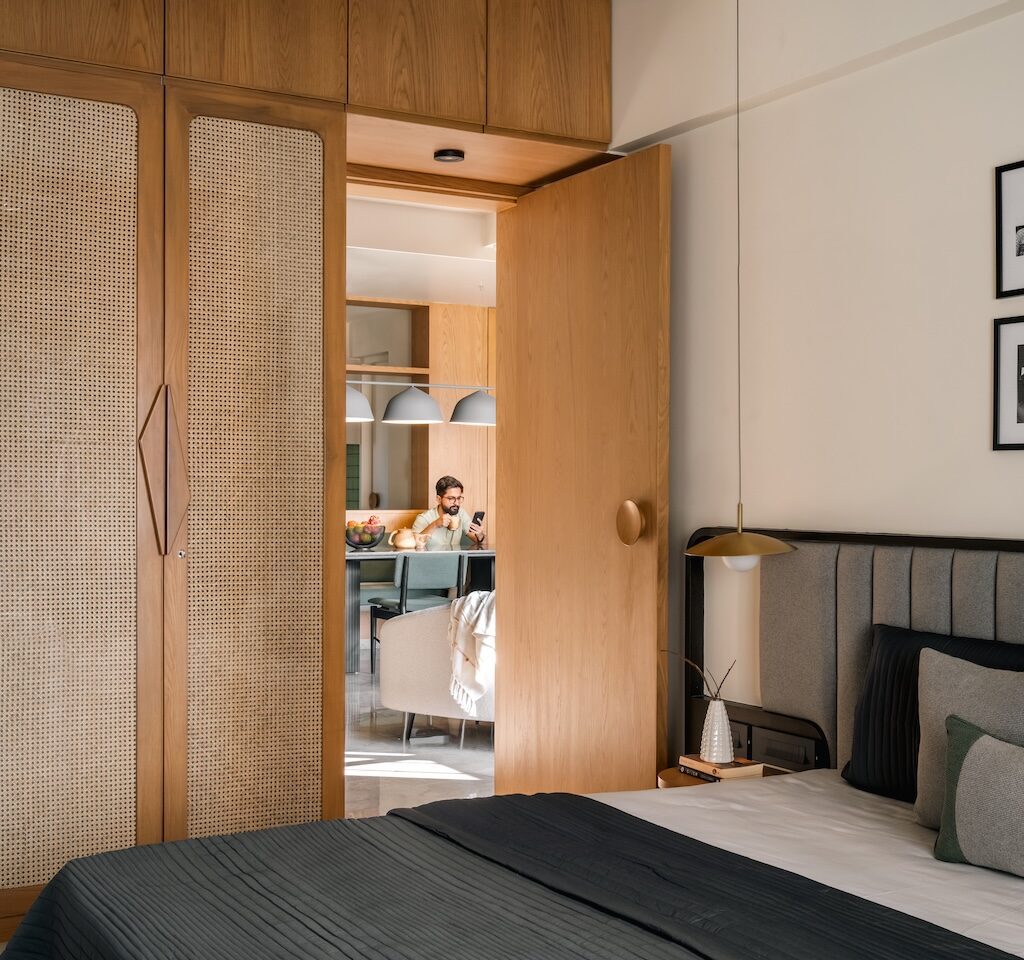
Oak wood—both natural and black-stained—forms the project’s backbone. Marble flooring lends quiet luxury while reflecting daylight softened by linen sheers. The living room’s rust and ivory furniture composition establishes warmth and contrast, while the olive-green tiled kitchen backsplash punctuates the oak cabinetry with colour.
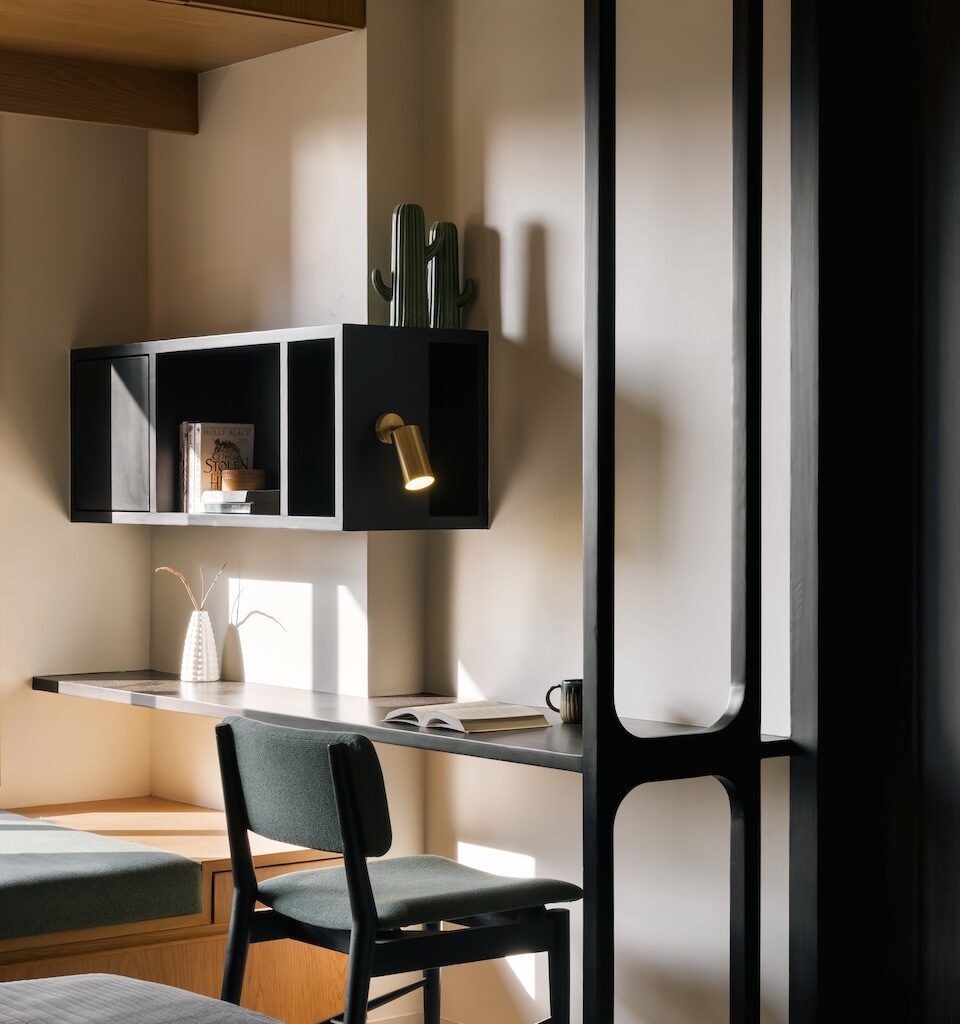
In the master suite, black oak joinery, vertically channelled upholstery, and integrated study elements define calm precision. The daughter’s room unfolds in sage green, accented with brass lighting and curved shelving, while the parents’ room layers terracotta tones, matte black fittings, and tactile warmth through wood. Throughout, joinery and fittings are crafted in oak, brass, and linen, creating tactile unity.
The challenges
Maximising seating and openness within a compact footprint while maintaining circulation and daylight required precise planning. The balance of warmth and minimalism—avoiding both clutter and sterility—was refined through iterative material and proportion studies.
The highlights
The rust-and-ivory living ensemble, the flushed TV wall with a hidden door, and the shoe–pooja cabinet as a ritual anchor exemplify restraint and continuity. The terracotta headboard with an integrated pipe light in the parents’ room blends poetry with practicality, while the open-plan reconfiguration unites the home around conversation and comfort.
The takeaway
For Terra Firma Architects, Oak House 1 reaffirms that modern Indian homes can be minimal without being cold. By privileging quiet gestures, grounded materials, and spatial empathy, the apartment becomes a model for design that is not loud but deeply lived in—a home that listens before it speaks.
Fact file
Project: Oak House 1
Location: Ahmedabad, India
Area: 1,200 sq ft
Design firm: Terra Firma Architects
Principal architects: Hitarth Majithiya & Netra Bafna
Design team: Ria Sheth
Add a Comment