
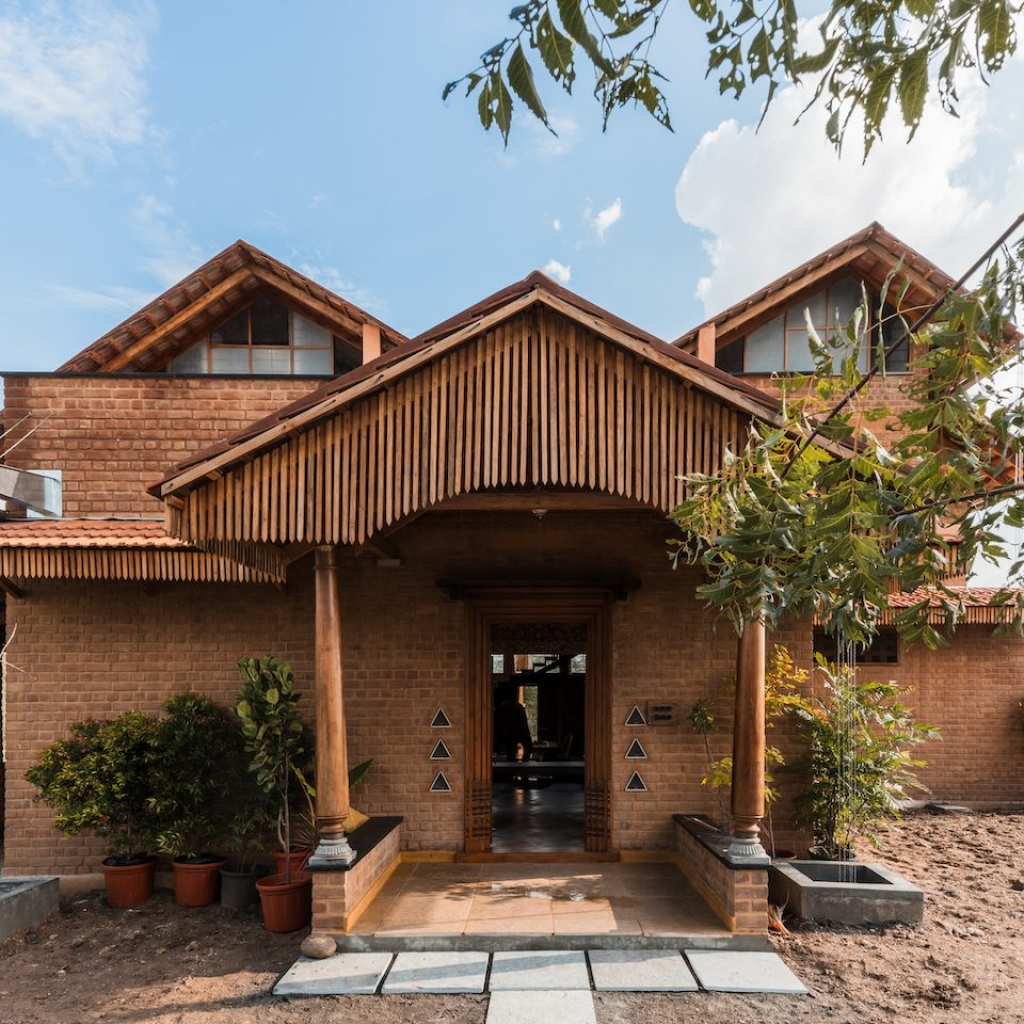
Bhutha Earthen Architecture Studio blends tradition and modernity while designing a home near Coimbatore that seamlessly integrates with its natural surroundings, addresses local climatic conditions and resource availability.
Curated by: Rupali Sebastian
Photographs: f/8; courtesy Bhutha Earthen Architecture Studio
The site
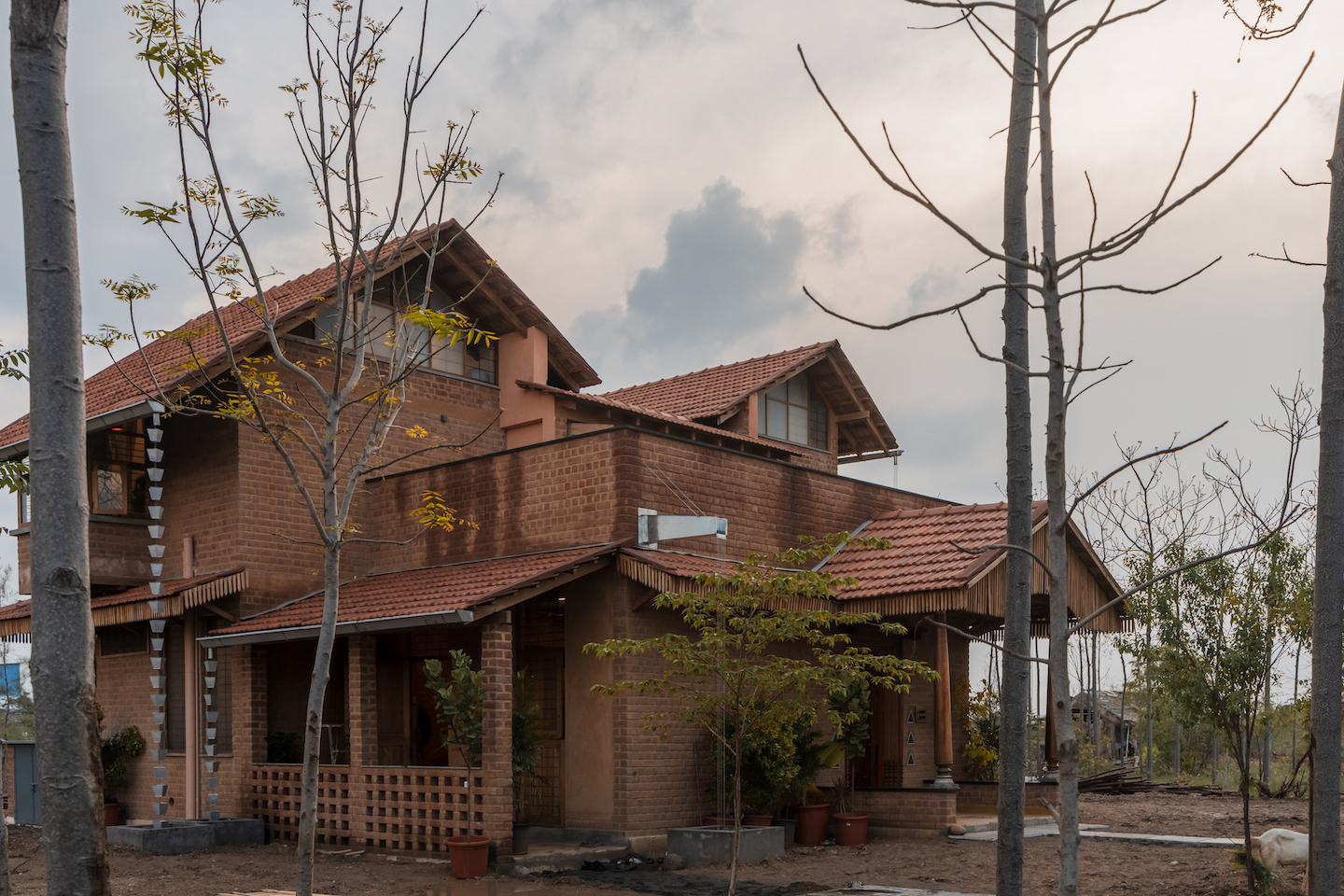
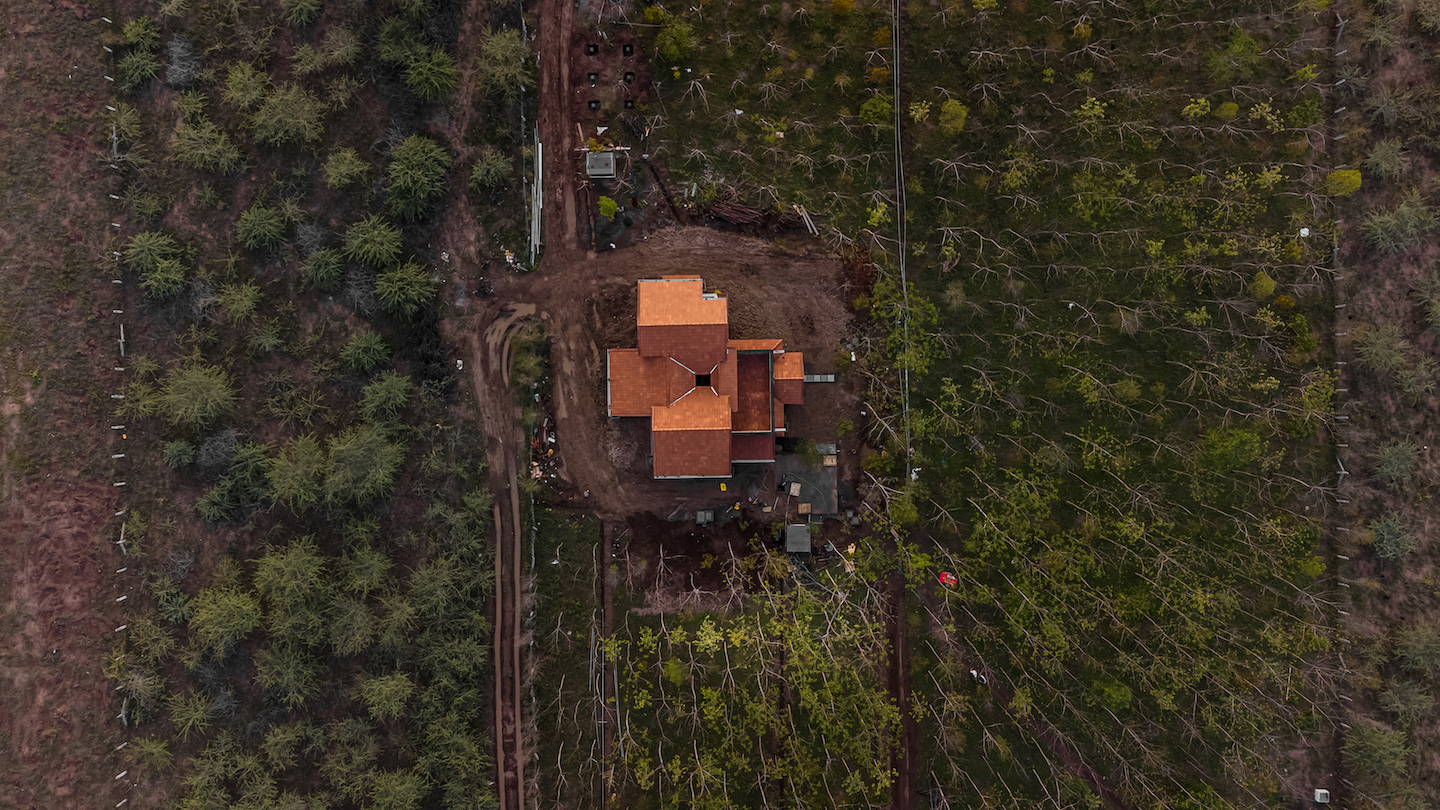
The site’s location in Sulur, Coimbatore, amidst agro-forests, provides a picturesque backdrop for the design. Fenestration is strategically planned to capture these scenic views, blurring the lines between indoor and outdoor spaces.
The brief
“The clients asked us to build an eco-friendly residence with a traditional courtyard that would be connected to all other spaces,” reveal architects Vinoth Kumar and Srinath Gowtham of Bhutha Earthen Architecture Studio. “Their wish was to spend the rest of their lives in the tranquillity of forest land.”
The design intent
The design aspect majorly focused on creating a contemporary style of architecture with traditional elements and construction techniques such as Madras terrace roofing, Mangalore tile roofing and poured earth walls to create spaces that would harmoniously blend with the existing site surroundings.
A home tour
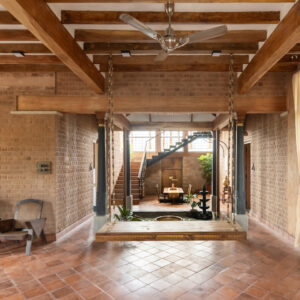
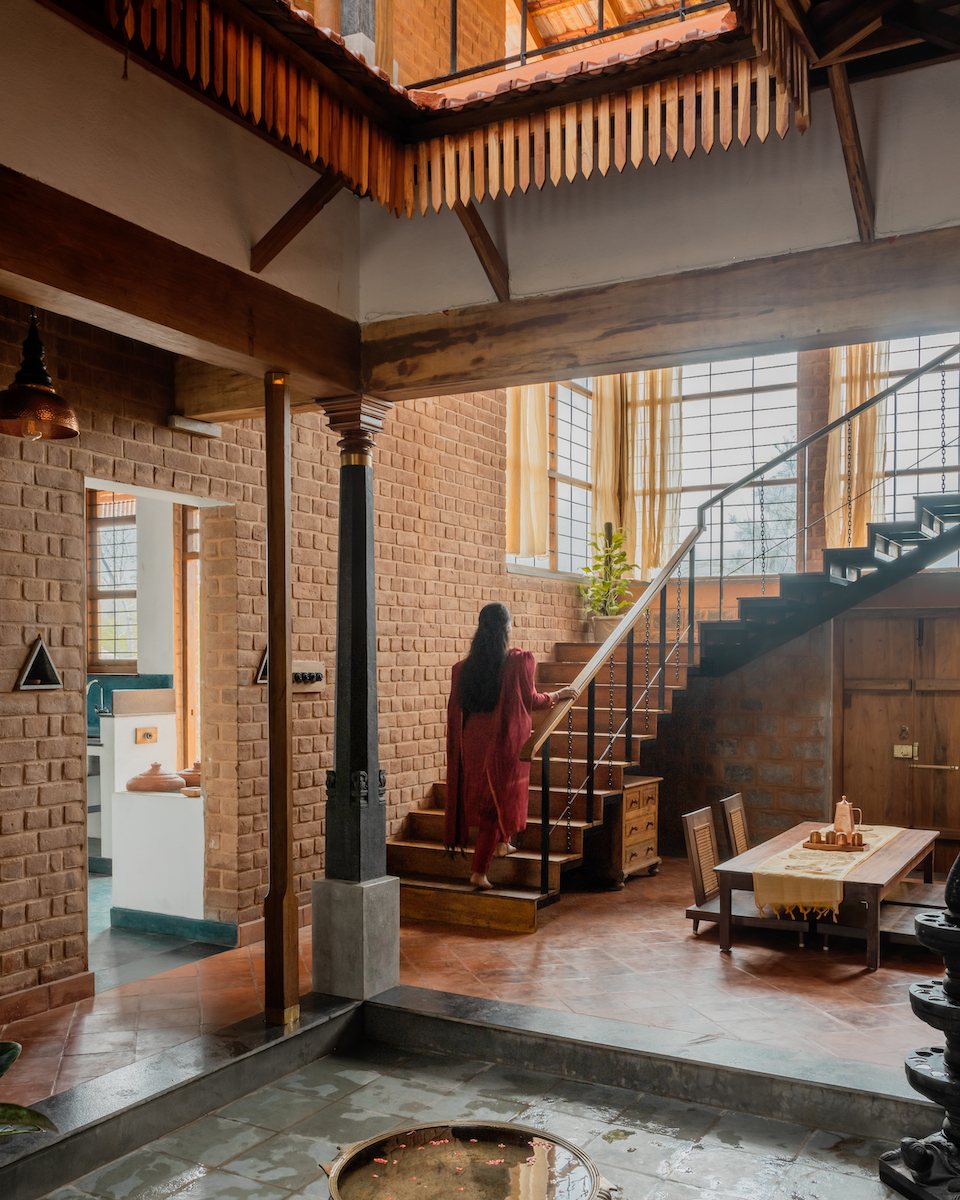
The home’s focal point is a central courtyard, which also serves as the entrance’s wooden columns. The living room’s exposed brickwork and poured earth walls provide a cosy ambience. Huge openings cause the lines between interior and outdoor life to become less distinct, while stone pillars and overhanging Mangalore tile create a robust and classic look in the courtyard. The design places a strong emphasis on visual connectedness, with the courtyard serving as the main centre connecting all living spaces.
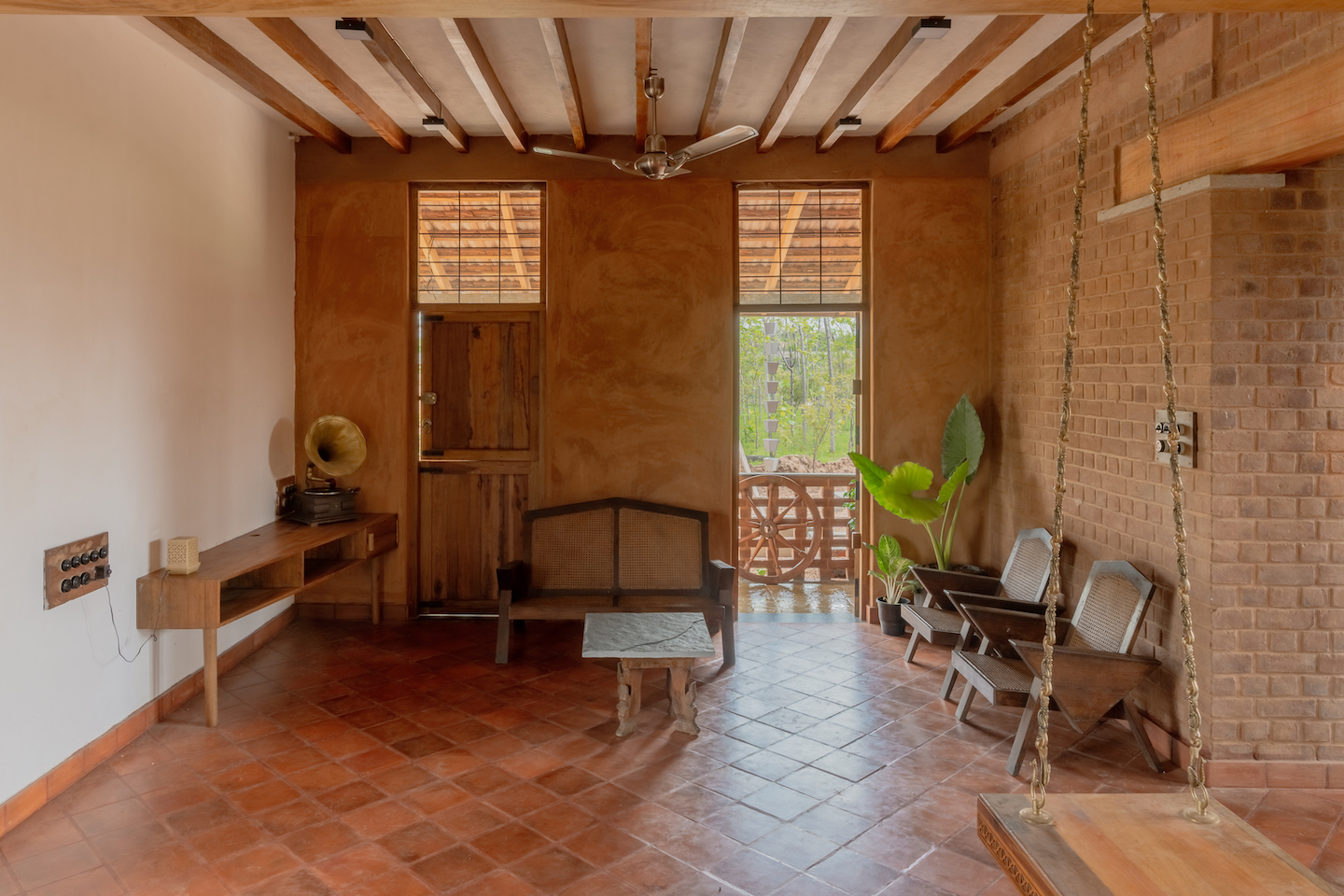
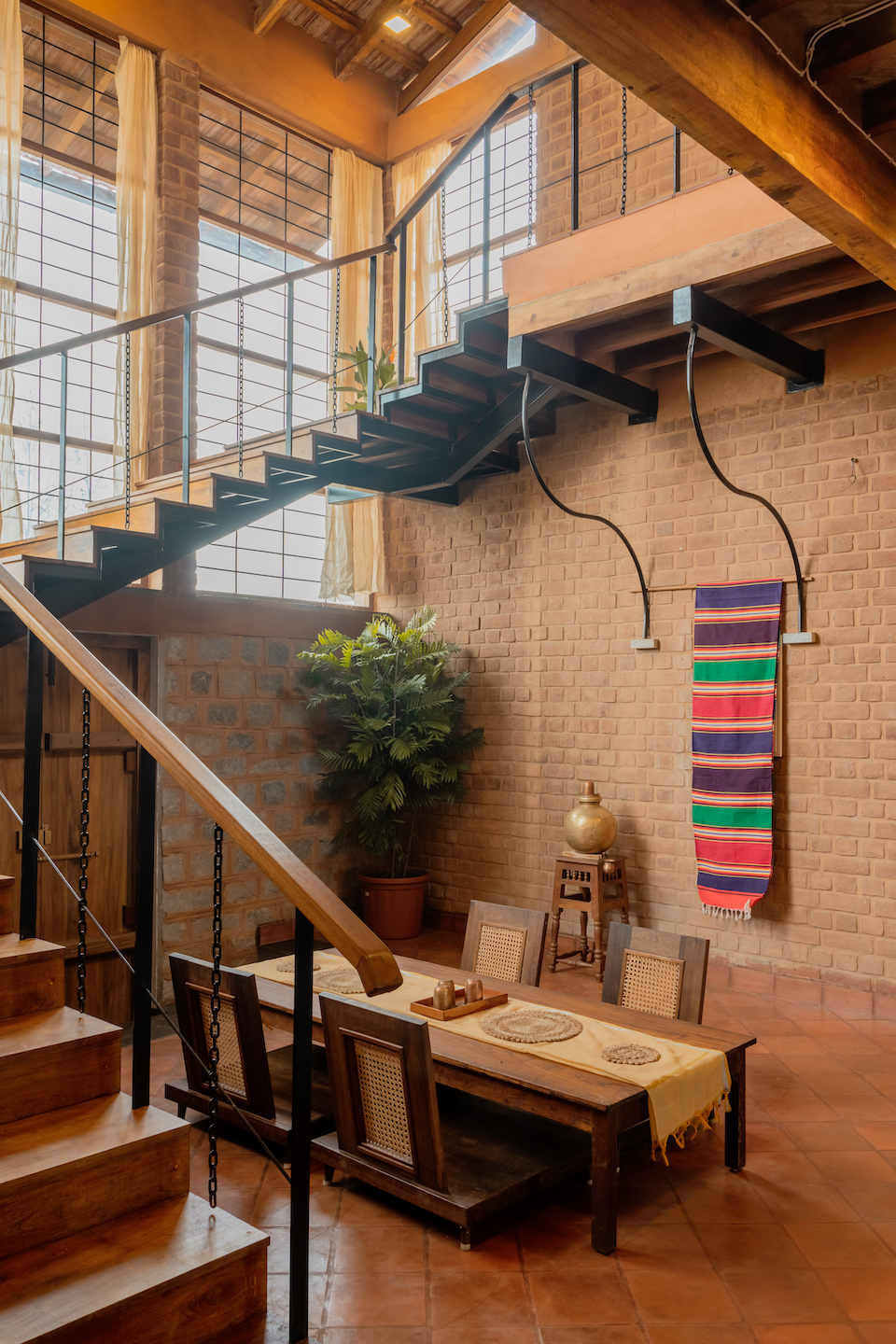
The double-height dining area has striking yet cosy details like wooden-framed glass windows that capture picturesque views of the agro-forest and rubble walls. The master bedroom’s exposed brick walls, wooden wardrobes, and yellow oxide carpeting create a comfortable yet rustic vibe. The open bath area in the bathroom allows you to take in the various natural seasons. Brass and natural stone are used to create the uniquely designed and manufactured plumbing fixtures.
The kitchen is characterised by both traditional and functional aspects. Traditional characteristics like the wood-fired kitchen and anganam kuli (outdoor bathroom) combine teal green lime plaster finishes. To maximise vertical space, the kids’ bedroom includes a mezzanine floor for reading or relaxing.
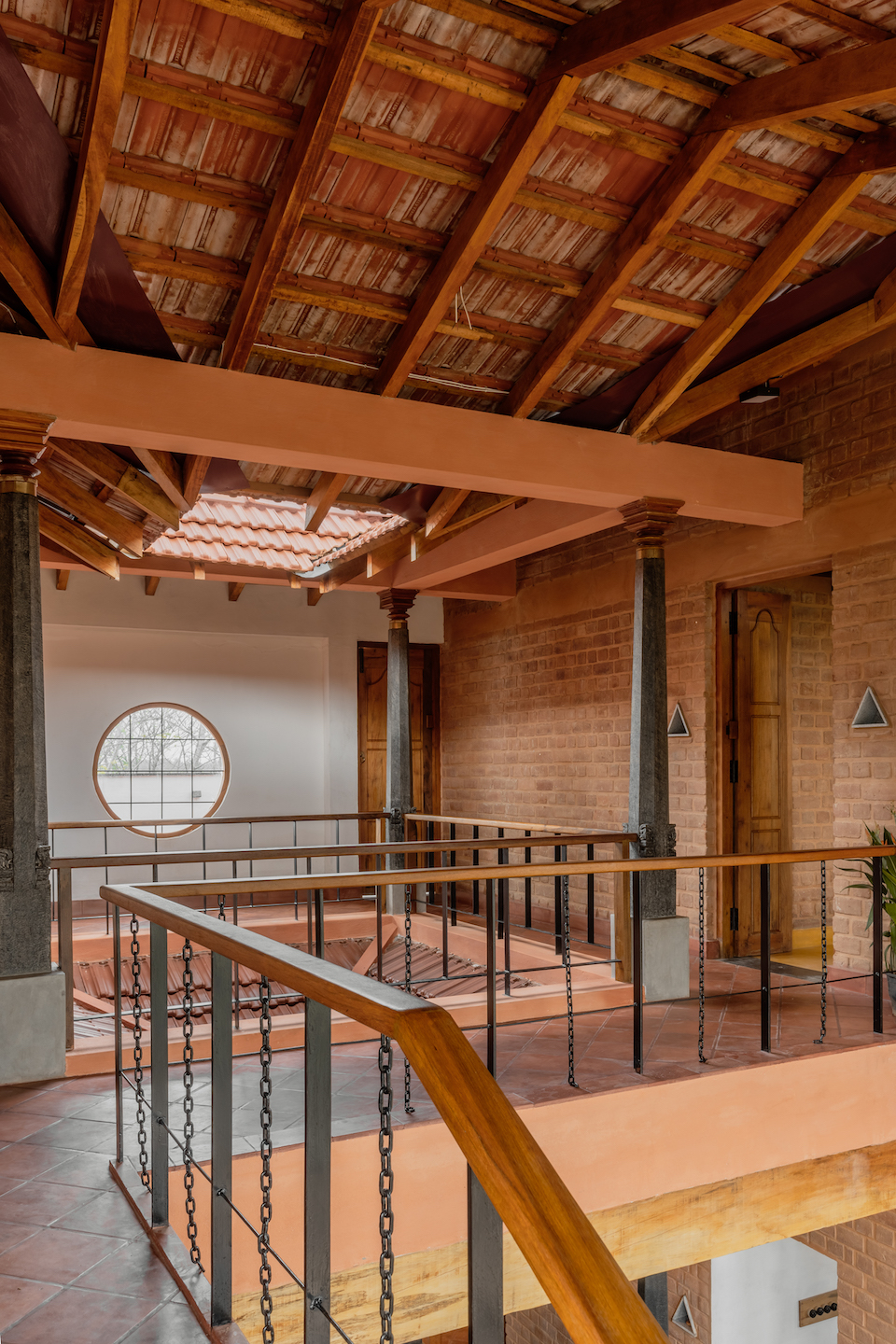
The Mangalore-pitched roof style, which is essential to the region’s rainfall patterns, offers thermal comfort to its occupants. To increase energy and water efficiency, passive design techniques are combined with sustainable systems like solar energy and rainwater collection. Given the hot and humid climate, as well as the region’s rainfall patterns, the design incorporates a traditional Mangalore-pitched roof. This roof design not only adds aesthetic appeal but also features customised rainwater channels that collect approximately 40,000 units of water. This collected rainwater serves as a vital resource during the dry summer months, enhancing the project’s sustainability and resilience to climate challenges.
The material palette
Exposed brickwork, exposed poured walls and matt and smooth lime plaster finishes form the heroes of the visual expression.
The challenges
“The site context and climatic factors contradict Vaastu and that was one of the major challenges we faced while executing the design and bringing everything together under the design,” say the architects. “Looking for sustainable structural solutions for load-bearing walls and finding alternative solutions for the conventional style of construction are the other areas that called for painstaking resolution.”
The highlights
From among the several elements of distinction in the project, the architects vote for plumbing fixtures (such as showerheads and washbasins) rendered from brass and stone as a favourite. “We chose brass,” they say, “as the metal is traditionally used in various ways in an Indian household.”
The takeaway
“This project gave us the confidence to craft every element of space which led to a holistic development,” opines the architect duo. “We liked how various elements interacted with one another and with the surrounding environment pushing the boundaries of creativity and innovation while creating spaces.
Favourite aspect of the project
Vinoth and Srinath are particularly pleased with how the dining area has turned out. “The overall composition of the dining space features a harmonious blend of materials and textures that create a visually engaging atmosphere,” they declare. “Textures range from smooth to rough textures, providing contrast and visual interest.” The interplay of staircase design with large openings in a double-height space, they add, enhances the sense of openness and connectivity within the home. “The large openings around the staircase allow natural light to filter in, creating a bright and airy ambience. This design not only promotes visual connectivity between the dining space and other areas of the home but also extends the connection to outdoor spaces.”
Fact file
Project: Brick Manor
Location: Sulur, Coimbatore, Tamil Nadu
Area: 2,800 sq ft
Principal architects: Vinoth Kumar and Srinath Gowtham
Design team: Ar Thileep, Ar Sudar Nagarajan, Ar Ajith Kumar and Ar Shankar Raj
Add a Comment