
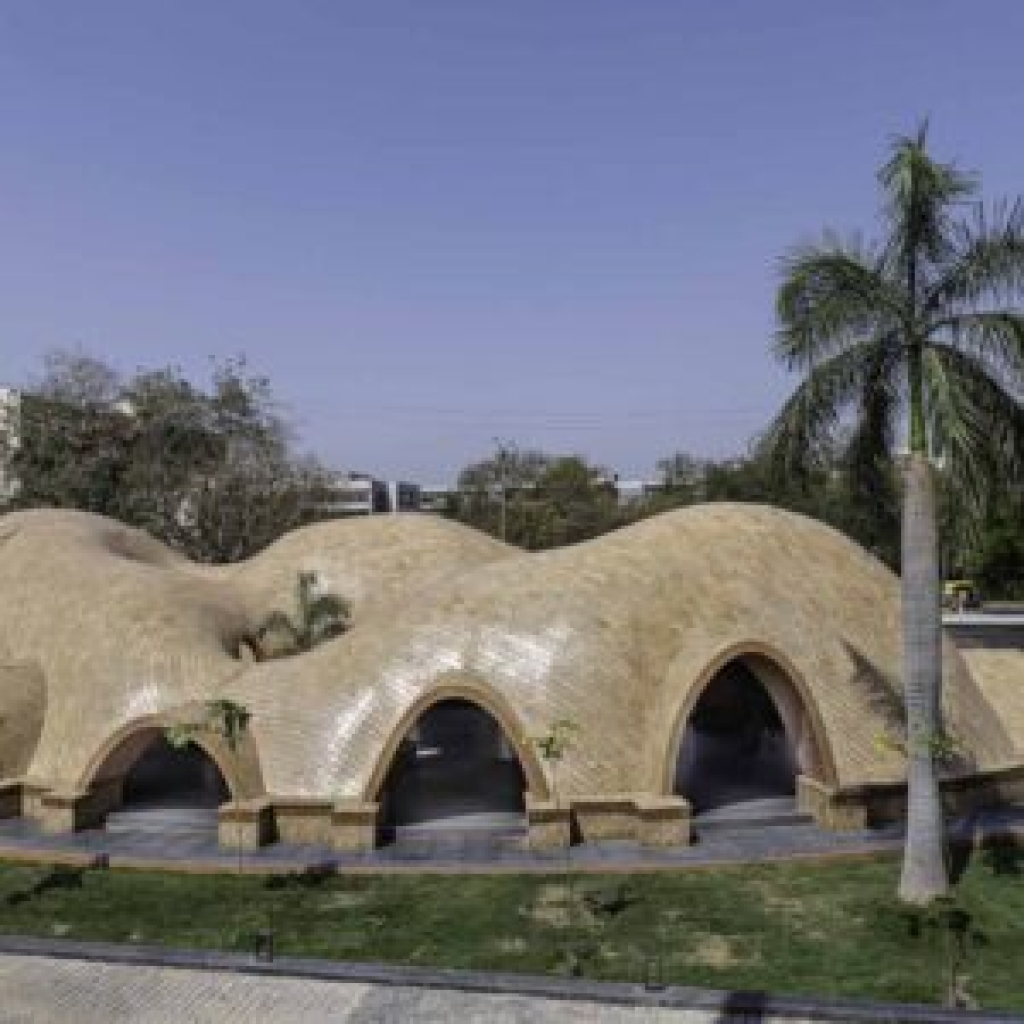
The Grid Architects work with traditional materials and artisans to create a meditative, transcendental gallery space in Ahmedabad.
Curated by: Rupali Sebastian
Photographs: Photographix India/Sebastian Zachariah; courtesy The Grid Architects
An overview
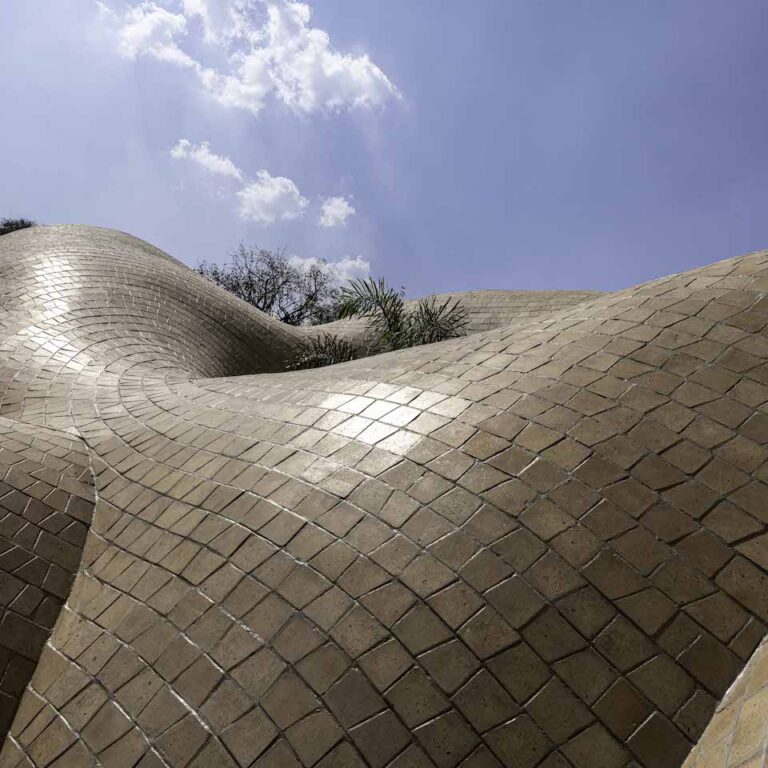
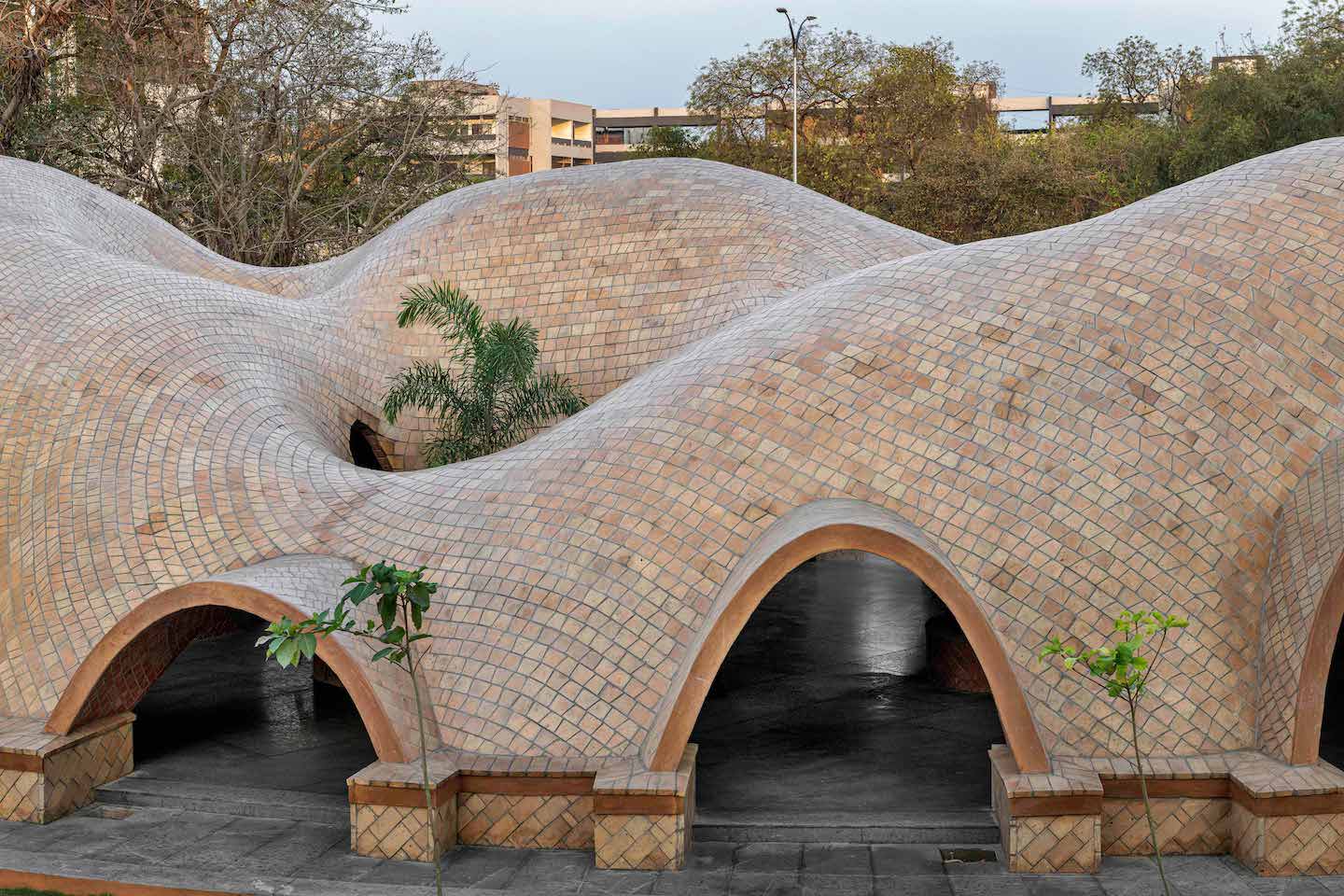
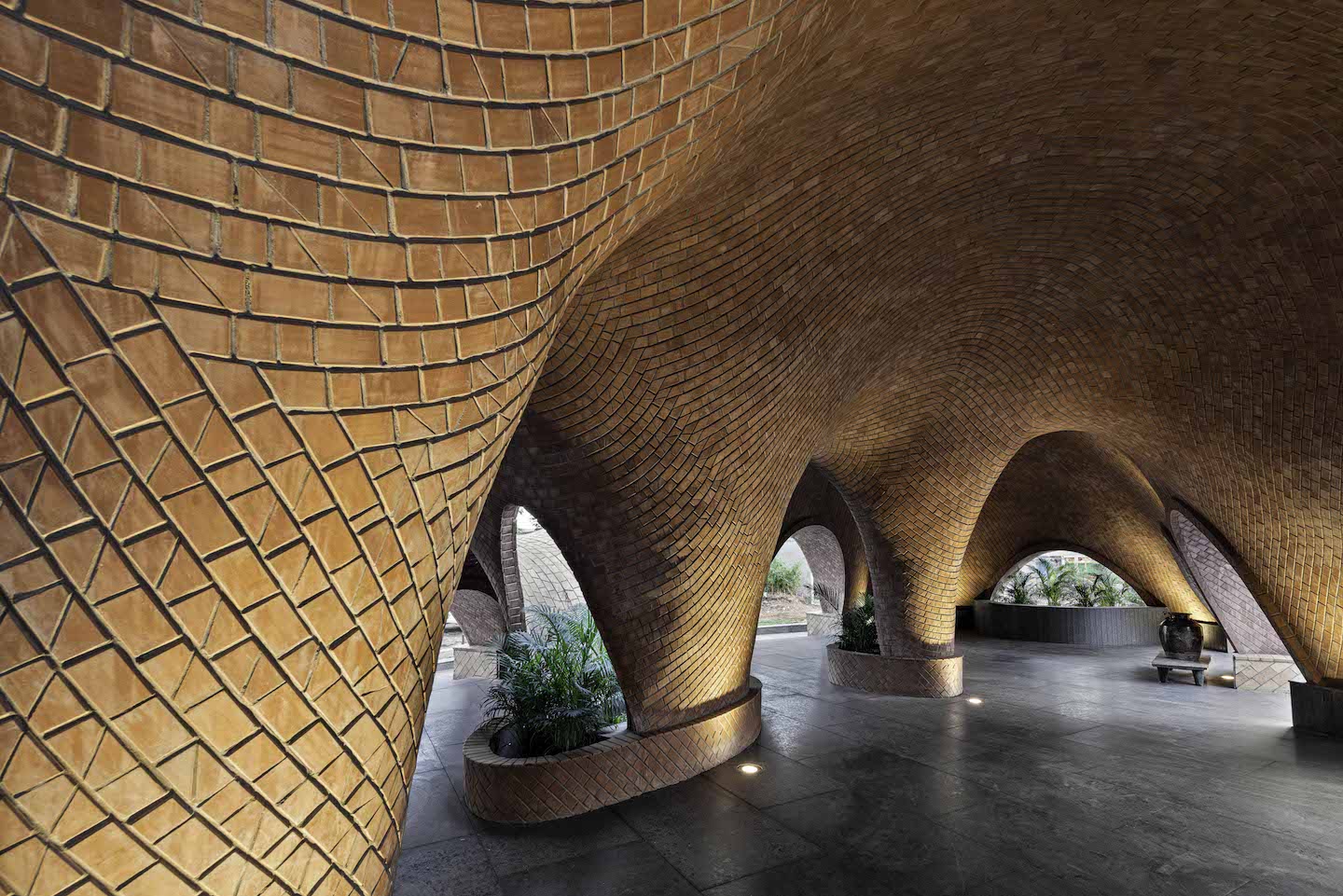
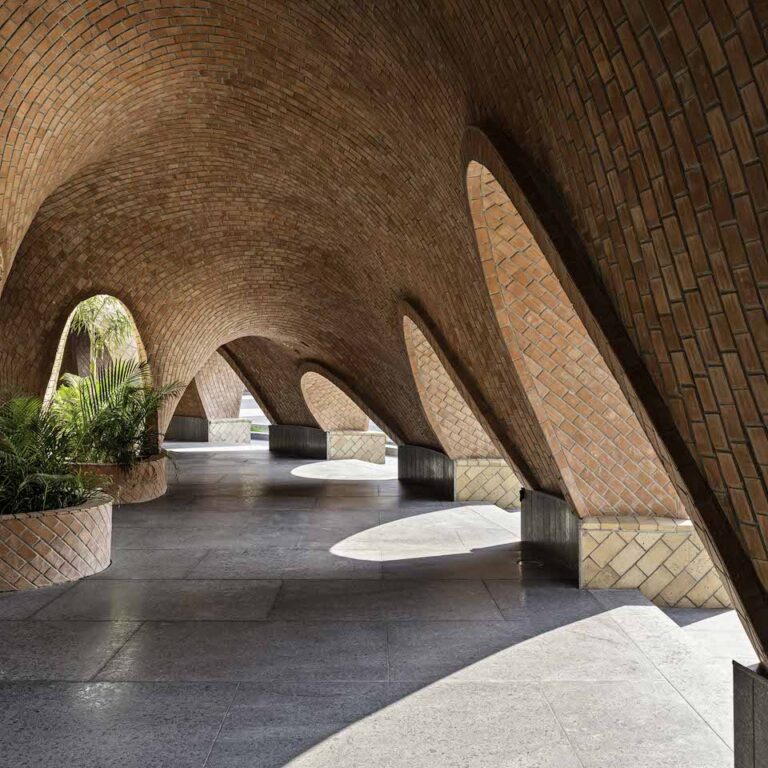
Gentle upswells. Soft swoops. Harmonic waves that birth an ambience of evocative silence, where the light speaks, the wind sings, and the earthenware roofing produces melody. This is Tarang, presently one of the largest terracotta tile arch vault structures in India. Its rising arched interiors are pleasantly intimate and familiar, thanks to its form rooted in a biophilic design approach. The resultant atmosphere, profound and simply elegant, is animated by the changing patterns of light and wind.
The intent
The intervention aims to create a versatile space that accommodates various activities, both within and around the building. “Tarang was conceptualised as a dynamic gallery space, meticulously designed to adapt and evolve seamlessly,” disclose Snehal and Bhadri Suthar, principal designers, The Grid Architects, and the creative captains of the project. “Its purpose is to serve as an immersive exhibition platform where the interiors are transformed into canvases, showcasing the featured products.”
The designers’ motivation for the project is threefold: aesthetic, ethical, and divine. They sought to create a structure that not only looks beautiful but also reflects their values and beliefs. Their efforts produced a set of light beams that offer an element of surprise and beautiful reflections, making the structure that resonates with all who behold it.
The inspiration
The design of the space draws inspiration from nature and emulates its organic shapes. Throughout the design phase, the interior spaces remained an enigma, and it was uncertain how they would behave or what their dimensions would ultimately be. “It was only through daily observation of the shifting light and sun movements that we discovered how the space would shape-shift, creating a harmonious and dynamic surrounding,” say the Suthars.
The values of the project are centred around three key principles: a deep respect for Mother Earth and the need for sustainability; a genuine appreciation for the art of craftsmanship and the value of working with one’s hands; and a profound reverence for history and the preservation of cultural heritage.
The materiality
In an effort to minimise the carbon footprint of buildings, the project primarily sources materials locally, with a focus on those that have low embodied energy. The key materials utilised include natural stone, terracotta tiles, and a technique that involves spanning without steel and shuttering or ancillary structures that are typically used to bear the weight of an arch during the building process. Additionally, the project places emphasis on up-skilling the masons to further promote sustainable building practices.
“The structure is a perfect example of traditional opulence, embodying a design philosophy that seeks to elevate and dignify space and nature in equal measure,” the designer duo points out. “It is a meditative structure that fosters a sense of calm and contemplation, where the walls themselves exude a palpable sense of power.”
Fact file
Project: Tarang
Location: Ahmedabad
Area: 3,000 sq ft (approx)
Principal designers: Snehal Suthar and Bhadri Suthar
Technical guidance and structural form-finding: Sankalan
Construction: So-Hath-100 Hands
Add a Comment