
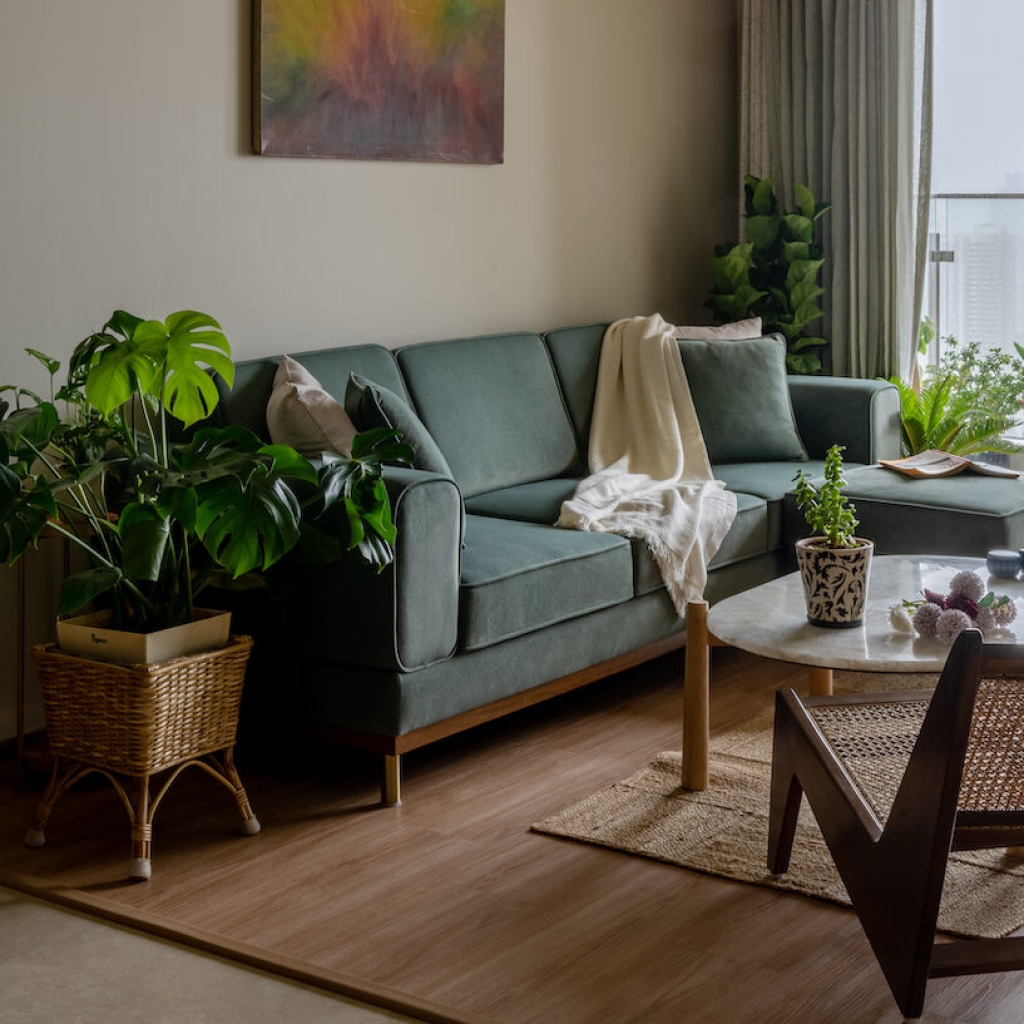
Zaheed Lokhandwala of Techton and Hamza Singaporewala of Designology collaborate to create a stylish, warm and inviting home that is mindful of cultural nuances.
Curated by: Rupali Sebastian
Photographs: Vineet Velandy; courtesy Techton & Designology
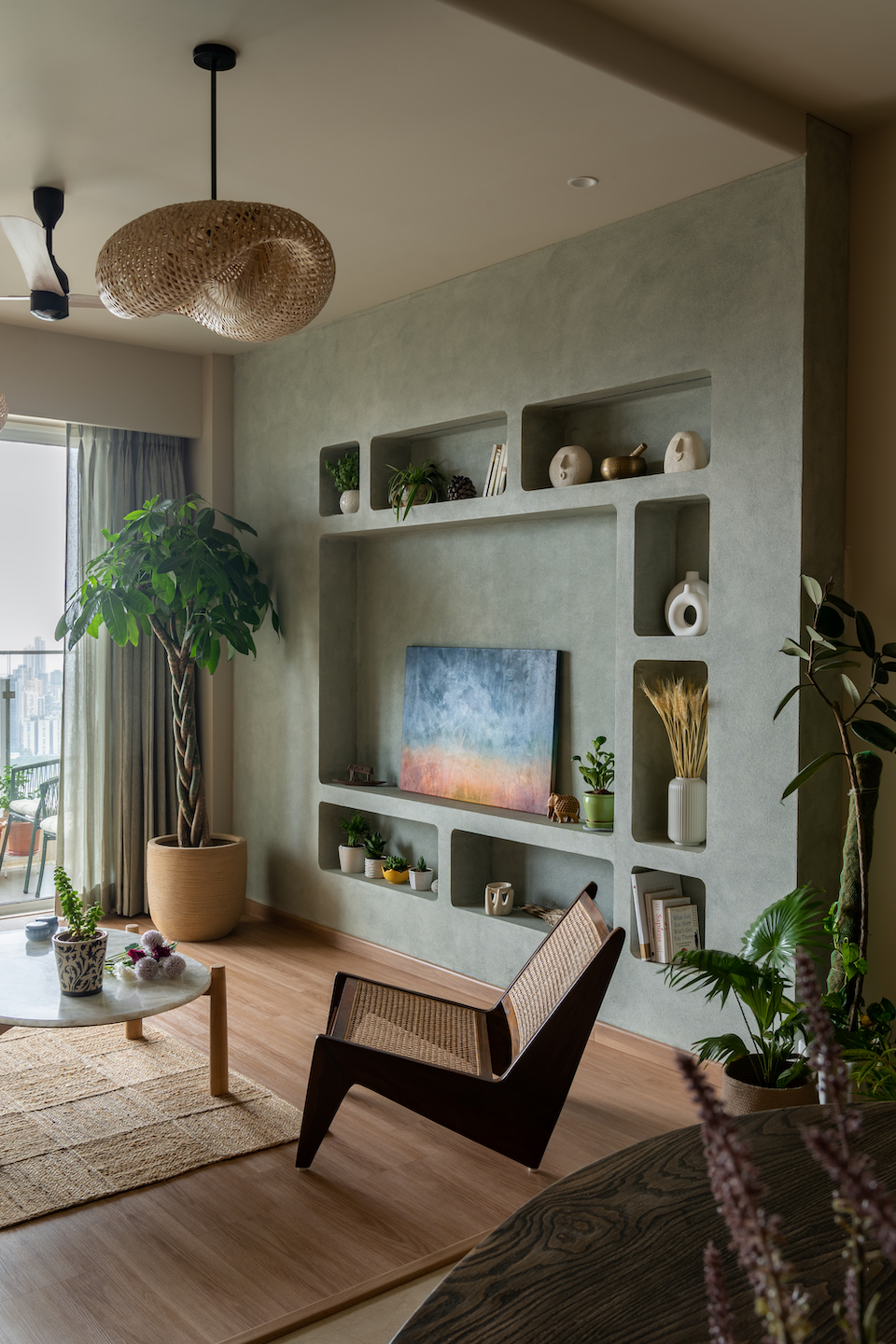
Inside the bustle of Mumbai city lies a 1,000 sq ft haven of calm and elegance. A three-bedroom, hall, and kitchen (3 BHK) apartment, this home follows the contemporary and compelling interior design concept of Japandi. “This philosophy brings together the minimalist sophistication of Japanese aesthetics and the understated functionality of Scandinavian design. It translates into an interior design style that is minimal yet warm, functional yet stylish, and natural yet modern,” say architects Zaheed Lokhandwala of Techton and Hamza Singaporewala of Designology whose design firms collaborated on this project. “Browns and whites dominate, with hints of grey and punctuations of mustard and green, creating a visual rhythm that is as engaging as it is soothing.”
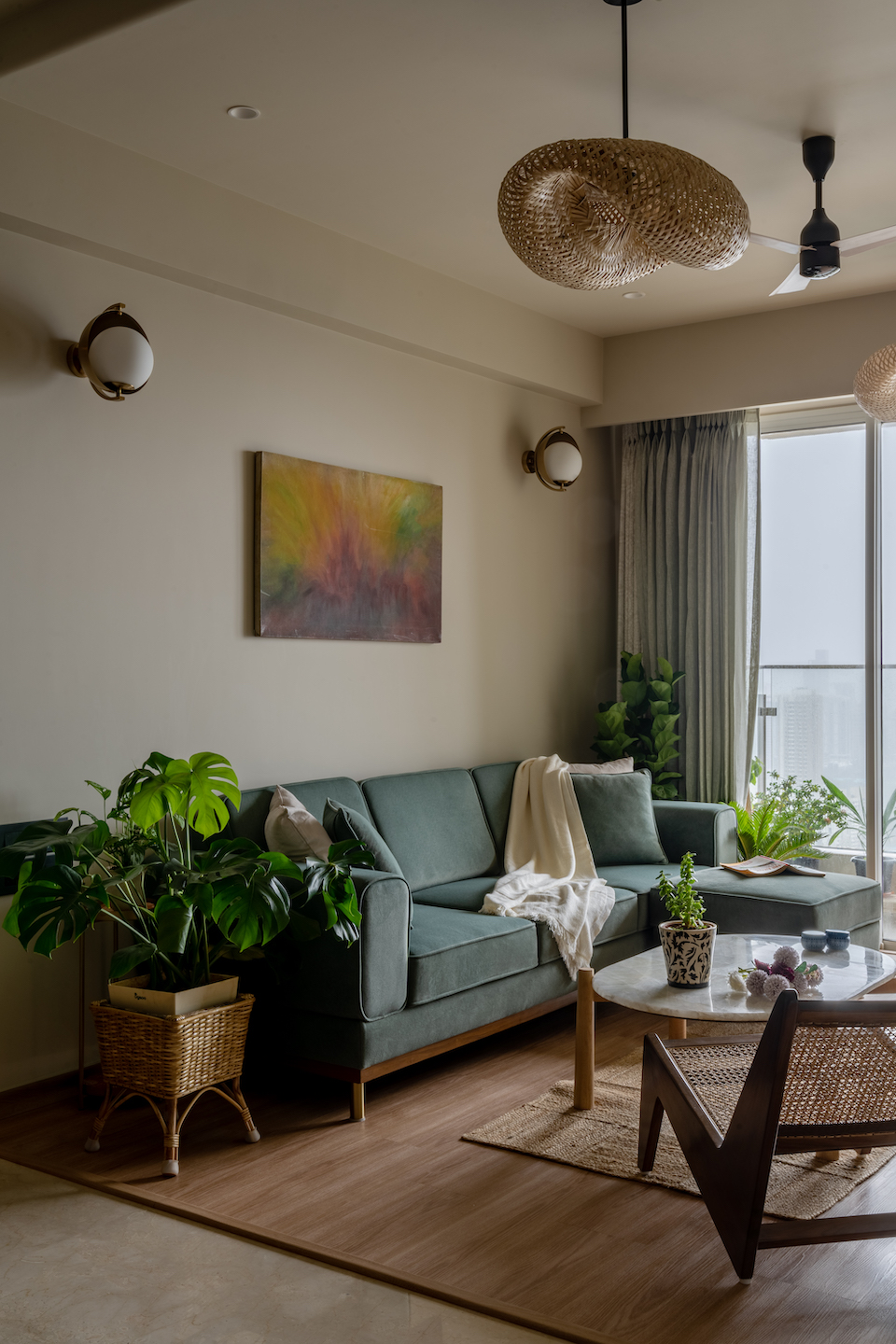
The living room is the first introduction to this harmonious blend of design concepts. The TV unit, sporting a pigmented concrete texture, and a matching green sofa, create a soothing visual symmetry. The expansive use of different woods and veneers throughout the apartment infuses warmth, creating a welcoming and homely atmosphere.
Part of the living room surprises with wooden flooring, a natural transition that effortlessly connects the dining and living areas of the room. An assortment of green planters is judiciously scattered around the living room, their vibrant hues making the space come alive, a testament to the Scandinavian love for biophilia.
An open kitchen maintains the free-flowing design, its green and teak-finished cabinets complementing the overall colour scheme. The blend of colours offers an unexpected contrast, enhancing the visual appeal while maintaining the minimalistic ethos. Here, the practicality of the Scandinavian design shines through without compromising the aesthetic appeal.
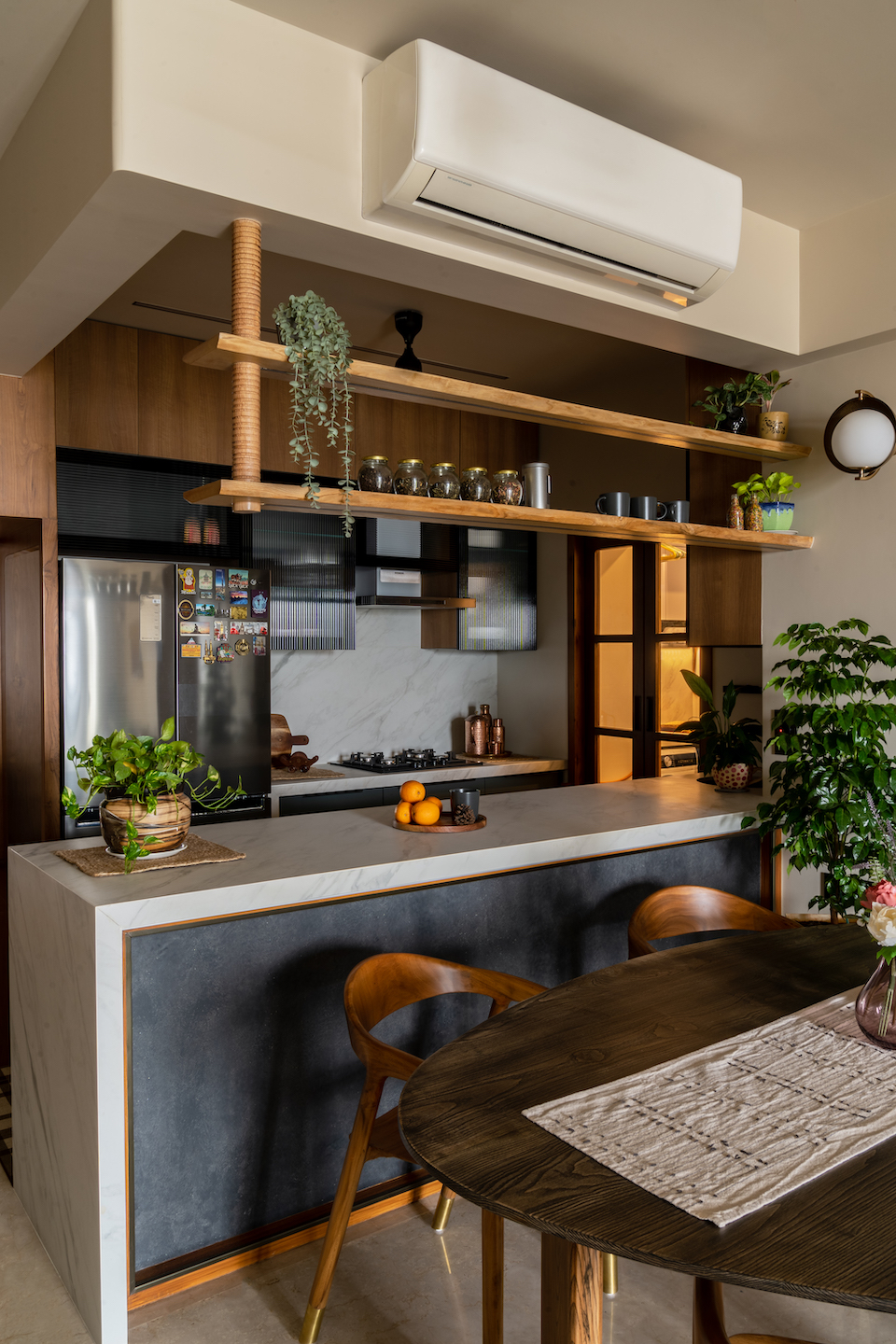
Every detail in the kitchen, from the minimalist, handleless cabinets to the matte-finished appliances, reflects Japandi’s principles of simplicity and practicality. The emphasis on clean lines and minimal design, void of any unnecessary embellishments, encourages a sense of calm and orderliness.
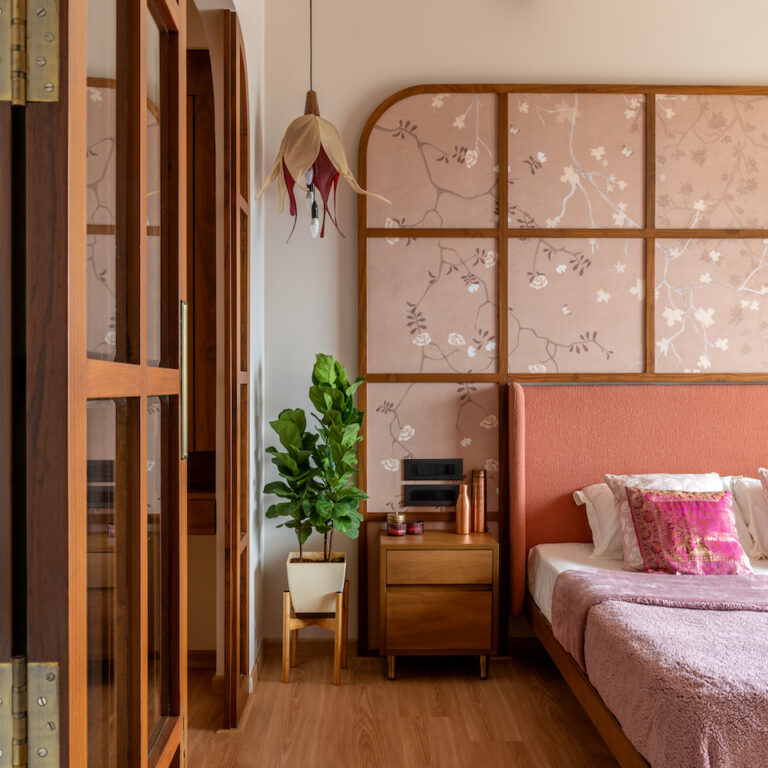
The master bedroom stands as a testament to the amalgamation of simplicity and luxury. Wooden rafters add a touch of grandeur to the space, while the geometrically pleasing grid headboard introduces a contemporary flair. The headboard, with its rounded edges, is accompanied by a similarly designed bi-folding door for the walk-in closet, resulting in a harmonious blend of forms. Subtle wallpaper in the headboard panels juxtaposed with a low-set bed, reinforces the minimalist underpinning of the Japandi style.
Respecting the age-old principles of Vaastu, the study room features storage cabinets in a subtle shade of mustard. This offers a pleasing colour variation and symbolises wisdom and learning. The daughter’s room, on the other hand, is an exploration of texture. Stucco texture adorns one wall, providing a tactile element, while a veneer finish elsewhere adds warmth. The low bed, in keeping with the rest of the house, offers a grounded and cosy ambience.
The project illustrates how, even within compact urban living spaces, it’s possible to create a home that is not only stylish and current, but warm, inviting, and mindful of cultural nuances.
Fact file
Project: Harmonious Living
Location: Mumbai
Area: 1,000 sq ft
Principal architects: Zaheed Lokhandwala (Techton) and Hamza Singaporewala (Designology)
Add a Comment