
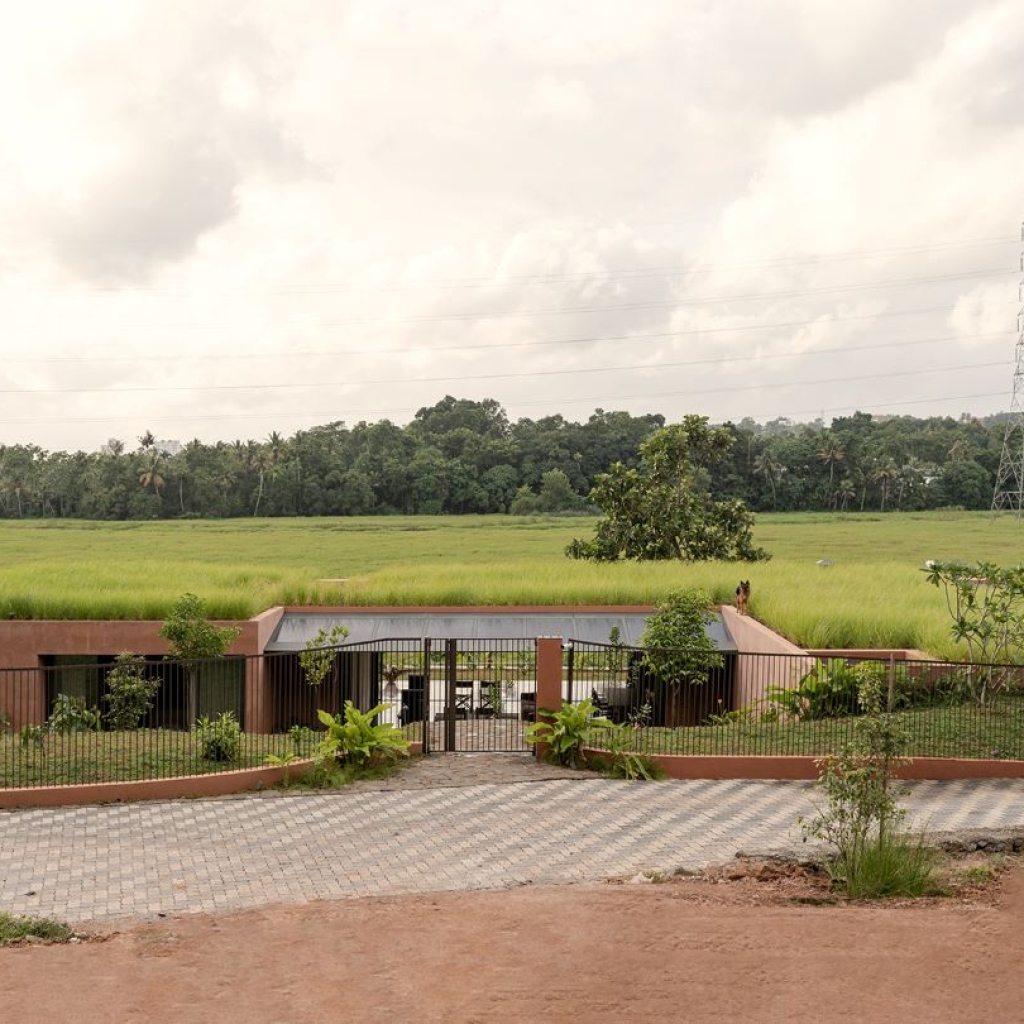
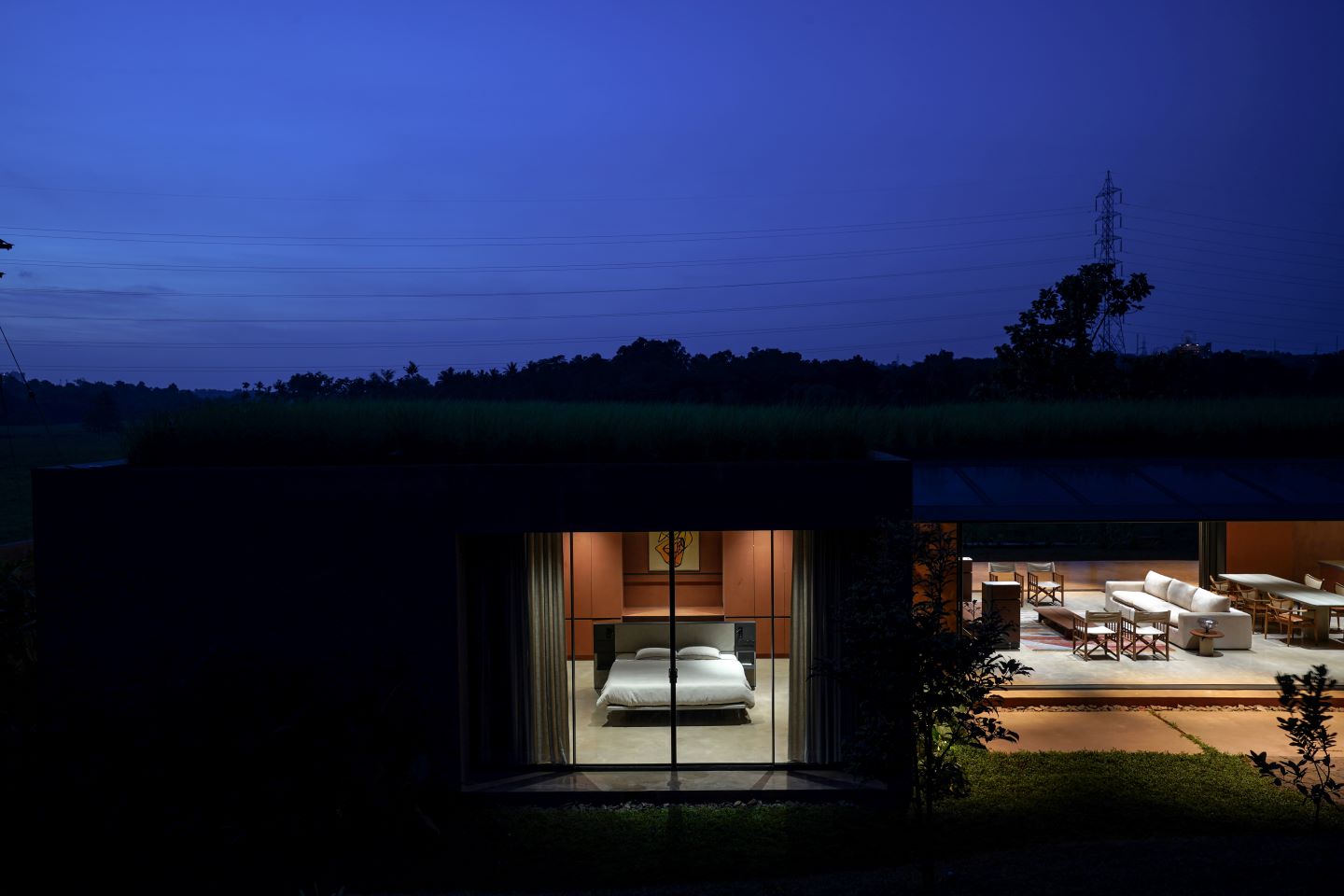
Alarine Earth Home reflects the shared vision — of architect Zarine Jamshedji and construction consultant, Cornelis Alan Beuke — of a home that seamlessly blends with nature and its surrounding scenery.
Curated by: Deepa Nair
Photographs: Syam Sreesylam; courtesy Zarine Jamshedji Architects
 The site
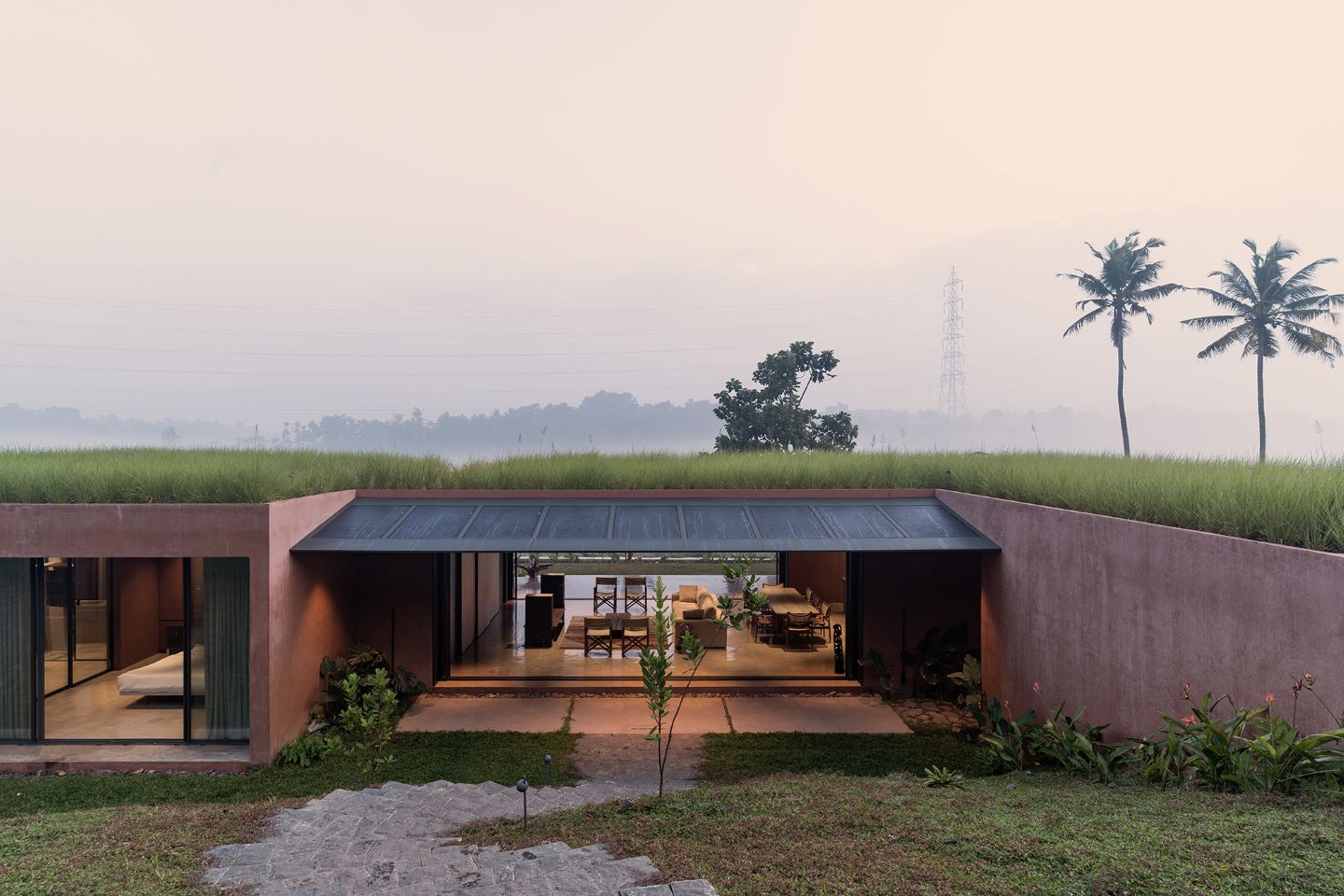
The Alarine Earth Home, a creation of Zarine Jamshedji Architects lays a strong emphasis on environmental harmony and echoes the studio’s belief… architecture is listening. The project embodies the coming together of the professional and personal lives of architect Zarine Jamshedji and construction veteran, Cornelis Alan Beuke. The building is built on a sloping site (surrounded by rubber and nutmeg plantations) which is two kilometres from Kochi’s InfoPark, and has an urban location overlooking a large paddy field.
 The design intent
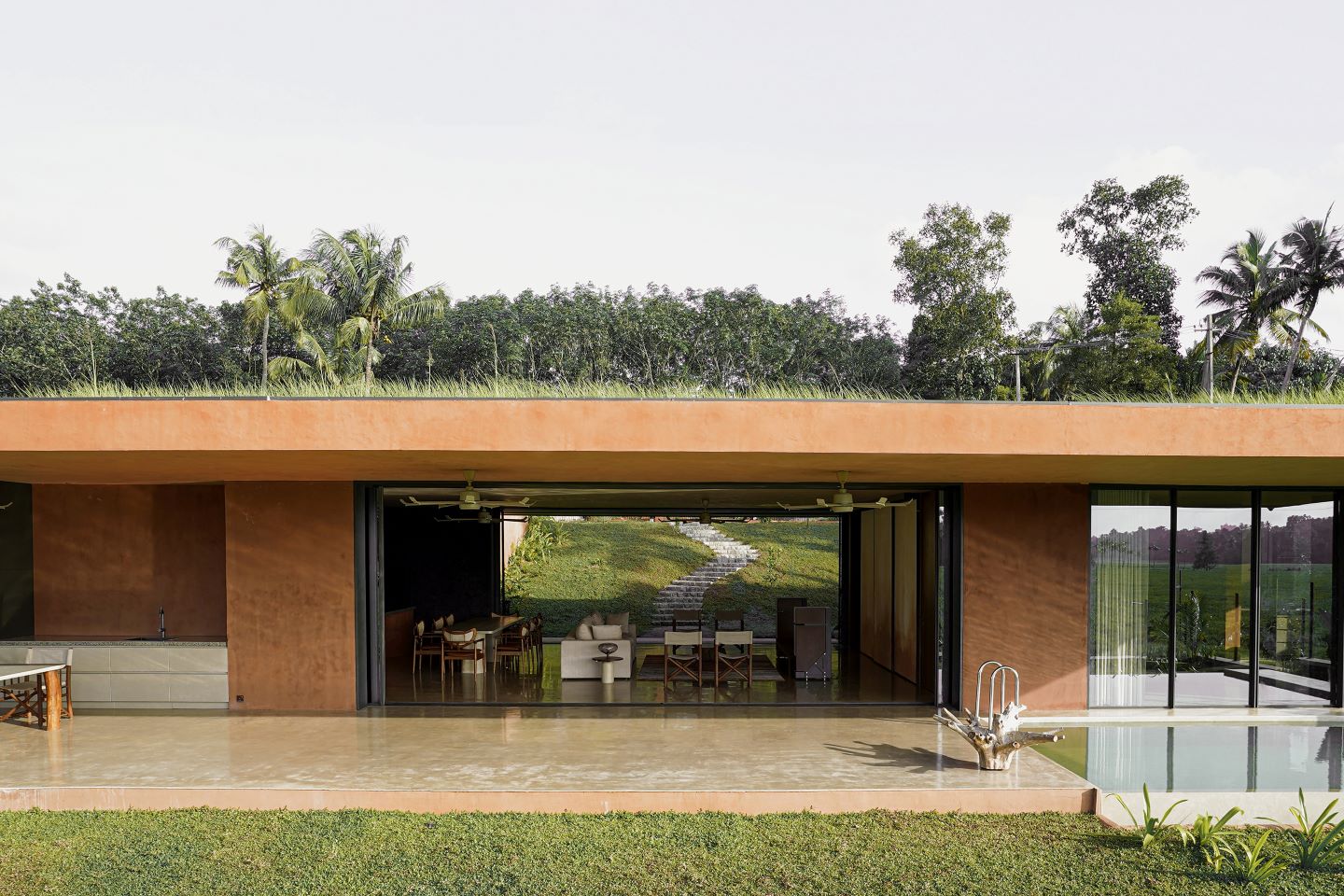
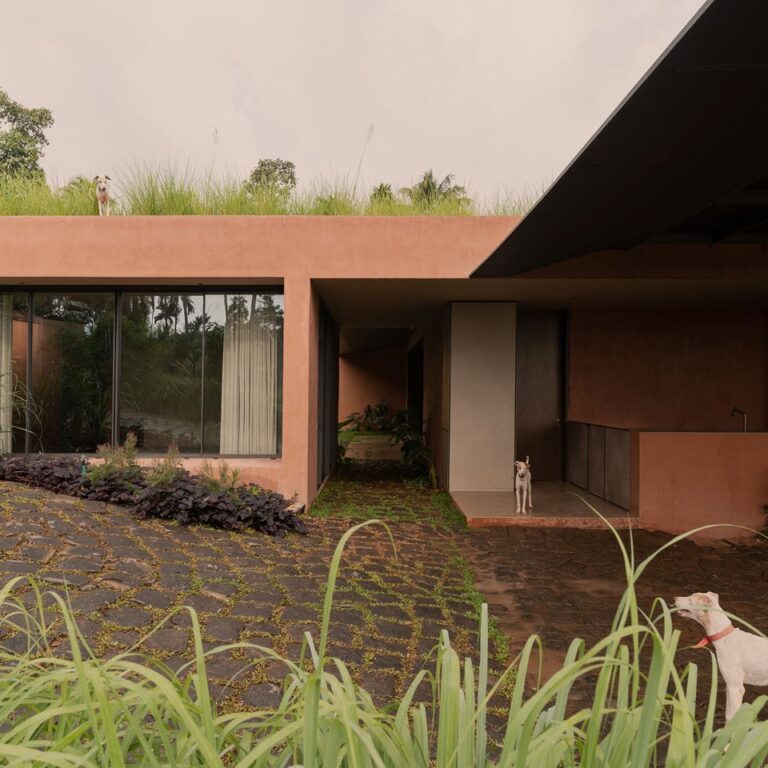
The project realises both Alan and Zarine’s deep love for nature and animals. Observing their six dogs and two cats enjoying being free in the outdoors, they wanted to integrate a similar essence into their home. They desired for their home to seamlessly merge with the surroundings, and to become a part of the natural landscape. “We looked for a site that resonated with our desire of how and where we wanted to live. A vision of how we wanted to build emerged instantaneously from it,” shares Zarine. “The desire to have a home that ‘blends in’ the true sense of the word into the land and landscape, not be intrusive, or block the expansive paddy field for our neighbours in the rear,” she adds.
 The construction system
The structural system used for construction is Stereogram’s (Innovative Building Technology) Schnell 3D panels. Its efficient combination of prefab and in-situ adds a boost to the construction speed. What makes it so unique is that the entire building is made from one material and it acts like a monolithic structure. Alan’s ingenuity in designing the structure with Schnell panel, has allowed for the 4m column free cantilever in the verandah. It adds great value in being able to seamlessly enjoy the field ahead. The insulative properties of the panel reduce the AC usage by 53 per cent.
 The spatial configuration
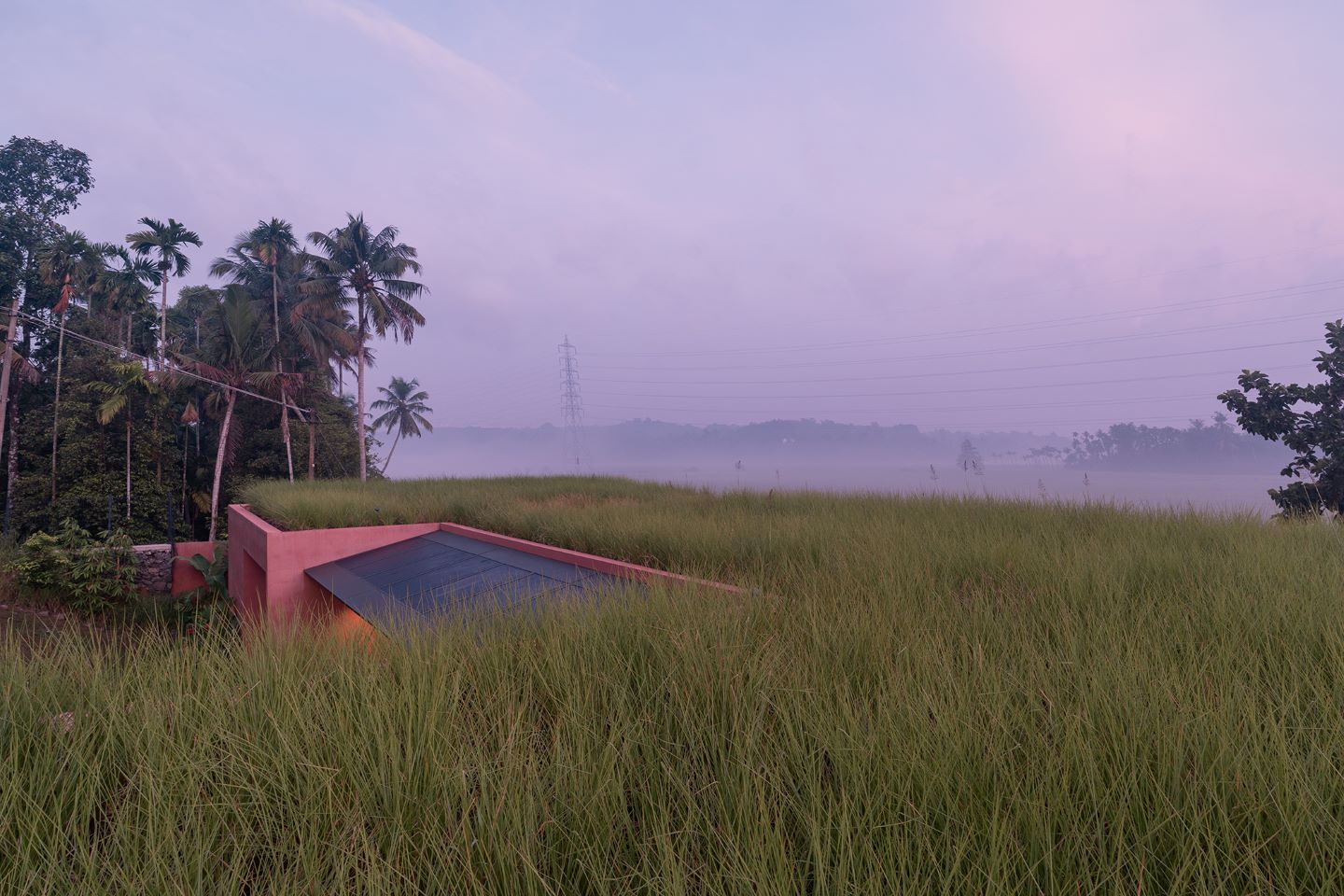
One enters through a modest 5’ gate at the top of the property — a transparent fence, which not only offers a view of the site, but also extends one’s line of sight beyond, to the fields behind. The house is set on a lower contour, and one can see the green roof perfectly matching the paddy from the gate. “The expression of a first time visitor every time is a silent reward in itself,” says Zarine.
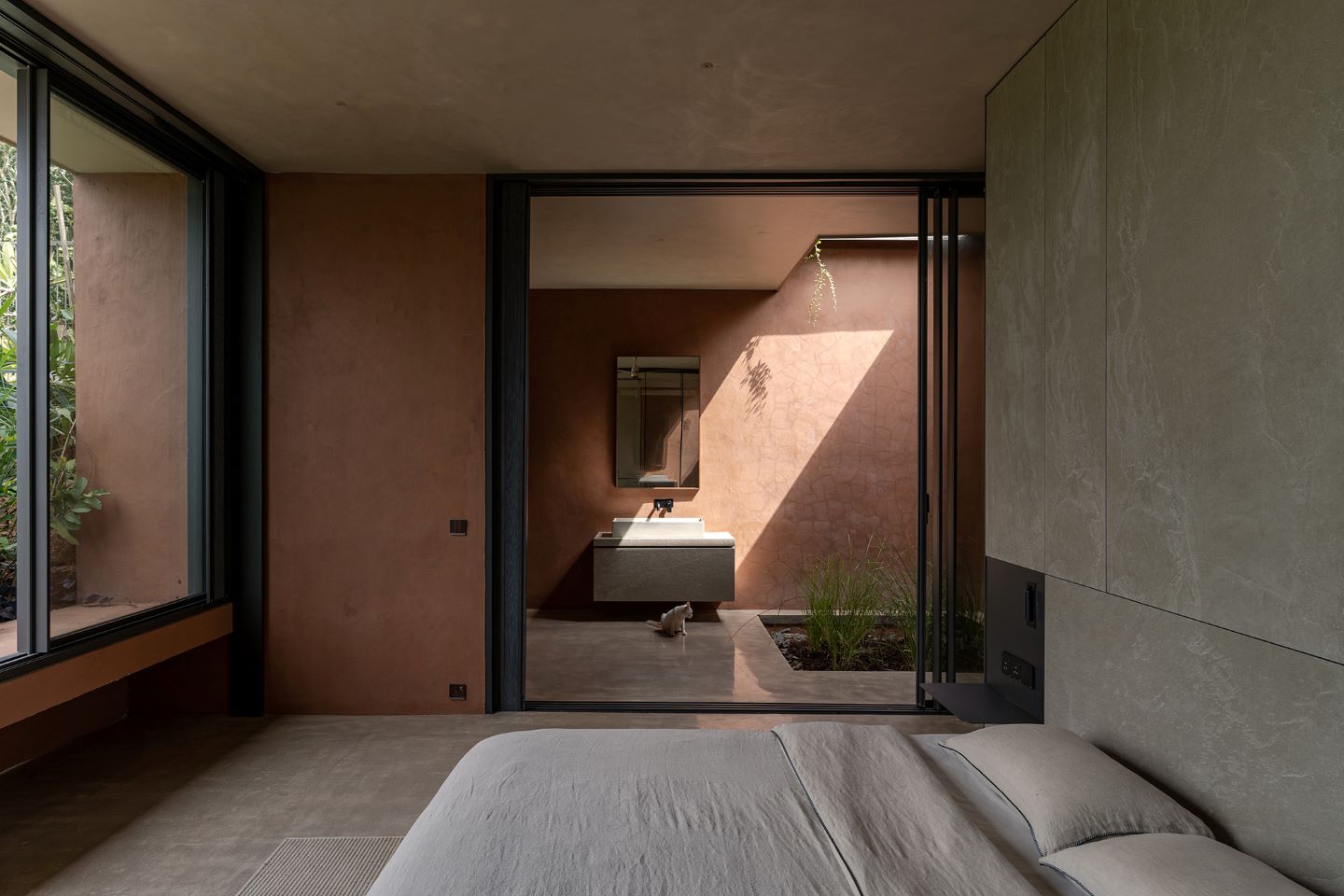
A meandering natural stone stairway takes one down to the house. Unlike a conventional home, there is no main door. One enters below an array of building integrated solar panels (BIPV), into a seamless communal living, dining and kitchen space, and further a column-free sit-out that merges ahead, uninterrupted with the landscape and the paddy. On one side of this common space are two identical bedrooms with attached bathrooms. The bathrooms open up to a private landscape along the boundary of the site. The house is thoughtfully designed considering the airflow throughout the spaces.
 The design and material details
Zarine and Alan visited a laterite cutting factory, collected the waste runoff mud and used it to plaster their home. Several trials were done on the western compound wall for developing the mud-based plaster render. “The walls now, so often attract never seen before insects of similar shades camouflaging on them. Bringing together a high-tech material for its efficiency and a low tech material for its earthiness,” points out Zarine. The home sits on soil with high clay content, the raft foundation was directly polished with sand to form the beige floor. Inside, the floors are polished concrete
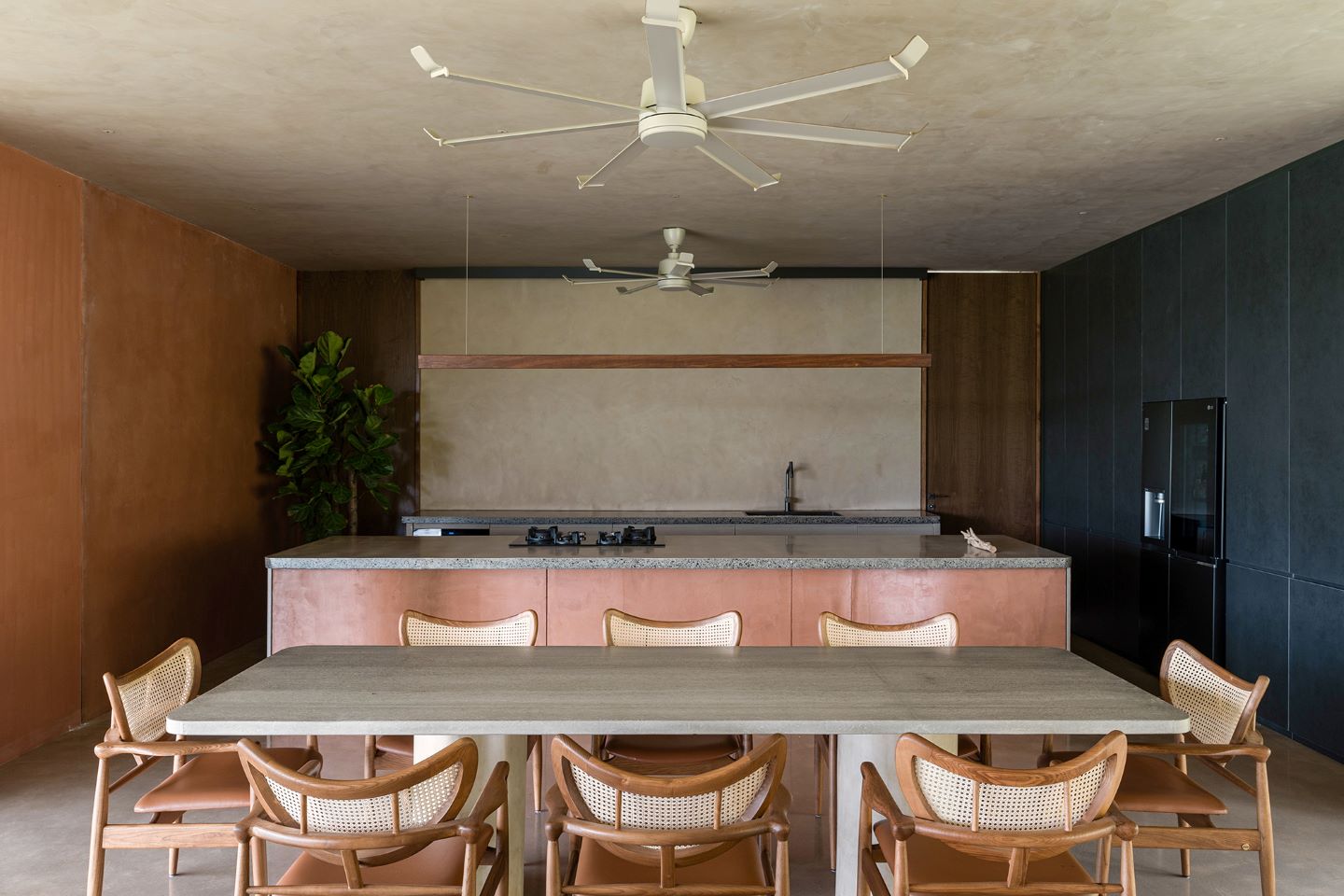 The special structural design resulted in a beamless ceiling. Lighting was concealed into the roof slab, to maintain a minimal architectural style. The roof is planted with vetiver grass (khus, miracle grass), for both its properties and its aesthetics to mimic the field. The principles of permaculture are brought into the landscape. “Sustainable landscapes are not only about what they look like but what they do,” explains Zarine.
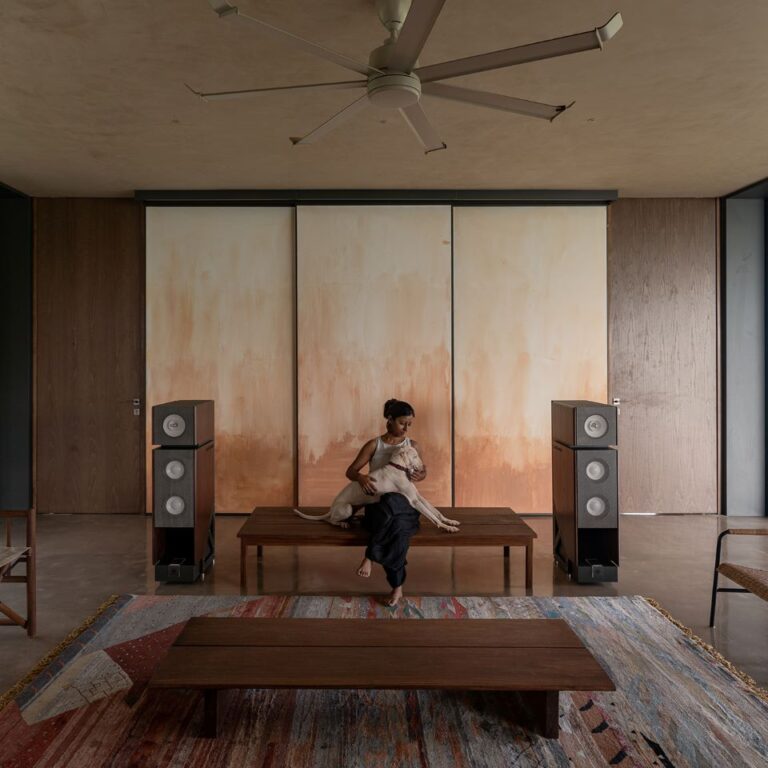
 The living room has hidden shelving behind sliders that display a large minimal abstract painting by Zarine, using the mud. In the other rooms, the patterns of the texture on the walls create natural paintings in themselves. Several pieces of furniture and light fittings are made from waste Schnell panels. An old tree root found on site was cleaned and repurposed. The plinth of an old pumping shed was converted into an outdoor landscape seating space. An old trench was enlarged to form a pond to hold water from the paddy for irrigation and be refilled from the roof water. Bio septic tank is used to ensure proper digestion of sewage and the same recycled for landscape use.
One of the most enjoyable parts to construct for the studio, was the pond towards the paddy.
The pond was below a dilapidated agriculture shed, and the plinth of the same was retained and converted into a hardscape. Stepped laterite was used for retaining the wall of the pond. The surface runoff was channelled to this pond, along with the nine hidden drains from the roof, which harvest water to the pond to be used for irrigation.
 The challenges
“Every construction big or small comes with its own set of challenges. A project like this which had so many experiments all in one, with a desire to have the building, landscape and interiors completed and occupied in six months made the process even more enjoyable,” says Zarine.
Fact file
Project: Alarine Earth Home
Location: Kochi, Kerala
Area: 4,090 sq ft
Principal architect: Zarine Hoshang Jamshedji
Structural concept: Stereogram IBT, Cornelis Alan Beuke
Design team: Cornelis Alan Beuke, Abhishek Suthan and Surya Narayanan
Add a Comment