
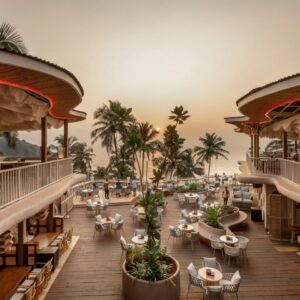
Dubki, designed by Maze Concept Design LLP gives you an immersive experience of the sea, and enhances all your senses with its beautiful sunset views.
Curated by: Deepa Nair
Photographs: Arjun Krishna; courtesy Maze Concept Design LLP
 The site
Located at the scenic Ozran Beach in Goa, on a cliff overlooking the sea is Dubki (Dawn and Dusk Bar) — Maze Concept Design LLP’s newest creation. Set in a lane well known for a few F&B brands, the entry to site was quite narrow but it enjoyed a wide view of the sunset. There was an already existing dilapidated deck supported by MS structures which was used for parties during the peak season in Goa.
 The brief
The brief expected the design team led by architects Koushik BR and Priyanka MC, to design a space which enhance the experience of watching sunsets from a casual and beautiful space. The layout had to be designed in a way where everyone would get a view of the sunset, and the place should be able to convert into a high energy club post sunset. Additionally, dedicated spaces had to be provided for all the services.
 The design intent
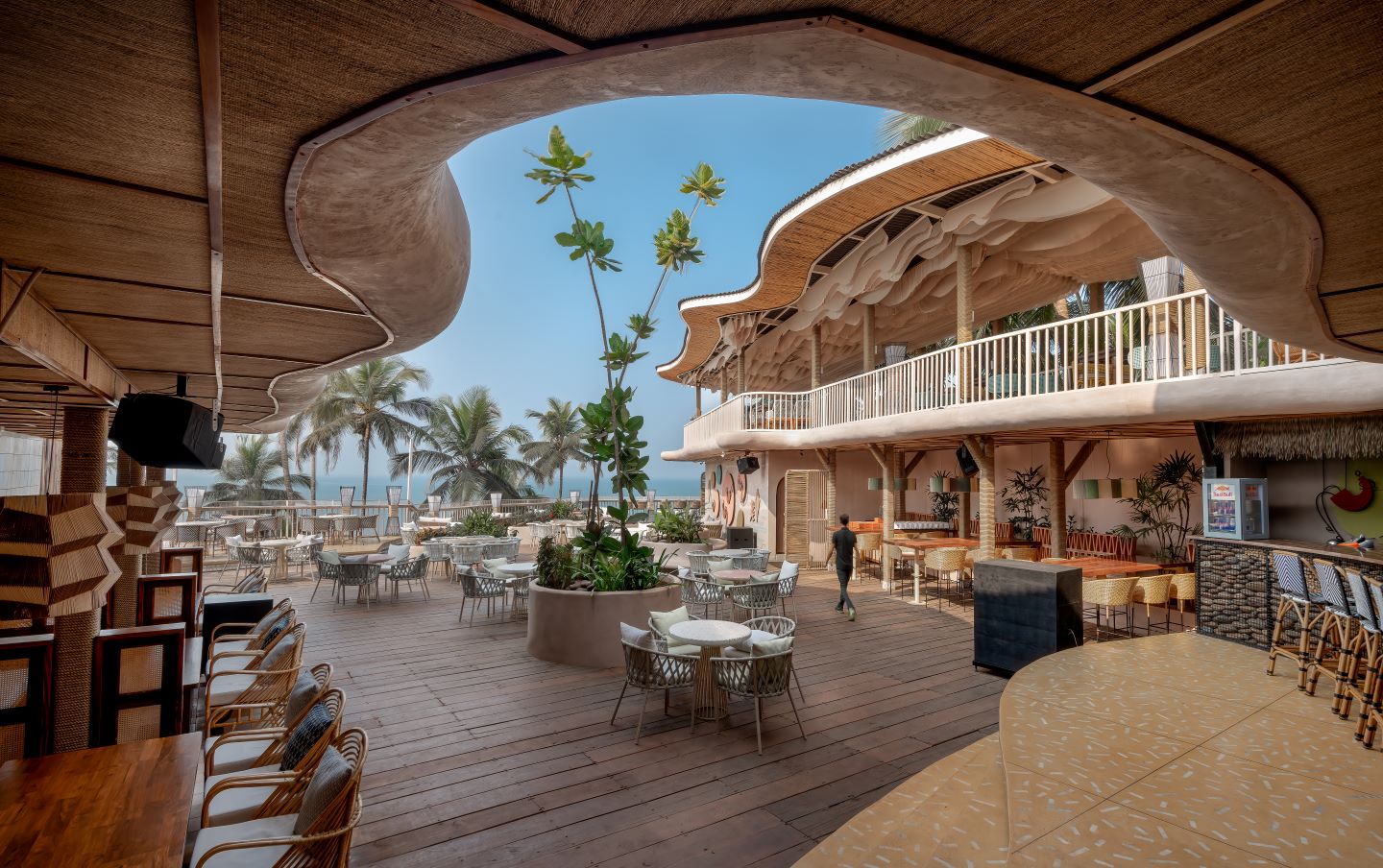
“We took inspiration from the sea itself and wanted to bring the sea into the land,” says Koushik. “We interpreted this idea in a way where our design of the roof structure became a strong element and every other space, wall or seating were made up of curved surfaces or edges, we did not have a single 90 degree joint,” he adds.
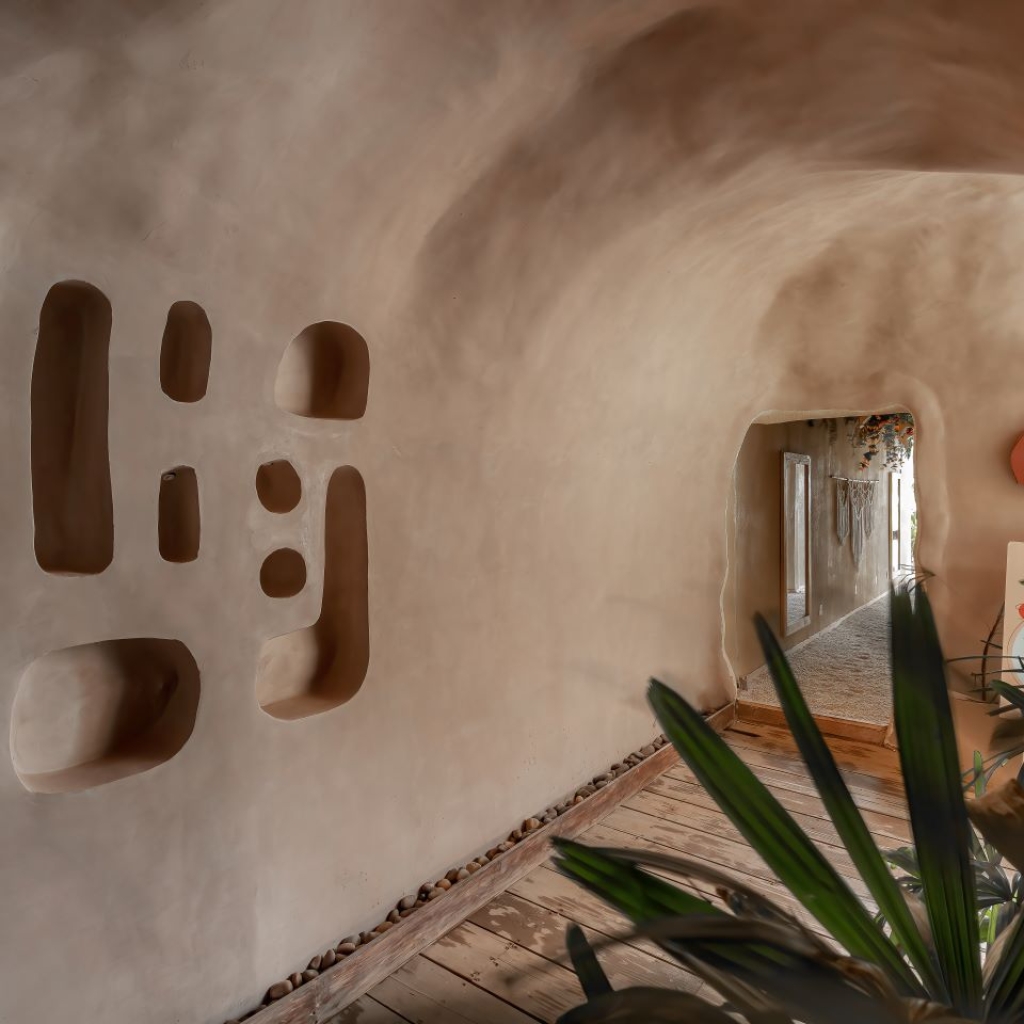
As the walk to the main deck area was quite long, the design team decided to make the experience fun and interactive. “The entry archway was designed to be a Gabian wall through which we added a heavily landscaped pathway, which would again lead into a smaller voluminous space which was designed to be a cave. This would finally open into a large vista where one ould see the horizon in the sea with a few palm trees in the foreground,” explains Priyanka.
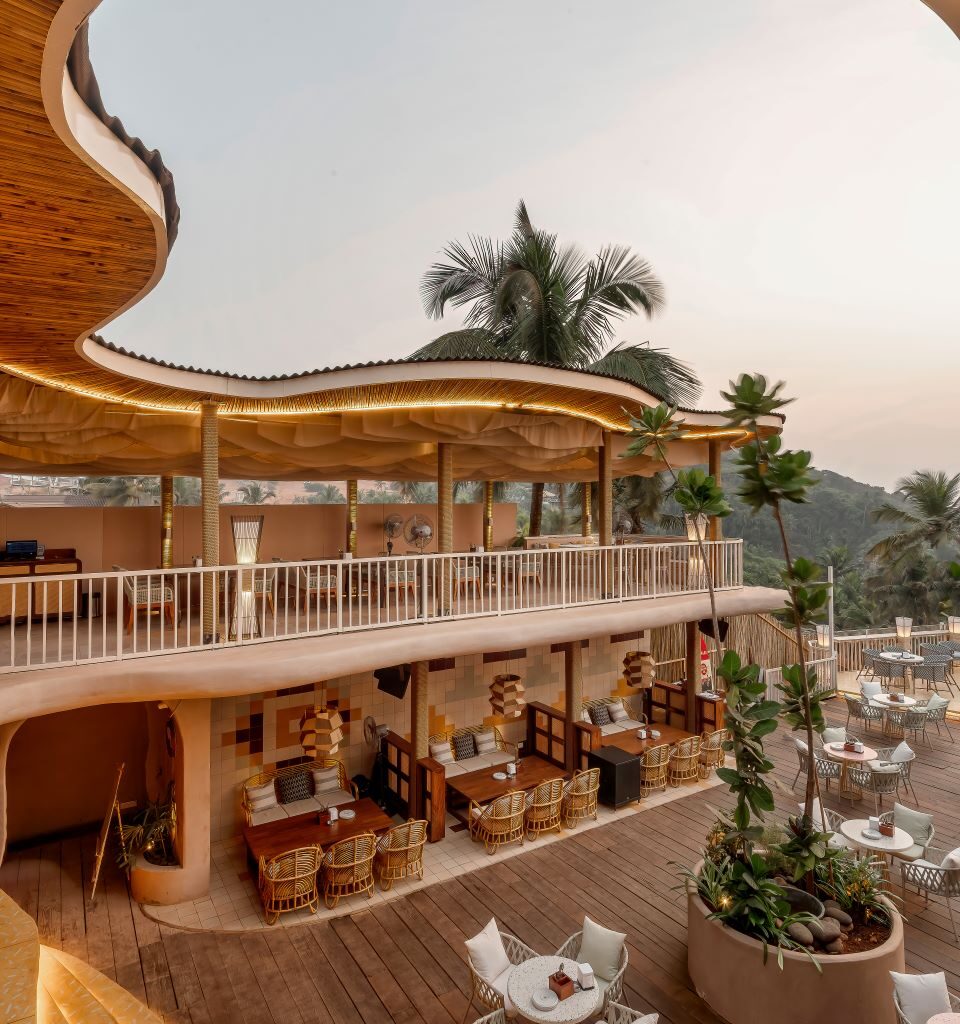 To ensure that everyone would get a view of the sunset and also feel connected with others around, two wings to the property were planned (which includes the already existing deck). This created a central space at the lower level which was completely open to sky. This central space displays loose furniture and a few organic planter boxes, and can be easily converted into high energy space (read dance floor). The services to the property were located closer to the entry pathway for ease of access, and to ensure that these closed volumes would not block the stunning view the place has to offer.
 The civil intervention
The existing deck structure had to be reinforced with more metal columns and beams, as concrete was not a material of choice (as it is a property next to the beach). As the deck was on a cliff, the supports were anchored directly onto the hard rock. Additional extensions and roof structures were created using ferro cement with metal mesh work. Cement sheets were also used in certain areas where flooring was necessary.
 The spatial configuration
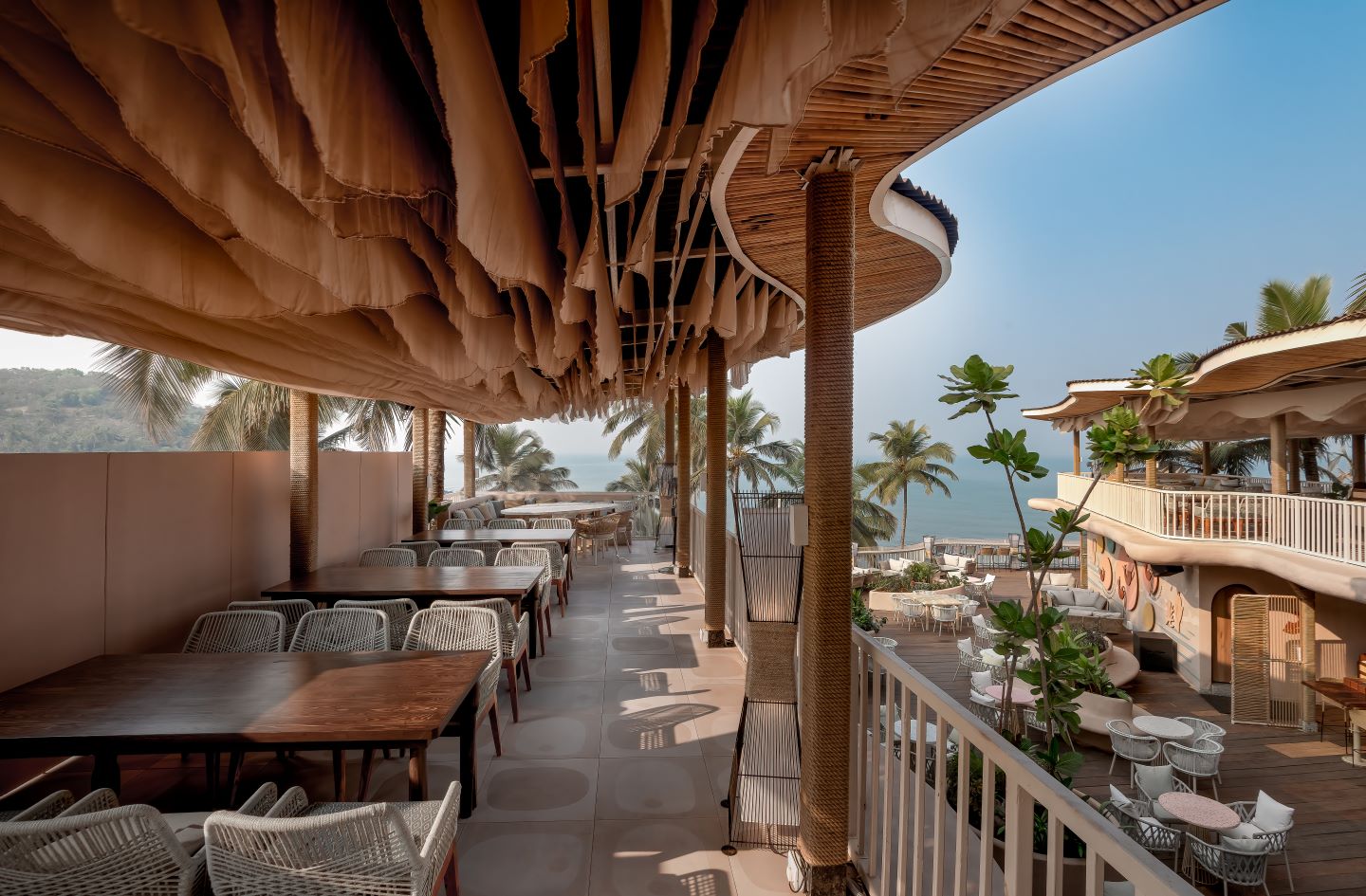
The experience starts off with a long walk which transitions into different spaces with lowered volumes and opens into a deck with a large vista and infinite volume. The kitchen is located at the first floor and is an extension of the deck towards the entry pathway. The bar is located right after you enter the deck and is facing the sea. On either sides of the central deck there are two wings which extend towards the ocean. These wings act as a covered seating area, they have booth seating and different furniture arrangements to accommodate both small and large groups.
At the periphery of the deck, there is an elevated area which has movable seating, this can also be converted into a stage for the DJ, or a live band to perform. On the first level, a dedicated DJ pod is located right at the central axis of the bar and the open deck. And towards the sides are the wings which project towards the ocean. At the rear side of the DJ pod is the kitchen and other services.
 The material and colour palette
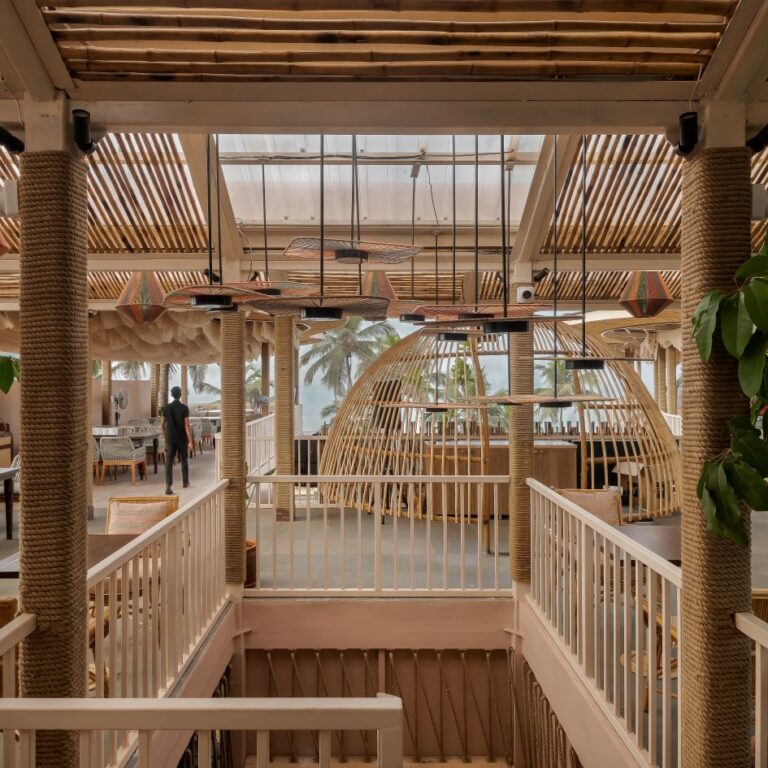
The material palette was carefully chosen to withstand the high salt content and humidity present in the air, and the harsh climatic conditions of the region all year round. Therefore, natural materials like bamboo, cane, pigmented concrete and natural stones feature prominently in Dubki. The colour palette has a very warm tone with subtle highlights (to impart a smart casual vibe) brought in through pastels, earthy colours and textures.
 The highlights
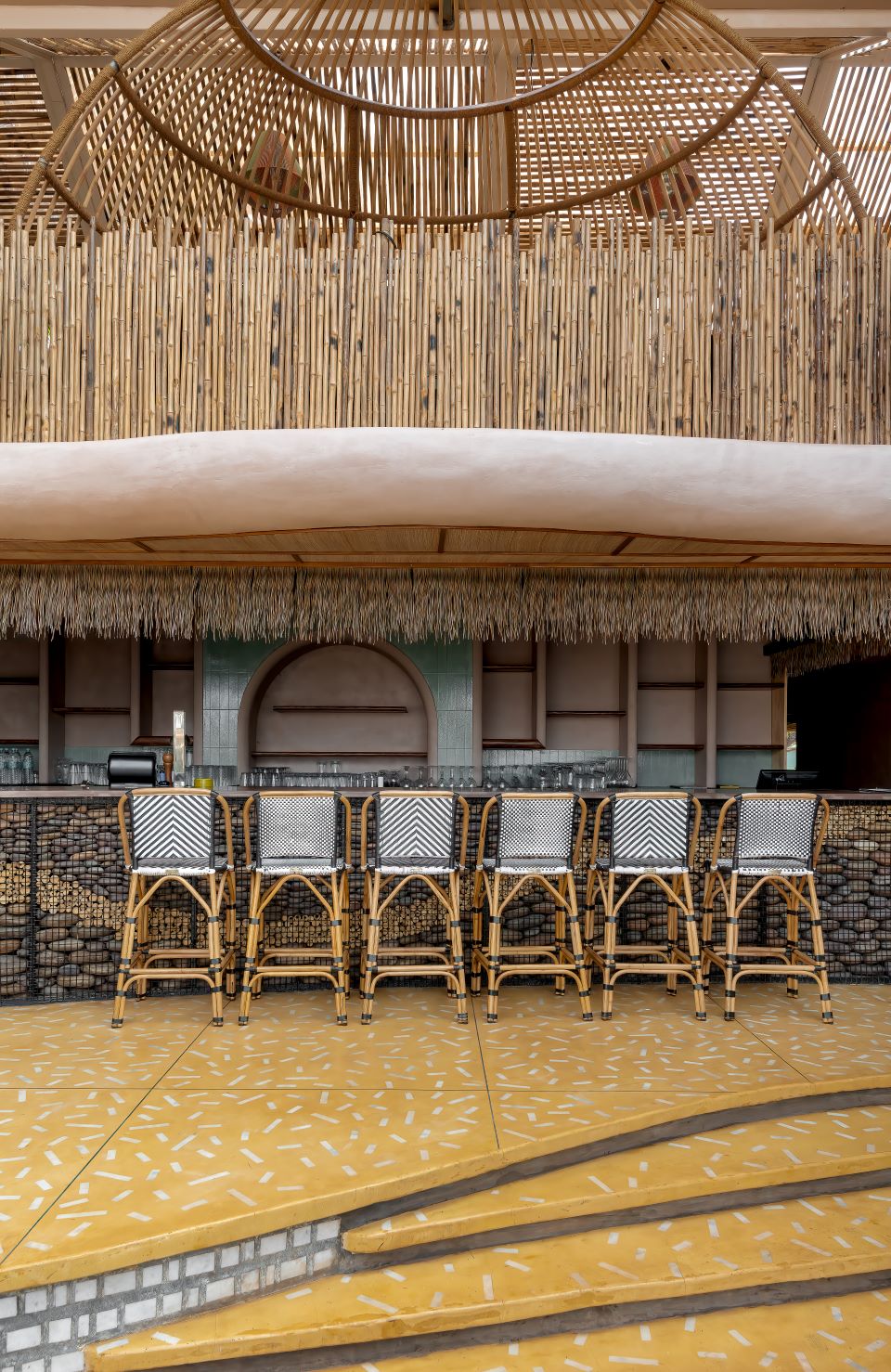
The main highlight is the layered roof which represents a wave in the sea with the horizon as a foreground. This roof was layered with heat-absorbing onduline sheets at the top, while a structure was a thin fabric was freely suspended at the bottom to cover the metal. These fabrics were again cut organically to represent waves and were positioned in the direction of the sea breeze to mimic waves. Straightened bamboo underside cladding was used towards the periphery of the roof and a RGB profile light was hidden to highlight the bamboo during late evenings till dawn.
The walkway into the larger vista was another crucial highlight of the project as it starts to narrate the whole experience from the moment one steps into the property. The heavily landscaped walkway with terracotta jaali blocks make you feel grounded and connect with nature — with river pebbles, bamboo, natural kota stone, jute ropes placed right at the beginning. This went onto a cave created with metal framework, mesh and coated with ferrocement.
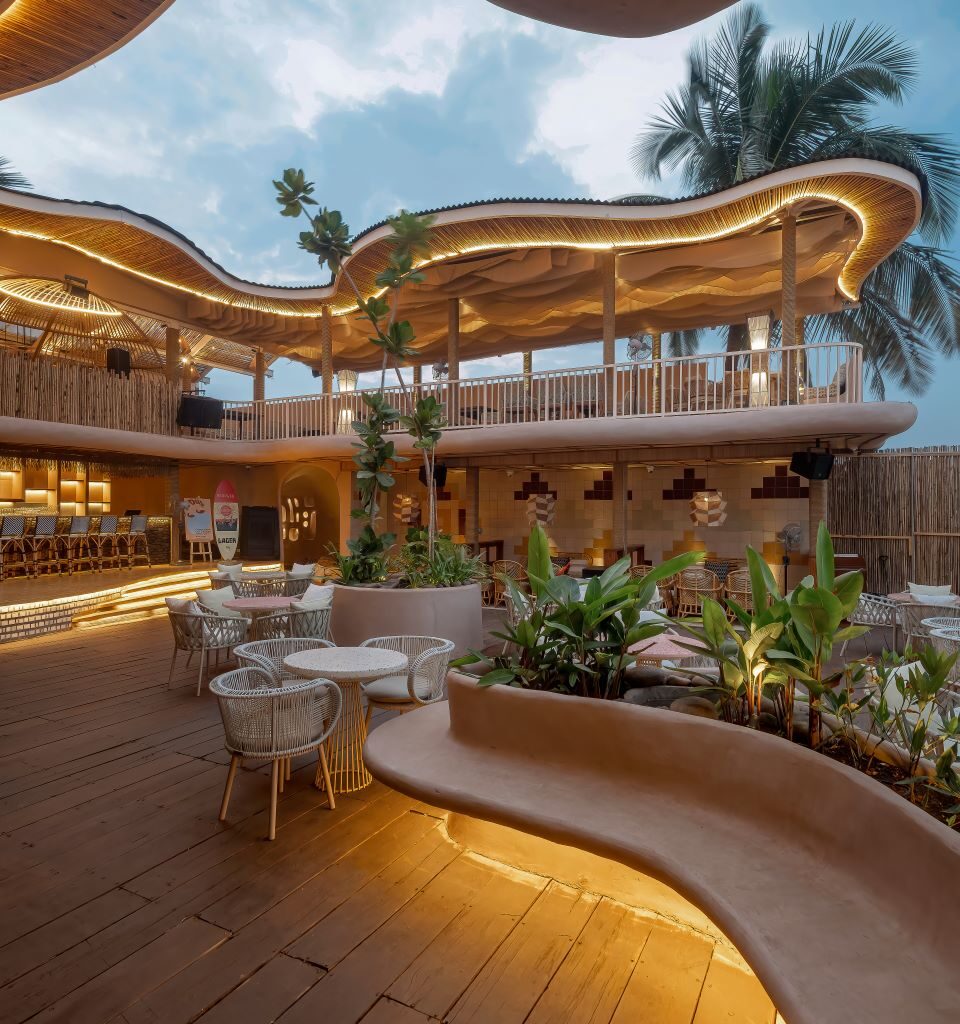 The bar is another highlight with its curvilinear layout and replicates the Gabian wall seen at the entrance. Using the same materials as the Gabian, the bar is positioned right at the centre and is the most crowded during the late evenings and night, when the space convert into a high energy club.
Fact file
Project: Dubki
Client: Shivshakthi Food & Beverages (Nikhil Wahi, Kapil Dua, Rakshith Ramesh and Gautam Reddy)
Location: Ozran Beach, Vagator, Goa
Area: 8,000 sq ft
Principal architects: Koushik BR and Priyanka MC
Design team: Deeksha Manjunath and Aashish Pattankar
Add a Comment