
Studio Rachana uses swathes of natural stone and timber, Indian artefacts and other ethnic elements to create an India Modern narrative.
Curated by: Rupali Sebastian
Photographs: Noaidwin Sttudio; courtesy Studio Rachana
 The brief
The client is a real-estate entrepreneur and wanted this house for a two-generation family. “The client’s expectations were quite clear from the outset,” reveals interior designer Rachana Chovatiya, who co-helms Studio Rachana with partner Ashish Chovatiya. “On a broader level, he certainly wanted the design elements to be derivatives of traditional and cultural roots, and yet speak a contemporary vocabulary. Additionally, he desired a subliminal sense of being surrounded by nature, nothing like a commercial property. Something cosy, and earthy.”
 The design approach
The design team first froze the material palette. Gradually, they approached the celebration of large-scale Indian artefacts, motifs synonymous with vernacular ethnicity, and furniture pieces with modern forms and traditional details. Thus, the final theme of the space was decided as Indian Modernism. A fusion of art influences, traditional hand-crafting techniques, and indigenous materials birthed the concept of this space.
The spatial flow
The entrance serves as a prelude to the aesthetic experience within. The ceiling holds brass lights installed in a grid. The door itself is elaborately crafted in solid wood with brass inlay. It opens to a square foyer looking at a focal hand-carved stone sculpture depicting seven chakras. An abstract swastika embedded in the flooring of the foyer welcomes positivity into the house.
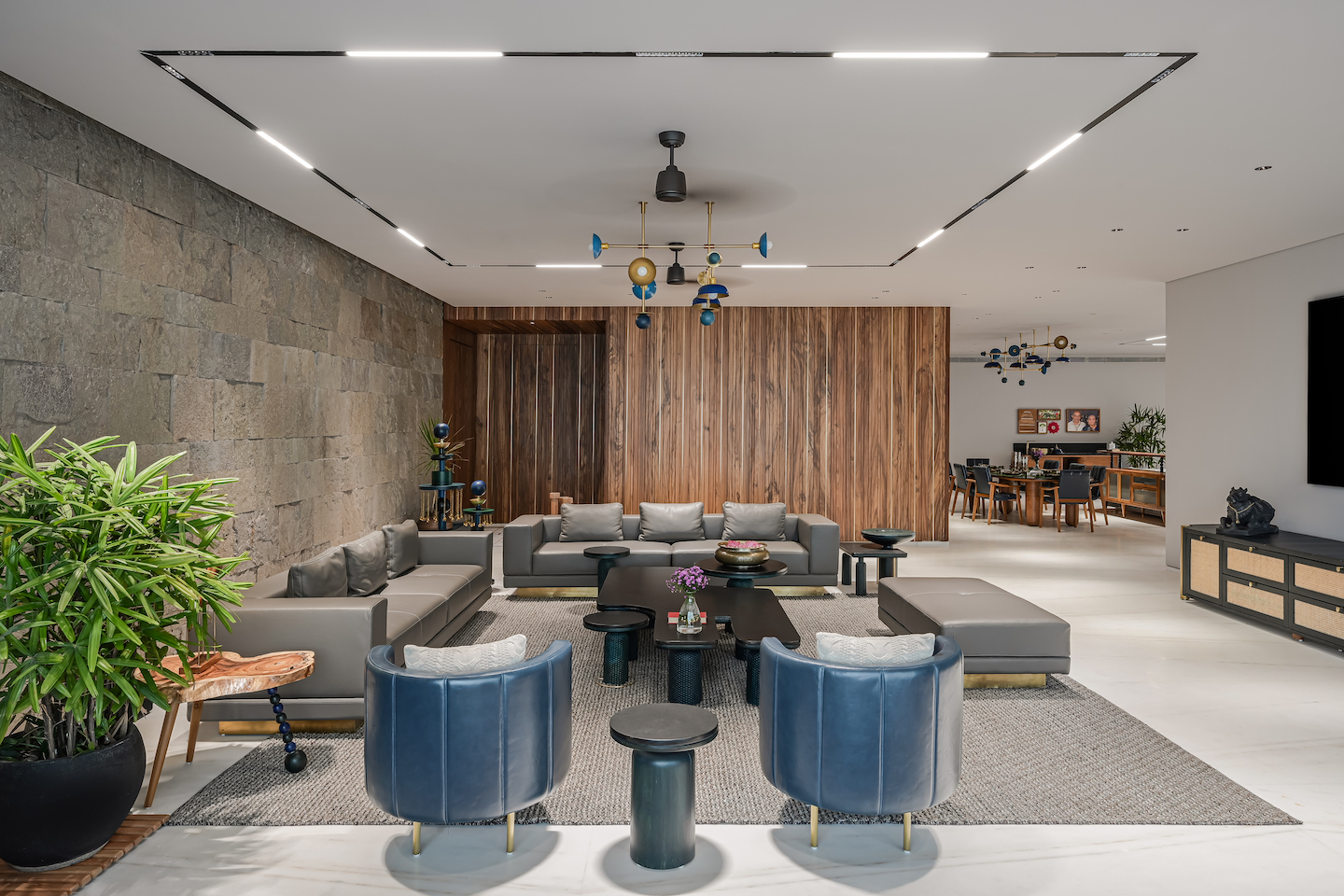
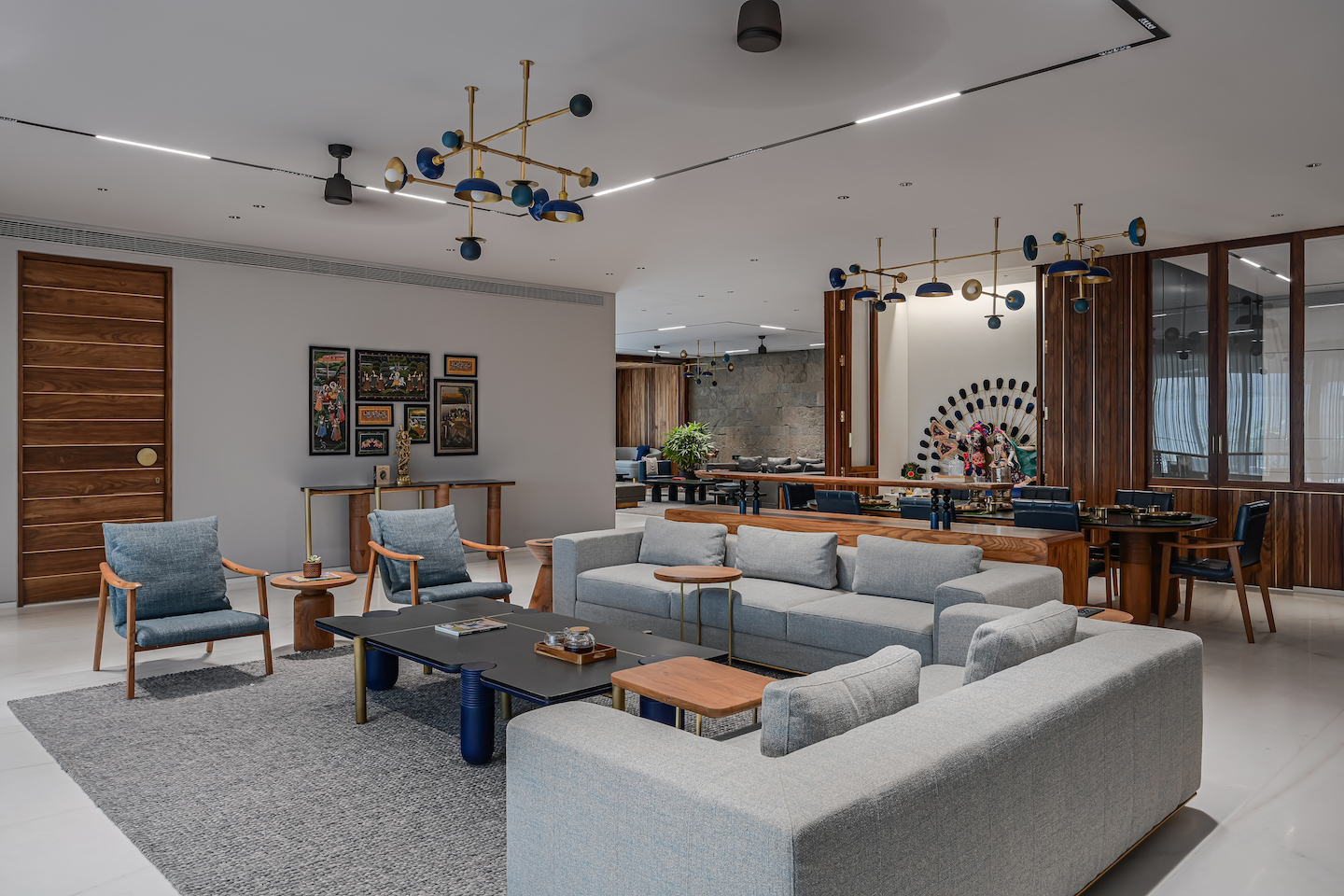
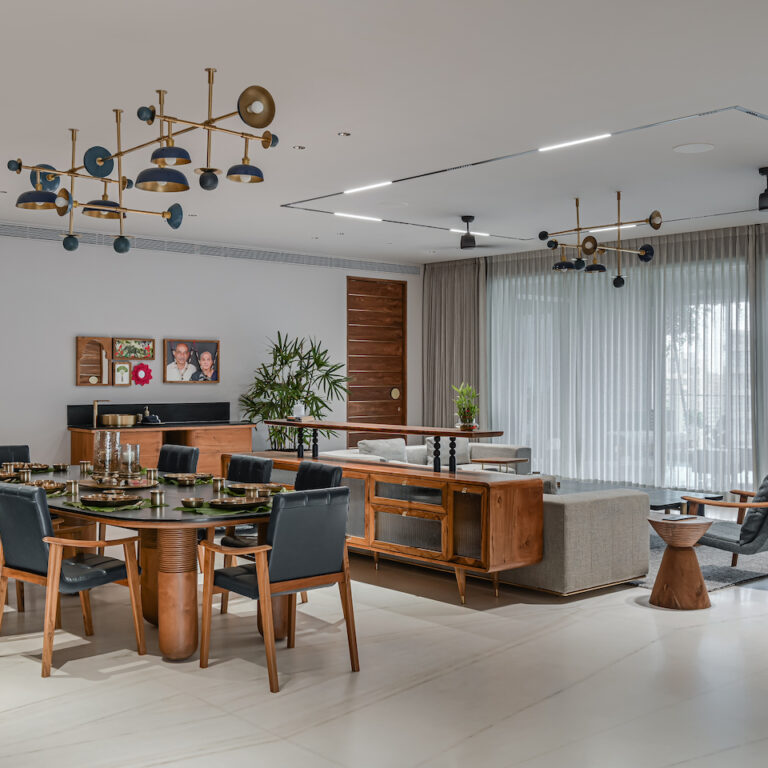 A porphyry stone wall with its distinctive texture runs from the entrance door to a wooden deck, serving as a bold backdrop to the living room. The room unites a multitude of materials, colours, and textures. This steps to the wooden deck that welcomes north light all day. The dining and family room are connected, yet secluded from the living room. It is almost centrally located and accommodates an eight-seater dining table with a brass-inlaid black granite top. An elaborately composed pendant light fixture suspended over the tables segregates the area from the family room.
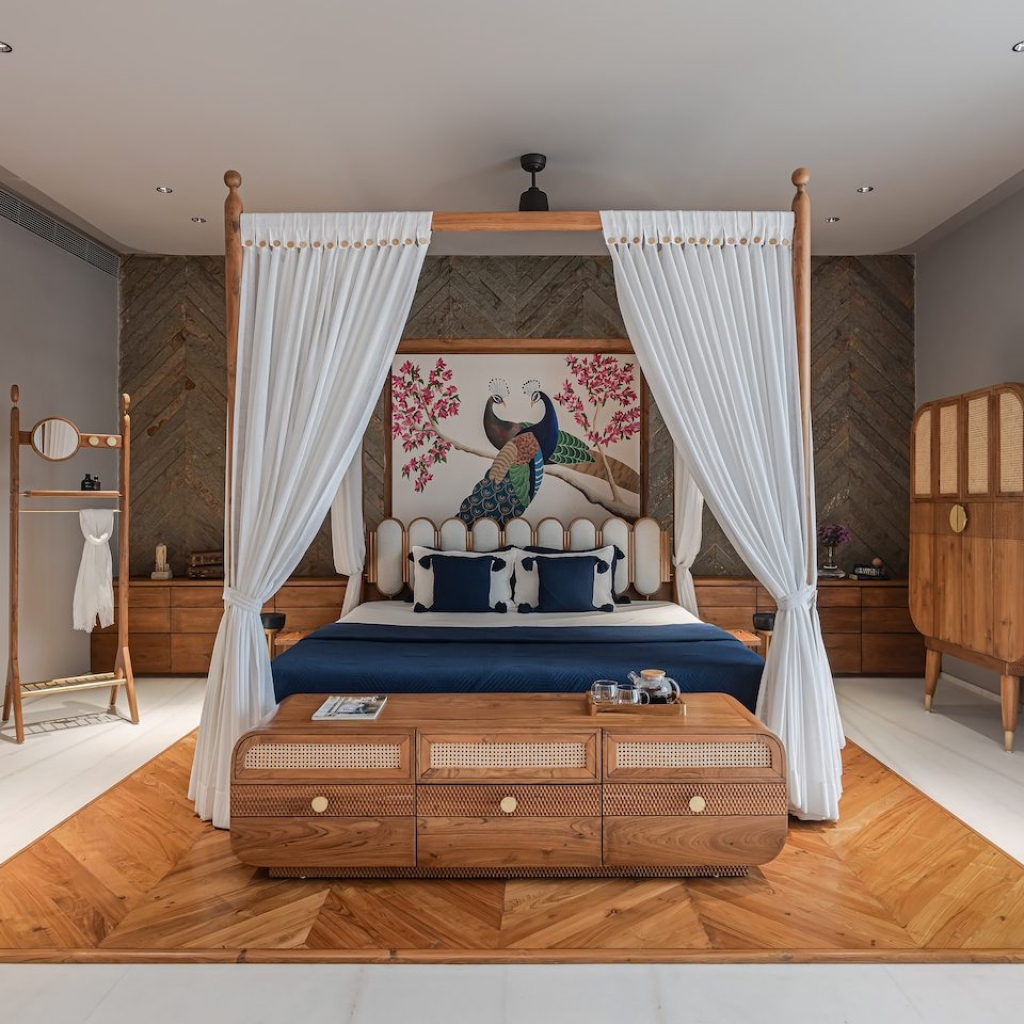
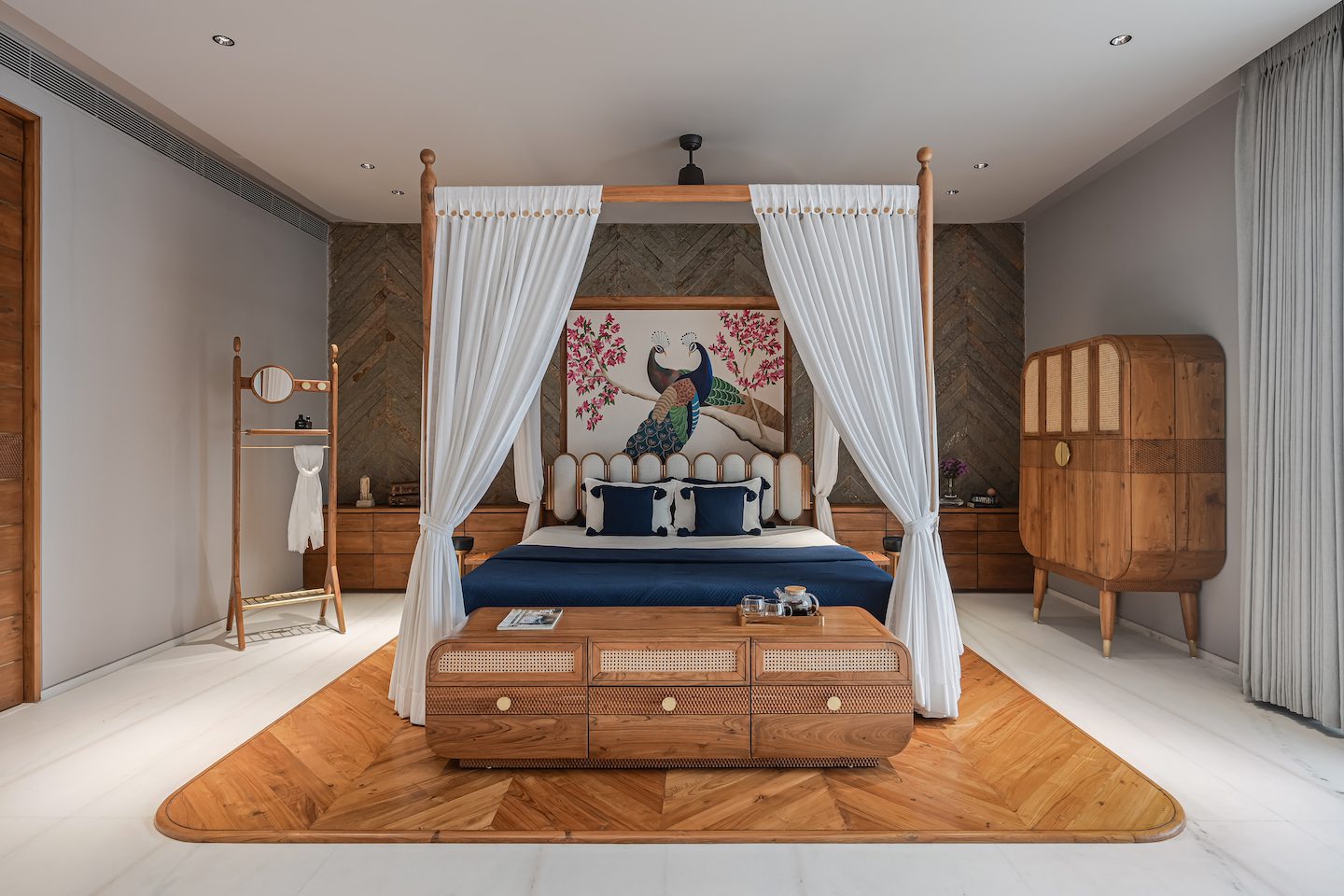
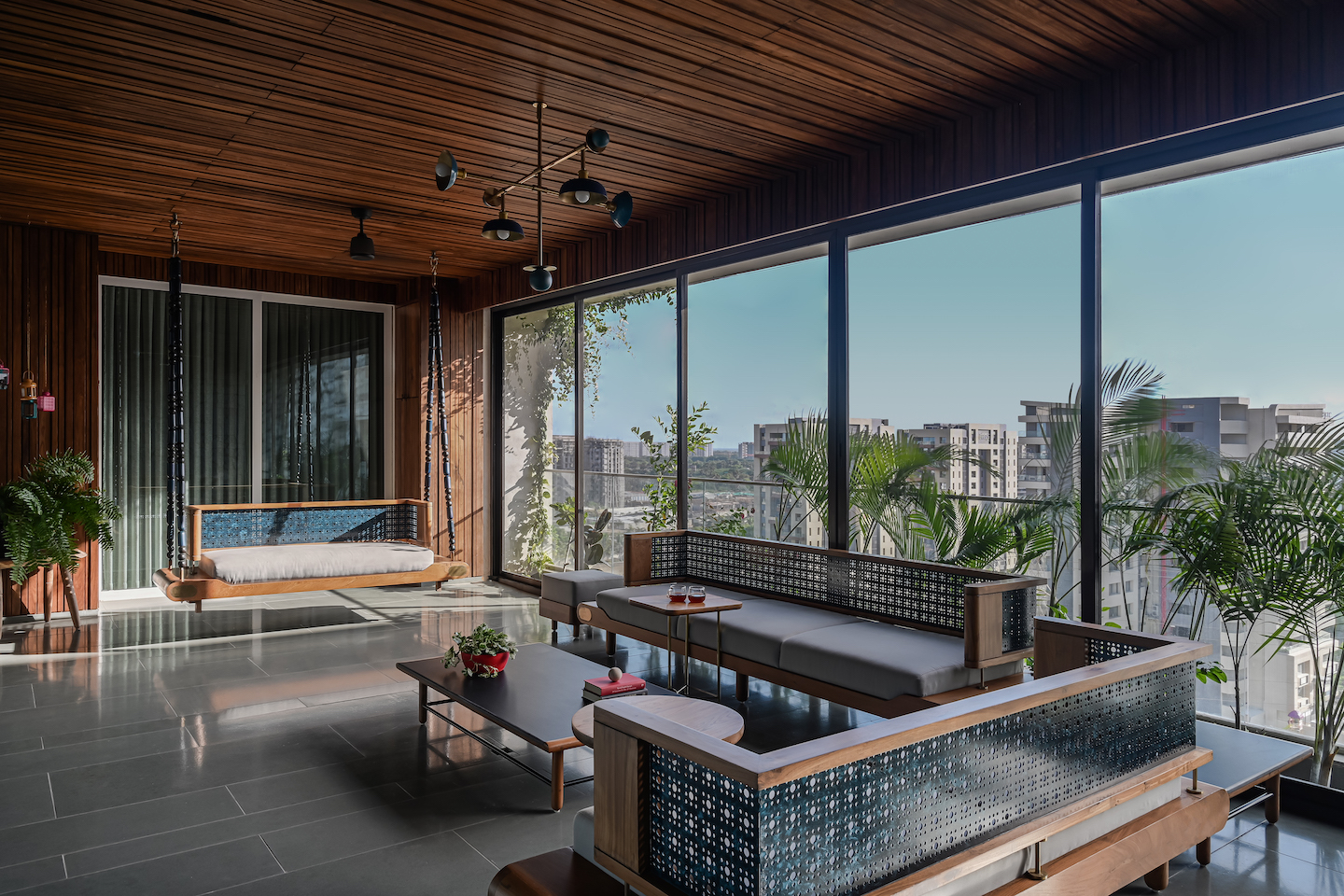 Towards the east end of the dining area lies the pooja room, meditation room, and kitchen, while the west side of the family room expands further to a common deck with a swing and an L-shaped seating arrangement. The furniture here is done in metal craft inspired by the baandhni pattern. The main bedroom occupies the southwest corner of the house. The design theme of this room leans towards the traditional rather than a modern language. A textured four-poster bed dressed in white drapery occupies the herringbone-patterned wooden floor. A striking painting of peacocks frames like an extension of the upholstered bed back.
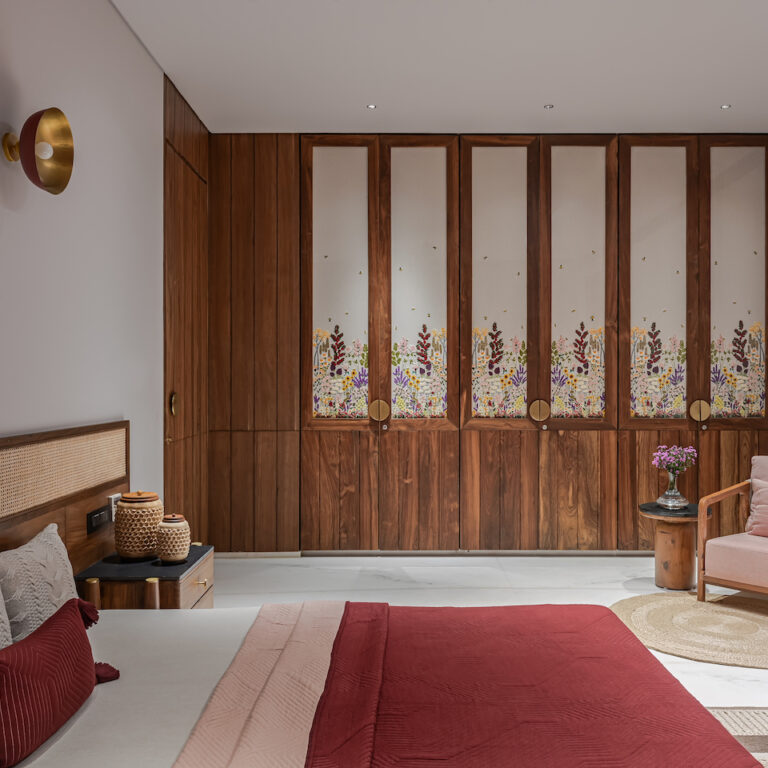
 The son’s and daughter’s bedrooms are oriented towards the north of the house and share a common balcony. The former is rather modern — weighted by burnt oak wood. The dynamism of the room is highlighted by a crimson bed back that contrasts with the black wall. Other pieces of furniture have muted natural wood tones and grey furnishings. The daughter’s bedroom follows the fundamental principle of wabi-sabi. The materials used here connect to the earth. An elevated platform holds a simply designed bed with an asymmetrical composition on the wall. The guest bedroom depicts a balance of traditional and modern. Three brass bowl lights create an elegant background for the wooden bed. A clean rectangular patch of woven rattan becomes the focal element of the designed composition. Hand-done floral embroidery work done on shutter panels of the wardrobe adds serenity.
 The material palette
The desire for being surrounded by nature translated into the use of natural stone — which became a statement material for this project. The bedrooms became personal spaces for each user and were requested to be designed differently from one another: one wanted traditional; other wanted modern. “This led us to alter the proportions of the materials used in each space while maintaining a consistent material palette throughout the home,” says Rachana.
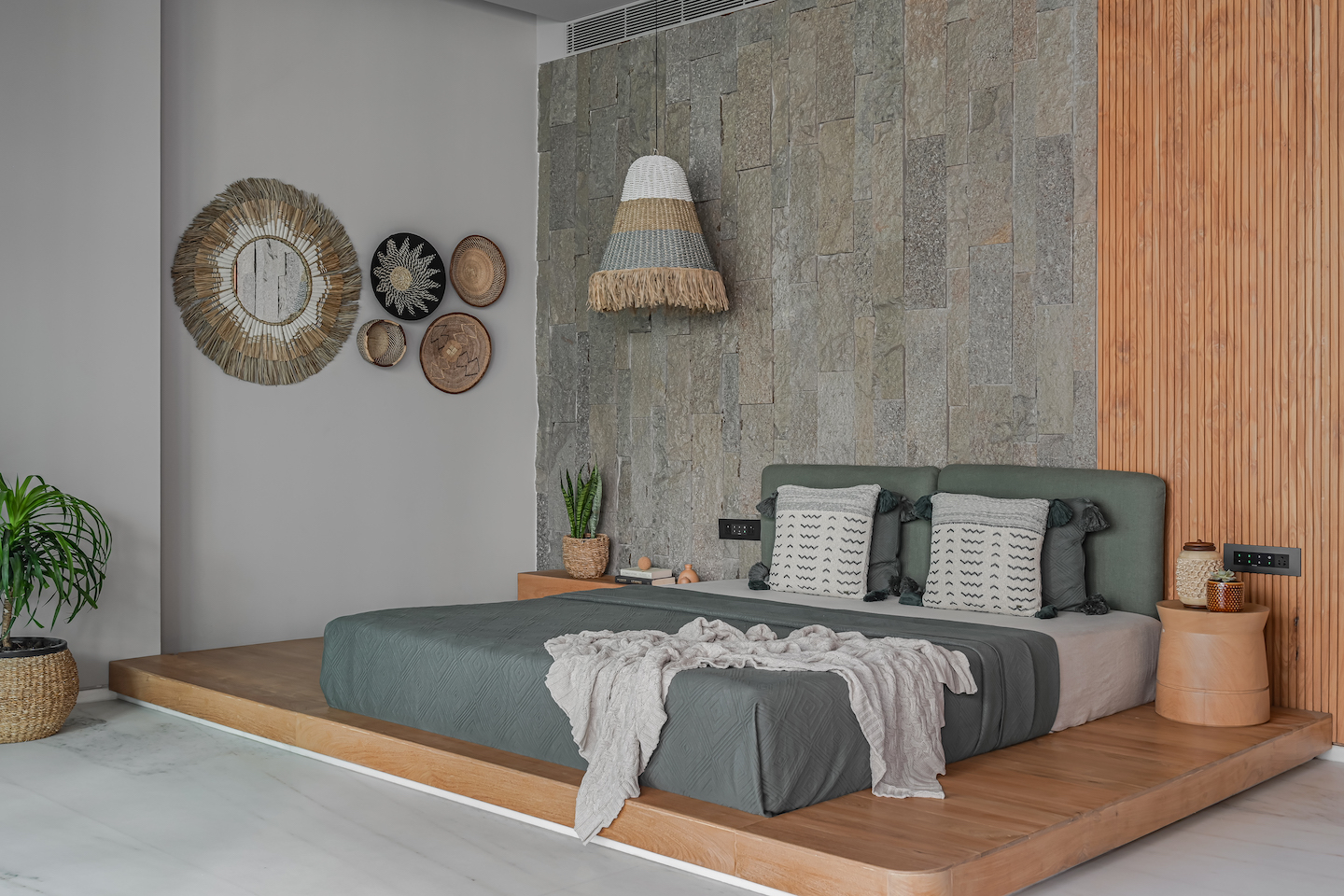 Indian porphyry stone has been used for cladding, while white Makrana marble sprawls on the floor. Solid wood for cladding and furniture, black granite for table tops, cane for furniture accents and brass for ornamentation complete the main palette. Linen, cotton, and genuine leather feature as upholstery and soft furnishings.
Fact file
Project: Van Vihar
Location: Surat
Area: 6,000 sq ft
Principal designers: Rachana Chovatiya and Ashish Chovatiya
Add a Comment