
Designed by Red Architects, Airavat’s architecture weaves into the landscape creating picturesque frames and dynamic spaces.
Curated by: Deepa Nair
Photographs: Fabien Charuau; courtesy Red Architects
The site
Located within the quaint Sahyadris, packed away from the hustle and bustle of Mumbai city, Airavat — designed by Red Architects — brings together stunning landscape and disruptive architecture. With the primary design intent to capture and frame picturesque landscapes, the home has been conceptualised as a blend of varying scales, from monumental to cosy and personal, while blurring the lines between the outside and inside.
The architectural intervention
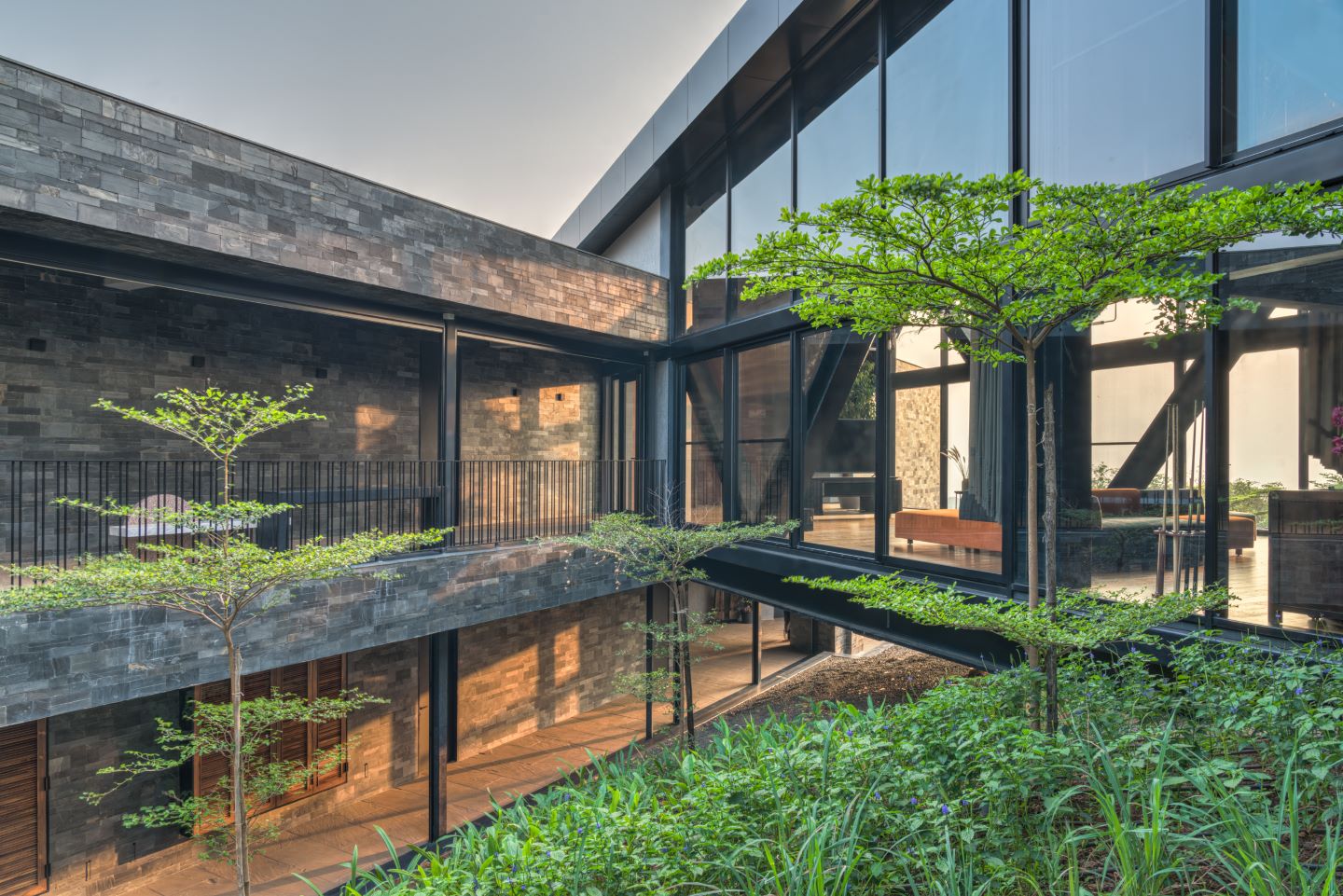
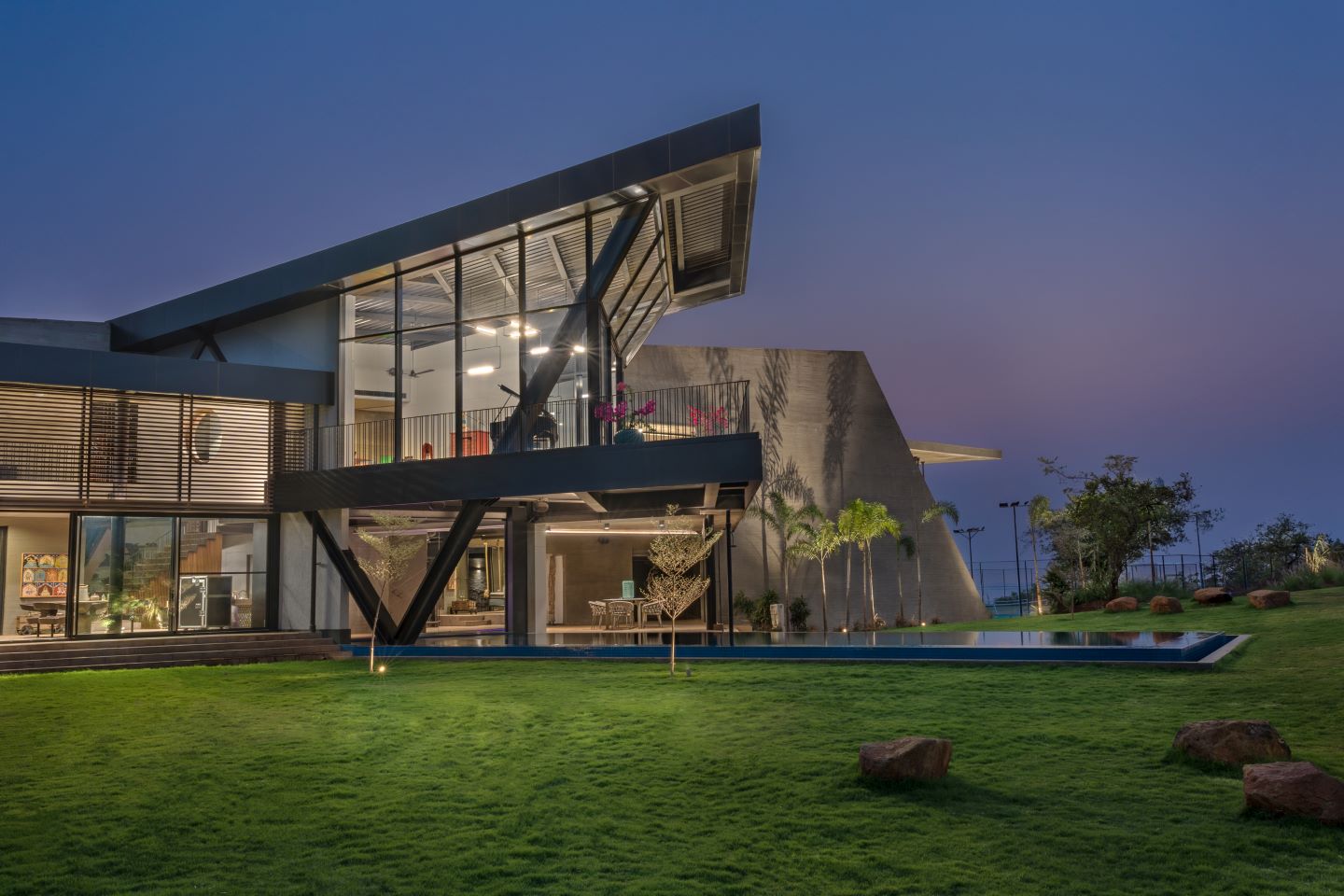
Keeping landscape as the primary compass for design, the various levels of the house are developed to respond to the natural terrain of the site. The architectural volume is composed of two parallel concrete walls that act as the main axes cutting across the house and seamlessly connecting three intersecting volumes. A suspended metal block and a cantilevered southern tip allow for the natural terrain to flow under it, uninterrupted. The three blocks are designed to reflect their respective functions as private spaces, public spaces and recreational spaces for leisure. The variability in the materials responds to the function of each block and endows it with a unique visual identity. For instance, glass and steel are used for the public spaces, and slate stone is employed for private spaces, both of which get anchored into the concrete spine. The structural members supporting the house are left intentionally bare to celebrate the beauty and the intricacies of concrete, melding with metal.
The spatial configuration
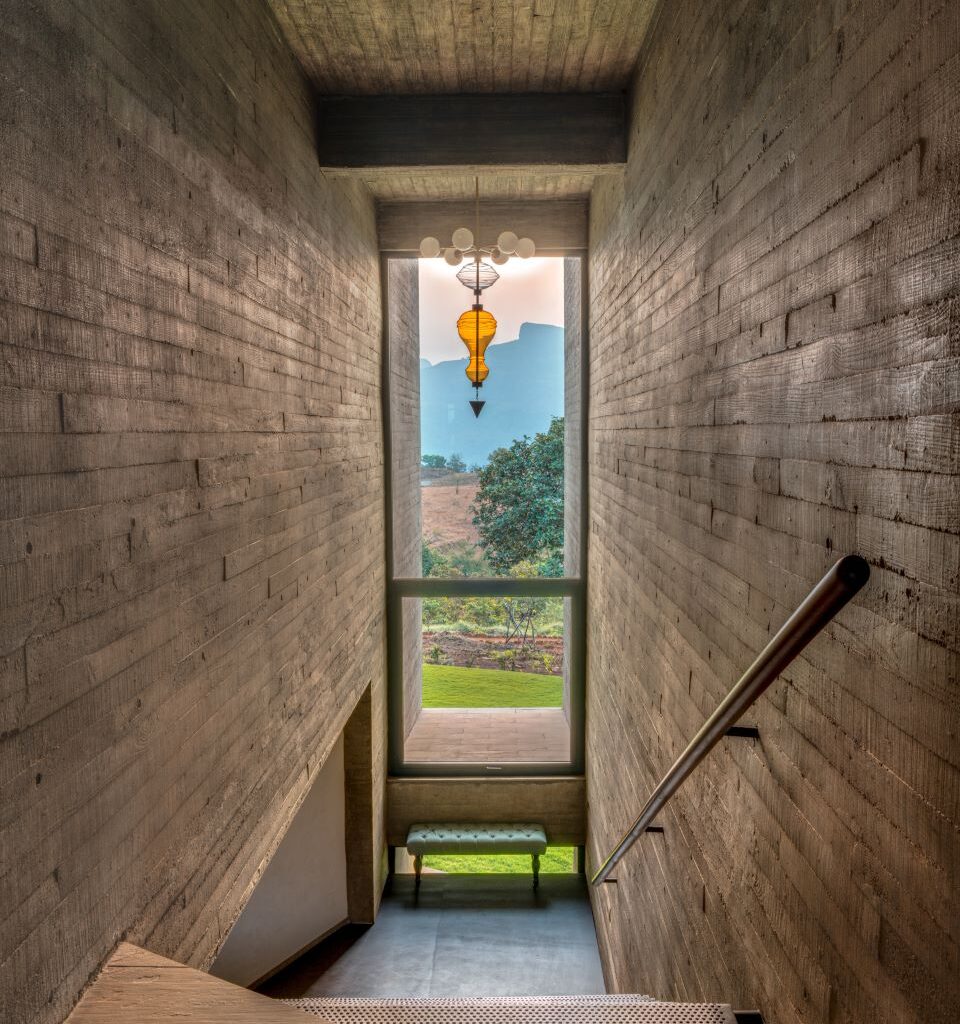
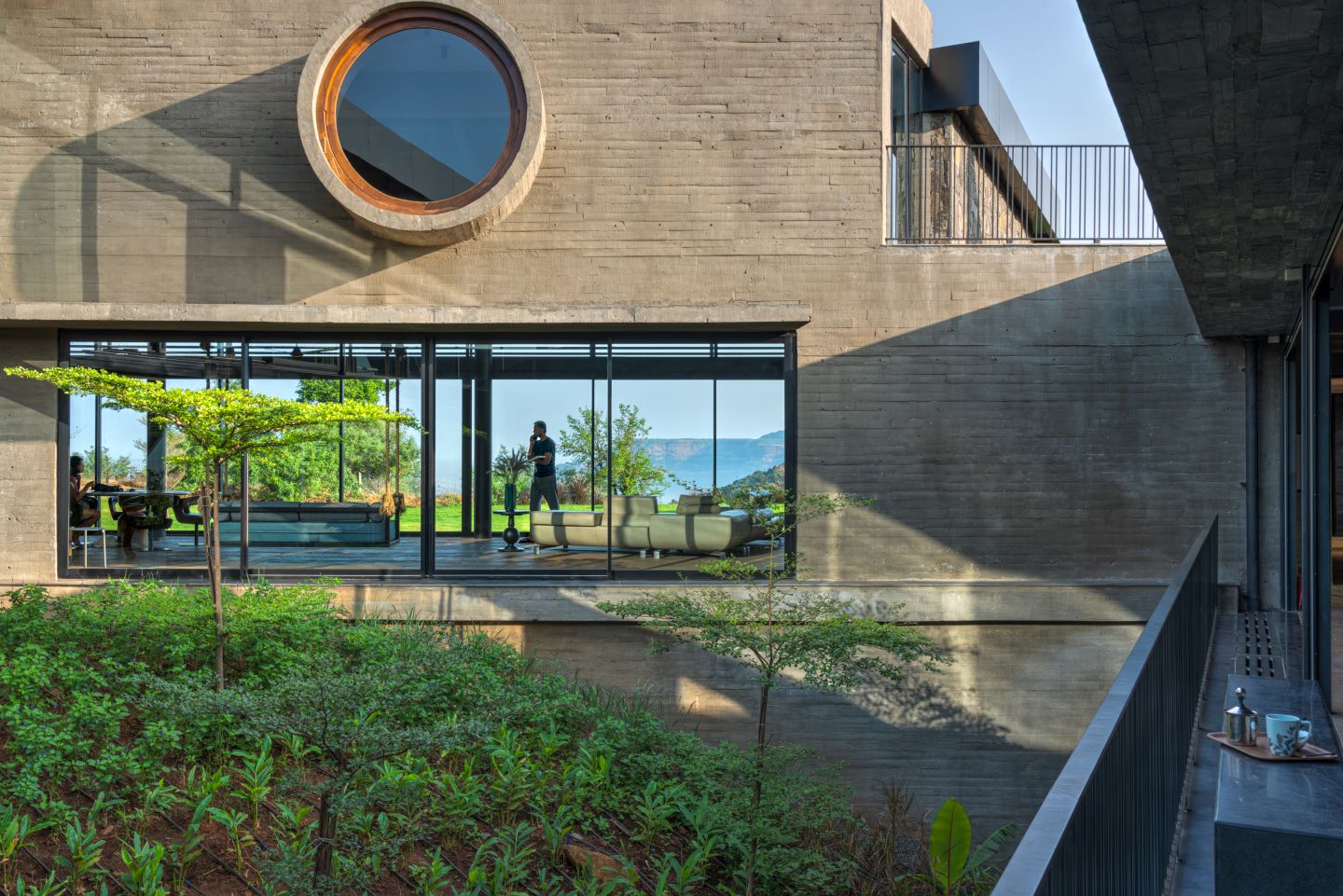
A triangular courtyard located in the centre of the house visually connects all the areas, adding an intimate human scale. The family den is placed at the very heart of the house, spilling onto the garden at the front. To add a sense of warmth, intimacy and comfort, the stone wall in the den area houses a fireplace that also manifests as a visual anchor. A perforated metal staircase is sandwiched between the two concrete walls that frame the mountain range peak in the background called the ‘Duke’s Nose’, creating breath-taking frames of the surrounding landscape. Melding functionality with dynamic aesthetics, the apron bar is placed such that it optimises the space beneath the staircase while creating stunning reflections of the pool in the stored wine bottles. The dining room showcases a 10-foot long terrazzo table infused with recycled glass bits, which was cast entirely on-site. Hidden away within the thickness of the wall is a secluded reading nook on the higher level, keeping the user visually connected through a circular window. As one moves into the residential block, the structural members of the master bedroom are planned to create column-free corners to craft uninterrupted panoramic views of the Sahyadris.
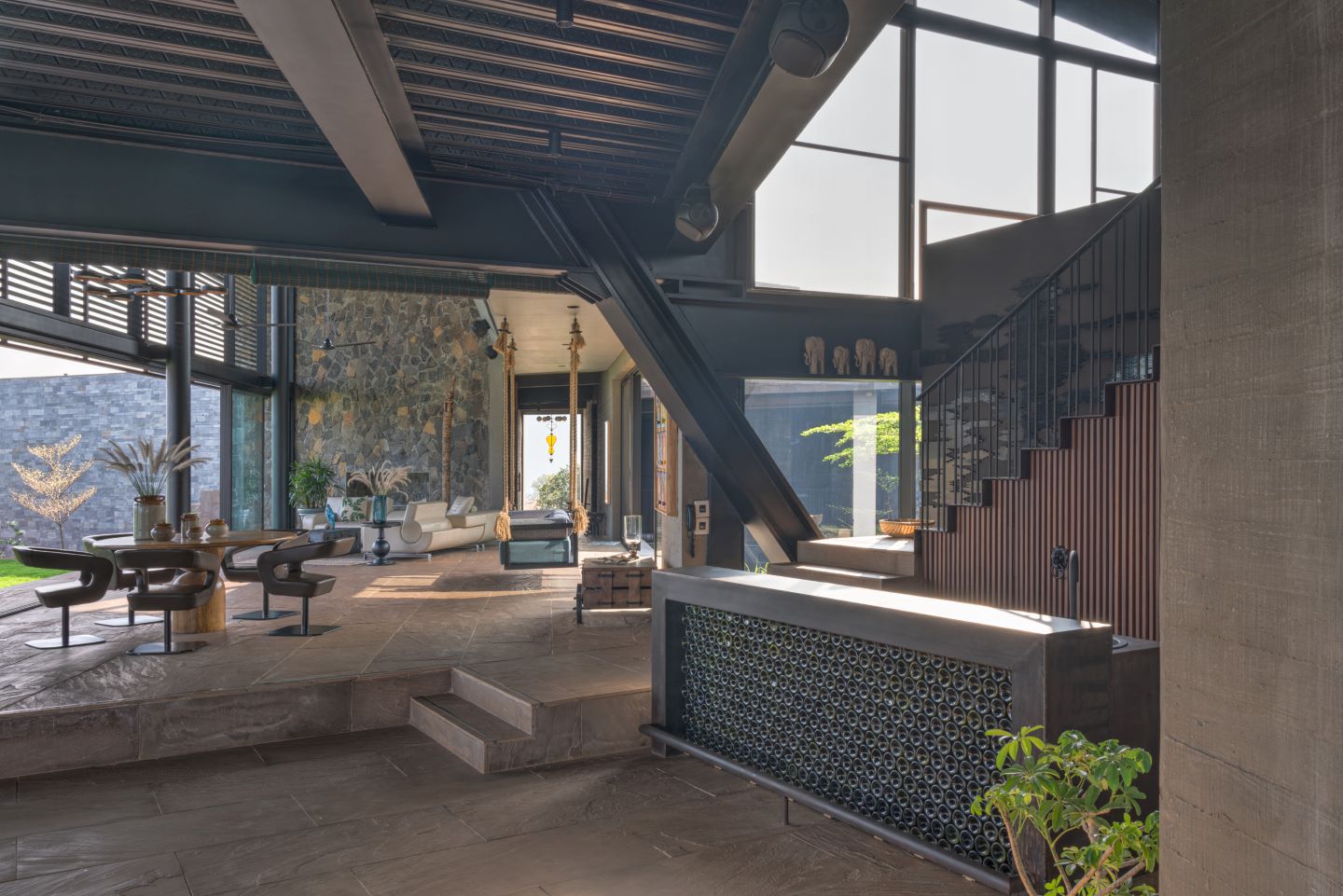
To offer an enhanced user experience, as one drives into the parcel of land, a floating lotus pond offers a breath of fresh air, while creating a pause point to direct the user towards the house. Welcomed with a large wing-like canopy, the large sliding windows in the space manage to make the transition from the outside to the inside seamless and smooth. As one navigates through the spaces, the circulation is designed to make the user feel as though the house travels with them with ever-changing views and dramatic design elements.
The green features
In an effort to be more local and less resource-intensive, the load-bearing walls on the site are built using the stones excavated from the site itself. The use of the local stone also adds a sense of warmth to an otherwise spartan architecture. The geometry of the house is composed of high ceilings, large corridors and windows planned across each other to create a funnel effect for the southwest wind, thereby minimising the need for energy-consuming cooling systems. Additionally, the use of large overhangs on the west verandahs and a partially covered swimming pool create a microclimate that allows the user to experience and enjoy the space comfortably, even in extreme weather conditions. The project addresses basic infrastructural challenges posed by the difficult terrain without compromising on the user experience or sustainability.
Fact File
Project: Airavat
Location: Khopoli, Maharashtra
Area: 30,000 sq ft (built-up); 7 acres (plot)
Principal architect: Apoorva Shroff
Design team: Shivam Patel and Rohit Jain
Add a Comment