

The House of Earthy Hues in Aluva blends in with the adjoining lush green paddy fields, and stands out with a modern facade. Urbane Ivy’s design for this impressive eco-conscious home is in perfect harmony with nature.
Curated by: Deepa Nair
Photographs: Out of Focus, courtesy Urbane Ivy

The site
Set amidst an endless green backdrop, the House of Earthy Hues designed by Urbane Ivy, is located in a calm suburban area of Aluva, outside the hustle and bustle of Kochi. Having all the advantages of a tropical site, the area is filled with trees with a view of green spaces from all the windows. The site is narrow with the short side facing the road on east-west axis. The approach road to the house is from a higher area, giving a total side view of the house even from a distance. The serene large green field on the back of the linear shaped plot was recognised as the major advantage of the site.
The brief
The brief was to design a simple tropical house with earthy elements that blends in with the lush green paddy field on the rear side. The building was intended to be a calm and peaceful place for the client’s ageing parents to spend their retirement life, as well as a playful and engaging space for the client’s young children.
The design intent
“The House of Earthy Hues is designed over two paradoxical ideas: a tropical face which blends in with the lush green paddy field on the rear side, and secondly to stand out with a modern facade complementing the suburban context of Aluva. This 2,500 sq ft eco-friendly residence is designed in a tropical site responsive method exploring all the advantages of the adjoining paddy field,” explains architect Vishnu AR, who heads Urbane Ivy with architects Nancy Mary Ann K, Nikhil AS and Anand Raveendran.
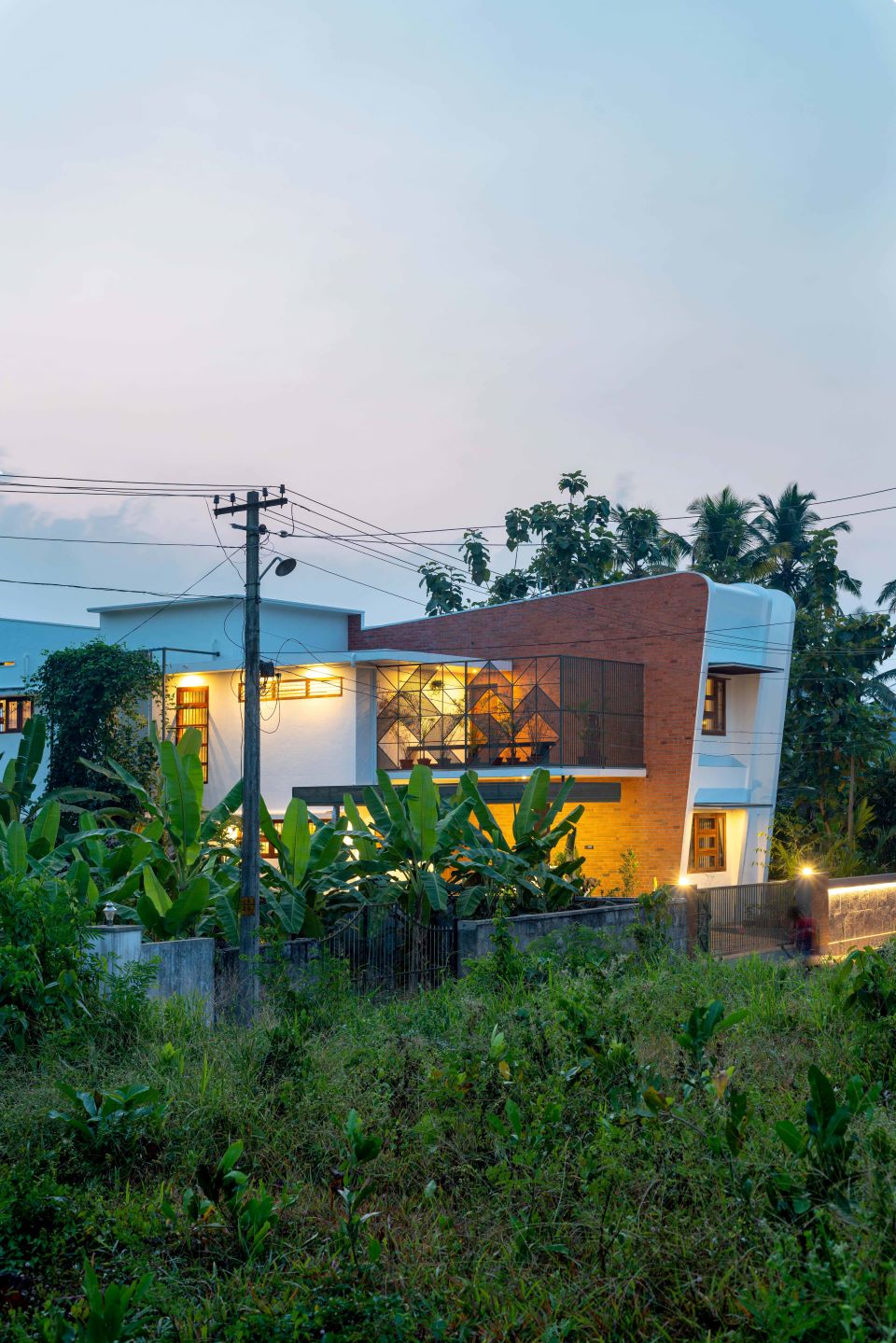
The project gets its name from the colour palette adopted in its creation — from what is around the house. The house is an exploration of how spaces can be defined with a framed view of the paddy fields. The design also emphasises on an open planning with free flowing spaces, and internal connectivity providing interactive spaces to overcome the limitations of a linear footprint.
The civil intervention
Since the house was going to be built adjacent to vast open fields, they are prone to floods come monsoon, hence the site was raised.
The spatial configuration
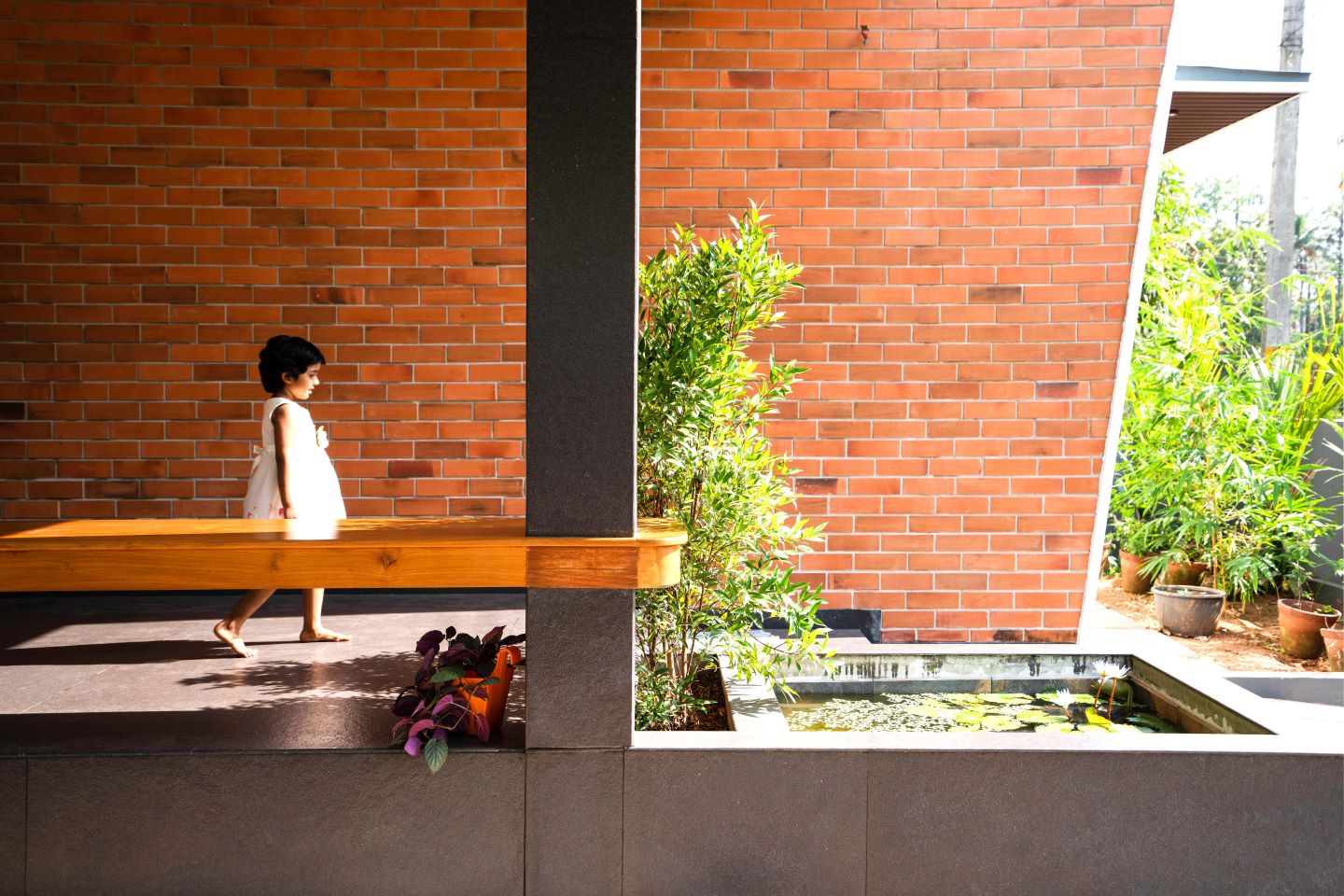
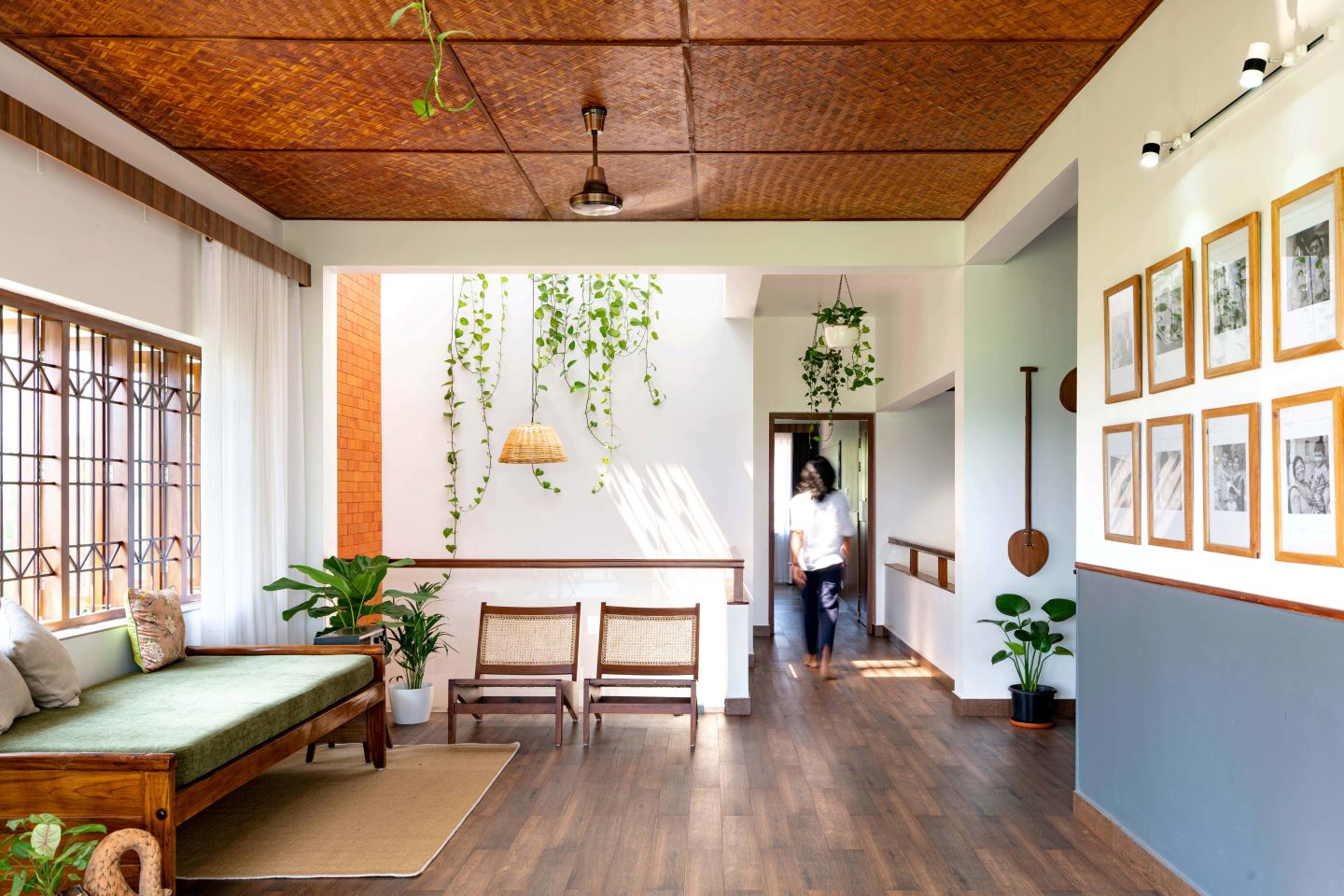
Split on two floors, the project has spacious living and dining areas, an internal courtyard, two bedrooms and a pantry space on the ground floor. The kitchen is also planned on the ground floor facing the open paddy fields, where ample airflow and natural light is guaranteed. The master and guest bedrooms, a family living space with an extended spacious deck area, and a private courtyard is accommodated on the first level. The connections to the outside are constant, in the form of small and large openings, semi-open decks and sheltered balconies.
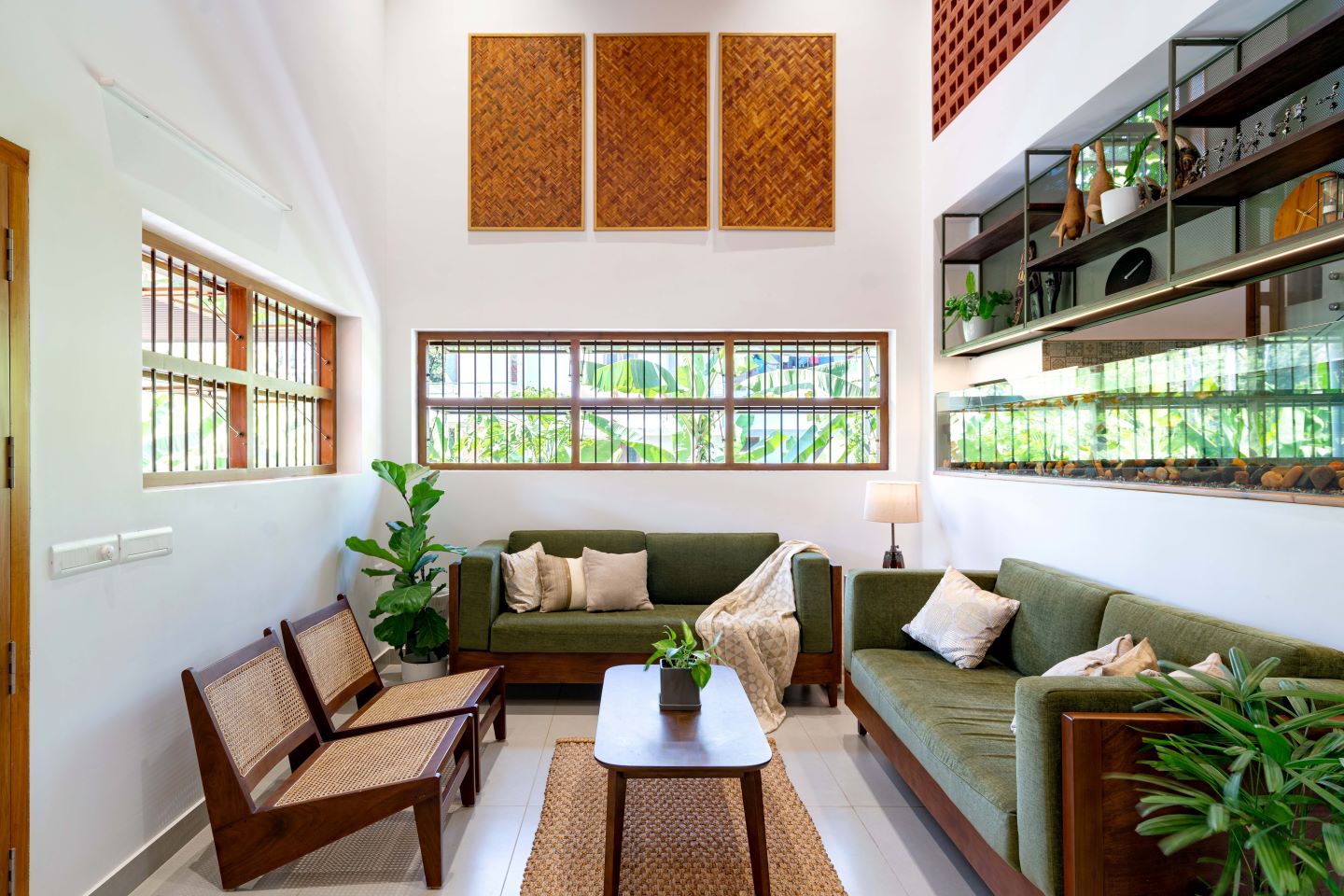
The architects have deliberately planned the massing of the house by differentiating the public and private areas. Ceiling volumes and textures were used to create zones in the whole structure. “The internal connection is increased by connecting floors through all the open areas which is spread around the plan. Although the site had its own linear footprint and limitations, the movement pattern of the house starts and ends with open spaces in all directions,” explains Nancy.
The material palette
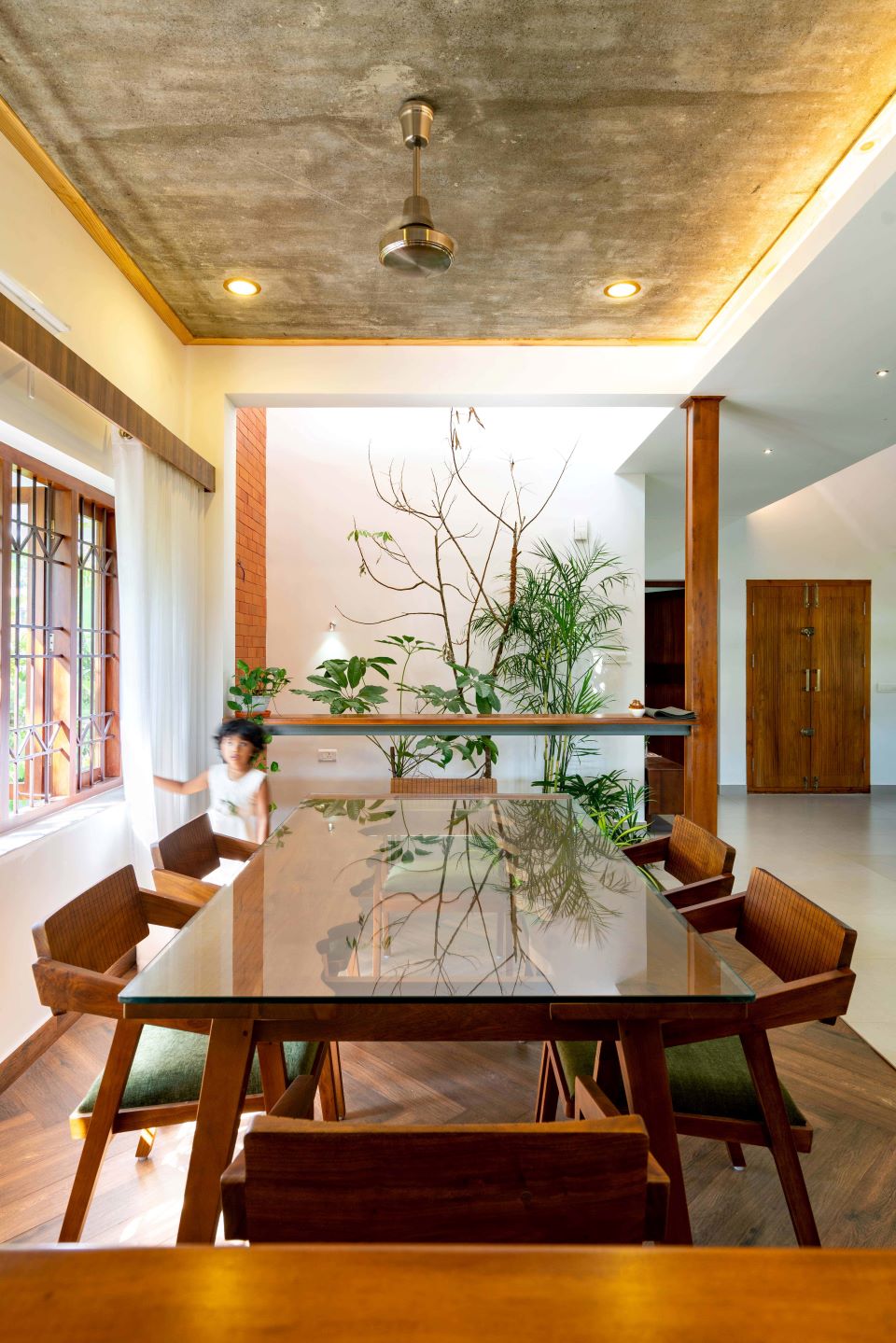
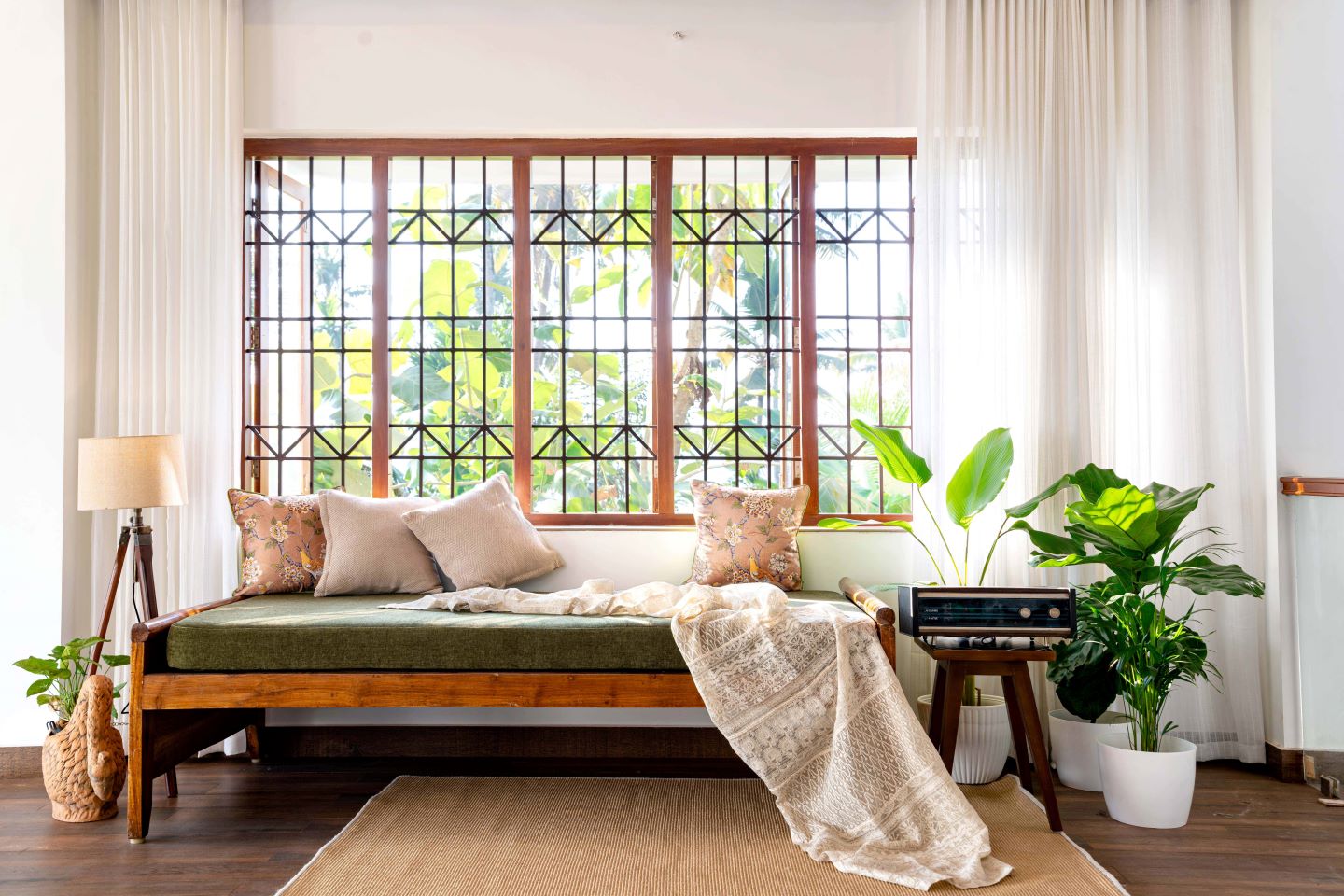
The building uses natural brick and exposed concrete as the basic external finish with plastered walls in the internal spaces. A combination of exposed brick, concrete and metal has been used proportionately to bring out a unique facade in earthy tones. Metal works and wood is used for the details inside which renders a wood-brown, white and green theme to the whole house. Custom making each furniture pieces was also a part of the plan to achieve continuity in design and materials.
The challenges
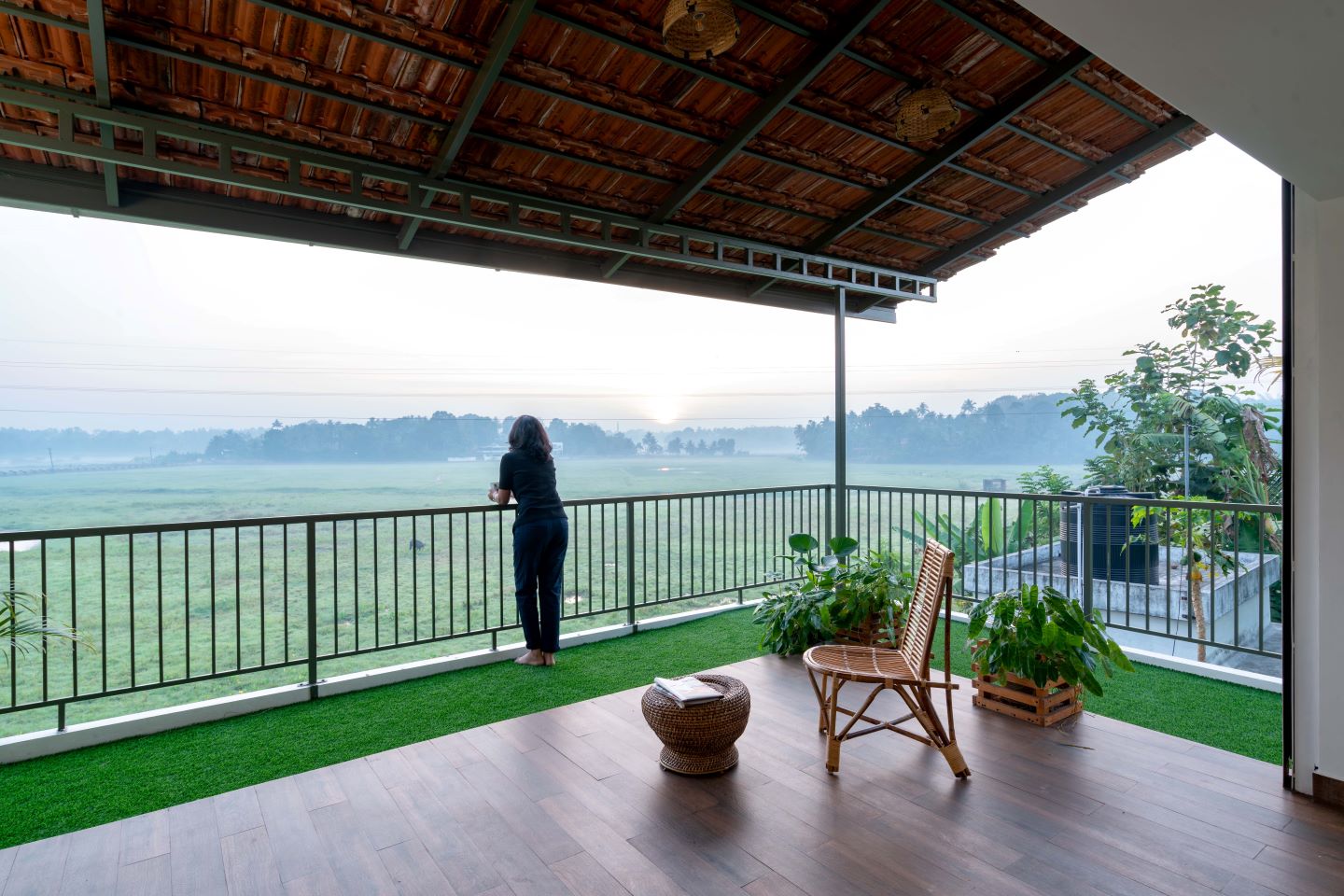
“Utilising the vast field in the rear side was one of the primary decisions made while designing this project,” says Nikhil. “The major challenge was to bring the green paddy fields right into the house, keeping the privacy for all the bedrooms intact. Bringing in maximum daylight and keeping all the spaces ventilated was another important criteria,” he adds. This was sorted by providing large openings facing the paddy fields along with a large balcony with automatic rolling perforated shutters. During the day ample wind and light enters through all the openings, while at night the rolling shutters can be closed and locked providing privacy and safety to the clients. Wind still escapes through the shutter’s perforations. Stack effect (for ventilation) is also provided inside the house for hot air to escape, making the house cooler even during the summer months.
The highlights
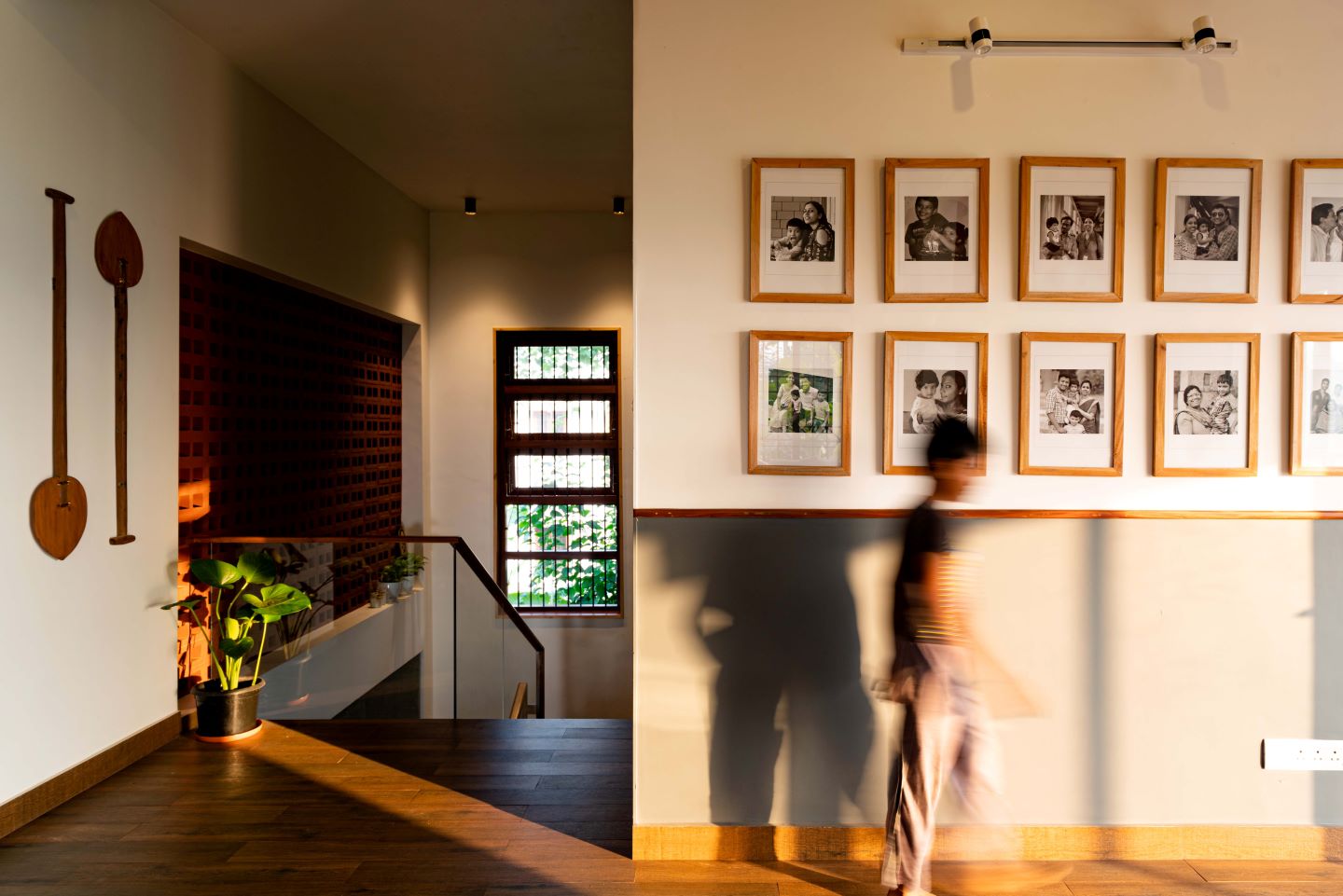
A major highlight of the house is the slanted exposed brick wall which is designed to stand out from the context, yet giving a tropical touch to the residence. The design has also attempted in bringing nature inside, both with the use of contextually detailed skylights and the jaali which is the breezeway that facilitates natural cooling of the interiors. This is complemented with a distribution of internal gardens and pools that work together to bring in a magical play of light.
The takeaway
“The site and its peculiarities are the base of any design. Being able to not change the site and surroundings, but to add its elements in the design gives the best solution for any project. Especially in the case of ‘House of Earthy Hues’, deciding to make the whole house focus on the vast field gave a whole new perspective to the design,” asserts Anand.
Favourite aspect of the project
The architects disclose that although the open balcony on the rear side is the major attraction of the house, the house as a whole gives the satisfaction of having done justice to the site. The satisfaction they saw on the clients’ face was encouraging. The best experience of this beautiful home, they say, is sitting with a cup of coffee at the deck with the whole wide view of the green paddy fields and listening to nature!
Fact file
Project: House of Earthy Hues
Clients: Rehanesh and Neethu
Location: Aluva, Ernakulam, Kerala
Area: 2,500 sq ft
Principal architects: Vishnu AR, Nancy Mary Ann K, Nikhil AS and Anand Raveendran
Add a Comment