

Shiraz Jamali Architects design the 3,500-square-foot pan-Asian restaurant Zenmai in Mumbai to cater to cosy daytime brunches and fine dining at night.
Curated by: Tanaya Pednekar
Photographs: Ishita Sitwala, courtesy Shiraz Jamali Architects


The brief
Zenmai, owned by three entrepreneurs with an obsession for good food, were eager to experiment with an array of flavours of modern Asian cuisine. For this, the main idea was to stay clear of traditional oriental styling for the space and use Asian philosophy and design principles as an inspiration. Another important consideration was to enable the transitioning from a brunch hotspot during the day to a fine dining experience at night.
The design intent
This pan-Asian venue, which offers a fusion of Japanese, Chinese and Thai fare with a touch of Indian and Nigerian flavours, pursues the Japanese philosophy of wabi-sabi and the art of kintsugi. The former celebrates the imperfection in rustic simplicity and understated elegance, while kintsugi involves piecing broken pottery back together with gold — built on the idea that in embracing flaws and imperfections, you can create stronger, more beautiful art.
The spatial configuration
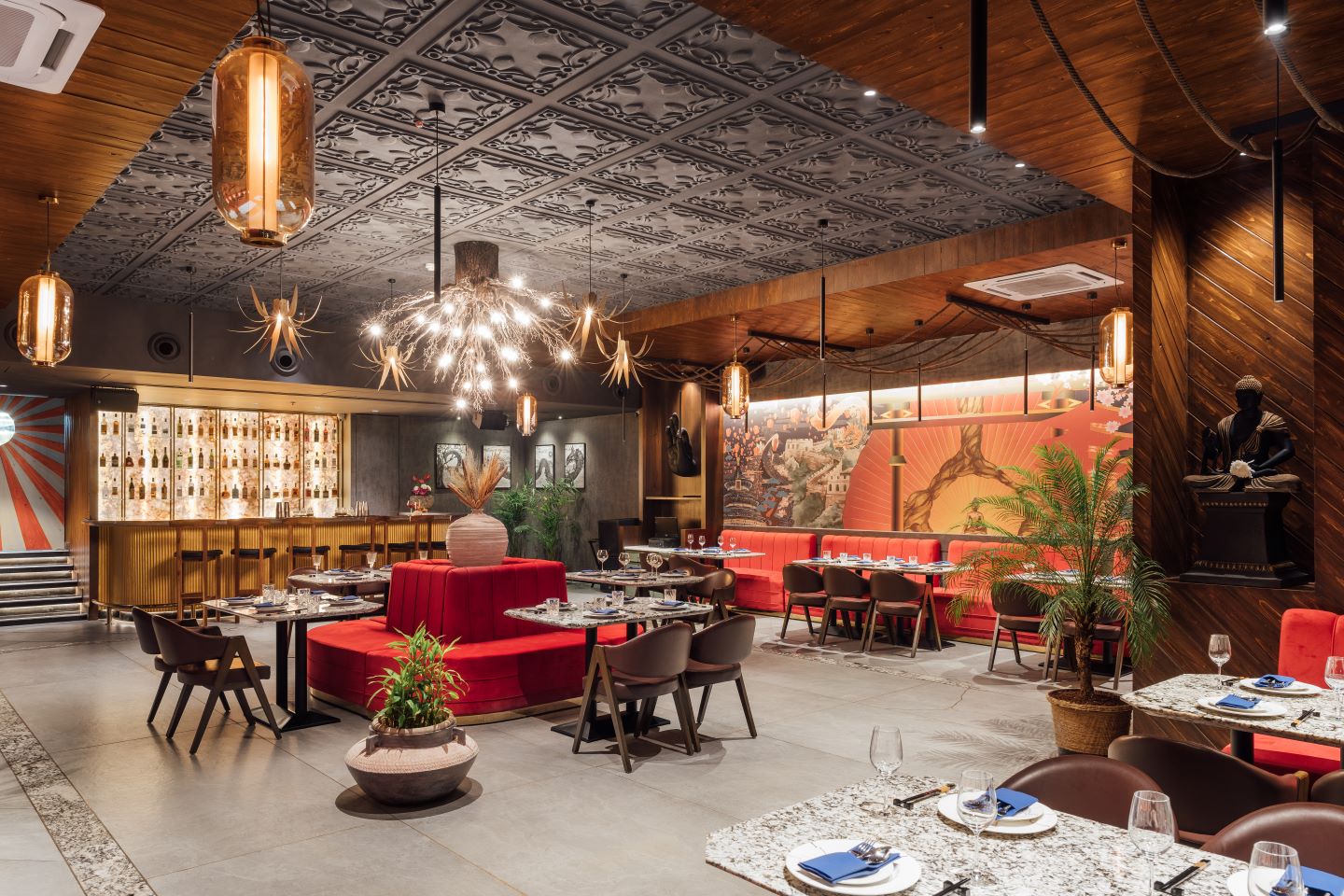
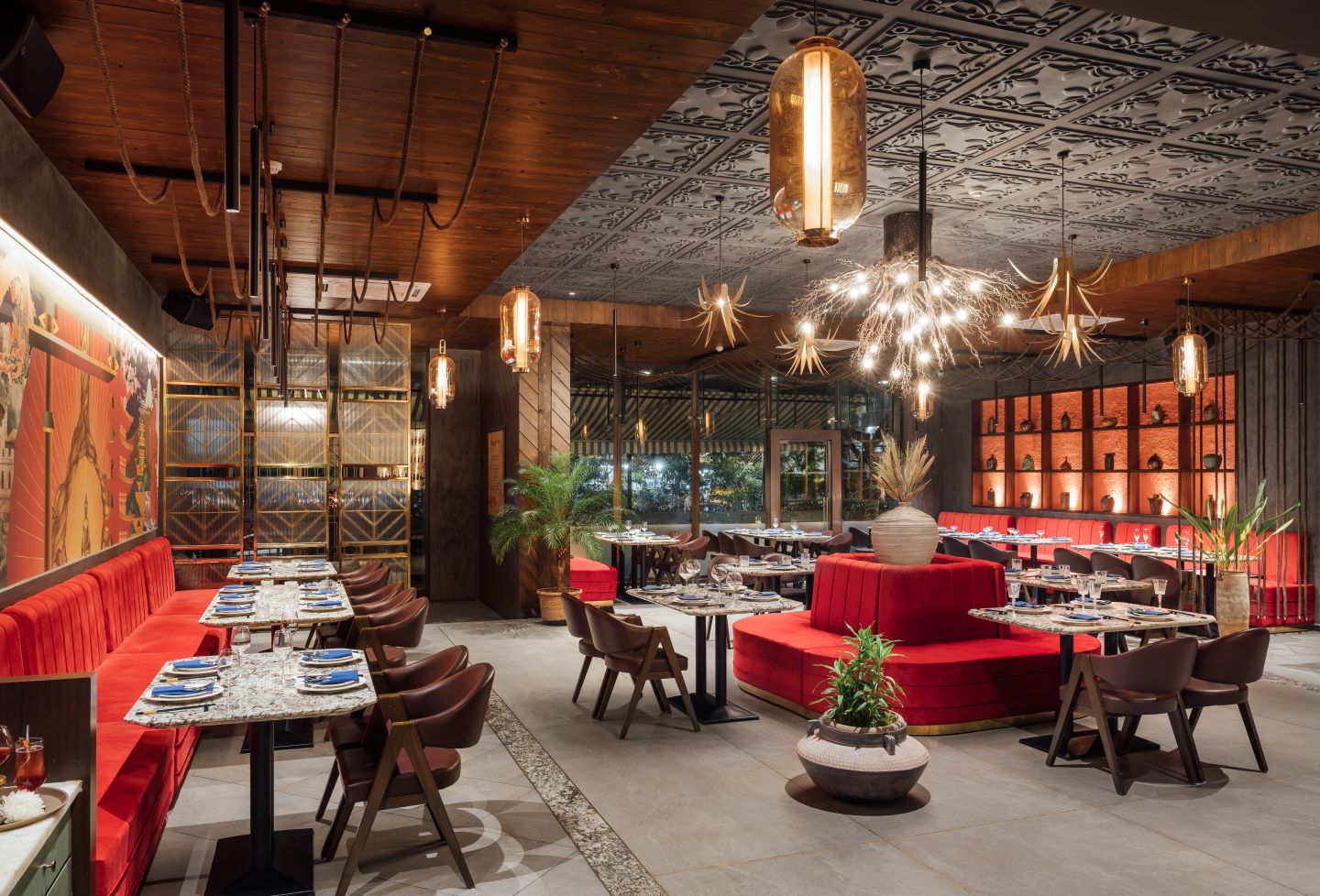
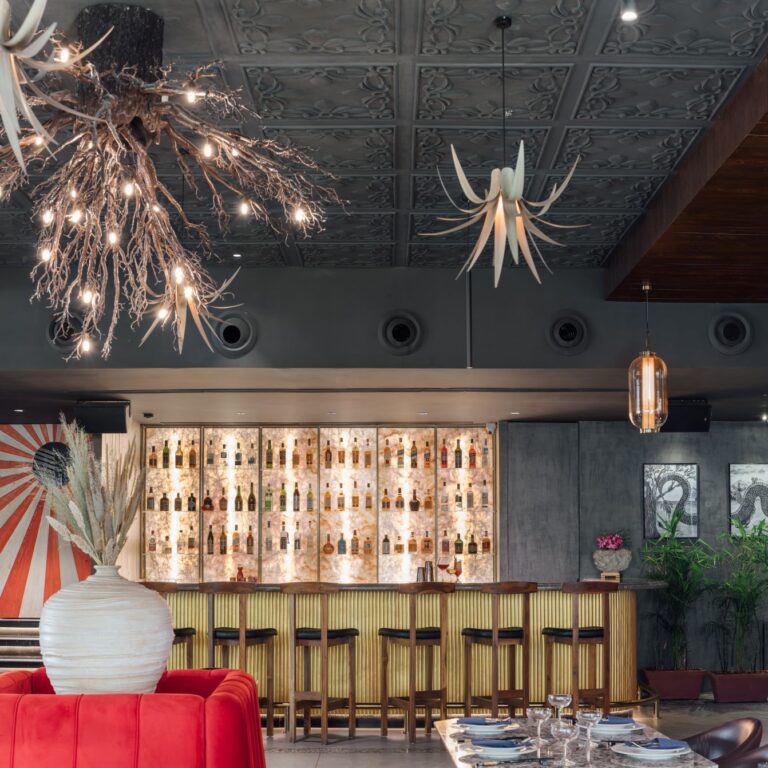
Upon entering, you walk directly into the large and airy outdoor seating area enveloped in creepers and palms, with a majestic statue of Buddha as the highlight of the space. An art deco-inspired glass door shows the way to the waiting area, which is screened from the rest of the restaurant with a geometric brass and fluted-glass partition. Abundant natural light flows in and shadows throughout the day alter the mood within. The dining section, with its ceiling detailed in dark grey ornamental mouldings, is further highlighted by suspended custom-made rope light fittings. On a wall, a bespoke mural drawn by one of the trio of restaurateurs, stretches across the length of the room. It subtly hints at the restaurant’s offering with the use of bright and bold hues and imagery that immediately recalls Chinese and Japanese landmarks. The attention to detail and handicraft is continued along the other length of room with a showcase of handmade artefacts. Known for its beauty in imperfection, onyx was the material choice for the back of the bar. Spanning the entire width of the bottle showcase, this natural masterpiece focuses on earthy hues and organic patterns.
The material palette
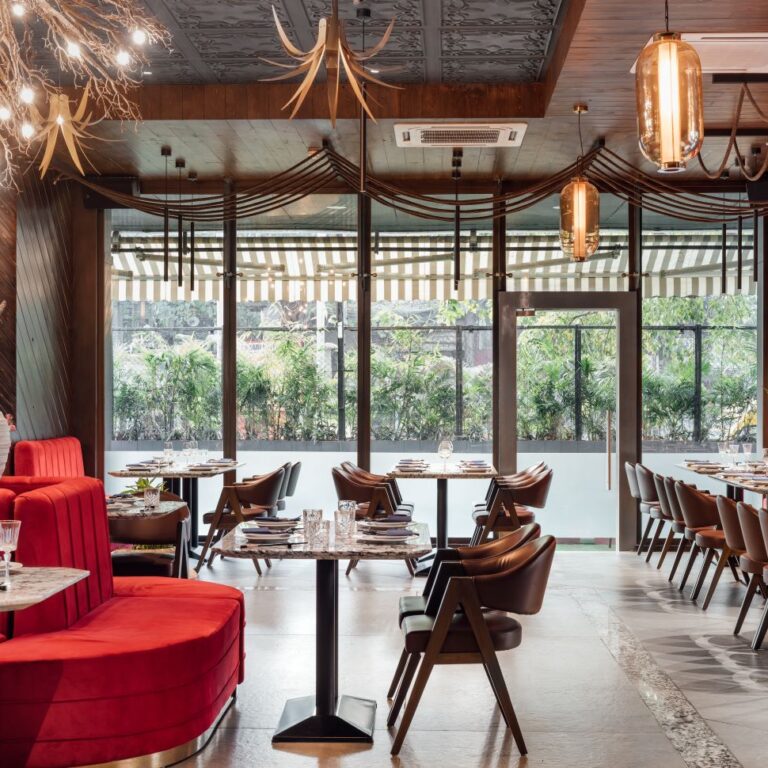
The large modern glass facades are balanced on two sides by the rustic stone textured tiles and textured paint in a concrete finish. Along with stained wood ceilings and charcoal-coloured moulded ceiling panels, the dark walls and floor manage to trap the right amount of light in the space. A lively feel is added by the vibrant custom-designed wall mural, bold red sofas and stark white granite tables. The dark brown upholstered chairs balance the colour scheme. Polished brass is used as a highlight accent in partition screens, base of the sofas and inlay in the floor tiles.
The challenges
“The ceiling was the part that was the most challenging and also the part we enjoyed designing the most,” states Shiraz. Here, classical moulded ceiling panels have been used in combination with rough wood, while thick jute rope looped overhead, above the tables, ‘lower’ the ceiling height and make the space feel cosy and comfortable.
The highlights
Based on the Japanese philosophy of wabi-sabi, various design details seen around the restaurant catch your eye: the broken tiles that appear from the entrance to the dining area with gold-coloured grout that emphasises the faults and damage, the abrupt ending of inlay borders in the flooring, the old chipped pots displayed on shelves…
Fact File
Project: Zenmai
Client: Kunal Sikhwal, Rahul D Gianchandani and Darshan Desai
Location: Mumbai
Area: 3,500 sq ft
Principal architect: Shiraz Jamali
Design team: Mammen Paul
Add a Comment