
Artistic and awe-inducing… presenting eight wonderful handcrafted features which make these projects truly unique.
Designed by: Inverted Banyan Studio
Photographs: Tejas Shah, courtesy Inverted Banyan Studio
Curated by: Rupali Sebastian
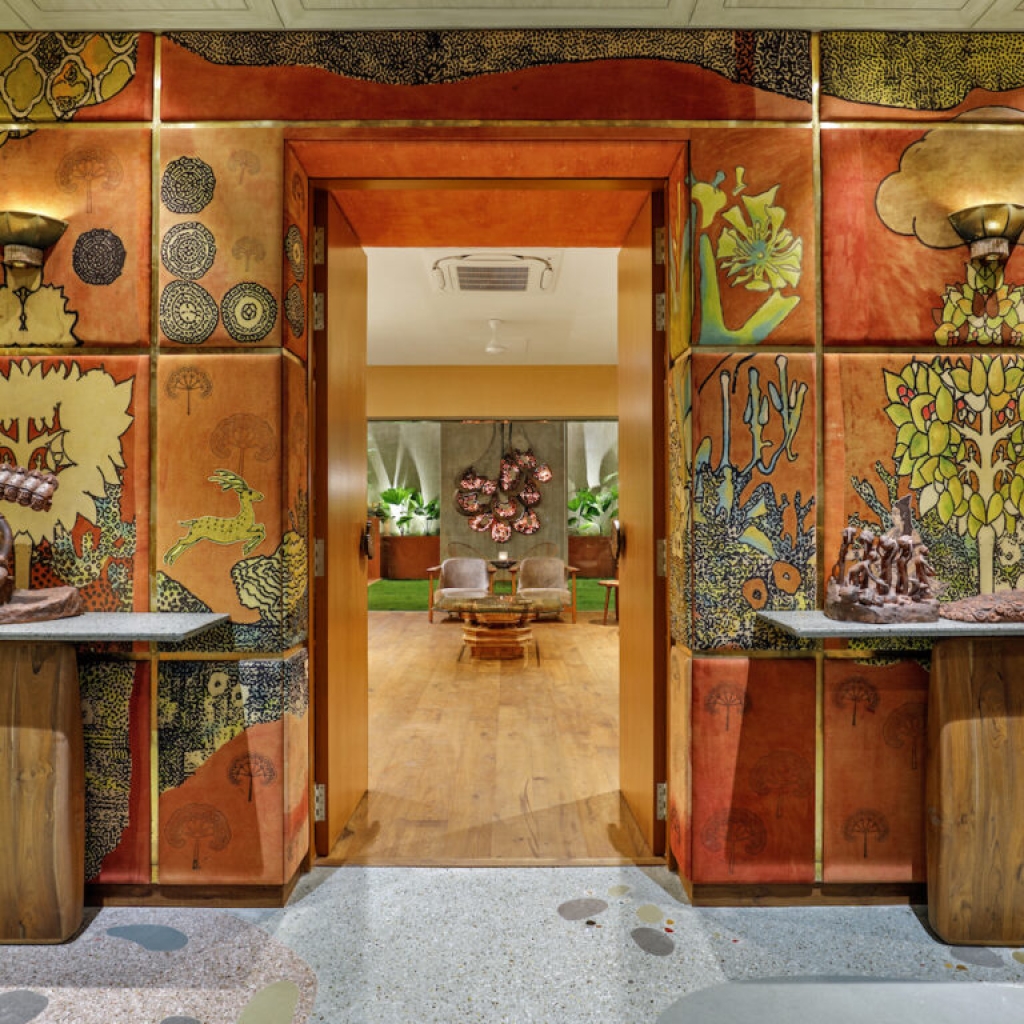
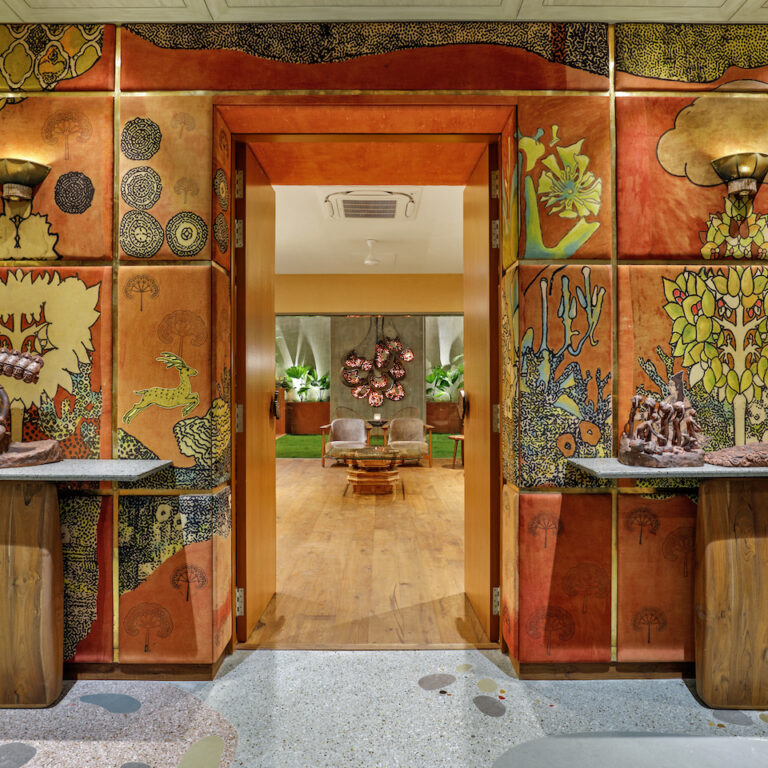
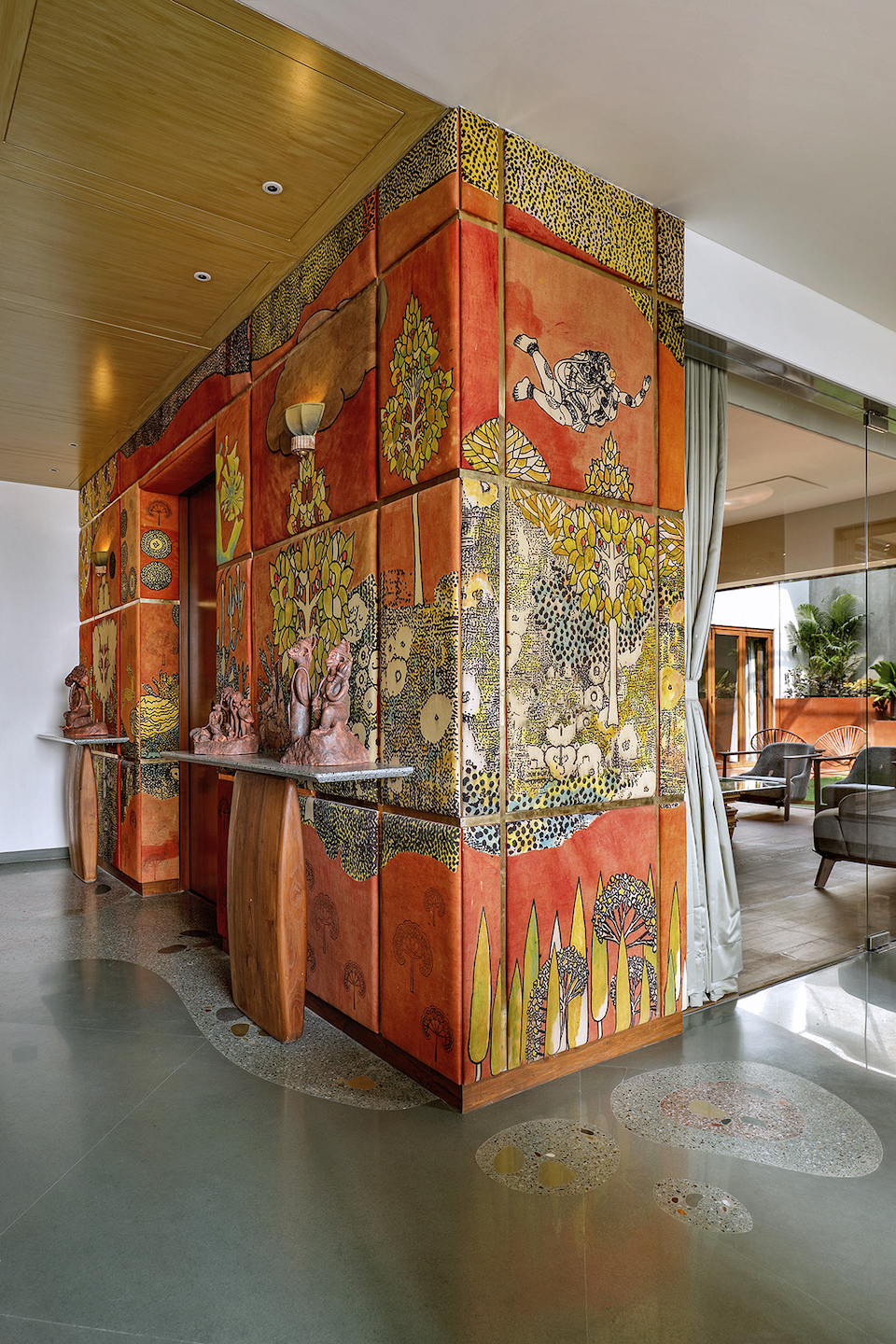
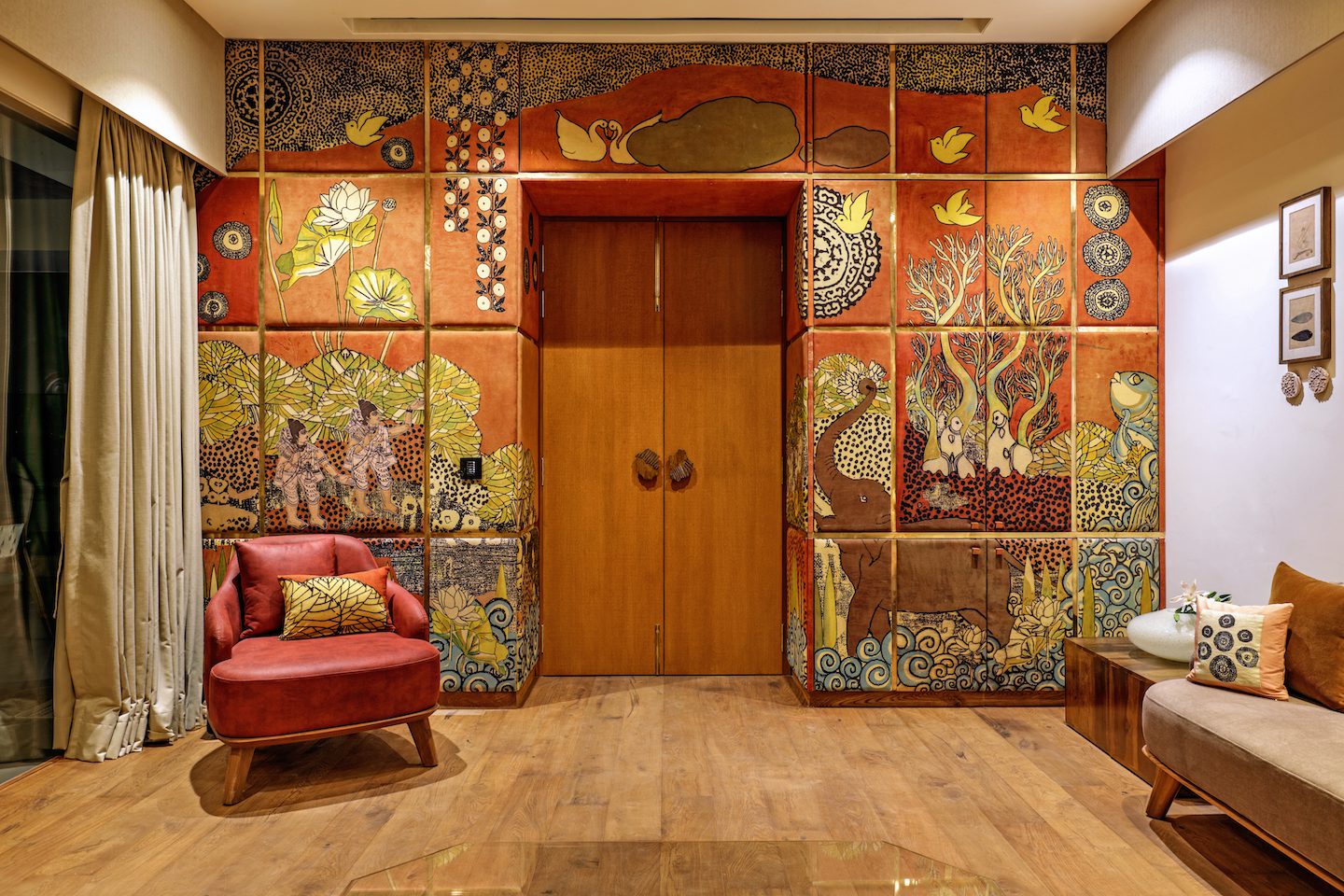
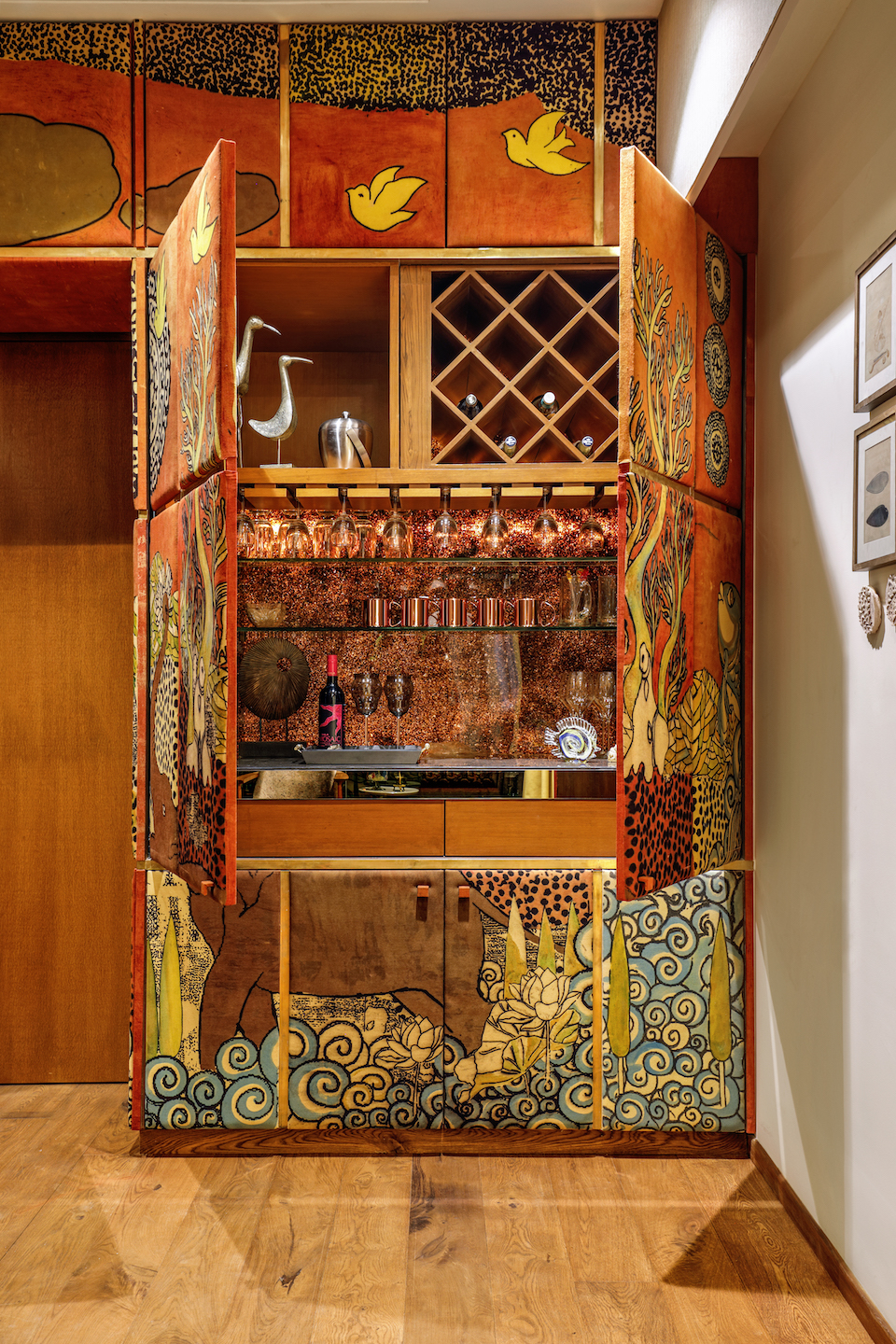
This urban penthouse references the vernacular idiom to create a living environment that is modern in outlook, yet rooted in tradition. The common wall between the foyer and formal living room shoulders a large part of this concept. It features bespoke textile panels that present a fresh take on wall coverings. The textile art was created using vegetable dying techniques depicting scenes from the Ramayana. Small rectangular panels were made and put together in a grid format separated by brass strips. This striking art wall camouflages an awkwardly-placed plumbing duct on one side and a hidden bar on the other. The warm colours and beautiful Indian motifs add to the welcoming effect in the foyer area and lend a festive feel to the formal living room.
Project: Prayag – A house with a soul
Location: Vadodara
Principal architect: Aditi Katkoria
Designed by: Masons Ink Studio
Photograph: Tharakan Photograph, courtesy Masons Ink Studio
Curated by: Tanaya Pednekar
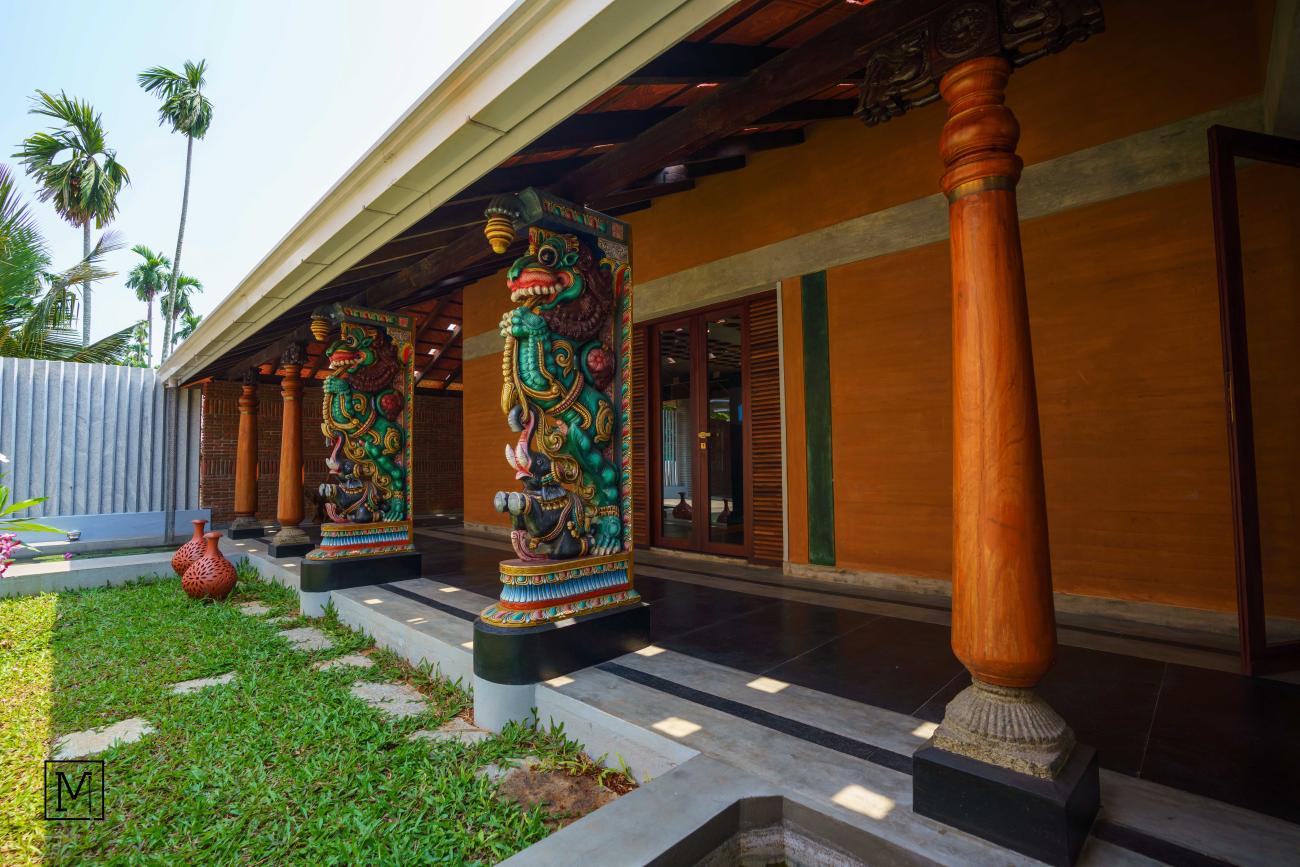
Located in Cochin, The COurtyard is a co-working space that transports you away from the buzz of the city into a calm and peaceful environment that inspires creativity and concentration. A project aims to challenge the notion of mud as a primitive and perishable material. It is a contemporary take on the vernacular architecture of Kerala. The sloping roof rests on the wooden columns in the verandah. Two yali columns aligning with a door opening are used as well. Carved from wood and sourced locally, they add a traditional vernacular character to the space.
Project: The COurtyard
Location: Vazhakala, Kochi
Principal architects: Sri Devi Changali and Rosie Paul
Designed by: Studio Crypt
Photographs: Mandeep Singh Bains, courtesy Studio Crypt
Curated by: Tanaya Pednekar
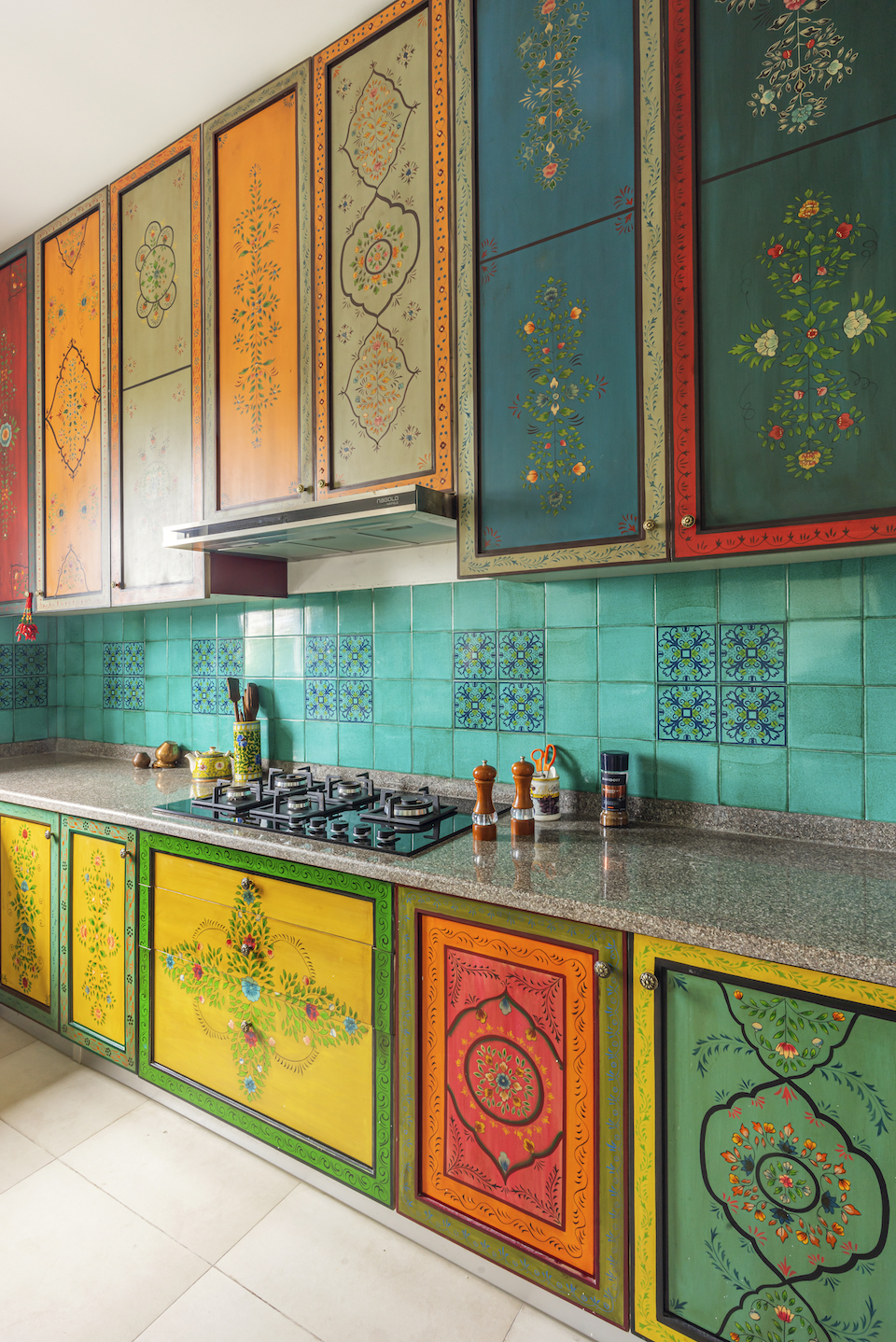
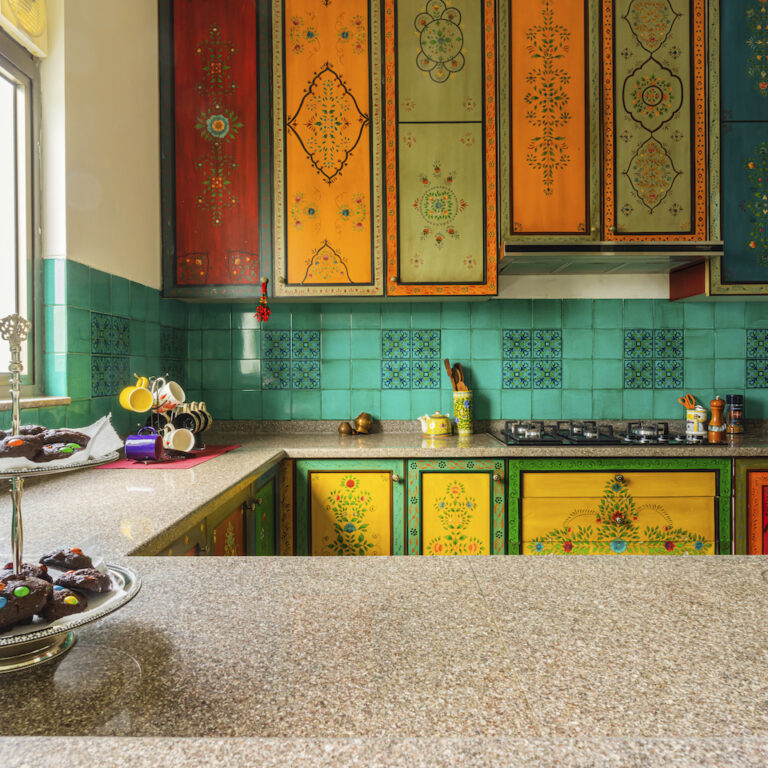
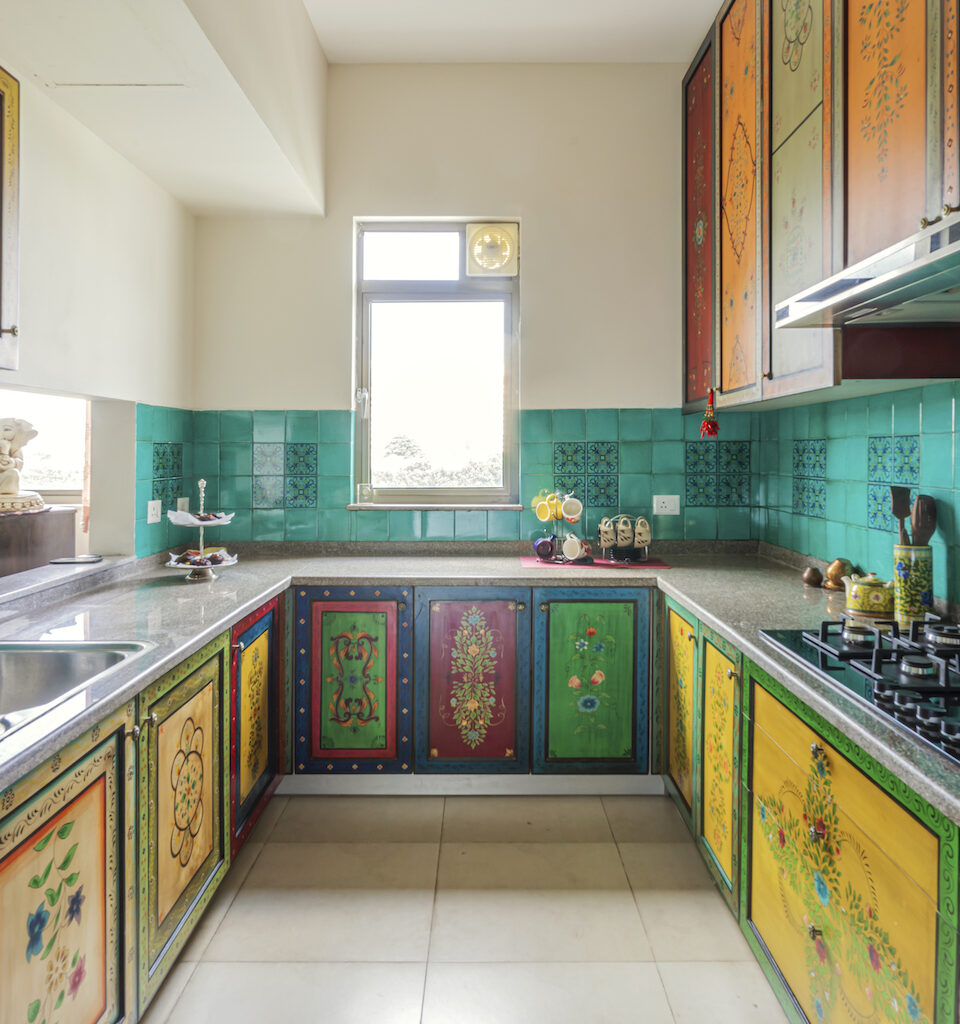
Spread across 6,000 sq ft, ‘Markat’ is a serene home that skilfully incorporates indigenous art forms as a part of its architecture and interior environment. The kitchen shutters illustrate this design approach beautifully and vibrantly. Each shutter panel was given to a different artisan from Jodhpur, with a standard instruction of painting florals. Since there was no restriction on colours, one sees peculiar tones of olive, fuschia, and teal together on the strangely comforting kitchen canvas. A protective industrial-grade lacquer varnish seals the hand-painted coats, giving the shutters a matte-dated appearance. The handmade glazed tiles back-splash in hues of aqua adds another dimension to the already vibrant colour palette.
Project: Markat
Location: Gurgaon
Principal architects: Shivani Khanna and Debaditya Goswami
Designed by: Studio Infinity
Photographs: Chiranjivi Lunkad, Atul Kanetkar and Photographix India, courtesy Studio Infinity
Curated by: Deepa Nair
The Devnanda project designed by Studio Infinity in Pune is a ground plus two structure, with a typical apartment-like set-up of 1,700 sq ft on the ground, and the client’s office on the top two floors. The primary requirement from the client was having a house which will not give them a feeling of staying in a compact 3BHK apartment. With an intention to enhance the sensorial experience of the users, the design team highlighted all the spaces with subtle textures. Exposed brickwork, kota floor, cement tiles, kavdi work, wooden furniture and concrete finished walls together defined an earthy palette.
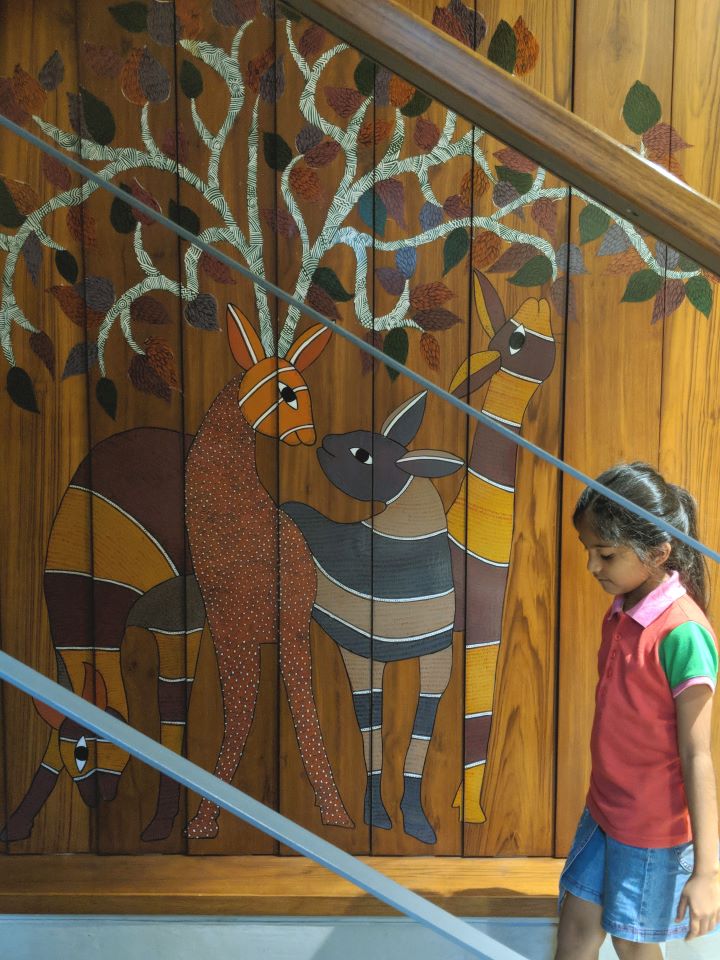
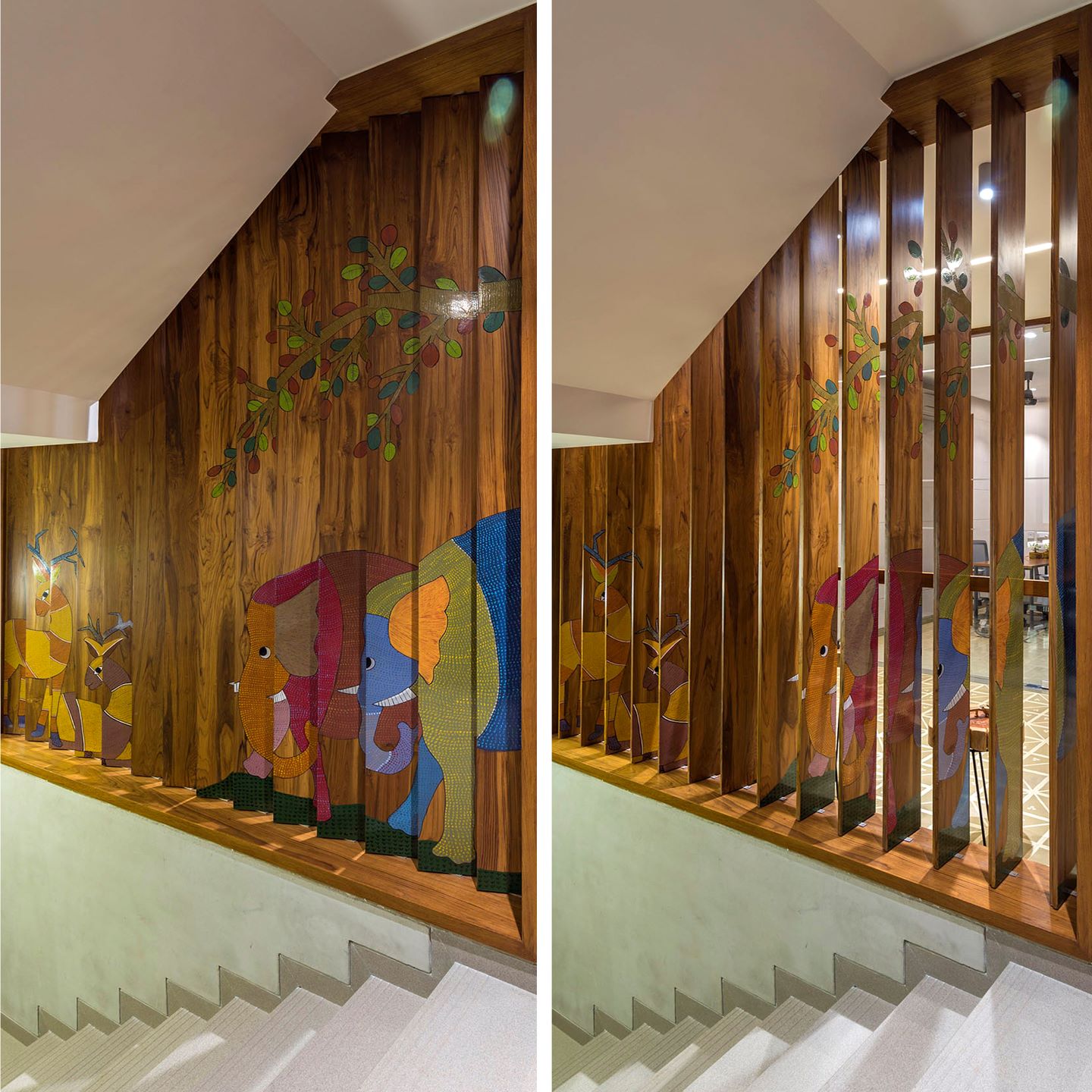
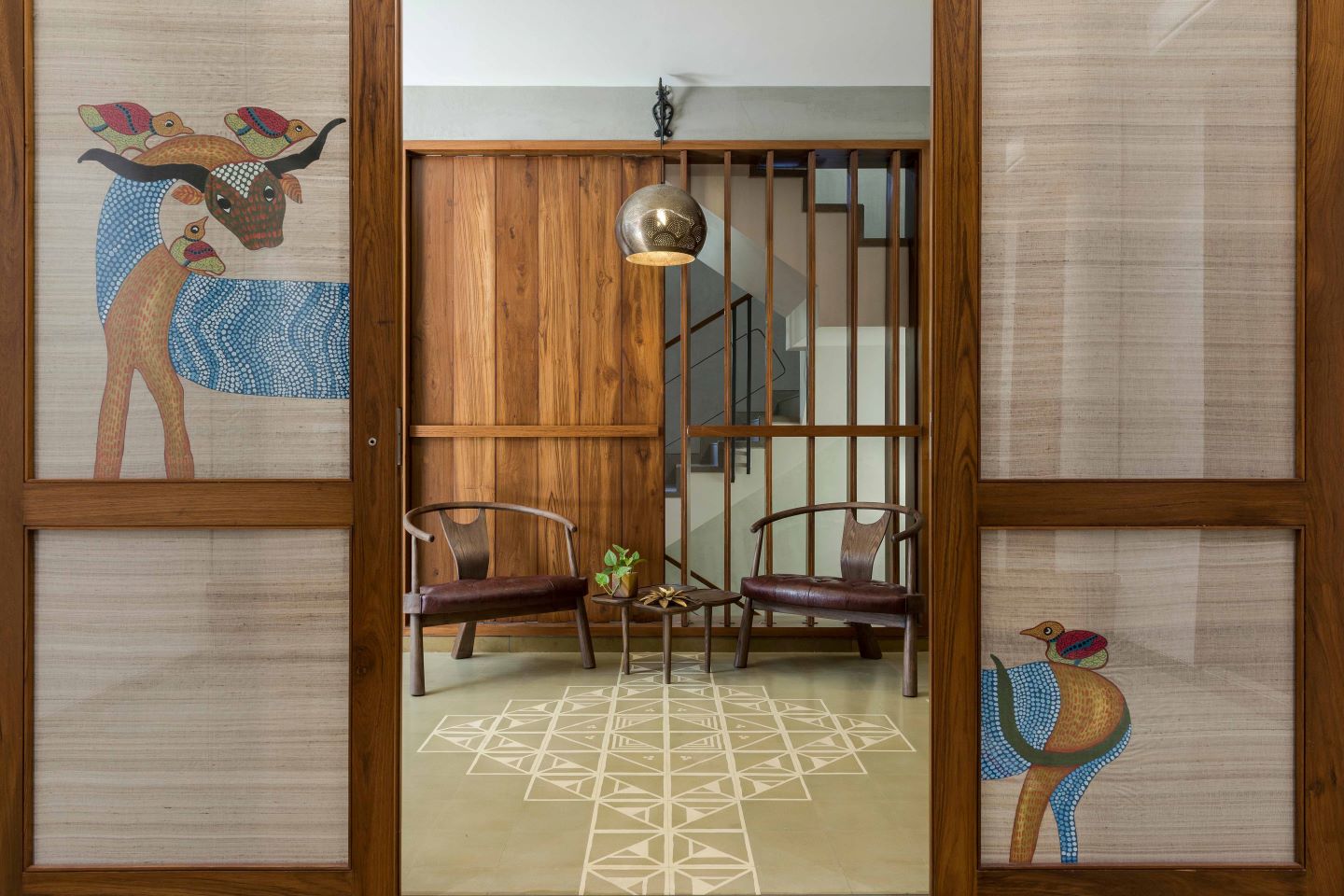
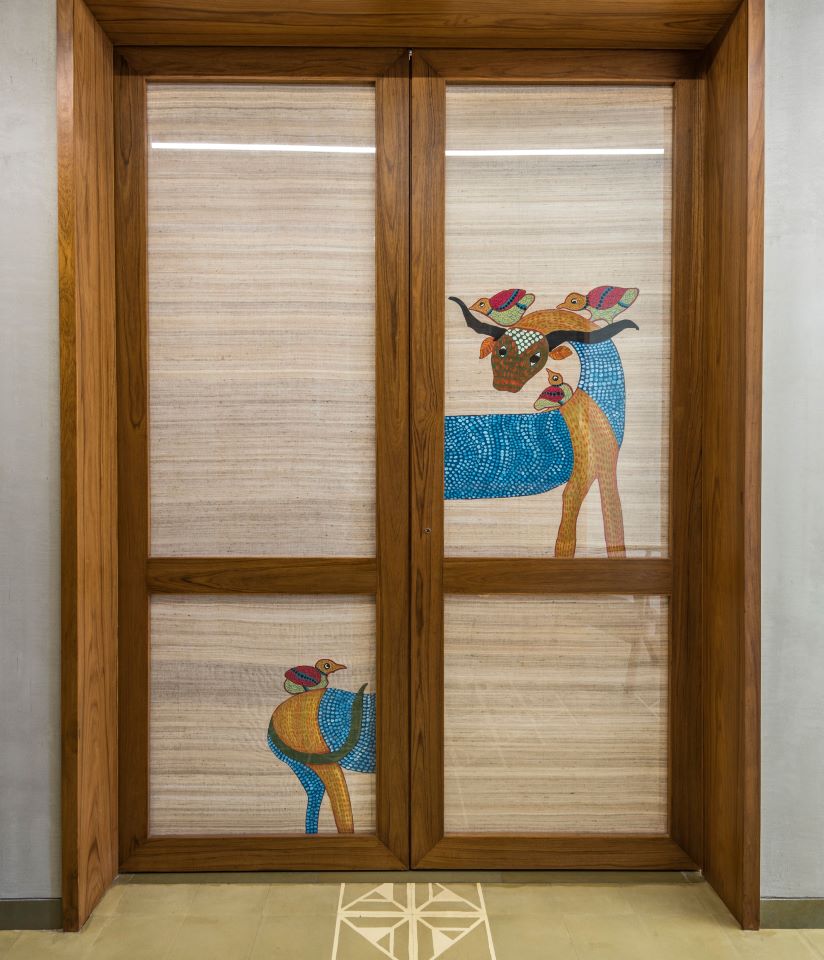
Designs for this house revolved around works involving large amounts of hand skills. Weavers and manufacturers have created bespoke textiles for the project. The use of traditional Gondh art in strategic places — under the staircase and the doors — helped create interesting aesthetics across the house.
Project: Devnanda
Location: Pune
Principal architect: Tushar Kothawade
Principal designer: Chiranjivi Lunkad
Designed by: Studio Lagom
Photographs: Photographix India, courtesy Studio Lagom
Curated by: Rupali Sebastian
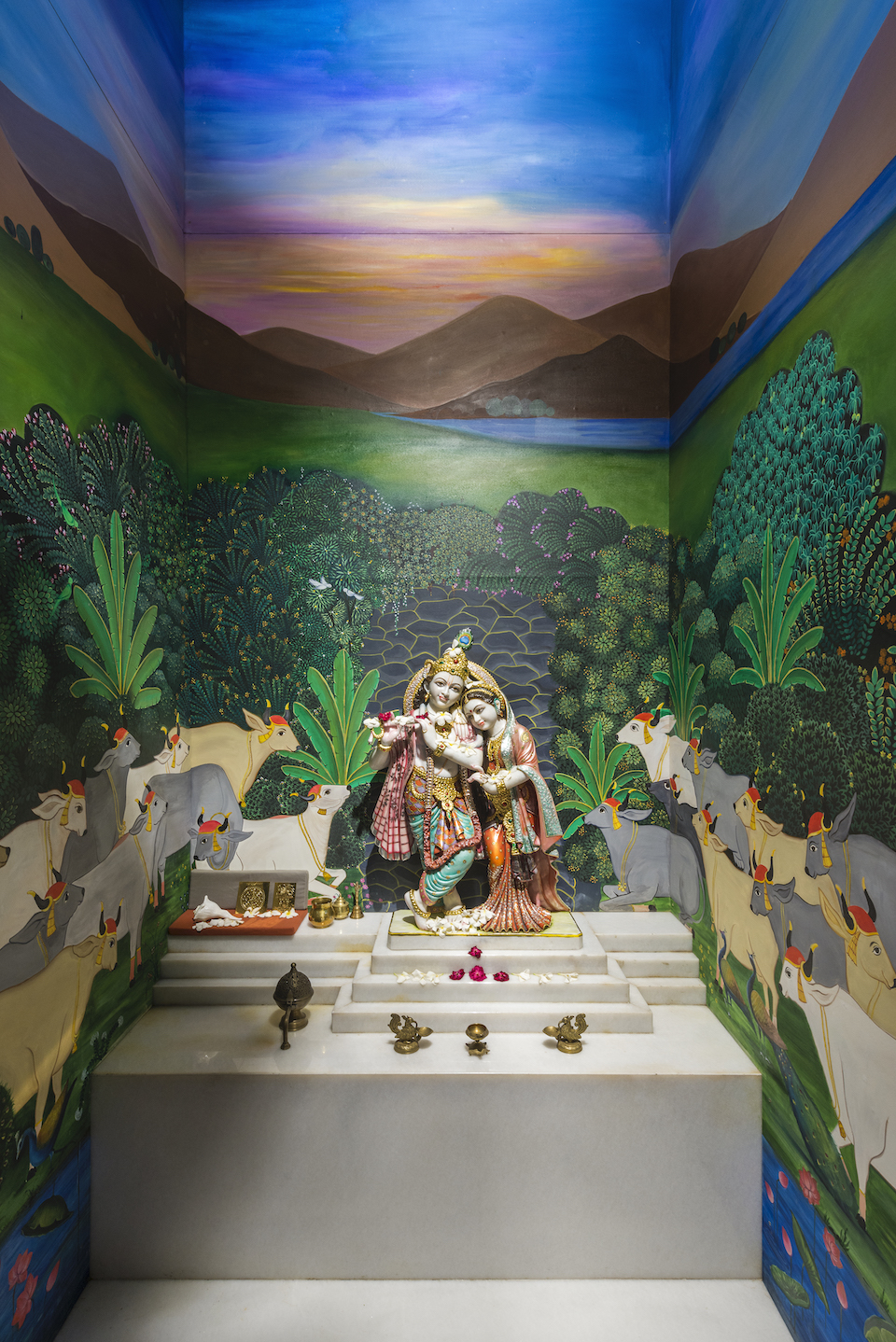
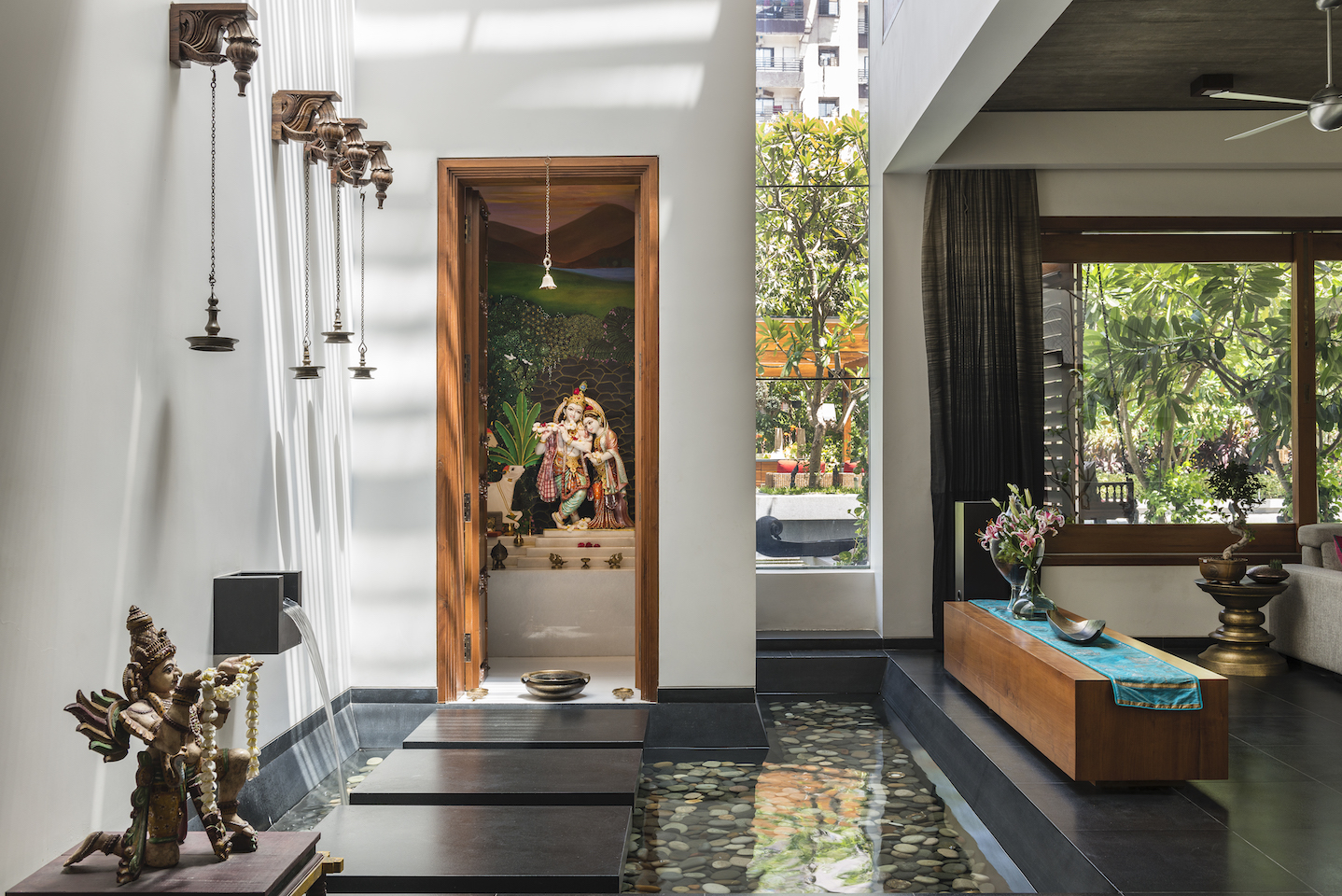
Close to the entrance of Skewed House is the double-height pooja-tower, heralded by a water-spout and set within a kund-like waterbody. Inside unfolds a vision of colour and beauty. A pastoral setting, almost 3D in its visual effect, depicts lush vegetation, rolling hills and a herd of cows which gaze, with adoring eyes, at Krishna, the divine cowherd, and his consort Radha. The Mughal miniature-style artwork has been created on canvas instead of painting it directly on the walls. The canvas was then on a plywood-backed aluminium frame and then installed on the walls. This made it easy for artist Kruti Sheta-Patel (@krutishetapatel) to work in the compact puja space, and also protected the piece from possible future problems such as leakages arising from the wall.
Project: Skewed House
Location: Surat
Principal architect: Hardik Shah
Designed by: EssTeam Design Services LLP
Photographs: Pratik Chandresha, courtesy EssTeam Design Services LLP
Curated by: Deepa Nair
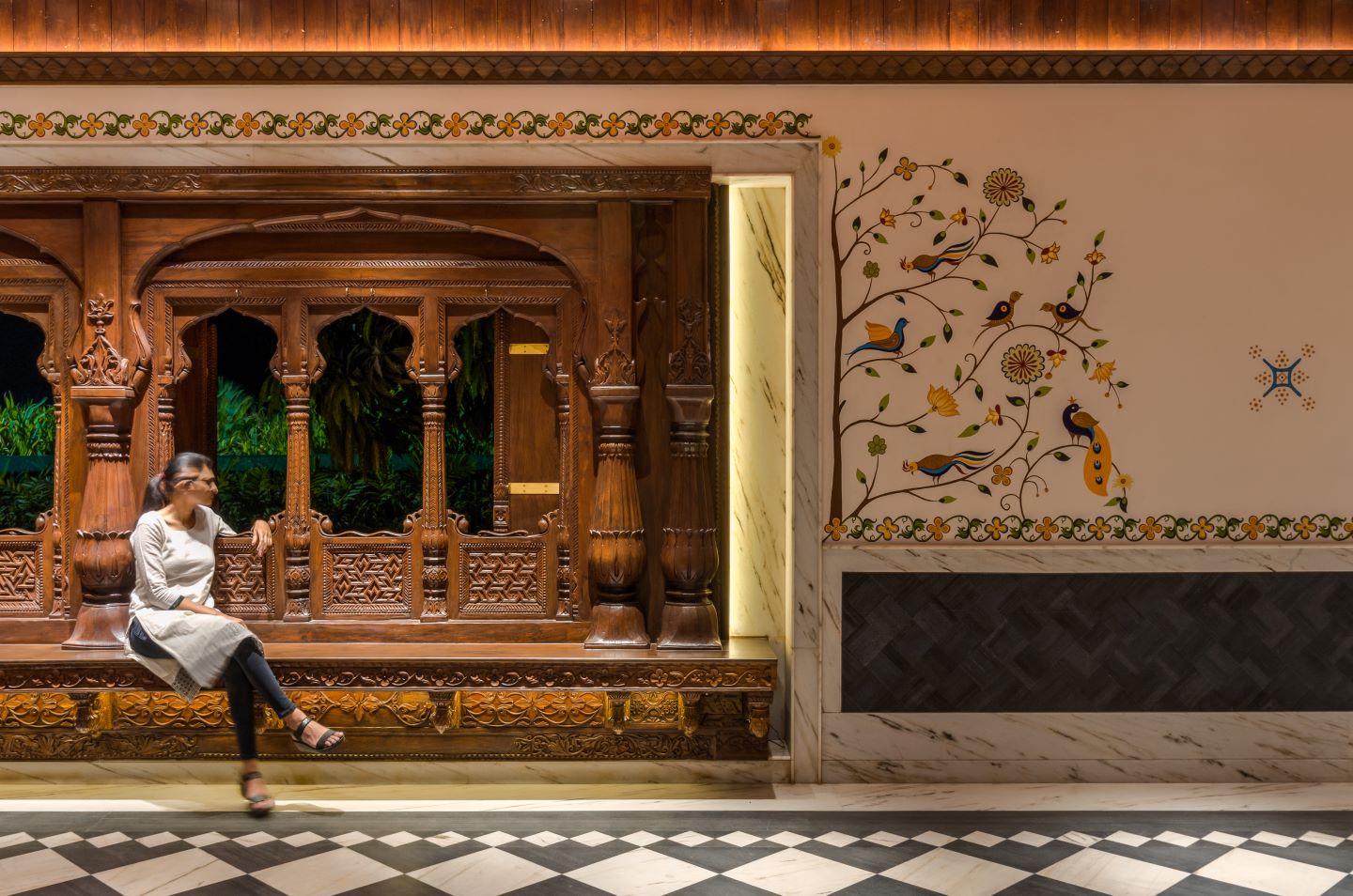
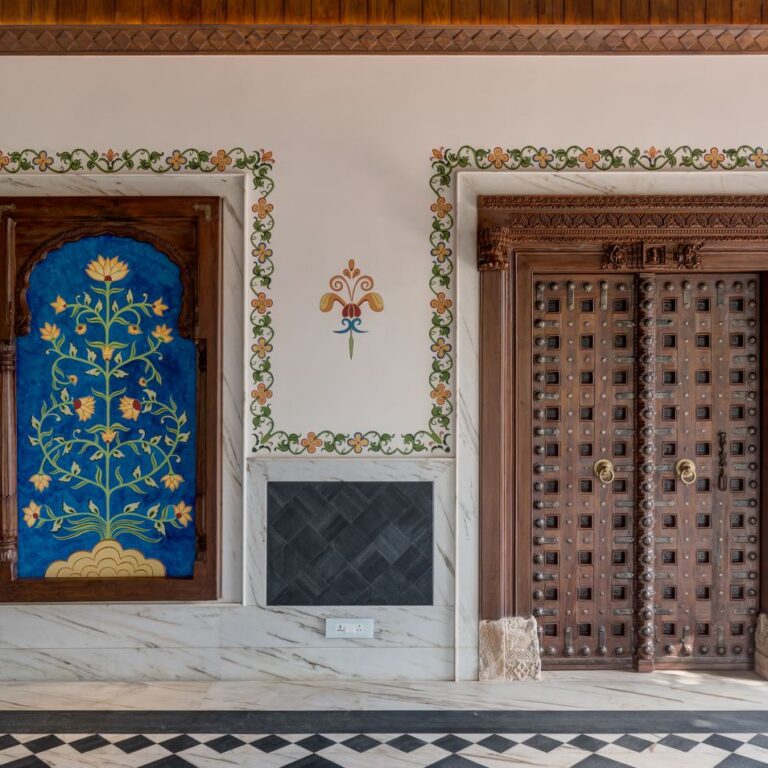
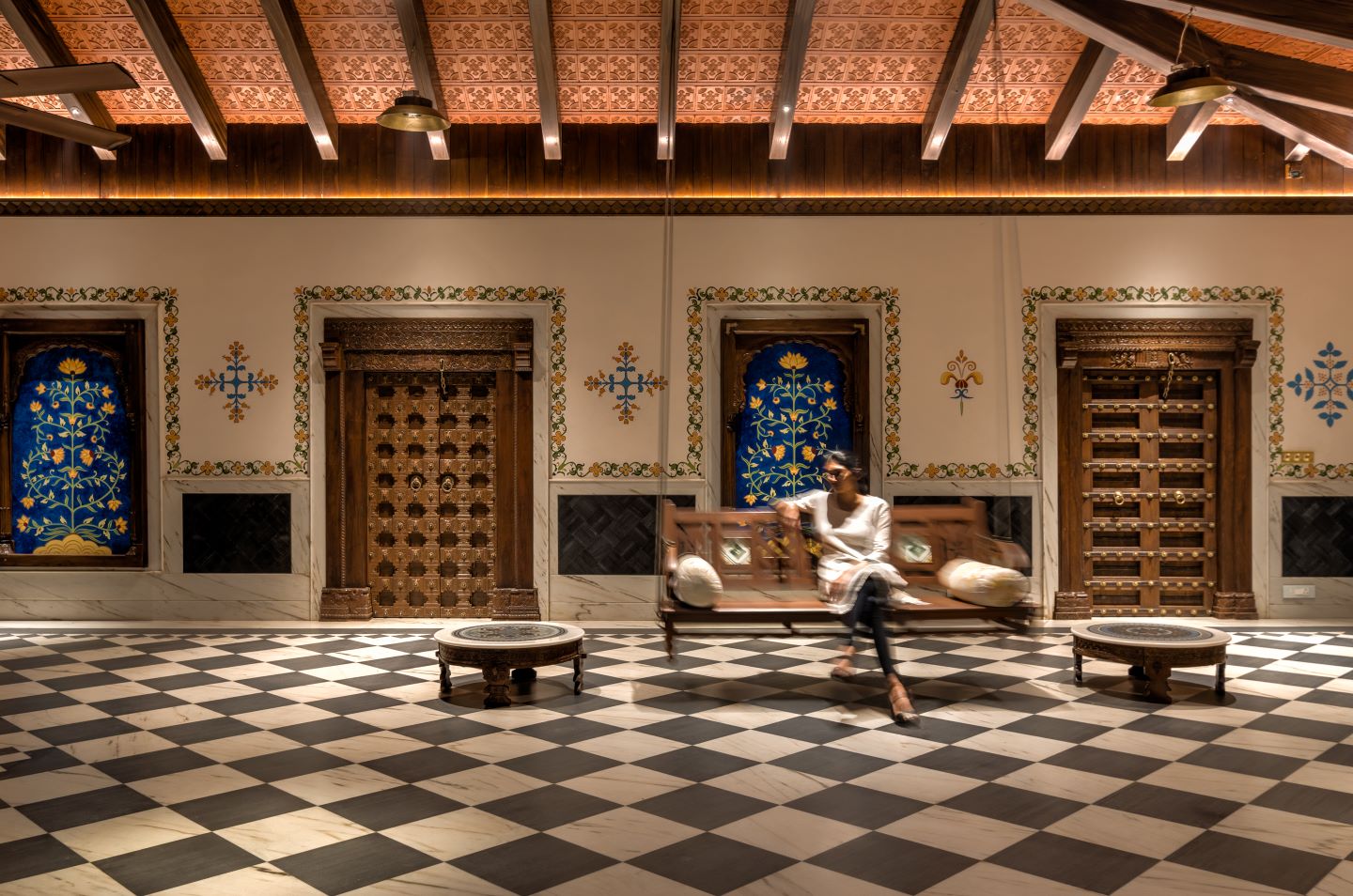
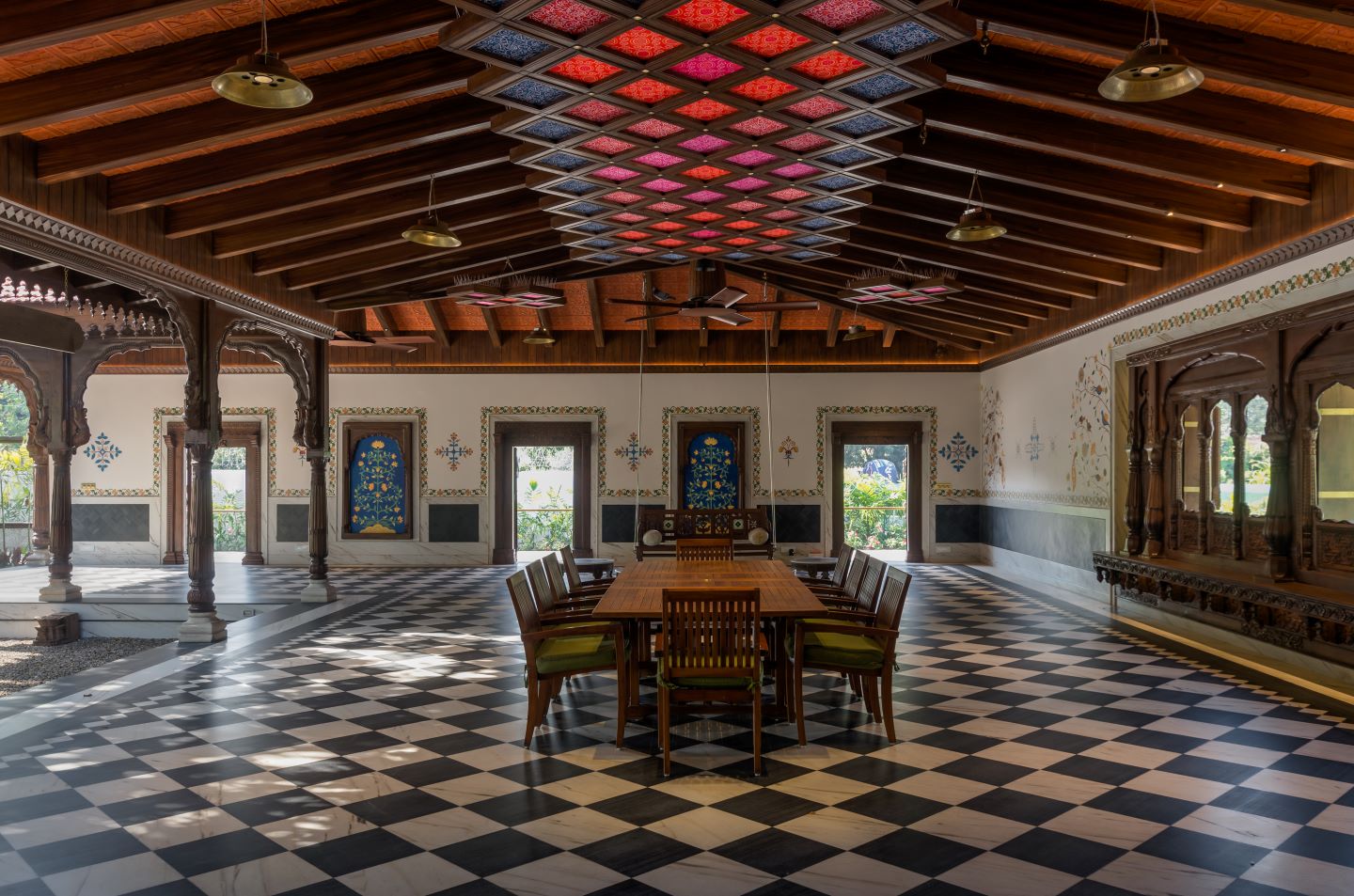
Ba ni Oshari — Verandah in a Mother’s House in Surat was designed by EssTeam for a client who wanted to relive the moments he spent during his younger days at his small village in Saurashtra. The client had distinct memories of spending time on the verandah which also was a popular spot for hosting the Dayra events back then. Dayra is an interesting cultural event related to literature where the Oshari becomes the stage and everyone enjoys the programme sitting in front of it. As a process, the design team created a C-shaped otta depicting a building; creating the doors and windows that opened out to the otta. The project is constructed out of assembling of architectural elements — columns, brackets, jharokha, railings, doors and windows — accumulated from torn down houses from various parts of Gujarat.
Art is a significant contributor to the spatial experience. The theme of the artworks was about creating ‘a place for celebration’ with subtle concepts and a traditional Indian language throughout. Nature was the inherent theme depicted within the artworks. Exactly in the center of the Oshari a Tree of Life motif was created as an ode to the trees surrounding the Oshari. Outside on the service block wall, there is a beautiful mirror-work tree motif designed to depict the mango tree in the close proximity of the space. All these artworks were hand-painted, conceptualised and created by OBL/QUE in collaboration with a local artist.
Project: Ba Ni Oshari
Location: Surat
Principal architects: Snehal Shah and Saloni Shah
Project lead: Ankur Desai
Project team: Viral Lalwani and Vidhi Desai
Artists: OBL/QUE and Vaibhavi Gandhi
Designed by: Studio Yamini
Photographs: Tejas Shah, courtesy Studio Yamini
Curated by: Rupali Sebastian
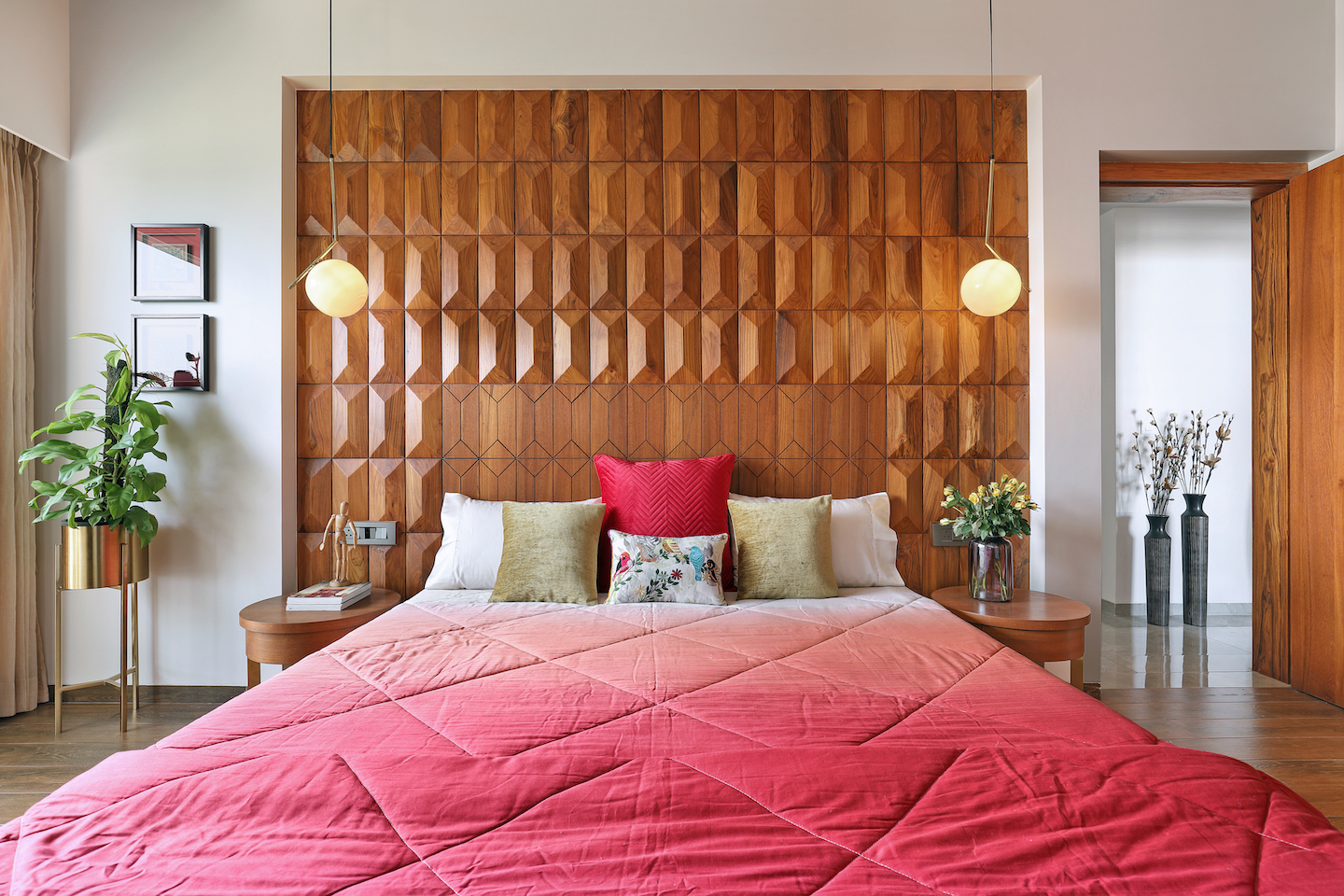
The intent in this bedroom was to do something off the beaten track, something that would establish a refreshingly different narrative. The wall behind the bed was selected as the recipient of a treatment that adds a lot of panache and textural beauty to the space. Brick-like wooden blocks, 6 in x 12 in in size, were shaped and assembled, mosaic-like, to create an alluring faceted expanse. The ‘headboard’ section is smooth and flat, for reasons of comfort, but with a pattern that mimics the faceting.
Project: Darshanam Splendora
Location: Vadodara
Principal architects: Mitul Shah and Mehul Shah
Designed by: The Grid Architects
Photographs: Photographix India, courtesy The Grid Architects
Curated by: Rupali Sebastian
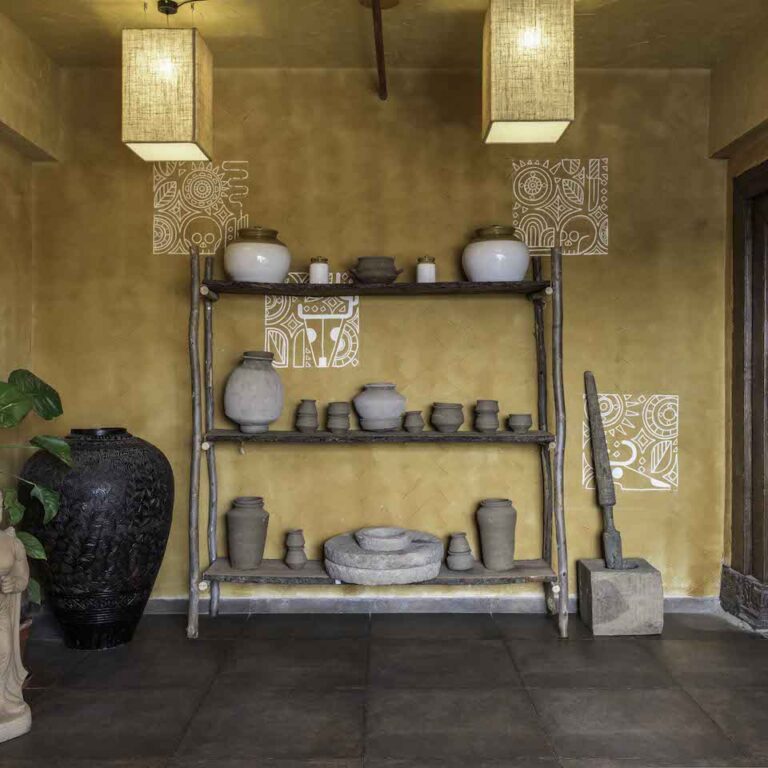
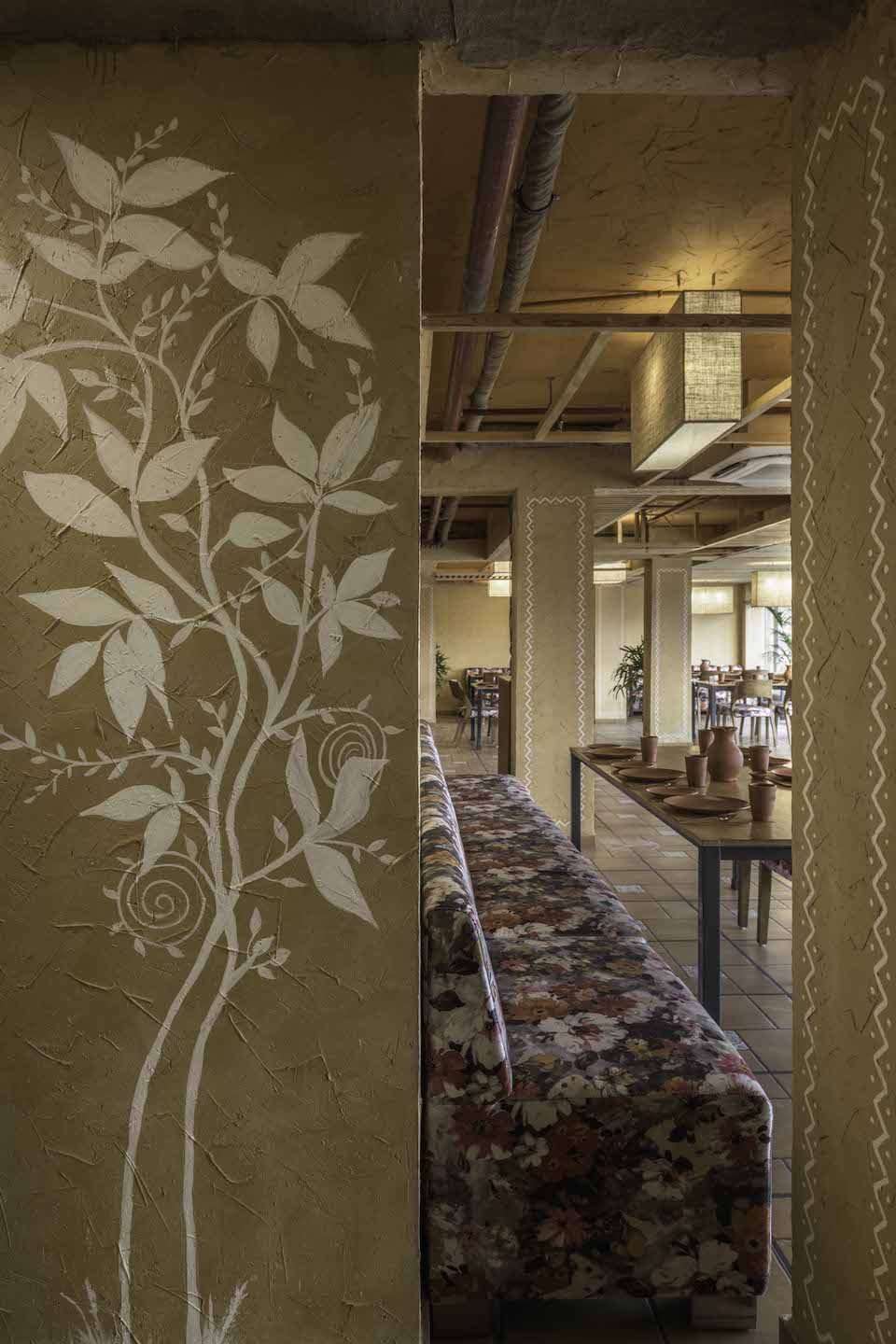
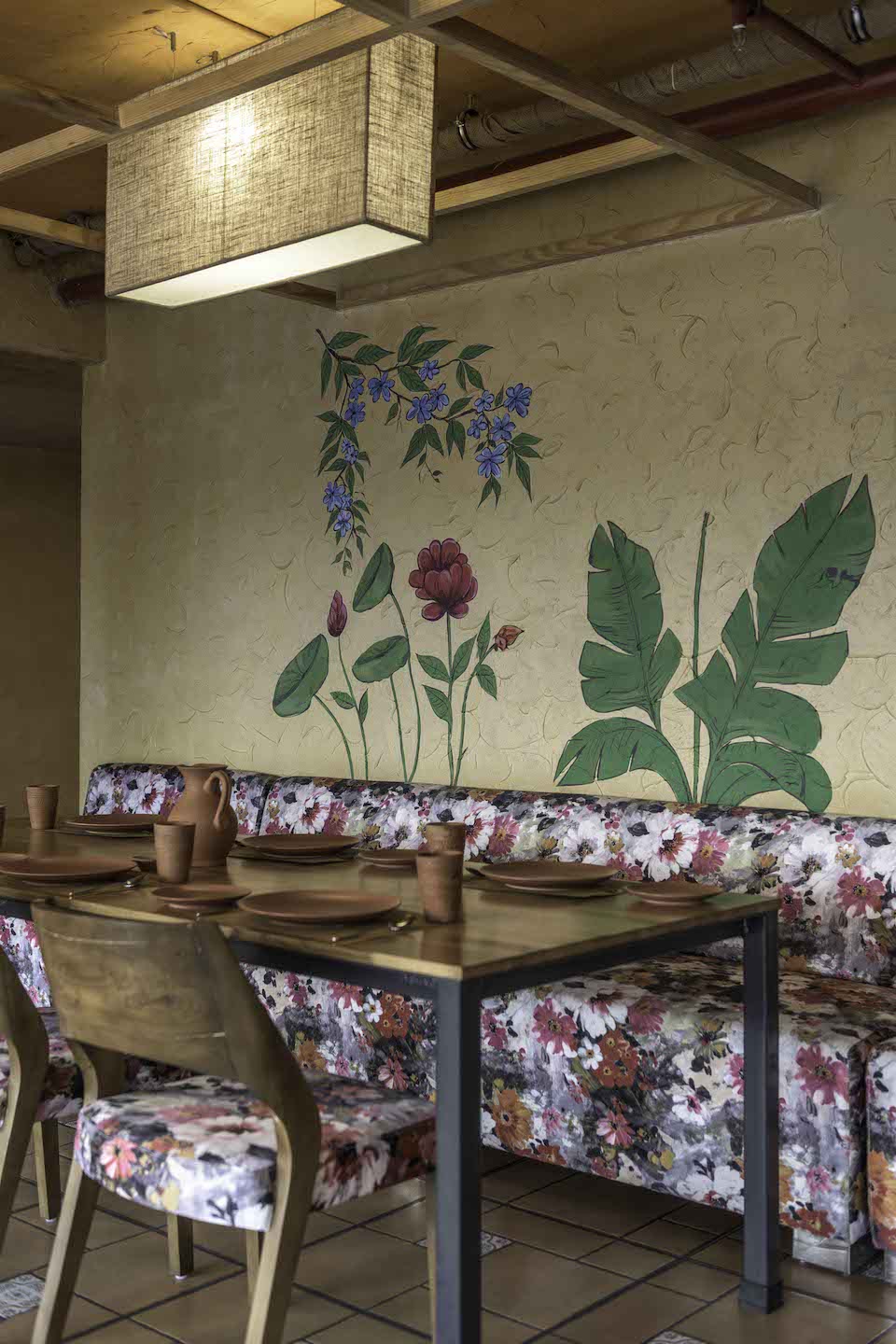
The evocatively named Mitti ke Rang restaurant in Ahmedabad facilitates the basic human need of socialising in an ambience that respects the earth. Clay plays a central role in the design narrative, and is woven into the space in various expressions — both, as a medium of creating objects as well as surfaces. A bevy of traditional earthen cookware welcomes you into the restaurant. Guests are served in terracotta tableware. The most emphatic presence, however, is the clay plaster — a combination of clay, a dye extracted from the flower of the kesudo (flame of the forest) tree, turmeric, grain husk and a natural binder creates a material distinct in colour and texture, one that resonates the theme and the spirit of the design. Its glorious golden shade, bearing associations with joy, health, positivity and happiness, evokes auspicious moments and festive occasions, especially in the Indian context. The texture of the surface, with its beautiful handcrafted look and wave-like designs that trace the rhythm of hand movements, recalls simpler times when our connections to nature and the environment were much stronger.
Project: Mitti ke Rang
Location: Ahmedabad
Principal architect: Snehal Suthar
Principal designer: Bhadri Suthar
Add a Comment